PADMADURG
TYPE : SEA FORT
DISTRICT : RAIGAD
HEIGHT : 0
GRADE : HARD
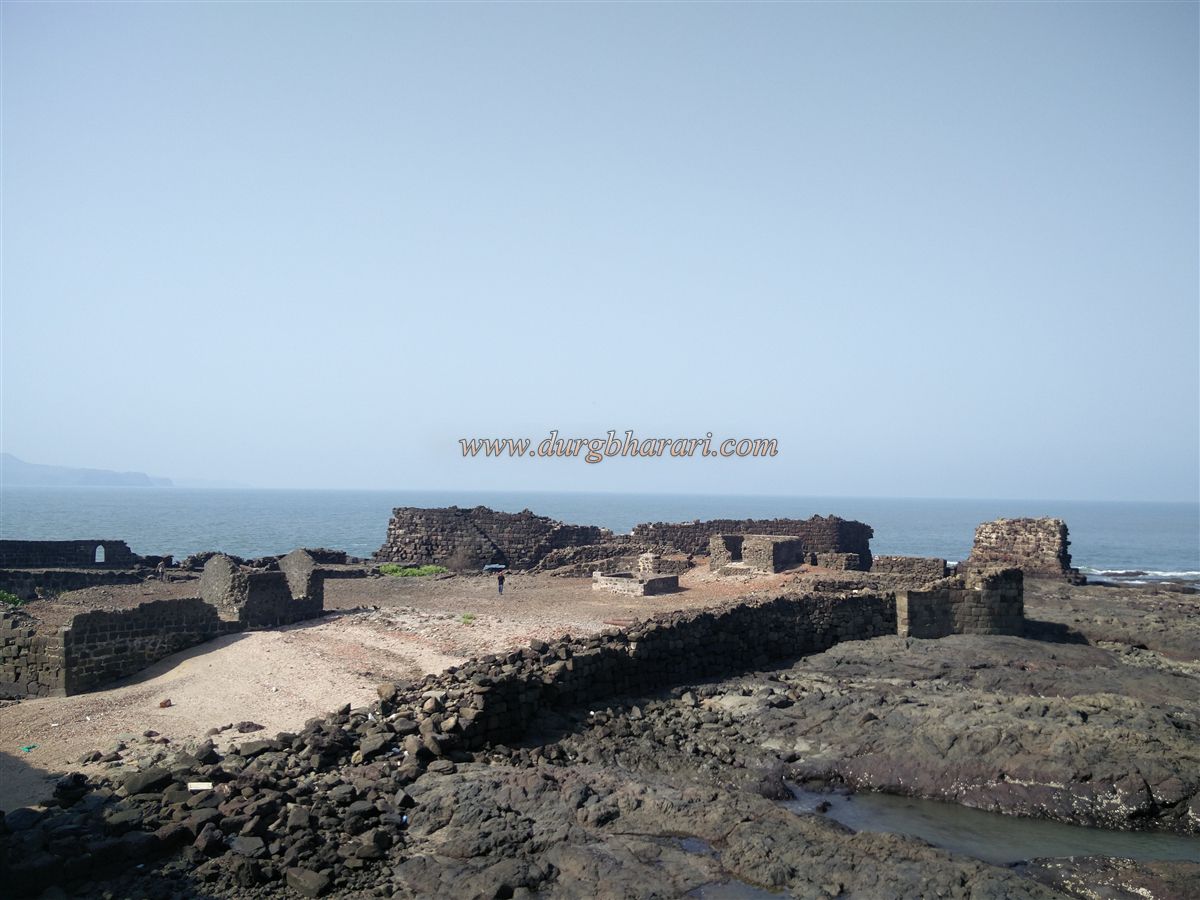
Padmadurg, also known as Kasa Fort, built by Chhatrapati Shivaji Maharaj, still stands in good condition in the midst of the sea near Murud village. Murud is a taluka headquarters in Raigad district, and nearby forts include Janjira, Samrajgad, and Padmadurg (Kasa). Murud is especially famous for the sea fort of Janjira. It can be reached via the road from Alibaug to Revdanda to Murud. A road from Murud leads to Rajapuri. Along this road, near the creek, lies the village of Ekdara, where many fishing boats are docked. On inquiring with the local fishermen, one can hire a boat to reach Padmadurg. The fishermen agree to take you to the fort only if the sea and weather conditions are favourable. It takes about half an hour by boat from Murud or Ekdara to reach Padmadurg.
In Shivaji Maharaj’s own words: “By establishing Padmadurg, I have created another Rajapuri (Janjira) right in front of the original.” This beautiful sea fort is truly worth visiting.
...
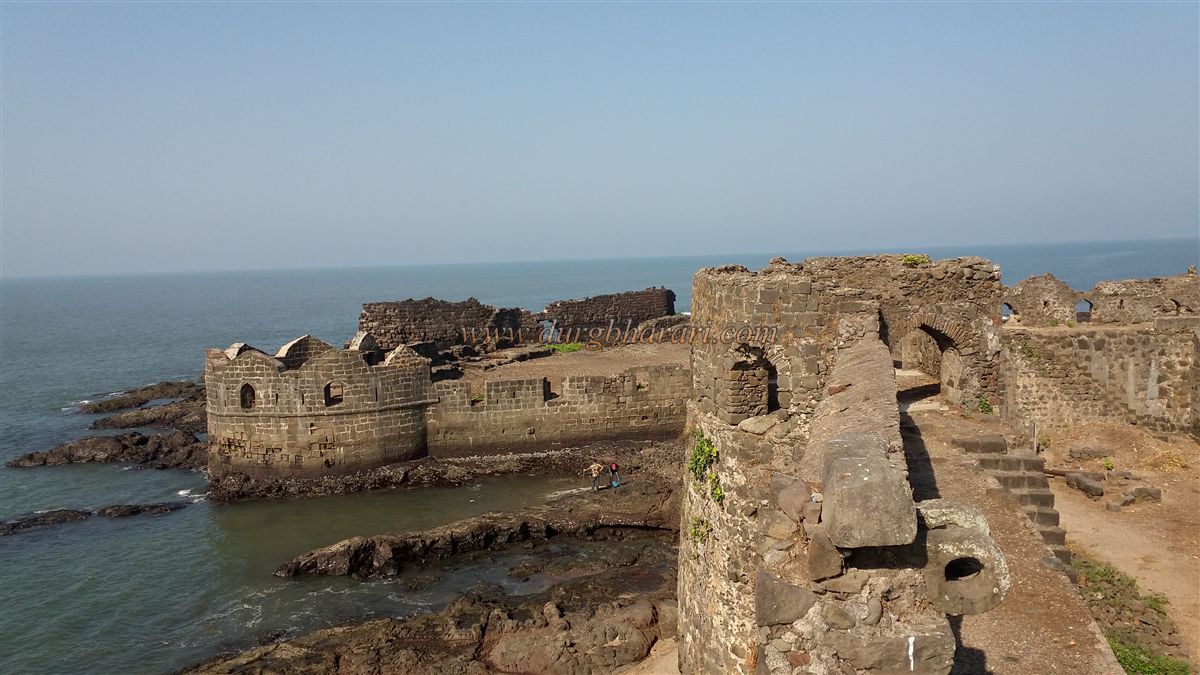
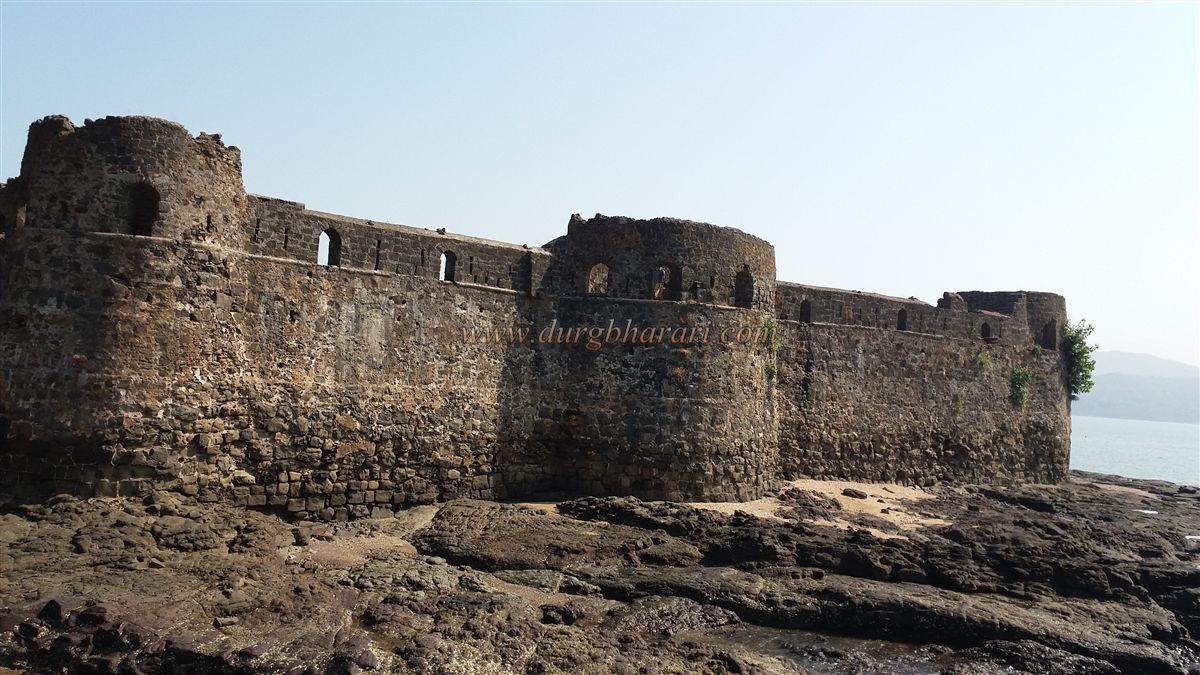
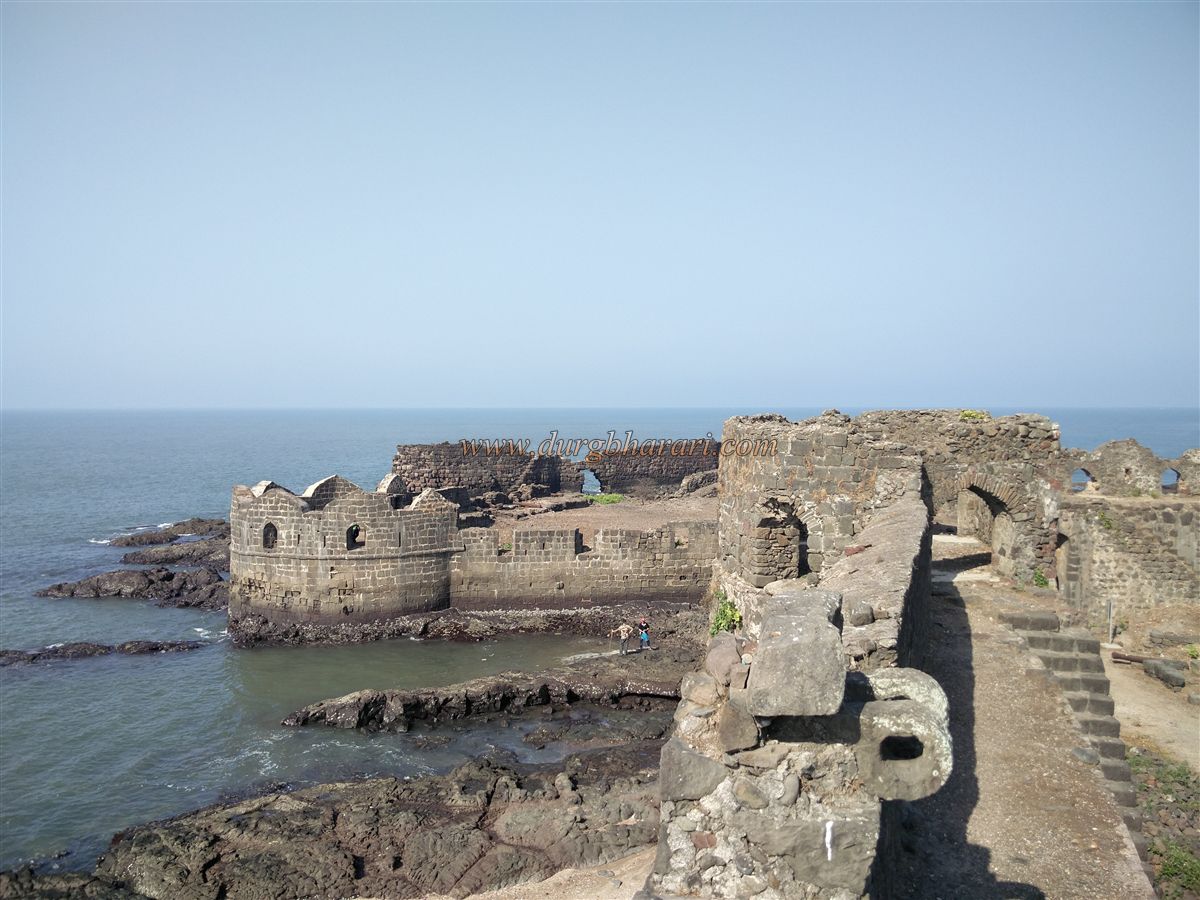
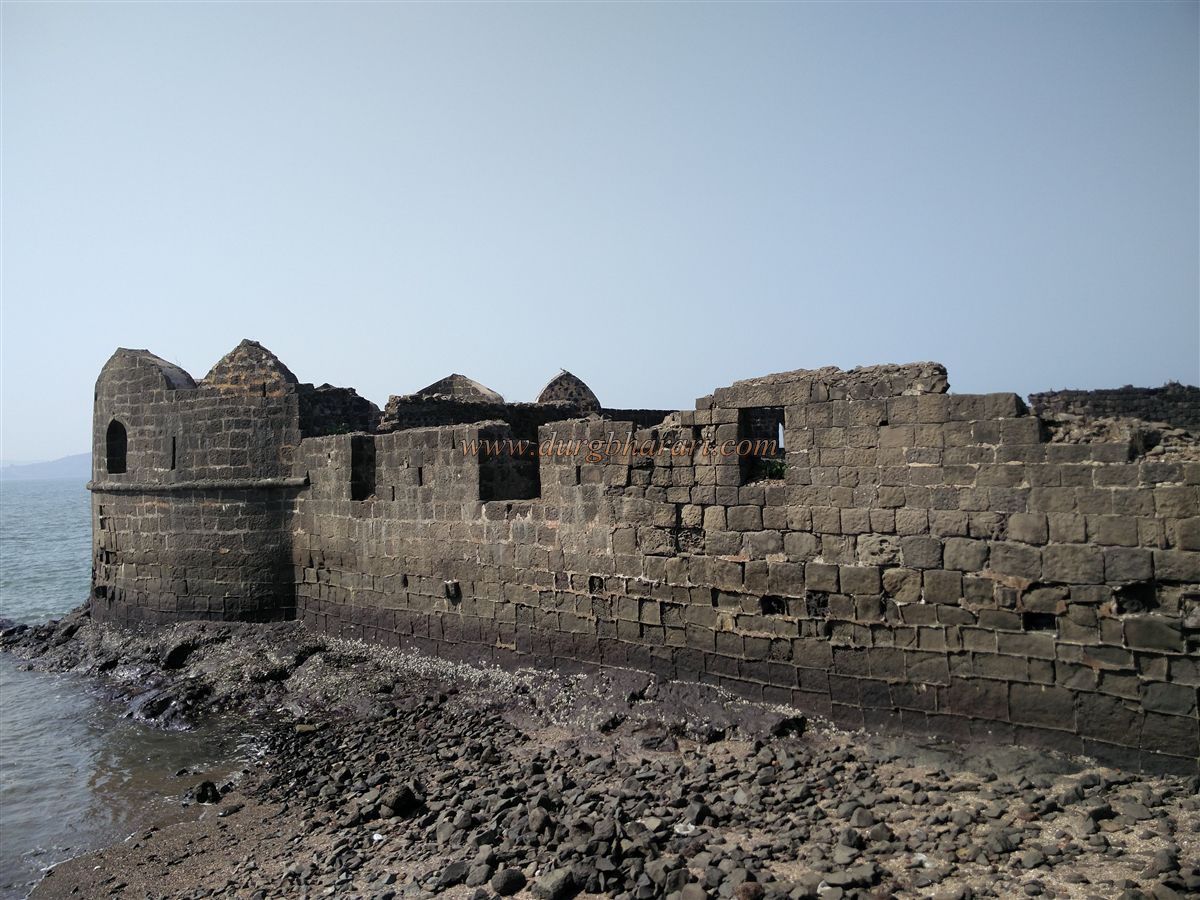
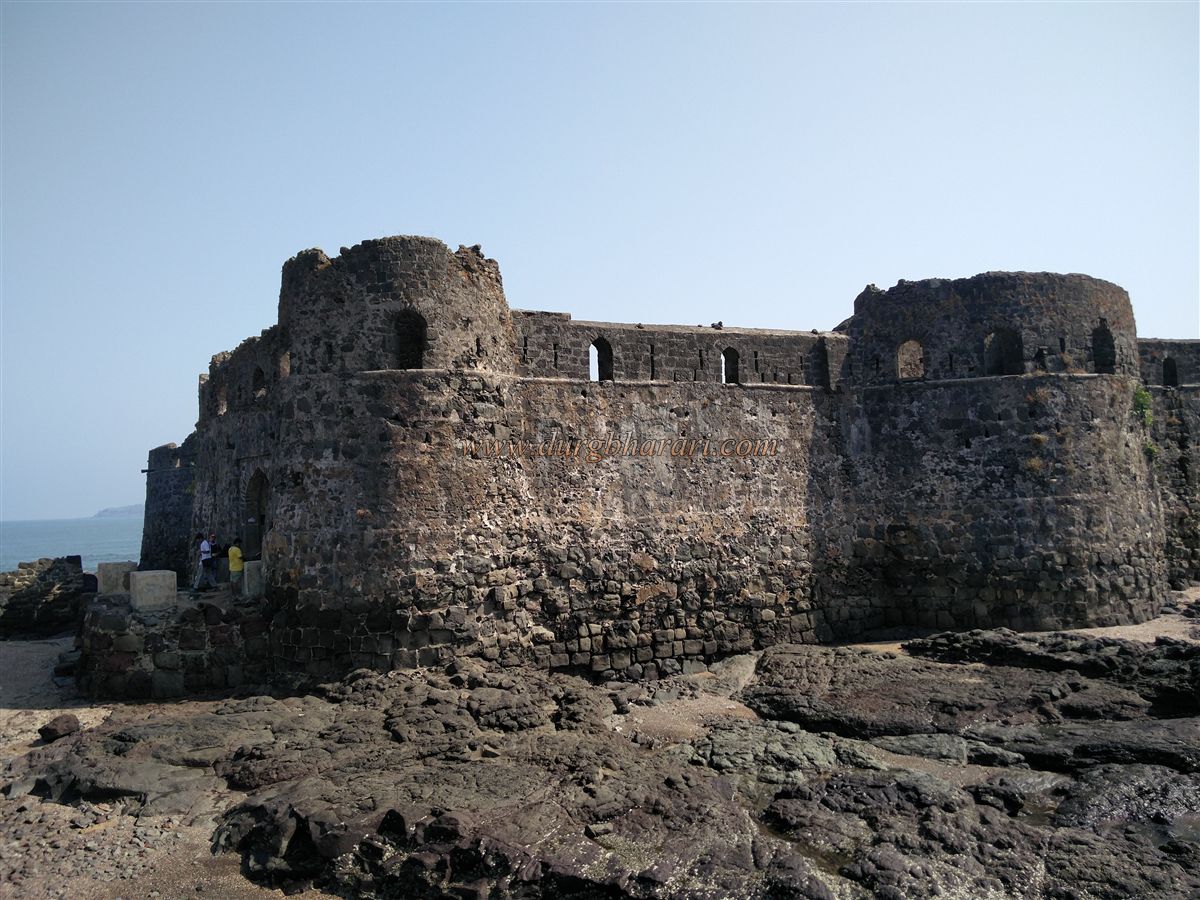
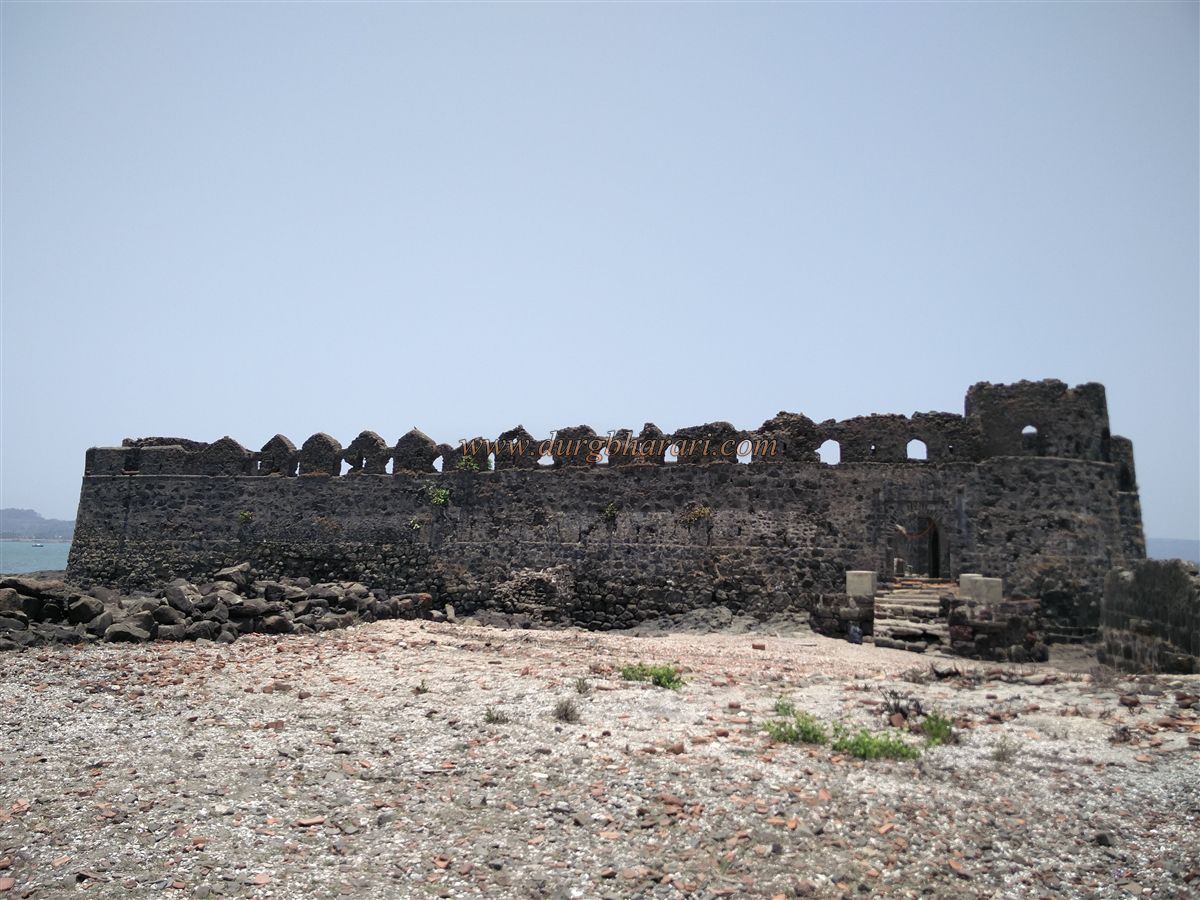
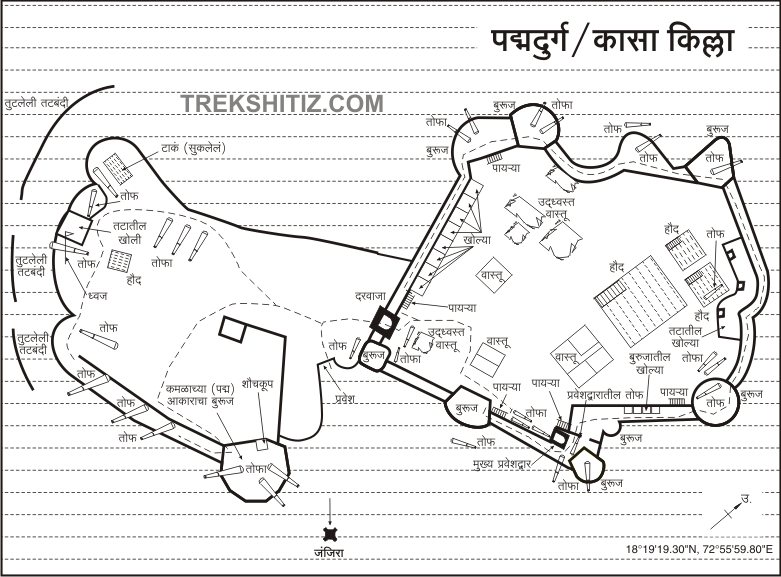
Padmadurg Fort has two sections: the main fort and a secondary outer fortification (Parkot). While the Parkot has largely collapsed, the main fort’s ramparts are still impressively intact. Boats usually land between the main fort and the Parkot. The grand, lotus-shaped bastion of the Parkot catches your eye from afar. The ramparts of the fort are tall and strong, with six bastions placed approximately 60 feet apart. There is also a second, partial outer wall facing the sea for added protection. Since the fort was built to suit the natural rock formations of the island, its layout feels uneven and elevated.
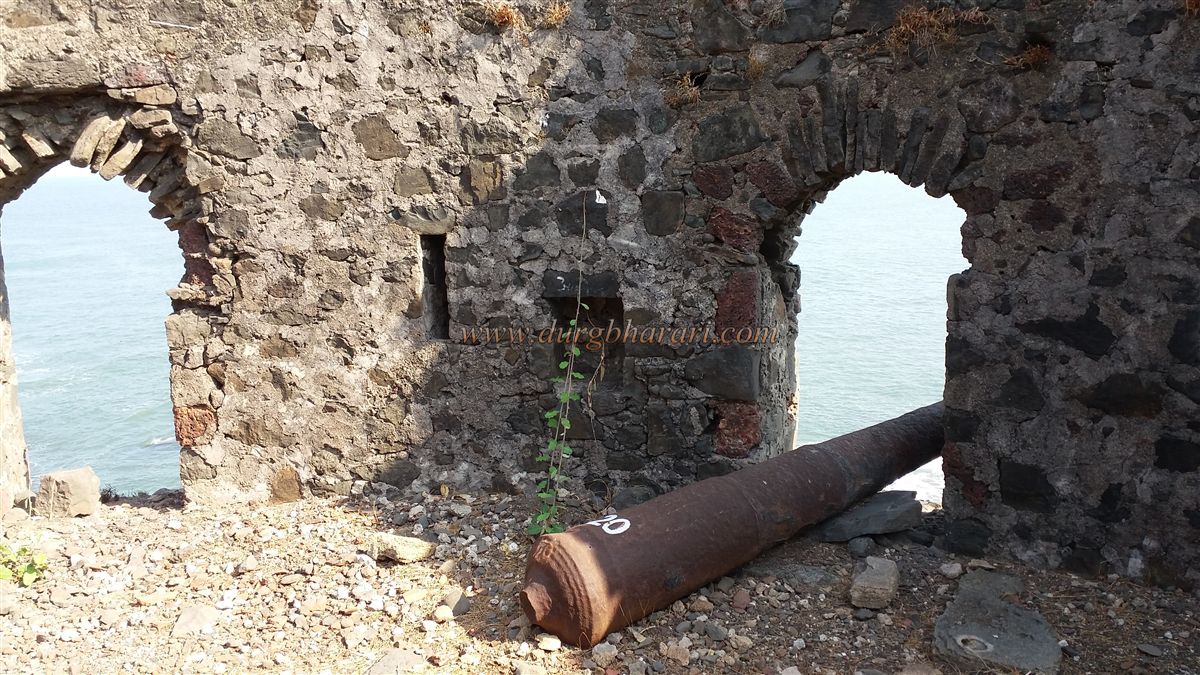
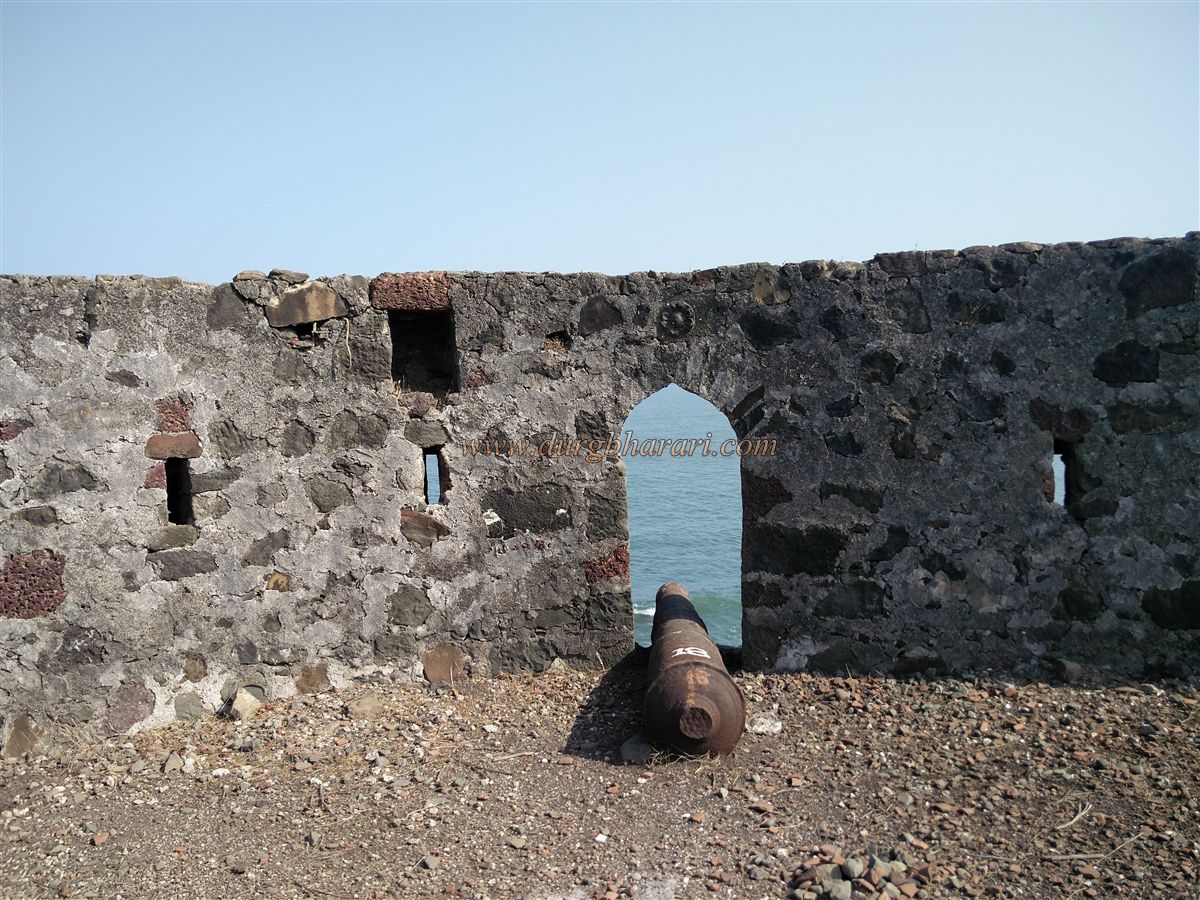
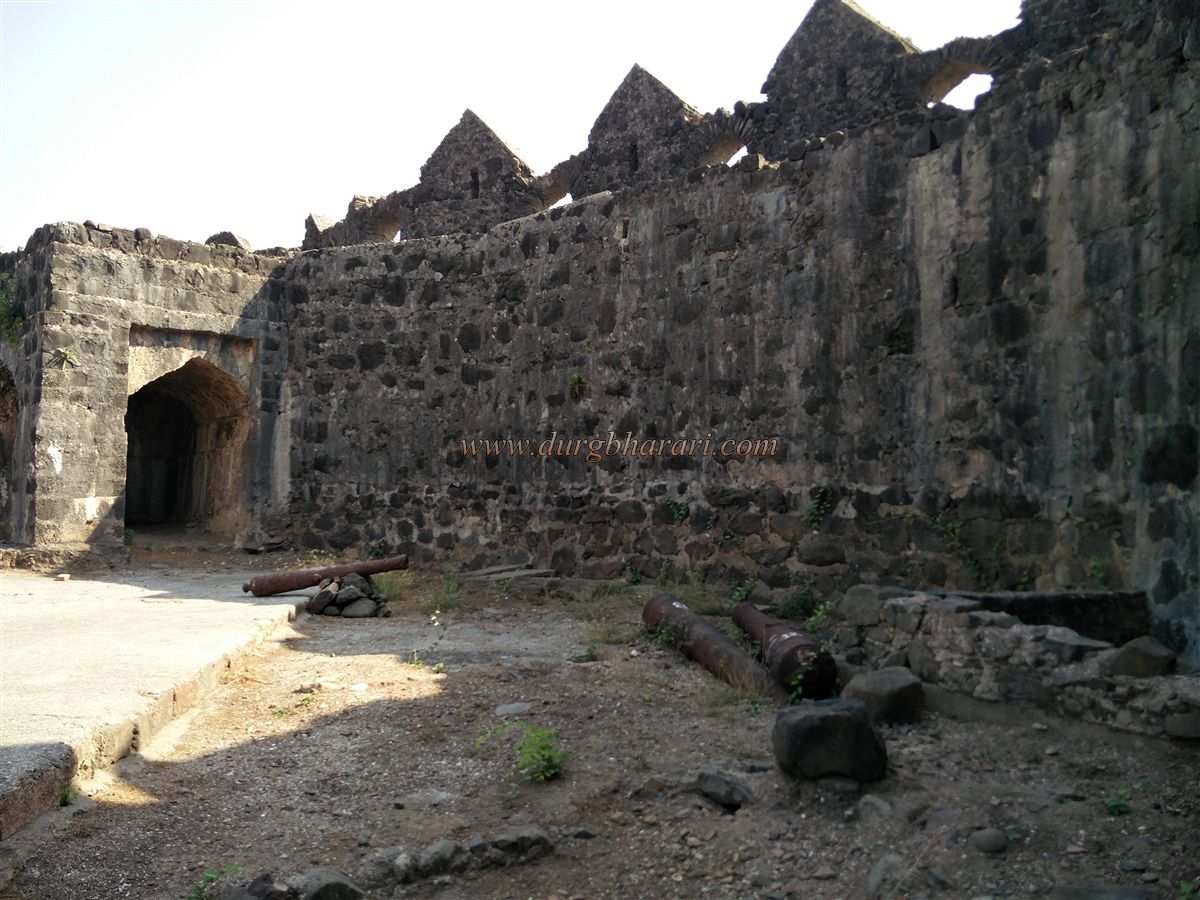
After landing, one should first explore the Parkot. Through its broken gate, on the left side, are the ruins of a structure. A prominent lotus-shaped bastion with petal-like carvings lies ahead — likely the origin of the name Padmadurg (“Padma” meaning lotus). Inside this bastion is a storeroom. The bastion contains loopholes in all directions for mounting cannons — three of which are still in place, pointing toward the sea and the entrance path. Attached to the bastion, there is even a toilet built into the fort wall — a rare feature.
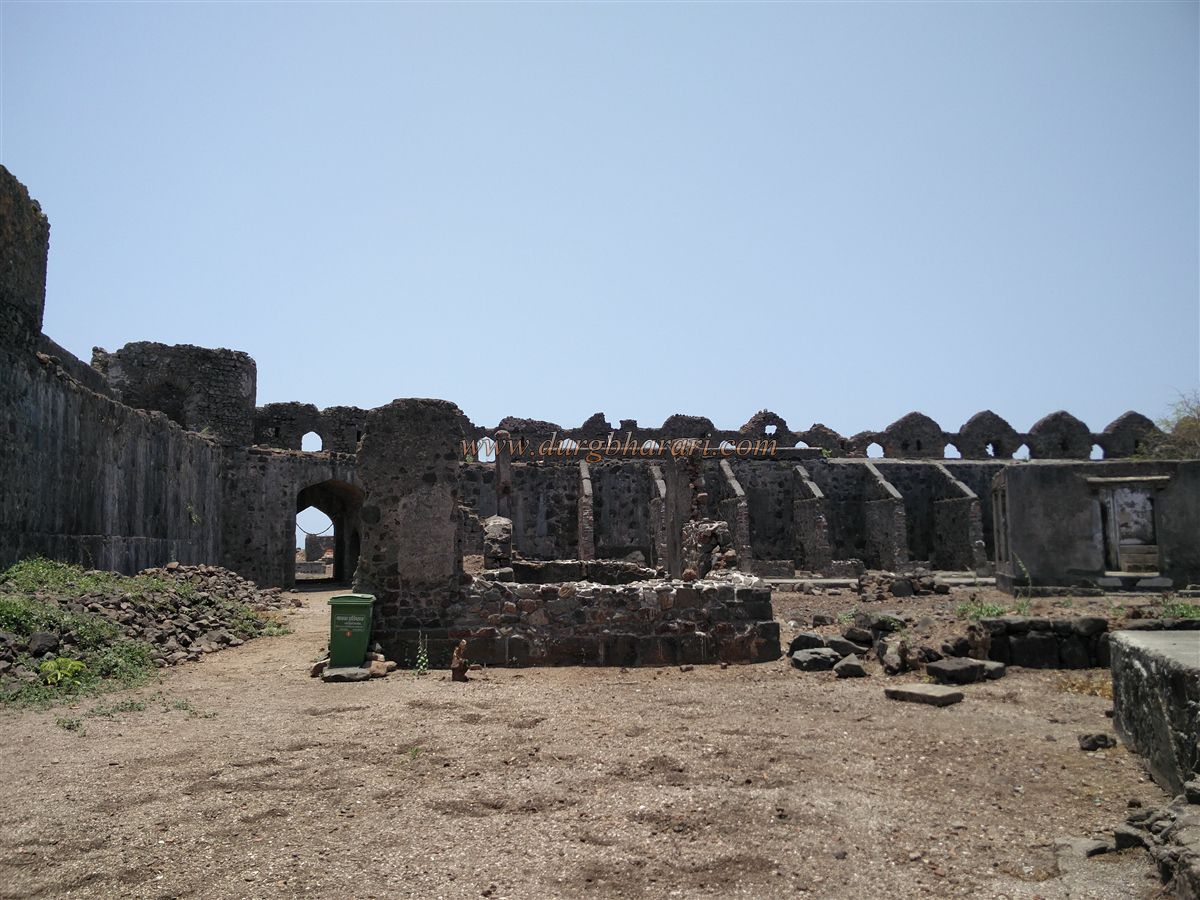
The height of the Parkot wall from sea level is about 25 feet. Over time, waves and sand have eroded the staircases and walkways along the wall. One can walk a full circle (pradakshina) along the fort wall and see cannons, broken structures, two water tanks, and some tombs. The northern wall of the Parkot is collapsed, and its connecting point with the main fort shows remnants of an old building. Outside the remaining wall on the sea-facing side, there was once another ring of fortification, of which very little remains today. A ruined bastion to the west offers a panoramic view of the Parkot.
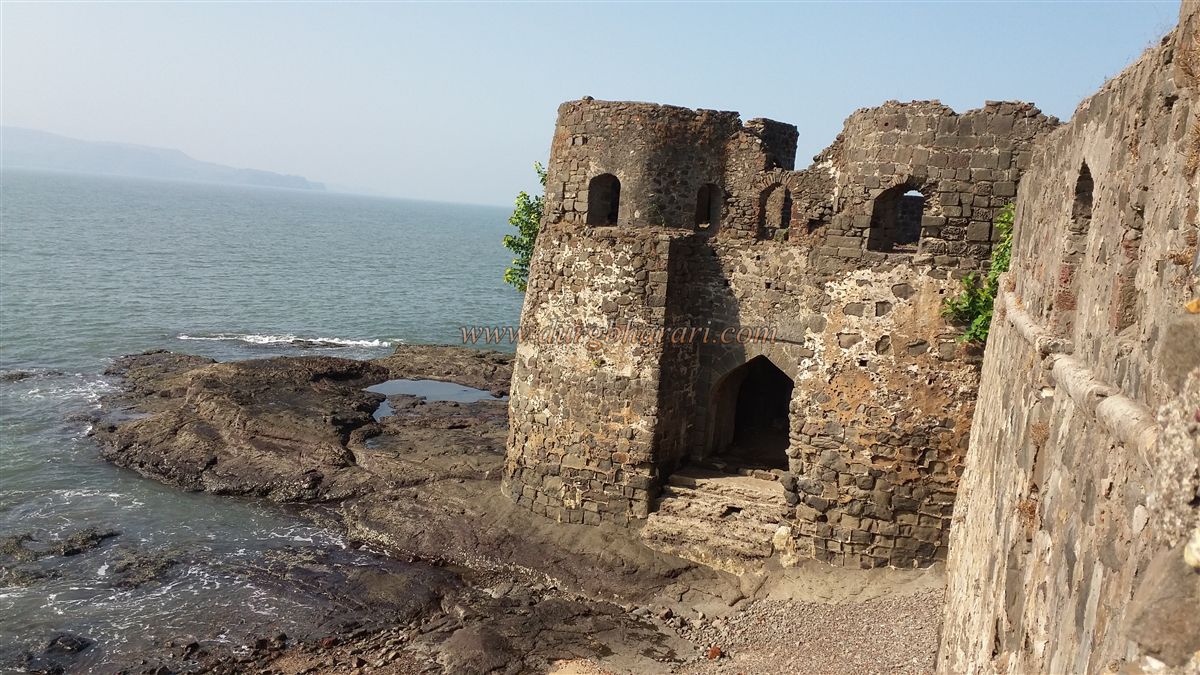
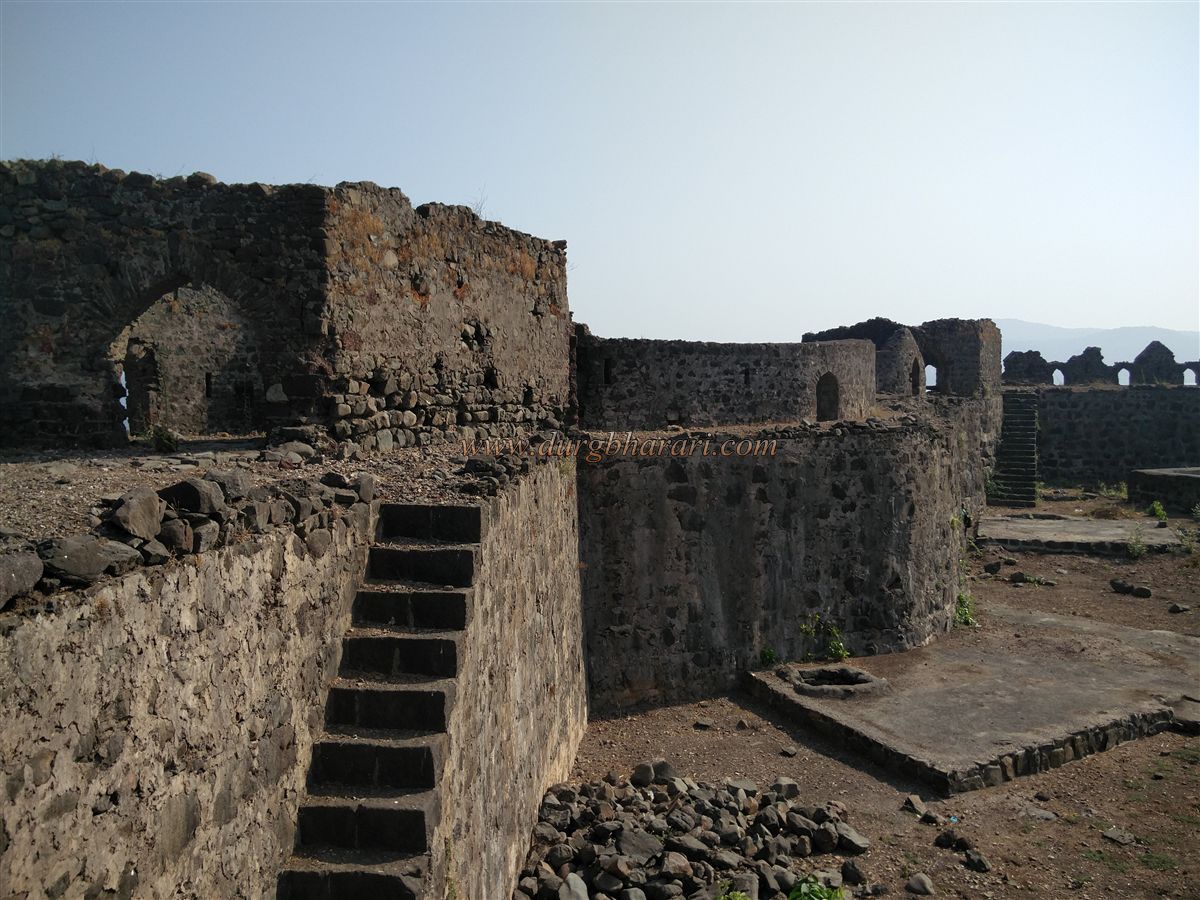
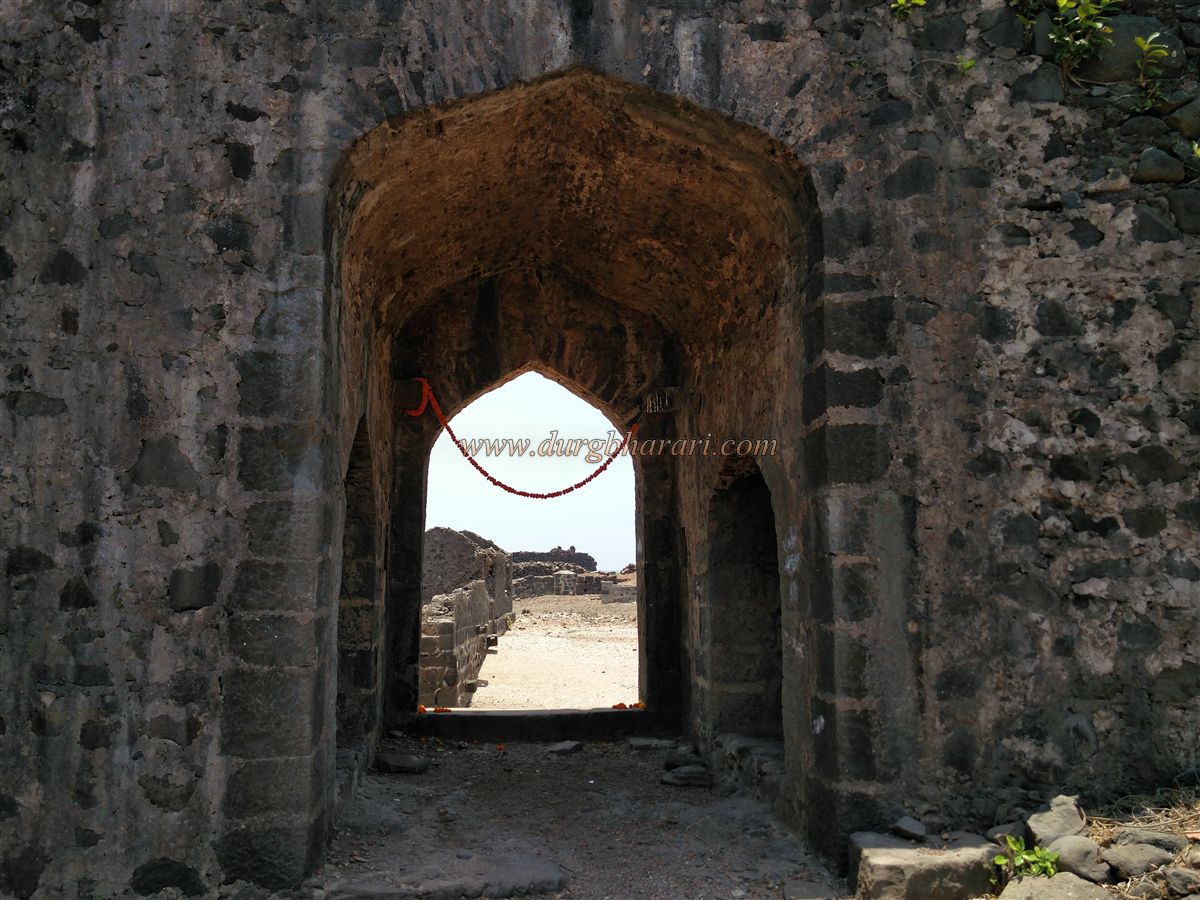
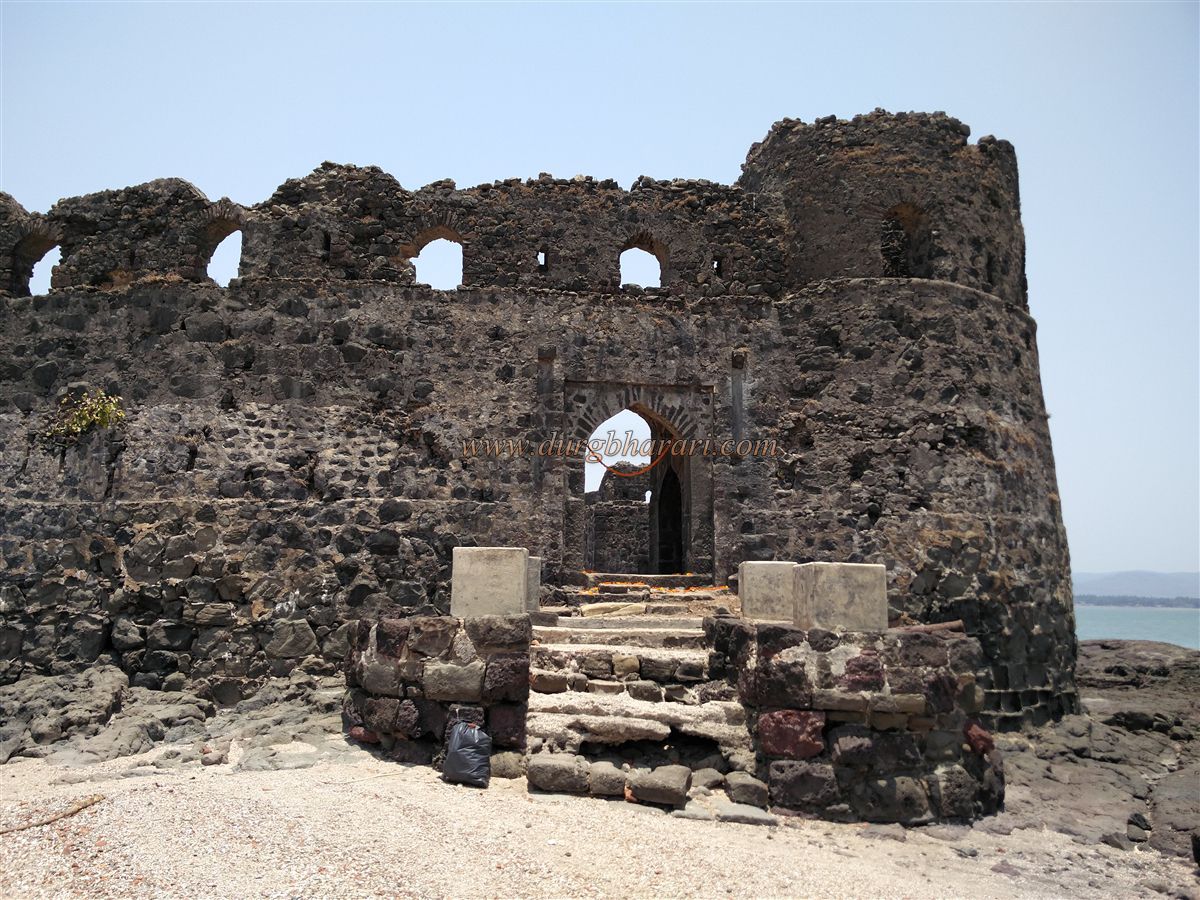
Directly opposite the Parkot is a rear gate to Padmadurg. You can enter from here or walk around to the main gate, which has ten steps leading up. This massive entrance is flanked by two 30-foot-tall bastions with loopholes and merlons aimed squarely at the gate — clearly built for defence.
One striking feature of Padmadurg is the construction material — especially the lime mortar used. The stone blocks remain strong despite erosion from seawater, rain, and sun over the centuries. But the lime joints between stones are still clearly visible — a testament to the excellent construction quality of the 1670s.
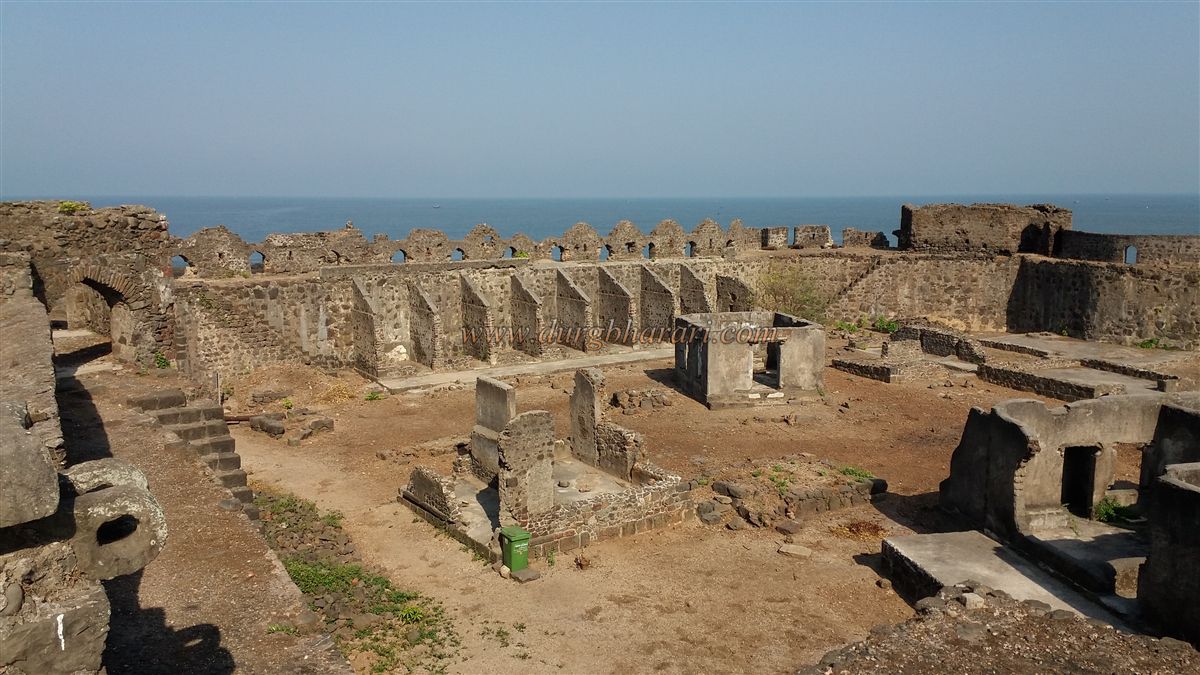
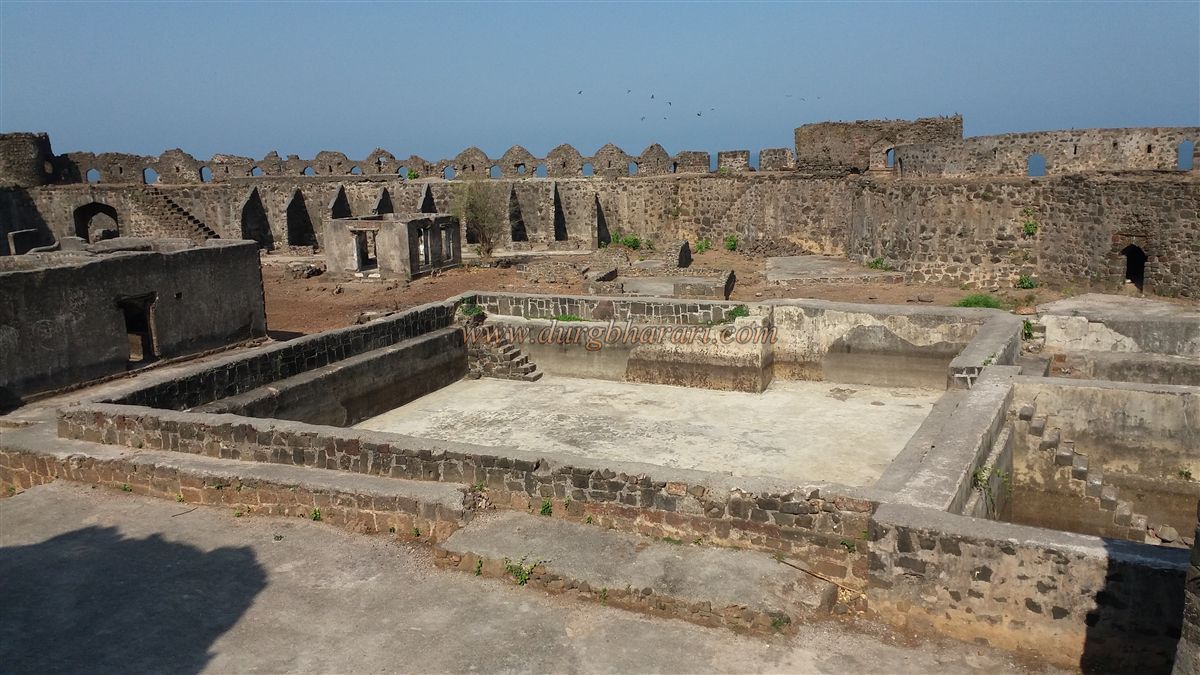
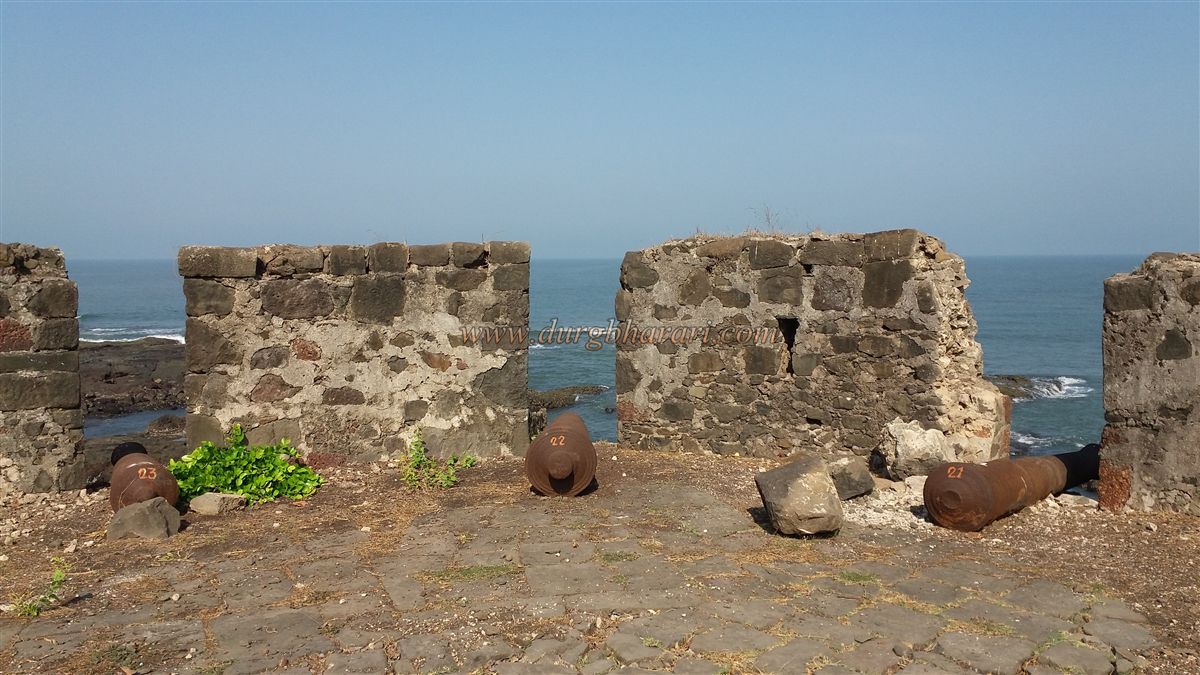
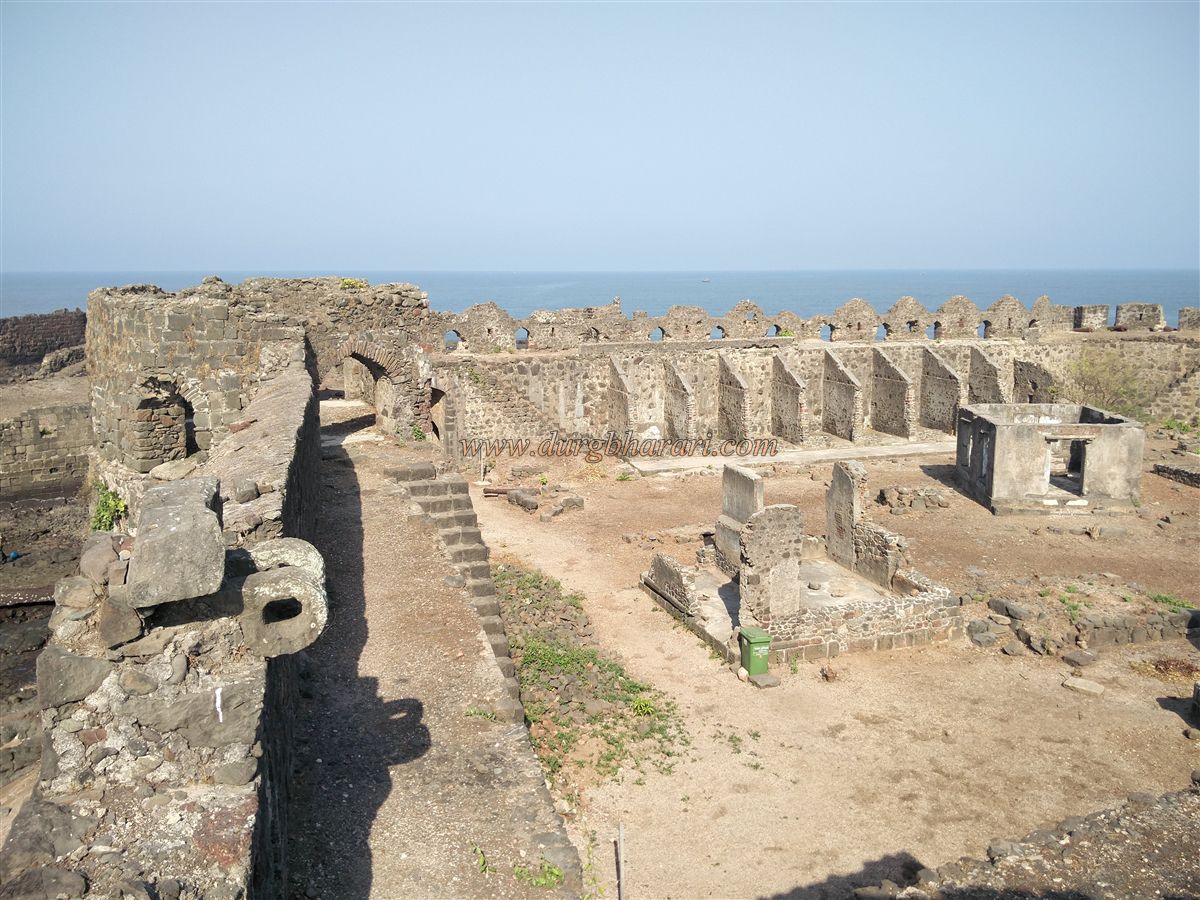
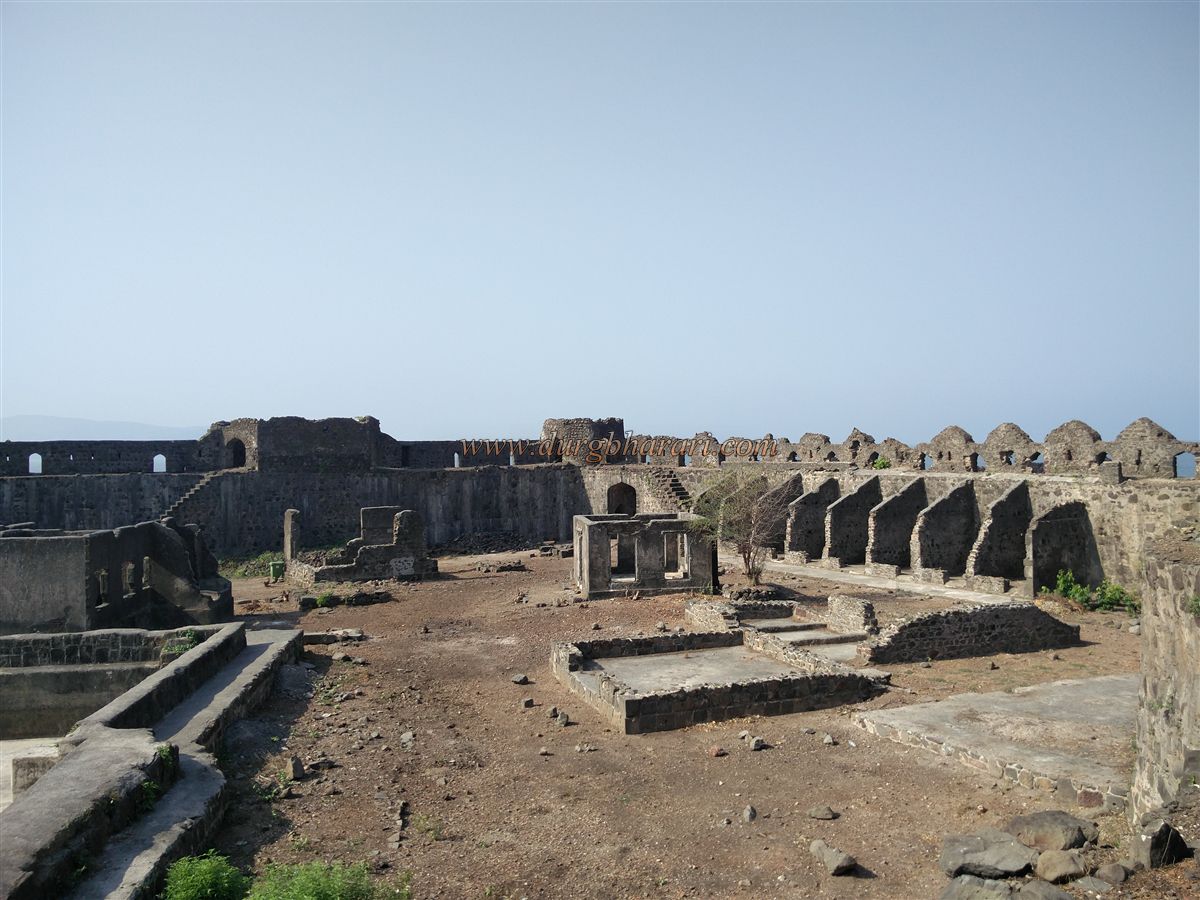
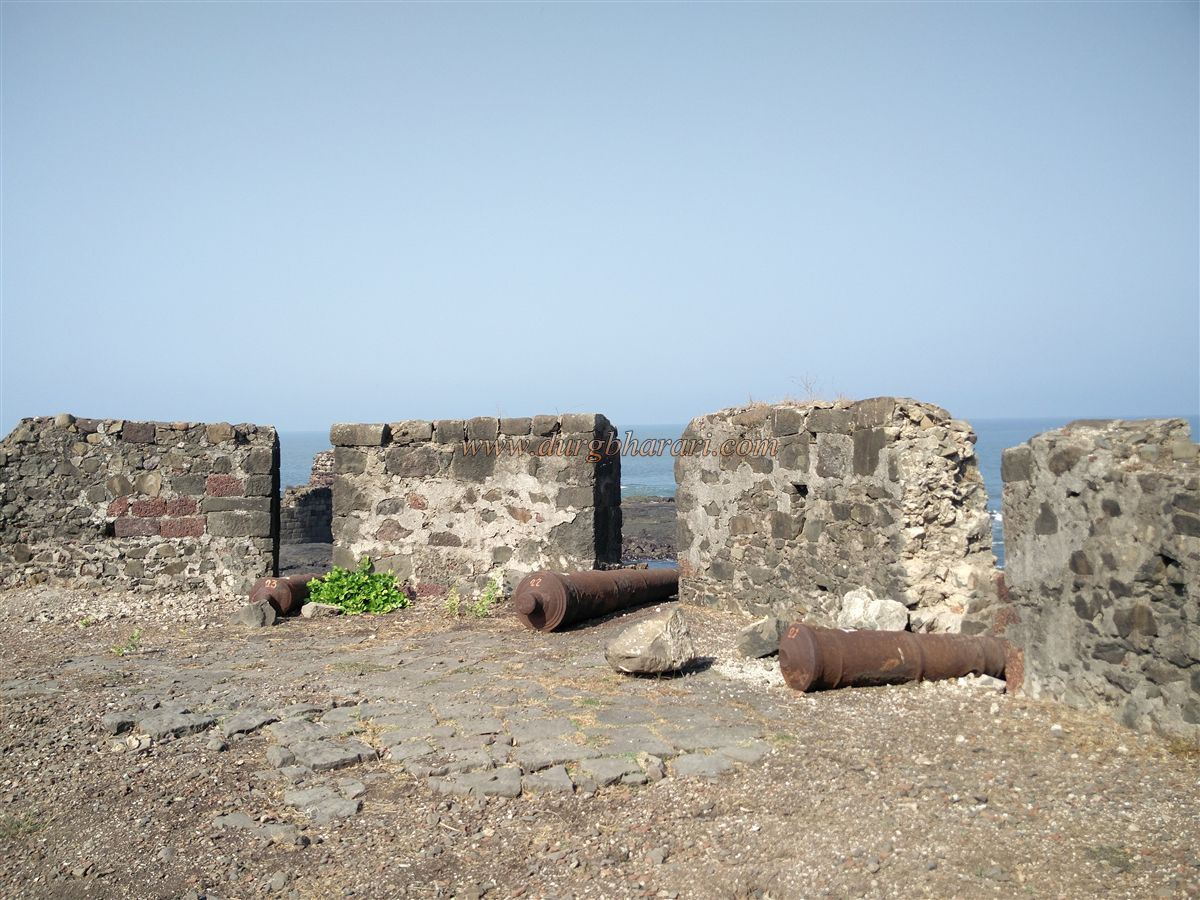
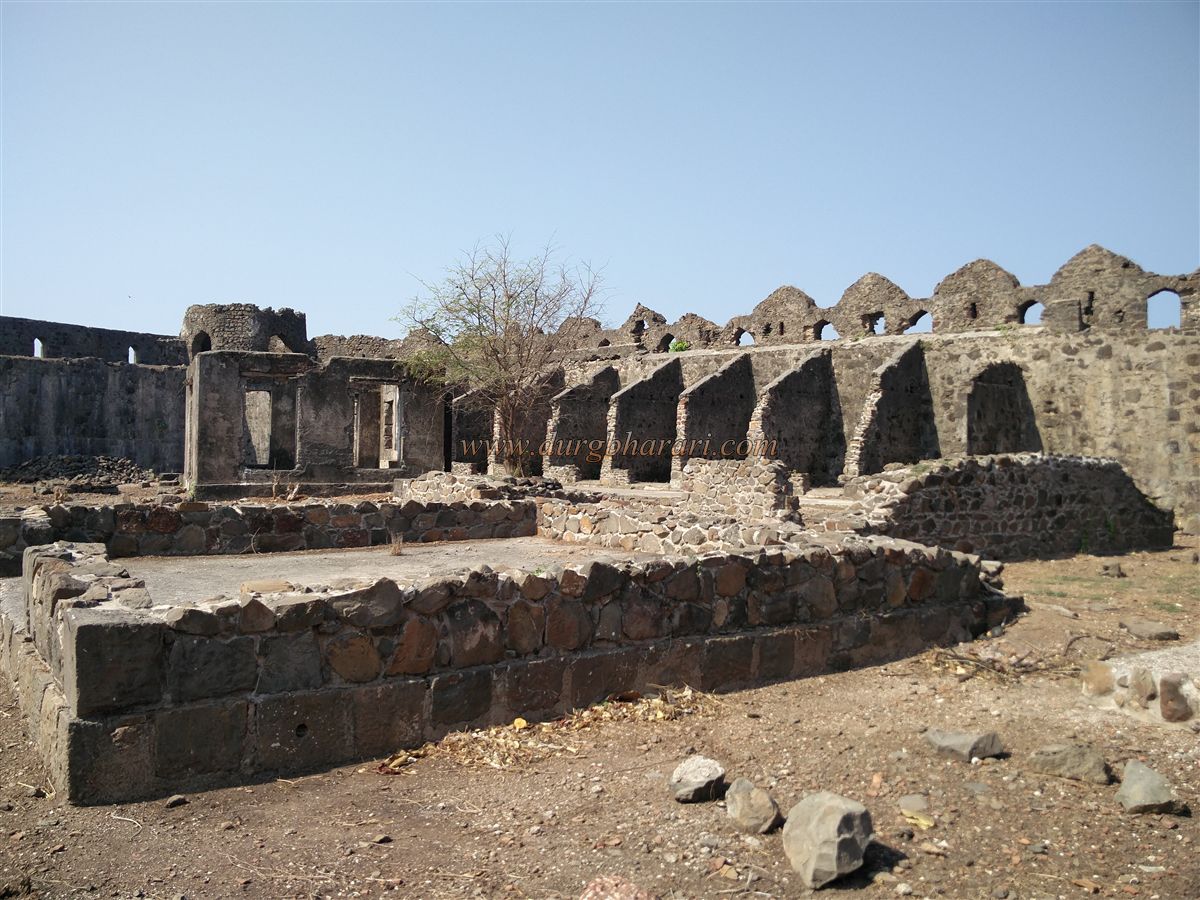
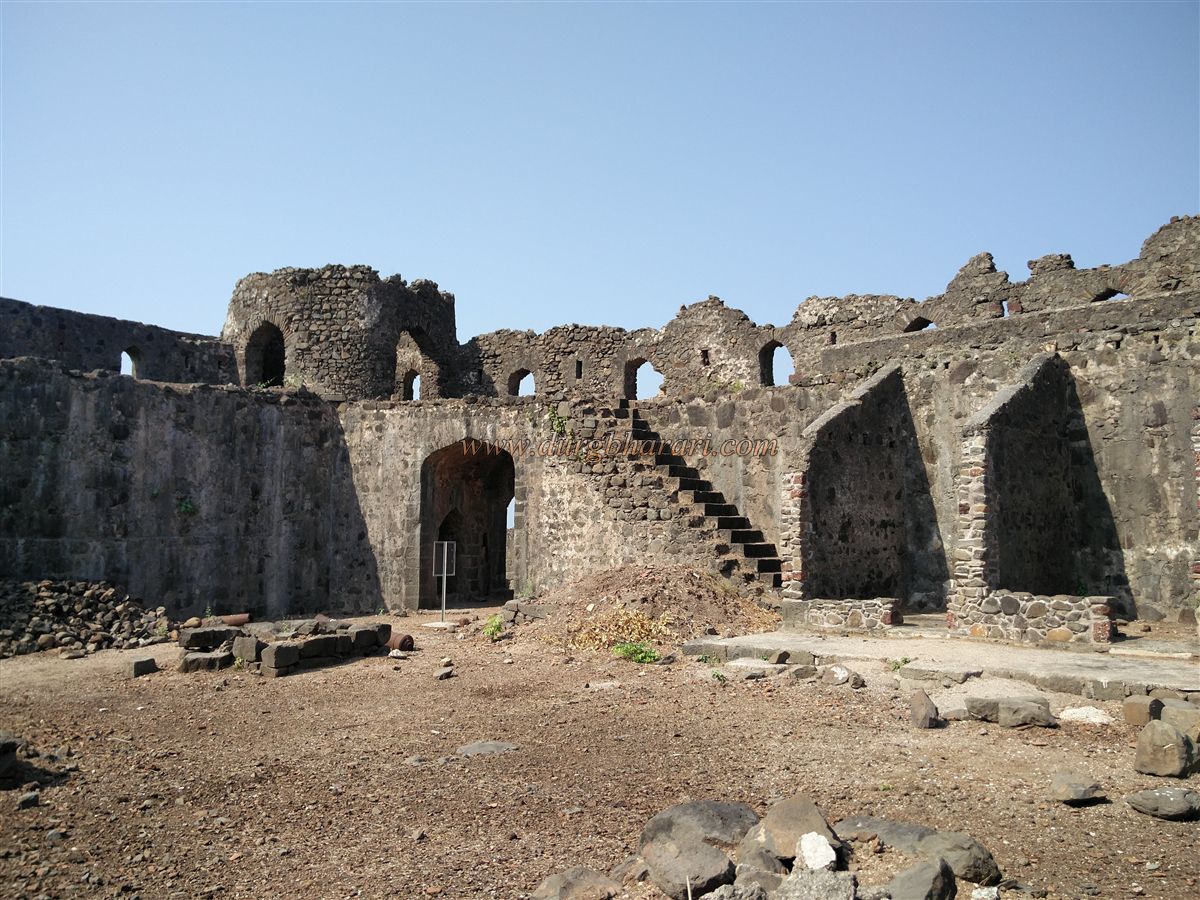
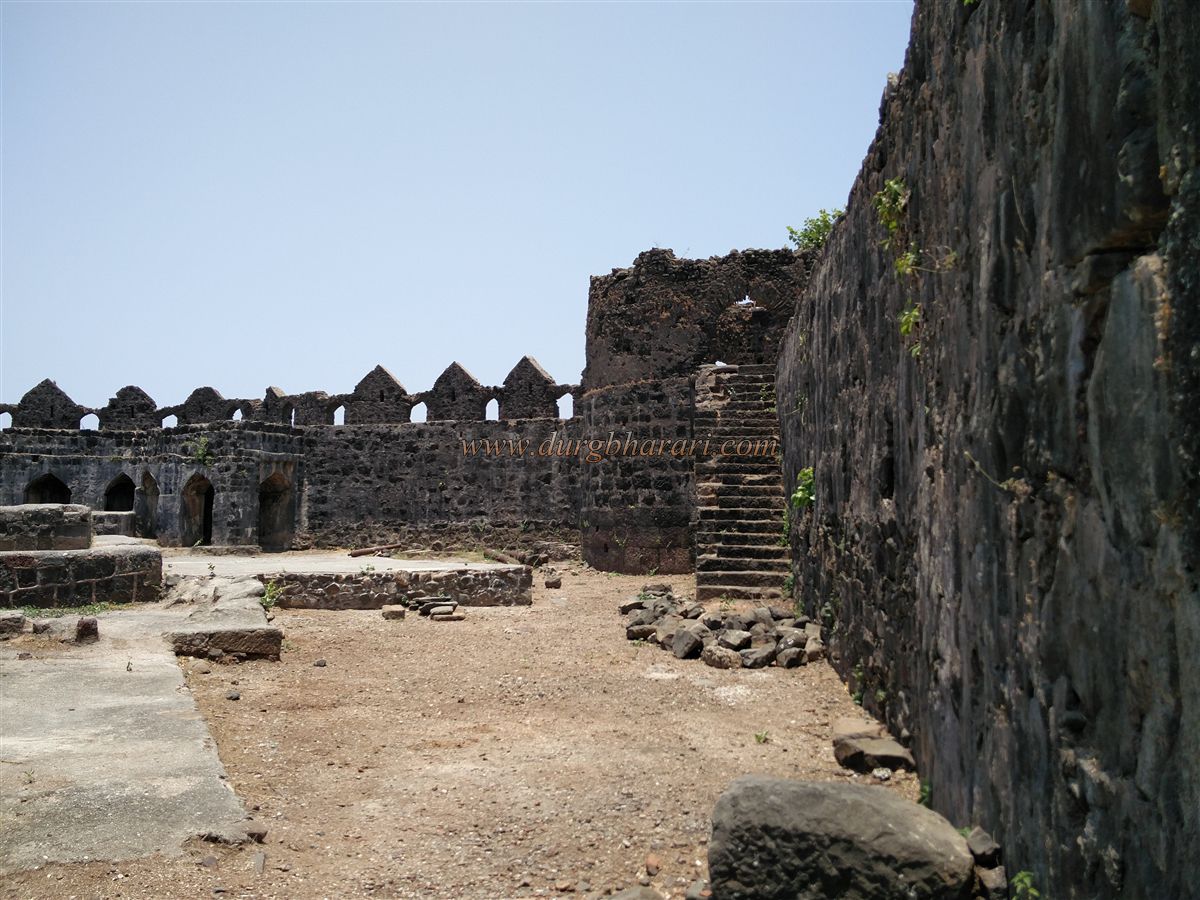
Upon entering, to the right are ruins of some structures and three rainwater collection tanks (the water is not potable). Behind these, in the bastion walls, are two chambers. Opposite the gate is a staircase leading to the ramparts. A five-foot-wide parapet allows a circular walk around the main fort. Along this path, there are many cannons and merlons facing outward. Near the rear gate, one gets a spectacular view of the lotus-shaped bastion of the Parkot. Nearby, there are several old structures in a row — likely old barracks or customs offices, possibly built when the fort was under the custody of Customs after independence.
Padmadurg has six bastions in total and 38 cannons across both the fort and Parkot. From the ramparts, one can see Murud beach, Janjira Fort, and Samrajgad Fort.
The mighty Siddhi of Janjira had established control over the region through his naval power, troubling local people. Shivaji Maharaj needed to curb his influence. To monitor Siddhi’s land-based activities, Shivaji built Samrajgad near Murud. To counter his naval power, he decided to build Padmadurg on the island of Kasa. Shivaji immediately sent artisans — stonecutters, masons, blacksmiths, and carpenters — to the island.
Upon learning this, the siddhi was alarmed. A Maratha fort so close to his capital (Janjira) was a threat. He tried repeatedly to sabotage the construction, but the work continued. Protecting the fort-builders required logistics: food, gunpowder, and money. Shivaji ordered Moropant Pingle to instruct Jiwaji Vinayak, the Subhedar of Prabhanvali, to provide the necessary funds and supplies.
When Jivaji Vinayak delayed the supplies, Shivaji sent a harshly worded letter on January 18, 1675, rebuking him for negligence, and saying:
“If you are so slack and delay the supplies, how will the Sahibs be pleased? Beyond this, I shall not consider your opinion.”
Jivaji complied, and Padmadurg was eventually completed. The first fort commander appointed was Subhanji Mohite.
In 1676, Shivaji, under Moropant Pingle, launched a campaign to capture Janjira with a force of 10,000. Despite cannon fire from boats, the fort resisted. Moropant then summoned Lai Patil, the leader of a Koli village, and his brave Son Koli stationed at Padmadurg. At night, Lai Patil and 8–10 companions climbed the walls of Janjira using rope ladders. However, when Moropant’s main force didn’t arrive by dawn, they had to retreat in disappointment. For his bravery, Shivaji gifted Lai Patil a boat called “Palkhi”, along with royal honours like an umbrella, banner, fine garments, and the title of Sarpatil of the coastal villages.
Even during the reign of Sambhaji Maharaj, Padmadurg remained with the Marathas till around 1680, as per English records. Eventually, it fell into Siddhi’s hands.
According to the 1883 Colaba Gazetteer, Padmadurg was built around 1693 for guarding Rajapuri Creek. It’s likely referring to a second wall partially constructed from the sea side, which was never completed.
In 1702, Subhanji Mohite was still the fort commander. On April 28, 1704, Moropant Pingale’s son, Neelkanth Pingle, and Parashuram Trimbak wrote to descendants of Bahiro Pant Pradhan, stating that Chhatrapati Shivaji had allotted two villages to fund the fort’s maintenance and expenses, and that these should now be handed to the fort’s manager without delay or misuse.
This shows how Shivaji Maharaj ensured not only the construction but also the long-term maintenance of forts. Before it fell to the Siddhis, the fort was under Janaji Pawar (Havaldar) and Malhar Narayan Cheulkar (Mujoomdar).
In 1732, during the siege of Murud by the Peshwa, a treaty was signed. Janjira, Padmadurg, and nearby towns like Mandale, Nandgaon, Dive, and Shrivardhan remained with the Siddhis, while the Peshwa retained Birwadi, Tale, Ghosale forts, and towns like Nizampur and Goregaon.
By 1707, the fort commander was Sirur Khan, and after siddhi Qasim’s death, he became the ruler of Janjira. Eventually, Raghuji Angre captured Padmadurg on February 21, 1759, during the Peshwa period.
© Suresh Nimbalkar
GALLERY