VIJAYGAD
TYPE : COASTAL FORT
DISTRICT : RATNAGIRI
HEIGHT : 0
GRADE : EASY
Maharashtra is adorned with forts of many types – hill forts, sea forts, land forts, and forest forts. Among the hill forts are several twin fort complexes like Chandan–Vandan and Salher–Mulher, but on the coast, only one such pair exists – the twin forts of Jaigad and Vijaygad. Standing as silent witnesses to history, Jaigad lies on the southern bank and Vijaygad on the northern bank, at the point where the Jaigad creek meets the sea. These forts were built to monitor and safeguard the trade conducted through the Jaigad creek.
Located in Ratnagiri district, this fort pair stands on the slopes near the mouth of the Shastri River, with Jaigad in Ratnagiri taluka and Vijaygad in Guhagar taluka. Just as mountain forts are often separated by a pass, these two forts are divided by the channel of the Shastri River. While Jaigad has received some attention for its strategic and historical significance, its counterpart Vijaygad, which equally contributed to guarding the Shastri River, has been largely neglected.
...
It is barely known today, often referred to merely as Jaigad outpost. In fact, many fort enthusiasts don’t even list it in their itineraries.
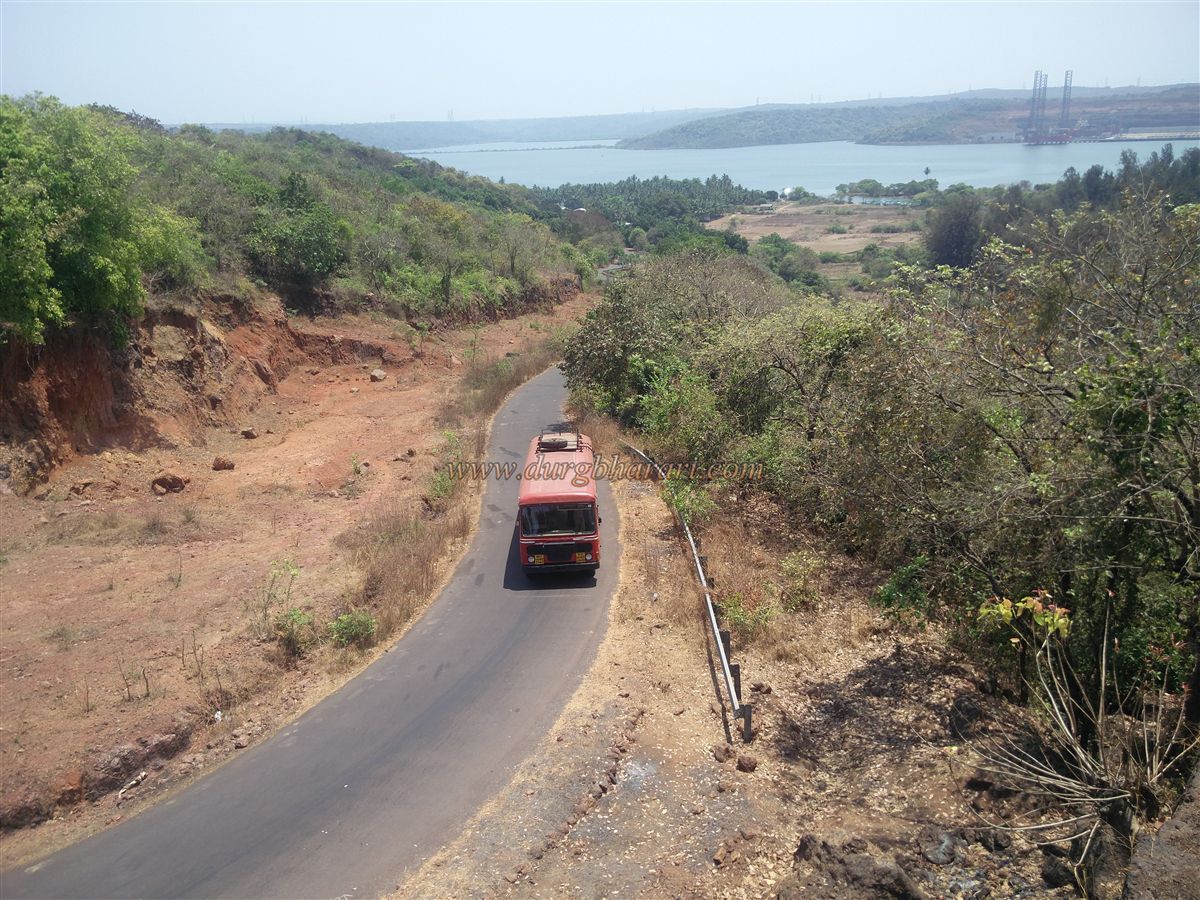
Today, we set out to explore this very Vijaygad. The village of Tavasal, located about 60 km from Chiplun, 50 km from Ratnagiri, and 30 km from Guhagar, serves as the gateway to the fort. On the way from Tavasal village to Tavasal Jetty, a small road branches off to the right, where the ramparts and bastions of Vijaygad become visible as you descend a small slope. Though many books describe Vijaygad as Jaigad outpost, a small fort, or simply a “gadhi,” in reality, it is a complete fort with a strong citadel (Balekilla) and a lower fortification (padkot) leading down towards the sea.
Vijaygad is a striking example of how utter neglect can lead to the ruin of a historic structure. Most people are unaware of this fort; only the villagers, who visit it once a year for Shiv Jayanti celebrations, refer to it as the “Tavasal Fort.” According to them, the fort is privately owned and recorded in the name of the Surve family in official land records.
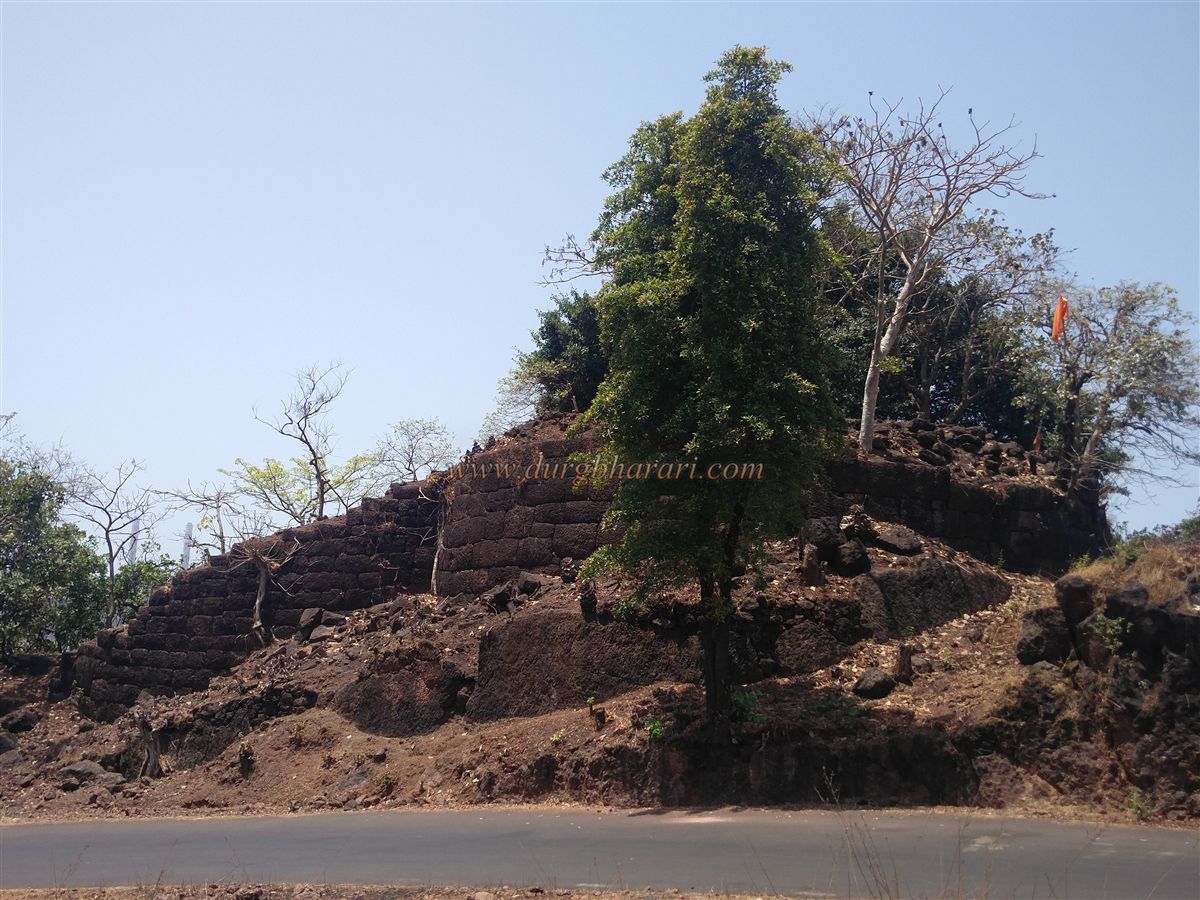
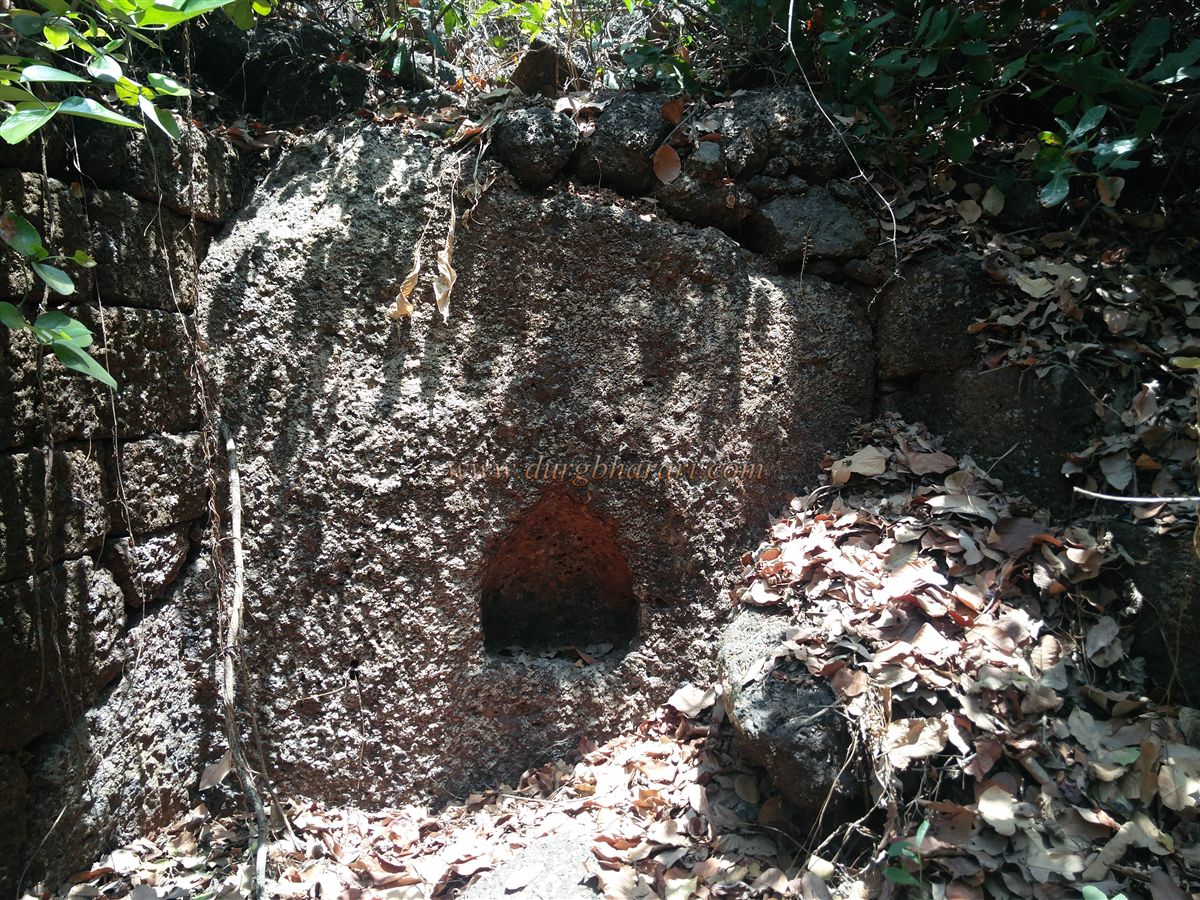
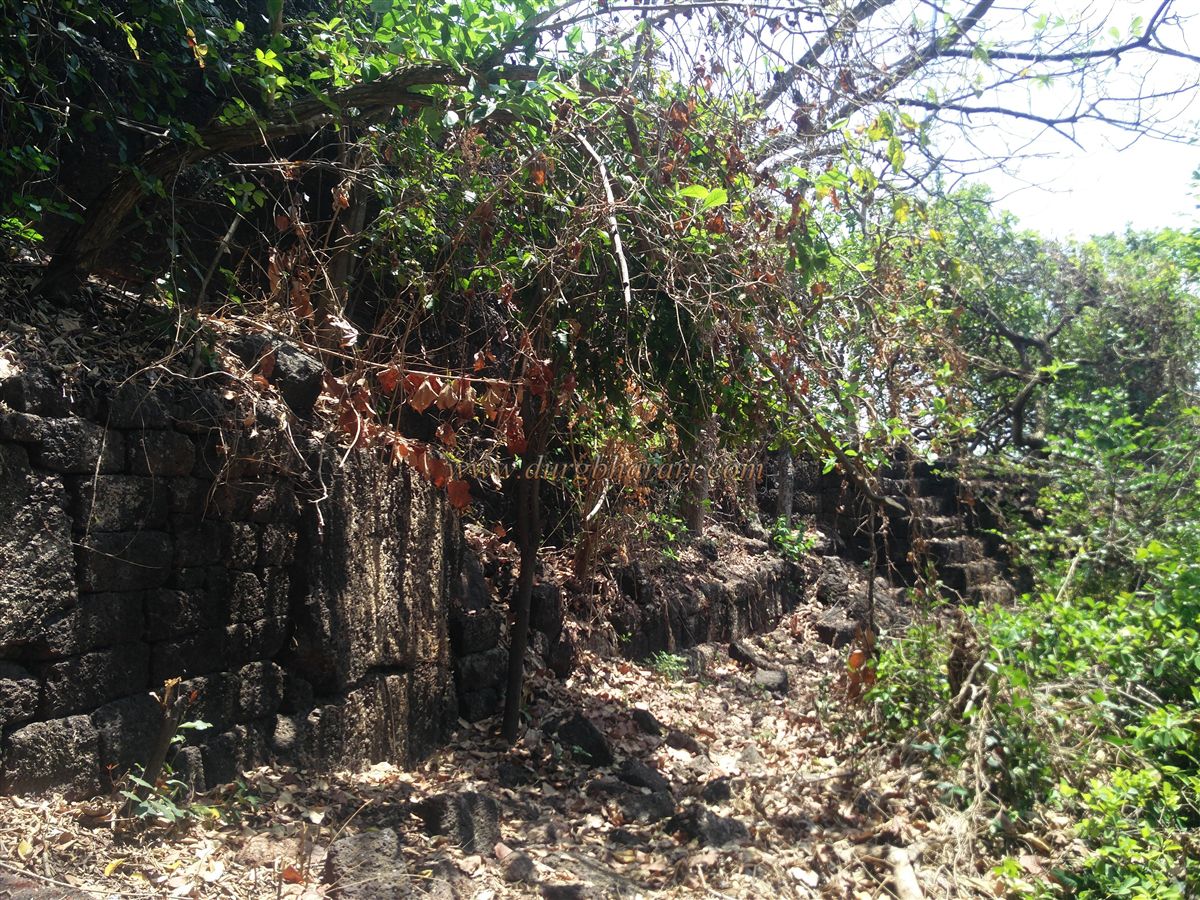
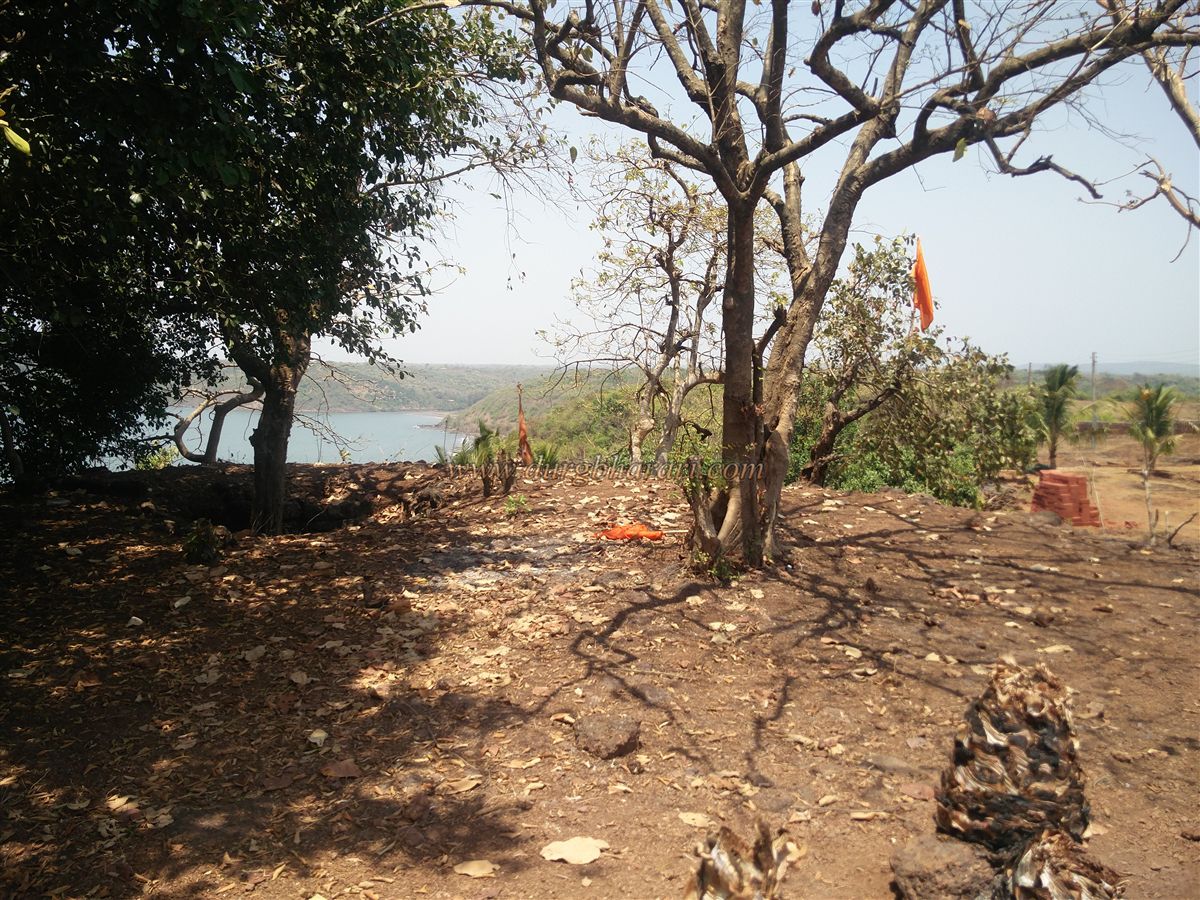
Vijaygad’s layout resembles that of Jaigad, Yashwantgad, and Gopalgad – a robustly fortified citadel on the plateau side and walls sloping down toward the sea forming the lower fortification. From the road, one can spot a bastion flying a flag. At the end of the descending walls lies the fully ruined entrance of the citadel. This winding entrance once had two guard rooms on either side, now partially collapsed. One of these guard rooms still has a niche for lighting a lamp.
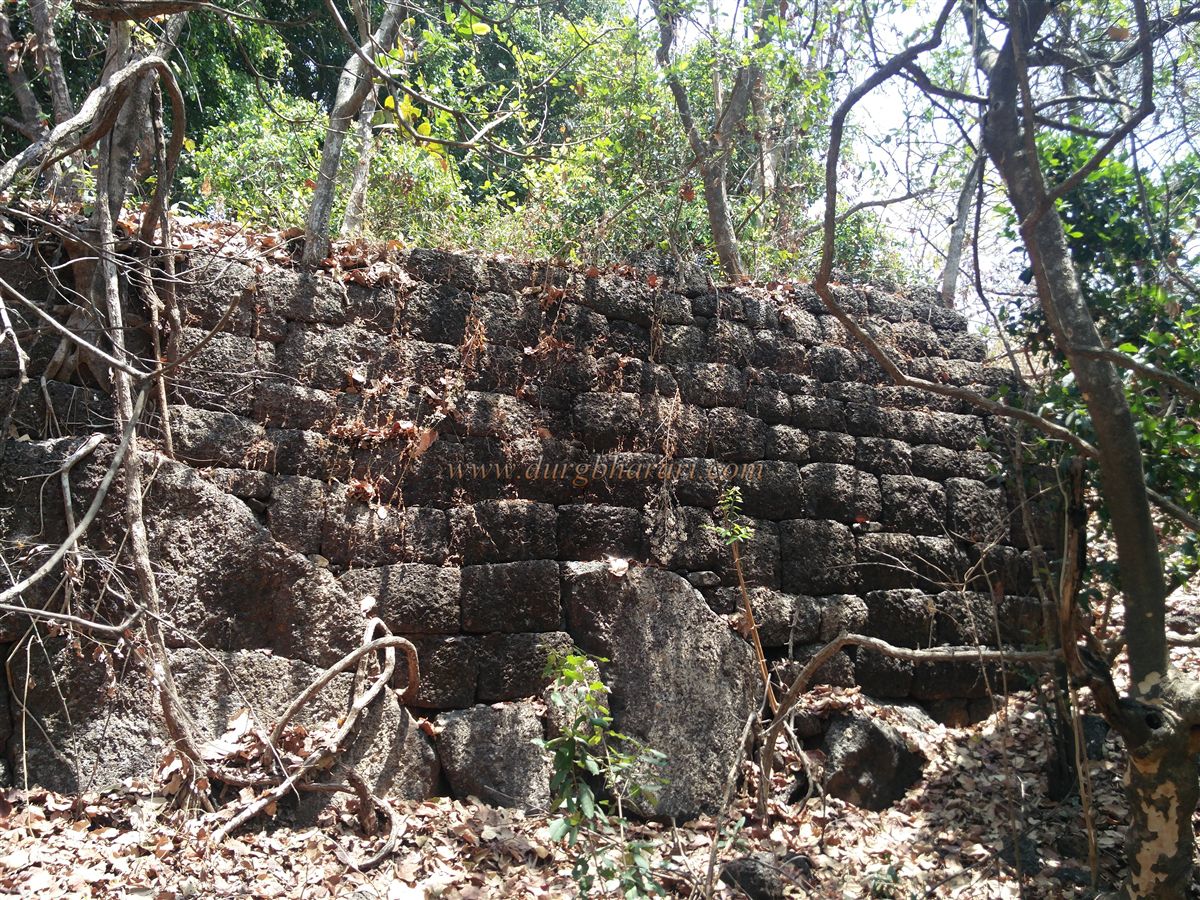
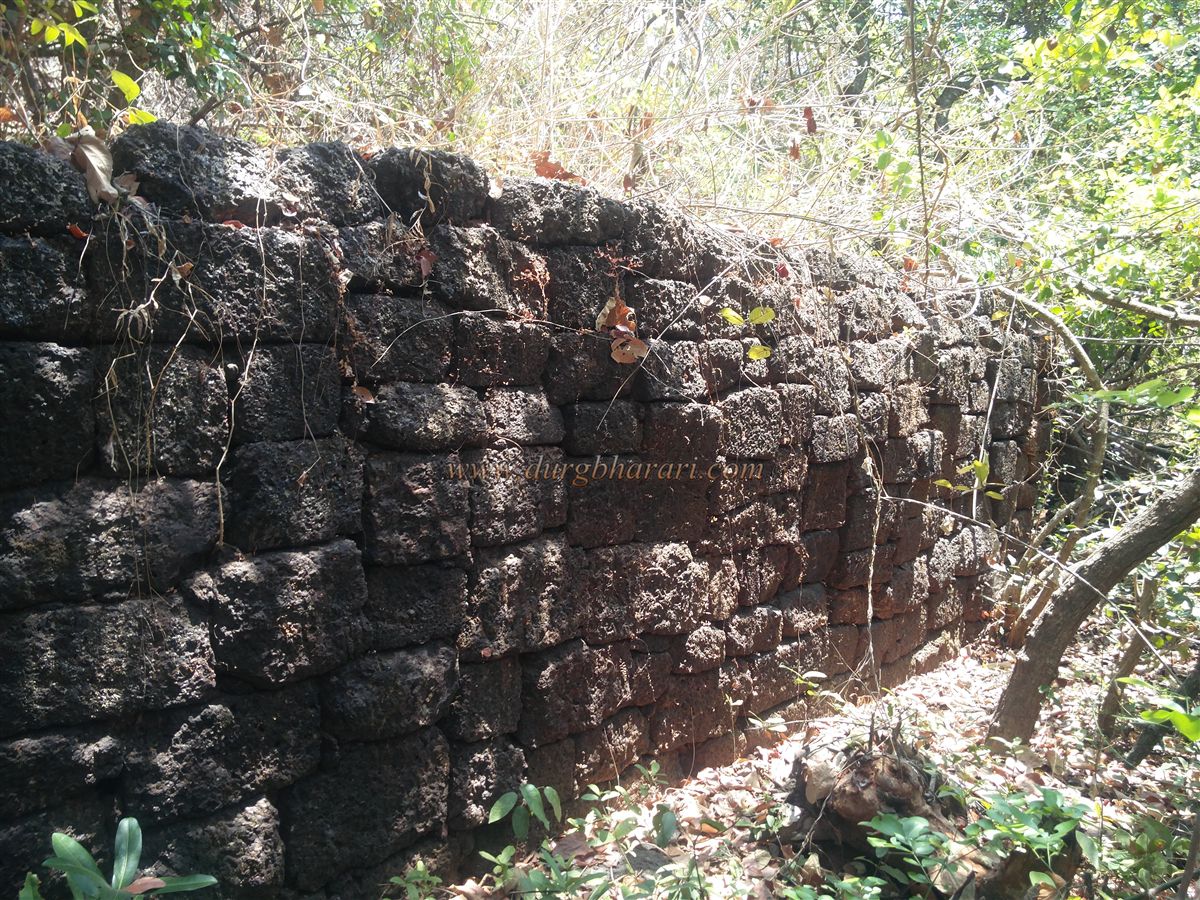
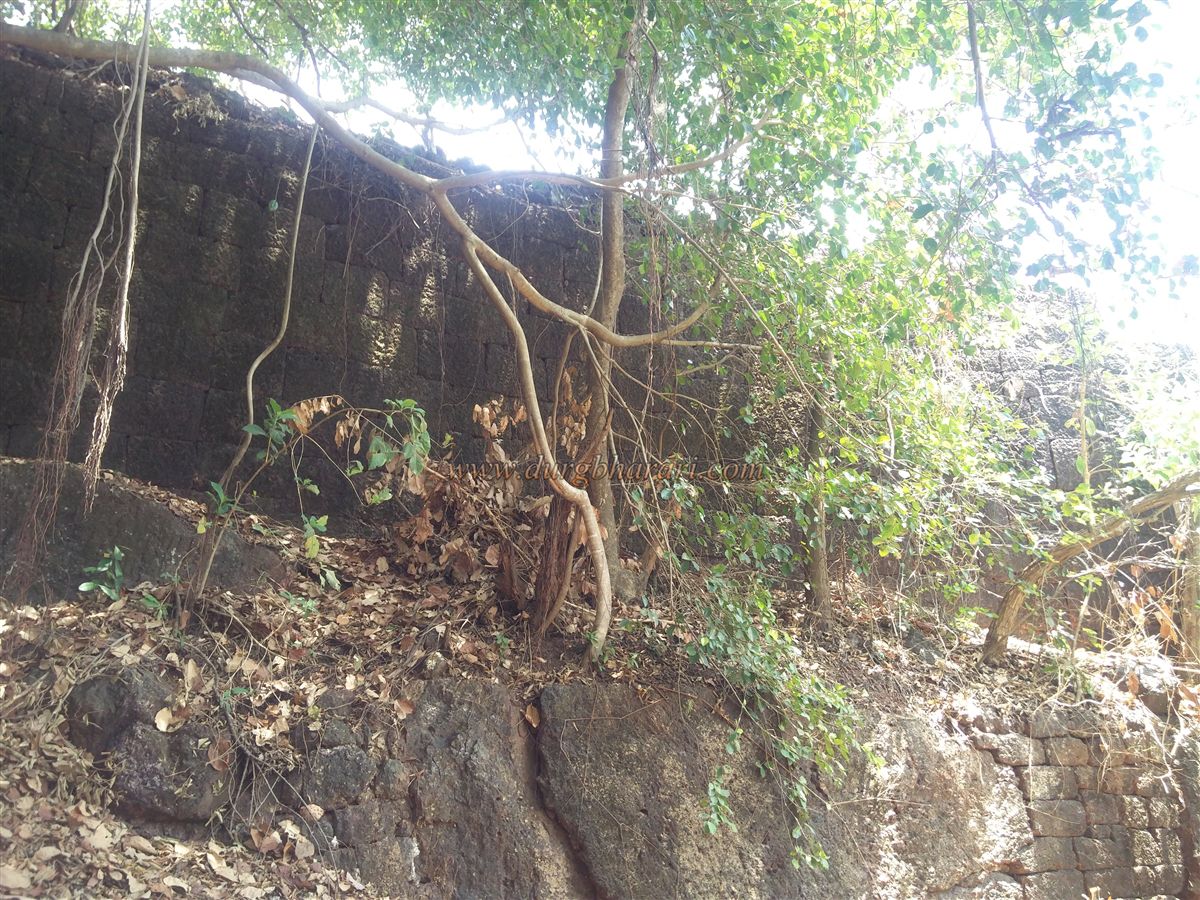
Stretching east–west, the entire fort covers about two acres. The citadel’s main entrance faces east. Moving left from here, the tall ramparts and bastions of the fort become visible, and one can climb onto the walls. On this path, the base of a structure can be seen to the left. Dense thorny vegetation now overwhelms much of the fort, making movement difficult, but parts of the citadel can still be explored with some effort. The lower fort, however, is completely inaccessible from here. Perhaps access from the sea is possible, but no path to the shore was visible during our visit.
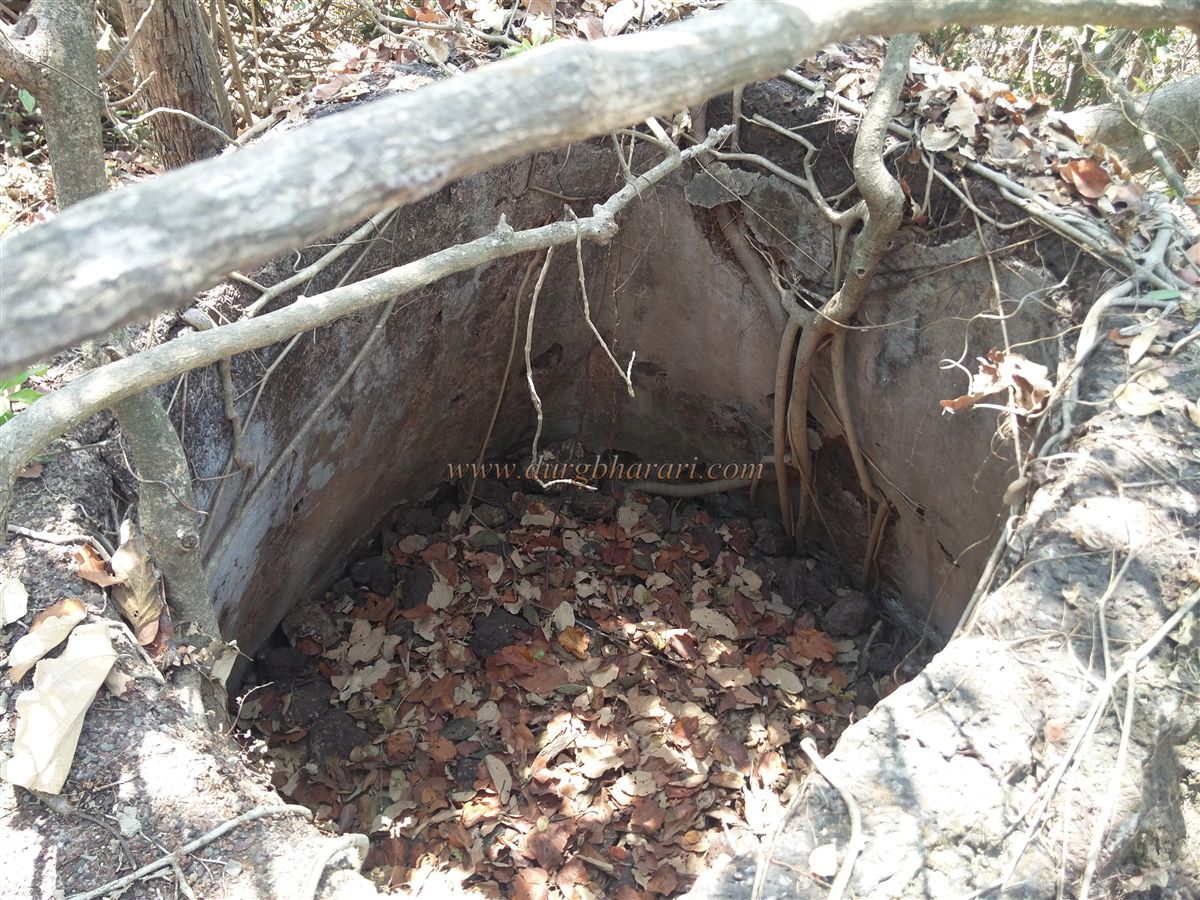
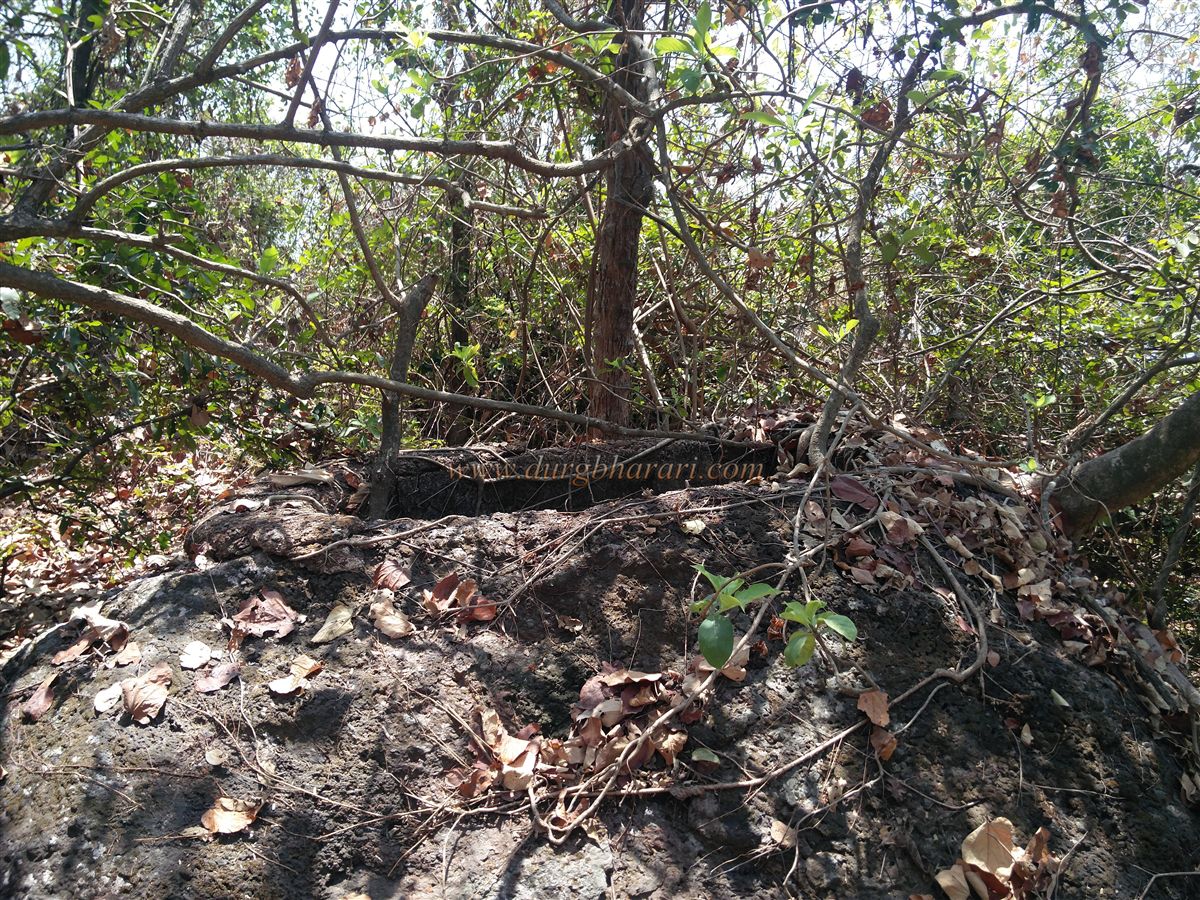
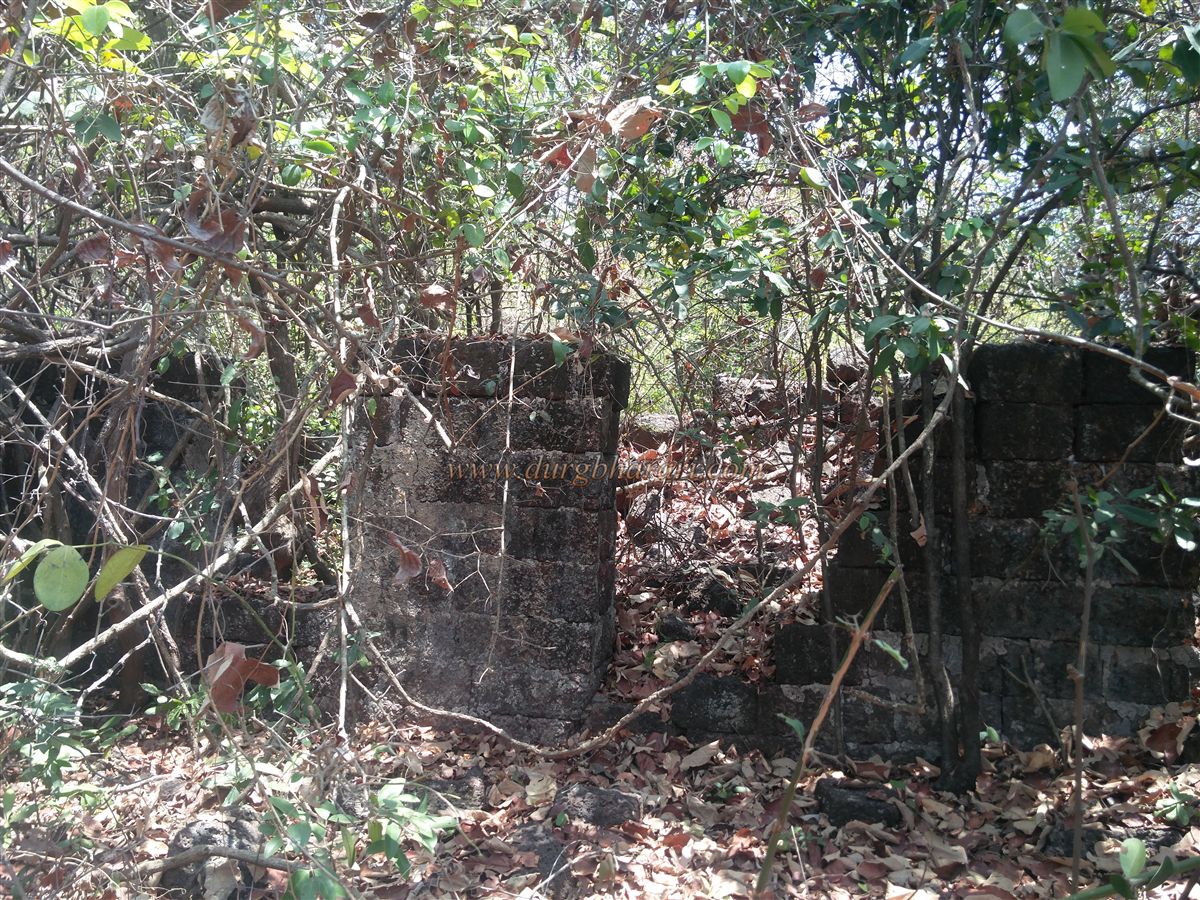
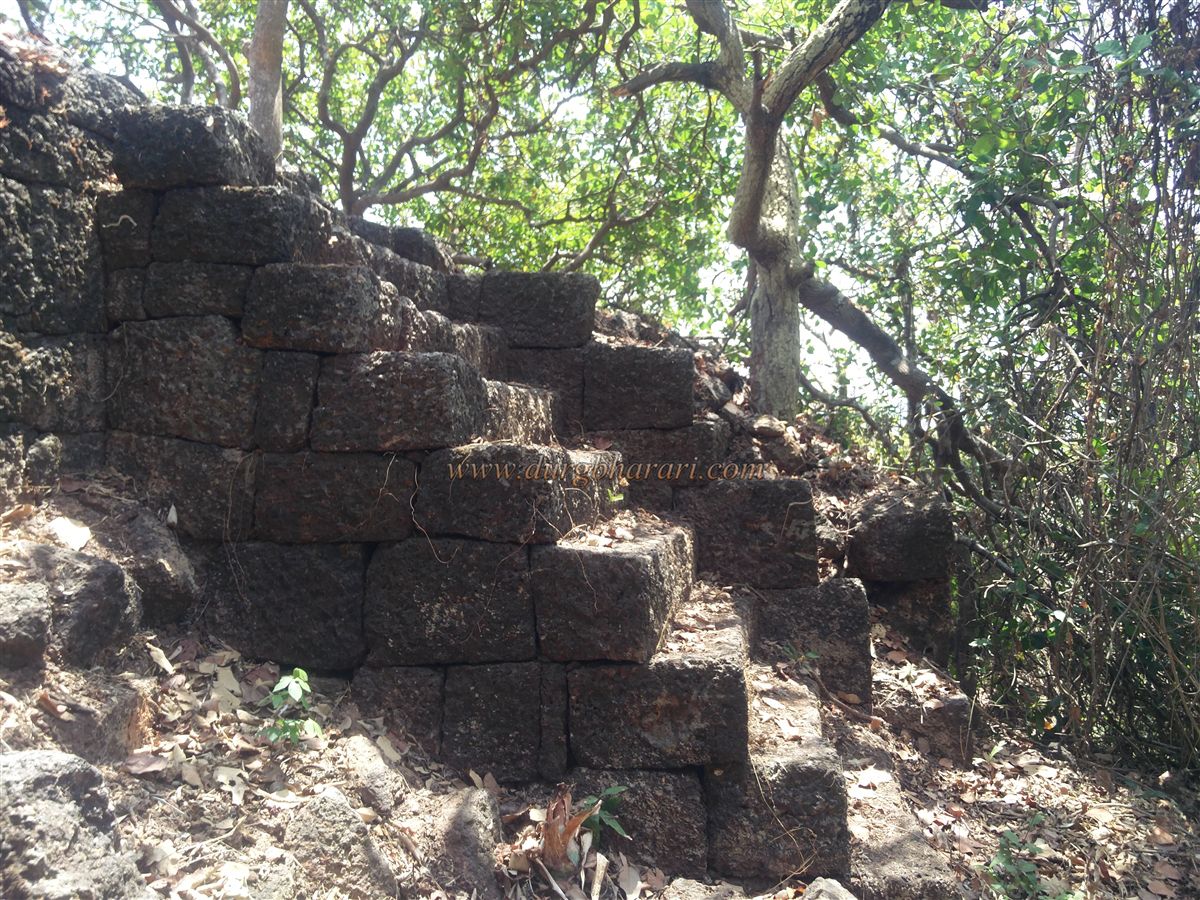
While walking along the ramparts, a rock-cut cistern appears on the left. Proceeding further, one reaches the remains of another building with walls featuring three doorways – two in front and one at the rear. Nearby stands the base of another large structure. In total, the fort has six bastions, two staircases leading up to the walls, and one path descending toward the lower fort. Returning to the original path, one can climb up to the large bastion visible from the road. This bastion, which houses a dried-up cistern, is the highest point on the fort. From here, the view of the lower fortifications sloping toward the sea, the Jaigad creek, Jaigad fort across the water, and the ferryboats crossing the creek is spectacular. This completes the circuit of the citadel.
Vijaygad and Jaigad can be visited together in a single day from Ratnagiri or Guhagar. Sadly, Vijaygad’s current state is dire. Years of neglect and unchecked vegetation growth have caused severe damage to the fort, pushing it toward near-total ruin. A fort that was in relatively good condition two or three decades ago now lies in a pitiable state.
The exact date and builder of Vijaygad are unknown, but its construction predates Shivaji Maharaj’s era. In 1347, it was under the control of Abdul Muzaffar Allauddin of the Bahmani Sultanate. During Shivaji Maharaj’s reign, it came under Maratha rule. In 1698, Chhatrapati Rajaram Maharaj granted the fort to Admiral Kanhoji Angre. The fort remained with Angre until it briefly fell into the hands of the Siddhis, only to be recaptured by the Marathas in May 1733. In 1735, Chhatrapati Shahu prevented Sambhaji Angre from ceding Vijaygad and Bankot to the Siddhis, ensuring that Vijaygad remained with the Angres. In 1756, Peshwa Nanasaheb defeated Tulaji Angre and brought Vijaygad under Peshwa control. In 1818, the British captured the fort from the Peshwa, and it remained in their possession until the end of their rule, after which it was recorded in the name of the Surve family in official records.
© Suresh Nimbalkar
GALLERY