VIHIRGAON
TYPE : SINGLE BASTION
DISTRICT : CHANDRAPUR
GRADE : EASY
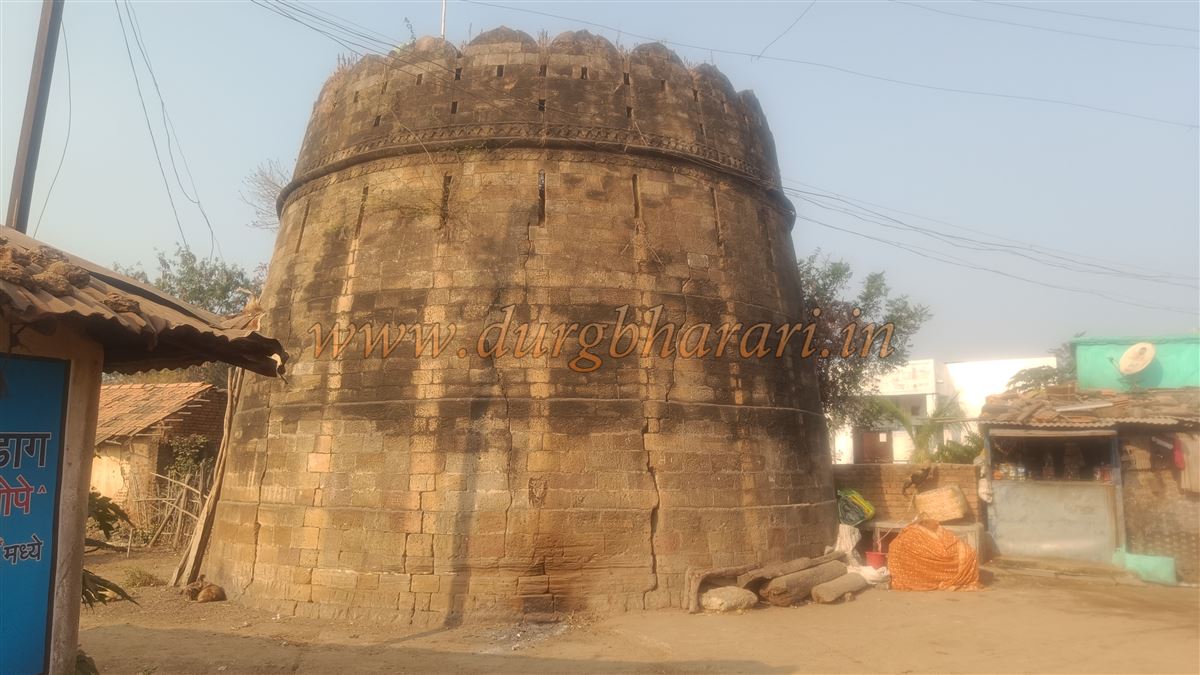
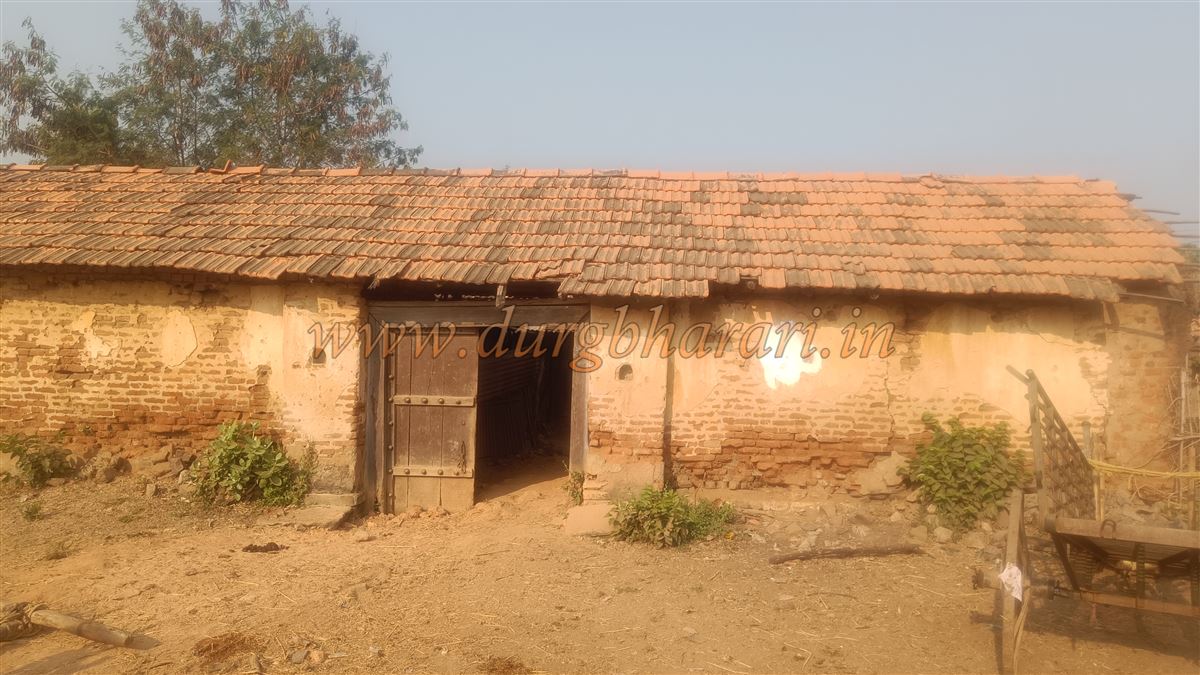
While travelling through Maharashtra’s Palghar district, one can see a large number of solitary bastions built by the Portuguese. This had led me to believe that the chain of solitary bastions constructed for defensive purposes was exclusively a Portuguese contribution to the art of warfare. However, while exploring Chandrapur district, I came across not just one or two, but a chain of four such bastions—at Chanai, Vihirgaon, Rupapeth, and Durgadi—along the district’s border, which disproved my earlier assumption. Among these four, the most beautiful and well-preserved is the Vihirgaon bastion, which we are about to visit. Vihirgaon lies 38 km from Chandrapur district headquarters and 14 km from Rajura taluka headquarters. Since this bastion is located within Vihirgaon village, it is known as the Vihirgaon bastion, but the locals in the village refer to it as Joshi’s Fort. The bastion stands right next to the Joshi family’s mansion (wada). Although the wada looks plain from the outside, the interiors feature beautiful wooden carvings.
...
After the Gond rulers, parts of Vidarbha came under the rule of the Bhonsle dynasty of Nagpur. During their reign, forts were built at some locations for administrative purposes, while in other places, solitary bastions were constructed for the protection of villages or towns. The Vihirgaon bastion is one such example. Judging by its construction style, it was likely built during the Maratha period, under the Nagpur Bhonsles.
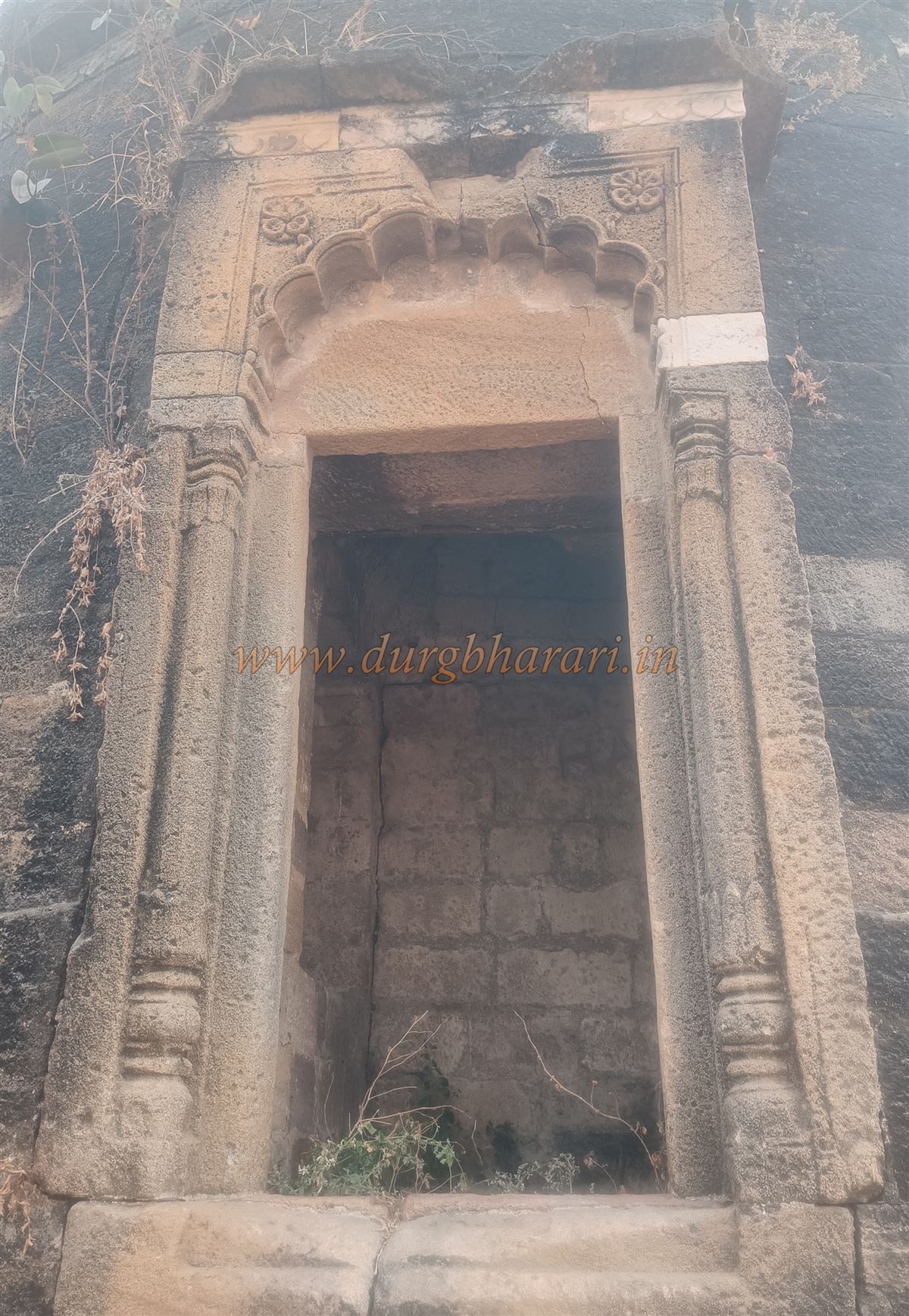
If one asks locals for the location of the “bastion” or “fort,” it is easy to reach the site. The bastion is circular, about 40 feet high, and entirely built of dressed stone. The upper section has loopholes for musket fire and embrasures for cannon fire. The entrance is situated 10 feet above ground level and is adorned with carvings. In the past, as well as today, a ladder is used to enter the bastion.
Upon entering through the door, there is a room immediately inside, followed by another room a short distance away. These rooms were likely used as barracks for soldiers or as storage chambers. From here, a winding staircase leads up to the top of the bastion. On the summit, two stone platforms have been built for hoisting flags, and in some places, stone fittings are provided for fixing torches. Apart from these, there are no other significant remains, so the visit to the bastion can be completed in about 15 minutes.
It seems probable that this bastion was built to protect the Joshi family’s mansion. As the Joshi family or their descendants no longer reside here, very little information about the bastion is available. However, if contact could be made with the Joshi family, much more could be learned about this structure. Due to a complete lack of historical awareness among locals, the history of the bastion remains unspoken.
© Suresh Nimbalkar
GALLERY