VETOBA
TYPE : MEDIEVAL VETAL TEMPLE
DISTRICT : SINDHUDURG
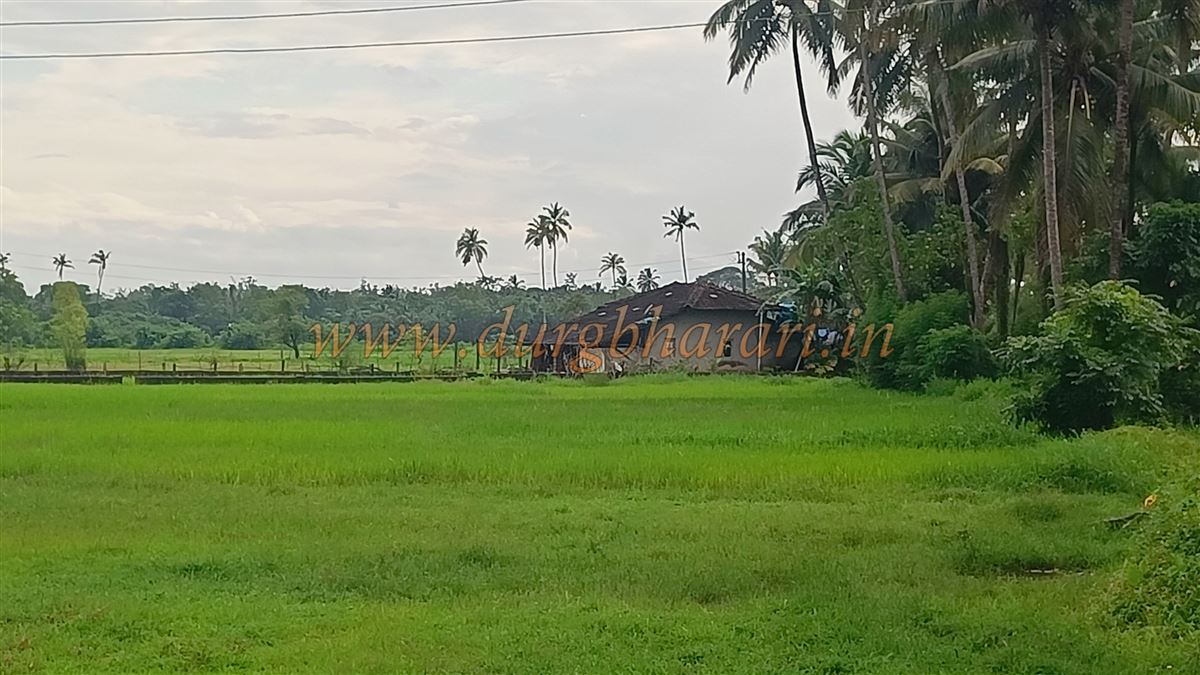
Among the many famous temples in Sindhudurg, one is the Vetoba Temple in Aravali village, Vengurla. About 15 km from Vengurla, on the way to Redi, lies the village of Aravali. In the days of the Vijayanagar Hindu Empire, this place was known as Harvalli. Over time, the name changed to Aravali. The word Har refers to Shiva, and Valli means settlement—thus Harvalli meant “the village where Shiva resides.”
In the seventeenth century, a new chapter was added to Harvalli history by a Nath sect saint named Siddha Bhumiayya. This yogi, who came here from Karnataka, worshipped the ancient Vetal deity in the forest atop the deserted hill called Satakhanachi Dongri. He then relocated and consecrated the deity at the central location where it stands today. It is said that Shri Bhumiayya established Aravali’s temple in the latter half of the 17th century. Records suggest that the present temple was built in 1660 CE, while the front assembly hall (Sabhamandap) was added around 1892–1900.
...
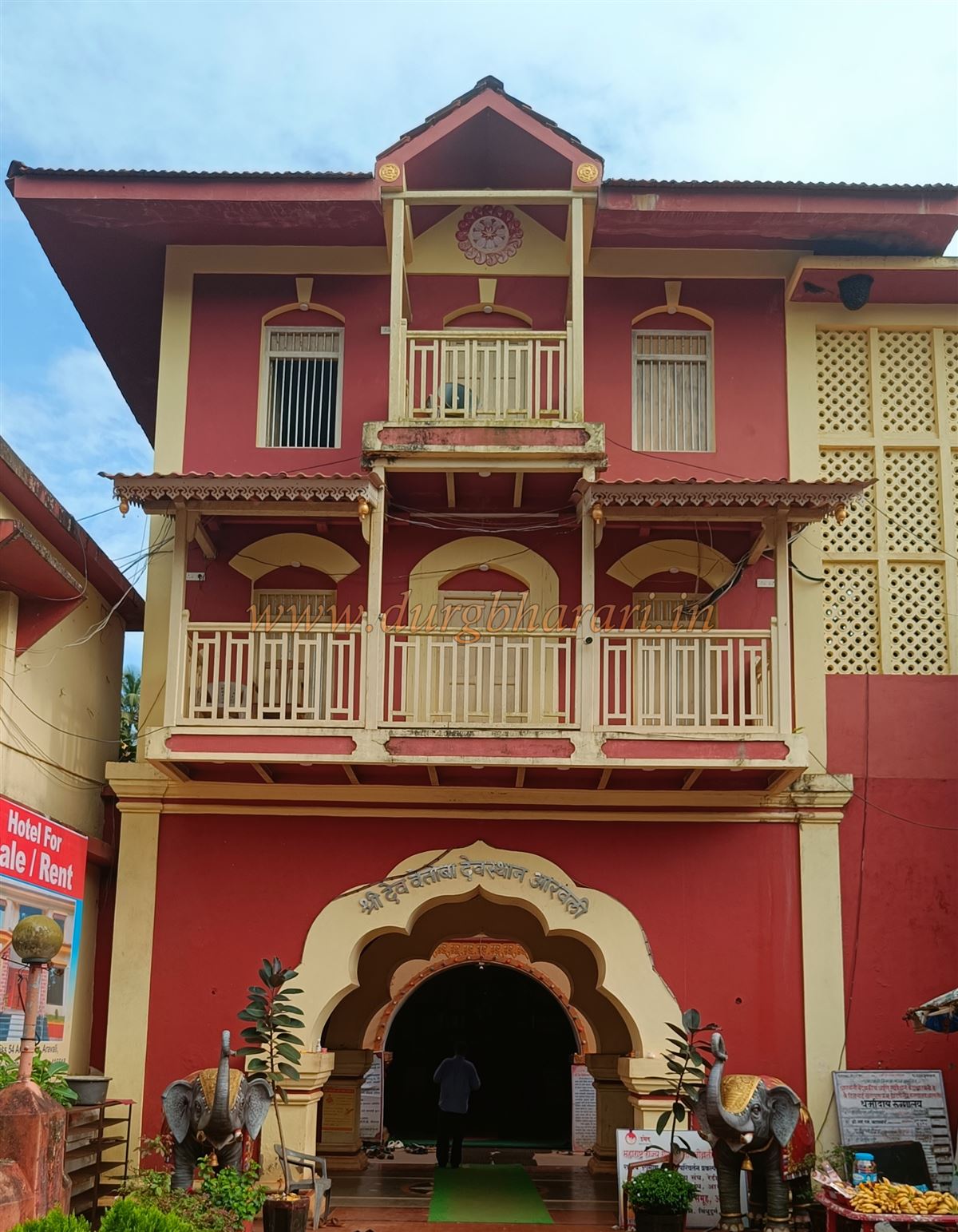
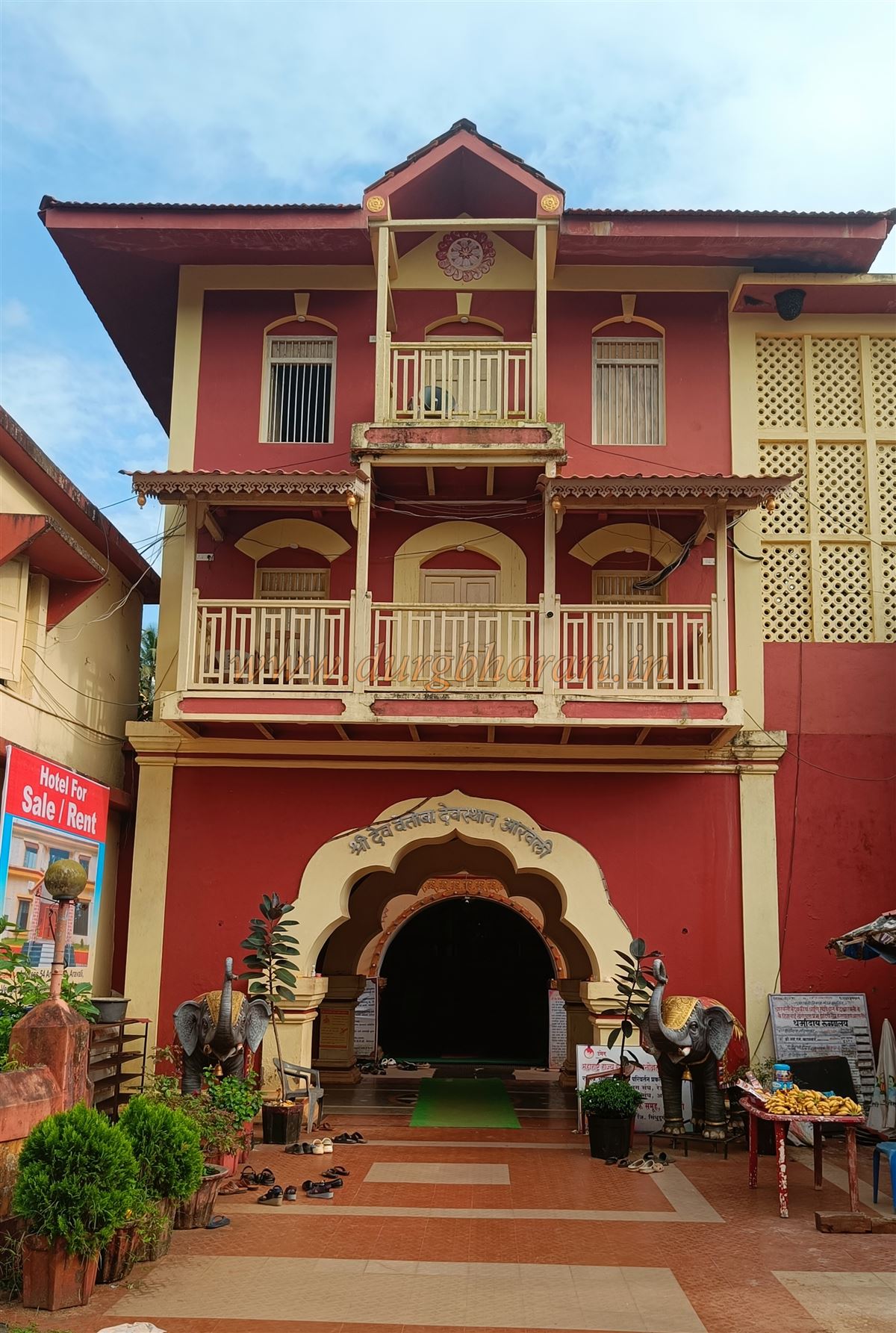
The temple that emerged in the seventeenth century gradually evolved from being the Shri Vetoba Devsthan to the present Shri Dev Vetoba Sansthan Aravali. Today, on arriving at Aravali, one sees the grand entrance arch bearing this name. The temple’s Nagarkhana (drum tower) is three stories high, while the sanctum is two-storied.
Originally, the Aravali Vetoba Temple was dedicated to Vetal. The respectful suffix “ba” was later added, thus Vetal became Vetoba. Shri Dev Vetoba is the guardian deity of Aravali, a picturesque coastal village at the foothills of the Arabian Sea. The villagers worship him as the protector of the village. The temple reflects the prosperity, refined taste, and deep devotion of the local community. Beautifully renovated in a modern style, the temple and its surroundings are impeccably clean.
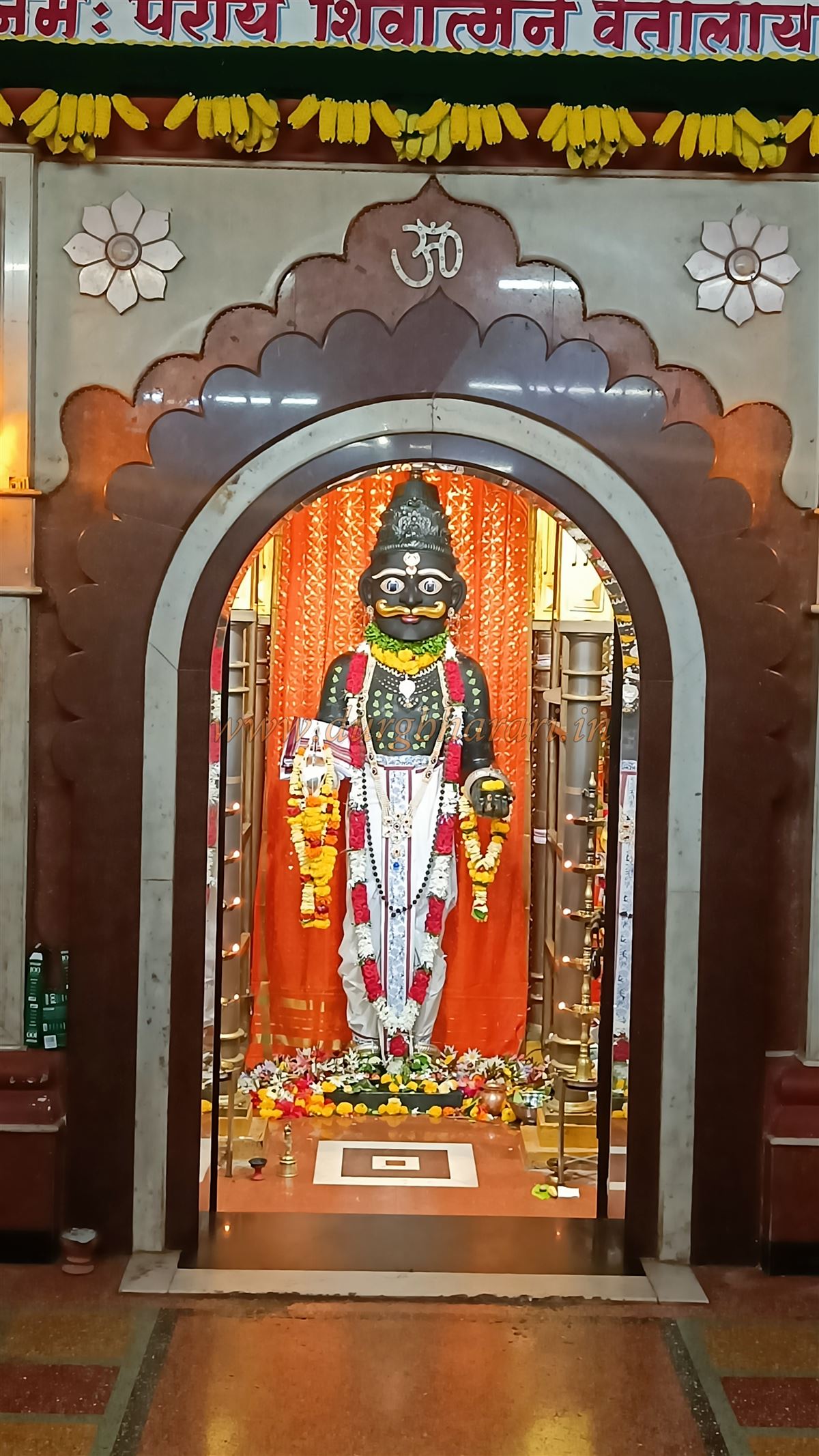
The assembly hall has galleries with railings on all four sides above, and seating areas on both sides below. Entering the sanctum, one sees the tall, dark-complexioned idol of Vetoba draped in white garments. Standing about nine feet high, the idol is made of panchadhatu (five metals). Vetoba holds a sword in one hand and a pot in the other. Tradition says that in the early 17th century, the original idol was brought from a nearby hill and was carved from jackfruit wood. Because of the perishable nature of the wood, it had to be replaced every 100 years. The present striking panchadhatu idol was made by a local sculptor and installed in 1996.
In the past, since Vetoba’s idol was made of jackfruit wood, villagers refrained from using jackfruit wood in construction or other purposes. The sword in Vetoba’s hand is about three and a half feet long, emphasizing his role as the village’s guardian deity. A unique local tradition involves offering bunches of bananas and pairs of sandals (chappals) as vows (Navas). Locals believe that even today, Vetoba roams the village at night with a staff in hand and a blanket on his shoulder, guarding the settlement— and that he wears the offered sandals during his patrols. In the assembly hall, one can see piles of large leather sandals offered by devotees.
The grand annual fair (yatra) of Shri Vetoba is held twice a year—on Kartik Vadya Purnima and Margashirsha Shuddha Tritiya. Anyone touring Konkan should make it a point to visit Aravali and seek the blessings of this unique and revered deity.
© Suresh Nimbalkar
GALLERY