VASANTGAD
TYPE : HILL FORT
DISTRICT : SATARA
HEIGHT : 2940 FEET
GRADE : EASY
Vasantgad Fort is one of those forts in Maharashtra that is less known by its own name and more famous because of the village below it. That village is Talbid – renowned for being the resting place of Senapati Hambirrao Mohite. Talbid gave two great sacrifices to the Swarajya cause – Senapati Hambirrao Mohite himself and the valiant warrior queen Tarabai. Though the Samadhi (memorial) of Hambirrao Mohite at Talbid is well-known to people, the fort of Vasantgad that rises behind the village remains largely unknown.
There are two paths to reach Vasantgad – one from Talbid and another from the village of Vasantgad itself. Both routes take about an hour to climb. From the Mumbai–Bengaluru highway, there is a turn at Umbraj leading to the Vasantgad village; this route via Umbraj–Chiplun is about 16 km. The other approach is from Talbid: while heading from Umbraj toward Karad on the same highway, there is a turn 6 km from Umbraj that leads to Talbid (10 km away).
...
Most trekkers and history enthusiasts prefer the Talbid route since it also allows them to visit the Samadhi of Hambirrao Mohite.
As you enter the village, the Samadhi of Senapati Hambirrao Mohite appears prominently. Two cannons stand beside it, one of which is partially broken. Apart from this memorial, the village has three other Samadhi platforms, one of which has four virgal (hero stones) leaned against it. A well-trodden path to the fort begins from the village school. Except in the monsoon, there is no drinking water available on the fort, so one must carry sufficient water before starting the climb.
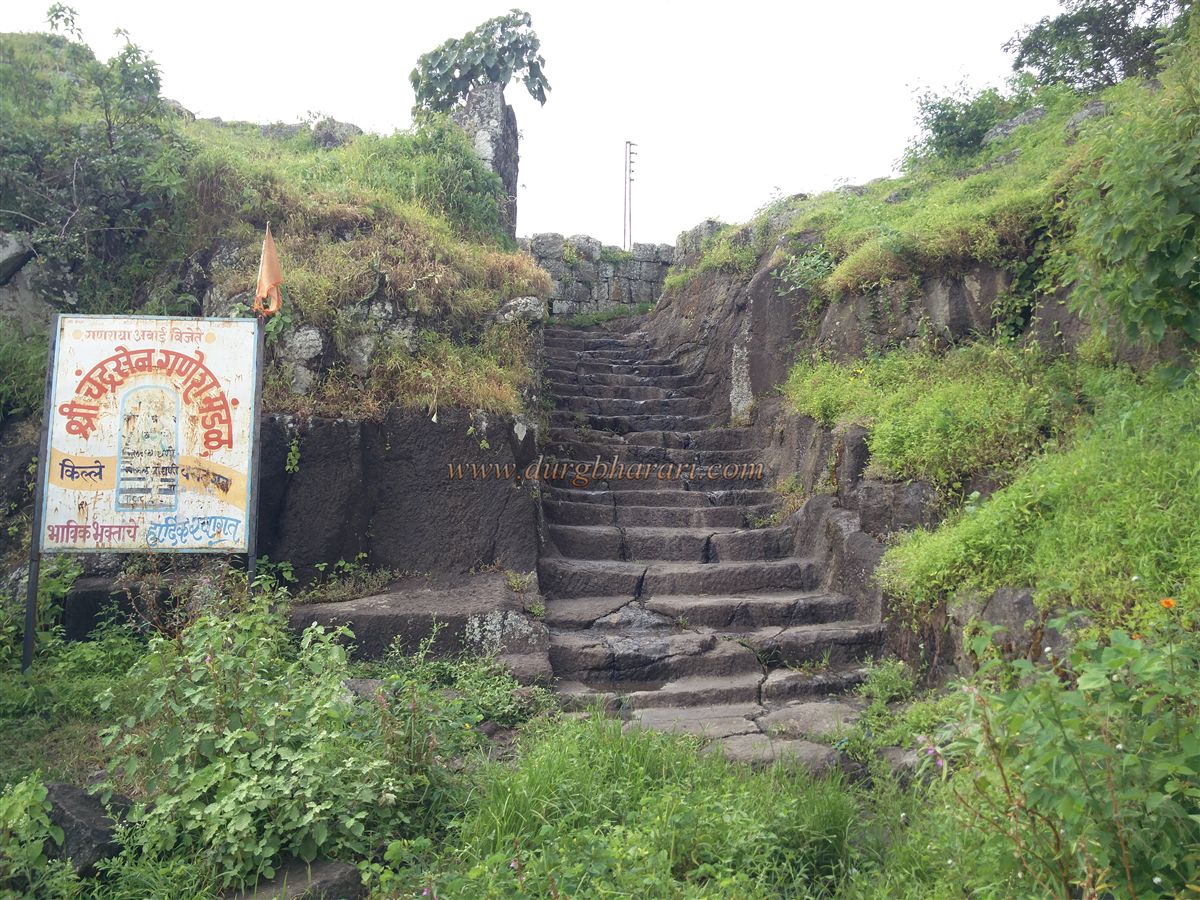
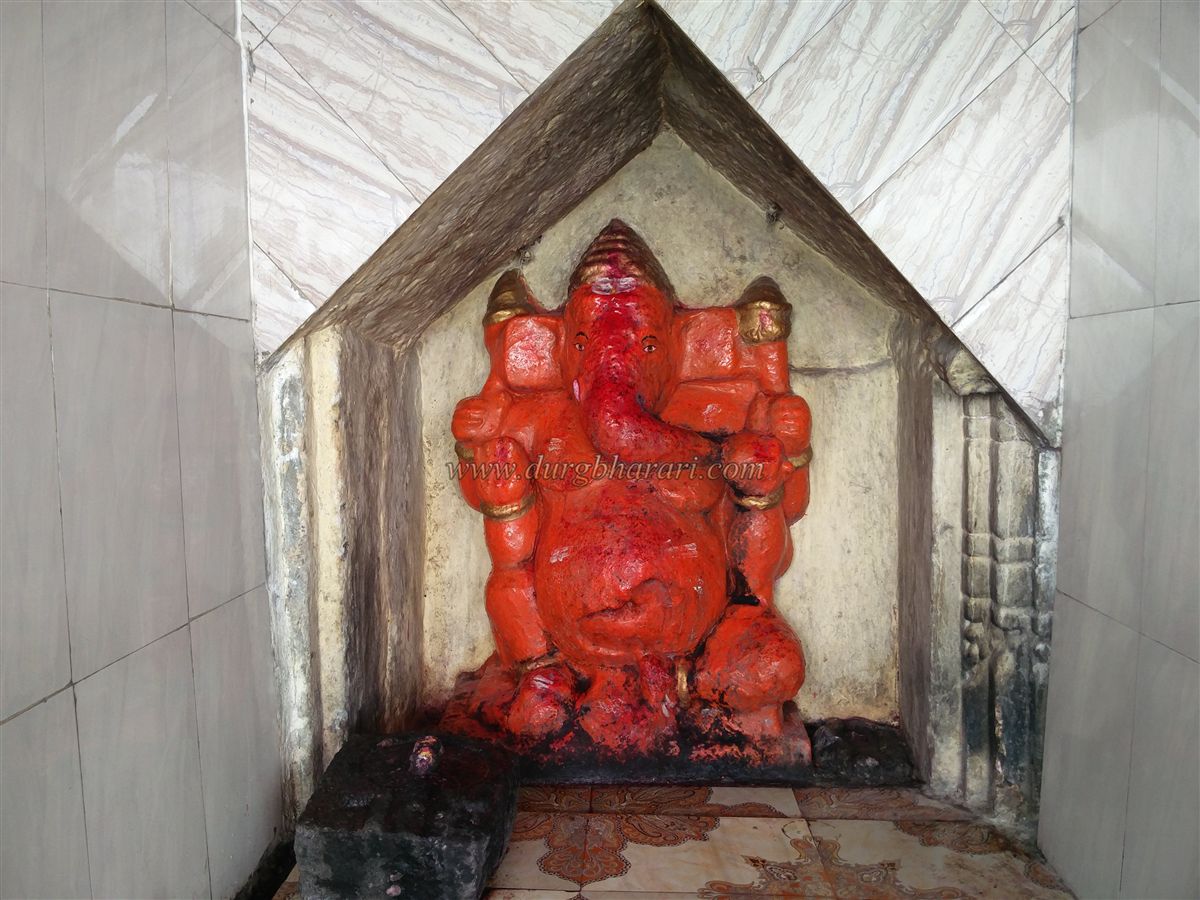
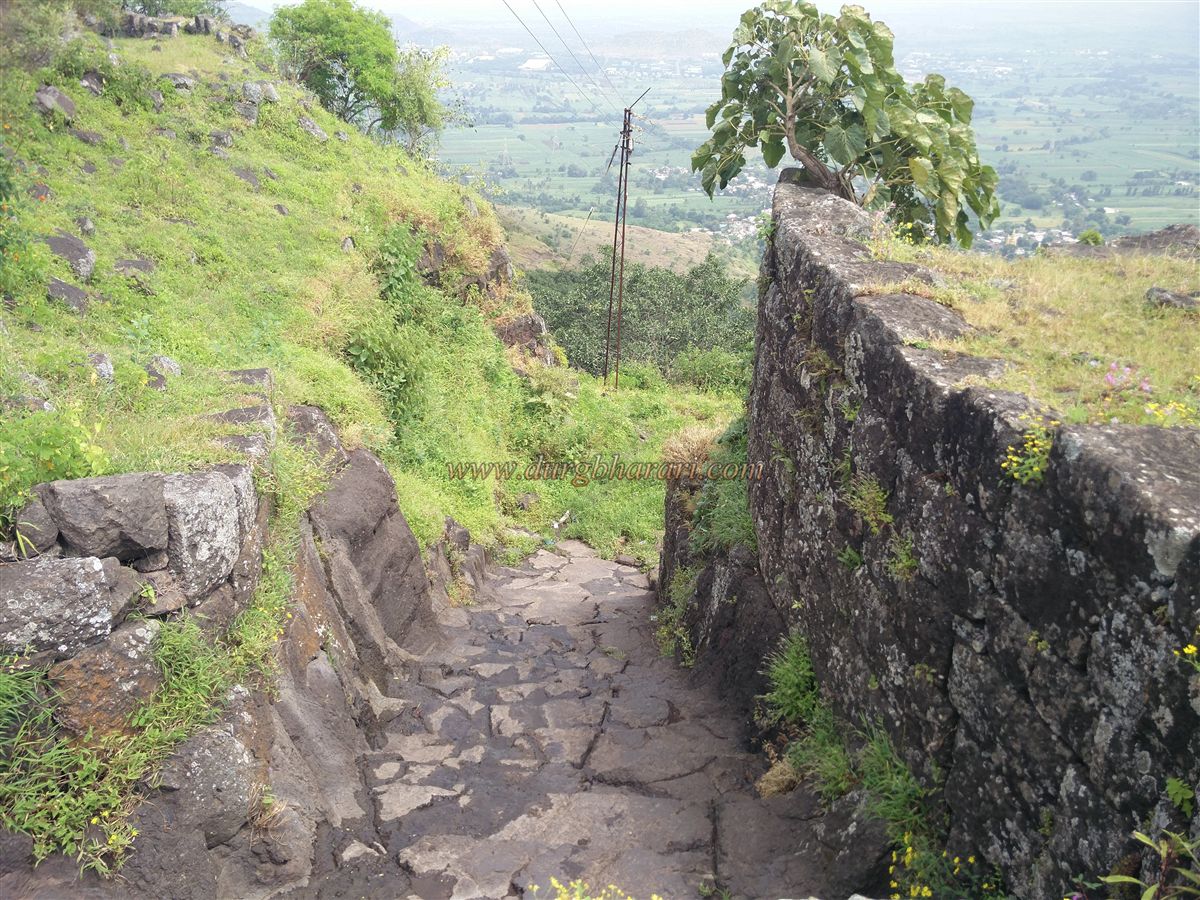
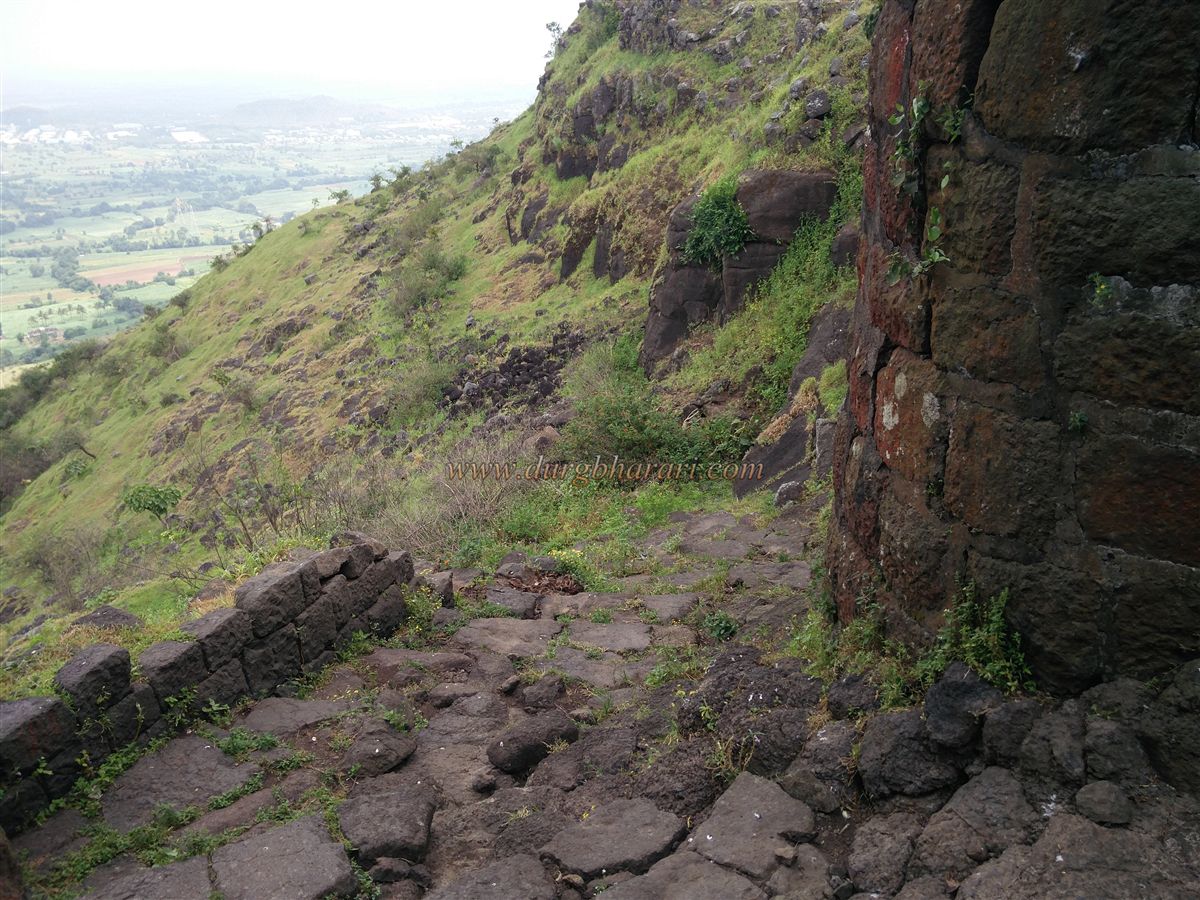
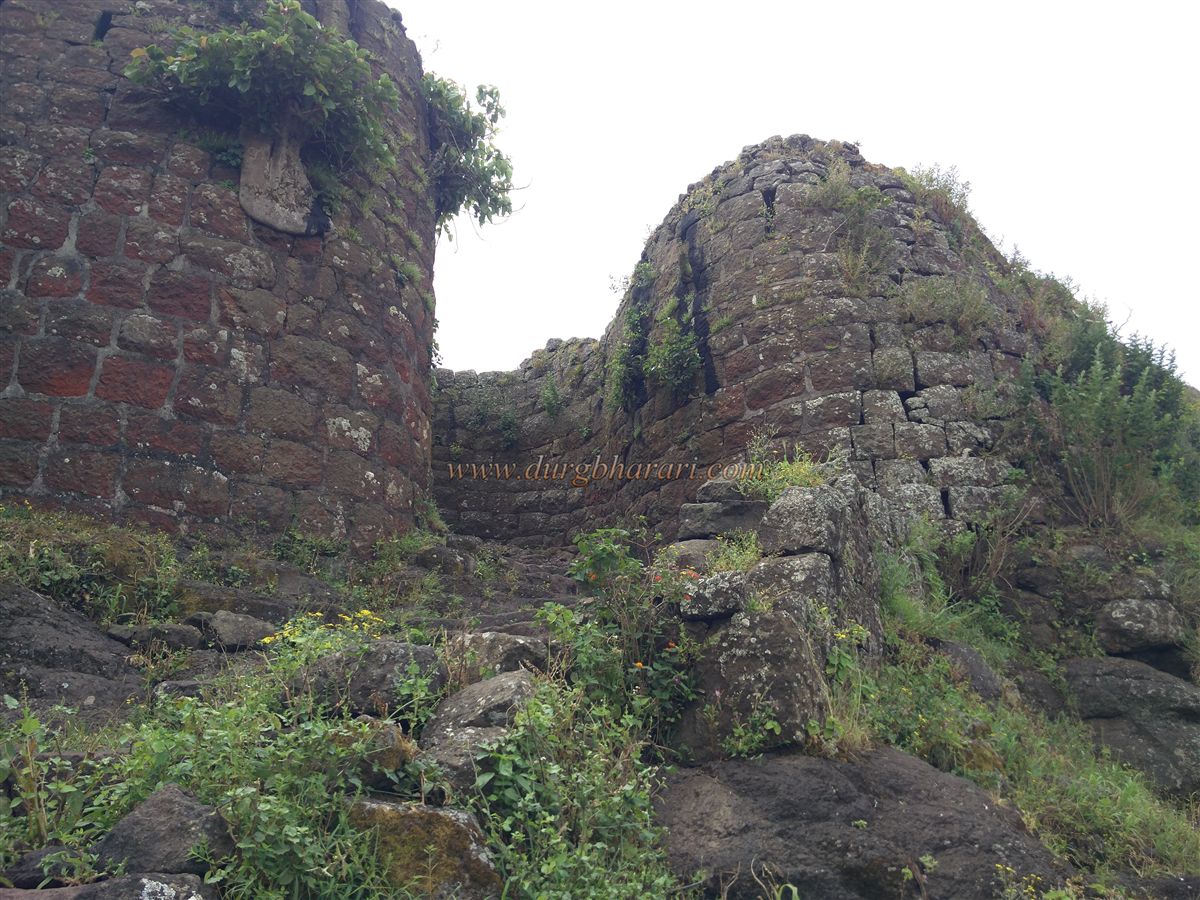
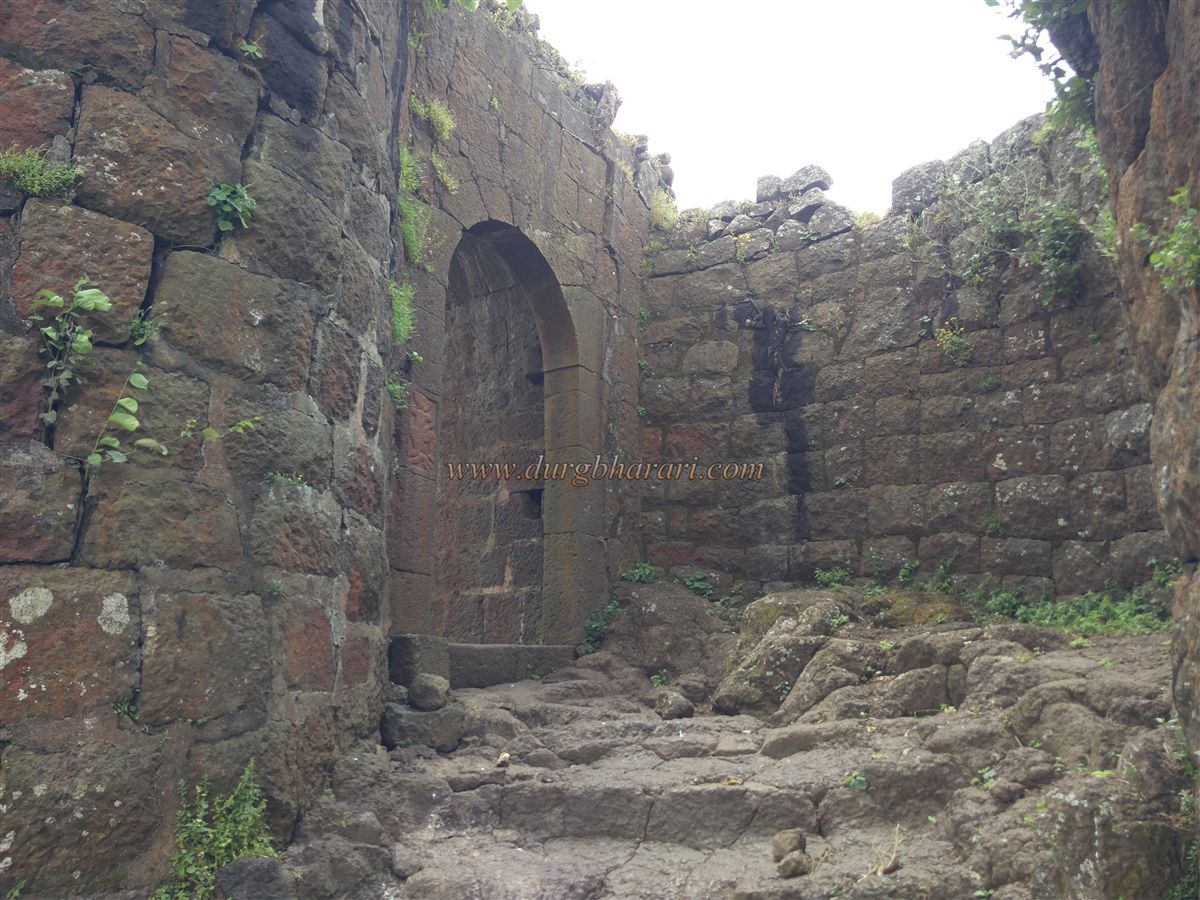
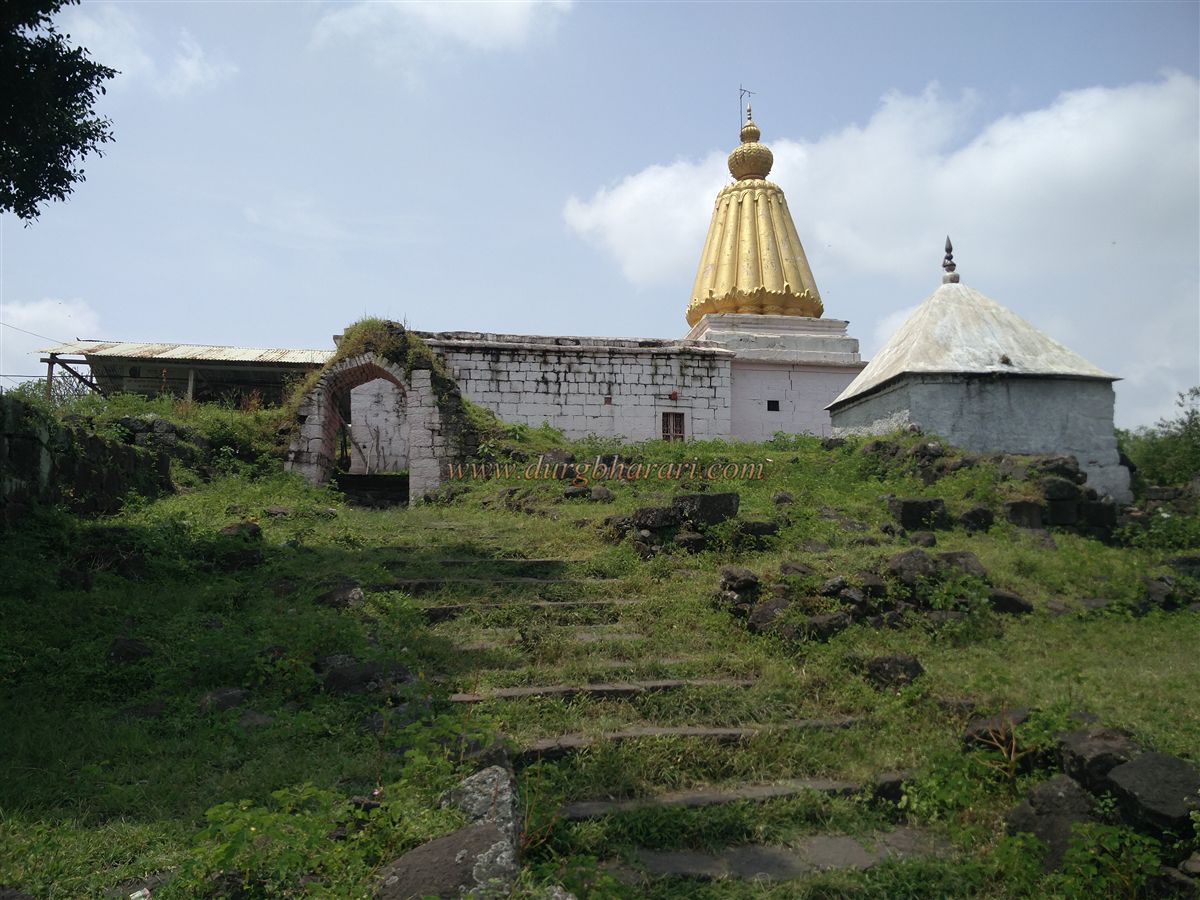
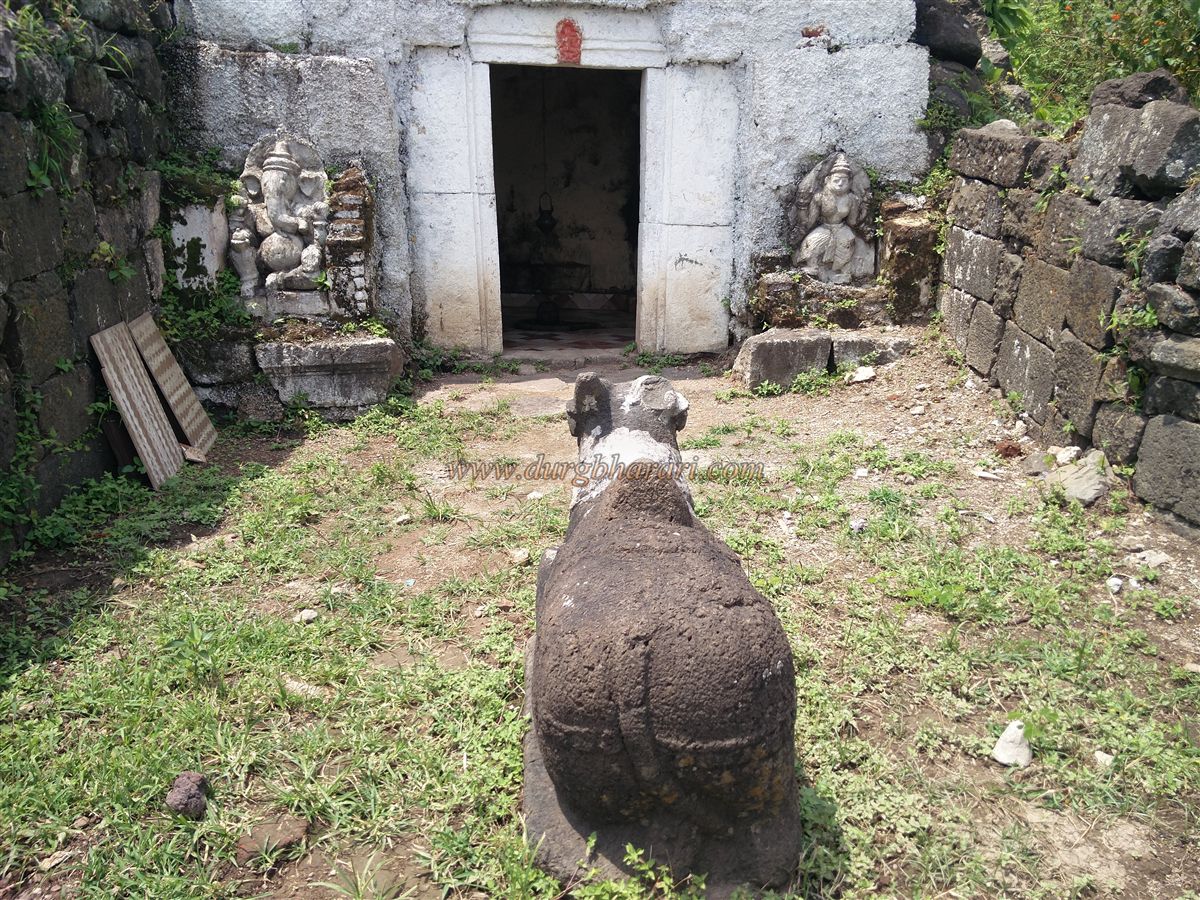
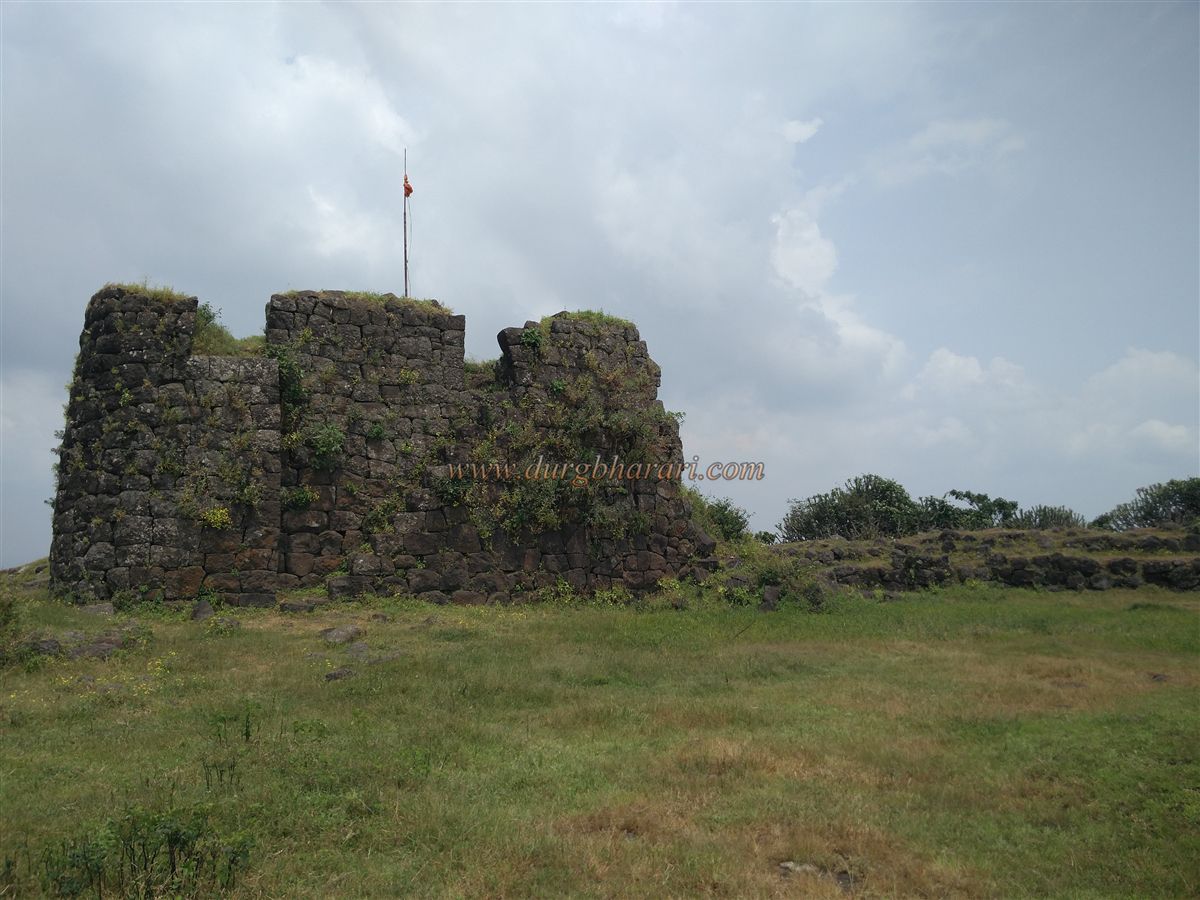
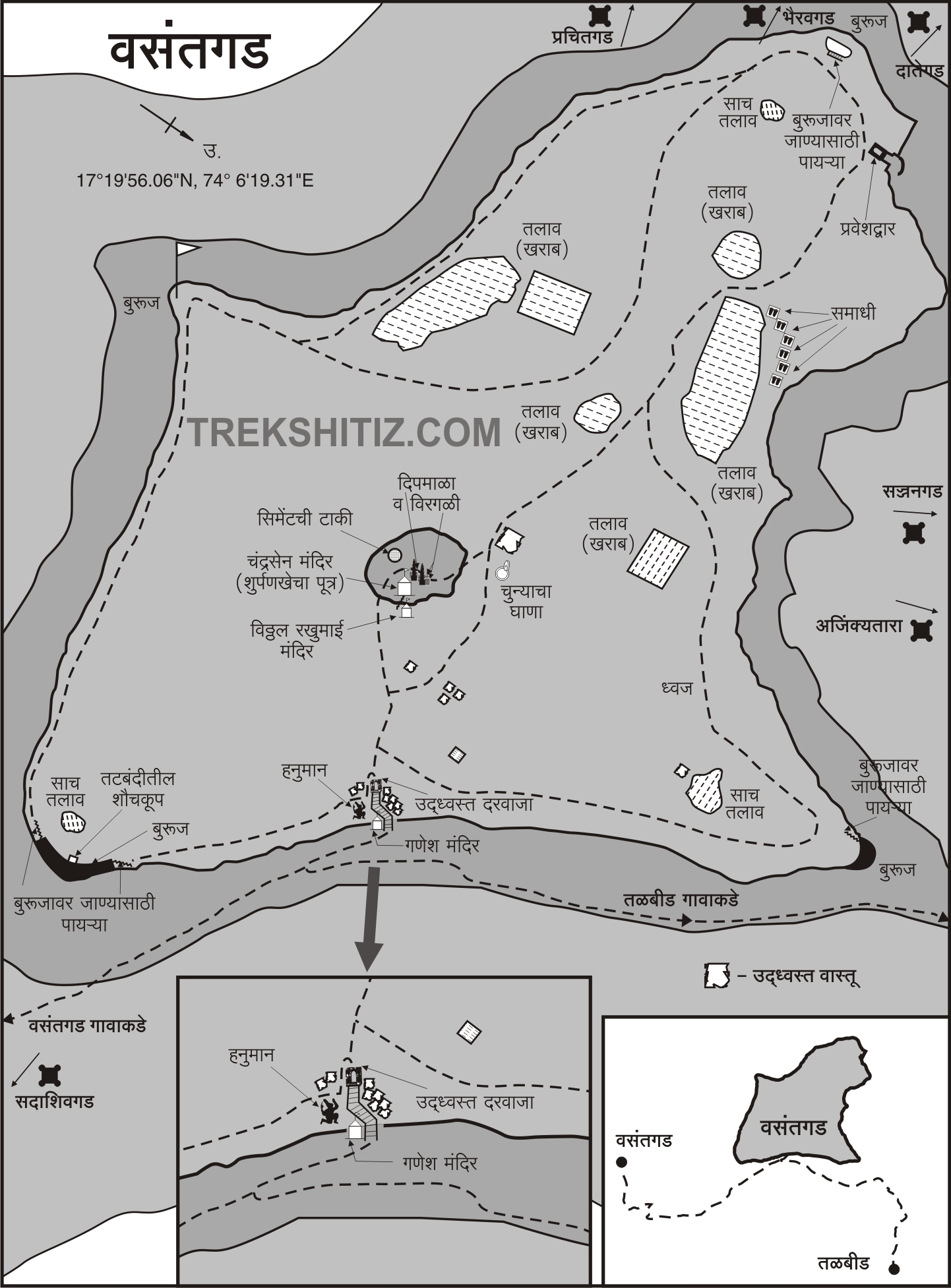
The trails from Talbid and Vasantgad converge just before the main entrance of the fort. At the start, newly built steps lead upward, and since villagers frequently visit the Chandrasen temple atop the fort, the path remains in good condition. This route brings you to the ruined east-facing entrance. To the left of the outer wall near the entrance is a domed shrine with a carved idol of Ganesh, and a tin canopy has been erected in front of it. Inside the wall, stone-carved winding steps lead up to the actual entrance. Two Buruj (bastions) flank the gate, one with a flagpole flying a saffron flag.
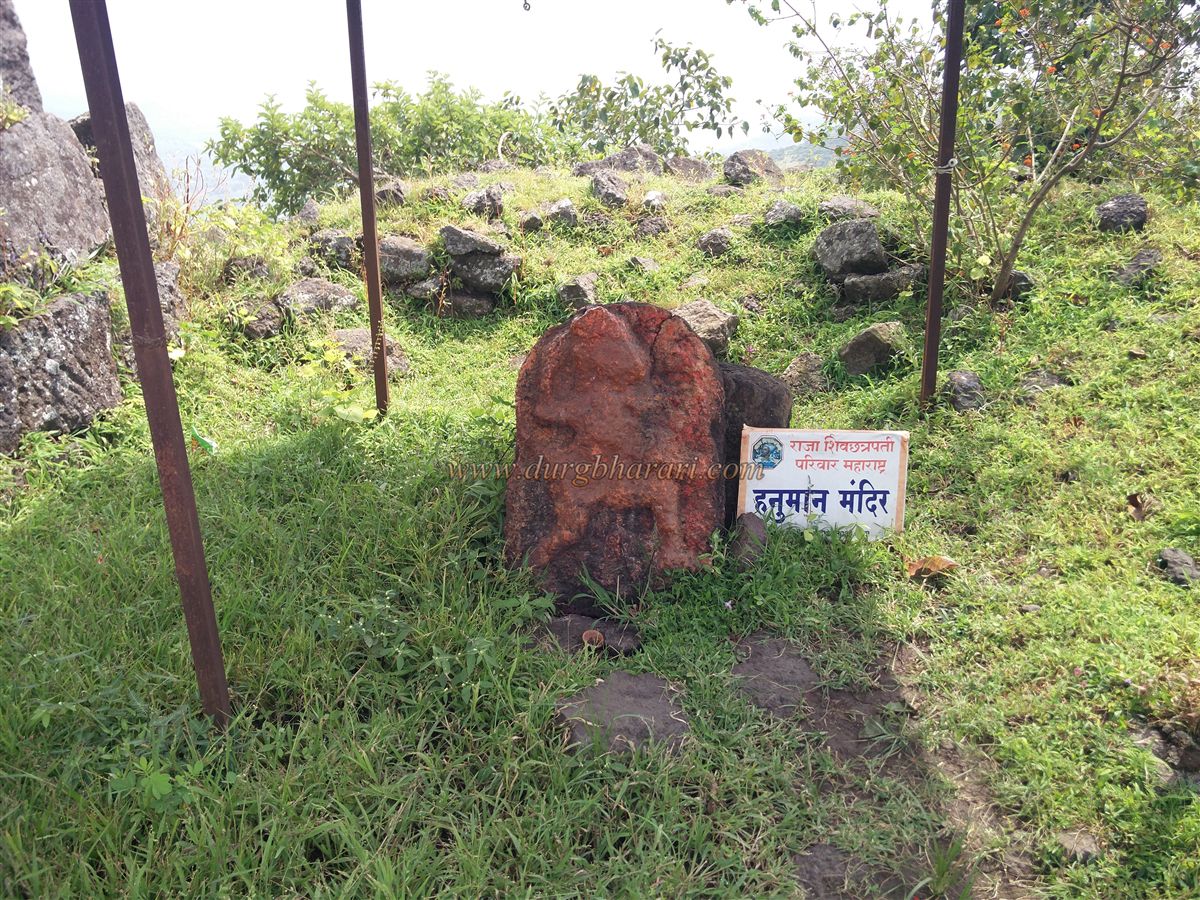
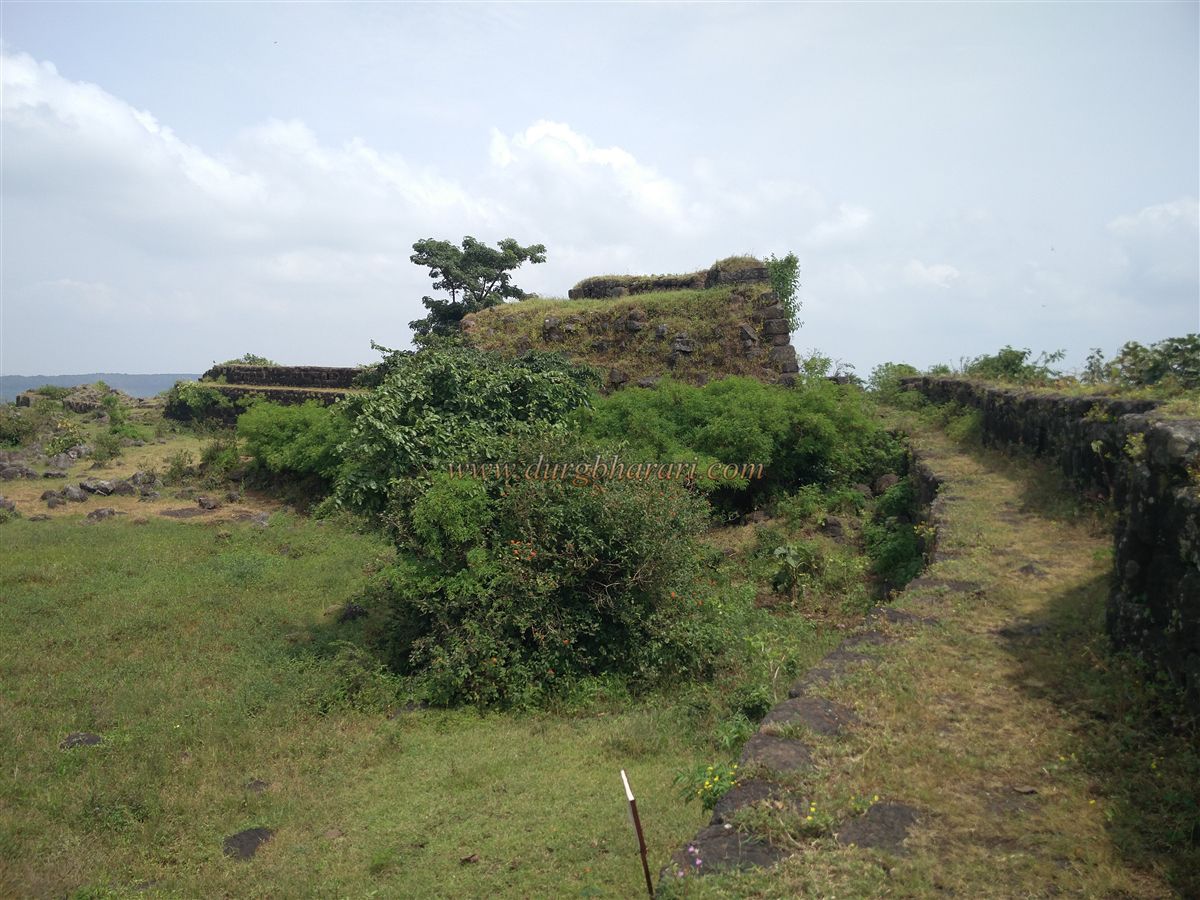
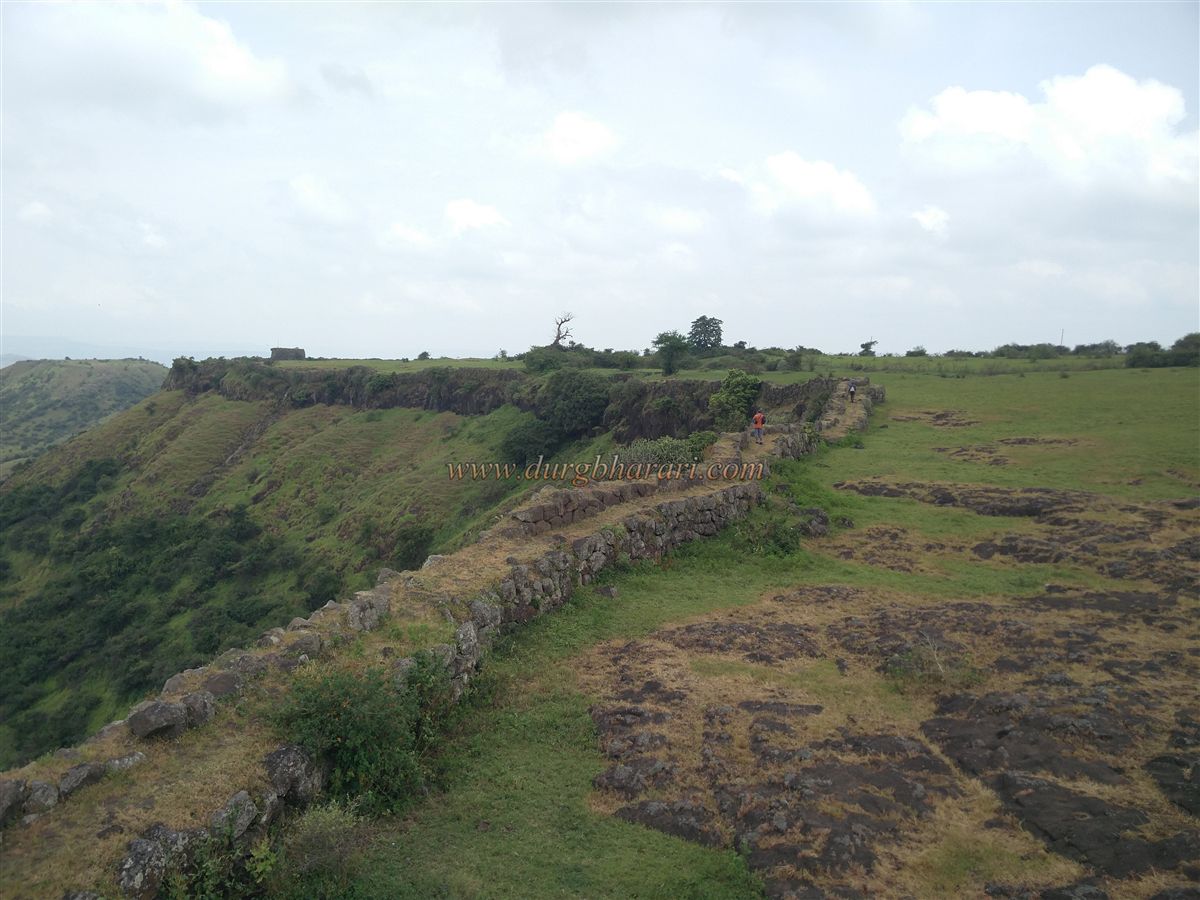
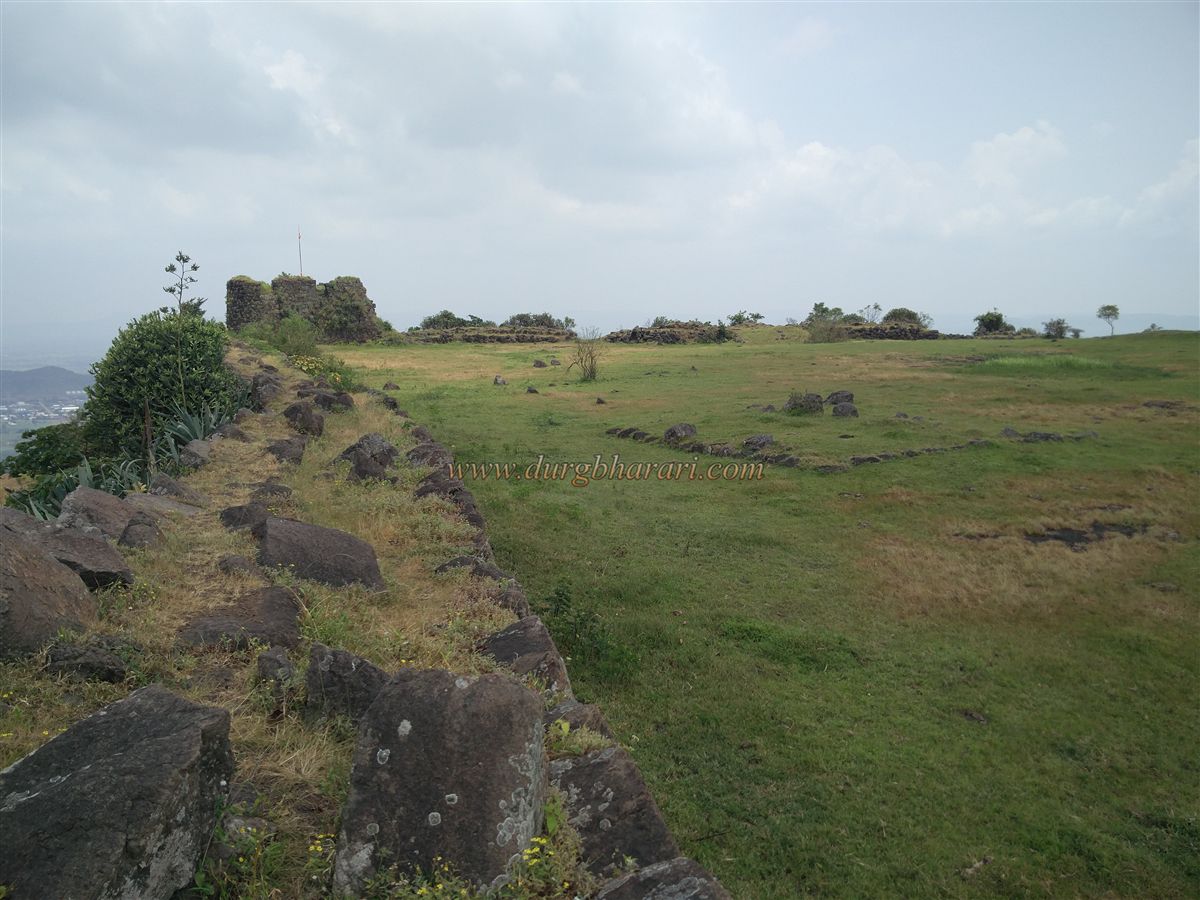
Stepping inside, you see the plinth of an old structure in front and a Maruti idol under a tin canopy to the left. Vasantgad stands at 2,930 feet above sea level, with a rise of 750 feet from its base. The top of the fort is an uneven plateau covering about 70 acres, encircled by intact fortification walls. Below the walls lies the fanji (outer defensive terrace), which still survives and allows one to walk around the entire fort. Starting the circuit from the Maruti idol side, one can do a complete round of the fort and return to the same point.
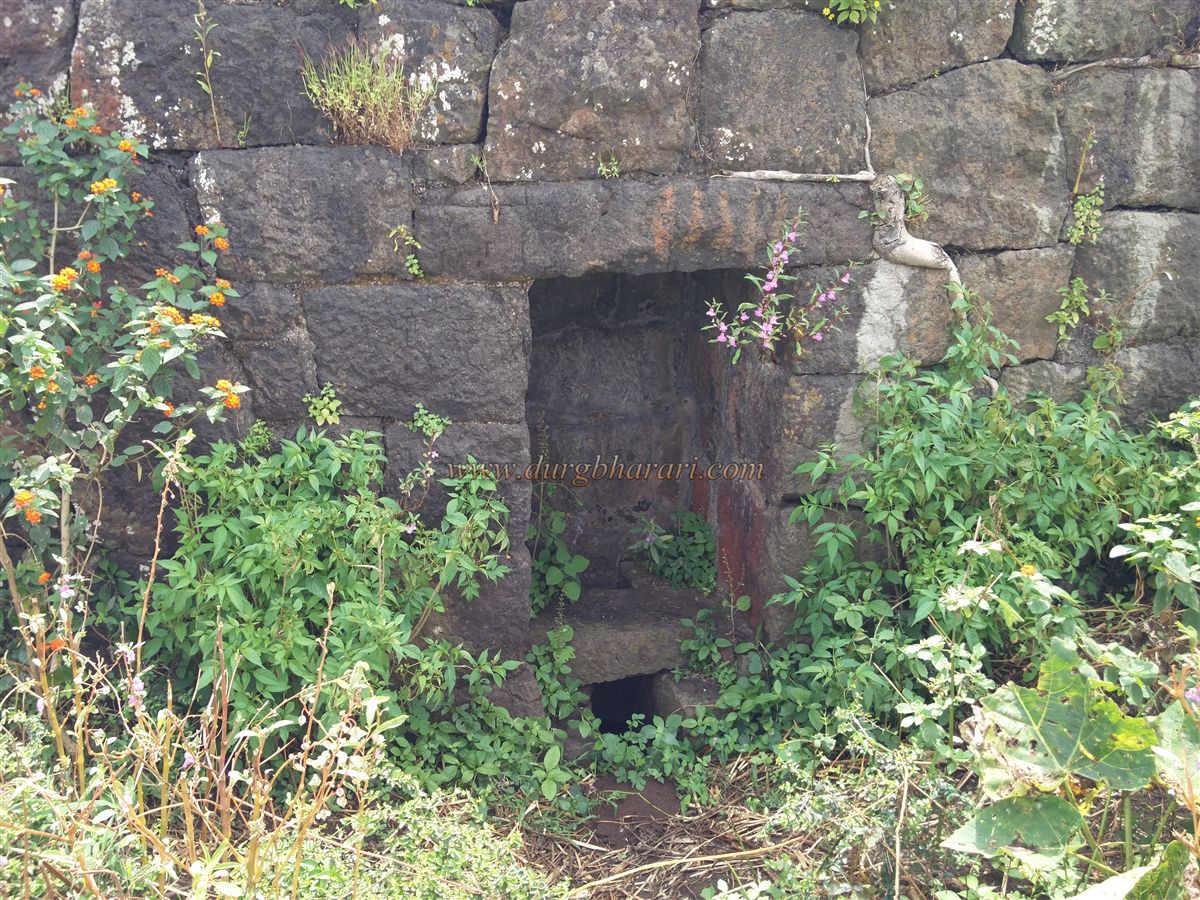
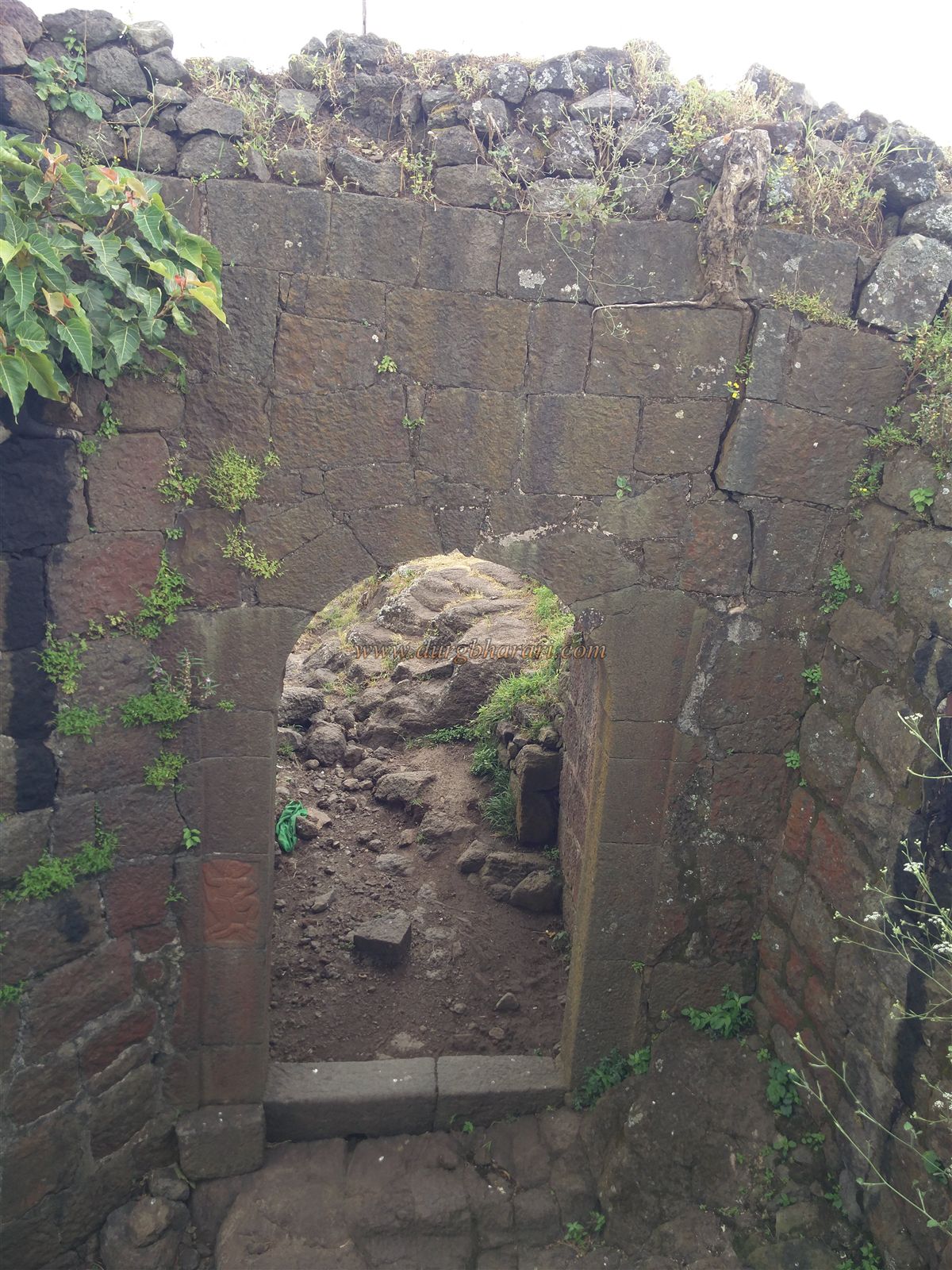
The outer wall has many small bastions, while four large bastions guard the four corners of the fort. Each has stone steps leading up, enabling surveillance not only of the outer perimeter but also of the interior. Soon after starting the round, one notices a toilet (stone latrine) below the first bastion. Scattered stones cover the plateau, but plinths of structures are absent. Near the third bastion, close to the wall, stands what appears to be a kothar (storehouse), likely used for gunpowder. Beyond this, you encounter a second, west-facing Gurmukhi Darwaja (cow-face-style gate), still in good condition along with the adjoining bastion. A Maruti carving adorns the outer frame of this gate, though the pathway leading to it has fallen into disuse.
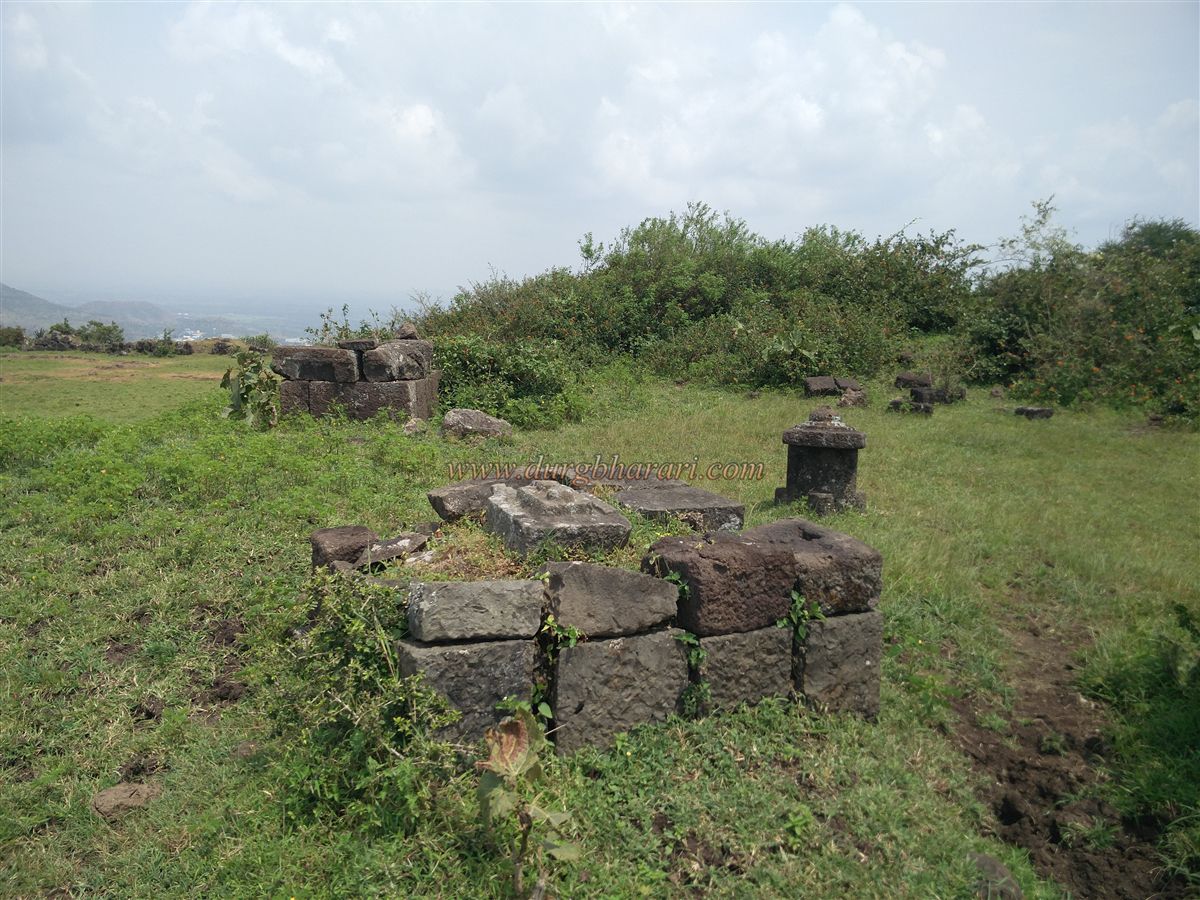
Across the plateau, there are six ponds: four are seasonal rainwater catchments, while the other two, though rock-cut, dry up in summer. These two are called Koynatale and Krishna tale. Near these tanks, in the shade of trees, are several built Samadhi platforms and sati stones. Continuing along the circuit, you eventually reach the northern fourth bastion. Completing the wall circuit, you now head toward the temple visible in the center of the fort.
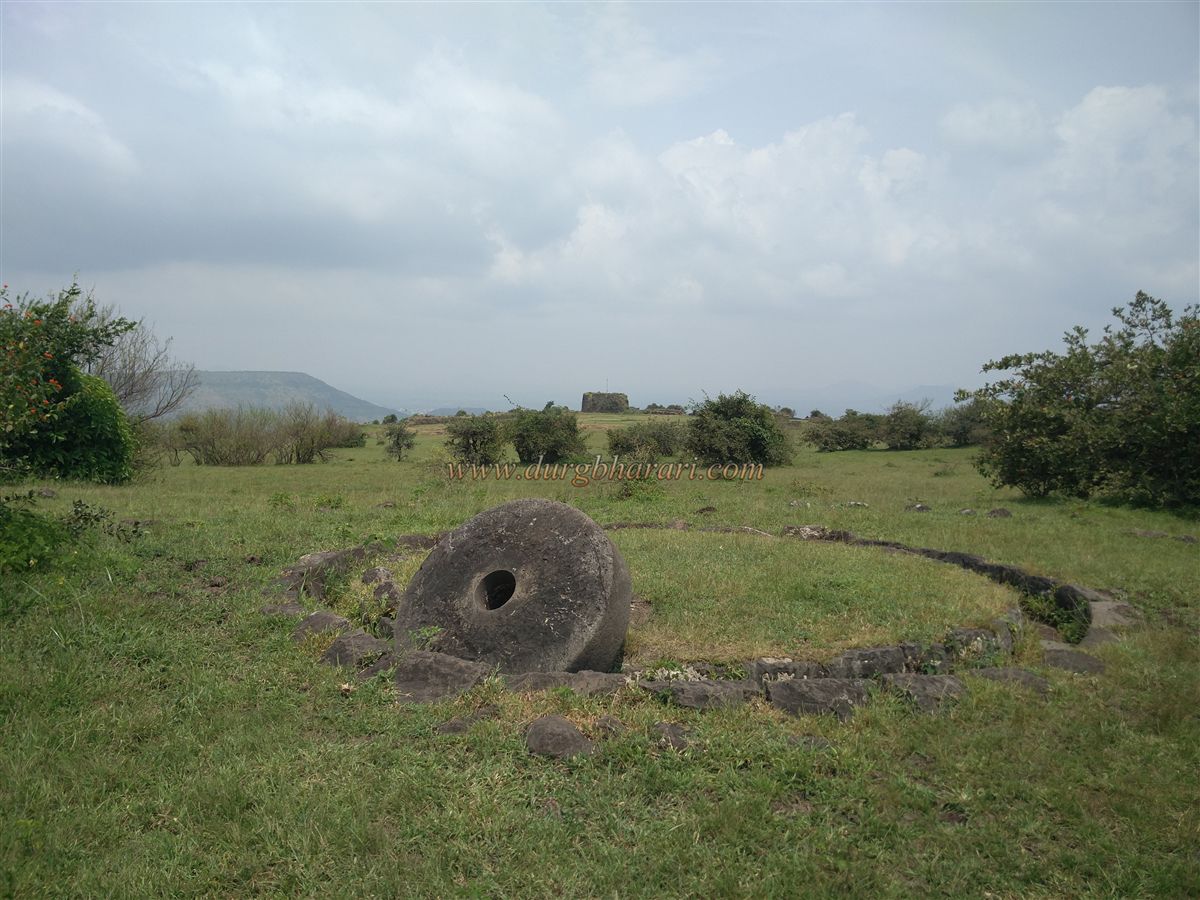
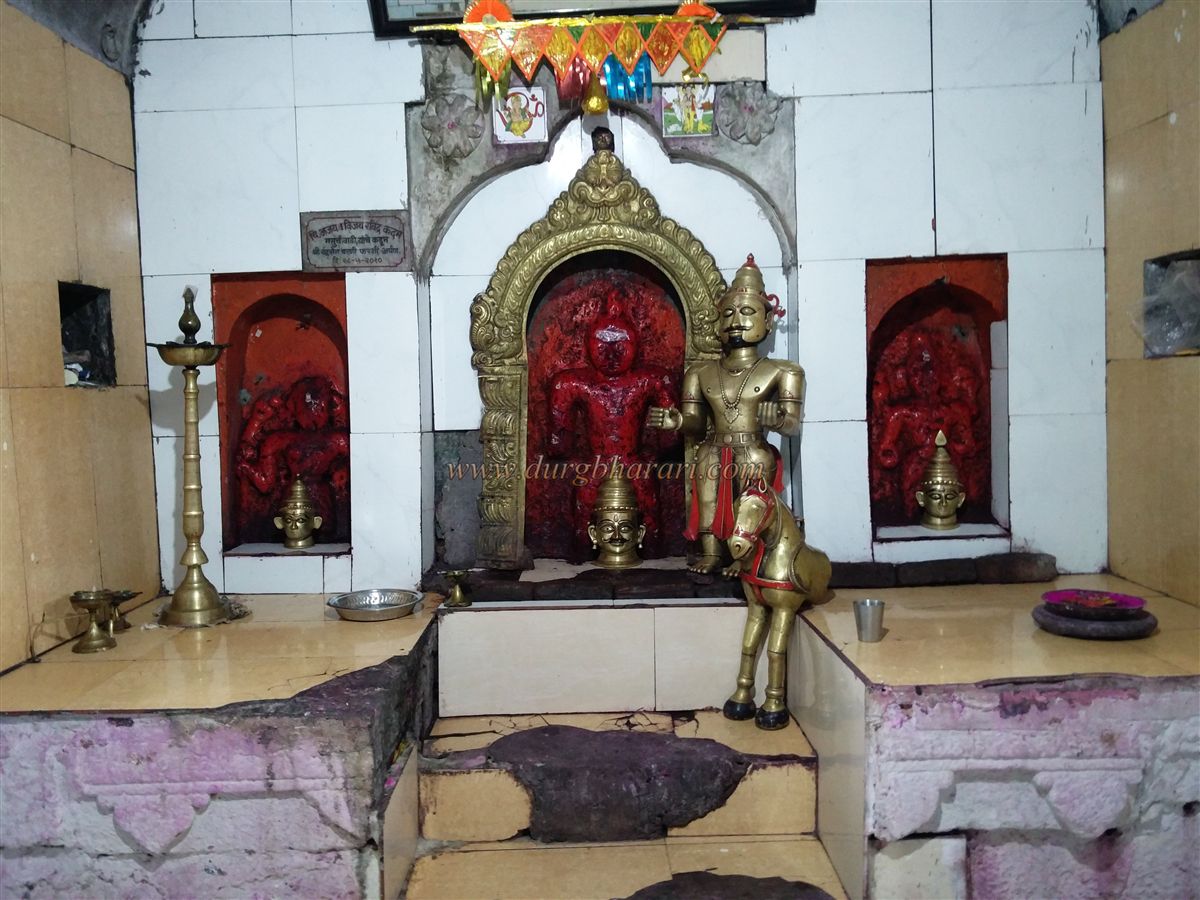
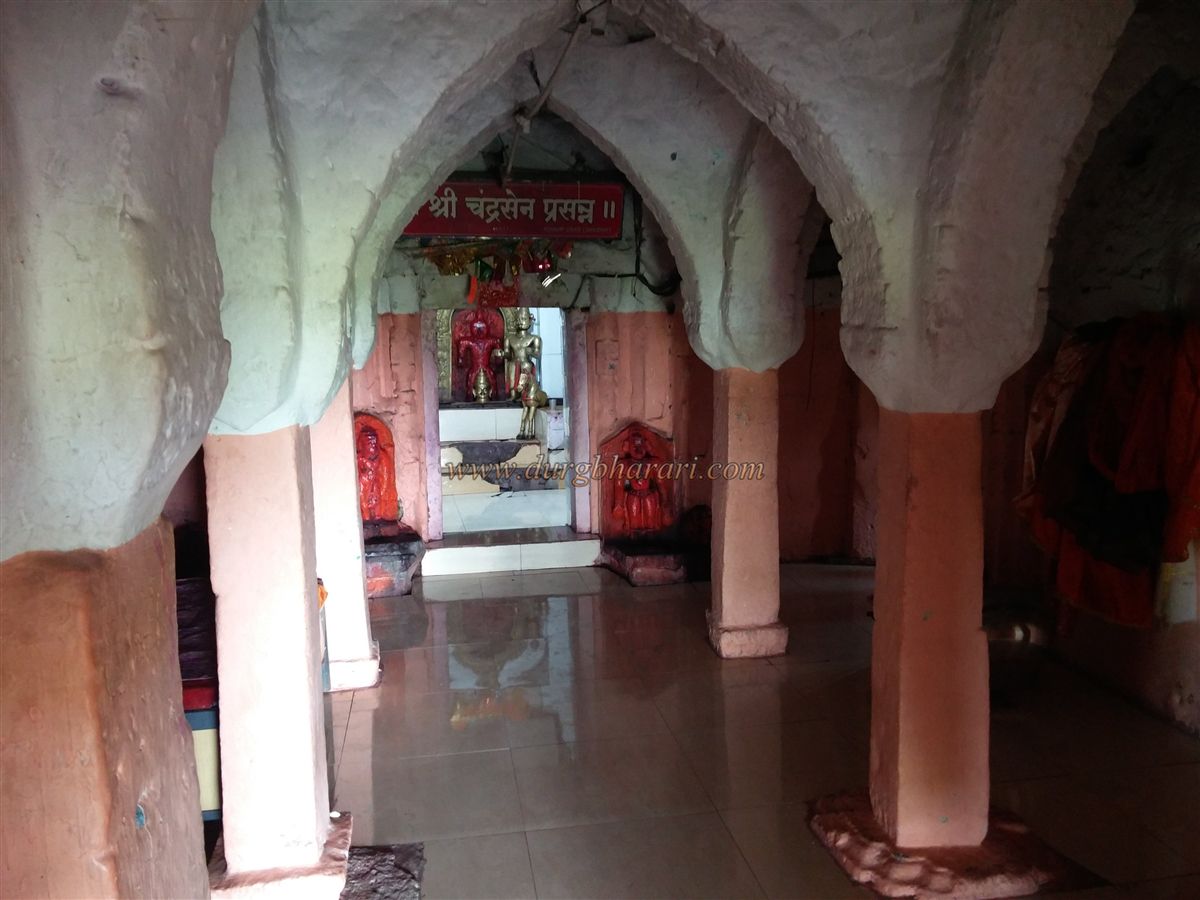
On the way to the temple, you first encounter the remains of a large structure – likely the Rajwada (palace). Behind the temple lies a lime-pressing Ghana (grinding pit) with its stone wheel. The temple itself is dedicated to Chandrasen, son of Shurpanakha, and once had a prakar (enclosing wall) on all sides, remnants of which, including the gateway, still stand. On the eastern wall is an inscription in Devanagari mentioning the renovation of the temple in Shaka 1710 (1788–1789 CE), along with the expenses and the names of the masons who carried out the work.
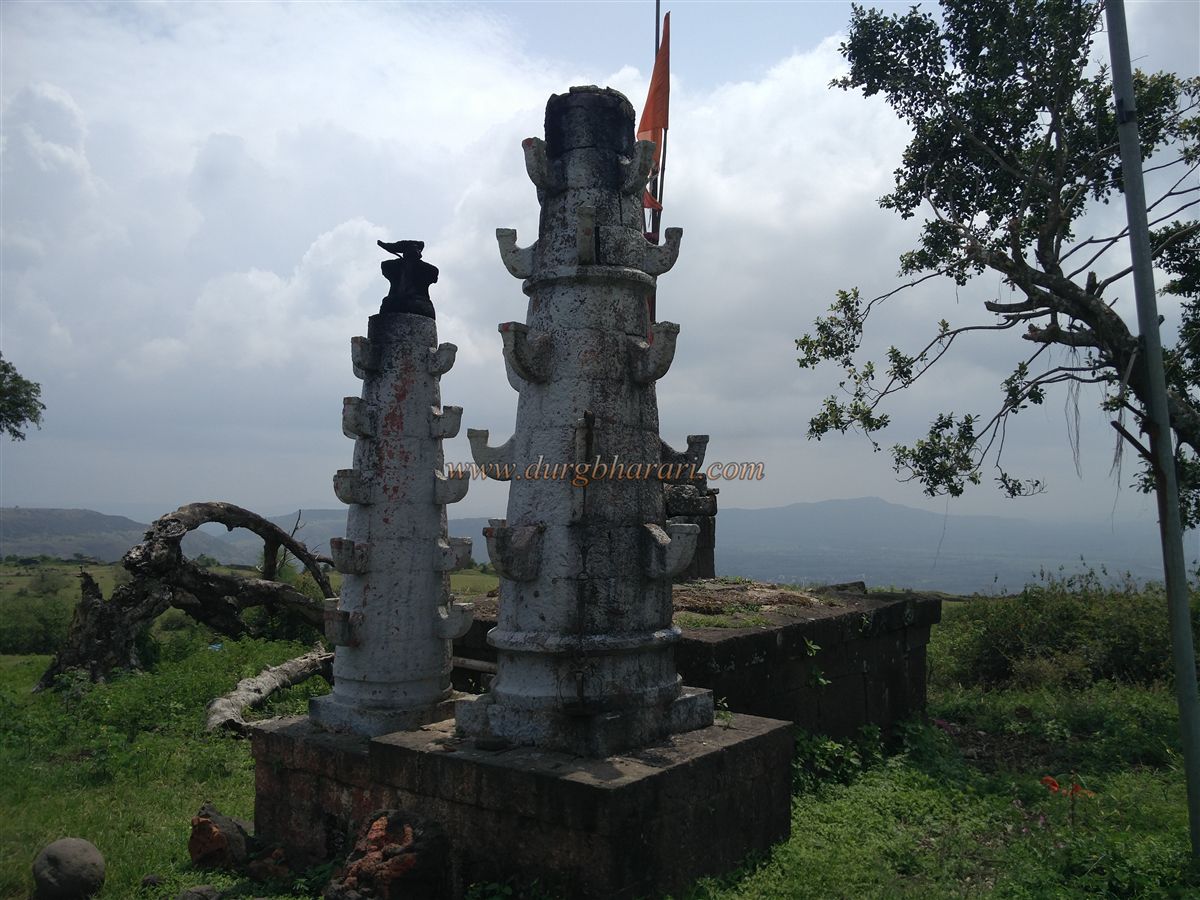
Inside the temple compound is a large Samadhi platform and two deepmalas (lamp towers), with several broken idols placed nearby. There is also an ancient Shiva temple and three more recently built shrines – one housing an old Gajlakshmi carving, another with idols of Vitthal-Rukmini, and a third with marble idols of Ram-Lakshman-Sita. The extensive ruins in this area suggest that this was the main settlement on the fort. Among these ruins are remnants of the Sadar (administrative hall). Completing your exploration here, you return to the entrance, finishing the circuit.
Though Vasantgad has relatively few surviving structures, its large expanse means it takes about two hours to explore. From its heights, one can see the forts of Sundargad, Gunwantgad, Ajinkyatara, Sajjangad, Sadashivgad, and Machhindragad.
Vasantgad was built by the Shilahara king Bhoj in the 12th century to monitor an ancient trade route descending the ghats into Konkan. In 1659, Chhatrapati Shivaji Maharaj brought the fort under Swarajya. At that time, the nearby Masur region and Vasantgad were under Mahadaji Jagdale, a loyal Adilshahi noble. When Afzal Khan marched against Swarajya, Mahadaji supported him. After Afzal Khan’s death, the Marathas raided the area, captured Mahadaji Jagdale, brought him to Vasantgad, and executed him, thereby bringing the fort fully into Maratha control.
On 16 December 1684, Senapati Hambirrao Mohite was killed by a cannonball at Wai while fighting the Mughals, and his Samadhi was built in his native village Talbid. After returning from Jinji, Chhatrapati Rajaram Maharaj stayed at Vasantgad for some days (20 July 1699). During Rajaram’s reign, Ramchandrapant Amatya administered the Karad region from this fort.
On 25 November 1699, Aurangzeb captured Vasantgad and renamed it "Mifatihul Futuh" (Key to Victory). In 1708, the Marathas recaptured it. Later, Tarabai imprisoned Ramchandrapant Pratinidhi here in silver shackles. Finally, in 1818, Vasantgad fell to the British.
© Suresh Nimbalkar
GALLERY