TRIVENIGAD/CHAUGAON FORT
TYPE : HILL FORT
DISTRICT : JALGAON
HEIGHT : 1460 FEET
GRADE : MEDIUM
In Jalgaon district, there are very few forts, and those that do exist are mostly ground forts that can be counted on one’s fingers. But in this very Jalgaon, there is a truly beautiful hill fort that tells the legacy of the Ahir royal family — something almost no one would believe. In Jalgaon district, which is not very famous for its forts, in a tribal-dominated area on the Maharashtra–Madhya Pradesh border, stands this hill fort called Chaugaon or Trivenigad. Due to the confluence of three streams at the base of the fort, local people call it Trivenigad or Vijaygad.
Since ancient times, Trivenigad was built to keep watch over the mountainous terrain of Bhiram Ghat, which served as a route from the south into Madhya Pradesh. Chaugaon was an important marketplace for goods exported abroad from the ports of Surat and Bharuch in the south via the north-central provinces, making the fort strategically important.
...
This fort, which is connected to ancient history, stands at an elevation of 2000 feet above sea level and about 400 feet above its base. Situated in the Satpuda mountain range north of Chaugaon village, the fort covers an area of 30 acres, with a length of 1700 feet and a width of 800 feet.
To visit Trivenigad, one can travel from Jalgaon via Chopda to Chaugaon, or via Amalner–Lasur to Chaugaon. Lasur is only 3 km away from Chaugaon. The base of the fort is 4 km from Chaugaon, and from the village, a dirt road leads to the Mahadev temple at the foot of the fort. If visiting the fort for the first time, it is advisable to take a knowledgeable local guide, as this road has many forks and there are no settlements along the way.
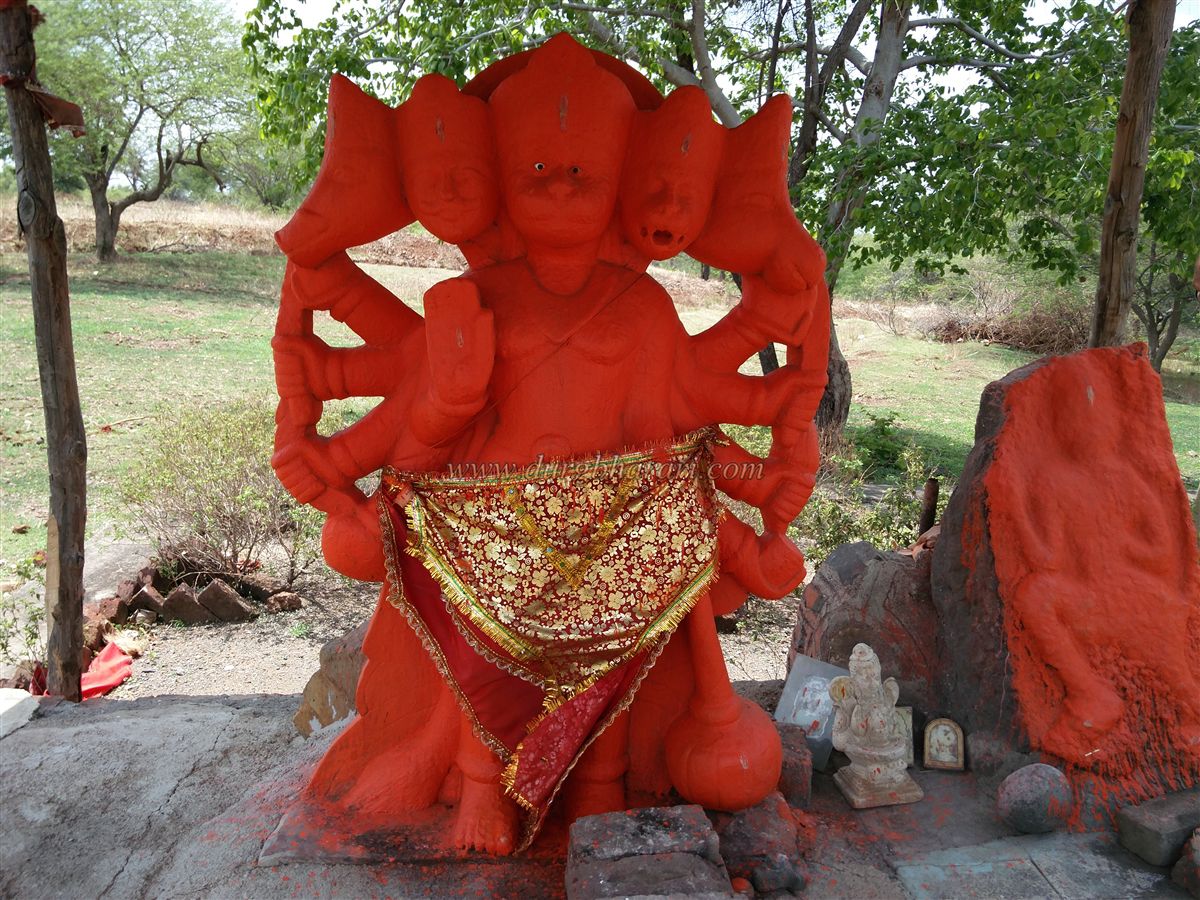
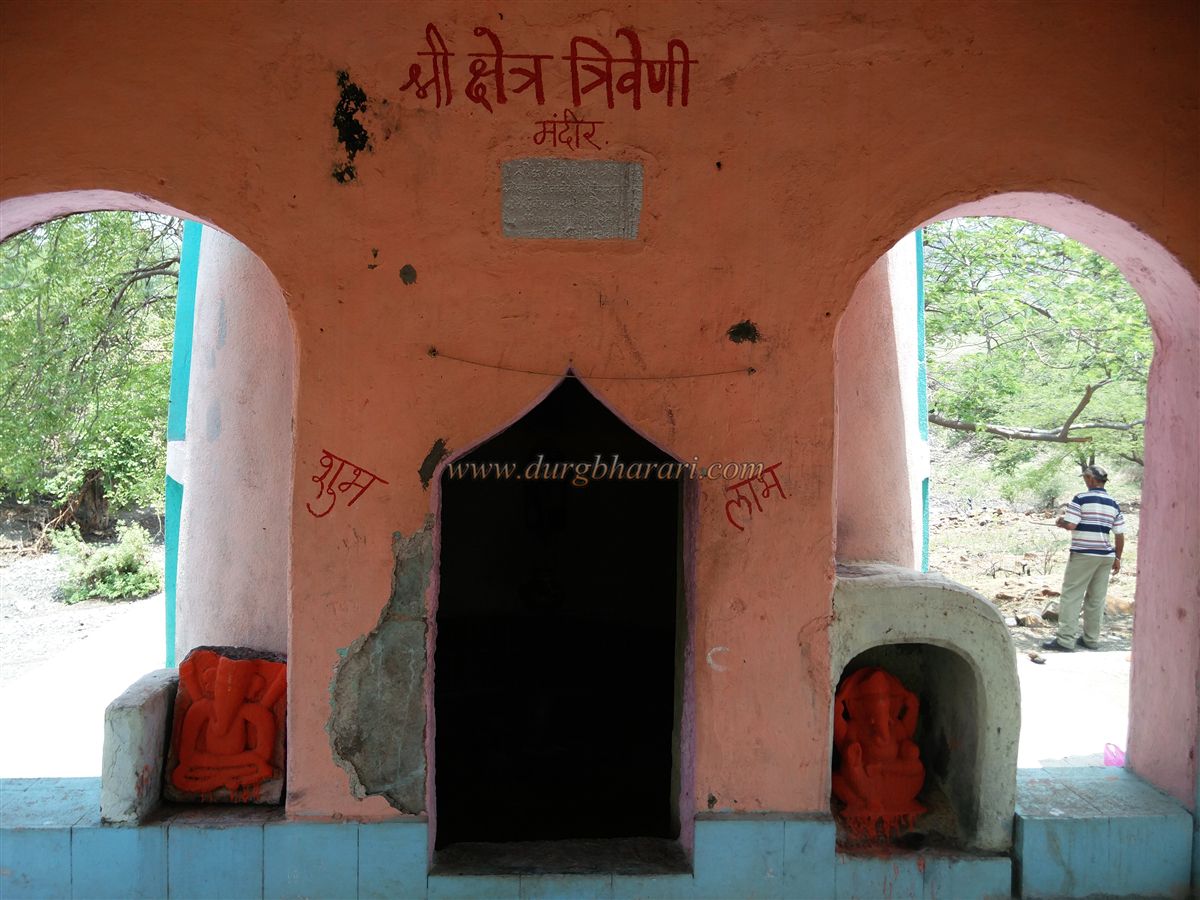
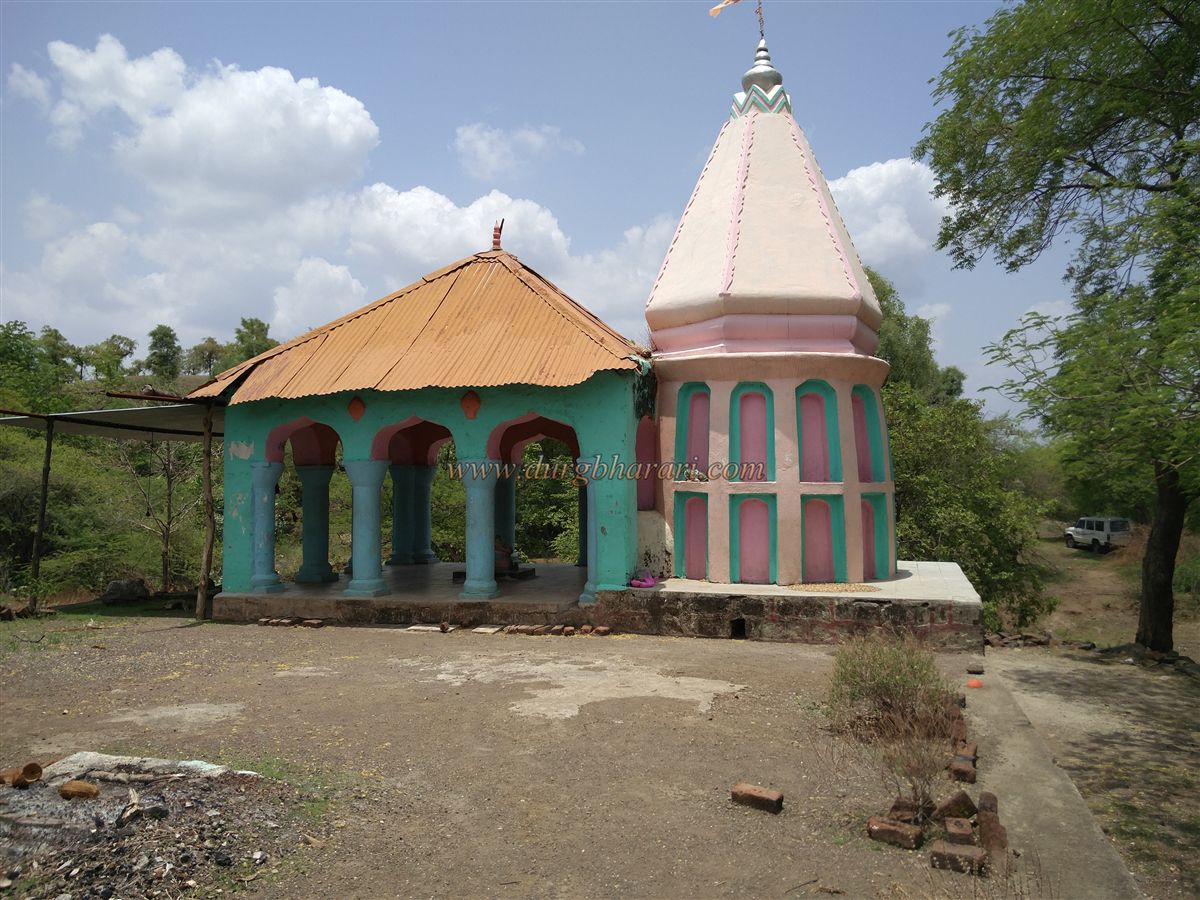
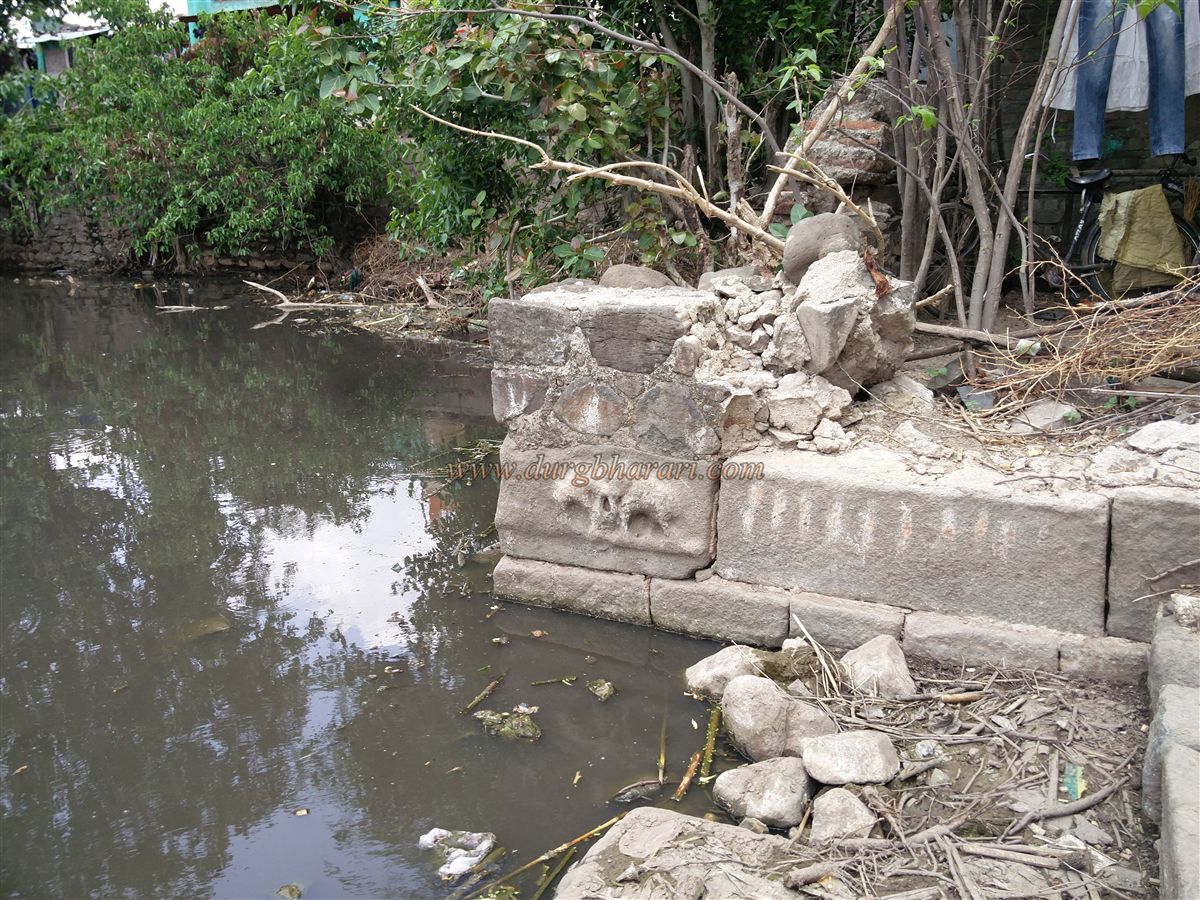
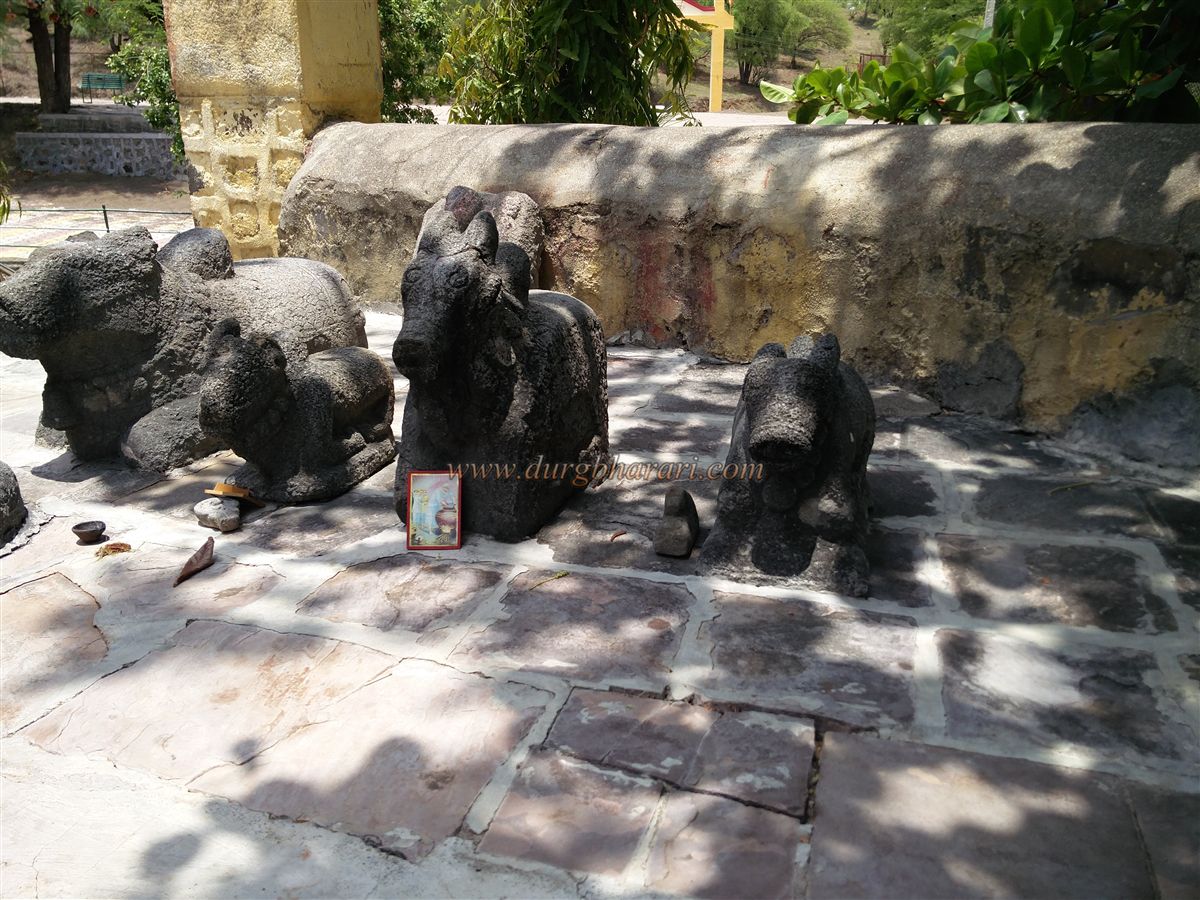
On the way to the fort, in the village, there is a built reservoir and some ruins along its bank. Among these ruins is a sculpture of Goddess Gajlakshmi. Due to the confluence of three streams near the Mahadev temple, the place is called "Triveni Sangam." The Mahadev temple is a relatively recent construction, spacious and beautiful. Surrounded by forest, with plenty of firewood and cool water from the stream, it is suitable for an overnight stay — except during the rainy season when staying becomes difficult. In the temple sanctum are a Shivalinga and a Nandi, with pillars and arches in the surrounding hall befitting temple tradition. There is also a statue of Panchamukhi Hanuman and two idols of Lord Ganesha.
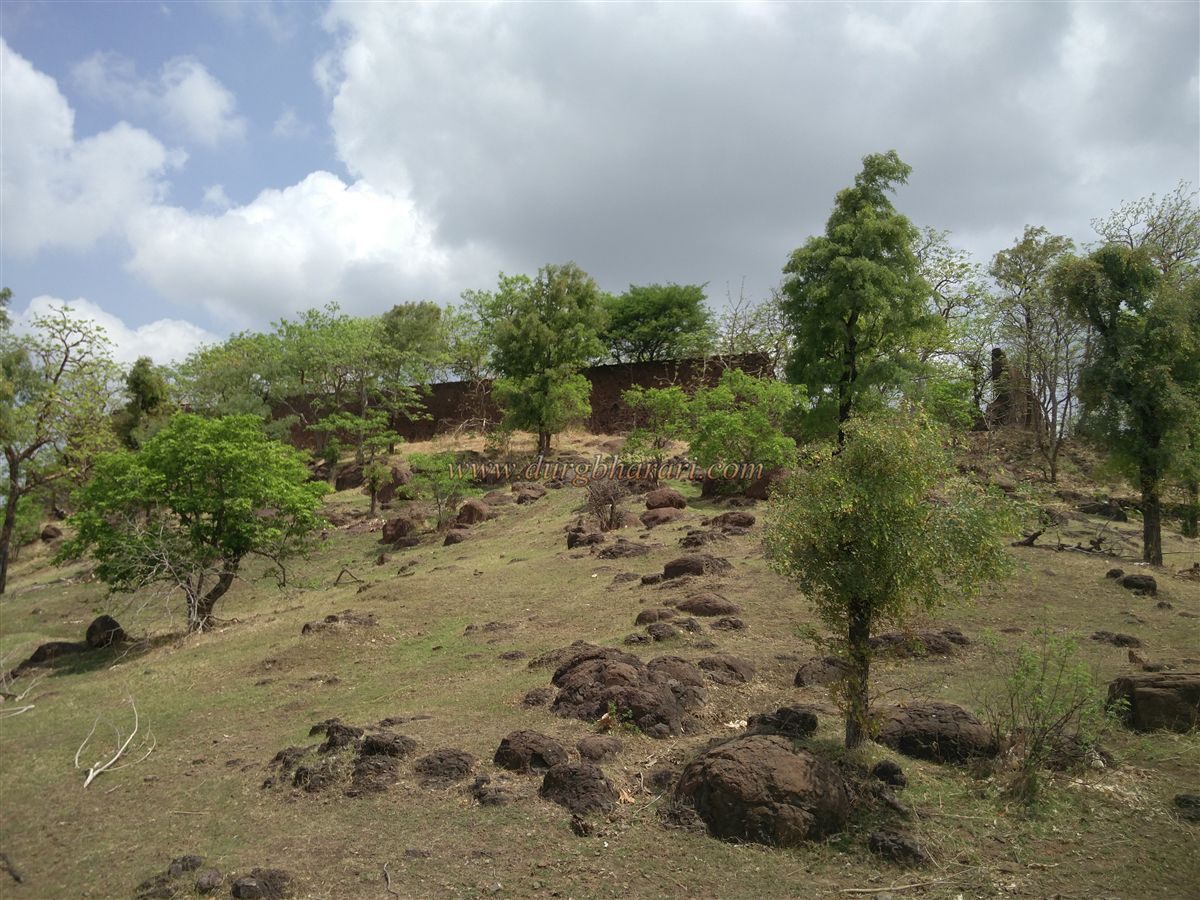
Around the temple are stone-and-brick platforms, and in historical times, this area was known as Bada Bazaar. The fort and its surroundings are under the control of the Forest Department and are rich with greenery. Forest guards are stationed here. After visiting the temple, crossing the nearby stream, and walking along a well-trodden path, one reaches a plateau, from where the tree-covered Trivenigad comes into view. Many hills surround the fort, each known locally by different names. From the plateau, the path to the left of the fort leads via a narrow pass to the base.
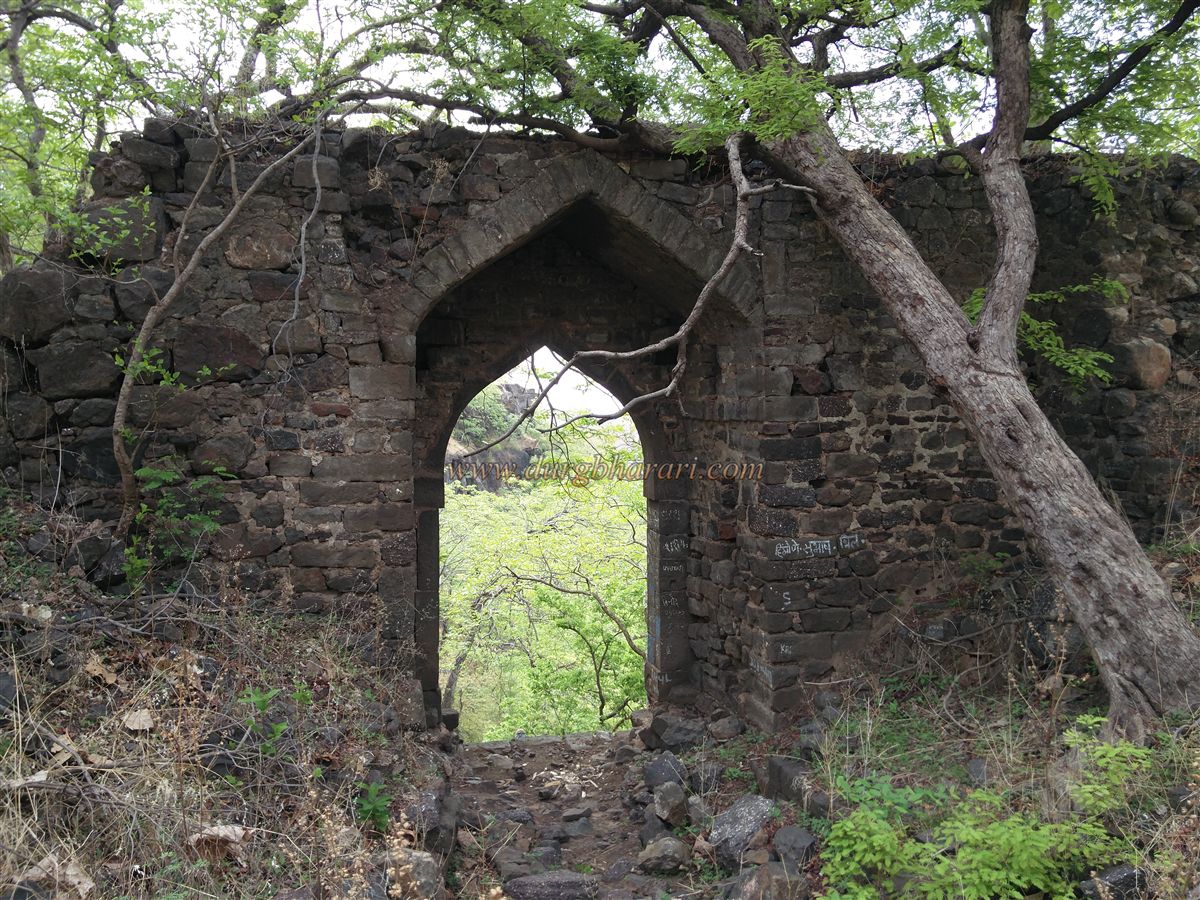
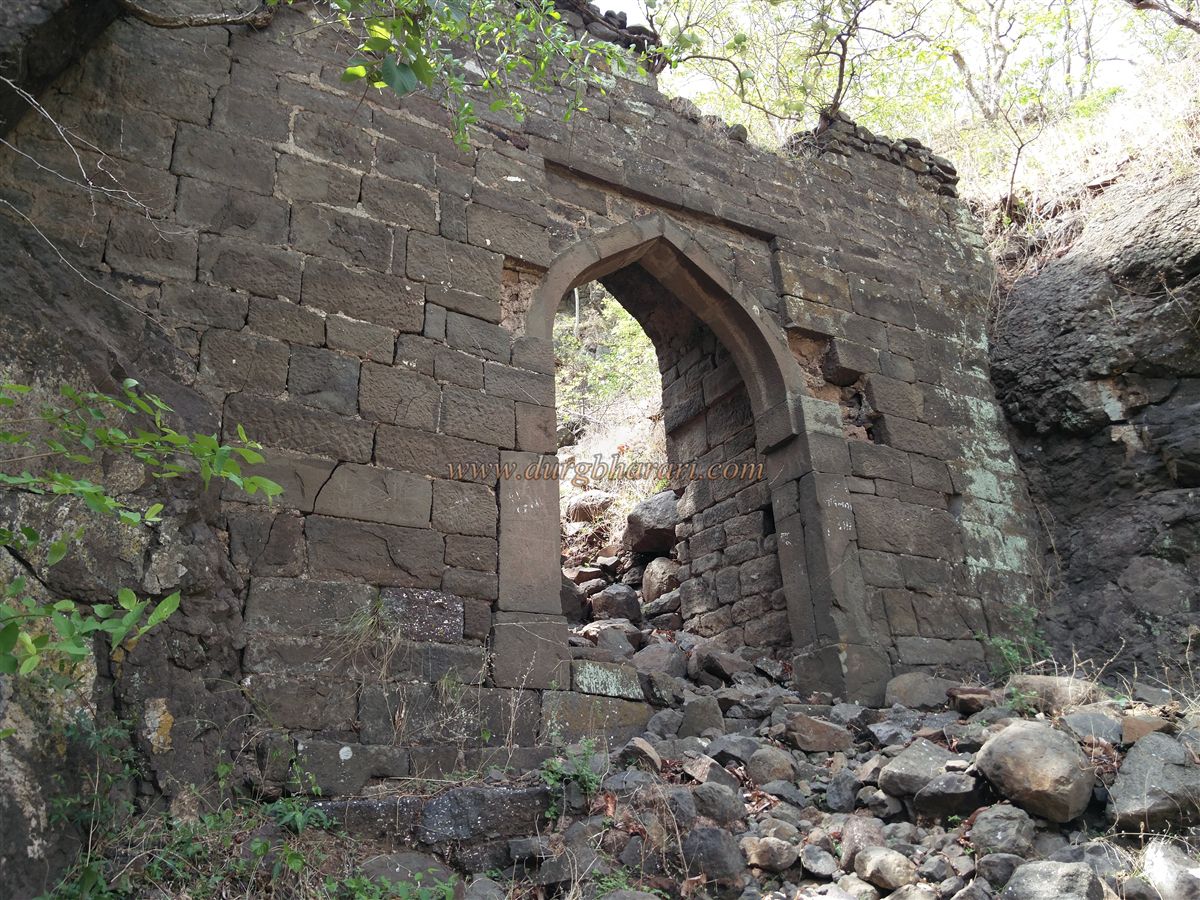
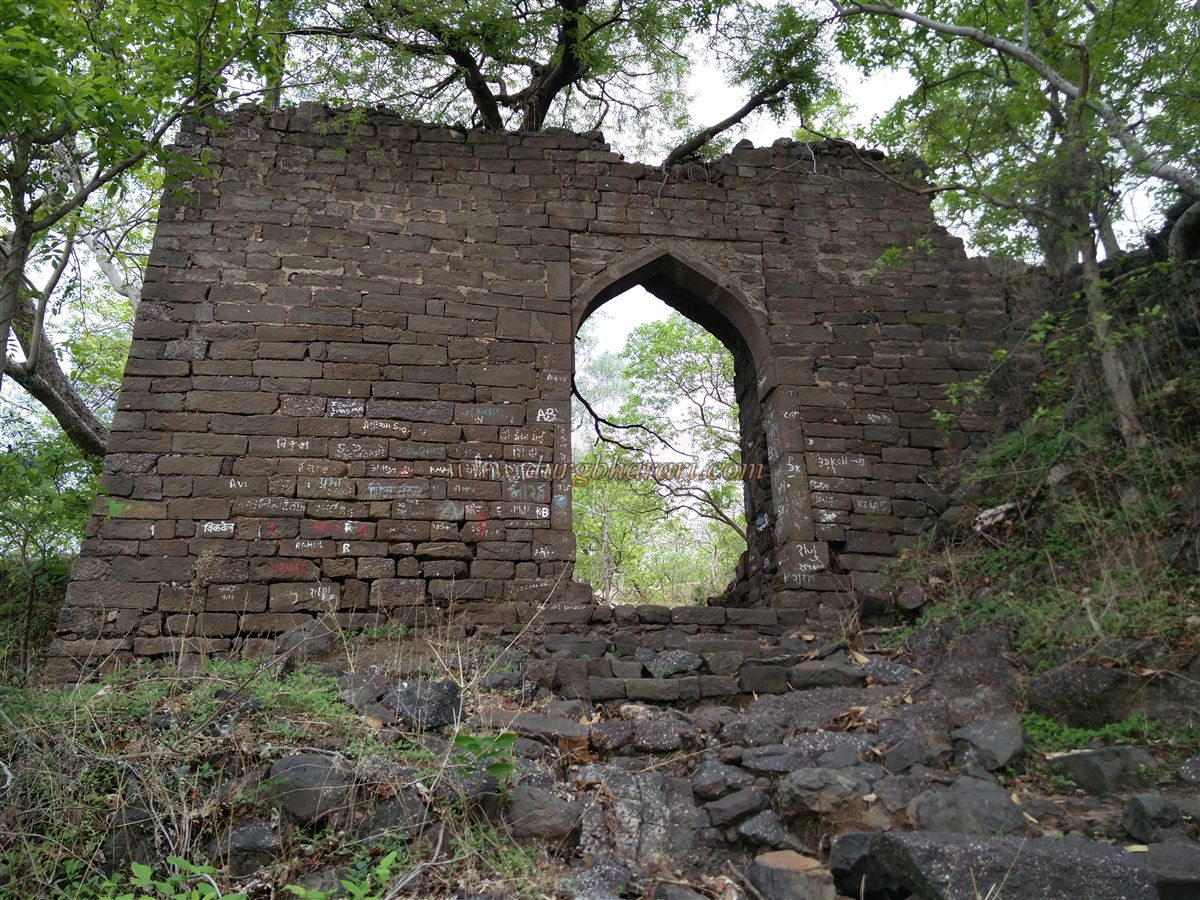
Although Chaugaon fort is not very tall, its upper cliff section is steeply cut on all sides. From the Mahadev temple, it takes about an hour to walk to the fort's east-facing entrance gate. This entrance, built from dressed rectangular stone blocks, is still in excellent condition, with a very beautiful arch. However, the wall beside the gate is crumbling.
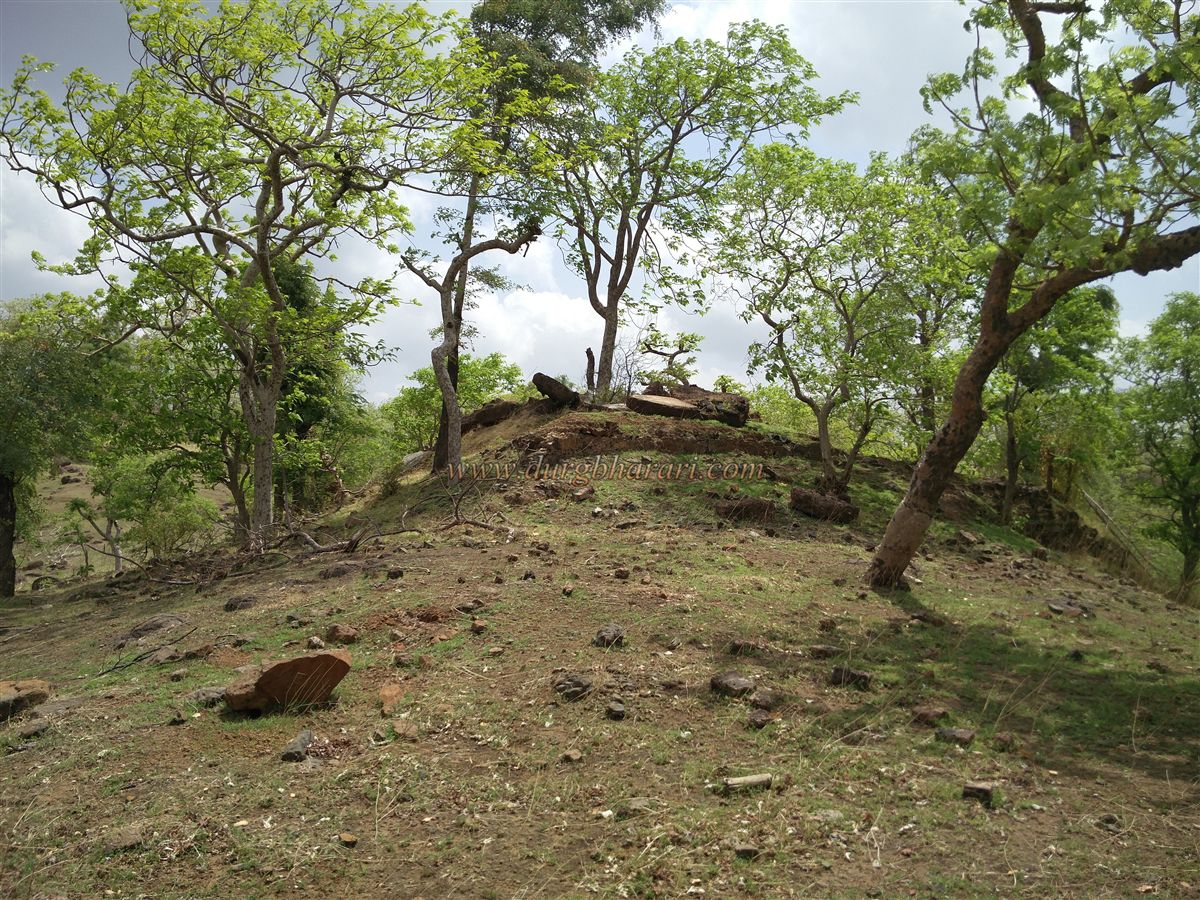
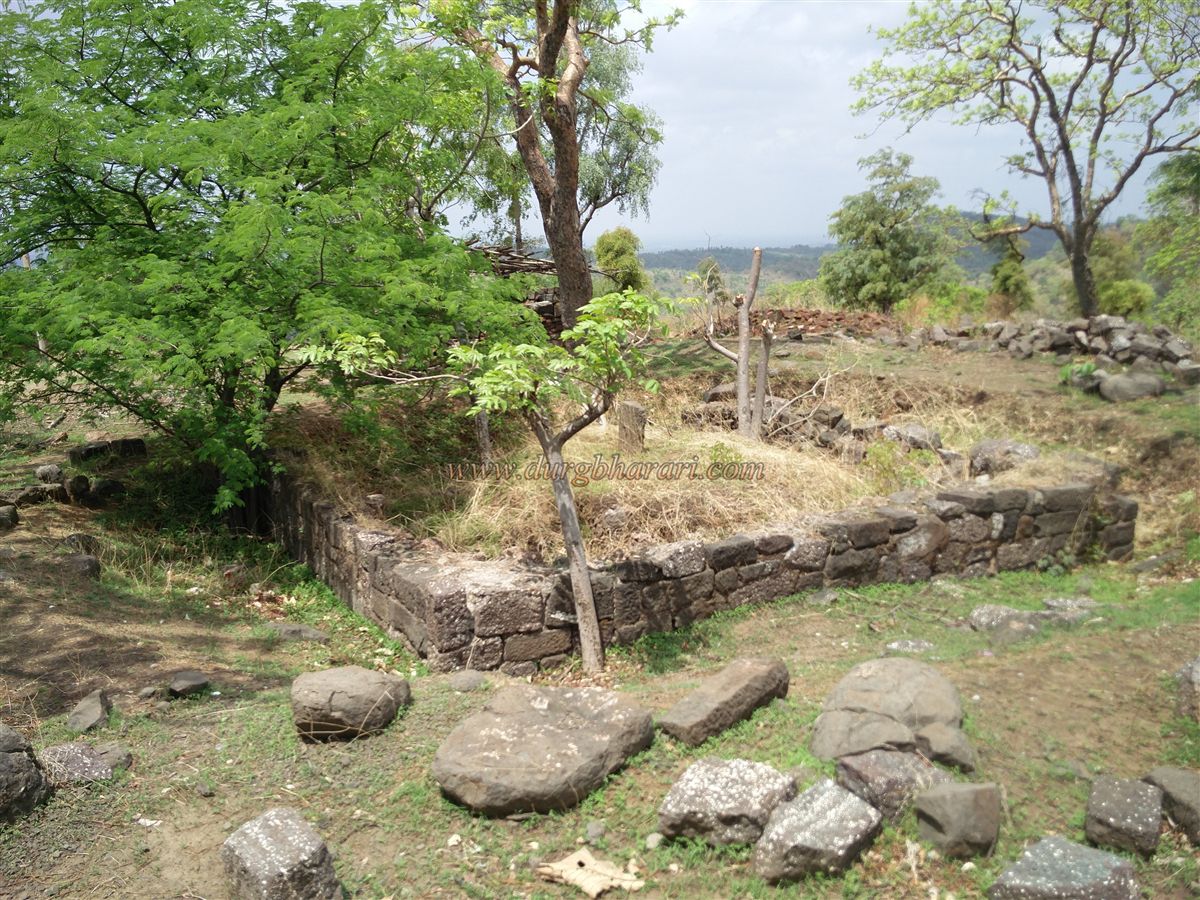
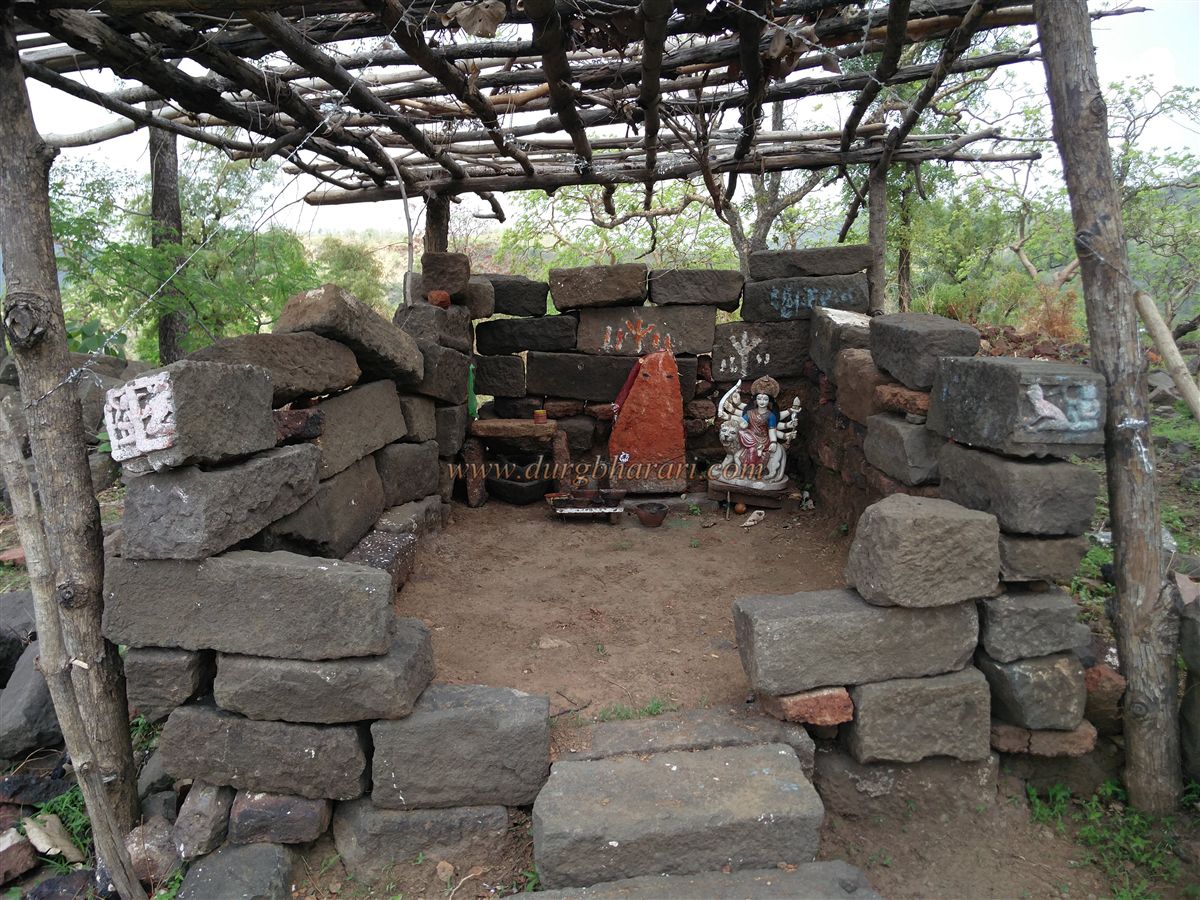
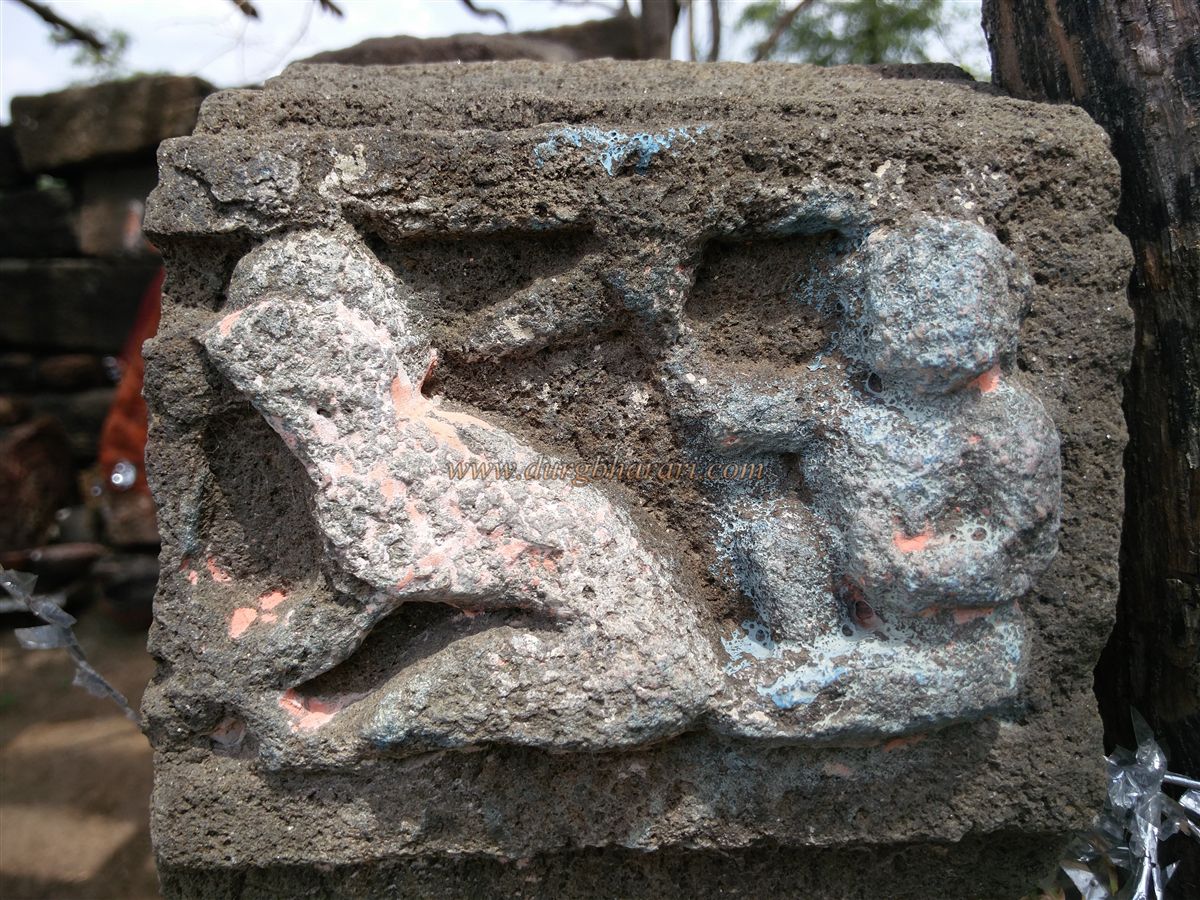
Once inside, the tree-covered summit of Chaugaon fort is visible. Straight ahead is a dry pond filled with soil. Passing the pond to the left, one reaches the flag bastion, where the surrounding fort walls are still in good condition. Nearby, there is a building with some walls still standing. Further ahead, under a tree, there is a small Durga Devi temple, made by stacking carved stones together. Inside this small temple is the original temple base (Tandala) and a newly installed idol of Durga. Scattered around are carved stones, including two sculpted panels — one depicting an animal sacrifice scene. These suggest that the ancient temple here must have been something remarkable.
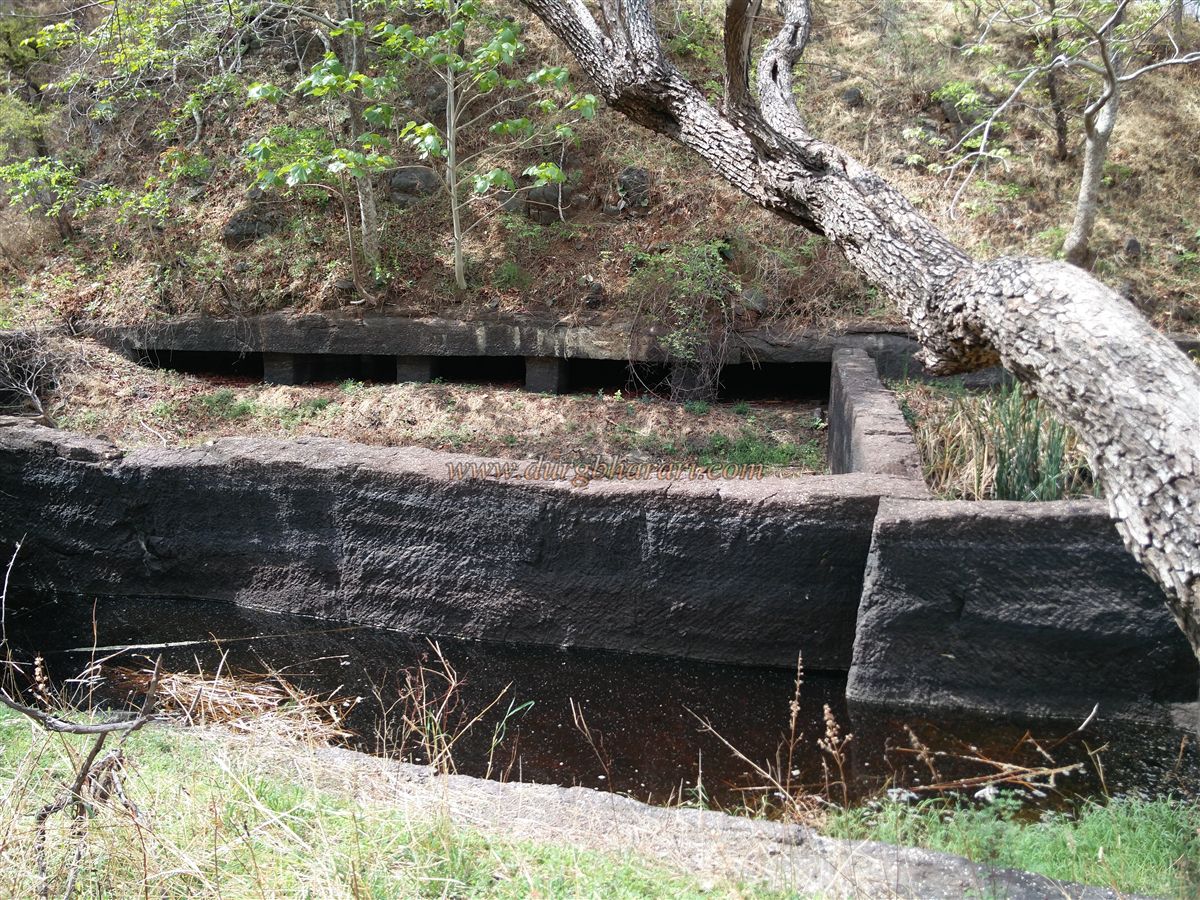
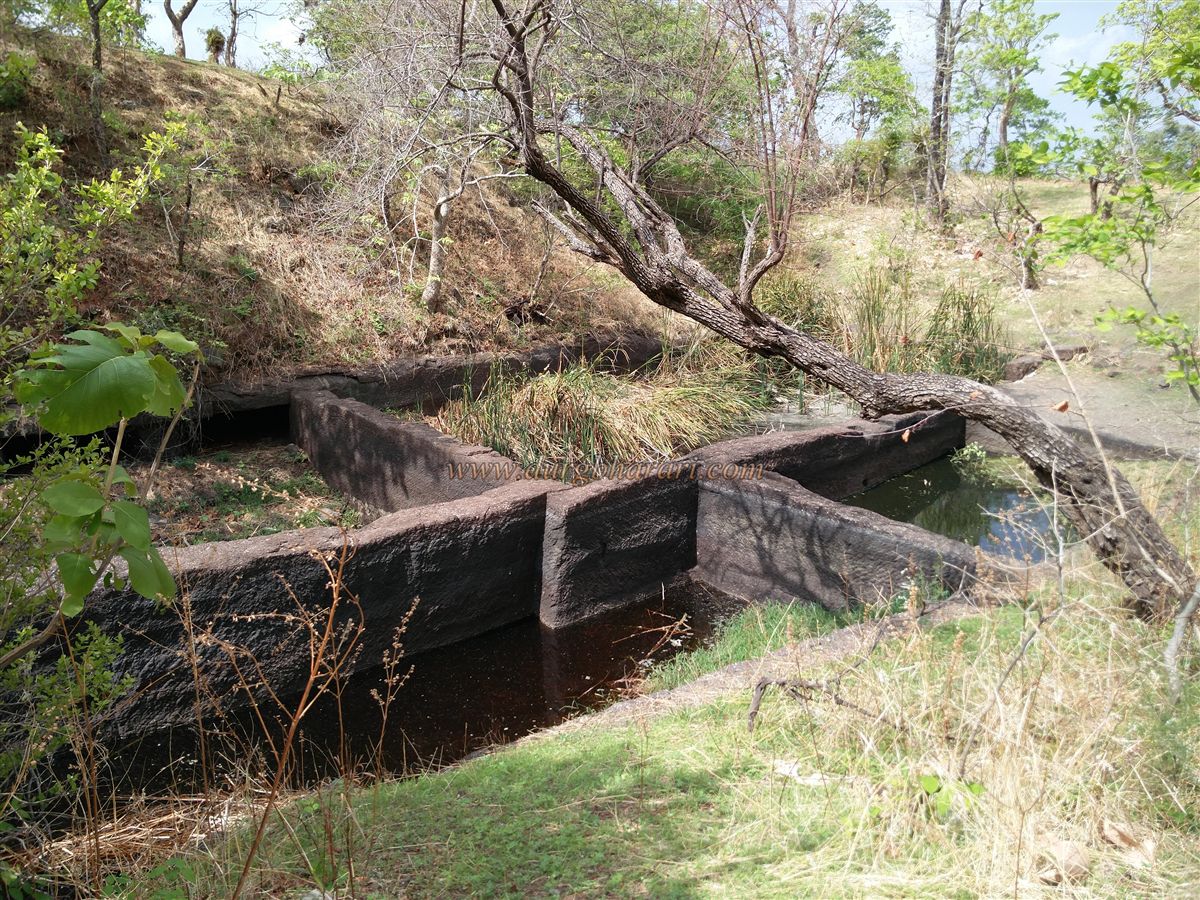
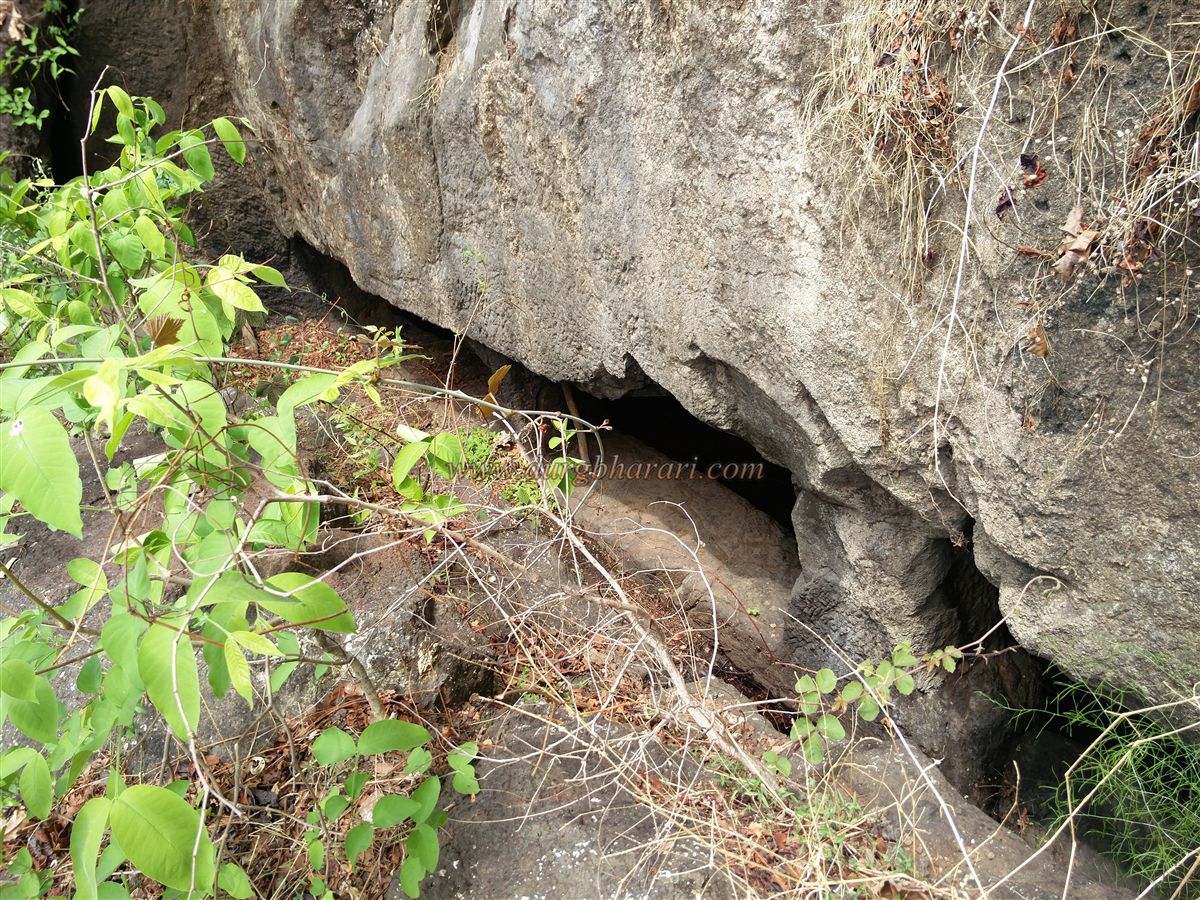
Below this temple, in a wooded area, is a group of rock-cut water tanks, with five arched caves carved inside the rock. A wall in the middle of the tank leads to these caves, but they are filled with water, so they can only be viewed from outside.
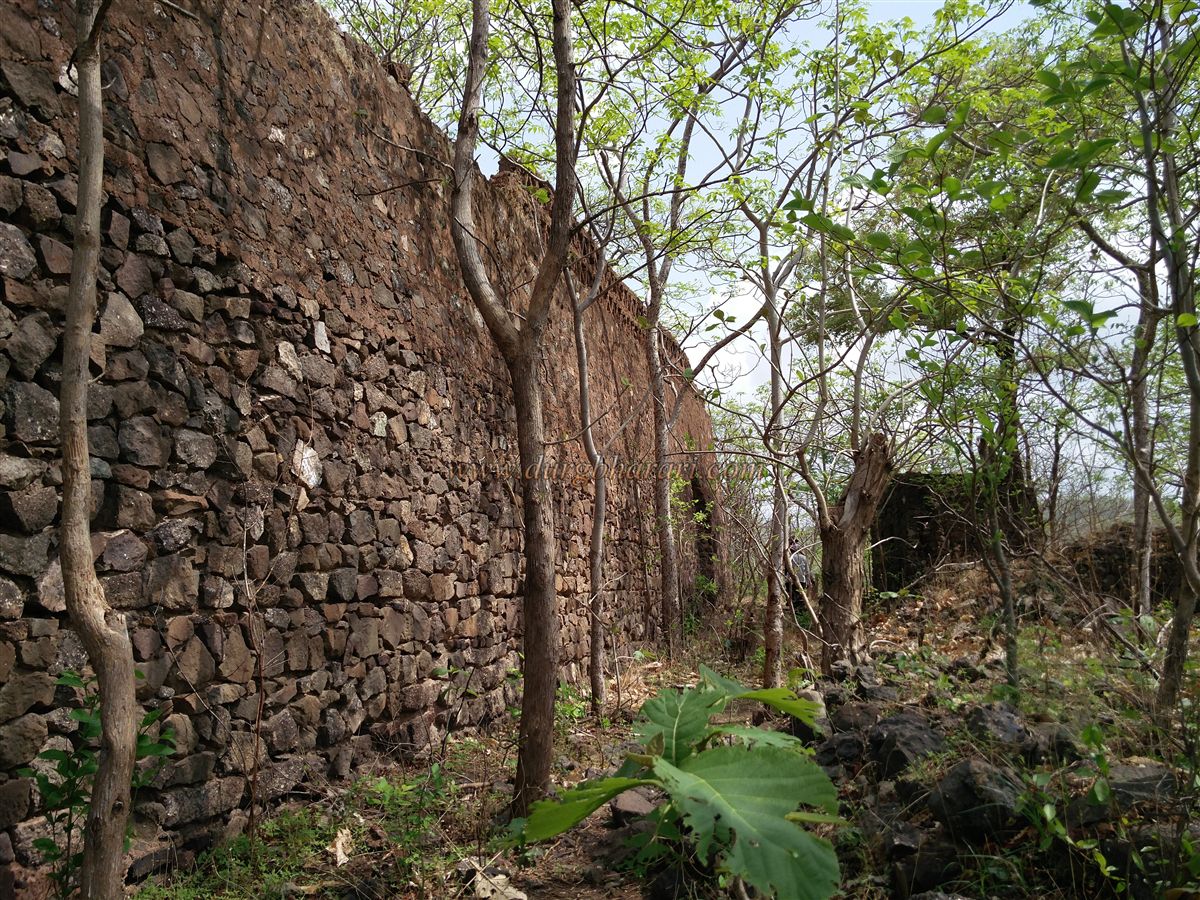
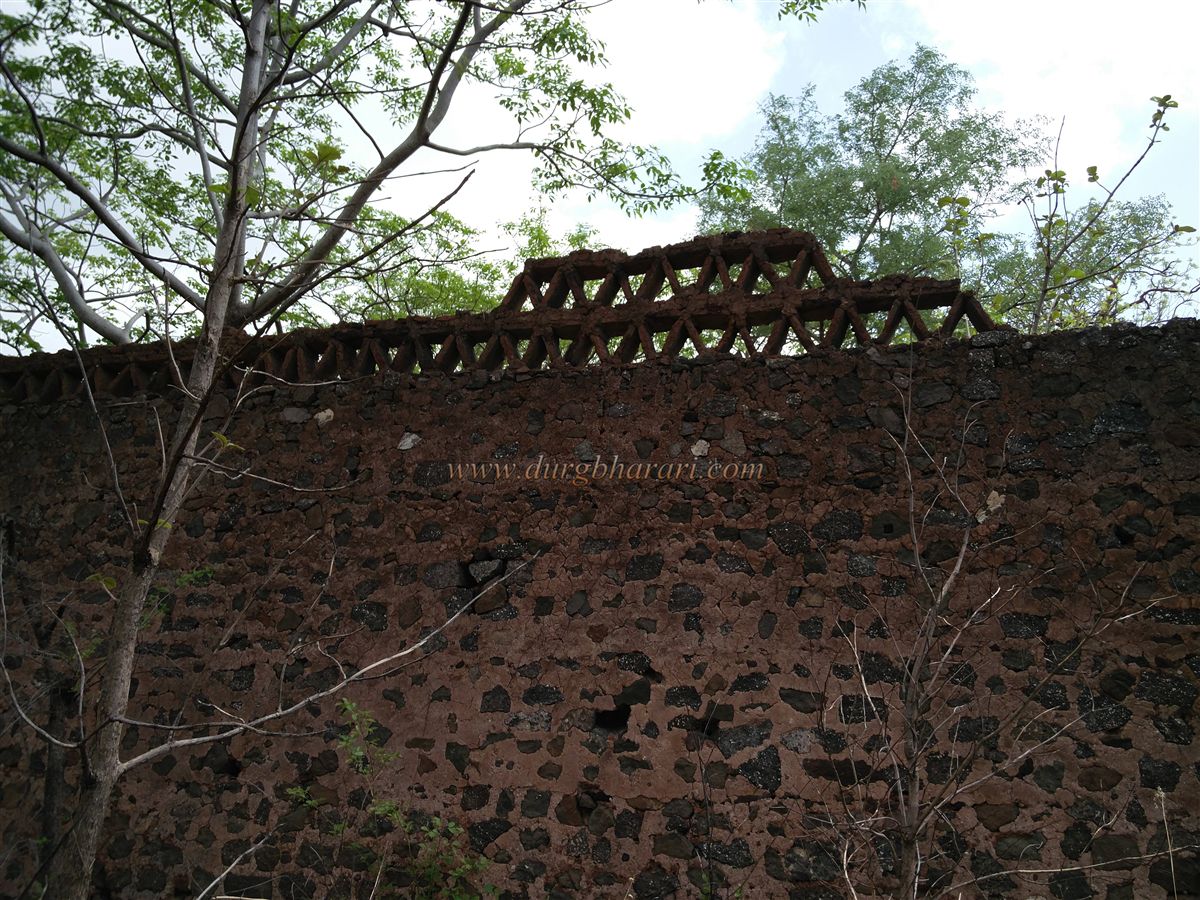
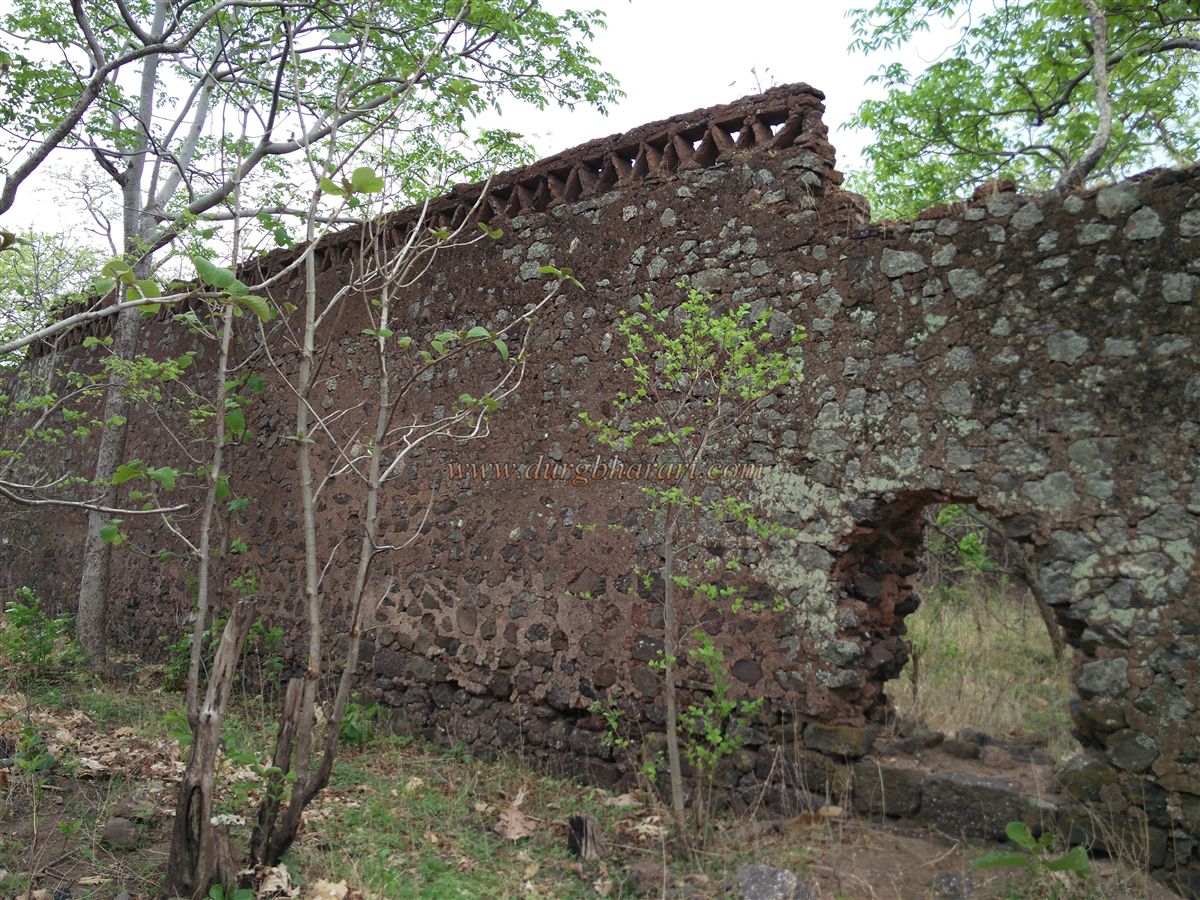
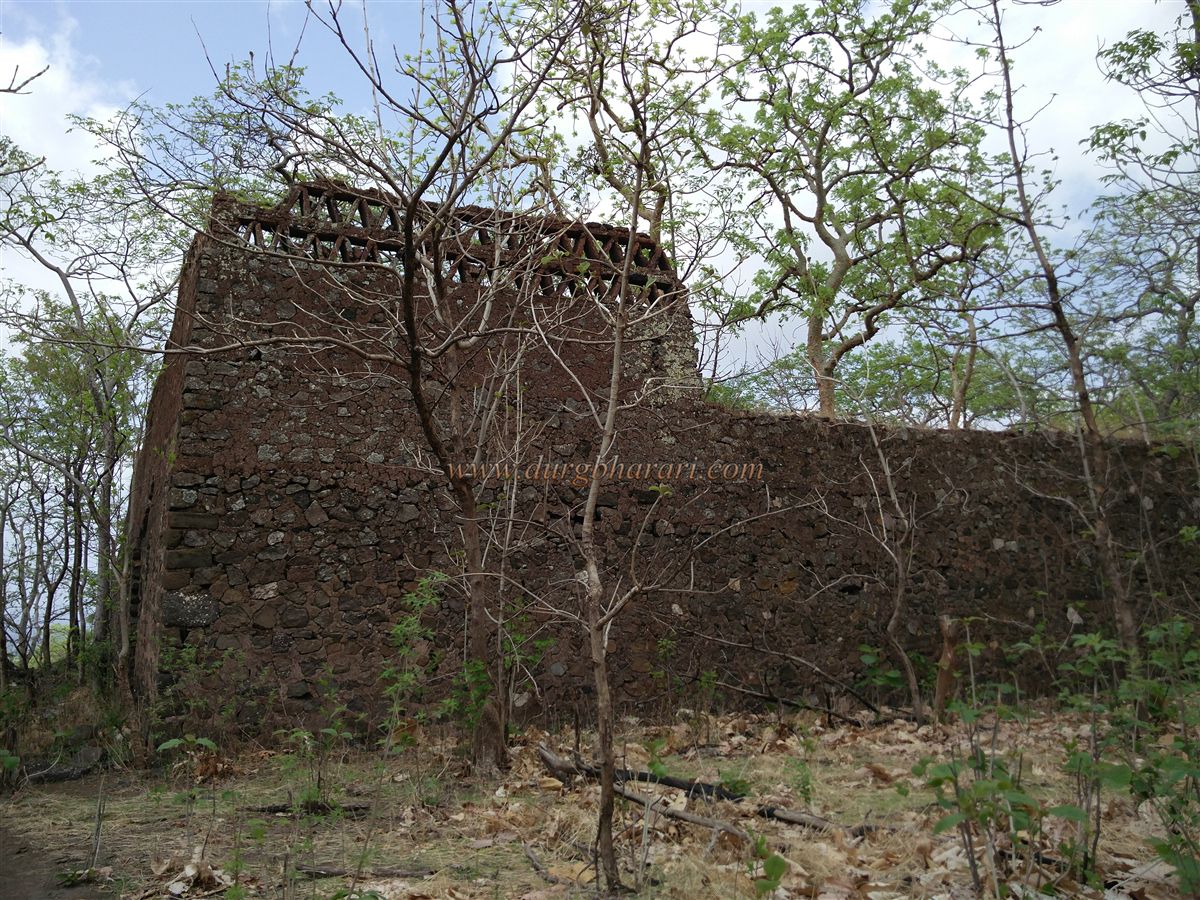
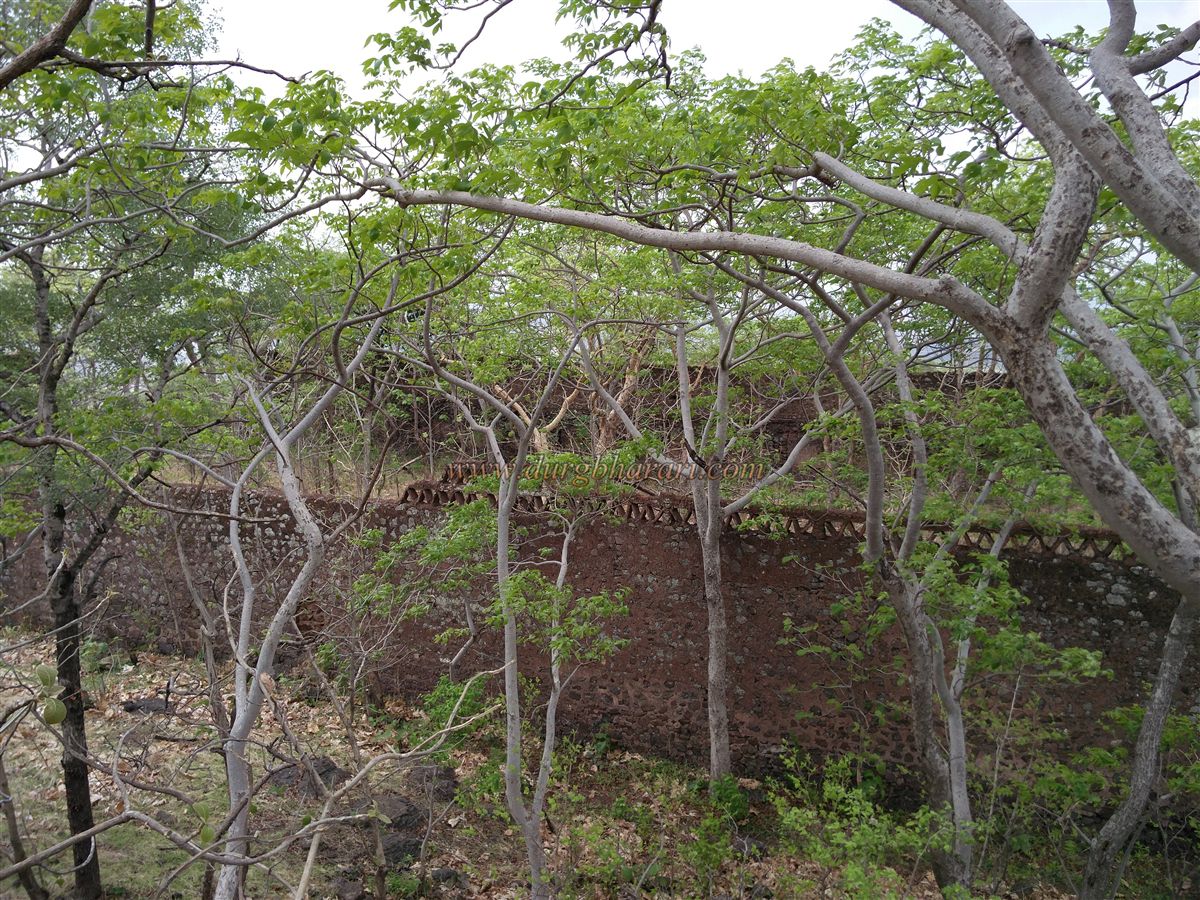
From here, climbing further leads to the northern high ground, where stands the structure known locally as the royal palace of the Gawli kings. The stone-and-lime walls around this palace, 20–25 feet high, are still in excellent condition. The two-tier brick ornamentation on top of the walls is very beautiful and is not seen on any other fort, making it a memorable feature of Trivenigad.
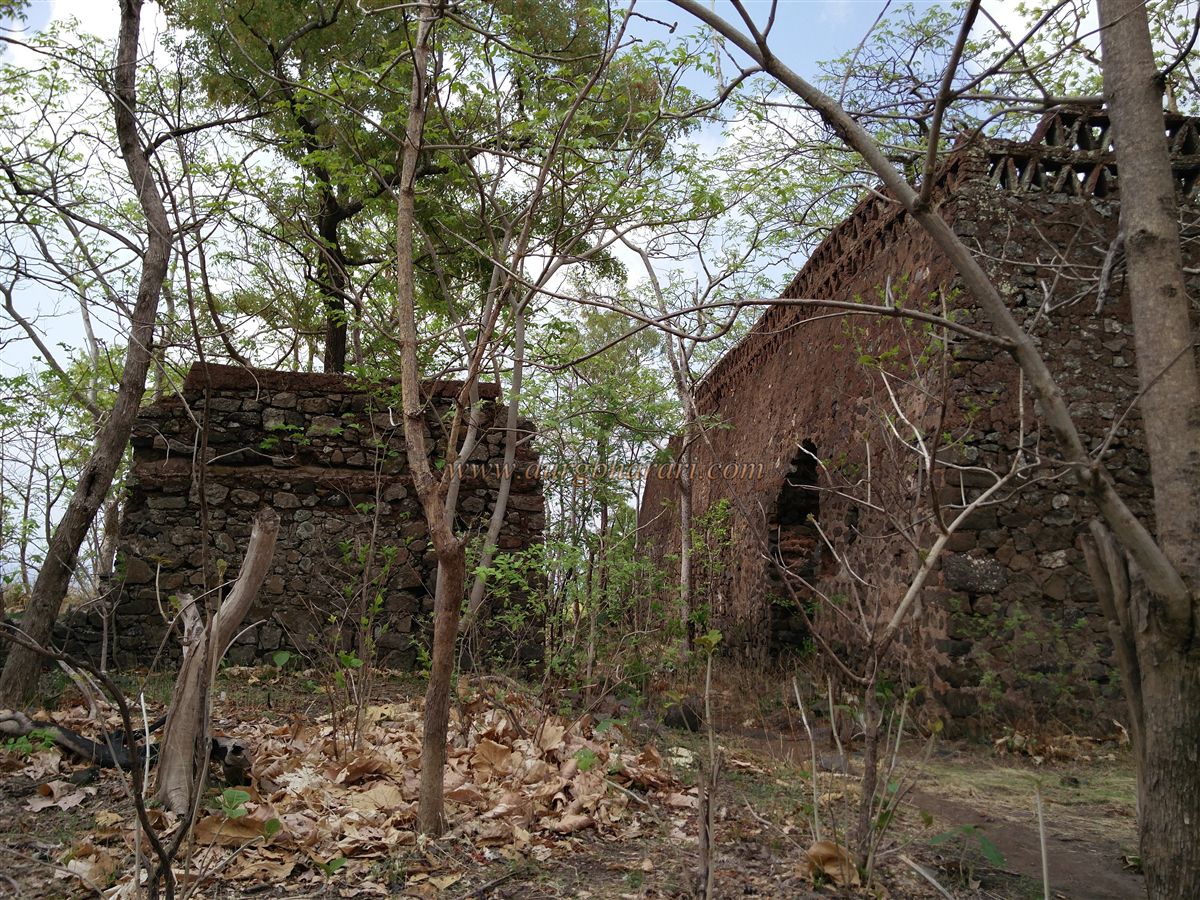
Entering the palace from its east-facing gate, one first encounters a wall; going around it reveals the grandeur of the palace. The interior is now overgrown with teak trees, and one must walk carefully over fallen leaves. Inside, many halls, small shrines, and niches still survive, giving a sense of how the fort must have been in its inhabited days. From its design, it was likely used as a sardar or durbar building.
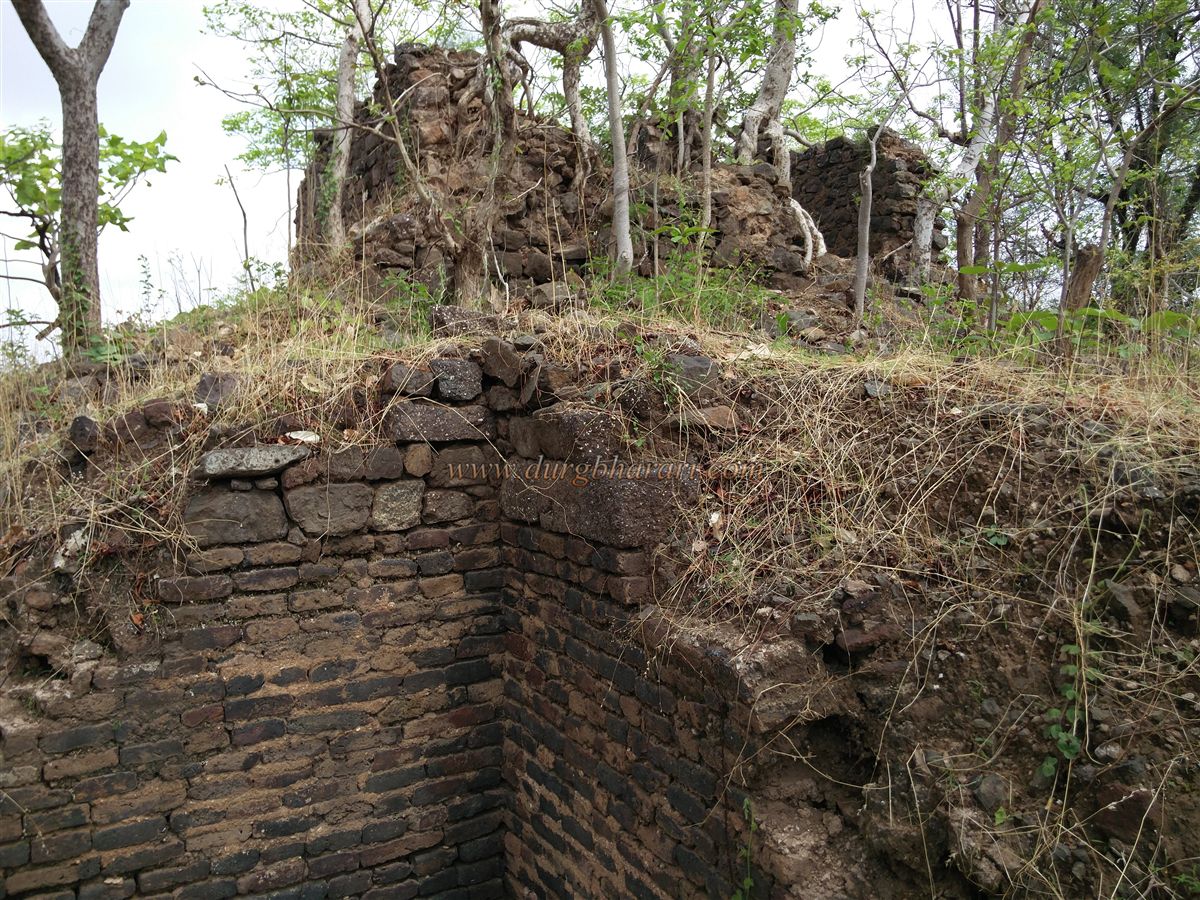
In 1977, four historical cannons, each 6 feet long, were found in the open space in front of this palace; they are now kept in the Chopda Tehsil Office premises. Beyond this palace are the remains of another small building. Descending from here to the north side of the fort, there is another entrance gate built into the slope at the base of a ravine; this gate is intact, and the fort wall in this section is very prominent. The area is thickly wooded, hiding the internal structures.
On the east side of Trivenigad are a rainwater pond, a hidden gate (chor darwaza), and two wall recesses (jangya). The remaining part of the fort has no constructions and is covered with many bel trees. After a short walk in this section, one can descend the fort via the south gate.
While descending from this gate, a path runs along the mountain slope, leading to three rock-cut caves known as Khamb Taki. The water here is icy cold and delicious, and this is the only source of drinking water on the fort. From here, one retraces the path back to the main route.
A complete tour of the fort requires at least three hours. Looking at its history, the rock-cut tanks and the cave-like chambers beside them suggest that the fort’s construction dates back to ancient times. Local people refer to the Ahir rulers as Gawli kings, and the palace is known as the Gawli Raja’s palace. In the Jalgaon region, forts were generally under the control of the Ahir family, Rashtrakutas, Yadavas, and their feudatories, the Nikumbh clan, so it is likely that this fort too was under their rule.
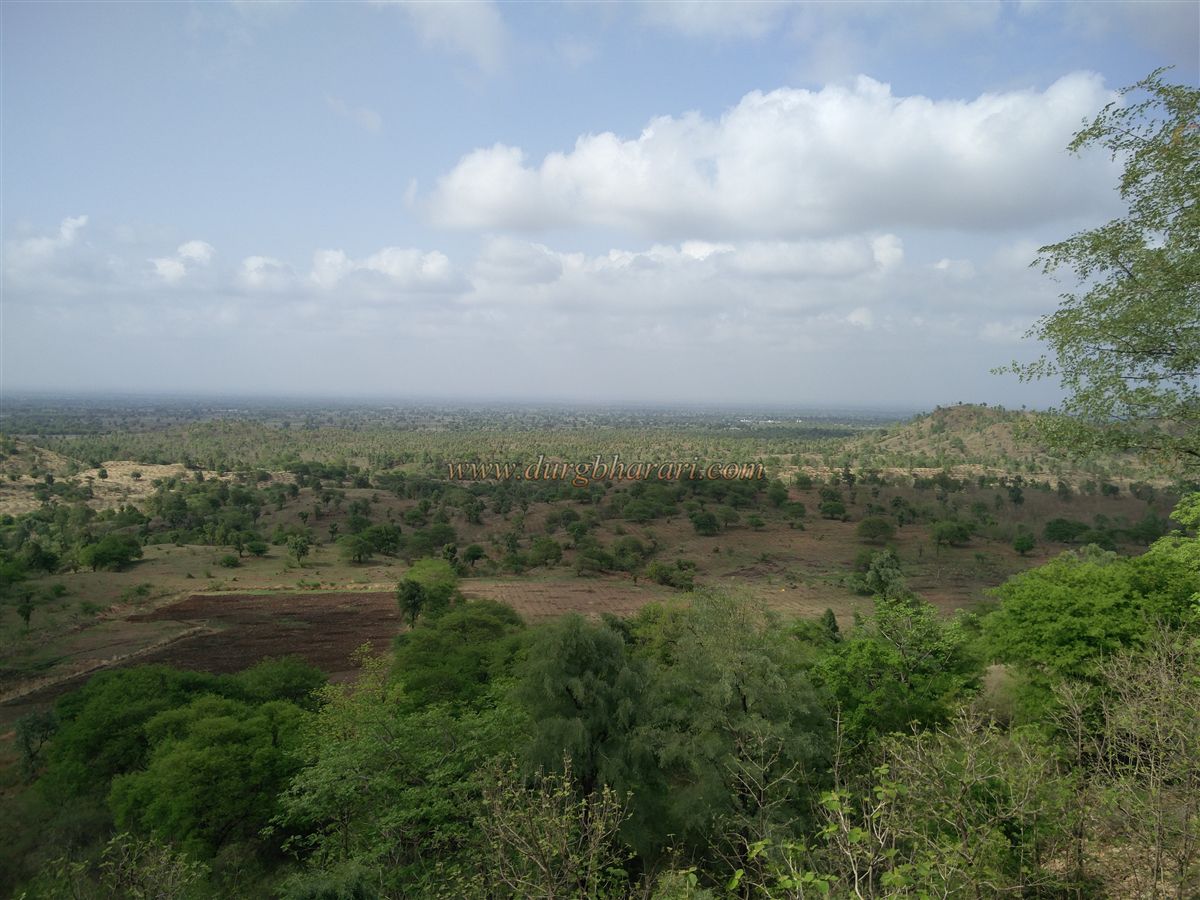
Although Jalgaon district is generally known as a dry, drought-prone area with little vegetation, Trivenigad stands in contrast — holding green trees and shrubs, along with a perennial tank of cold water. Trivenigad is one of the must-visit forts in Jalgaon district, and even if it requires a long journey, fort enthusiasts should visit it at least once.
© Suresh Nimbalkar
GALLERY