TORGAL
TYPE : GROUND FORT
DISTRICT : BELGAON
HEIGHT : 0
GRADE : EASY
While fort trekking in Belgaum district, in Ramdurg taluka, one can see a series of beautiful forts such as Ramdurg, Mudakavi, and Torgal. The most beautiful among them is the Torgal Fort, built in the 11th century on the banks of the Malaprabha River. The Bhootnath Temple complex within this fort stands as evidence of the fort’s antiquity.
Torgal Fort is located 84 km from Belgaum, 56 km from Gokak, and 10 km from the taluka headquarters of Ramdurg. The entire village of Torgal is settled within the fort. Benefiting from a dual structure of hill fort and land fort, this fort spans 230 acres, making it the largest fort in Belgaum district. On one side of the fort lies the Malaprabha riverbed, and on the other side, a moat has been dug, into which river water was diverted. The fort’s ramparts extend up to the top of a hill to the north. At the hilltop, the fort is divided into two parts by a rampart built in the middle.
...
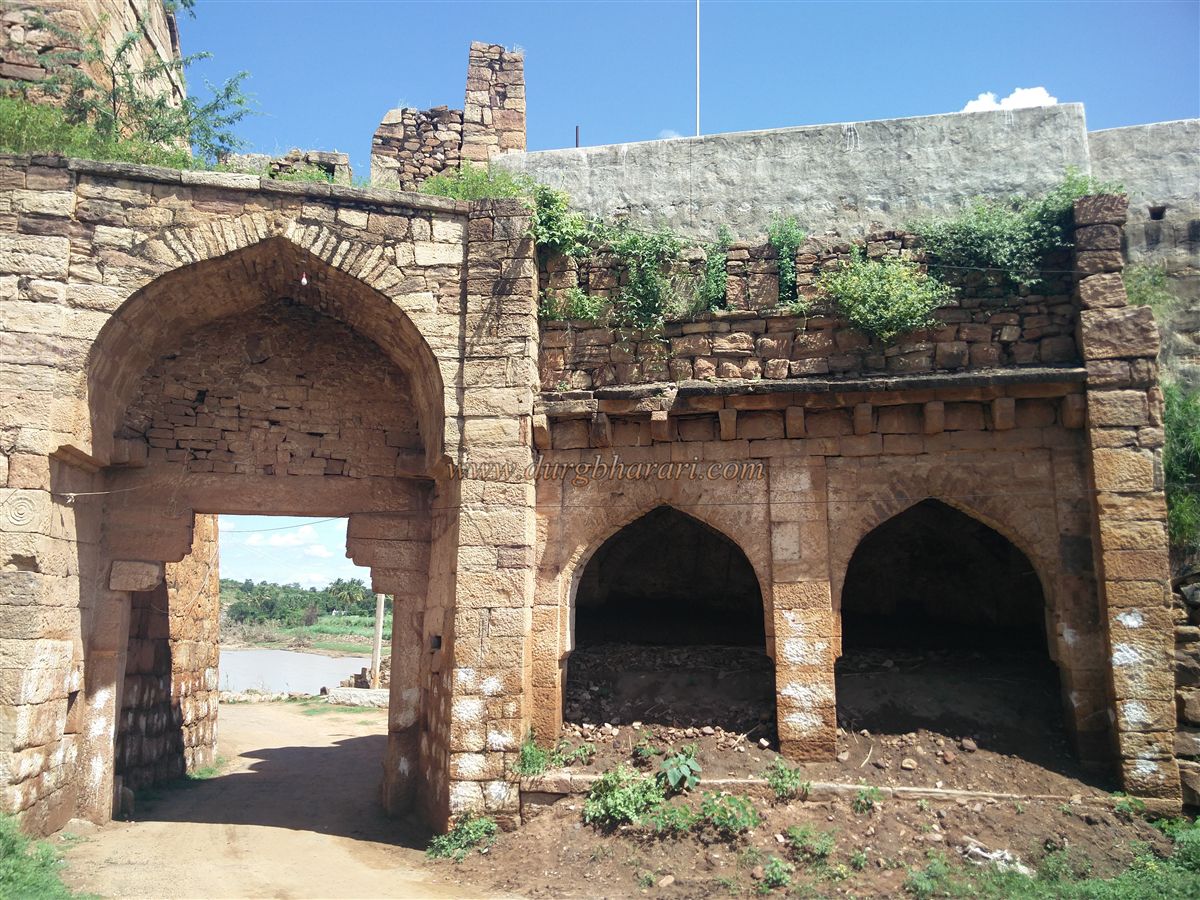
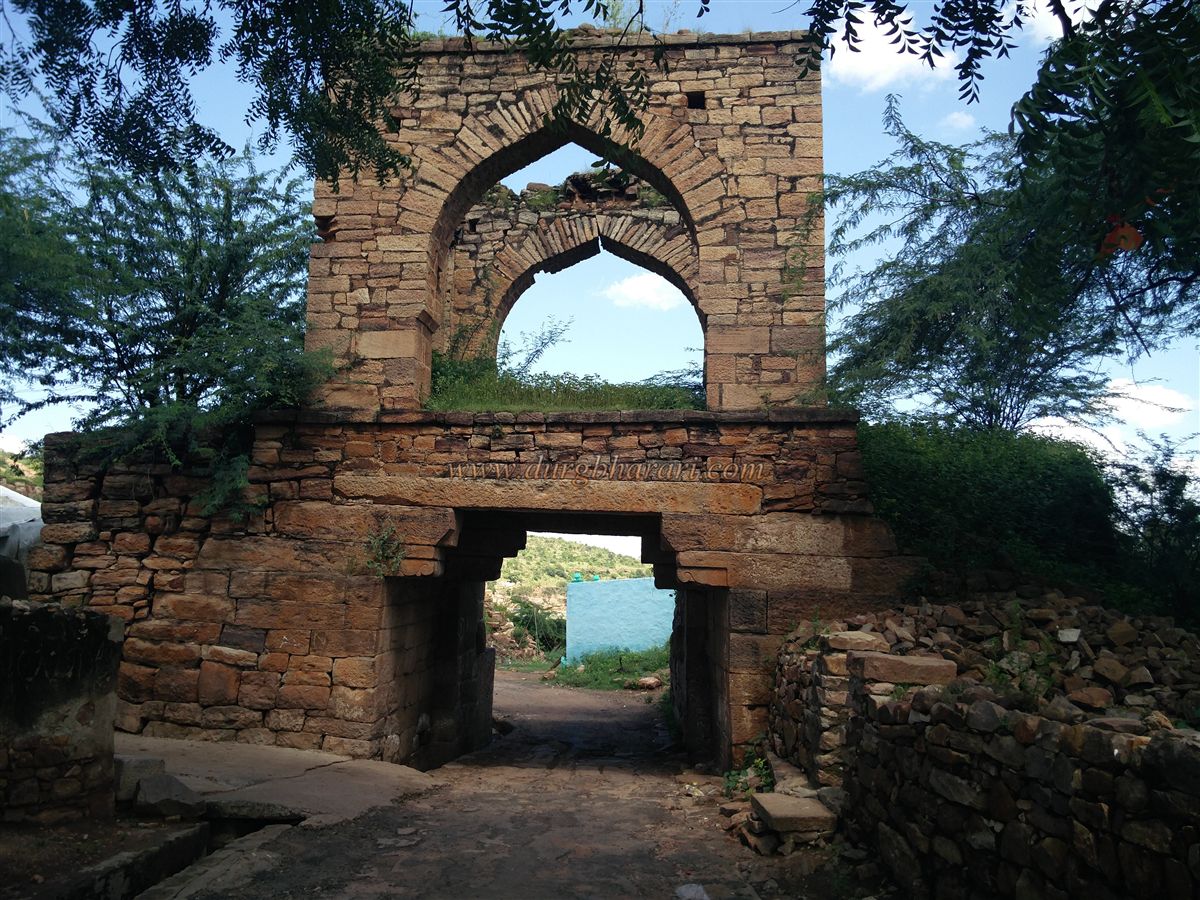
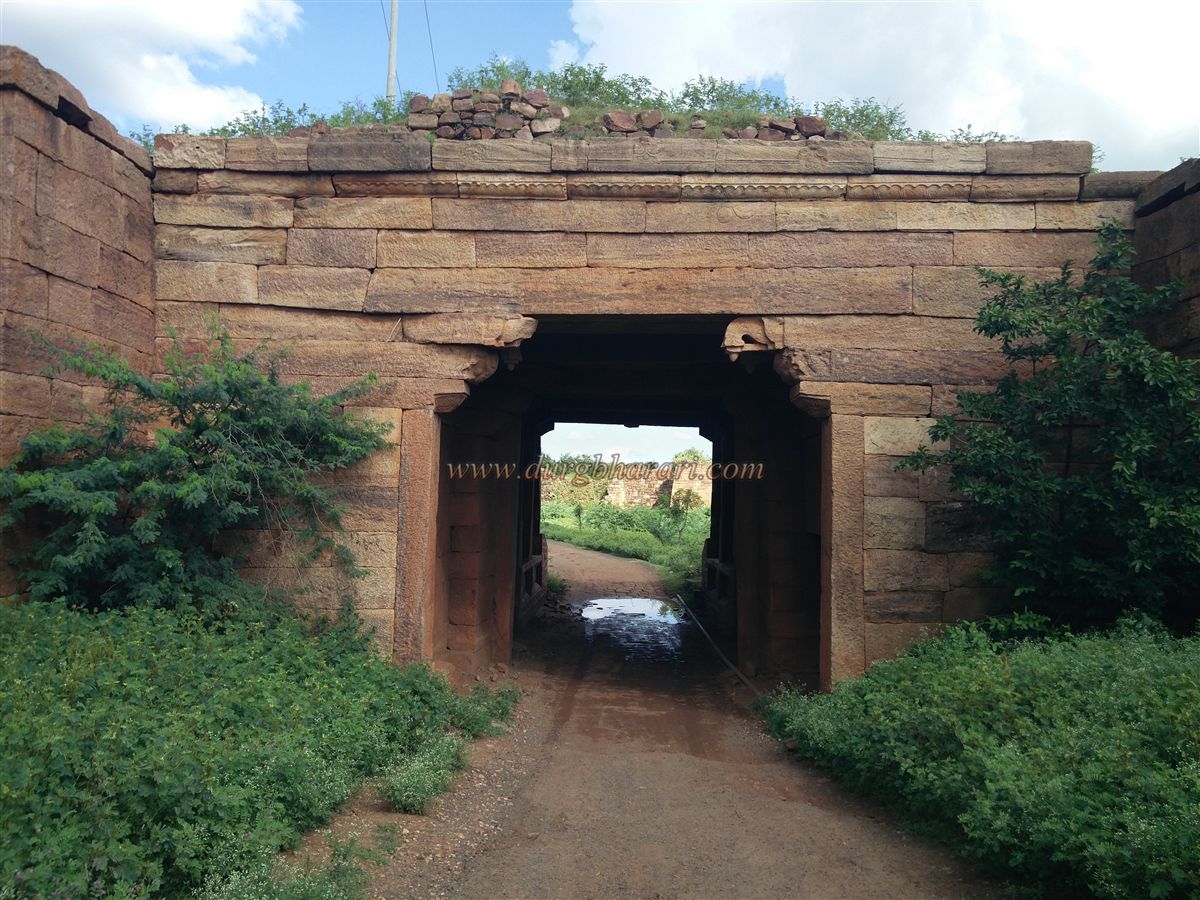
The citadel (balekilla) is in the central part of the fort and covers about 2.5 acres. Even though the land fort is surrounded by a moat, it is also protected by double ramparts, and in some places, triple ramparts are built. Since Torgal village is within the fort, there is a motorable road throughout, and the gates are wide enough for four-wheeled vehicles to pass easily. Entering from one side of the fort and exiting from the other involves passing through a total of six gates. Each gate is exquisite and decorated with carvings.
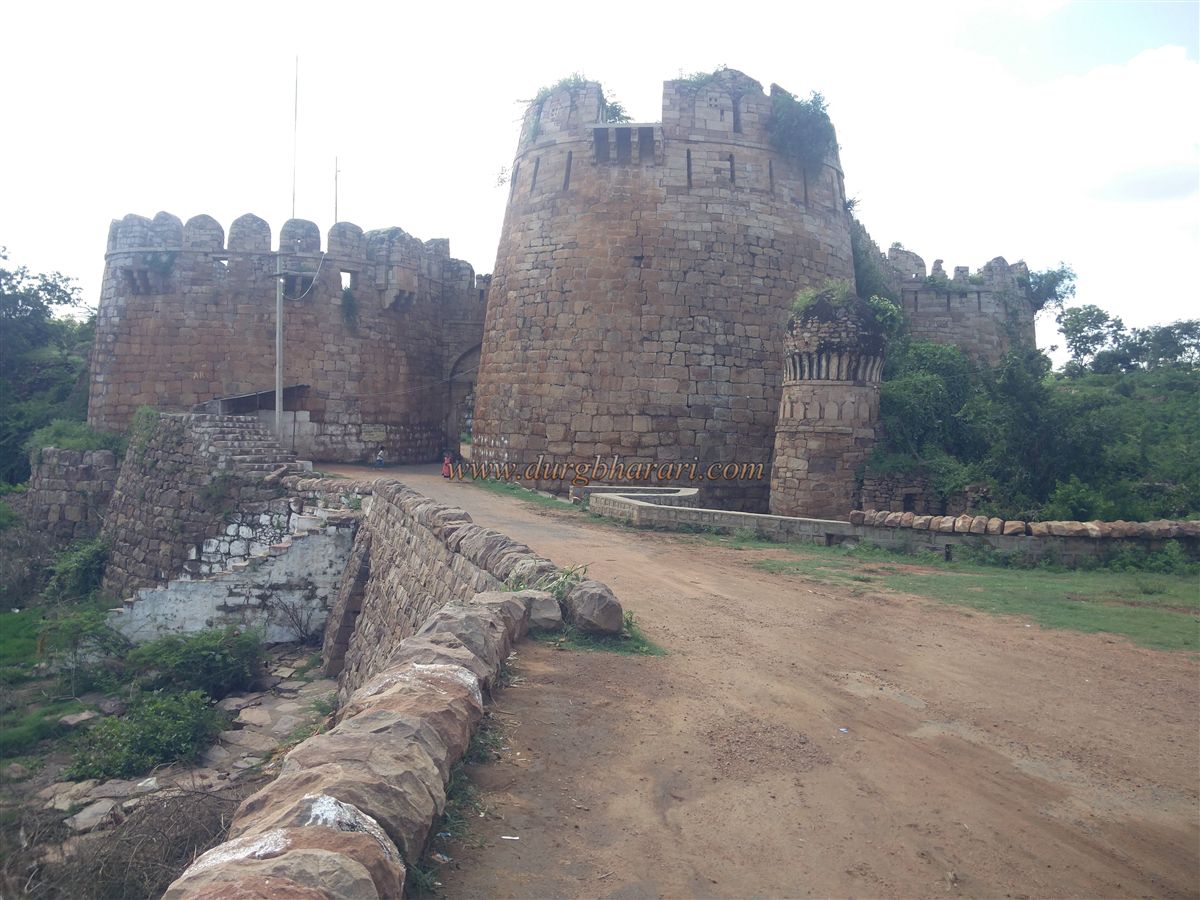
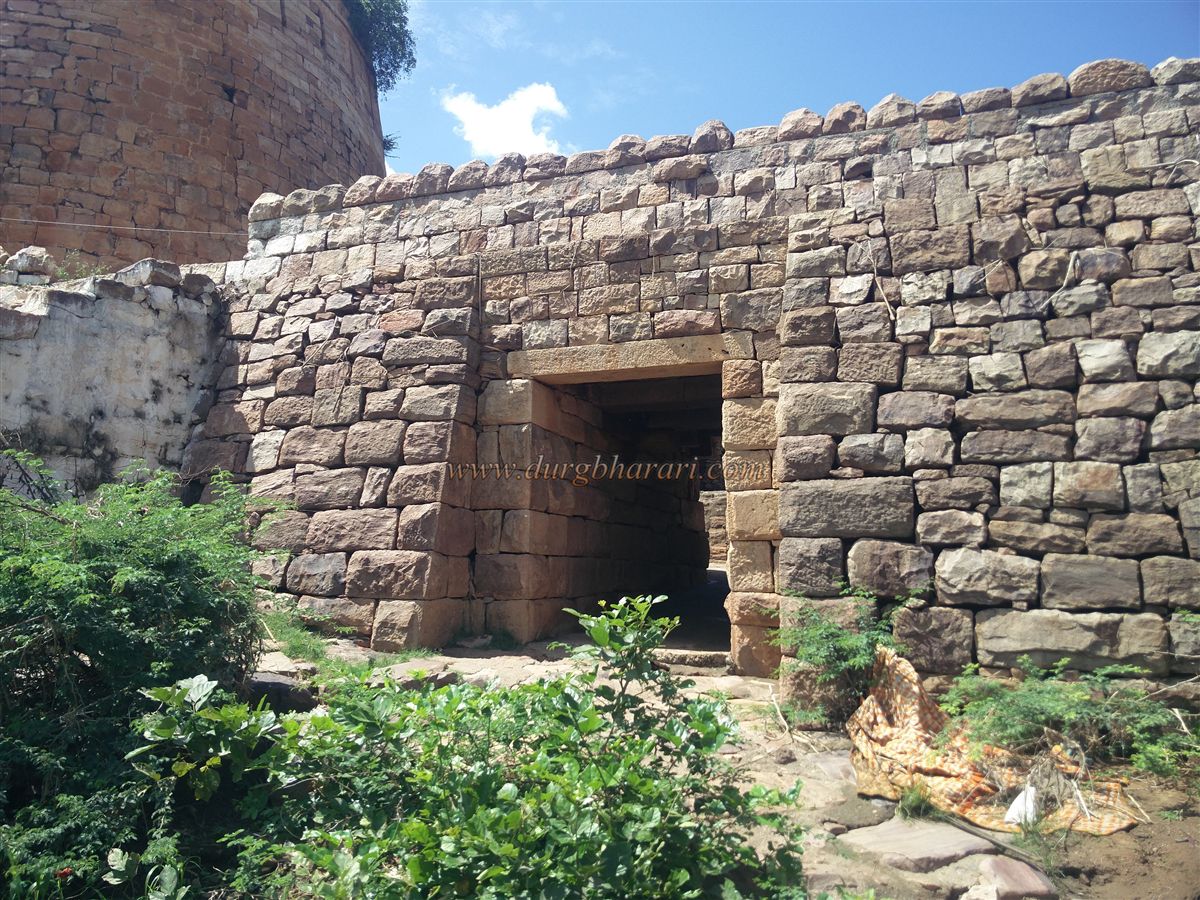
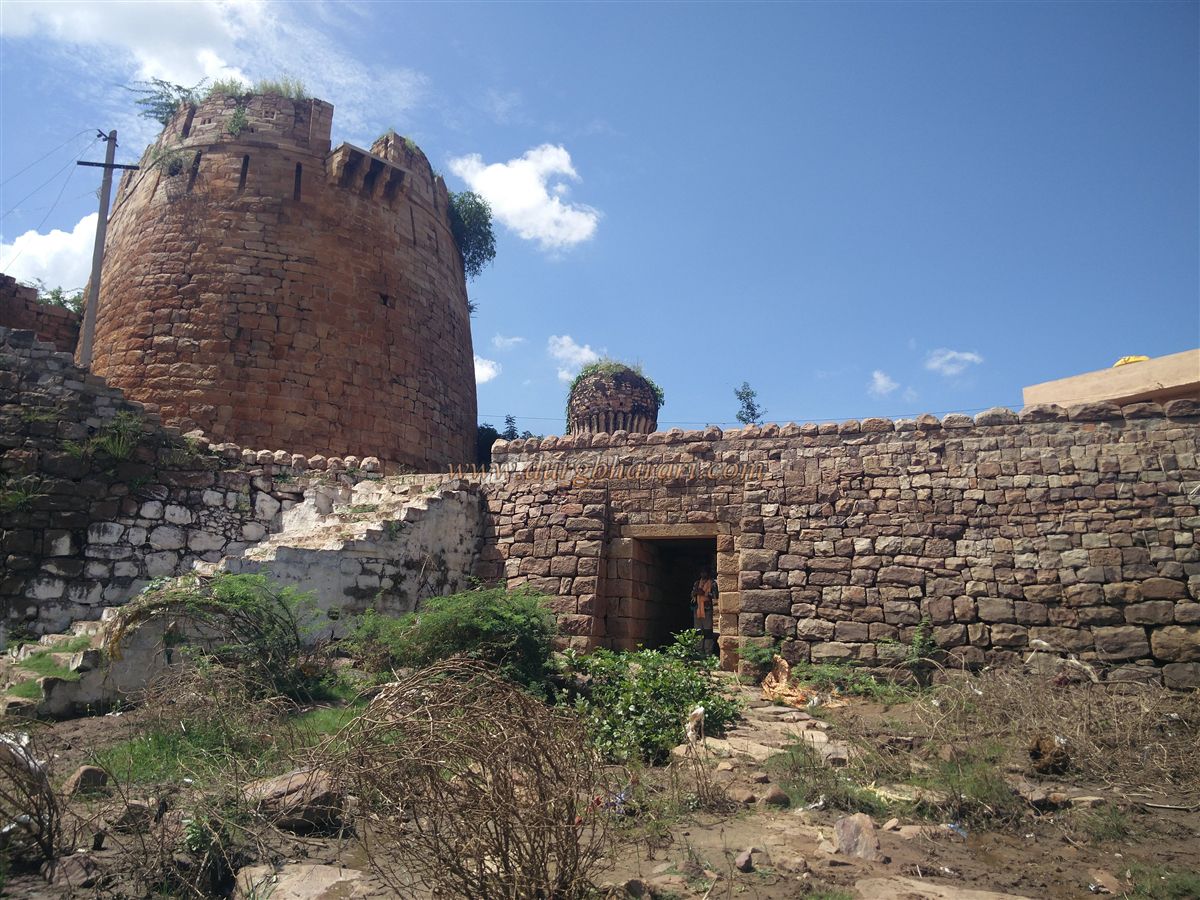
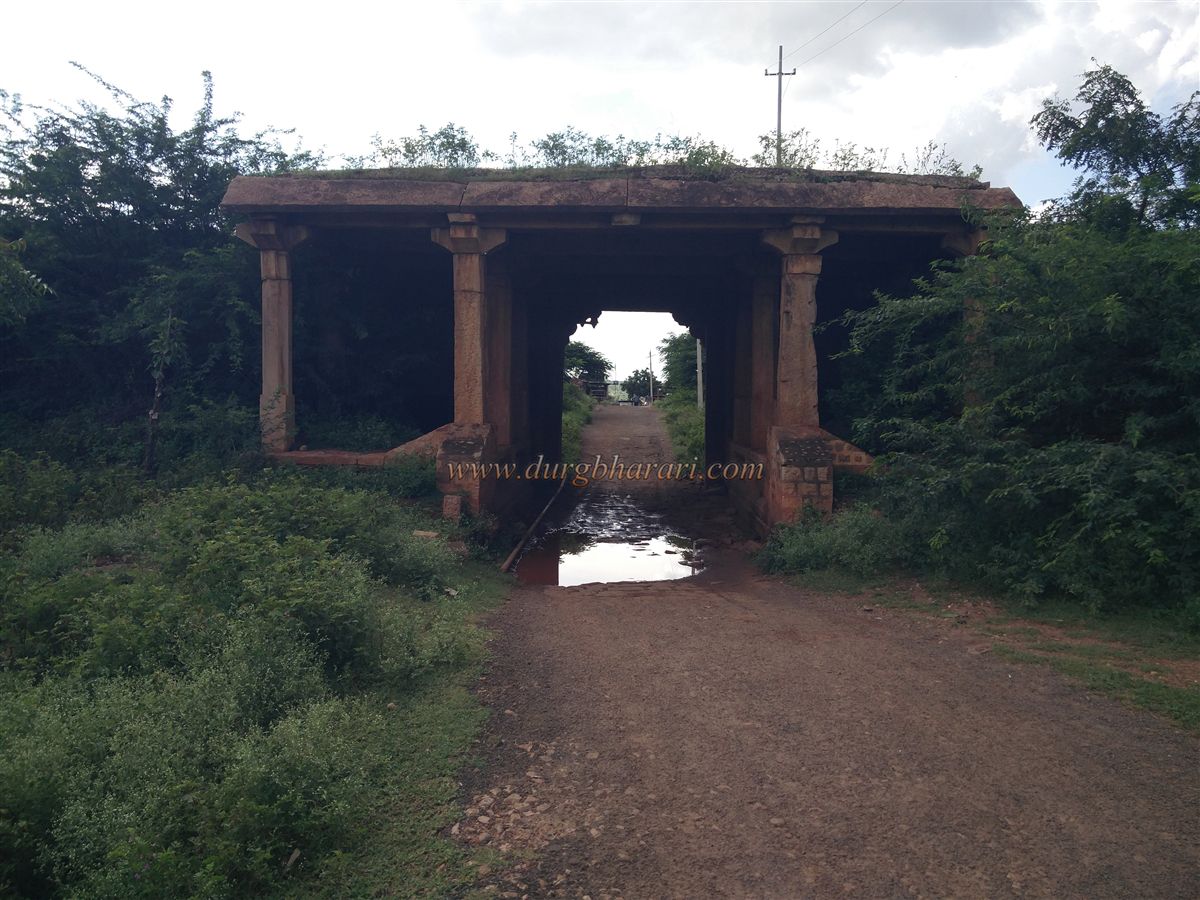
Approaching from Ramdurg, you enter the fort through the east-facing gate at the south eastern tip. In front of this gate is a moat, with Malaprabha River water diverted into it. Nowadays, however, the moat has dried up. Later, a stone bridge was built over this moat. Steps were built to descend into the moat, and a passage under the bridge leads toward the riverbed. The bastion-side part of the moat is enclosed by ramparts, with a small gate for descending into it. In the riverbed, on a platform, stands a Shiva temple, and some carved sculptures lie scattered.
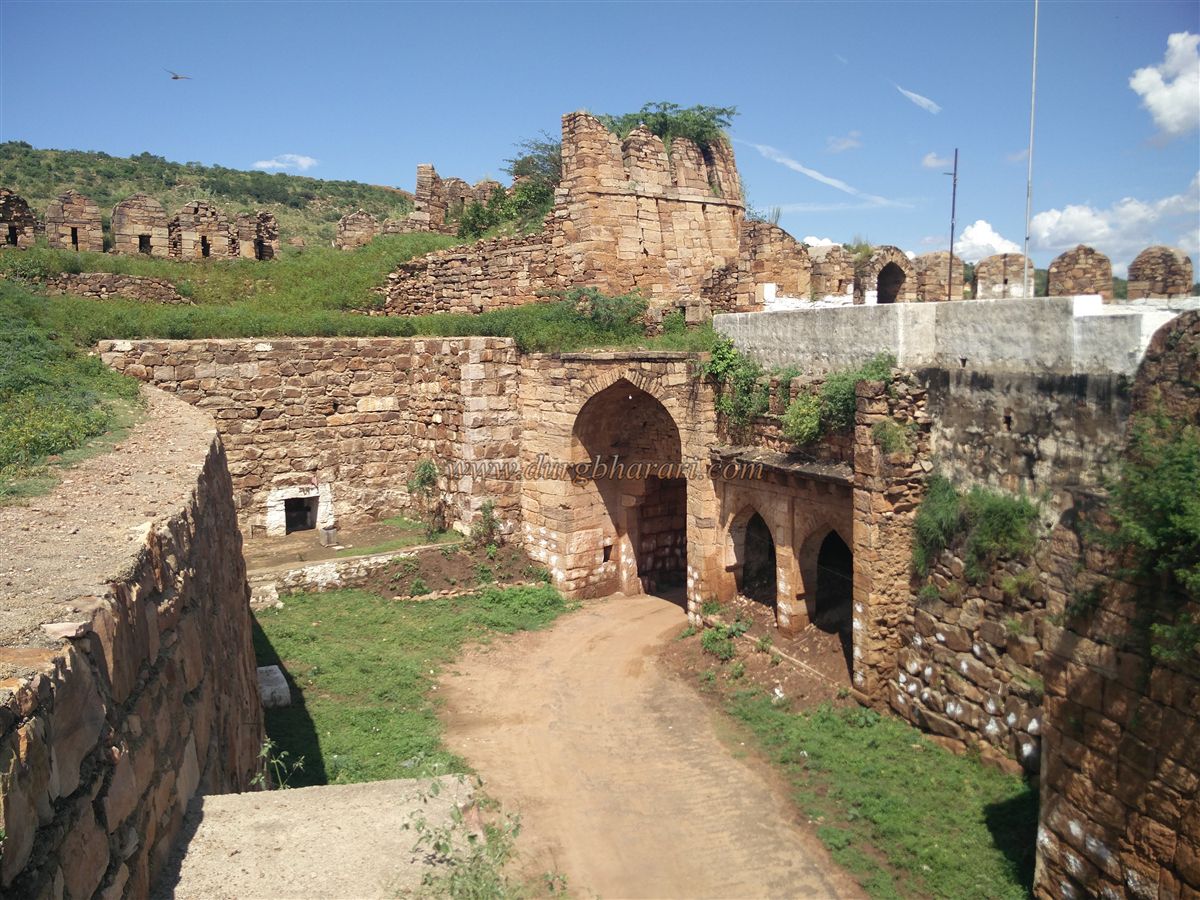
This main gate of the fort is built between two large bastions. On these bastions are machicolations, decorative battlements, and loopholes for cannon and gunfire. Inside the gate, to the left, attached to the rampart, are two arched guard chambers; to the right, attached to the rampart, is a large platform, and a little ahead, a carved temple. In front of this temple is the second gate of the fort. This entire section is enclosed on all sides — a battle formation designed to trap enemies if they breached the outer defences.
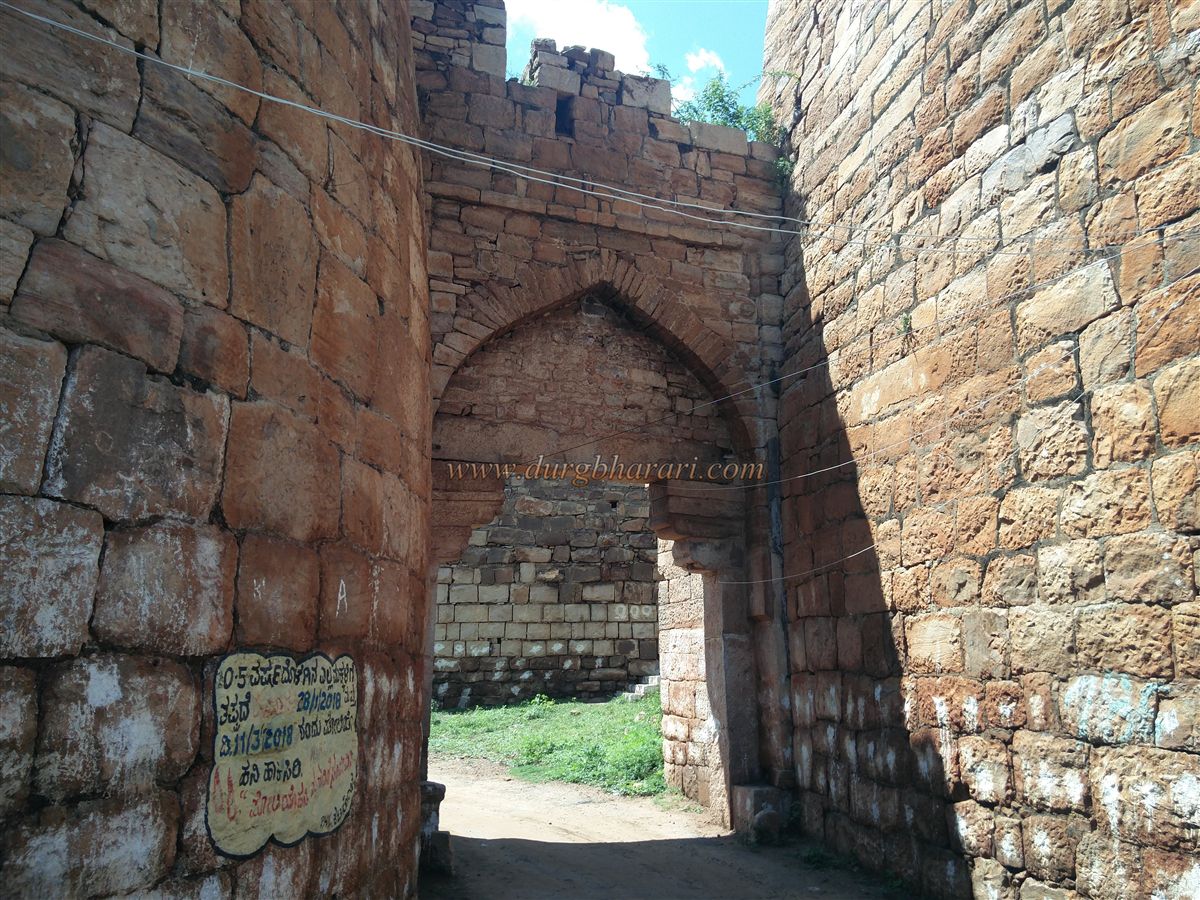
The second gate of the fort reminds one of the gates of Panhala Fort. On both outer and inner sides of this gate are many carved stone panels. On both sides inside the gate are high platforms, with the upper part of the gate resting on arches above them. Steps lead from these platforms to the upper part of the gate. From there, you can view the entire surrounding area of the fort. From this rampart, you can also access the bastions on either side of the main gate. To the right of the gate, at a distance, is a small whitewashed mosque.
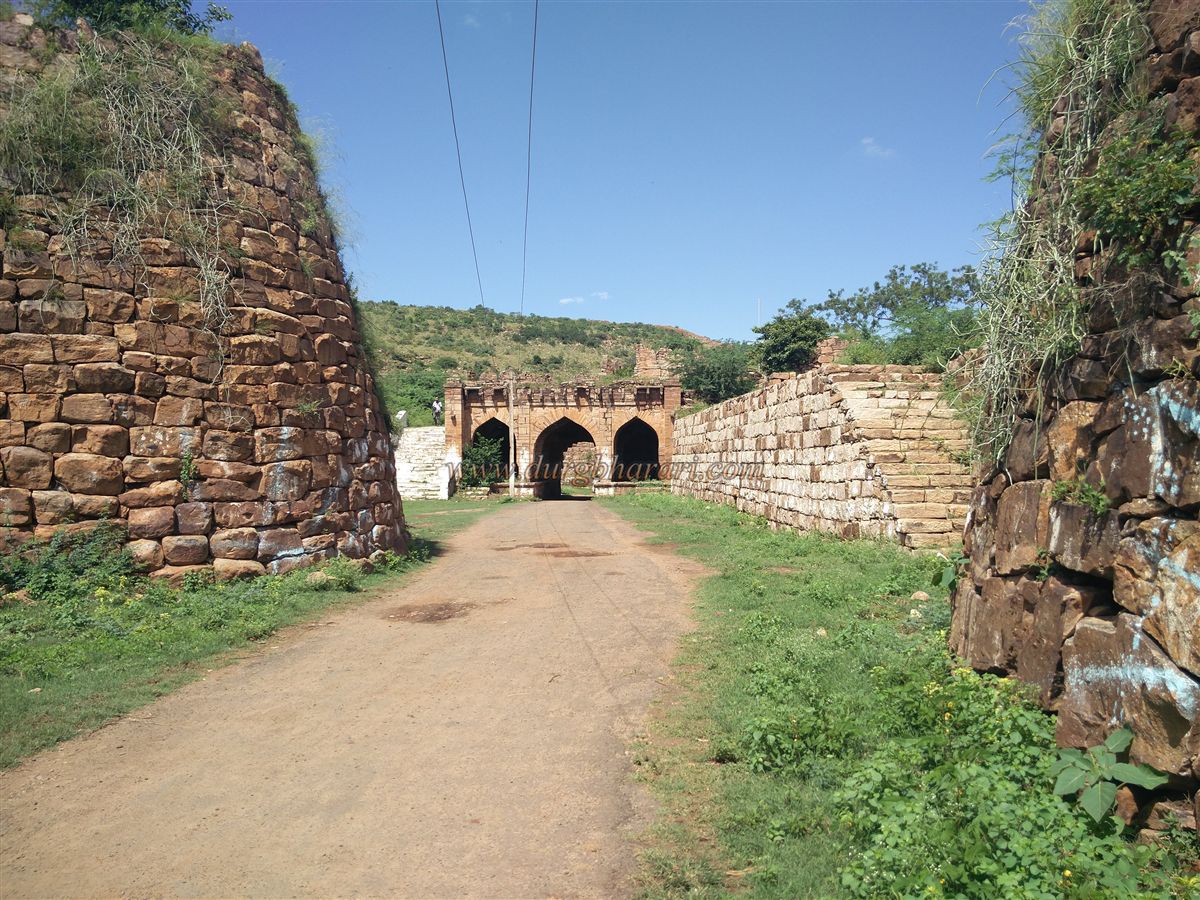
Passing through this double rampart, you reach the third gate. Just before this gate, to the left, is a path descending toward the river. The rampart here is partially collapsed. The third gate is two-storied, with arches on all four sides at the upper level. Crossing this third rampart brings you into the main fort.
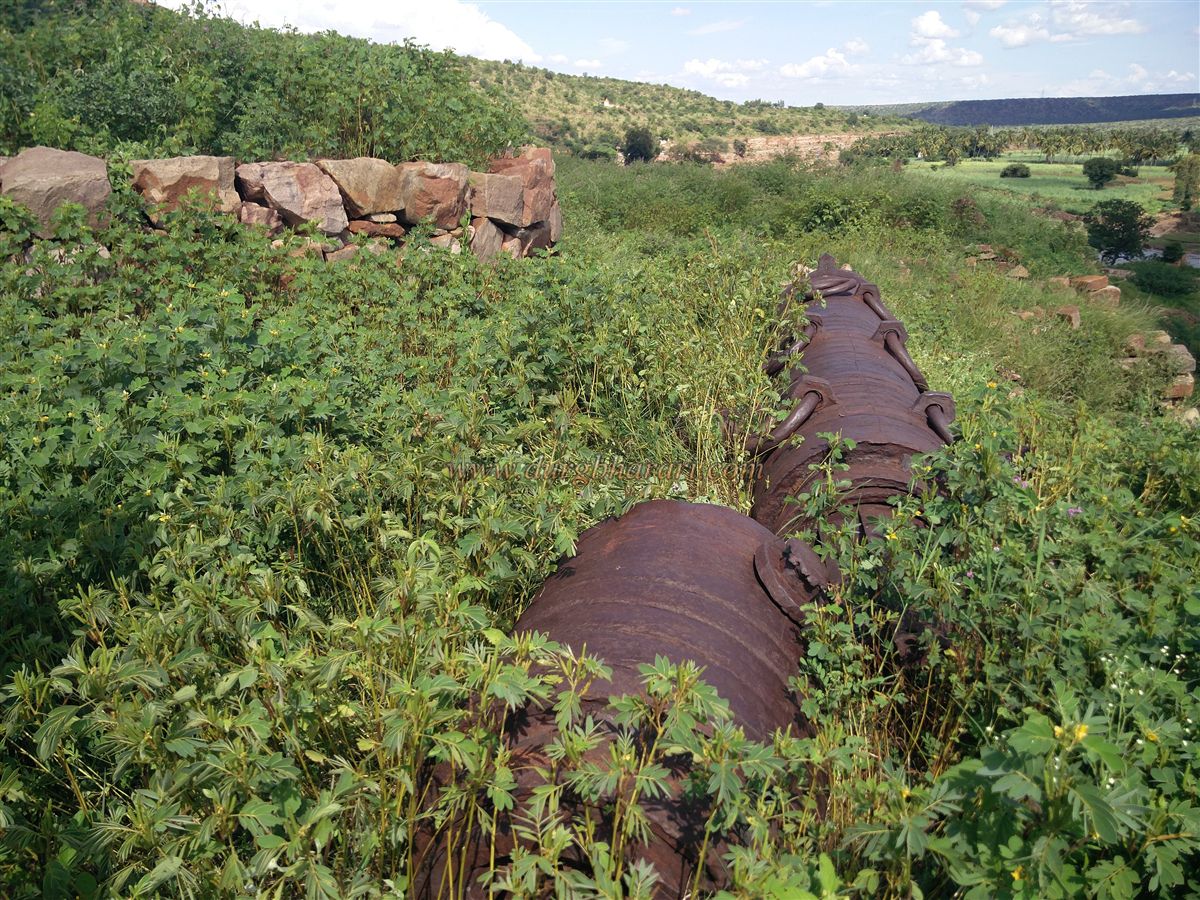
From here, walking for two minutes, you see on the right a small lane between houses. Going straight through it brings you to the northern rampart of the fort. Here is a large circular bastion with steps to climb it. At its center is a circular platform, beneath which lies a massive broken cannon, 12 feet long.
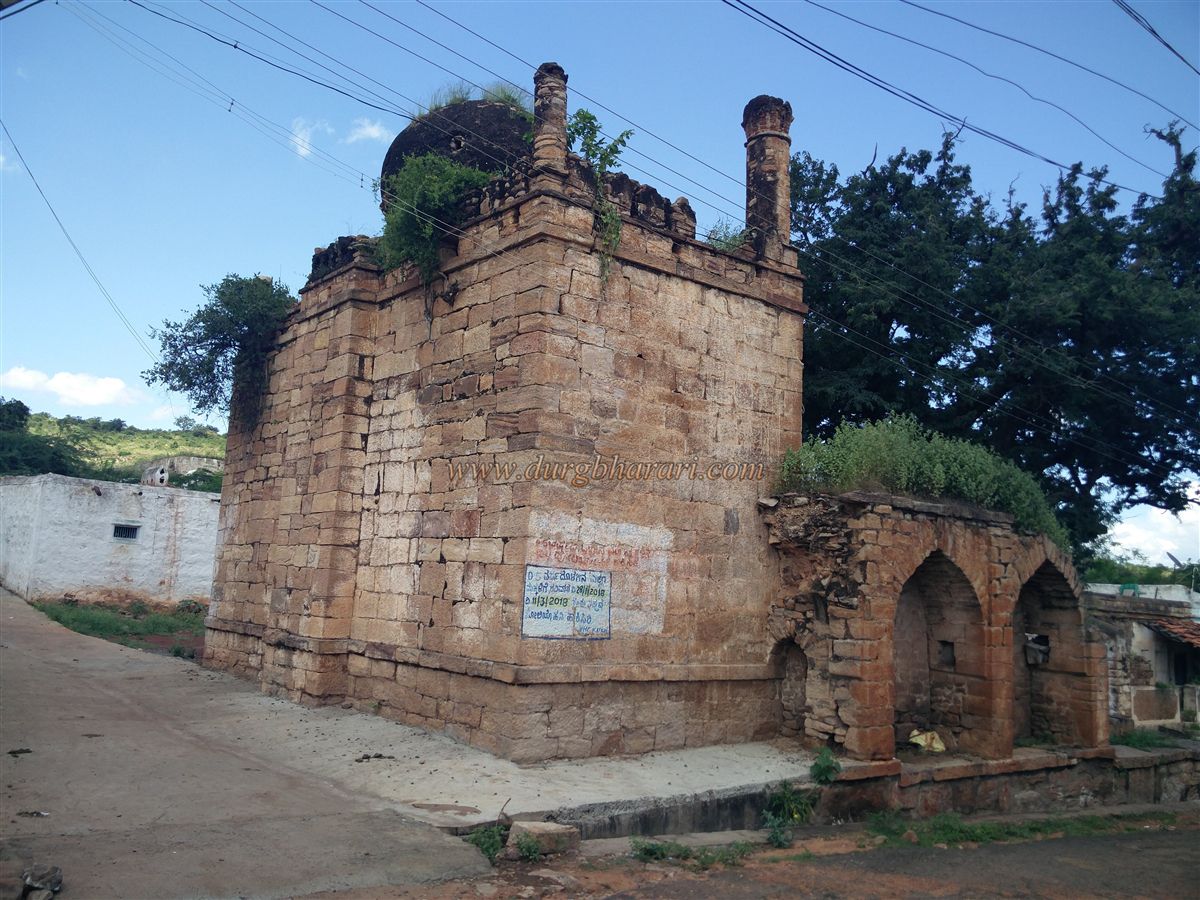
Returning to the main path, you soon come across an Adil Shahi–era mosque to the right, with two ruined archways beside it. A road from the mosque leads to the citadel in the central part of the fort. Along this path, to the right, is a newly built Durga Devi temple. If one wishes to stay in the fort overnight, this temple can accommodate visitors; there is also a monastery in the village.
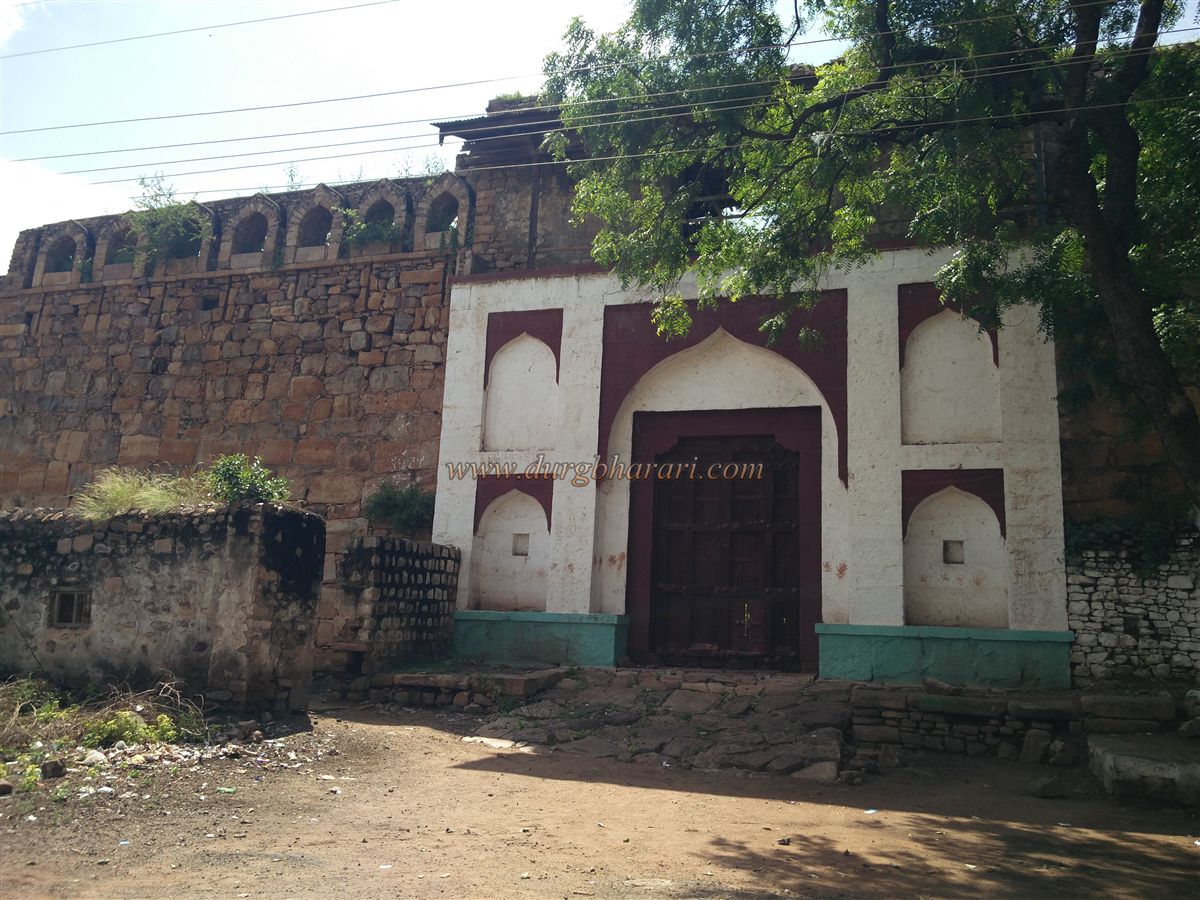
Ahead lies the square-shaped citadel, covering 2.5 acres. Its 20-foot-high walls have machicolations, loopholes for musket fire, and cannon embrasures. The citadel’s gate and wooden doors are still in good condition, with a drum house above. Due to some unruly locals, the gate is currently locked. This area is private property of the Shinde family, who now reside in Kolhapur. Looking inside from the citadel gate, you can see the ruins of a mansion. Records show that the citadel was built in the 18th century. Outside the citadel, on the northern side near the rampart, is a newly built bungalow of the Shinde family.
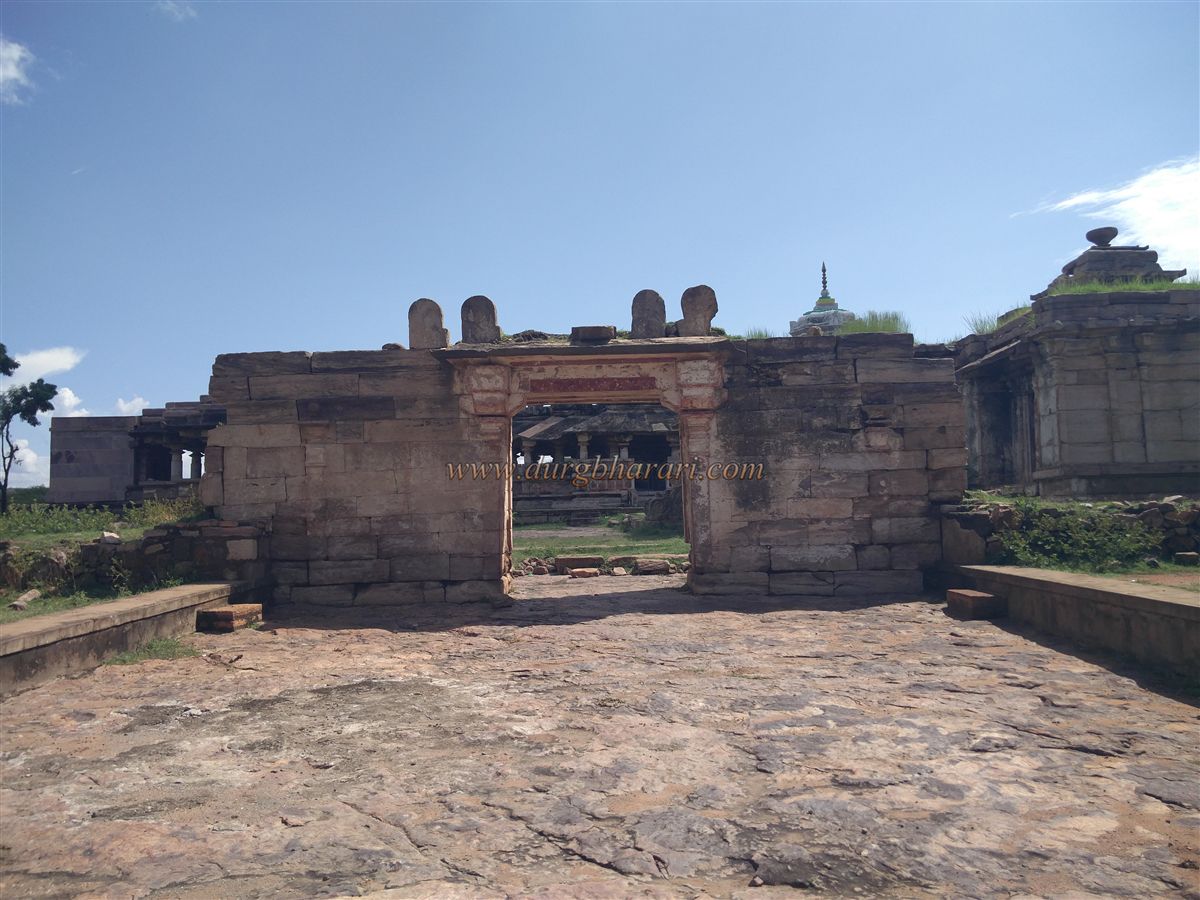
From the citadel gate, the straight road leads to the Bhootnath temple complex, while the left road leads toward the river. On the riverward path, you reach the eastern rampart. Between two square bastions here is a small gate, with its arch supported by ornamental pillars. Above the gate are carvings of flowers and deities. Outside this rampart, a short distance away, is a second rampart along the riverbank. The land between these two ramparts is cultivated using river water.
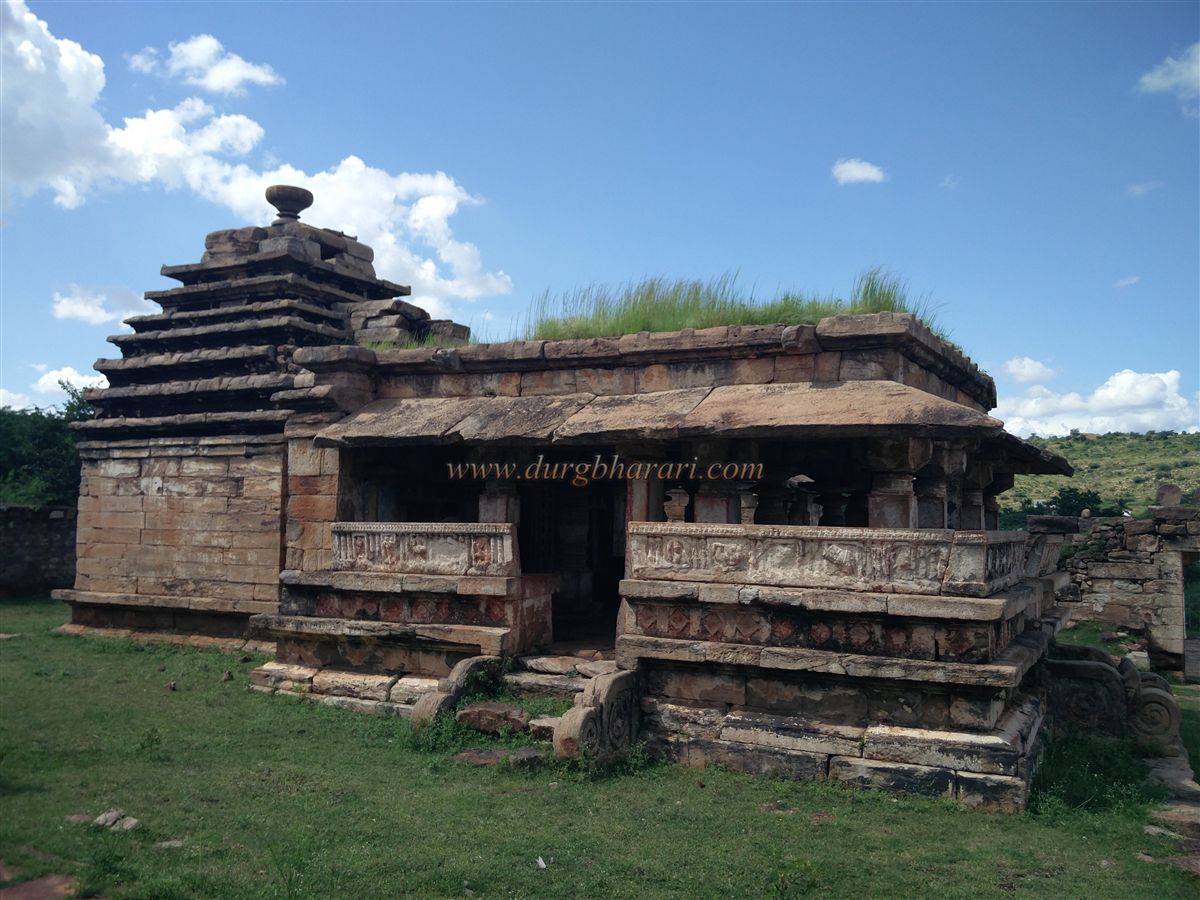
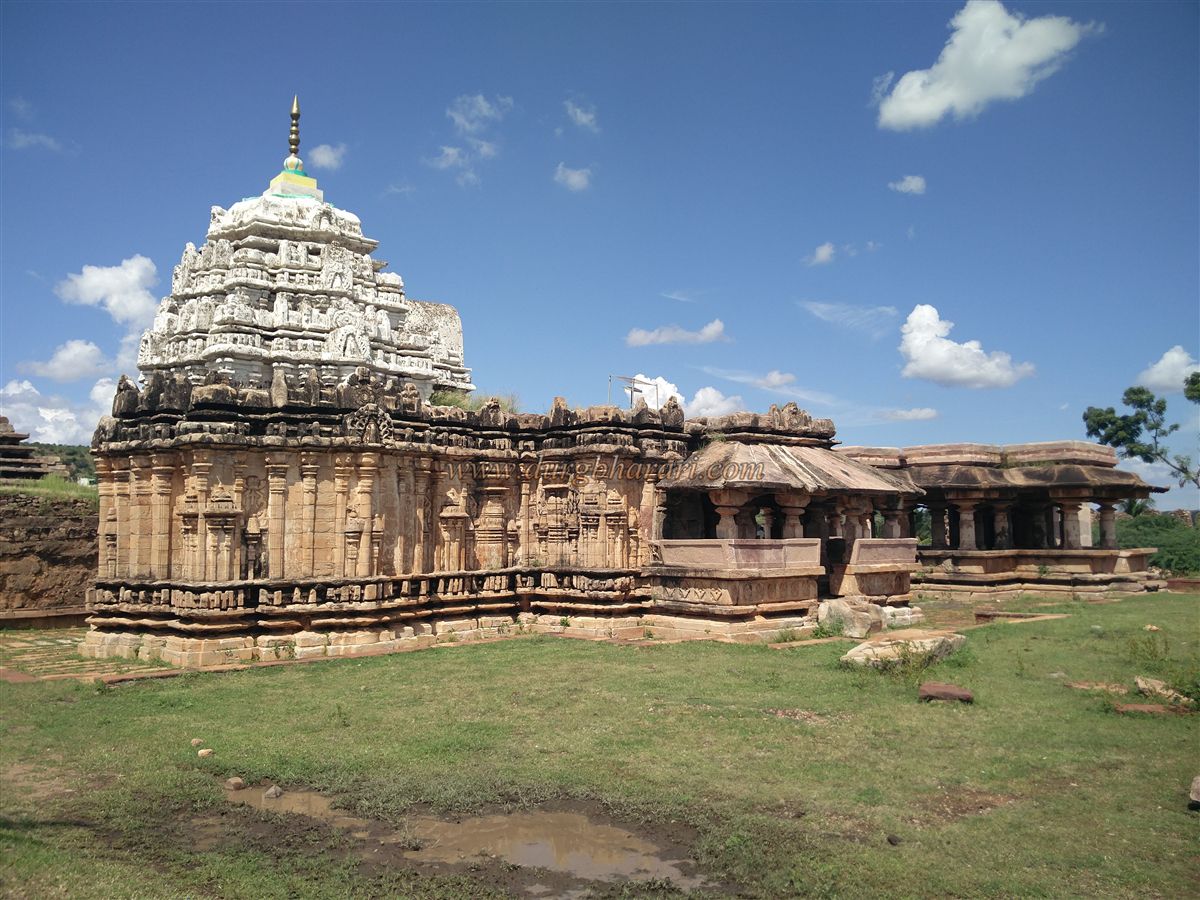
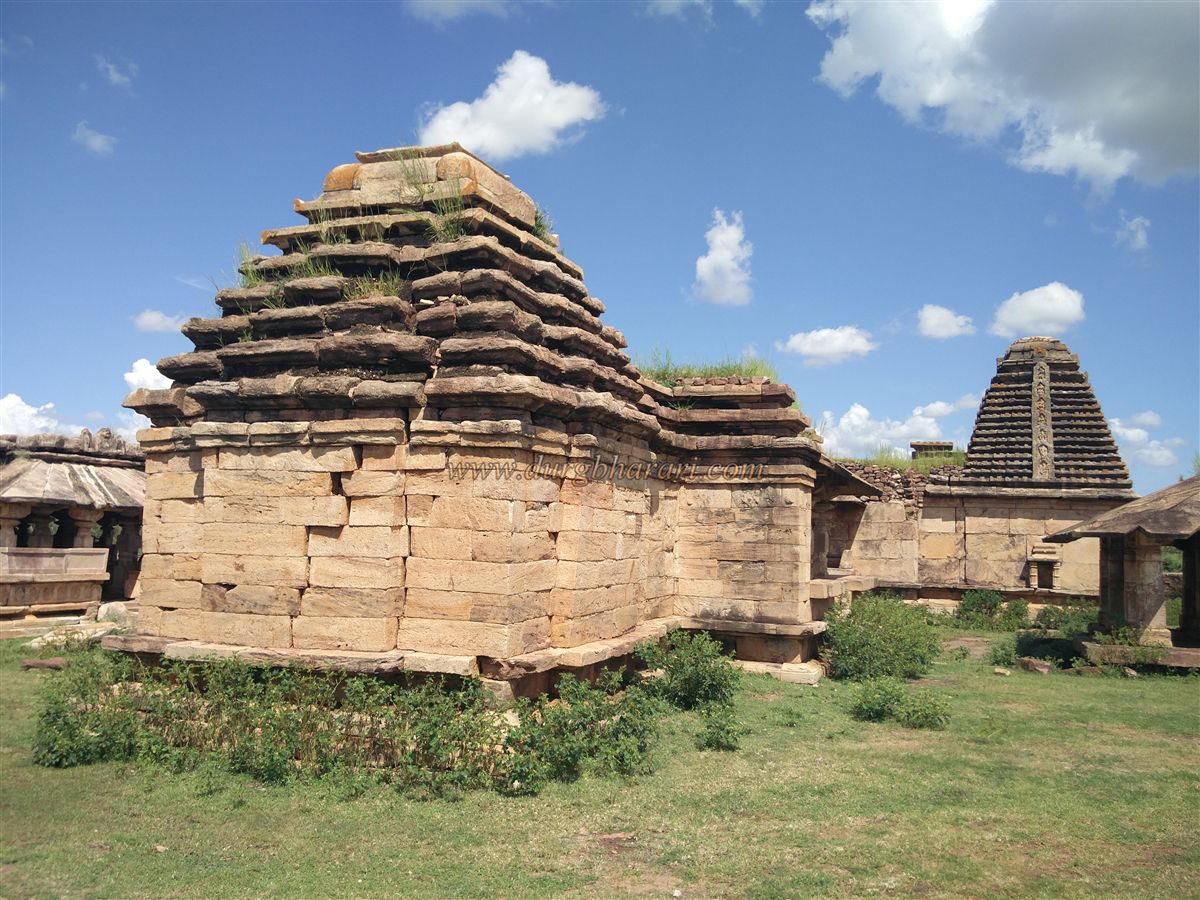
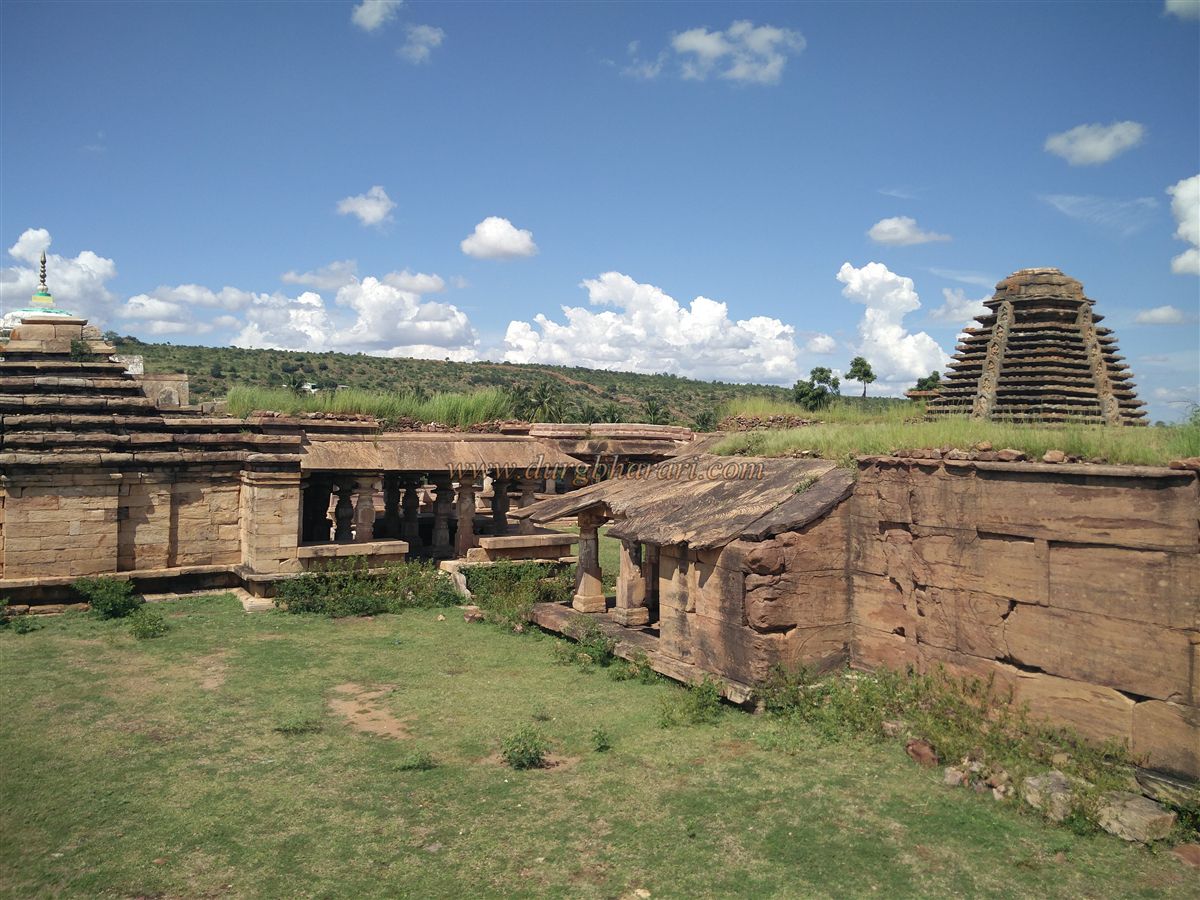
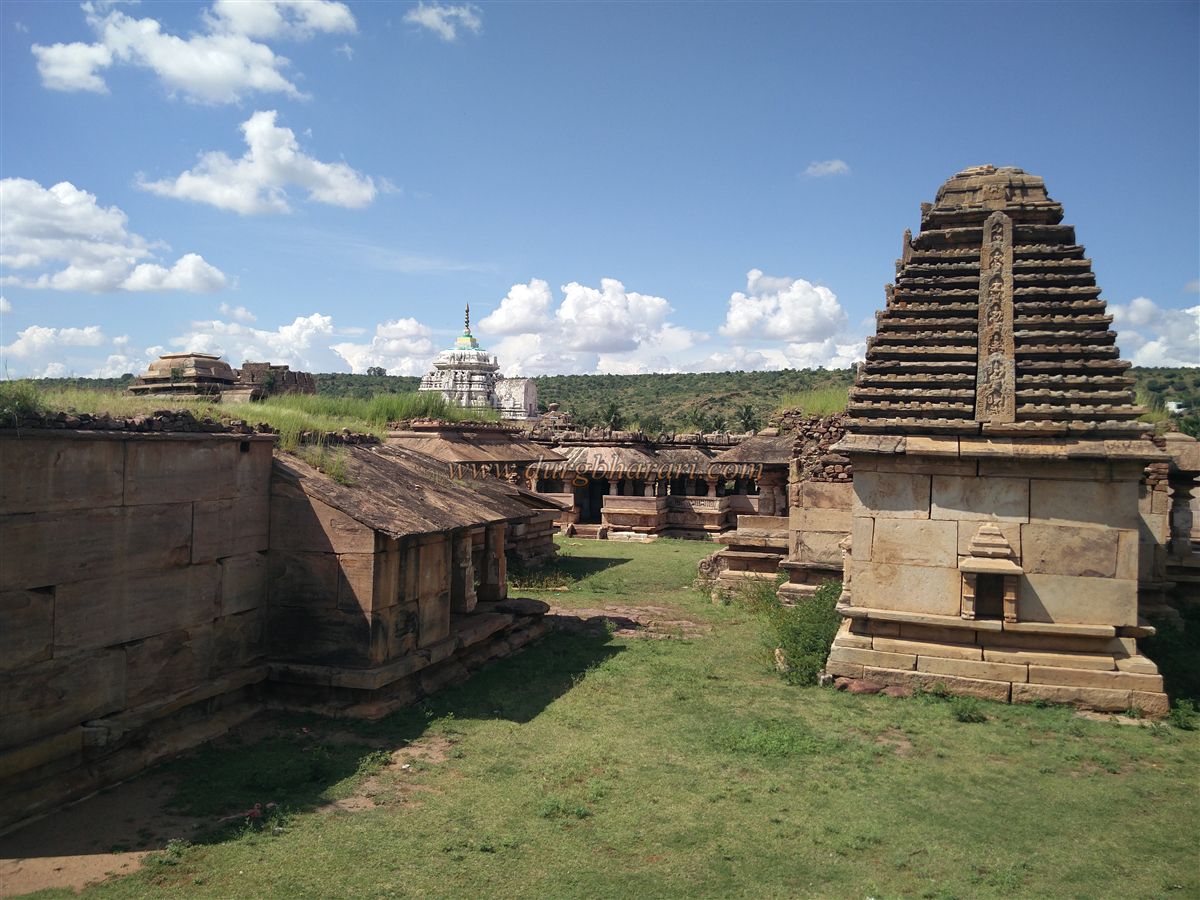
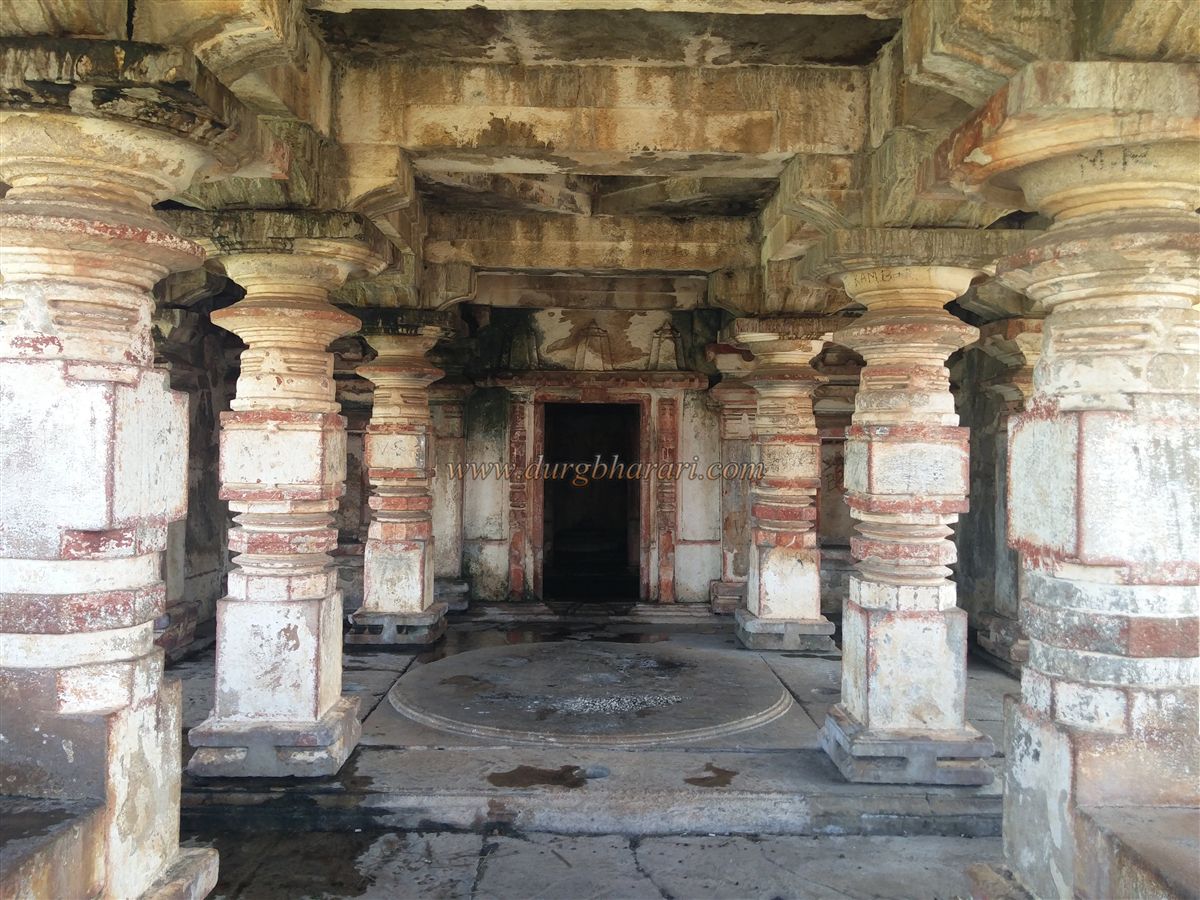
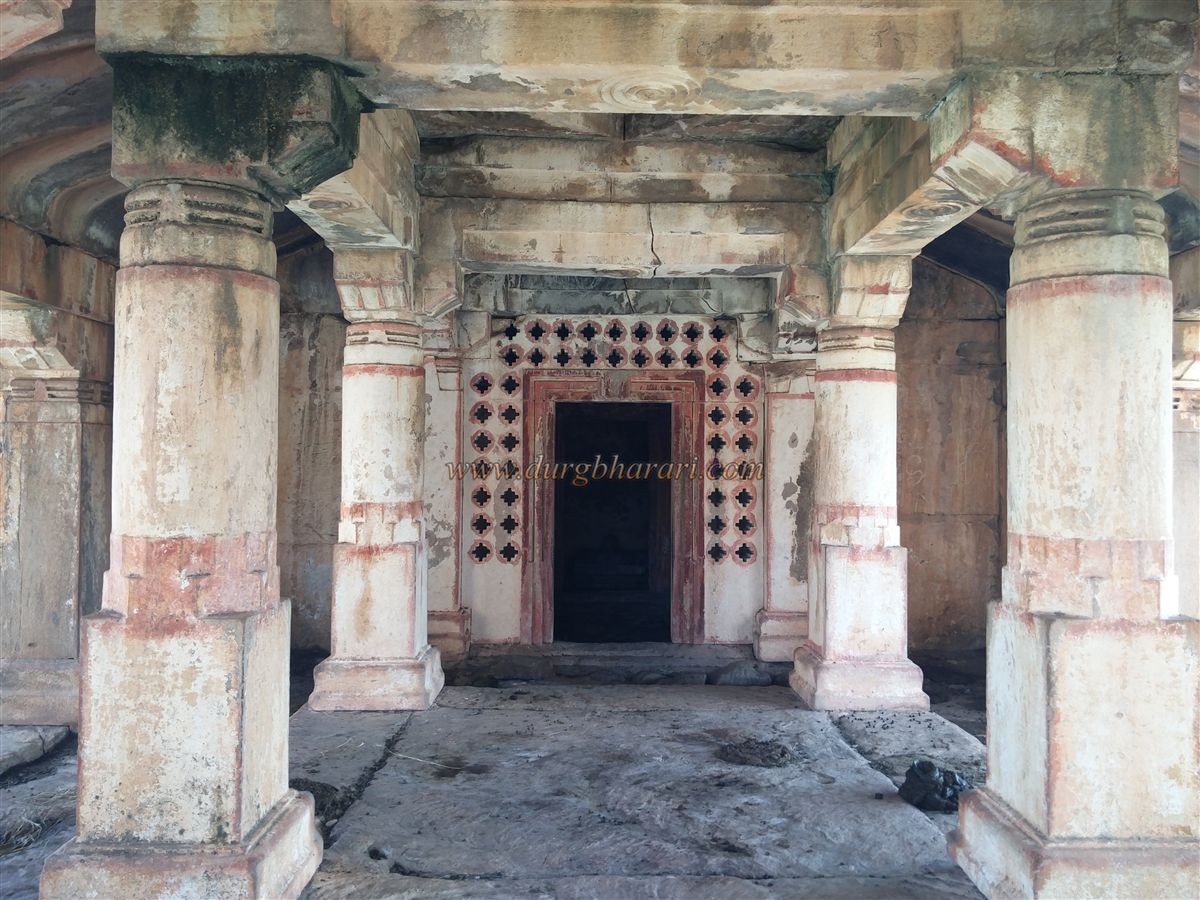
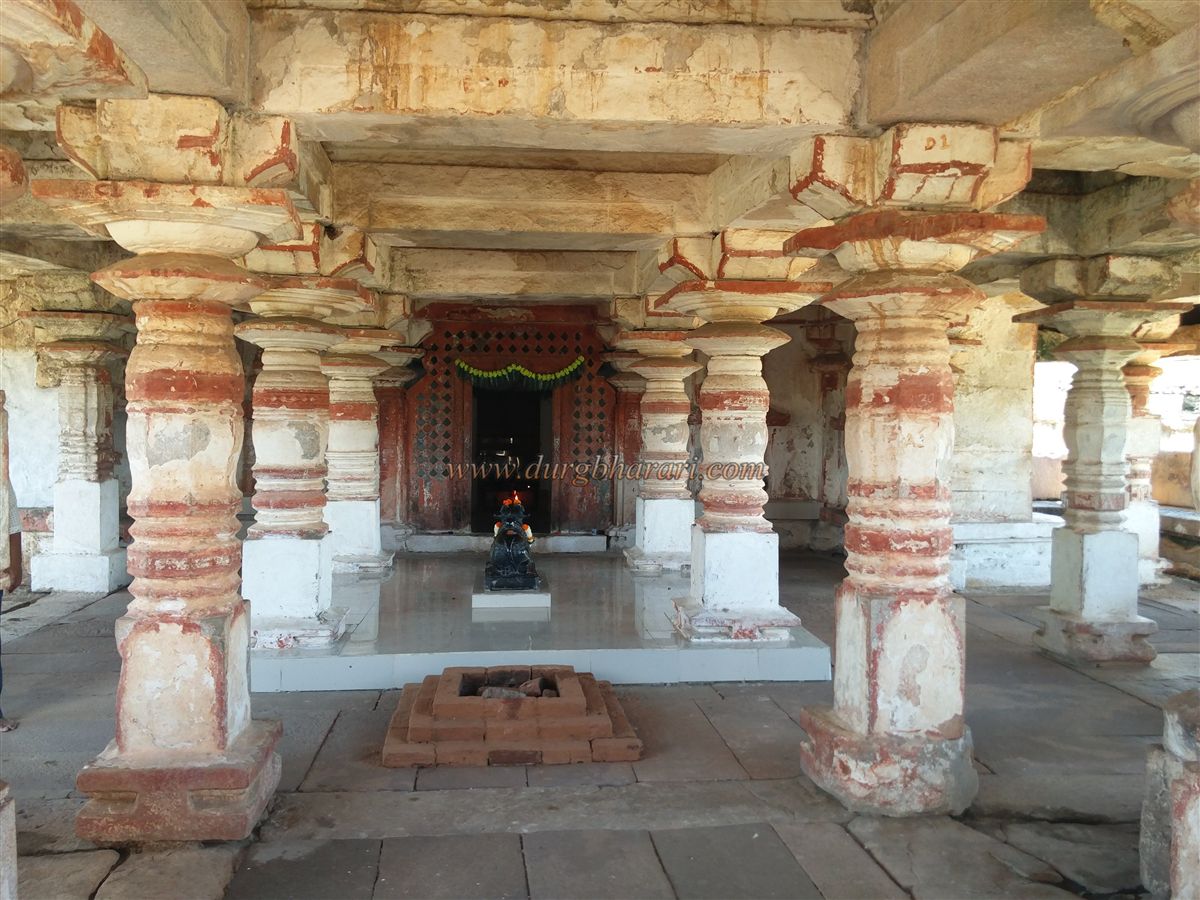
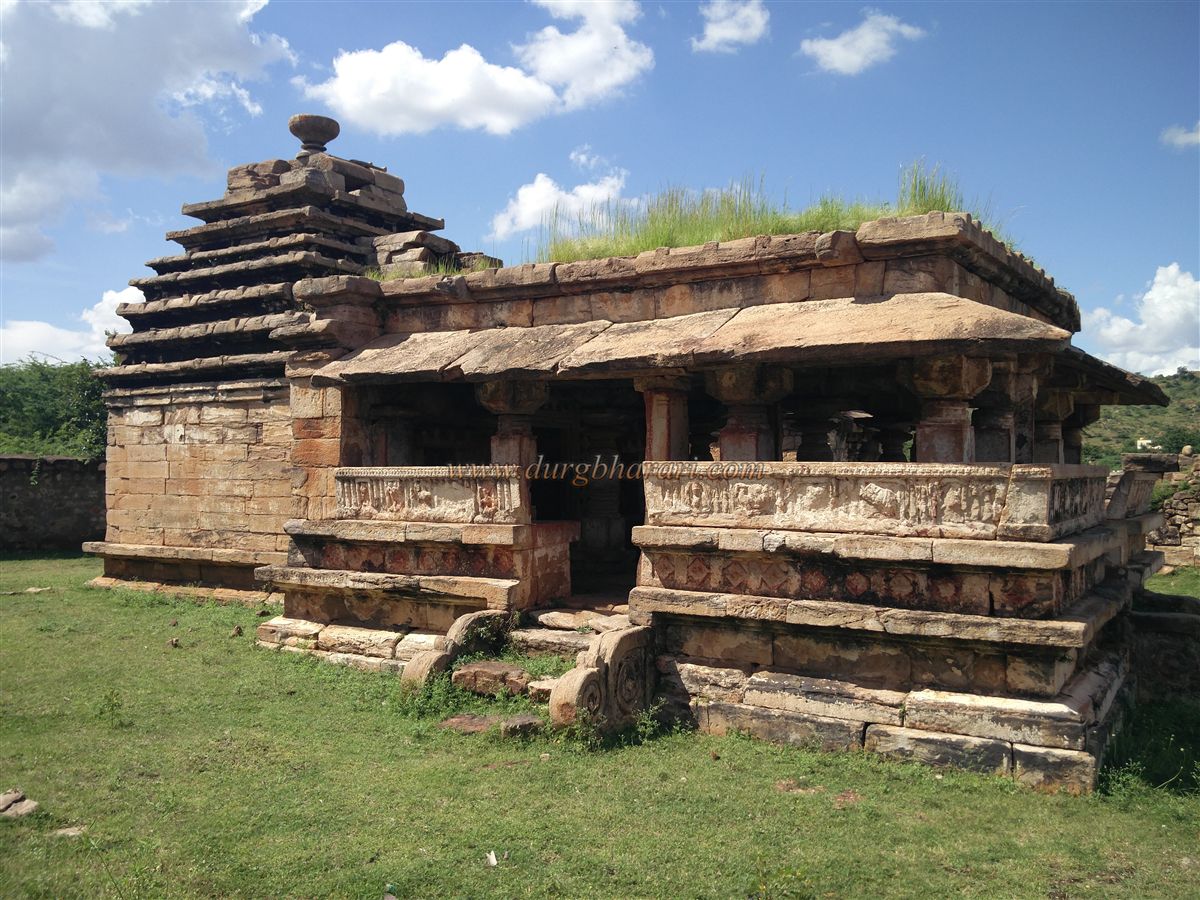
From here, one should return to the citadel and proceed straight to the Bhootnath temple complex. Surrounded by a compound wall, this complex has six ancient Shiva temples — five large and one small — all from the 11th century, said to have been built by King Bhootankusha during the Chalukya rule. The fort is also believed to have been built in his time.
After visiting the temples, return to the mosque on the main road. Going west from here, you reach a gate in the inner rampart of the fort, built between two square bastions and decorated with carvings. On the outer side is a carving of a fish. This gate is wide enough for vehicles to pass through easily.
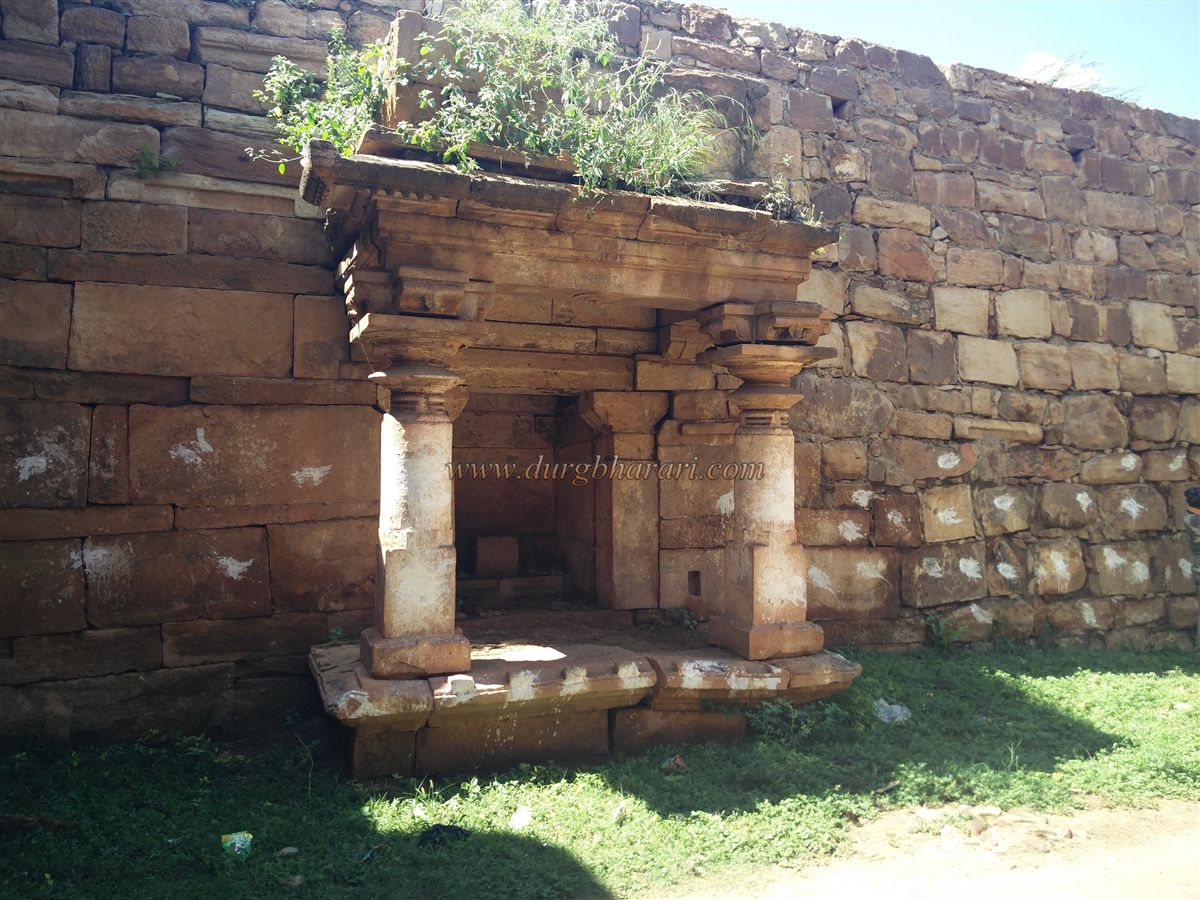
Continuing ahead, you arrive at the final gate in the last rampart of the fort, heavily adorned with carvings. To the left of this gate, near the rampart, is a stone stepwell. The gate is supported on stone pillars carved with load-bearing figures. The arch is beautifully carved with ornate designs. Outside the gate, in the rampart, is a small chamber with sculptures of a Shiva linga, Nandi, and two people offering prayers.
This gate also features a battle-trap formation, with its forward section enclosed by ramparts. In this section are six small square bastions, but the initial part of the rampart and its gate have collapsed, making them less noticeable. Exiting through this gate brings you to the highway outside the fort. Here ends the exploration of the Torgal fort town. Villagers say there are still some gates in the fort that are no longer in use.
The majority of the population inside Torgal Fort is Marathi-speaking. The fort town covers about 100 acres and contains 78 bastions — both circular and square. The hilltop part of the fort has 32 square bastions, with a small square citadel at the summit, having four circular bastions at its corners. In the rampart on the hilltop is a gate leading outside the fort. Other than the ruins of a mansion, no other structures remain on the hilltop.
If one wishes to explore the entire fort thoroughly, even two days may not be enough; hence, important remains can be covered in a quick three-hour visit. It is said that Torgal Fort was built in the 11th century by King Bhootankusha. Around 1662, Adil Shah himself came to this area to suppress the rebellion of local chieftains. He attacked Raichur and Torgal, capturing the region, but the Torgal Fort did not fall to him.
In 1675, during the southern campaign of Chhatrapati Shivaji Maharaj, military forces were dispatched to this area under Appaji Suri Hublikar, Jivaji Shinde, and Maloji Bhosale. Appaji Suri camped in the Nargund–Ramdurg area, while Jivaji Shinde camped at Torgal. After capturing the region, the local Desai joined the Marathas. In later years, Torgal became a center of power. After Maharaj’s death, the fort went into Mughal control, but in 1690 Narsoji Rao Shinde captured it and was granted the province as a jagir by Chhatrapati Rajaram.
Thereafter, nine generations of the Shinde family ruled over Torgal Fort. The Shinde families of Torgal, Manoli, and Nesari are related, and Queen Jijabai of Karveer belonged to the Torgalkar Shinde family. In Kolhapur State, Narsoji Rao Shinde was the last ruler of Torgal principality, reigning from 1932 to 1949.
© Suresh Nimbalkar
GALLERY