TEREKHOL
TYPE : COASTAL FORT
DISTRICT : GOA
HEIGHT : 0
GRADE : EASY
The Tiracol Fort holds an important place in the history of Goa. During Goa’s freedom struggle, this fort provided shelter to revolutionaries. Although the village of Tiracol falls under Vengurla taluka, the fort itself is under the administration of the Government of Goa. Even though the territory of the fort lies within the boundaries of Goa, the land route to reach it passes through Sindhudurg district. Situated at a strategic location where the Tiracol River, originating near Manohar Fort in the Sahyadri range, meets the sea, the fort stands atop a 200-foot-high hill. The Tiracol River forms the border between Maharashtra and Goa, and the village of Tiracol, located on the river’s northern bank, can be reached by a good road from Sawantwadi.
...
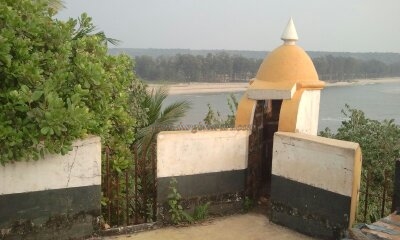
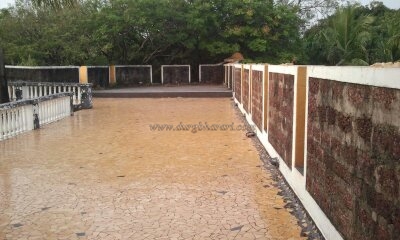
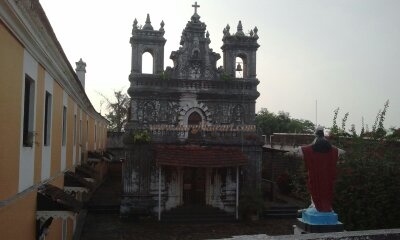
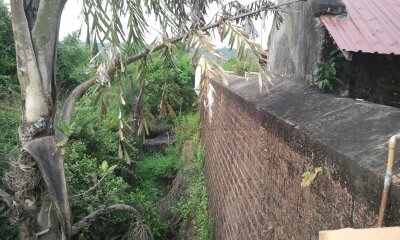
In 1976, the fort was converted into a hotel, but much of its original structure was preserved. With the hotel’s permission, one can explore the fort from the inside. The construction of the fort reflects both Konkani and Portuguese architectural styles. Near the entrance, there is a memorial to the revolutionaries who fought in the Goa Liberation Movement. The entire fort is built of laterite stone. The gates are original, and after entering through the south-facing main gate, there is a large old chest placed along the wall. Directly ahead stands the Portuguese-style St. Anthony’s Church. Along the seaward fortifications, rooms have been built for the hotel, but these rooms and the church remain closed to visitors. From here, a staircase leads to the platform above the entrance gate, and another staircase on the right side behind the church leads to the rear bastion, where a capsule-shaped Portuguese-style bastion can be seen.
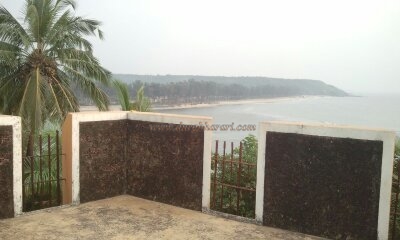
From the fort, the view of the Keri beach with its white sands and the deep blue waters of the Arabian Sea is mesmerizing. Visitors can circle the fortifications and return to the main gate to complete the tour. Behind the fort, a flight of steps descends all the way to the sea, ending at a laterite stone bastion on the shore. Exploring the fort takes about an hour.
The Tiracol Fort was built in the 17th century by King Khem Sawant Bhonsle of Sawantwadi on a high hill on the right bank of the Tiracol River. In 1746, under the leadership of Goa’s 44th Viceroy Pedro Miguel de Almeida Portugal e Violoncellos, along with Conde de Assumar and Marquis de Alorna, the Portuguese launched a campaign against King Khem Sawant Bhonsle to capture the fort. On 16 November 1746, Almeida sailed his boats into the river and engaged the Sawant naval forces in battle. The Portuguese defeated King Khem Sawant Bhonsle after several skirmishes and took control of Tiracol Fort.
Following this victory, the fort became an important naval defense post for the Portuguese. In 1764, they demolished the original Maratha-built fort and rebuilt it in their own style, adding the church and the capsule-shaped bastion. After complete renovation, the fort was incorporated into Goa in 1788. In 1796, the Marathas briefly recaptured it, but it soon returned to Portuguese control.
In 1954, the Portuguese set up an outpost here to monitor the surrounding area. In the early 19th century, they decided to appoint a local Goan as Viceroy for their Indian territories. Accordingly, Dr. Bernardo Peres da Silva, a native of Goa, was appointed Viceroy in the 1820s. However, in 1825, due to internal disputes, he attempted to establish his own rule independent of Portugal and launched a rebellion against the Portuguese from Tiracol Fort. The revolt was crushed, and Bernardo Peres da Silva never returned to Goa. Thereafter, the Portuguese never again appointed a local as Viceroy.
On 15 August 1954, under the leadership of Alfred Alfonso, freedom fighters of the Goa Liberation Movement captured the fort for one day. On 15 August 1955, 127 unarmed activists, including Hirve Guruji and Sheshnath Wadekar from Panvel, staged a Satyagraha in front of the fort. During the Portuguese firing, Hirve Guruji and Sheshnath Wadekar were martyred, and a memorial to them now stands to the left of the fort entrance.
In the last few years before the liberation of Goa, the Portuguese had abandoned the fort. Except for a few years during the Portuguese-Maratha conflicts, the fort remained under Portuguese control for nearly 215 years until the 1961 Goa Liberation Movement. After the Portuguese left the Indian subcontinent in 1961, the fort came under the control of India.
© Suresh Nimbalkar
GALLERY