TAHAKARI
TYPE : ANCIENT MANDIR
DISTRICT : AHMEDNAGAR
In Maharashtra, after the Shaiva and Vaishnava sects, the Shakta sect has also spread since ancient times. The ancient Shakti Peethas of Ambabai in Kolhapur, Bhavani in Tuljapur, and Renuka in Mahurgad testify to this. One such ancient temple is the Jagdamba temple at Tahakari.
Akole taluka, known as the “Kashmir of Ahmednagar district,” has many ancient and artistically rich temples. Since ancient times, various dynasties ruling here have built a chain of caves, forts, and temples in the valleys of the Sahyadri. Many of these temples, once located on trade routes, have now been left in secluded corners. Just as forts were built to protect the trade routes in ancient times, temples were also built along these routes. Many of these temples, with exquisite artistry, still stand proudly today. One such beautiful rock-cut structure is the Jagdamba temple at Tahakari.
...
Tahakari is a small village on the bank of the Adhala River, about 20 km from Akole via Samsherpur and 30 km from Sinnar via Thangaon. This village houses the ancient temple of Jagdamba. According to the villagers, there are two stories about the origin of the name Tahakari.
As this region is associated with the Dandakaranya of the Ramayana, the stories are connected with it. The first story says that when Ravana abducted Sita, she cried out for Rama (taho phodla) at this place, which was later called Tahokari and eventually became Tahakari. The second story says that when Lord Rama was searching for Sita and passing through this area, Shiva and Parvati were roaming the skies. Seeing Rama lamenting for his wife, Parvati decided to test him. Taking the form of Sita, Parvati approached Rama, but he recognized her and offered his respects. Parvati then revealed her original form as Goddess Jagdamba here, and this temple was built at that spot.
After crossing the bridge over the Adhala River in Tahakari, the three white spires of the temple come into view. Upon reaching the temple, one can see the seven-foot-high fortification wall around it. Entering through the eastern gate of this wall leads into the temple courtyard.
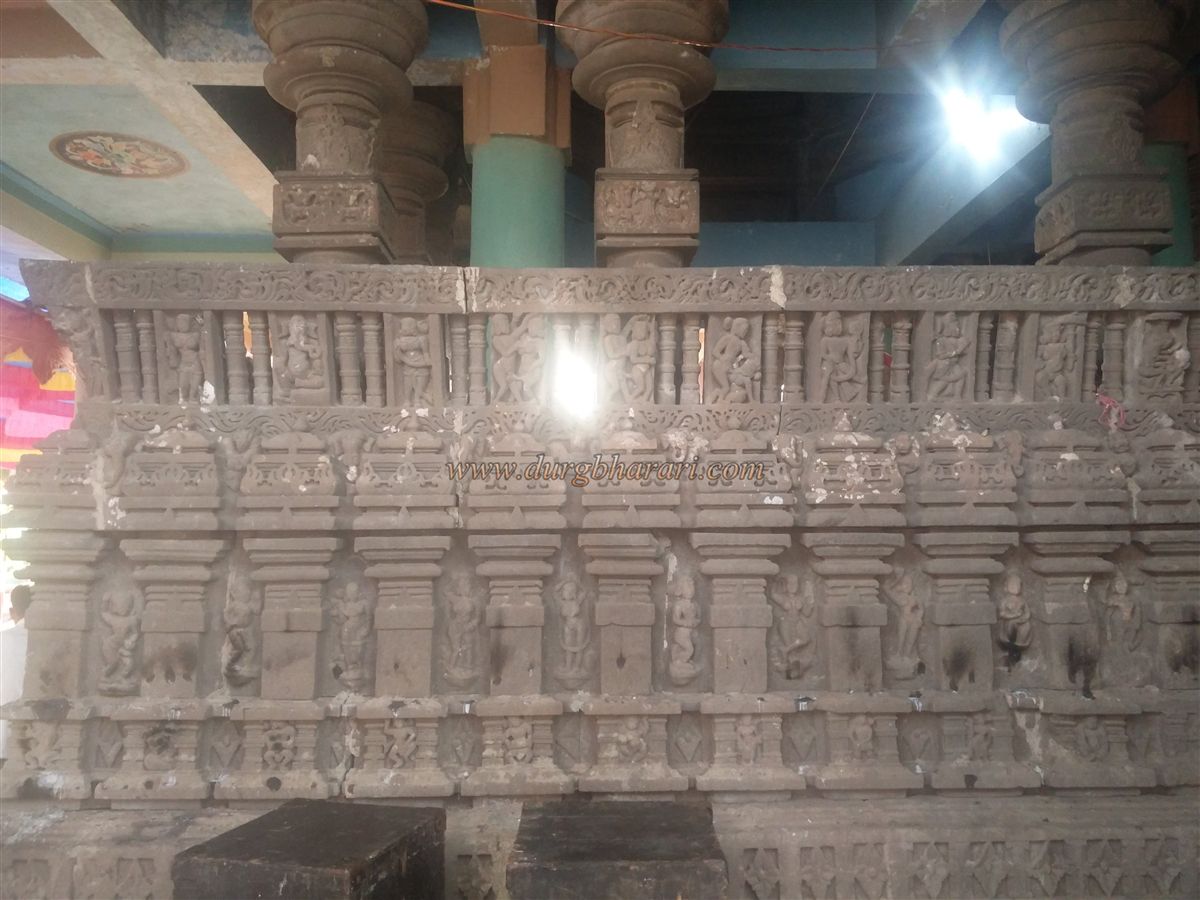
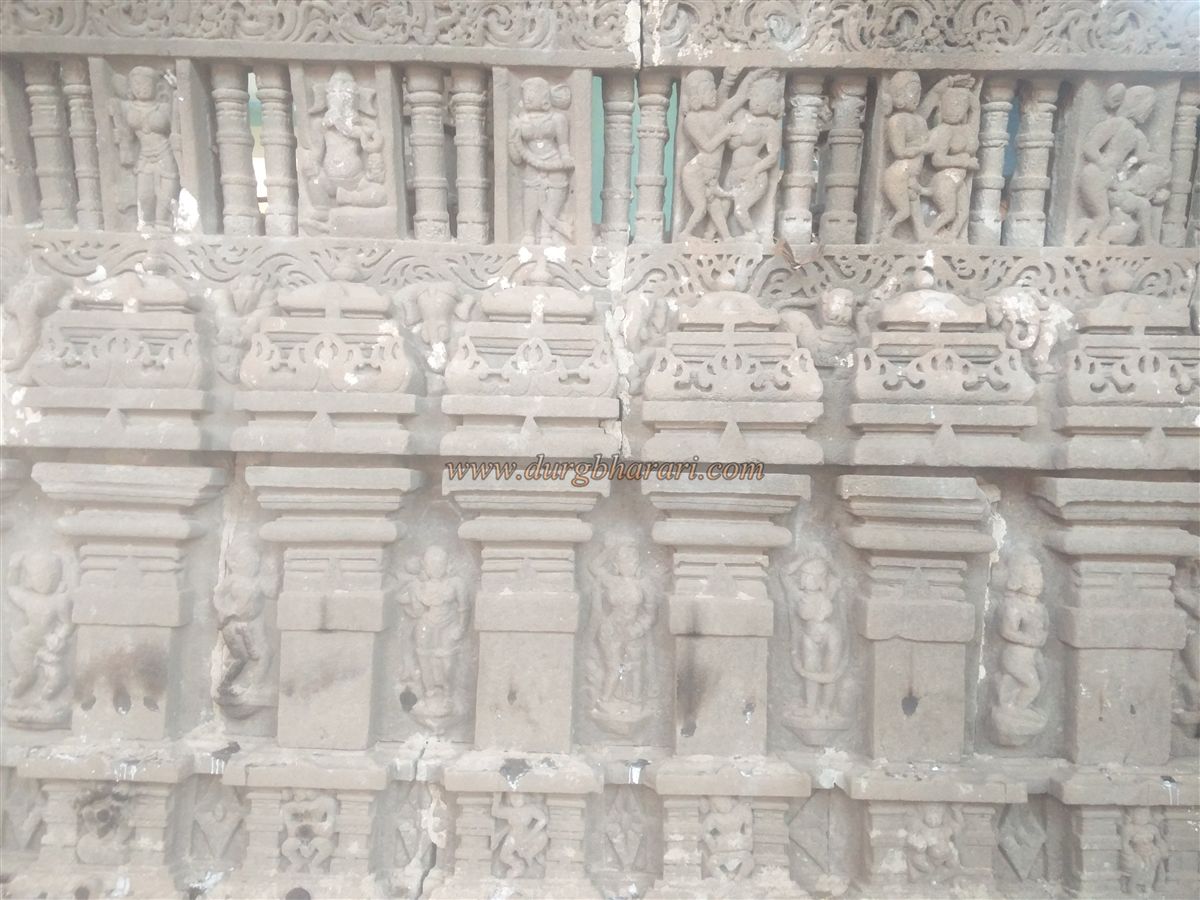
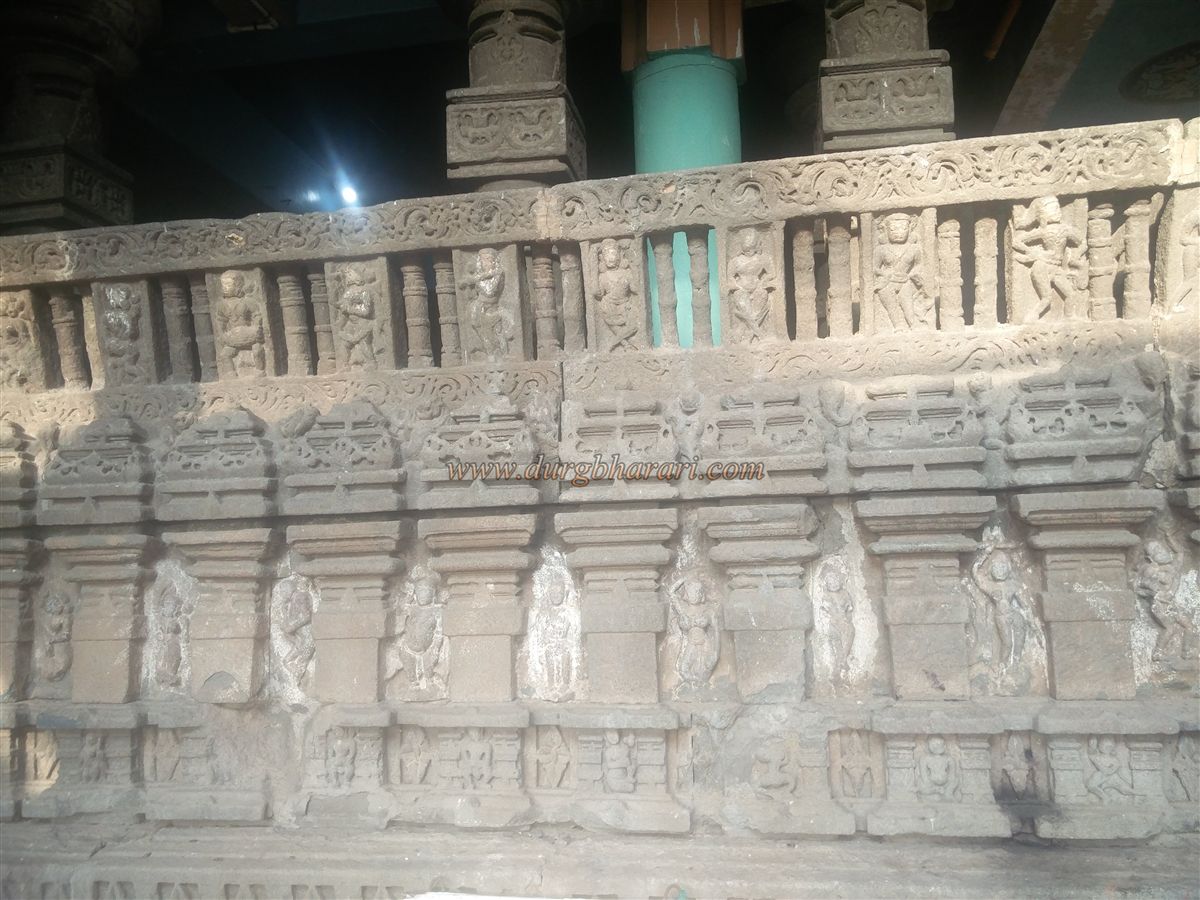
The Tahakari temple is built in the Bhumij style and faces north. It has four sections — the Mukhmandap (entrance hall), Mandap (main hall), antaral (vestibule), and Garbhagriha (sanctum). The temple stands on a four-foot-high stone plinth carved with floral and lotus patterns.
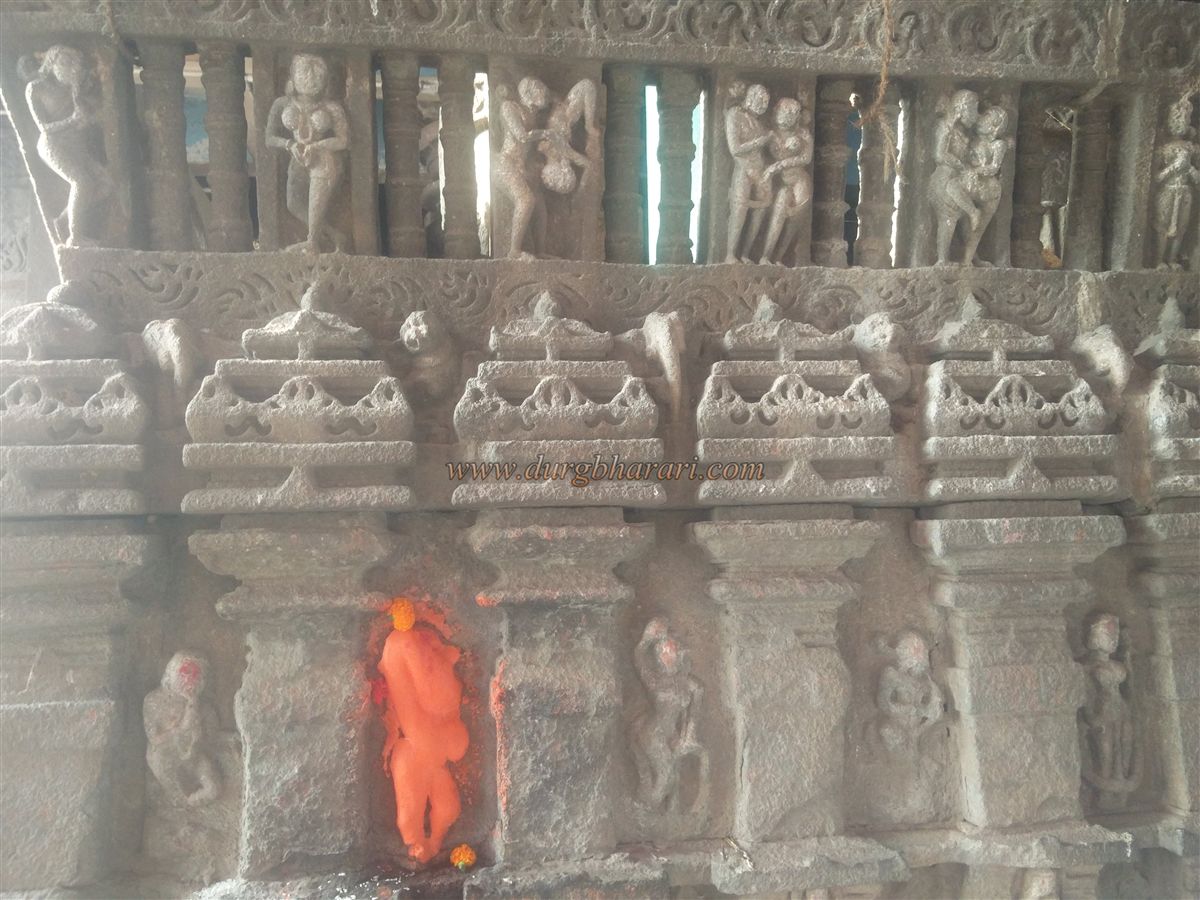
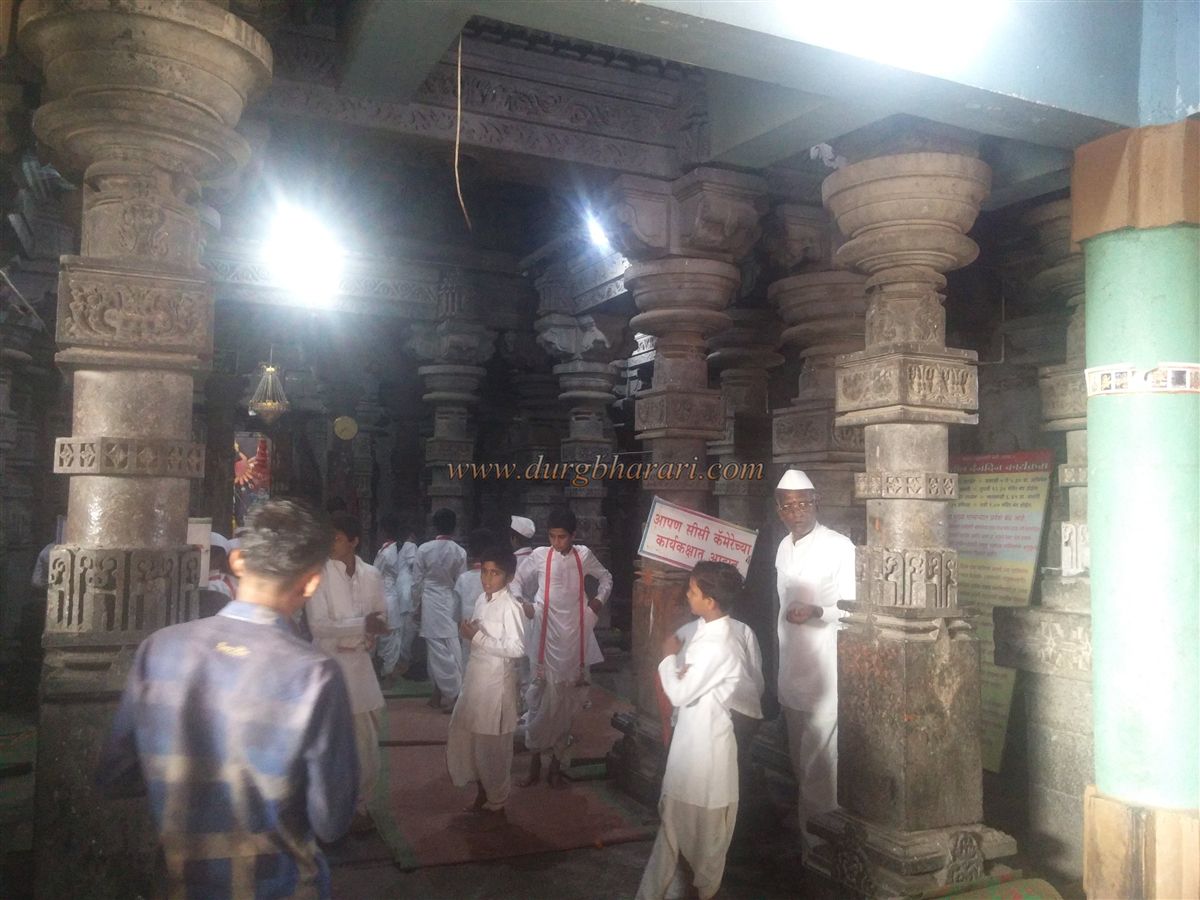
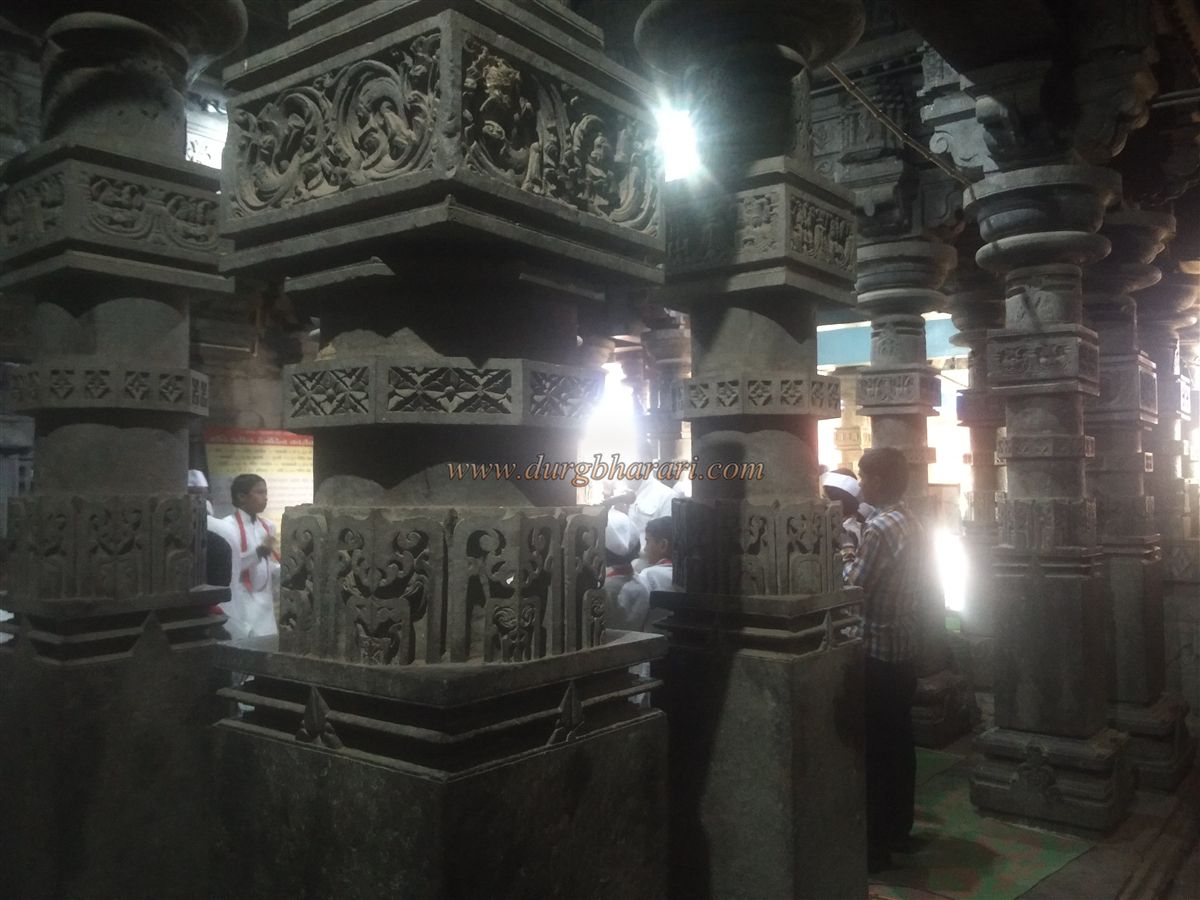
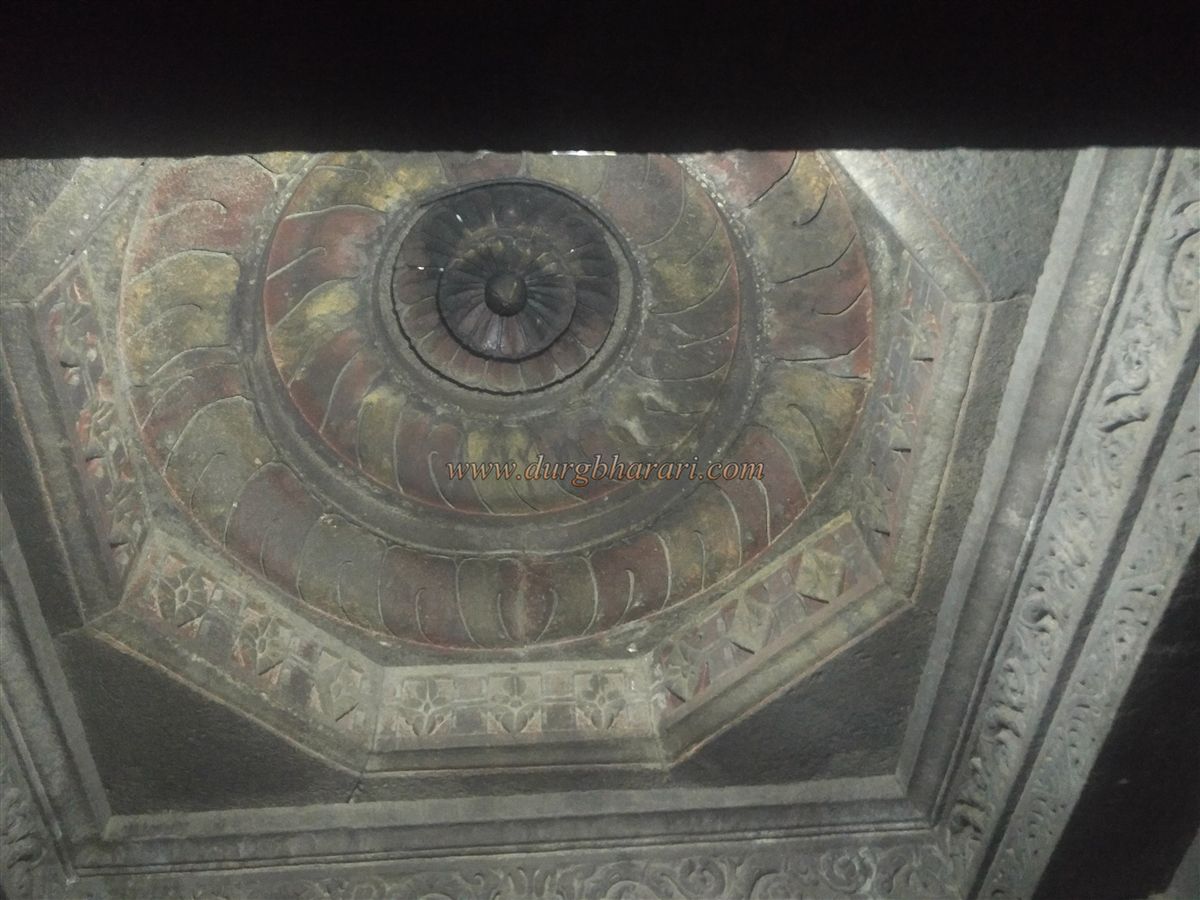
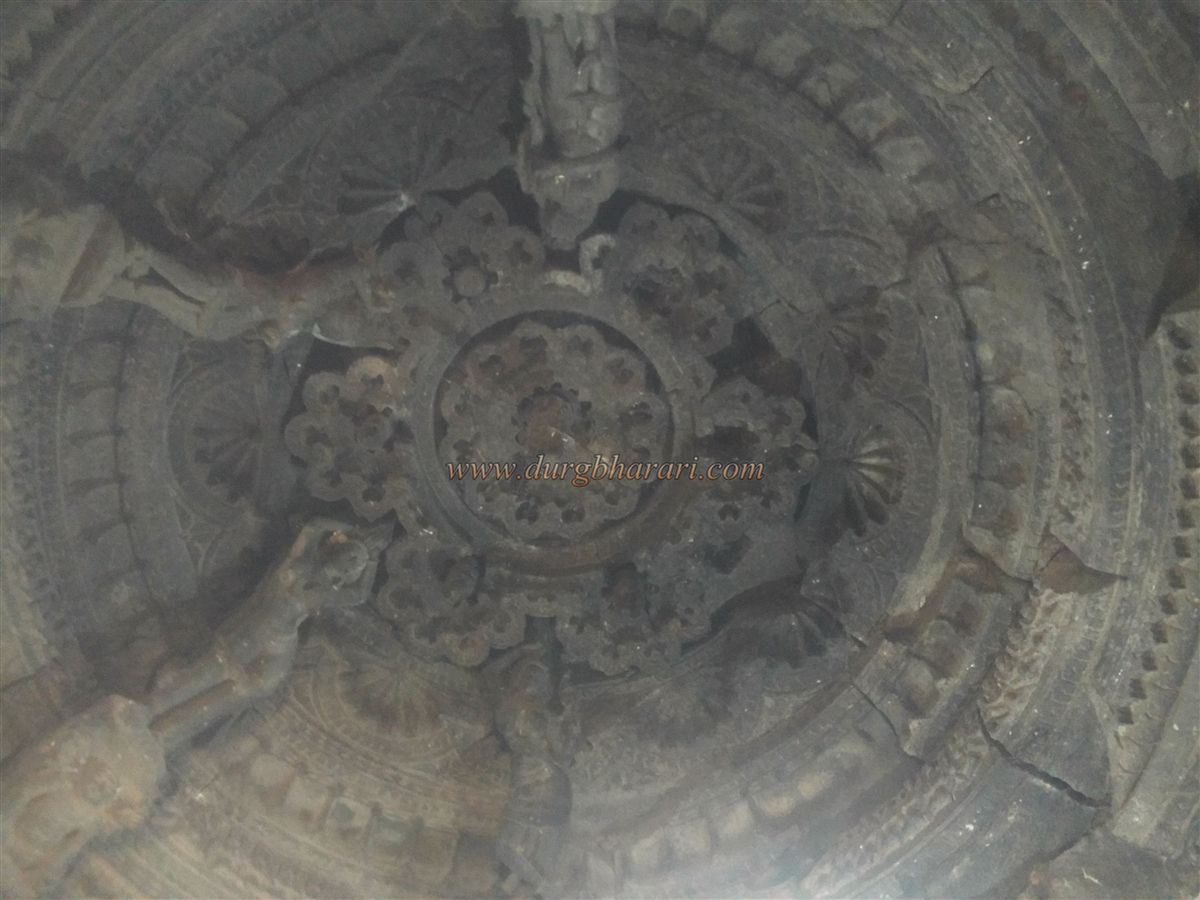
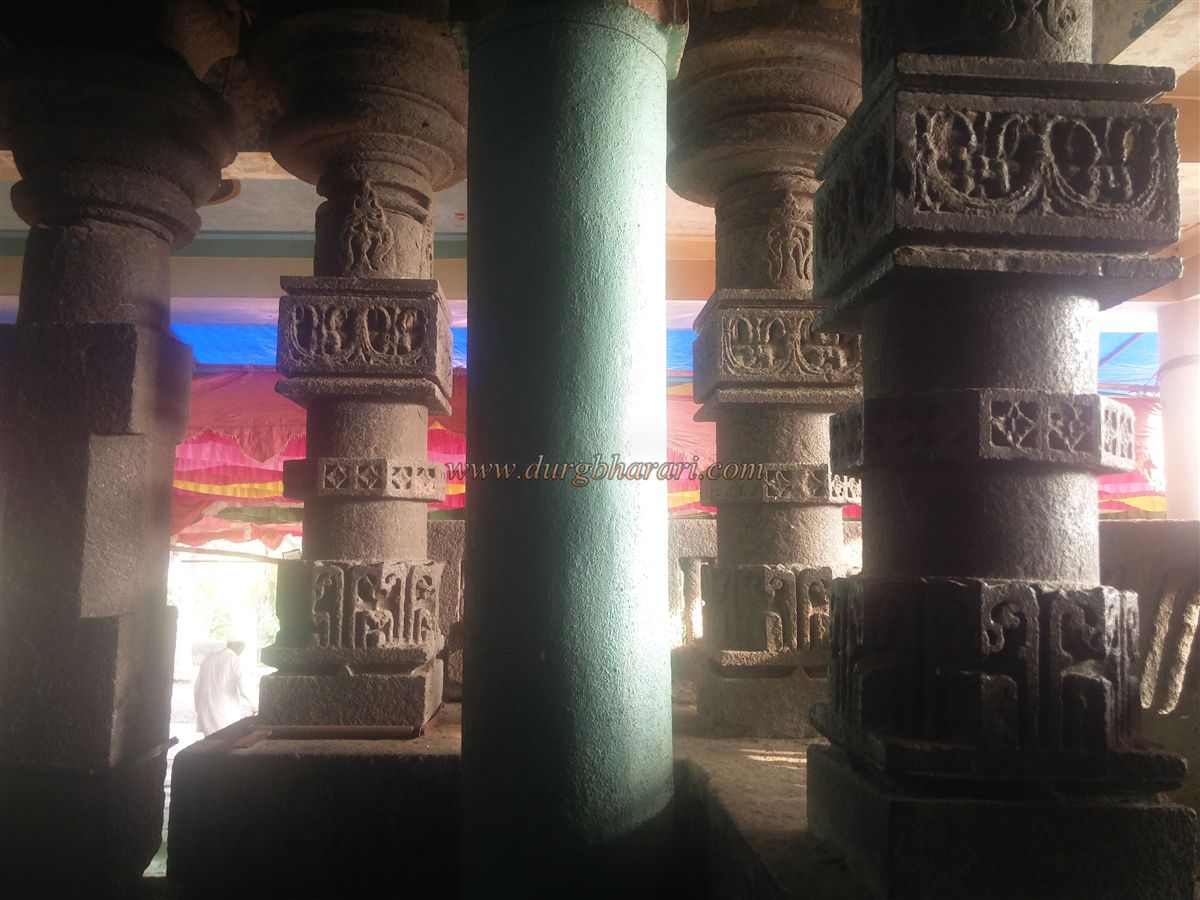
The Mukhmandap rests on ten pillars, with stone benches along the walls. Various carvings, including erotic sculptures, adorn the inner walls. From here, entering the Sabhamandap reveals the temple’s spacious interior. The Mandap, supported by twelve pillars, features sculptures of Shiva-Parvati and Ganesha. The pillars are decorated with intricate carvings, geometric designs, kirtimukha faces, and yaksha figures supporting the ceiling. The ceiling itself has concentric circular carvings, with a stone chandelier hanging from the center, decorated with flowers, lions, and eight Apsara figures.
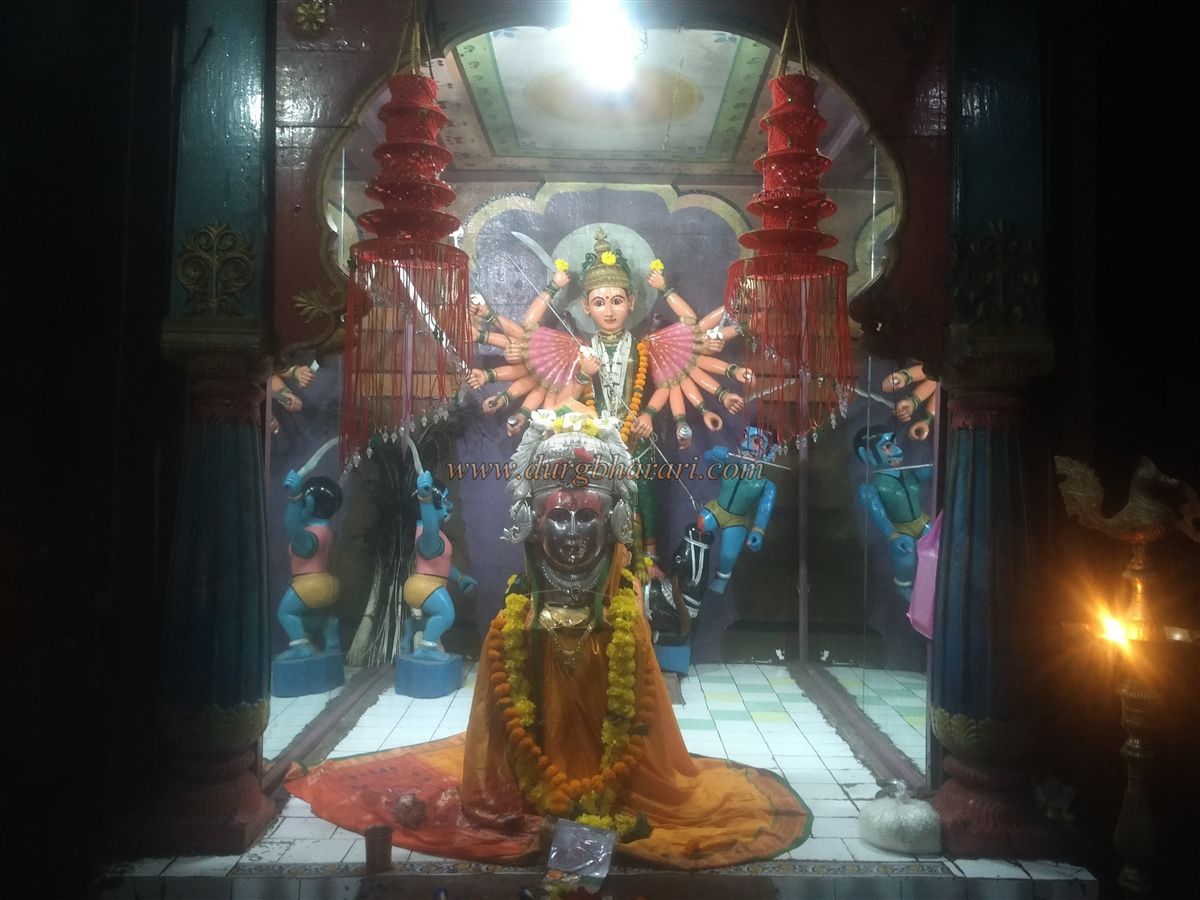
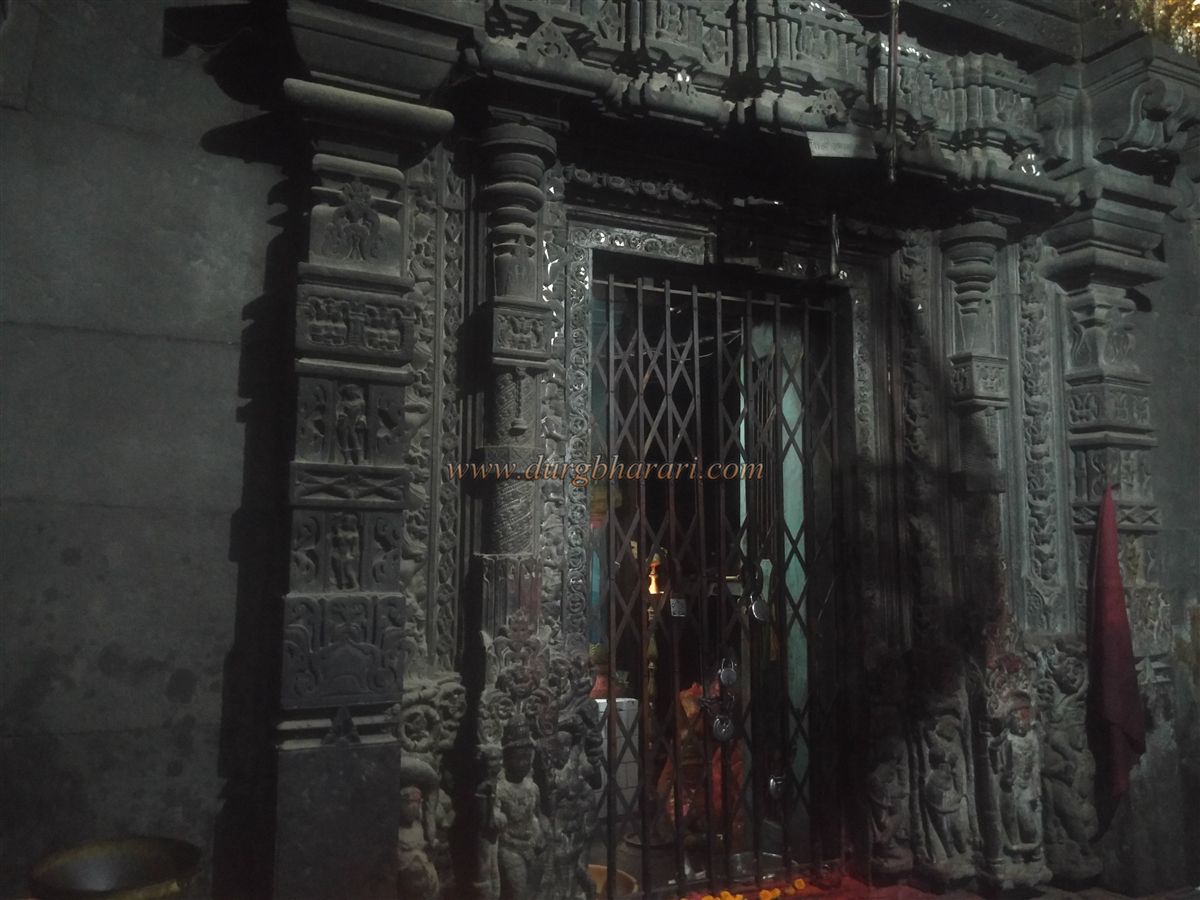
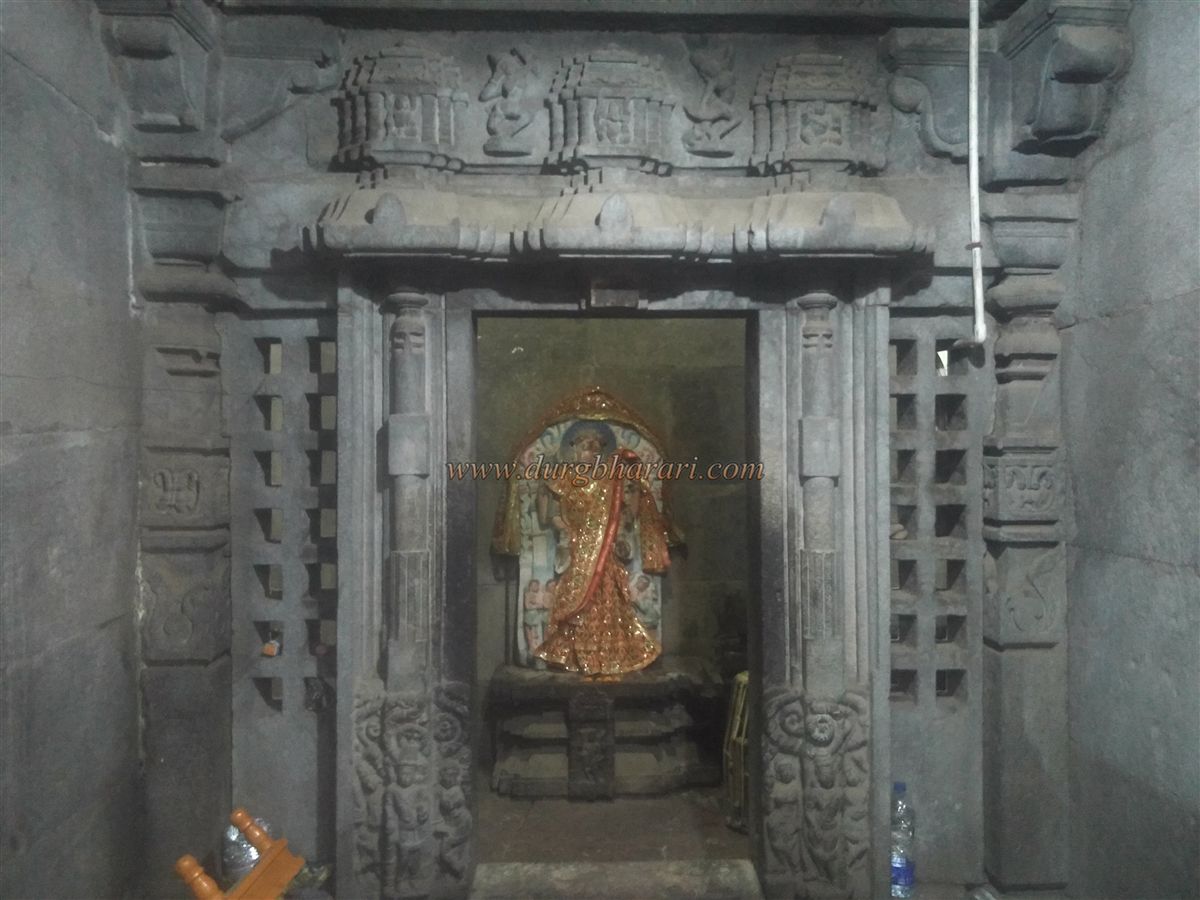
The Sabhamandap has three sanctums on the east, west, and south — a design called tridal. Between the main sanctum and the Sabhamandap is the antaral, which has some subsidiary shrines. The beautifully carved main sanctum doorway features the symbolic figure of the goddess on the top lintel. Inside is the goddess’s Tandala (seat) and a wooden idol of Jagdamba with eighteen arms, seated on a tiger in her Mahishasurmardini form, holding various weapons.
The eastern sanctum houses Mahalakshmi, and the western one has Bhadrakali. On the outer wall of the western sanctum is a carving of Kamakshi Devi on the right and Kubera on the left.
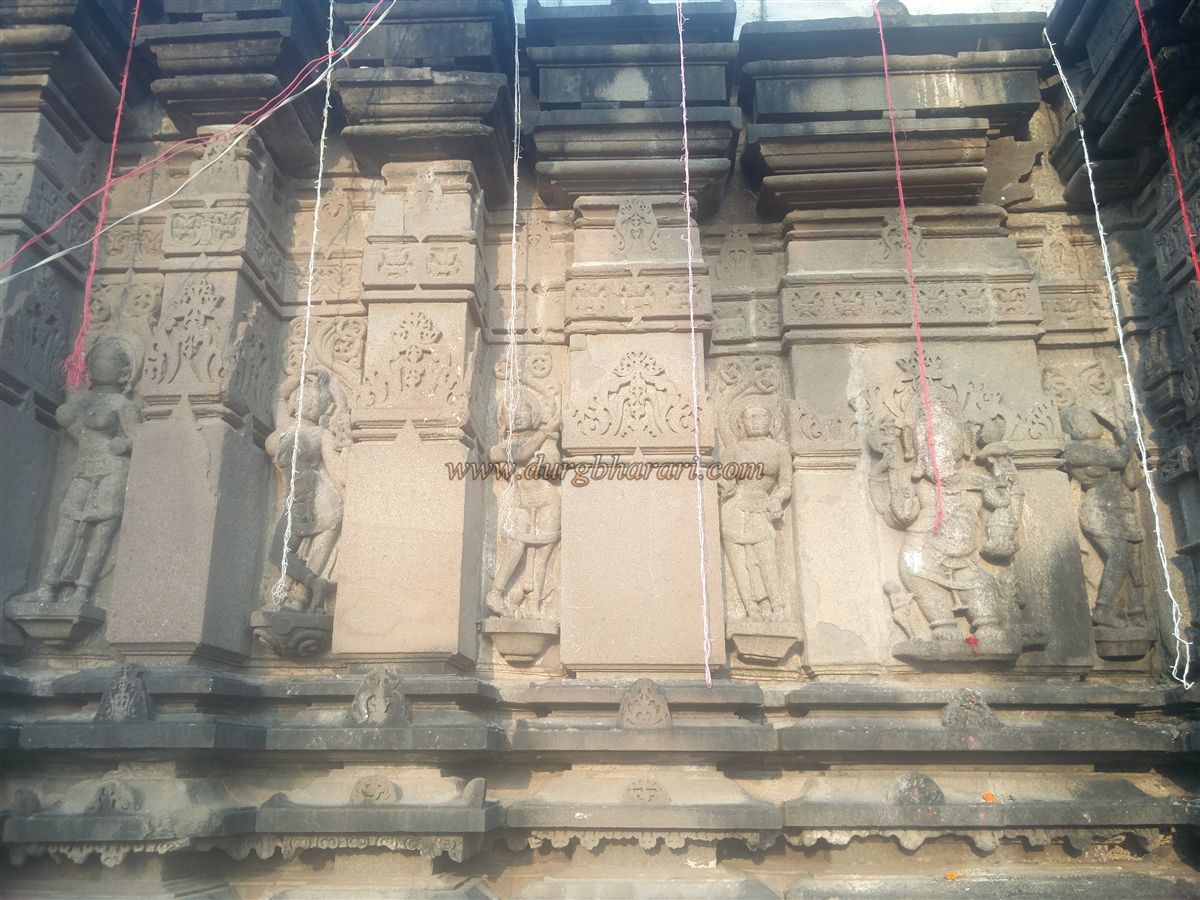
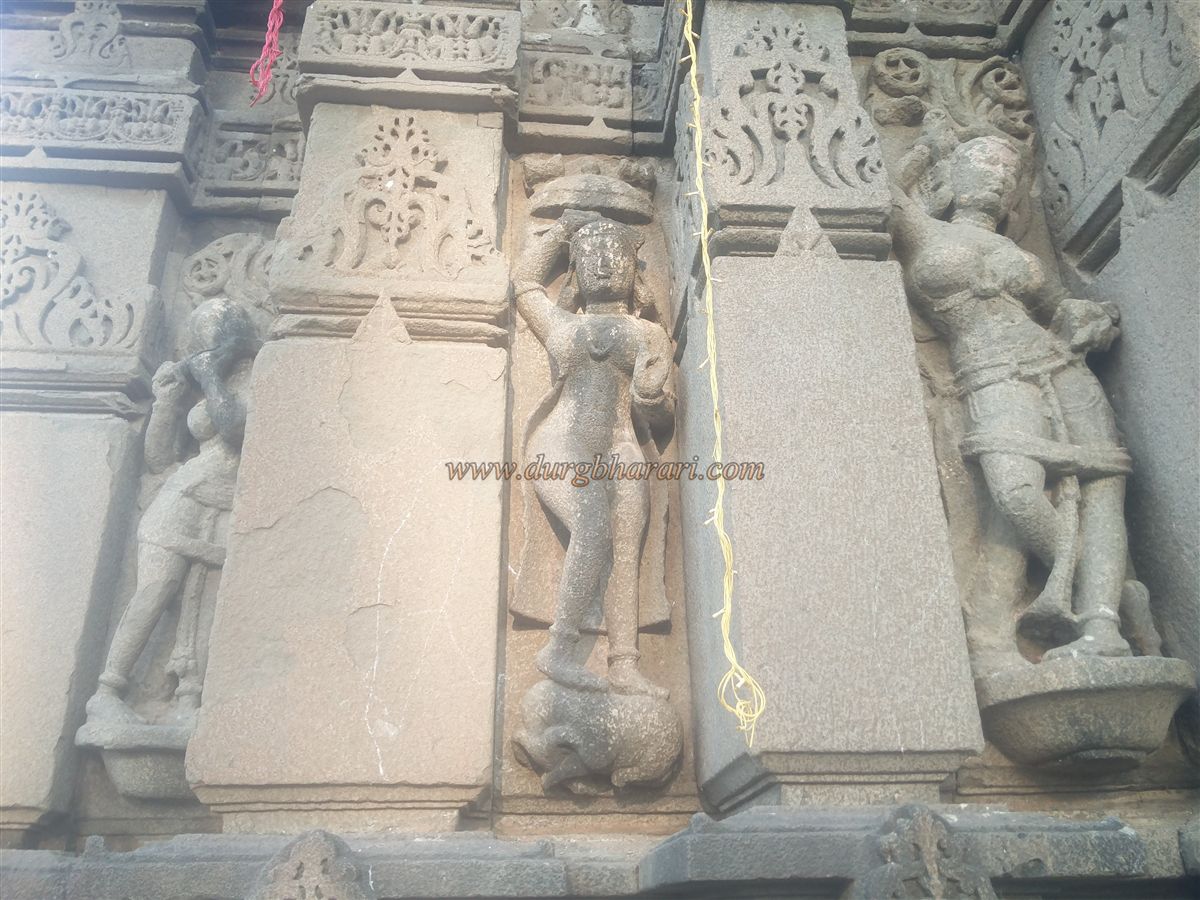
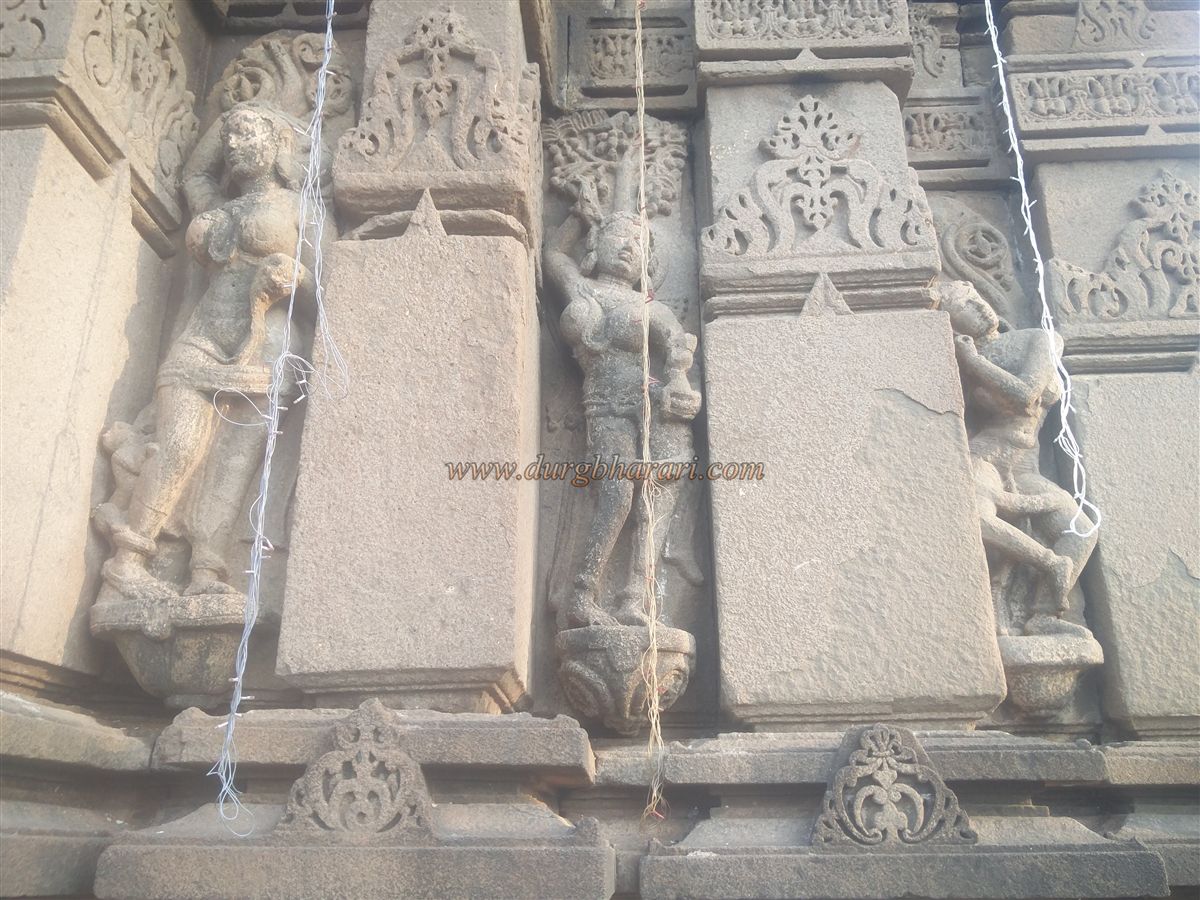
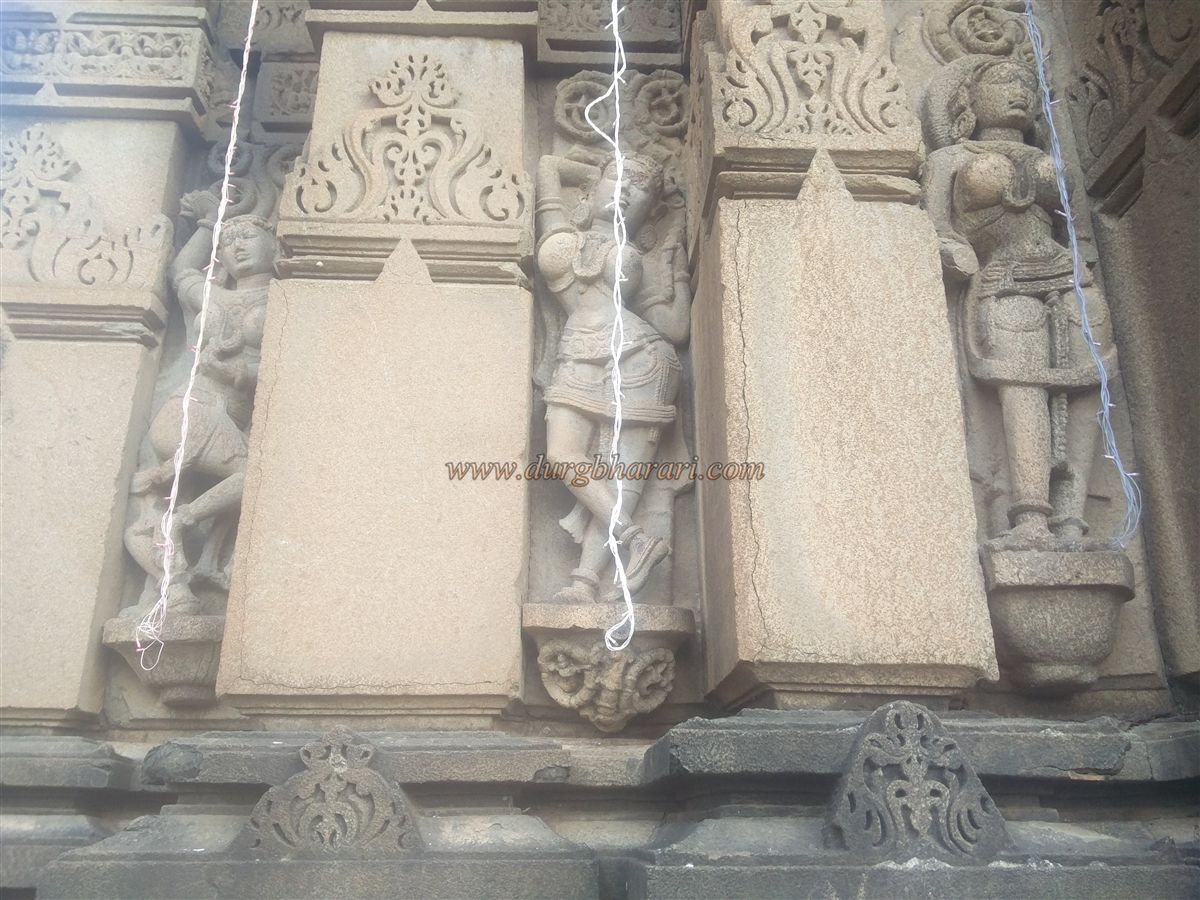
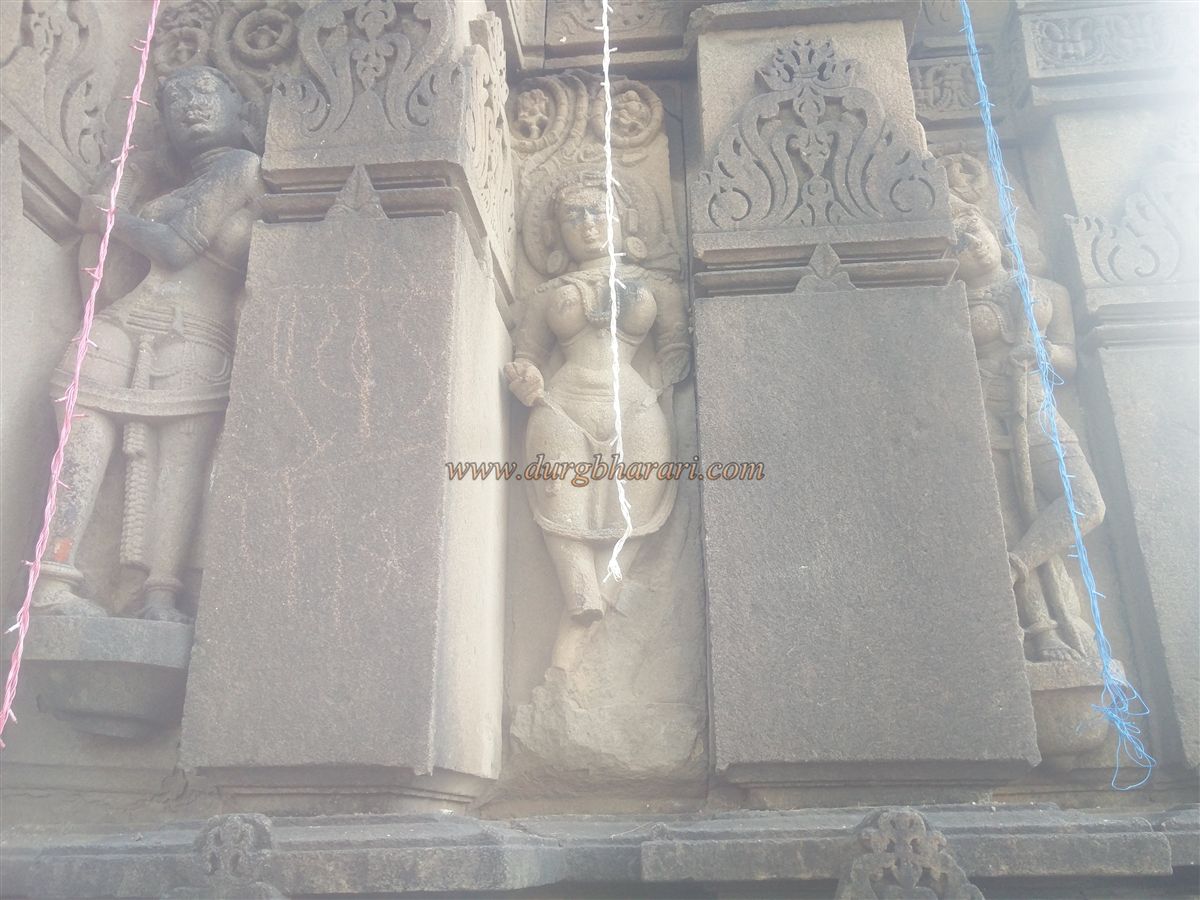
Circumambulations the temple reveals its star-shaped (taraka) outer design, with heavy ornamentation on the walls and pillars. On the outer walls are 22 Sursundari figures — divine maidens ranked just below the gods in status. These figures depict various poses — admiring themselves in a mirror, wearing earrings, arranging hair, dancing, playing flute or mridang, holding a parrot, carrying a child, a Vishkanya with a scorpion on her lap, holding a parasol, or startled by a monkey’s antics. One figure clearly wears a foreign-style coat.
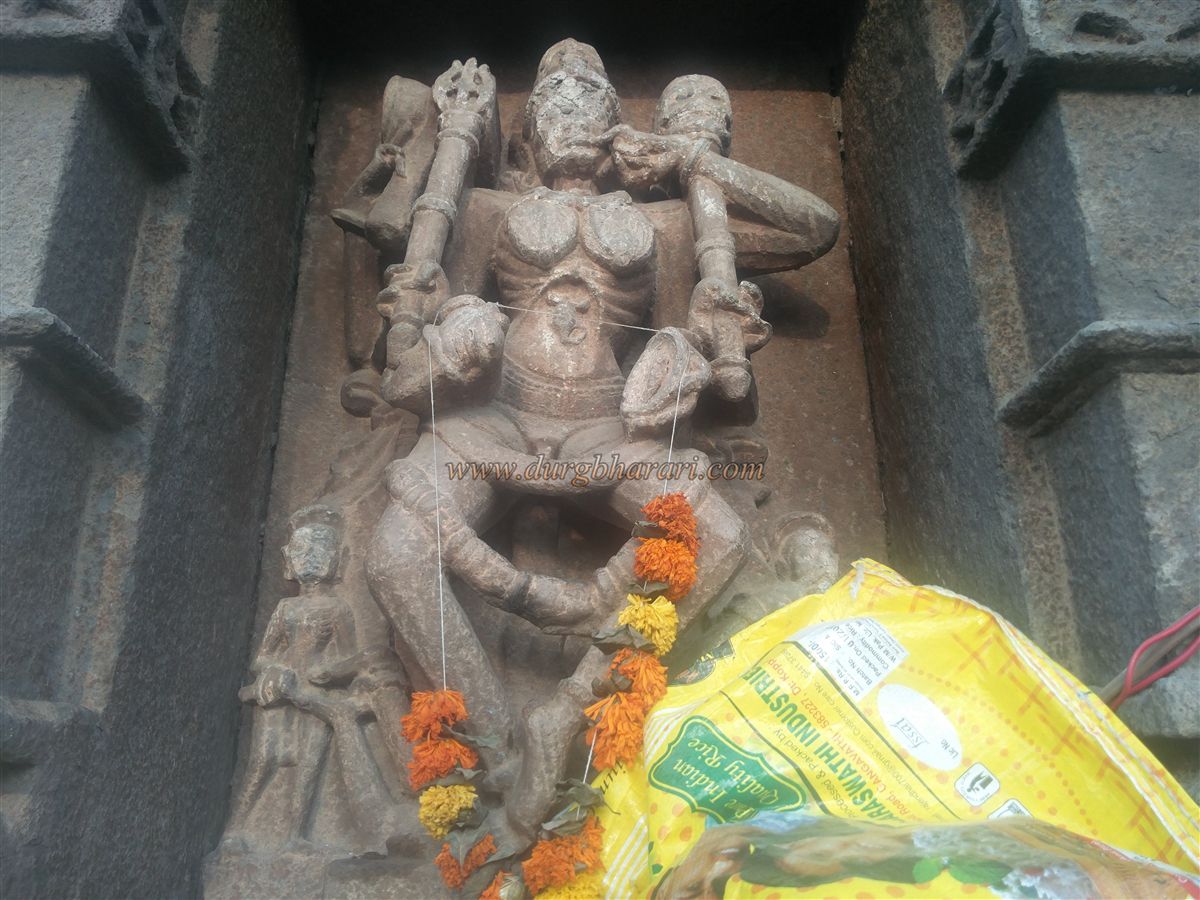
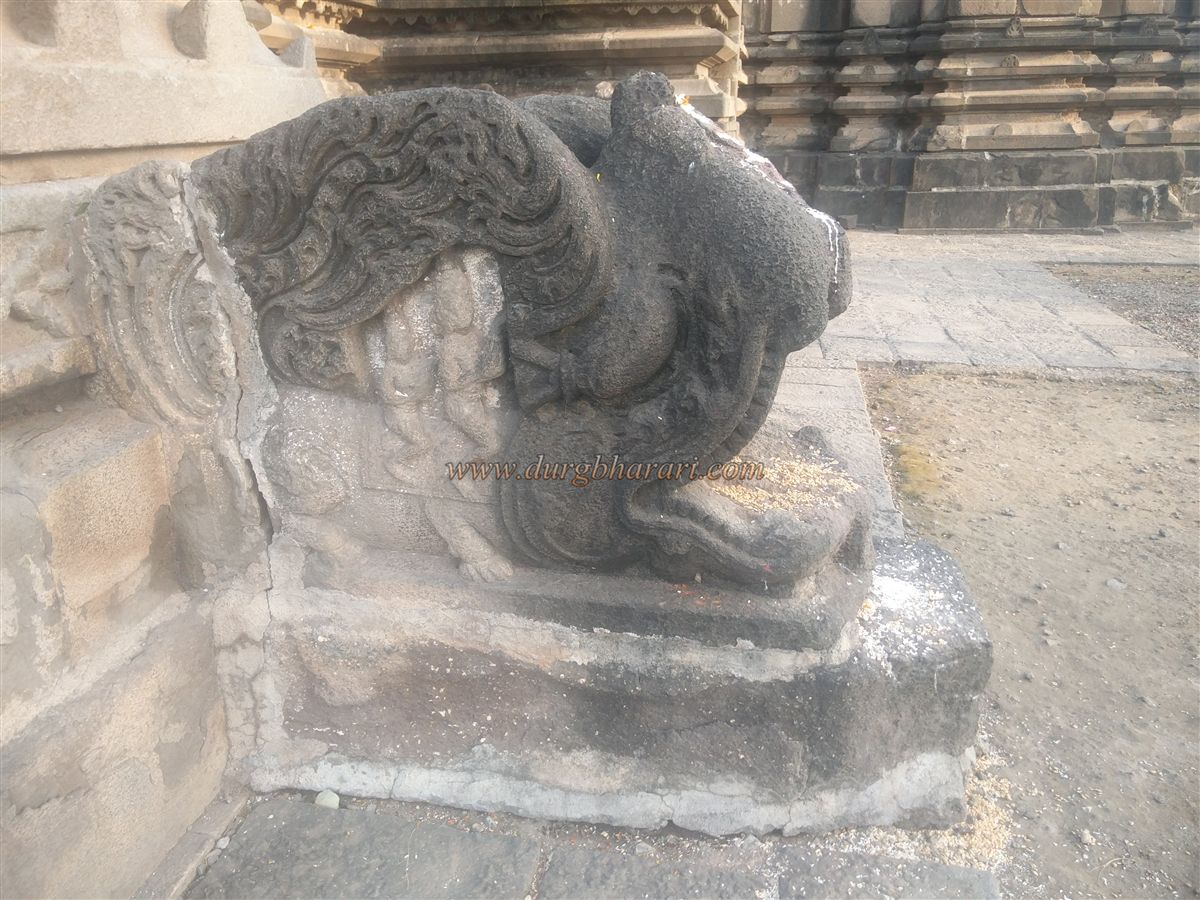
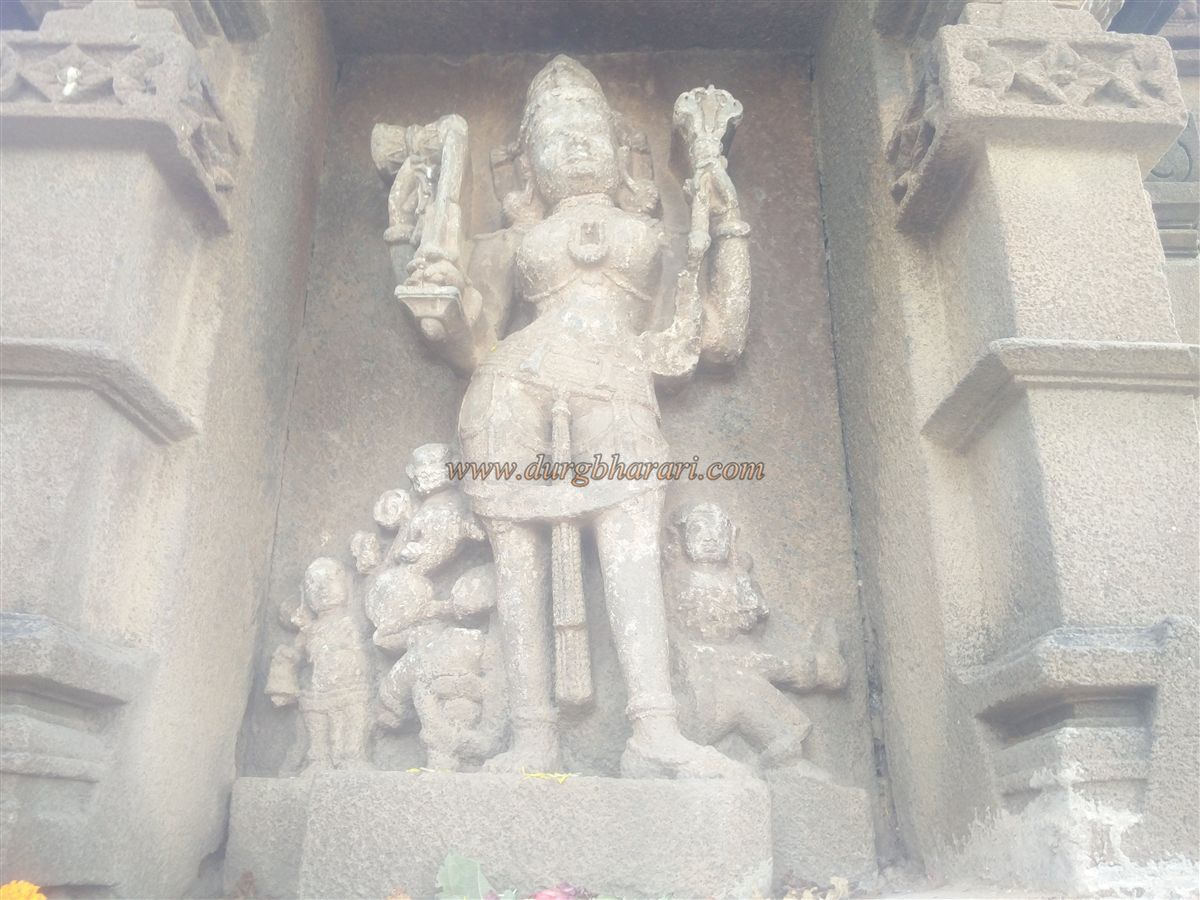
On the east wall is a carving of Ganesha. Behind the eastern sanctum is a shrine of Chamunda — the fierce form of the goddess — shown as emaciated, with a scorpion on her stomach, a garland of skulls, a skull-topped staff, and biting the nail of her left little finger. Below this shrine is a Makarmukh (crocodile face) spout for draining water from the sanctum.
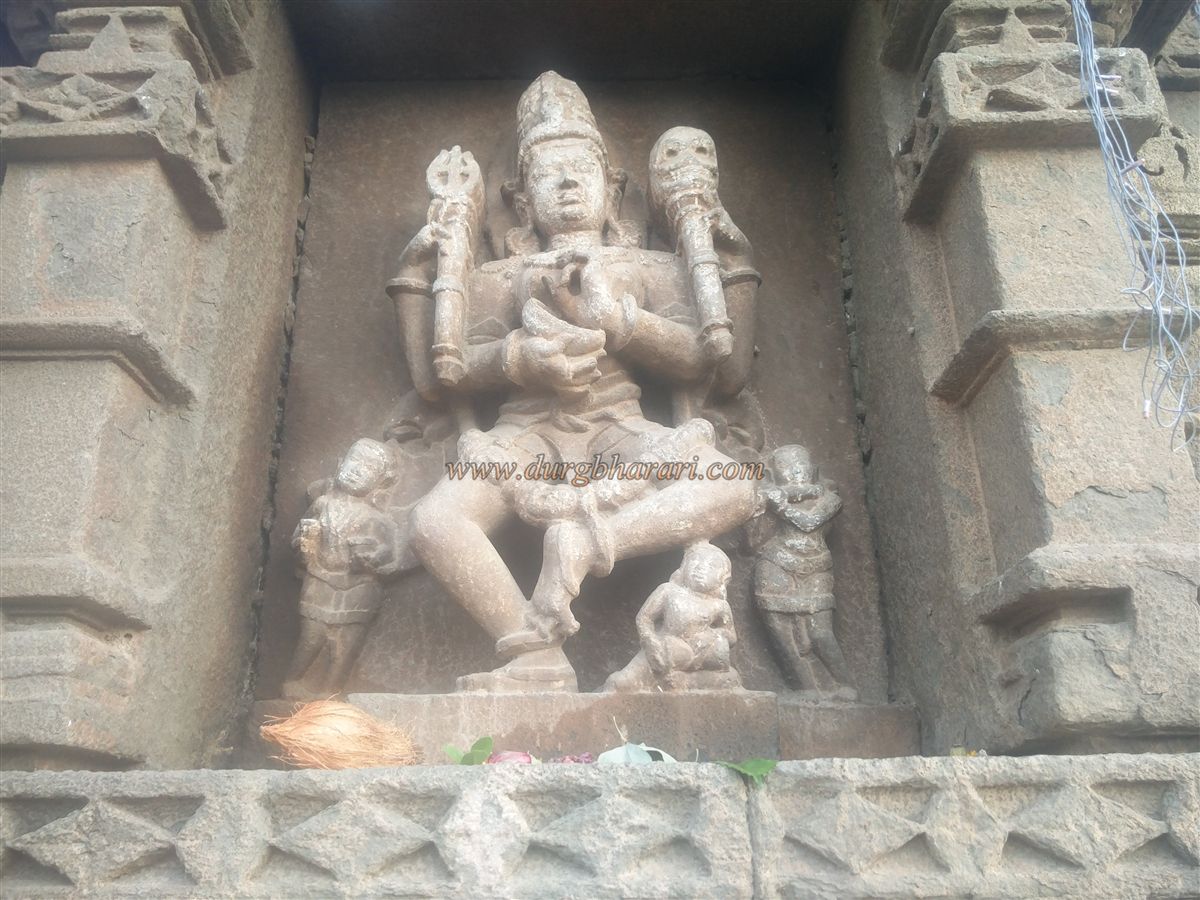
Behind the main sanctum is a shrine of dancing Shiva, with a dwarf drummer at his feet and a flute player in the corner. The arch above depicts Brahma, Vishnu, and Mahesh. Behind the western sanctum is a shrine of Shiva holding a damaru, sword, and trident (one hand broken).
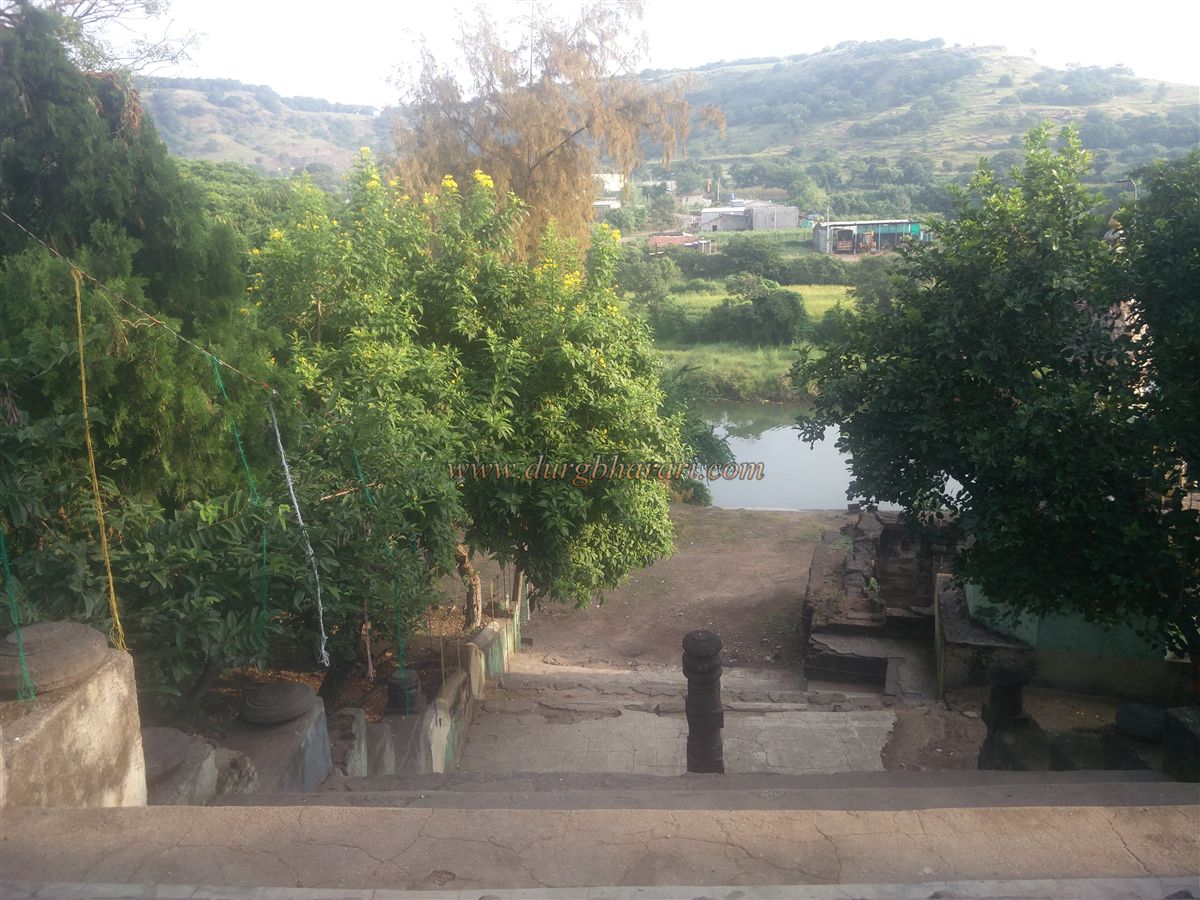
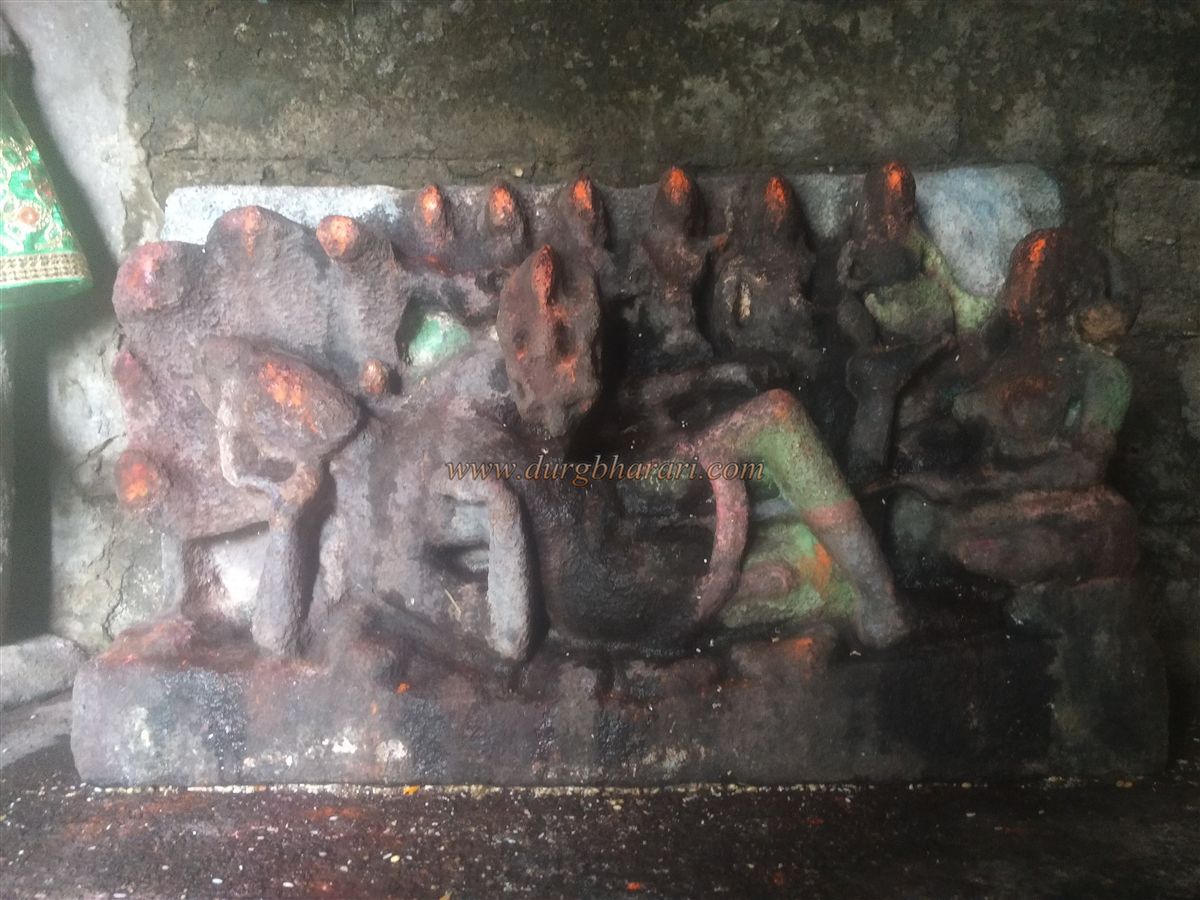
On the steps of the river ghat in front of the temple stands a carved pillar with a Sanskrit inscription mentioning Shaka 1050 (1128 CE), though it is now faded and unreadable. Next to it is a ruined temple of Sheshanaga, and outside are two-foot-high octagonal samadhi stones with carved footprints, a Shiva Linga, and Nandi.
The temple’s surroundings, with its greenery and nearby river, are very scenic. A grand fair is held in Chaitra, and during Navaratri, a twelve-day festival takes place. To see the temple properly, it is best to avoid visiting during these times.
Unfortunately, the local population is unaware of the artistic and historical value of this thousand-year-old carved temple, and its heritage significance is being lost. Nevertheless, the Tahakari temple is truly worth visiting.
(Note: The details about the temple idols were provided by Mr. Anil Shirsat, and the text was compiled by Mr. Suresh Nimbalkar.)
© Suresh Nimbalkar
GALLERY