SOLAPUR
TYPE : GROUND FORT
DISTRICT : SOLAPUR
HEIGHT : 0
GRADE : EASY
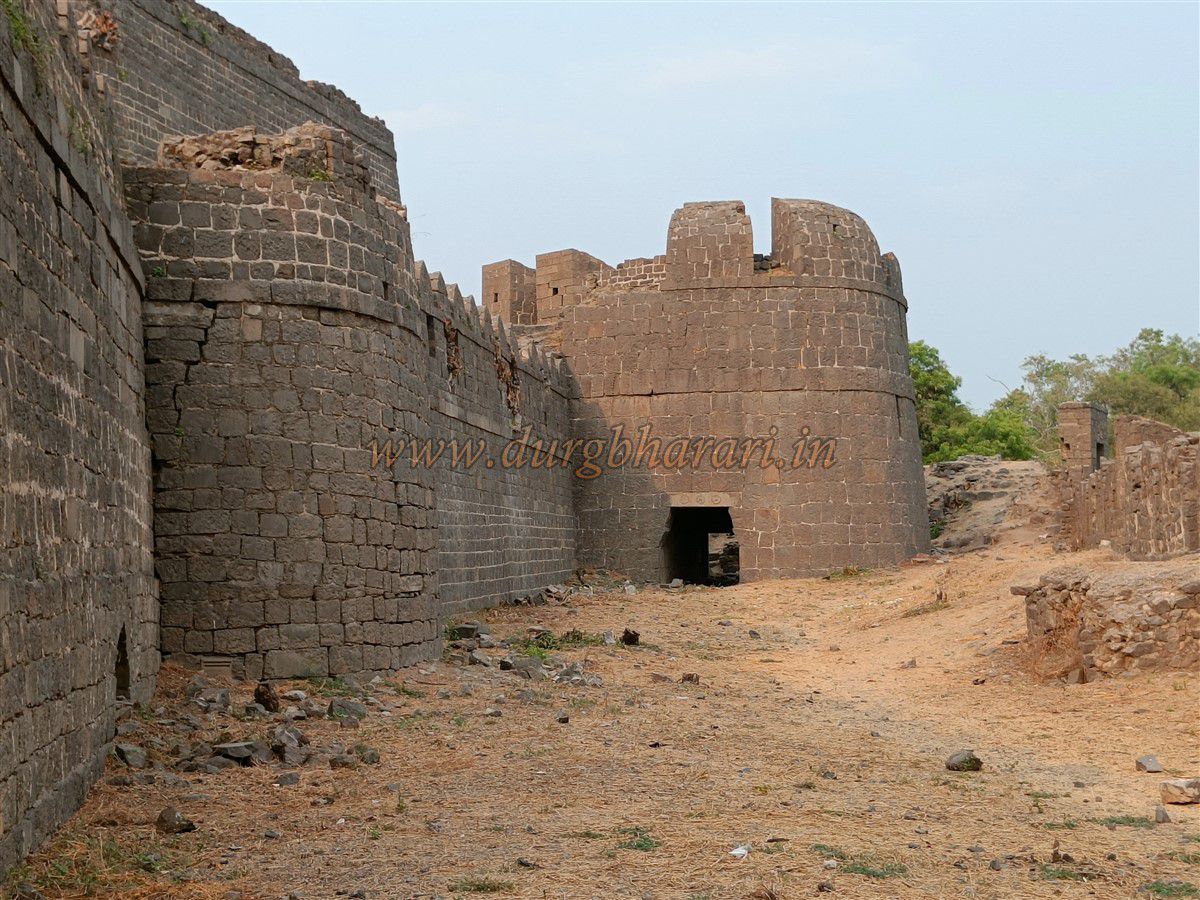
The last district at the southern end of Maharashtra is Solapur. This multilingual district, where Marathi, Telugu, and Kannada cultures blend together, is also famous as the district of towels and bedsheet manufacturing, and as the land of saints due to the holy pilgrimage of Pandharpur. But for fort enthusiasts like us, Solapur is known for its massive Bhuikot Fort. Like other grand Bhuikot forts in the Marathwada region, this fort is also completely surrounded by double fortifications, with a deep moat on three sides and the Siddheshwar Lake on the fourth side. Once situated at the edge of the city, the fort has now become part of its central area due to increasing population.
The Solapur fort is about 2 km from Solapur Railway Station and can be reached by rickshaw or on foot in about half an hour.
...
Since the fort is under the Archaeological Department, entry timings are from 9 AM to 5 PM, with an entry fee charged. Exploring the entire fort takes about 4–5 hours, and as there is no drinking water facility inside, it is advisable to carry enough water. Excluding the moat, the fort premises spread across approximately 20 acres. The outer fortification wall has 27 bastions, while the inner wall also has 27 smaller and larger bastions.
A garden has been developed by the Solapur Municipal Corporation in some parts of the moat. In earlier times, water from the Siddheshwar Lake used to fill this moat. For the convenience of tourists, a new entrance has been made by breaking a part of the western wall of the fort.
If you wish to explore the entire fort, your visit should be done in three stages. Upon entering, first visit the inner fortification and premises, then see the main gate area and the outer fortification, and finally take a round of the moat.
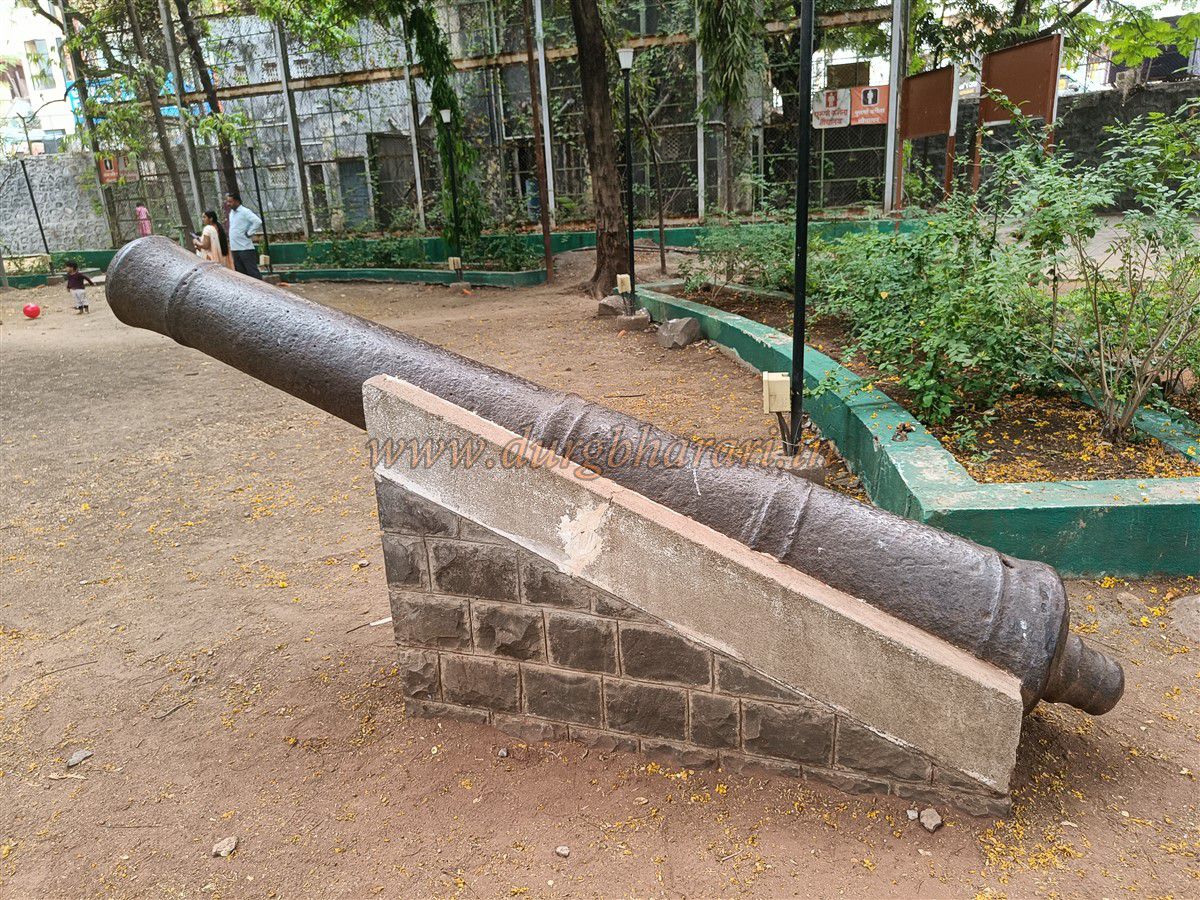
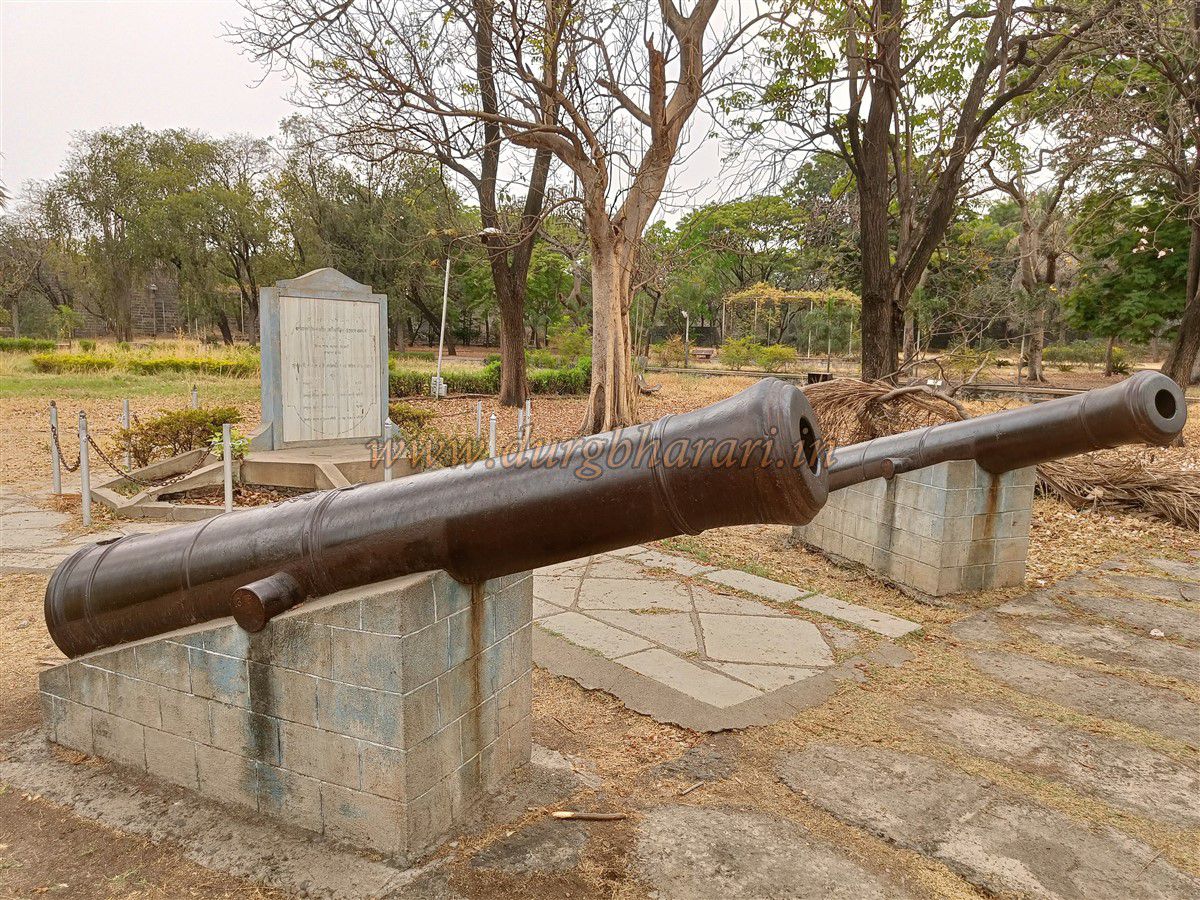
Upon entering the fort, you will see two British-era cannons mounted on a platform. These cannons bear the royal emblem of England and the year 1807 engraved on them. To the right of the fortification you entered, there is a slope built for hauling cannons up the wall, along with steps for climbing onto the ramparts. Adjoining the ramparts are some British-period structures, one of which seems to have been the fort’s ammunition storage.
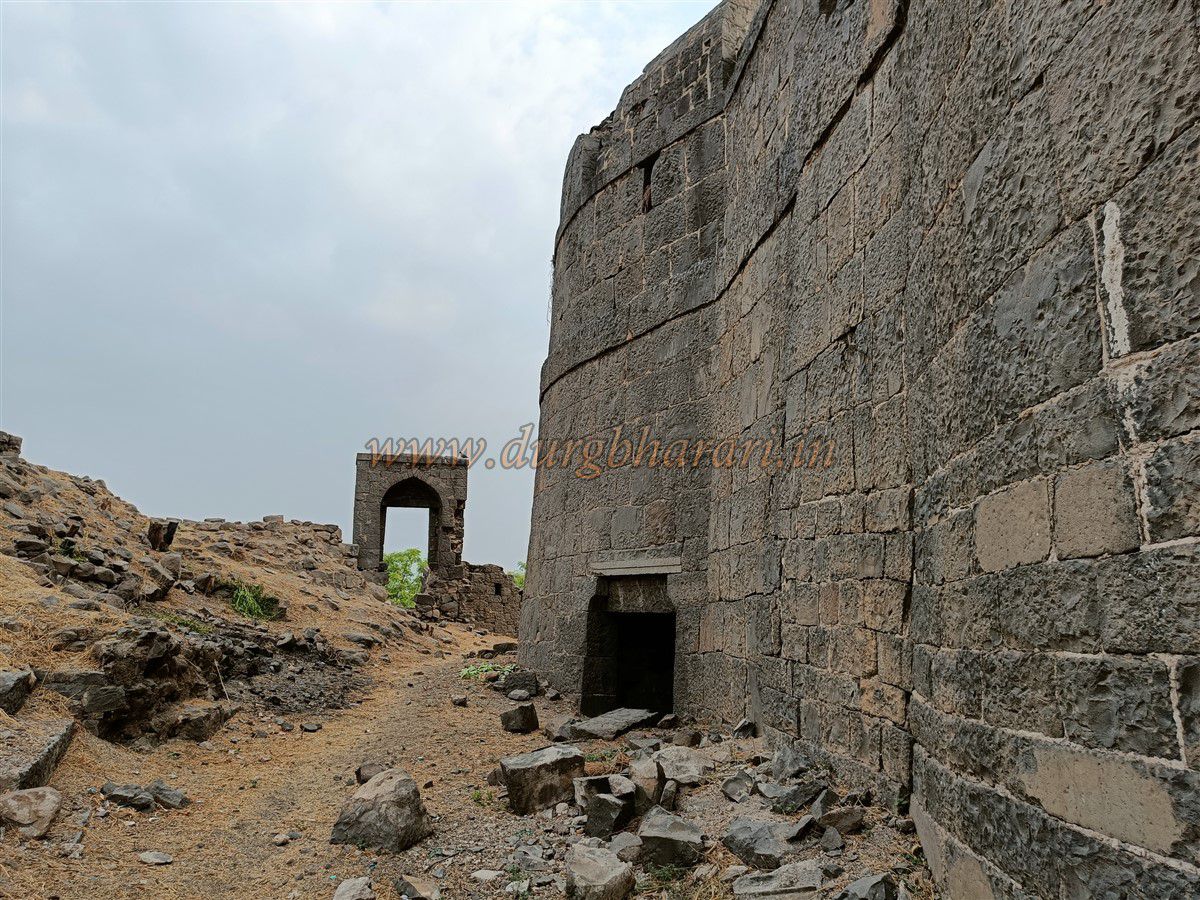
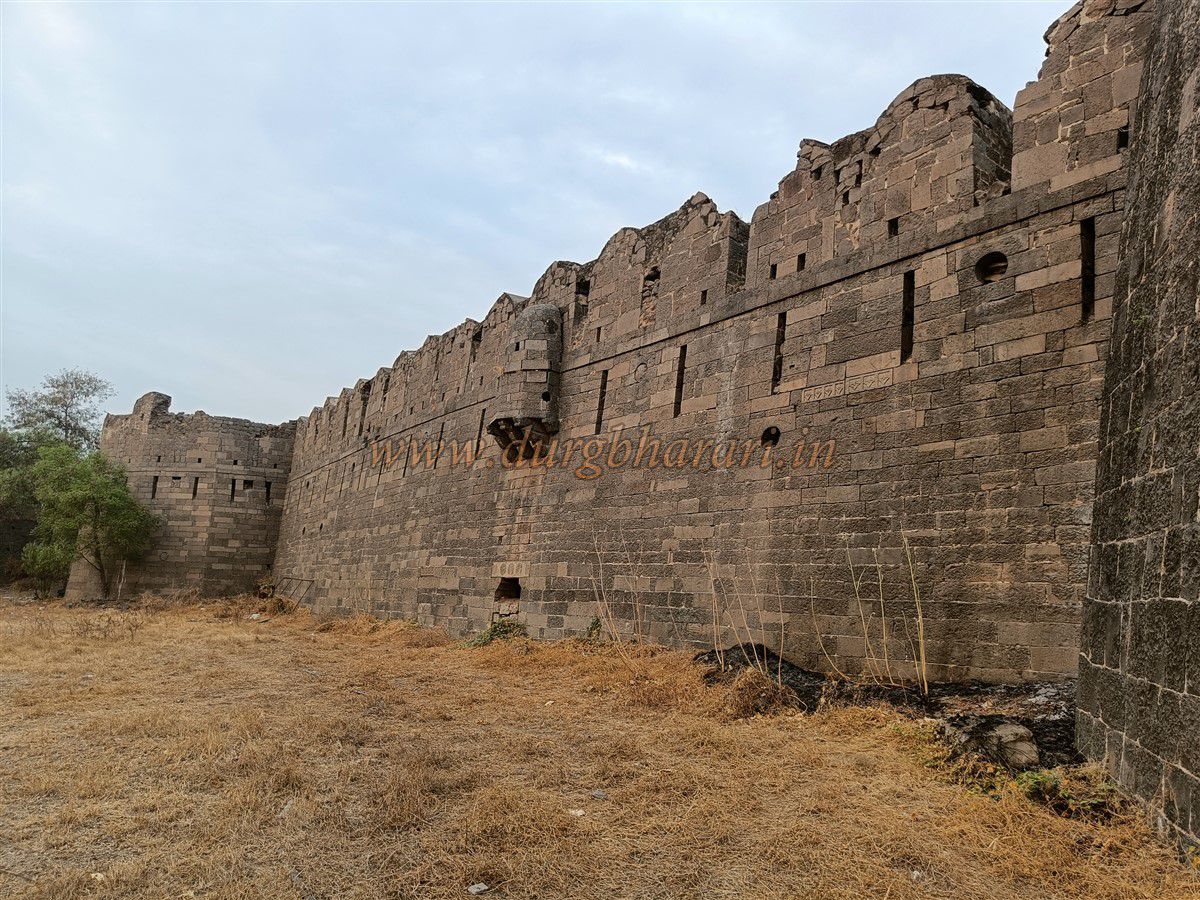
Climb up the steps and start your fort tour from the left side. The outer moat varies in width between 50 to 70 feet, the outer wall is about 30 feet high, and the inner wall is about 40 feet high. The distance between the outer wall and the inner wall ranges from 30 to 60 feet.
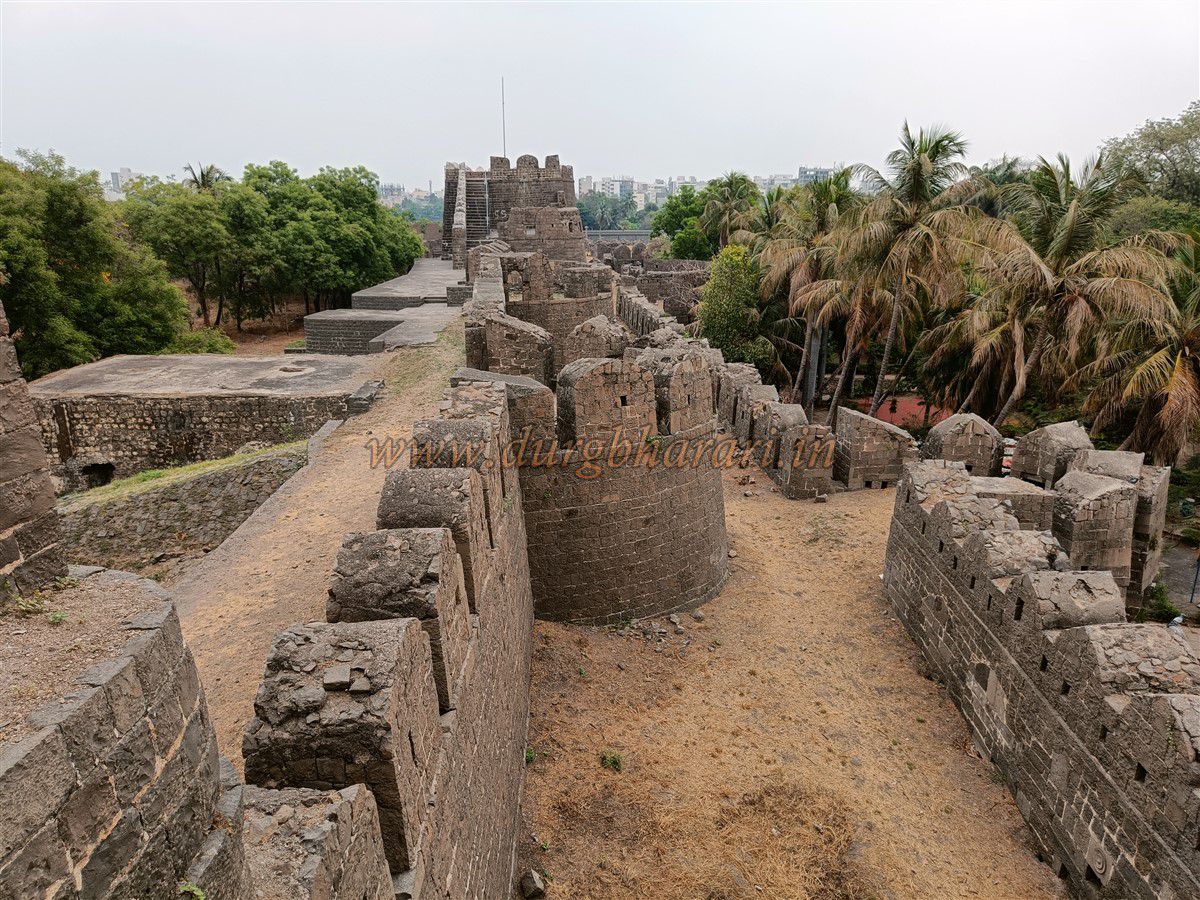
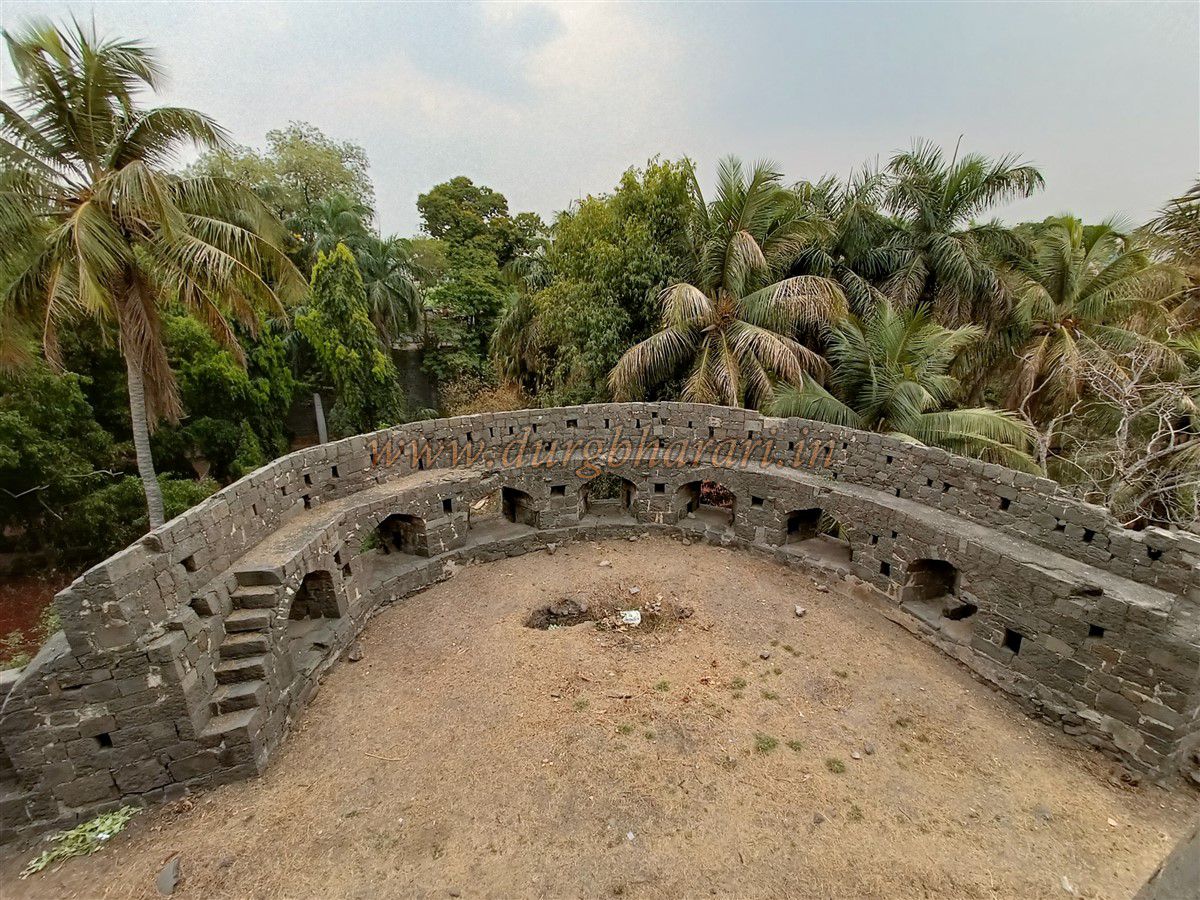
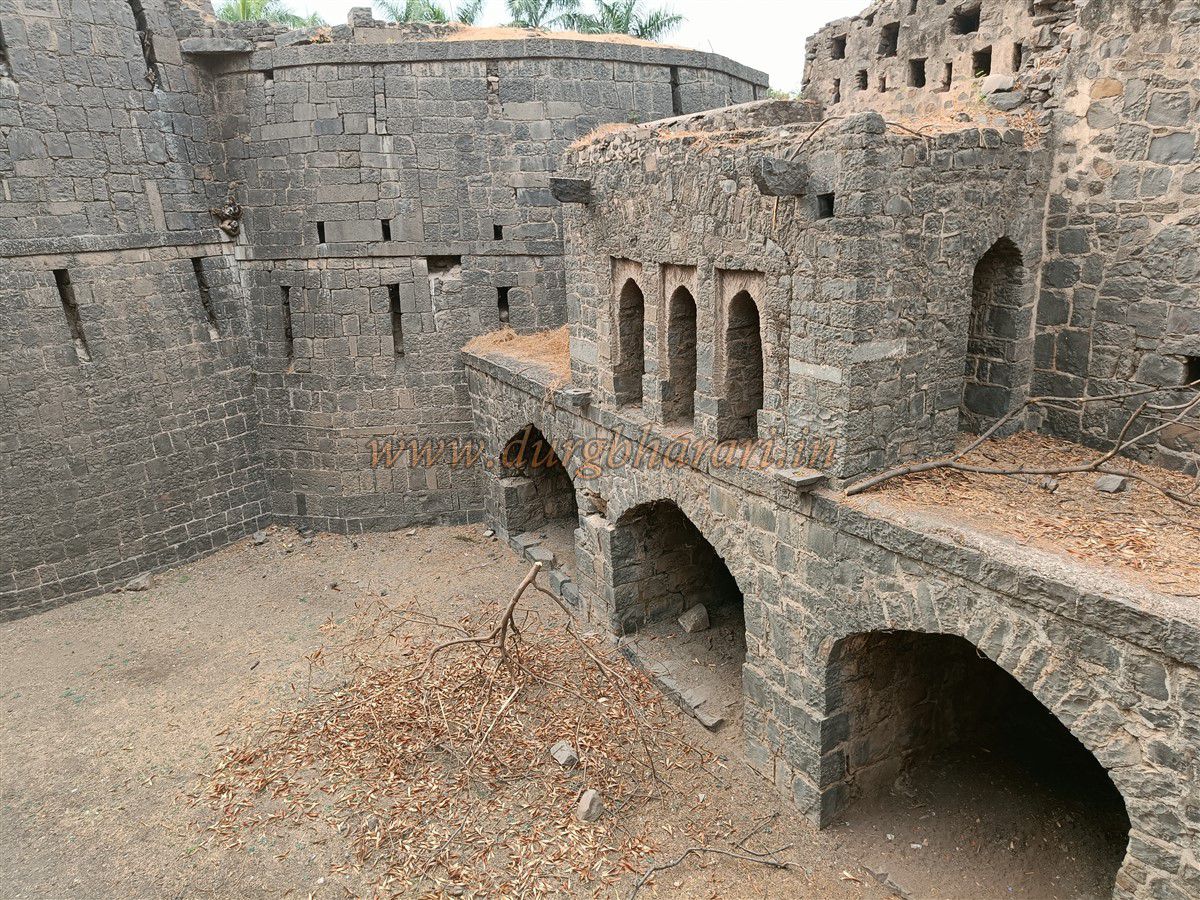
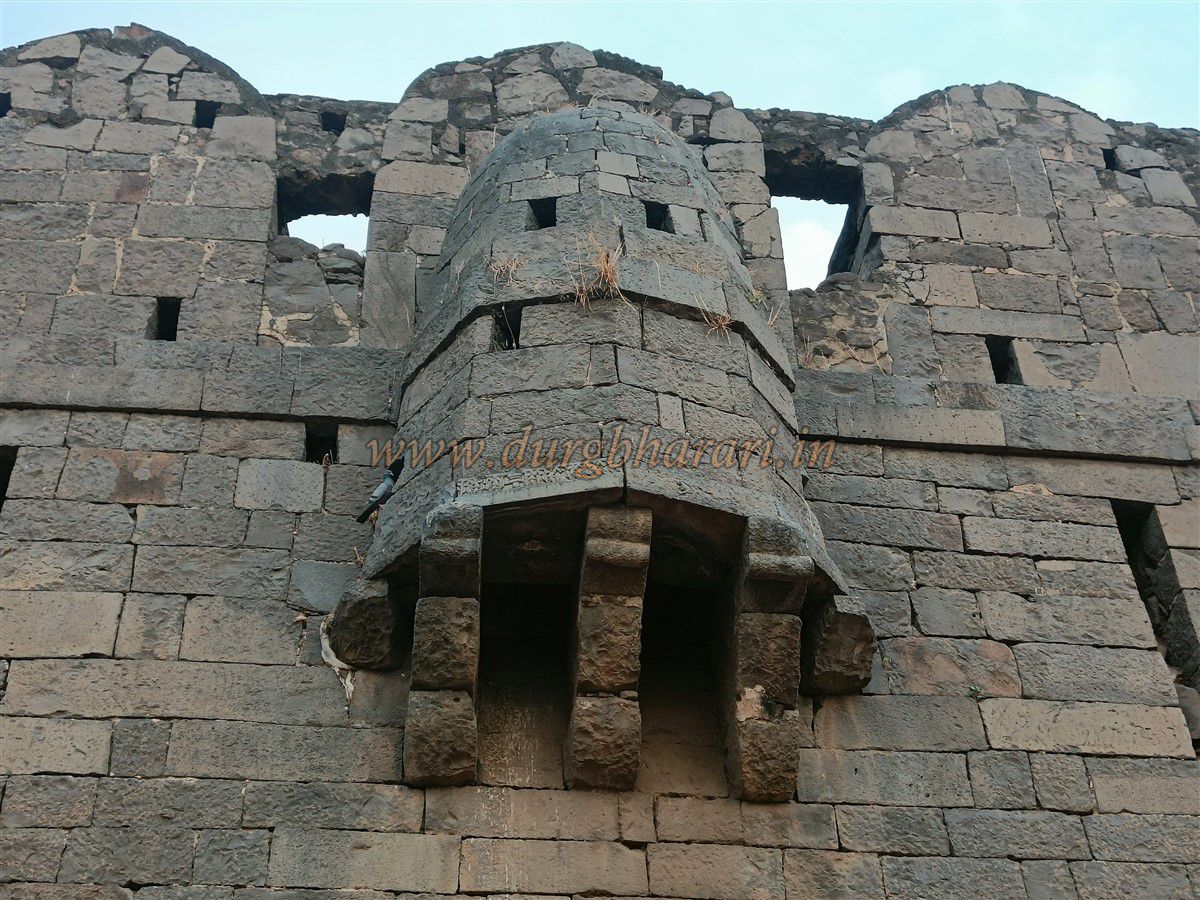
Once on the rampart, you can see the circular bastions of the outer fortification and the circular platforms on them for mounting cannons. Moving ahead, you come to a large two-storied circular bastion located at the corner of the inner fortification. From here, the long stretches of the fort walls studded with bastions present a beautiful view.
Further ahead, near the first bastion, you will see another slope for hauling cannons and an adjacent stone structure, likely used as British barracks. After crossing three bastions from the corner, you reach the fourth bastion, the highest in the fort, which must have been of great importance for surveillance. This bastion is known as Nishan Bastion (Flag Bastion), as it has a flagpole base, though some sources refer to it as Hanuman Bastion.
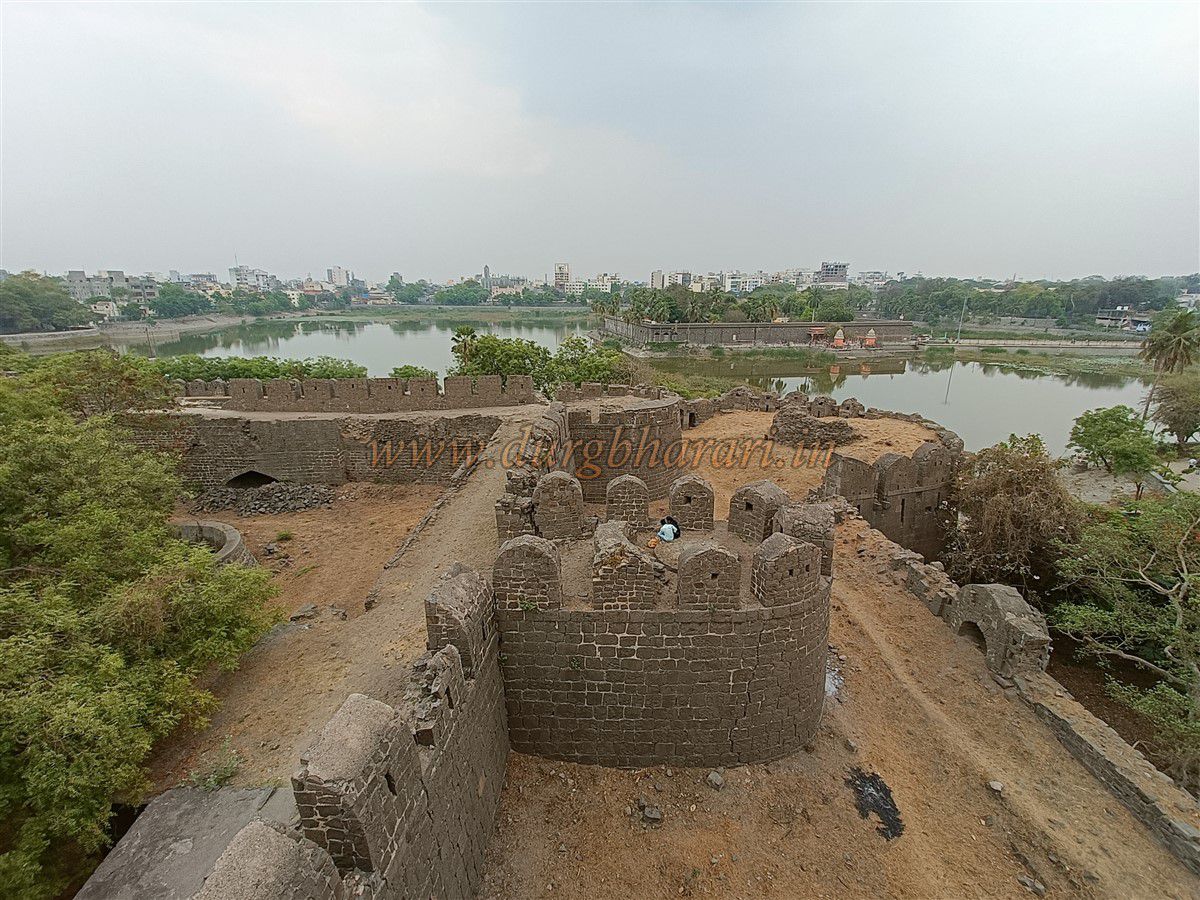
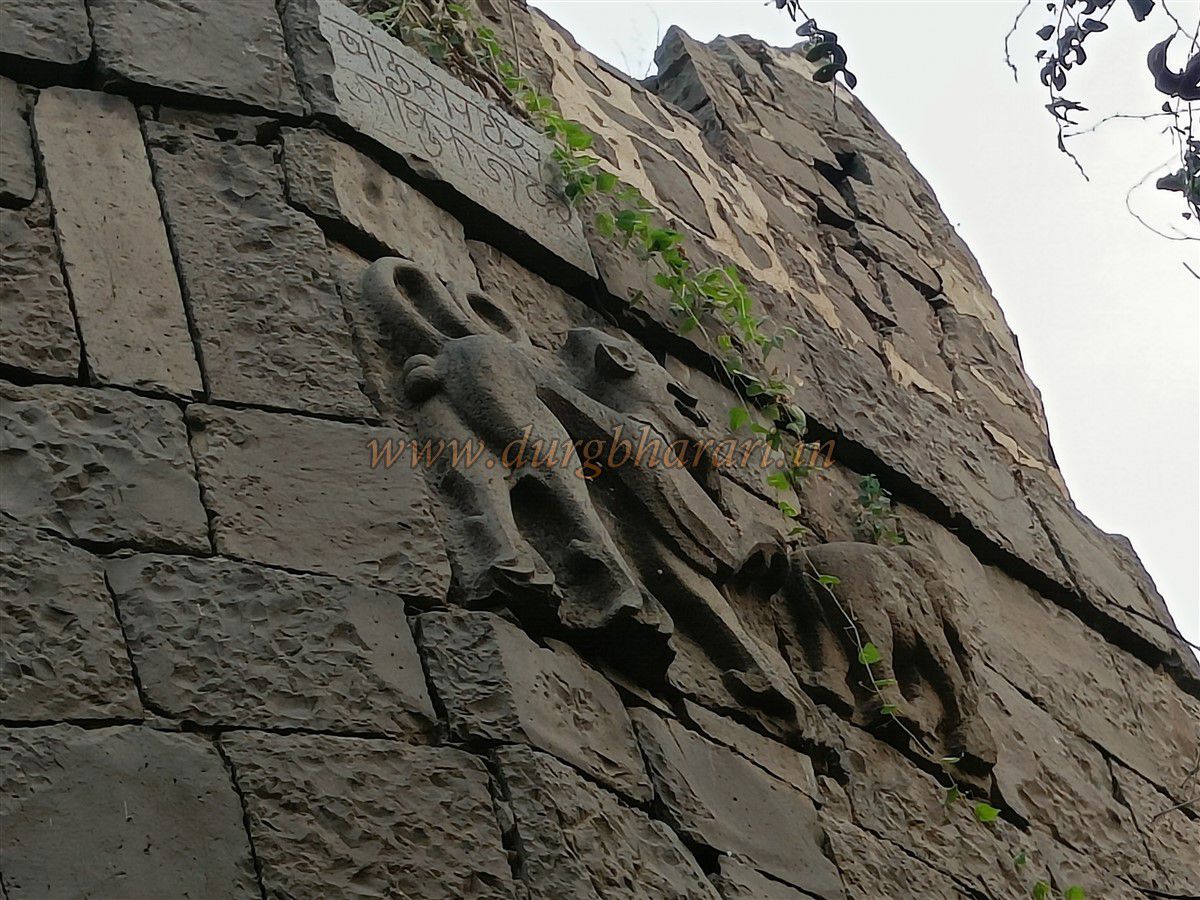
The Archaeological Department has recently carried out repairs on this bastion. While climbing its steps, you can see a carved vyal (mythical creature) on the facade. The bastion also contains large fragments of temple sculptures. From this bastion, you get a full view of the Siddheshwar Lake and the Siddheshwar Temple within it.
While touring the inner rampart, you can spot several features on the outer fortification, such as cannon embrasures, musket loops, latrines, and guard rooms. After viewing the Hanuman Bastion, you come across a large well located at a corner inside the wall. Both the inner and outer fortifications contain several quarters for soldiers.
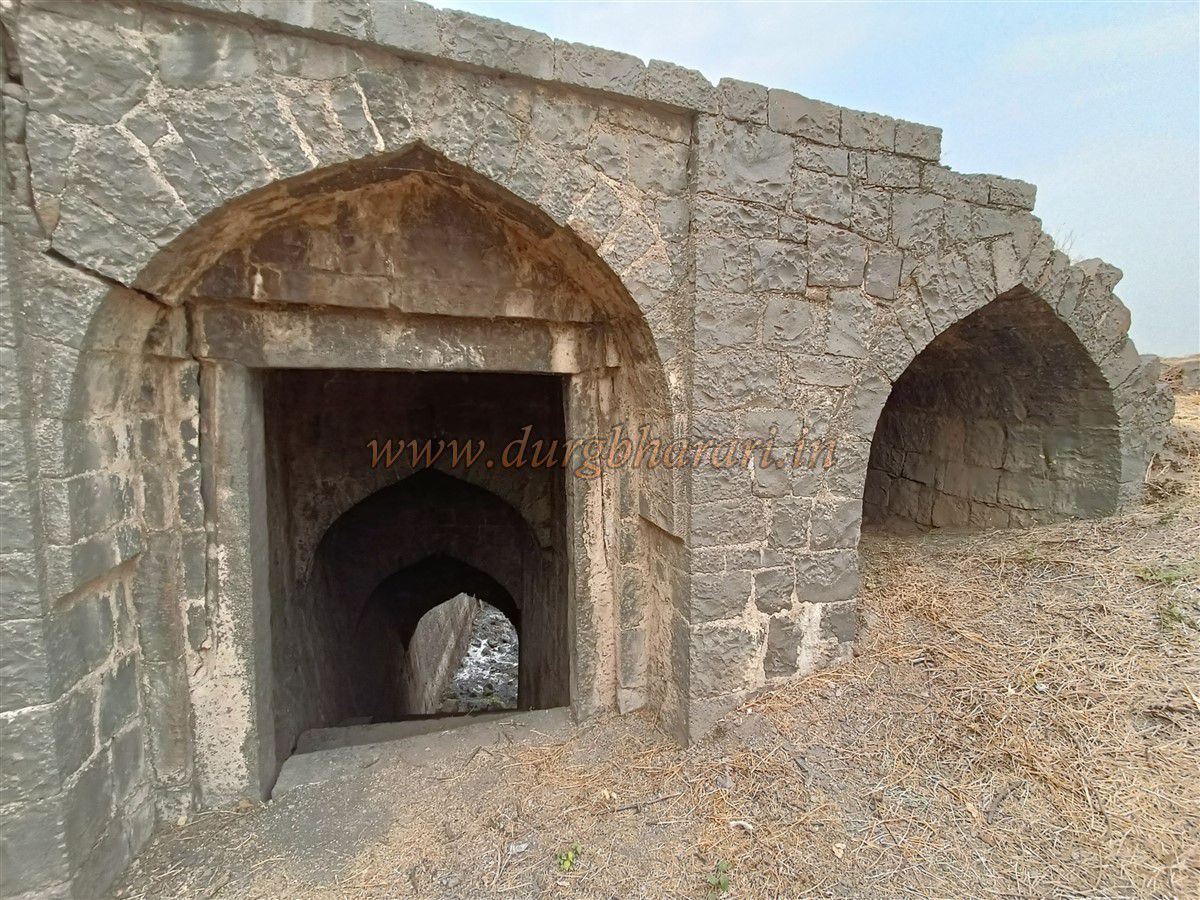
Further ahead, adjoining the outer wall, lies a large pond with an arched structure on its bank. This structure has a door and steps leading down into the pond. A bastion ahead of this pond has a passage leading into the outer fortification, but it is currently closed with a wire mesh. The upper portion of this bastion has a circular cannon platform, still showing the pivot hole used for rotating a cannon.
Outside this bastion, in the outer fortification, lies the Balantin Bastion, so named because a pregnant woman (Balantin) from the Dargopatil family was sacrificed during its construction.
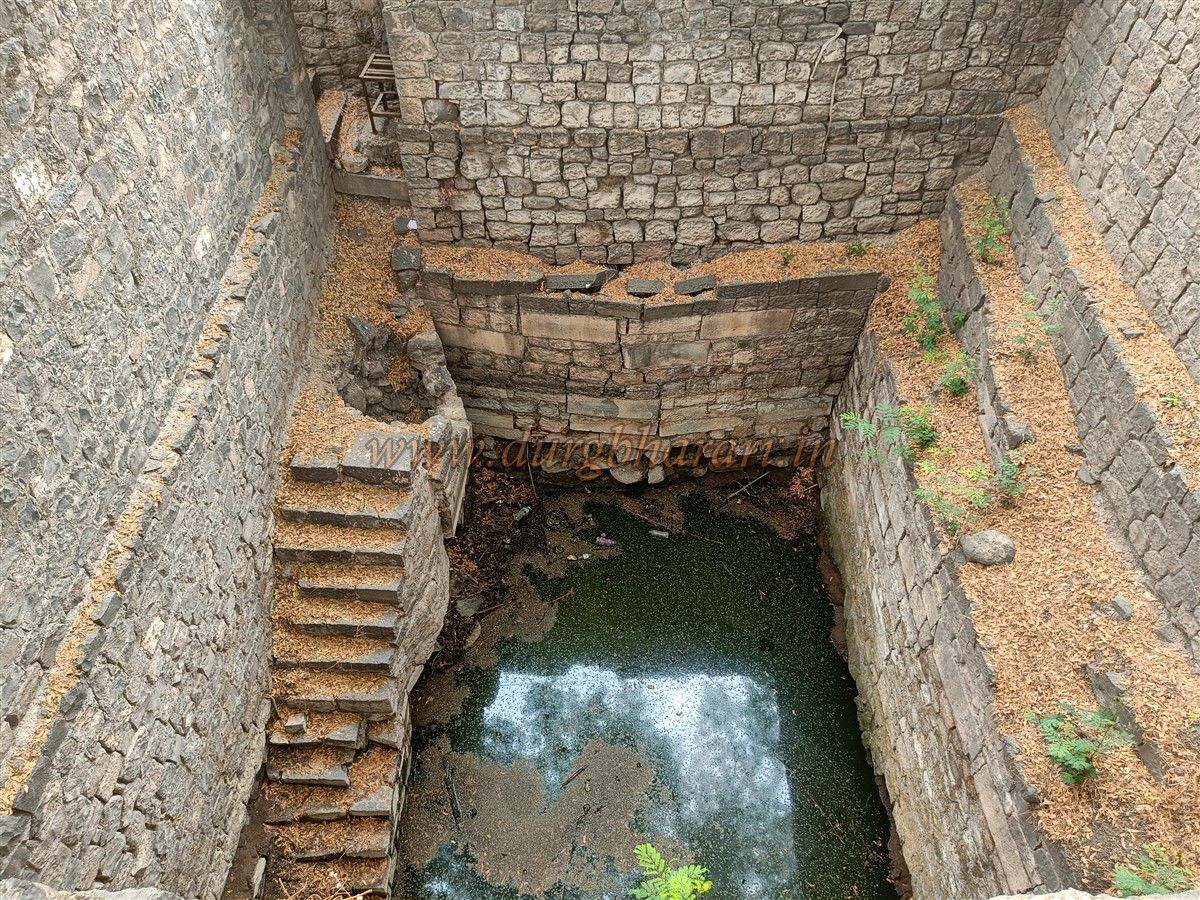
Continuing along, the wall here is partially ruined, requiring you to climb down and then up again to reach the next section. At the corner of this rampart lies a rectangular stone cistern with underground steps leading into it. At this end stands another tall bastion, which also incorporates numerous temple fragments in its construction.
This bastion bears a Modi script inscription dated 1680, stating that the wall here was repaired at that time. Steps lead up to its top, where provisions for mounting cannons can still be seen. From this bastion, you get a panoramic view of the entire fort, the Siddheshwar Lake, and the surrounding landscape.
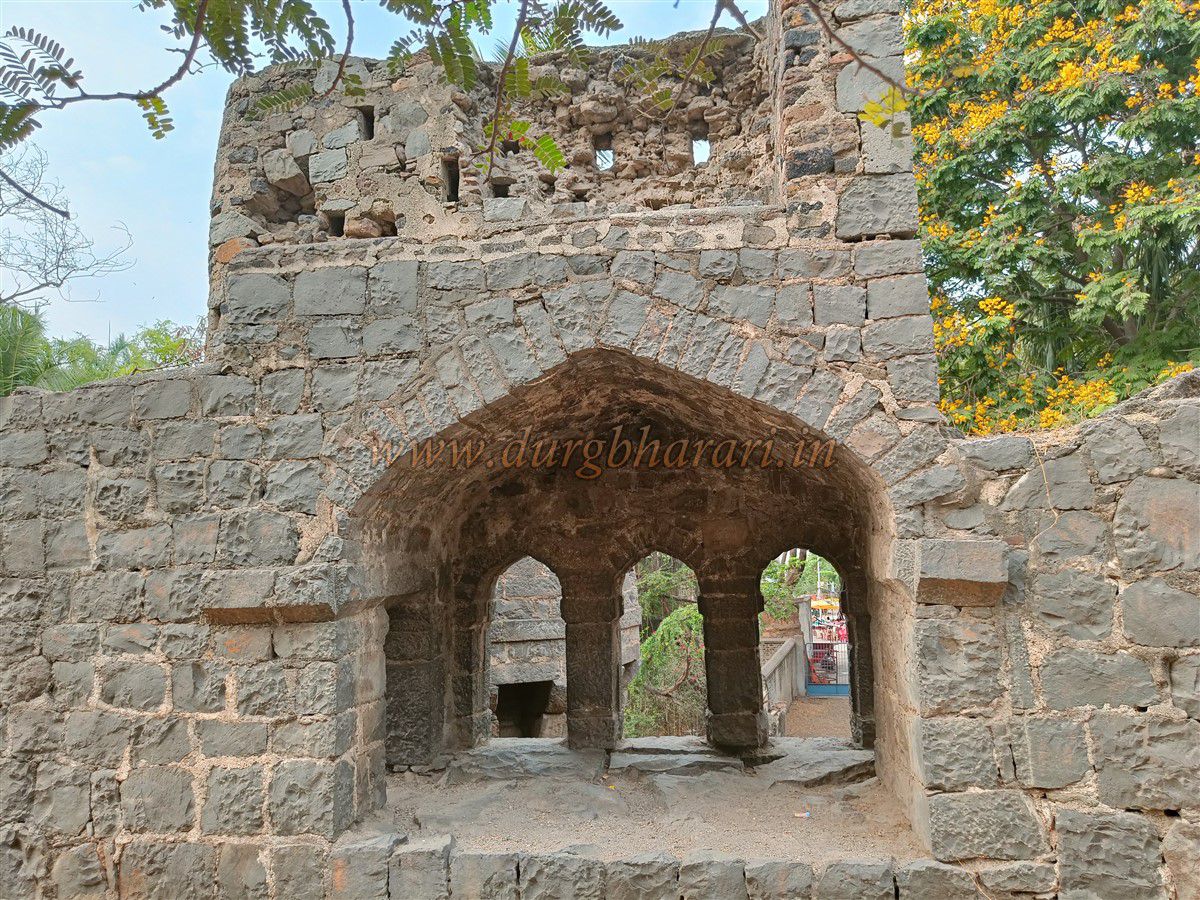
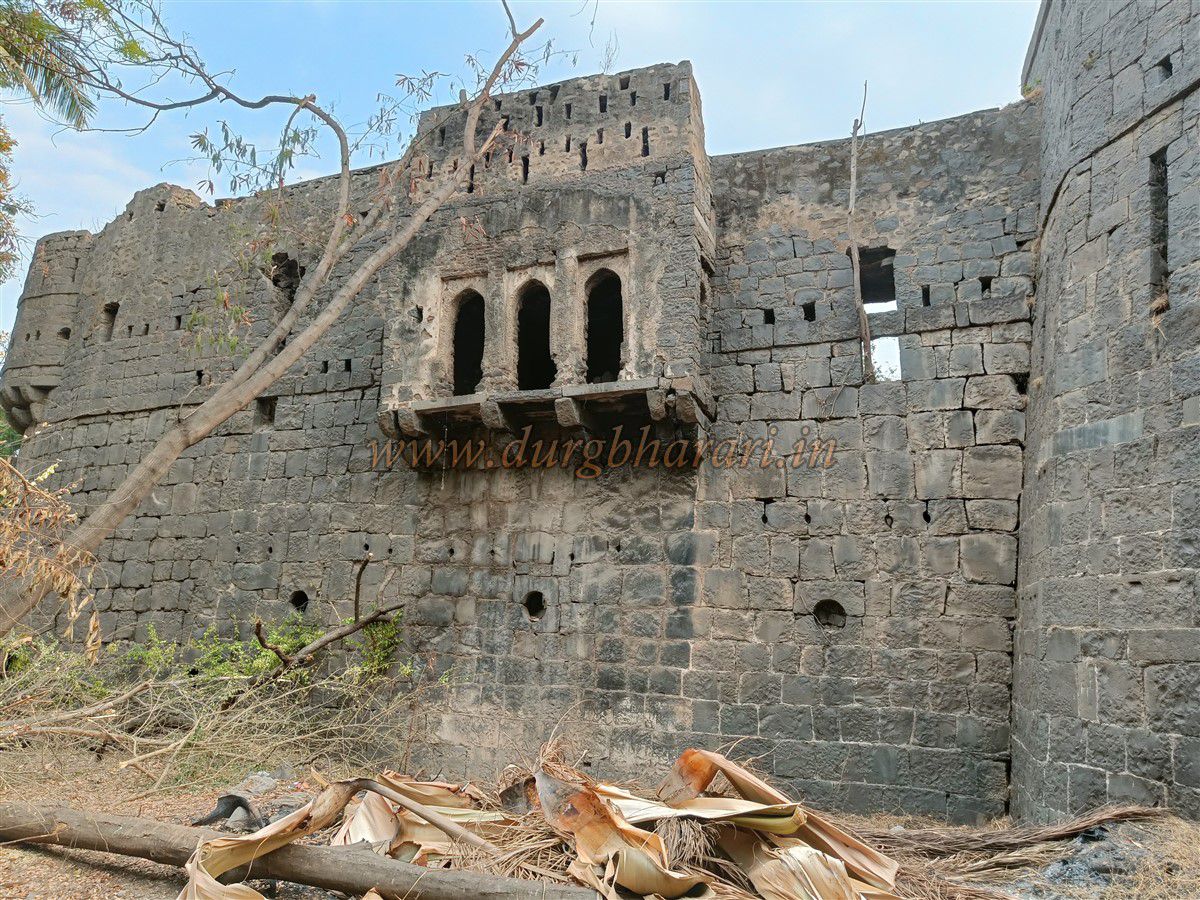
The outer bastion here directly faces the lake and has an airy pavilion. After viewing this section, descend and explore the fort’s inner premises.
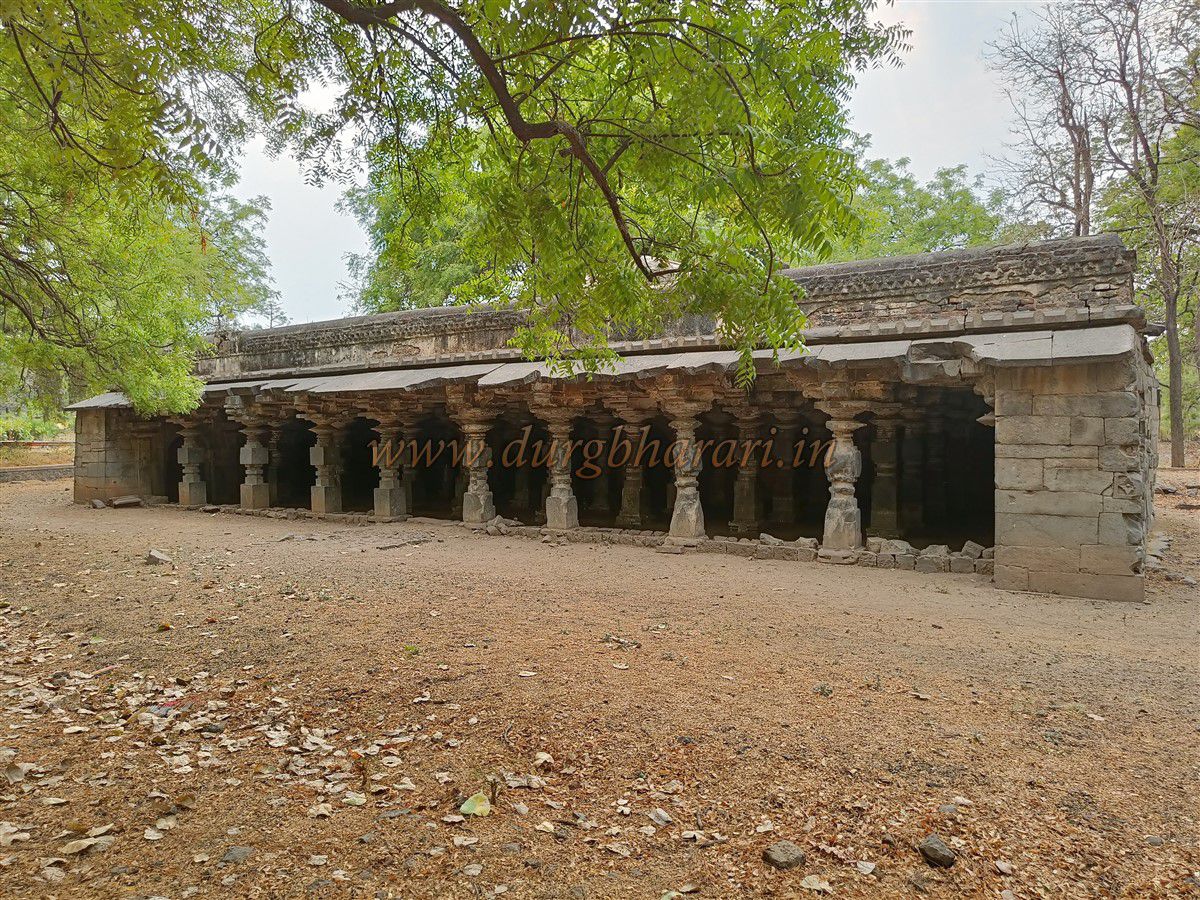
To the right of the wall lies another gate leading into the outer fortification, though it is now blocked with thorn bushes. After viewing the nearby water tanks, a little ahead you will see a structure supported on 32 ornately carved pillars. This was likely the assembly hall (Sabhamandap) of a temple, though its sanctum is now destroyed.
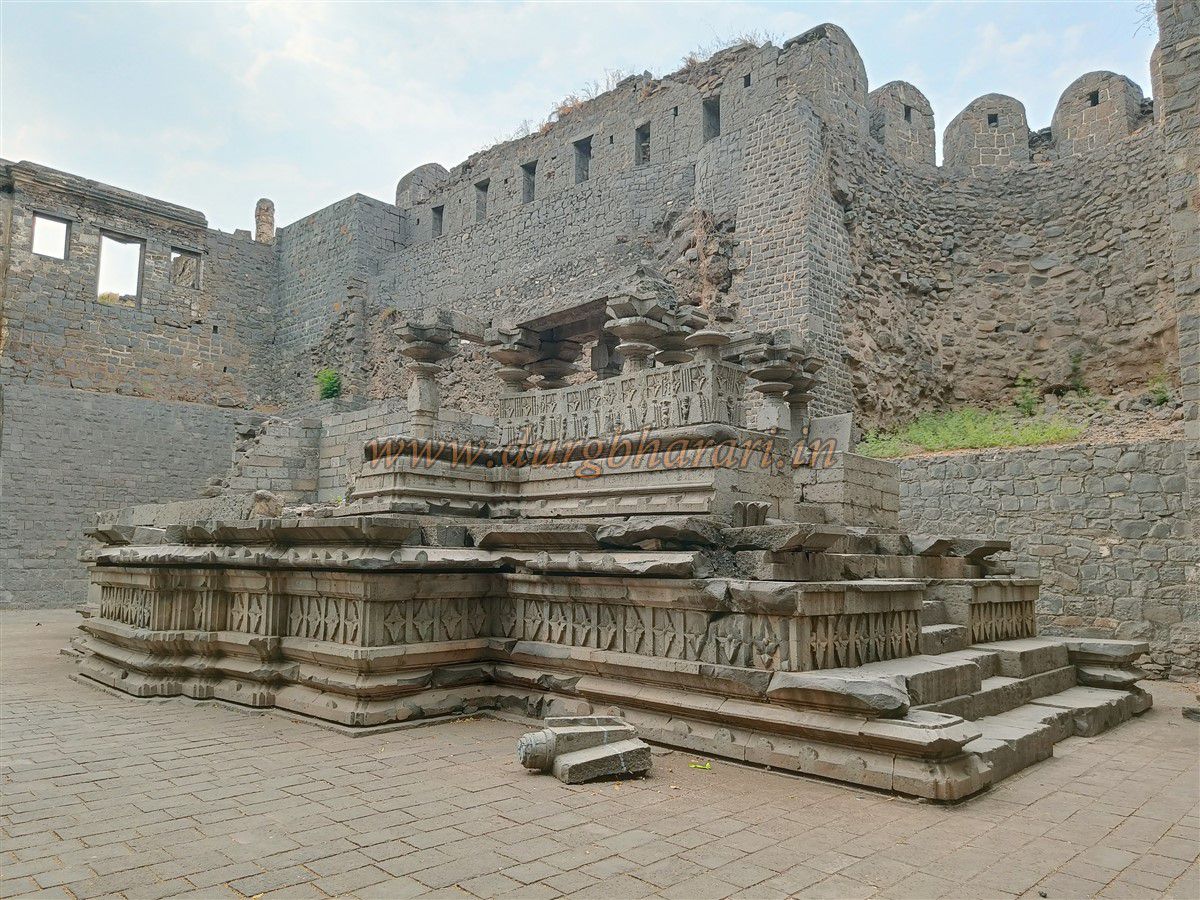
From here, if you look towards the wall you circled earlier, you will spot a subterranean temple at ground level adjoining the rampart. This is the Mallikarjuna Temple, a Shaivites shrine discovered during British excavations in 1819.
Poet Raghavanka mentions that this temple was built by the Shaivites saint Siddharameshwar, and it received grants from the Yadavas of Devgiri and other patrons. Two Kannada inscriptions and the dvarapala (door guardian) statues found here are now kept in the Chhatrapati Shivaji Maharaj Museum in Mumbai, while the goddess idol is housed in the Chandigarh Museum.
This temple stands on a tall plinth richly adorned with carvings, including vyal (mythical beast), naga (serpents), and erotic sculptures. Only a few temple pillars remain here, as many others were repurposed for constructing temples in the city.
To the left of this temple lies another entrance to the fort, but instead of going outside, you can climb the rampart and view the remaining inner walls. Beneath these walls, there are some storerooms and chambers.
The ramparts have few surviving structures, and much of the inner ruins are now covered due to the Municipal Corporation’s garden in the moat. Continuing along the rampart brings you back to the spot where you entered the fort. Descend the steps here and head towards the gate, viewing any remaining structures along the way.
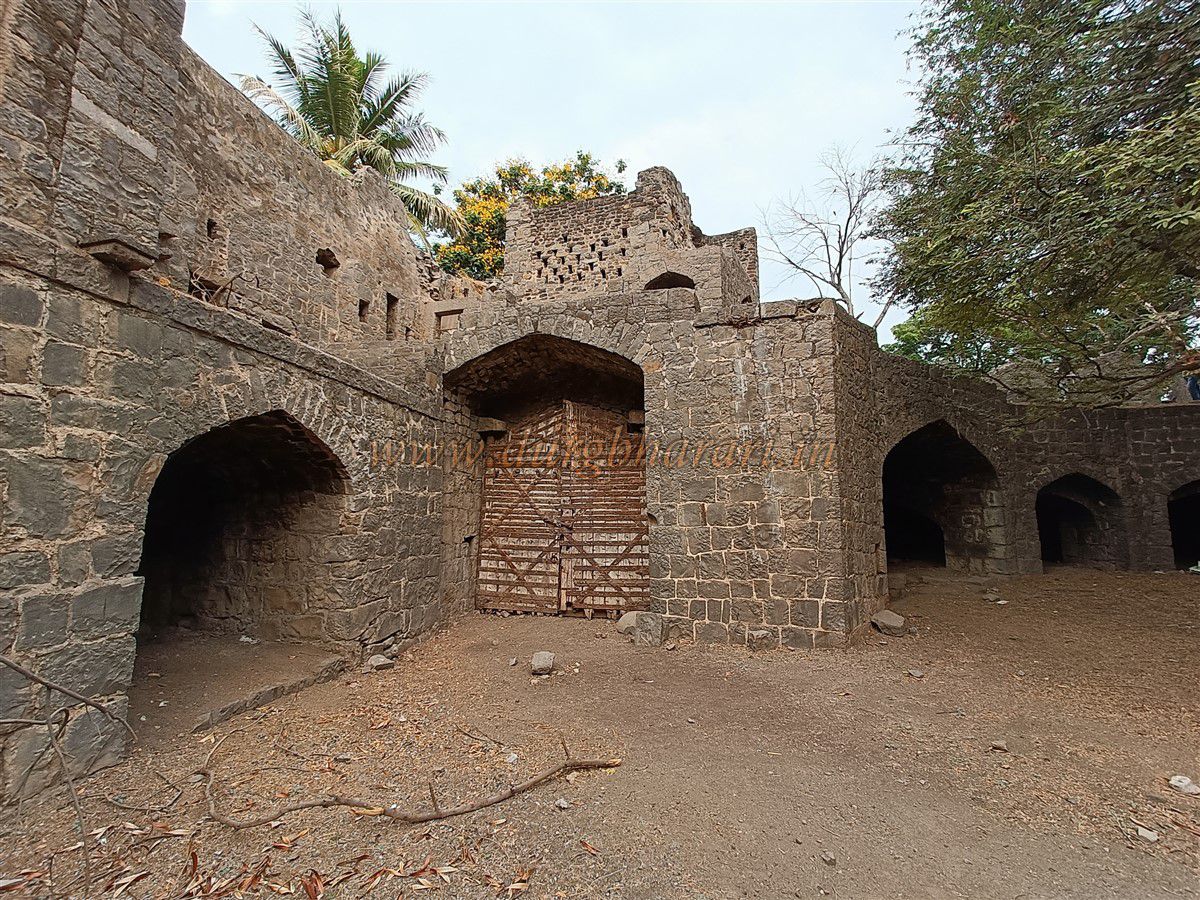
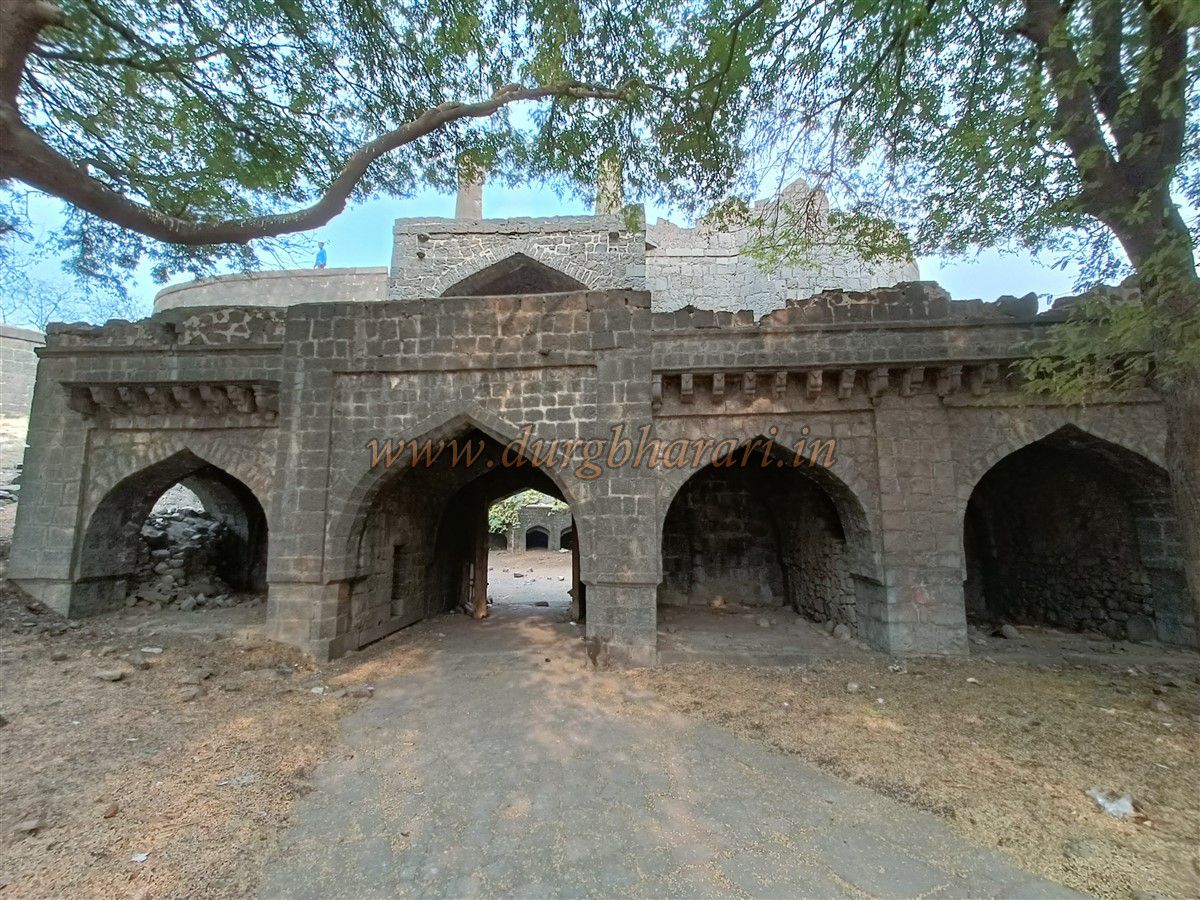
Inside the main entrance are spacious guard chambers on both sides, with British-era rooms built above. Since there aren’t many remains in the left-side outer fortification, once you exit the gate, first take a walk through this section.
At the end of this outer fortification, on the bastion, you will see a temple’s gajthar (elephant-frieze) and several sculptural fragments embedded in the wall. After exploring this, return to the main gate and pass through the remaining two gates to exit the fort.
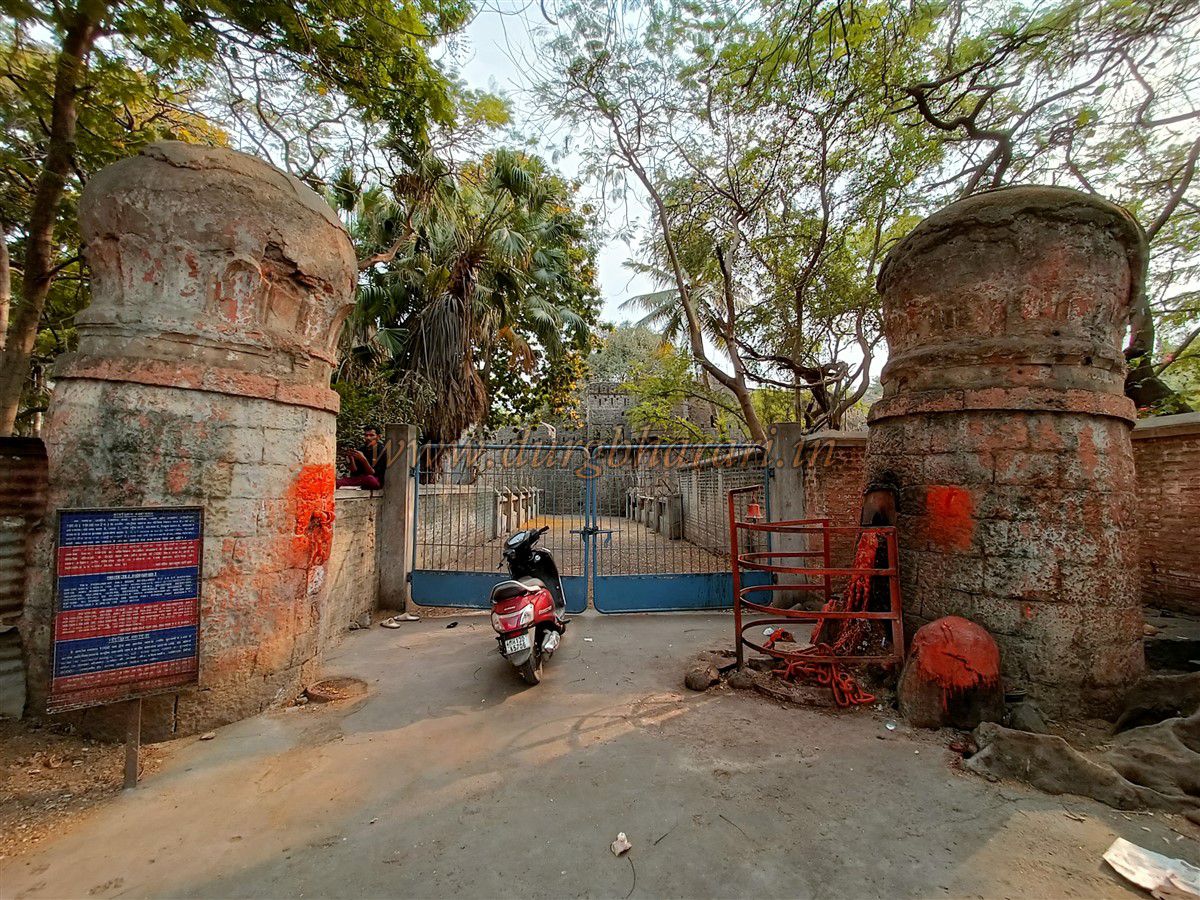
Once outside, cross the moat to see two solid stone minarets with chains hanging between them. These were part of a drawbridge that once spanned the moat. The iron rings used for the bridge are still intact and have been smeared with vermillion by locals. Beside these rings is a hero stone (virgal) also covered in vermillion.
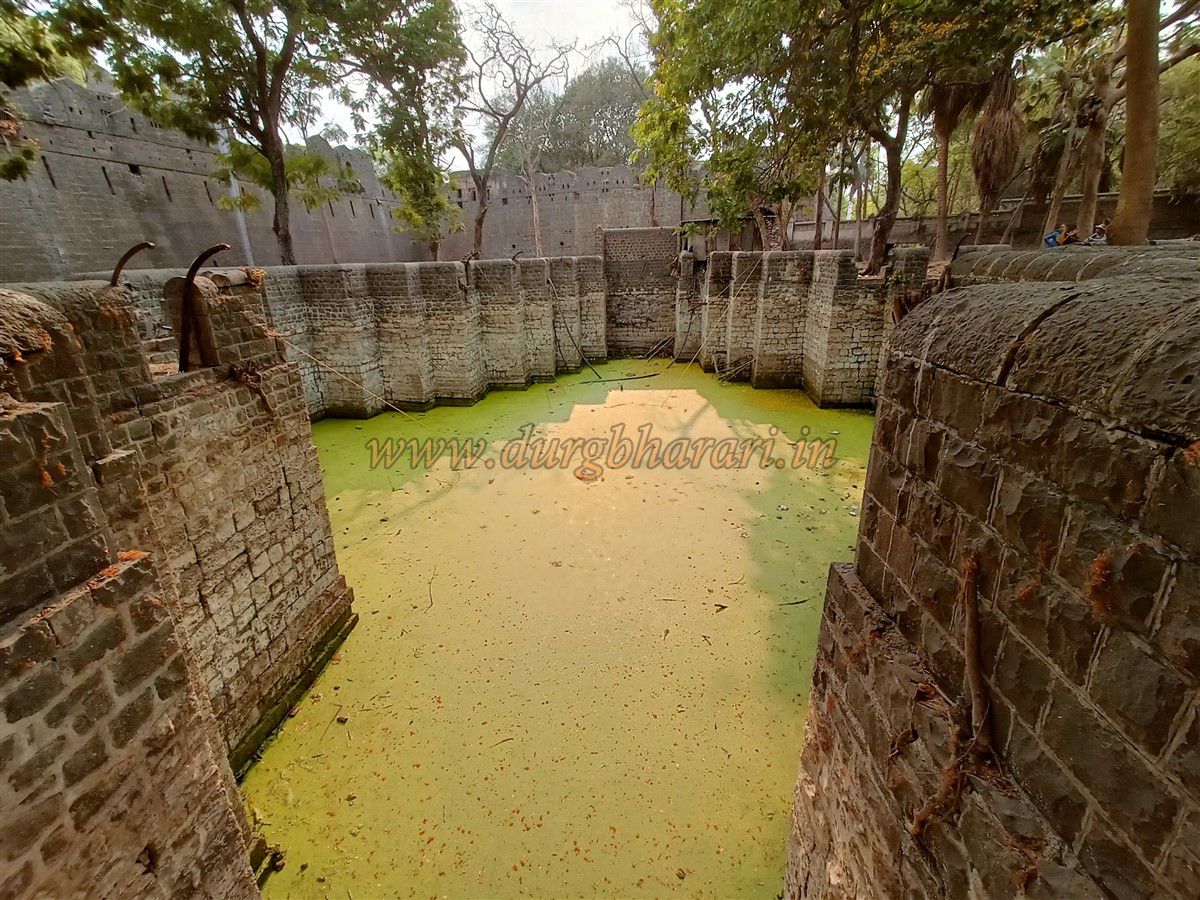
Crossing the newly built cement bridge over the moat, you will see a sturdy stone stepwell called Nagbavdi to the left. It still holds water but is moss-covered due to disuse.
The first gate of the fort faces east and is built behind a bastion, making it invisible from outside. This gate is known as Baba Khadar Gate or Elephant Gate. The wooden doors are still intact, reinforced with thick iron strips and studded with sharp iron spikes.
On both sides above the doors are iron-carved Sharabh figures. Earlier, a brass plaque on this gate recorded that the gate was repaired in 1810 by fort commander Abaji Ballal under the orders of Peshwa Bajirao II. Above the gate are embrasures for firing and watching the moat path.
When the main gate was closed, entry to the fort was through a smaller postern gate in the adjacent bastion. This smaller wooden gate still survives and serves as the current entry point.
Inside this gate, you can see soldier quarters and stables for horses. A little ahead, between two bastions, lies the second City Gate.
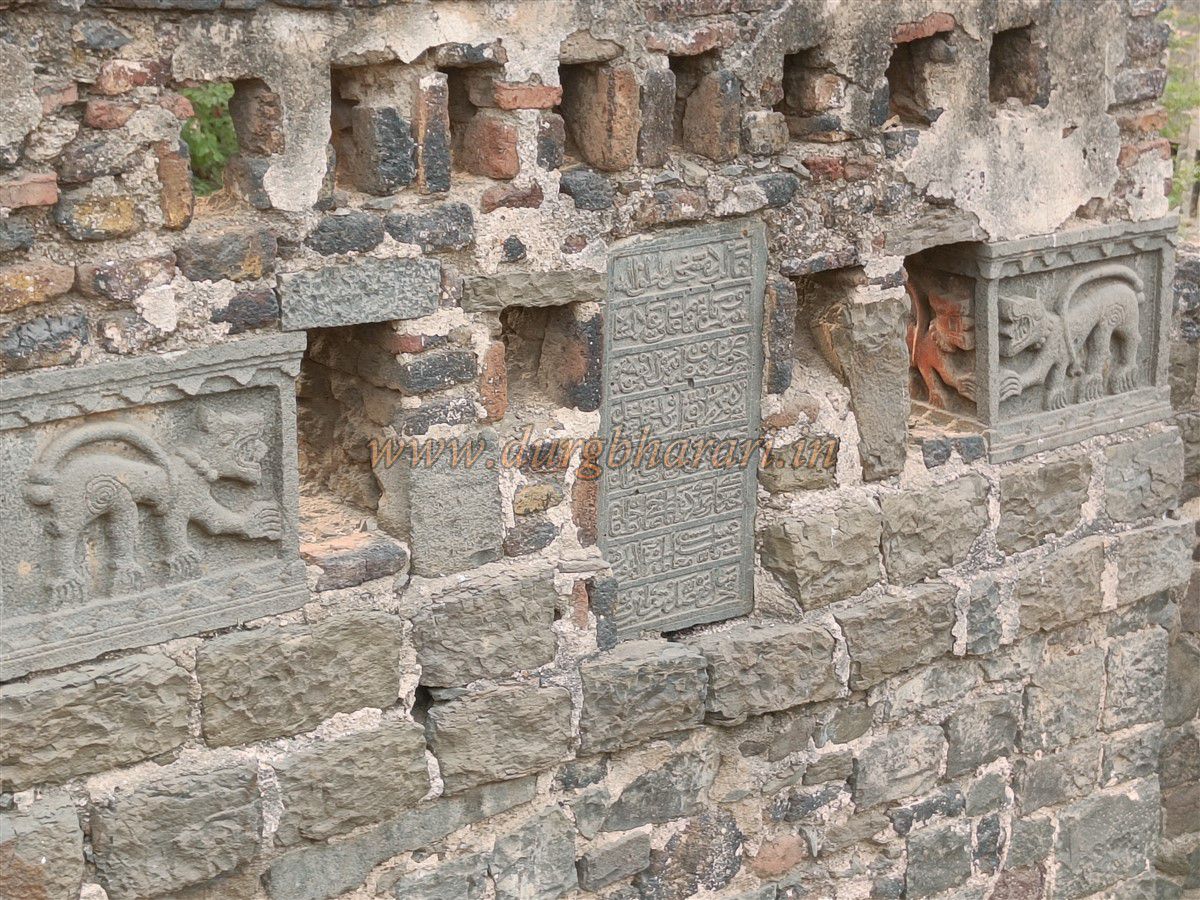
On the left wall of this gate is a weathered Devanagari inscription. Above the gateway is a stone platform with three windows; in the center is a Persian inscription flanked by two Sharabh carvings. The inscription mentions the Adilshahi Sultan of Bijapur and his officials.
The wooden doors of this gate are intact and have a smaller wicket door (dindi Darwaja). Inside are spacious guardrooms, with steps leading up to the upper platform. Climbing these steps, you can see carvings of Sharabh and deer on the interior walls. This section has extensive rooms and storerooms.
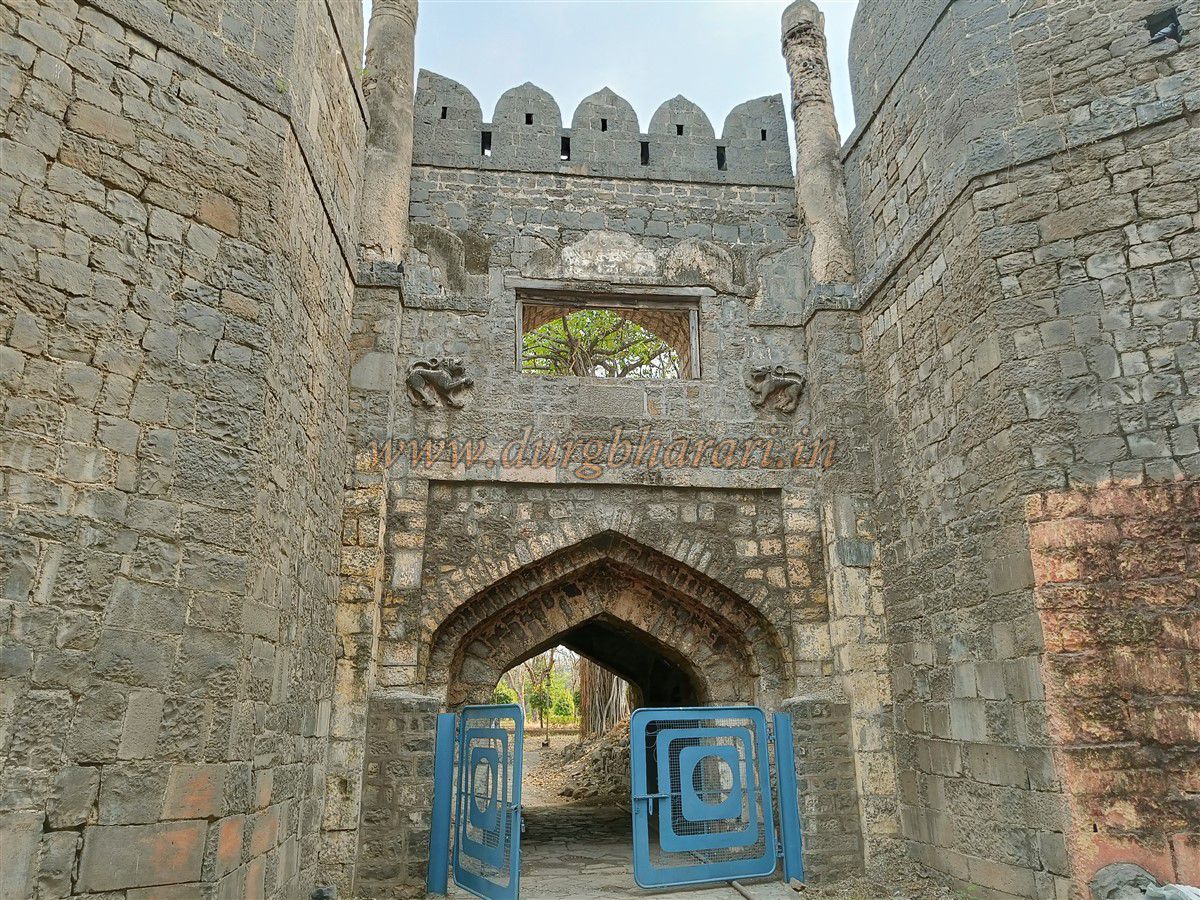
Further ahead lies the third gate, built between two hexagonal bastions, with two tall minarets above. On the arch of this gate are two Sharabh, with a Persian inscription between them, dated Hijri 986 (1578–79 CE). It mentions Solapur as Sandalpur and records that Ali Adil Shah I and his officer Jabeed Khan built a mosque, market, garden, and reservoir in the fort.
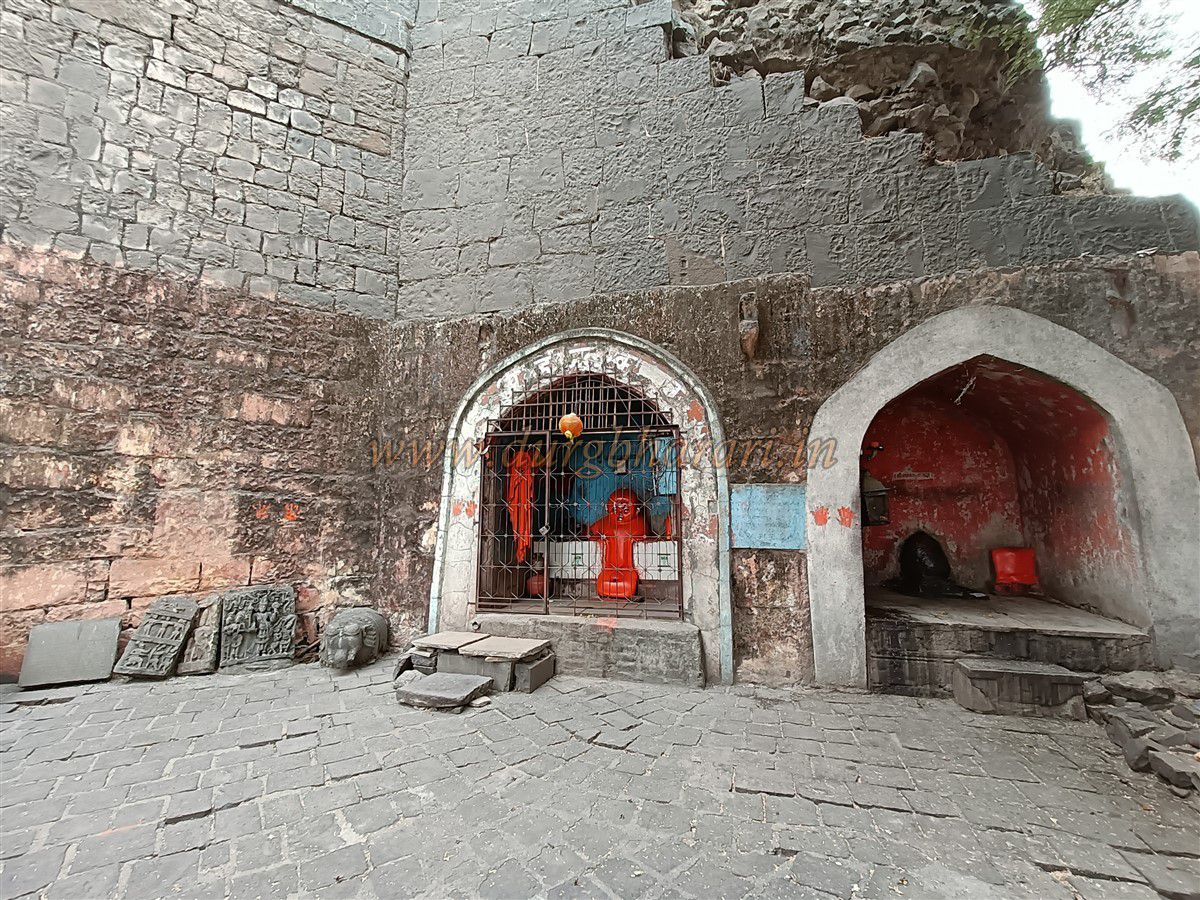
The bastion to the right of this gate is known as Mahankal Bastion, housing shrines of Munjoba and Shani. It is said that this bastion repeatedly collapsed during construction, leading to the sacrifice of a Munja boy (a Brahmin boy who had undergone the sacred thread ceremony but was unmarried). His descendants still perform annual rituals here.
Near this shrine are a hero stone, an elephant sculpture, dwarapal, and a Vishnu idol with attendants Jaya and Vijaya. A Marathi inscription here mentions the construction of a well in the fort.
After viewing this gate, enter the left-side outer fortification. In its corner bastion, there is a small through-passage whose purpose is unclear. Opposite it, in the outer wall, lies a ruined watch platform.
Further along, you find a Dhenugal (cow-head water spout) with a Kannada inscription below. Proceeding ahead, you reach the Balantin Bastion, a large outer bastion with a circular cannon platform. As mentioned earlier, a pregnant woman from the Dargopatil family was sacrificed during its construction, and her family was granted the Patilship of Solapur in return. A new temple of Goddess Padmavati now stands on this bastion.
The next bastion has a closed passage leading back into the inner fortification. A Persian inscription here mentions the construction of a delightful palace for the Sultan.
Further along is a reddish-tinged pond called Balantin Well, with a pavilion on its bank and steps leading down. In the next bastion, a ventilated hall has a Marathi inscription dated Shaka 1466 (1544 CE), referring to the city as Sonalpur and stating that the bastion took two months to build.
The next bastion has temple pillars incorporated into its structure. Walking straight ahead brings you back to the fort’s entrance, completing your inner tour, which takes about 4 hours.
Near the entry point, a path descends into the moat. Walking left toward the akhada (wrestling ground), you can spot several sculptures on the walls.
This section also has a small postern gate leading into the moat, but its inner opening has been blocked with earth. On the second bastion of this wall, two large carvings of a vyal and an elephant can be seen, along with a Marathi inscription in large letters.
After exploring this section, backtrack and descend into the right-side moat, where a garden has been developed. Touring the moat walls reveals numerous sculptural carvings.
Following the wall brings you to the main gate area. Several pavilions facing the moat can also be seen in the walls. Two cannons from the fort are now placed in the garden—one long and one short.
Since the moat is divided into sections, you cannot circle it continuously. To explore the remaining sections, you need to head toward Khau Galli and the Siddheshwar Lake. After touring the moat, returning to the entrance completes your circumambulation, which takes about 1–1.5 hours.
Solapur city has a rich historical legacy, having borne the marks of Satavahana, Chalukya, Rashtrakut, Yadavas, Bahmani, Nizamshahi, Adilshahi, Marathas, and the British.
It is often said that Solapur’s name comes from “Sola Pur” (city of sixteen villages), but this is not true. Inscriptions from the 12th-century Siddheshwar Temple of saint Siddharameshwar refer to the city as Sonnalge. In the Yadav period, this became Sonnalgi. A Sanskrit inscription of Shaka 1238 (1316 CE) from Karamali in Mohol taluka calls it Sonalpur. A Persian inscription on the second gate of the fort calls it Sandalpur, while a Devanagari inscription in the outer fortification refers to it as Sonalpur. In British times, the “n” was dropped, leading to the current name Solapur.
In the medieval period, Solapur’s strategic location on the southern trade route made this fort very important. Though the exact builder of the fort is unknown, historians believe the original Solapur fort was constructed during Hindu rule, with the outer fortifications added in 1313 by Hasan Gangu Bahmani.
Some scholars point out similarities between Solapur Fort and Paranda Fort, suggesting that both were built around the same time by the same person. Since Paranda Fort was built by Bahmani vizier Mahmud Gawan during the reign of Sultan Muhammad Shah (1358–1375), he may also have been responsible for building Solapur Fort.
The inscriptions on the gates suggest that several gates and inner structures were constructed or repaired during the Adilshahi period. Many stones from Jain and Hindu temples were reused in the fort’s construction.
After the fall of the Bahmani, the fort alternated between the Nizamshahi and Adilshahi, with each trying to outmanoeuvre the other.
In 1523, the marriage of Burhan Nizam Shah of Ahmadnagar with the daughter of Bijapur Sultan Ismail Adil Shah took place in Solapur Fort. The Adilshah had promised to gift the fort to his son-in-law but failed to hand it over, leading to renewed conflict.
In 1552, the fort was again used as a dowry settlement. This time, Chand Bibi, the princess of Ahmadnagar, married Bijapur Sultan Ali Adil Shah, while Adil Shah’s sister Hadia Sultana married Nizamshahi prince Murtaza. In this arrangement, the Nizamshah handed over Solapur Fort to the Adilshah as dowry.
The fact that this fort was exchanged as dowry multiple times shows its importance.
Solapur Fort also served as an important observation point over QutubShahi Golconda.
In 1668, a treaty between Aurangzeb and the Adilshah placed the fort under Mughal control.
When Aurangzeb marched south to destroy the Maratha kingdom, he frequently camped in and around Solapur, further increasing the fort’s importance. During his campaigns, the fort functioned as a Mughal arsenal and granary.
In May 1683, Aurangzeb appointed Kishordas Goud, son of Manohardas Goud, as the fort commander. After his death in March 1686, Syed Zainulabuddin was appointed as commander.
During the 1686 Bijapur campaign, Aurangzeb used Solapur Fort as his base. In 1685–86, silver coins minted in the fort’s mint were produced, examples of which are preserved in the Kolkata Museum today.
On 13 February 1696, Aurangzeb paid 1,000 rupees to his officer Khwaja Yakut to clean the Nagbavdi stepwell. On 22 March 1696, under Aurangzeb’s orders, fort commander Mehdikhan repaired the moat.
As the camel corps (shuttarkhana) was ineffective in the Solapur region, on 23 March 1696, Aurangzeb ordered Mehdikhan to hand over the camel corps and its equipment to Mamur Khan, the faujdar of Beed. While transporting them near Mujmar village on the road to Aurangabad, the Marathas attacked on 28 March 1696, killing a Mughal soldier named Muradbeg.
On 4 April 1696, Aurangzeb ordered artillery officer Tarbiyat Khan to inspect the fort’s artillery. On 9 July 1699, a prisoner named Umar Afghan escaped from the fort.
On 26 November 1700, Aurangzeb ordered the dispatch of 500 pounds of sulphur and 400 pounds of gunpowder from Solapur to Miraj for making gunpowder.
On 27 November 1699, Aurangzeb instructed the Solapur fort commander to send supplies to Paranda Fort, indicating that Solapur housed a large Mughal arsenal.
In 1723, the fort came under the control of the Nizam.
On 6 July 1758, the Marathas bribed the Nizam’s fort commander Khaliqudir Khan with 25,000 rupees to take the fort.
After taking Solapur, Sardar Ranoji Shinde strengthened it and placed his own garrison. The fort remained under Maratha control till the British took over in 1818.
During British rule, the fort functioned as an arsenal, jail, and administrative office.
Solapur Fort is famous as the fort of martyrs, as it was at the center of the Solapur Rebellion of 1930.
On 6 May 1930, inspired by Mahatma Gandhi’s Salt Satyagraha, a revolutionary group led by Mallappa Dhanshetti launched an armed uprising in Solapur, killing several British officers. The rebels established their own independent government in the city, hoisted the national flag on the fort, and administered it for three days.
On 9 May 1930, the British captured the city with reinforcements. Mallappa Dhanshetti and his companions were captured and hanged. Today, a memorial plaque at the fort honours these martyrs.
Solapur’s Siddheshwar Temple is considered the city’s heart. This temple of Lord Siddheshwar stands in the middle of a 36-acre lake, surrounded by 68 smaller shrines of different deities. The temple was built by the Yadavas, with later additions by various patrons. It attracts lakhs of devotees every Makar Sankranti.
© Suresh Nimbalkar
GALLERY