SINDOLA
TYPE : HILL FORT
DISTRICT : PUNE
HEIGHT : 3695 FEET
GRADE : MEDIUM
Every fort has a story — a moment in history that gives it an identity. Yet, some forts witnessed no major recorded events or, if they did, history never documented them. These forts, forgotten and neglected, quietly stand as remnants of an untold past. One such fort is Sindola Fort.
Although it lies close to the popular Malshej Ghat and the well-known Harishchandragad, Sindola has remained in the shadows. While Harishchandragad attracts a constant flow of trekkers and tourists, Sindola remains ignored, its existence almost hidden. Few trekking groups visit, and even websites dedicated to forts rarely provide detailed information about it.
Located in the north-western part of Junnar taluka, Sindola Fort lies just off the Malshej Ghat route. Traveling from Mumbai or Thane toward Ahmednagar, after crossing the Ghat, one reaches the Khubi junction, from where a road leads toward Harishchandragad.
...
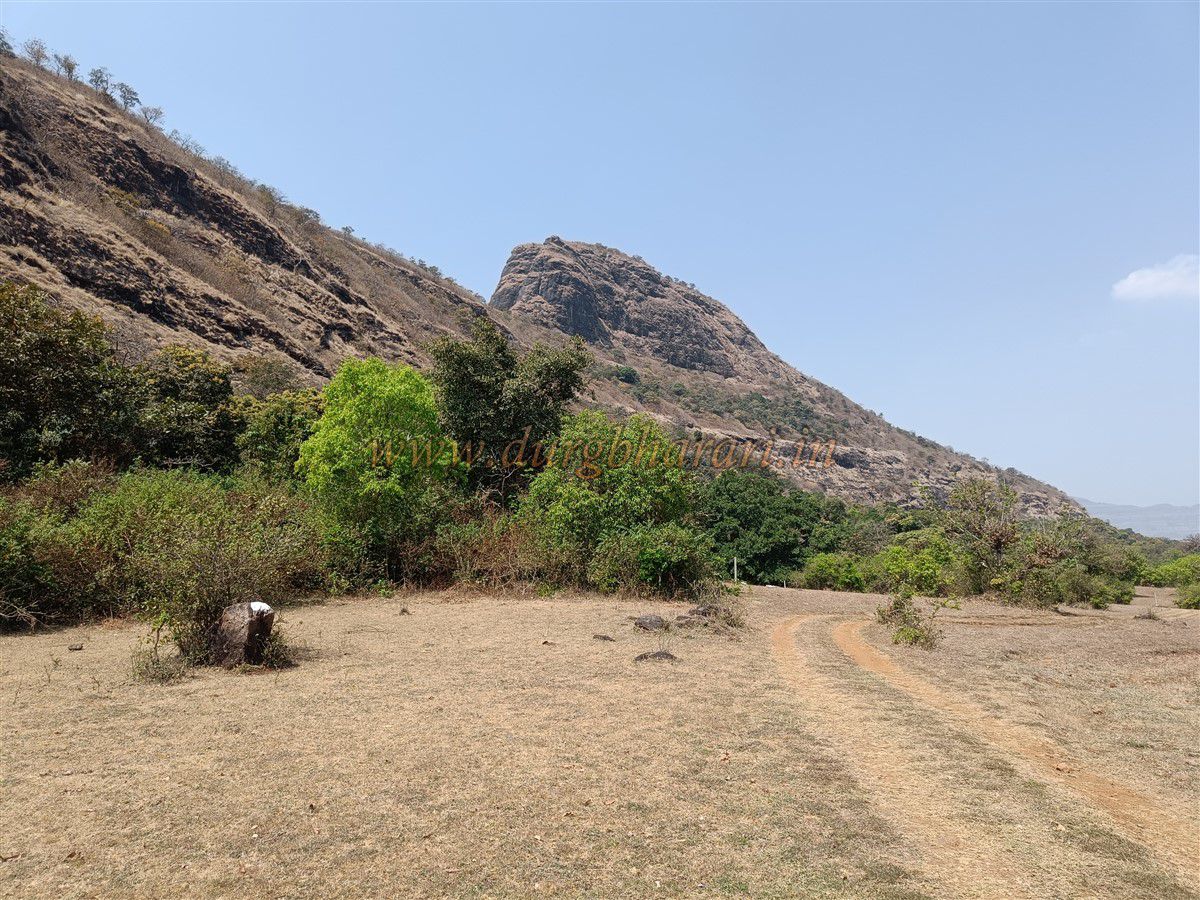
About 1.5 km beyond this junction lies Karjale village. The hill visible on the right-hand side of the road after crossing Khubi is none other than Sindola Fort.
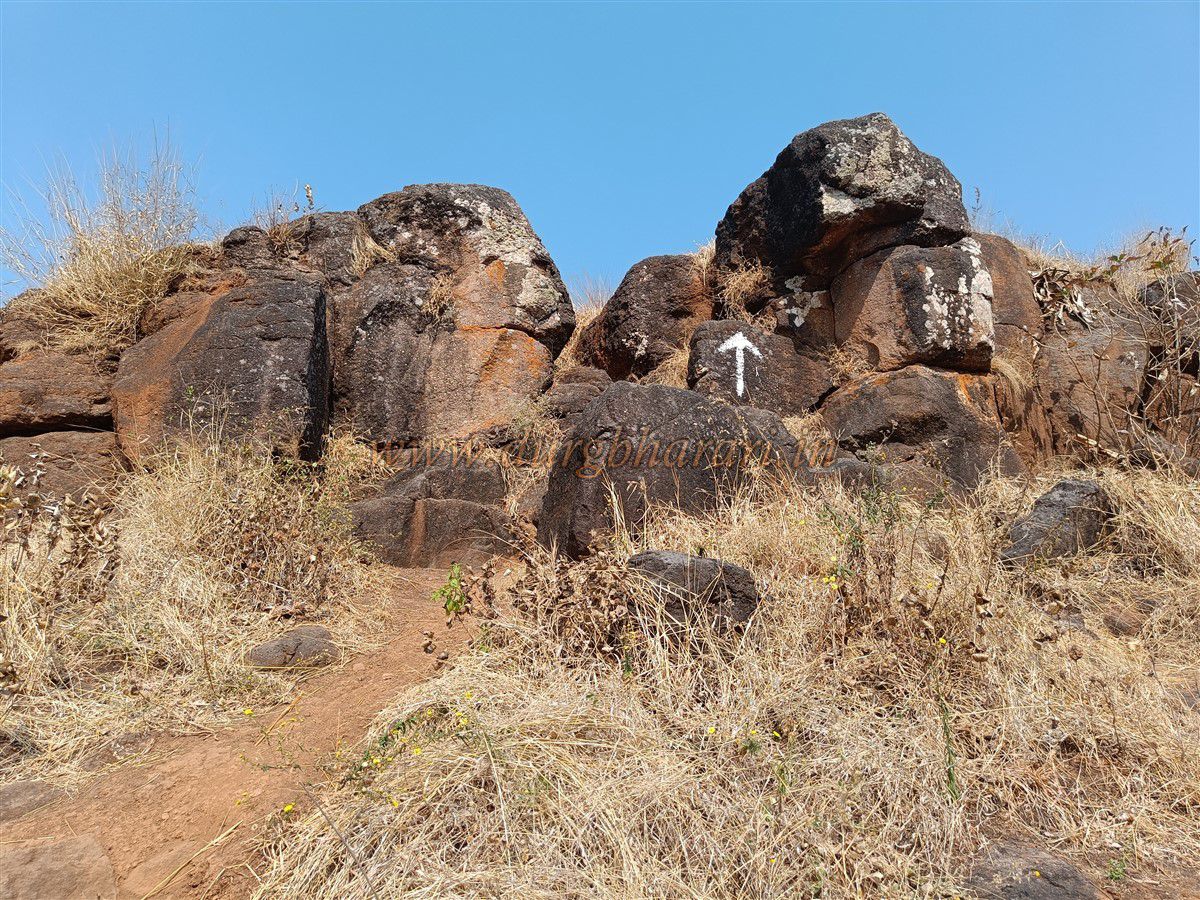
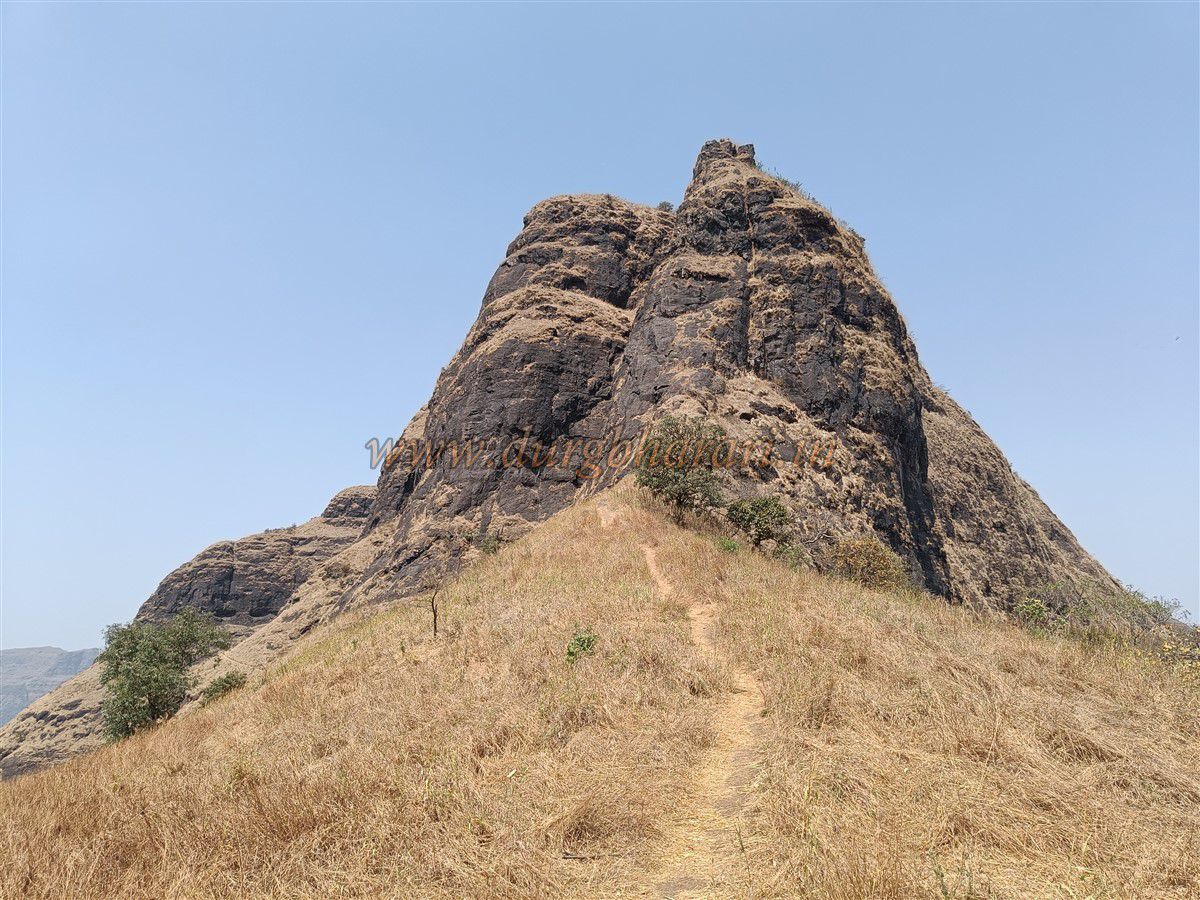
Near the fork leading to Karjale stands Mouli Hotel, behind which lies a temple of Karjai Devi. A well-worn path begins from this temple, leading toward the spur connecting to the fort. Within half an hour, this trail brings you to a plateau below the spur. From here, a bullock-cart track coming from Madh-Pargaon village can be followed, walking straight toward the hill. After about 10 minutes, a narrow trail branches off to the left into the bushes. A pile of stones, smeared with lime, marks this point, and a few arrows guide the way.
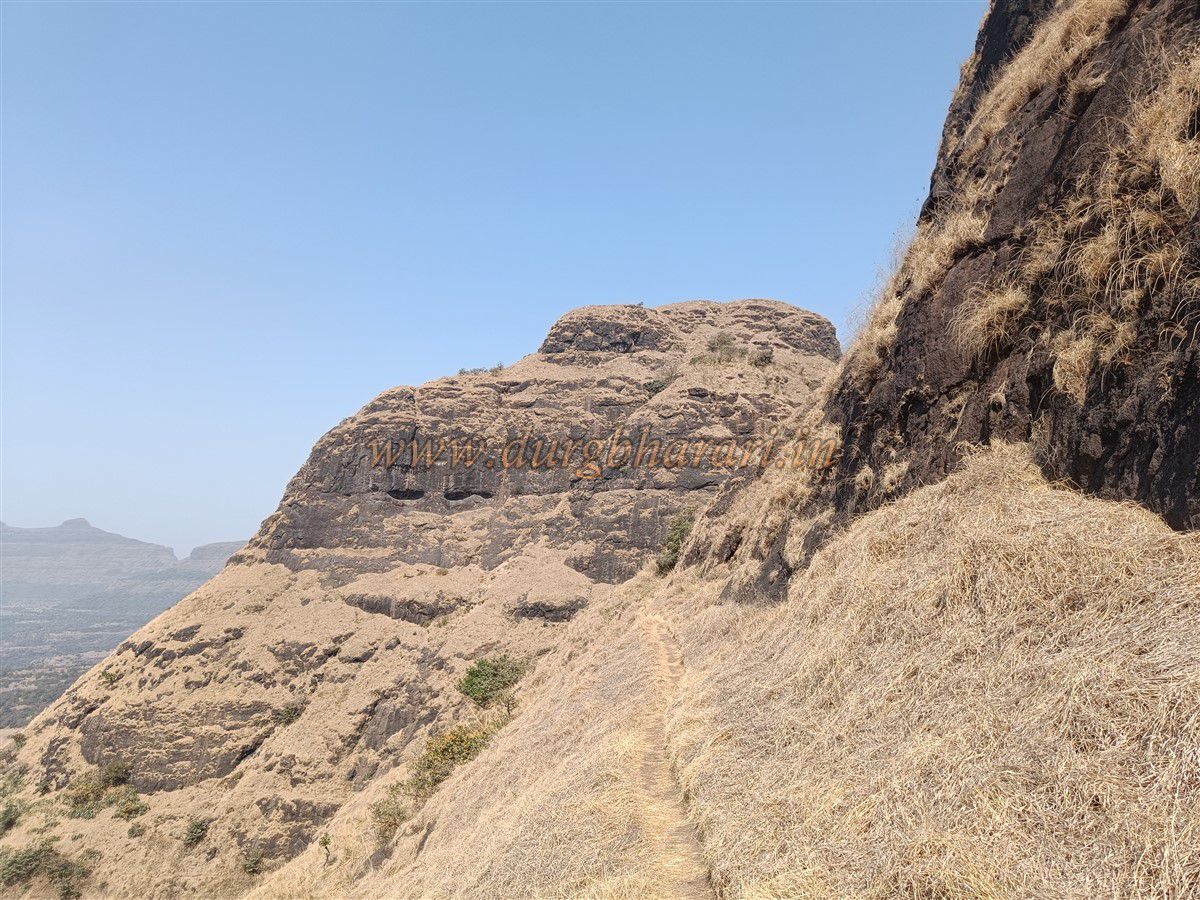
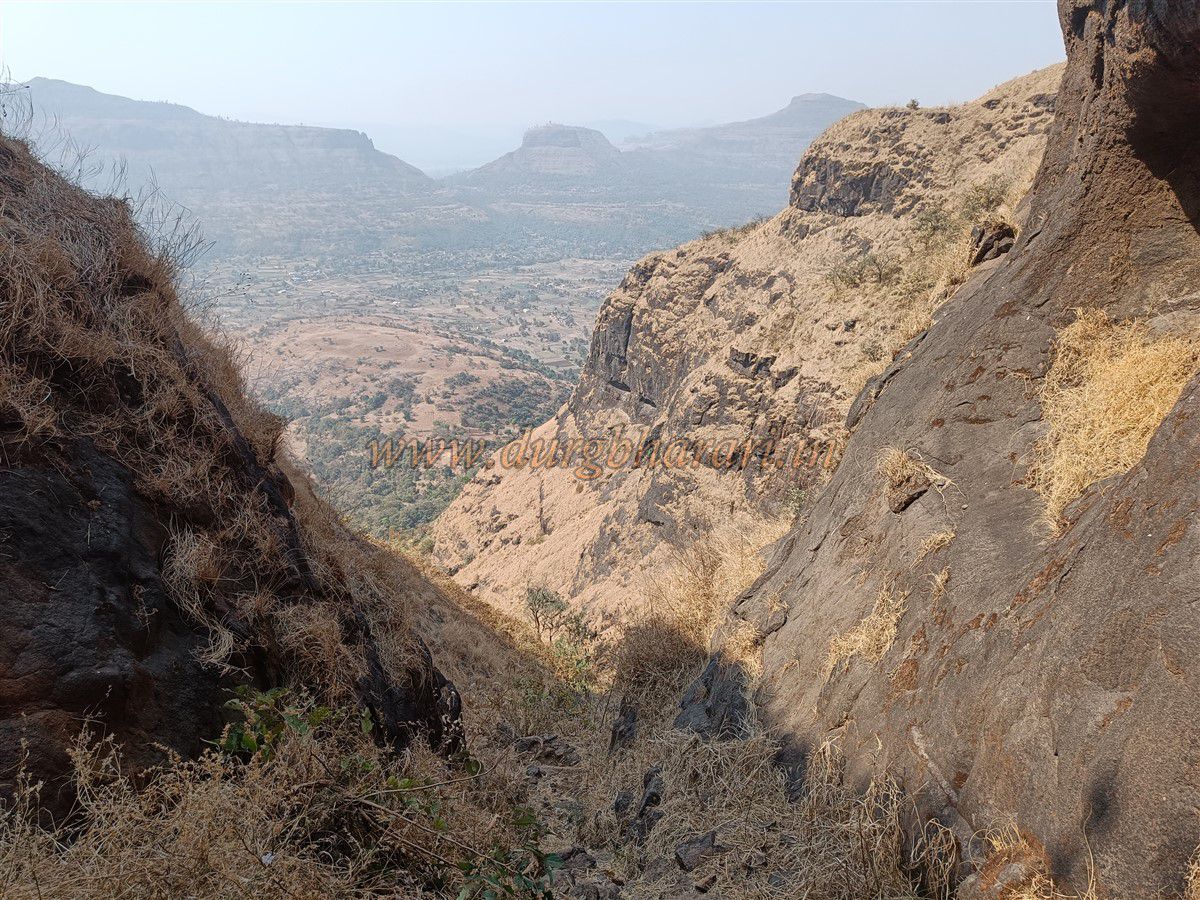
This narrow forest trail leads to the base of the fort’s spur in 5–10 minutes. If approaching from Junnar via Madh-Pargaon, the route also joins this same spur. From here, a 5-minute climb brings you to a rock-cut passage, where the stones have been carved to form a door-like entrance. On the right-hand rock, a niche exists for hoisting a flag. Beyond this, the trail ascends toward the fort, hugging the hill on the right with a deep valley on the left.
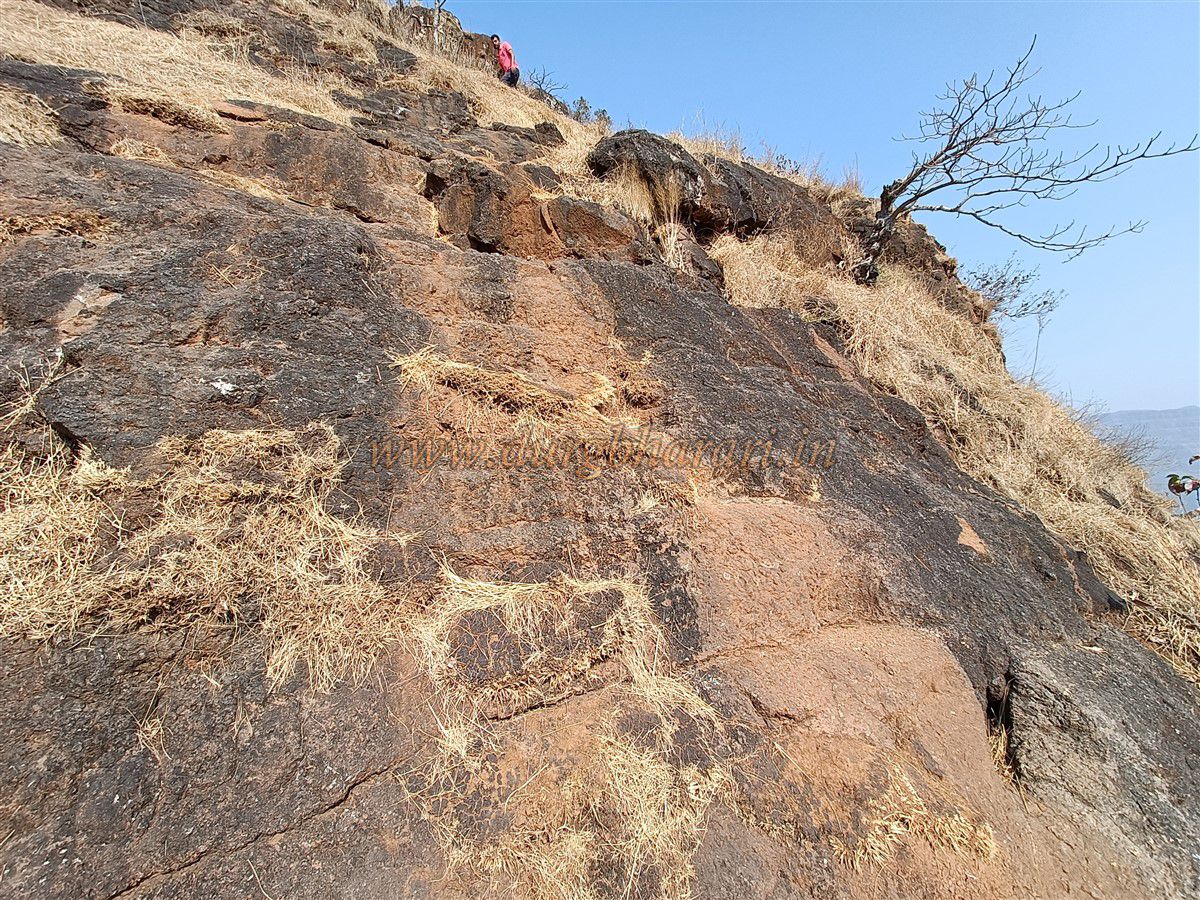
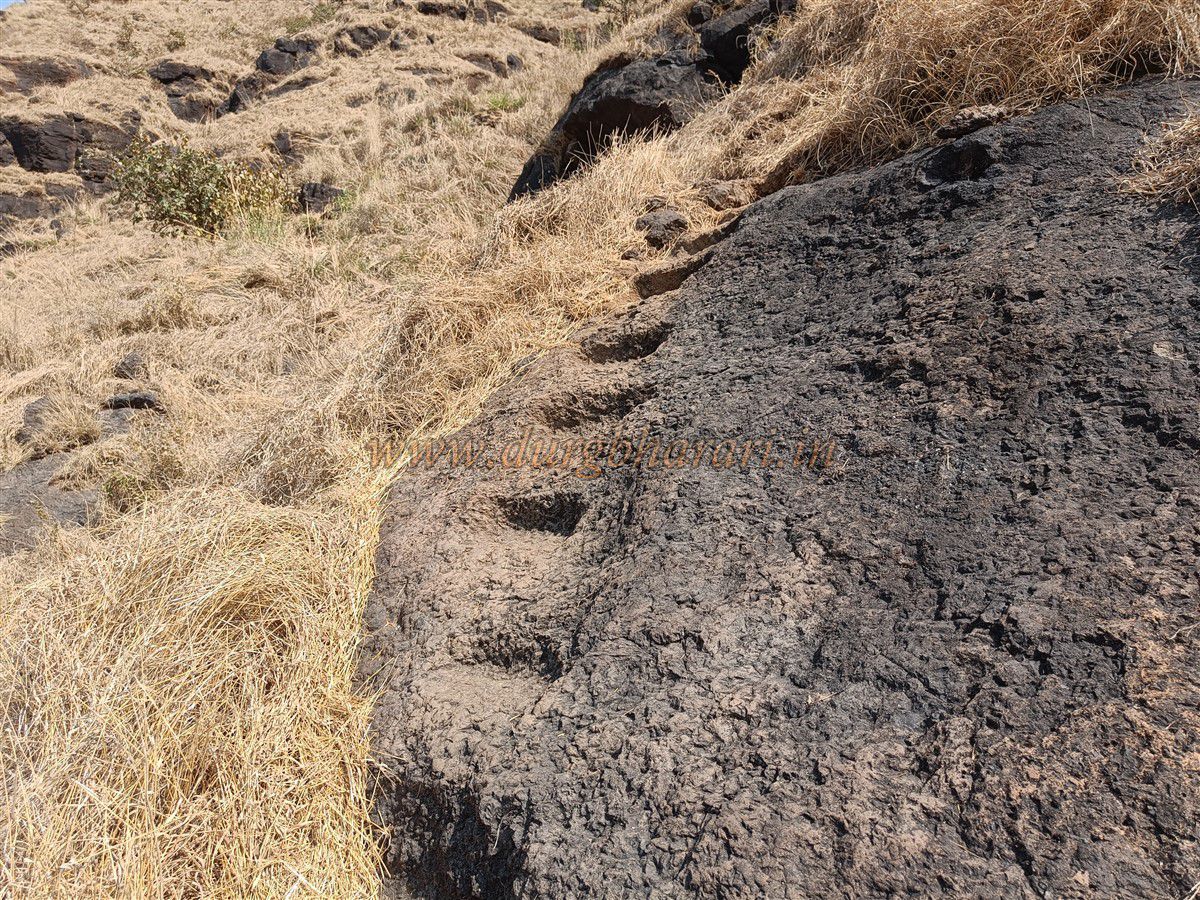
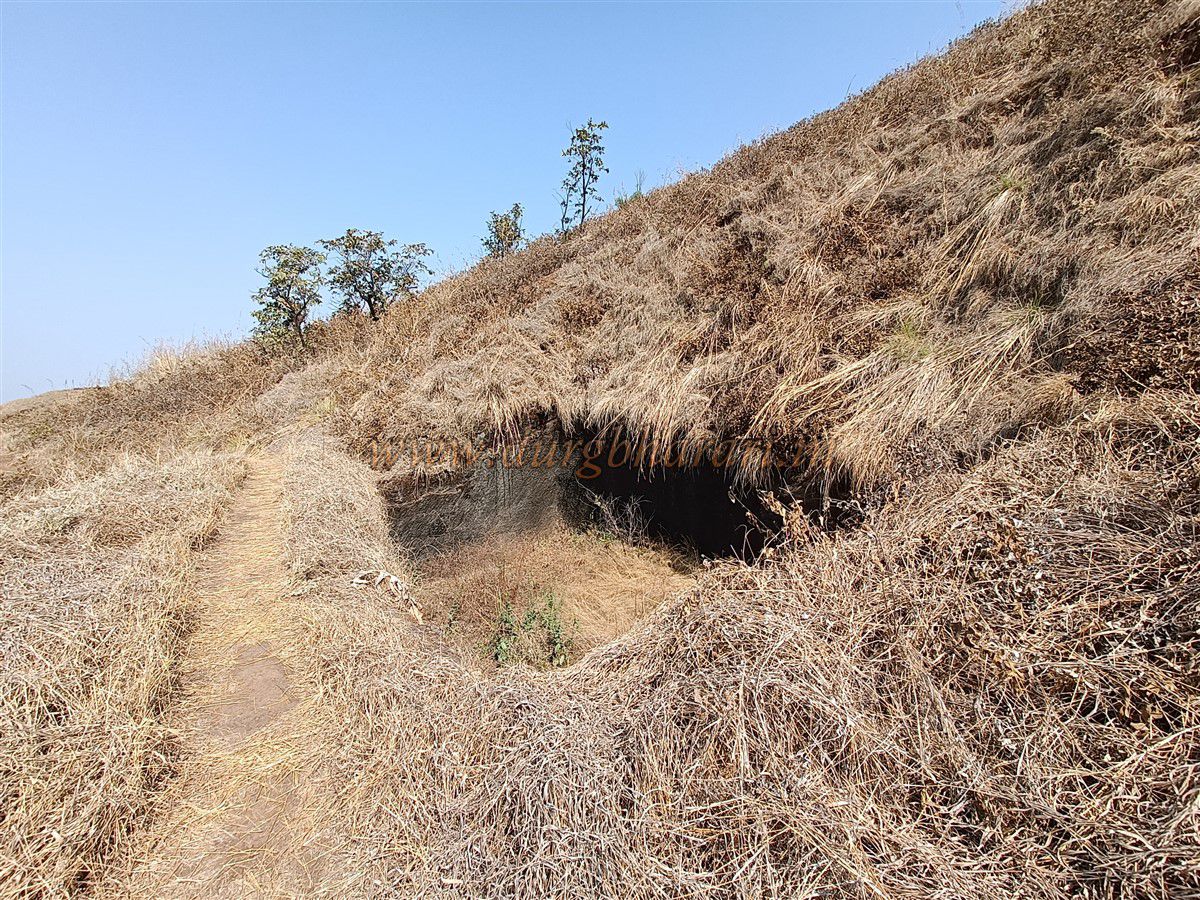
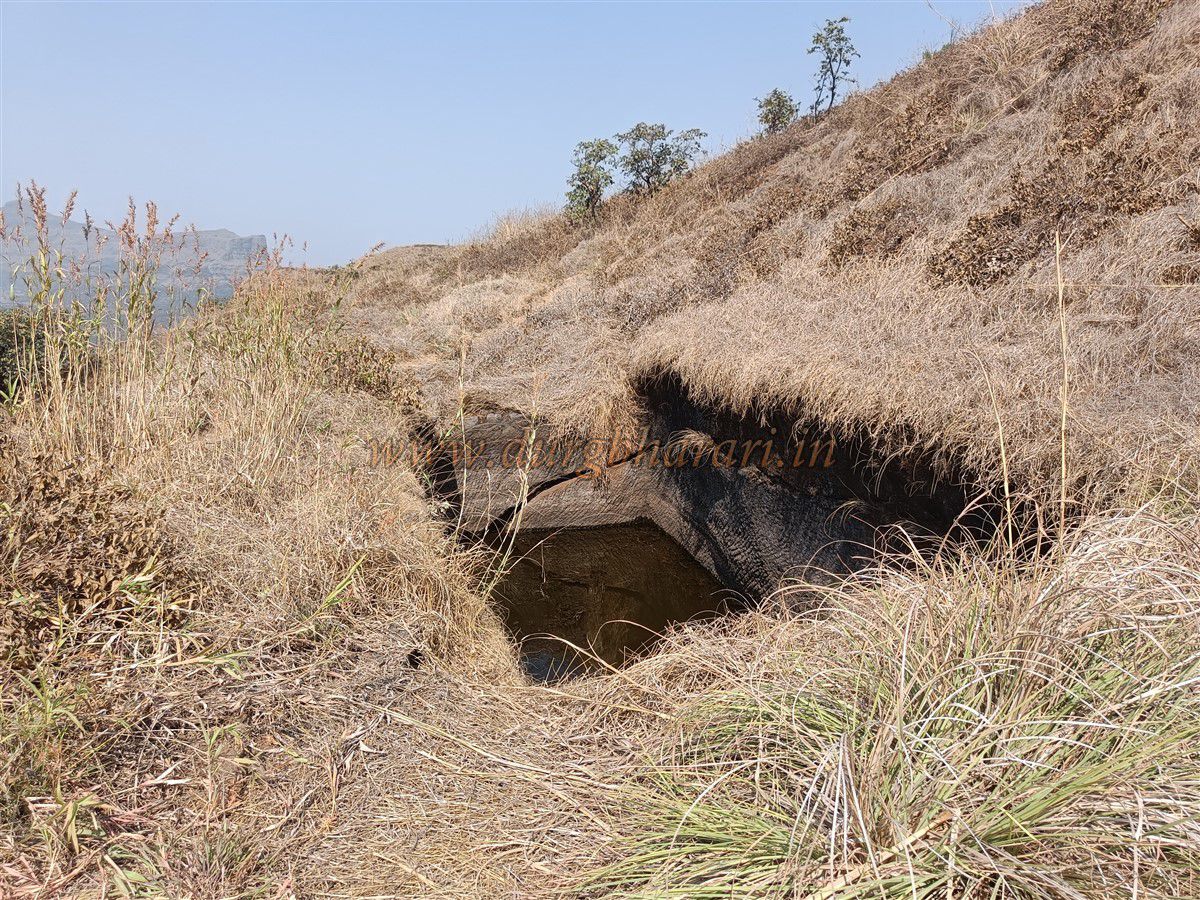
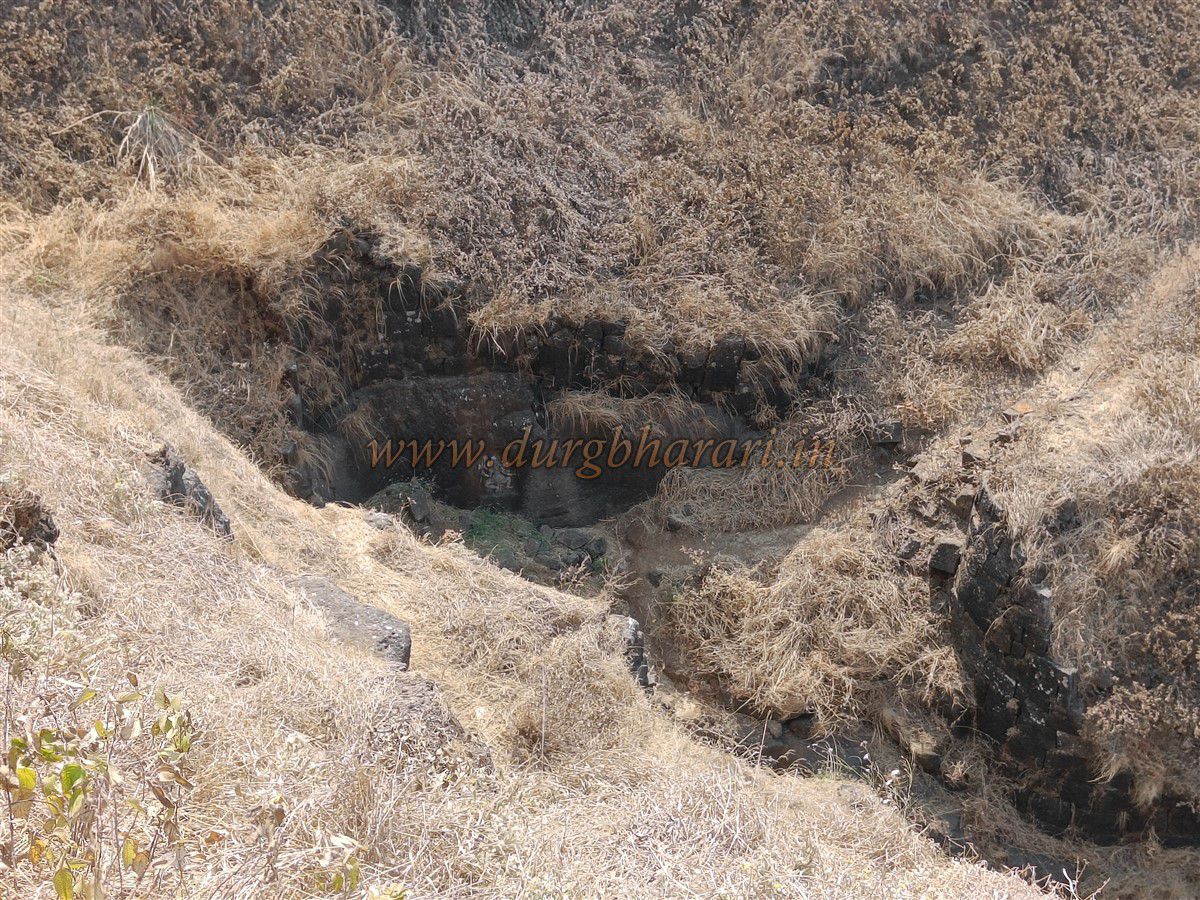
Soon, a rocky gully appears, at the base of which lies a rock-cut square cave with a water spring — the only source of potable water on the fort, which typically lasts until March. After crossing this gully, the path traverses across the hillside to the western side. During the monsoon, this route can become slippery and challenging. Along the way, sections of rock-cut and broken steps are visible, indicating the original approach to the fort.
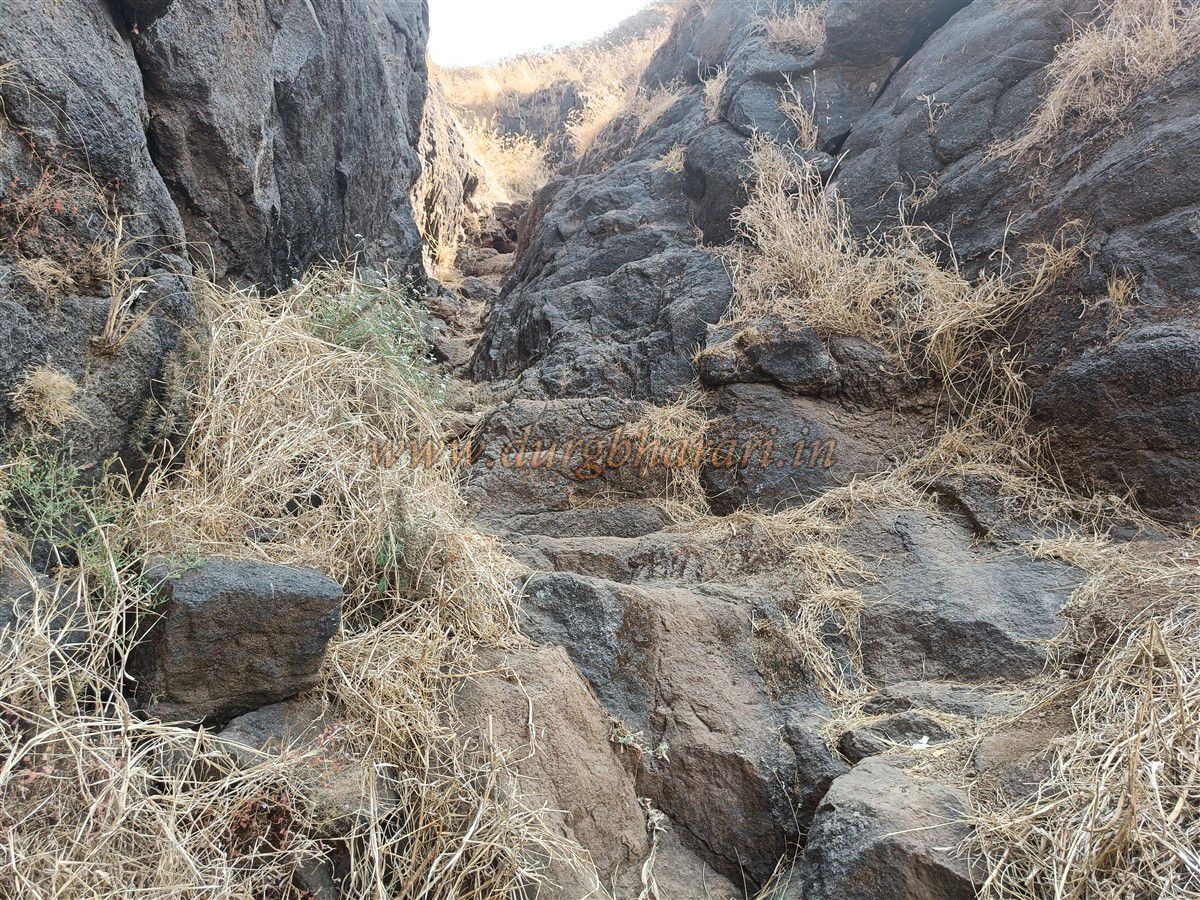
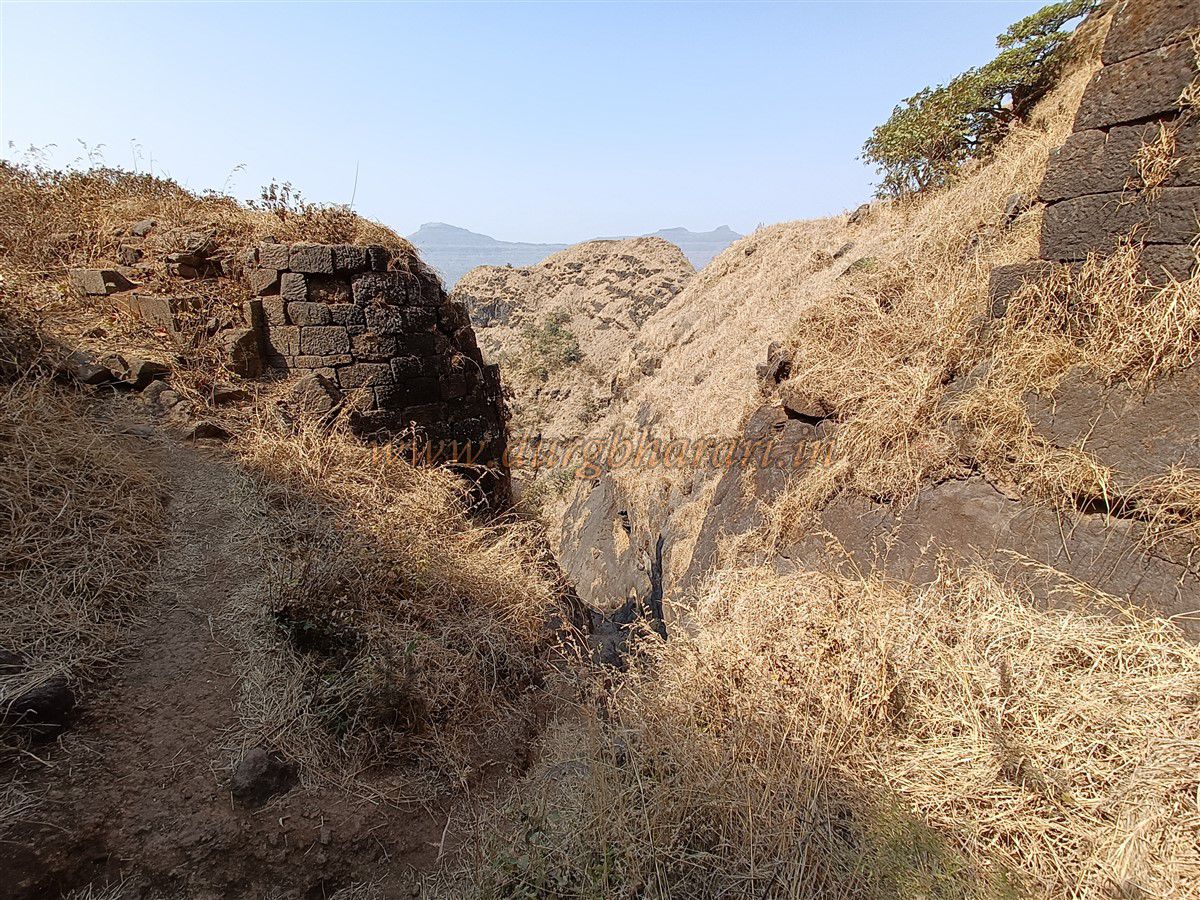
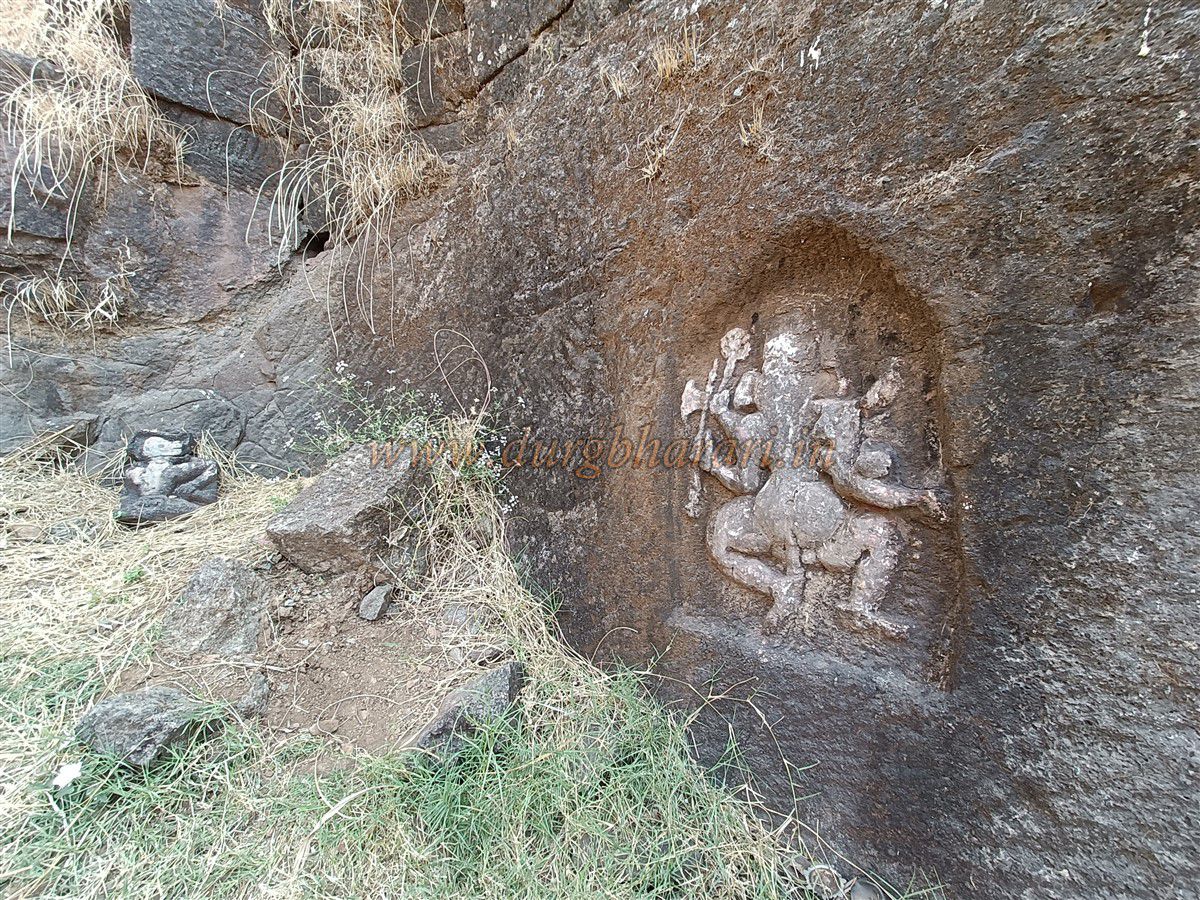
Another gully with partially ruined masonry and rock-cut steps leads up to the main entrance. Judging by the rock-cut niches, scattered stones, and a weathered cave, this gully probably once housed a fortified gate. Near the top, one comes across a carved idol of Lord Ganesha, while a broken idol of Maruti (Hanuman) lies nearby.
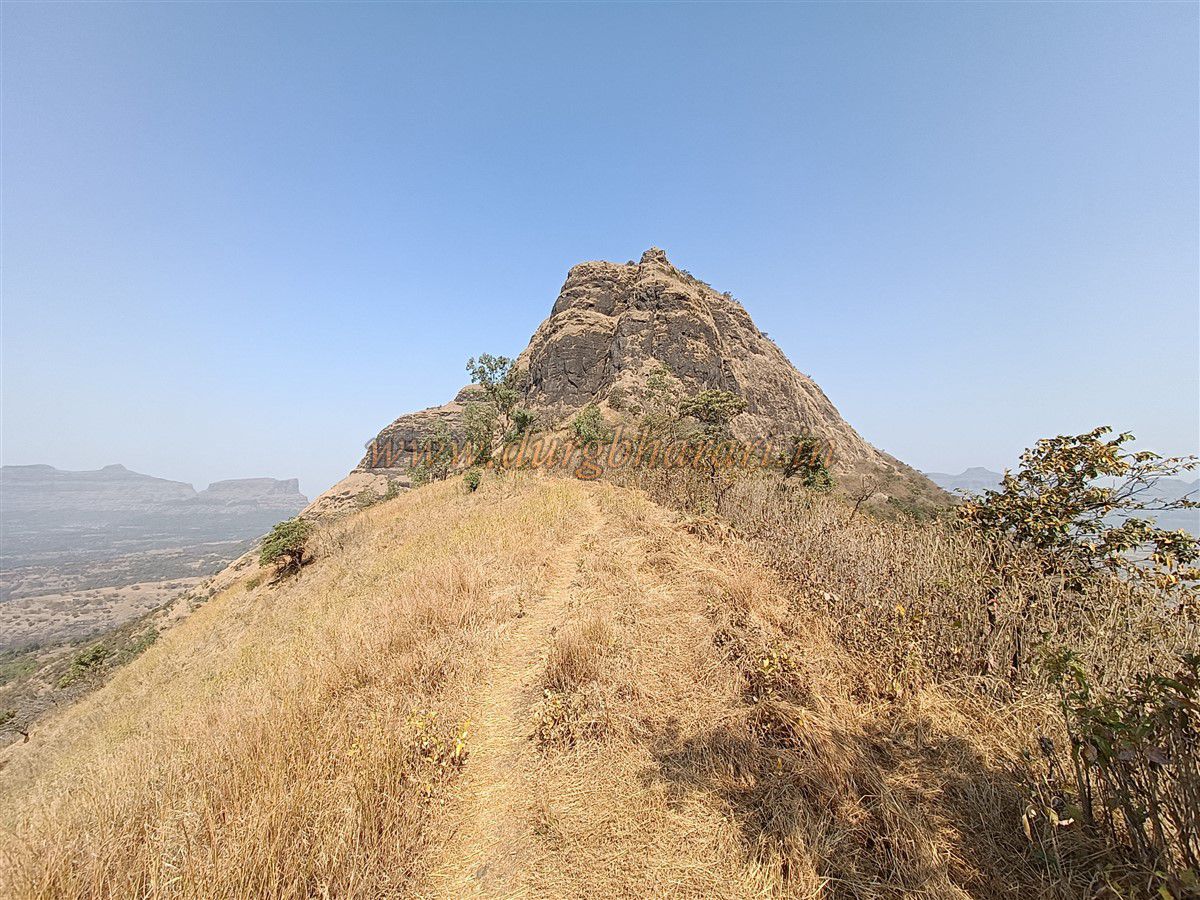
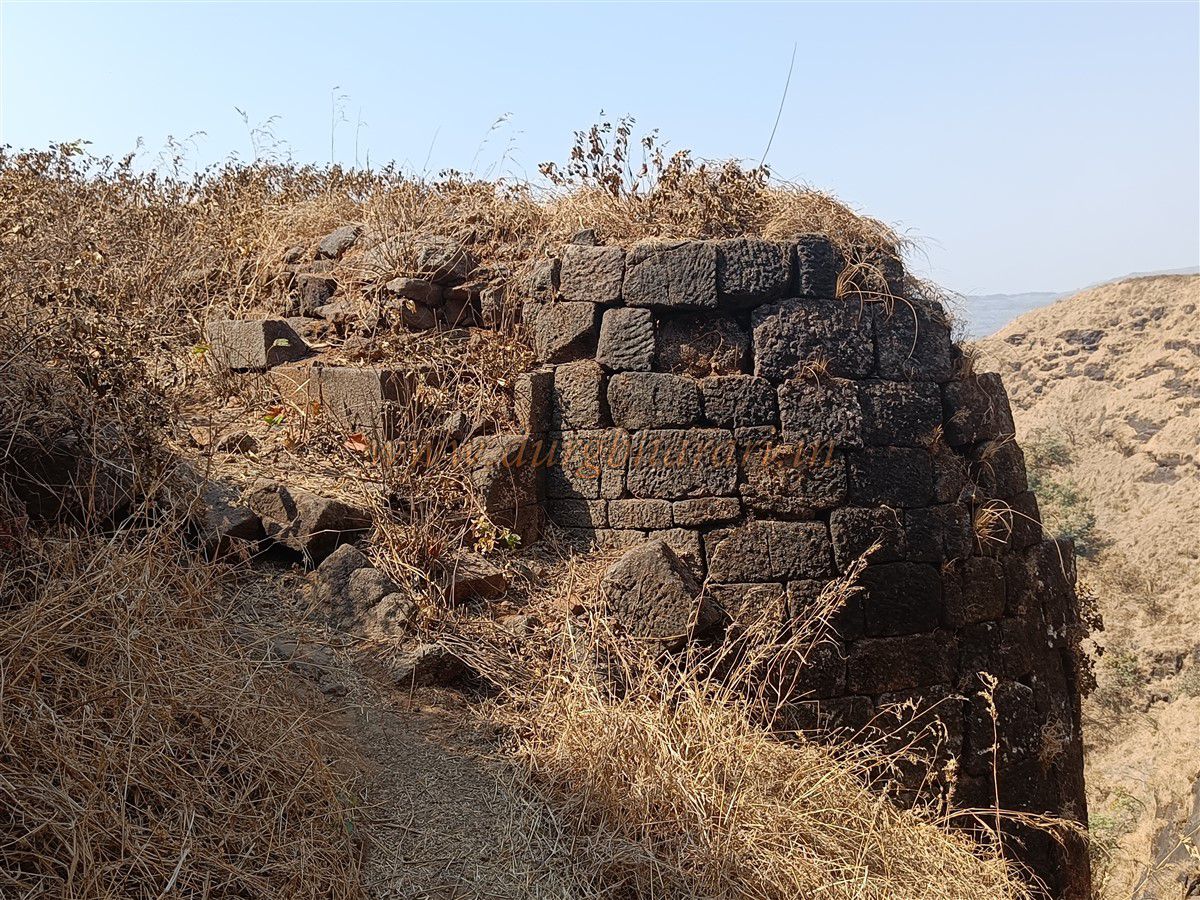
The fort’s north-facing entrance, built between a bastion and the hillside, now lies in ruins, though its plinth and adjacent bastion remain intact. From here, a winding trail leads to the summit. Due to minimal foot traffic, the path is overgrown with tall wild grass, requiring caution. Along the way, remnants of stone-built fortification walls and bastions come into view.
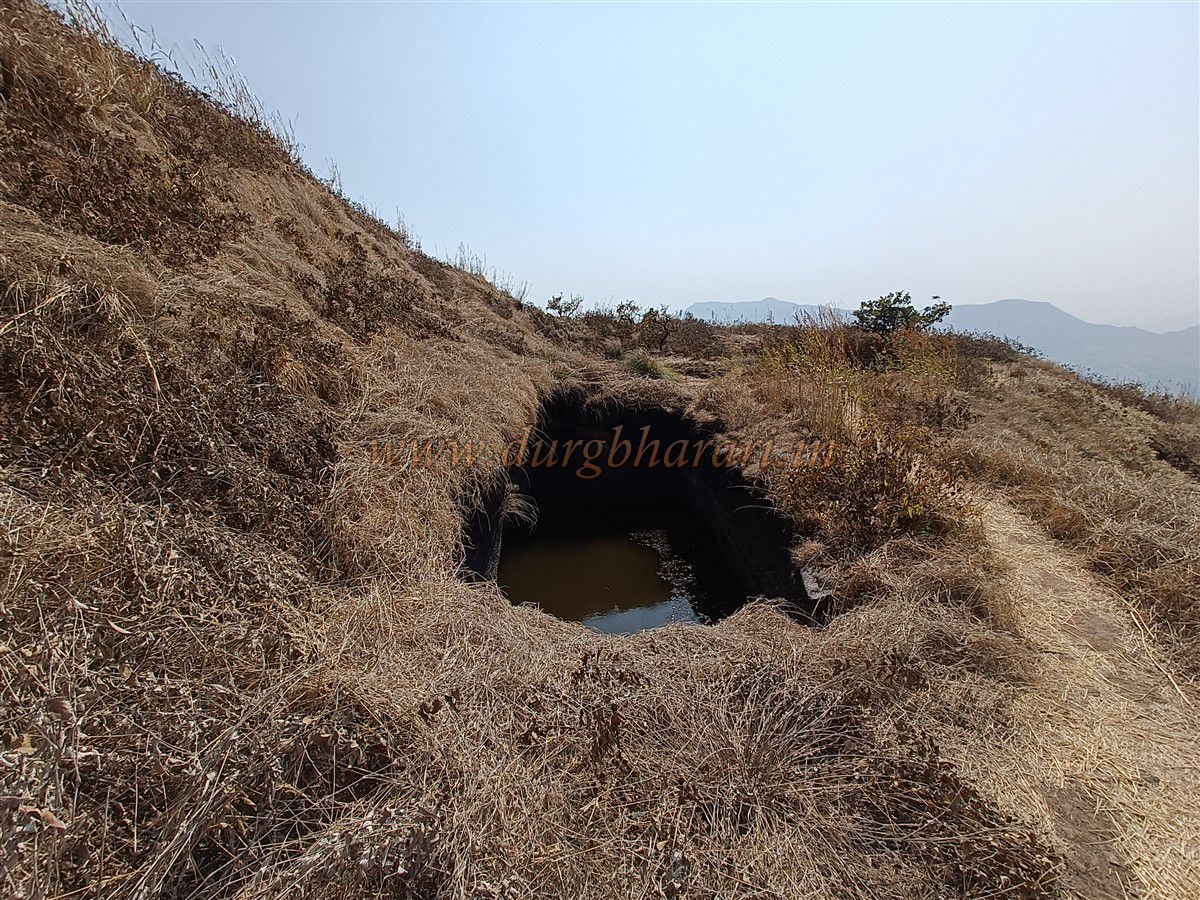
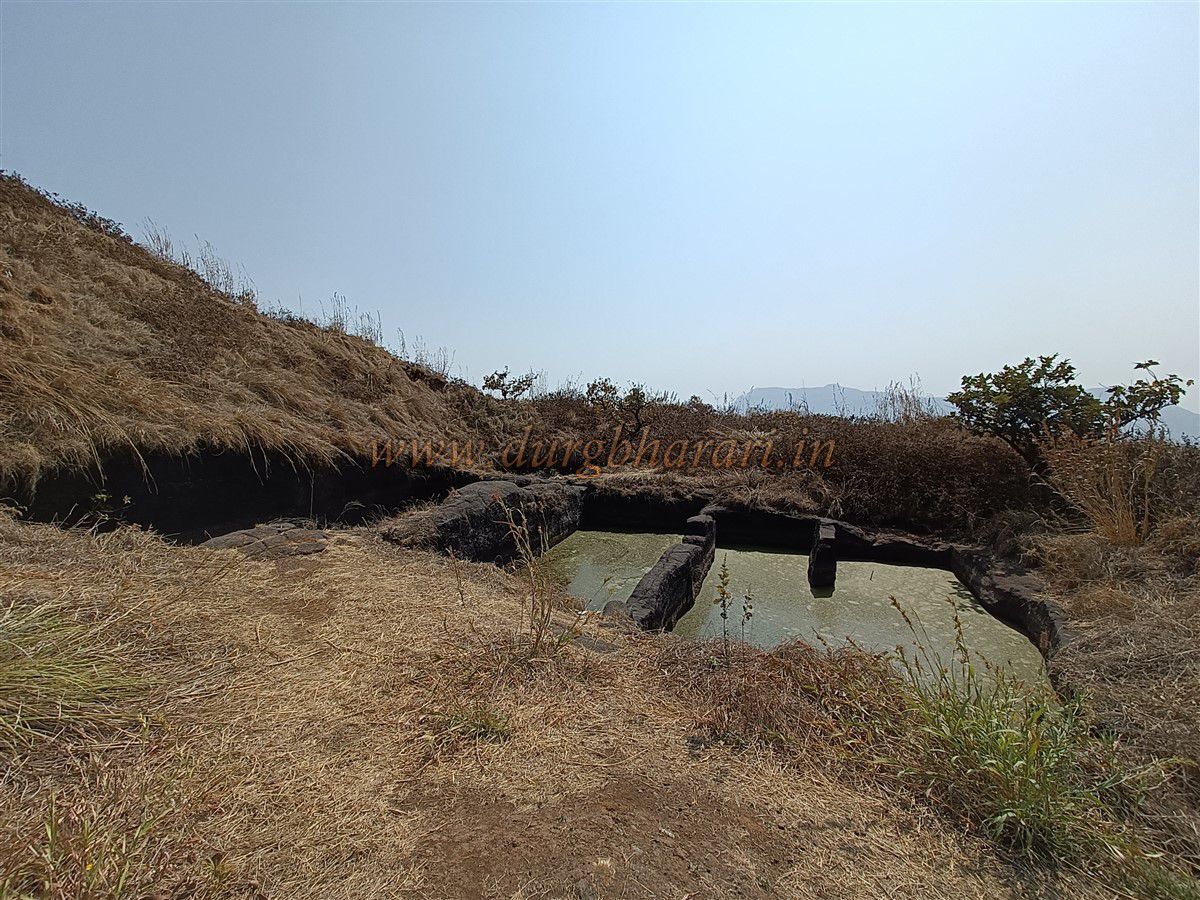
At the fort’s northern edge lies a group of seven rock-cut water cisterns, five clustered together and two standing apart — one of which is now dry. None hold drinkable water. Beyond these tanks, the ruins of houses and an open-air shrine marked by tridents (Trishul) can be seen.
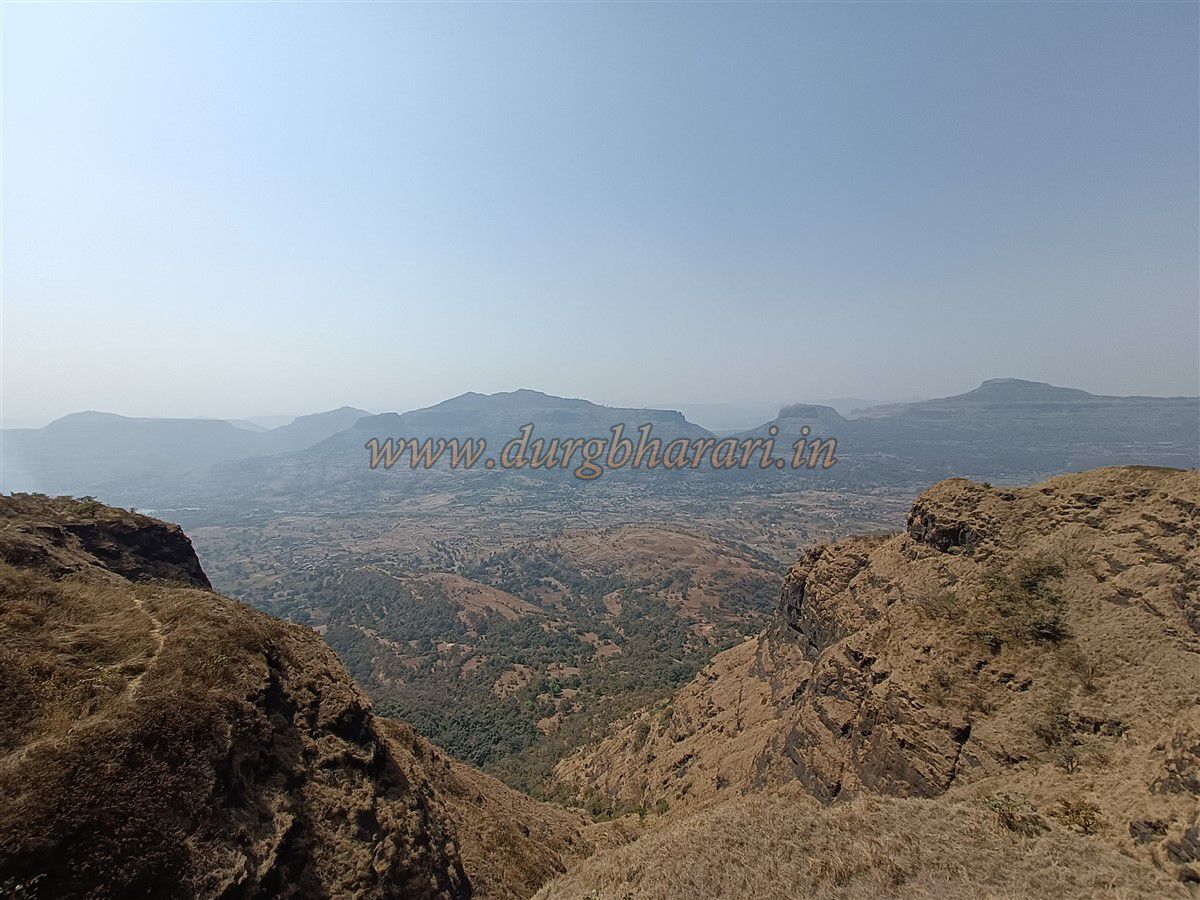
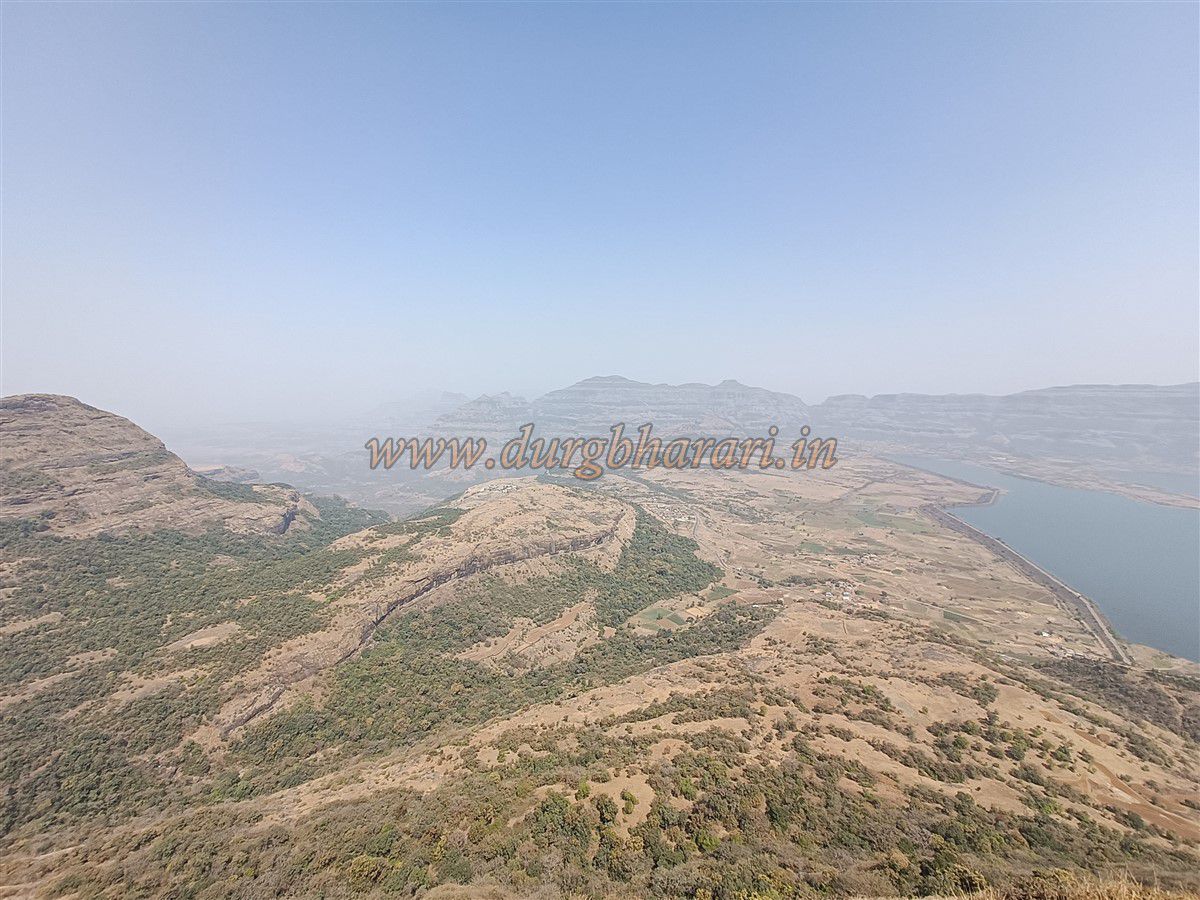
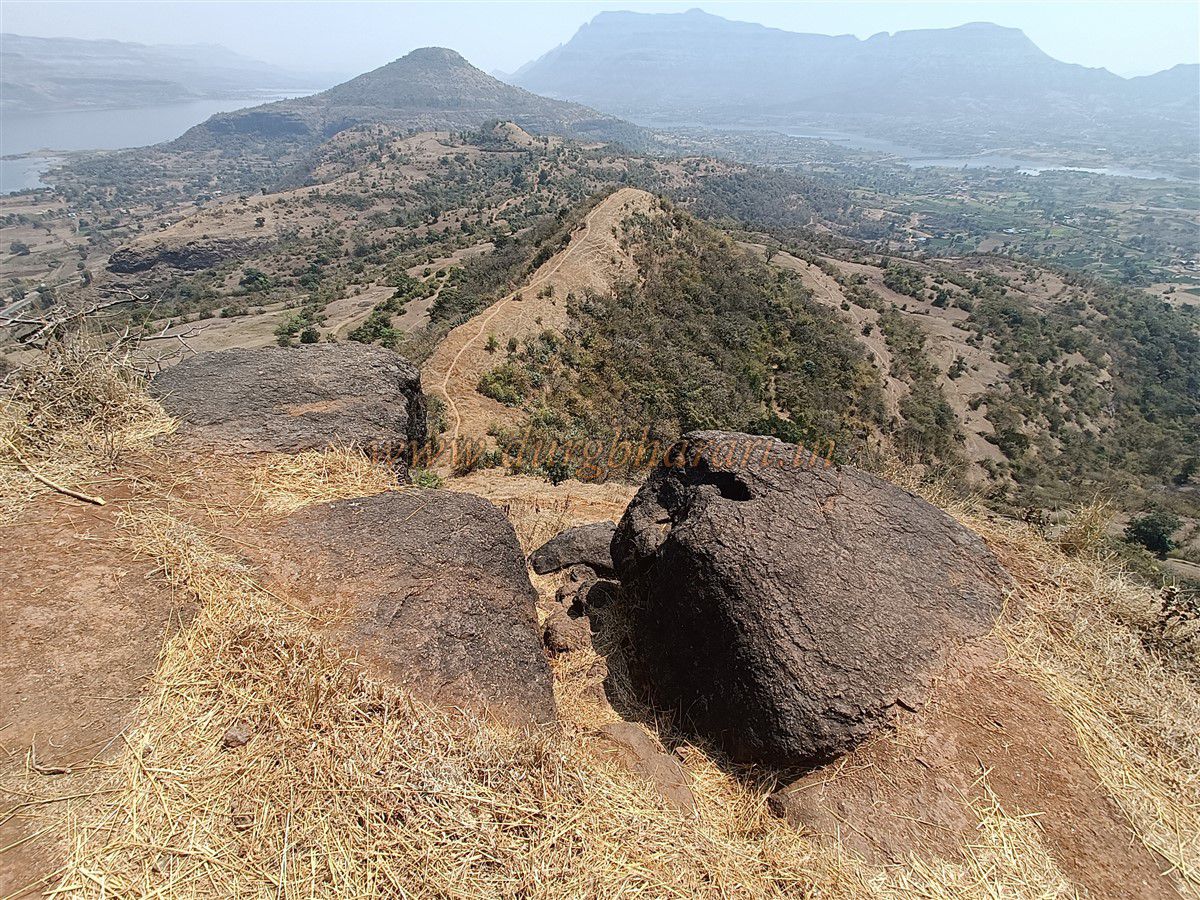
The summit, at 3,695 feet above sea level, stretches roughly 3 acres in a narrow north-south direction. From this vantage point, one can see Hadsar, Chavand, Shivneri, Harishchandragad, Nimgiri, Hanumantgad, and the surrounding Malshej Ghat region. The small plateau makes a complete circuit of the fort possible in just about half an hour.
Descending via the same route, the trek concludes near the Ganesha idol — leaving trekkers with the satisfaction of having explored a forgotten gem.
Though Sindola’s historical footprint is faint, it likely came under Maratha control around 1670–71, along with nearby forts like Chavand, Hadsar, and Jivdhan. During Sambhaji Maharaj’s reign, the Mughals seized it and entrusted its custody to the Jawhar principality. Later, in 1744–45, the Marathas recaptured it during the Peshwa era.
Sindola Fort remains an overlooked, rugged outpost — a trek that tests endurance yet rewards explorers with solitude, raw beauty, and a glimpse into an almost-forgotten chapter of history.
© Suresh Nimbalkar
GALLERY