SINDHUDURG
TYPE : SEA FORT
DISTRICT : SINDHUDURG
HEIGHT : 0
GRADE : EASY
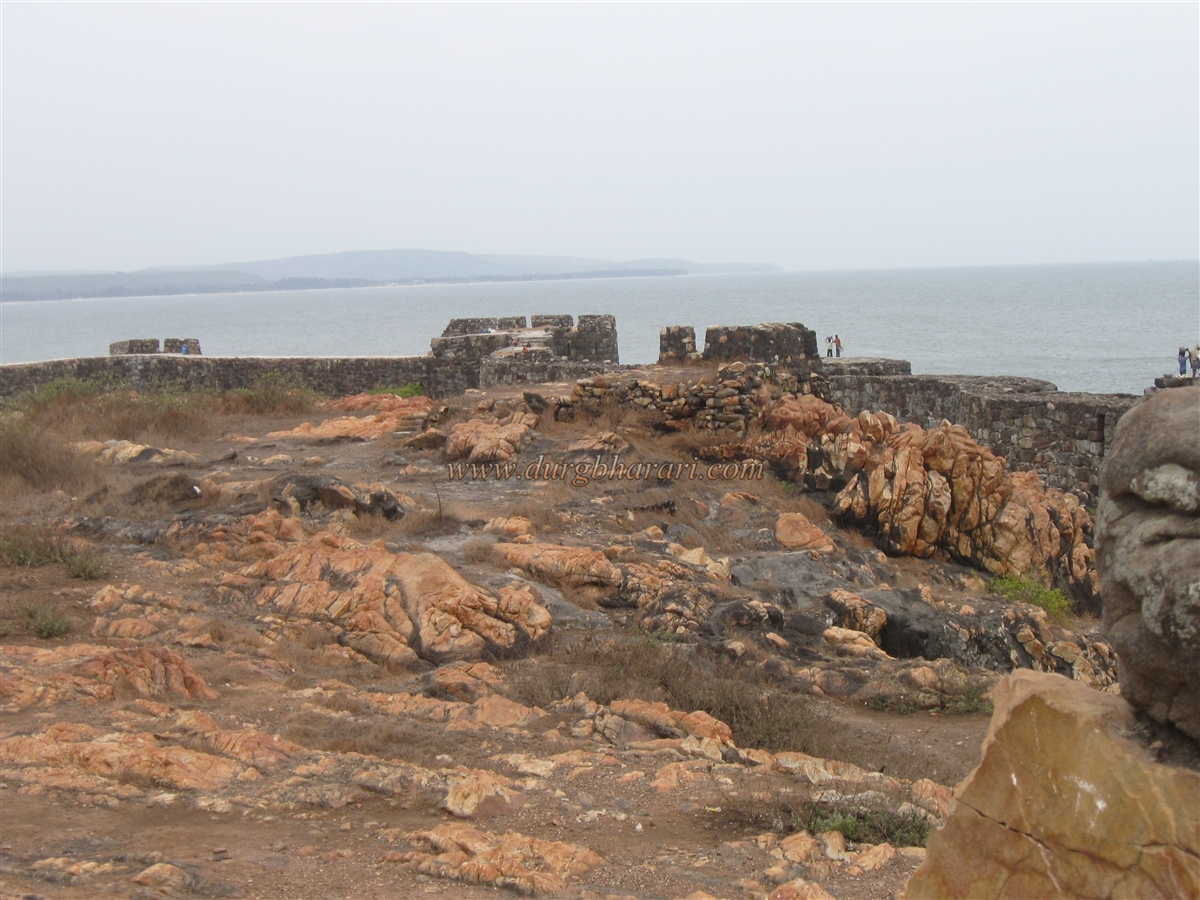
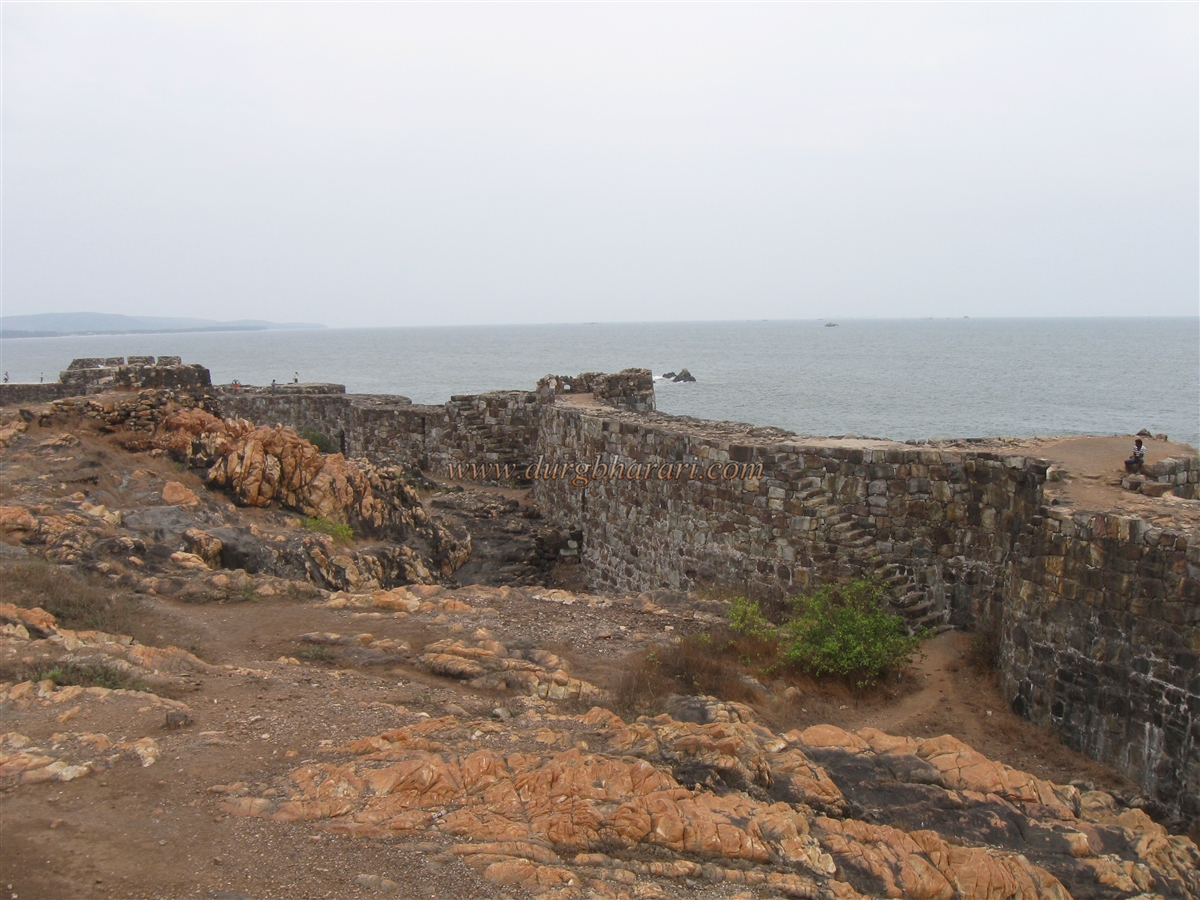
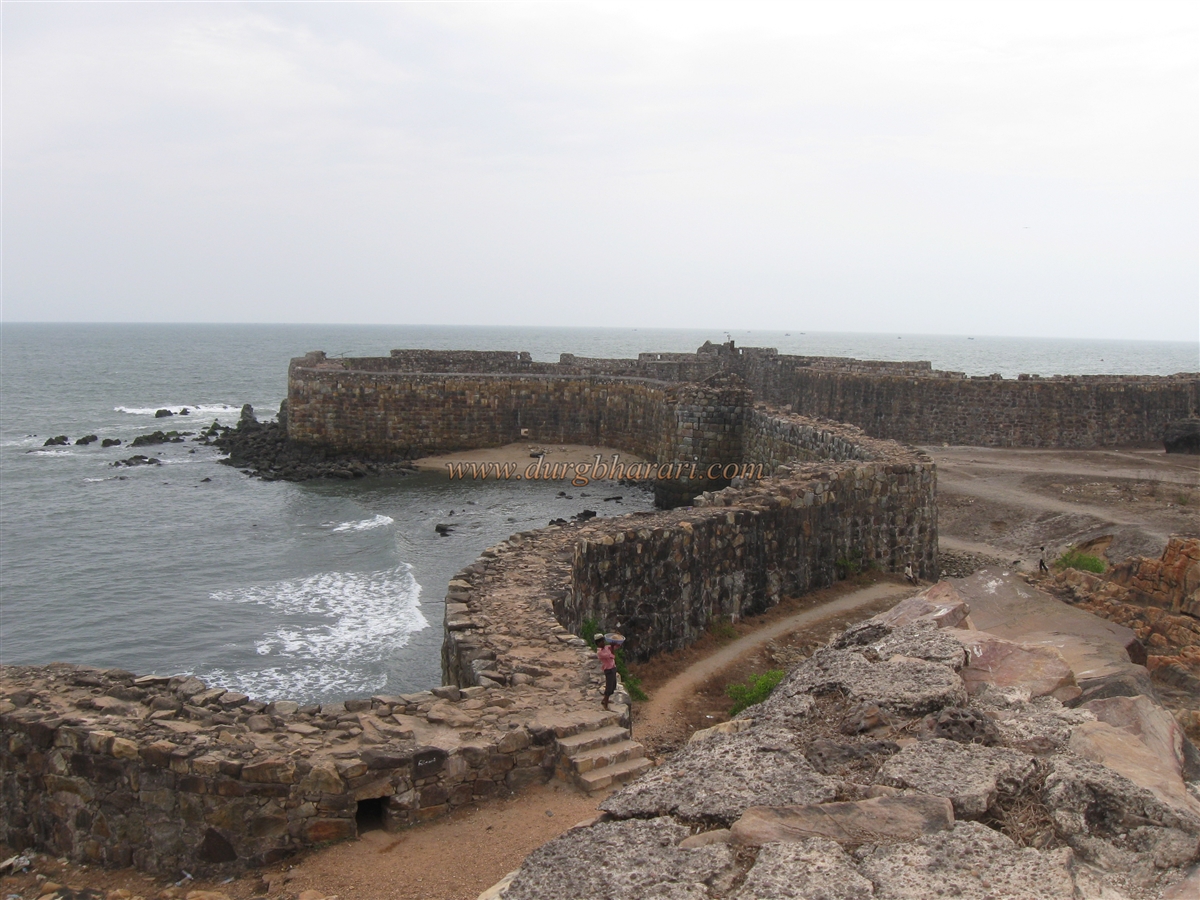
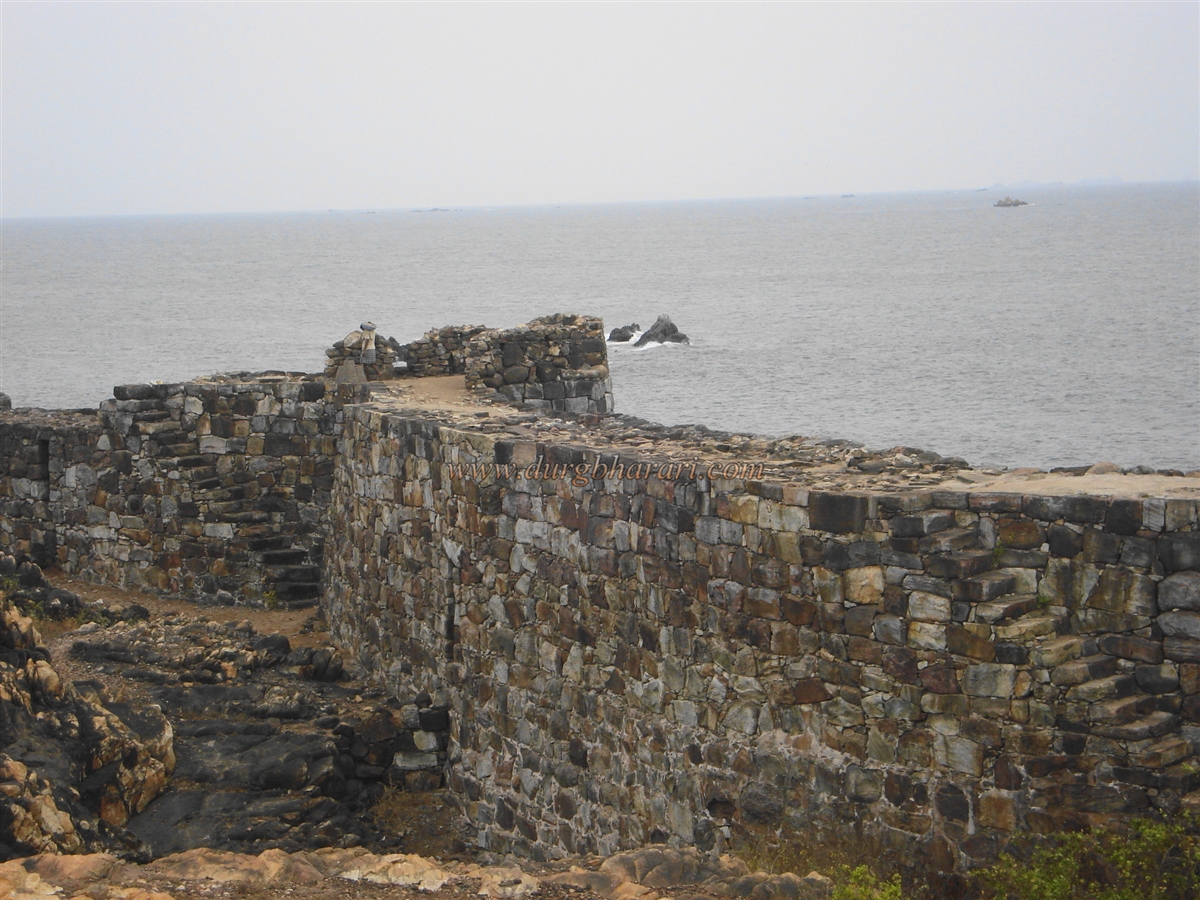
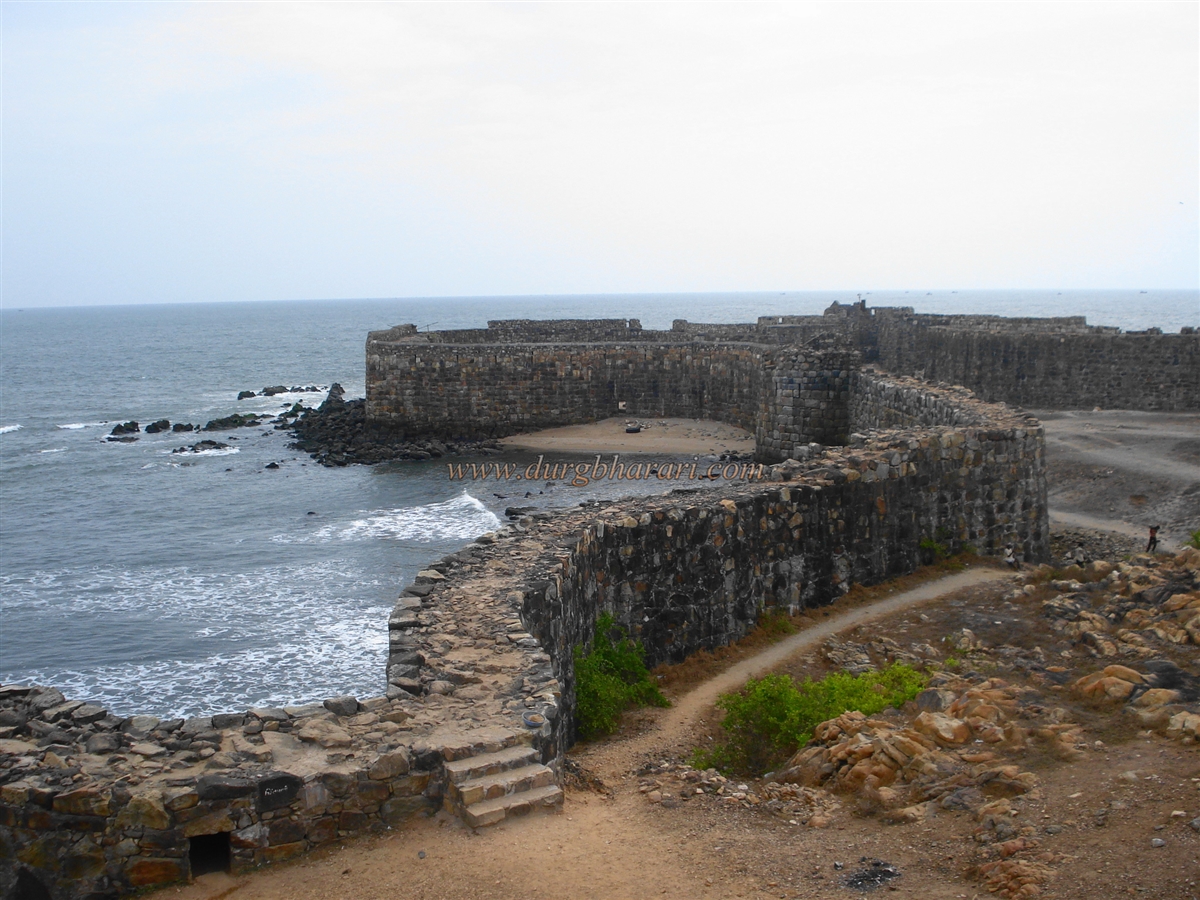
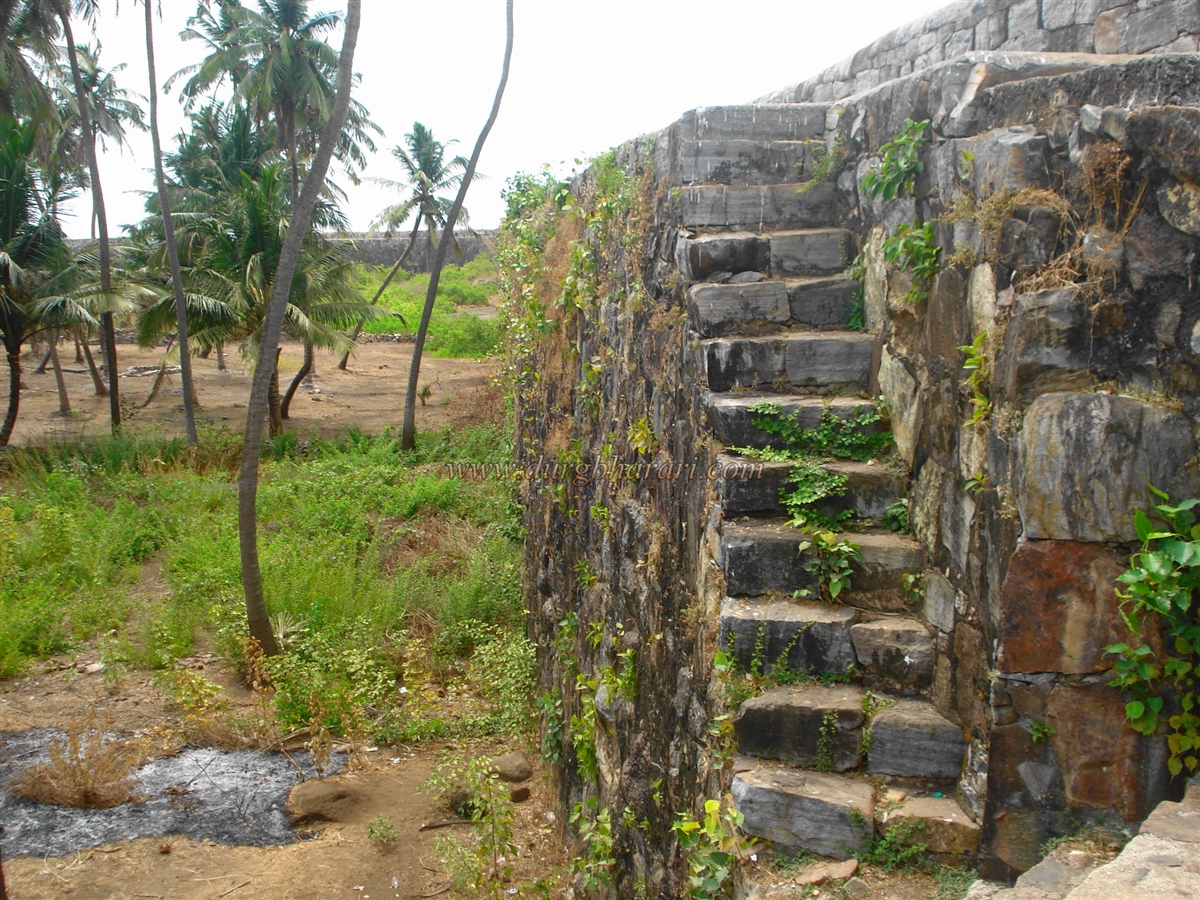
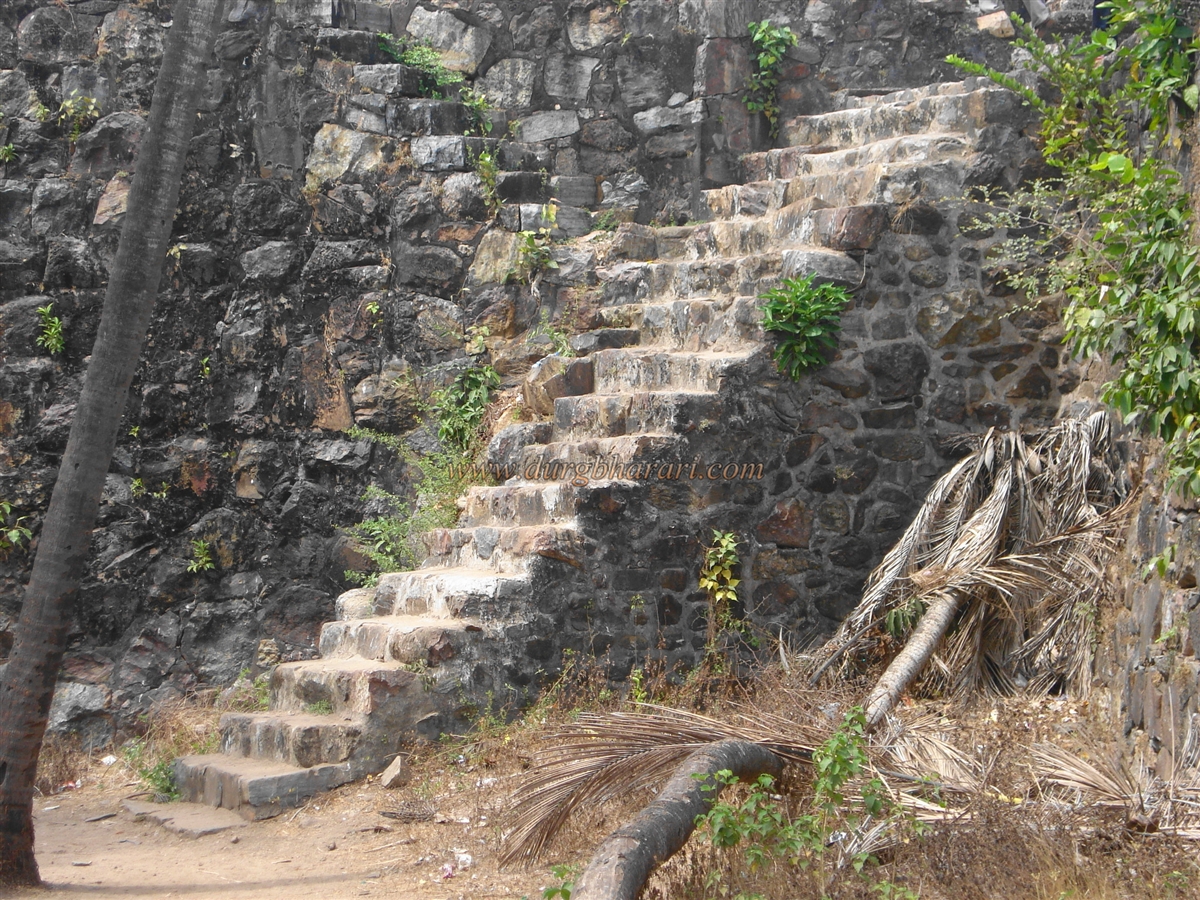
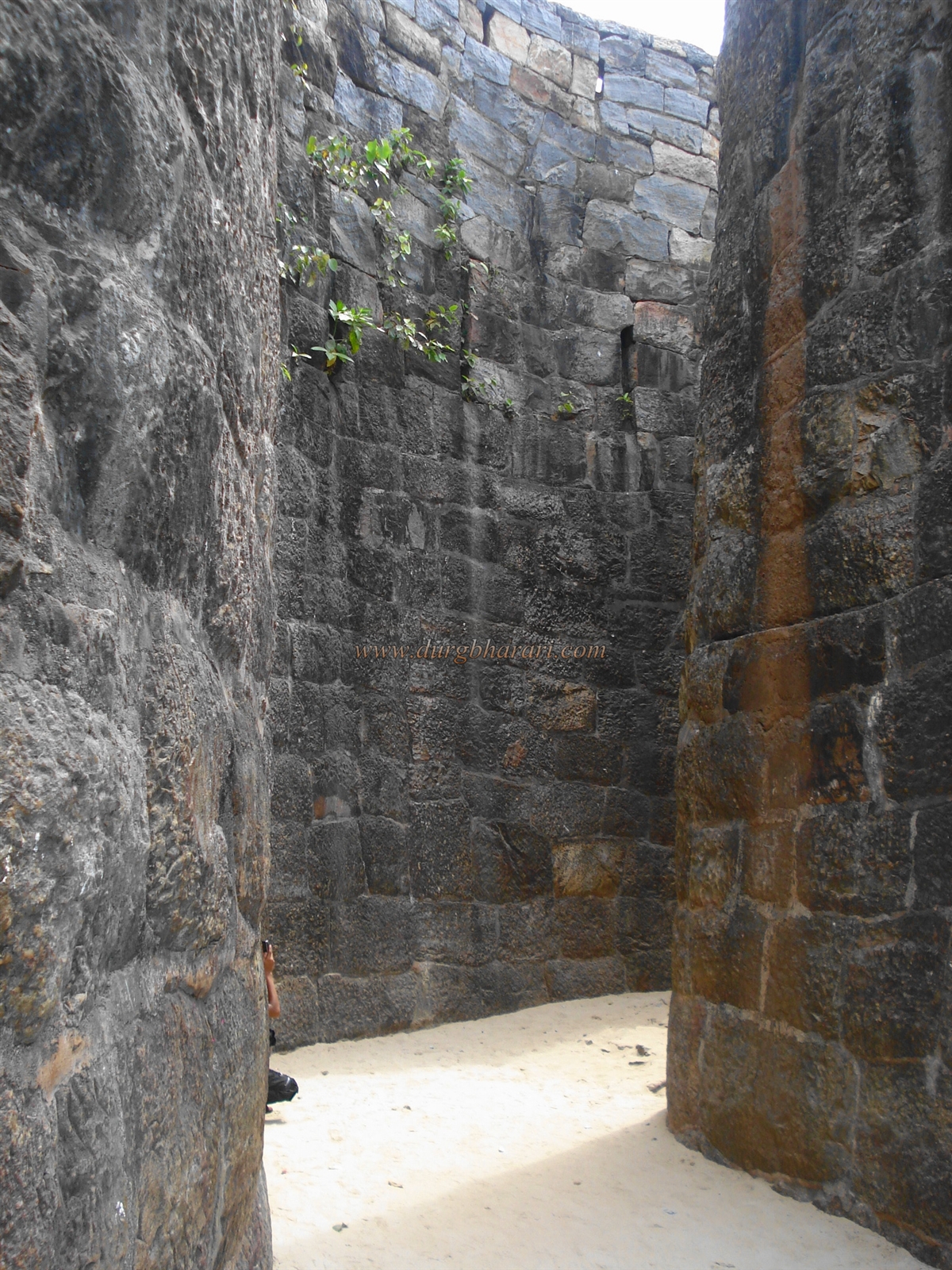
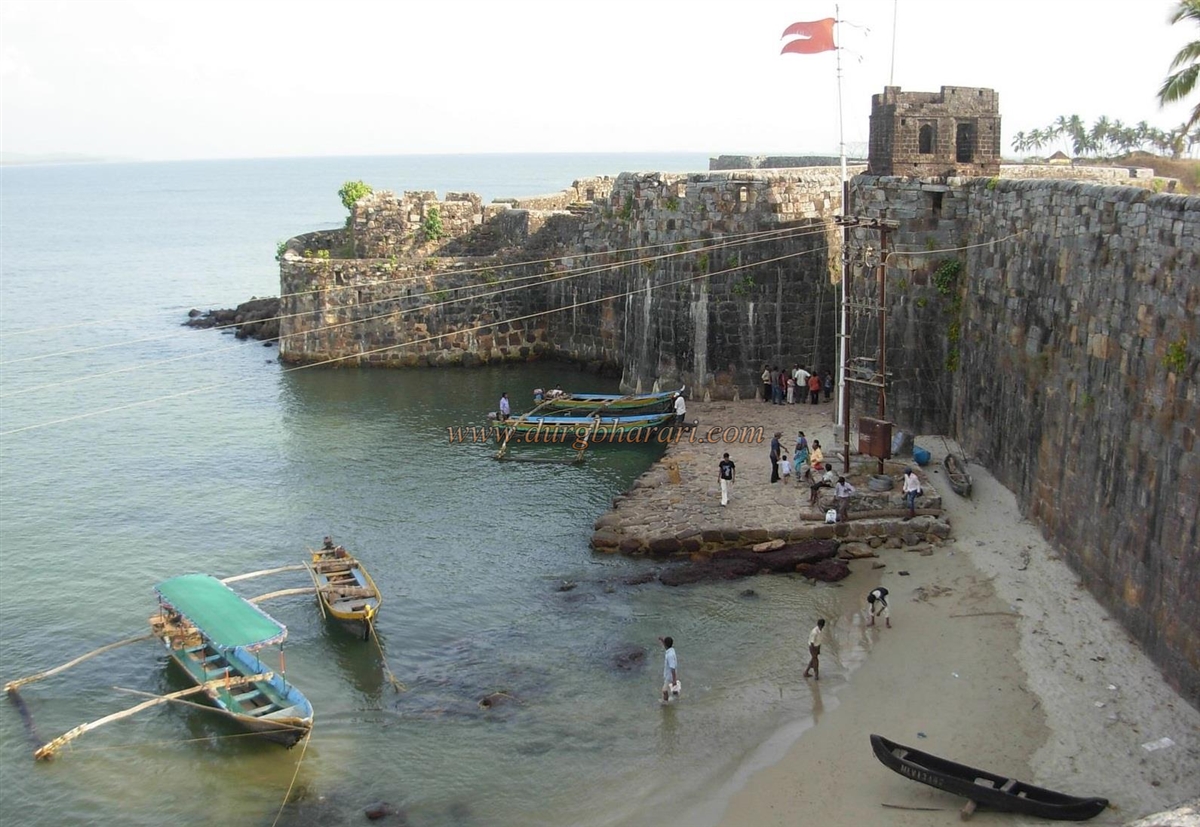
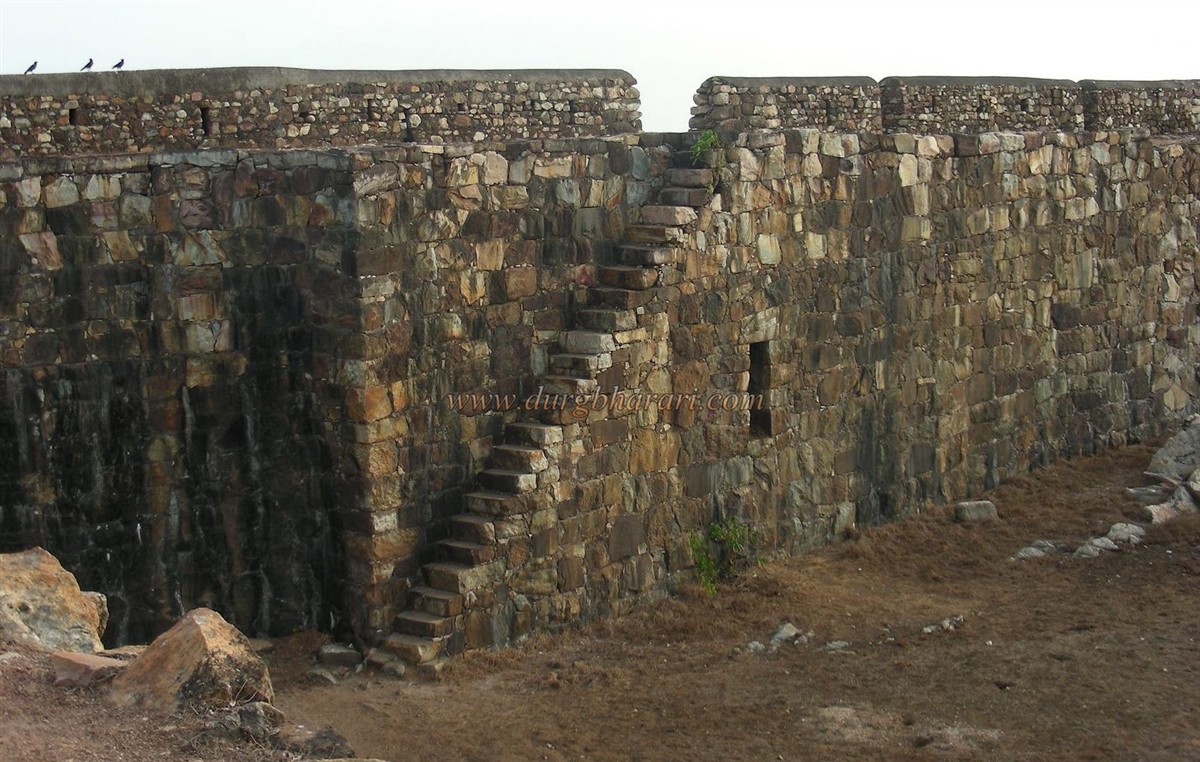
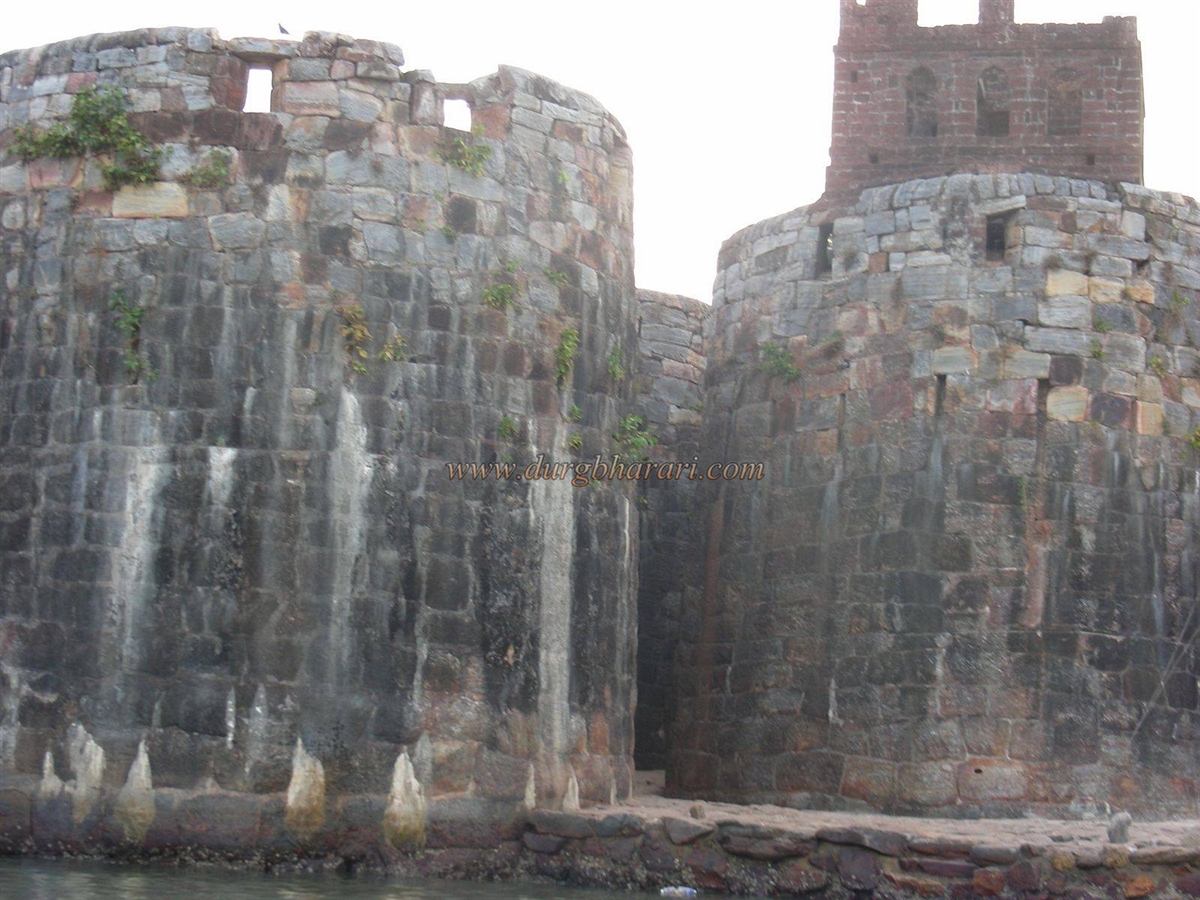
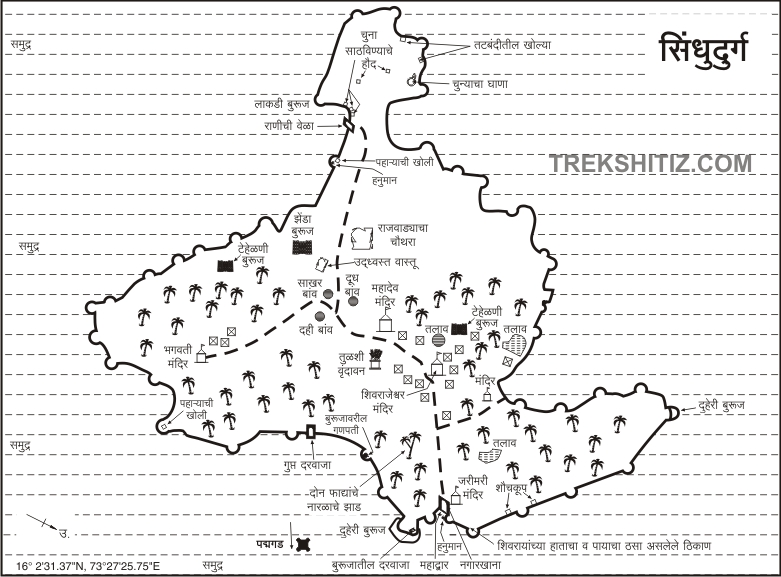
Recognizing the importance of naval forts for fighting enemies along the sea routes in addition to land and hill forts, Shivaji Maharaj built several sea forts. One of the most important of these is Sindhudurg Fort. The district of Sindhudurg itself derives its identity from this fort. To reach this fort, one must first arrive at Malvan port. The island of Kurte, where the fort stands, is located about one kilometer into the sea from Malvan port. There is a regular boat service from Malvan port to the fort. The main entrance of the fort is built facing east and remains invisible until one gets very close. Spread over about 48 acres, the ramparts of the fort are roughly three kilometers in length. The walls are approximately 30 feet high and 12 feet wide. There are a total of 52 bastions along the ramparts and 45 stairways for access. The bastions and walls have openings for cannon and gunfire. After disembarking from the boat and entering through the curved outer walls, the main gate of the fort comes into view.
...
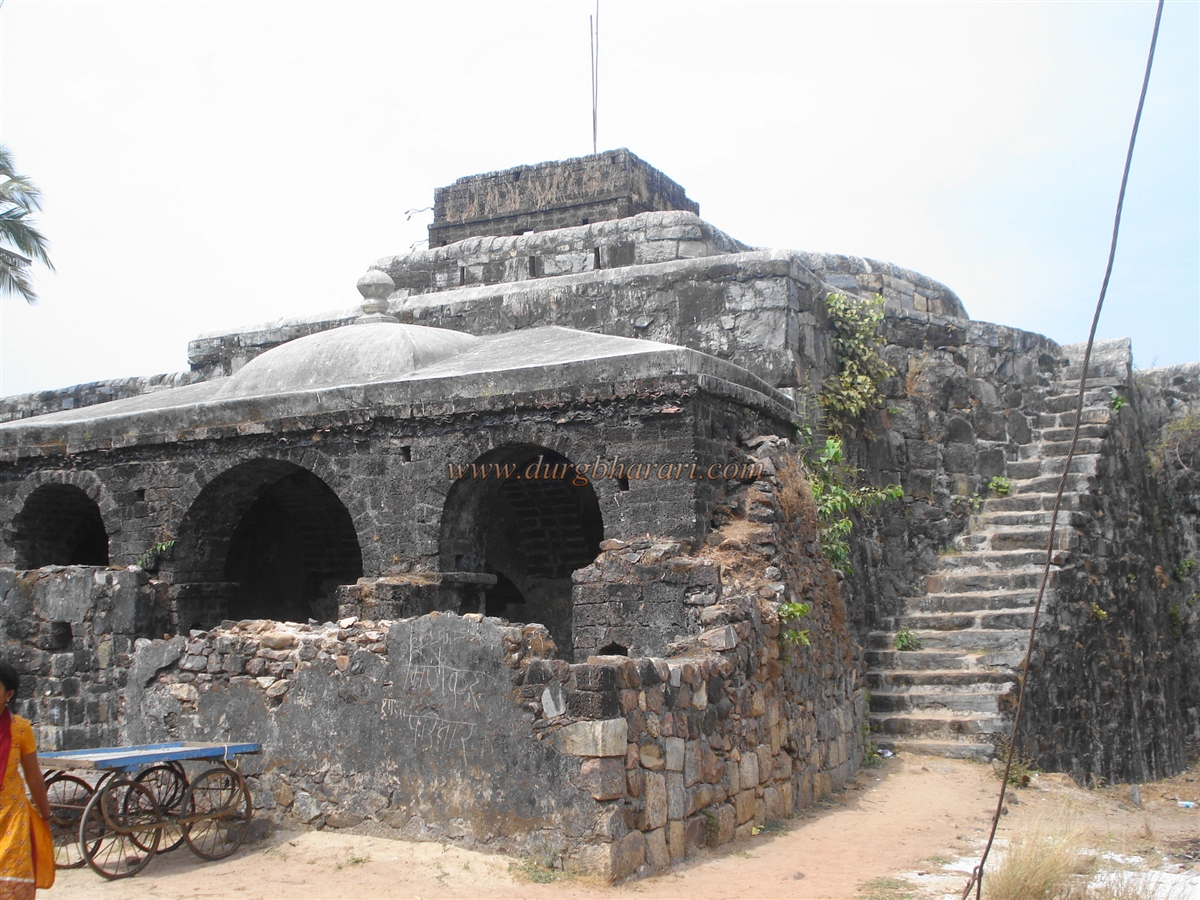
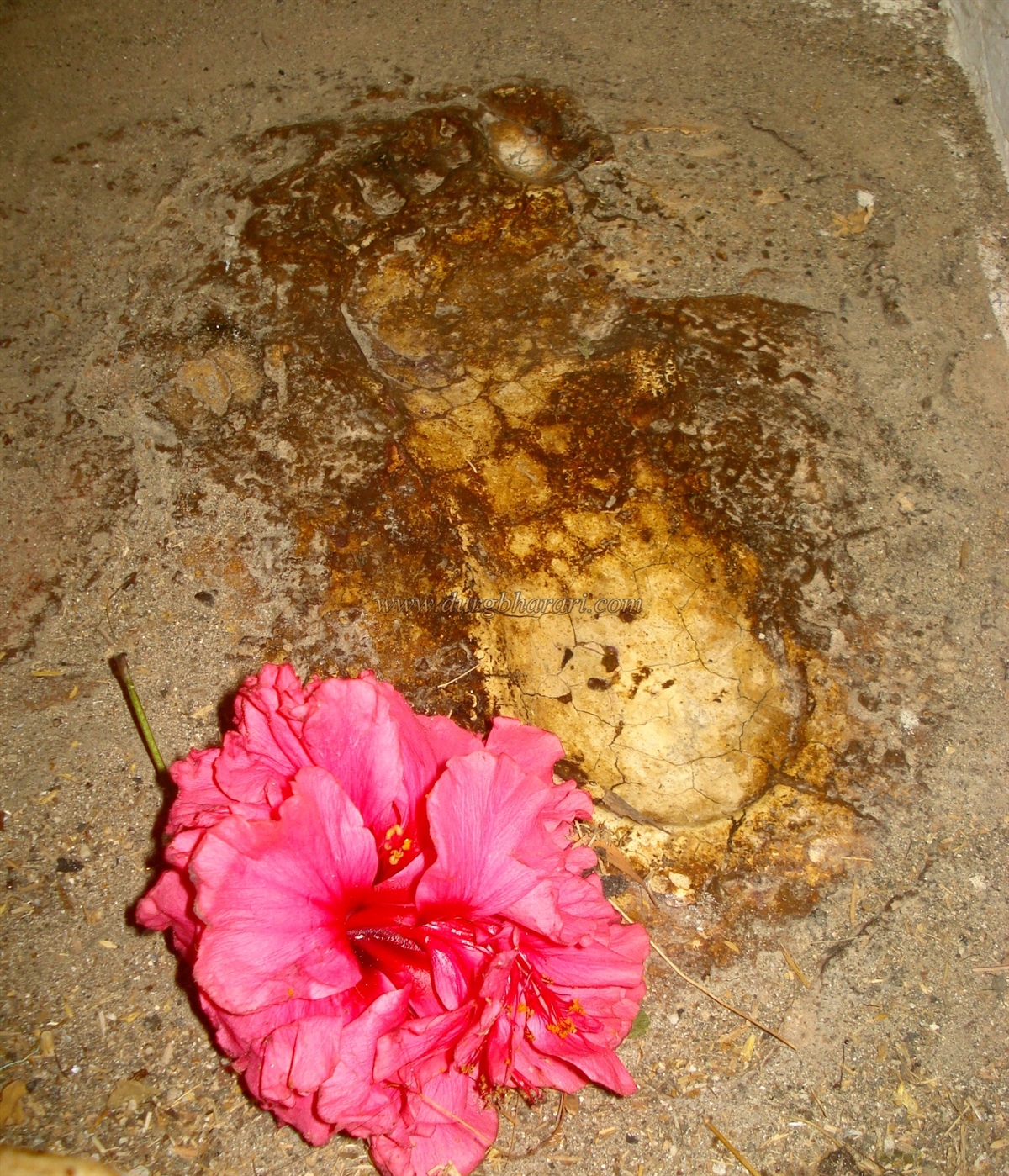
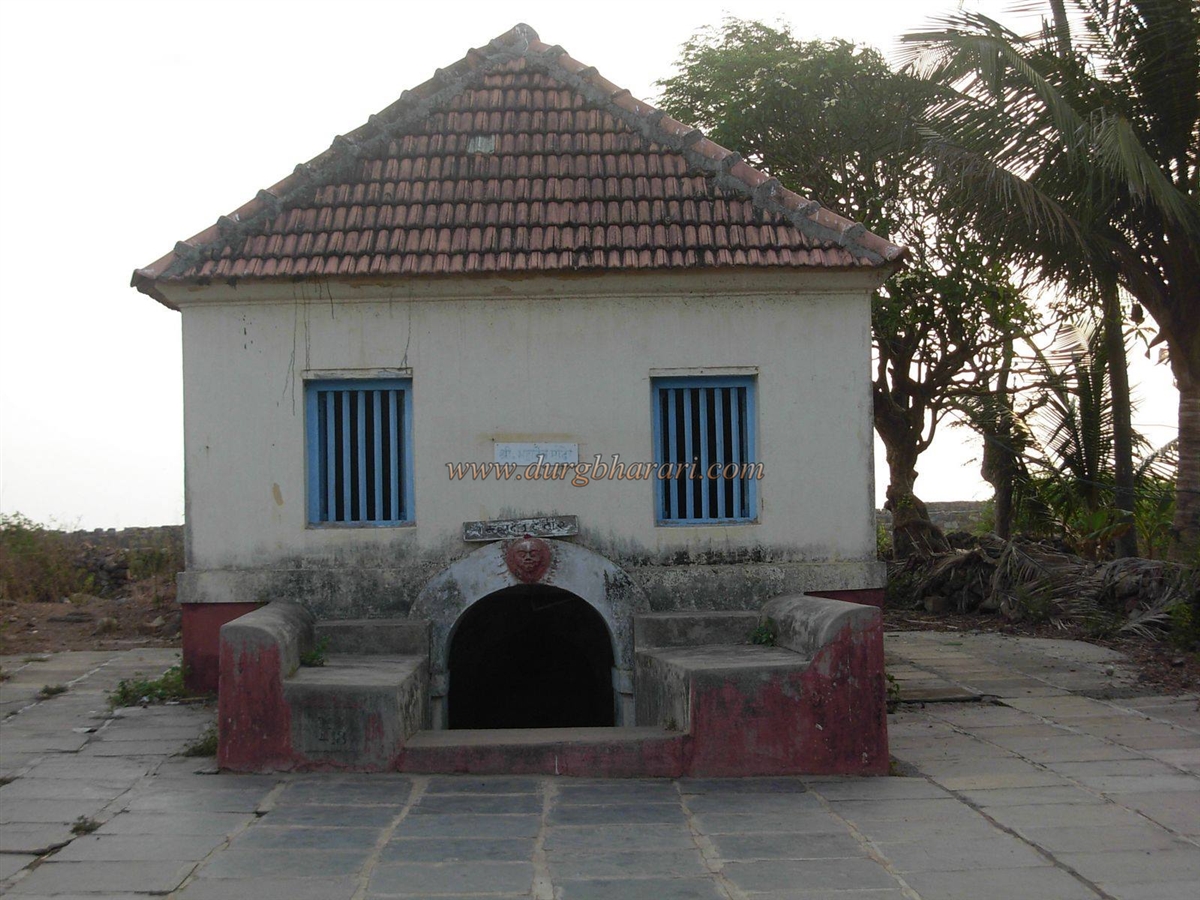
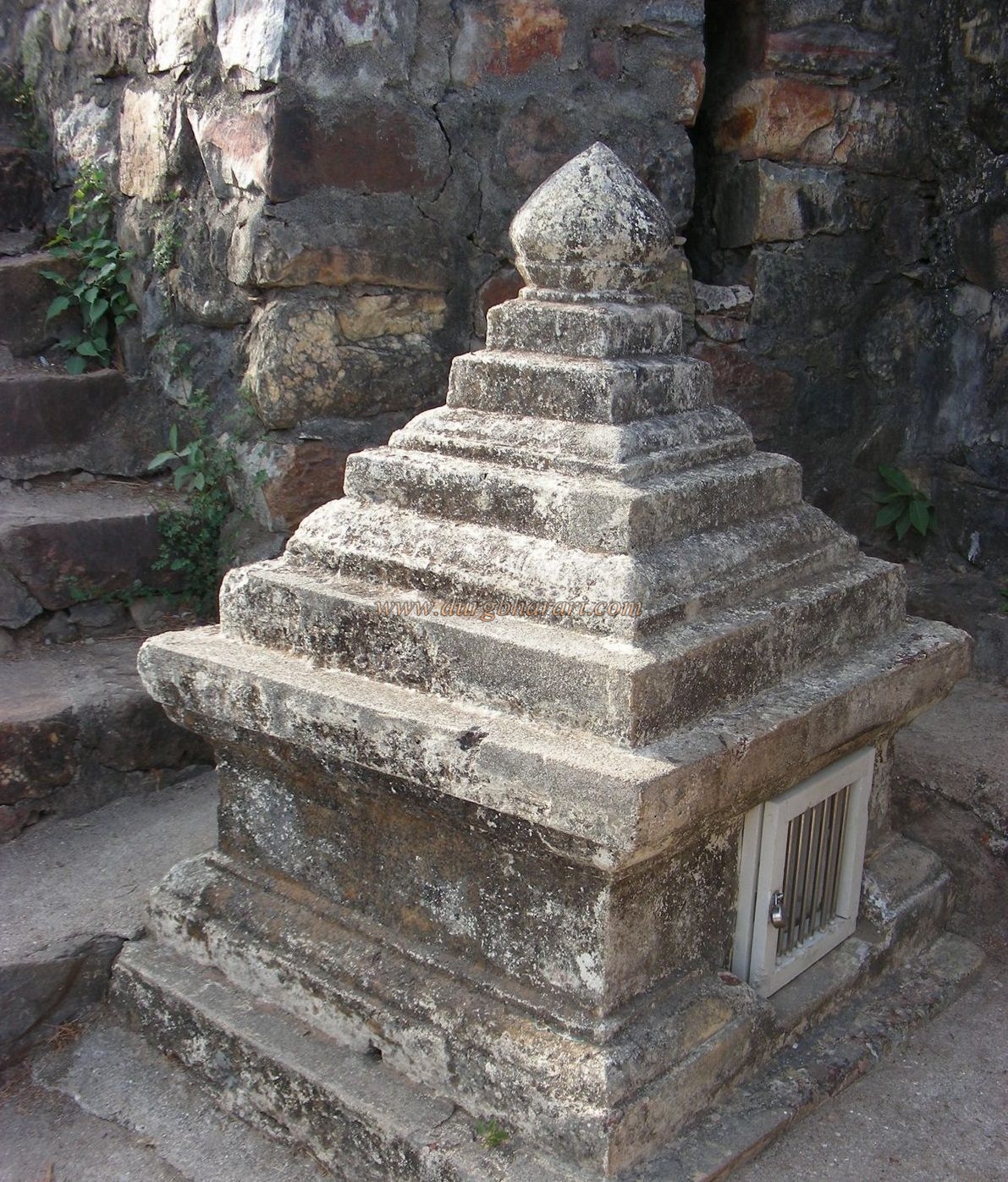
This gate, a fine example of fort architecture from Shivaji’s era, still stands in good condition. A later-added brick-built Nagarkhana (drum house) is located above the gate, and a broken cannon lies near it. In front of the gate is a small domed shrine housing a stone-carved idol of Hanuman. From here, as one walks along the ramparts, one can see places designated for cannons and two domed shrines. These shrines were built at spots where Shivaji Maharaj’s left foot and right hand imprints were preserved in wet lime during the fort’s construction. A letter dated November 21, 1763, written by Jijabai, wife of Sambhaji Maharaj, instructs that these imprints be enshrined and worshipped daily with offerings. After entering through the main gate and walking along the paved path, one comes across the small Jarimari Devi temple, which contains an inscription stating that it was built in 1881.
At the center of the fort stands the Shivrajeshwar temple, dedicated to Shivaji Maharaj, built by Chhatrapati Rajaram Maharaj in 1695. The idol in this temple depicts Shivaji Maharaj seated in a warrior pose, beardless and wearing a sailor’s cap. The idol is adorned with a mask and garments, making the original form unviewable. A four-foot-long sword, said to have belonged to Maharaj, is also displayed in the temple. Behind this temple lies a Mahadev temple, which houses a square-shaped deep stepwell and idols of Nandi and a Shivalinga. Within the temple precincts are three freshwater wells named Doodhbav, Dahibav, and Sakharbav, which provided drinking water for the fort’s inhabitants. These wells are surrounded by square stone structures. Beyond the wells are the remains of a large palace complex. Additionally, there is a reservoir created from a quarry used for stone extraction during the fort’s construction, which served as an additional water source.
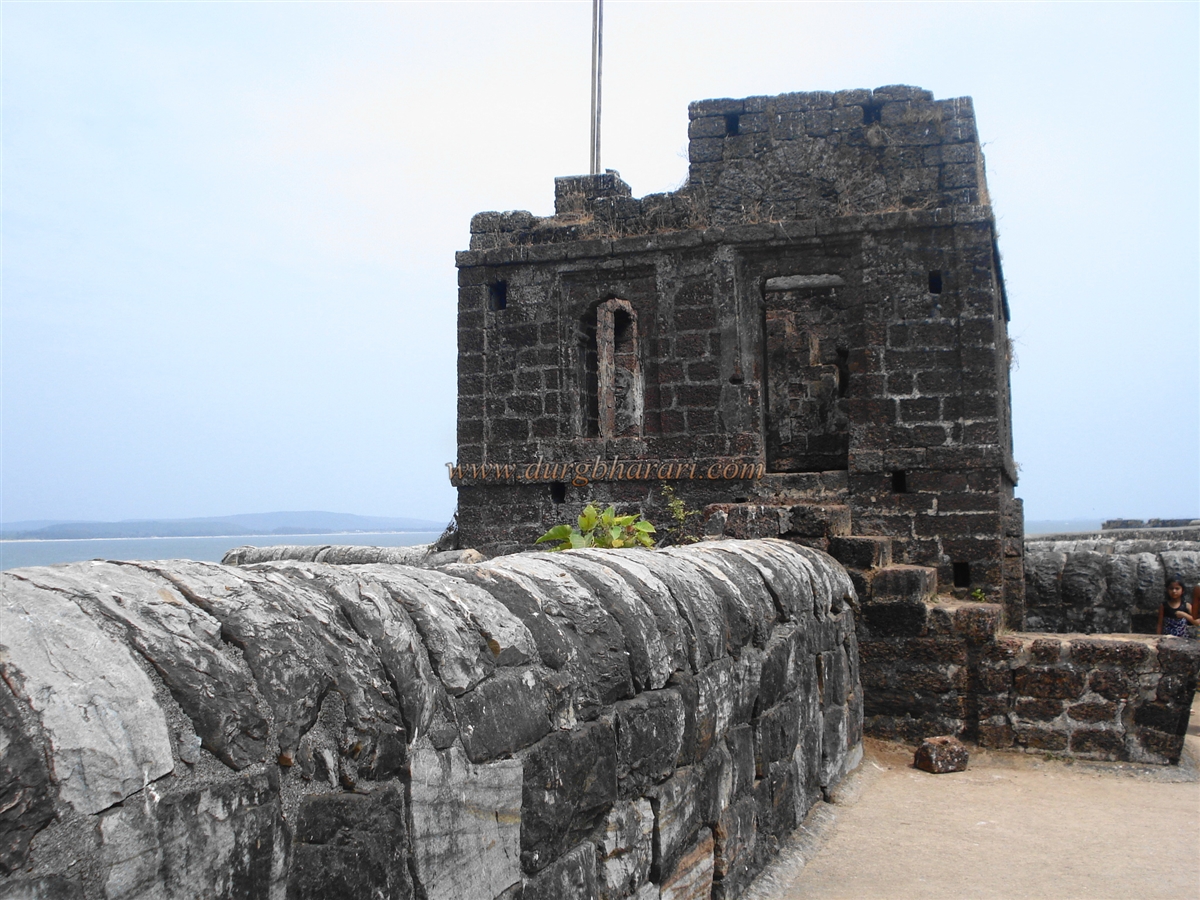
The fort also contains a Mahapurush temple, and to the west of the palace ruins stands a tall, isolated bastion known as the Daryaburuj or Nishankathi Buruj. Until 1812, a 28-foot-high saffron Maratha flag flew from this bastion, visible far out at sea, serving as a navigational marker for fishermen to avoid nearby rocks. Near this bastion is a rainwater pond, and further along the wall, a small gate leads to a crescent-shaped landing known as Rani Chi Vela. Close by are lime processing pits and a large grinding stone used for preparing lime mortar, which still remains on-site. Climbing the parapet brings one to a bastion chamber and eventually to another hidden sea gate, now sealed with stones, which once provided direct access to the sea. Further along the path, a Ganesh carving can be seen on one of the bastion walls, followed by the Chilkhati bastion, which is notable for its double-walled construction. Continuing along the ramparts eventually leads back to the main gate. It takes about three hours to thoroughly explore the entire fort.
Some recently discovered inscriptions at Nerur indicate that this region was once under Chalukya rule. Before the Marathas, the Adilshahi dynasty held power here. In 1657, after taking control of Chandrarao More’s territory in Jawli and killing Afzal Khan, Shivaji Maharaj descended into the Konkan. He captured Kalyan and Bhiwandi, launched the Hindavi Swarajya navy at Kalyan port, and began constructing new warships using modern European methods. To acquire advanced shipbuilding techniques, he employed several Portuguese craftsmen and began building European-style ships.
Upon reaching Malvan, Shivaji saw the dire condition of the Konkan region: atrocities committed by the Adilshahis, Siddis, and Portuguese, forced religious conversions, temple demolitions, and the capture and sale of men and women as slaves were rampant. In 1664, Shivaji selected the black rocky island of Kurte near Malvan for building a naval stronghold. For the groundbreaking ceremony, the learned priest Janbhatt Abhyankar of Malvan was invited. The place on the Malvan shore where this ceremony took place later became known as Moryacha Dhonda, featuring carvings of Ganesh, the sun, the moon, and a Shivalinga. After performing the Ganesh and sea-worship rituals and offering a coconut to the sea, the foundation stone of the fort was ceremonially laid on November 25, 1664 (Margashirsha, Shaka 1586). For the construction, 500 stonecutters, 200 blacksmiths, 100 Goan Portuguese workers, and 3,000 laborers worked tirelessly for three years. To withstand the impact of the sea and ensure a strong foundation, molten lead was poured into the base before placing massive stones. The construction of the walls alone cost 80,000 hons. Lime sourced from the Ghats was used for other fort structures. Funds looted from Surat were utilized for this project. Records indicate that the construction of Sindhudurg was completed on March 29, 1667 (Chaitra Purnima, Shaka 1589).
The Shivkalin Chitragupta Bakhar praises the fort as:“Like an indomitable island in the sea, Sindhudurg stands as a jewel among the fourteen great ornaments of the kingdom, a temple-like adornment and a glorious emblem of sovereignty.”
The chief architect was Hiroji Indulkar, while Govind Vishwanath Prabhu supervised the work. Shivaji personally paid close attention to the construction, writing detailed instructions to Hiroji about foundation work, the use of washed sand, proper material measurements, and daily oversight. He even mentioned arrangements for sending molten lead and lime from the Ghats.
To prevent enemy interference during construction, troops were stationed nearby. With the creation of Sindhudurg, the Marathas established dominance over the western coast. Neither during the reign of Shivaji Maharaj nor Sambhaji Maharaj did anyone dare to attack the fort.
After Chhatrapati Rajaram’s death, Tarabai managed the kingdom from Kolhapur, and in 1713, Sindhudurg came under the control of the Karveer (Kolhapur) State. Under the Treaty of Warna, Malvan remained with Tarabai. On January 28, 1765, Major Gordon and Captain Watson of the British took possession of the fort and renamed it Fort Augustus. However, under an agreement between Rani Jijabai of Kolhapur and the East India Company, the fort was returned to Maratha control on January 2, 1766. In 1792, the British again seized the fort as compensation for aiding Karveer against the Desais of Nipani but later returned it under certain conditions, allowing them to set up a warehouse in Malvan. In 1812, Colonel Lionel Smith finally took control of the fort and suppressed piracy in the region.
© Suresh Nimbalkar
GALLERY