SIDDHATEK
TYPE : MANDIR/GADHI/NAGARKOT
DISTRICT : AHMEDNAGAR
Ganapati is the presiding deity of all Maharashtra, and devotees who do not worship Ganesha are indeed rare. Thus, the Ashtavinayak pilgrimage is well-known across the state. Among these eight revered shrines, the Siddhivinayak temple at Siddhatek in Karjat taluka of Ahmednagar district holds a special place. This Siddhivinayak, known as the granter of success, is the second among the Ashtavinayak deities and is unique for being the only one with a right-curved trunk. While exploring forts and heritage sites, a visit to the nearby wada (mansion) of the Peshwa noble Haripant Phadke naturally begins with seeking darshan of Siddhivinayak.
Siddhatek village is situated on the banks of the Bhima River. The nearest convenient railway station is Daund, located 18 km away. Earlier, visitors had to travel via Shirapur and cross the river by ferry, but now a bridge allows direct access to the village.
...
Alternatively, Siddhatek can also be reached via Daund–Kashti, visiting Bahadurgad at Pedgaon along the way — a journey of approximately 48 km.
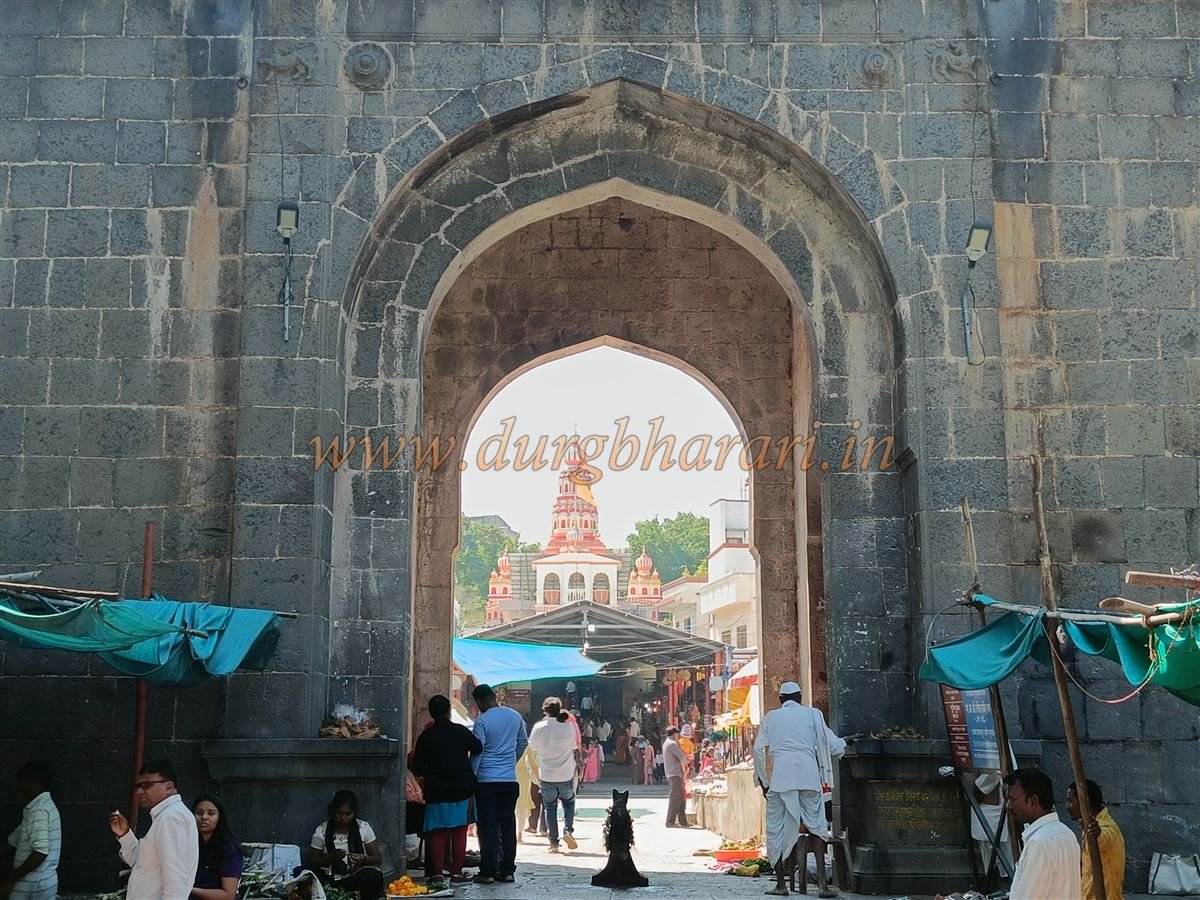
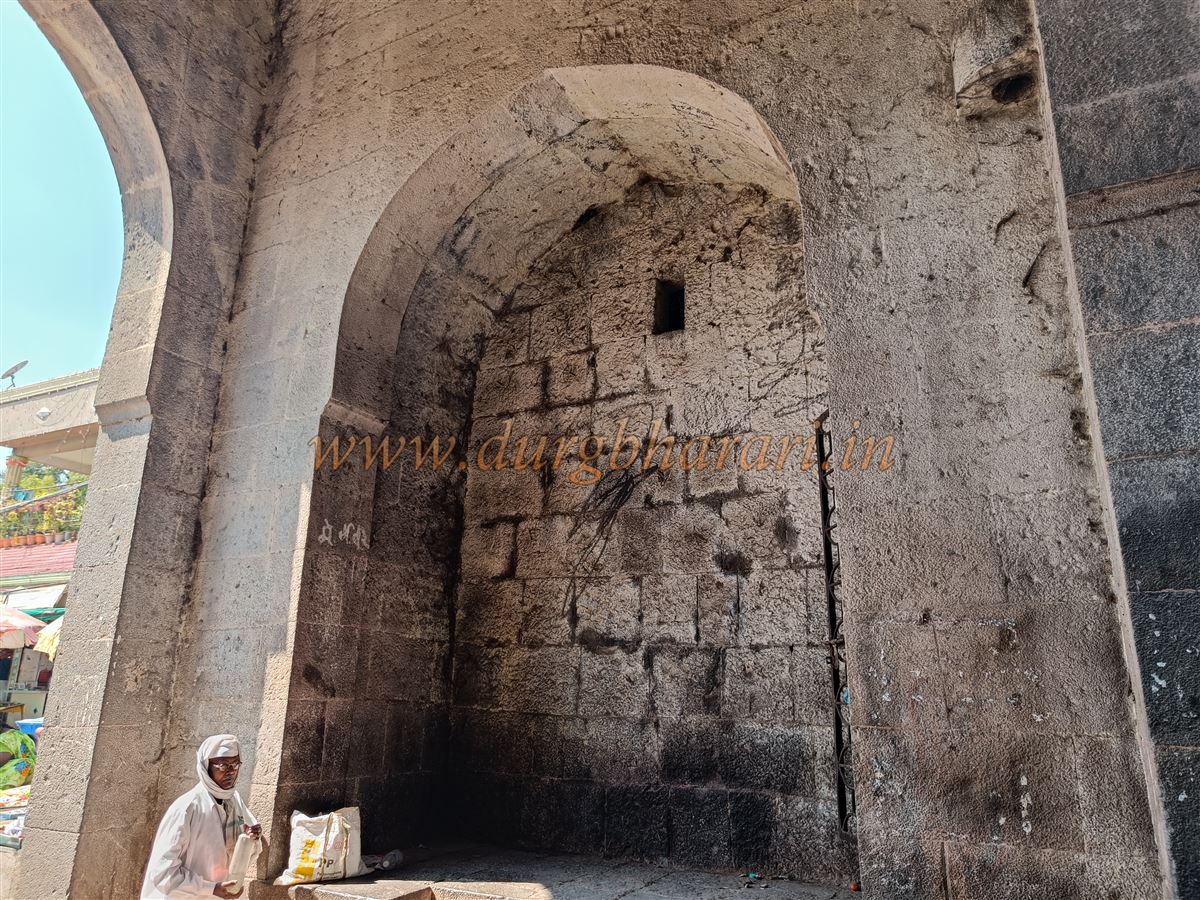
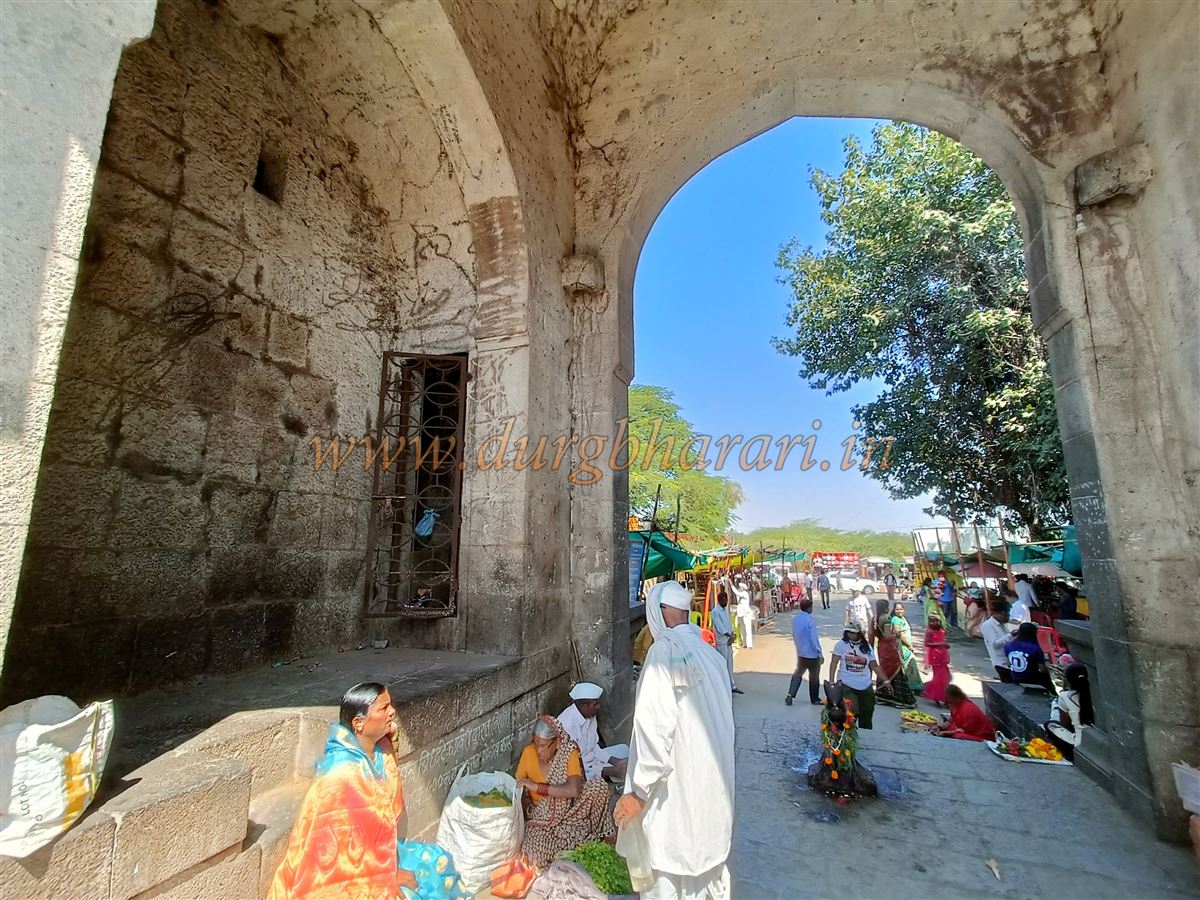
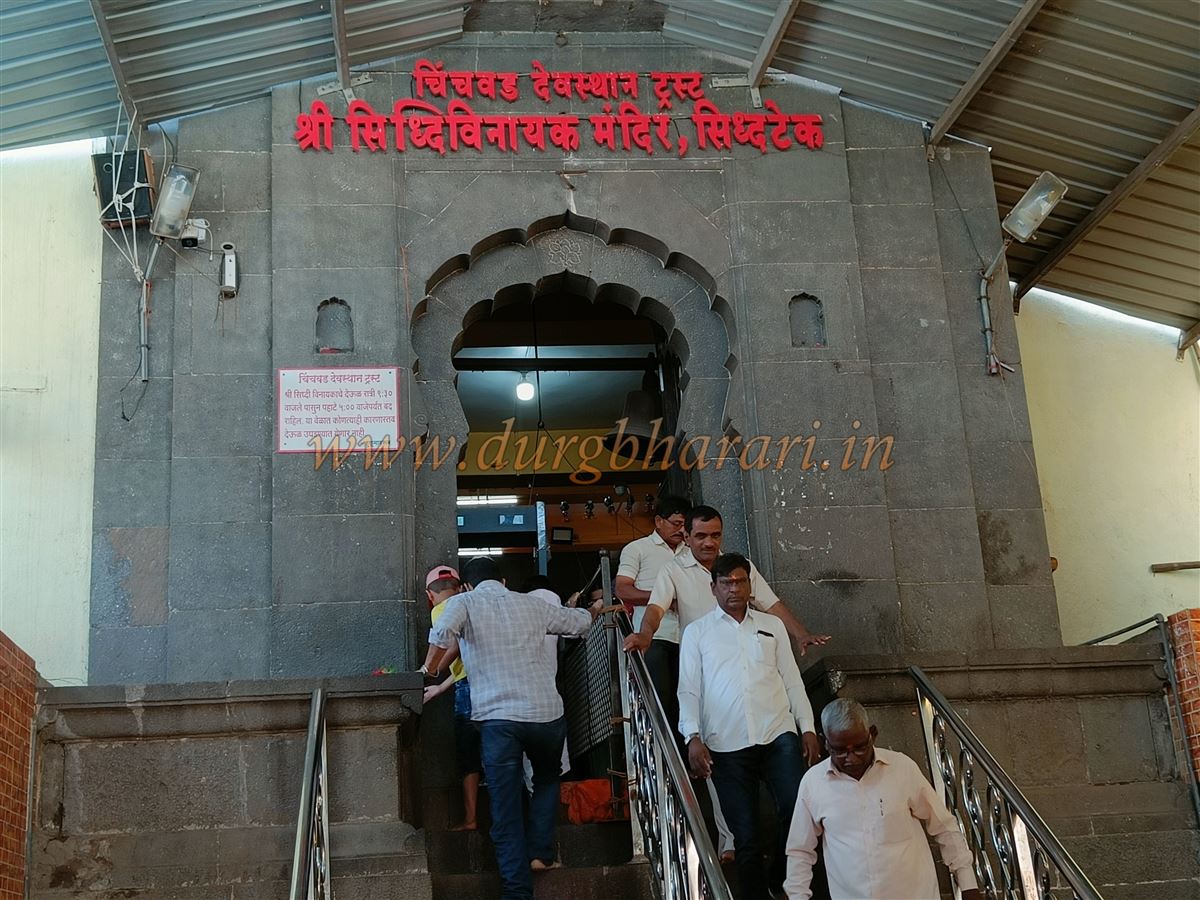
This temple, which held great importance during the Peshwa era, stands on a small hillock, at the base of which lies the original Siddhatek village. Approaching the temple, visitors pass through a grand gateway, reminiscent of a fort entrance, leading up to the shrine. This gateway, along with the stone-paved pathway to the temple, was built by Peshwa noble Haripant Phadke. The façade of the gateway features carved sharabh (mythical beasts) and lotuses on the arch, along with intricate designs. Inside, there are guardrooms on either side, one containing a staircase leading to the top of the gateway. The inner face of the arch also displays two carved lotuses and a pair of wrestlers locked in combat at its center.
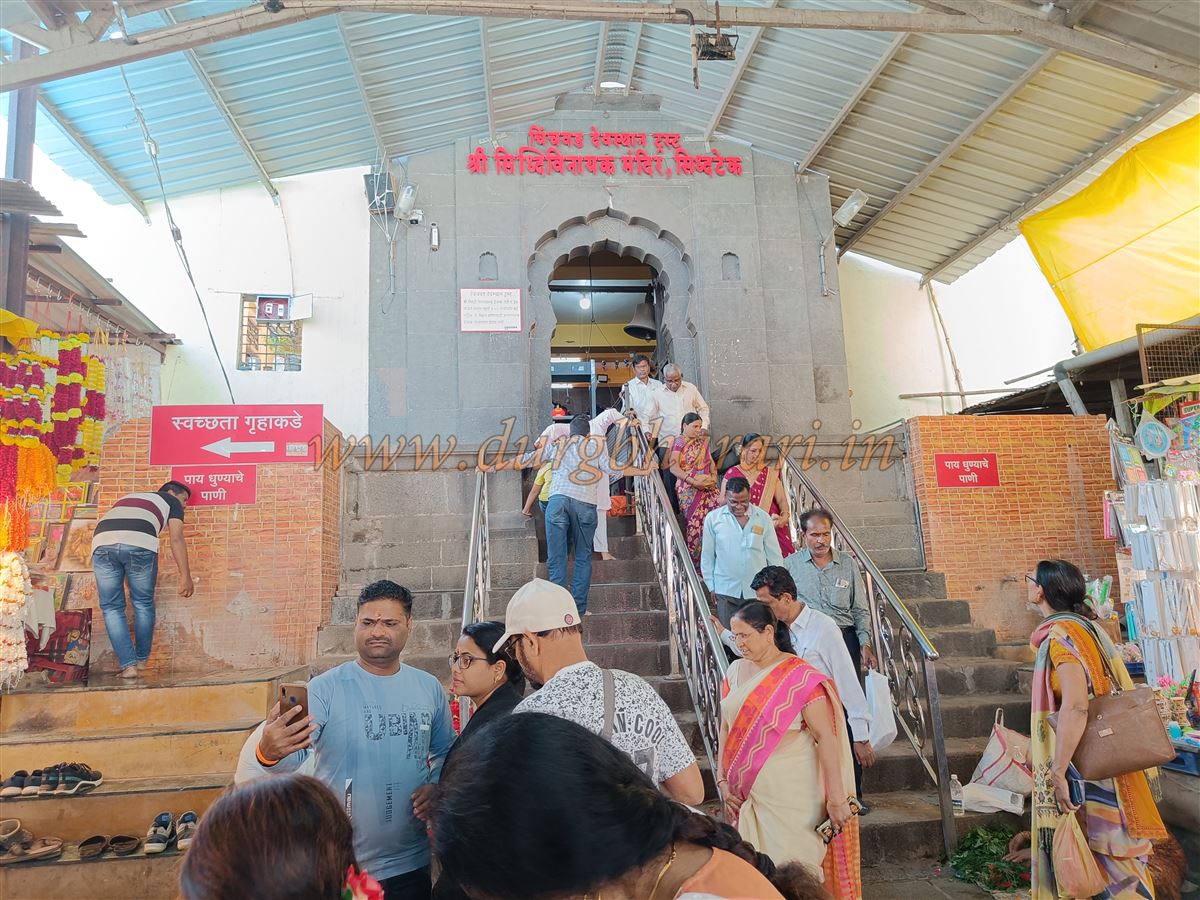
Passing through the bustling row of shops, one reaches the temple. This west-facing stone temple was built by the pious queen Ahilyabai Holkar. The plinth of the temple rises approximately 12 feet above the ground. The sanctum, measuring 15 by 10 feet, houses a three-foot-tall and two-and-a-half-foot-wide stone idol of Ganesha, seated in a brass frame on a stone throne. The idol has its trunk turned to the right and is flanked by Riddhi and Siddhi on its lap, while the figures of the gatekeepers Jaya and Vijaya stand on either side. Adjacent to the sanctum is a chamber containing a Panchayatana shrine dedicated to Shiva.
Outside the sanctum is a Sabhamandap (assembly hall), followed by a mahadwar (main gateway) topped by a Nagarkhana (drum chamber). Within the temple complex are smaller shrines dedicated to Maruti (Hanuman), Shivaidevi, and Mahadev, and a Bhairav temple near the riverbank.
According to the Mudgala Purana, when Brahma began the work of creation, the demons Madhu and Kaitabha obstructed his efforts. Lord Vishnu fought them for many years but could not prevail. At that time, Lord Shiva advised Vishnu to worship Ganesha. It was at this very spot that Vishnu performed penance to Ganesha, attained siddhi (divine power), and ultimately destroyed the demons. Thus, this place came to be known as Siddhatek — the place where Ganesha granted siddhi.
It is said that Shri Moraya Gosavi, the great Ganesha devotee, first performed severe penance here before moving to Morgaon.
After completing darshan of Ganesha, one can take a narrow lane to the left of the row of shops. This lane also serves as the pradakshina (circumambulation) path for the temple and leads to the wada of Haripant Phadke.
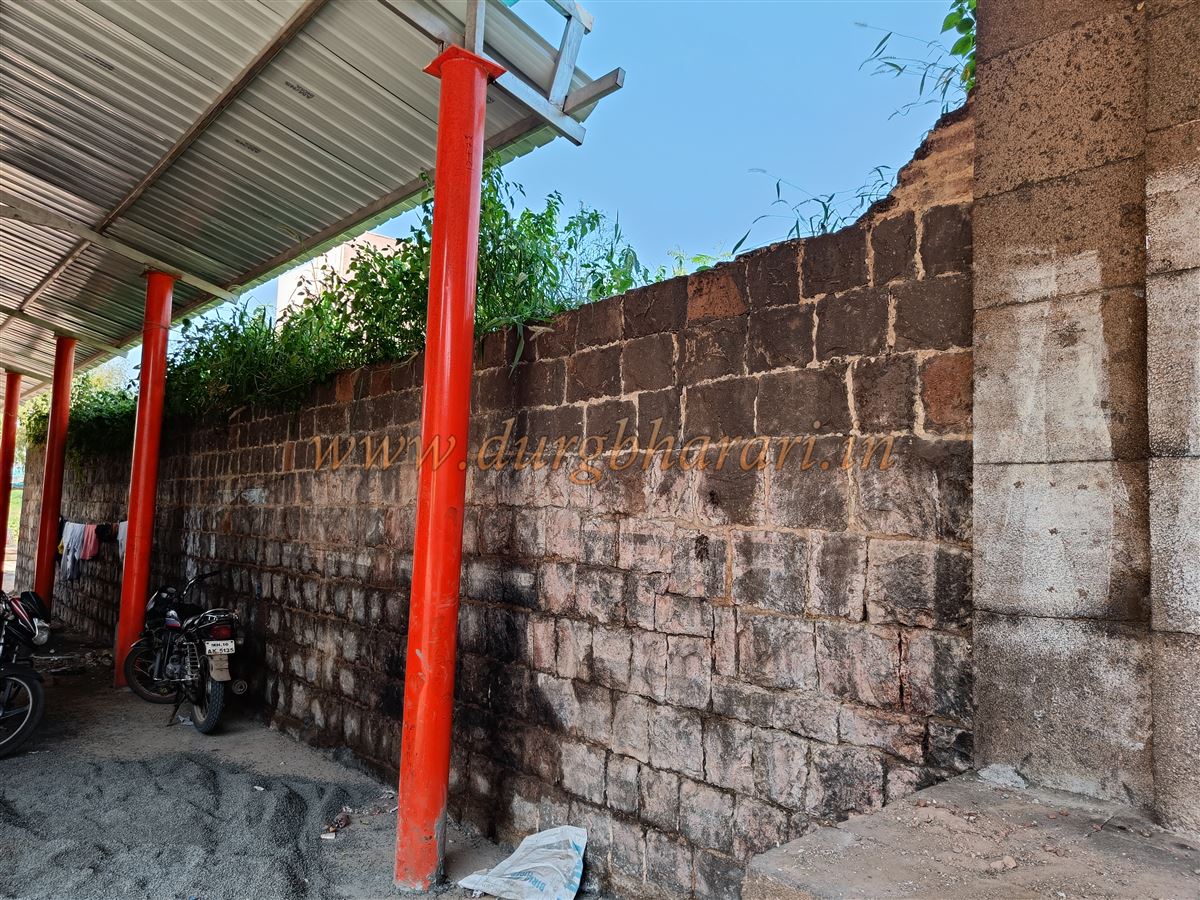
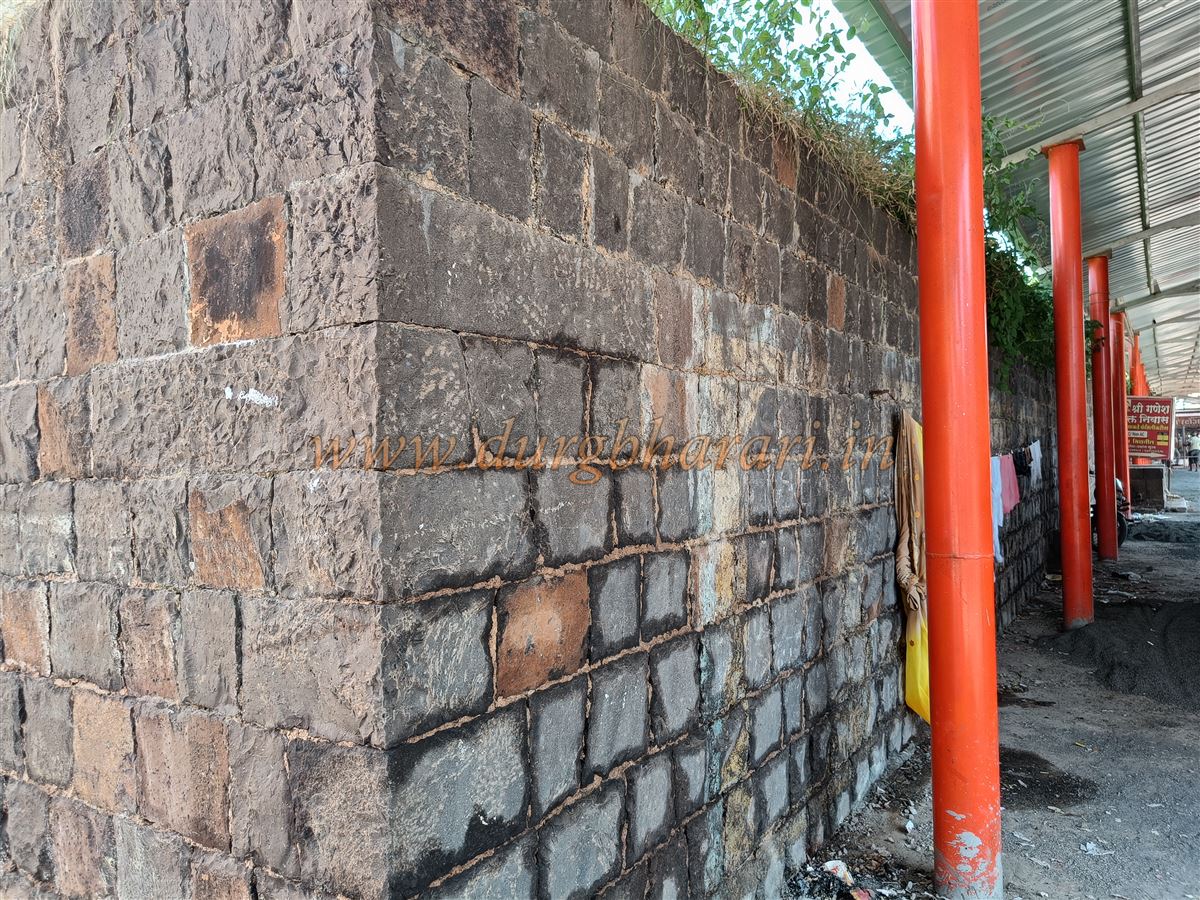
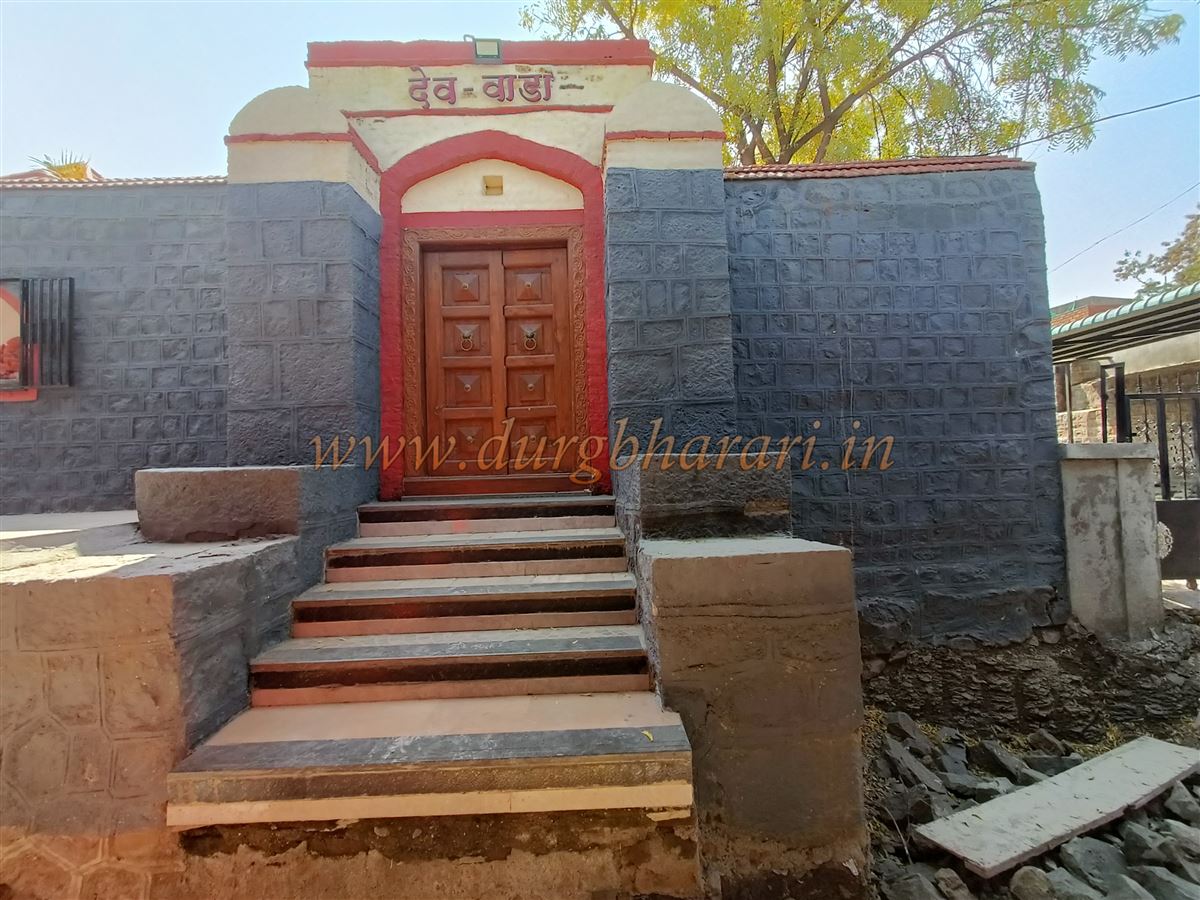
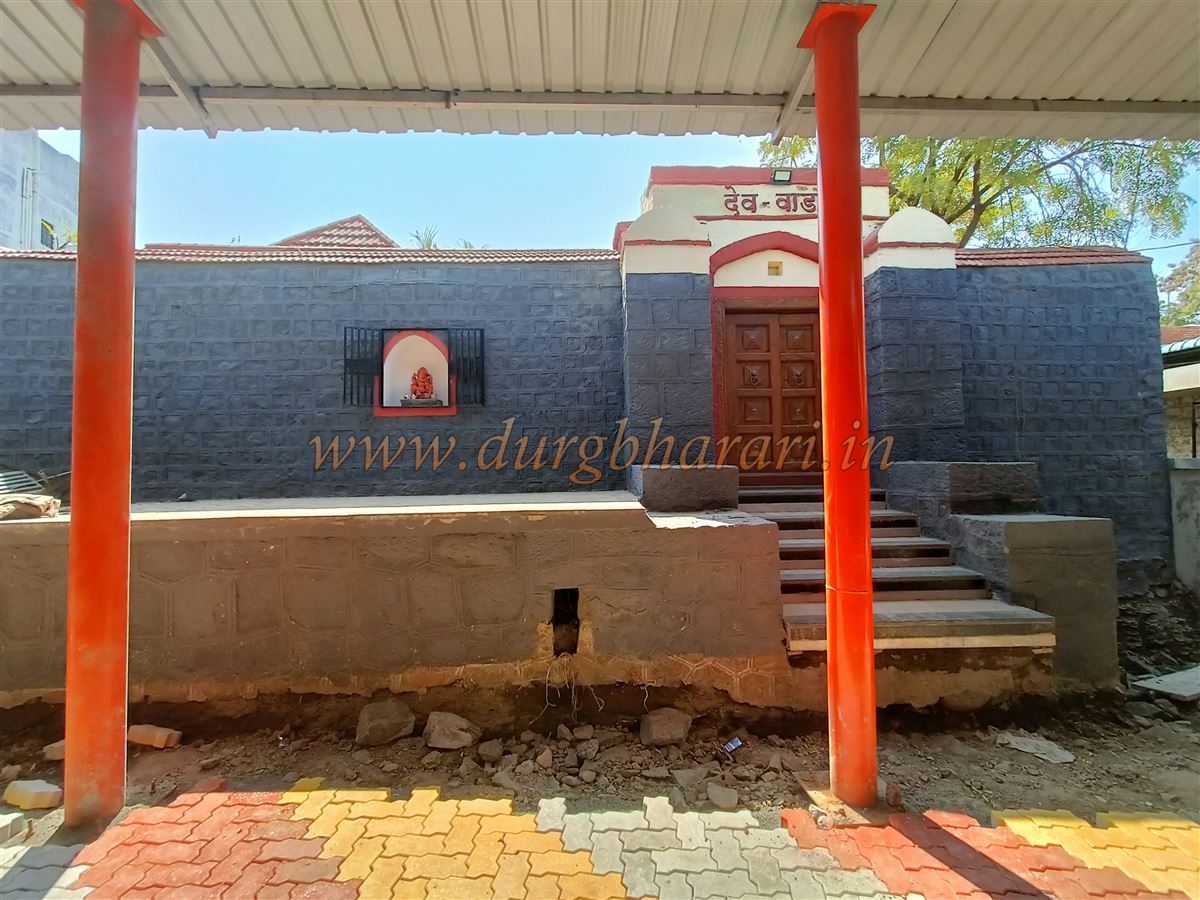
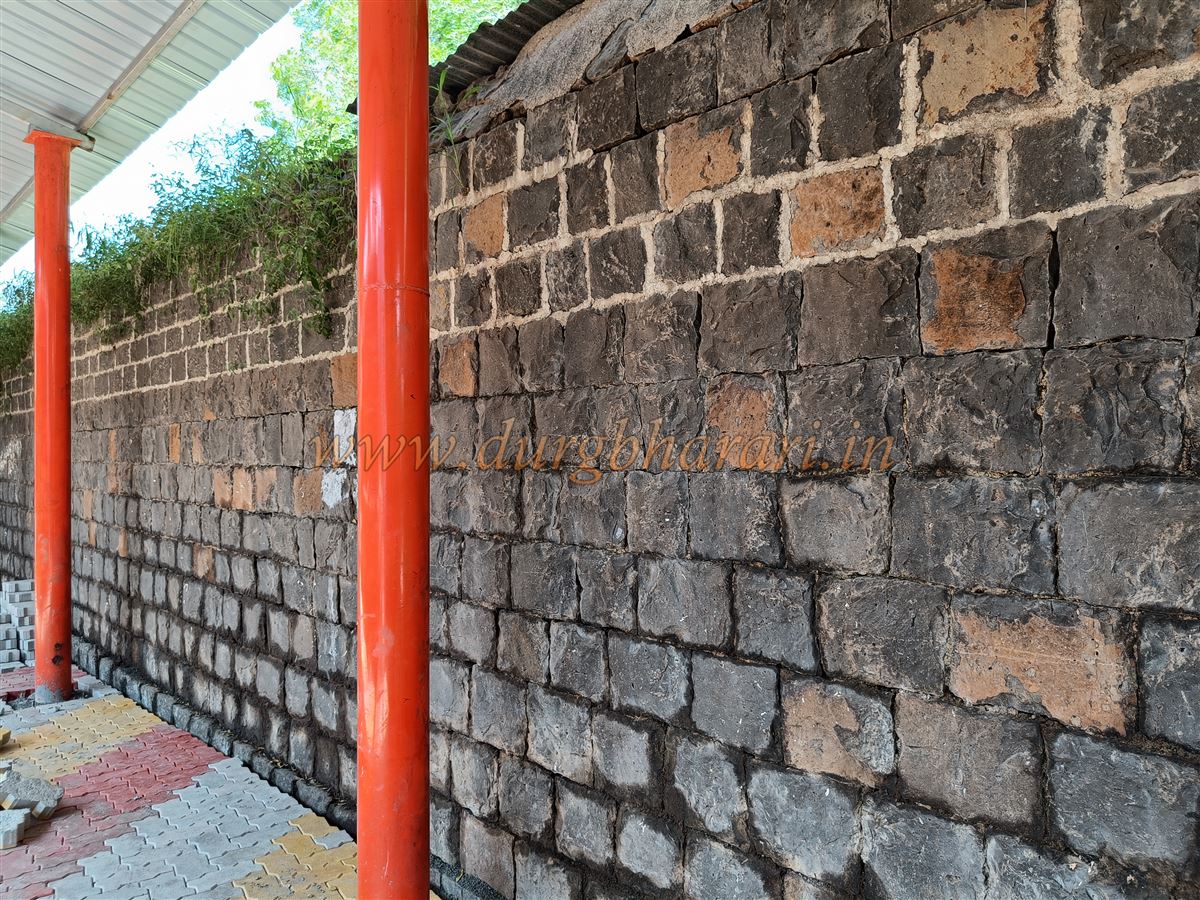
At present, the wada lies in ruins, with only its enclosing fort-like wall and the gateway remaining. The gateway, now secured with an iron grille, prevents entry, but one can see the inner courtyard through it. Rectangular in shape and covering about a quarter of an acre, the wada’s fortifications are built of dressed stone, while the arch above the eastern-facing gateway is constructed of brick. Notably, the enclosure wall lacks any bastions. Thus, unable to enter, the exploration of the wada ends at the gateway itself.
Haripant Phadke date of birth is unknown, but his active career spans approximately from 1729 to 20 June 1794. Haripant was an astute diplomat and an important noble during the late Peshwa period. His family hailed from Guhagar in Konkan and migrated inland around 1700 alongside the Dikshit-Patwardhan families. His father, Balaji Hari, worked for the Dikshit-Patwardhan and died in 1755. Until 1761, Haripant himself served them as a clerk in their financial affairs.
Later, Peshwa Madhavrao I employed him as a clerk under Nana Fadnavis. Through his merit and capability, Haripant rose to become commander-in-chief (Senapati) in the court of Peshwa Sawai Madhavrao. In 1771, when Madhavrao was gravely ill, Haripant was entrusted with the guardianship of Narayan Rao. The Peshwa also granted him the Deshmukhi vatan of the Kelshi Mahal in Konkan, along with 33 villages in the Ratnagiri region, Harnai port under Suvarnadurg, and Siddhatek village in Pune district as inam (tax-free grants). Dhondo Ballal was appointed as the revenue officer for these inam lands.
It was during this time that Haripant, out of deep devotion to Ganesha, built his residence near the Siddhivinayak temple at Siddhatek — the very wada that still stands in ruins today. This mansion, built approximately 253 years ago, was also where he presented a silver idol of Ganesha at Siddhatek and a gold idol at Parvati temple.
During Narayan Rao Peshwa’s rule, Haripant held an influential administrative position. Fearing blame for a decision error during the assassination of Narayan Rao, he fled to Baramati upon hearing the news. However, he later played key roles in the political turbulence that followed — including the Barbhai council’s intrigues, the rebellion of the pretender (the "Totya Peshwa"), Moroba’s uprising, Raghunathrao machinations, and the wars against Tipu Sultan. Haripant was also entrusted with the protection of young Sawai Madhavrao during his minority.
On 20 May 1786, during the siege of Badami against the Mysore state, Haripant commanded 50,000 troops and achieved victory. For his services, the Nizam conferred upon him the title of Wazir-ut-Mamalik. Haripant’s successful negotiations with the British, his defeat of Hyder Ali, and his efficient collection of tribute instilled great respect for him in the Peshwa court. He was one of Nana Fadnavis’ principal advisors, often offering gentle but firm criticism of Nana’s errors. His qualities included political foresight, selflessness, fearlessness, appreciation of merit, and excellent public relations.
On 20 June 1794, after the Battle of Kharda, Haripant Phadke passed away at this very wada in Siddhatek.
© Suresh Nimbalkar
GALLERY