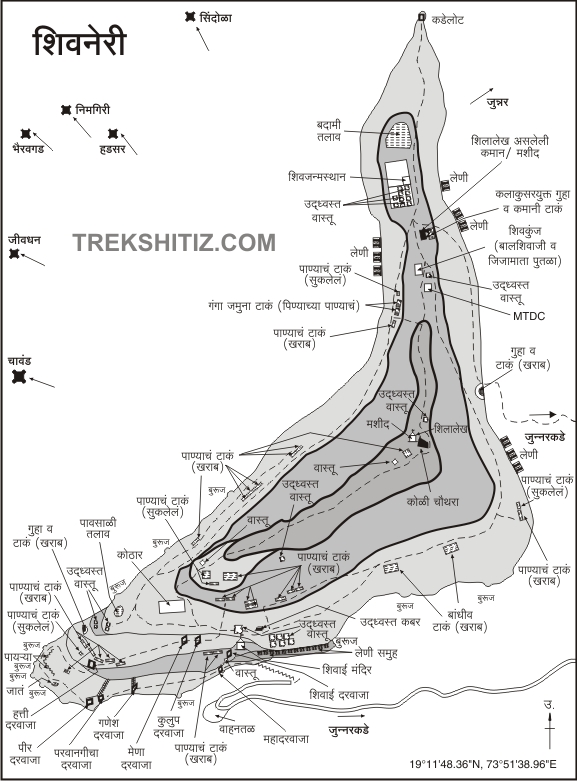
SHIVNERI
TYPE : HILL FORT
DISTRICT : PUNE
HEIGHT : 3340 FEET
GRADE : EASY
Shivneri Fort, located in Junnar taluka to the north of Pune city, holds a place of honor in the Marathi heart, comparable to that of Raigad. Chhatrapati Shivaji Maharaj, the founder of the Hindavi Swarajya, was born on this fort. Even before Shivaji Maharaj’s birth, this fort, located on the Naneghat trade route, served as the capital of the Shakas. Since a large volume of trade passed through the Naneghat route at that time, the rulers of that period constructed forts along this route to keep watch, and Shivneri was one of them. After the Shakas, the fort witnessed the rule of the Satavahana, Chalukya, and Rashtrakut.
Since Junnar was a major market on the Naneghat route, this fort had special importance. Later, during the Yadav period, Shivneri acquired the form of a grand fort. Its layout consists of caves carved into the hillside below and the fort above.
...
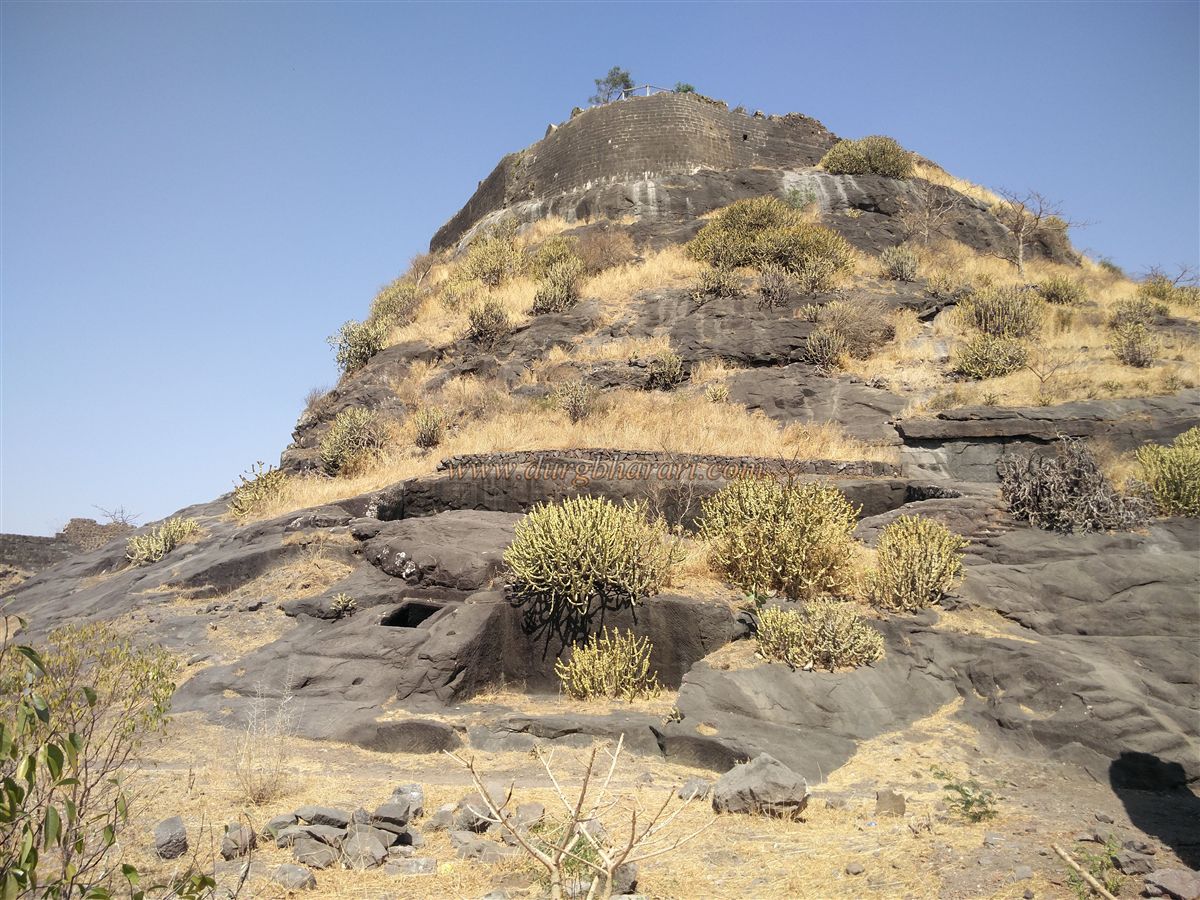
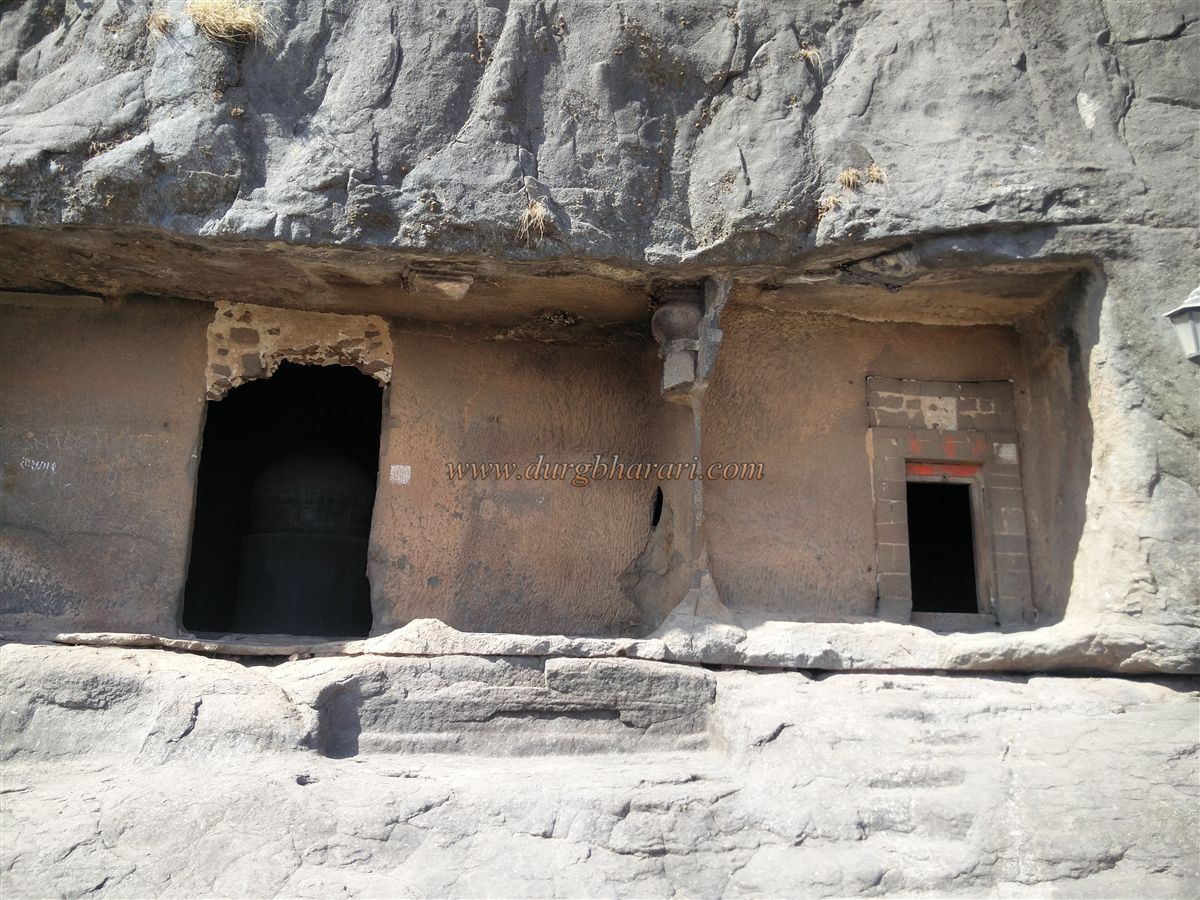
The fort and its surroundings, dating back to the Satavahana period, contain about 50 Buddhist caves from the 2nd century, including 78 viharas and 3 chaityagruhas, as well as nearly 60 water cisterns. Of these, 3 caves are unfinished, and based on 9 inscriptions carved there, some of the caves date back around 2,000 years.
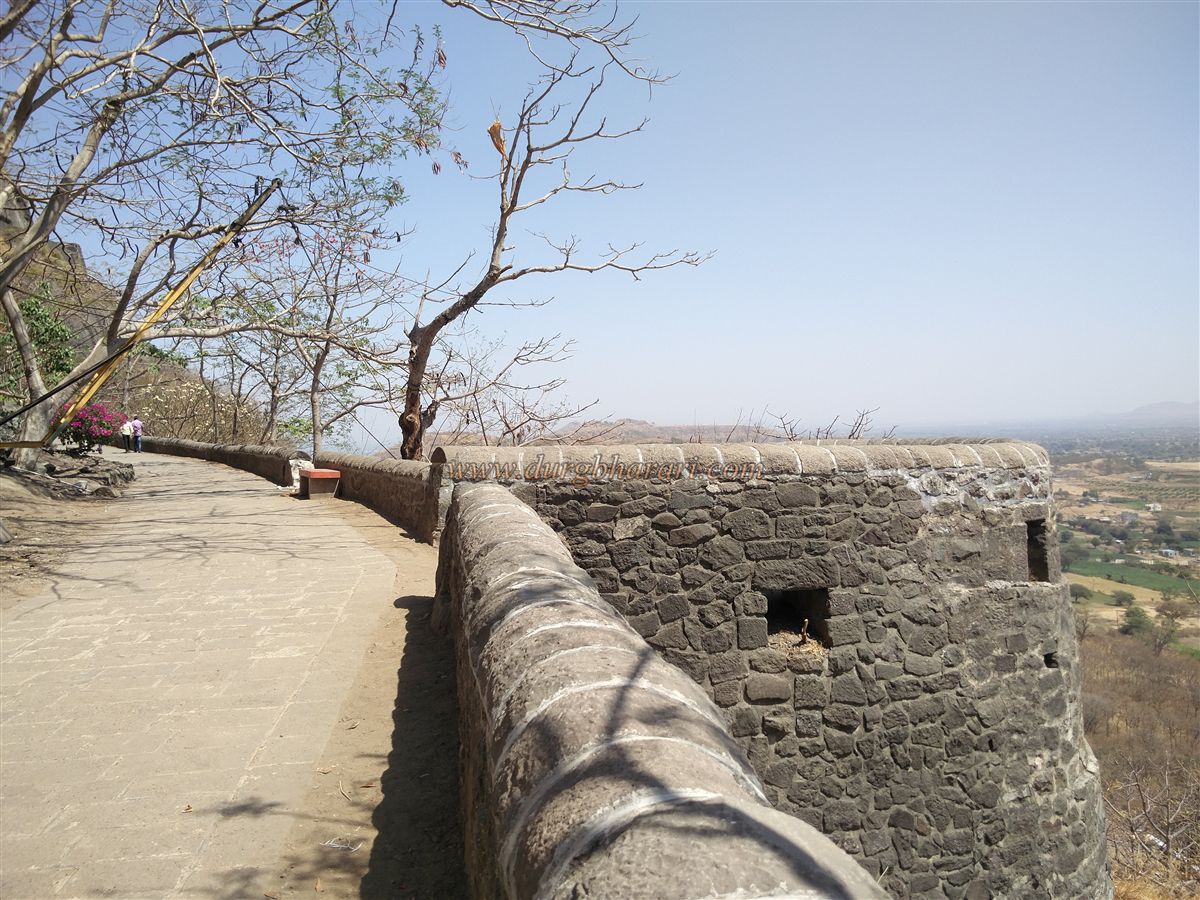
Shivneri Fort is located 103 km from Pune and about 4 km from Junnar town. As soon as one enters Junnar, the fort is visible right in front. The height of the fort is 3,200 feet above sea level, and it rises about 900 feet from its base. The fort stretches about 1.5 km north-south. The southern part of the fort is semi-circular, gradually narrowing toward the north. Though not very tall, Shivneri enjoys natural protection on all sides with vertical rock faces 100–125 feet high, so fortifications were built only at certain strategic points. Due to the numerous caves within, the fort is easily recognizable even from a distance. Some caves are easily accessible, while others require some effort to reach.
There are two routes to reach the fort. The first is the paved road leading to the main gate, while the second, more difficult path, is the Chain Route (Sakhali Chi Wat). To take the Chain Route, from the Shivaji statue in Junnar city, travel about 1 km along the road going left, where a temple appears on the right side. In front of this temple, a worn footpath leads directly to the rock face of Shivneri Fort. This eastern path begins approximately midway along the length of the fort and ascends toward the caves carved into the rock cliffs. Here, one must climb narrow steps cut into the rock, making this section a little dangerous. Using the wires fixed to the wall and the carved rock steps, one can climb up. Previously, chains were attached for support, which is why this path is called the Chain Route. It served as an emergency route for ascending or descending during crises or for escape during attacks.
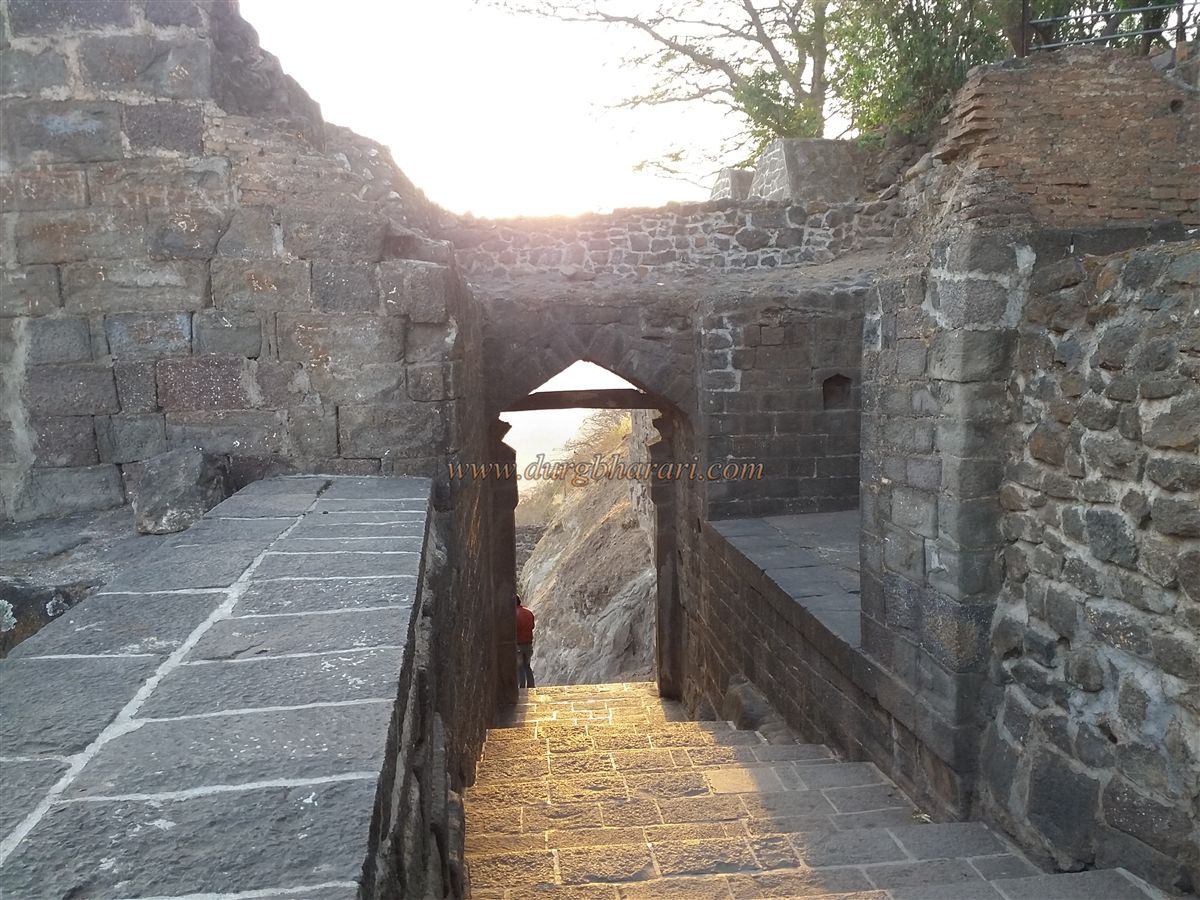
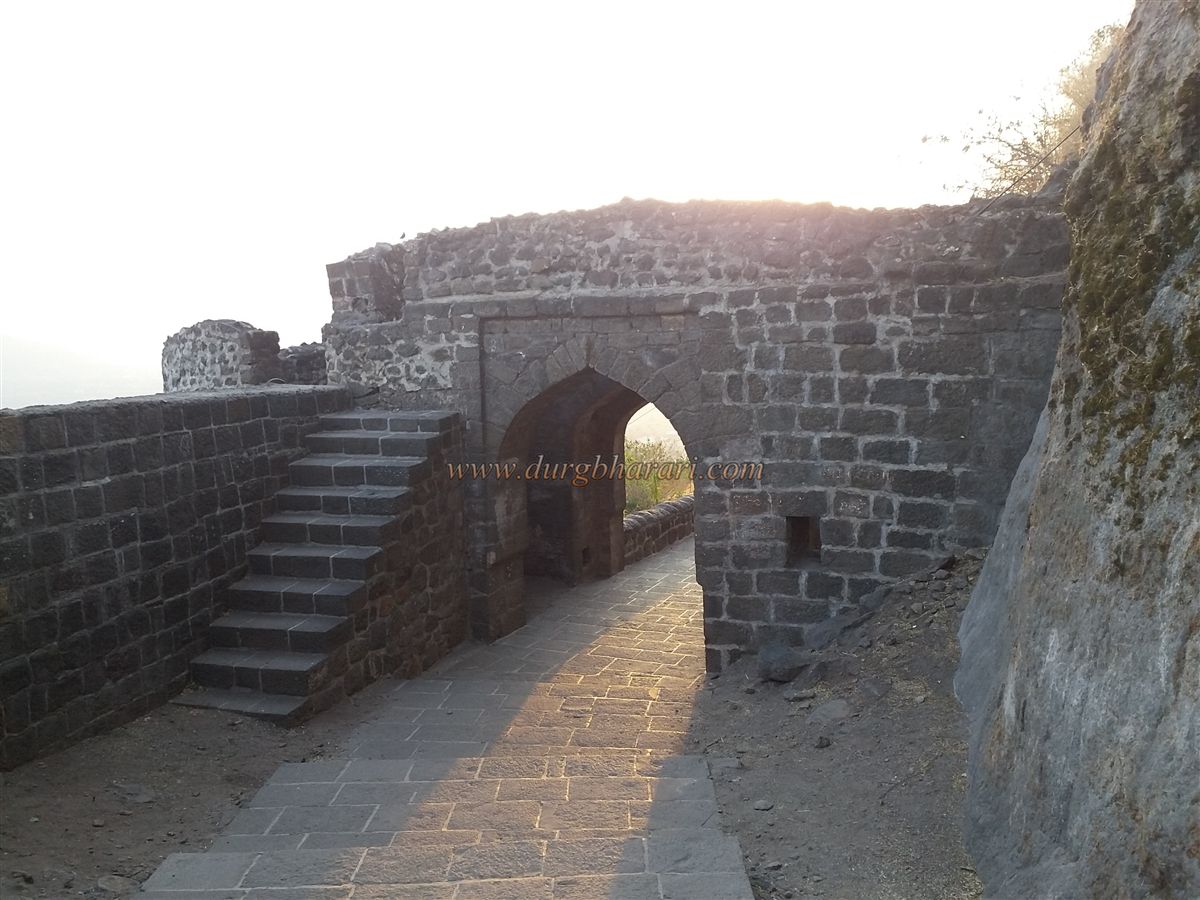
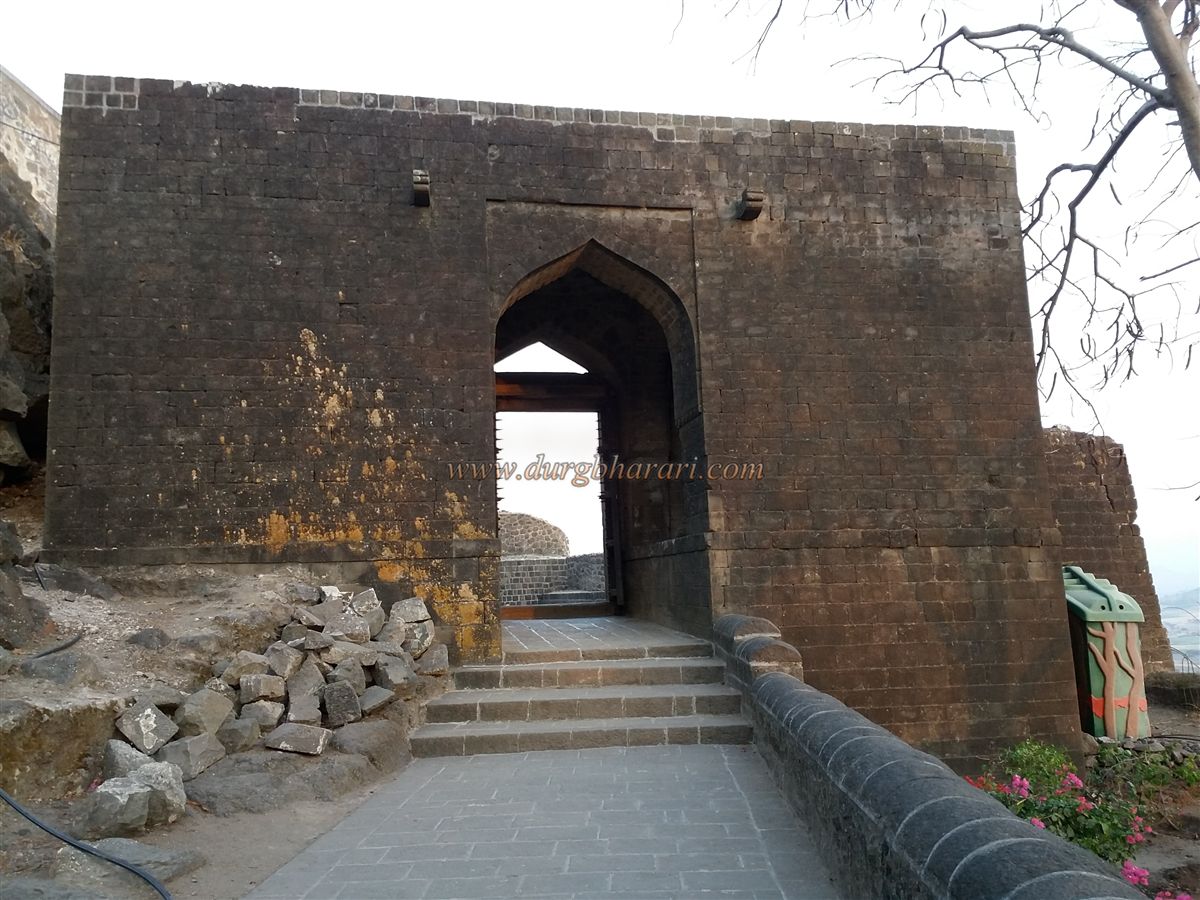
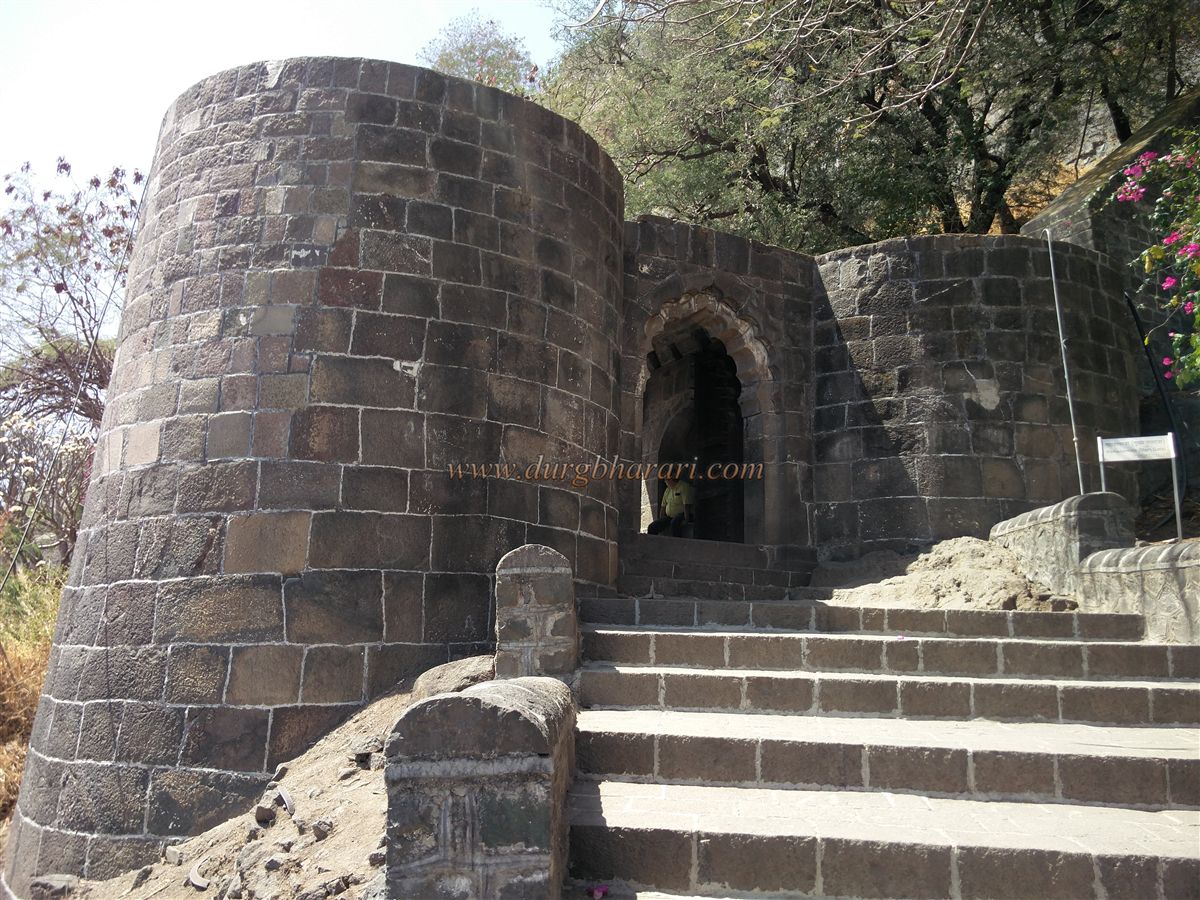
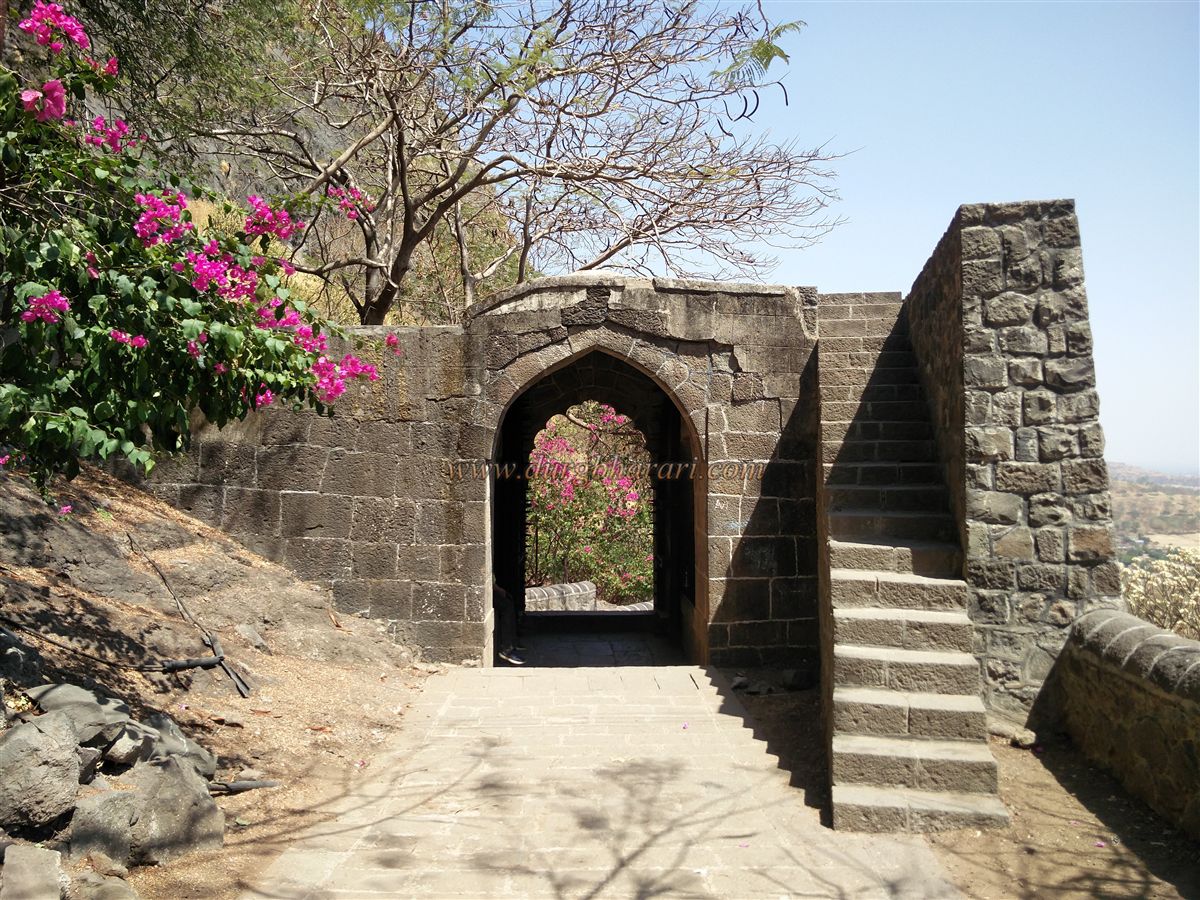
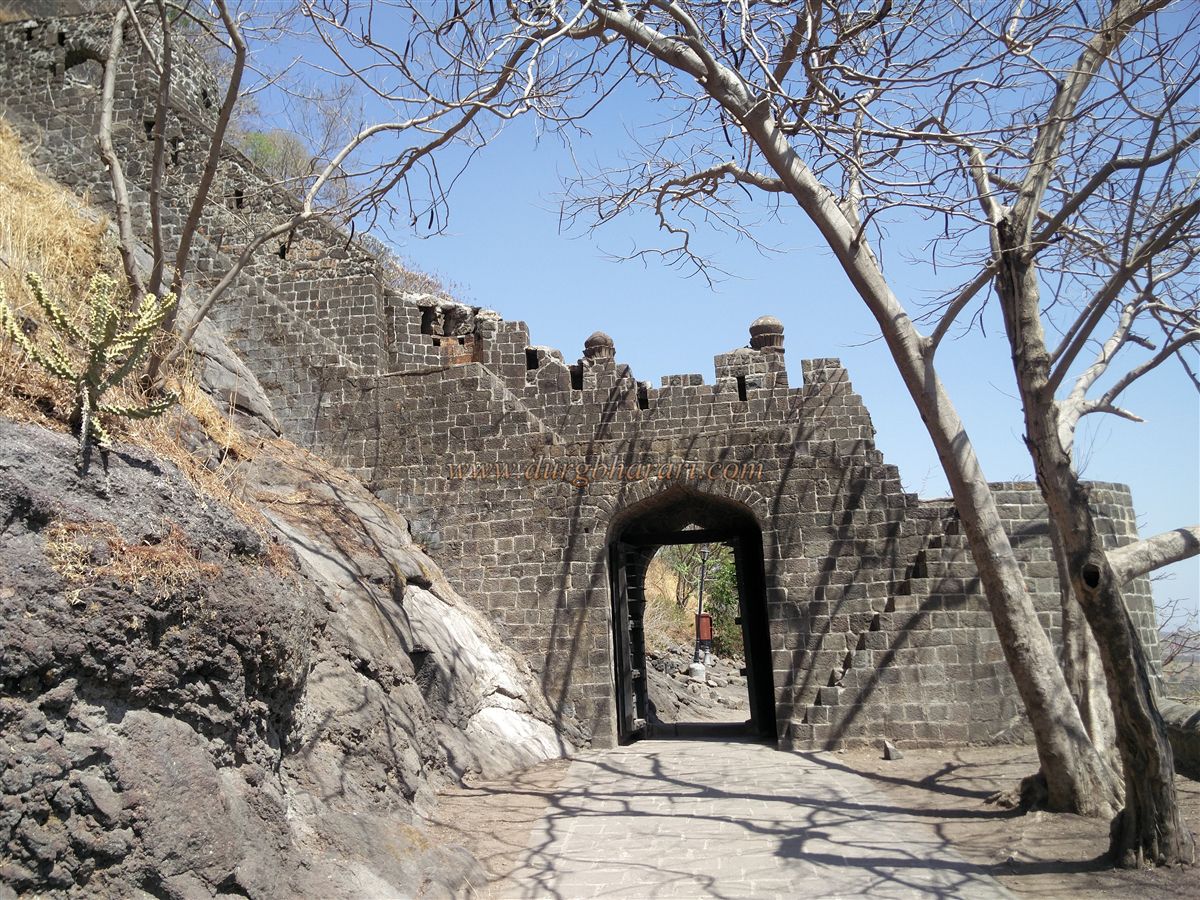
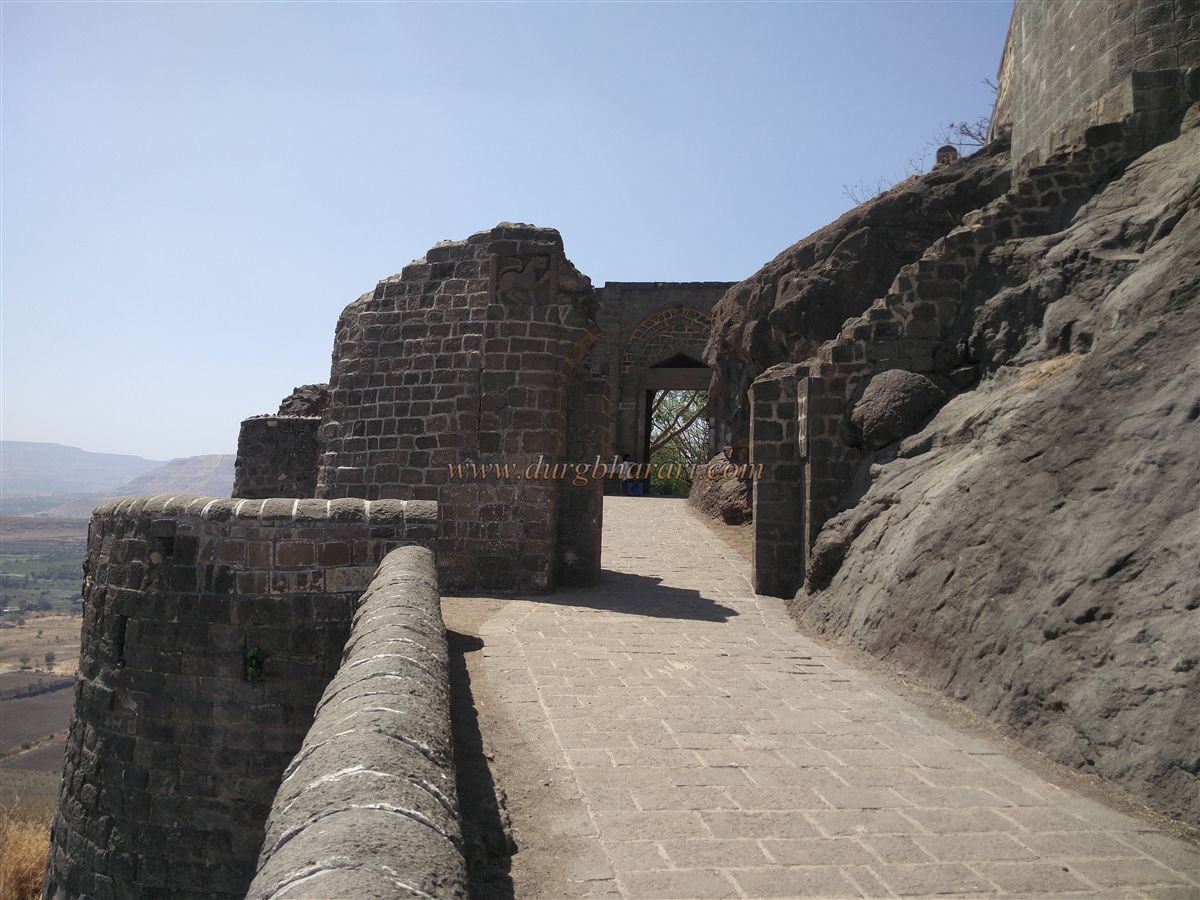
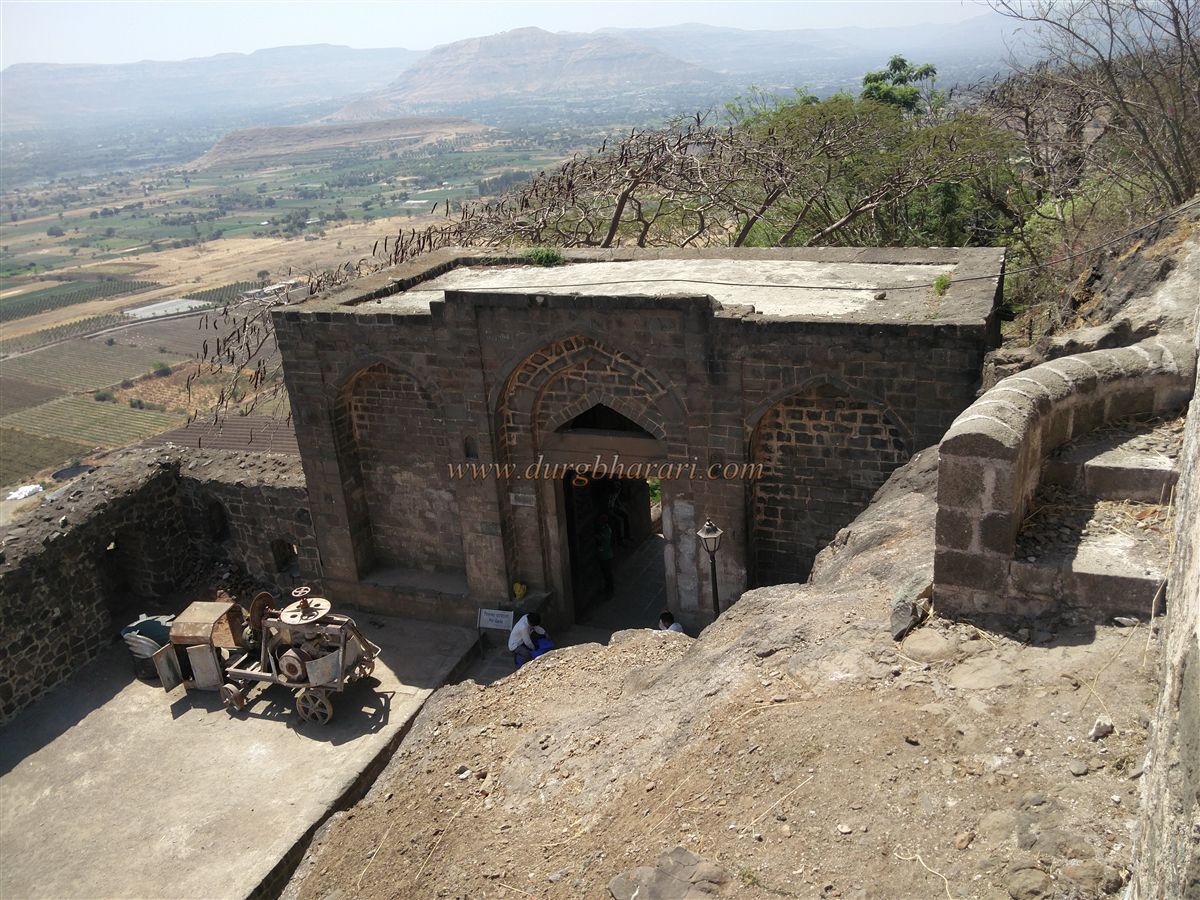
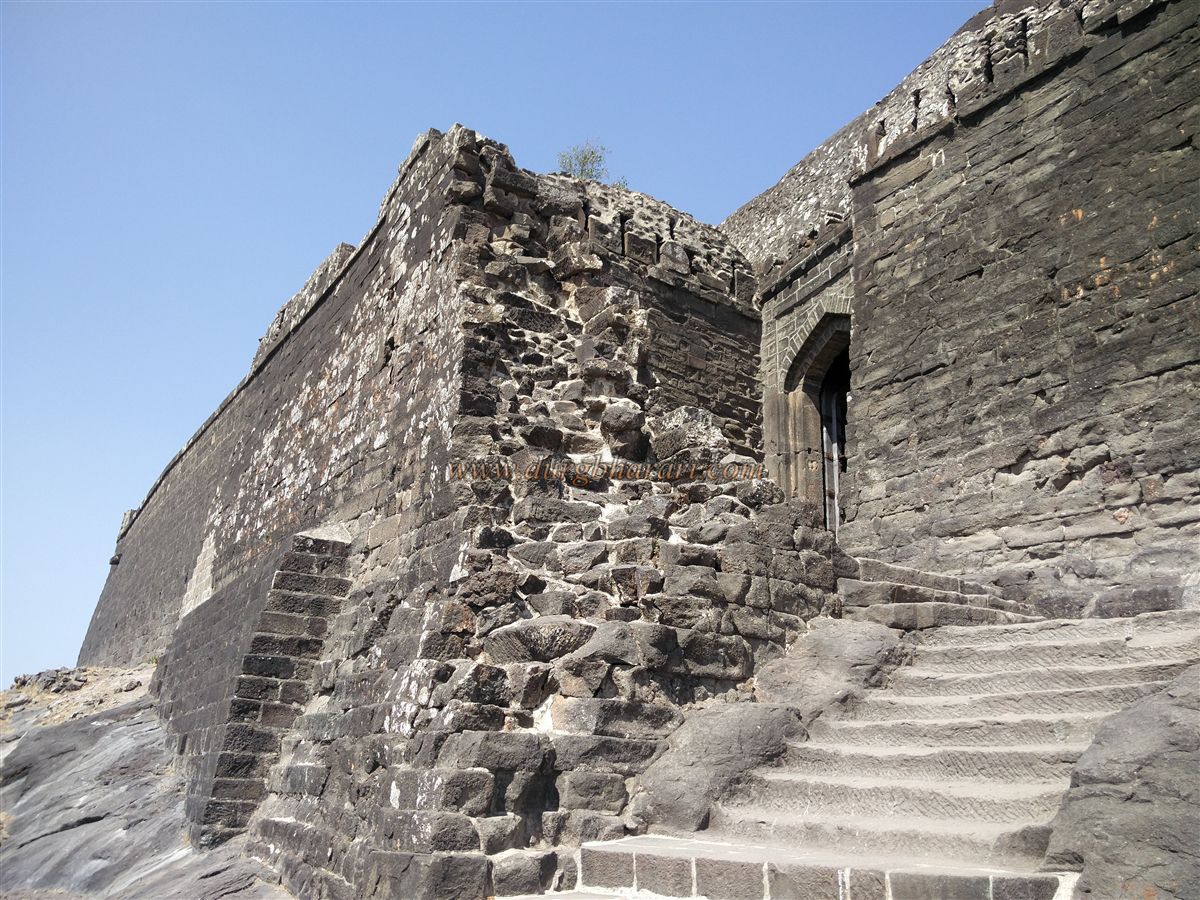
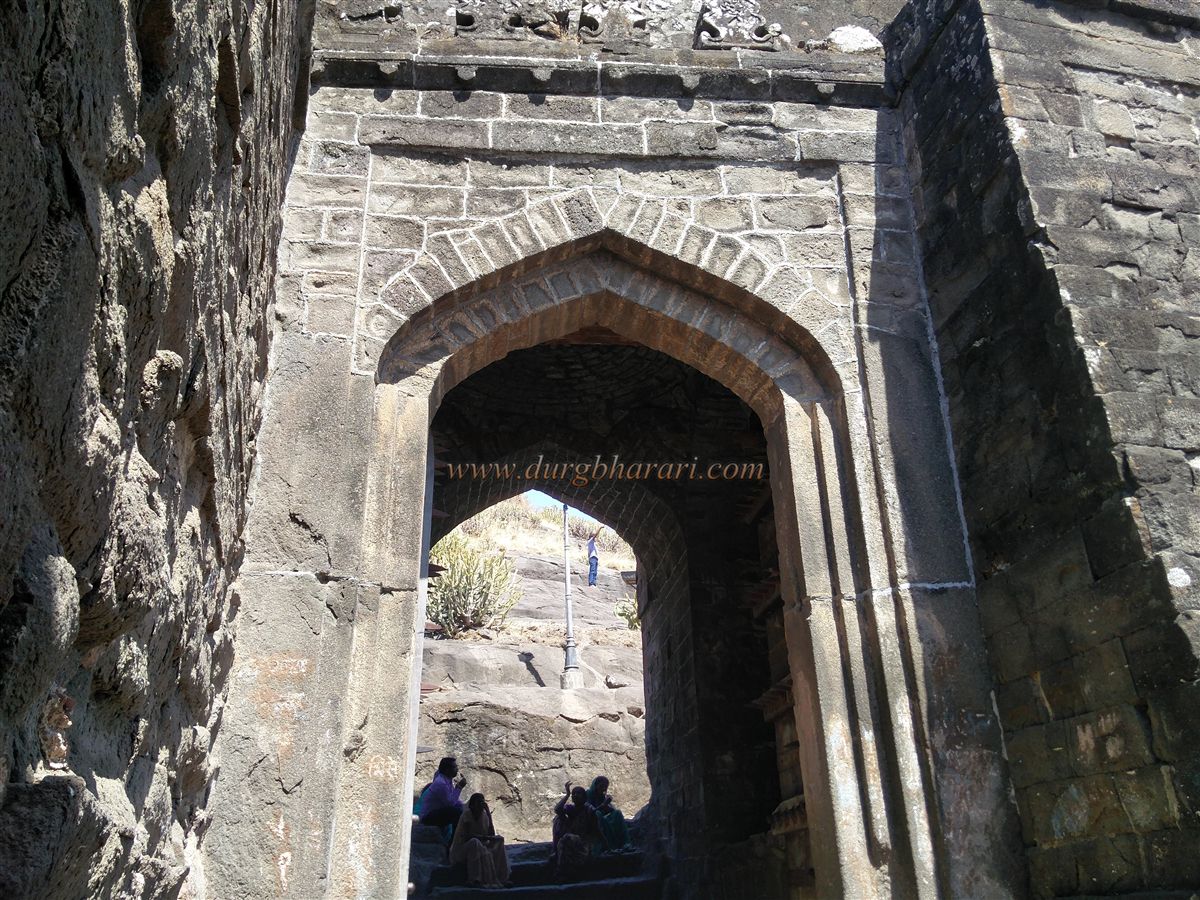
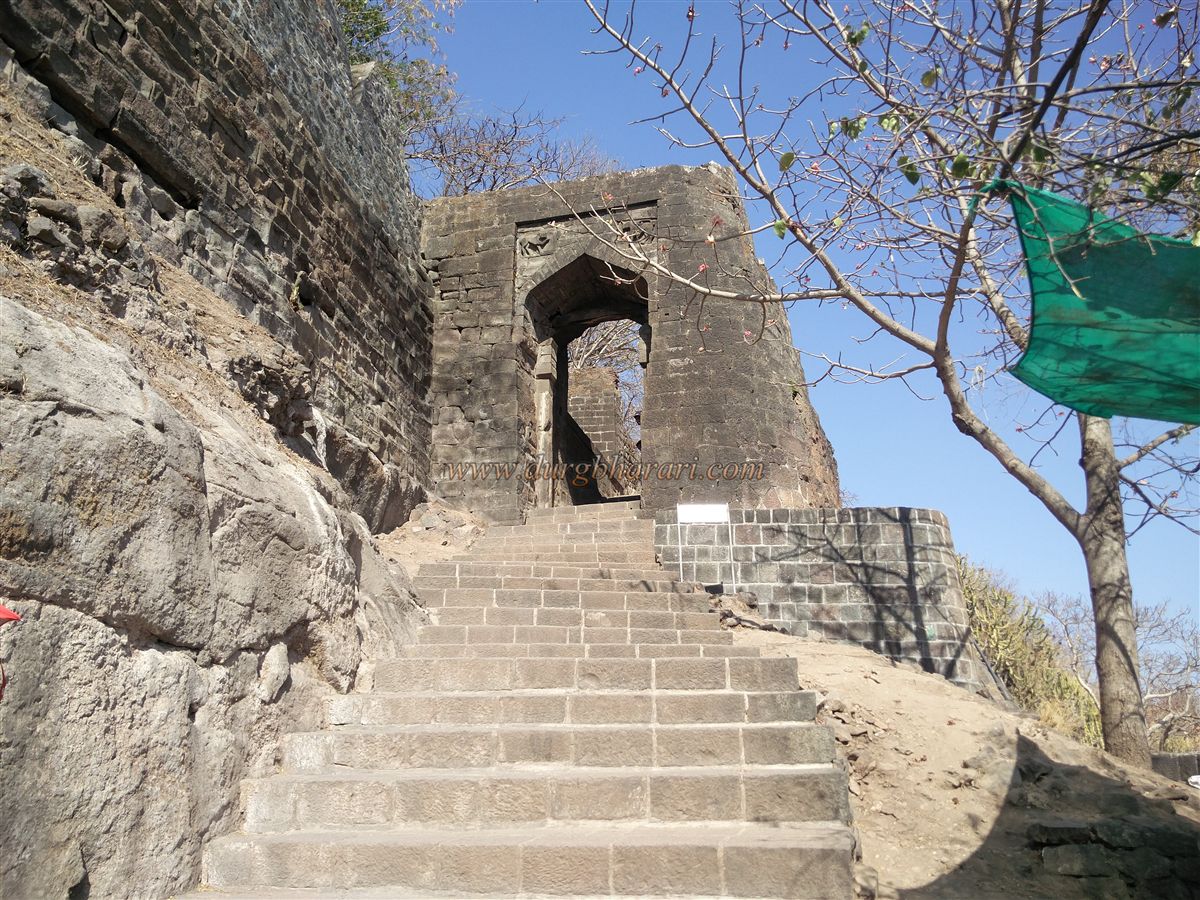
The paved road allows vehicles to reach about halfway up the fort. From there, after climbing a few more steps, one reaches the top. This route passes through seven gates in succession. The first gate is the Mahadarwaja. The second gate is known as the Ganesh Darwaja or Permission Gate. Above this gate are two minarets with carvings of Sharabh on the arch. On the left Sharabh, a dog is carved in its right paw, while on the right Sharabh, two elephants and a Gandabherunda are shown held in its claws. The Gandabherunda is a mythical two-headed bird resembling Garuda.
Further along the path is a square with two gates. The first gate here is in ruins and has a Sharabh carved on the left side. This ruined third gate is called the Peer Darwaja. Beyond this square lies the fourth gate, called the Hathi Darwaja (Elephant Gate), which has no special symbols or carvings. Crossing this gate, the ruins of the fort become more visible. From here, there are both stone steps and carved rock steps leading upward. This path brings you to the fifth gate, the Sipai Darwaja (Soldier’s Gate). The original wooden door of this gate still survives, studded with pointed iron spikes. Its defensive design is noteworthy, and this may have been the fort’s original main gate. Handprint carvings can be seen on the lintel of this gate.
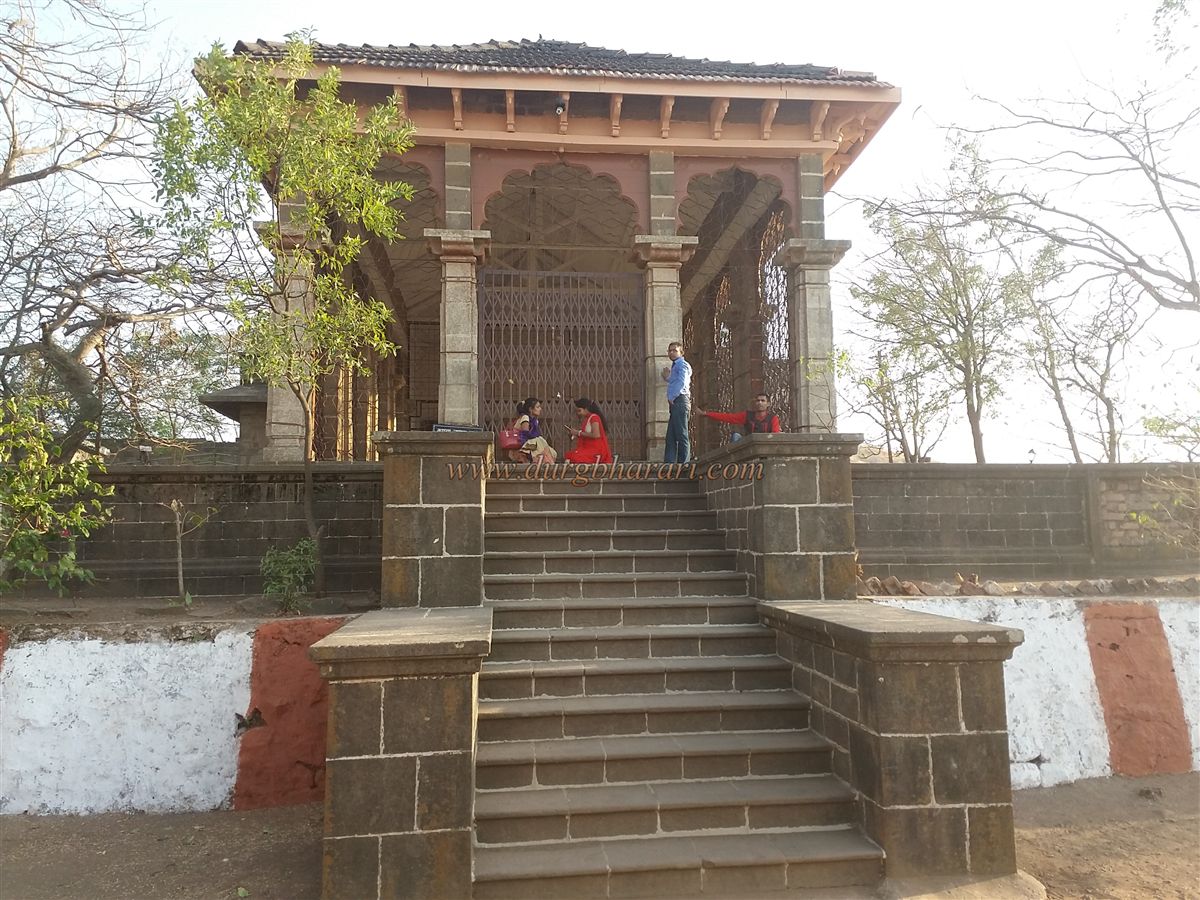
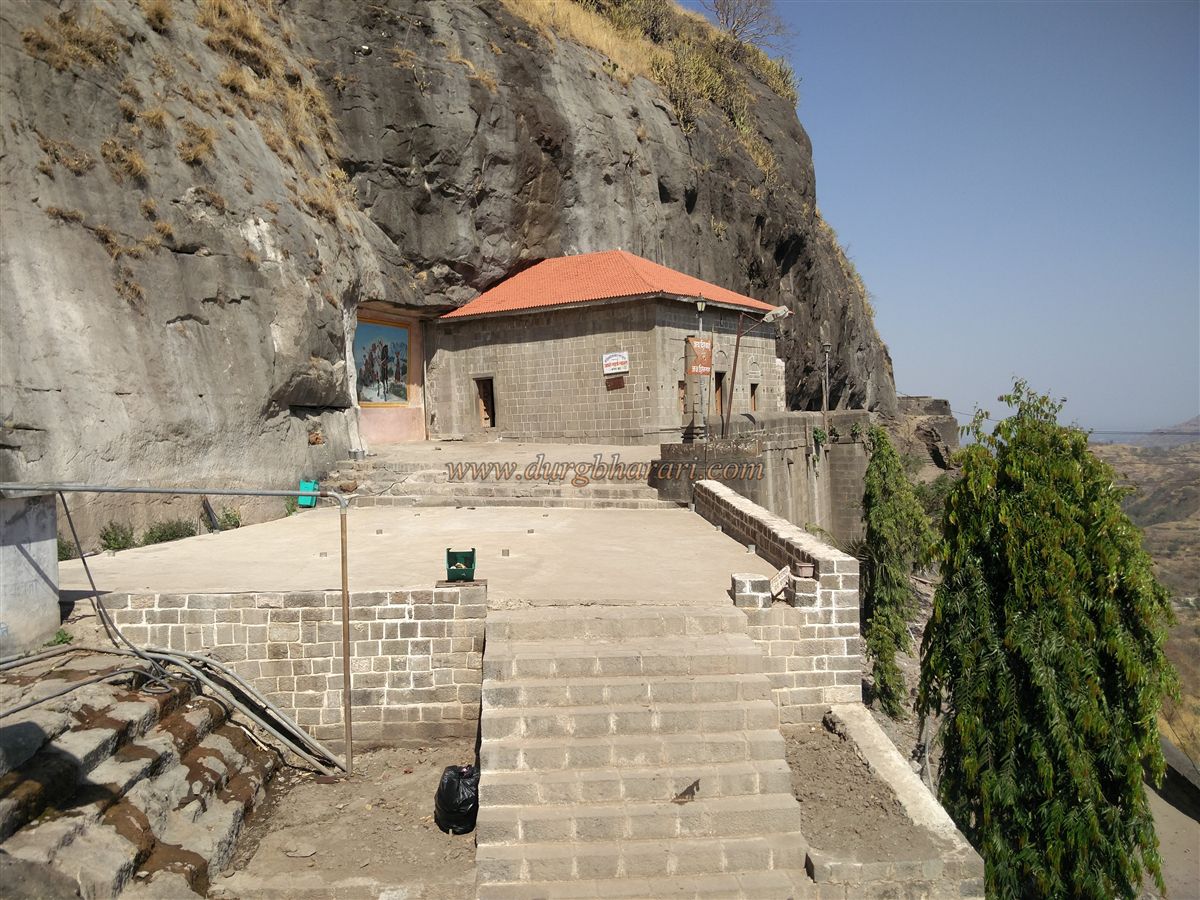
Passing through the Sipai Darwaja and taking the left path, two rock-cut caves and 8–10 water tanks are visible. The right path leads to the Shivai Temple. On the way to the temple, there are two rock-cut water tanks, and before entering the temple, one passes through a small, beautifully carved archway, likely of more recent construction. Inside, the original temple of Shivai is in a carved cave, housing a simple stone idol of the goddess. Later renovations transformed it into a built temple. It is believed that Shivaji Maharaj was named after this goddess Shivai.
Continuing straight from the temple, 6–7 Buddhist caves are seen carved into the rock on the left. At the entrance of two caves, there are inscriptions on the left side. In front of some caves, cisterns carved into the rock can be seen. These caves date back to around 200 BCE. Being close to the Naneghat trade route, these must have served as rest stops for traders and monks.
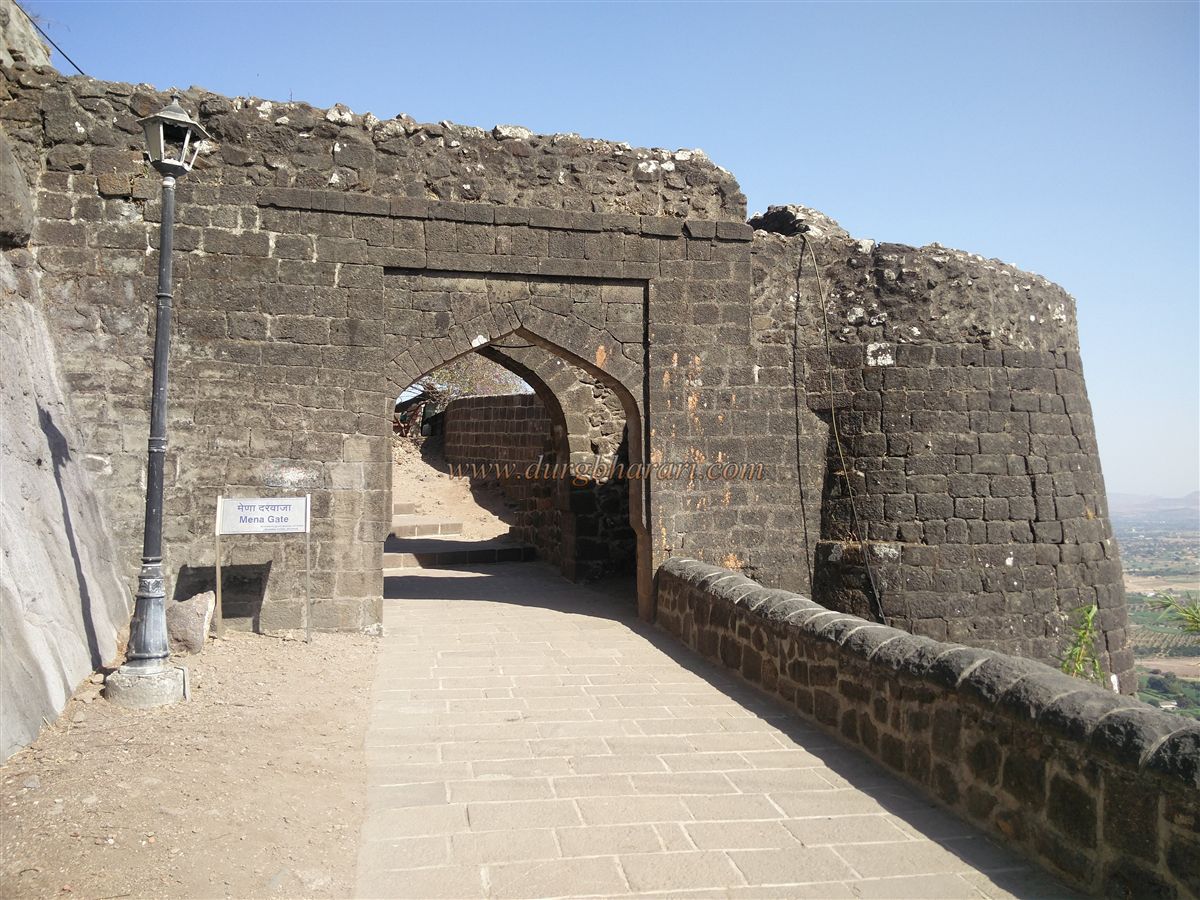
Returning to the main path and continuing straight, one reaches the Phatak or Mena Gate. Beyond that lies the seventh and final gate, the Kulabkar Darwaja. Of all these gates, three still retain their wooden doors, studded with iron spikes.
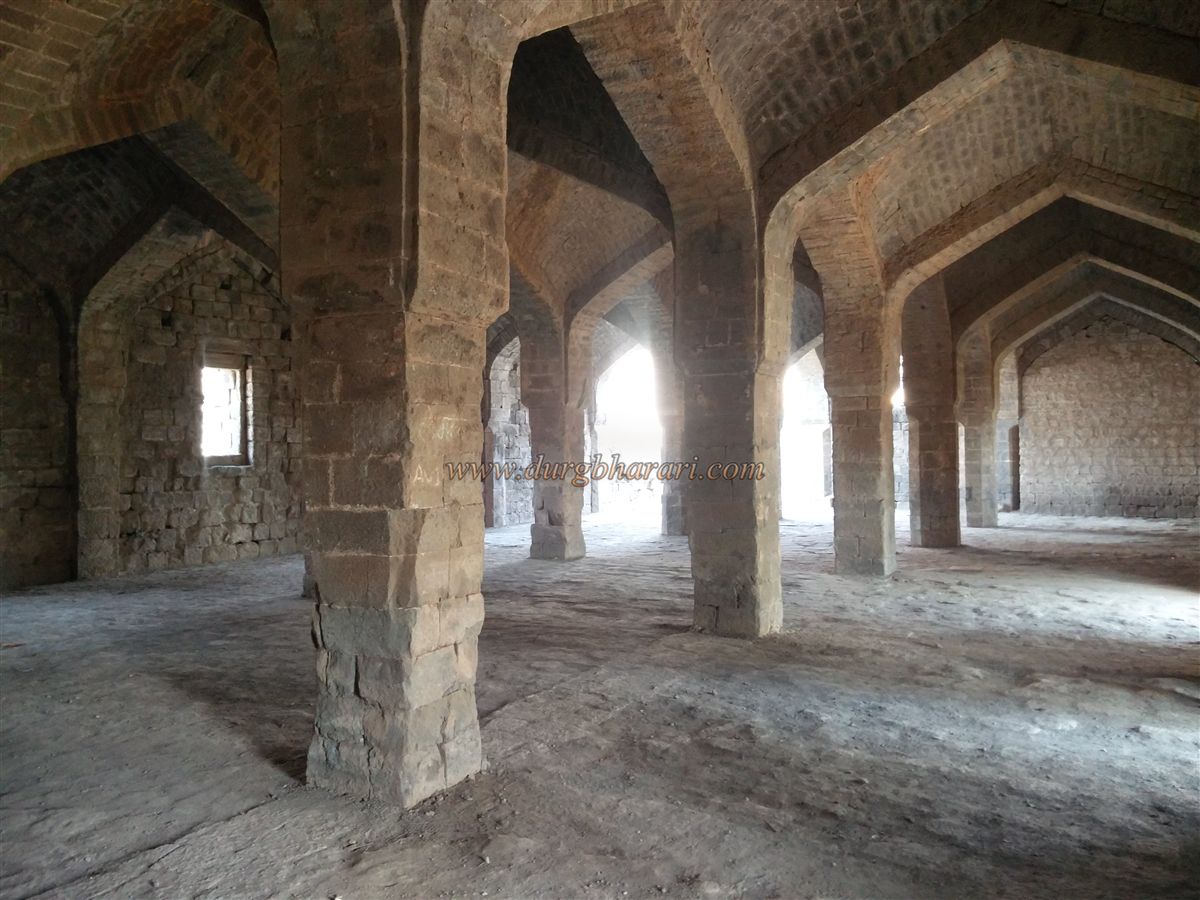
Entering through the Kulabkar Darwaja, one immediately encounters the Ambar Khana. This structure was used to store grain when the fort was in use, but it is now largely in ruins. Behind the Ambar Khana, one can see the fort’s walls rising from the base to the top, along with its impregnable bastions.
From the Ambar Khana, the path leads to Shivkunj. Along this route, several water tanks are visible on the left slope, while on the right are the famous Ganga-Jamuna tanks, which hold potable water year-round. These tanks are excellent examples of Satavahana-era construction. At Shivkunj stands a five-metal statue of young Shivaji holding a sword, in front of his mother Rajmata Jijabai. Behind Shivkunj is a small hall accommodating 10–12 people. Since no food facilities exist on the fort, visitors must arrange for their own meals.
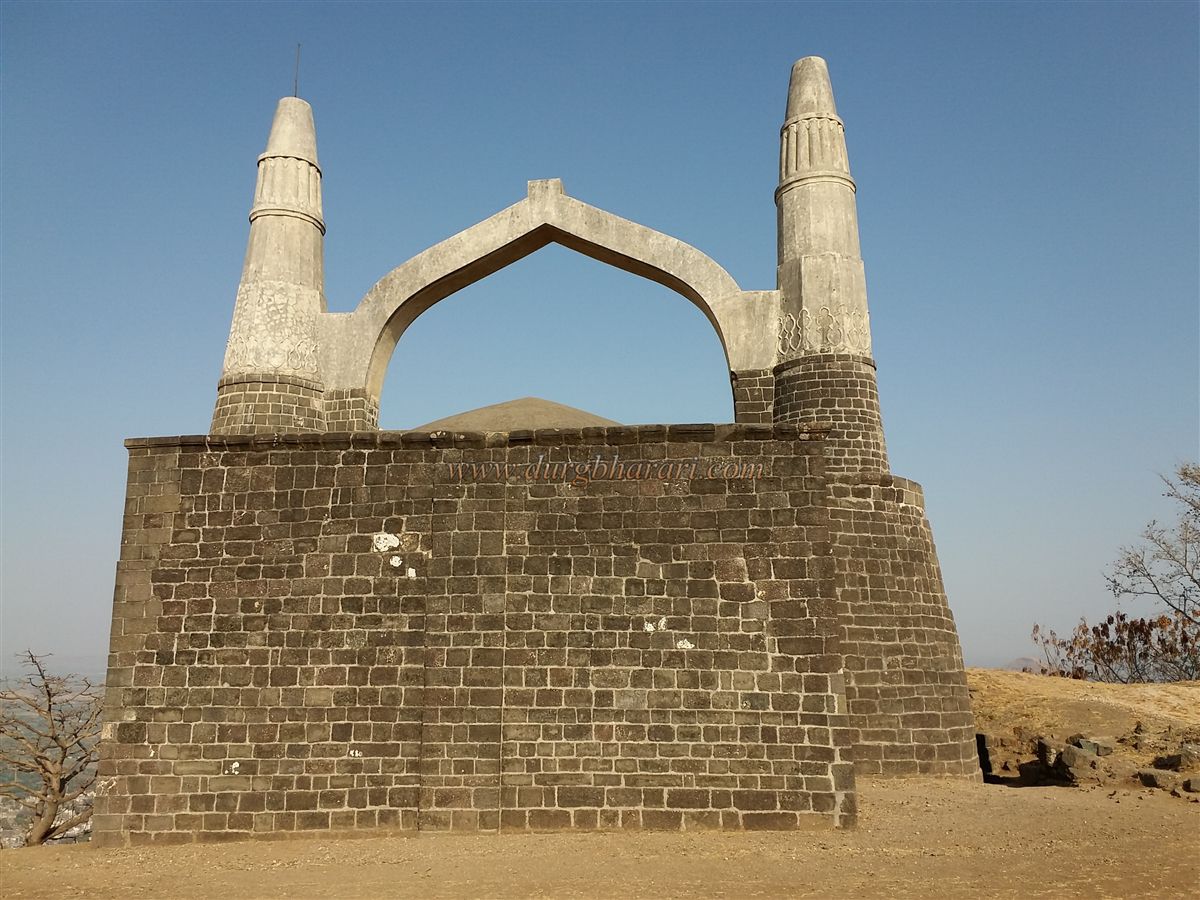
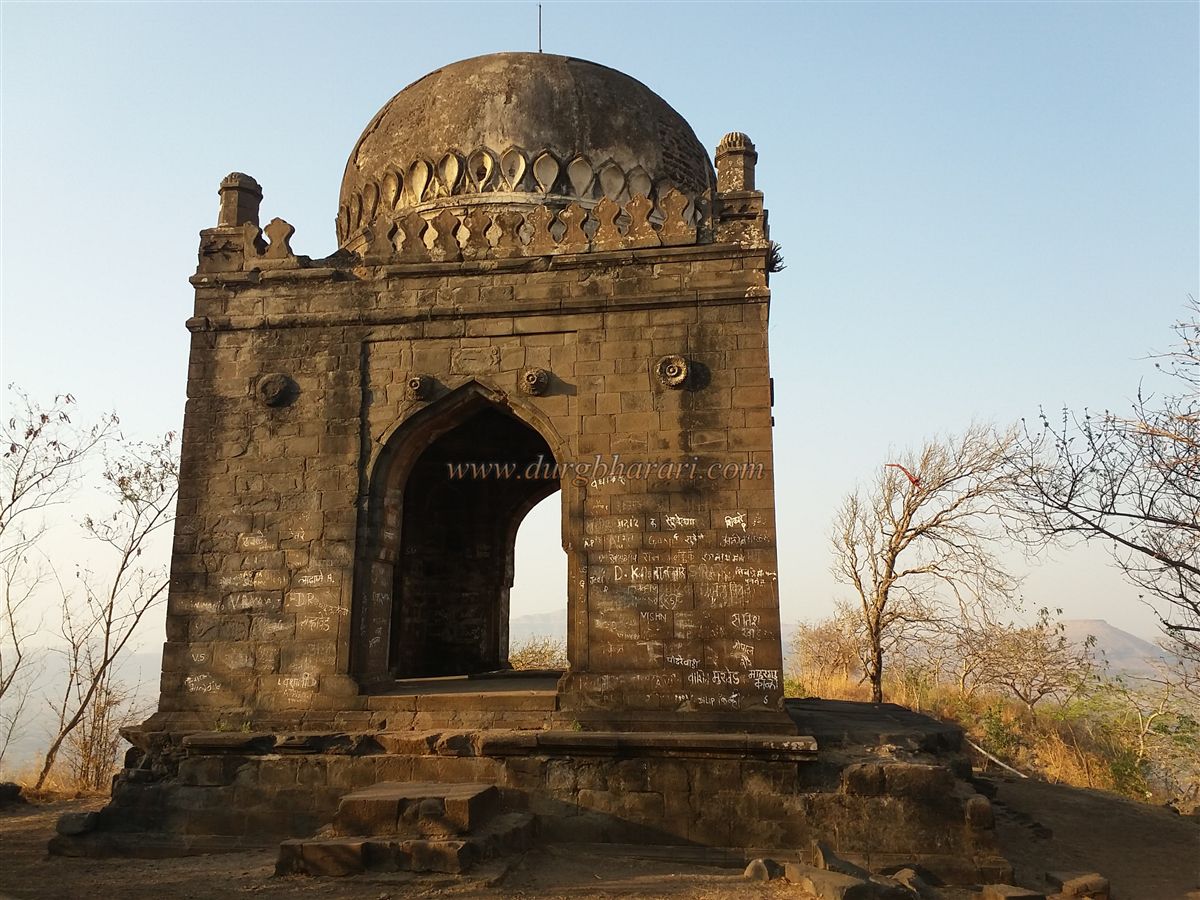
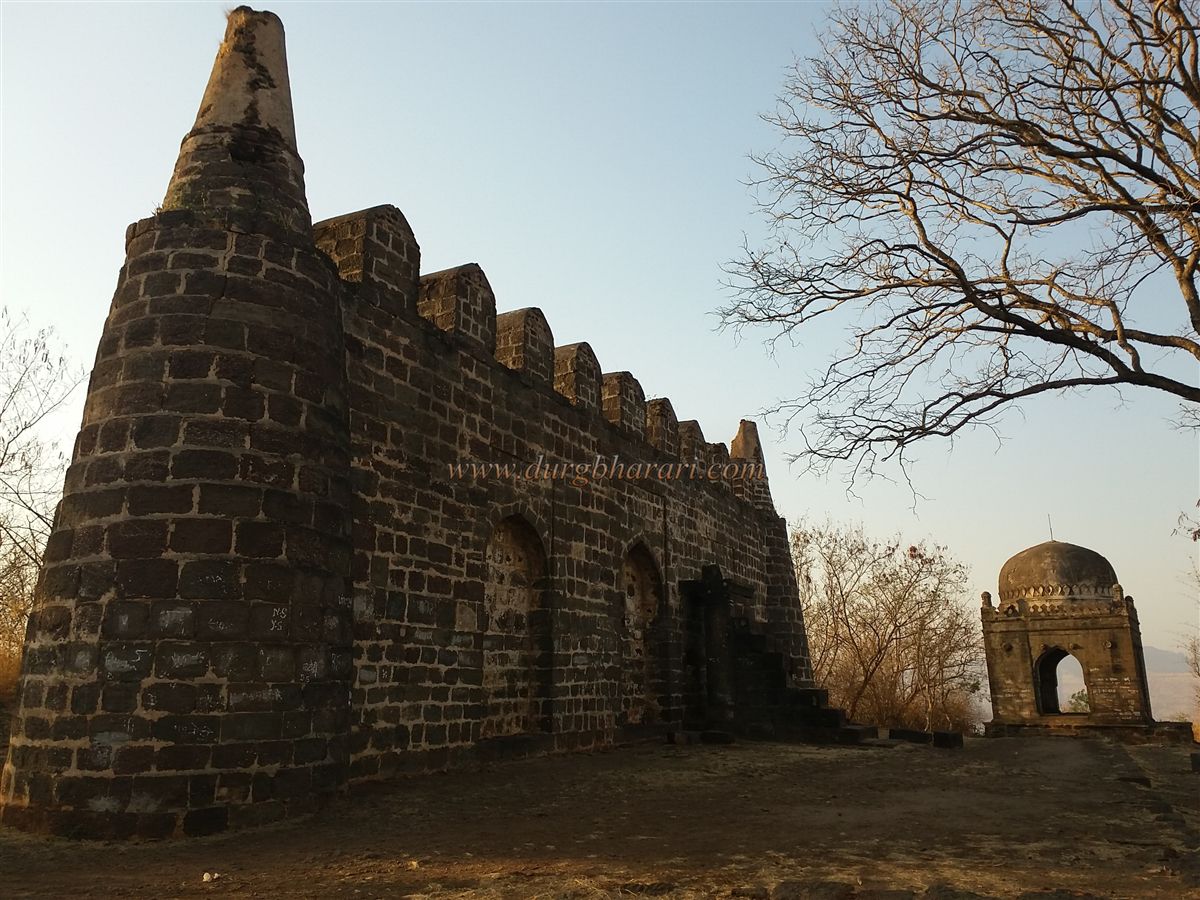
To the right of Shivkunj, before the palace ruins, stands a large arch. Behind it is a large Satavahana-era water cistern called the Kamani Tank. The arch is so prominent that it is visible even from the base of the fort. Beneath the arch is a domed structure with two Persian inscriptions.
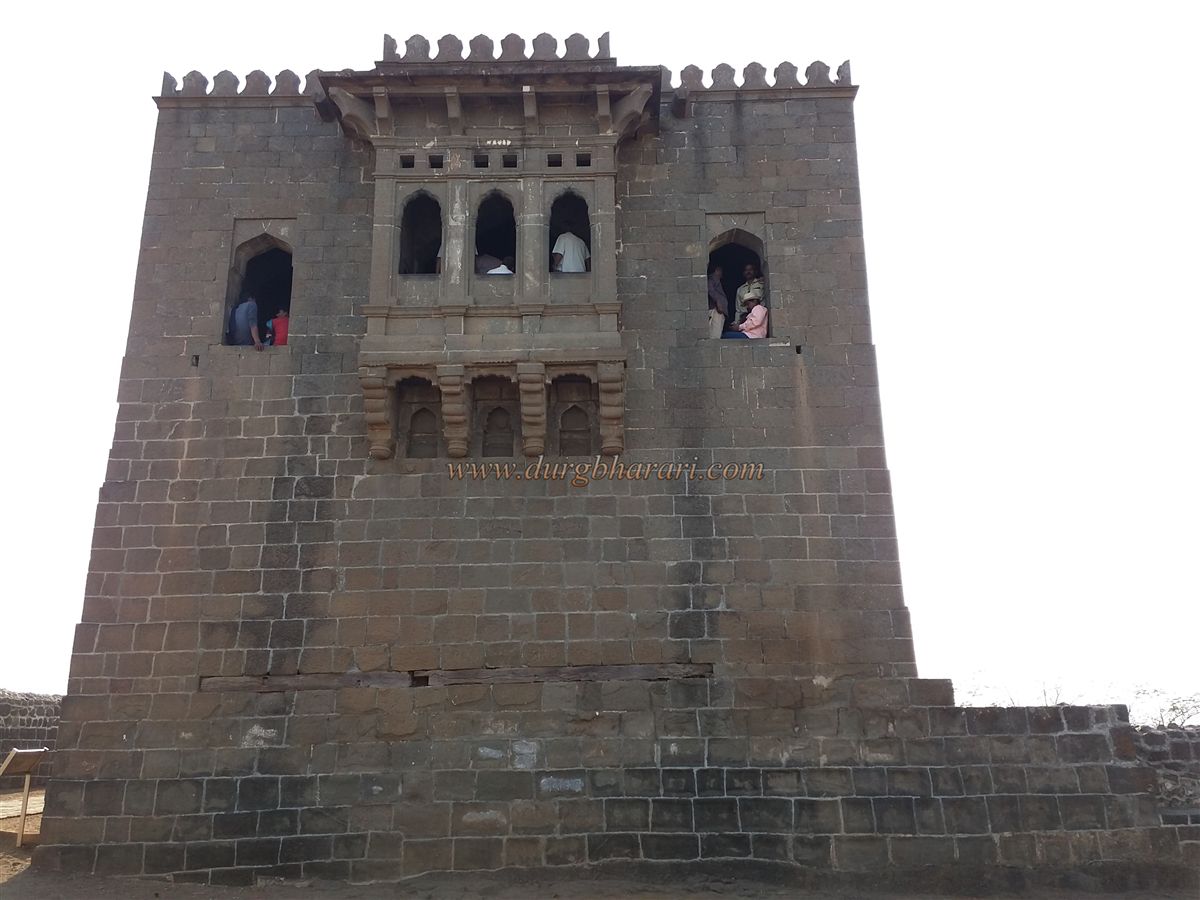
Walking ahead from the Kamani Masjid, on the left side, are the ruins of the palace, including a hammam (bathhouse) and a fountain. Beyond this lies the two-storied stone structure marking Shivaji Maharaj’s birthplace. The lower room of this building houses a cradle and a bust of Shivaji Maharaj. The second floor has intricately carved balconies offering views of Junnar and the surrounding region.
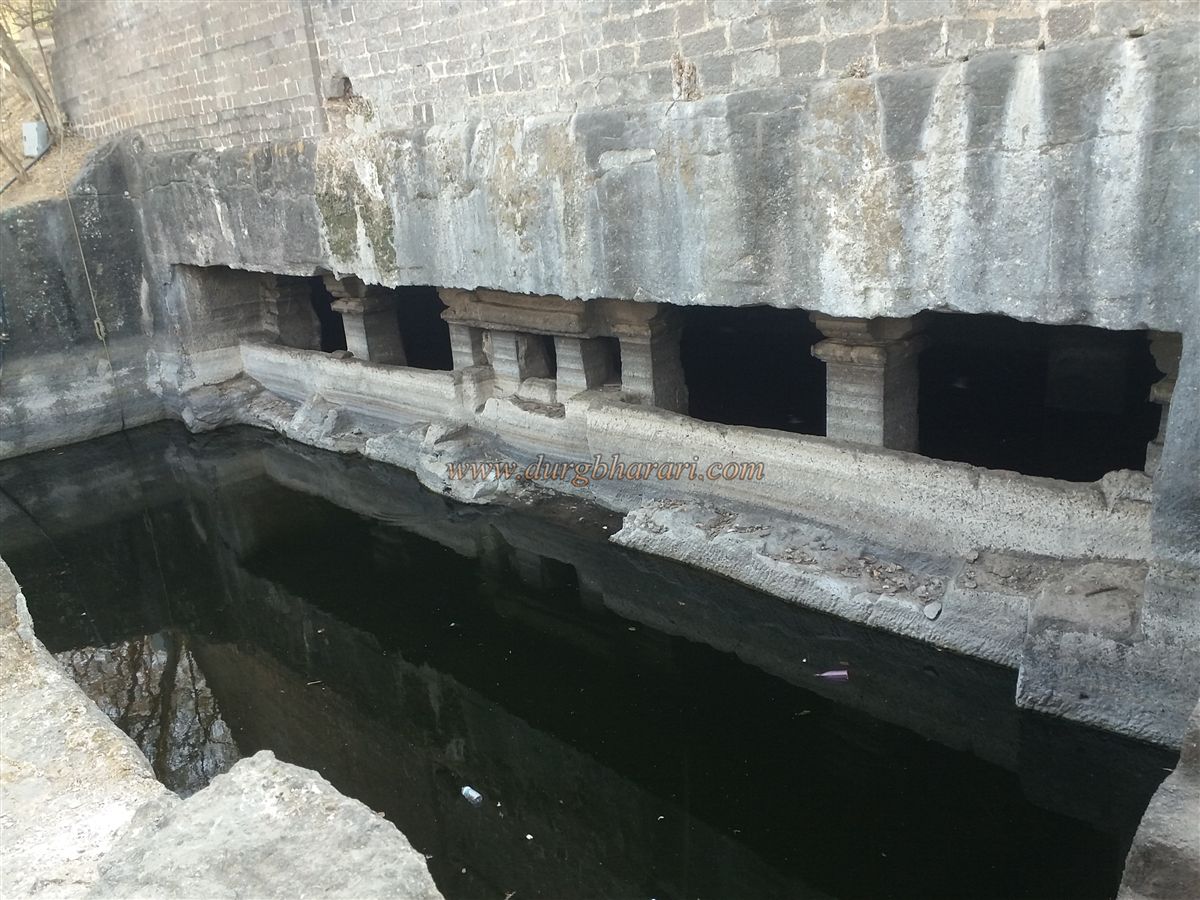
Continuing from the birthplace toward the Kadelot Point (Execution Point), one encounters a stone reservoir called the Badami Tank. It has carved chambers along its front edge. Beyond this tank, the path leads to the northern edge of the fort, to the Kadeloat Point. This sheer 1,500-foot cliff was used to execute criminals by throwing them off. From this point, one can view the Lenyadri region, the Vaduj Dam reservoir, as well as Naneghat and Jivdhan Fort.
Returning from the Kadeloat Point, a path leads to the hillock behind Shivkunj. On this hillock stands a domed platform and, in front of it, an Idgah. After the fall of the Nizamshahi, both the Adilshahi and Mughals neglected this region. Taking advantage of this, the Mahadev Kolis gained control over the area. The Mughals later attacked the Kolis and laid siege to Shivneri. The Kolis surrendered to the Mughal army. On the hilltop platform, the Koli soldiers were beheaded. This massacre is commemorated by the platform, which is called the Koli Platform or Kala Chauthara. In front of this platform stands the Idgah.
This completes the fort tour. This is the highest point on the fort, from where Jivdhan, Bhairavgad, Chavand, Hadsar, and Narayangad forts are visible. It takes at least five hours to explore the fort thoroughly.
Junnar, which has undergone name changes like Jirnanagar, Juninagar, Junenagar, Junnar, has been inhabited since before the Common Era. It was the capital of the Shaka king Nahapan. Satavahana king Gautamiputra Satakarni defeated the Shakas and established dominance over the Junnar region. To monitor the massive trade traffic passing along the ancient Naneghat route, forts were built along this route. Once their power stabilized, the Satavahana excavated numerous caves here. After the Satavahana, Shivneri came under the rule of the Chalukya and Rashtrakut.
Around 1170–1308, the Yadavas established their rule, giving Shivneri the form of a full-fledged fort. In 1443, Bahmani commander Malik-ul-Tujar defeated the Yadav forces and captured the fort. In 1485, Malik Ahmad, a representative of Malik-ul-Tujar, attempted to take the fort, but the fort commander refused to surrender it. Malik Ahmad attacked and captured the fort, acquiring wealth equal to five years’ worth of collected taxes. Within a year, Malik-ul-Tujar was killed, and Malik Ahmad declared himself Nizam-ul-Mulk Bhairi, thus establishing the Nizamshahi dynasty.
Bahmani Sultan Muhammad Shah sent an army to defeat Malik Ahmad. The battle took place near Chakan Fort, where the Bahmani forces were defeated, and Chakan passed from Bahmani to Nizam control. Thus, the Nizamshahi rise began at Shivneri. In 1494, Nizamshah founded the city of Ahmednagar and made it his capital. In 1565, Sultan Murtaza Nizam imprisoned his brother Kasim on this fort.
In 1595, Junnar province and Shivneri Fort were granted to Maloji Raje Bhosale by the Nizamshahi. Later, during Shahaji Raje Bhosale’s service in the Nizamshahi, Shivneri came under his jurisdiction. When Jijamata was pregnant, she was sent to Shivneri for safety with 500 cavalry. On February 19, 1630 (Shaka 1556, Vaishakh Shuddha Panchami), Shivaji Raje was born here.
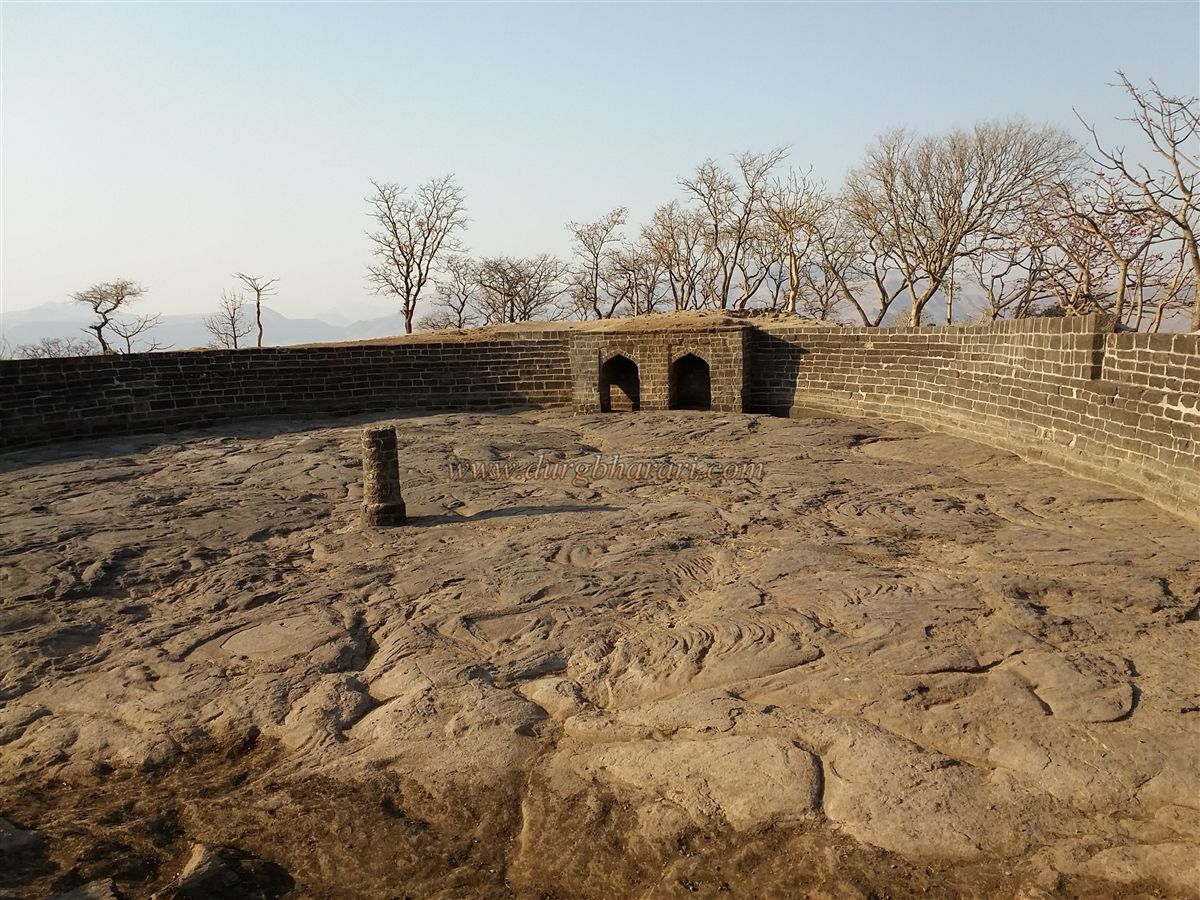
In 1632, young Shivaji left the fort, and in 1637, it passed into Mughal hands. In 1650, the Kolis revolted against the Mughals. Some Mahadev Kolis captured Junnar and Shivneri. When this news reached the Mughal emperor, he sent a massive army to crush them. The fort was besieged, and the Kolis soon surrendered. Around 1,500 Mahadev Kolis were captured, tortured, and then beheaded on the hilltop platform. Their heads were piled up, and a platform was built over them. Khemi Kshem, the leader of the Kolis, was also killed and buried within the platform.
In 1673, Shivaji Maharaj attempted to capture the fort by bribing the fort commander Aziz Khan to surrender, but Aziz Khan betrayed him by informing Bahadur Khan. In the Mughal trap that followed, nearly 300 Maratha soldiers were killed. In 1673, Dr. John Fryer of the East India Company visited the fort and recorded that it contained enough wealth and provisions to sustain 1,000 families for seven years.
In 1678, Shivaji Maharaj besieged Junnar and looted the city. At that time, 200 horses were captured, along with goods worth three lakh hon (a currency), cloth, valuables, and jewels, and the Marathas returned to Pune. However, they failed in their attempt to capture the fort.
About 40 years later, in 1716, the fort finally came under Maratha control.
© Suresh Nimbalkar
GALLERY