SHEGUD
TYPE : KHANDOBA MANDIR
DISTRICT : AHMEDNAGAR
Khandoba – the Kuldaivat (family deity) of Maharashtra – is revered across the state, and his temples are found not only in Maharashtra but also beyond its borders. Among these, twelve temples hold special significance and are collectively known as the Bara Malhar. These include Jejuri, Pali, Shegud, Dhavdi-Nimgaon, Satare, Molegaon, Naldurg-Andur (in Osmanabad), and in Karnataka – Bidar Adimalhar, Deveragudda, Mangsundli, Mailal, and Bhailarsing.
One of these twelve sacred sites is the Shegud Khandoba temple. Located in Shegud village of Karjat taluka in Ahmednagar district, the temple lies close to the Solapur district border. It is about 14 km from Karjat (taluka headquarters) and only 13 km from Karmala in Solapur district. Situated right along the Karjat–Karmala road, the temple is easily visible to travellers.
...
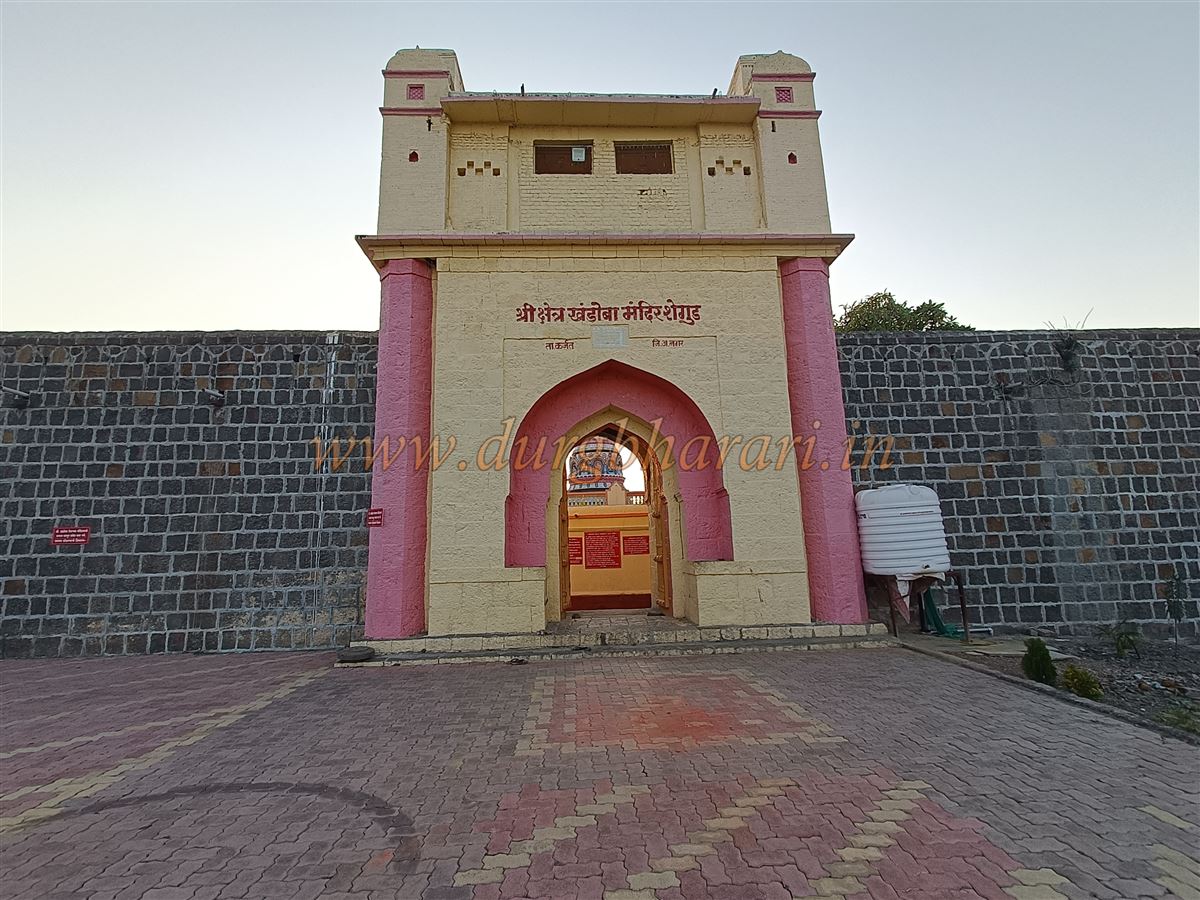
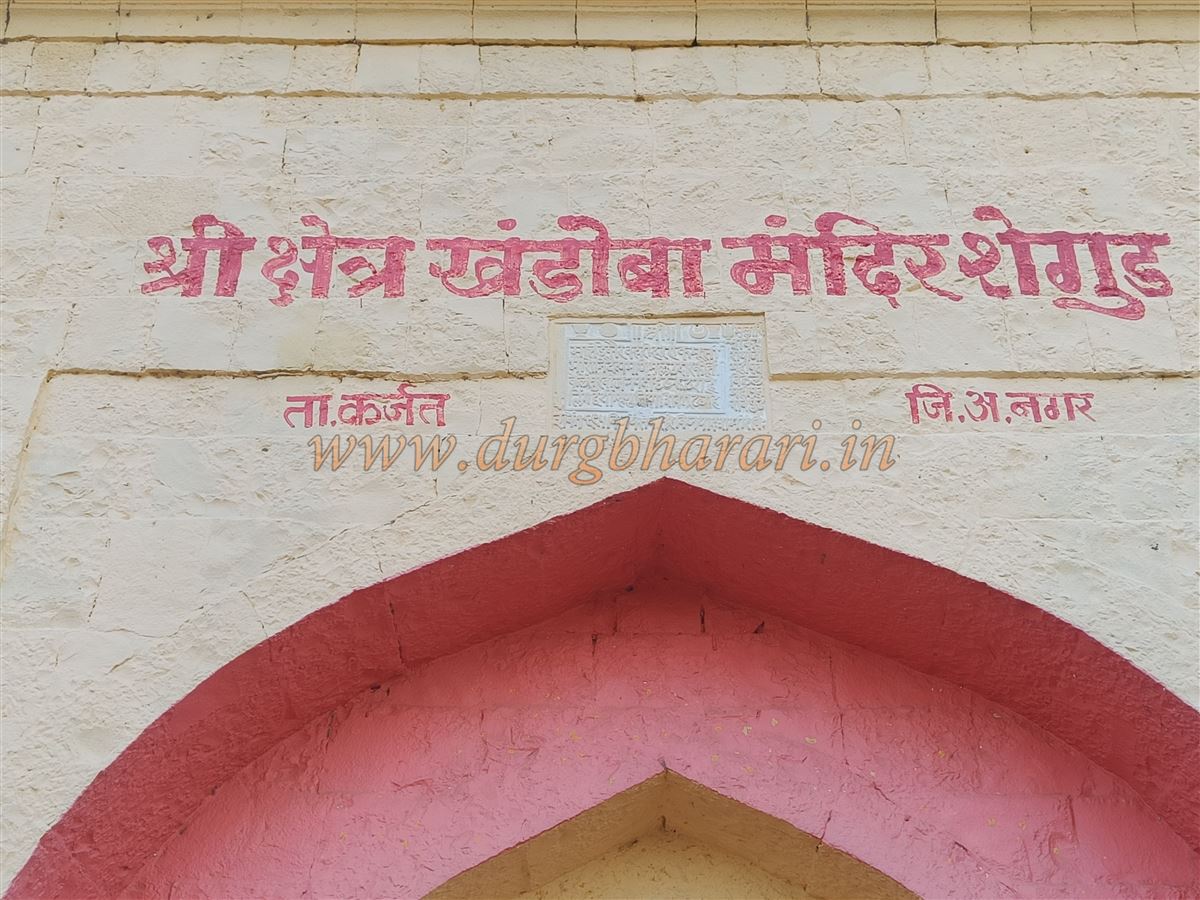
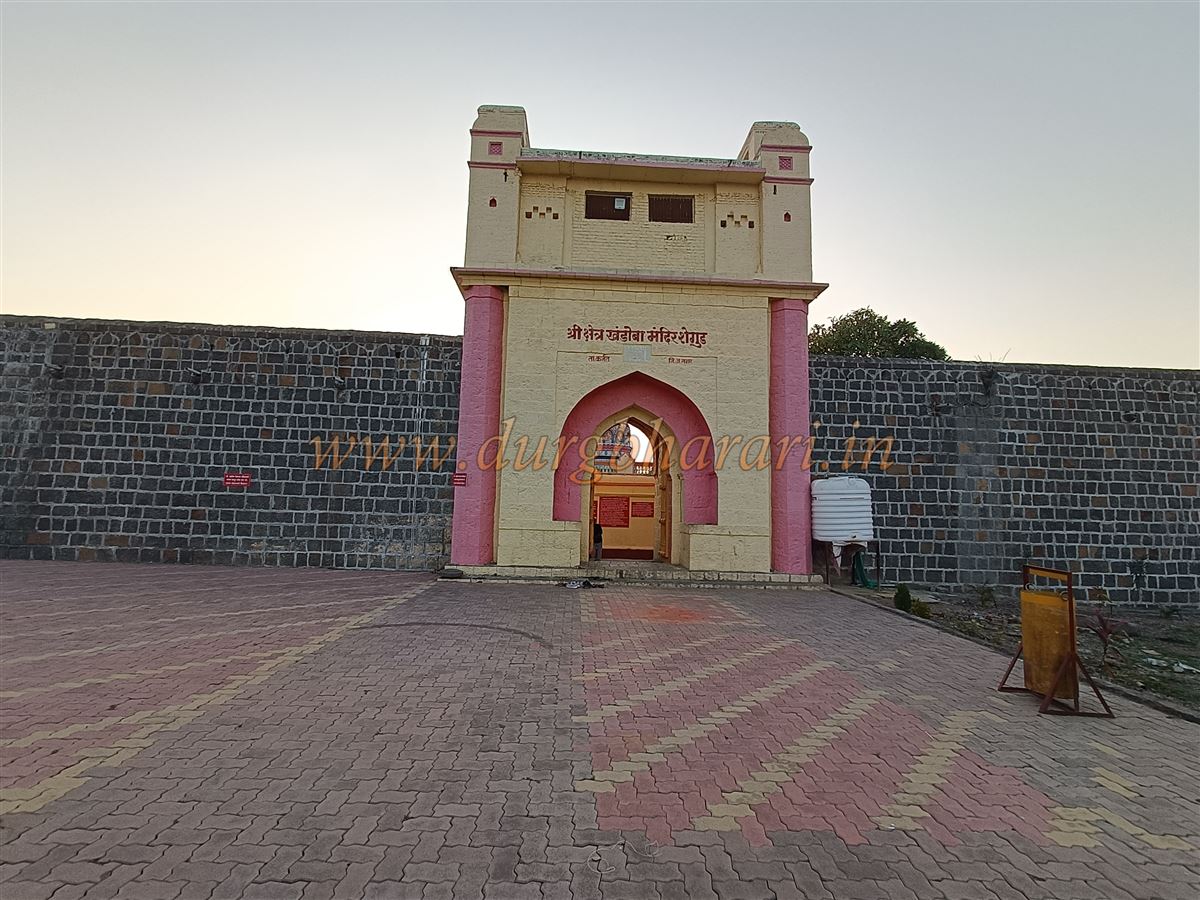
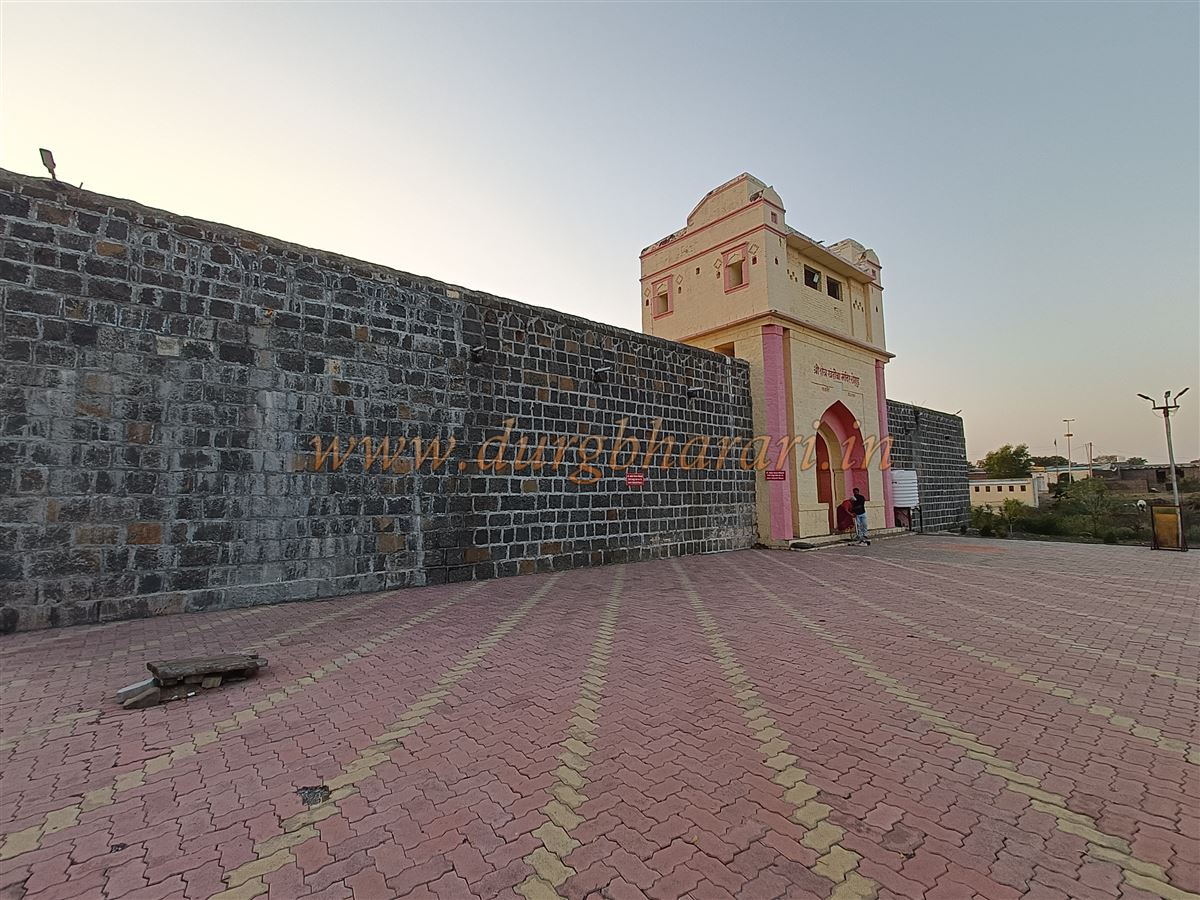
Nestled on the banks of the Malangi stream, the temple complex spreads across about half an acre. The entire premises are enclosed within a 15-foot-high stone fortification, resembling a small fort. There are two gateways providing access: the main northern gate (Mahadarwaja) and a smaller southern gate, which is opened on special occasions. Above the main gate stands a stone-built Nagarkhana (drum house), and on its façade is an inscription detailing the temple’s construction. According to this inscription, the temple was built in Shaka 1695 (Vijay Samvatsar) by Malhari Shankar, Raya Mahipat, and Vitthal Mahipat Punde.
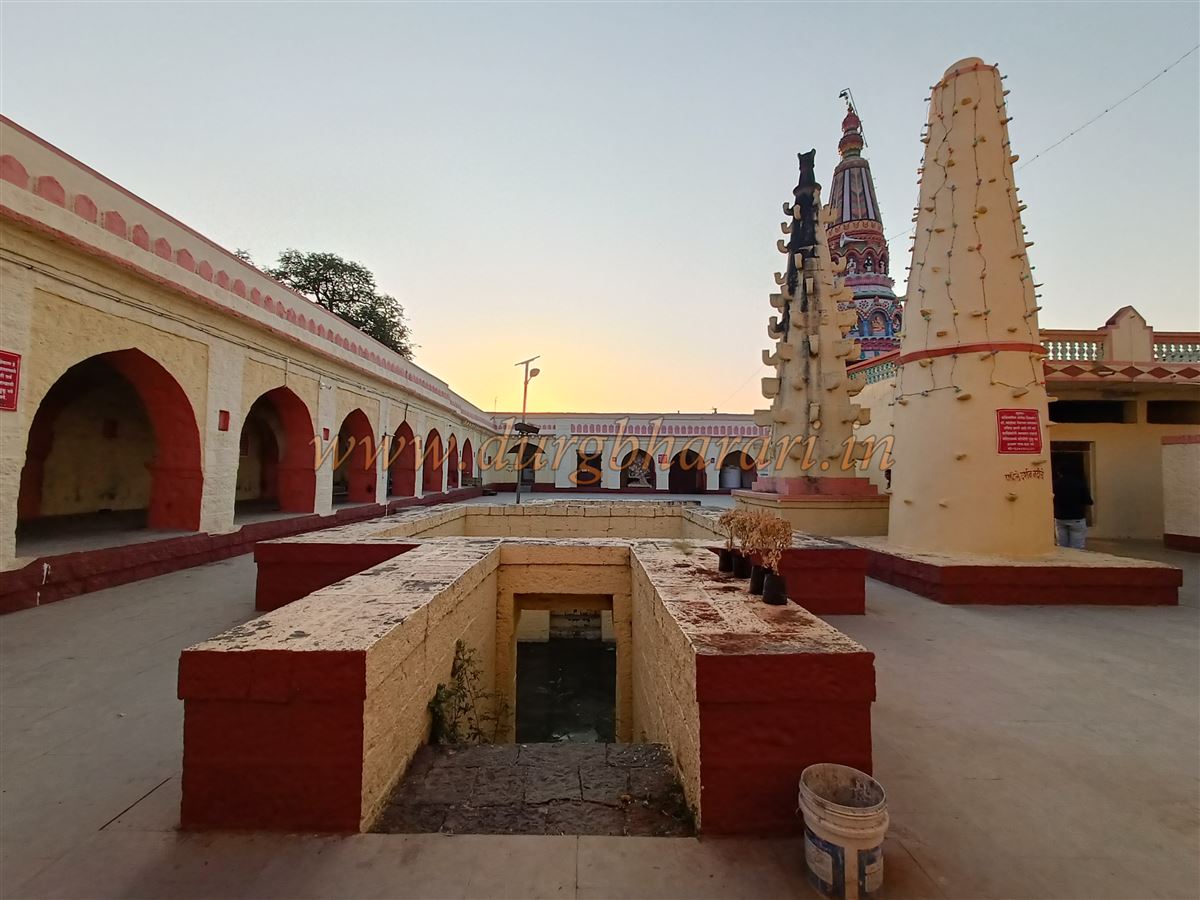
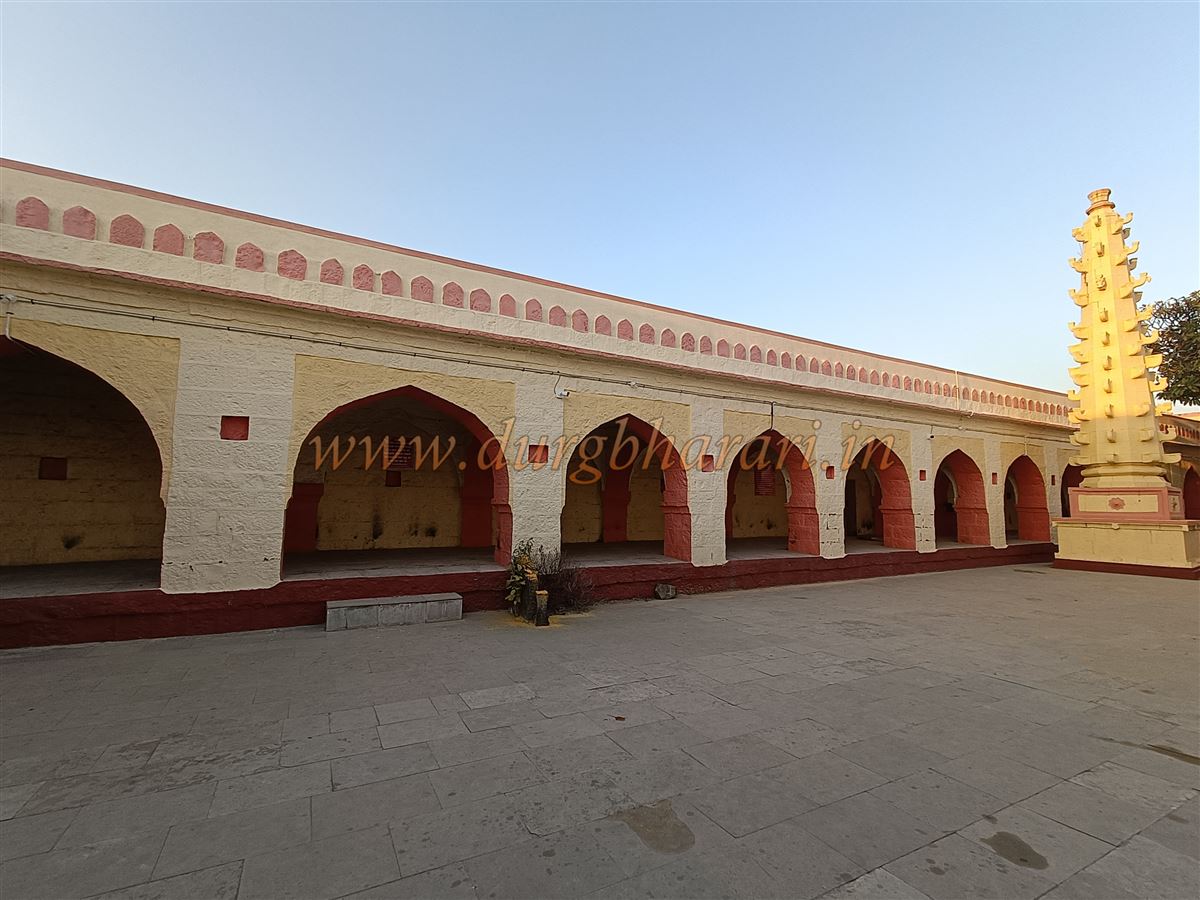
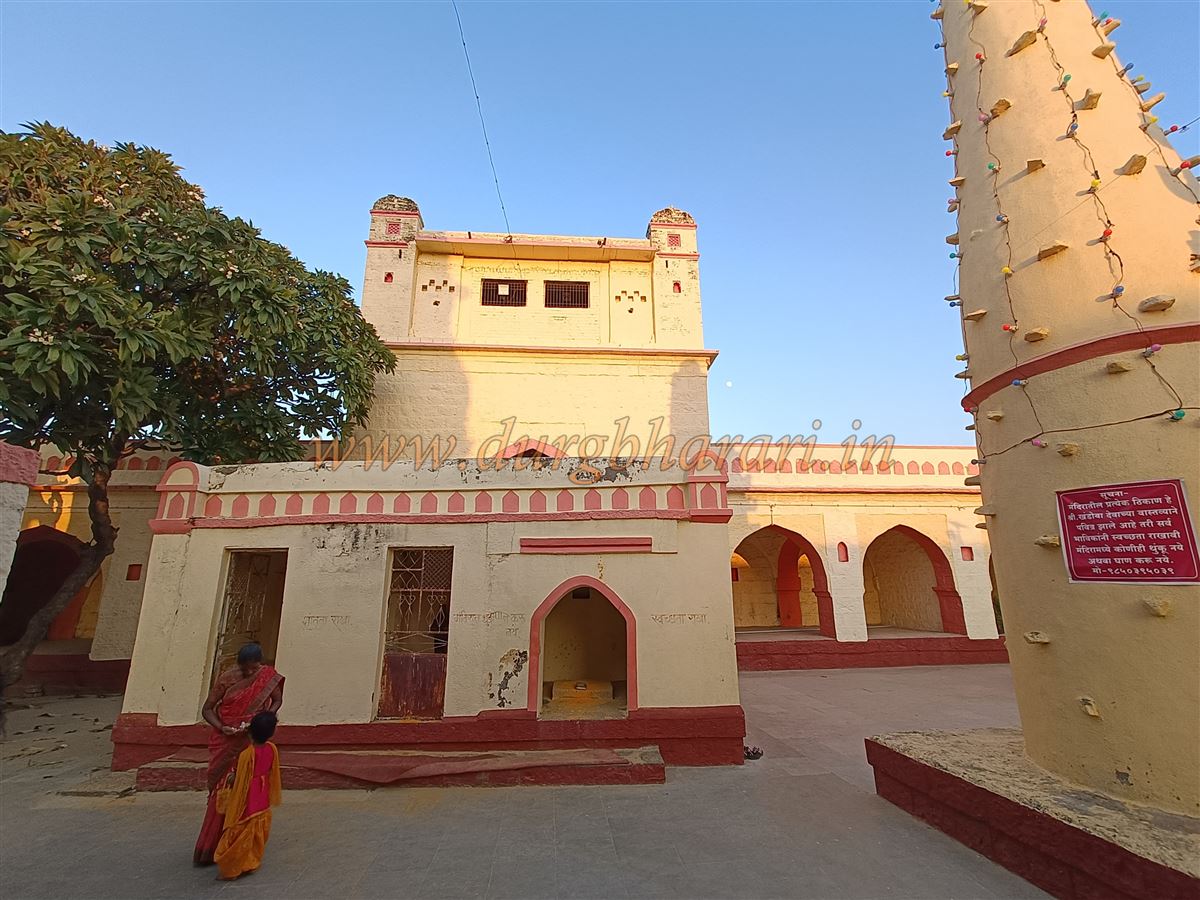
Entering through the main gate, the entire temple premises come into view. Within the courtyard are four stone Deepmalas (lamp towers) facing the temple’s main Sabhamandap (assembly hall). Along the inner side of the fortification are rows of resting chambers (Owaris) for devotees. Next to the main gate is the Nagarkhana, with steps leading up to the top of the fortification.
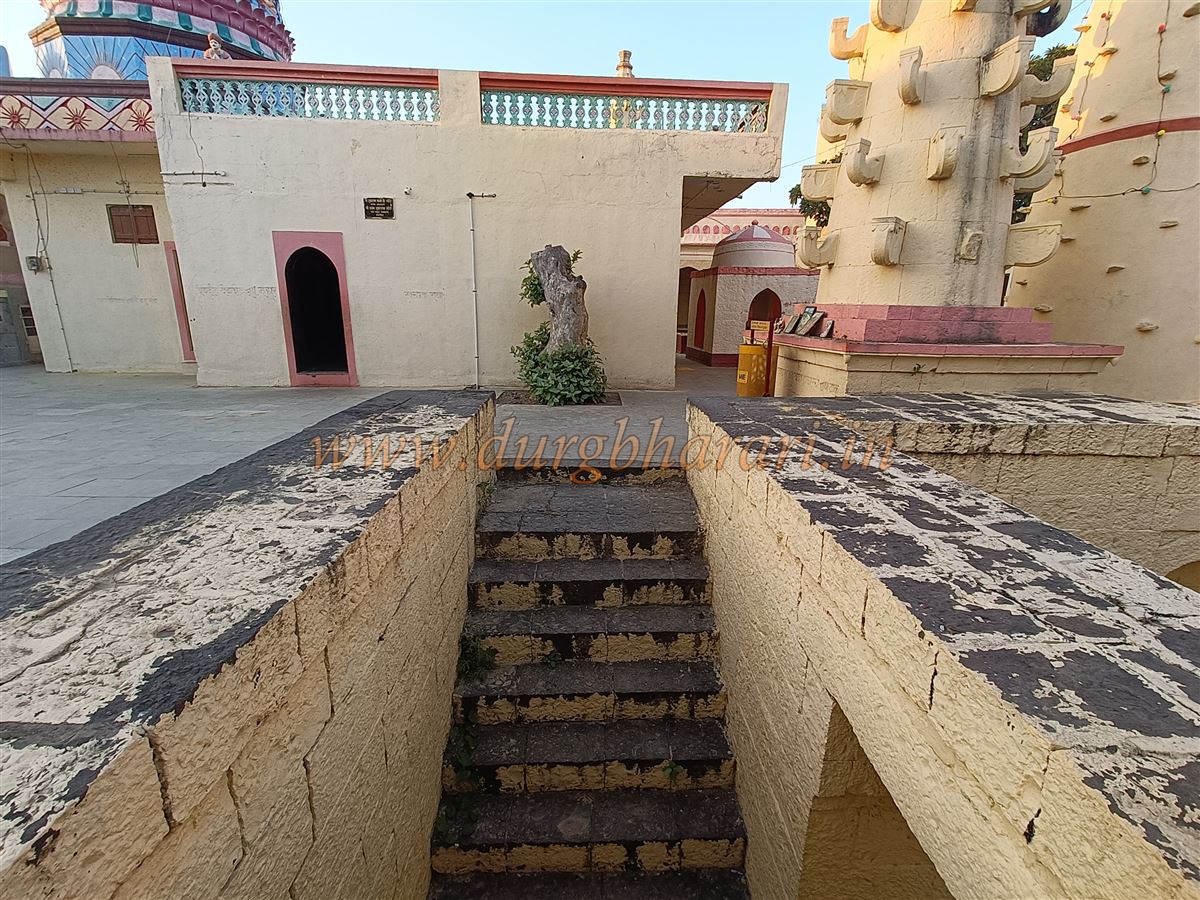
In front of the Sabhamandap is a Meghadambari (pavilion), housing four sacred Paduka (footprints) and a seated Nandi idol. On the left side of the temple is a beautifully carved square stepwell (Barav) with two sets of steps leading down to the water. This water is used exclusively for rituals, giving the stepwell the name Tirthachi Vihir (sacred well).
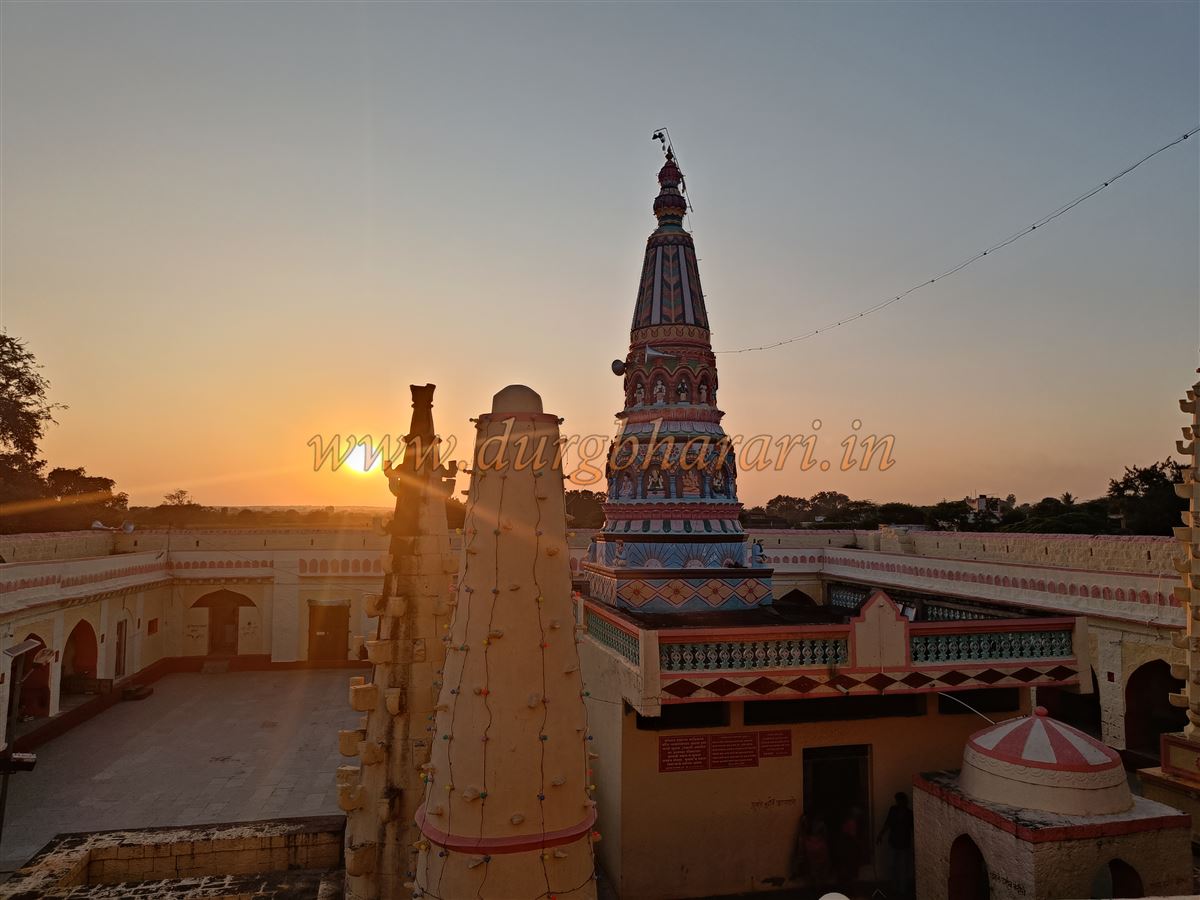
Inside the temple, visitors first encounter the Sabhamandap, adorned with a large brass bell. The sanctum (Garbhagriha) is east-facing and accessed by descending steps. Within the sanctum stands a serene idol of Khanderaya, flanked by Mhalsa Devi on the left and Banai Devi on the right. The temple’s tall spire (Shikhar) is intricately carved with images of the Navadurga (nine goddesses) and the Nath Sampradaya saints.
Additionally, within the complex, along the inner fortification, are idols of Vitthal-Rukmini and Ganapati. Behind the temple are a Sati stone and a few Veeragals (hero stones). Near the southern gate is the wooden horse and chariot used during the temple’s grand Rathotsav (chariot festival).
On regular days (excluding festival times), it takes around 30 minutes to explore the temple complex and seek Khandoba darshan.
© Suresh Nimbalkar
GALLERY