SAWANTWADI
TYPE : NAGARKOT
DISTRICT : SINDHUDURG
HEIGHT : 0
GRADE : EASY
Nature has bestowed its beauty generously upon the town of Sawantwadi. Those traveling along the Mumbai–Goa highway toward Goa have surely noticed the serene Moti Talav (Pearl Lake) and the adjacent royal palace, which stand as prominent landmarks of this town. Yet, it is surprising to learn that once upon a time, not only the lake and the palace but the entire town of Sawantwadi itself was enclosed within a fort. With the town’s expansion over the years, the fort has been almost completely destroyed. Today, only a few remnants survive – the Kolgaon Gate, the Moti Talav, the royal palace, the bastion behind the palace, and six cannons housed within the palace. Located about 500 kilometres from Mumbai, these structures lie along the highway and are easily accessible to travellers.
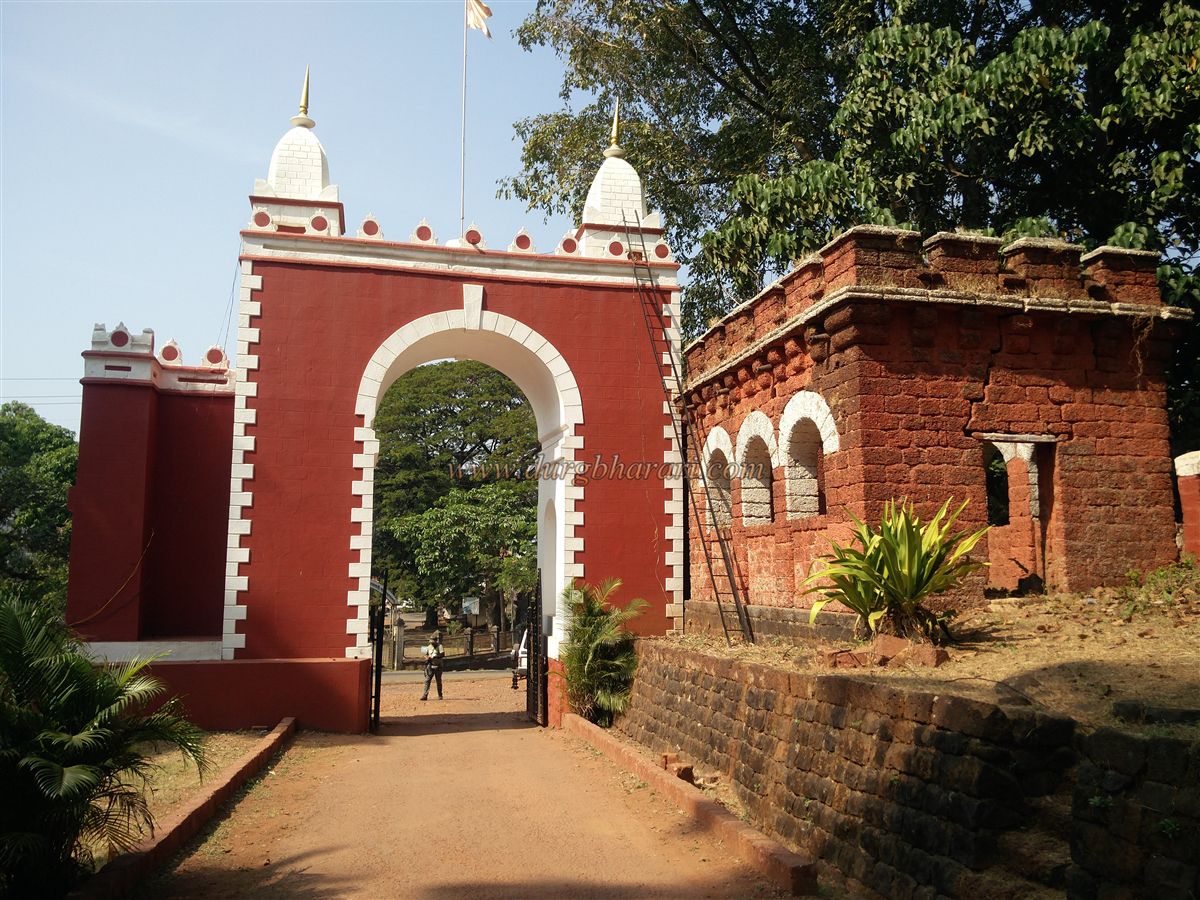
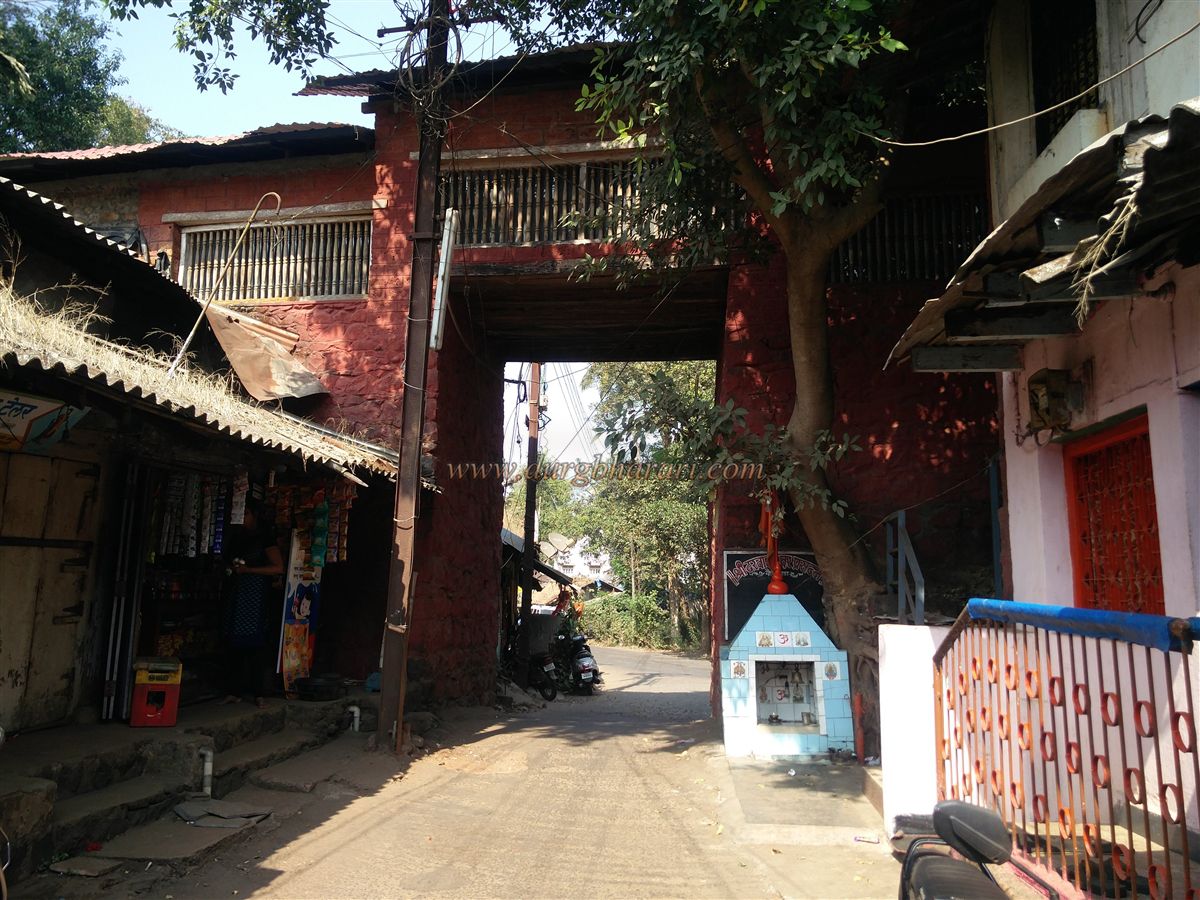
As one enters Sawantwadi from Mumbai, the first structure that greets you is the Kolgaon Gate.
...
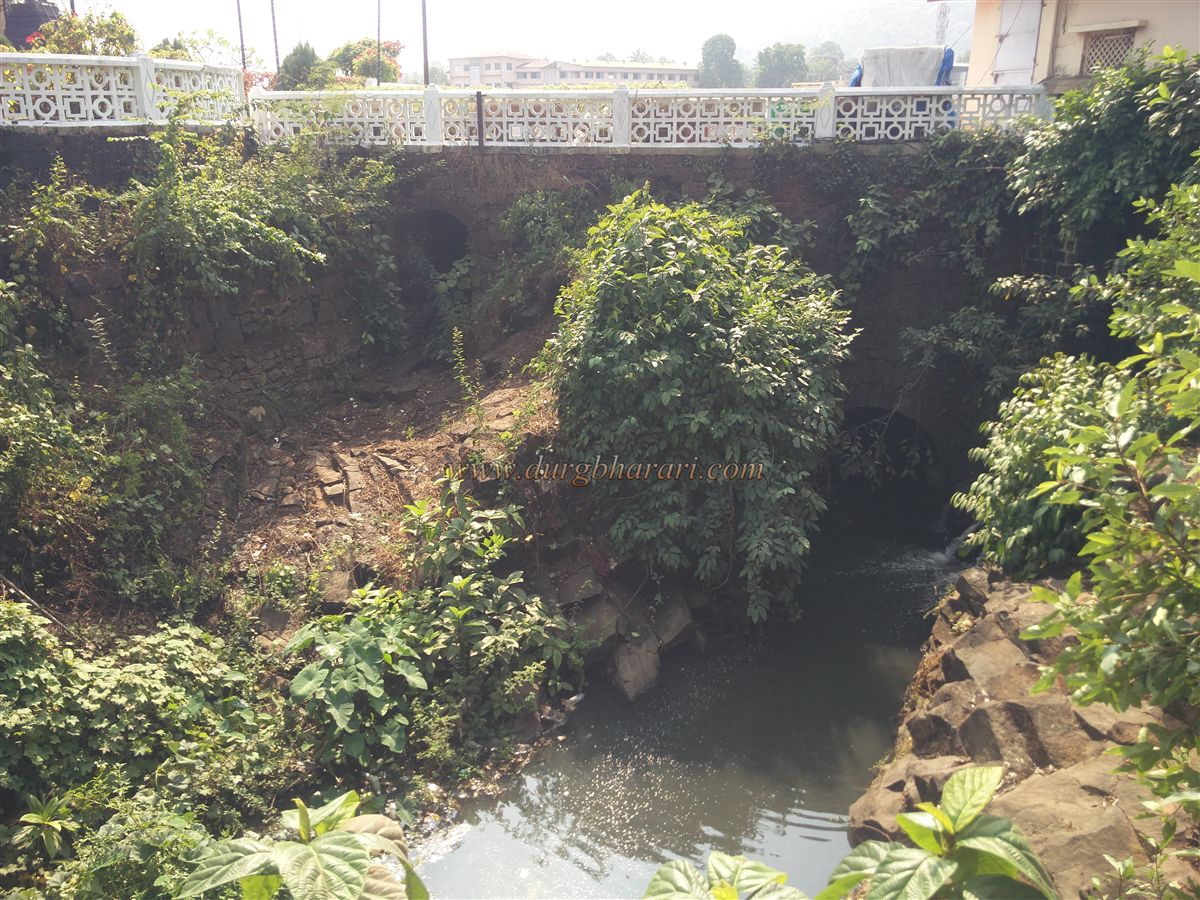
This gateway and its flanking bastions still stand in good condition, their walls pierced with loopholes for firing guns and cannons. Above the gate is a Nagarkhana (drum house), which can be accessed by a staircase from the inside. Moving ahead along the highway, one arrives at the Moti Talav. Spread over an area of roughly 30 acres, this lake was constructed in 1874, as recorded on an inscribed stone at its edge. To drain water from the lake, three sluices were built at different levels, and by 1895, a piped water system was installed to distribute water across the town. Sawantwadi is nestled along the banks of this lake, and to its east stands the Sawant royal palace.
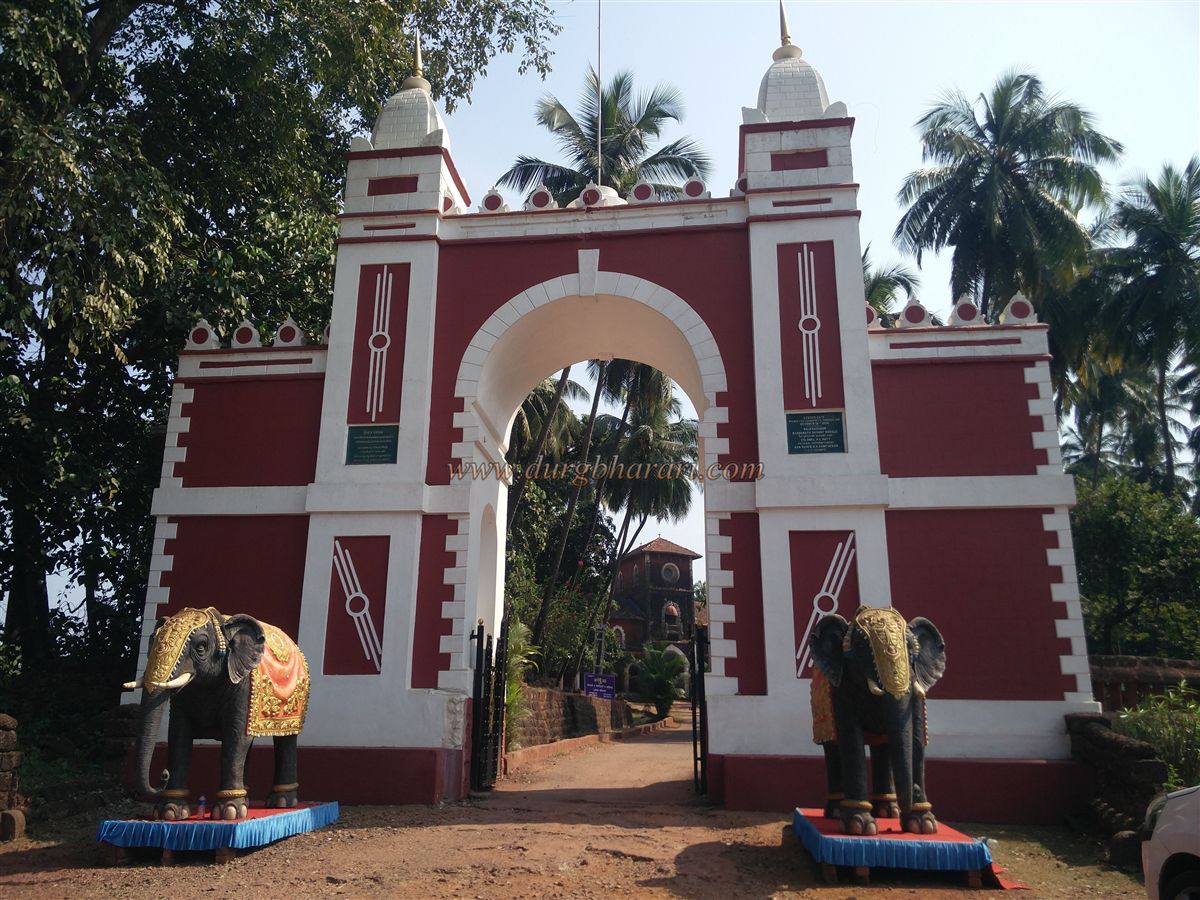
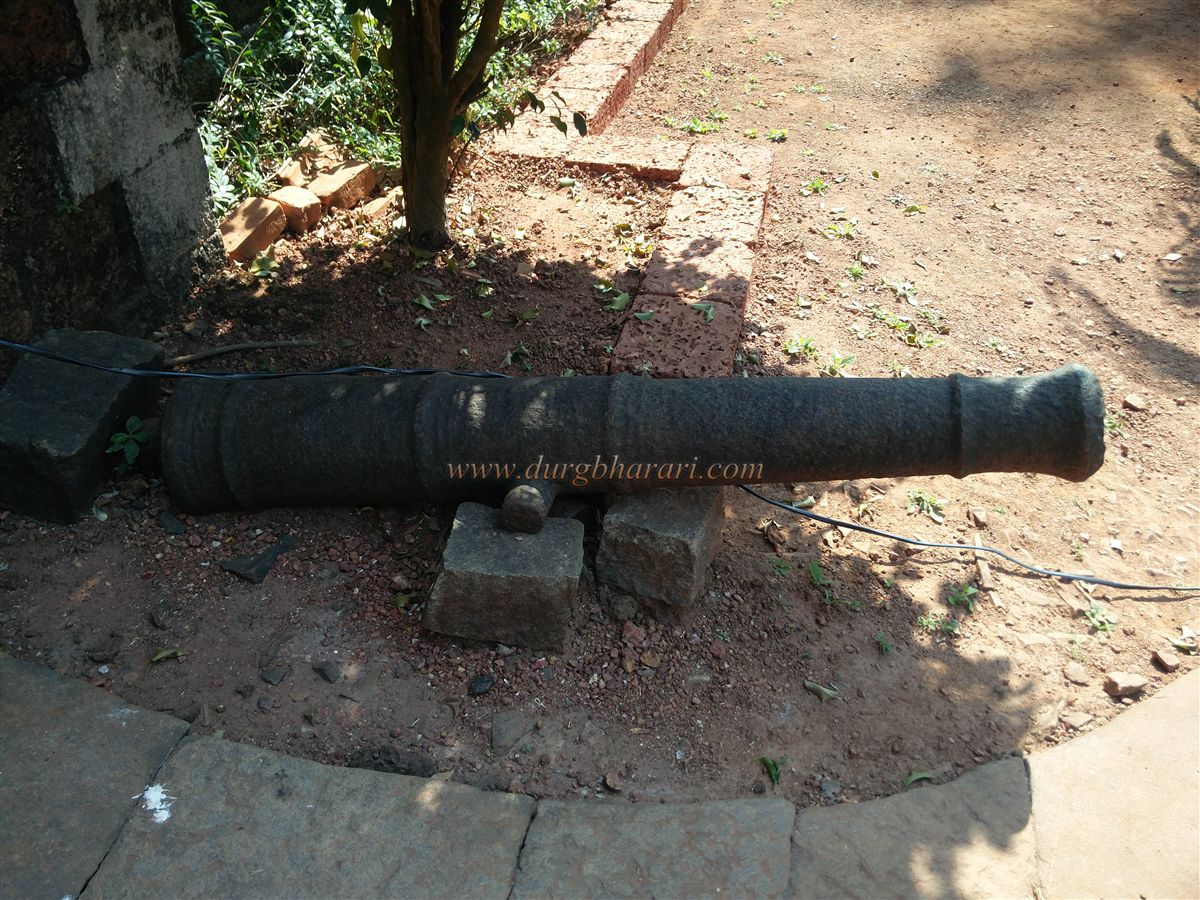
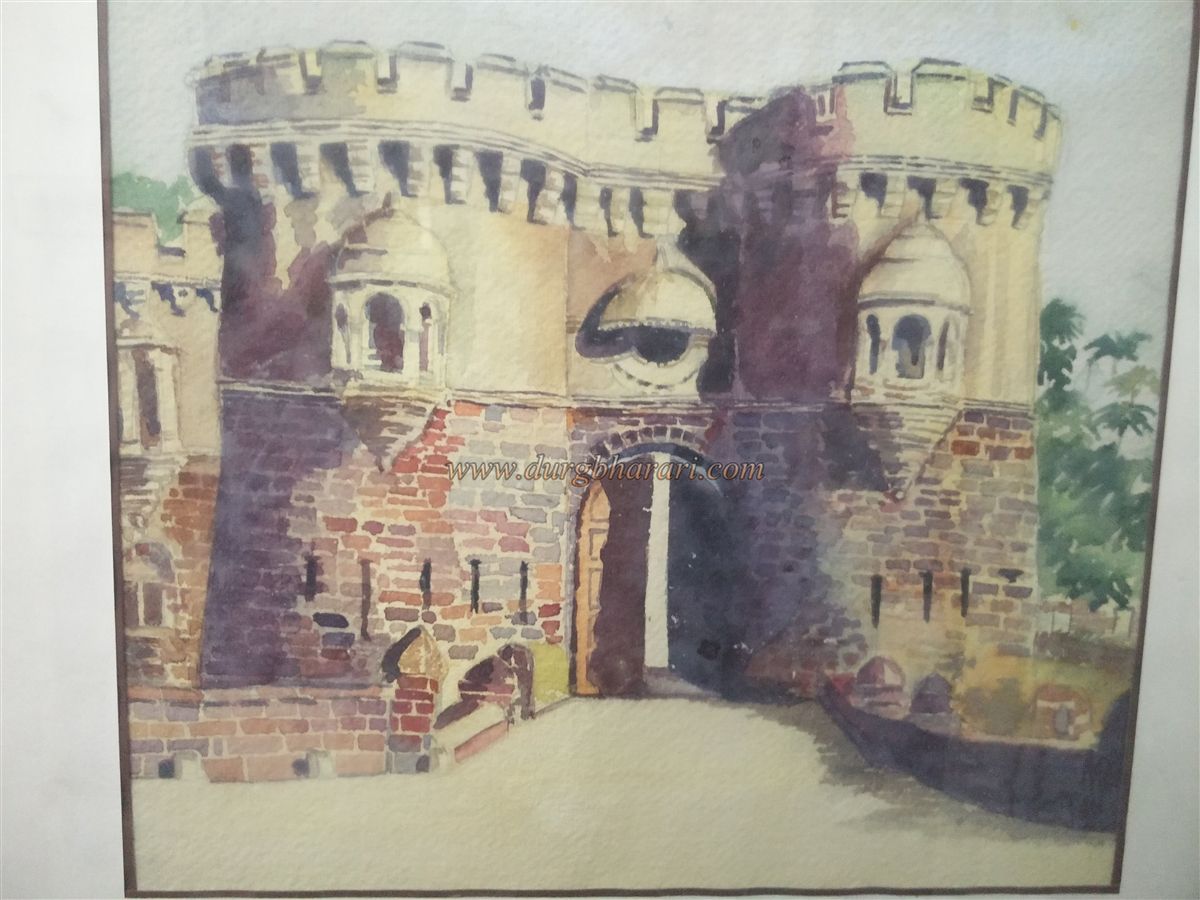
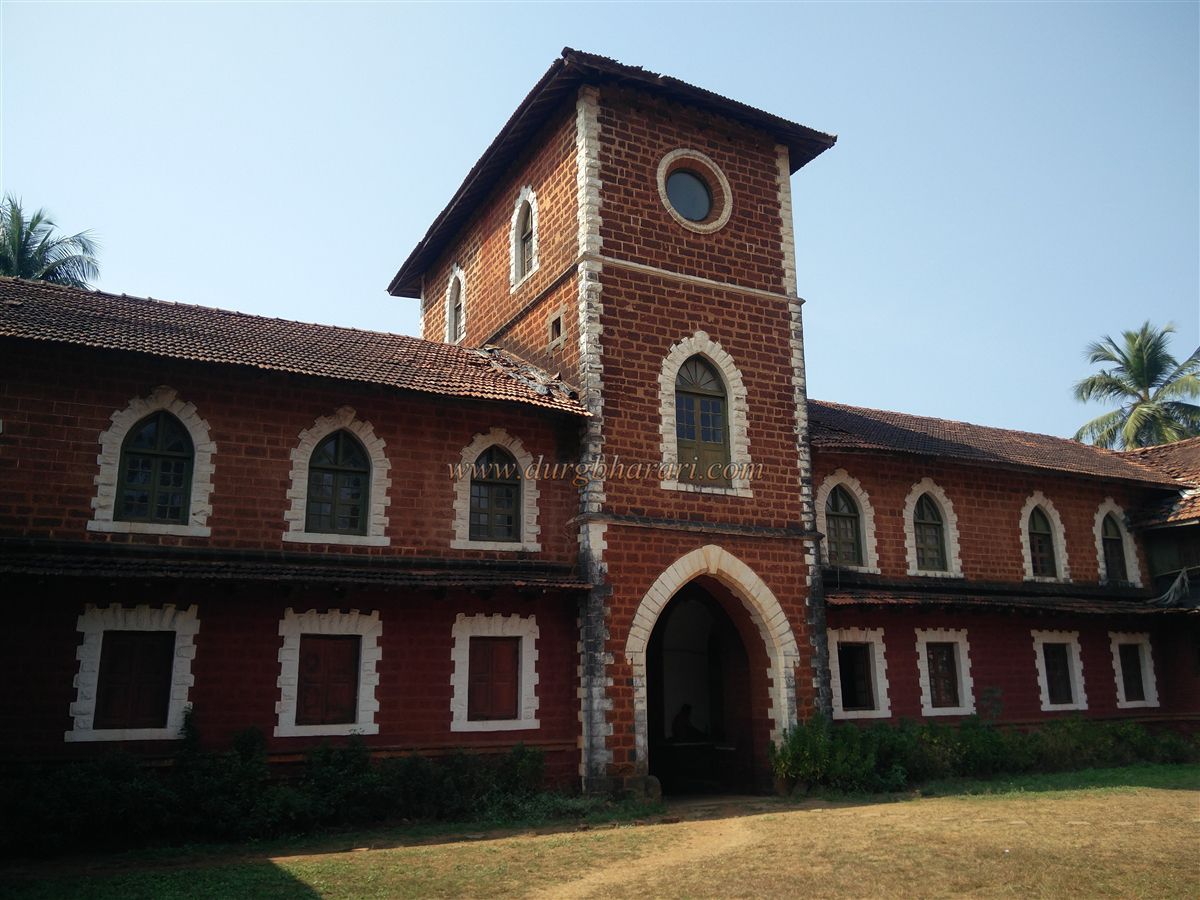
The entrance to the palace complex is marked by a grand gateway built during the British era, known as the Lister Gate. This gate, designed in a European architectural style, bears an inscription stating that it was built on 10 October 1895. The earlier gate of the palace is depicted in a painting displayed inside the palace. The guardhouse adjoining the entrance seems to belong to the earlier structure, and it now houses four small cannons on its upper level.
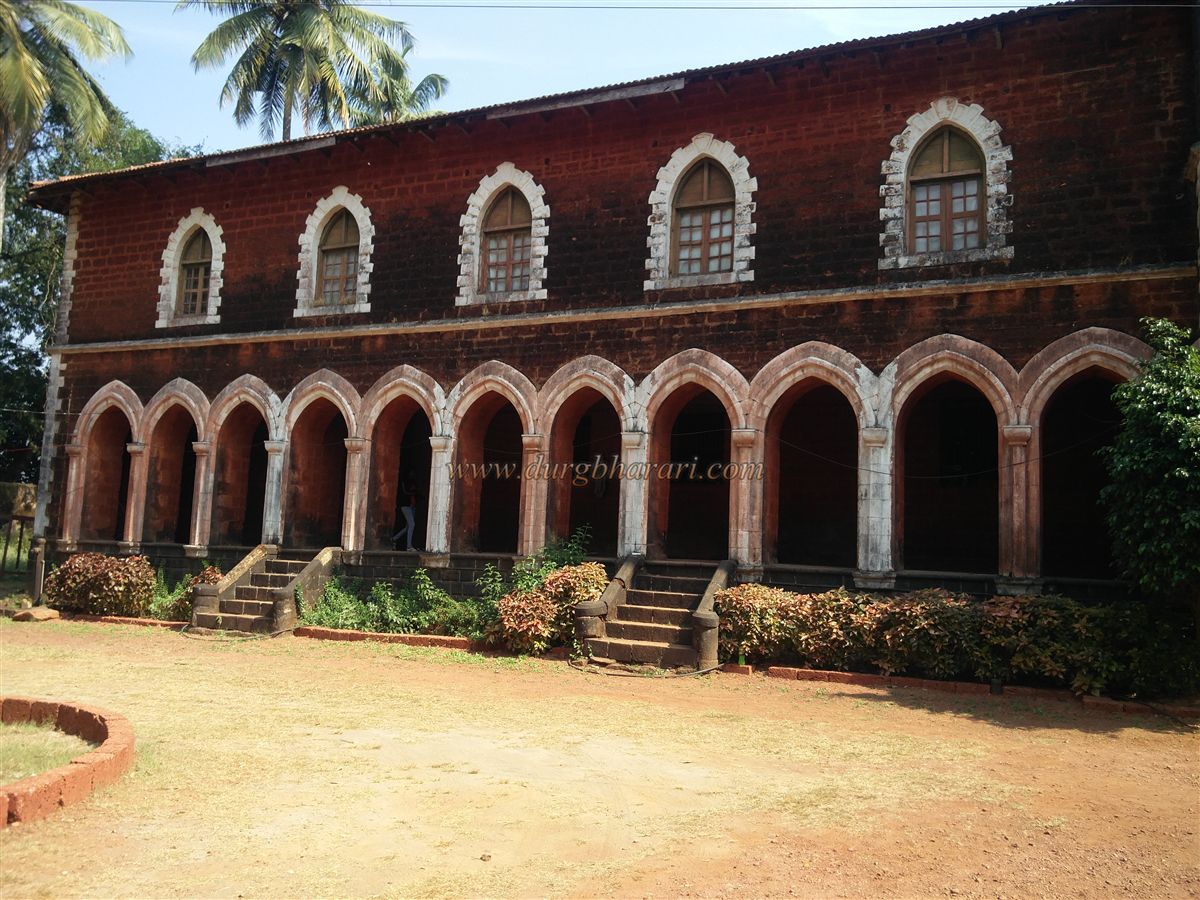
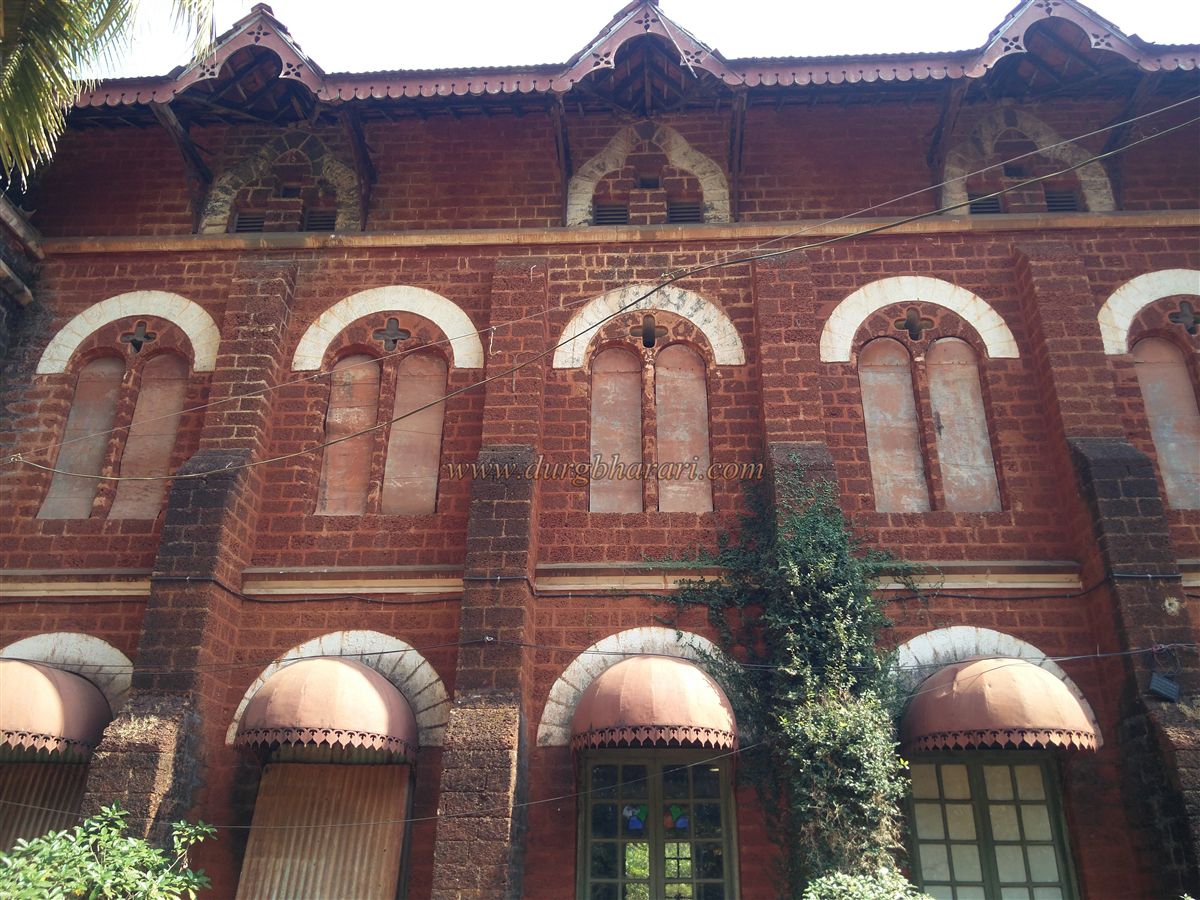
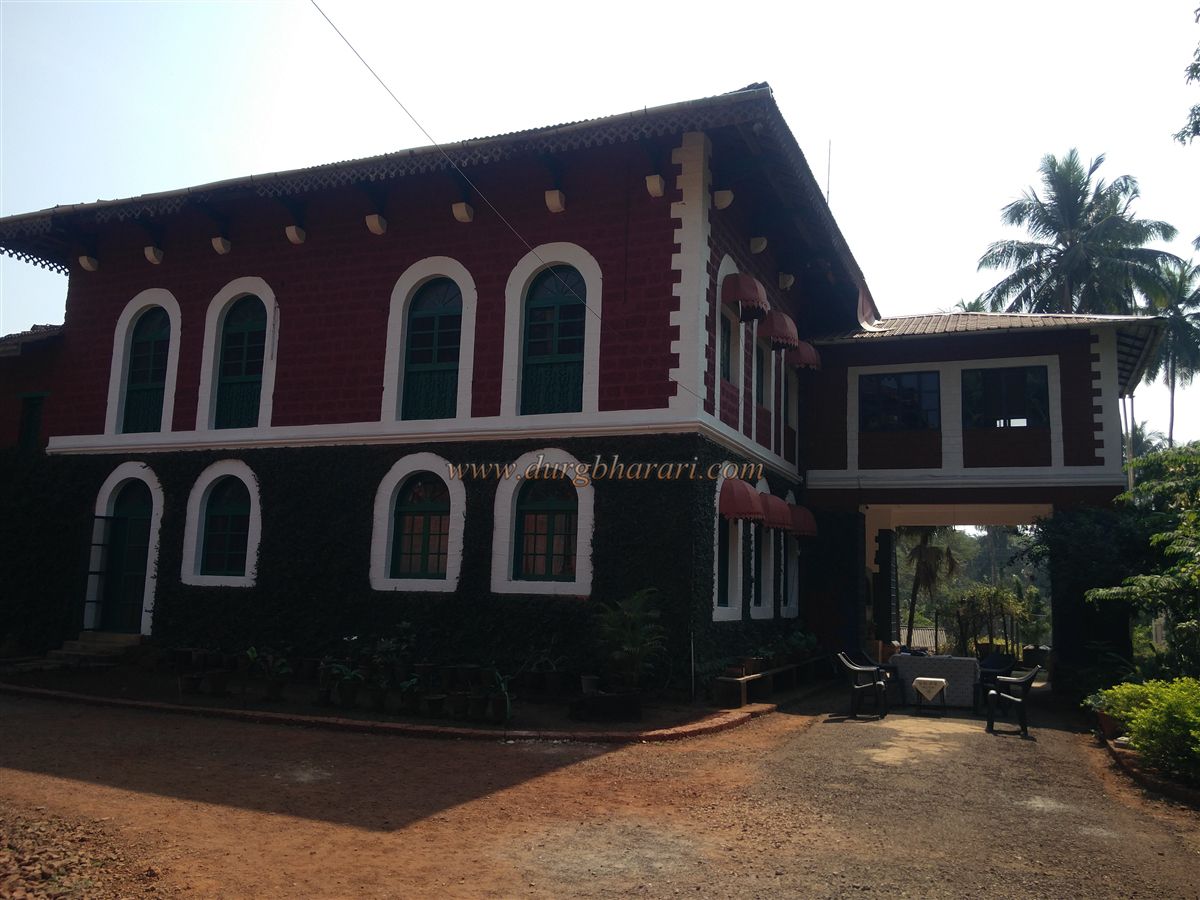
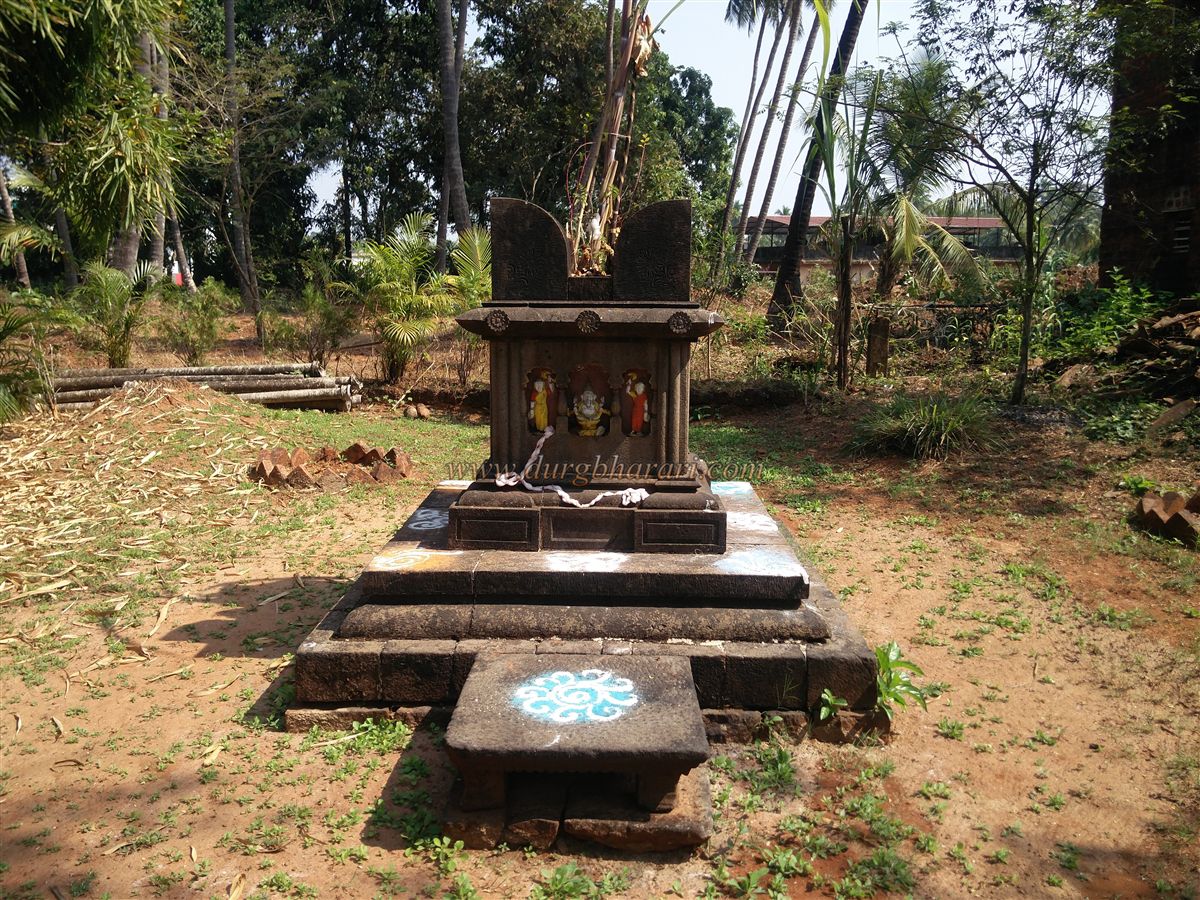
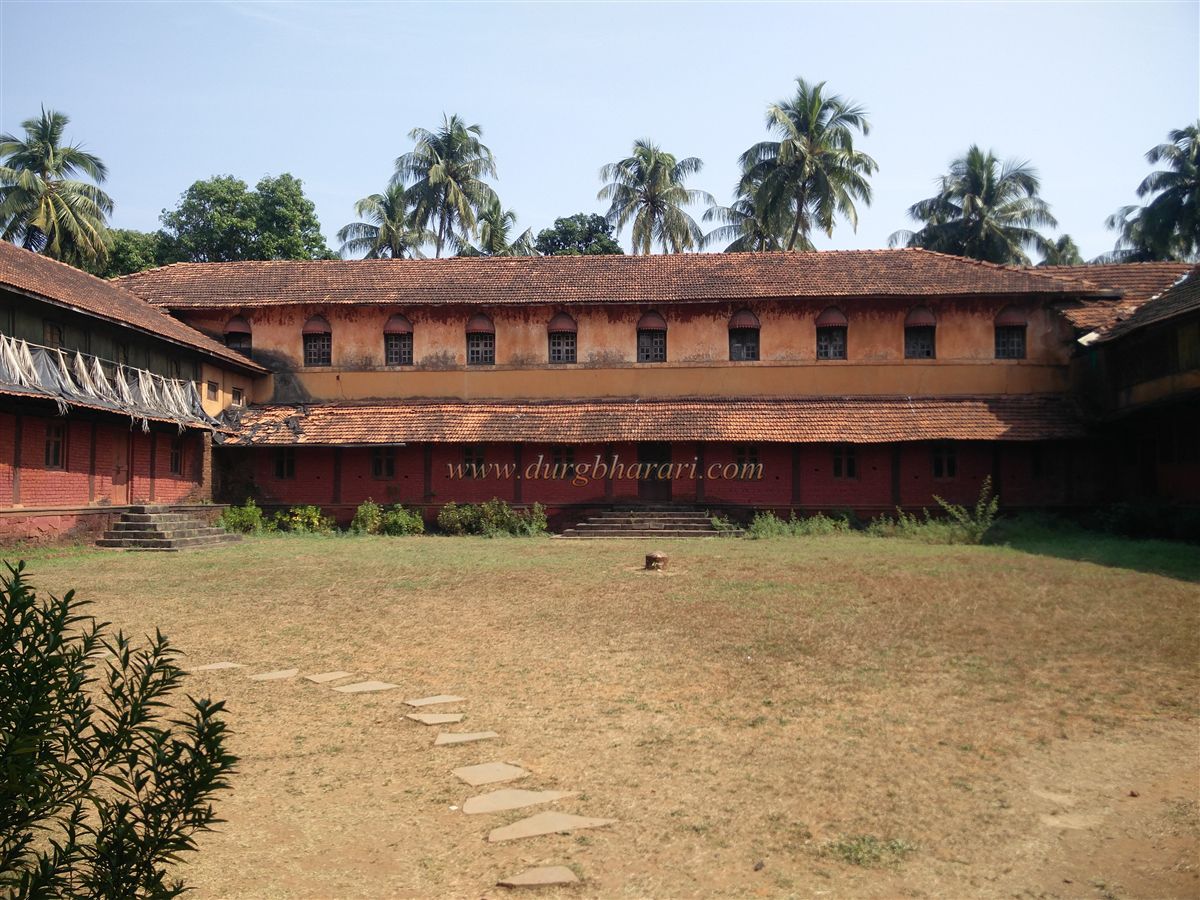
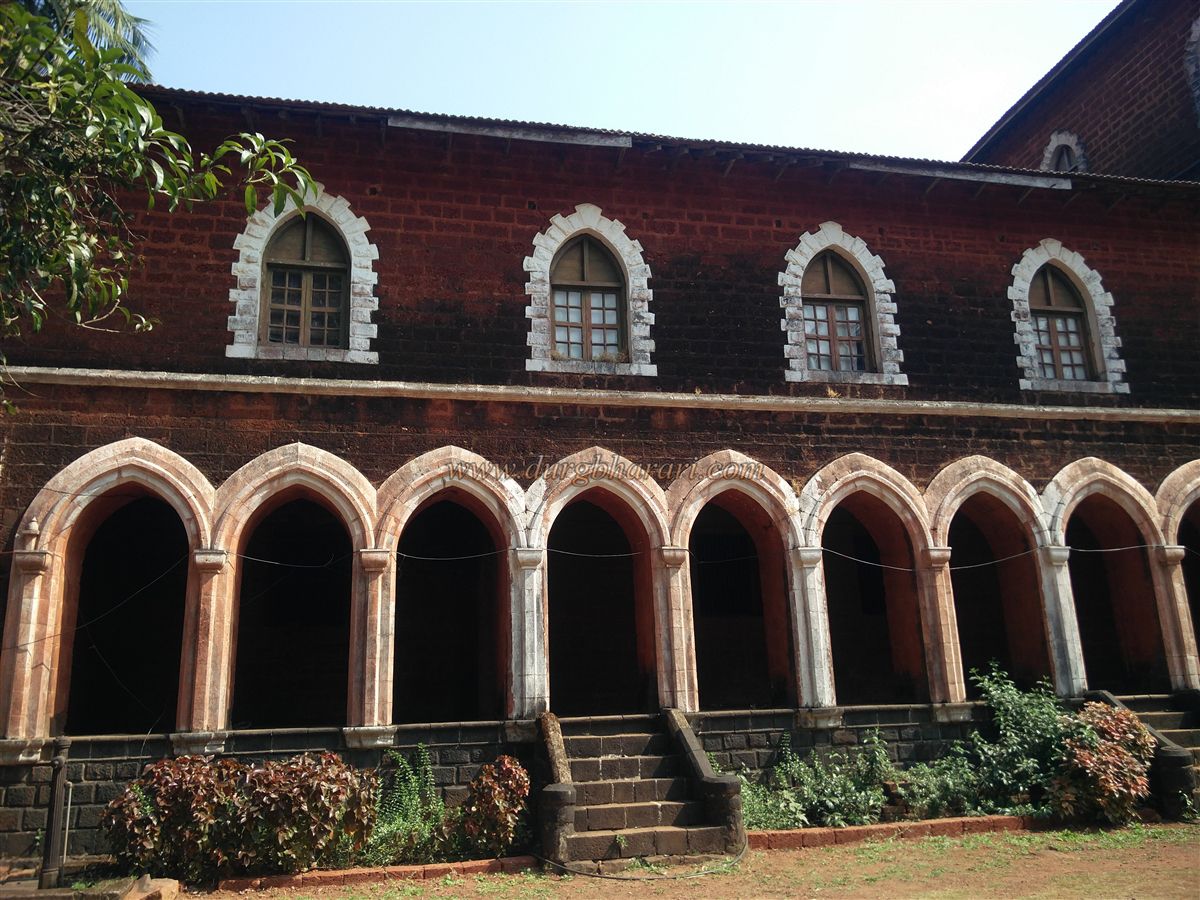
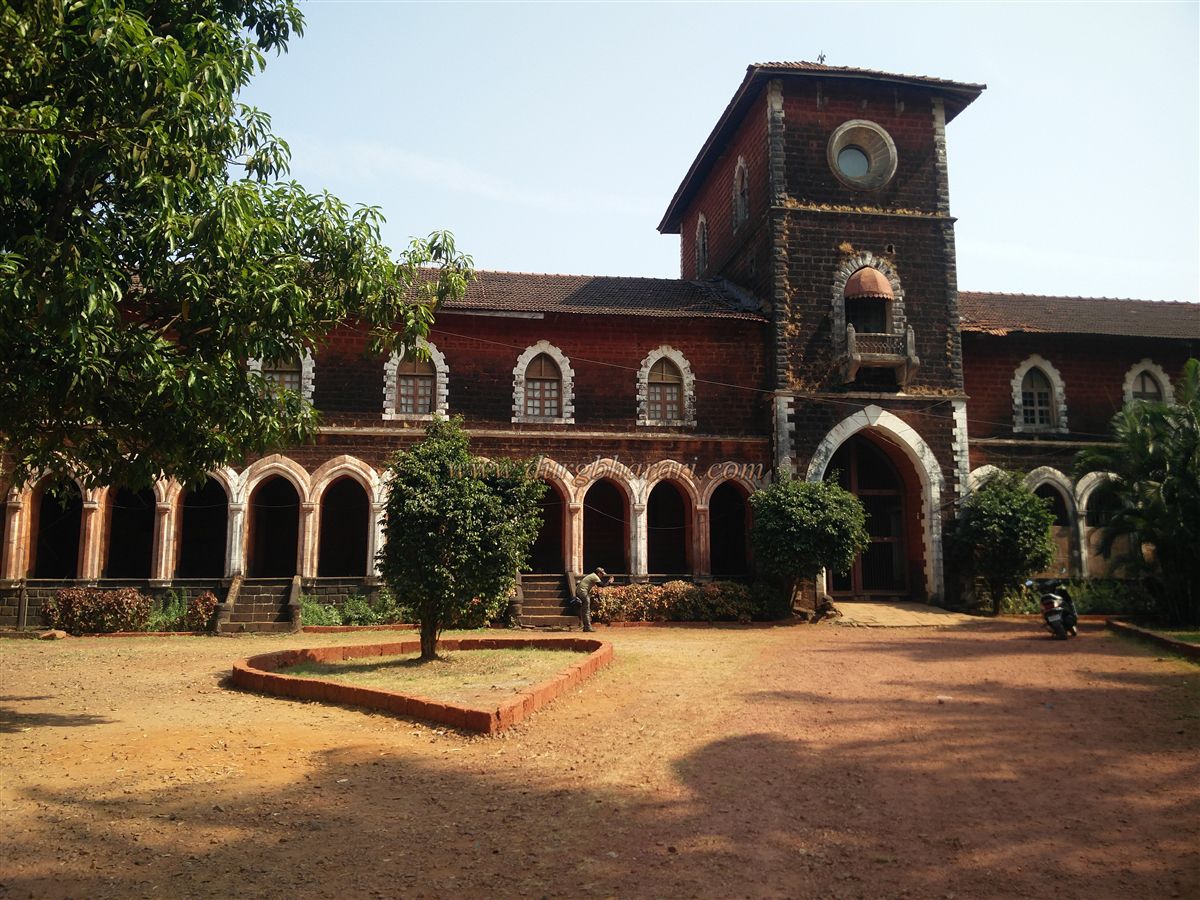
Directly opposite the gate stands the two-storied palace, constructed with laterite stone. The building is divided into two sections: the Darbar (court hall) and the residential quarters. According to an inscription embedded in its walls, the palace was completed on 21 March 1881. A nominal fee is charged for visiting the Darbar and the palace. Inside the Darbar, one can see the throne of the Sawant rulers, as well as an impressive collection of swords, guns, pistols, chandeliers, brass utensils, hunting trophies of tigers and leopards, and many other artefacts, all carefully arranged. Just outside the Darbar hall stands a beautifully carved stone Tulsi Vrindavan (holy basil altar).
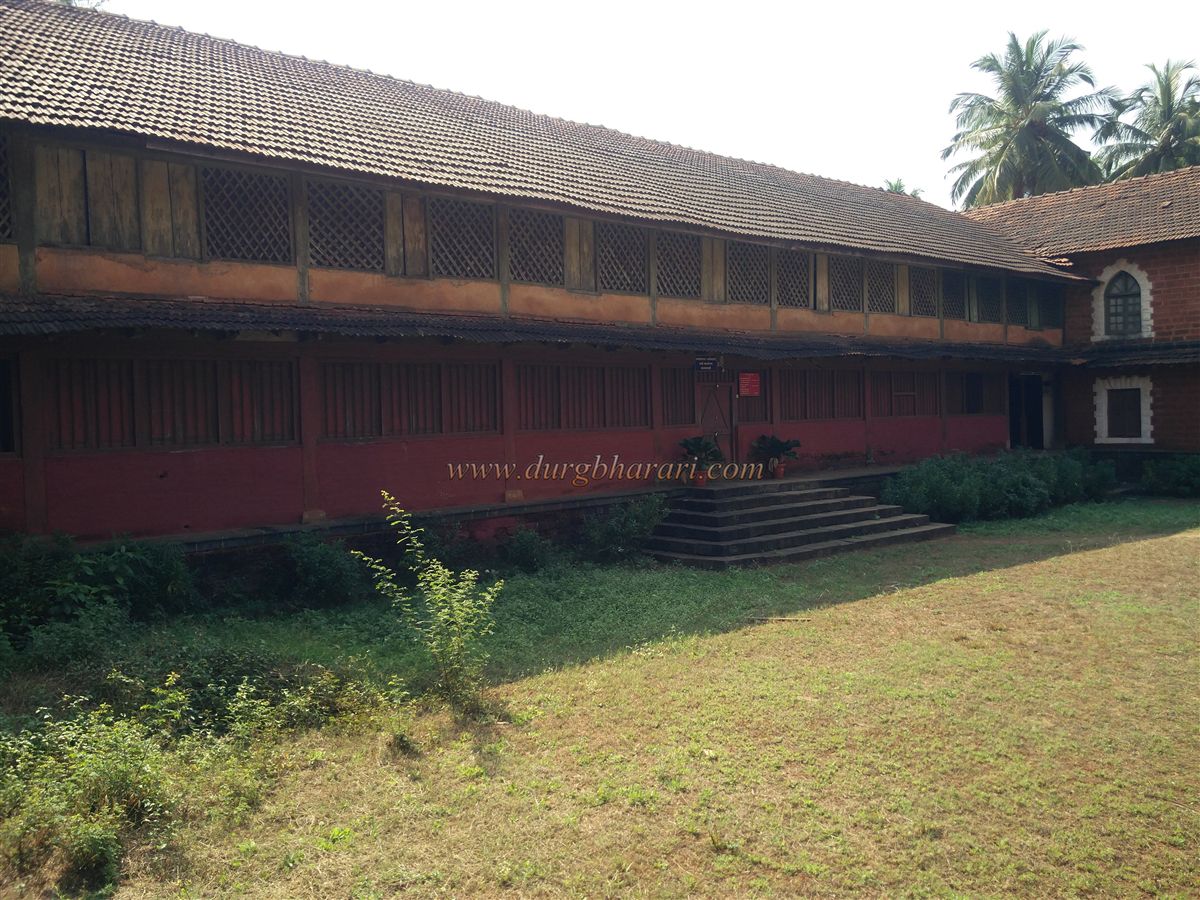
Moving toward the residential section, one can see two medium-sized cannons placed at the entrance. The residential quarters are designed like a traditional Chausopi Wada (courtyard mansion), though only a part of it now serves as a museum. This museum displays photographs of members of the Bhonsle royal family and objects from their personal use. A detailed genealogy of the Sawant royal lineage is also preserved here.
Behind the palace lies the only surviving bastion of the Sawantwadi fort, now overgrown with thick vegetation. Rising about 40 feet above the ground, this bastion also features gun and cannon embrasures.
Thus ends the exploration of the fort, which takes roughly two hours in total.
Sawantwadi, now the taluka headquarters in Maharashtra’s Sindhudurg district, was once the capital of the Sawantwadi princely state. The Sawantwadi state comprised the regions of Dodamarg, Kudal, Sawantwadi, and the Goan territories of Bicholim, Pedne, and Sattari. The original name of Sawantwadi was Sundarwadi. The present-day Sawantwadi was situated within the Kudal and Bhimgad Pargana of South Konkan.
The founder of this dynasty was Mang Sawant, a member of the Sisodia clan from Udaipur, whose family bore the Bhonsle surname. During the Vijayanagar period, Mang Sawant resided at Hodavade. When this region came under the rule of the Adilshahi Sultanate, the Kudal Deshastha Prabhu were appointed as Sardesai (local chiefs). In 1597, when their commander Devdalvi revolted, the Adilshah sent Mang Sawant to suppress him. Both leaders died in the ensuing battle. Of Mang Sawant’s seven wives, six committed sati, while the seventh, who was pregnant, took refuge in Otavane, where she gave birth to a son named Fond Sawant.
The true founder of Sawantwadi was Khem Sawant I, the son of Fond Sawant. In 1627, Khem Sawant obtained a Deshmukhi sanad (land grant) from the Adilshah, acquiring lands around Wadi and establishing his small state. He was succeeded by his elder son Som Sawant, followed by Fond Sawant. Upon Fond Sawant’s death in 1651, his younger brother Lakhman Sawant ascended the throne.
During the Maratha–Adilshahi conflicts of 1664, Lakhman Sawant sided with the Adilshah but was defeated and forced to negotiate peace. After his death in 1675, his nephew Khem Sawant II ruled from 1675 to 1709. In 1684, during Sambhaji Maharaj’s reign, Khem Sawant allied with the Mughals. In 1697, he defeated the Prabhu of Kudal and became the Sardesai of this Pargana. Khem Sawant established Charathe as his capital, which later came to be known as Sundarwadi and eventually evolved into the name Sawantwadi.
Upon Khem Sawant II’s death in 1709, Fond Sawant succeeded him. After Fond Sawant came his grandson Ramchandra Sawant, though the actual administration was managed by Ramchandra’s uncle Jayaram. In 1755, Khem Sawant III ascended the throne and successfully reclaimed territories lost to the Portuguese by 1791.
A letter dated 8 March 1786 from Peshwa’s commander Jivaji Gopal records that the Sawant maintained a force of 3,000–4,000 infantrymen. After Khem Sawant III died childless in 1803, succession disputes arose. His widow Lakshmibai adopted Ramchandra, also known as Bhausaheb Sawant, who became the ruler. Bhausaheb was assassinated in 1808, and after Lakshmibai death, Khem Sawant’s second wife Durgabai adopted another son, Fond Sawant, who died in 1812.
Thereafter, the minor Khem Sawant IV came to power. In 1819, Major Keir attacked Sawantwadi, defeated the Sawant, and handed over the administration to British officer Aitchinson, bringing the state under British control.
By 1832, the Sawantwadi state included four fortified towns – Kudal, Banda, Awade, and Sawantwadi – along with three hill forts: Hanumantgad, Narsinhgad, and Songad. In 1844, Fond Sawant, known as Abasaheb, led a rebellion. After his death in 1867, Khem Sawant V ruled briefly, followed by his son Raghunath Sawant, also known as Babasaheb. Upon Babasaheb death in 1899, his cousin Shriram Sawant succeeded him.
Shriram Sawant died in 1913, at which time the heir Bapusaheb was still a minor studying in England. During World War I, Bapusaheb served in Mesopotamia, earning the titles “His Highness” and “Captain.” On 29 October 1924, the British government formally handed over the administration of the state to Bapusaheb.
© Suresh Nimbalkar
GALLERY