SARJEKOT-KULABA
TYPE : SEA FORT
DISTRICT : RAIGAD
HEIGHT : 0
GRADE : EASY
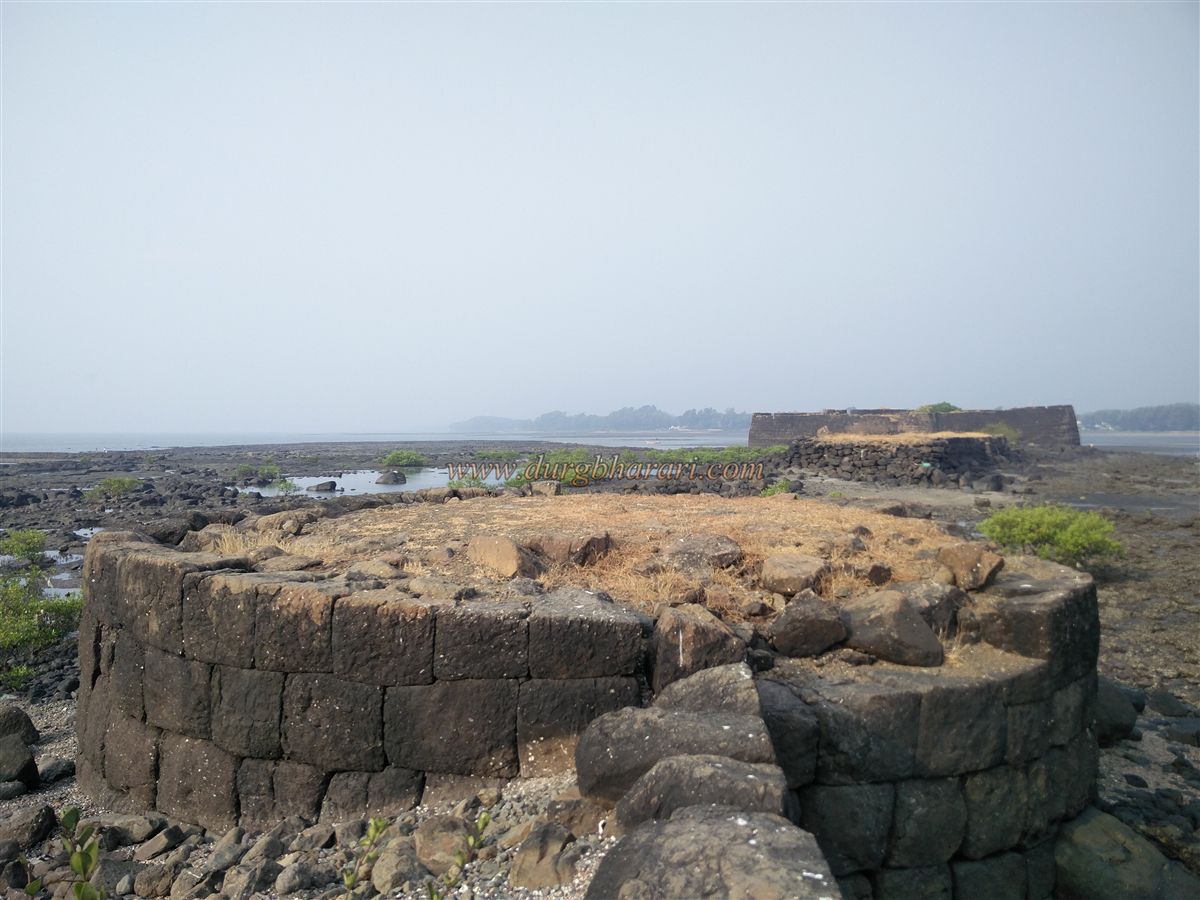
In the sea at Alibag stand the twin forts of Kulaba and Sarjekot. These forts fall under the category of mixed forts. During high tide, they are surrounded by water on all sides, turning them into sea forts, while at low tide, the land between them becomes exposed, making them land forts. During low tide, one can walk to them from the Alibag shore. Sarjekot is located right next to the Kulaba Fort. In fact, Sarjekot is not really a separate fort but more like a large bastion. It is often referred to as the eighteenth bastion of Kulaba. Sarjekot was built to guard the Janjira-Kulaba region. This small yet strong fortification, with its sturdy walls, still stands firm today, enduring the relentless assault of massive sea waves and silently narrating its history. In the past, during high tide, to ensure the two forts did not get separated, Sarjekot was connected to the main Kulaba Fort by a stone bridge and wall.
...
However, this bridge has now crumbled, and part of it gets submerged during high tide. Likely, when it was constructed, its height was sufficient to prevent seawater from reaching the top even at high tide. This bridge provided access to Sarjekot and even had two bastions built on it.
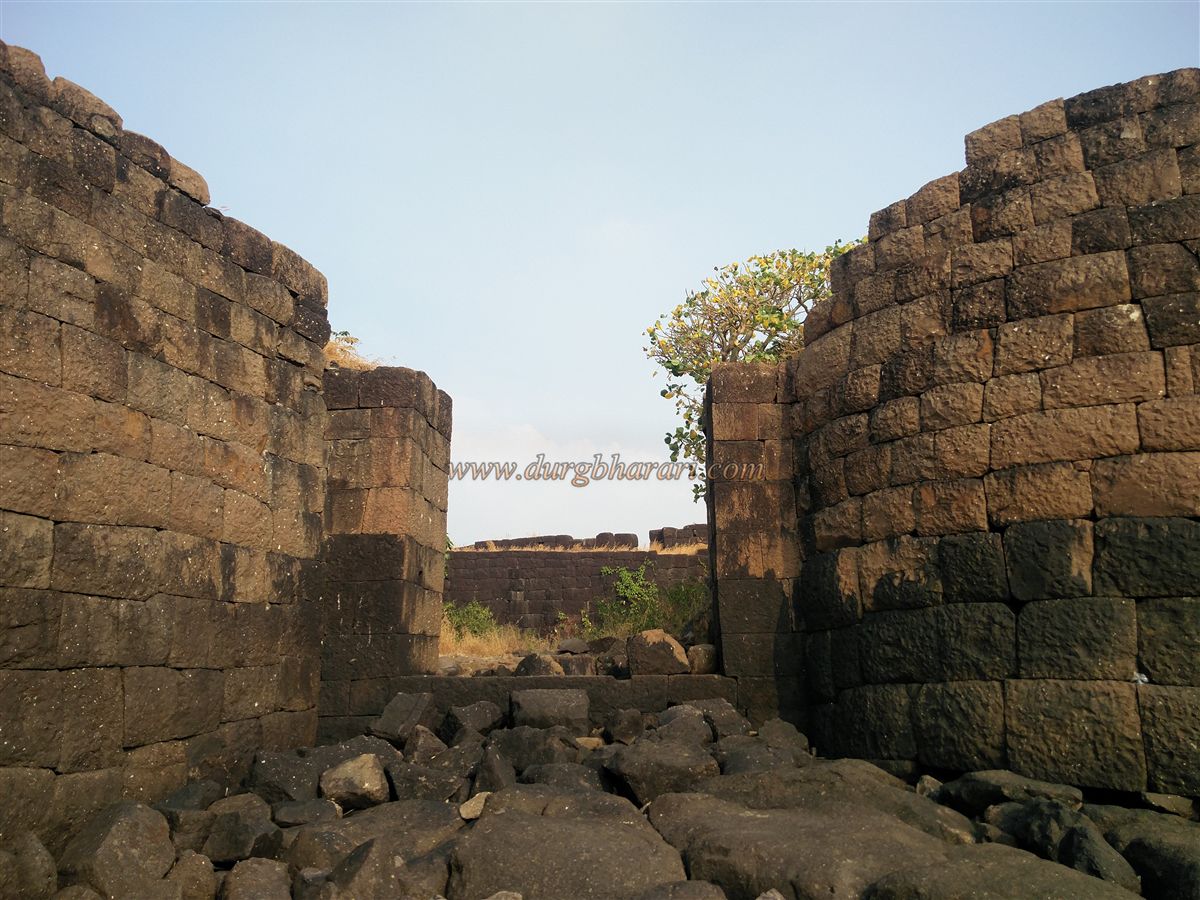
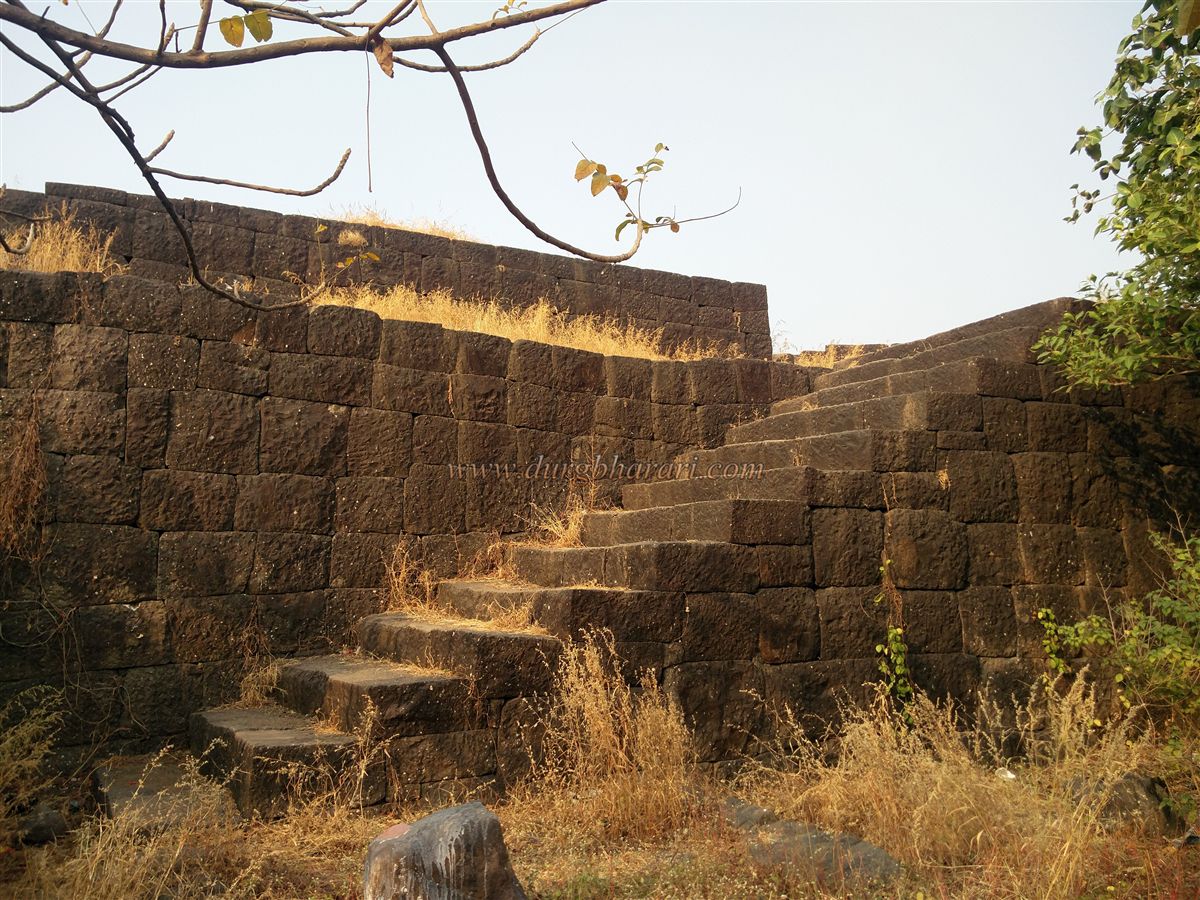
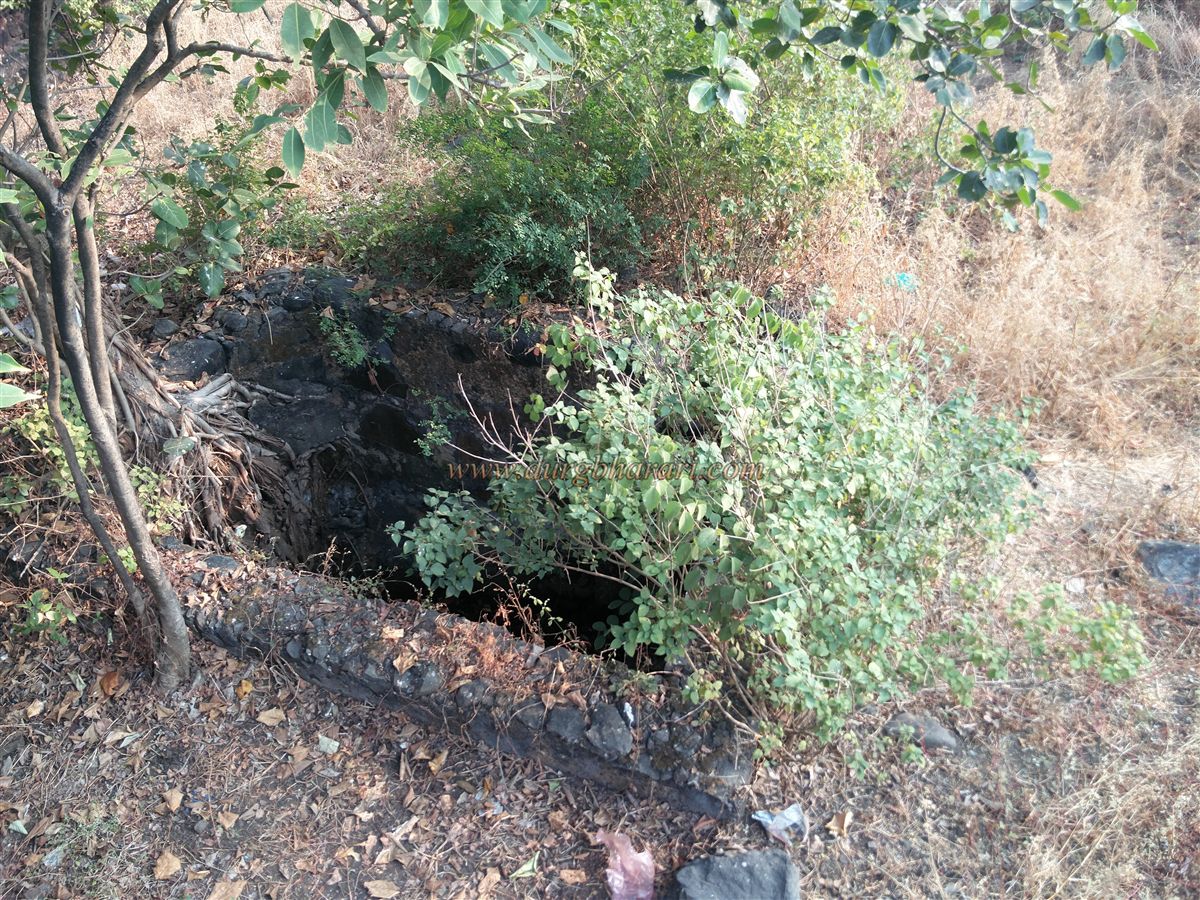
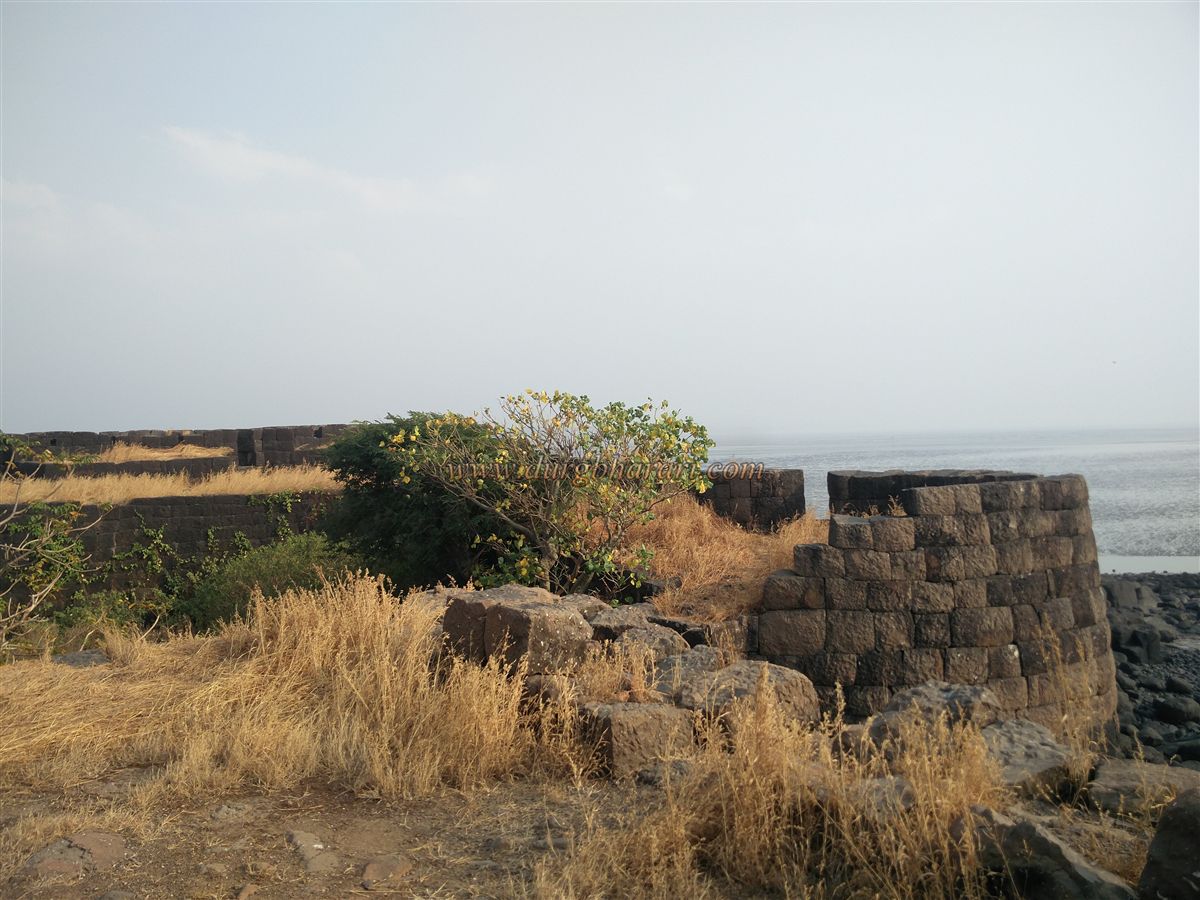
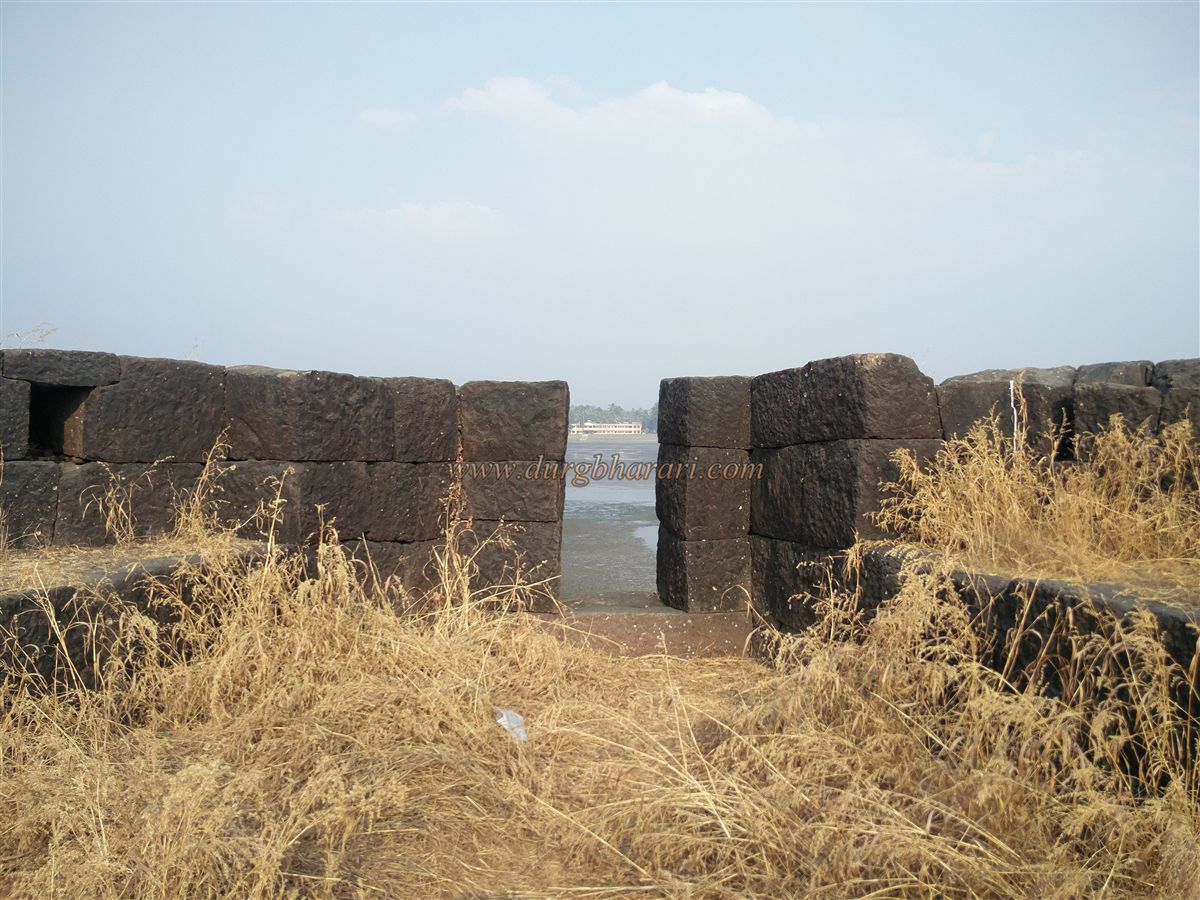
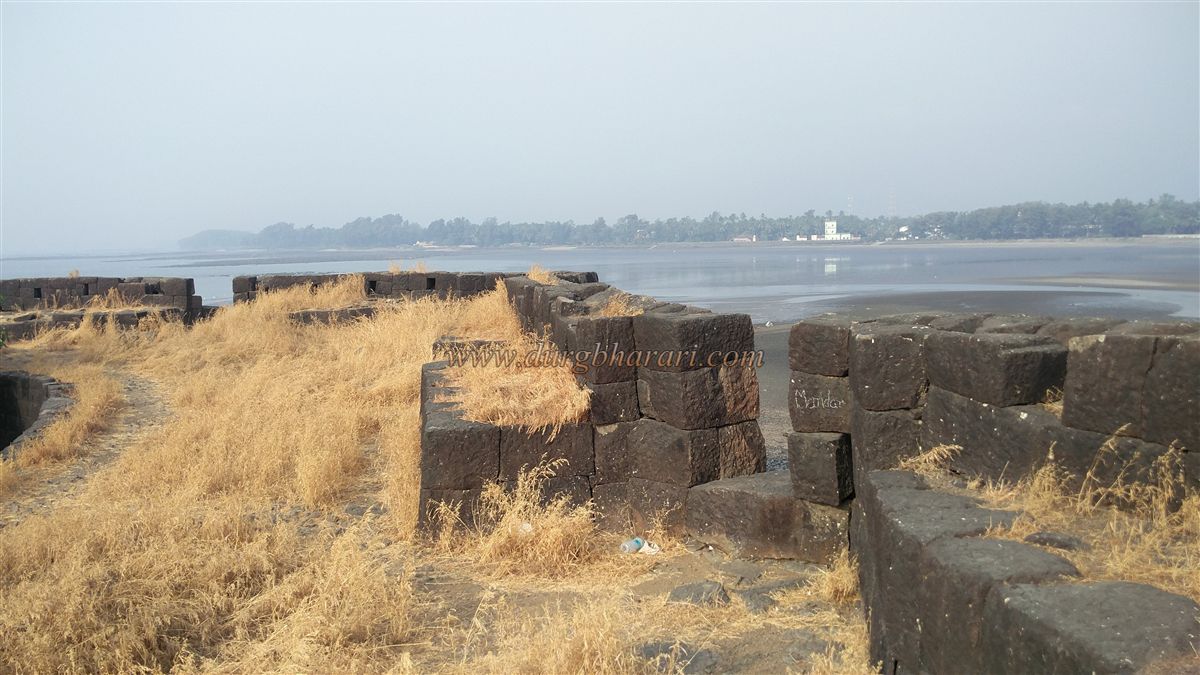
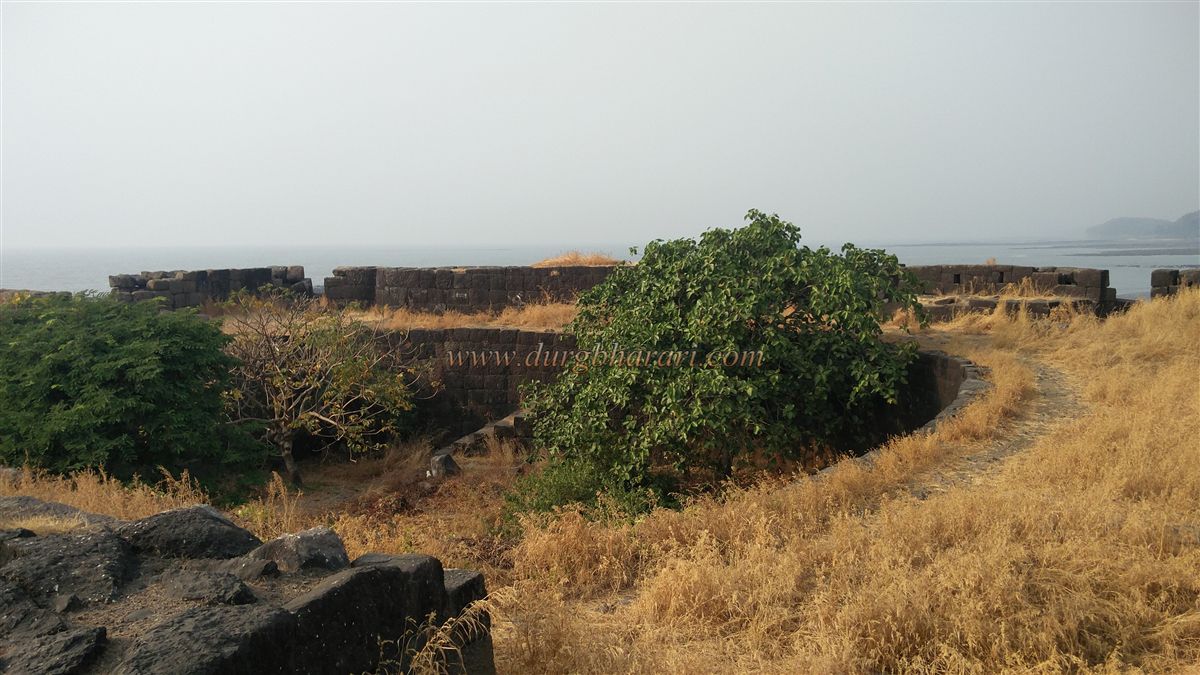
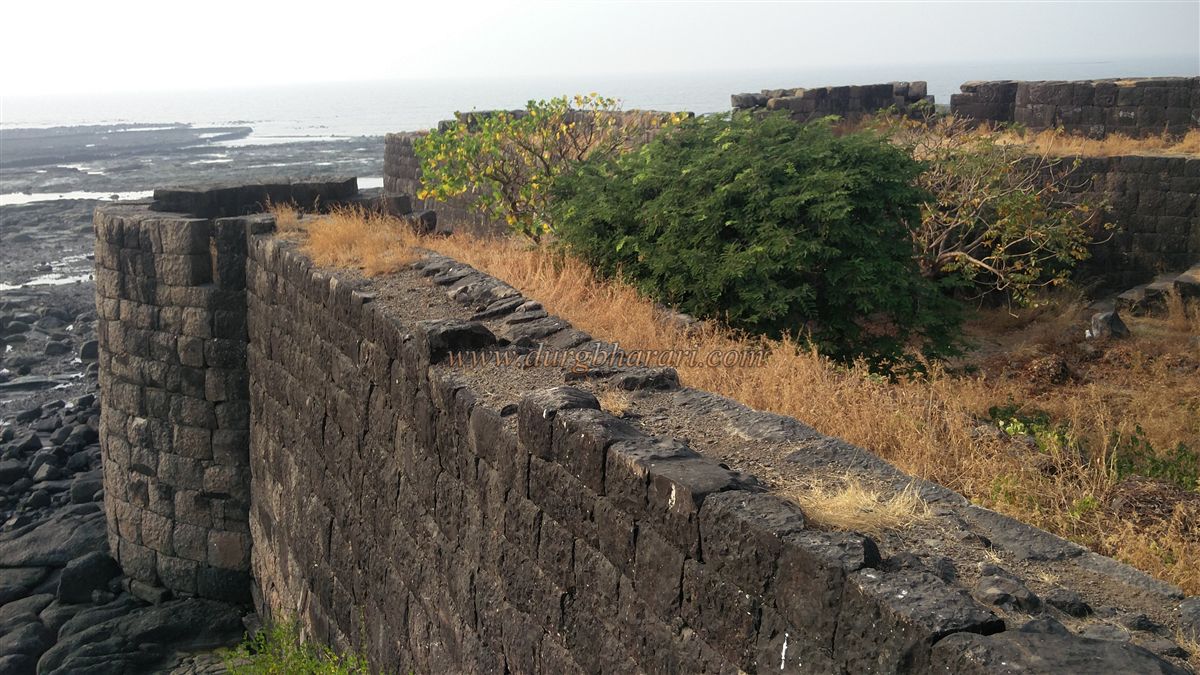
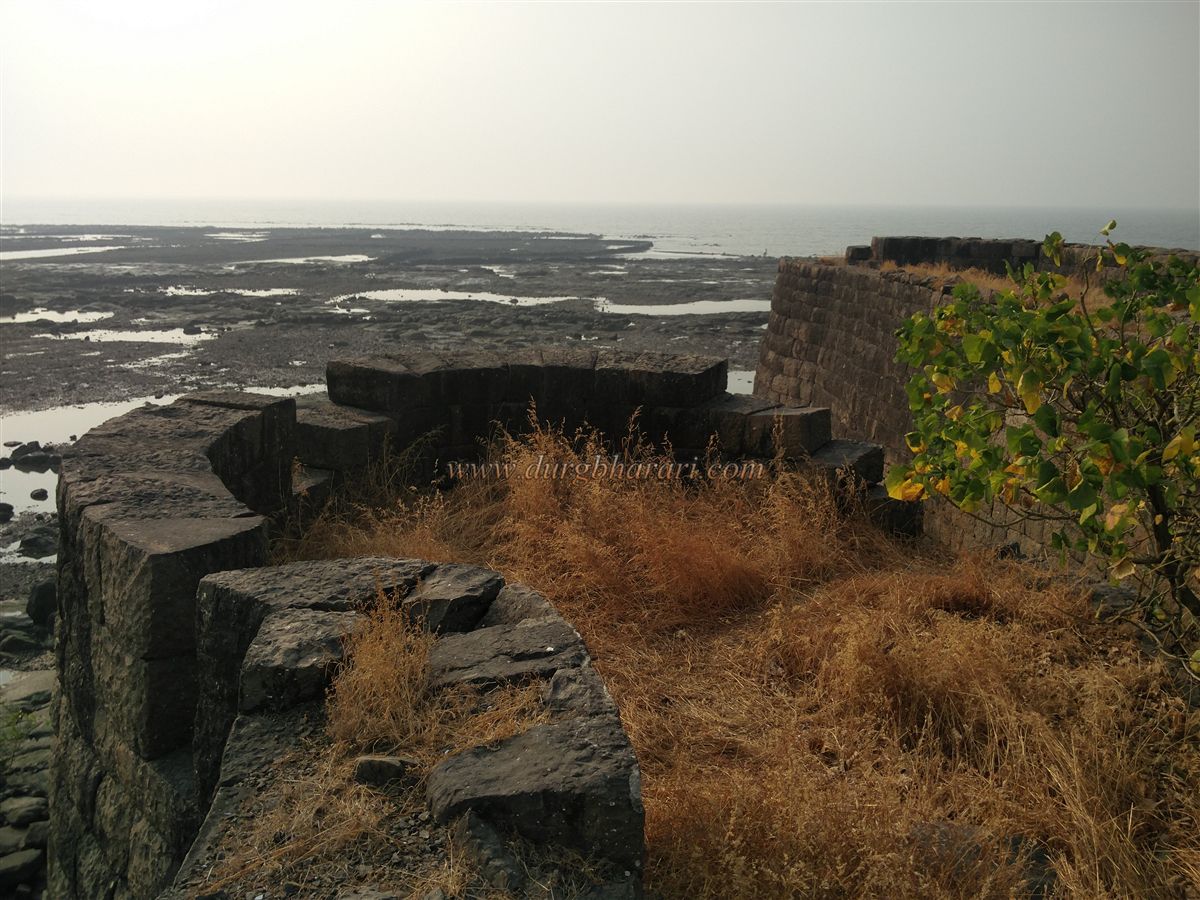
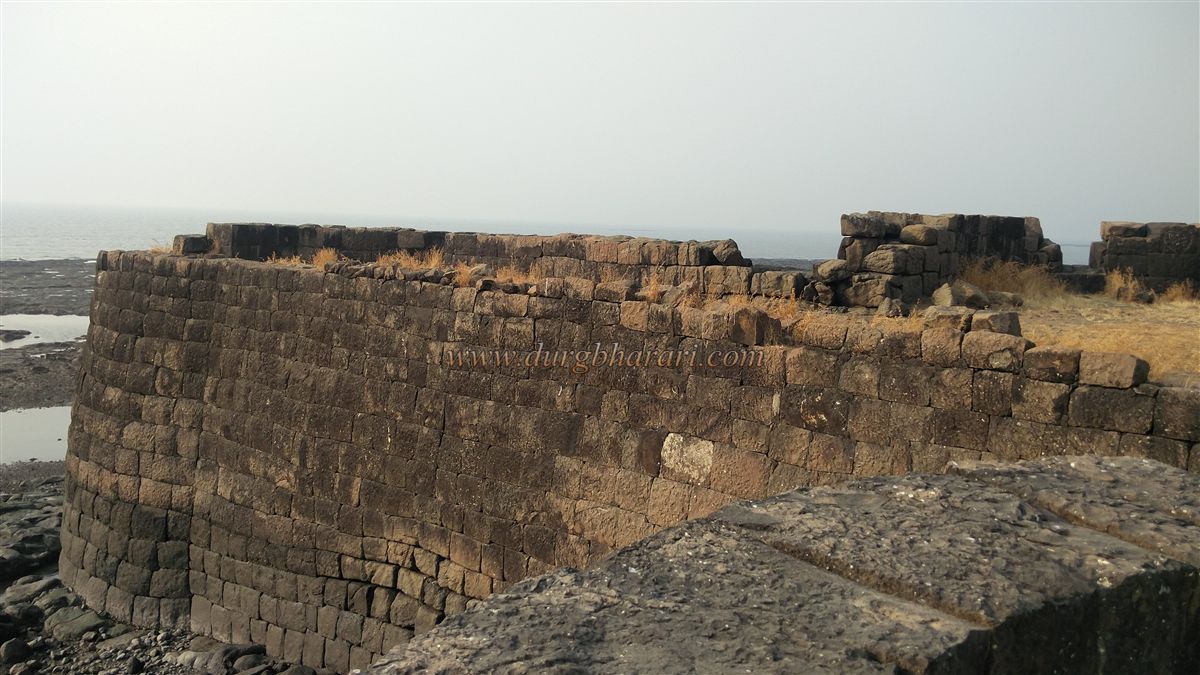
Sarjekot is neither large enough to be considered an independent fort nor significant enough to be called an outwork of Alibag. Its entrance is located on the western side, facing the sea, while the rear side faces the Alibag coast, which makes the entrance invisible from the shore. The gate of Sarjekot has collapsed, but its five strong bastions still stand tall and firm. Measuring approximately 26 meters by 27 meters, the fort has walls that are around three meters thick, which still remain solid. Upon entering Sarjekot, the first thing that catches the eye is a well and, next to the wall, a flourishing frangipani tree in full bloom. Two sets of steps lead to the top of the fort walls — one smaller set of steps hugging the wall and another broader set, which lead to the parapet.
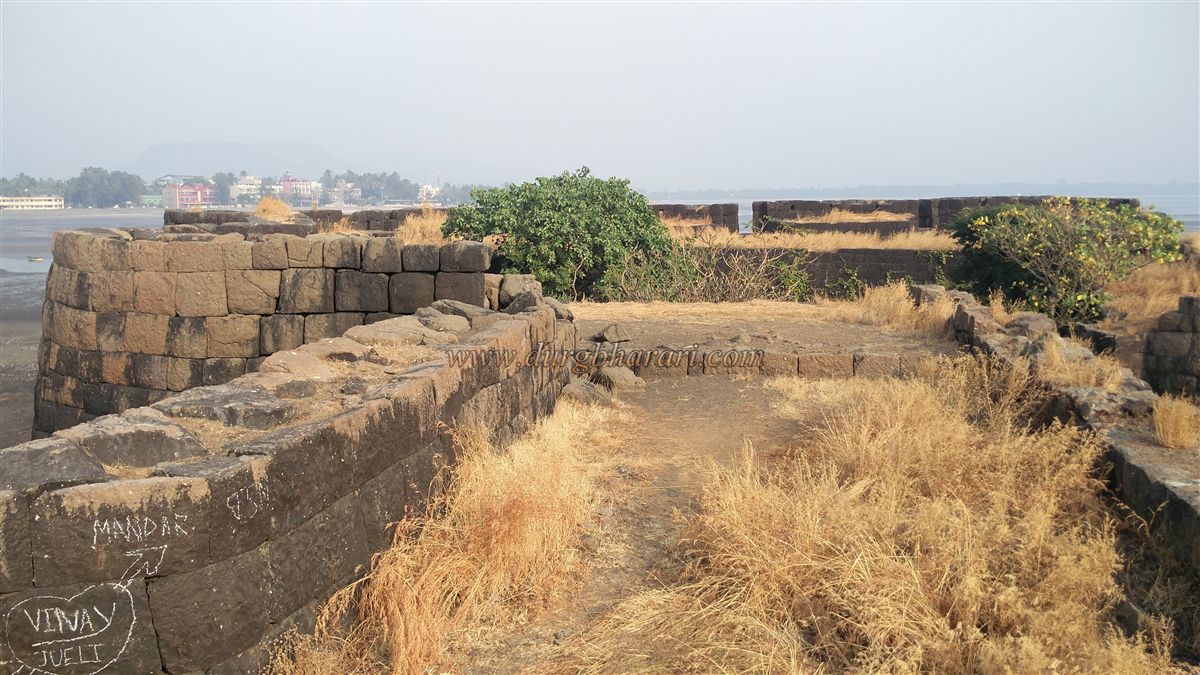
It is mentioned that there used to be a Vetal (guardian deity) temple inside the fort. From the fort walls, one can see the Kulaba Fort to the west and, in the far north, the twin forts of Khanderi and Underi. In his orders, Chhatrapati Shivaji Maharaj stated that if there is a hill near a fort, it should either be destroyed by explosives or, if that is not possible, a fort should be built on it. This would provide protection to the main fort, preventing the enemy from using that position to launch an attack. Following this order, Chhatrapati Sambhaji Maharaj built Sarjekot on a rock next to Kulaba Fort. Earlier, in 1679, while constructing a fort on Khanderi Island, the Marathas neglected the nearby Underi Island, allowing the Siddhi to occupy it, build a fort there, and create a lasting problem for the Marathas. Perhaps learning from that incident, Sambhaji Maharaj built Sarjekot and connected it to Kulaba with a stone bridge.
Chhatrapati Shivaji Maharaj began the construction of Kulaba Fort in 1680, but after his death, Chhatrapati Sambhaji Maharaj completed the construction of both forts. The construction of Sarjekot was completed under Sambhaji Maharaj in June 1681. As Sarjekot history is closely linked to that of Kulaba Fort, it does not have a separate historical account of its own.
© Suresh Nimbalkar
GALLERY