SAPTASHRUNGI
TYPE : HILL FORT
DISTRICT : NASHIK
HEIGHT : 3980 FEET
GRADE : EASY
In Maharashtra, there are three and a half Shakti Peethas: Mahalakshmi of Kolhapur, Bhavani Mata of Tuljapur, Mahakali of Mahur, and Saptashrungi Devi of Vani, which is considered a half Peetha. Saptashrungi literally means "a mountain with seven peaks." It is believed that the seven peaks are the abodes of the seven divine mothers — Brahmani, Vaishnavi, Maheshwari, Indrani, Kaumari, Varahi, and Chamunda. Additionally, the fort houses the temple of Jagadamba Mata, who is revered as the Saptashrungi Devi of Vani. Tradition holds that this shrine was established by sage Markandeya.
Although historical references describe this place as a fort in the Satmala mountain range, today it is known primarily as a pilgrimage center.
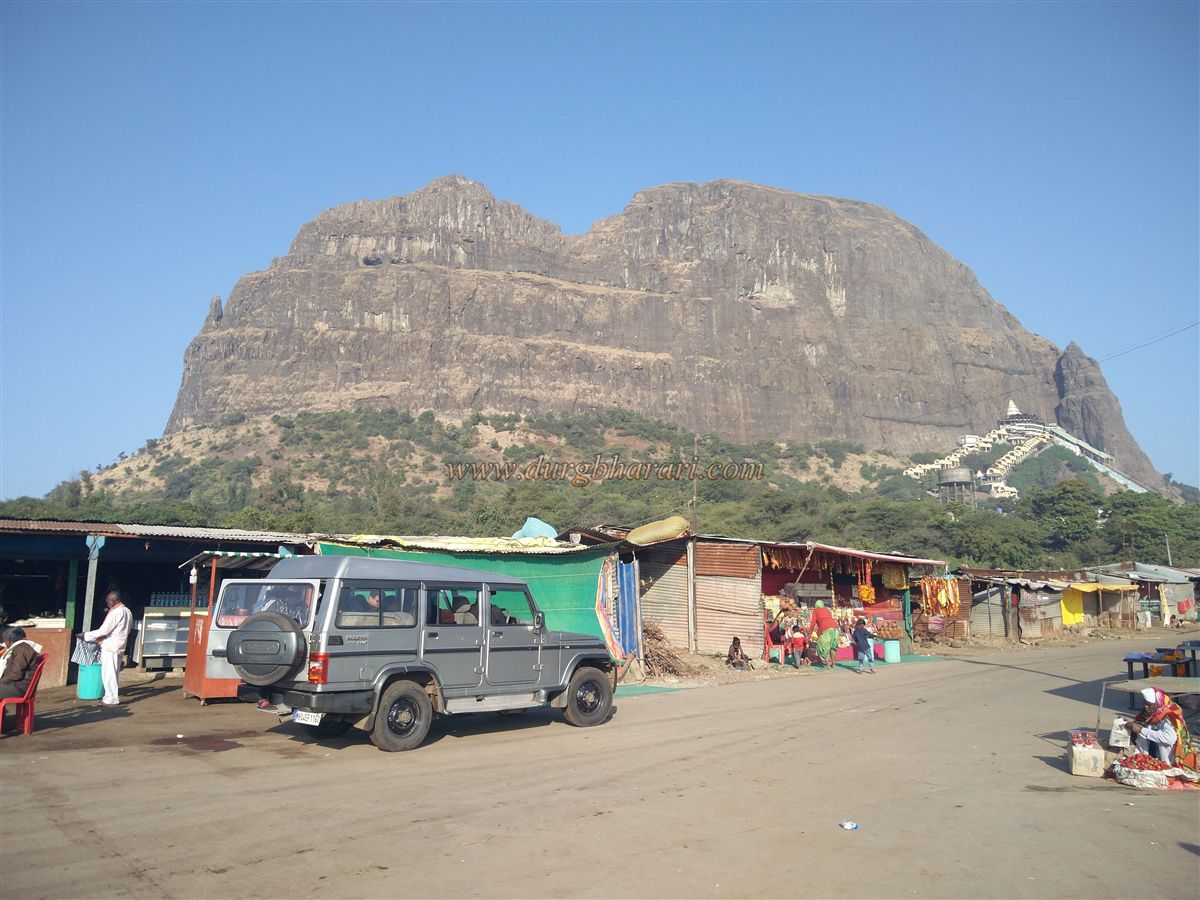
Located on the Nashik–Kalwan road, the base village of the fort, Nanduri, is 52 km from Nashik and 12 km from Vani. From Nanduri, a road leads to the fort’s Machi (plateau), covering about 10 km.
...
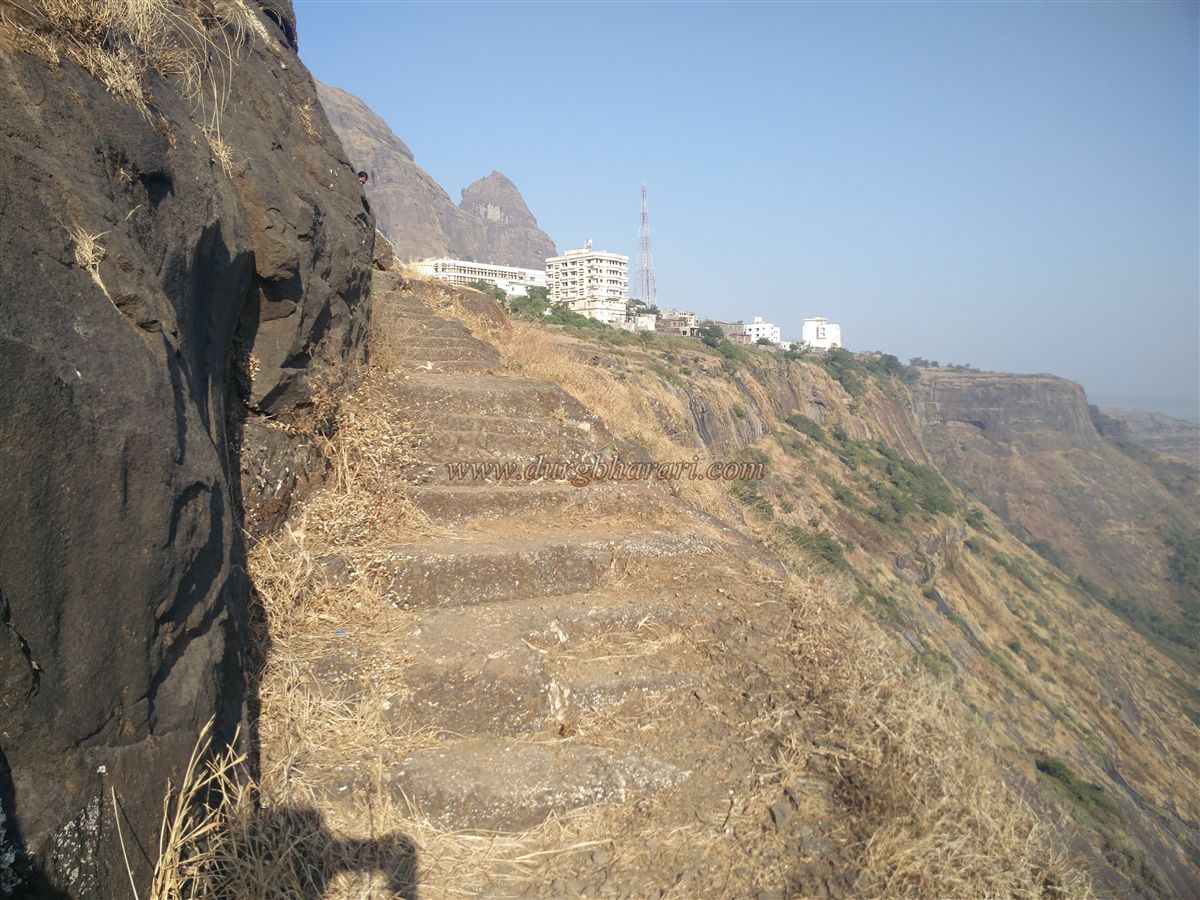
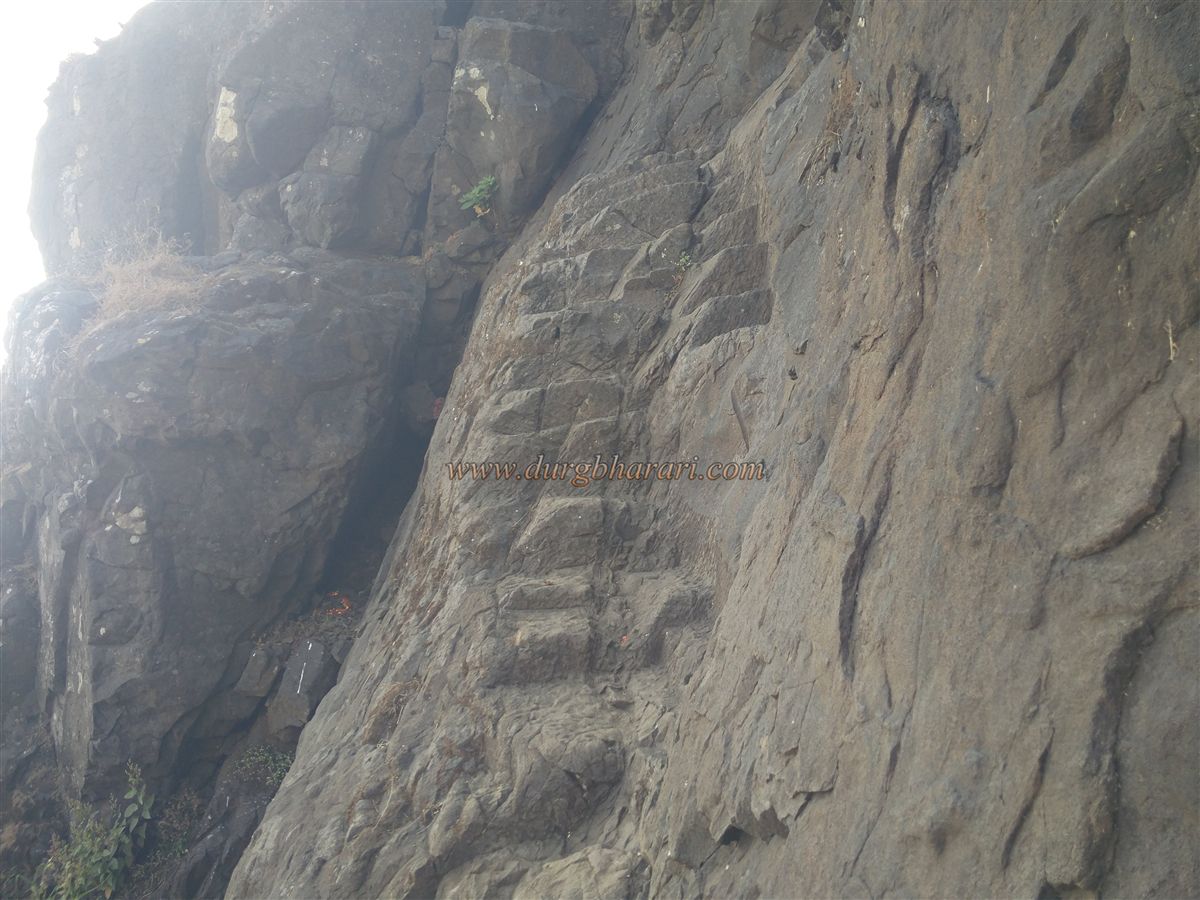
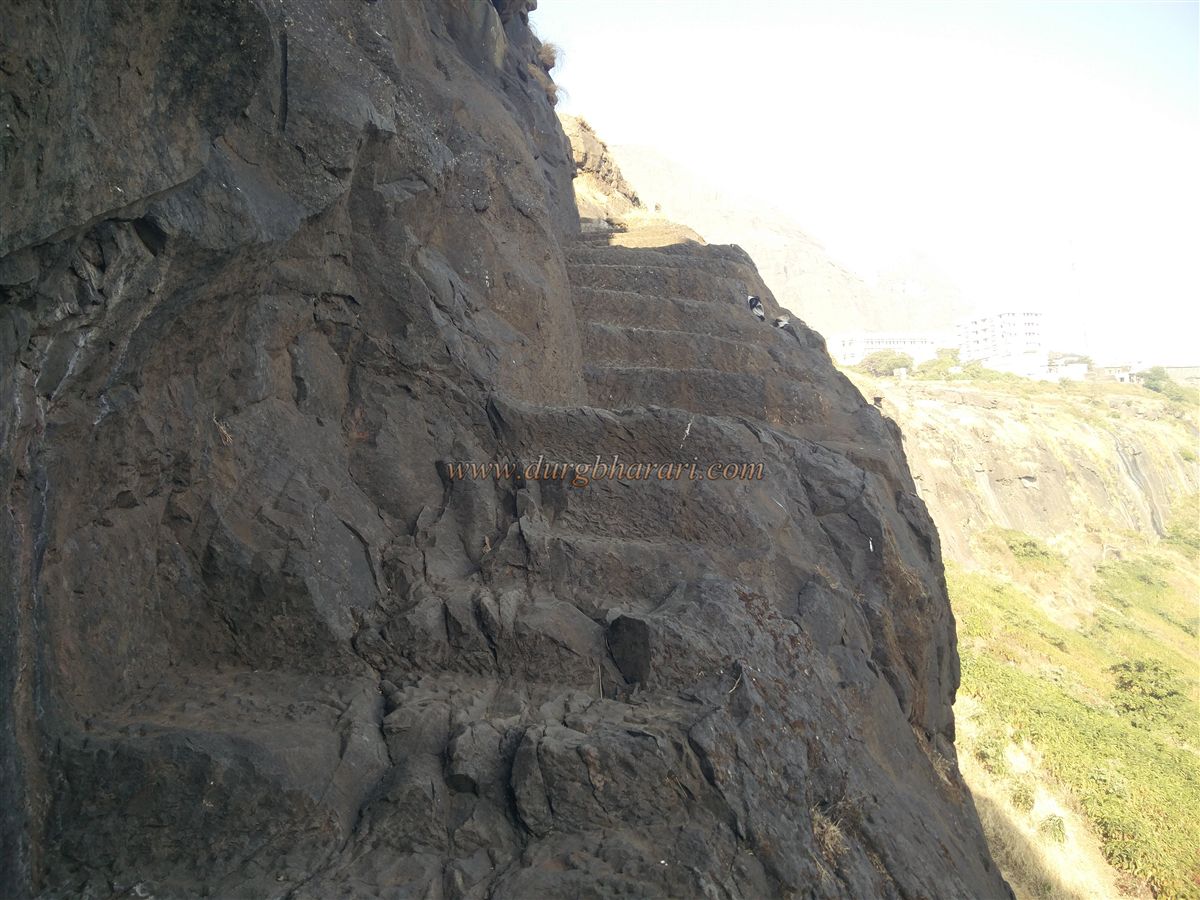
There is also a stone-step pathway from Nanduri with approximately 350 steps leading up to the Machi. Along this path, five inscriptions can be seen — one in Sanskrit and four in Marathi. These inscriptions state that Kanhoji, Rudroji, and Krishnaji, sons of Girmaji of the Rayarav family, constructed these steps between Jyeshtha Shaka 1690 (Sarvadhari Samvatsar) and Chaitra Shaka 1691 (Vidrohi Samvatsar), corresponding to A.D. 1768. The inscriptions also mention that they built a Dharamshala (rest house), a Ganapati temple, and the Ramteerth reservoir.
The fort comprises two parts: the Balekilla (citadel) at an altitude of 4,050 ft and the Machi at 3,700 ft. The Saptashrungi Devi temple is located along the rock face of the citadel and can be reached by climbing 472 steps, originally constructed in 1710 by Umabai Dabhade, wife of Peshwa Sardar Khanderao Dabhade. These steps have been rebuilt in recent times.
The temple itself is set in a cave between two peaks and houses an 8-foot-tall idol of the goddess with eighteen arms, carved directly into the rock. Each hand holds a different weapon or object: bow, arrow, thunderbolt, discus, trident, sword, axe, mace, shield, noose, spear, rosary, conch, bell, staff, offering bowl, water pot, and lotus. Since the idol is carved into the rock and the rock itself is considered divine, stepping on the Balekilla above is strictly prohibited.
The privilege of climbing to the top of the fort is reserved for the Patil family of Daregaon, who, every year on Chaitra Purnima at midnight, ascend to the fort to hoist a new flag and light a ceremonial lamp. Traditionally, devotees would perform a parikrama (circumambulation) around the entire fort, but this practice has been discontinued due to frequent rock falls.
For visitors, the accessible part of the fort today is only the Machi. Due to its prominence as a pilgrimage center, a small congested settlement has developed here, resulting in the loss of many of the fort’s original remains.
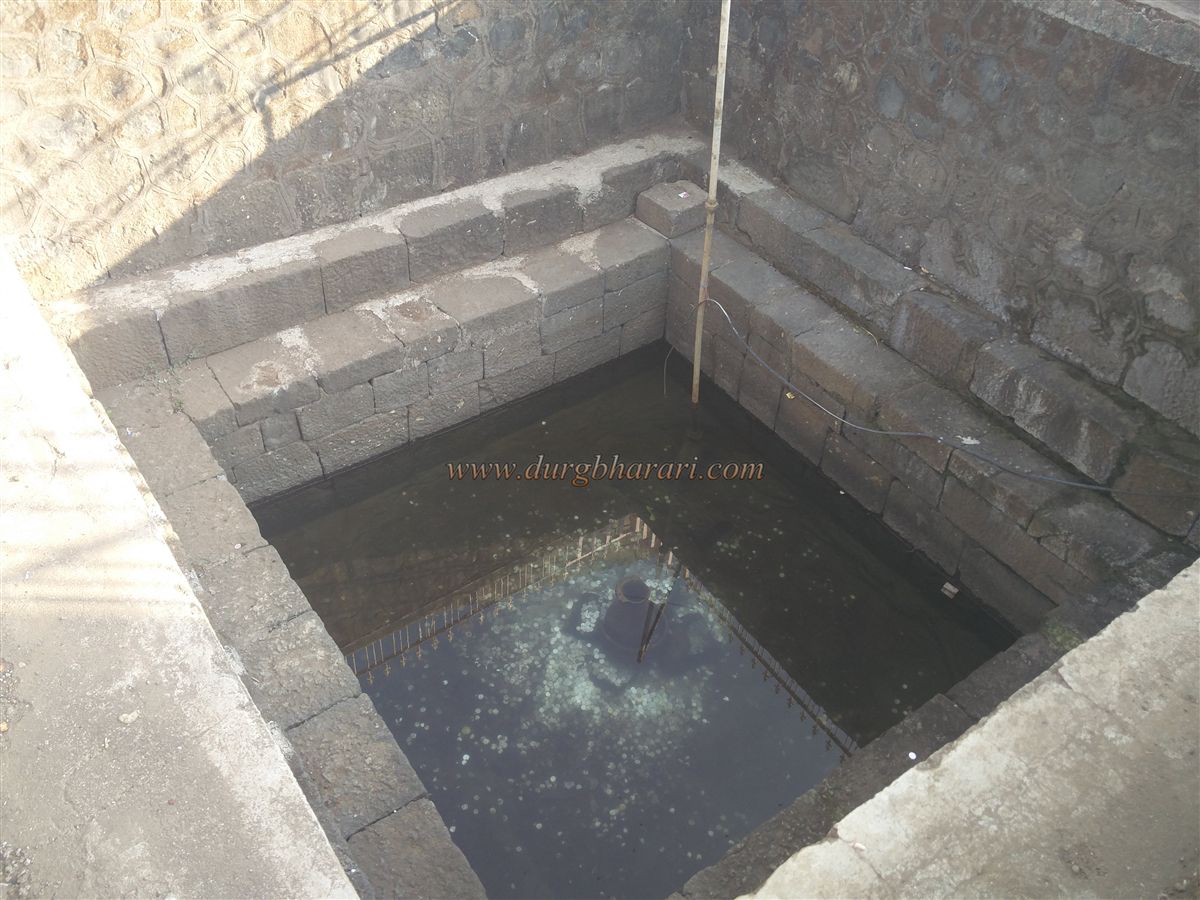
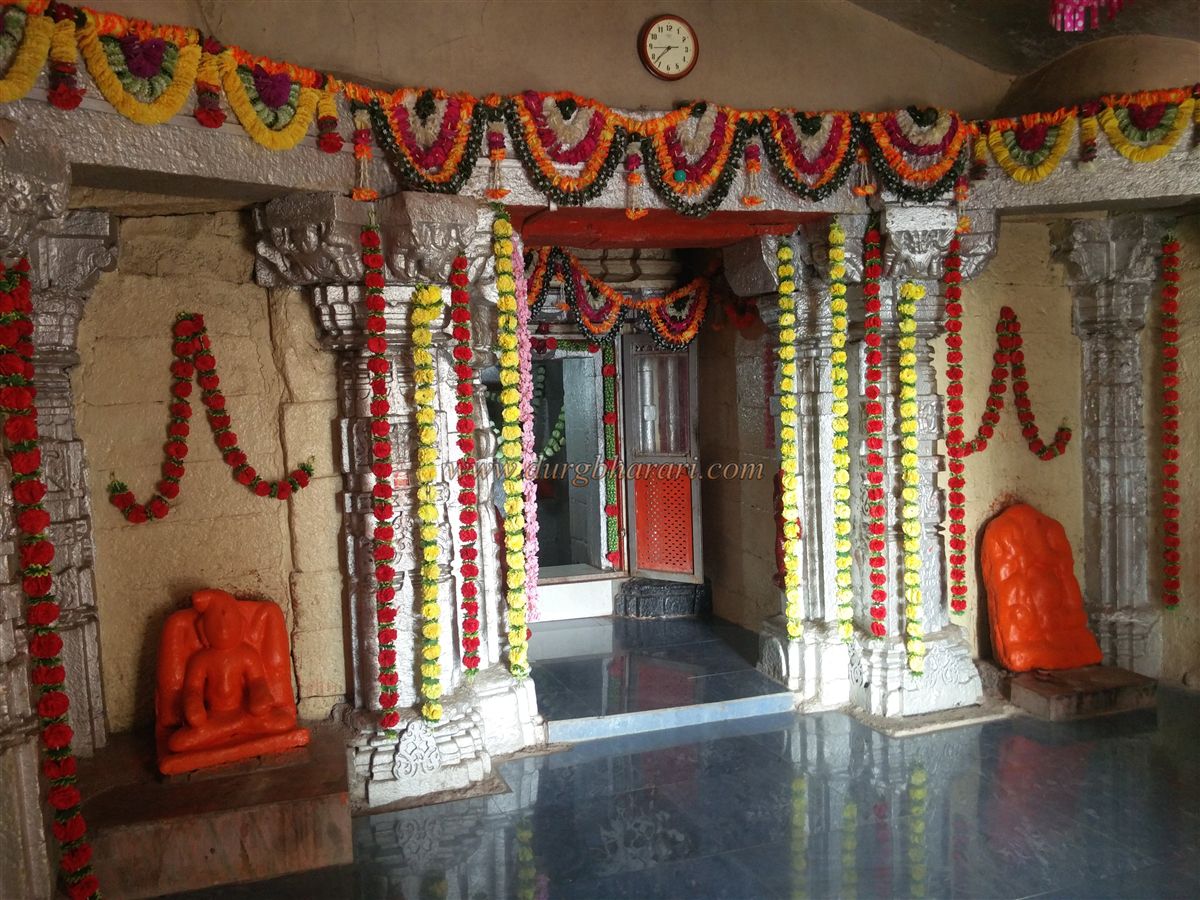
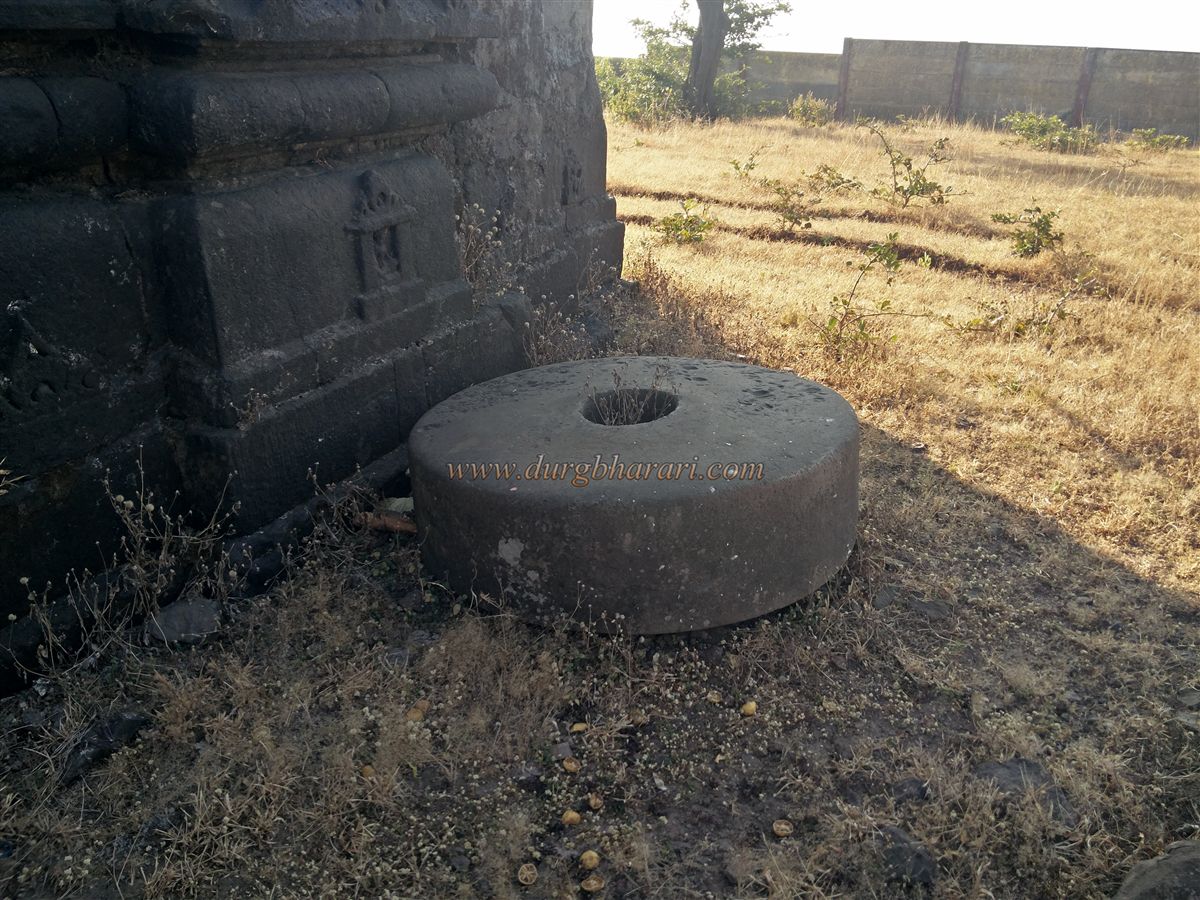
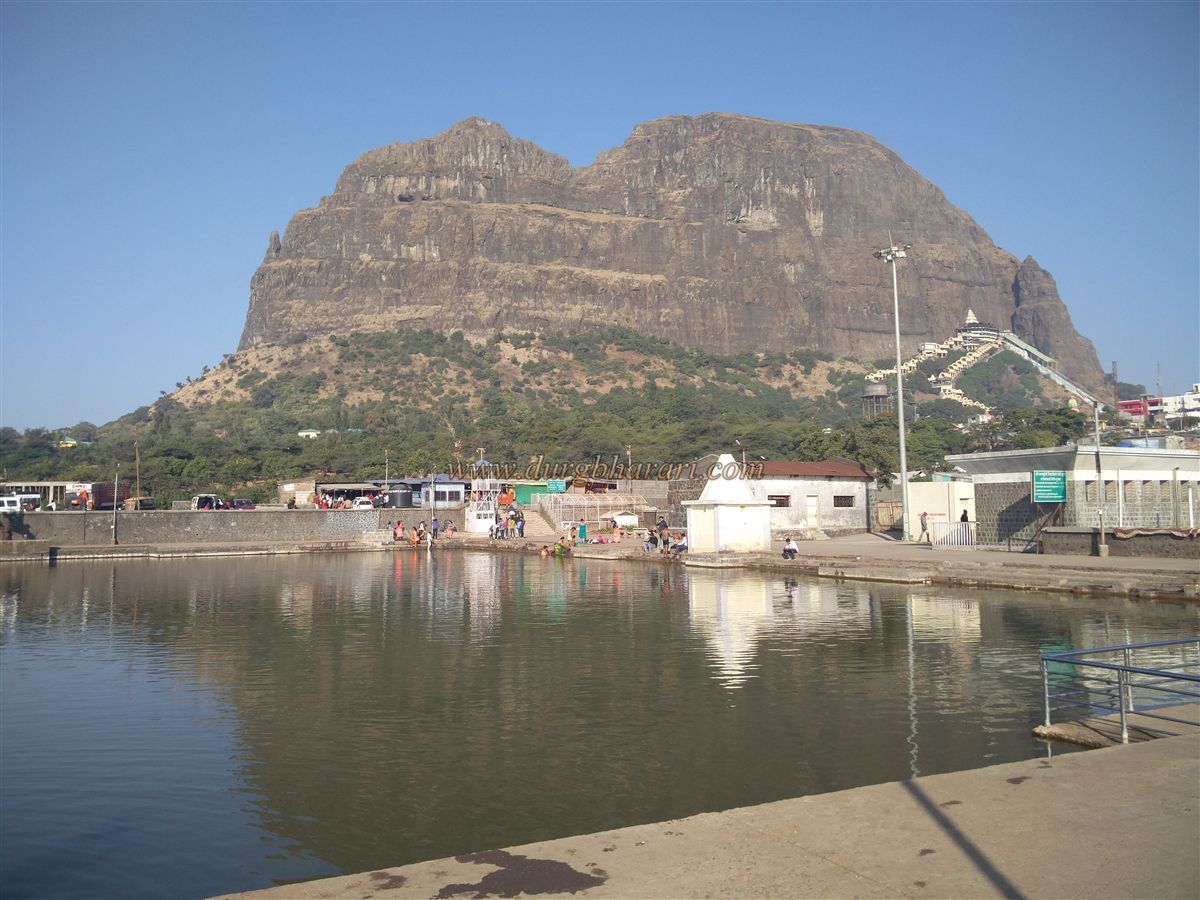
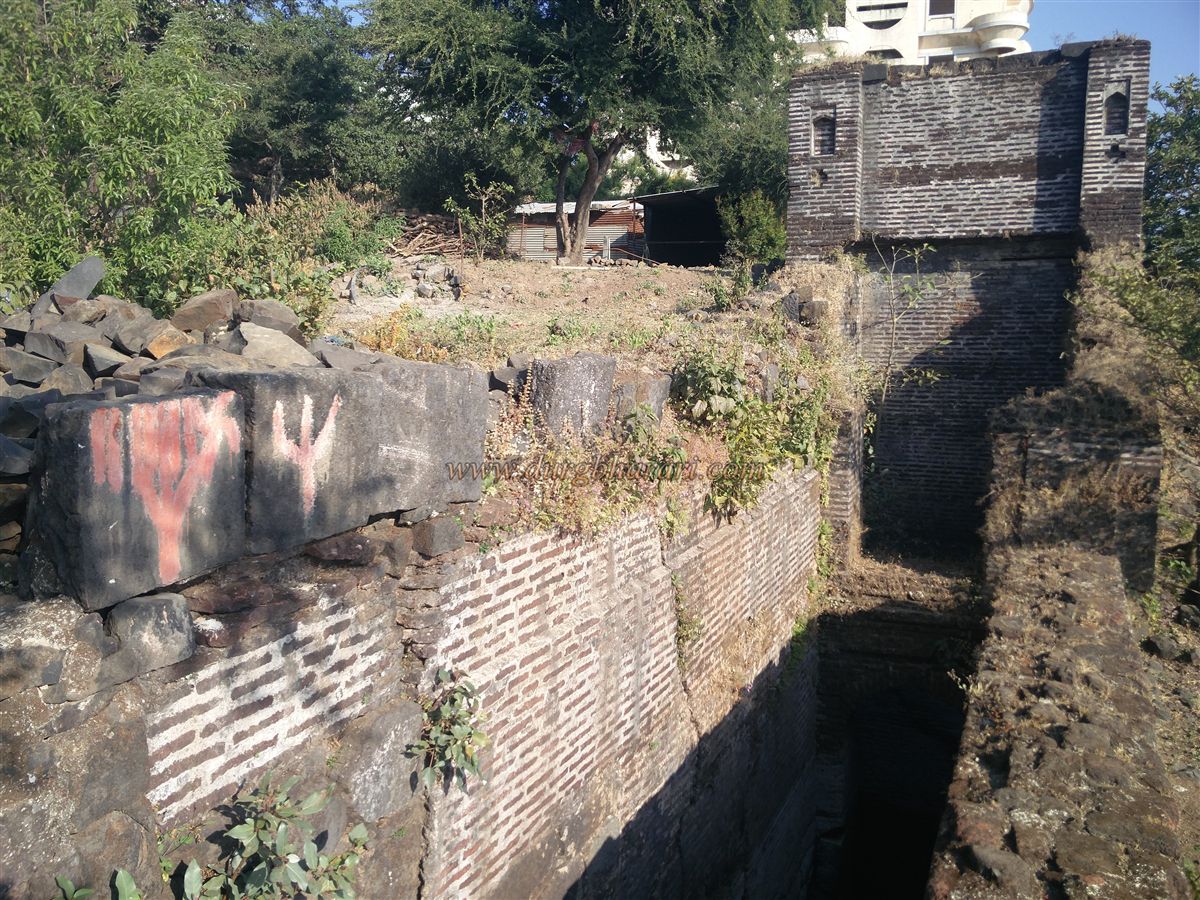
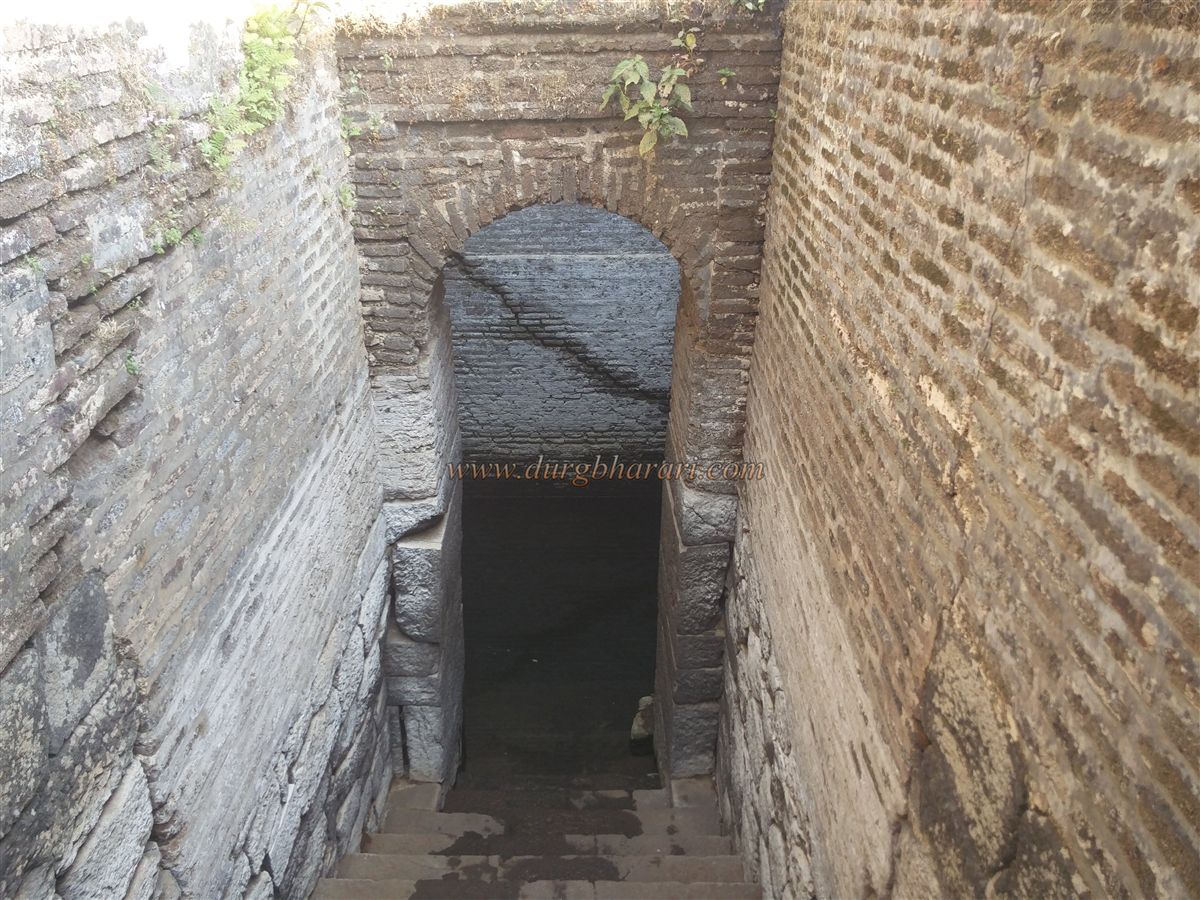
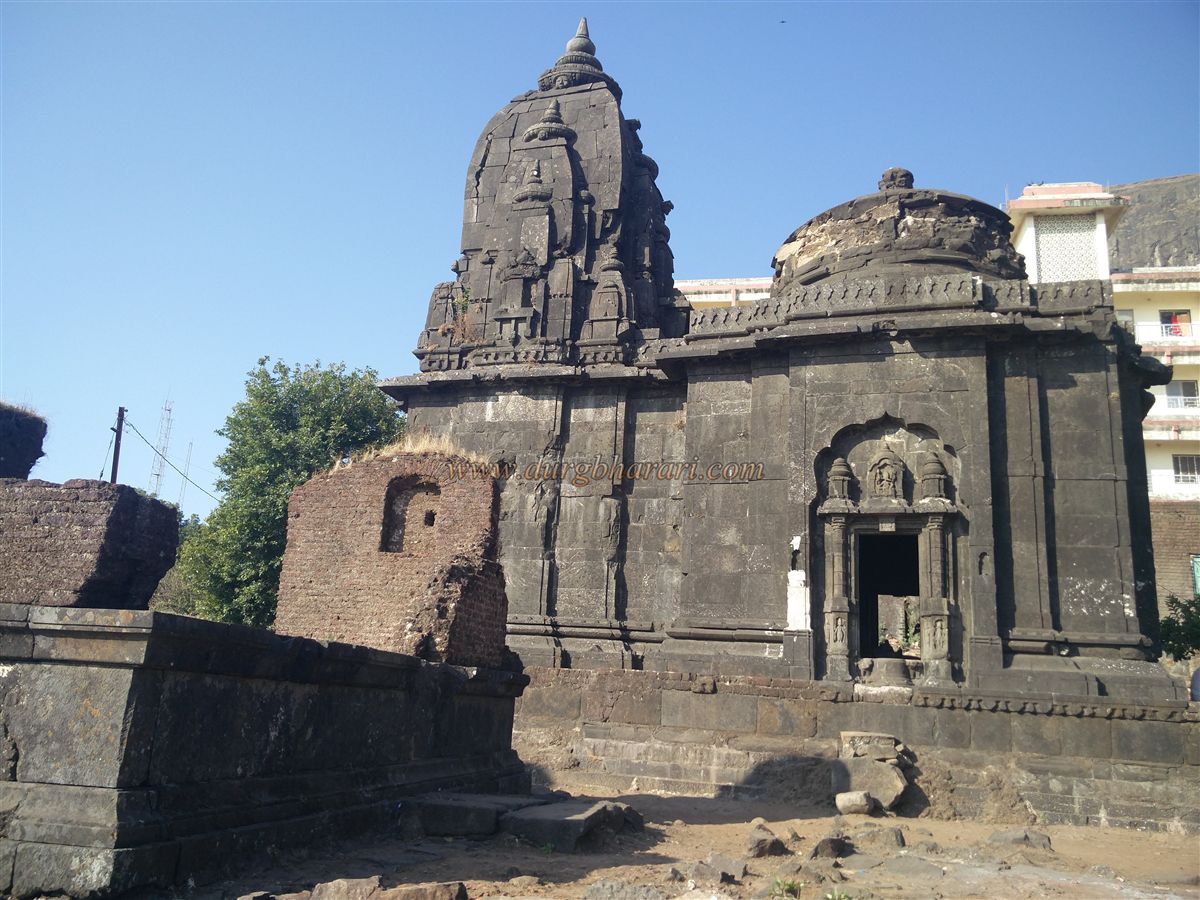
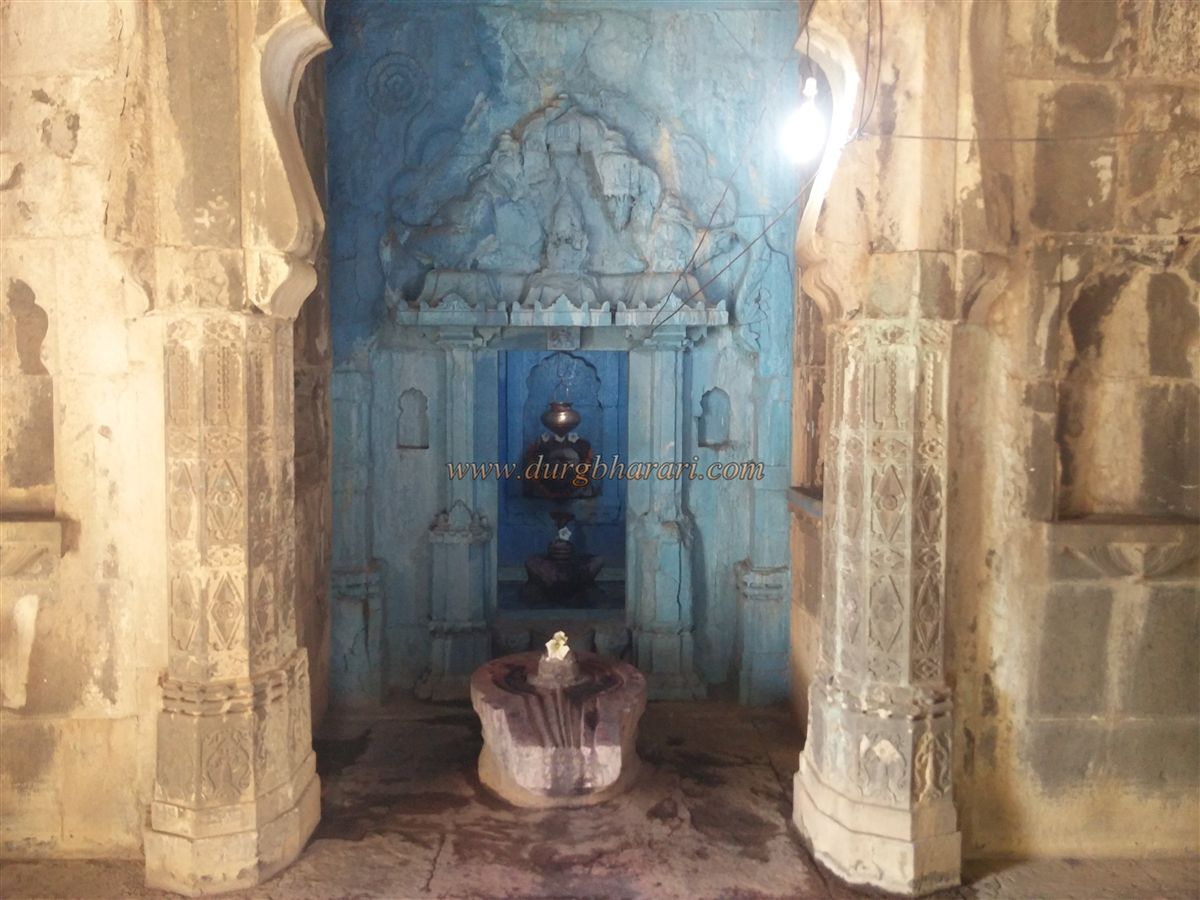
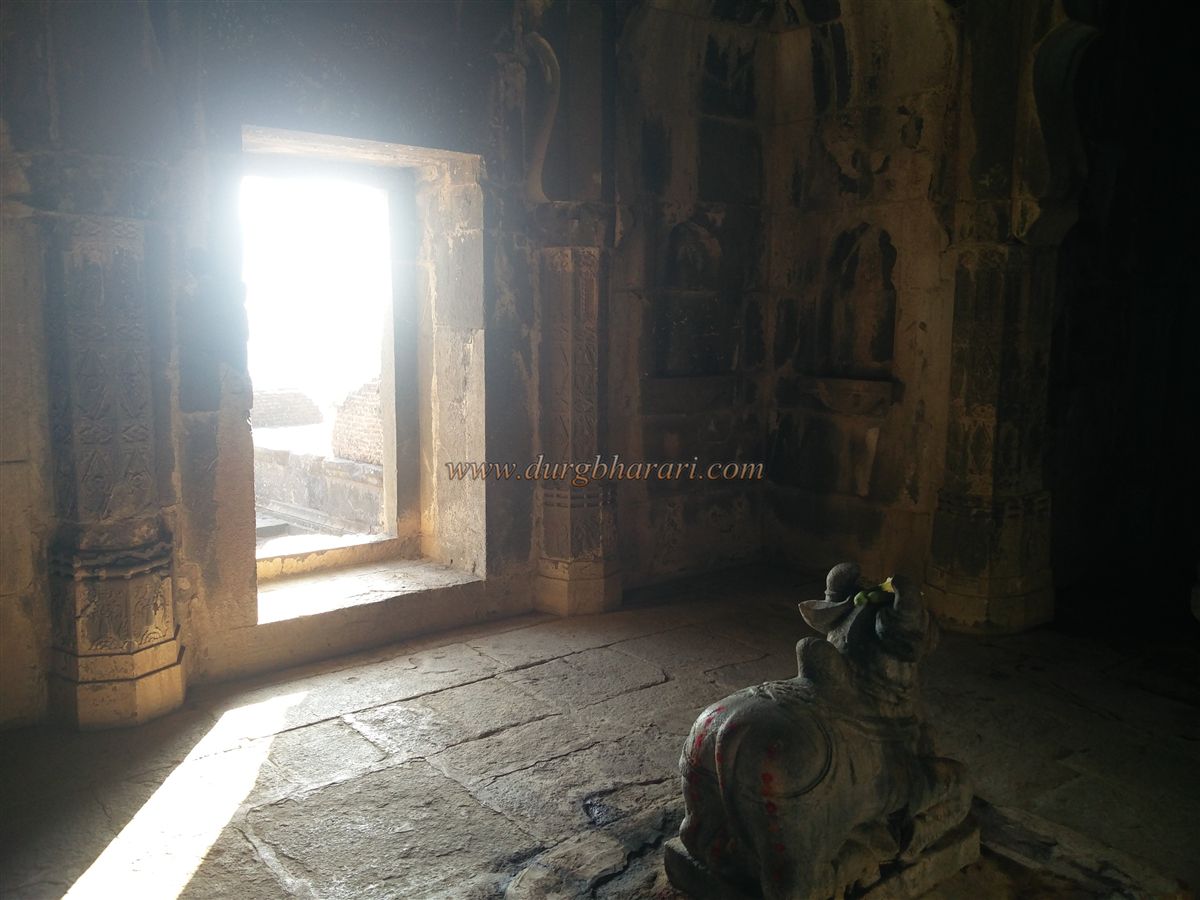
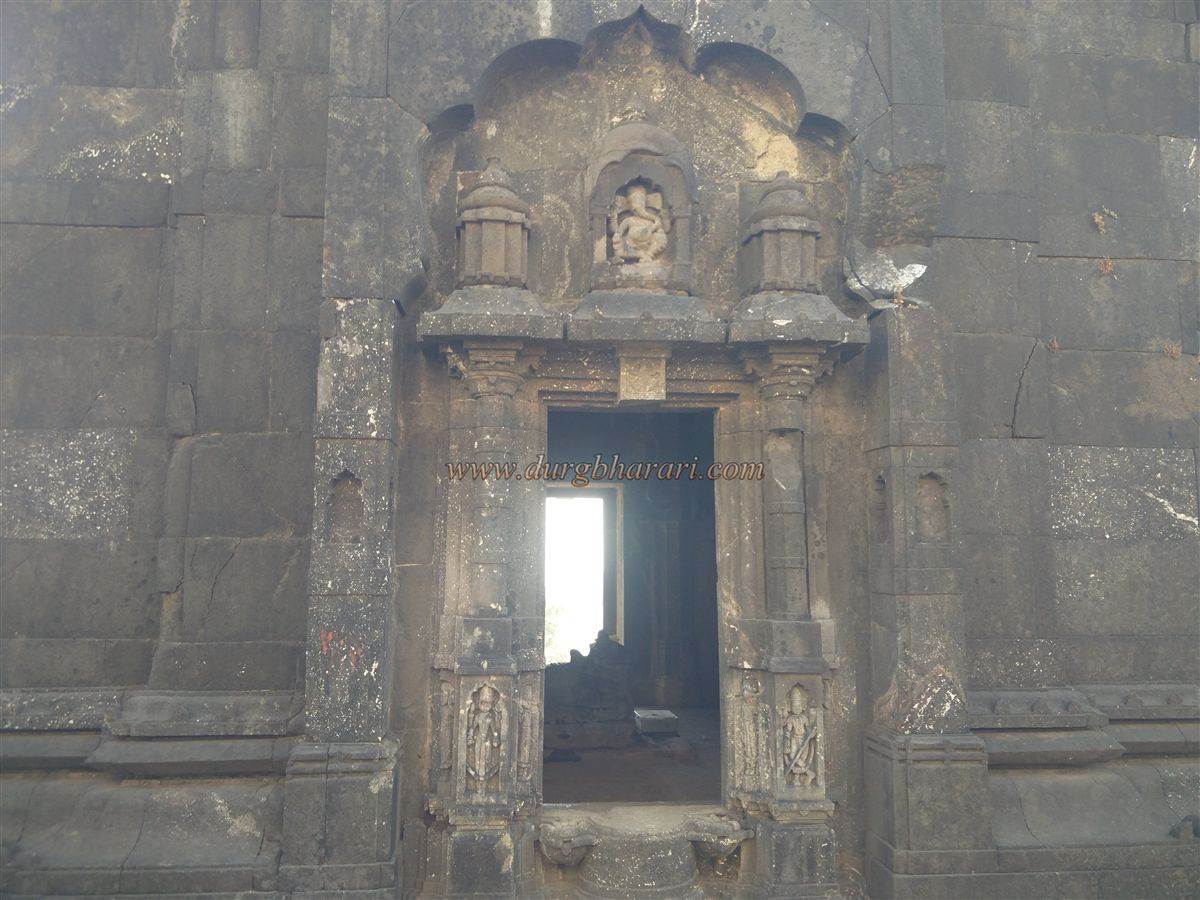
To the south of the fort lies the Shivalay Tirth, a reservoir built by Ahilyabai Holkar. Adjacent to it stands the ancient Siddheshwar Mahadev temple, surrounded by scattered ruins, including a lime-processing wheel. Outside the temple, to the right, several ancient idols can be seen, while to the left are a stepwell (barav) and numerous small and large samadhi (memorials). Nearby are two reservoirs named Ganga and Yamuna. Close to Shivalay are also the Maruti (Hanuman) and Ganapati temples, with the latter containing an inscription about its construction.
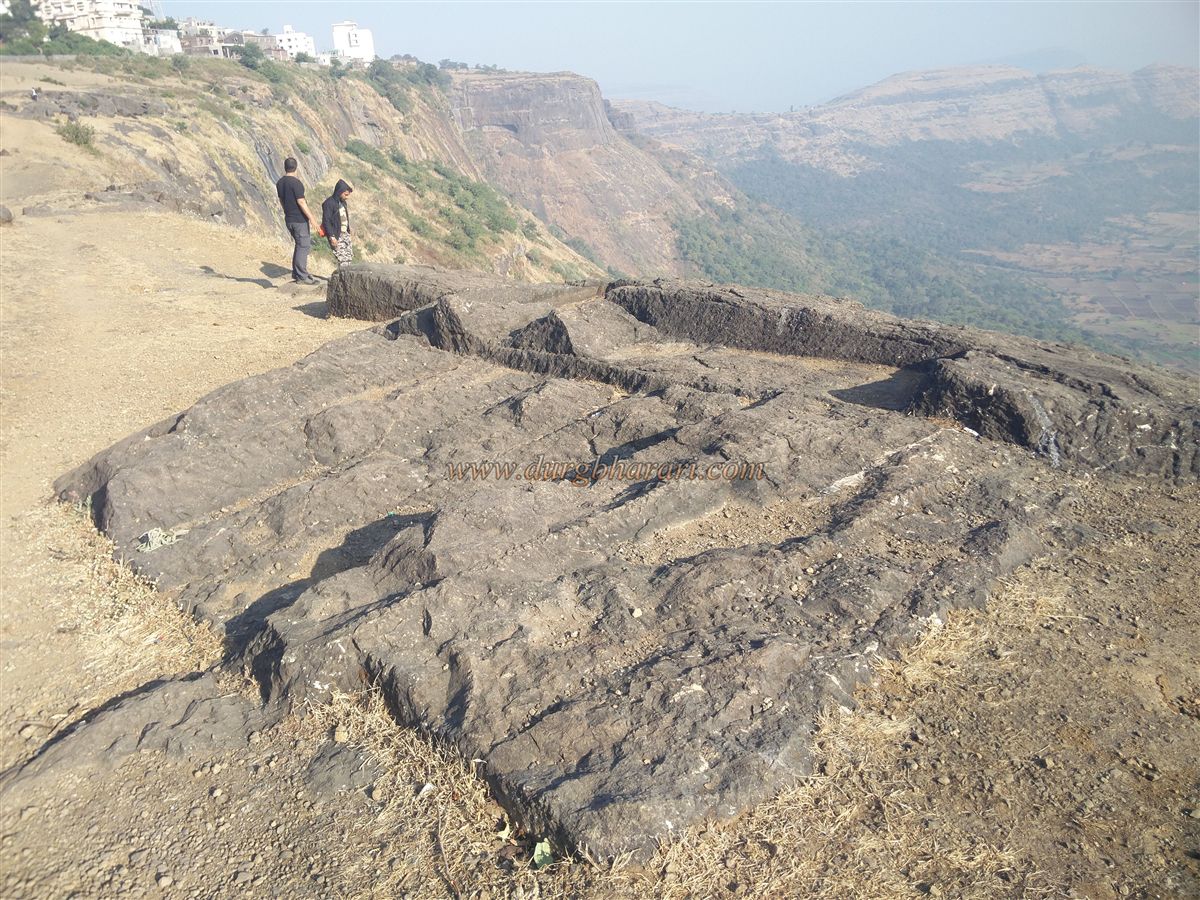
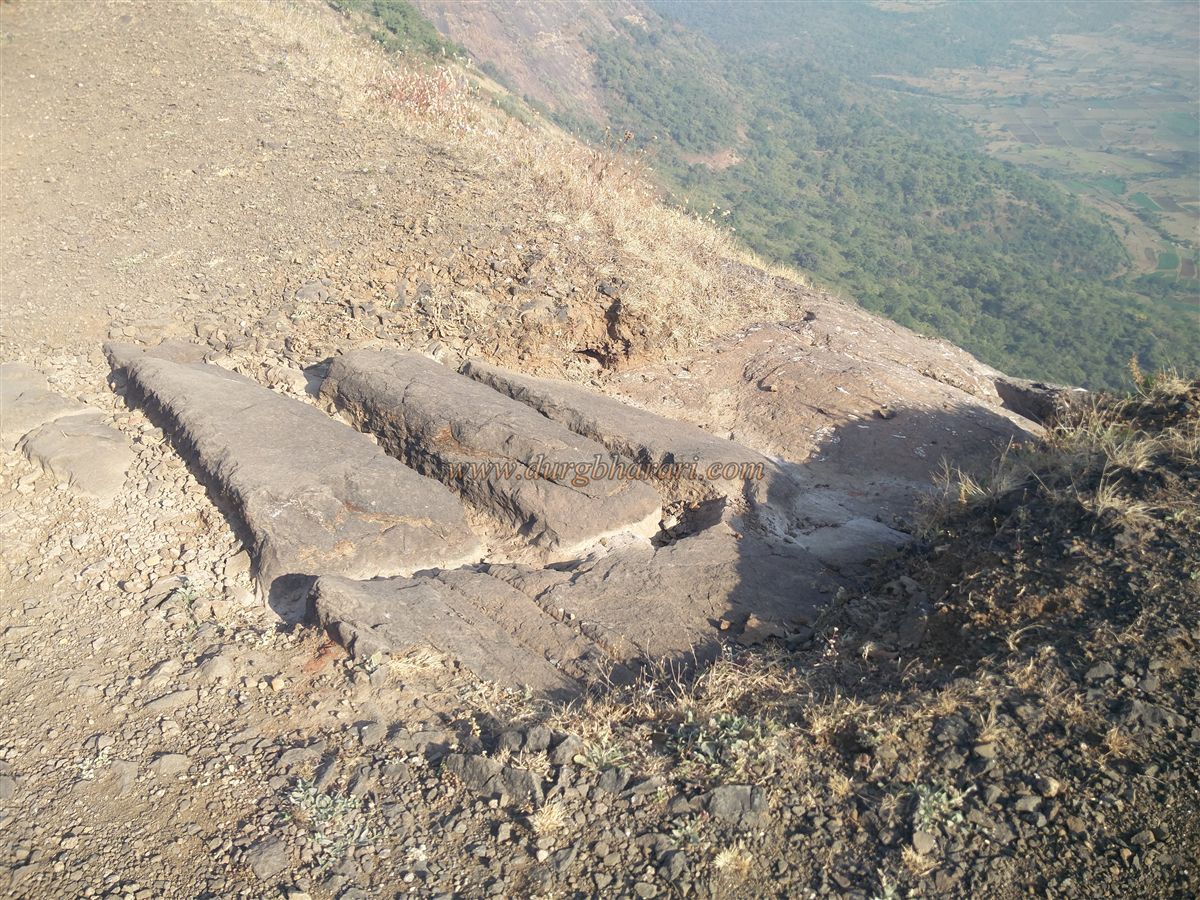
From Shivalay, one can walk to the Sheetkada, a cold rocky cliff opposite which stands Markandeya fort. Here, remnants of the fort can still be seen, including ruined walls, rock-cut steps, and long quarried stone blocks used for building fortifications.
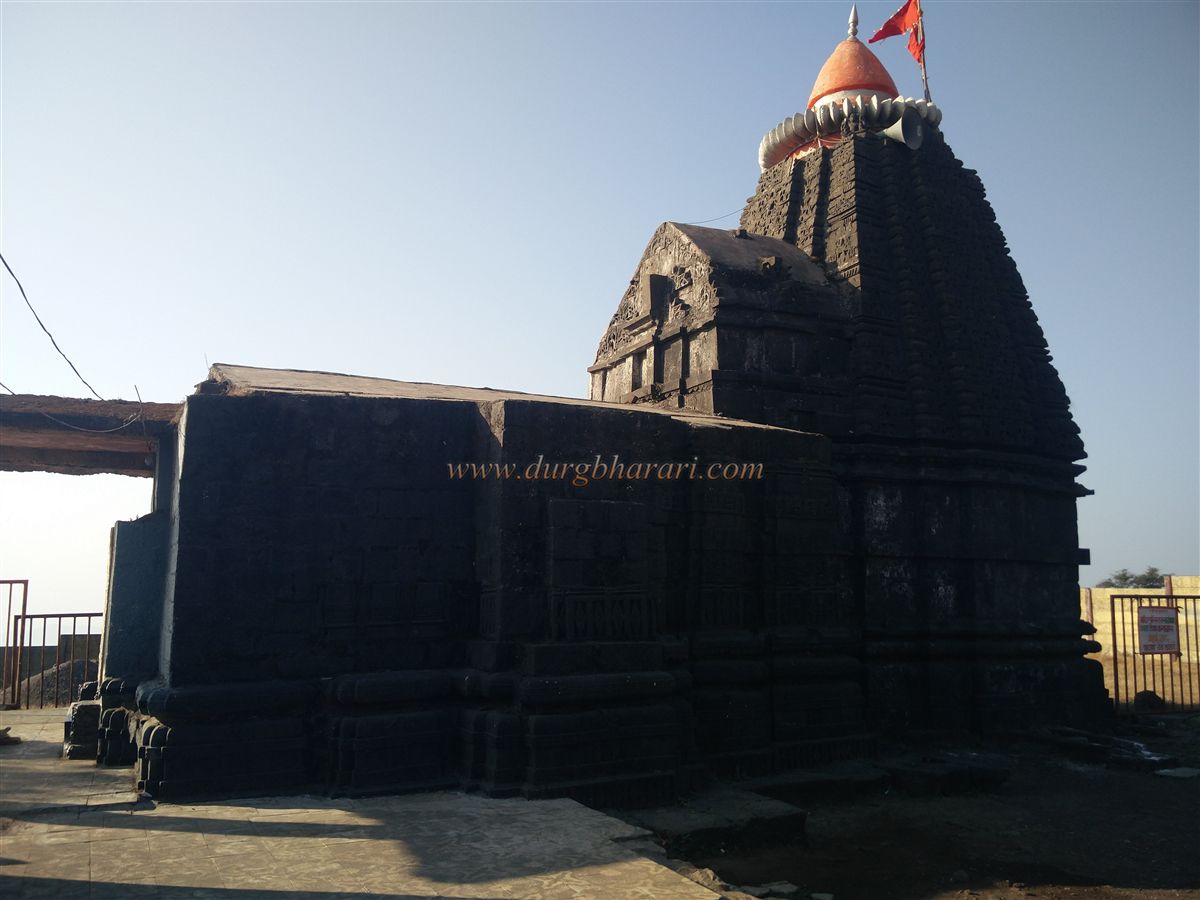
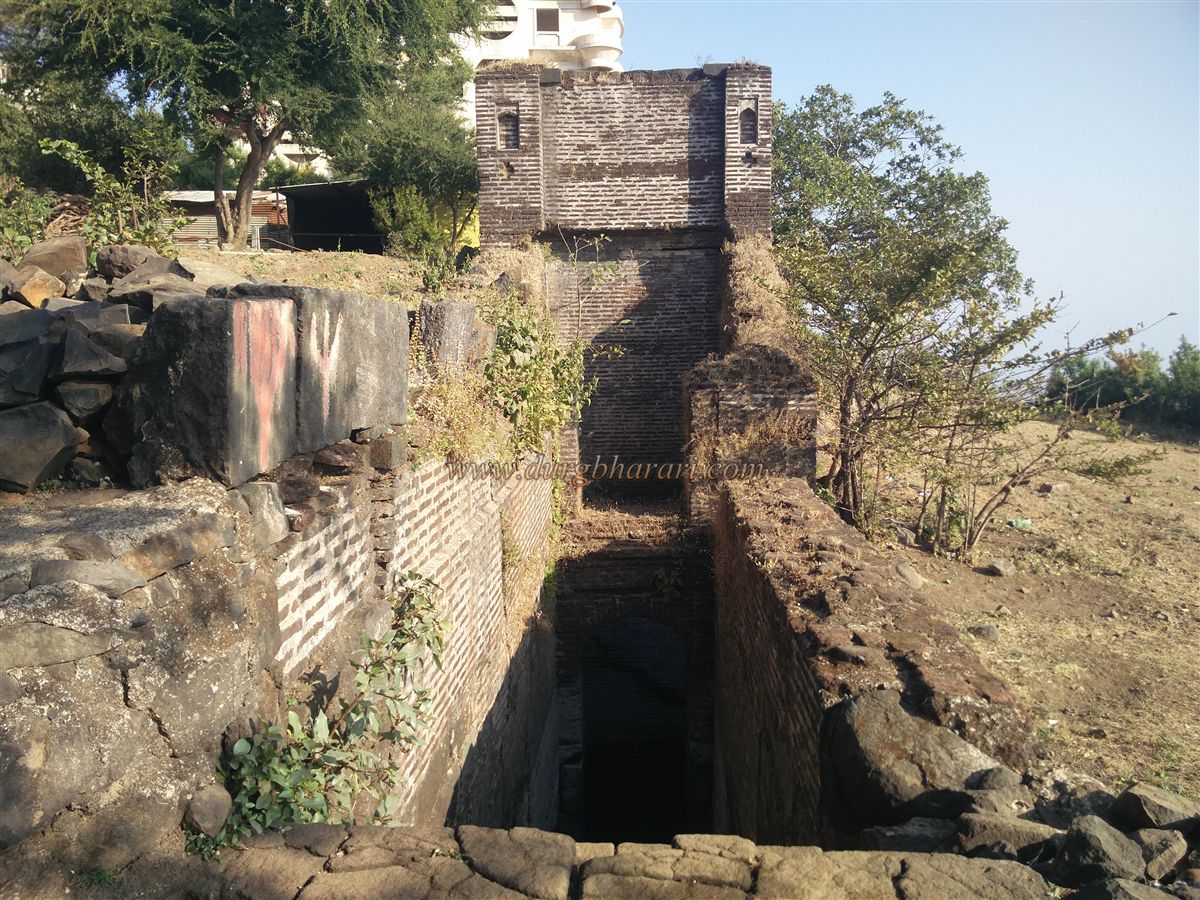
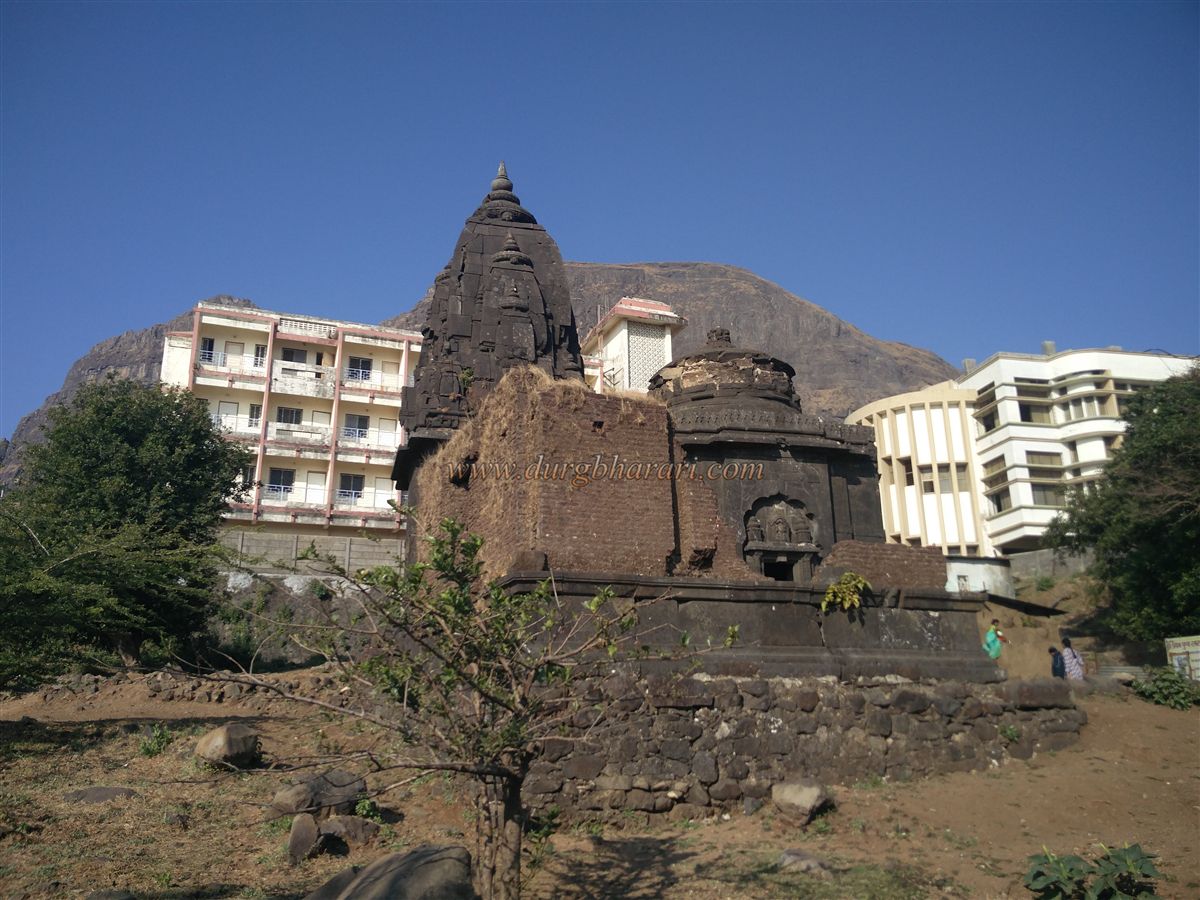
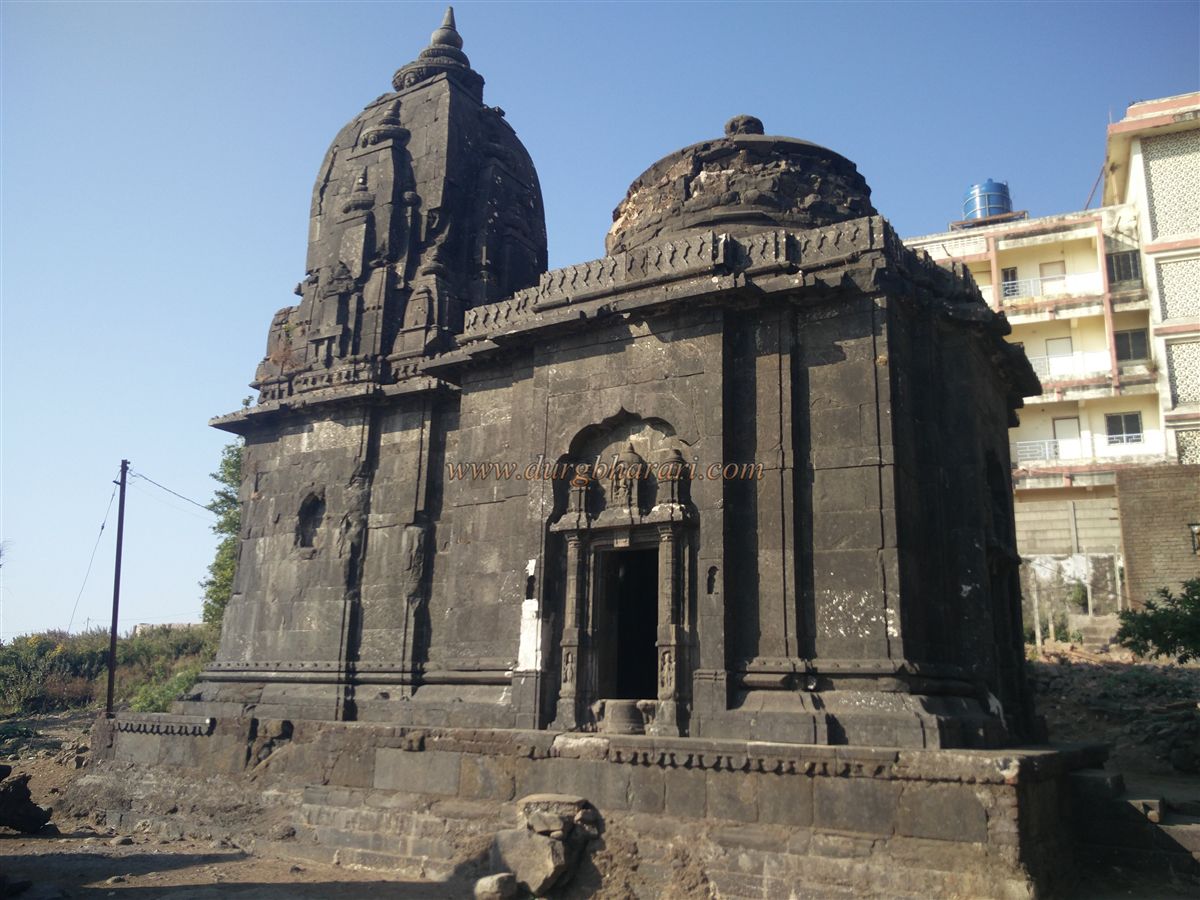
From the Satikada area, a view of the Saptashrungi temple reveals a striking black-stone structure — the Mahakaleshwar temple. This temple, built entirely of black stone, is said to have been constructed by a king from Surat in Gujarat, associated with Dharampur. Next to it lies a platform marking the king’s samadhi, with remnants of brickwork still visible. Beside the temple stands a beautiful stepwell built by Ahilyabai Holkar, which still provides potable water.
Locals claim that the fort once had 108 reservoirs, but today only 12 to 15 remain. Of these, eight are still filled with water, including smaller tanks like Saraswati Kund, Lakshmi Kund, Tambul Kund, Ambalaya Kund, and Sheetal Kund, as well as larger ones like Kali Kund, Surya Kund, and Dattatraya Kund. The Tambul Kund, located on the northern Machi, is notable for its reddish water, while the Kajalkund contains dark-colored water. To the east, near Dajiba temple, are the Surya Kund and Kali Kund, which were constructed by Peshwa Sardar Chatrasinh Thoke.
If one chooses to climb from Nanduri village and explore the temple along with the entire Machi, the visit takes approximately six hours.
© Suresh Nimbalkar
GALLERY