SAINT GEORGE FORT
TYPE : COASTAL FORT
DISTRICT : MUMBAI
HEIGHT : 0
GRADE : EASY
Everyone is familiar with St. George’s Hospital adjacent to Chhatrapati Shivaji Terminus, but very few people know that there once stood a fort in this very location. This fort once occupied the land where the hospital now stands. Although the fort itself no longer exists, one structure from it—a gunpowder magazine—still survives and is known as the St. George Fort building. This structure is now a state-protected monument under the Directorate of Archaeology and Museums. It remains in good condition thanks to periodic repairs over the years.
When the fort existed, its northern end extended toward the current mosque area, near the Mahatma Phule Market, close to the petrol pump at the beginning of Mohammed Ali Road. Until 2002, a massive cannon buried in the ground could be seen here, but it no longer exists.
...
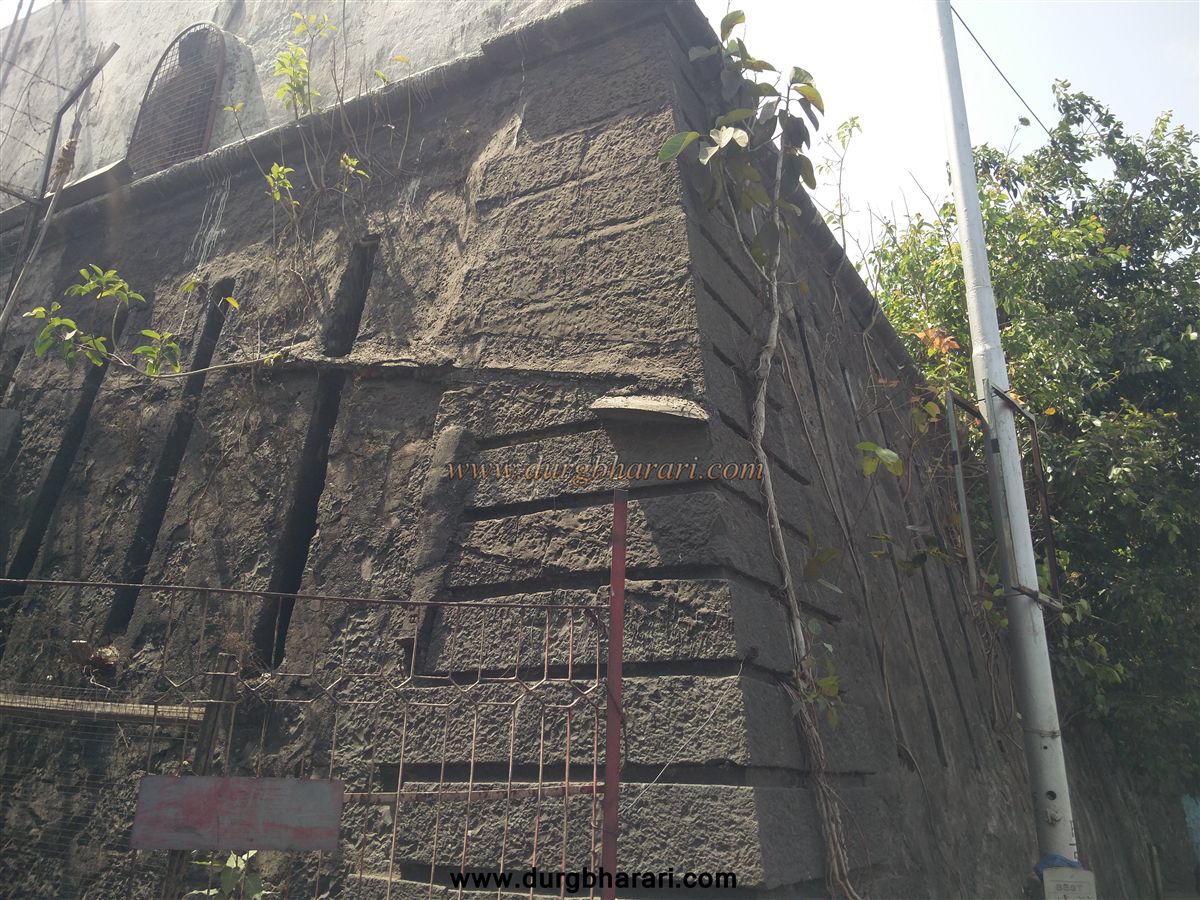
Entering through the gate of St. George’s Hospital and taking the right-hand road before the hospital entrance, a left turn leads to a path where one encounters strong British-era stone walls. A board here identifies this as a property of the Archaeological Department. This office building was once the gunpowder magazine of the former St. George Fort. It is the only surviving remnant of the fort.
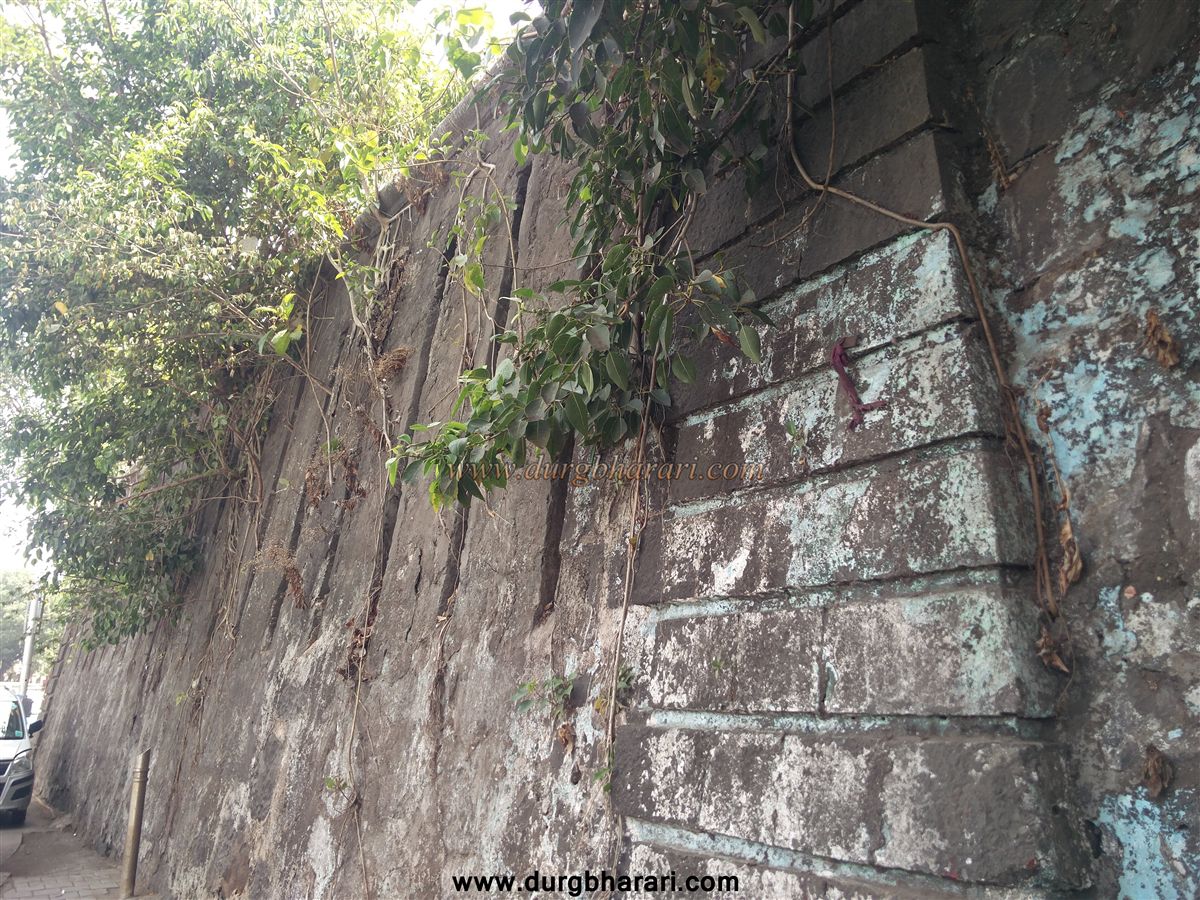
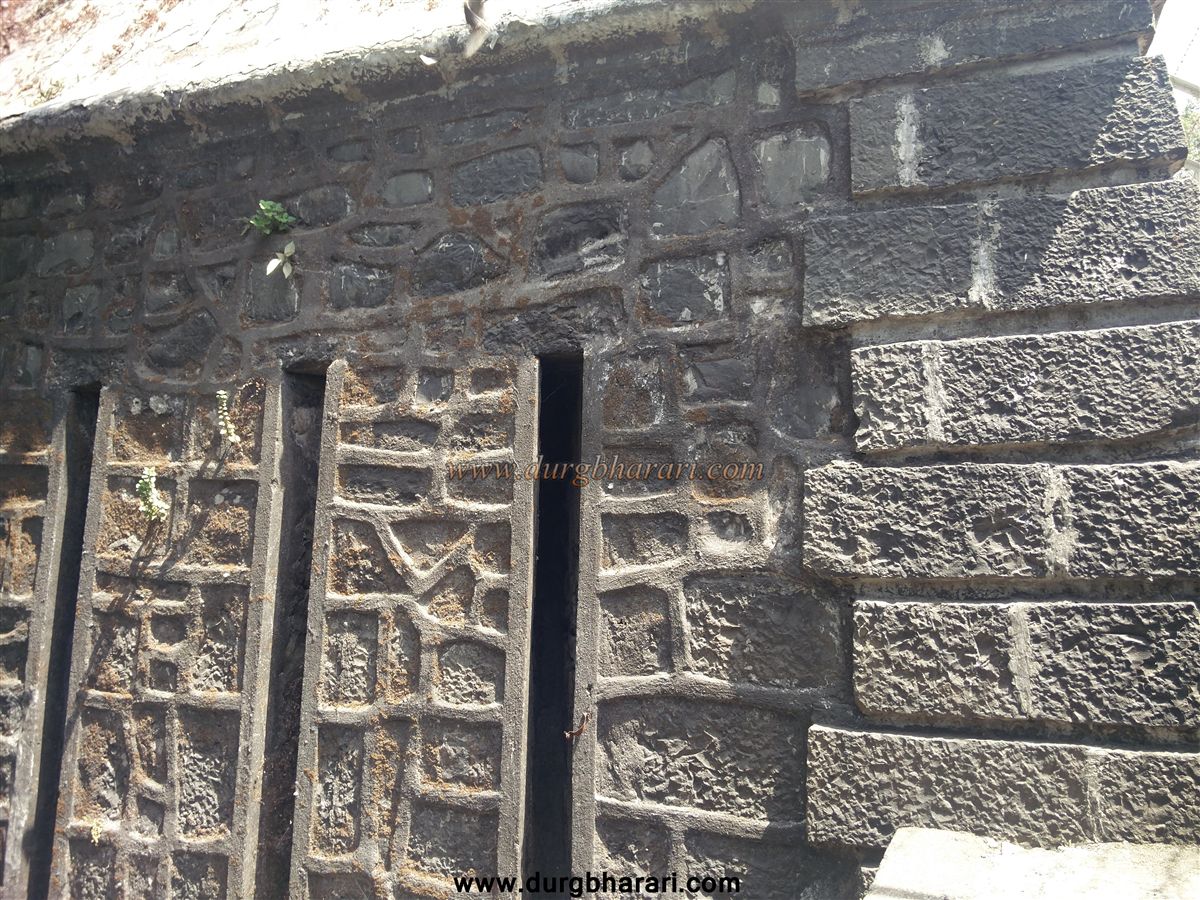
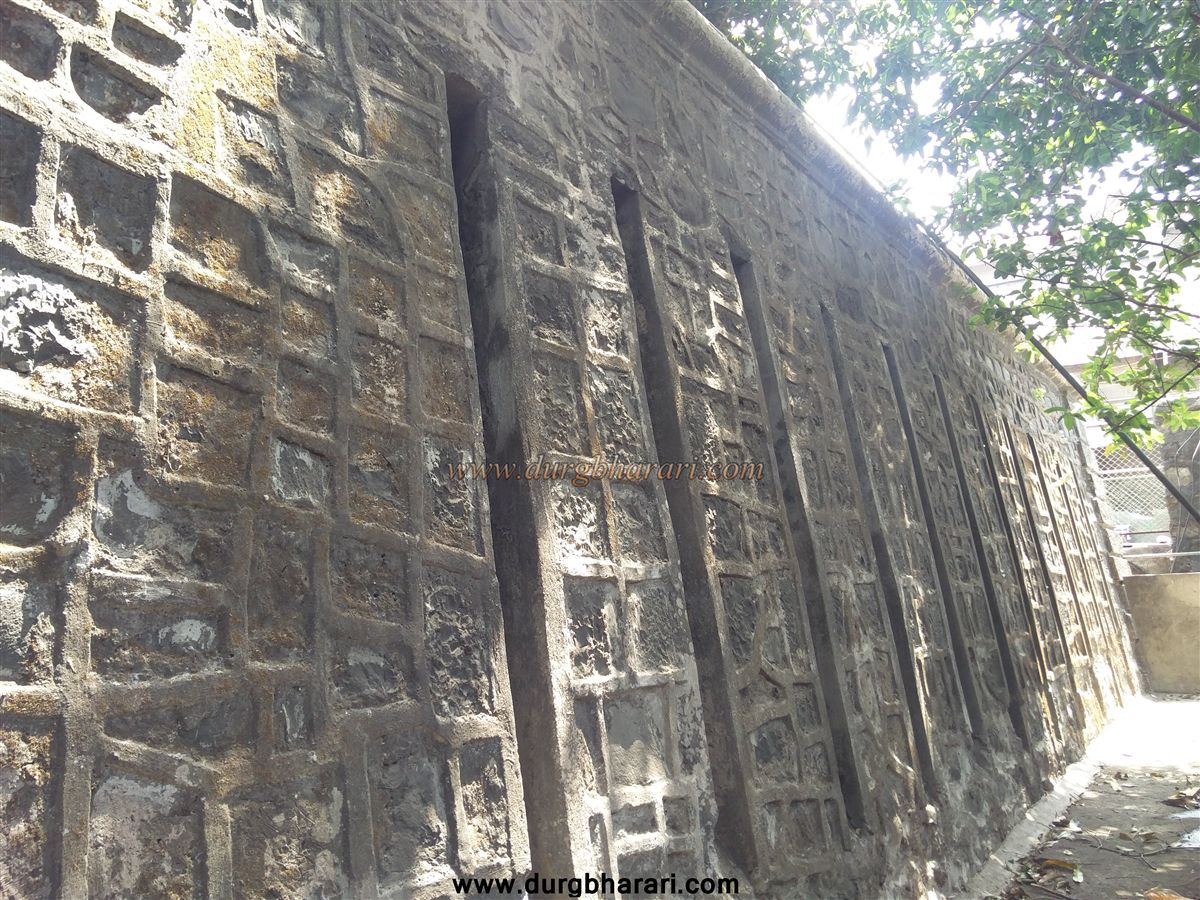
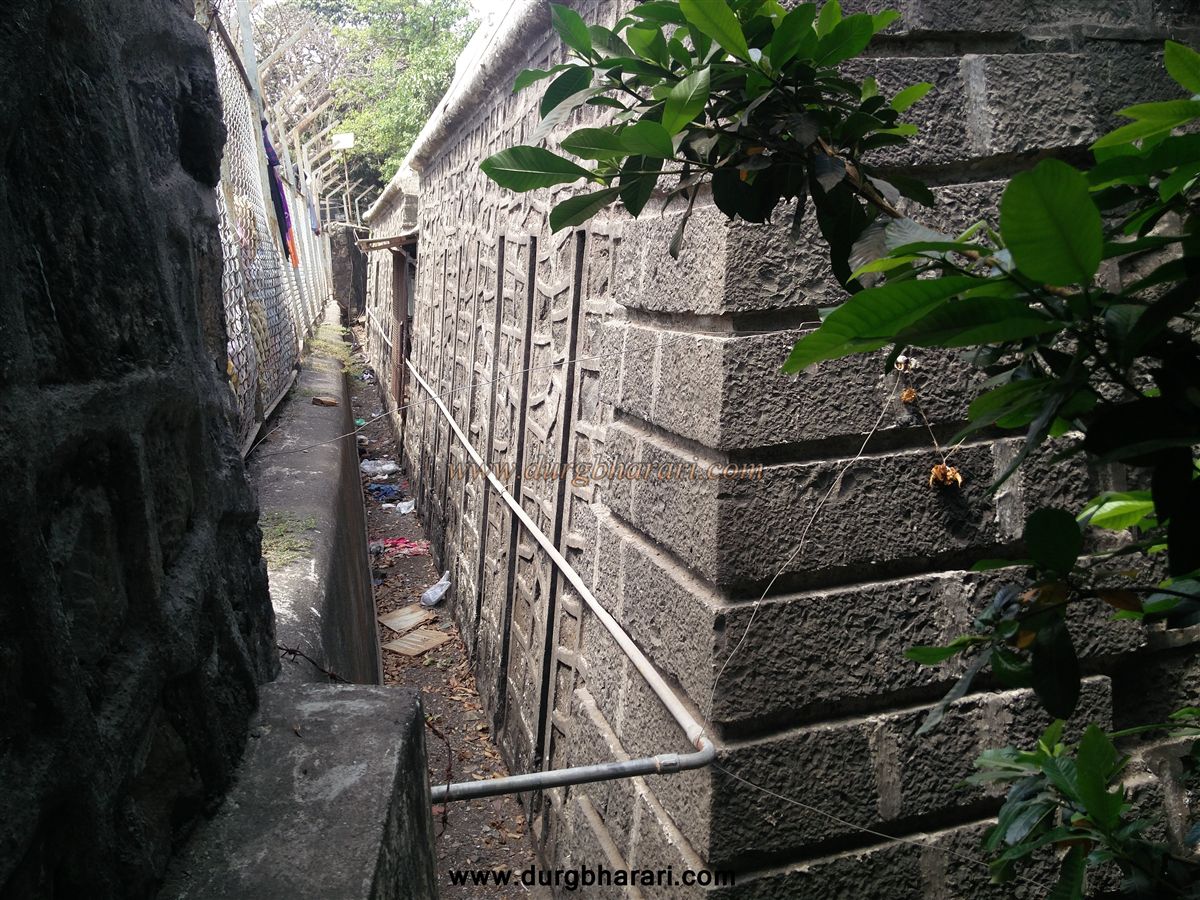
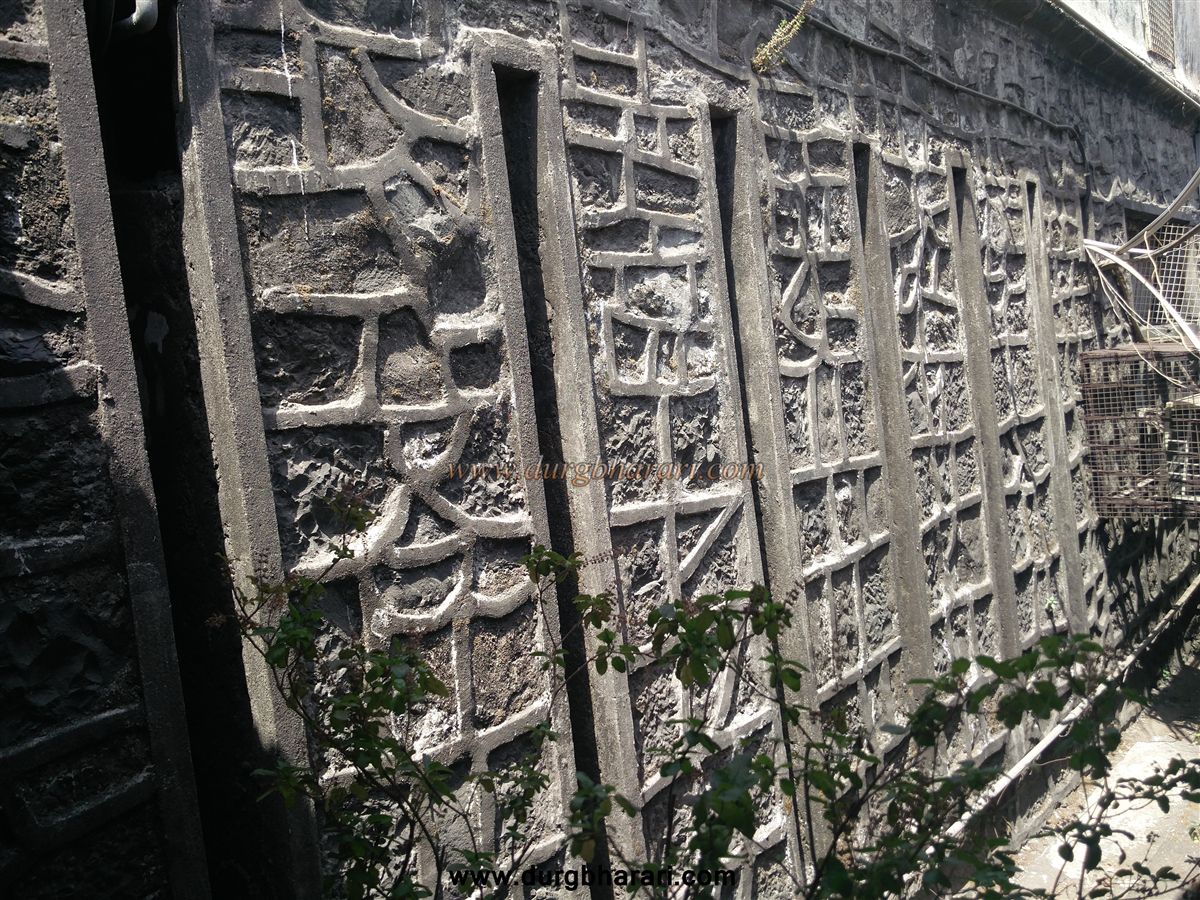
This structure faces south and has thick Portuguese-style walls. The outer walls are sloped while the inner walls meet the ground at right angles, giving them extra strength. The outer walls have narrow gun loops for firing and ventilator openings. From inside, these gun loops appear single, but on the exterior, they are doubled or tripled. From the outside, they look tall and elongated, while from the inside, they appear narrow. Due to its current use as an office, some of these gun loops and ventilators have been closed off.
At the center of the main hall is a storage area for gunpowder, with passages leading east, west, and south, and a small room to the north. The ceilings of the passages are arched, while the central room has a narrow square-shaped ceiling. Beneath the western and southern passages are cellars, accessed through a wooden trapdoor at ground level inside the building. When this door is lifted, an underground passage becomes visible, with an iron ladder leading downward. However, due to water inside and the cellar’s further passage being blocked, no one ventures there now. Its exact purpose remains unclear. Another underground passage from the fort once existed, now falling within the hospital’s swine flu department.
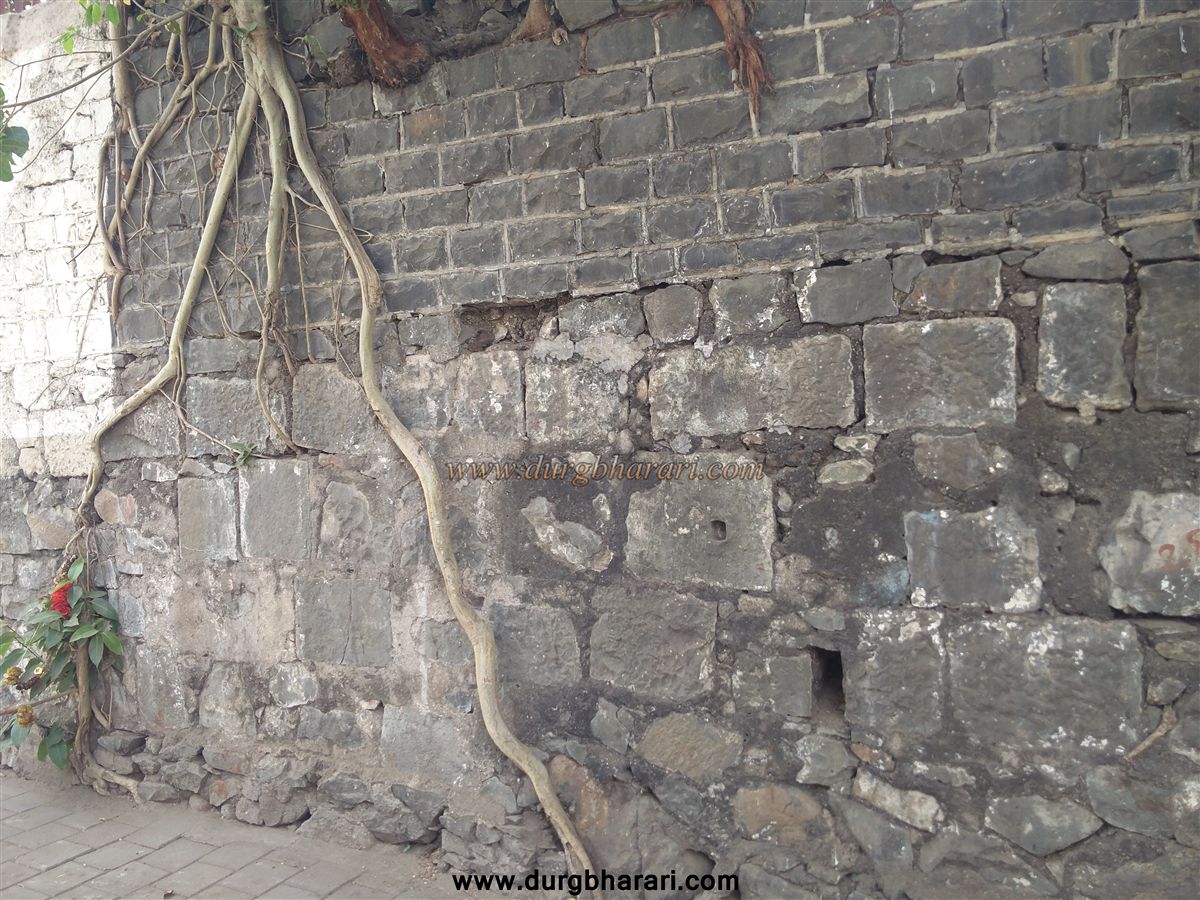
On the eastern side of the structure runs P. D’Mello Road, and the adjoining fort walls still show the gun loops and ventilators, though overgrown with vegetation.
The British built this fort in 1769, fearing that Napoleon might invade India. If he attacked Mumbai, this fort, known as Fort George, was intended as a refuge for Europeans living in the city. It was strategically built as an extension to the main Mumbai Fort, located near the eastern coastline, allowing boats to anchor close by. It was constructed with extreme care, as seen in the well-planned outer walls and ventilators. The fort’s buildings had cellars connected by underground tunnels to other structures.
In case of a French invasion, if the defenders at the main fort and naval forces failed, the British planned to evacuate Europeans by boats to Thane or Panvel, seeking refuge with the Marathas. Governor Bouchier had made arrangements with the Marathas for this. However, after France’s defeat in the Anglo-French wars, the British no longer faced any naval threats. In time, the British established full control over India.
Between 1862 and 1865, Sir Bartle Frere ordered the demolition of this fort. Later, between 1889 and 1892, as part of Mumbai’s port and railway development, many changes were made to the area. Within the fort premises, a hospital was built and named St. George’s. During its construction, the ramparts and inner structures were either demolished or heavily modified, leaving only the gunpowder magazine intact.
In the post-independence period, additional residential buildings were constructed for hospital staff. A map from 1827 clearly marks the presence of St. George Fort. The surviving gunpowder magazine is referred to as a “fragment of old fort wall.”
This fort stands as a fine example of British foresight—taking into account even highly unlikely scenarios and making concrete preparations for them.
(Reference: Forts in the Mumbai Area—Once the Strongholds of the Foreigners by B. V. Kulkarni)
© Suresh Nimbalkar
GALLERY