REVDANDA
TYPE : COASTAL FORT
DISTRICT : RAIGAD
HEIGHT : 0
GRADE : EASY
The region known as Ashtagar lies along the coastline from Rewas to the Kundalika creek in Alibaug taluka of Raigad district, adorned with natural beauty. The last village in the southeast corner of Ashtagar, situated on the Kundalika creek, is Revdanda. Revdanda is actually a part of ancient Chaul. As some smaller parts were separated from the original Chaul, the area came to be known as Chaul-Revdanda—a name still in use today. This naturally beautiful region, just a few hours away from Mumbai and Pune, has benefitted significantly from tourism.
While Chaul was a prominent ancient port, Revdanda gained attention during Portuguese rule. At the beginning of the 16th century, the Portuguese established their presence here and held sway over the area for nearly 210 years. Along with Vasai, they maintained control in Revdanda and constructed the Revdanda Fort during this time.
...
To visit the fort, one must first travel to Alibaug, which is about 100 km from Mumbai and approximately 140 km from Pune. Revdanda Fort lies 20 km from Alibaug and is accessible by bus or rickshaw. The village of Revdanda is situated within the fort's walls, and since the road leading into the village cuts through the fortifications, the ramparts are visible upon entry.
To explore the entire fort, it is best to start your tour from the Revdanda bus station. The fort is roughly oval in shape, stretching east to west, and spans an area of over 70 acres. A wall runs around the entire village, extending more than 2 km in length. Most of this fortification still stands today.
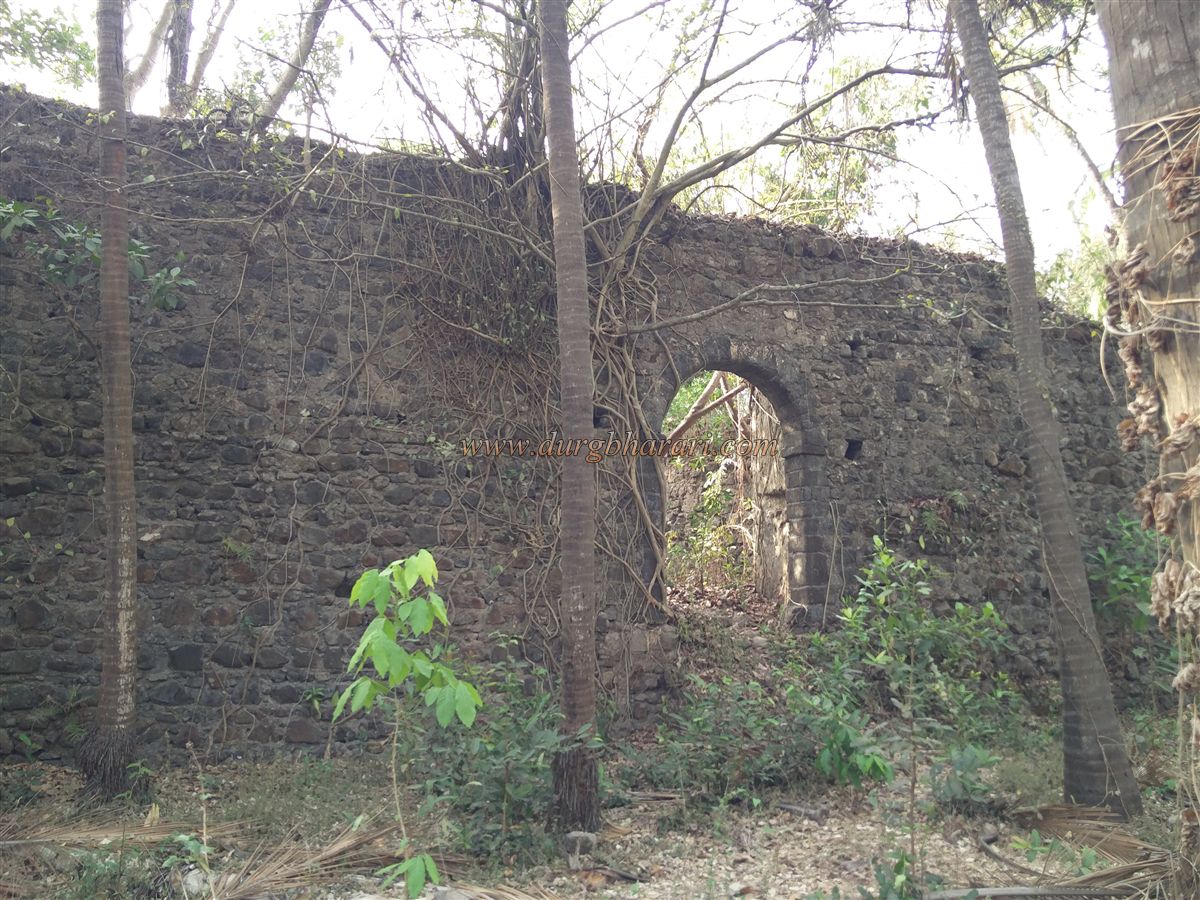
To the west lies the Arabian Sea, to the north the Kundalika creek, while the east side has marshland, and a moat was once dug along the southern wall. This moat has now been completely filled in. The fort has two main entrances on the north and south sides, and two smaller gates within the walls. There may be more hidden gates, but much of the fort is privately owned, restricting access.
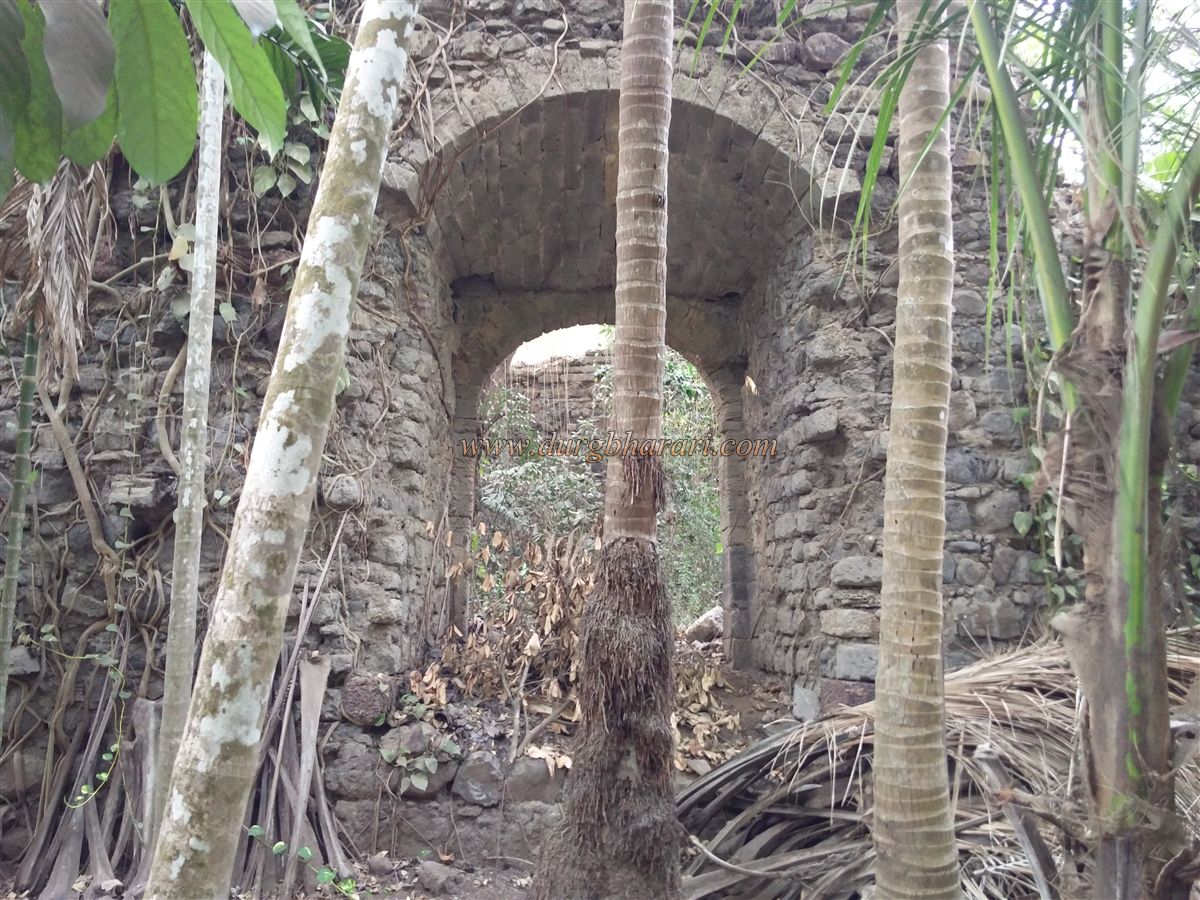
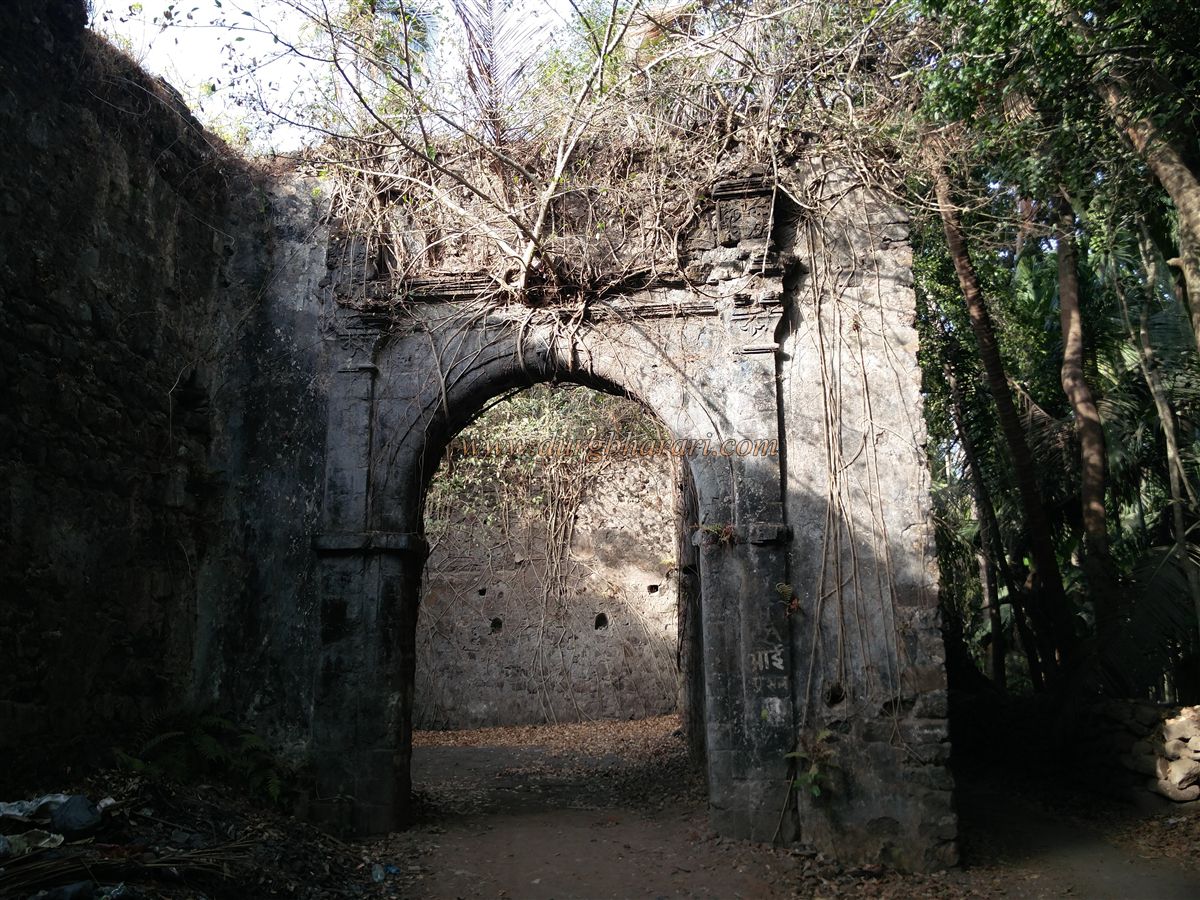
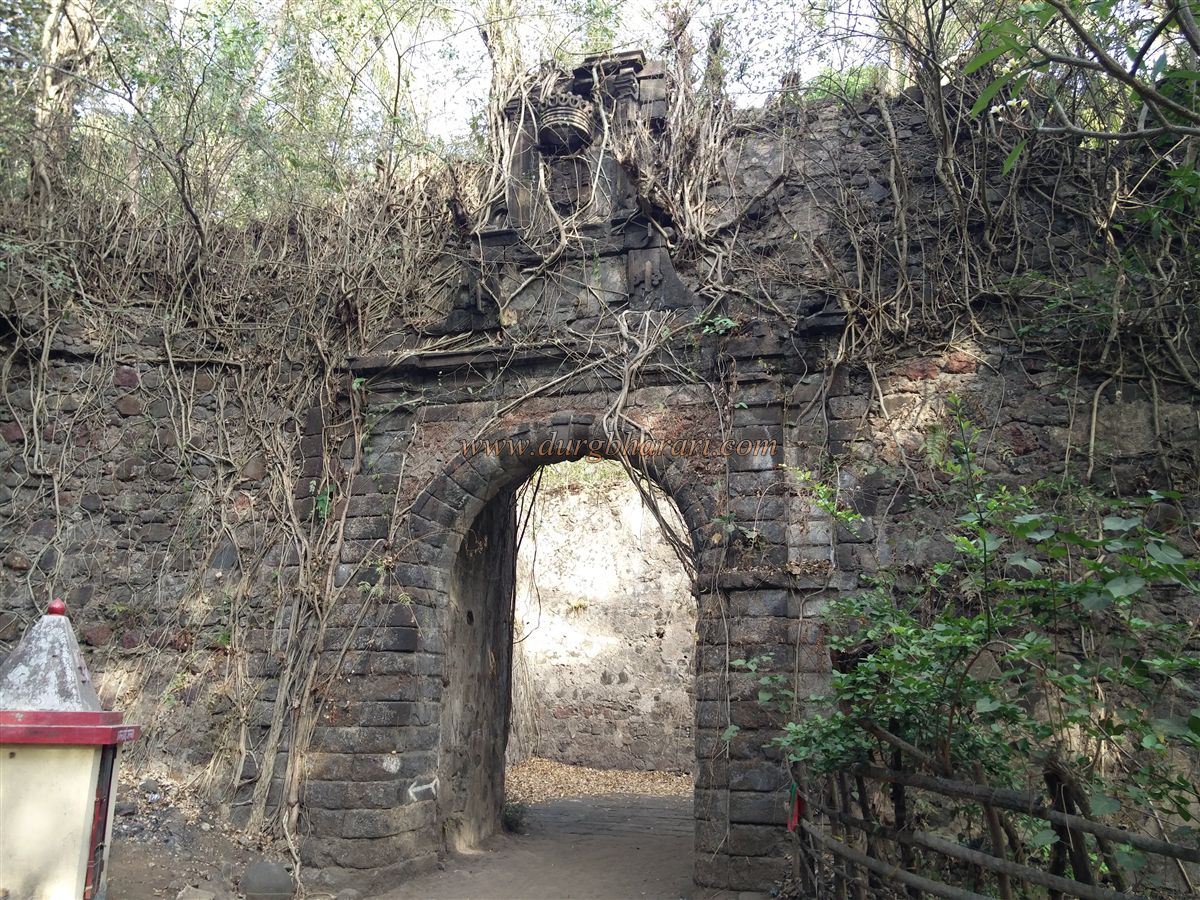
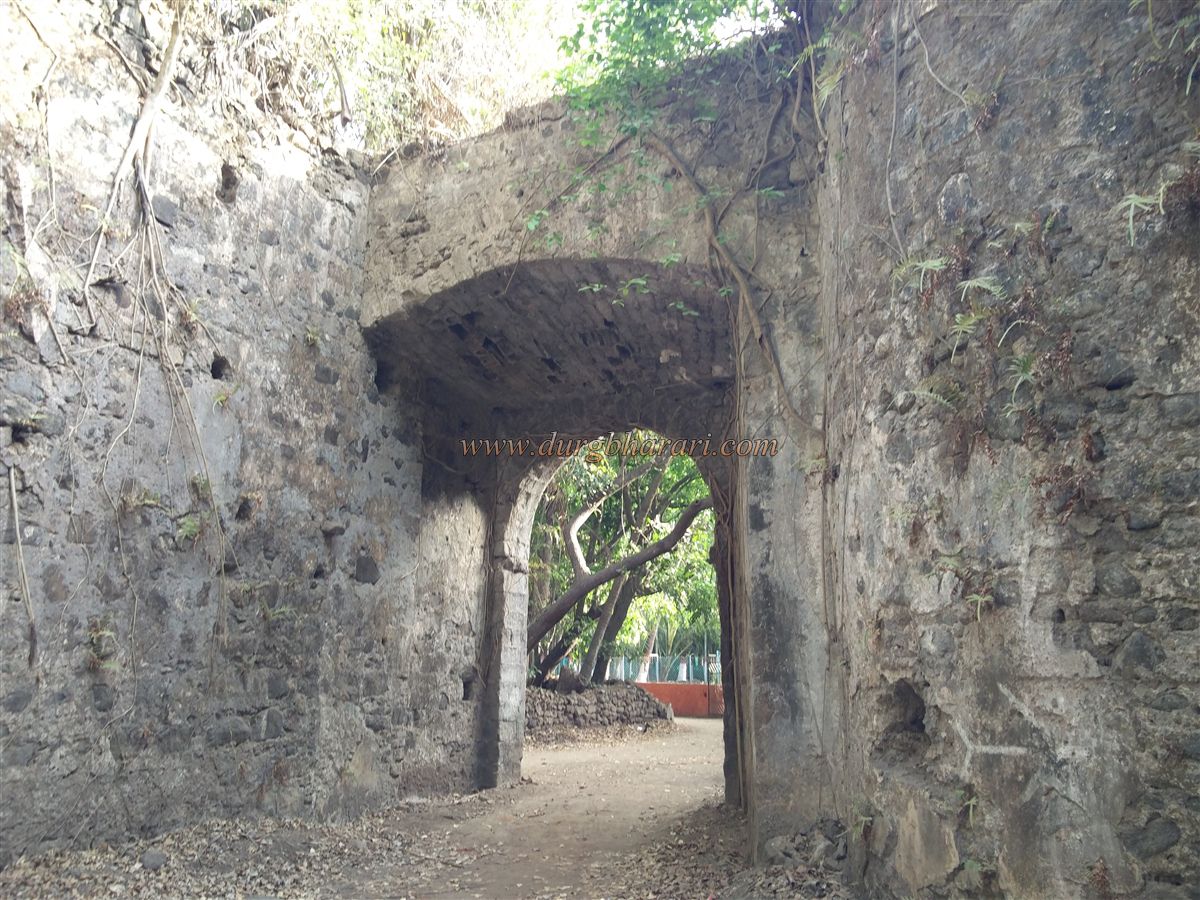
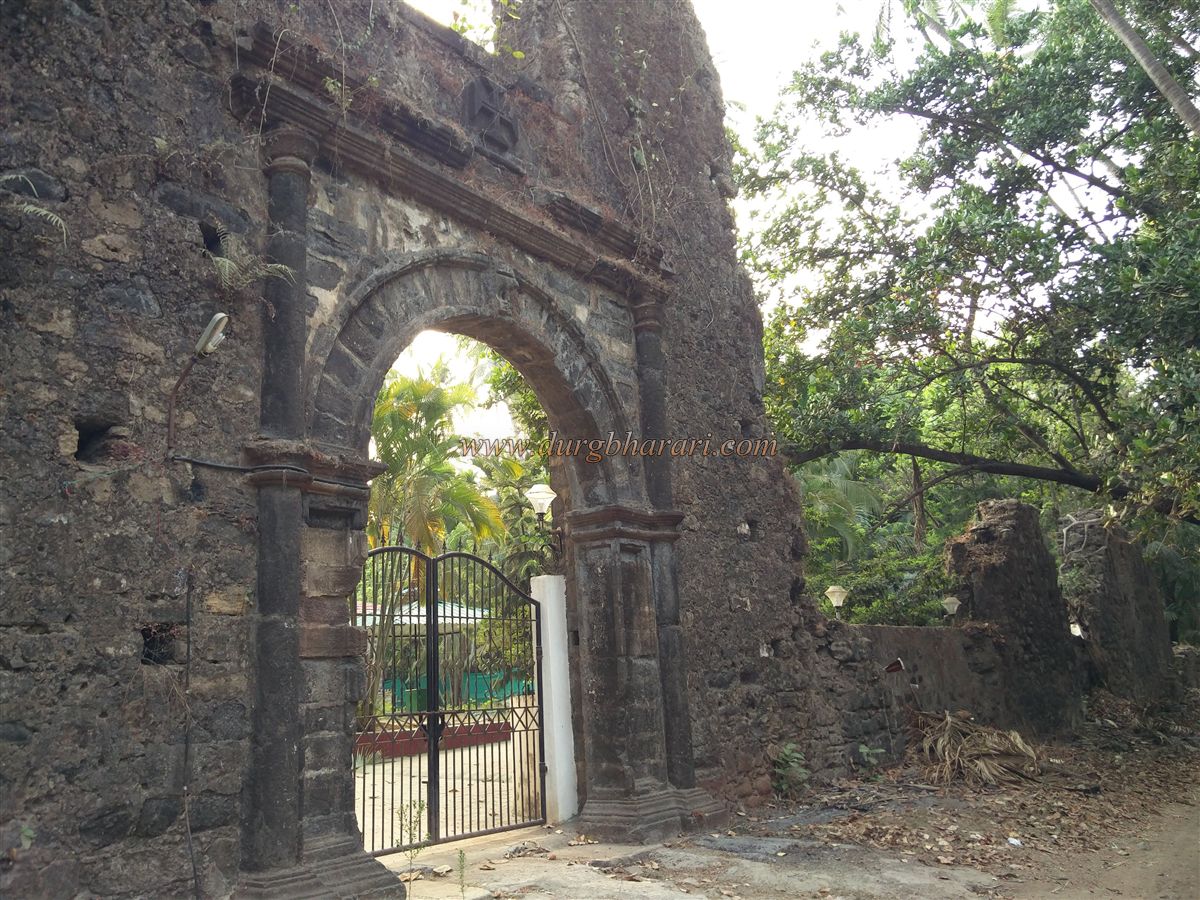
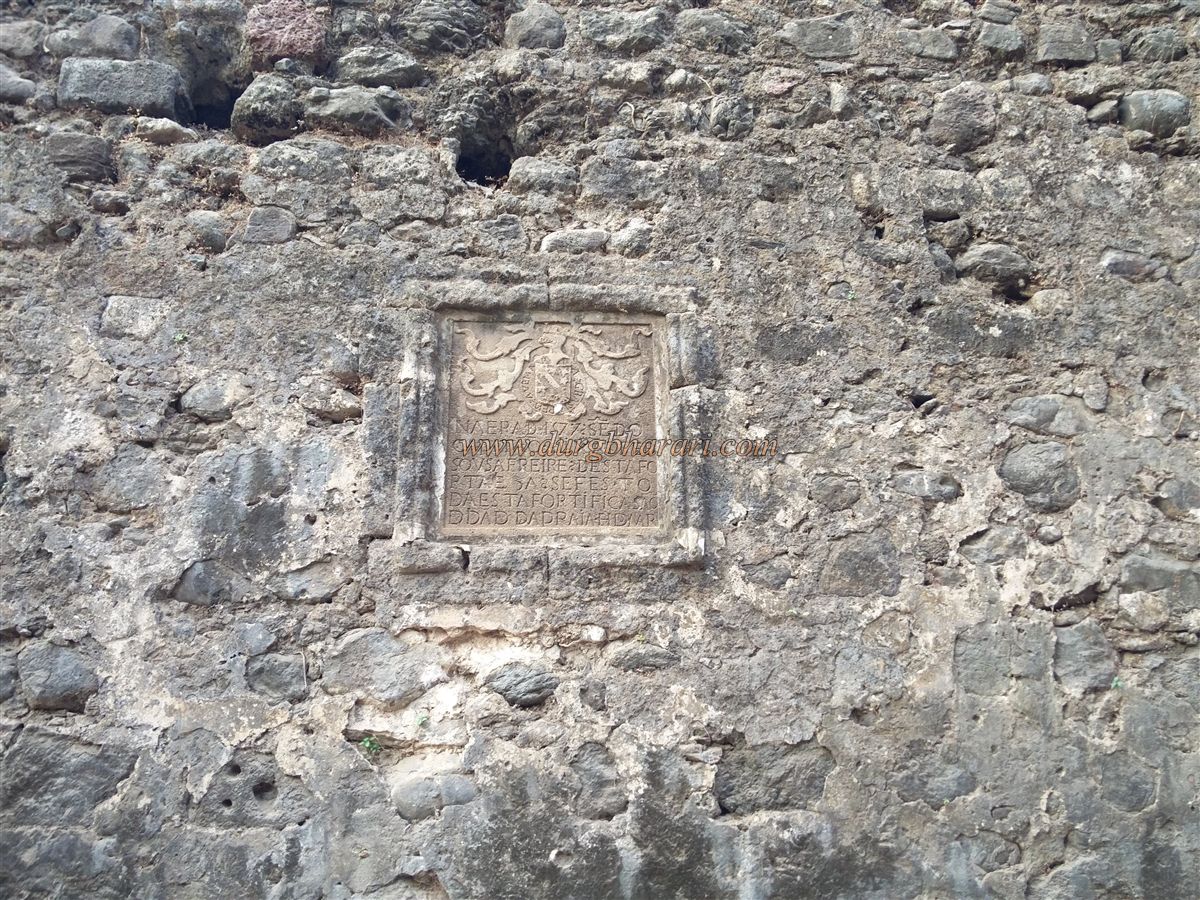
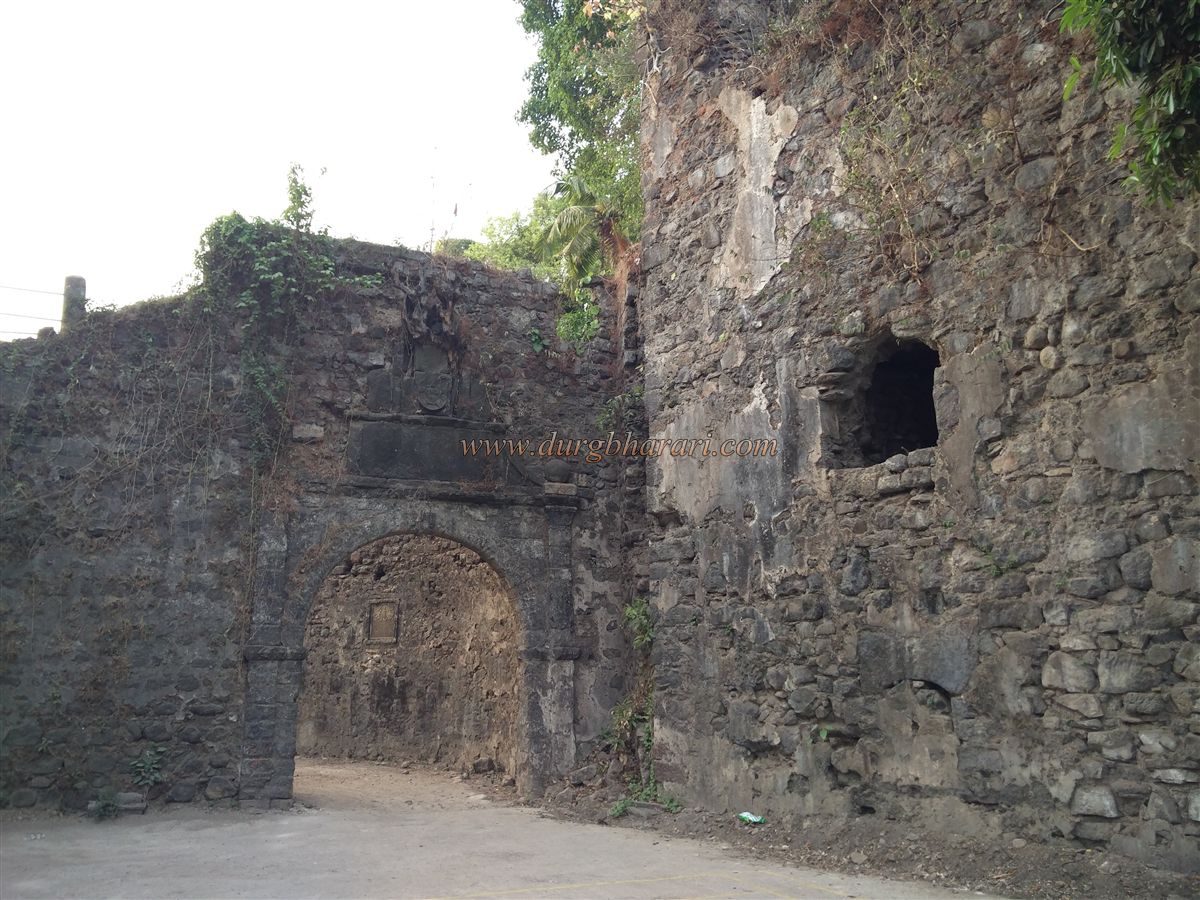
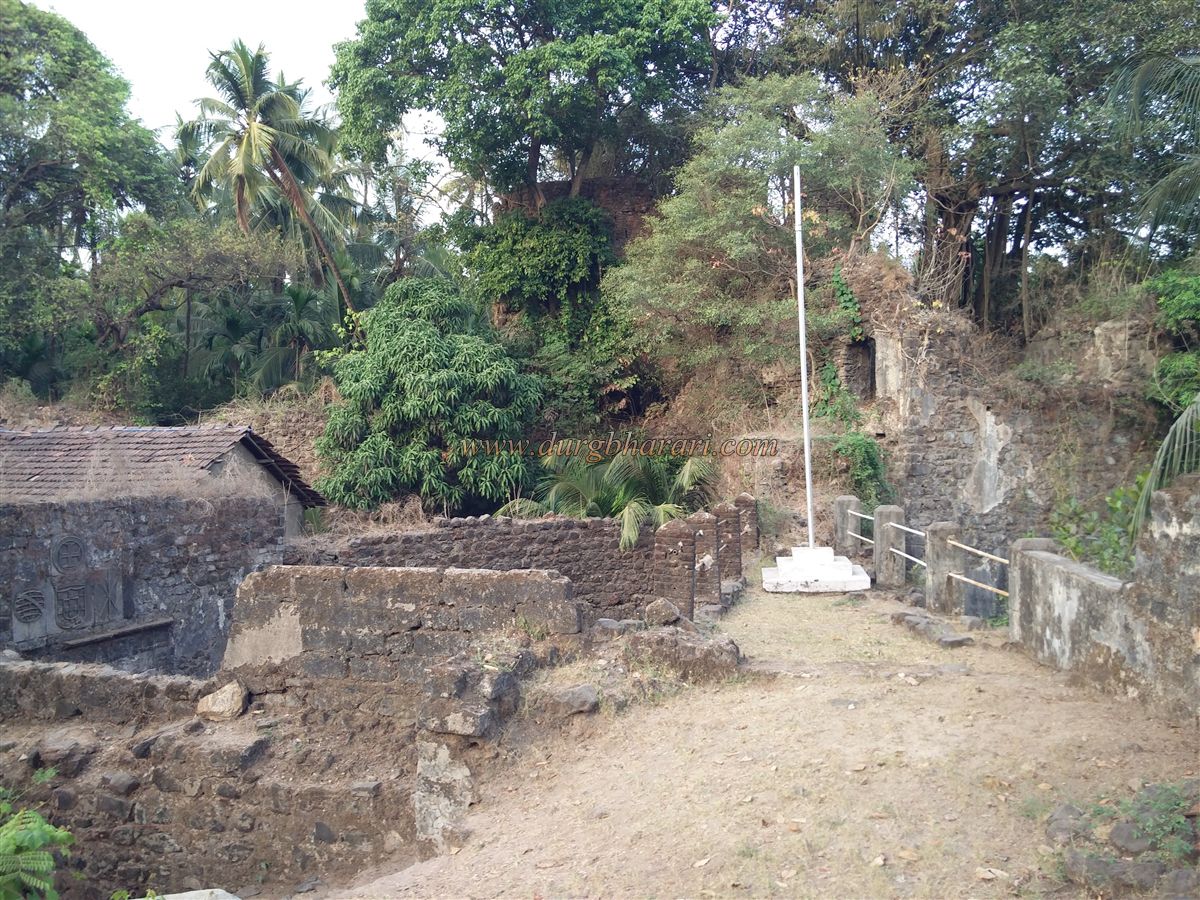
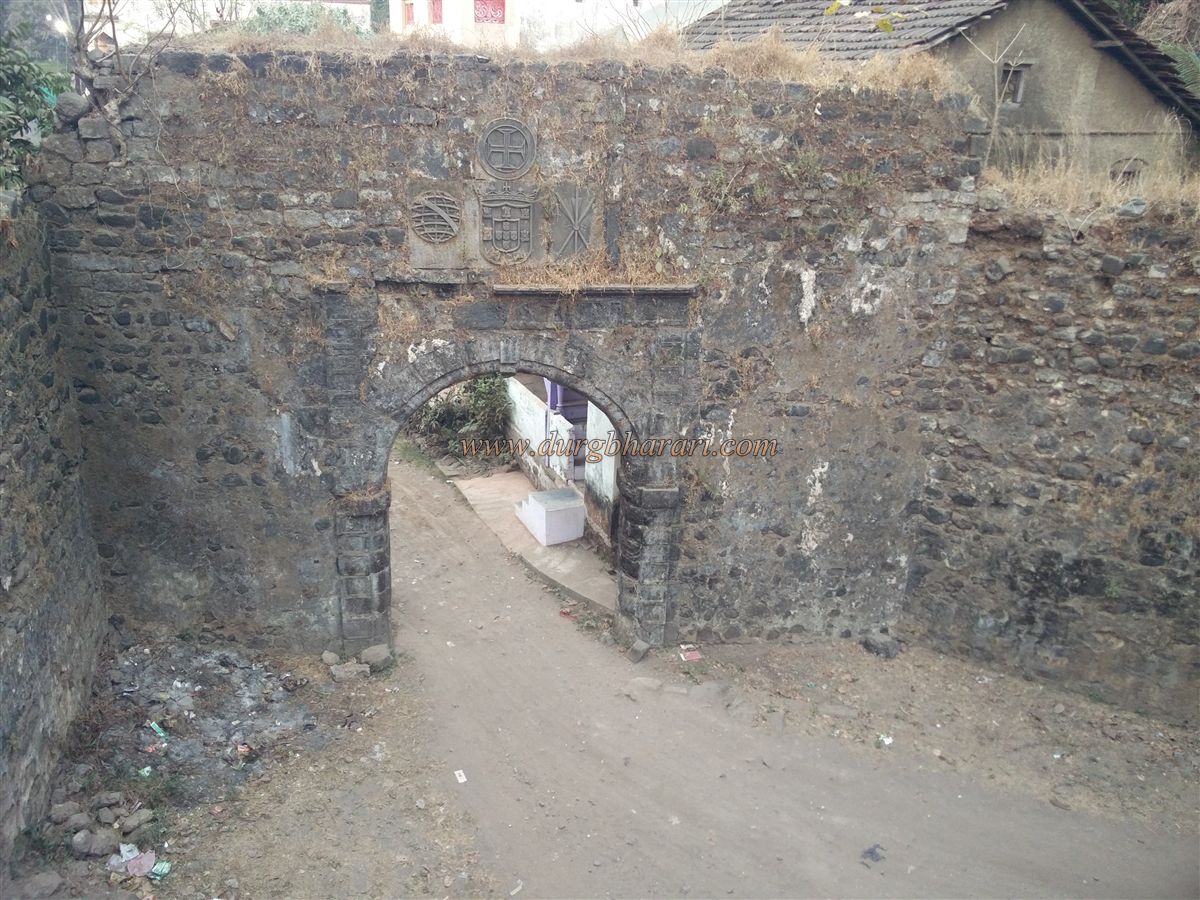
Starting the tour from the bus stand, the first major gate lies on the side facing the Kundalika creek. This gate includes two successive southern-facing entrances built into double fort walls. Between these gates is a strategic defense chamber, with a Portuguese emblem engraved on one of the arches. There's also a stone inscription in Portuguese indicating when the gate was built. At one point, the fort had 11 Portuguese inscriptions—some still remain, while others have been moved to the Asiatic Society of Mumbai.
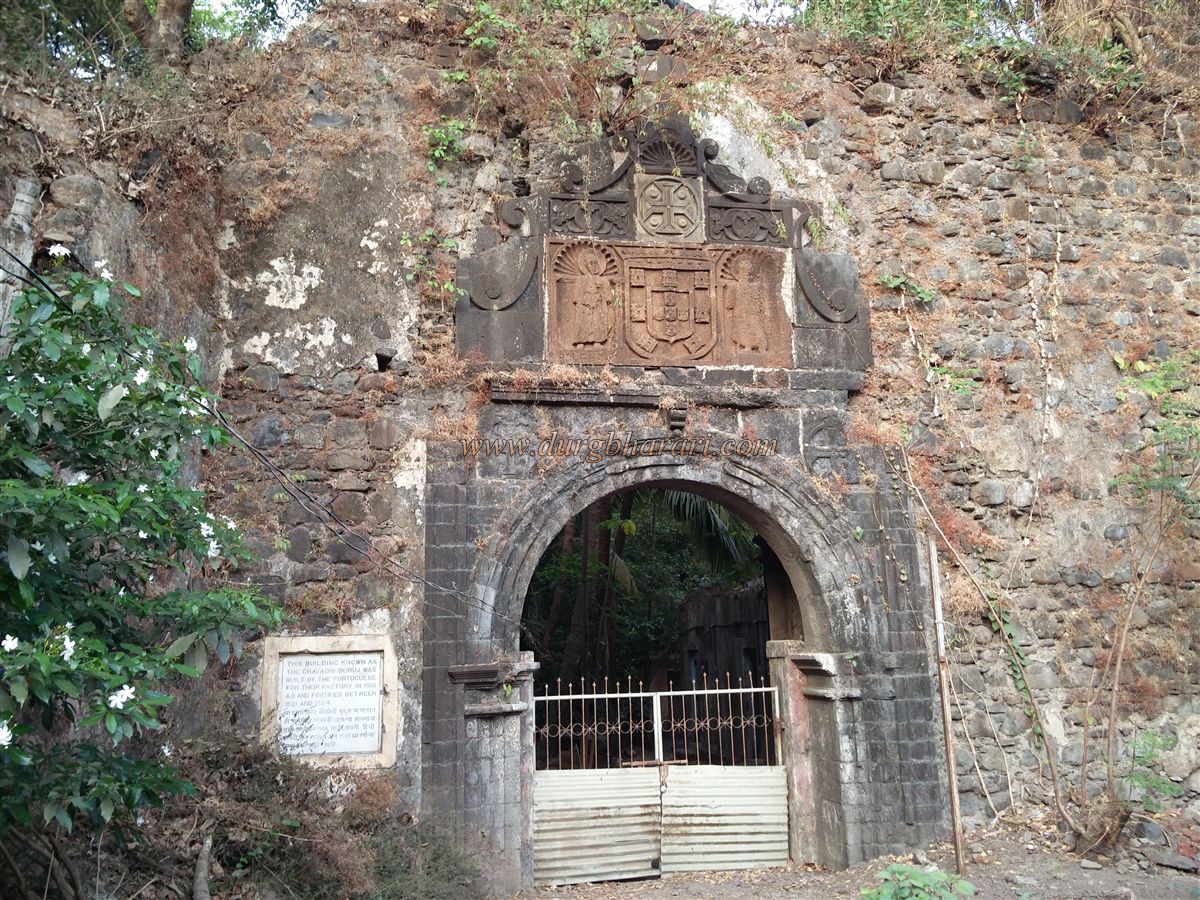
Beyond the second gate, three large stone balls are visible. Nearby stairs lead to the fort wall and a bastion, where two large cannons still remain. Further ahead is another gate adorned with carvings of two religious figures, their names inscribed below, along with a cross and the Portuguese royal emblem above.
Inside this gate is a warehouse built by the Portuguese in 1516, predating the fort. The surrounding walls and gate were constructed between 1521 and 1524. This area is now private property and locked, so entry is not permitted.
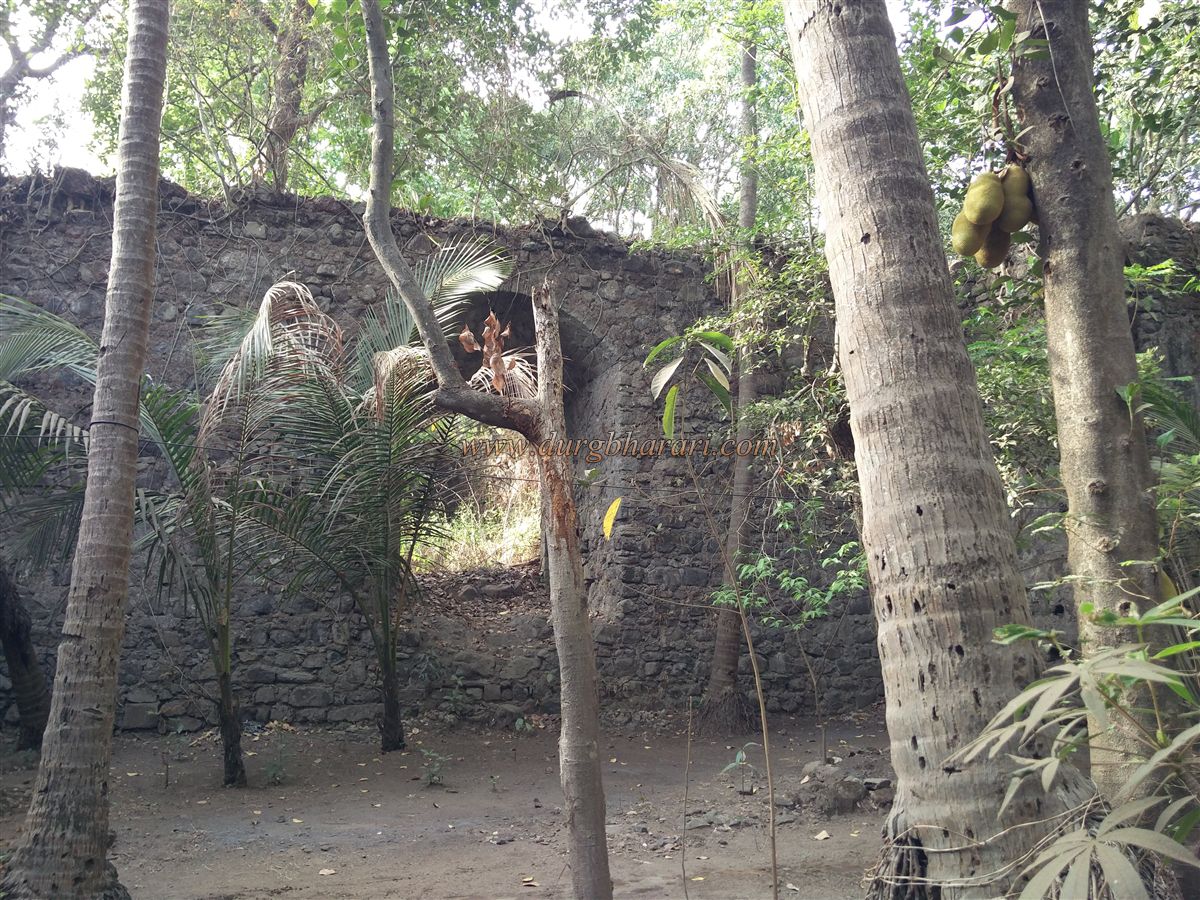
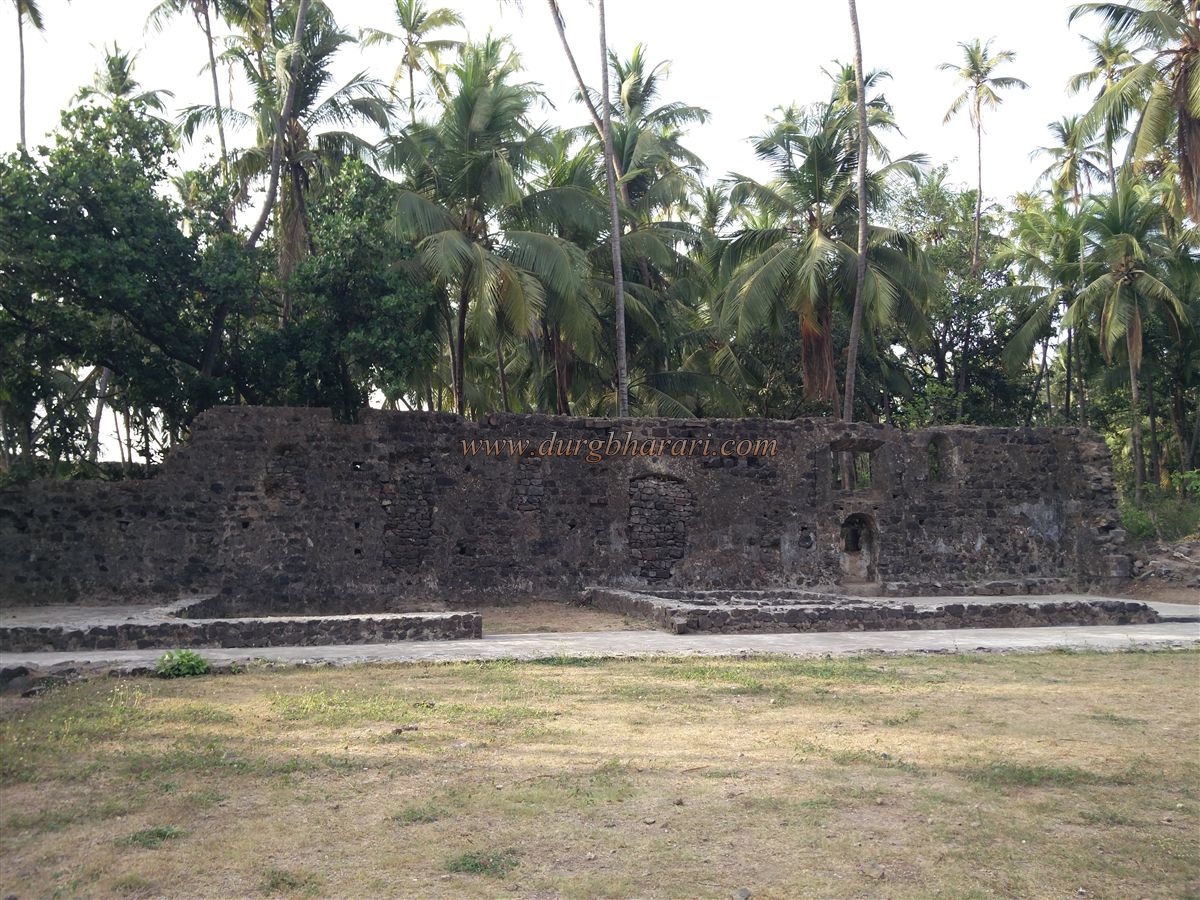
Following a tarred road to the other end of the fort, the ruins of a Jesuit monastery are visible on the left. Across from it, a small gate has been broken through the wall, now leading outside the fort. From here, one can see the fort walls and a bastion with a cannon muzzle, though again, access is restricted due to private ownership.
Returning inside and moving along the right-hand wall, another small gate appears, where the landowner allows entry. Inside are soldiers' quarters, an underground ammunition storage, and a secret escape tunnel leading to the outer moat. A ramp nearby was used to haul cannons onto the wall.
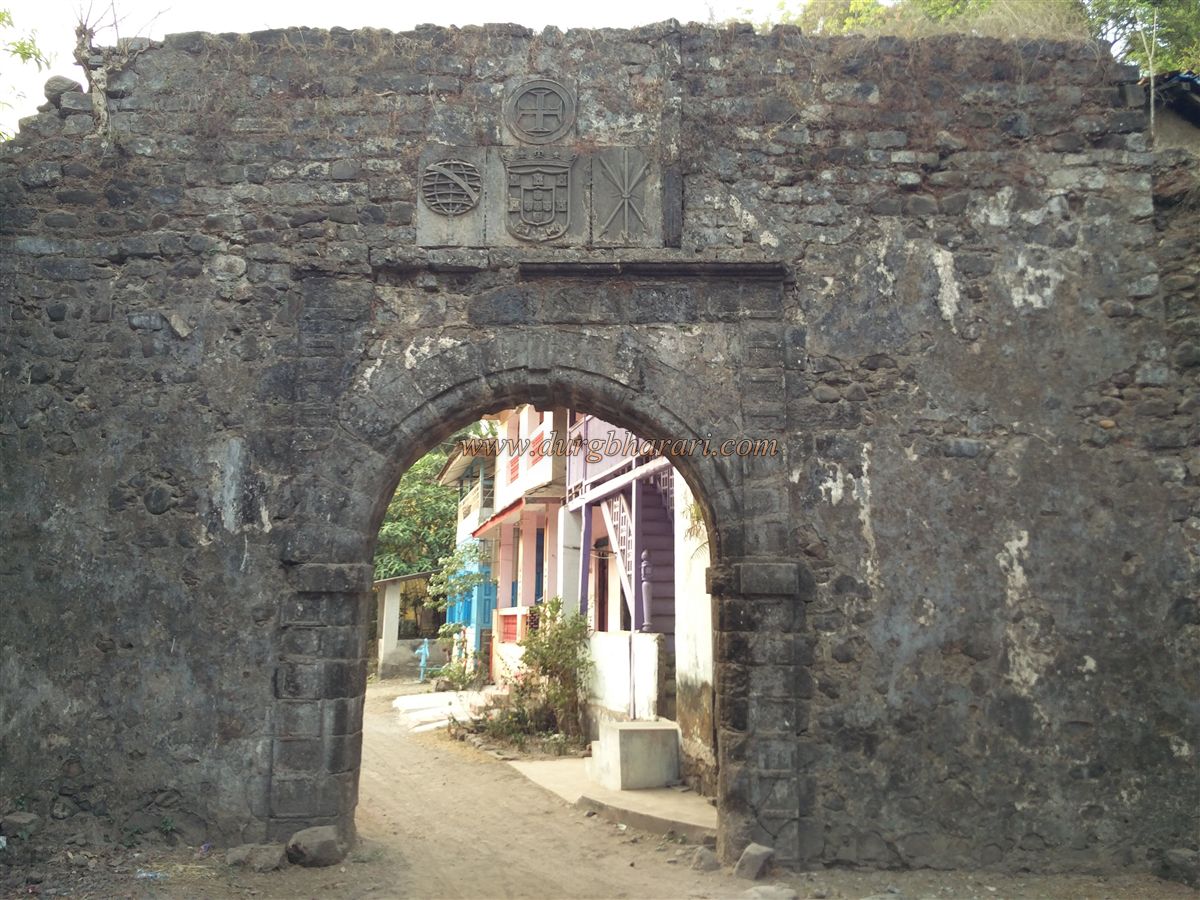
Further along the wall lies the second main gate in the northern ramparts, similar in design to the first gate. Above the outer arch is the Portuguese royal emblem topped with a crown. In front of this gate is a small temple and several small shrines within the wall, though overgrowth obscures much of the structure.
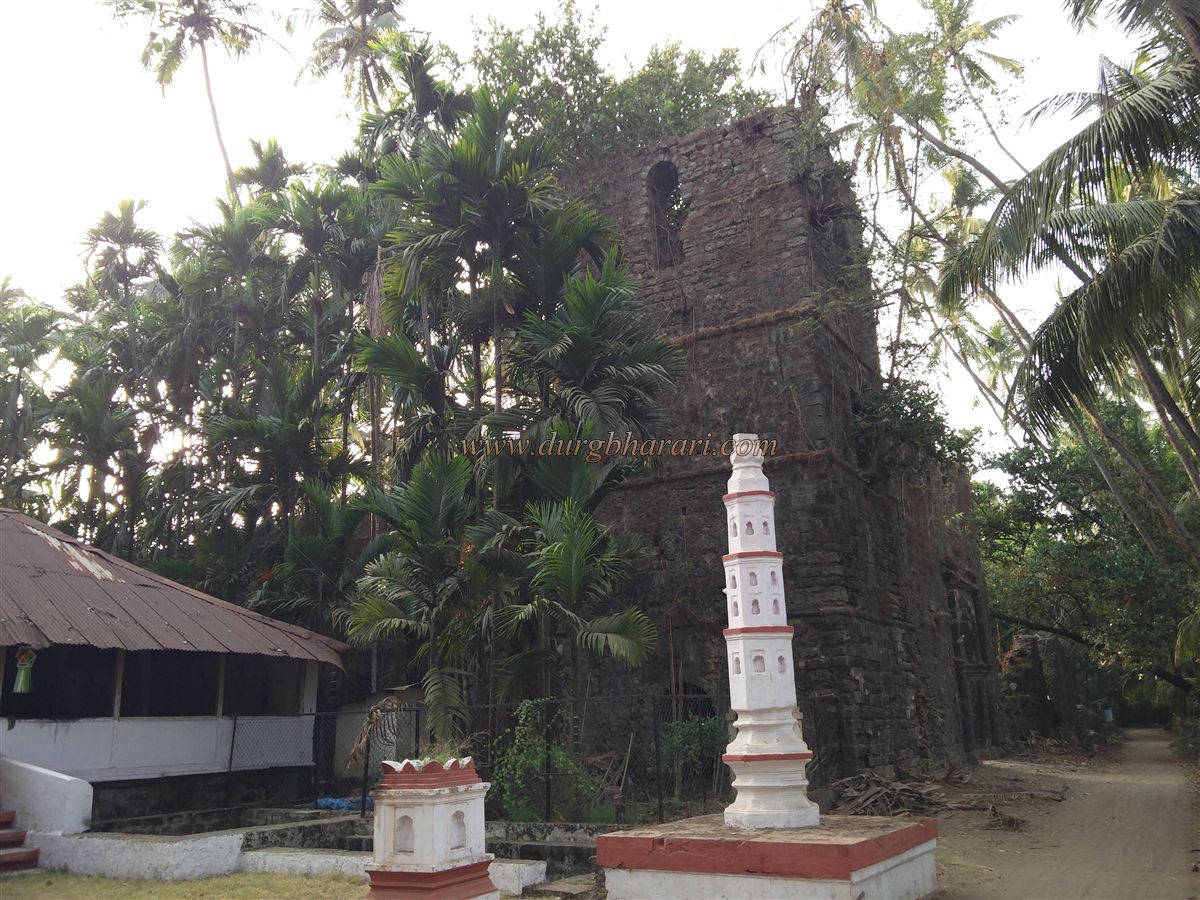
After viewing the gate, a left turn leads to the white-painted Deepmala (lamp tower) of Siddheshwar Temple. Nearby are the remains of a three-storey mansion within the fort walls. The mansion's entrance, still intact, contains inscriptions from 1630. This area, now private property, is fenced off. A coconut grove now grows where the mansion once stood.
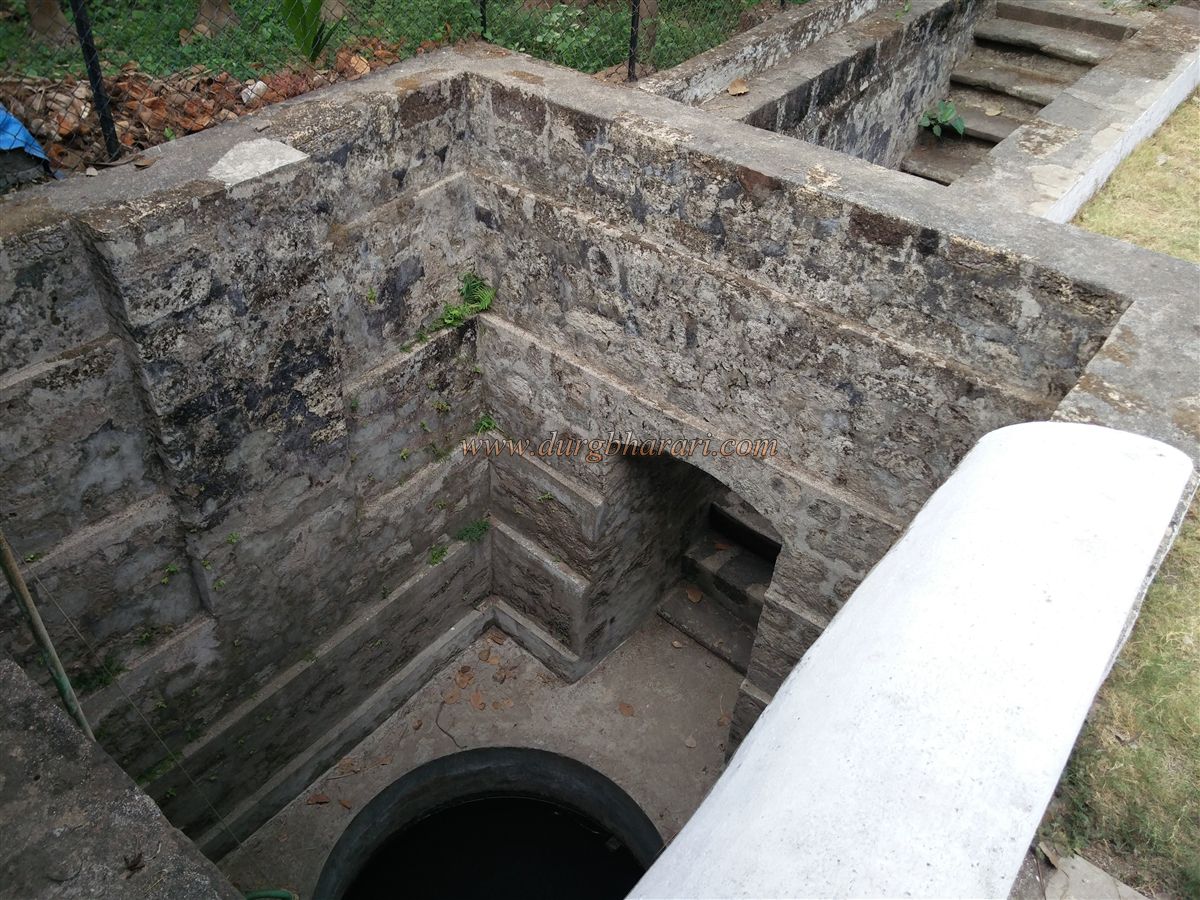
The Siddheshwar Temple, built in 1740 by Babubhat Nene with community funding, has a well with steps and a doorway. The well is square on the outside and circular inside. The temple contains a Shivling, Nandi, and a Ganesha idol in a niche. A carved wooden beam depicting a hunting scene is a highlight. Across from the temple is a ruined Portuguese-style building.
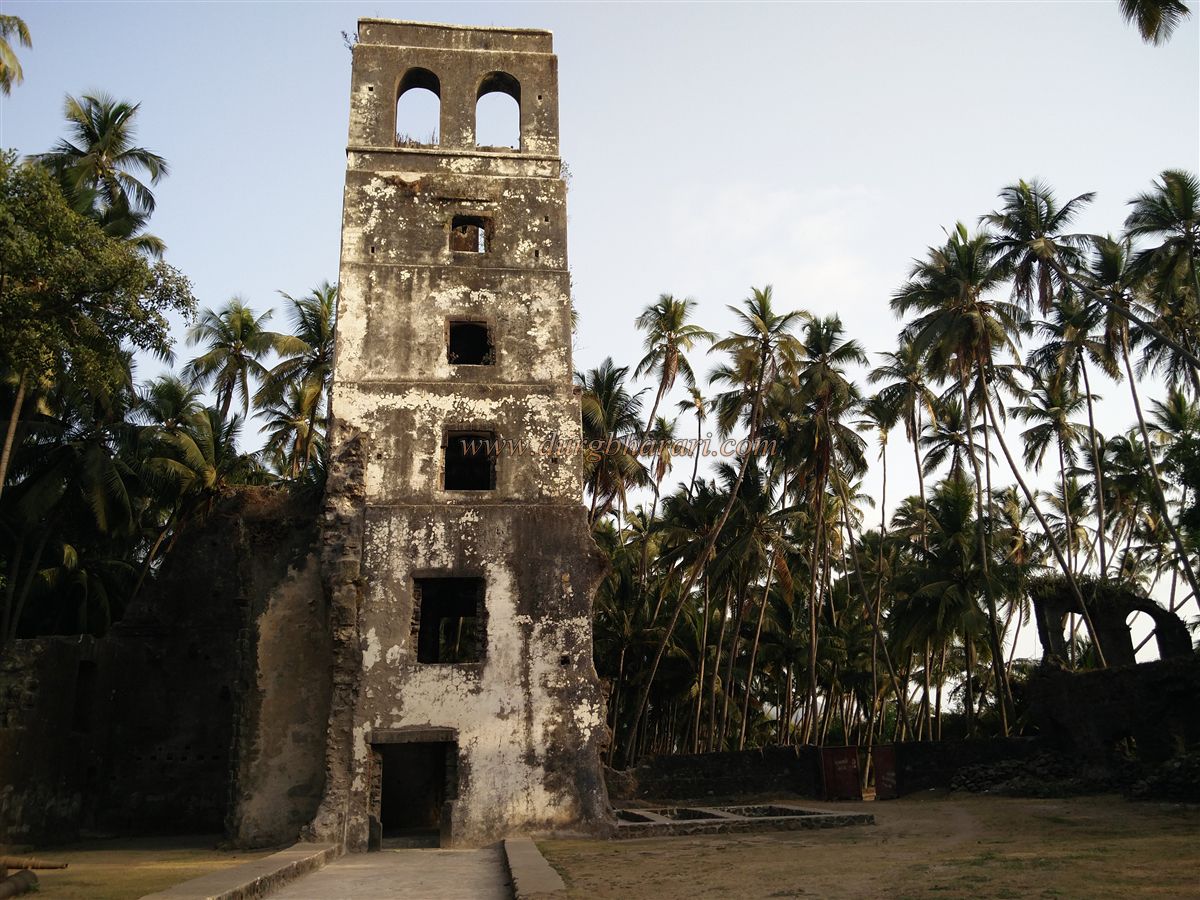
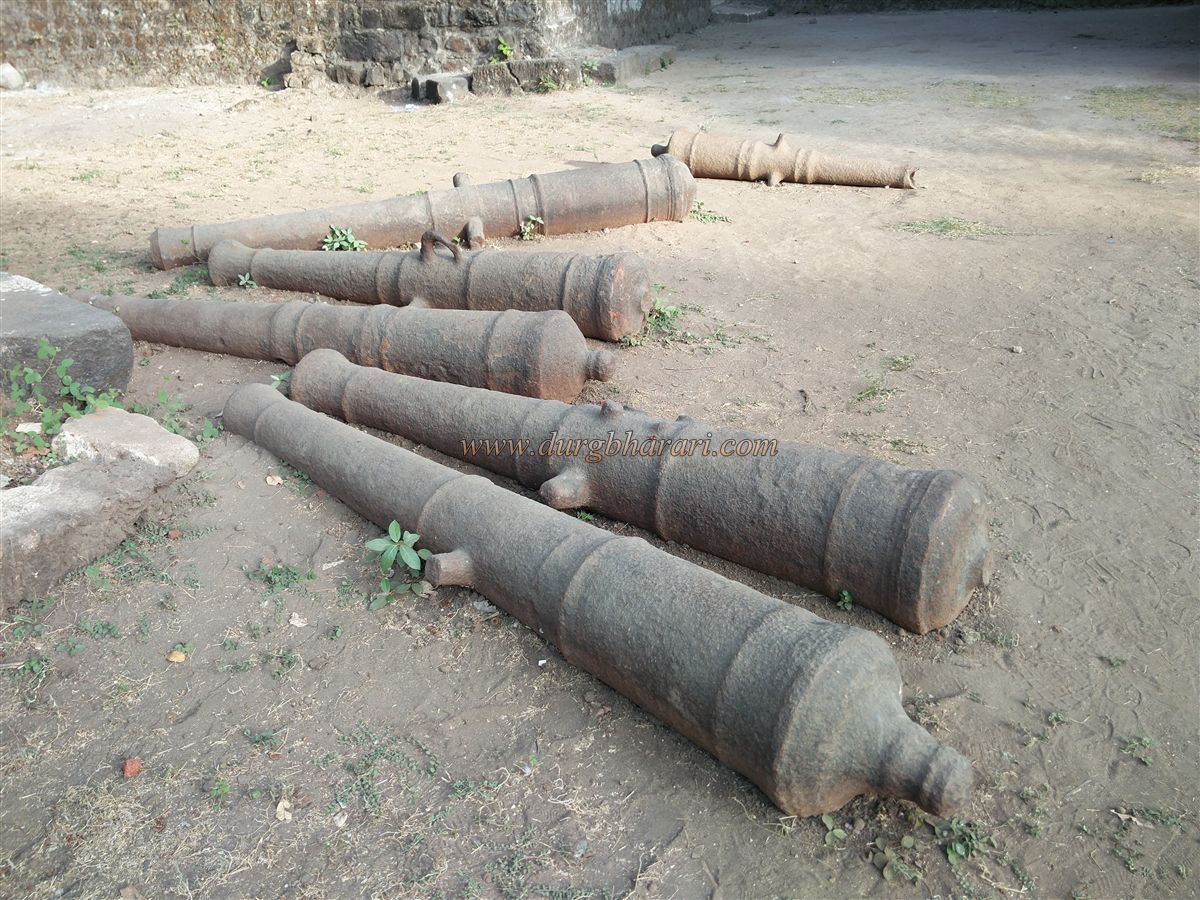
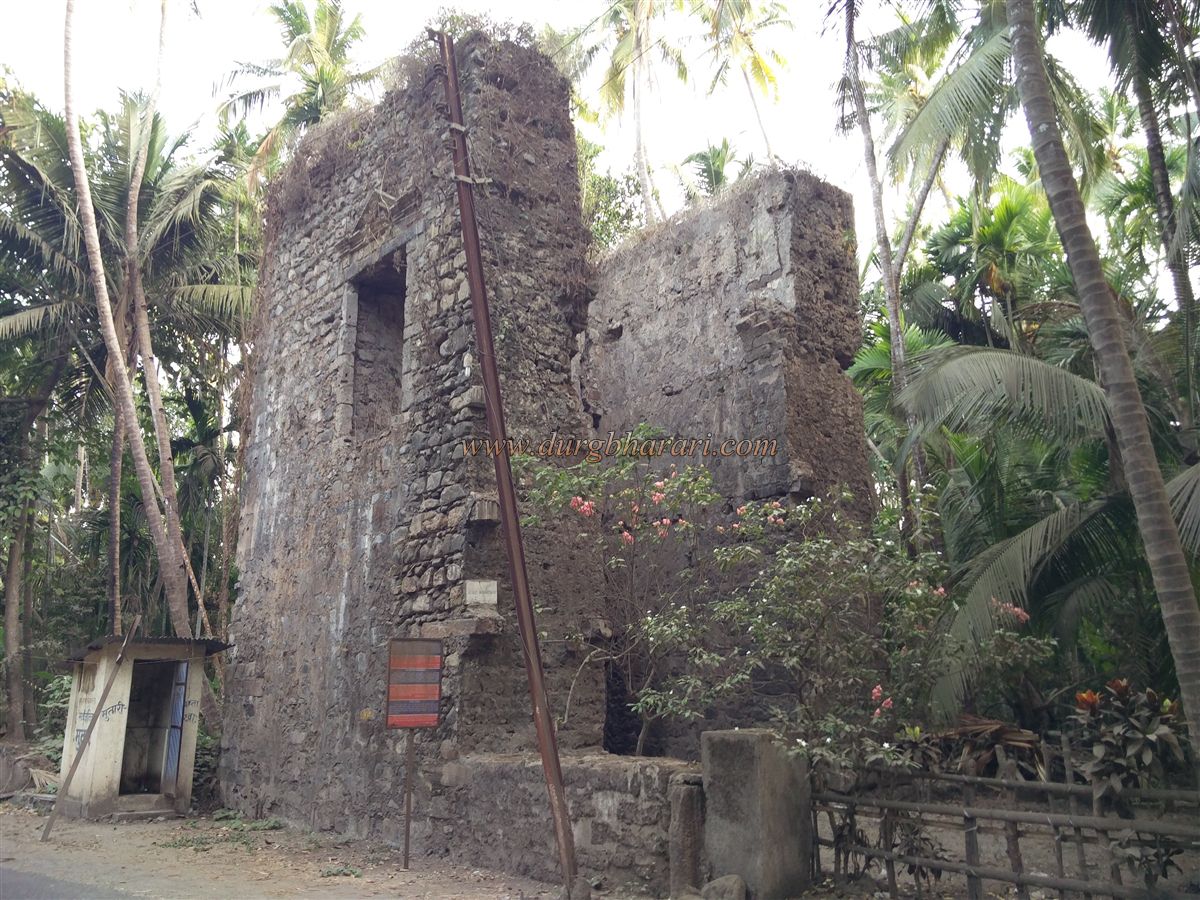
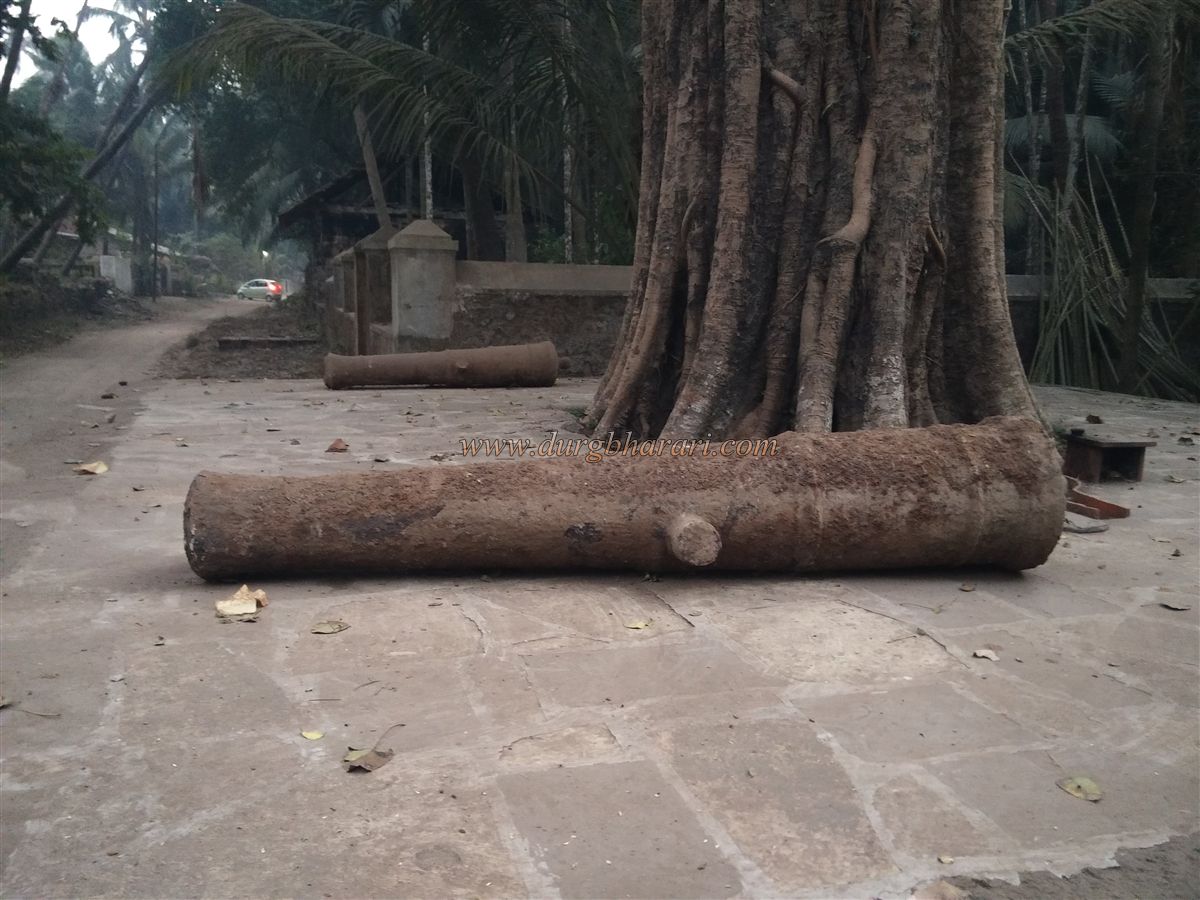
Continuing straight and turning right, a tall tower catches the eye. This six-storey structure, known as Satkhani Manora, served as a Portuguese naval watchtower. From here, one could monitor both the inside of the fort and the distant sea. In its courtyard lie two forge-welded and five cast cannons. Nearby ruins suggest the presence of a church. A burial ground with two inscriptions is also present.
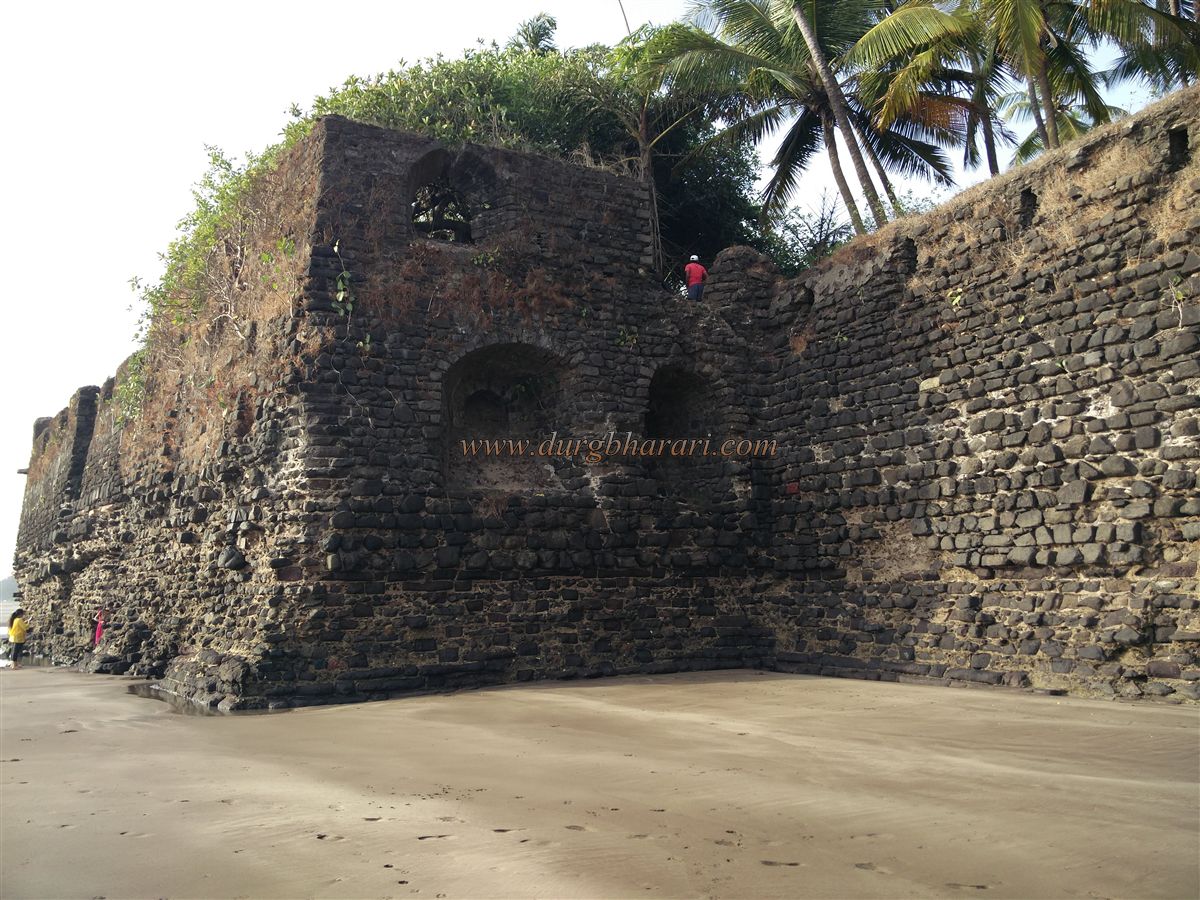
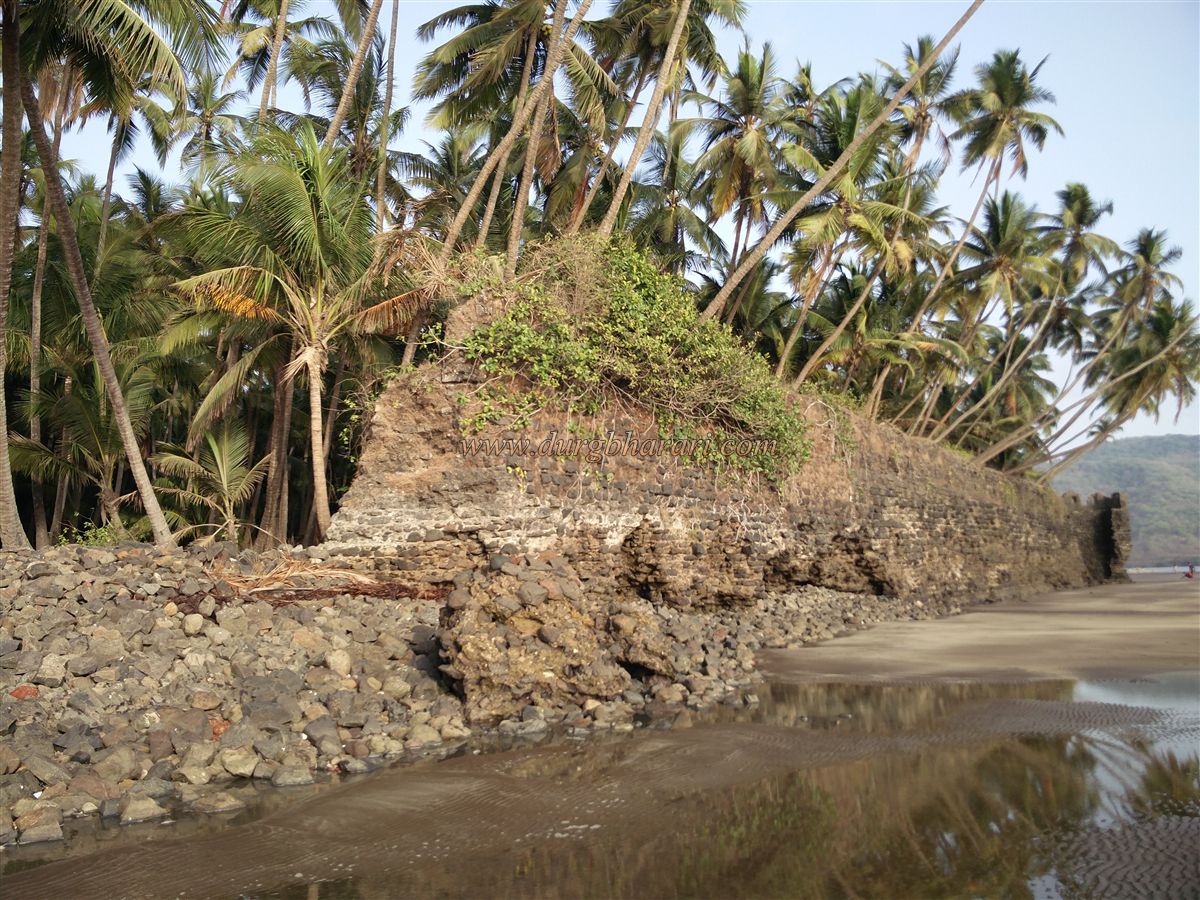
Behind the tower, a small gate opens to the sea. At high tide, water reaches the steps and enters the fort, exiting through a small drainage channel in the wall. From this seaside exit, the fort’s massive construction becomes evident, and across the creek, the Korlai Fort is visible.
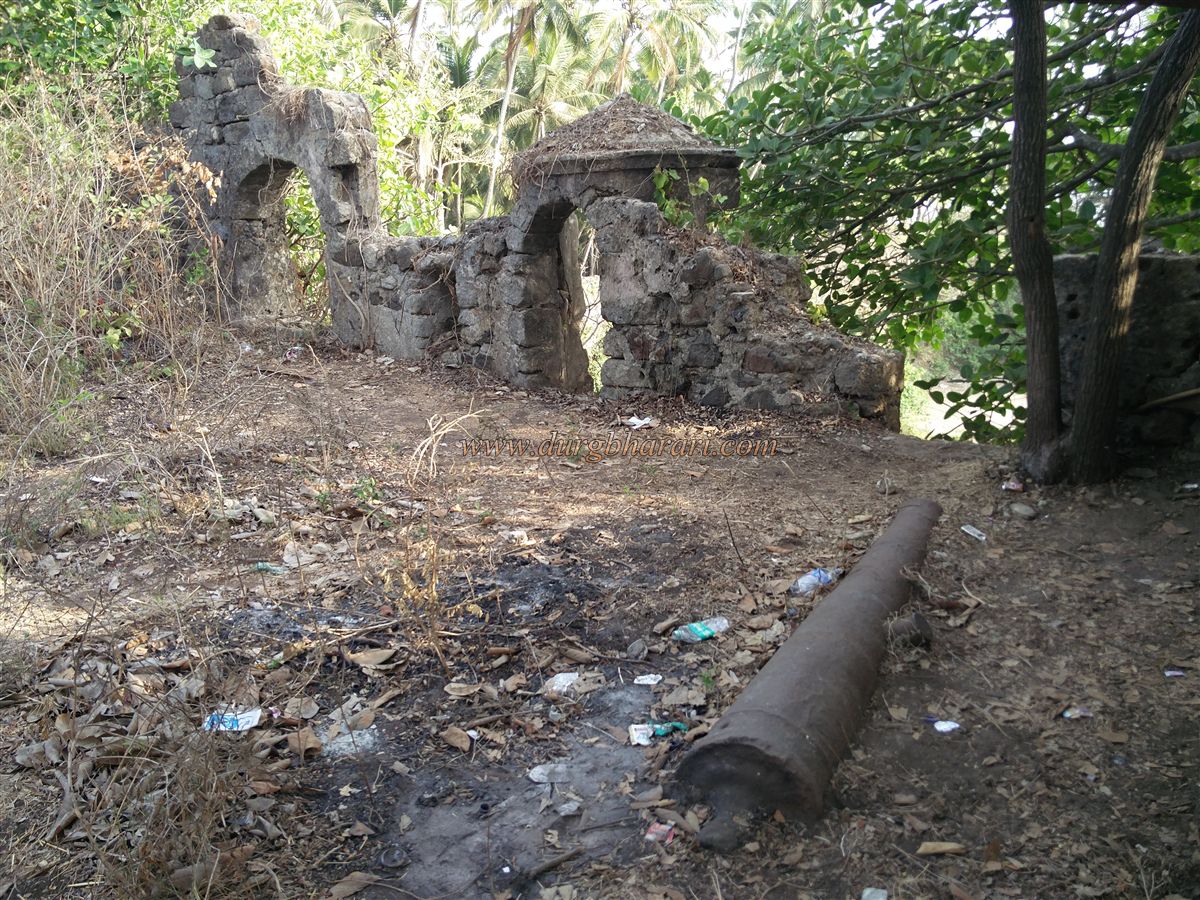
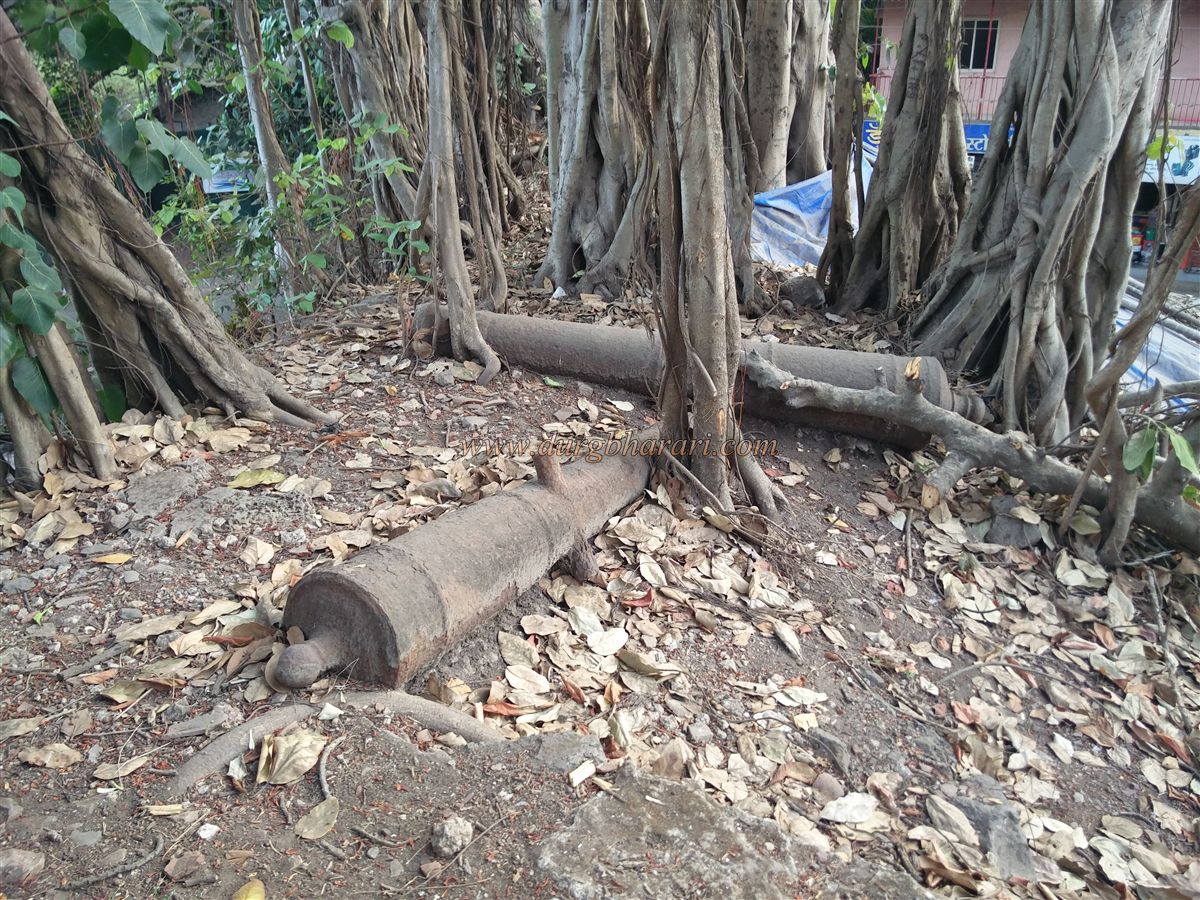
Re-entering the fort and heading right along the wall, one reaches a bastion with a fallen cannon and another exit gate. One more bastion ahead contains a large cannon. Though overgrown, this part of the fort is walkable.
A unique feature of Revdanda Fort is its underground passage system. Six tunnels lead into the fort from the surrounding moat, all interconnected internally. These were likely built before the fort itself. In July 1982, the cave explorers group "Cave Explorers" investigated these tunnels. Built of stone and brick, they are 8–9 feet high and quite wide—testimony to the engineering of the time. Though some were cleared, they are now again clogged with mud and debris, making entry difficult.
In the southwest corner lies the massive Domnic Church, built in 1549. Though the roof has collapsed, the grand hall and walls still display intricate carvings. Another important Portuguese structure is the St. Xavier Church, whose construction details are recorded in a stone inscription in the prayer hall.
The fort is full of Portuguese-style bastions and ruined buildings. Since much of the fort is private property, some owners allow entry while others do not. A full tour takes around two hours.
Historically, the Kundalika River originates in the Sahyadri and meets the Arabian Sea near Chaul-Revdanda, forming a natural harbour. From 130 CE to 1768, ships from across the world docked here. Over time, silt build up reduced its utility. In ancient times, Revdanda was known as Revati Kshetra and was ruled by the Shilahara dynasty. In the 10th century, Arab trader Al-Masudi noted a Shilahara king named Jhanjh ruling the region.
Afanasiy Nikitin, the first Russian traveller to visit India, arrived between 1466–1472 and began his journey at Chaul port, later traveling through Pali, Mumbra, and Junnar, recording his observations.
In the 15th century, recognizing Revdanda importance, the Portuguese built a fort at the creek mouth. Encircling the village with ramparts, they turned it into Revdanda Fort. Captain Soze began construction in 1528. Earlier, in 1516, they had received permission from the Nizam to set up a factory, today identified as the square bastion.
In 1521, the Bijapur navy attacked and burned Chaul, defeating the Portuguese. As a result, the fort walls around the factory were built between 1521–1524. By the late 16th century, several Portuguese buildings had been erected inside.
Portuguese writer António Boccaro, who visited in 1634, wrote that the fort housed a commander and 200 soldiers, with homes, armories, a cathedral, church, warehouses, and prison. Cannons named "Camel" adorned the bastions, firing 14–65-pound cannonballs made of brass or steel—some of which are still visible today.
In 1636, when Shahaji sought help from the Portuguese at Revdanda to protect the Nizamshahi, they refused. Around 1657–58, Shivaji conquered Chaul, but Revdanda remained under Portuguese control.
English envoy Henry Oxenden, present at Shivaji’s coronation in 1674, stayed a night at Revdanda Fort. On the night of July 22, 1683, Sambhaji led 6,000 soldiers and 2,000 cavalry in an attack on the fort, which was repelled with help from the Siddi.
When Marathas laid siege to Revdanda, the Portuguese attacked Phonda, forcing the Marathas to retreat. According to Portuguese officer André Ribeiro Corinhan's 1728 report, the fort had 11 bastions and 58 cannons firing 3–40-pound balls, with three companies of 62 soldiers each stationed there.
After Vasai fell to the Marathas in 1739, the Portuguese, realizing they couldn’t hold out, handed over Revdanda and Korlai to the Marathas on November 25, 1740, in exchange for villages in Sashti.
The British took control in 1806, and in 1817, Angres briefly captured it. However, by 1818, Revdanda Fort came under British rule again.
© Suresh Nimbalkar
GALLERY