RATANGAD
TYPE : HILL FORT
DISTRICT : NAGAR
HEIGHT : 3730 FEET
GRADE : MEDIUM
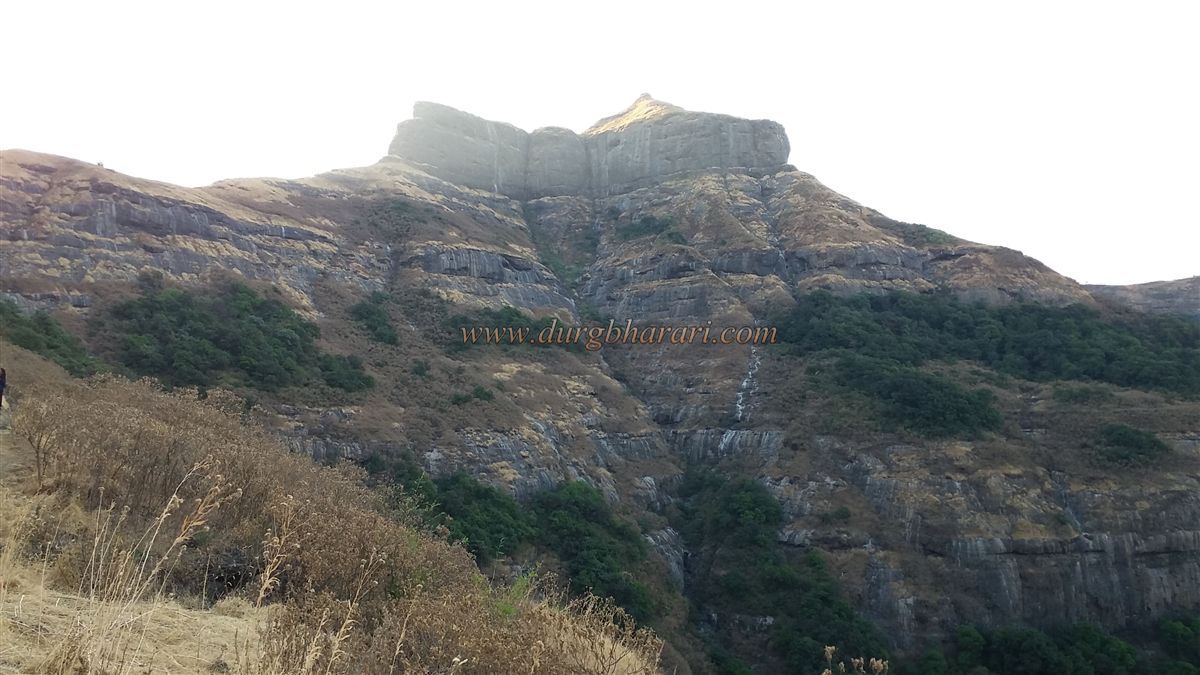
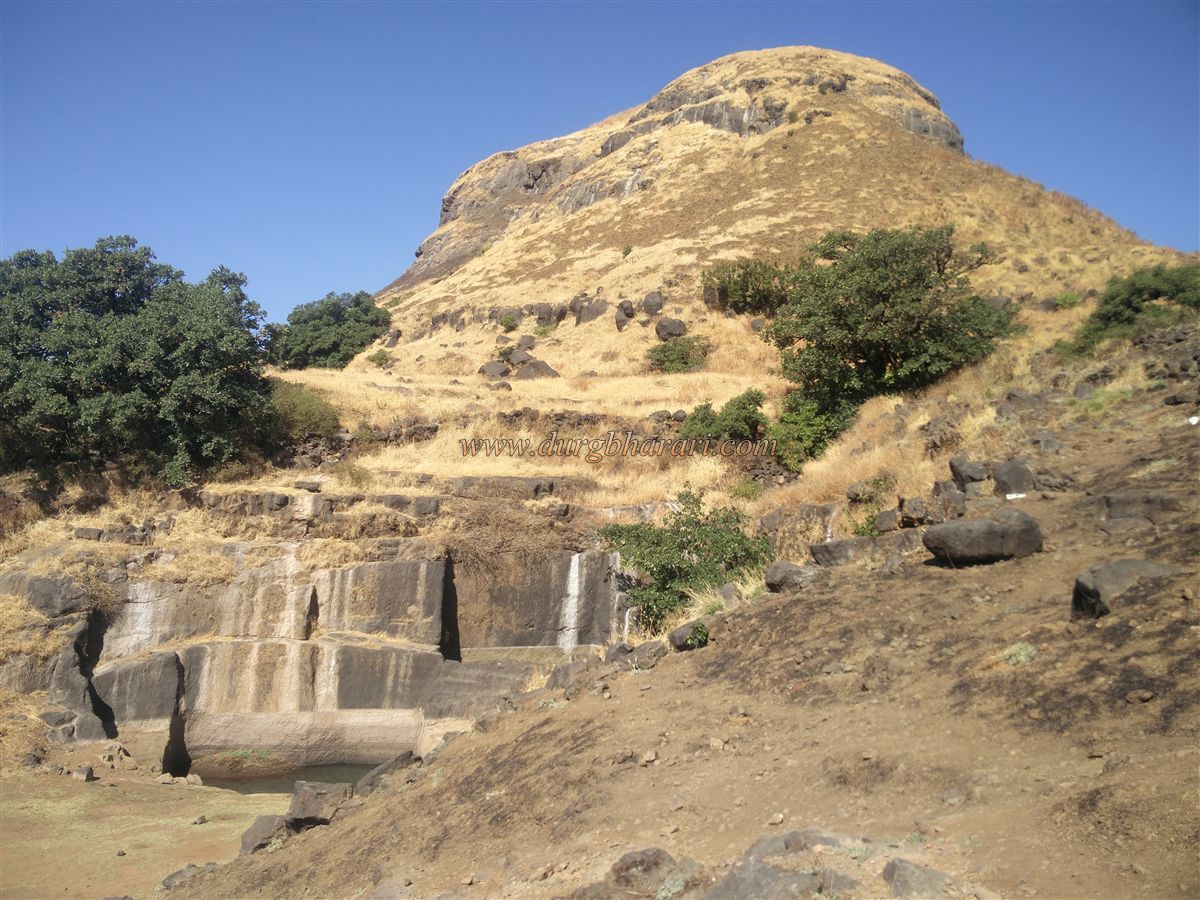
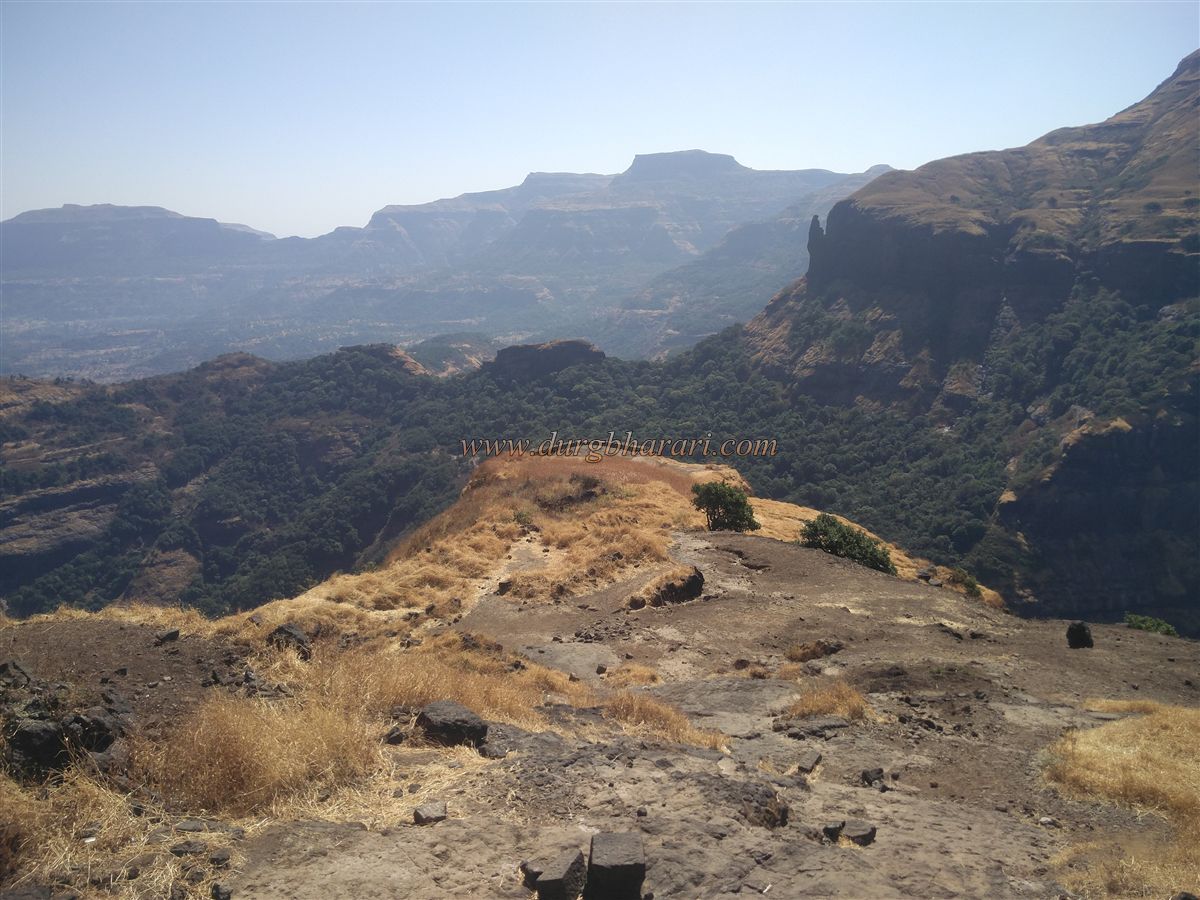
The Kalsubai mountain range lies on the border between Nagar and Nashik districts. Among the forts nestled in this range, Ratangad is situated in the Ghanchakkar sub range and is the origin of the Pravara River. Due to the Bhandardara dam built on this river, the surrounding area has become fertile and prosperous. Ratangad is located to the west of the dam, on the main ridge of the Sahyadri range. To the right of Ratangad stands a spire known as Ratangad Khuta (pillar). The base village of the fort is Ratanwadi, while Samrad, known for Sandhan Valley, also lies within the vicinity of the fort.
The distance from Igatpuri–Ghoti–Shendi to either Ratanwadi or Samrad is approximately 70 km. From Shendi, near the dam wall, one route leads to Samrad, and another to Ratanwadi. Ratangad can be accessed from both villages.
...
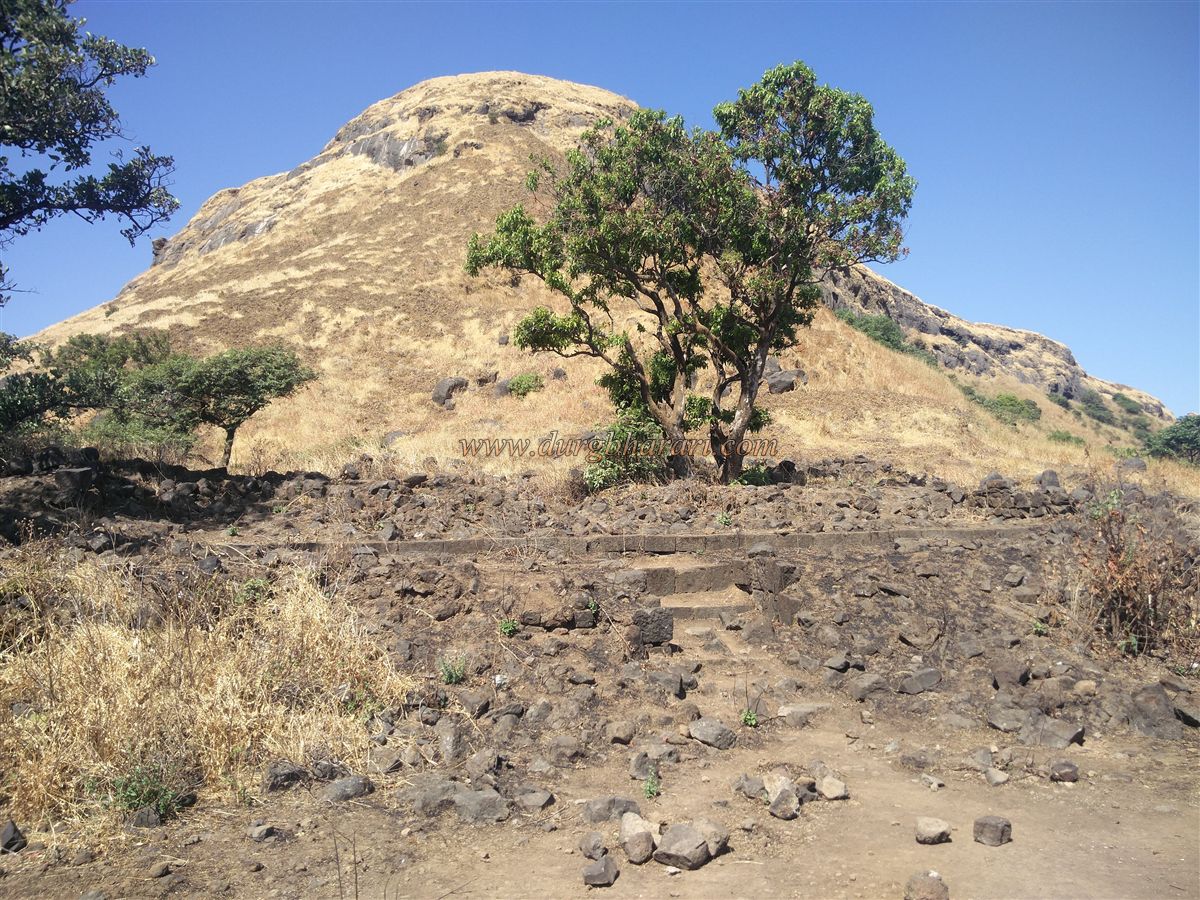
The fort is about 3,500 feet above sea level. To explore the entire fort and surrounding area, one can either ascend from Ratanwadi and descend to Samrad or do the reverse. If taking the route from Samrad, it is essential to carry water and hire a guide, as there is no water on the way. Although the trail passes through a forest, some steep rocky sections are tiring. Along the way, Bancha Sulka, a pinnacle in a deep valley to the left, attracts attention.
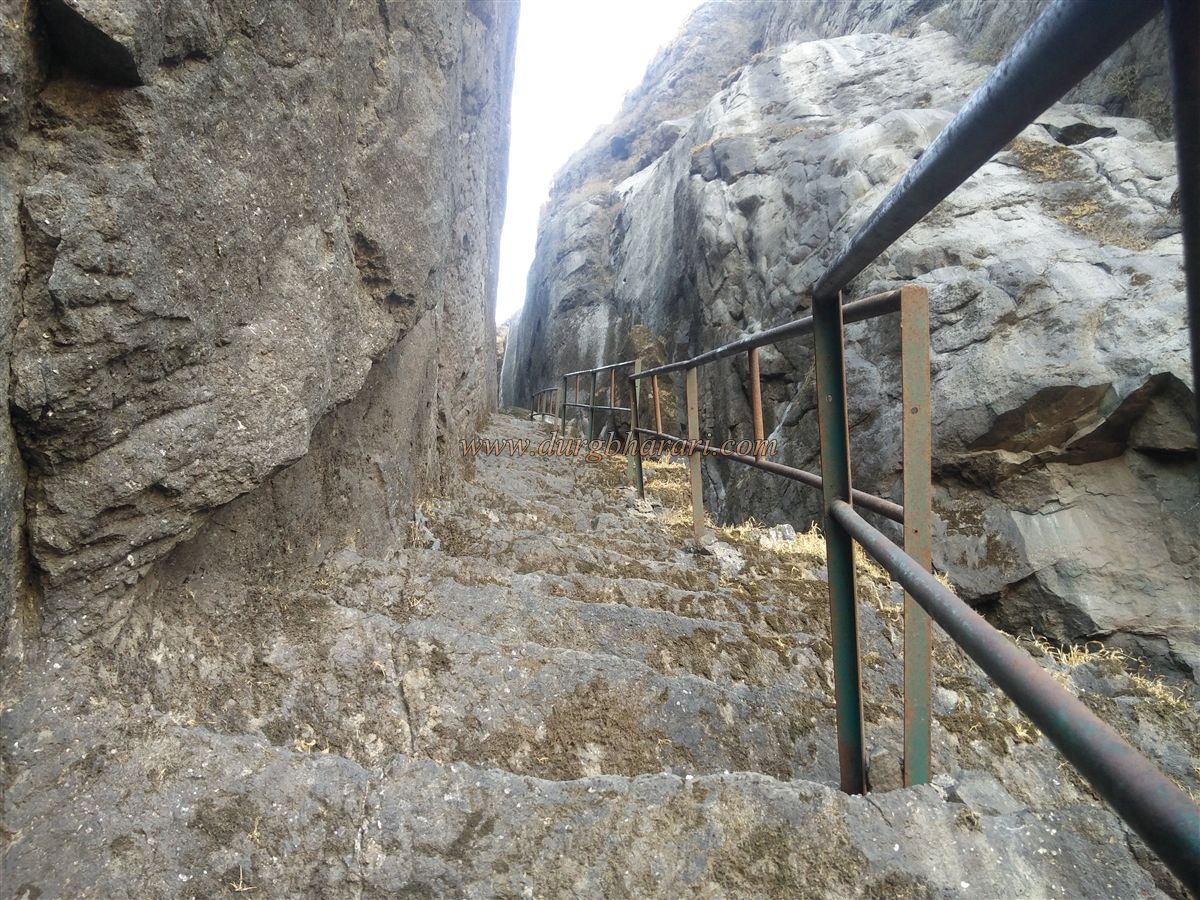
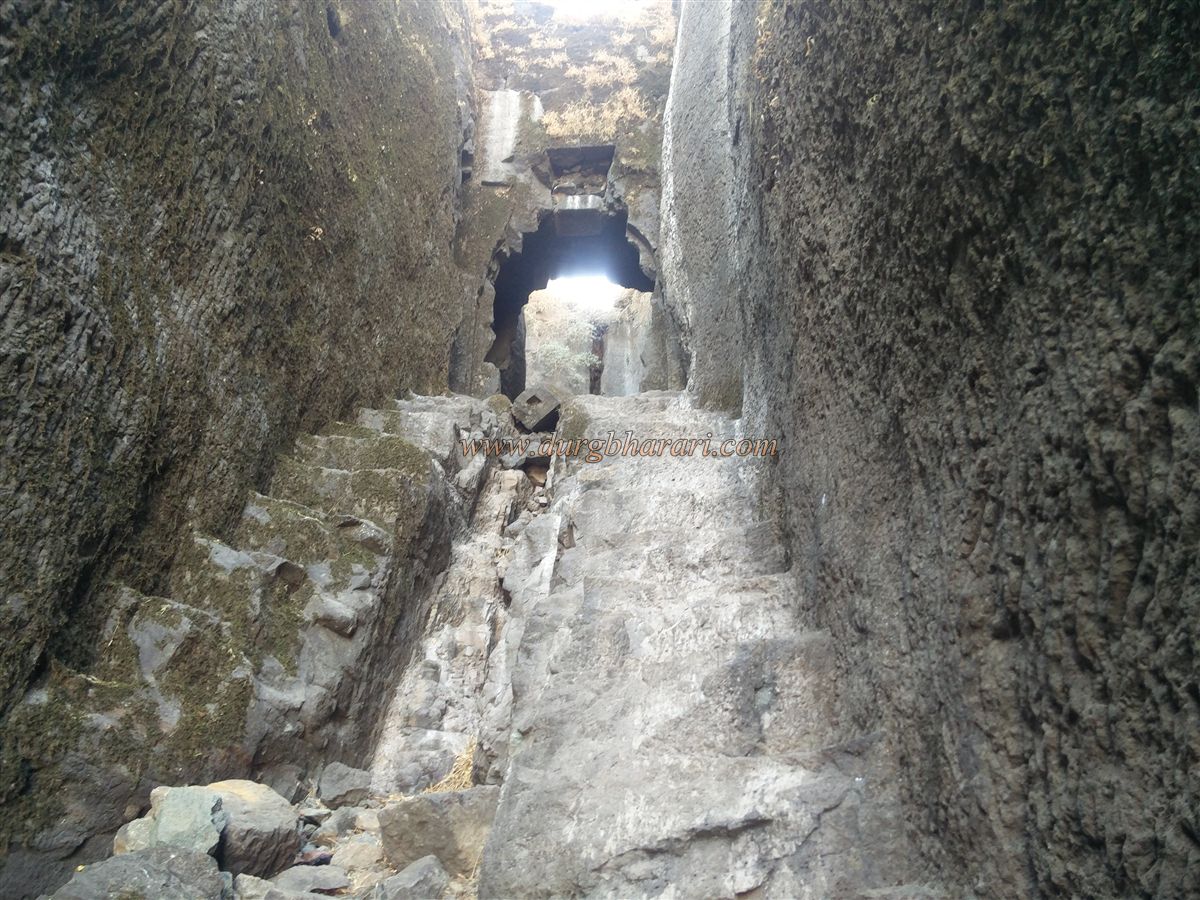
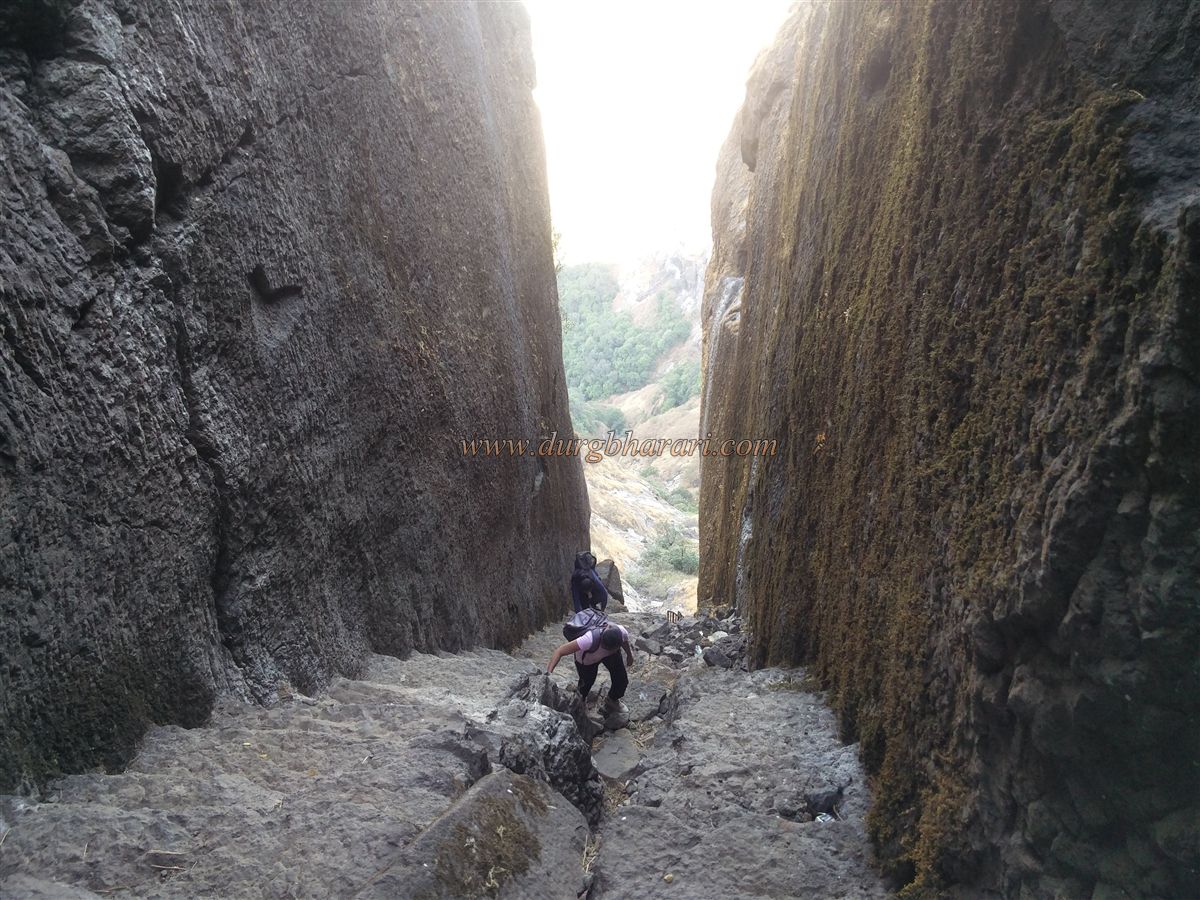
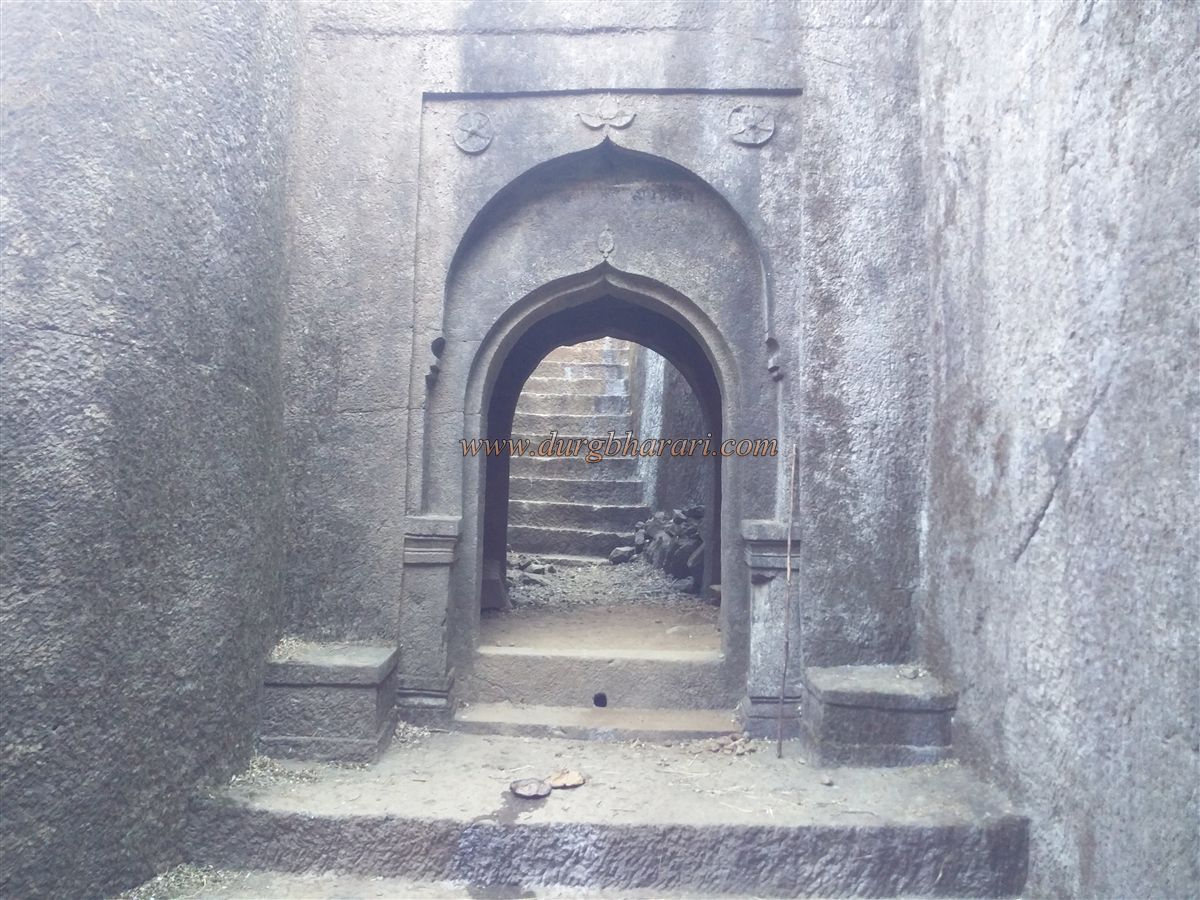
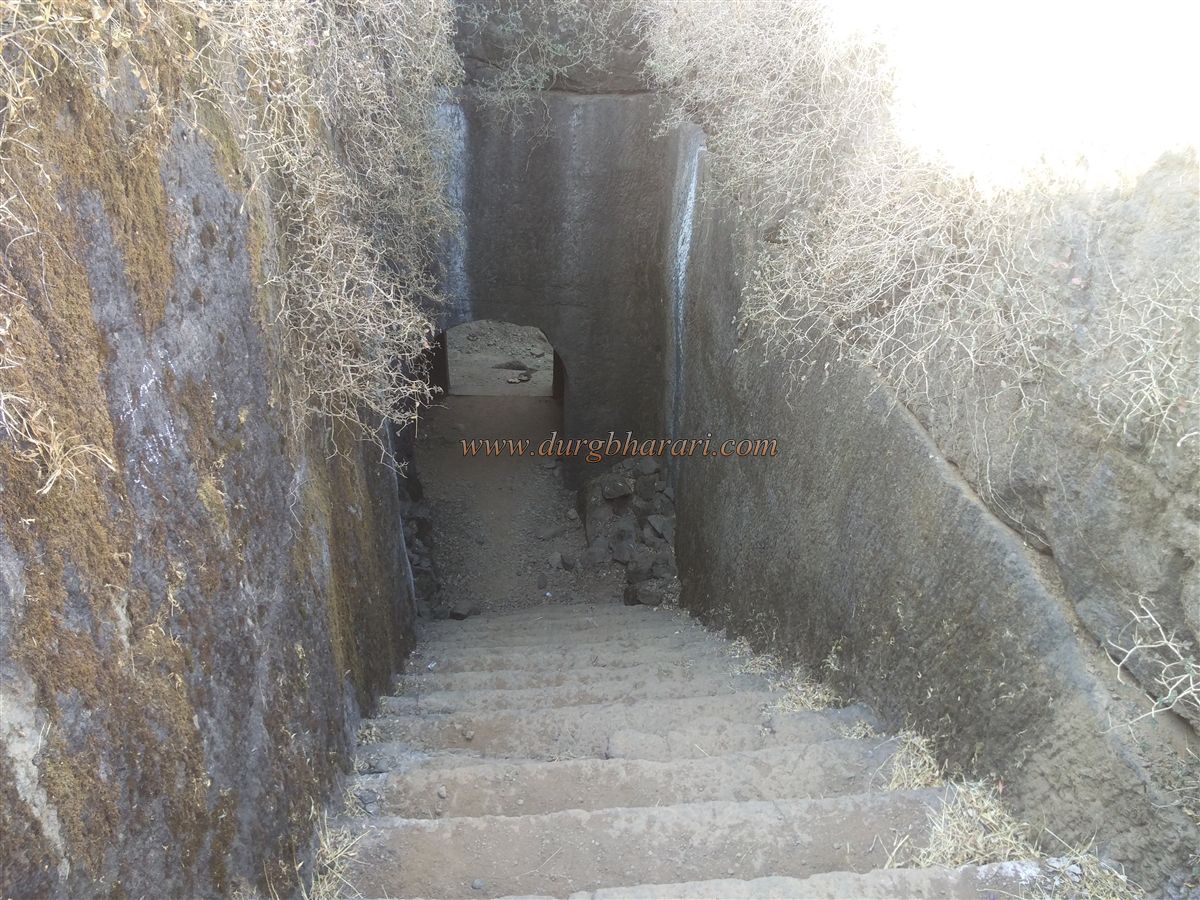
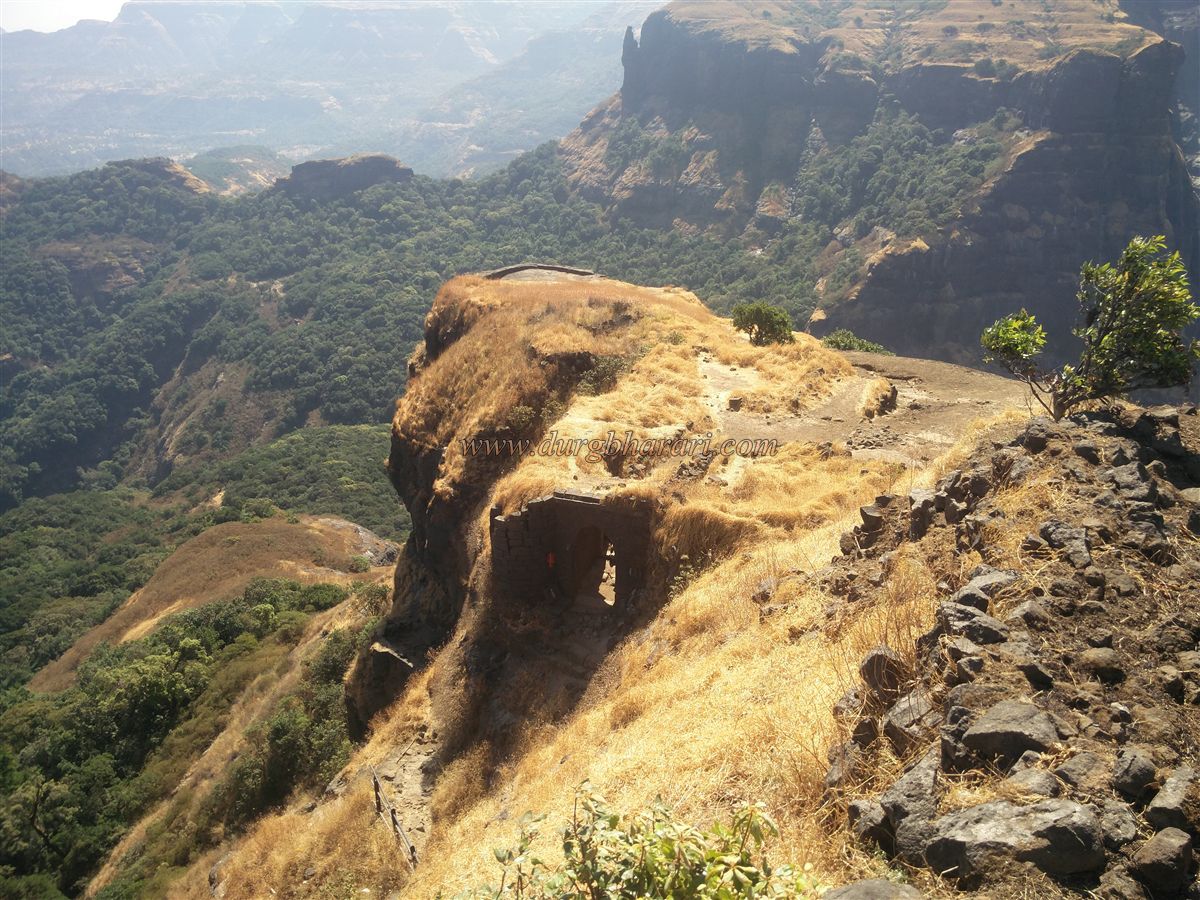
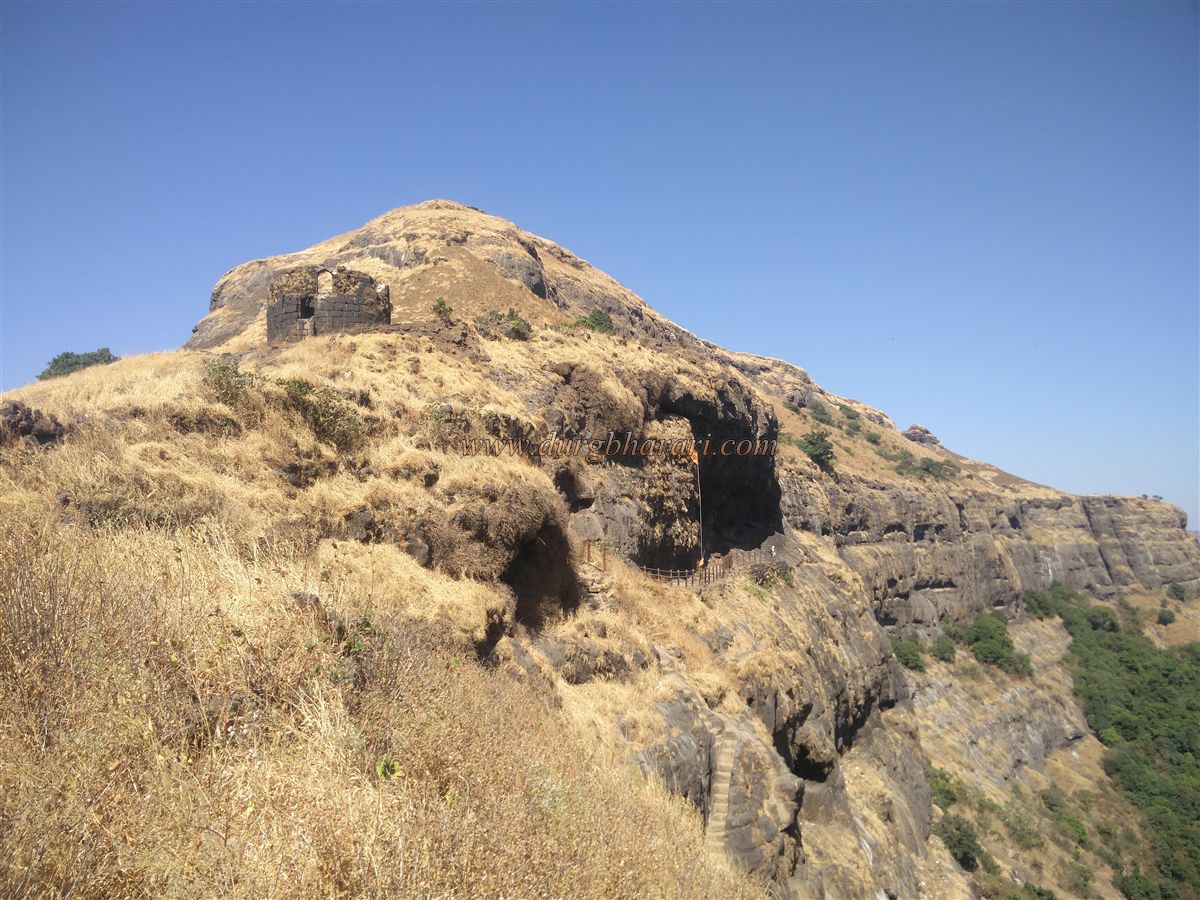
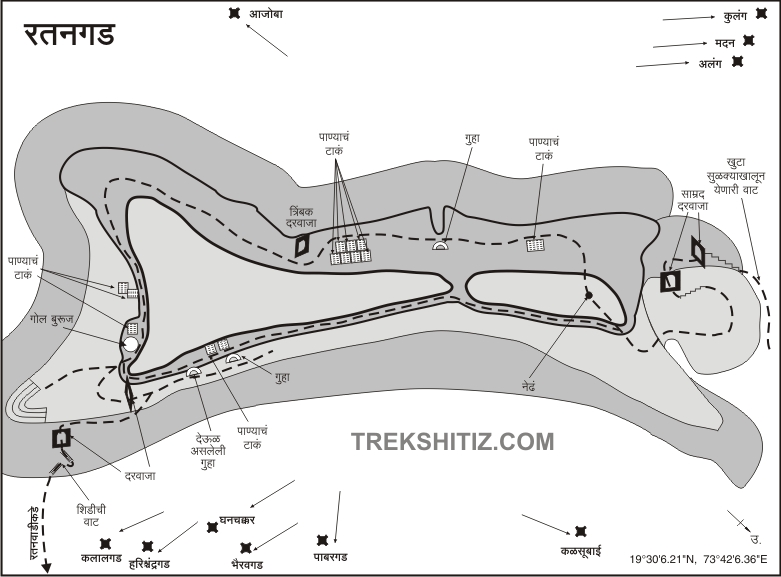
On this route, two small iron ladders must be climbed. After the second ladder, the left path leads to Ratanwadi, while the right ascends to Ratangad. From Samrad, it takes about 1.5 to 2 hours to reach the fort's rock walls via a path around the Khuta. Walking sideways along the rock face, 50–60 rock-cut steps appear, leading to the fort's entrance through Tryambak Darwaja. At the entrance are stone-carved sentry chambers. Once inside, surrounding peaks such as Alang, Madan, Kulang, Kalsubai, Ajoba, Harishchandragad, Khuta, and Mahuli become visible.
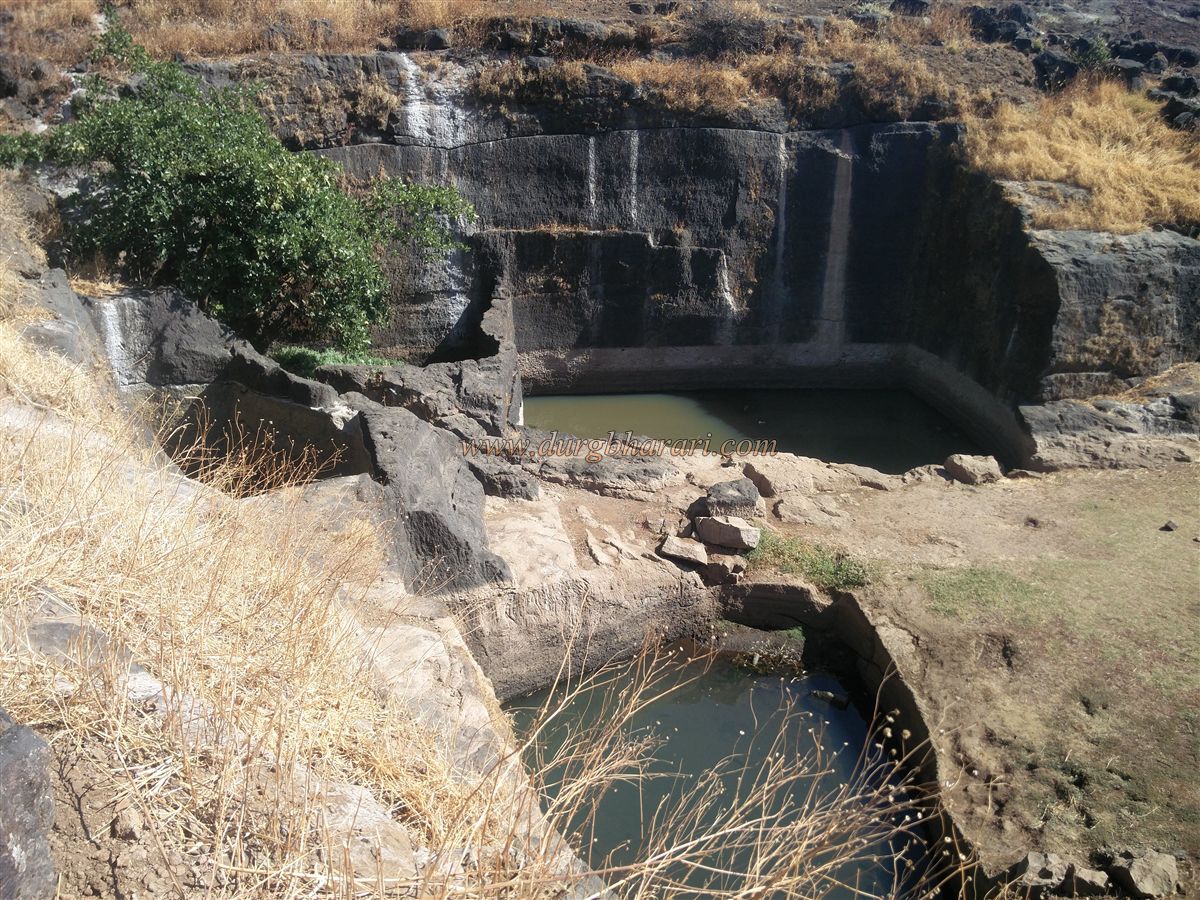
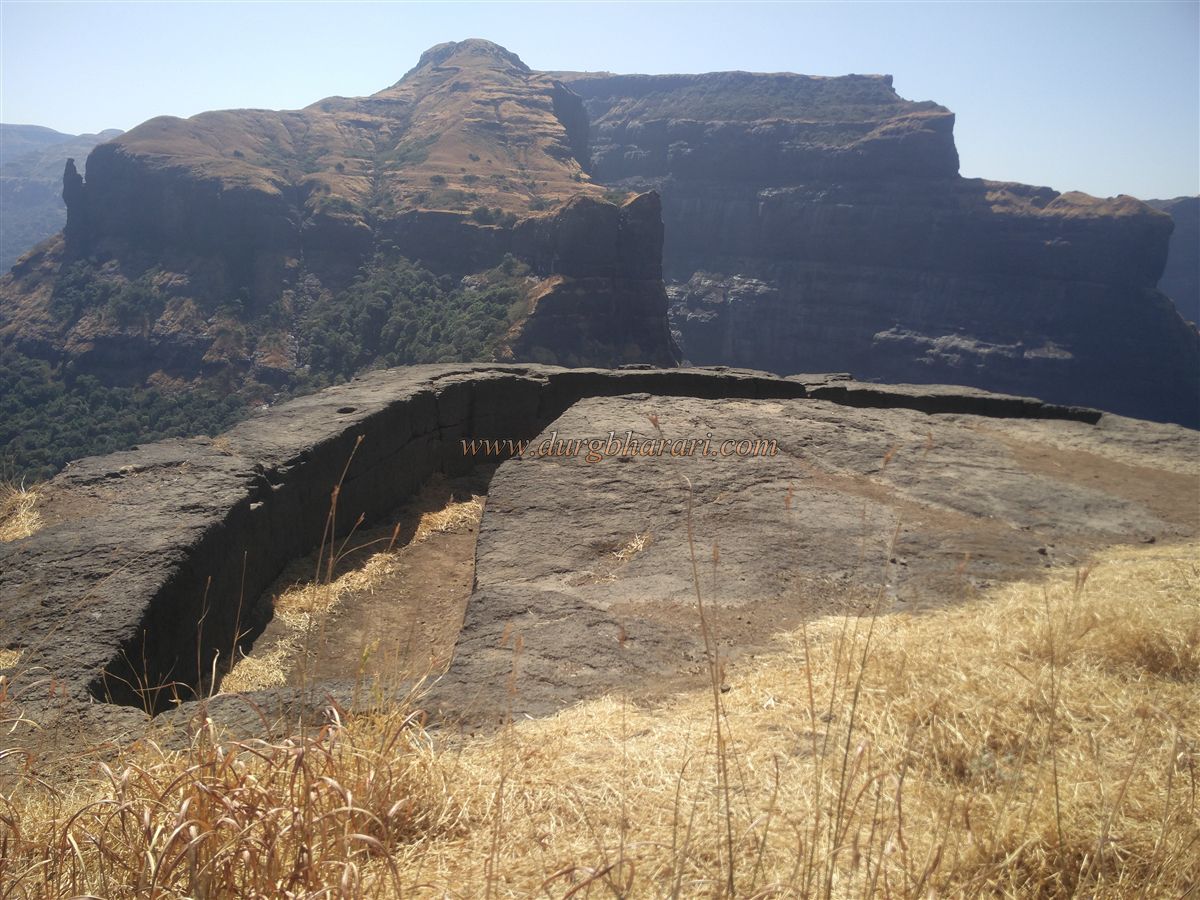
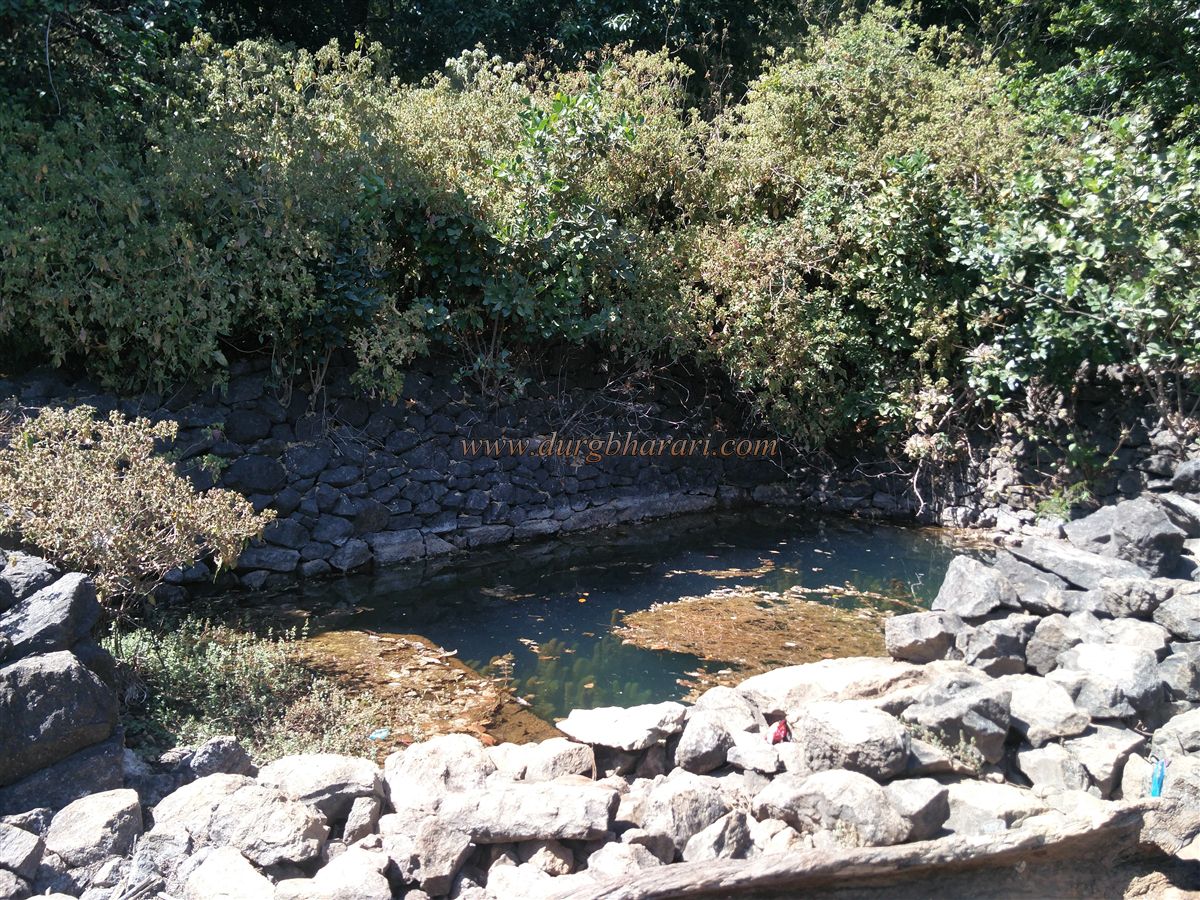
On this ridge lies a ruined temple and remnants of buildings. Higher up are natural rock formations (nedhe) that can shelter 6–7 people, offering panoramic views. Just below one nedhe is a water tank, and further on, two large cisterns. Ahead lies a series of six or seven tanks, one of which features a carved Shivling. A unique feature follows— a tank level with the ground, with a small door leading to two large, stone-cut rooms inside. One is partially dug, while the other is about 20x30 feet and filled with water. On the opposite side of the tank is a carved channel with a gate-like structure at its mouth, which some believe leads to a basement or underground chamber.
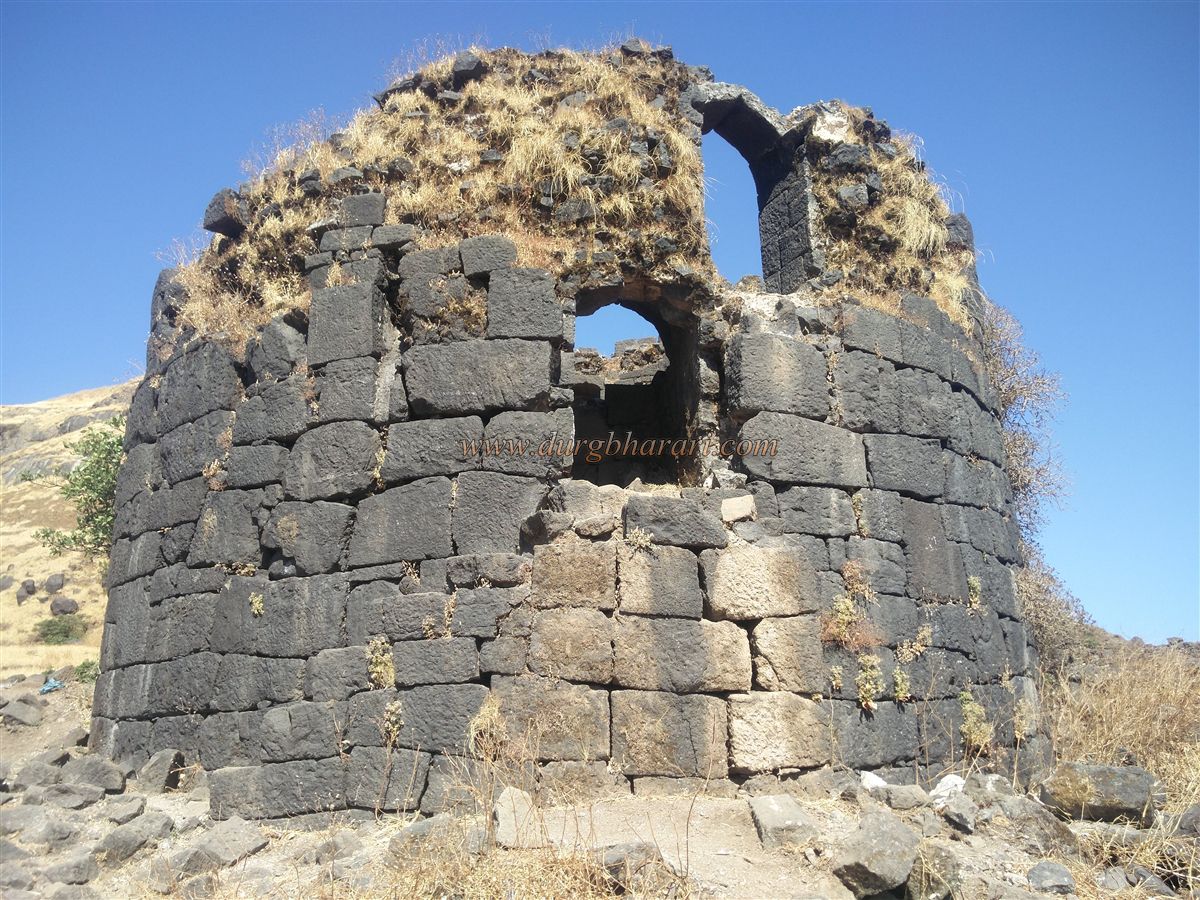
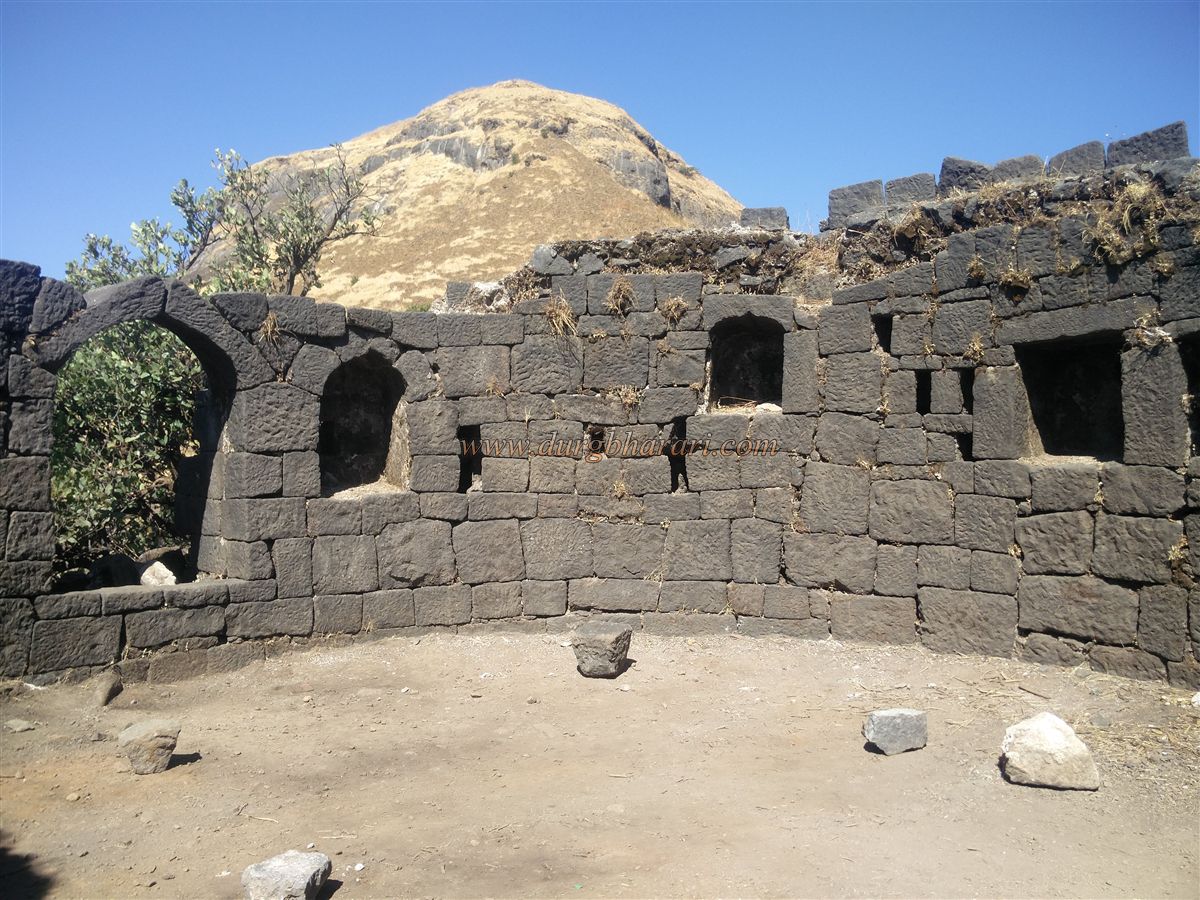
About five minutes further lies the ruined Konkan Darwaja. However, the descent from here is now dangerous and unused. Beyond this point, the trail leads to the Ratanwadi side of the fort, where most remains are found. These include remnants of mansions or audience halls and a round tower called Rani’s Huda, not attached to any wall and likely used for internal surveillance. Beside it is a water tank, with three more large tanks nearby—one with potable water. One of these contains a Nandi and a Shivling.
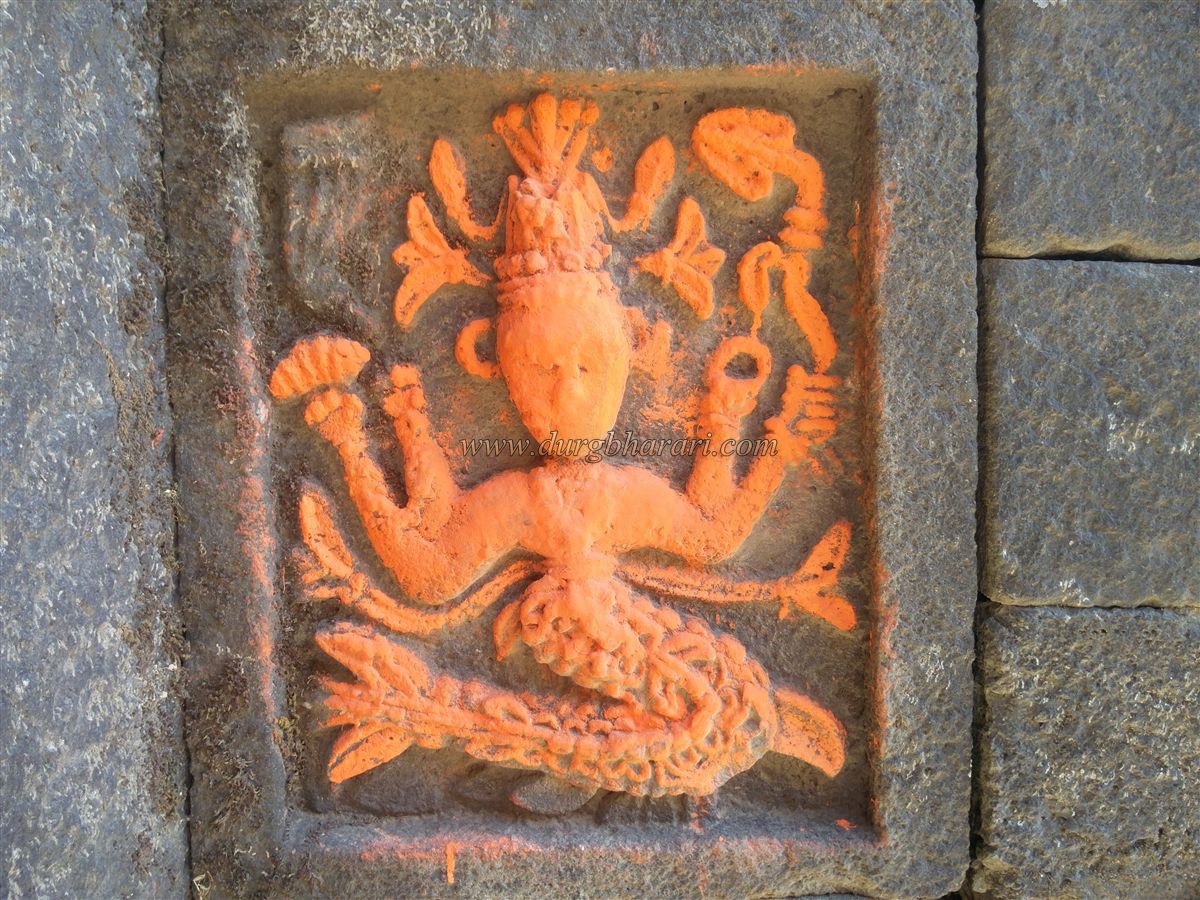
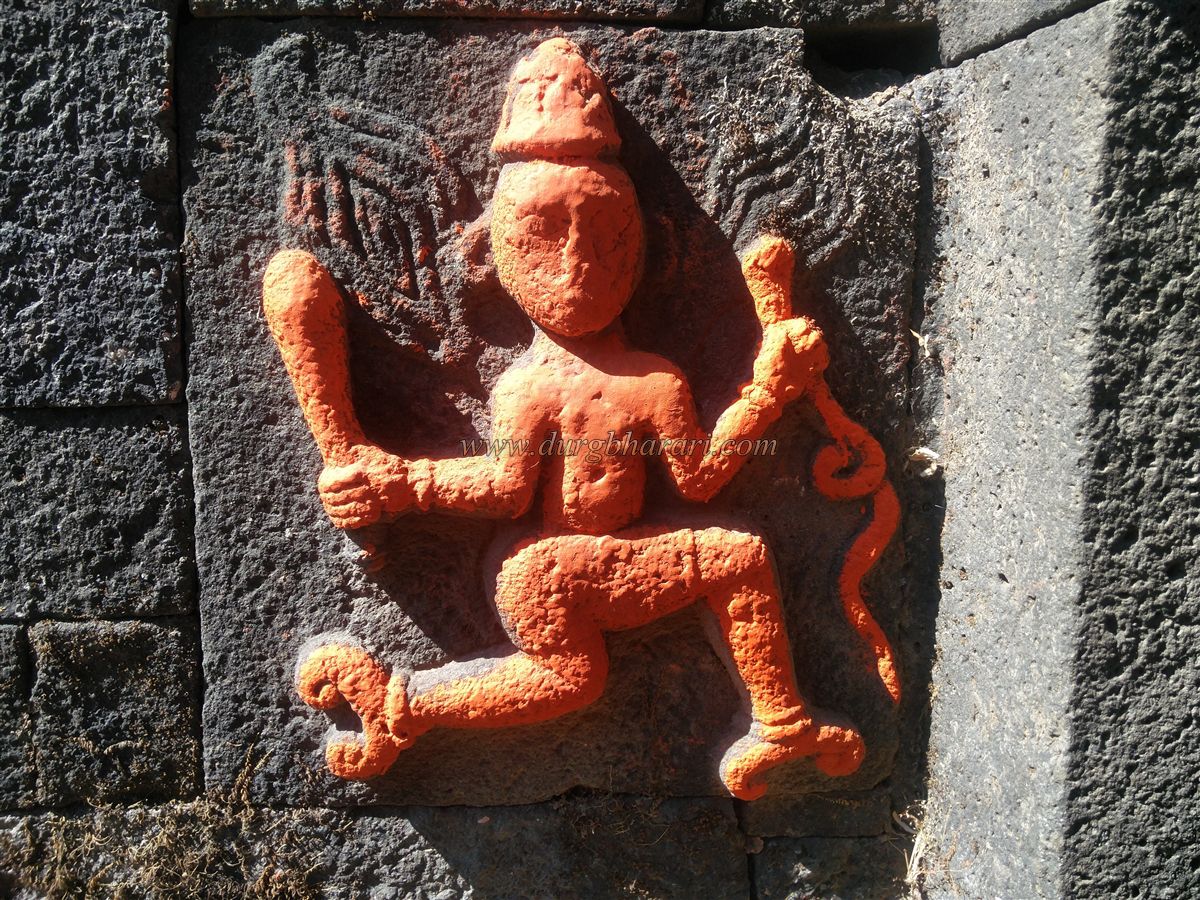
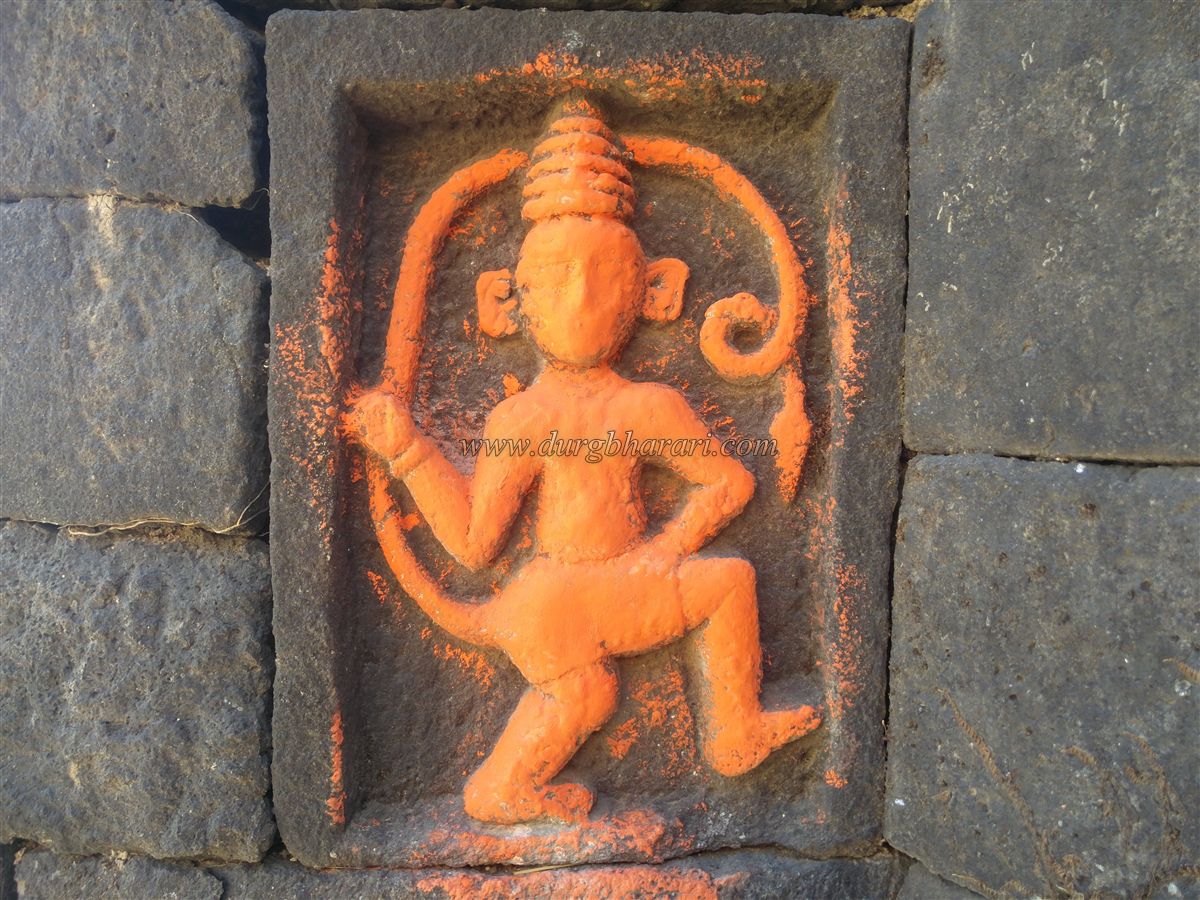
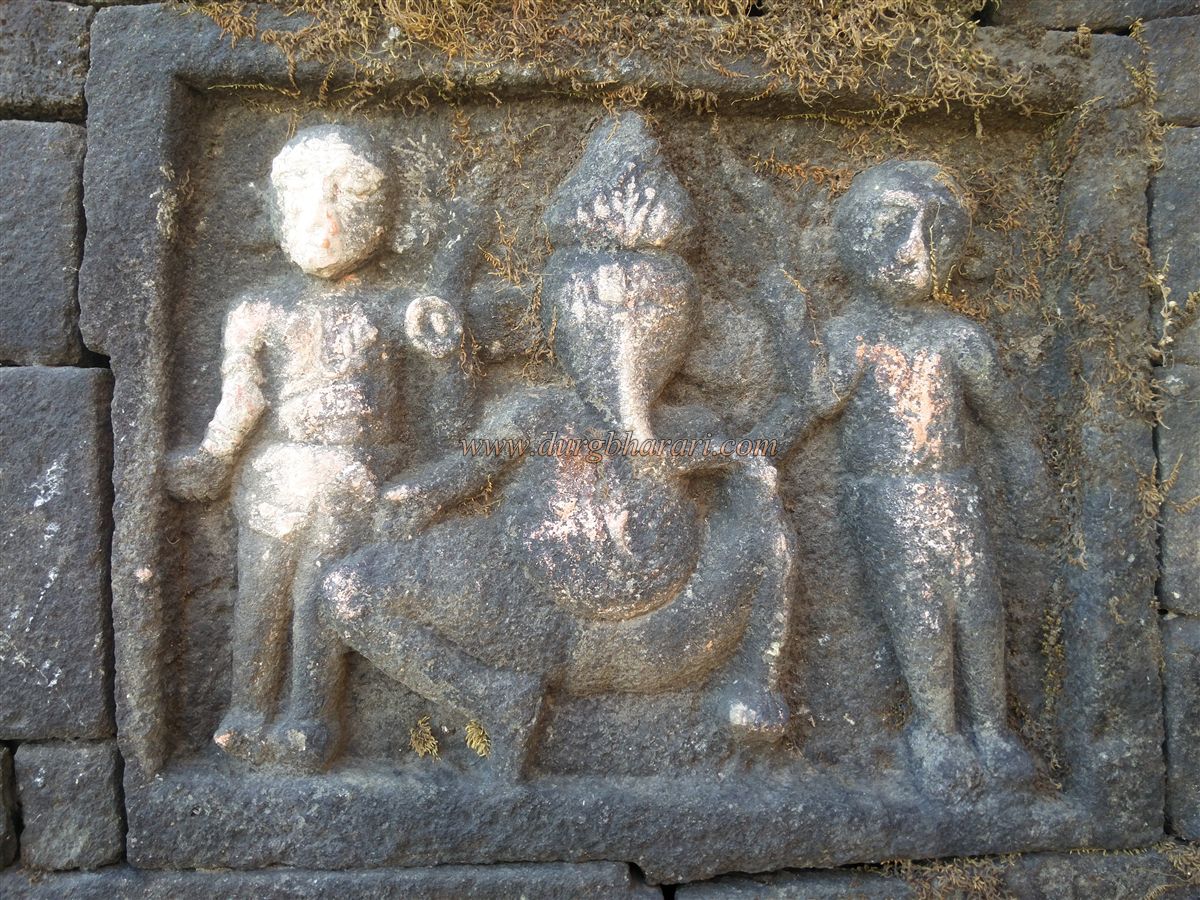
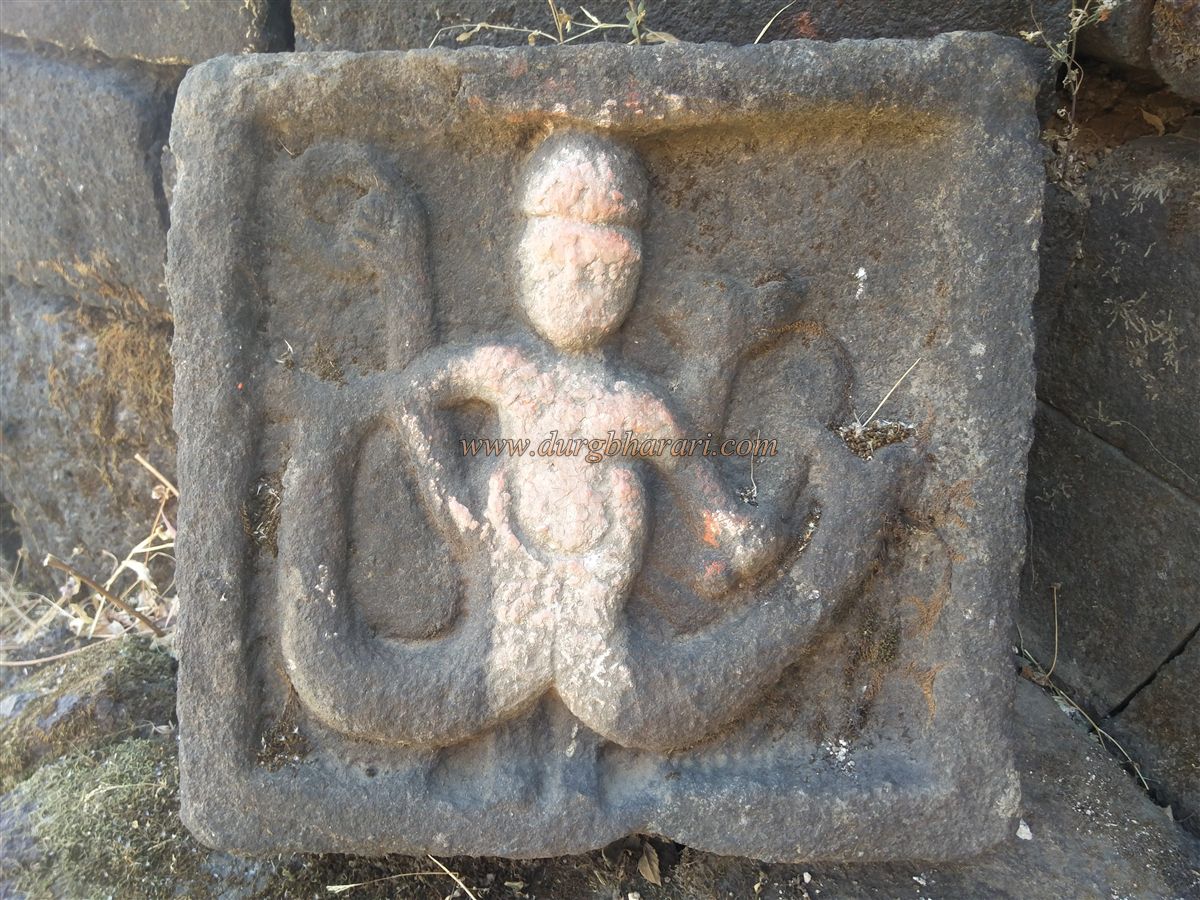
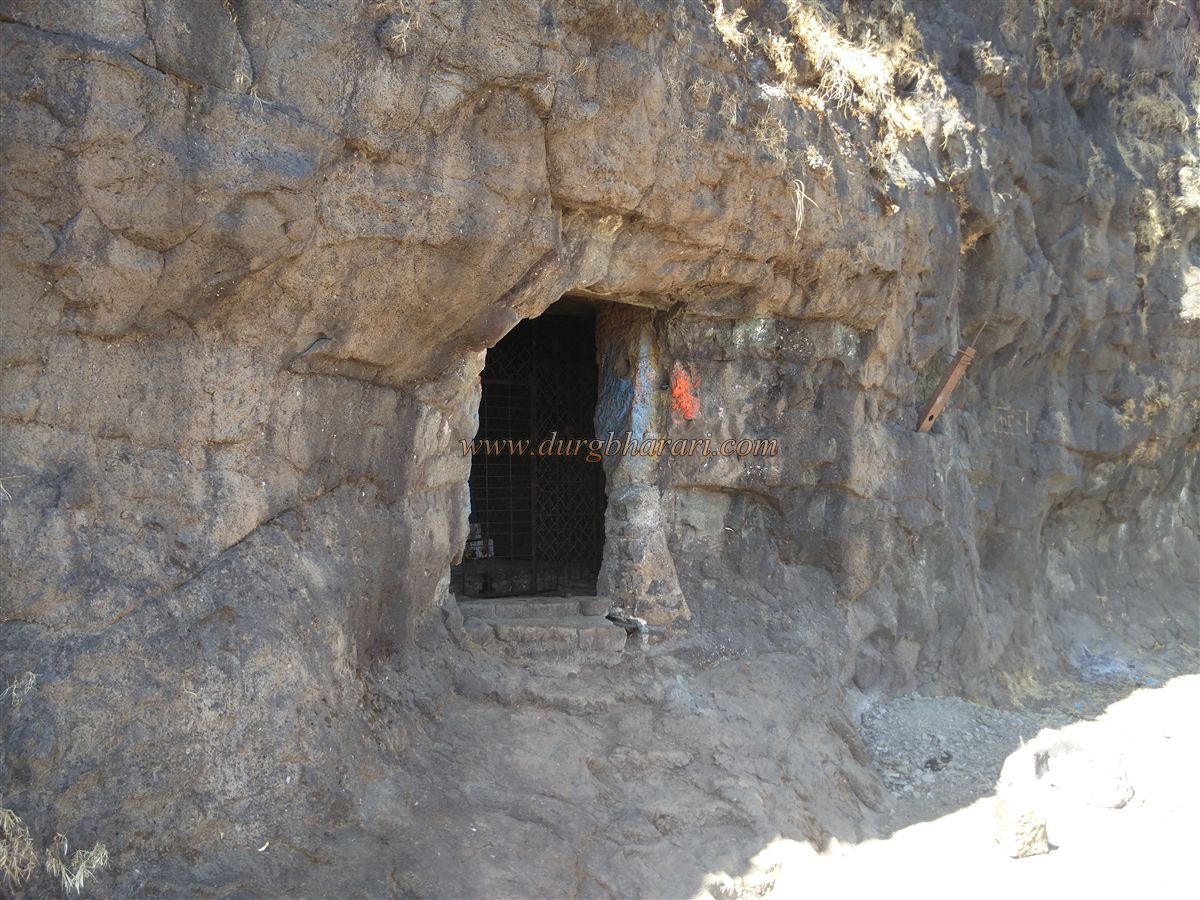
Some of the fort's ramparts are still intact. A leftward path leads to a second gate with carvings of Vishnu’s Matsya avatar, Ganesha with Riddhi-Siddhi, and Hanuman. Two spacious caves lie to the left of this gate, accommodating 20–25 people. One cave houses the shrine of the fort goddess Ratnadevi. Nearby is another tank, from where the Pravara River is believed to originate. Facing the entrance are views of the Bhandardara reservoir, Pravara River, Pabargad, and the Ghanchakkar plateau.
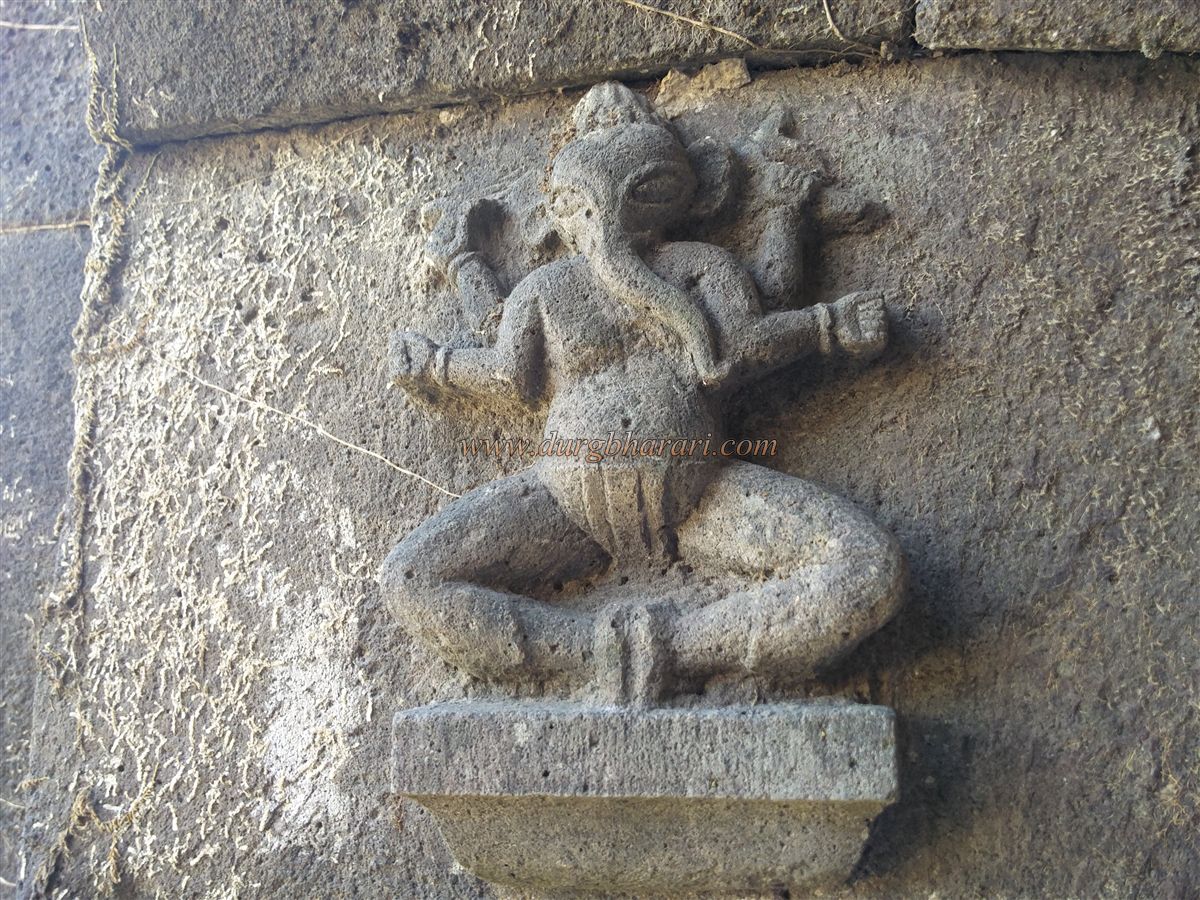
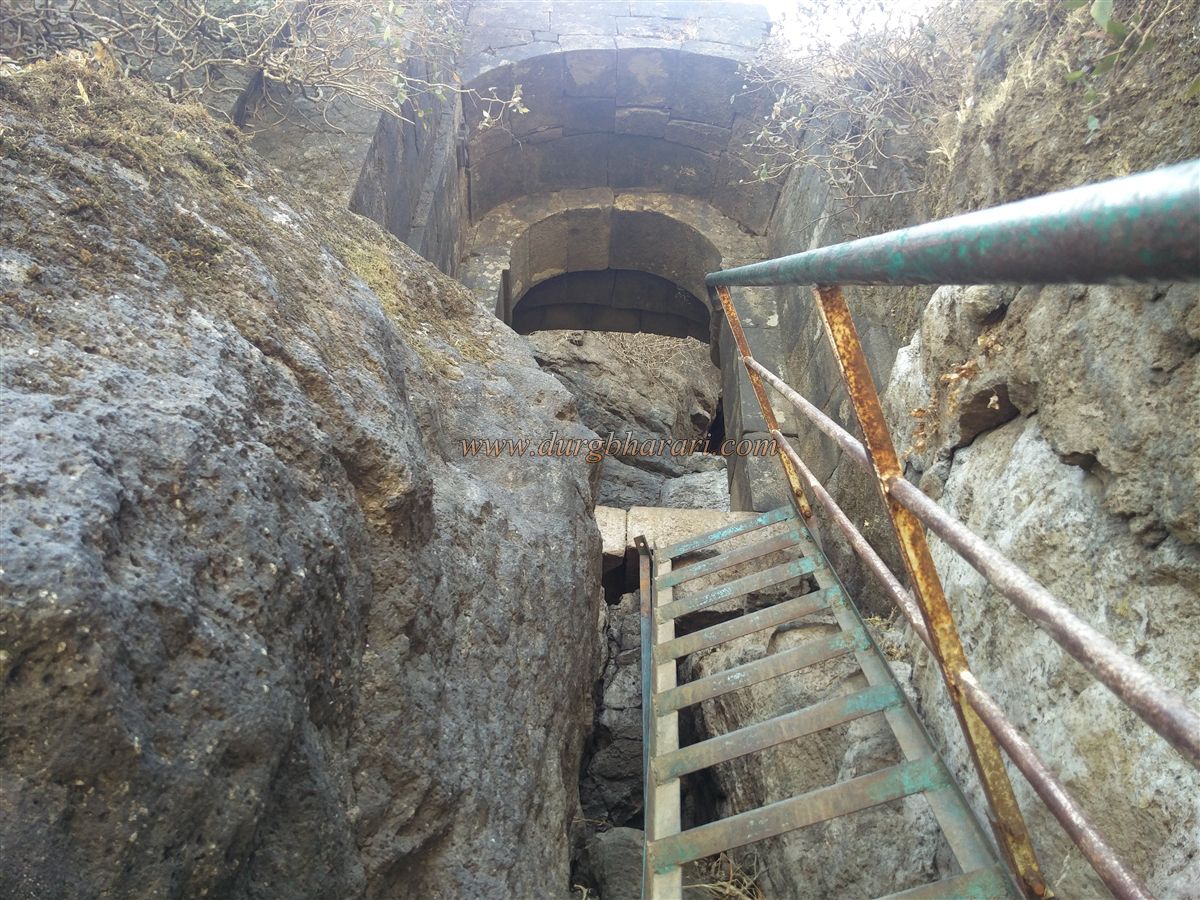
Below this area is Ganesh Darwaja, with a carved image of Ganesha. To descend to Ratanwadi, one must pass through here, using iron ladders fixed at two points to navigate a 25–30-foot rock face. Old rock-cut steps are still visible. In 1818, the British bombarded the fort like many others, blocking all access routes. After narrow rock-cut steps and a short flat walk, the trail descends further. Along the way lies a stone platform marking the old royal road to Katrabai–Harish Chandra. Numerous ruins suggest a once-thriving settlement, including two large water cisterns still filled and safe to drink from when other sources are exhausted.
From Samrad to this point takes over five hours. From here, a trail through dense forest leads to Ratanwadi in about 1.5 hours, running alongside the Pravara River. In Ratanwadi is the Hemandpanti-style Amruteshwar Temple of Lord Shiva. Built around the 10th–11th century by the Shilahara rulers near the source of 12 rivers, this temple near the Pravara's origin is richly decorated with carvings. The sanctum has doors on both sides, an architectural rarity. Doorways and ceilings feature images of celestial beings, mythological scenes, Samudra Manthan, and free-standing sculptures.
Beside the temple is a large stepwell called Vishnutirth, with niches containing images of Vishnu and Ganesha holding weapons. Records from the Peshwa era mention the temple: "Shri Mahadev temple lies below the Ratangad fort. Balaji Karale made a vow at the fort and donated items to the temple’s priest for daily worship." From here, Samrad is about 7 km and Shendi about 20 km away.
To experience the rugged and bold character of the Sahyadri mountains—their cliffs, strength, and grandeur—a visit to Ratangad is a must. Historical references to the fort trace back to mythological times. The Puranas say that after the churning of the ocean, the nectar (amrut) was to be distributed among gods and demons. At Nevasa, the gods drank the nectar, but a demon named Rahu disguised himself and drank it. Lord Vishnu beheaded him; his body fell at Rahuri, and his head at Ratangad. The nectar from his throat formed a stream, later becoming the river named Amrutvahini.
During Shivaji's reign, there is little direct evidence about Ratangad. However, in 1763, Koli Sardar Mahadev Koli Javji seized the fort, as noted in the Gazetteer. During Peshwa Nanasaheb time, donations were made to the Ratanwadi temple, and Balaji Karale took control of the fort. Due to its strategic location, Ratangad served as the headquarters for five regions until 1818. These included 36 villages of Rajur above the Sahyadri, 22 of Alang, 60 of Sokurli, 22 of Wadi, and 60 of Jurustroshi below the range.
In 1820, British Captain Goddard took the fort, but in 1824, former fort chief Govindrao recaptured it with support from Ramji Bhangre. However, the resistance was short-lived, and the British reclaimed the fort. To prevent future uprisings, they blew up all access paths using explosives.
From 1798 to 1848, Koli, Bhil, and Thakar warriors from the hills fiercely resisted British control. The Koli of Akole, along with Ramji Bhangre, Raghunath (Raghoji) Bhangre, Rama Kirva, and Govindrao Khade, launched intense campaigns against British rule. Though appointed a police officer, Ramji protested against unjust British laws and, with tribal help, attacked oppressive moneylenders.
To suppress the rebellion, Captain Mackintosh encircled the area and captured some of Ramji’s companions, though Rama Kirva escaped and continued harassing the British. Eventually, Lieutenant Forbes captured him and his men in 1830 and hanged him at Ahmednagar Fort for treason—making him Maharashtra’s first martyr.
Later, Ramji’s son Raghoji kept the resistance alive. Living with his family in Devgaon, he was brave, devout, and sharp. When the British tortured his mother to locate him, his fury grew, and he was eventually arrested and jailed in Rajur. With his mother’s cunning and help from a guard named Javji Bamble, he escaped. Back in Devgaon, with allies like Devji Mahar, Khandu Sable, and Bhau Dhangar, he formed a band and terrorized the British and their allies around 1844–45.
In a clash in 1845, his mentor Devji Mahar died, demoralizing Raghoji. Deeply religious, he joined a dindi procession in disguise. On January 2, 1848, Lieutenant Gale captured him at Pandharpur. He was tried for treason and hanged on May 2, 1848, in Thane jail, where his statue now stands. Every year on May 2, he is commemorated as one of the earliest revolutionaries of Maharashtra.
© Suresh Nimbalkar
GALLERY