RAMSHEJ
TYPE : HILL FORT
DISTRICT : NASHIK
HEIGHT : 3125 FEET
GRADE : MEDIUM
The district with the most forts in Maharashtra is Nashik. Nashik is considered a sacred land due to the footsteps of Lord Rama. It is believed that during his exile, Lord Rama stayed for some time on a mountain near Nashik, hence the name "Ramshej" (Rama's rest). On the road from Nashik to Peth, about 15 km from Nashik, lies a village named Aashewadi at the base of Ramshej Fort. From Aashewadi, one can see the rocky plateau of Ramshej rising in the distance, and the trail to the top of the fort begins from the eastern side of this plateau.
The fort is situated at an elevation of about 3,200 feet above sea level. It spans approximately 16 acres in area, measuring 2,200 feet in length and 700 feet in width. Since the fort is not very tall, it can be reached within an hour of climbing.
...
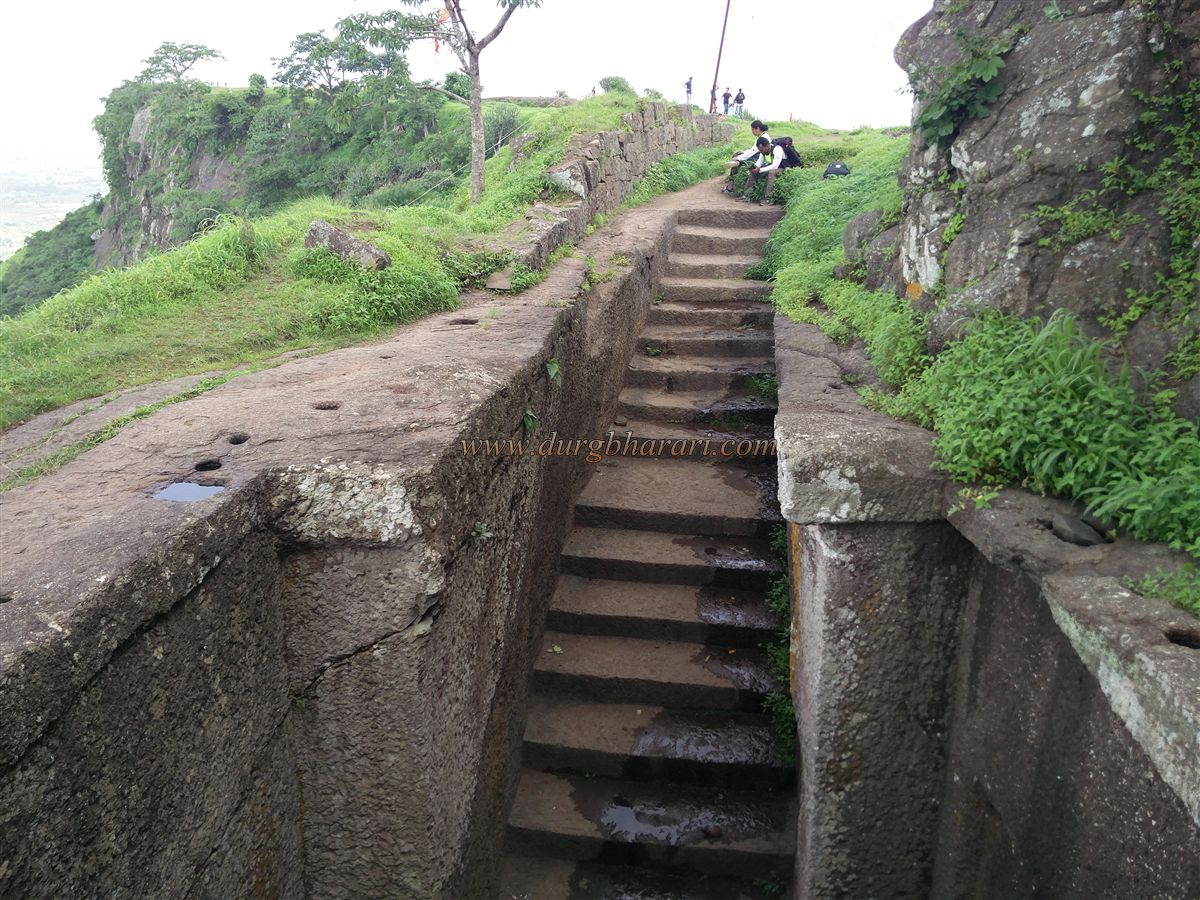
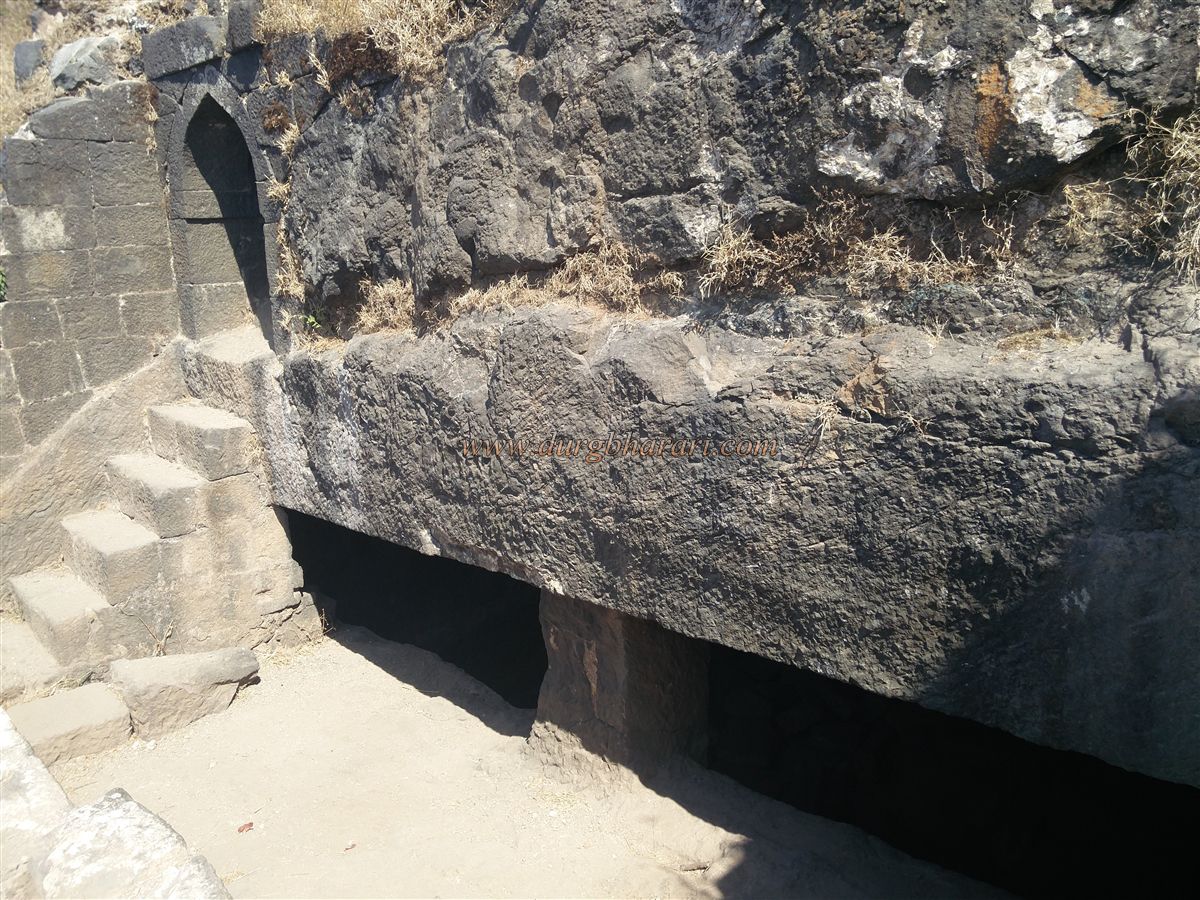
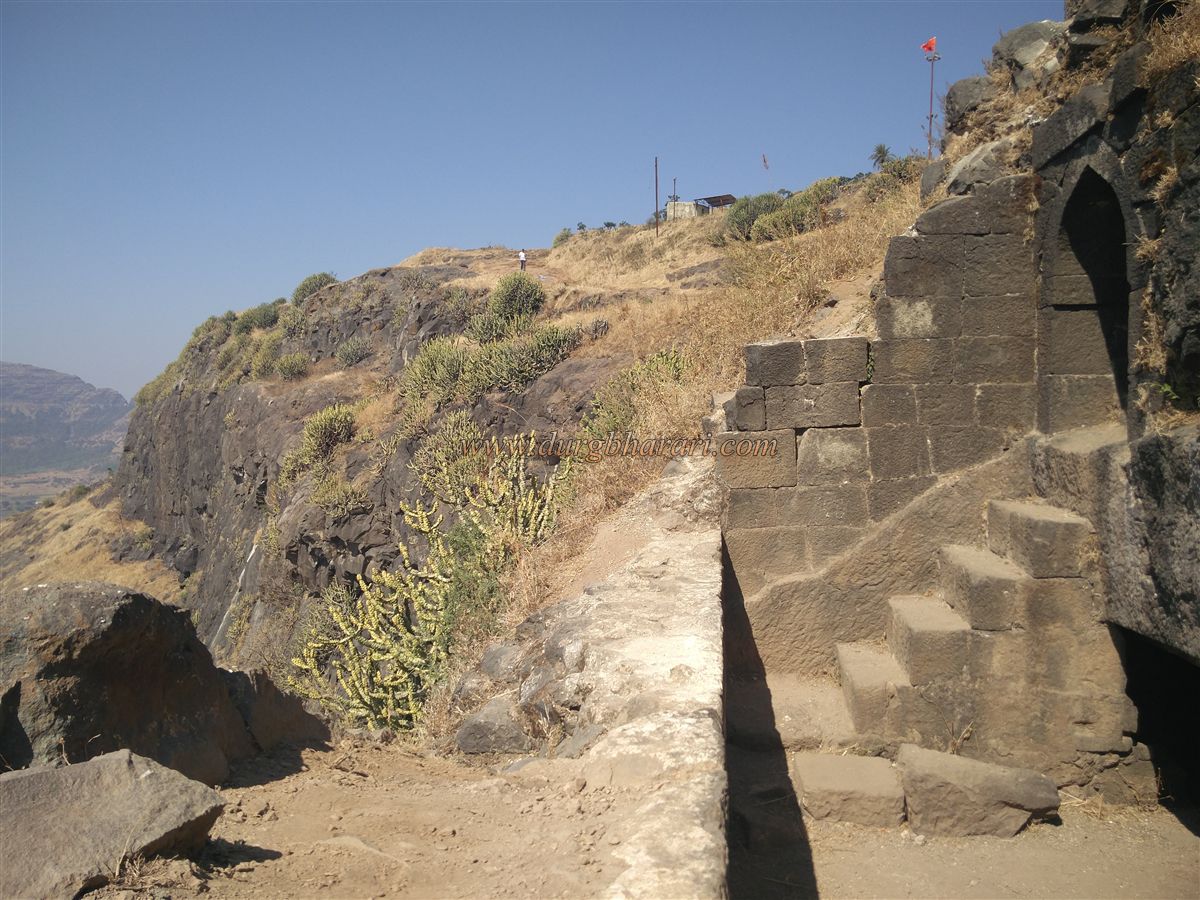
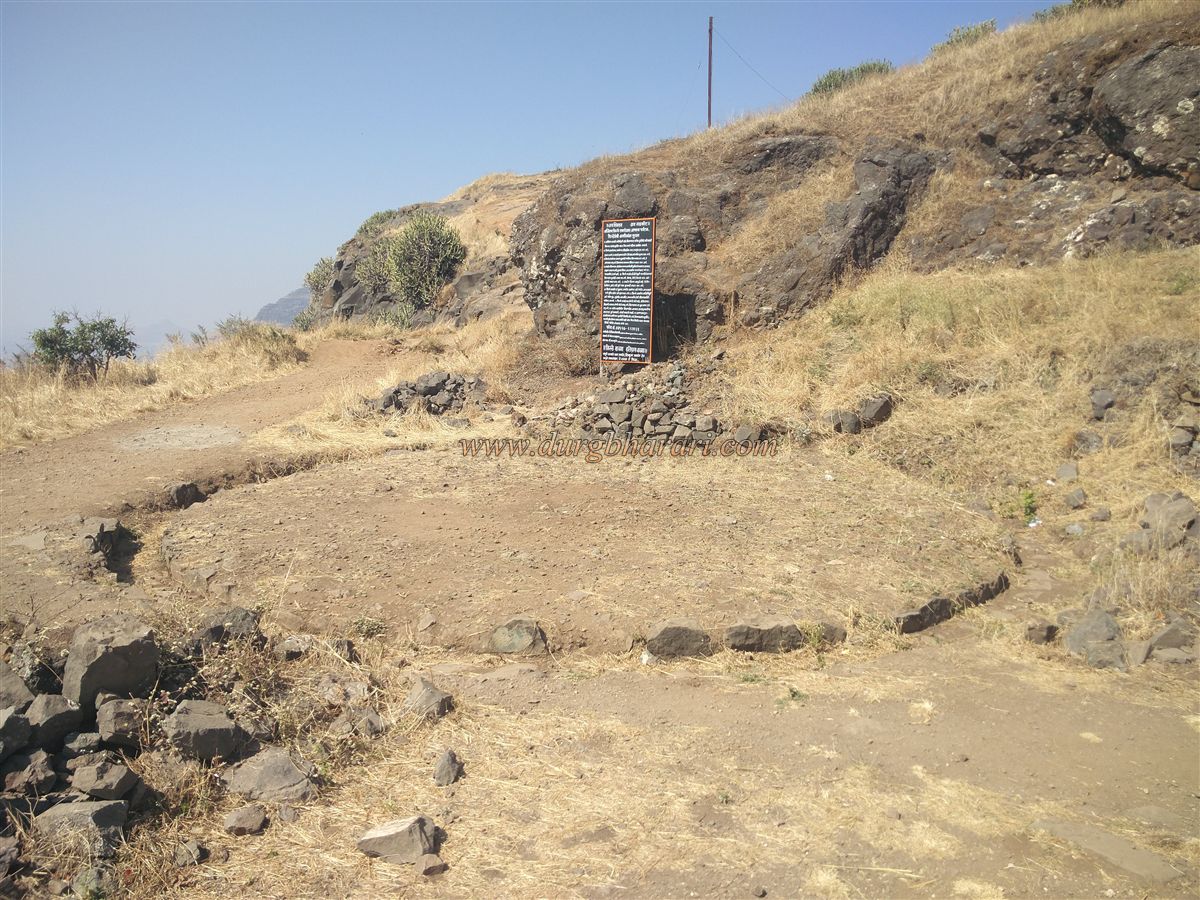
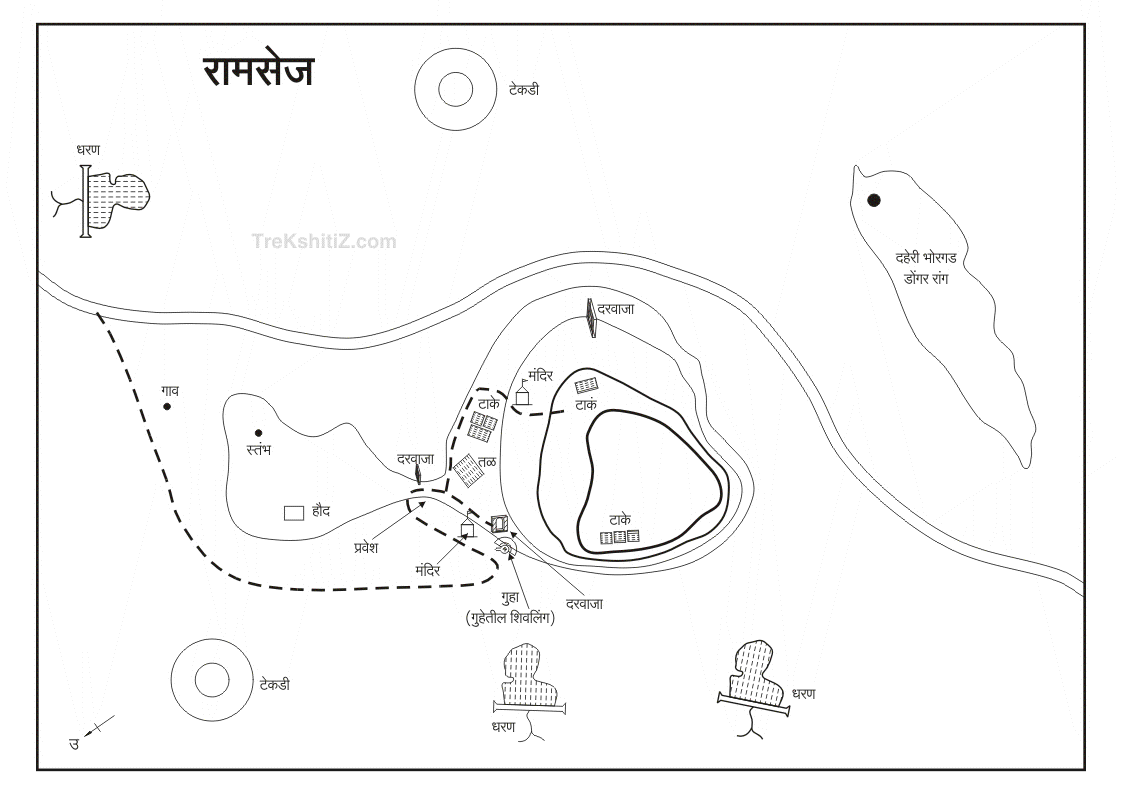
Before the steps of the fort begin, there is a rock-cut cave visible on the right-hand side. This cave has a central opening through which the upper steps of the fort are visible. The rock-cut steps of the fort start from this cave. The first stop while climbing the steps is a spacious cave which has been converted into a temple. Inside, there are idols of Lord Rama, Hanuman, Dattaguru, and Goddess Durga.
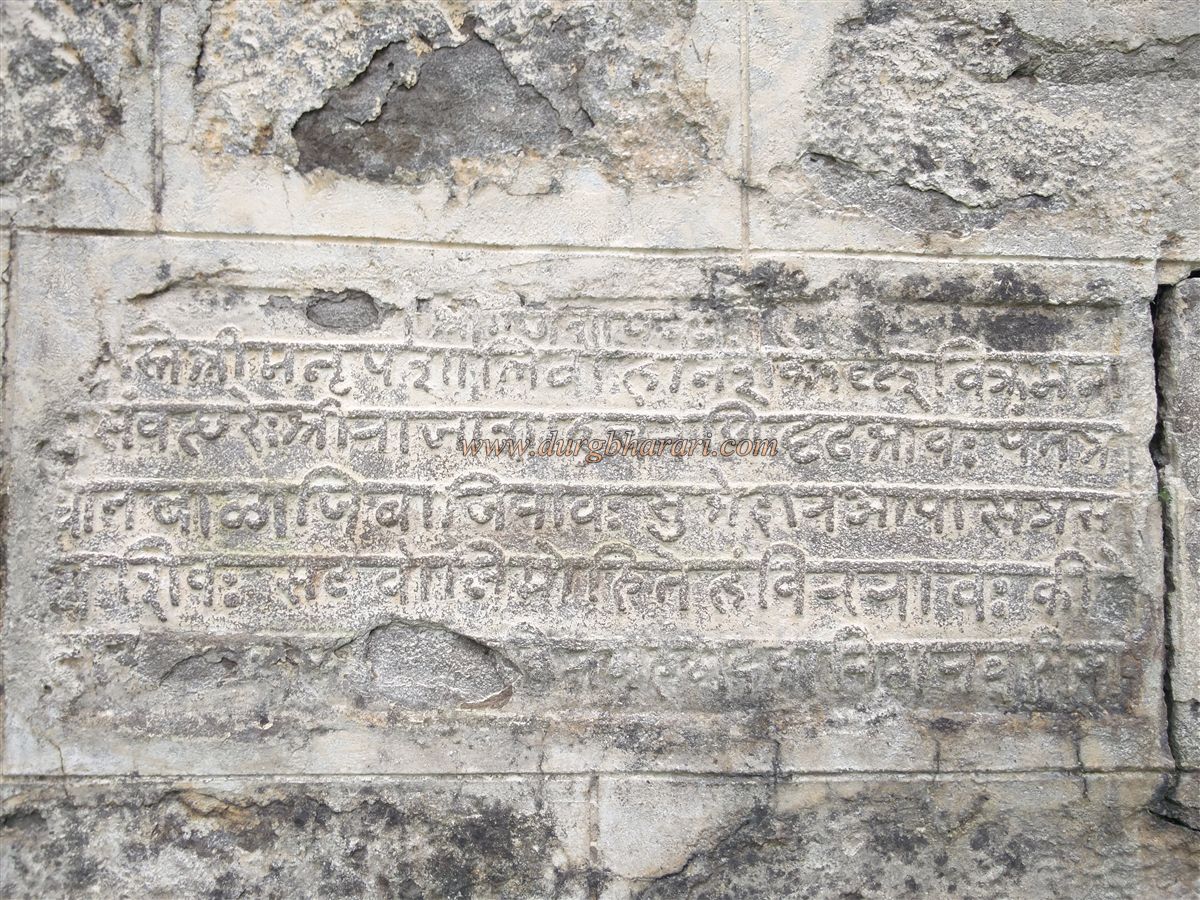
Adjacent to the cave, there is an inscription in six lines carved on stone, which reads:
1. Shri Ganeshaya Namaha
2. Swasti Shrim Nrupa Shalivahan Shaka 1982 Vikramnama
3. Samvatsare Shri Raja Shahu Charani Dridha Bhava Pantpra
4. Dhan Balaji Bajirao Subhedar Apastras
5. Dashiv Satvoji Mohite Hambirrao Kille
The sixth line is faded and unreadable. Due to exposure to sun and rain, the inscription is in poor condition. Near the cave is an underground water cistern that holds water year-round, and above it is a granary. There are pathways both outside and through the cave to access this area. As of today, this is the only source of drinking water available on the fort. Around 15–20 people can comfortably stay inside the temple cave.
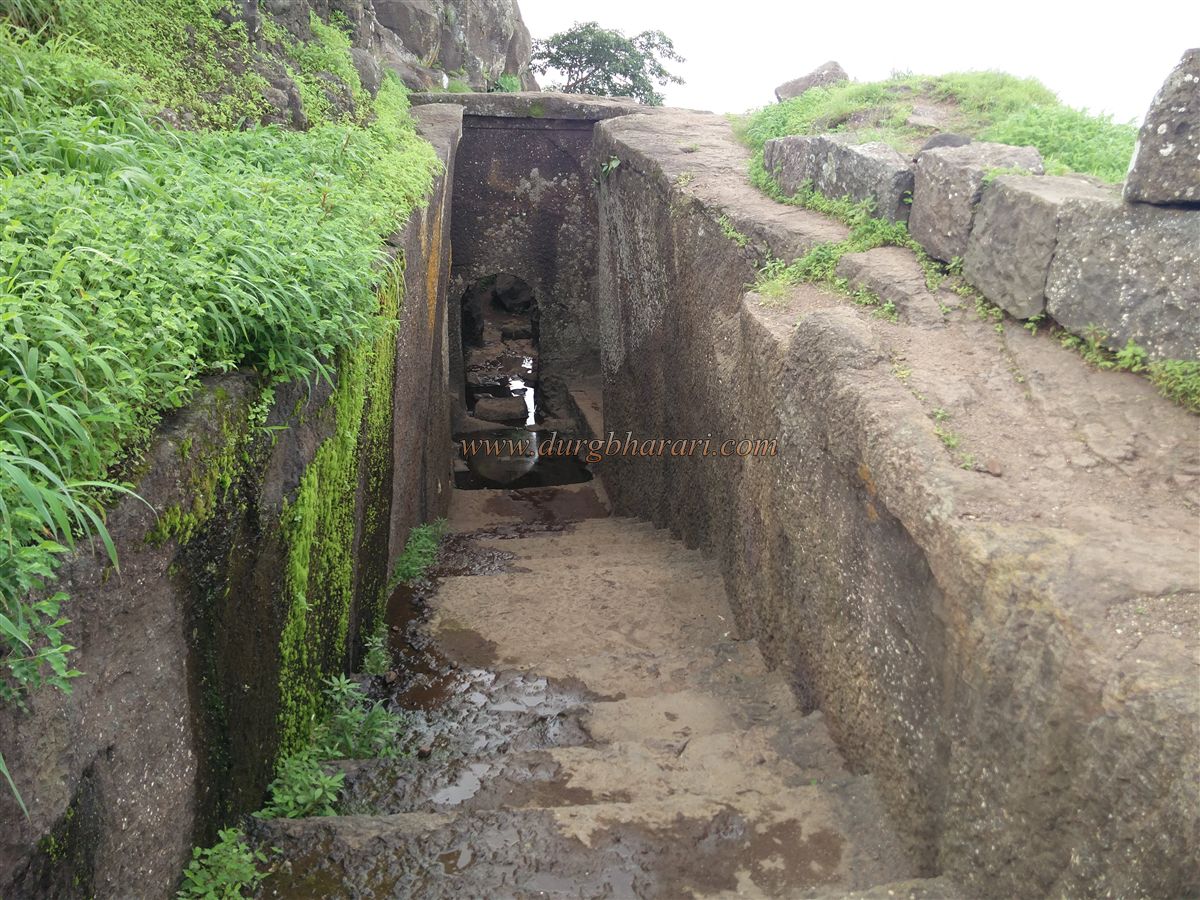
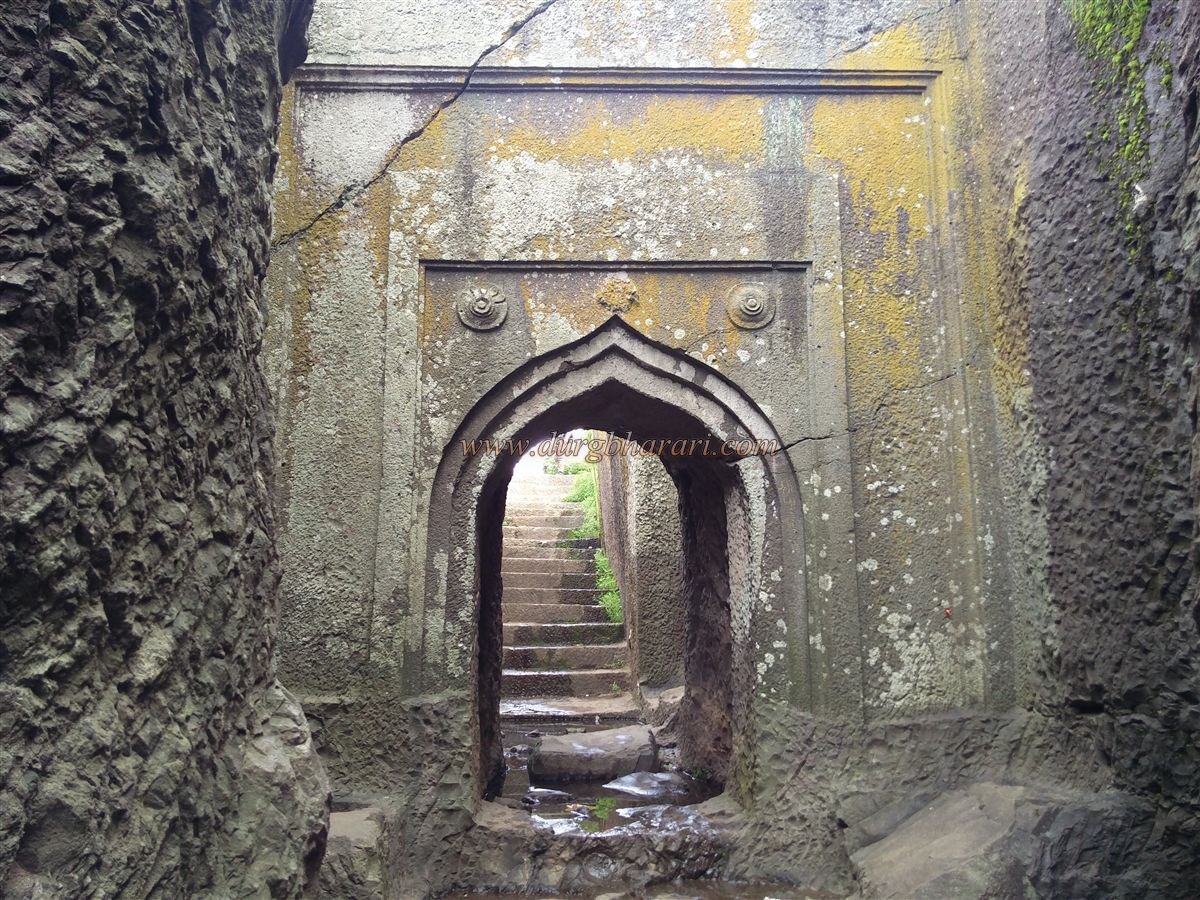
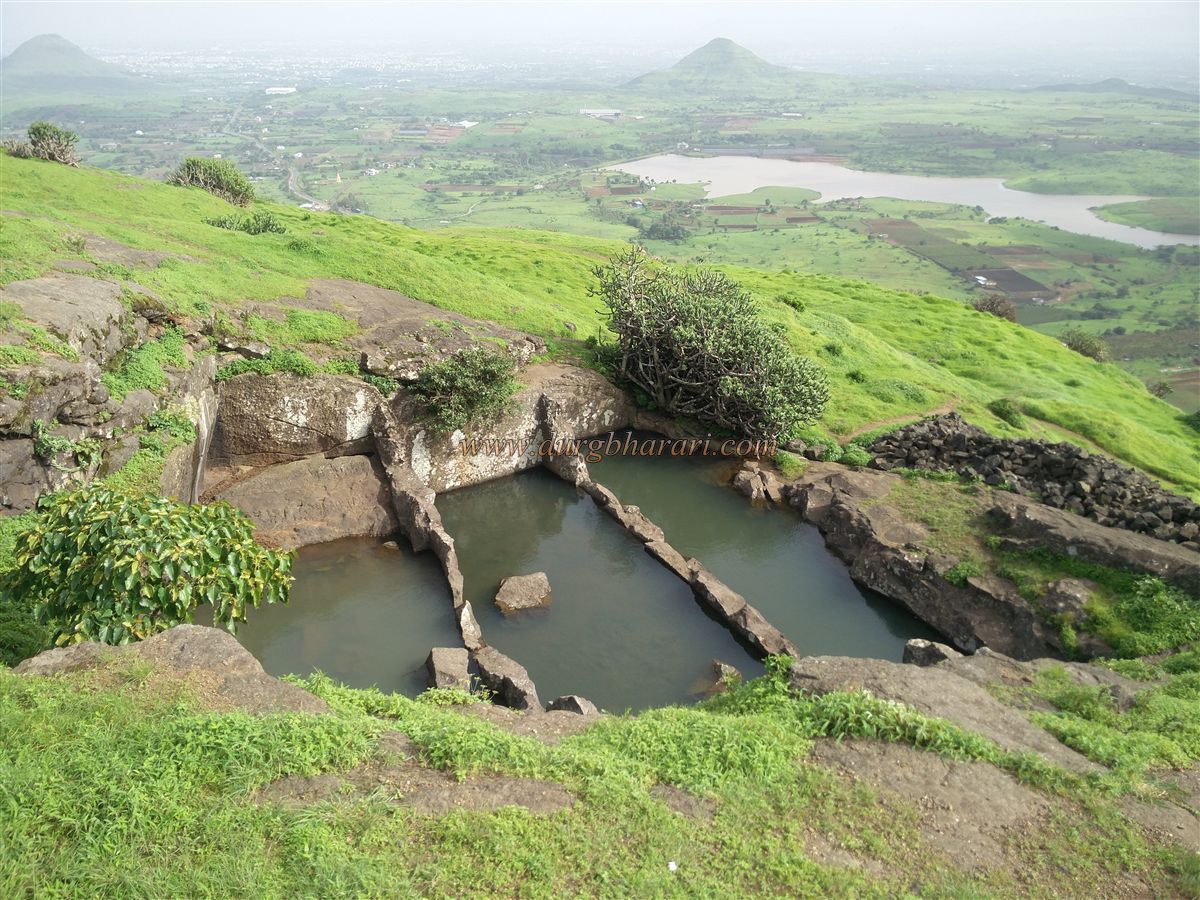
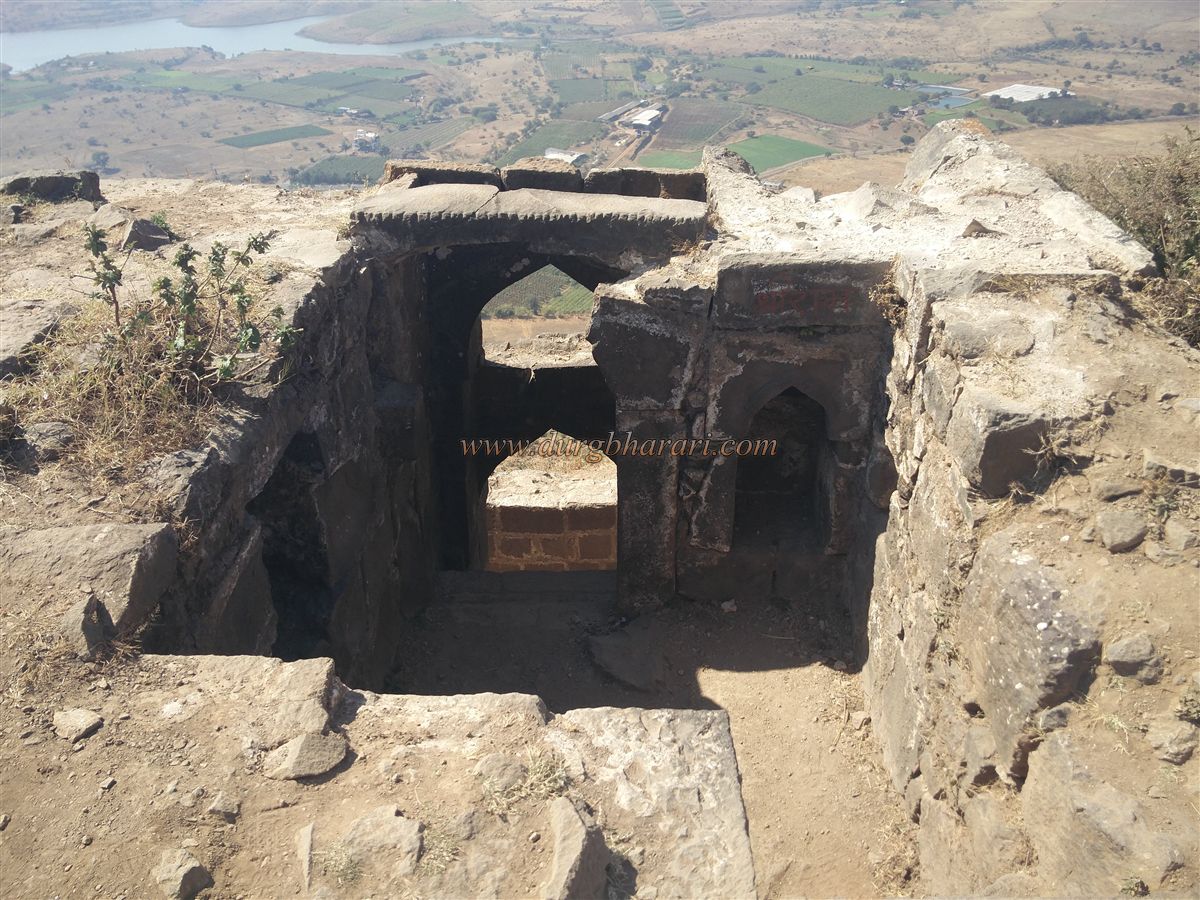
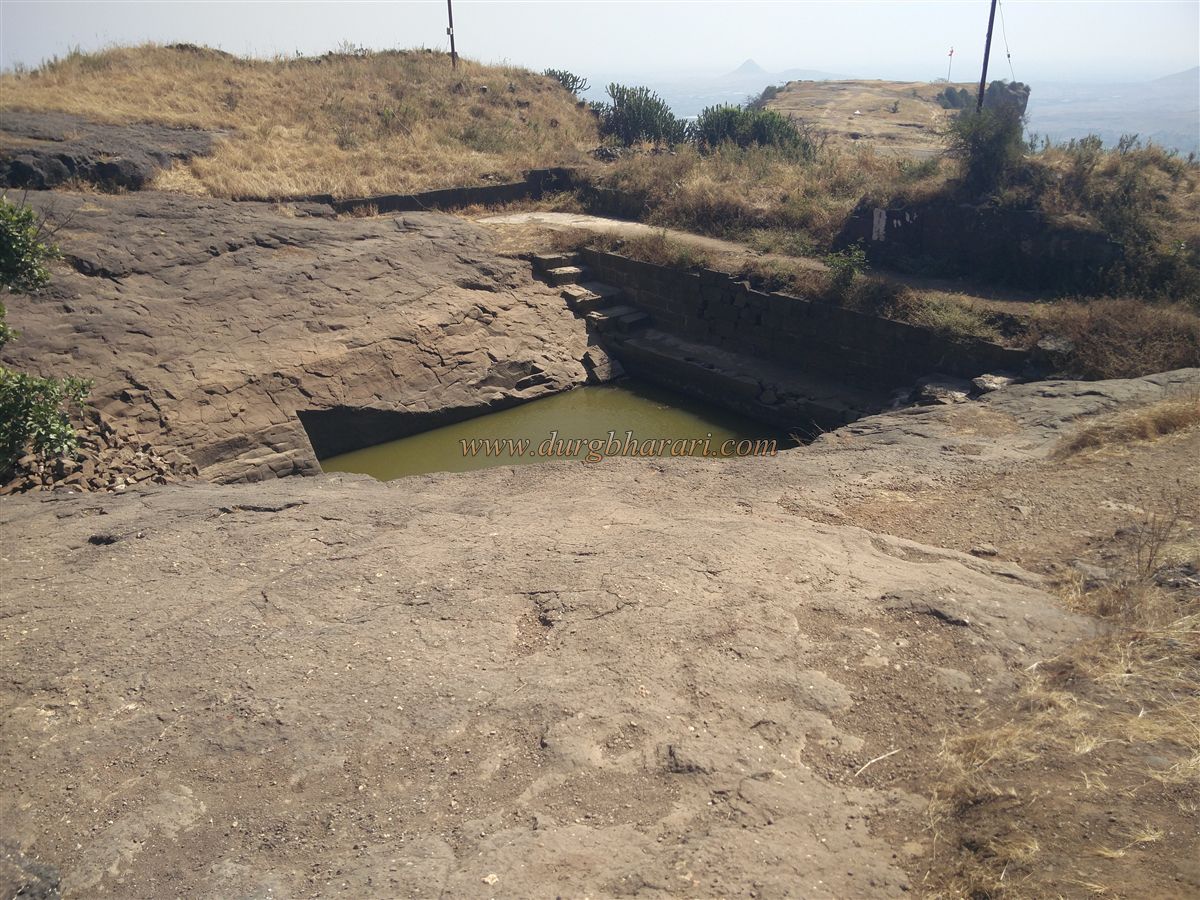
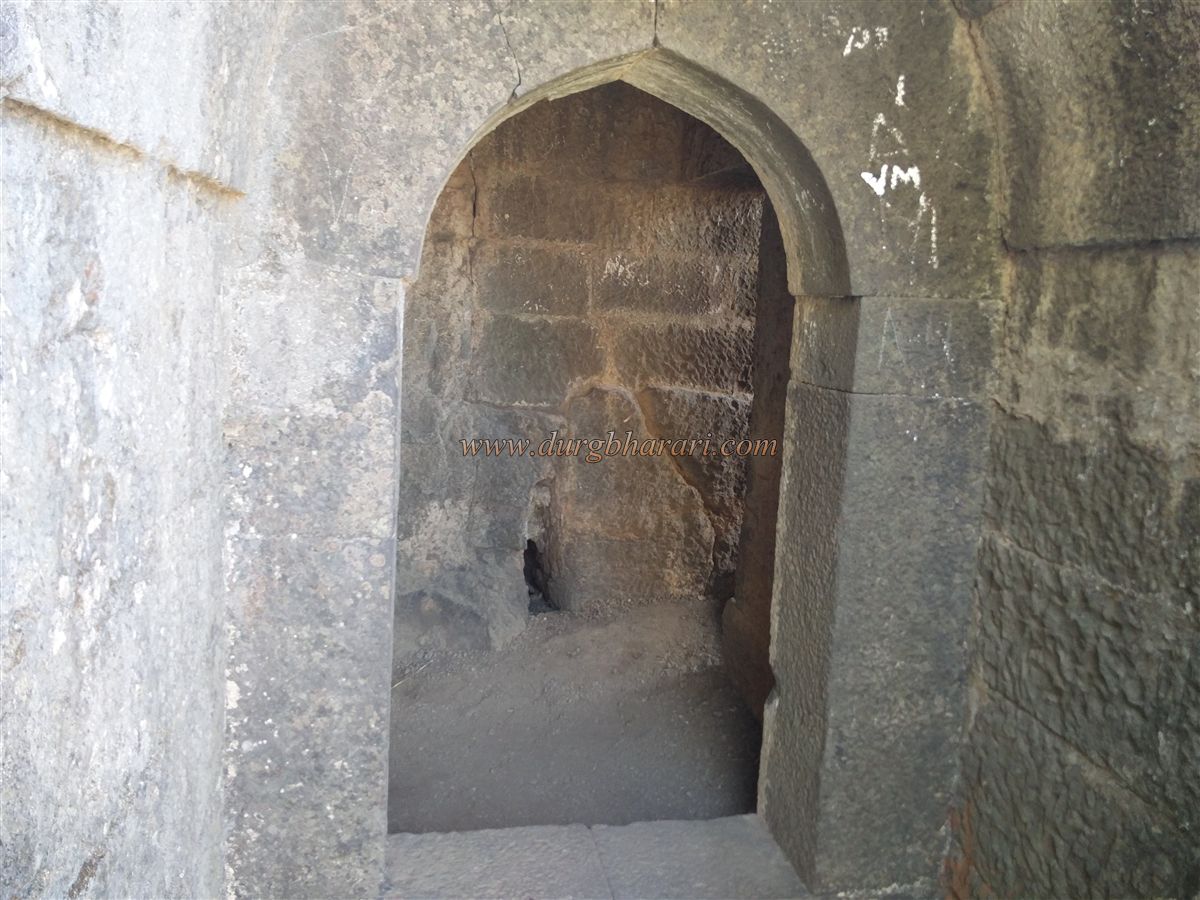
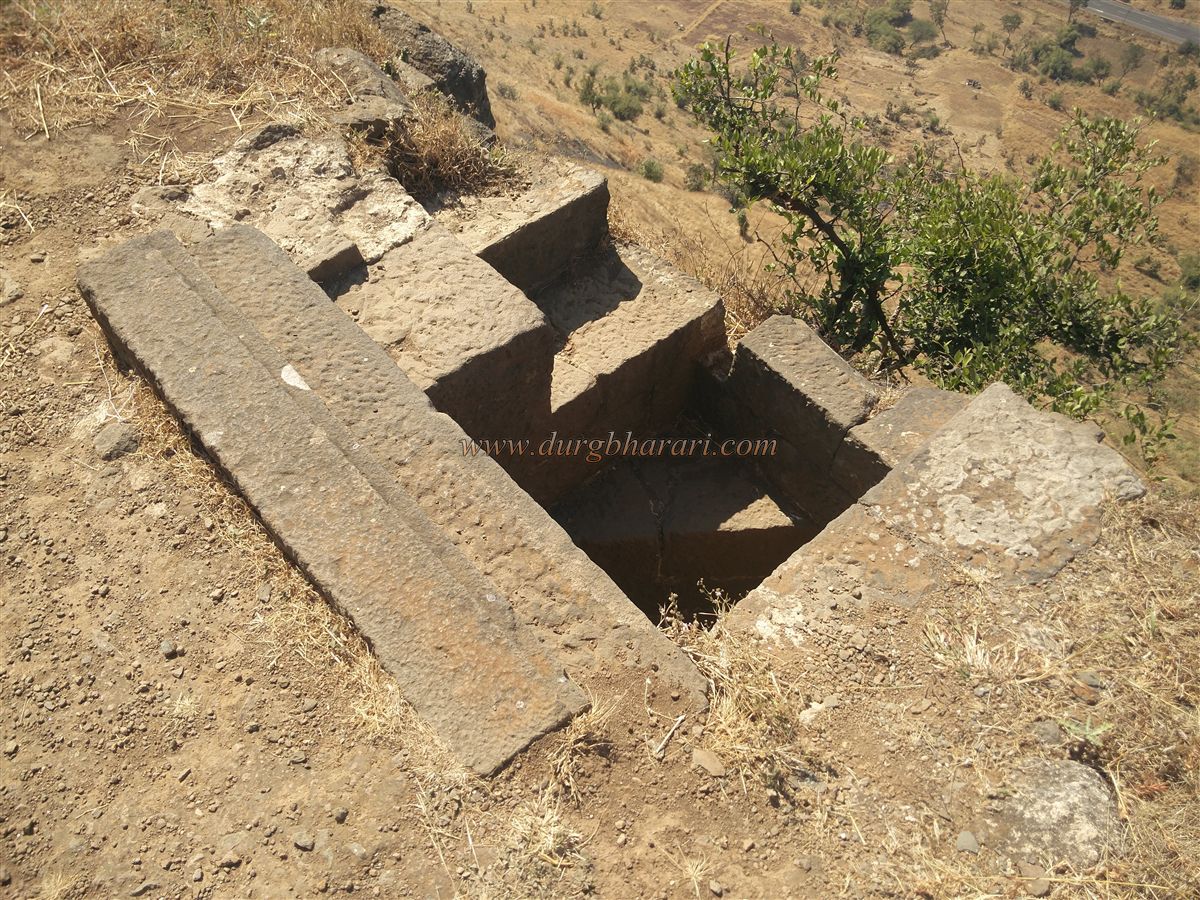
After climbing another ten to twelve steps, one enters the fort through a broken gateway and shattered fort walls. On the right side, one can see double fortification walls, and in front, there’s a gateway. The arch of this door is still intact. A few steps down from here, there’s a rock-carved water tank supported by stone pillars. This spot is significant for researchers as it shows how stone blocks (chiras) were carved from the rock in earlier times. Incomplete carvings and grooves in the stone can be seen here, indicating abandoned work. Many refer to this as a secret entrance, but this is incorrect, as there is no path beneath the tank.
Ahead is a wall that likely served as a gunpowder or grain store during Shivaji’s reign. After viewing the tank, a path to the left leads to the fort’s machi (plateau), which appears like a rock cap from the village. On this machi are two water tanks, one carved in rock and the other collecting rainwater, a flagpole, remnants of foundations, and bastions.
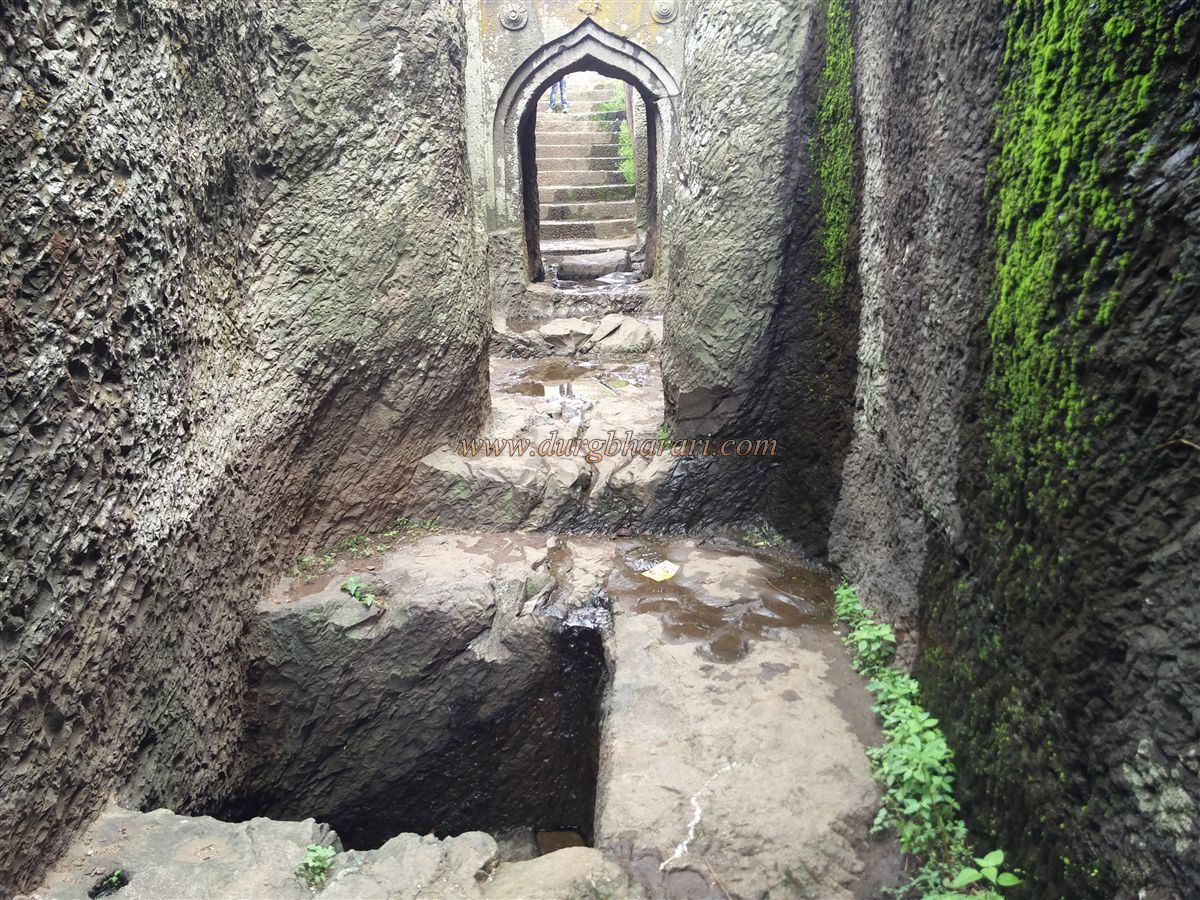
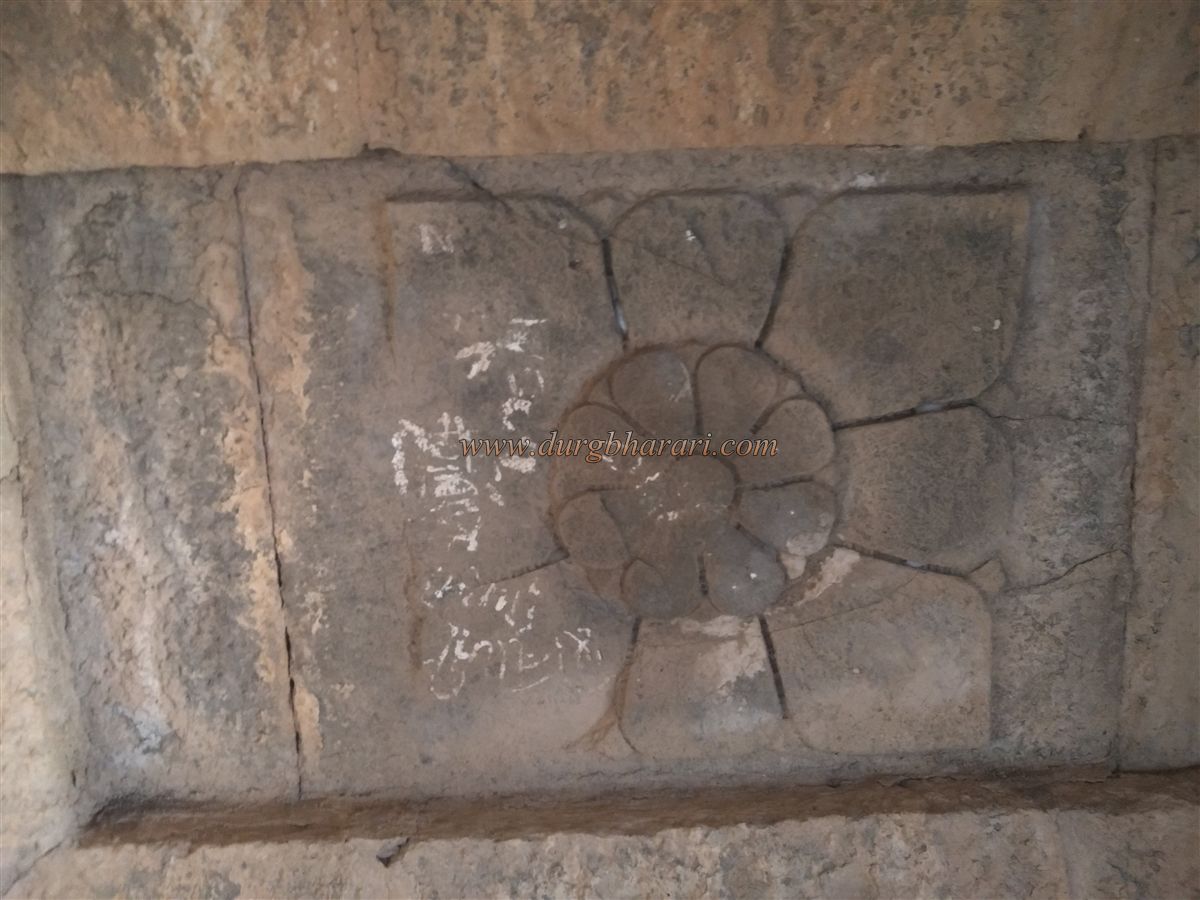
From here, one heads towards the main fort. Steps carved in the rock lead to the fort’s main gate on the southern side. This gate, carved into solid black rock, has sculptures etched into it. Between two doors, a path of steps descends to a hidden chamber. Climbing down this path, one arrives above the initial cave seen at the start. The trench here possibly served to deliver food and water to soldiers outside the fort. The gate appears incomplete, and this trench seems to be a half-carved path leading down into the cave.
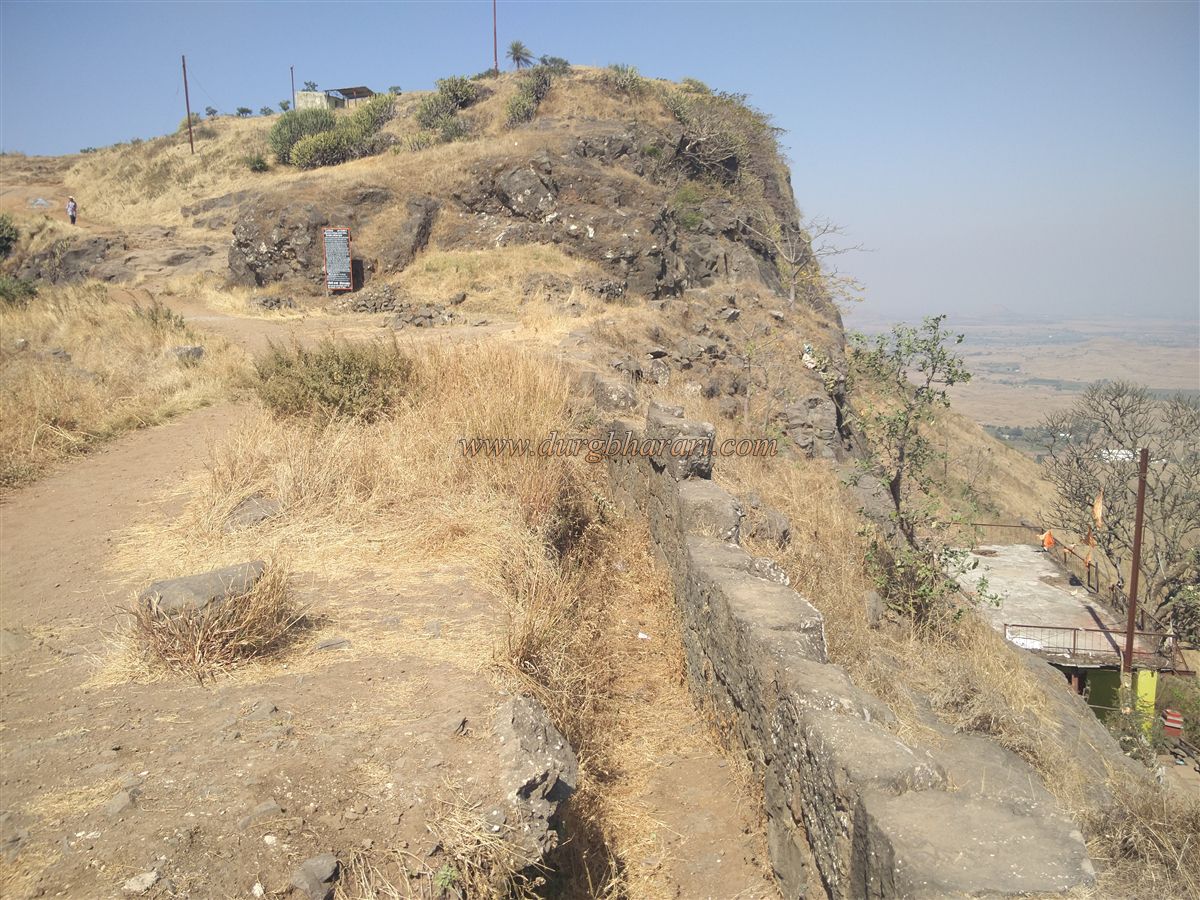
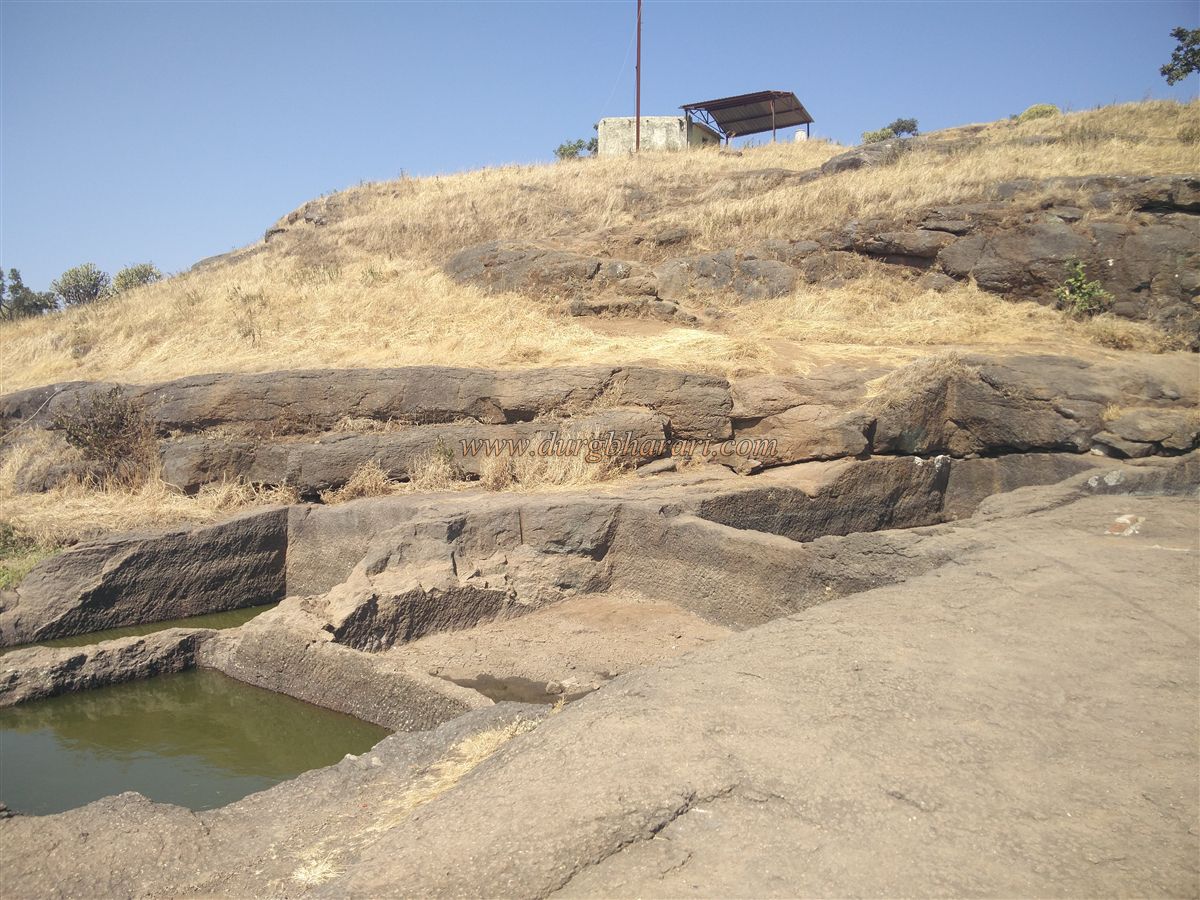
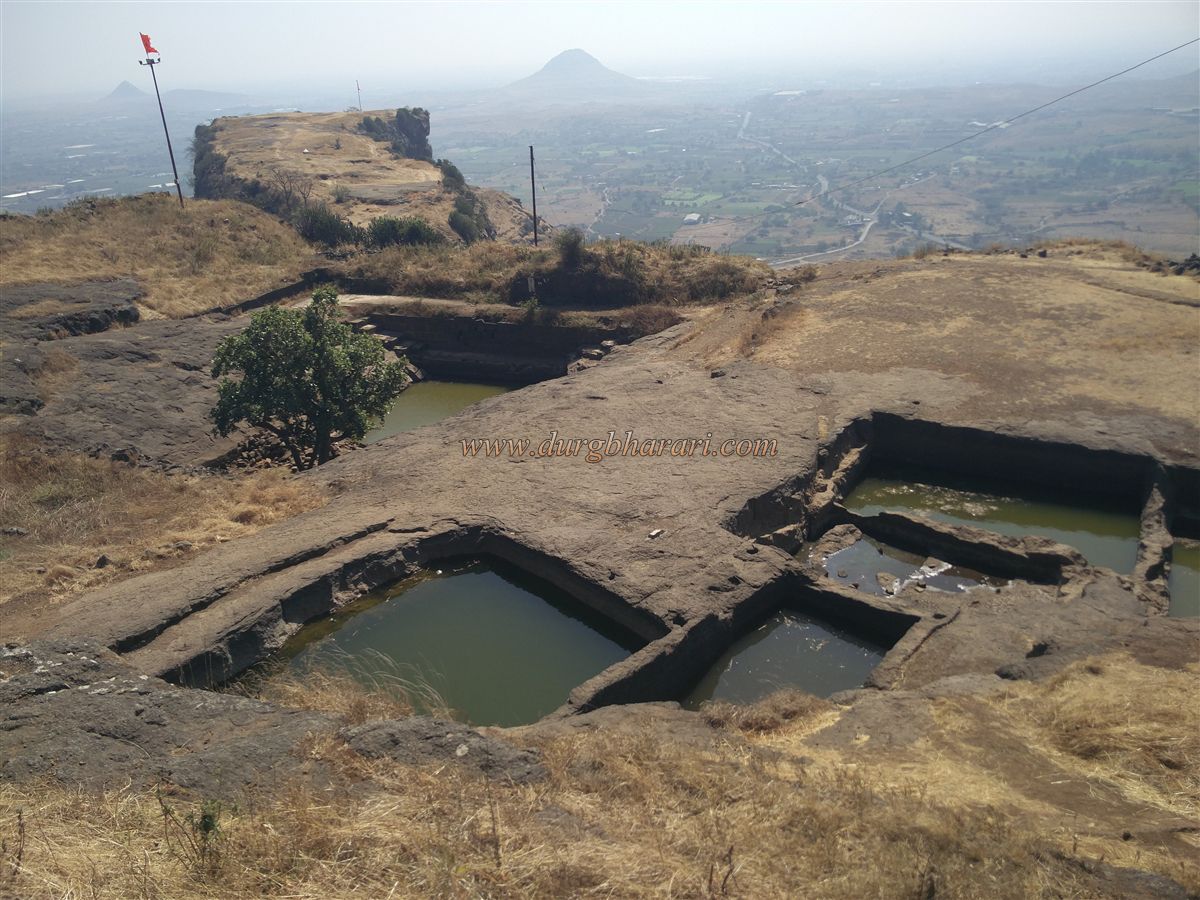
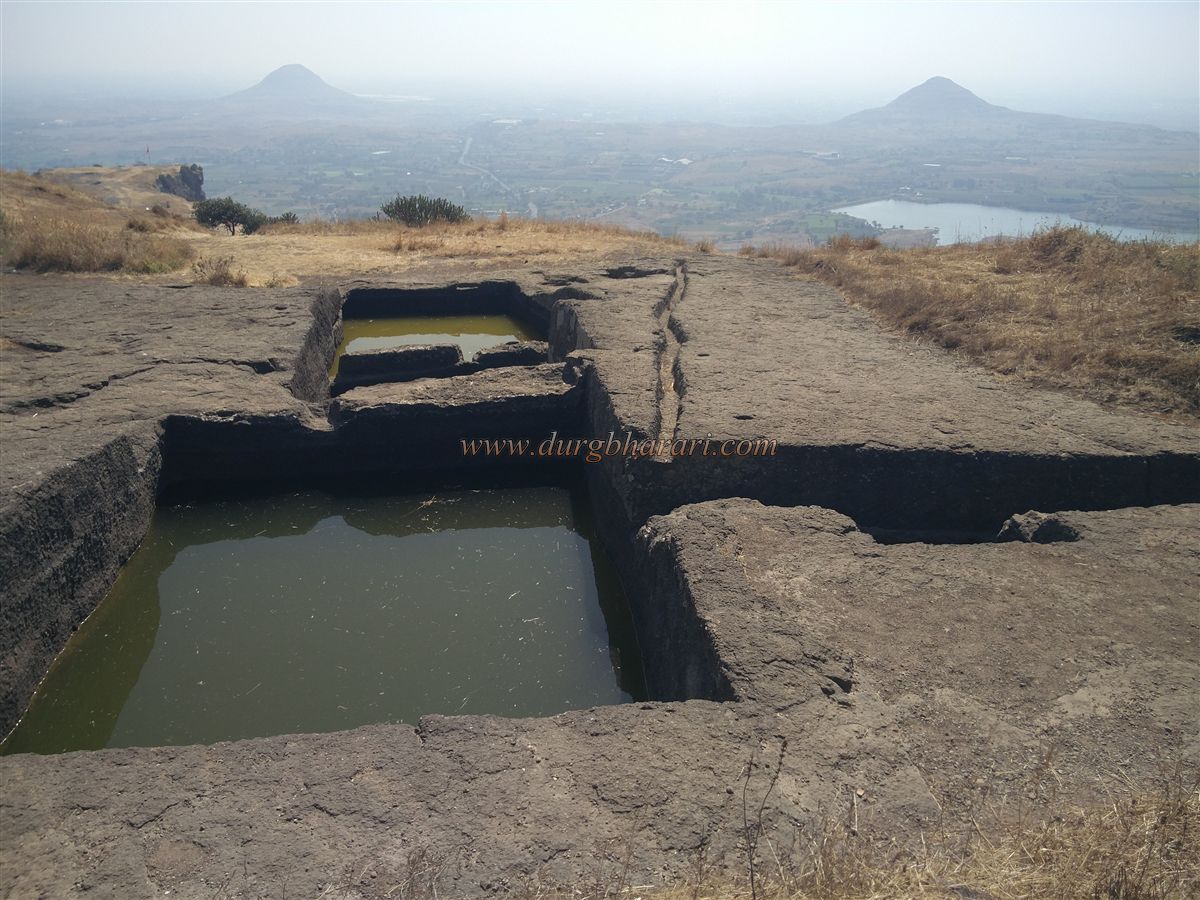
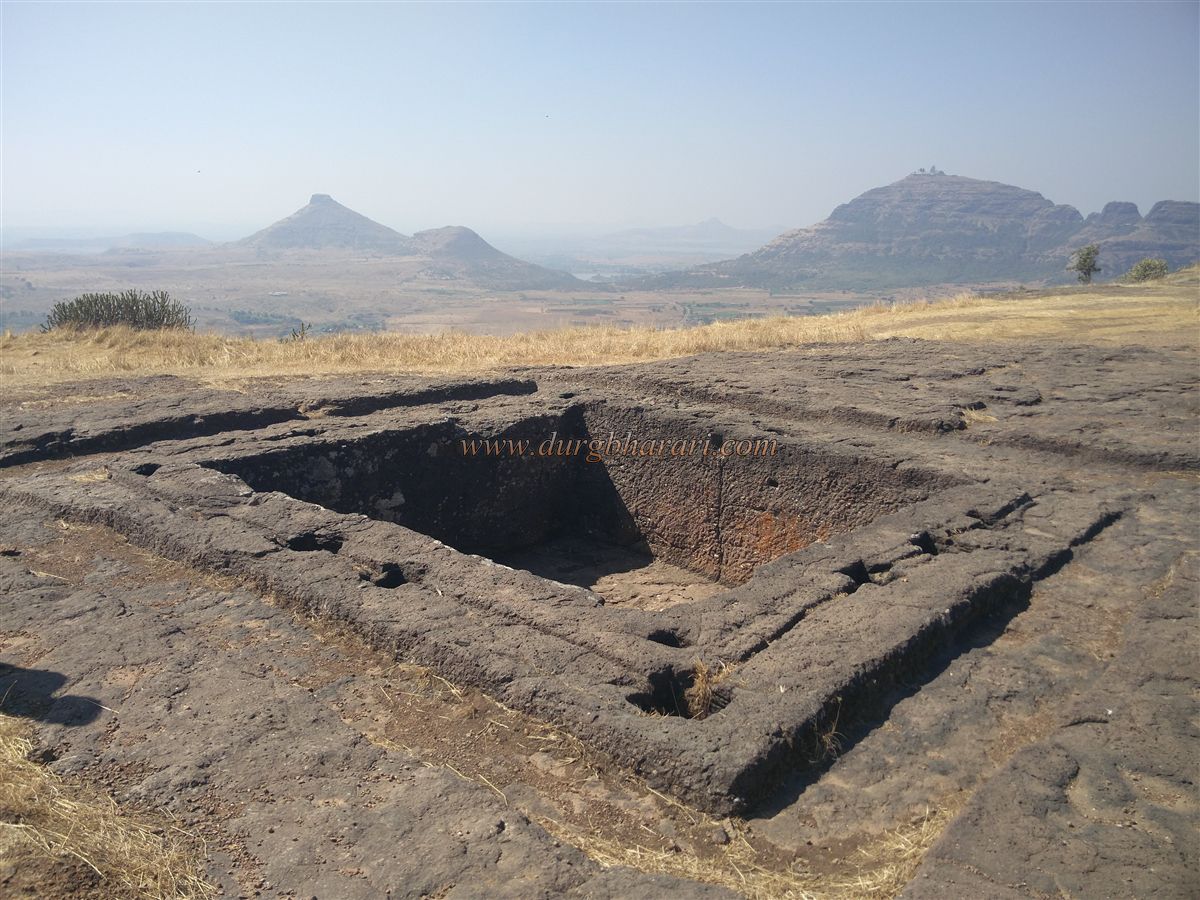
Heading to the top of the fort, one first encounters a circular lime pit, although its grinding wheel is missing. Further up is a flat surface with a man-made reservoir and four water tanks nearby. A little higher is a newly built small temple dedicated to a goddess, with a cement lamp post in front. Behind the temple, descending a little, there are two sets of twin water tanks and a third set of three tanks, followed by a second secret entrance to the fort.
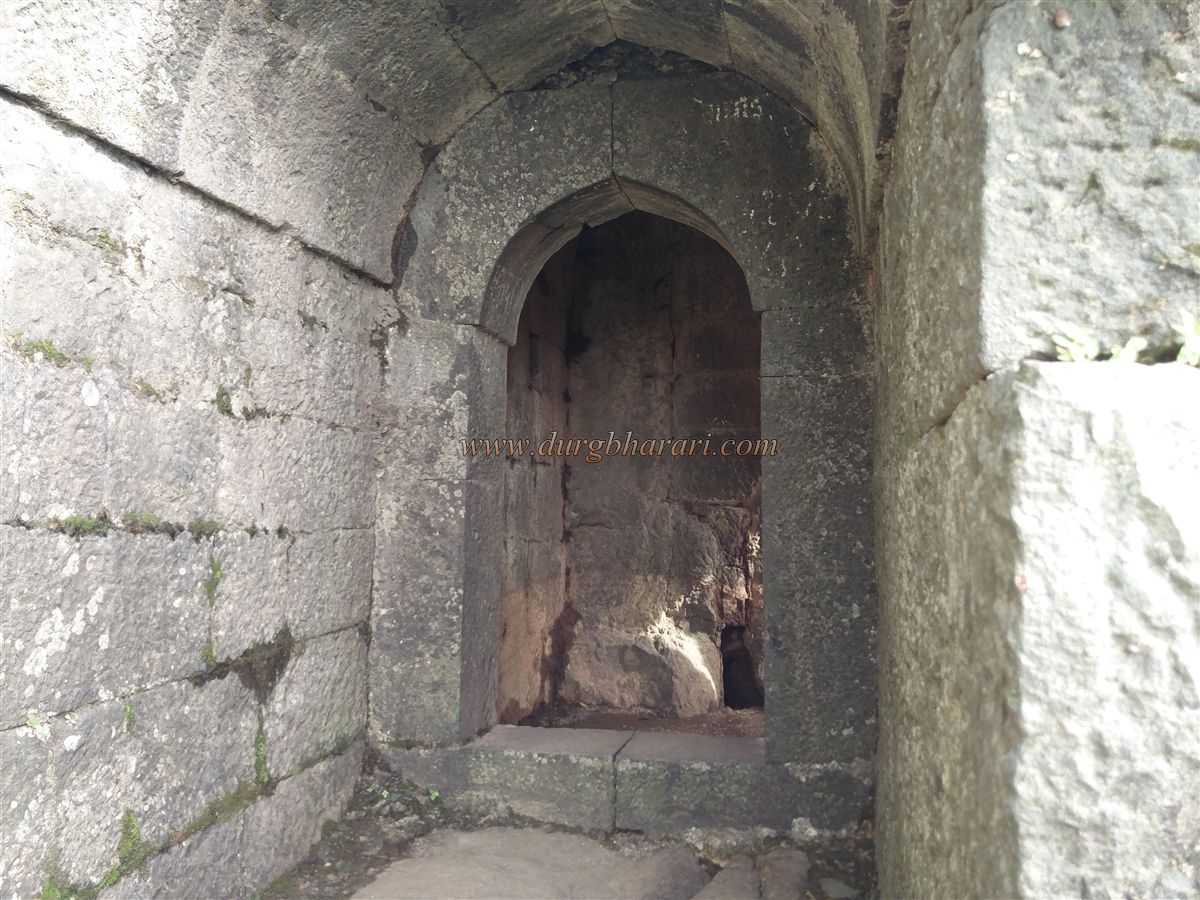
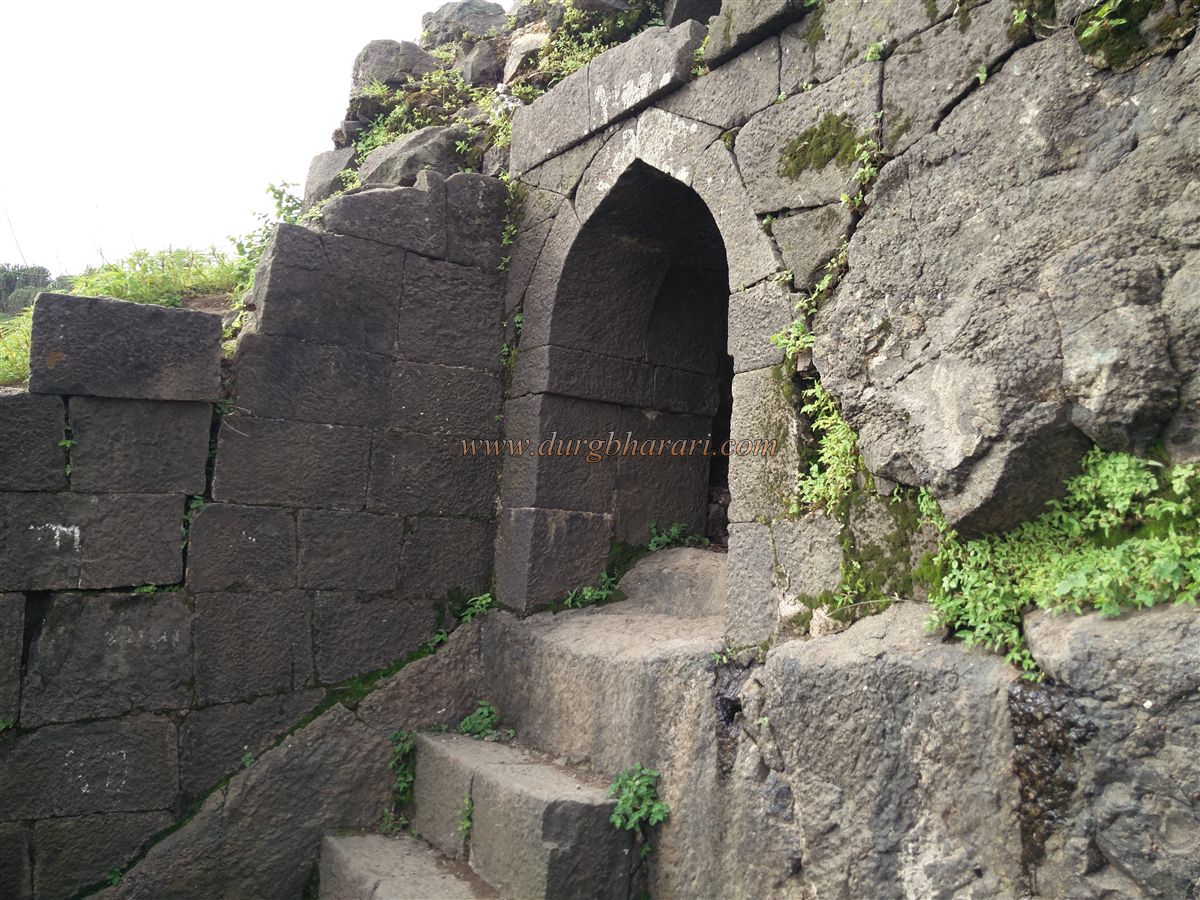
This secret entrance is cleverly designed, running along the cliff and parallel to the ground. Even up close, it is not easy to spot. The pathway to it is broken, and the carved steps have been destroyed. However, the door’s arches and inner structure remain intact. From here, one returns to the temple. A path from in front of the temple leads to water tanks on the edge of the fort. In this area, three sets of twin tanks, foundations of old houses, and ruins of other structures can be found.
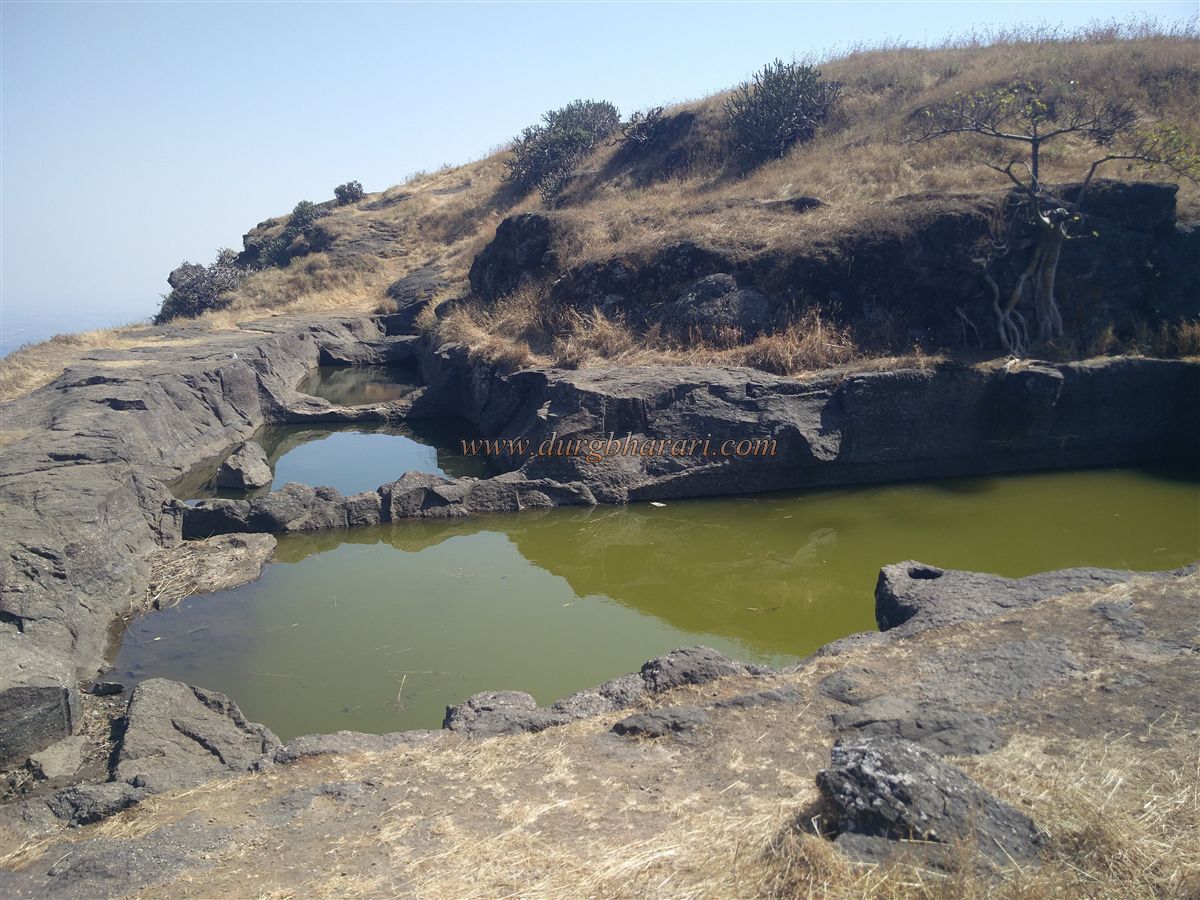
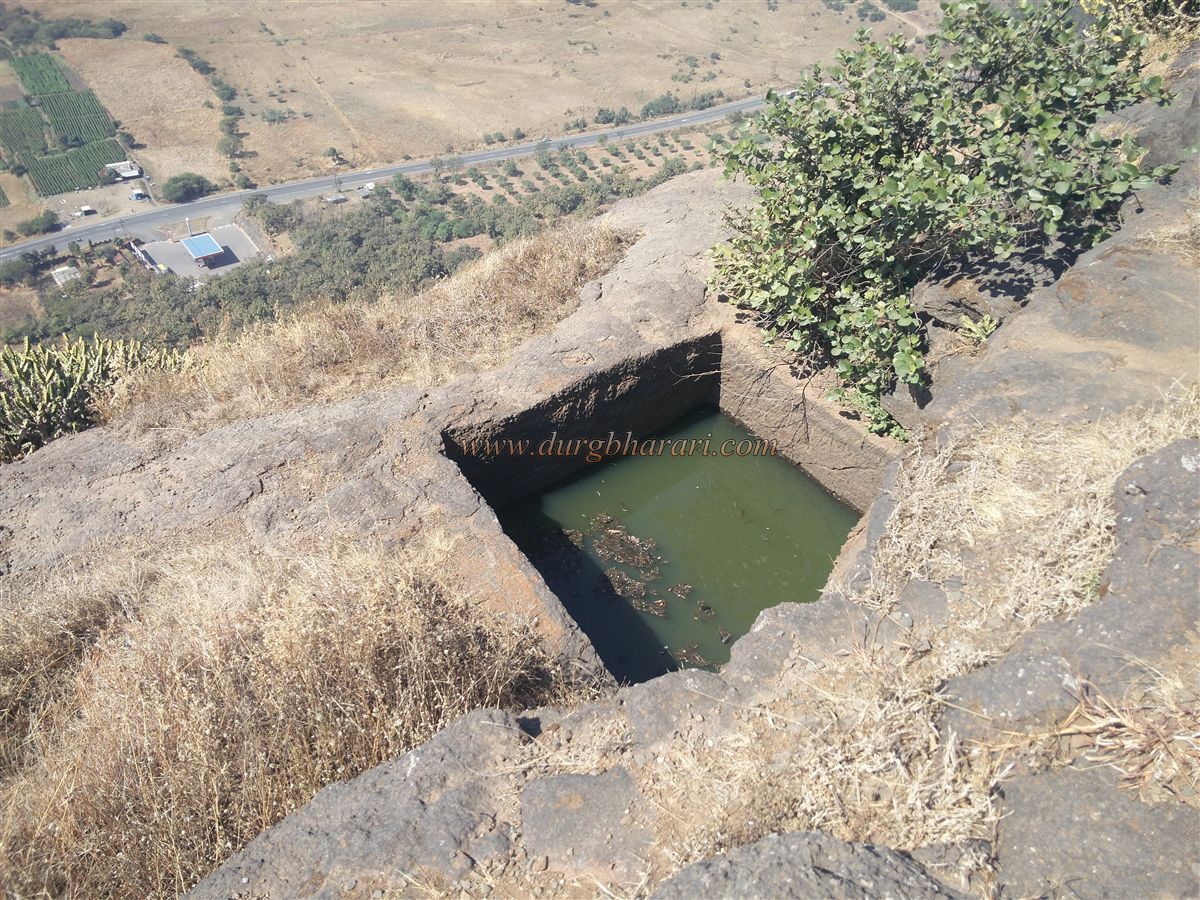
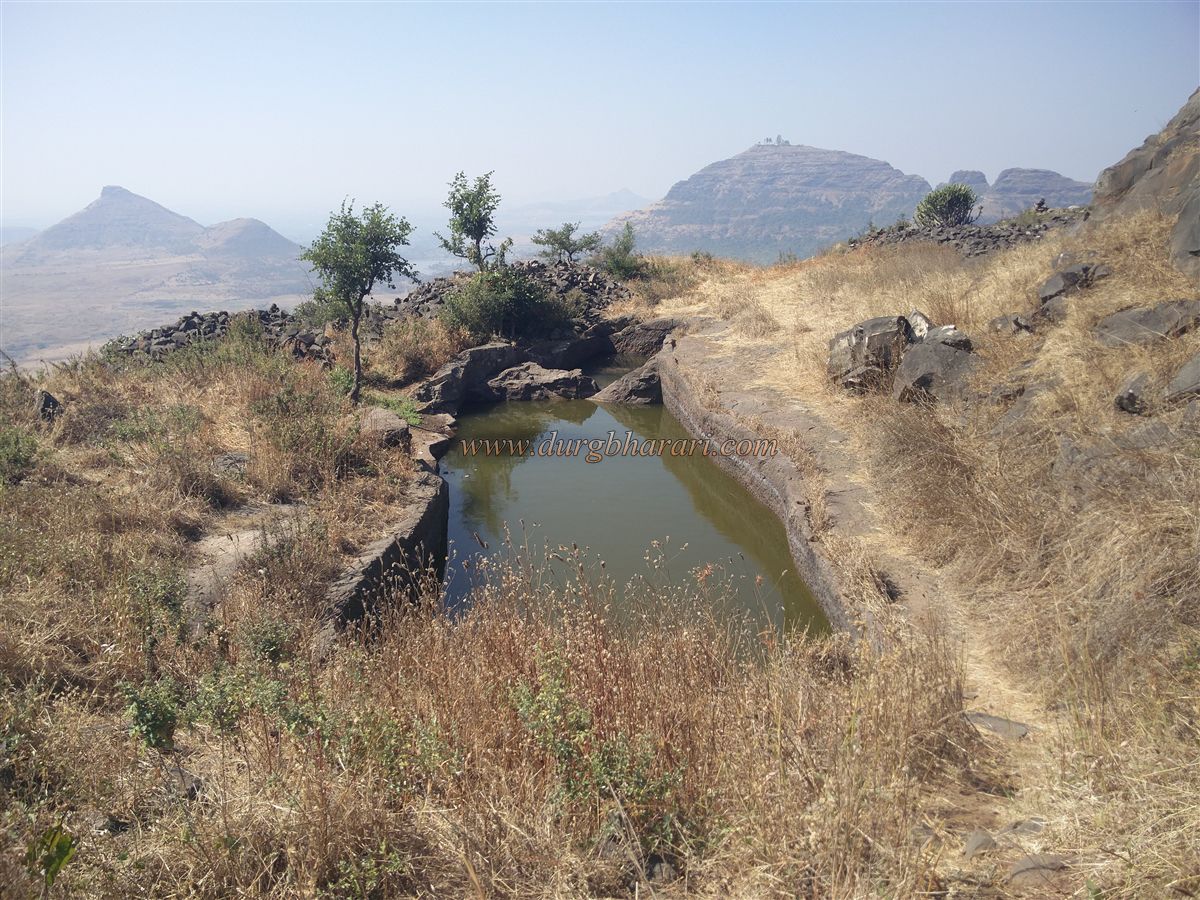
Although Ramshej is not a very large fort, it has plenty of water tanks—though few have potable water. Due to the fort being surrounded by rocky terrain, there are no traditional fort walls. From the higher parts of the fort, one can see the machi, the Satmala range, the Trimbak range, and surrounding forts like Bhorgad and Dehergad.
A full tour of Ramshej Fort from Aashewadi takes about three hours. Judging by the rock-carved gates and deep internal water tanks, the fort likely dates back to the Satavahana era. Ramshej became famous during the reign of Chhatrapati Sambhaji Maharaj. It witnessed intense conflict between the Marathas and the Mughals. Though the Mughals had control of the Nashik region, Ramshej remained under Maratha rule, seized by Shivaji Maharaj.
When Aurangzeb descended into the Deccan to crush the Maratha Empire, his first target was Ramshej—echoing the earlier conquest by his father Shah Jahan during his southern campaigns. On April 1682, Aurangzeb sent Shahabuddin Khan with 10,000 troops, large supplies of gunpowder, and artillery to capture Ramshej. Accompanying him were military elites like Qasim Khan, Pir Gulam, Ram Singh Bundela, and the Raja of Datia.
Upon learning of the impending siege, Sambhaji Maharaj appointed the commander of Salher Fort to defend Ramshej. Unfortunately, the name of this brave commander is unknown. The Mughal army launched a fierce assault, but the 600–700 Maratha defenders hurled massive rocks down upon them, halting their advance. Suffering heavy losses, the Mughals retreated and laid siege.
Shahabuddin tried every tactic—attacks, mines, ambushes, and encirclement—but to no avail. He even built a taller wooden tower (damdama) near Ramshej to bombard it, but the fort held strong. When the fort's cannons ran out of ammunition, the defenders ingeniously filled animal hides with gunpowder and fired them at the enemy, causing flaming debris to rain on the Mughal camp, creating chaos and damage.
In May 1682, Sambhaji sent commanders Rupaji Bhosale and Manaji More with 5,000–7,000 soldiers to relieve Ramshej. As the Maratha reinforcements approached, Shahabuddin intercepted them near Ganesh village. A fierce battle ensued. The Marathas fought valiantly, forcing the Mughals to retreat. The morale of Ramshej’s defenders soared, but the siege continued.
On May 12, 1682, Aurangzeb sent his stepbrother Khan Jahan Bahadur Kokaltash to assist Shahabuddin. Together, they launched a powerful attack, which was again repelled. Mughal commander Dalpat Rai was seriously injured. Defeated, Shahabuddin withdrew to Junnar after burning the damdama. The siege responsibilities now fell to Bahadur Khan, who too failed to break the defense.
The Mughals then tried deception. They planned a diversionary frontal attack while a secret force of 200 men would scale the rear cliffs with ropes and open the gate. But the Maratha commander had anticipated this and stationed troops at the rear. As the enemy climbed, they were ambushed and thrown down, ending Bahadur Khan’s attempt in disaster.
Believing the defenders were protected by spirits, the Mughals employed a mystic. He created a golden snake weighing 90 tolas (approx. 1kg) at a cost of ₹37,630. He claimed this enchanted snake would mesmerize the defenders. During the next assault, the mystic led the climb holding the snake, followed by Mughal troops. The curious Marathas watched in silence from the ramparts.
As the mystic came within sight, a massive rock flung from the fort struck him in the chest. The golden snake fell, and the mystic collapsed. The stunned Mughals fled under a hail of rocks. Furious at the repeated failures, Aurangzeb ordered Bahadur Khan to lift the siege. Historian Khafi Khan records that the Mughals lost immense treasure, thousands of men, and supplies at Ramshej.
Aurangzeb later sent Qasim Khan Kirmani to capture Ramshej using a cannon taken from Trimbak Fort, but he too failed. Eventually, the siege was abandoned. Ramshej Fort had resisted the Mughals for five and a half years. In recognition of this heroic defense, Sambhaji Maharaj sent the fort commander an ornate armour, jewelled bracelets, and cash as a reward.
Later, in 1687, a traitorous zamindar Abdul Karim and Neknam Khan, the fort commander of Mulher, bribed the new commander of Ramshej, handing the fort over to the Mughals. Foreign sources, including English records dated July 30, 1682 from Karwar to Surat, mention that Hambirrao led 10,000 Marathas to relieve Ramshej and was wounded in the battle.
In 1818, after the British captured Trimbak Fort, Ramshej was surrendered without resistance. At the time, the British found eight large cannons, nine small ones, and mortars, 251 pounds of gunpowder, sulfur, silver, brass, lead, cloth, tents, carpets, and one armour—believed to have belonged to Shivaji Maharaj, as noted by Captain Briggs in a report dated June 20, 1818.
© Suresh Nimbalkar
GALLERY