RAMESHWAR-VENGURLA
TYPE : MEDIEVAL SHIVMANDIR
DISTRICT : SINDHUDURG
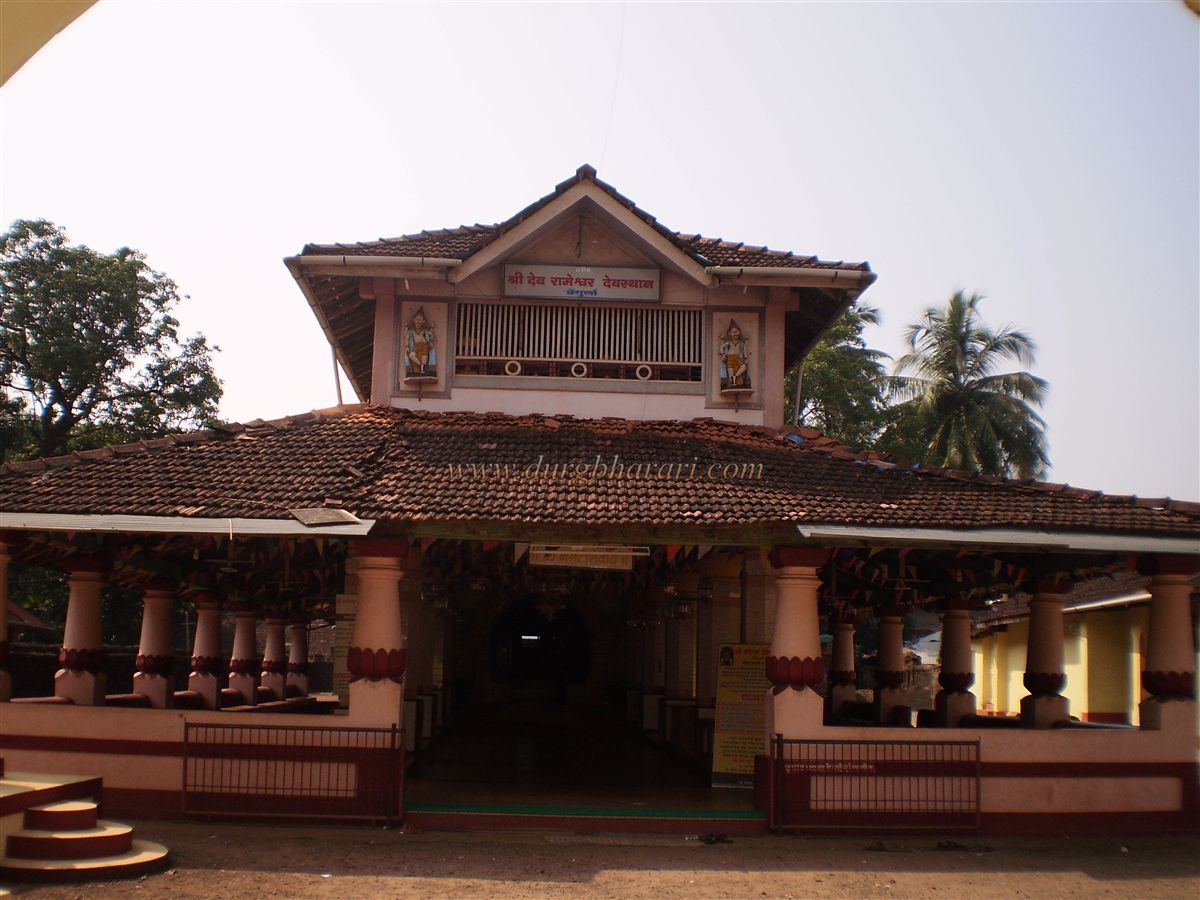
Shri Rameshwar is the presiding deity of Vengurla. The temple of Shri Rameshwar is located in the central part of Vengurla town. While the structural layout of the temple is ancient, the interior decorative work has been done more recently. Regarding the early history of the shrine and its structure, it is briefly believed that Shankar (Shiva) is an ancient pre-Aryan deity, and numerous lingam forms of Shiva are found established throughout South India. Based on this, it is estimated that the temple of Shri Rameshwar at Vengurla might have been established in the 17th century CE. Around 1655 CE, Chhatrapati Shivaji Maharaj had brought large parts of South and North Konkan under his control, establishing authority from Sangameshwar to Malvan. During this time, several Brahmin families from Rajapur settled in Kudal. These Brahmins had close ties with the Khem Sawant of Sawantwadi. One such Brahmin, the late G. B. Dhamankar, found a lingam of Shri Rameshwar.
...
Dhamankar had acquired land for farming in Vadkholwadi, located between Vengurla and Tulas villages. A stream from Tulas flowed through this area. By constructing a bund on this stream, he created a reservoir known as Nishan Talav. While excavating for the construction of this reservoir, the lingam of Shri Rameshwar was discovered in the deeper part of the streambed. Dhamankar brought the lingam near his home and started worshipping it. With the approval of local villagers and the Gowd Saraswat merchant community, the lingam was established in the central part of the village, inside the existing Nageshwar-Bhagwati temple, about 350 years ago. Shri Rameshwar’s lingam was installed at the site of Shri Nageshwar, and the idol of Shri Nageshwar was relocated to the left of Shri Rameshwar, along with a Nandi statue.
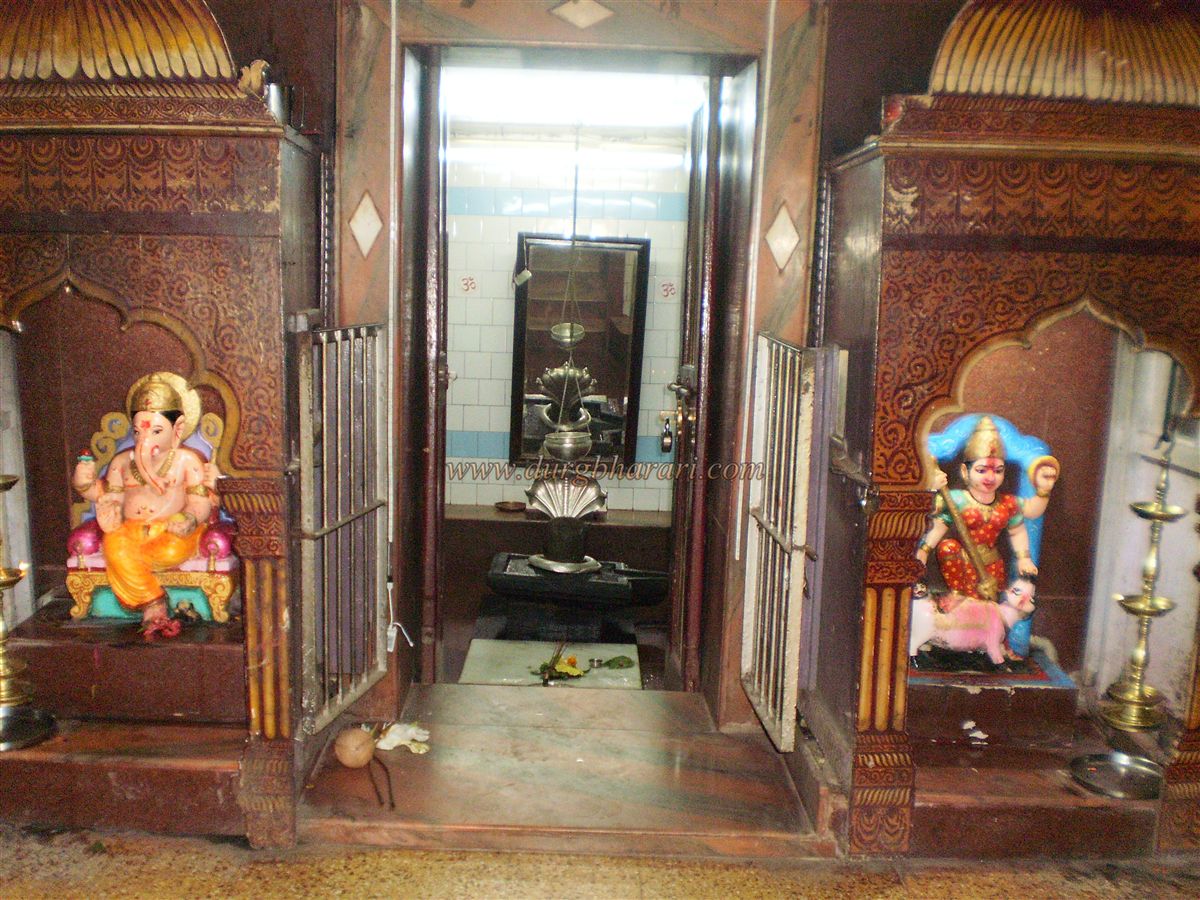
Inside the sanctum sanctorum of Shri Rameshwar temple is the Rameshwar lingam, with a Nandi placed before it. Beside it is a stone plaque representing a Jain Brahmin. Outside the sanctum, to the right, are idols of Ganapati, three lingam-shaped stones, and a serpent stone. To the left are idols of Goddess Bhagwati and an ancestral male figure from her lineage. Adjacent to the sanctum on the left is a separate shrine for Nagnath, where a metallic serpent sits upon a lingam, facing a Nandi. In front of this shrine is a small Dattatraya temple. It is significant that devotees can complete a single circumambulation around both the Dattatraya and Nagnath shrines. Behind the Dattatraya temple is an Audumbar tree. In the Sabhamandap (assembly hall) outside the sanctum, on the right side, is the idol of Shri Nitkari, while the left side houses a small Hanuman shrine. Behind the temple are idols of Shani and another Hanuman.
Beside the Rameshwar temple is a separate Ram-Sita temple. All the pillars in the assembly hall are adorned with marble tiles depicting various deities, and the carvings are visually appealing. In front of the temple, on the left side, is a dome-shaped shrine of Garudeshwar, while on the right side are a Tulsi Vrindavan and a deepmala (lamp tower). The temple premises include a Dharamshala (pilgrim rest house) and an upper-level Nagarkhana (drum house). In the front courtyard is a pipal tree, beneath which stands a Durga temple, and further ahead is a large reservoir.
Throughout the year, various religious programs take place at the temple. On every Sankashti, a palanquin procession of Ganapati is held. Bhajan are sung every Monday. Celebrations include the Jagran during the month of Chaitra, Ram Navami, Hanuman Jayanti, Akshaya Tritiya, Bhajan Week in Ashadhi, and special Varadshankar worship on Mondays in Shravan, Dussehra, the annual fair, Datta Jayanti, Ganesh Jayanti in Magh, and Shivratri. The weeklong celebration in Ashadhi draws devotees from various places. During this week, local artists create rangolis to exhibit their talent, and animated scenes based on mythological stories are presented in both the Rameshwar and Ram temples.
On the seventh day, a Didi (cultural performance) is held, and the week concludes on the eighth day with a symbolic shower of laddus on the palanquin and the ceremonial Kaalya ritual. The chariot festival on Mahashivratri is a major attraction. On Shivratri night, after the palanquin procession, the idol of Rameshwar is ceremoniously placed on the chariot amidst drumbeats. Following this, the floating deities offer coconuts on the chariot, marking the start of its circumambulation. Devotees of all ages gather in large numbers on this occasion.
On Kartik Pournima, the palanquin of Shri Rameshwar visits Shri Sateri, and on Kartik Pratipada, it visits Ravalnath, Bhutnath, and Gavdeshwar. The hosts at these temples warmly receive the deity. On Kartik Ekadashi, the palanquin of Sateri and the floating deity visit Rameshwar’s fair, and both palanquins perform circumambulations of the temple. On Kartik Shuddha Trayodashi, Rameshwar's palanquin again visits the fair of Gavdeshwar. At this time, Gavdeshwar palanquin comes to Vitthal temple to receive Rameshwar’s palanquin, and their ceremonial meeting is an emotionally moving moment.
As a votive offering, devotees fulfills their wishes by offering curd rice, sweet rice, grand meals, and Abhishek rituals to Shri Rameshwar.
© Suresh Nimbalkar
GALLERY