RAMDURG
TYPE : HILL FORT
DISTRICT : BELGAON
HEIGHT : 1930 FEET
GRADE : EASY
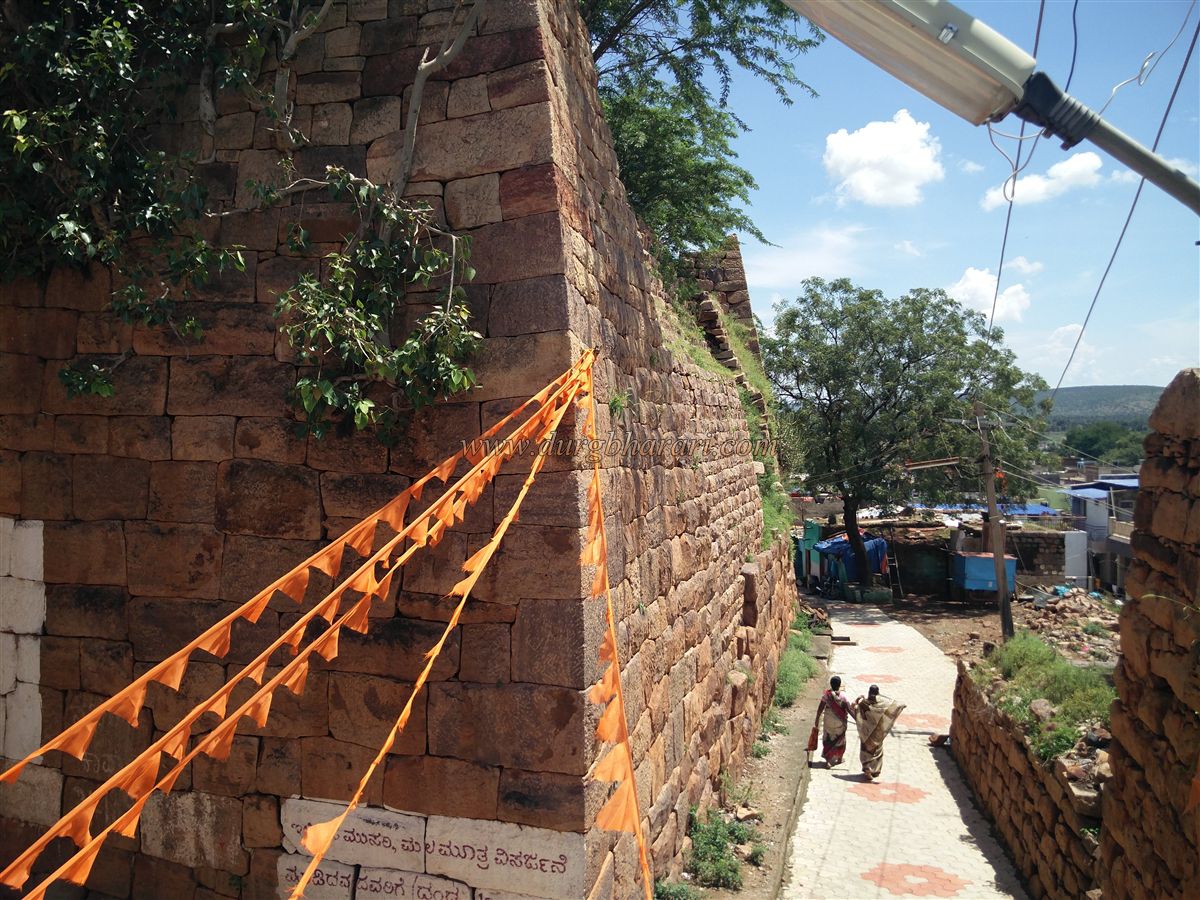
During the linguistic reorganization of states, Belgaum, a Marathi-speaking region under Swarajya, was merged with the state of Karnataka. As these forts once belonged to the Swarajya, I consider them forts of Maharashtra and refer to them as such. Ramdurg is one such fort built during the time of Shivaji Maharaj, imbued with Marathi heritage. Ramdurg, a taluka town, is located 108 km from Sankeshwar and 90 km from Belgaum. This triangular-shaped fort lies on a small hill running north-south along the Malaprabha River. It is situated 1930 feet above sea level and covers approximately 13 acres. Originally, the town of Ramdurg was established within the fort itself. Due to the growing population, all inner remains and the northern fortifications have been completely destroyed. Because of the habitation within the fort, one cannot traverse it entirely but must explore its scattered remains.
...
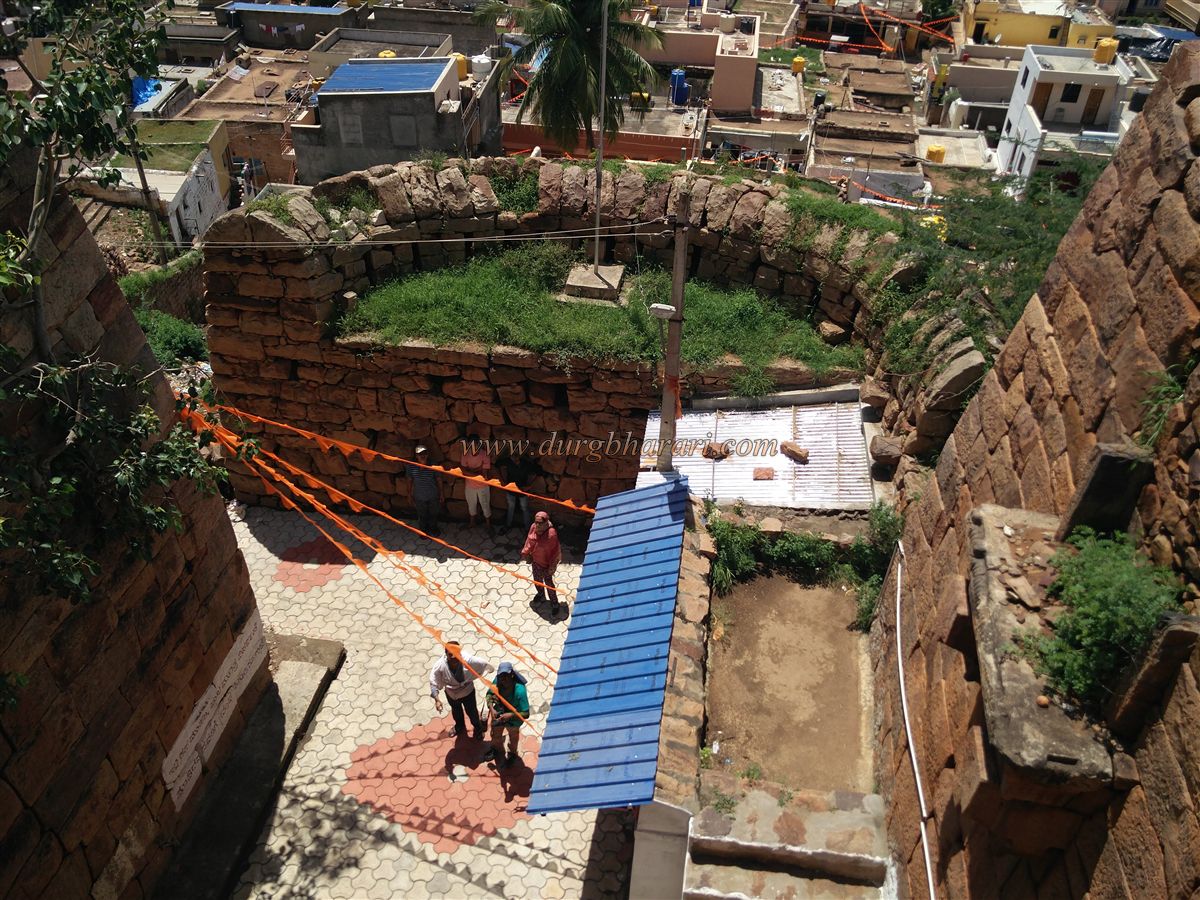
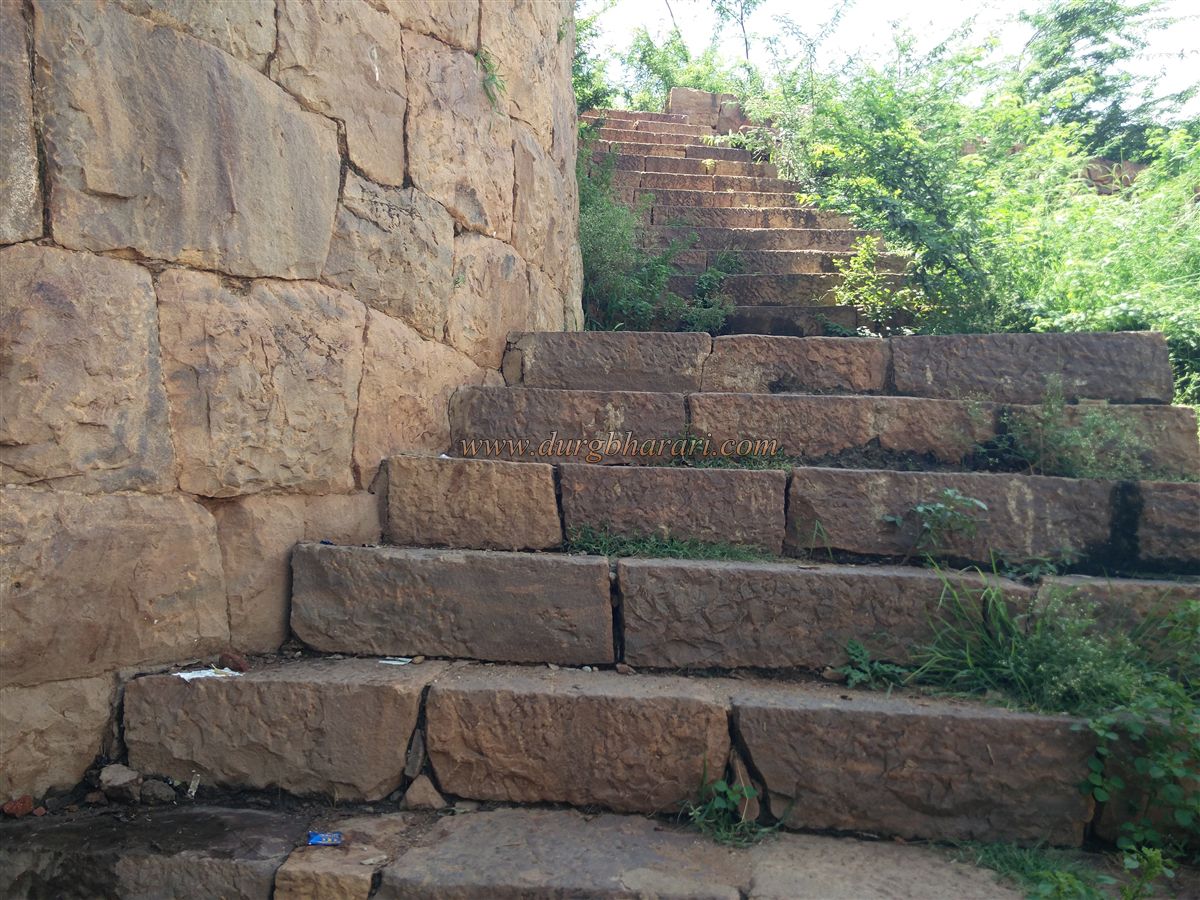
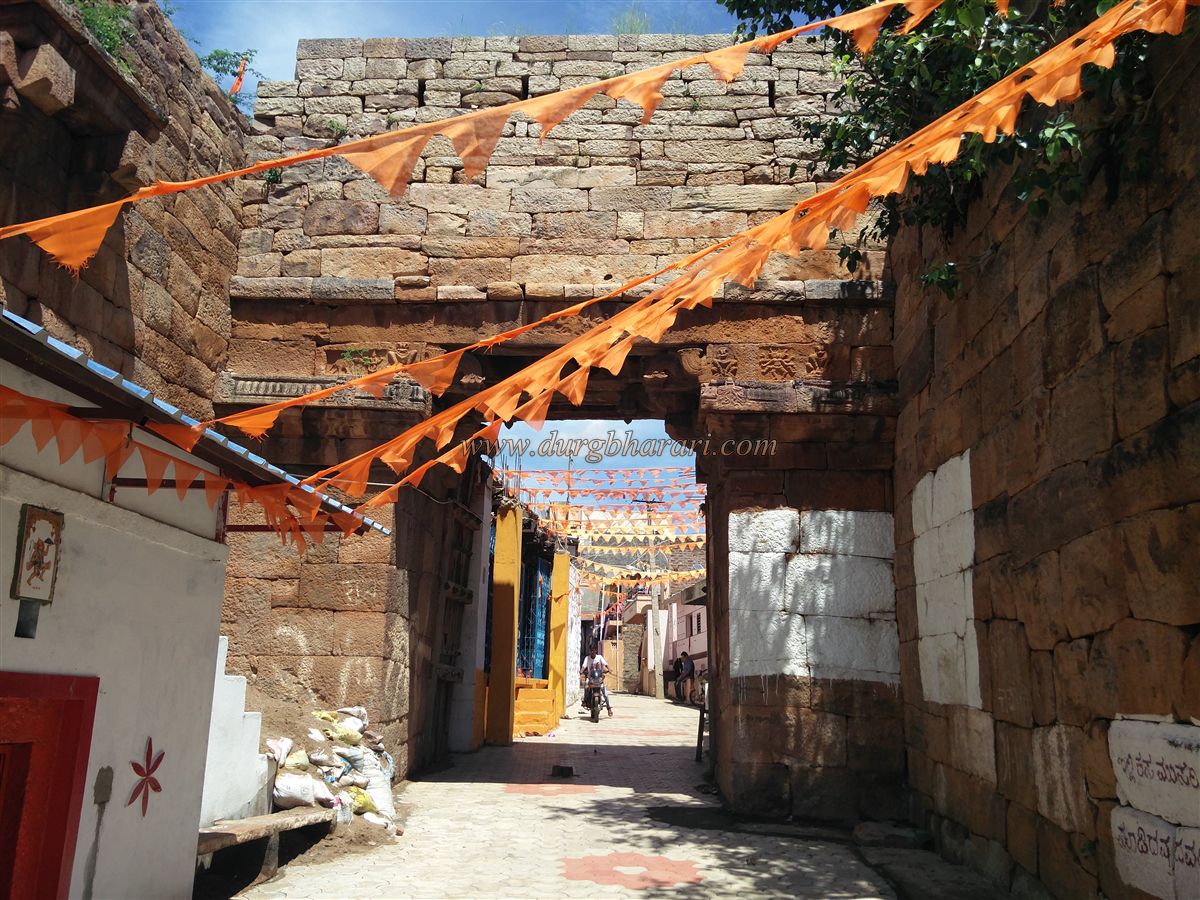
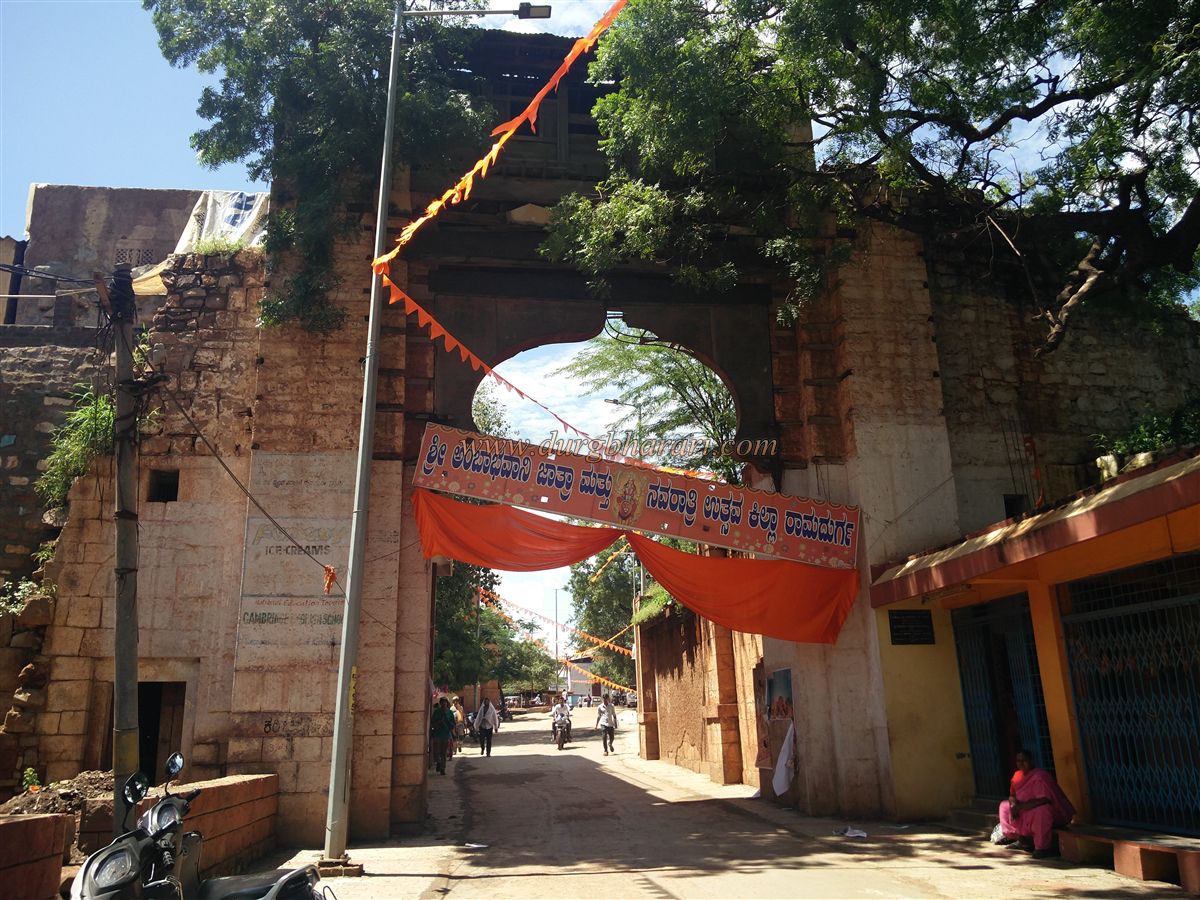
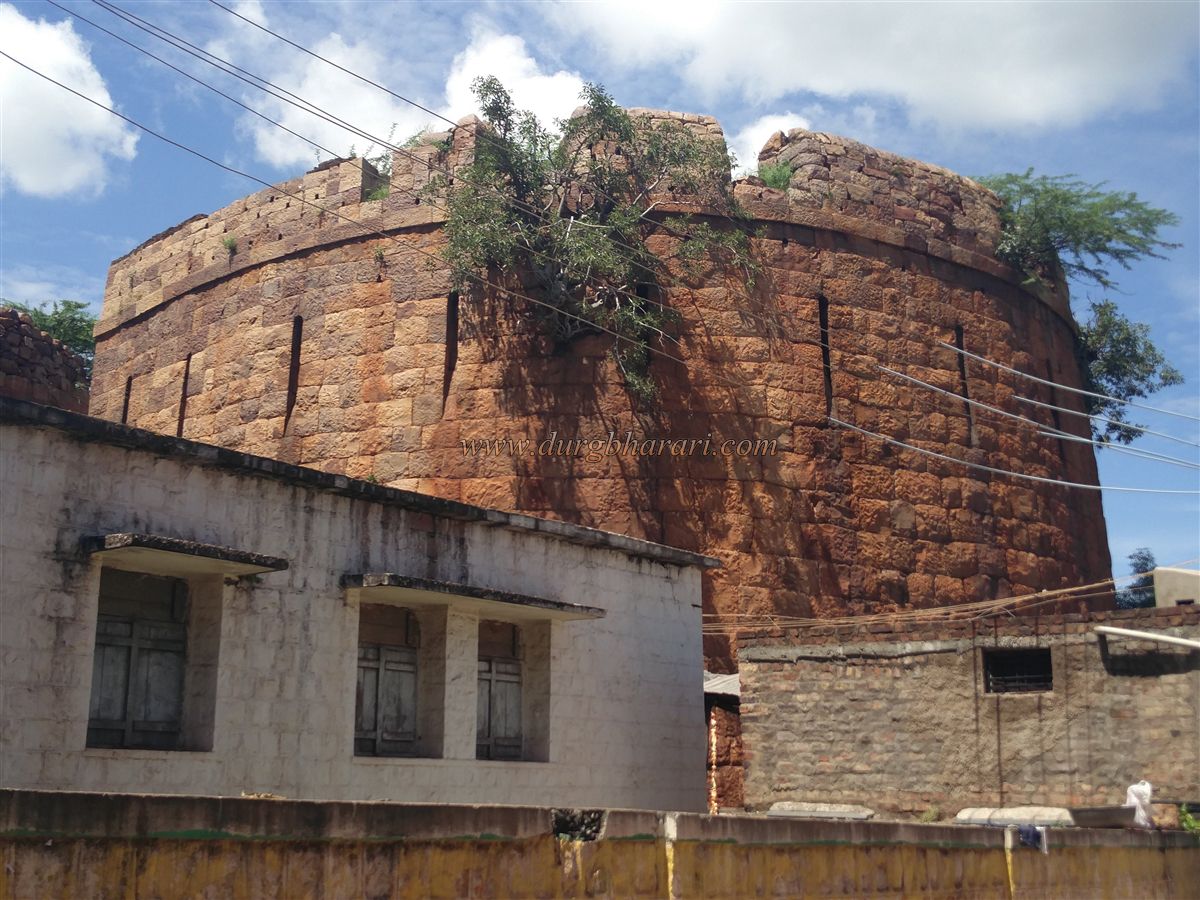
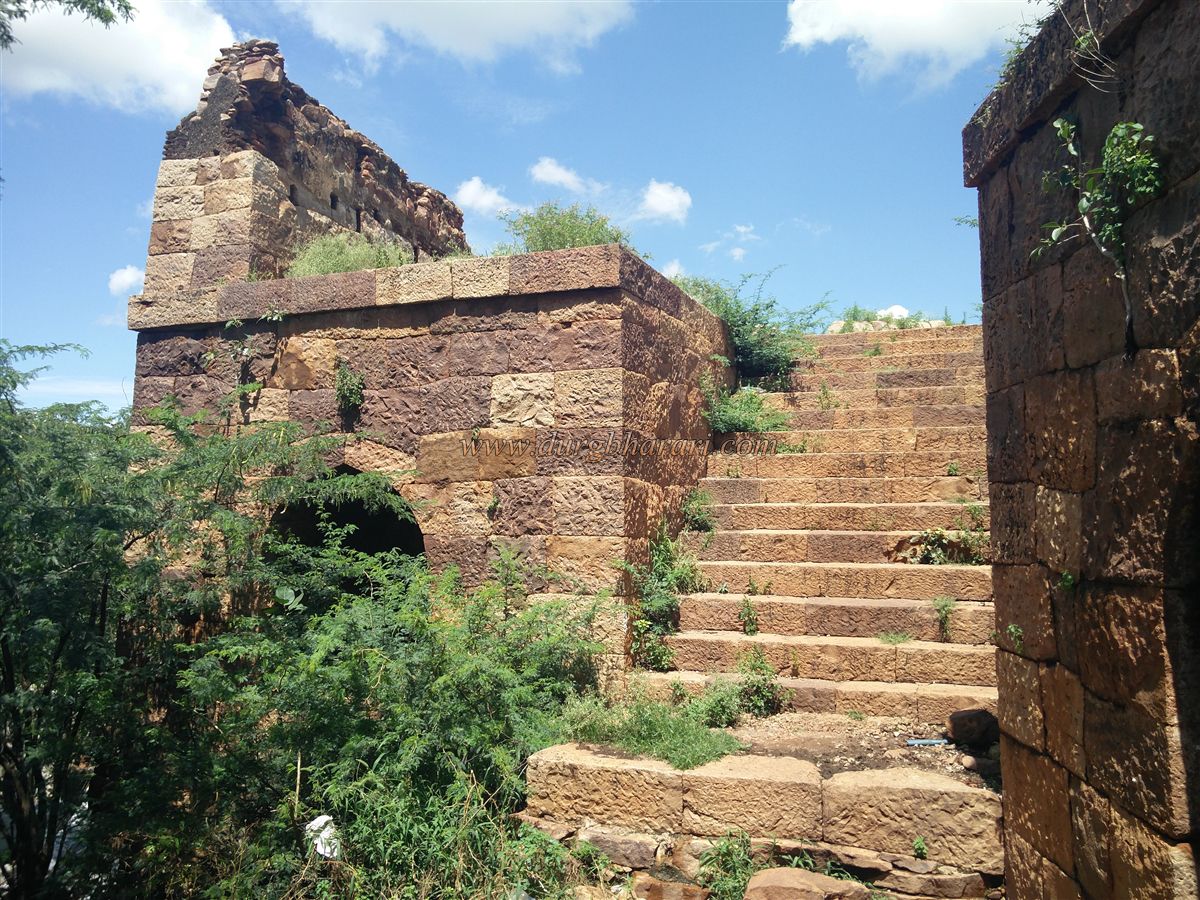
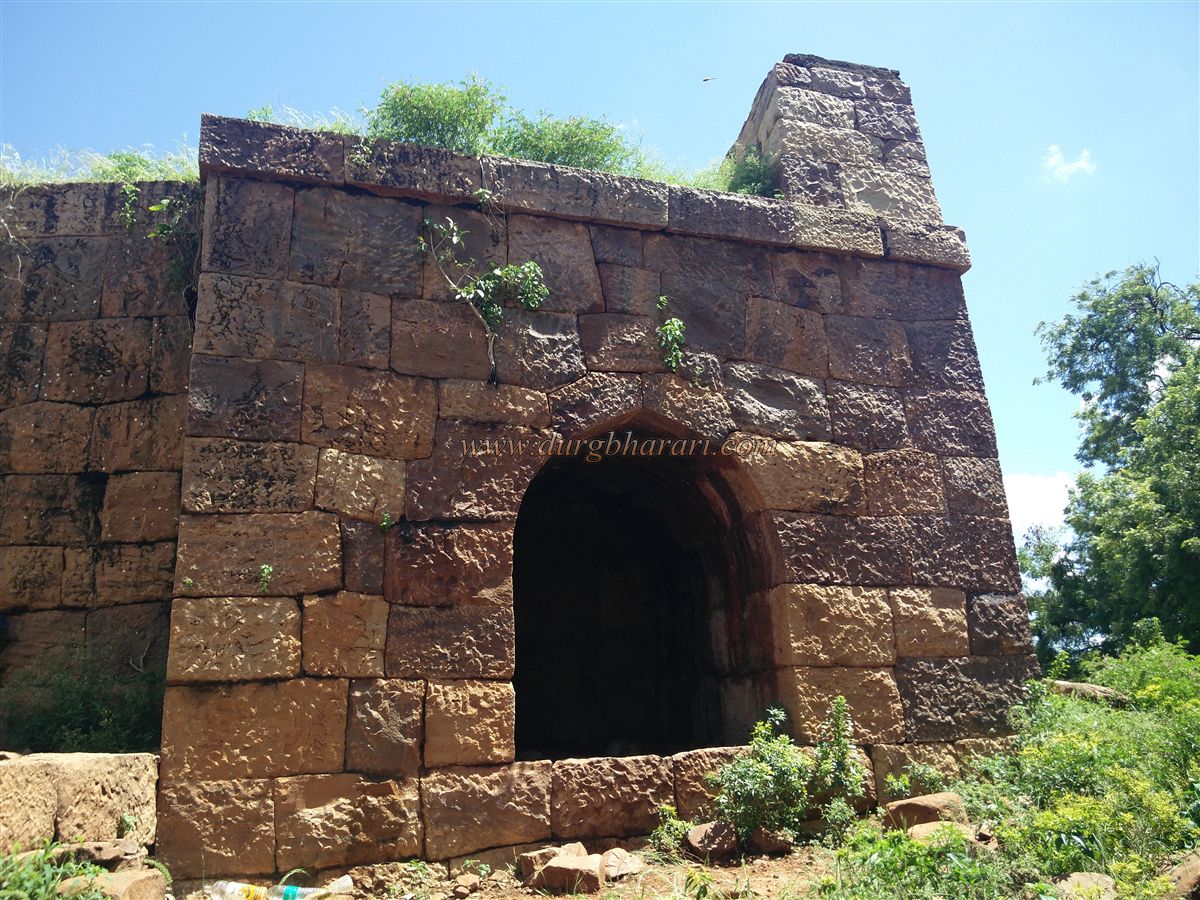
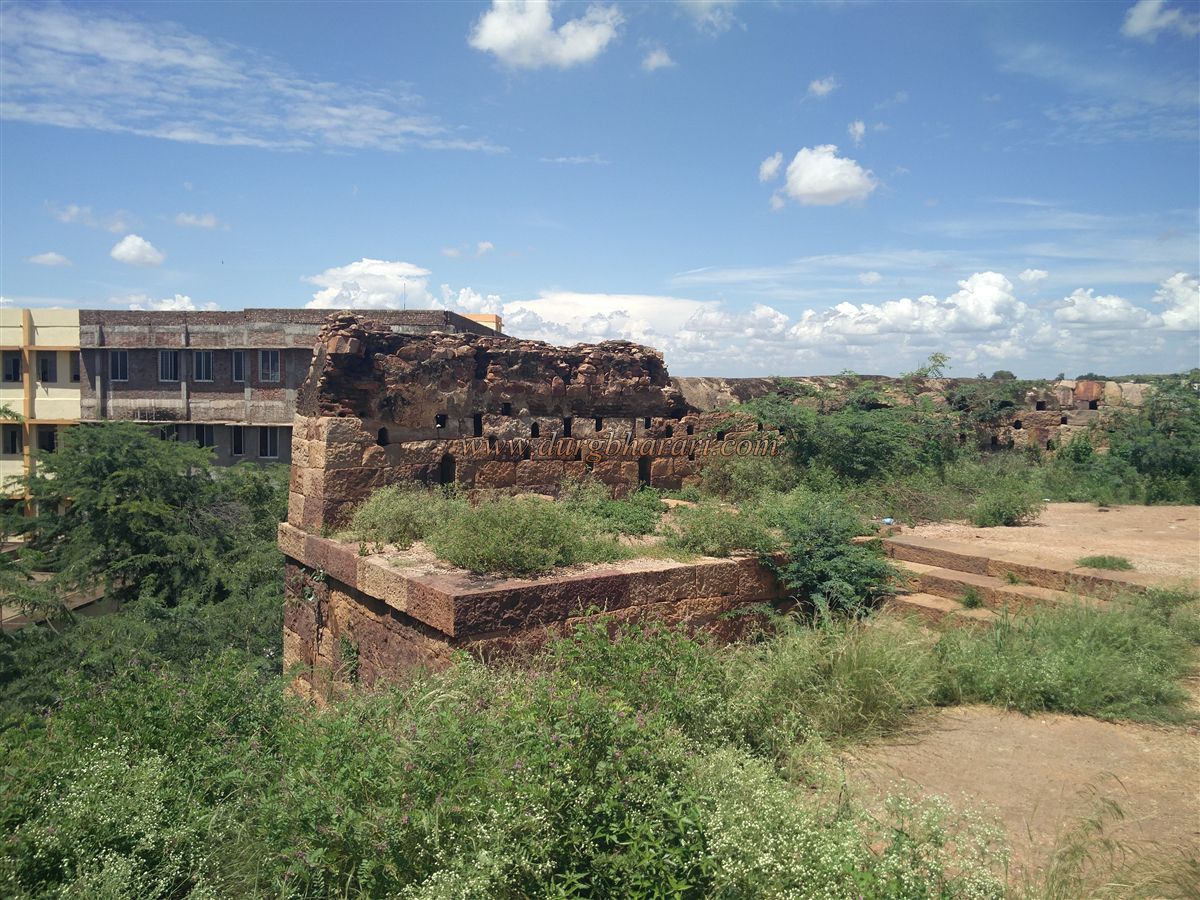
As the fort cannot be toured continuously, it cannot be described in one sequence. The triangular fort has three gateways, one at each of its corners, with one situated in the western fortification. The northern fort wall has been completely destroyed, but given the presence of four gates, it is presumed there was once a gate on the northern wall as well. Entry to the fort is currently through the east-facing gate. Above the gate is a Nagarkhana (drum chamber), and there are loopholes and arrow slits built into the ramparts and bastions for firing cannons and guns. The gate is about 20 feet high, and besides the main gate, there is a smaller entrance to the left, which leads into the fort. Inside the gate, to the right, is the fort's largest bastion, accessible via a flight of steps. This bastion contains a watchman's shelter and is flanked by two smaller bastions. Locals have turned this bastion into a public latrine, leaving no clean space to step.
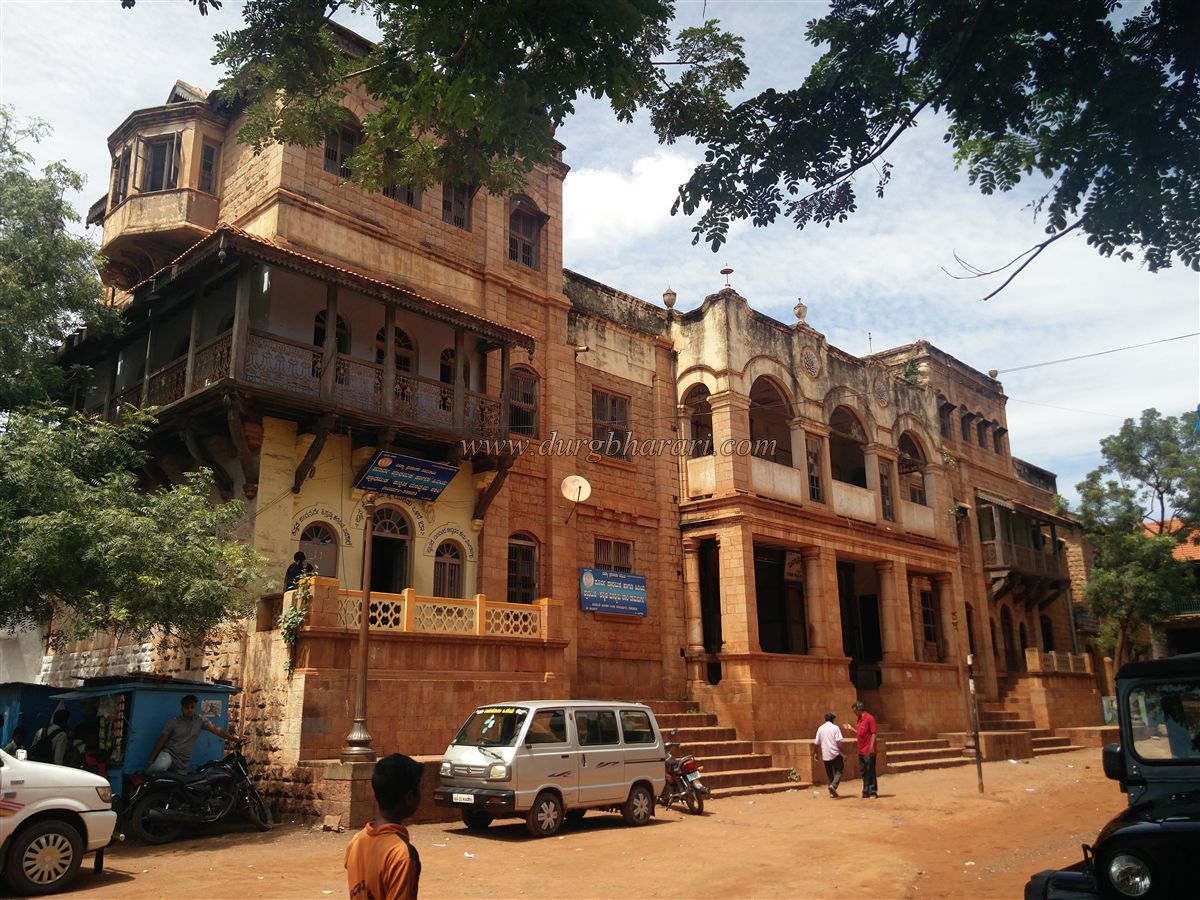
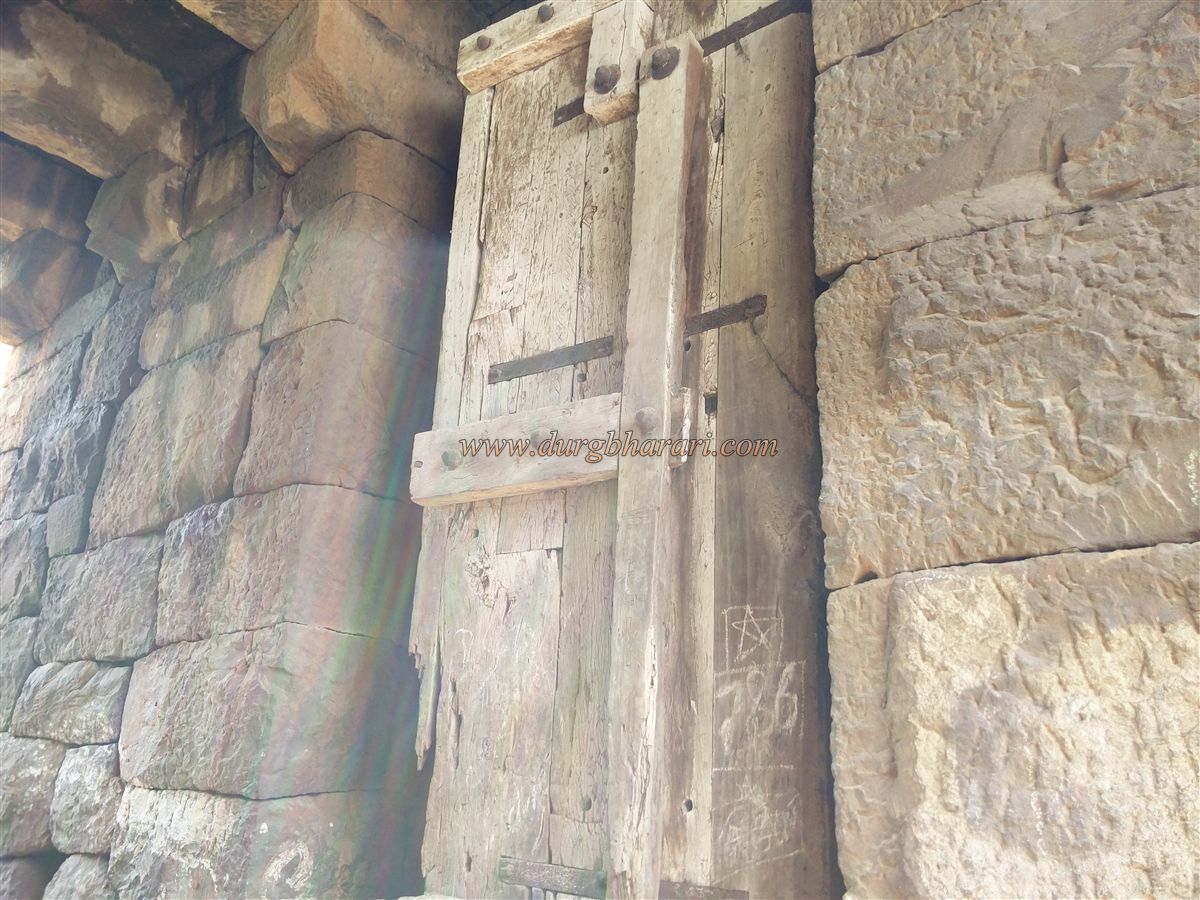
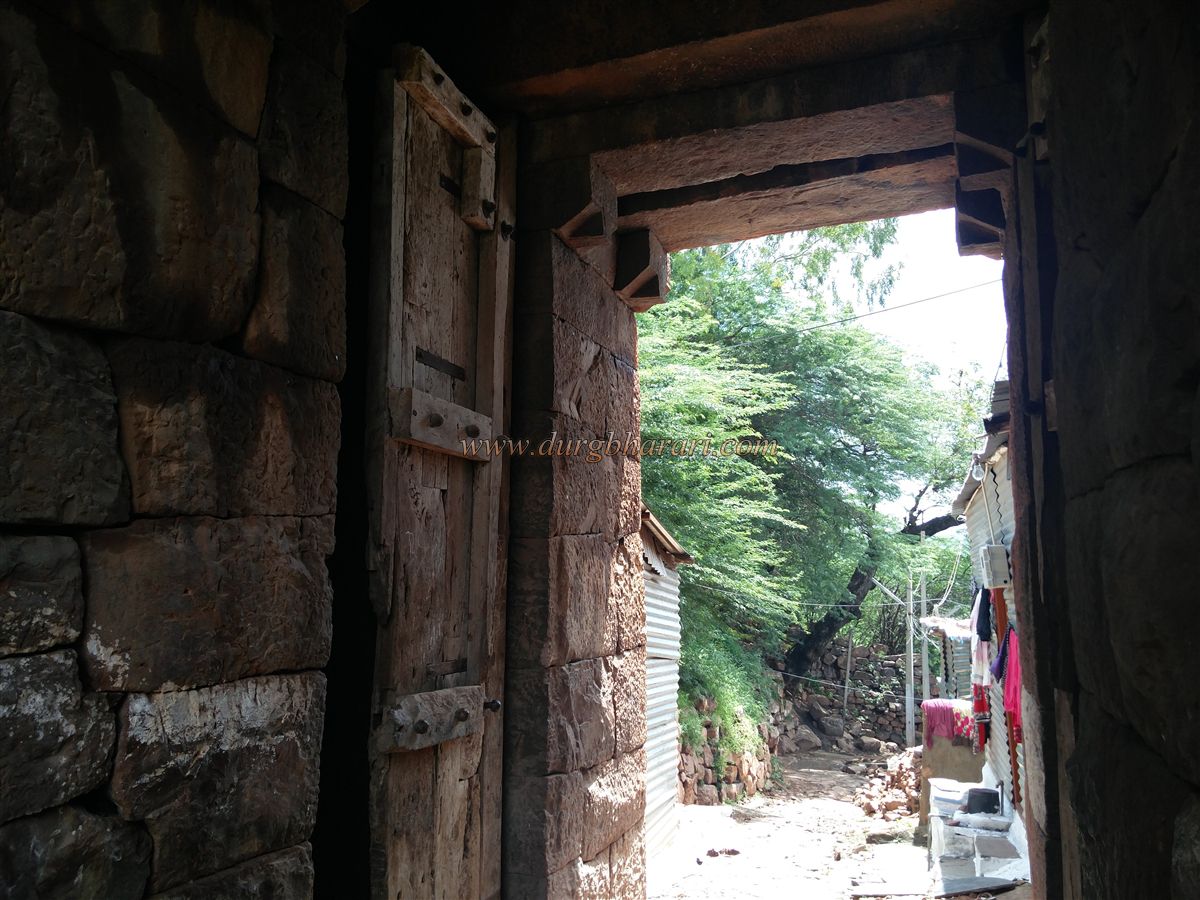
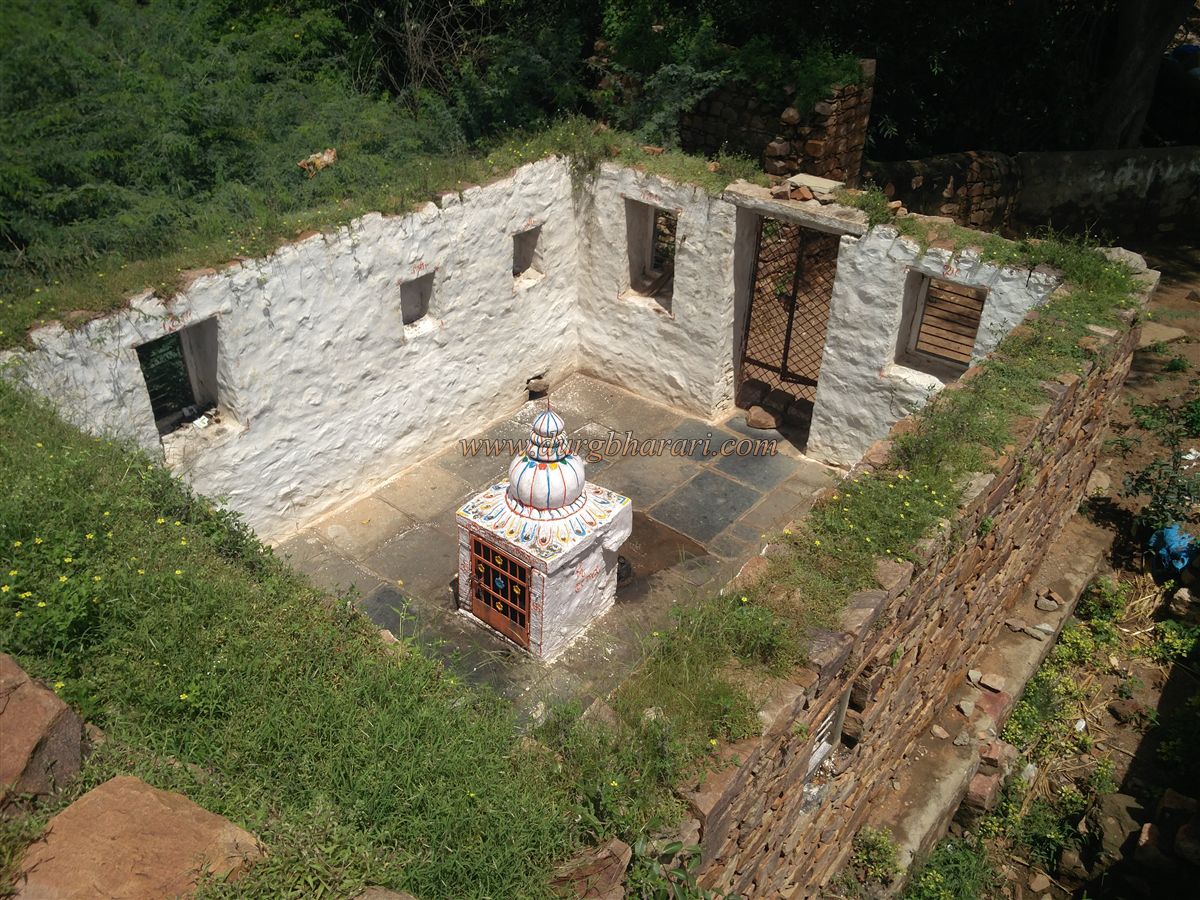
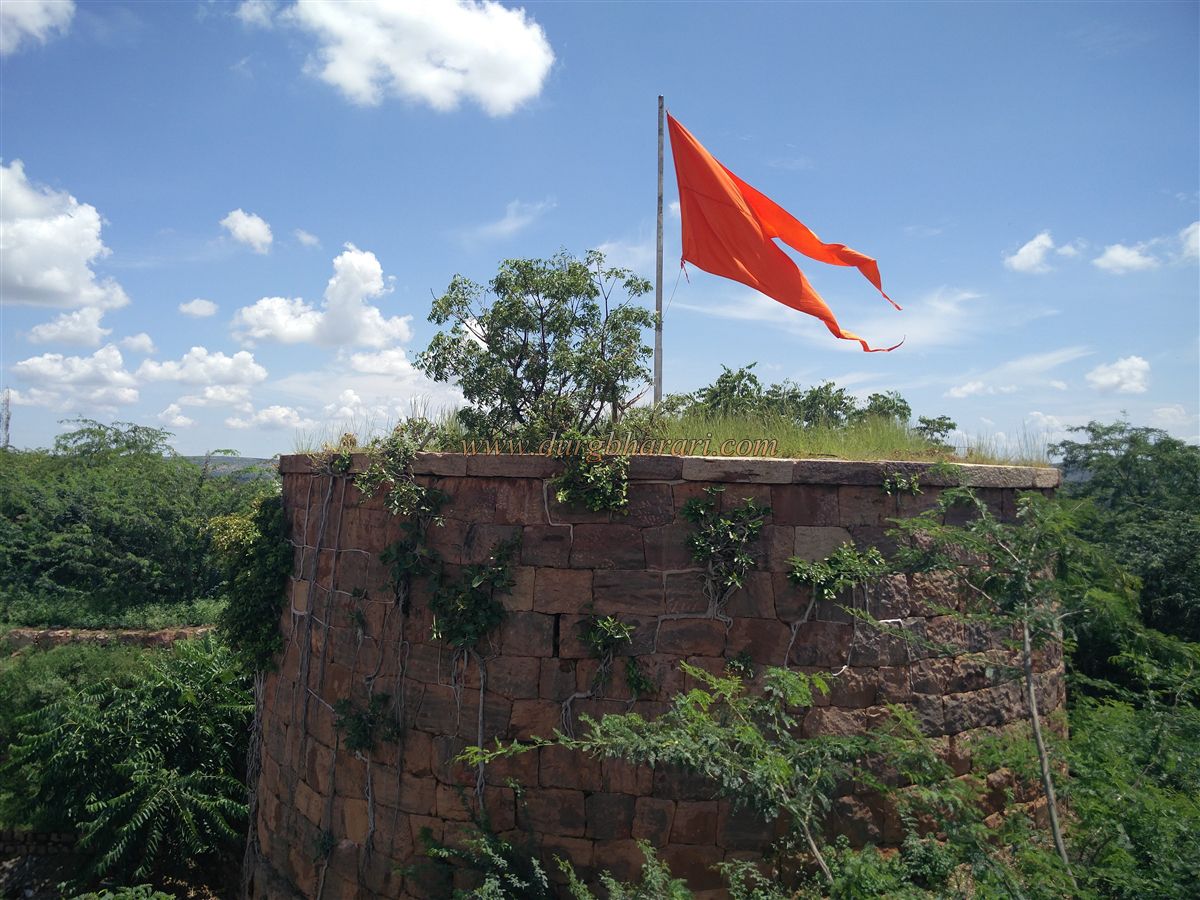
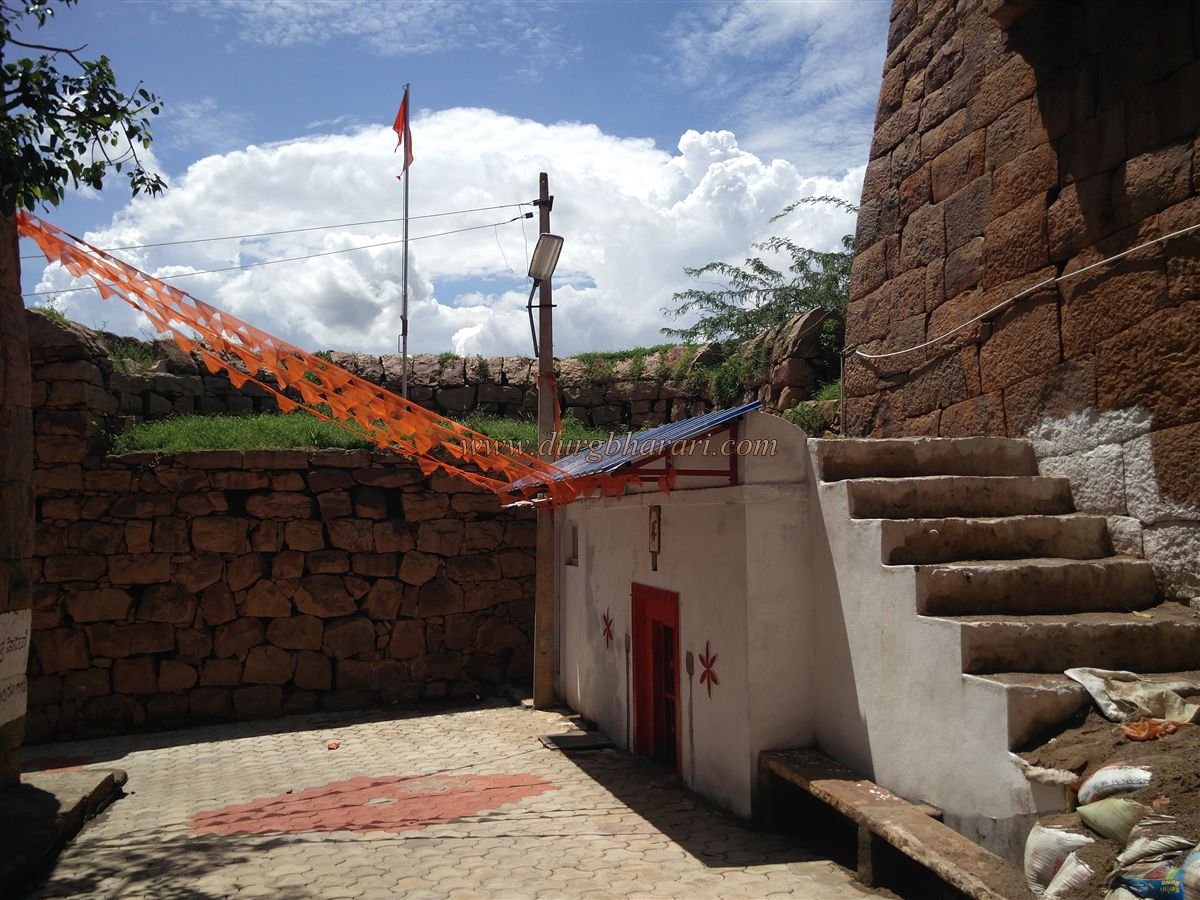
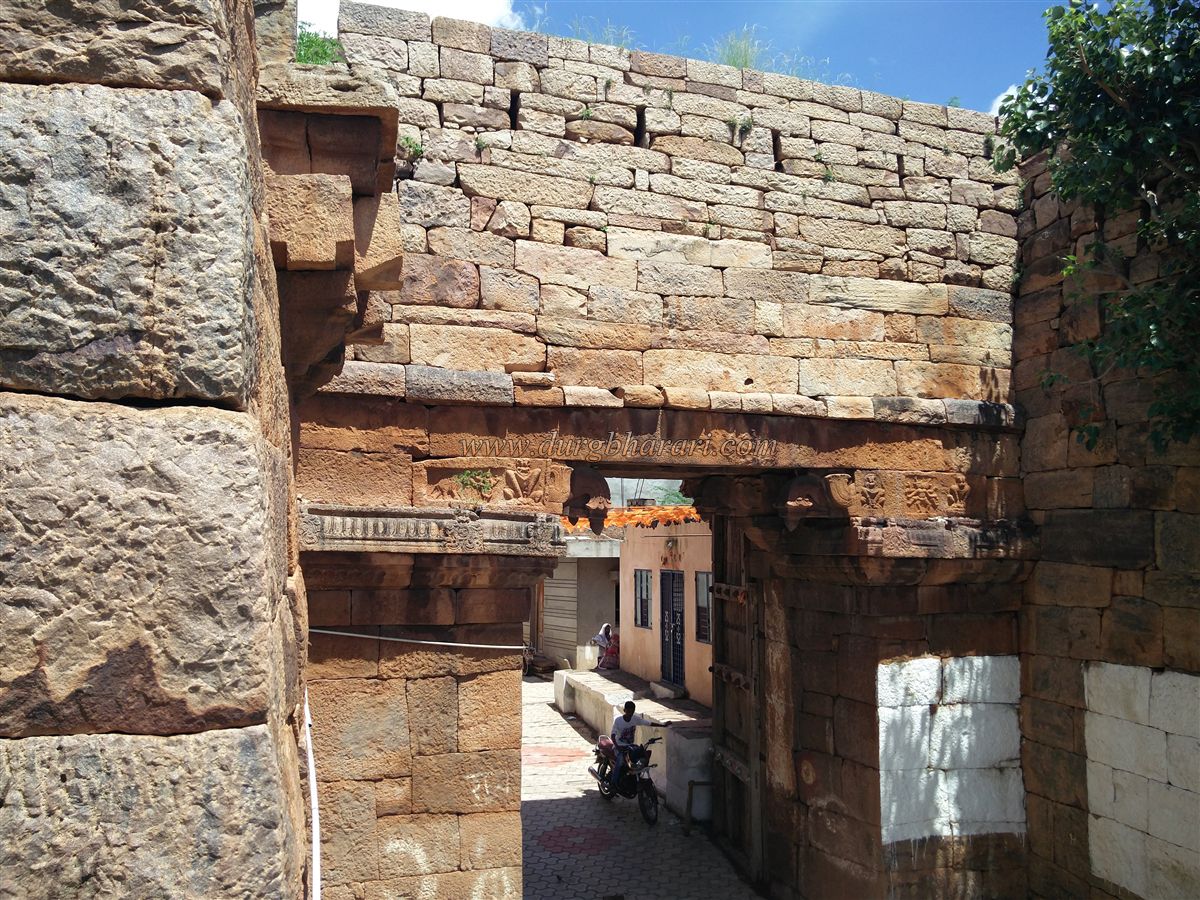
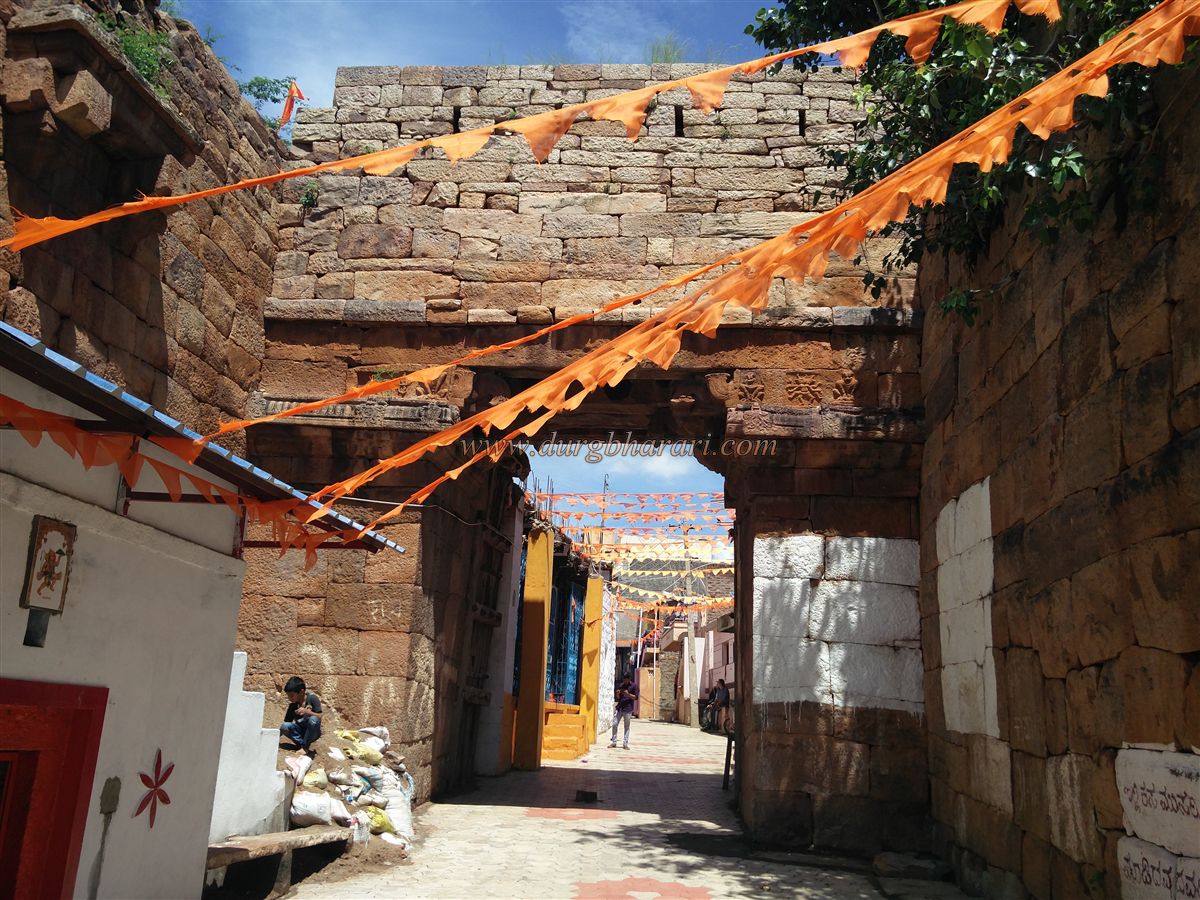
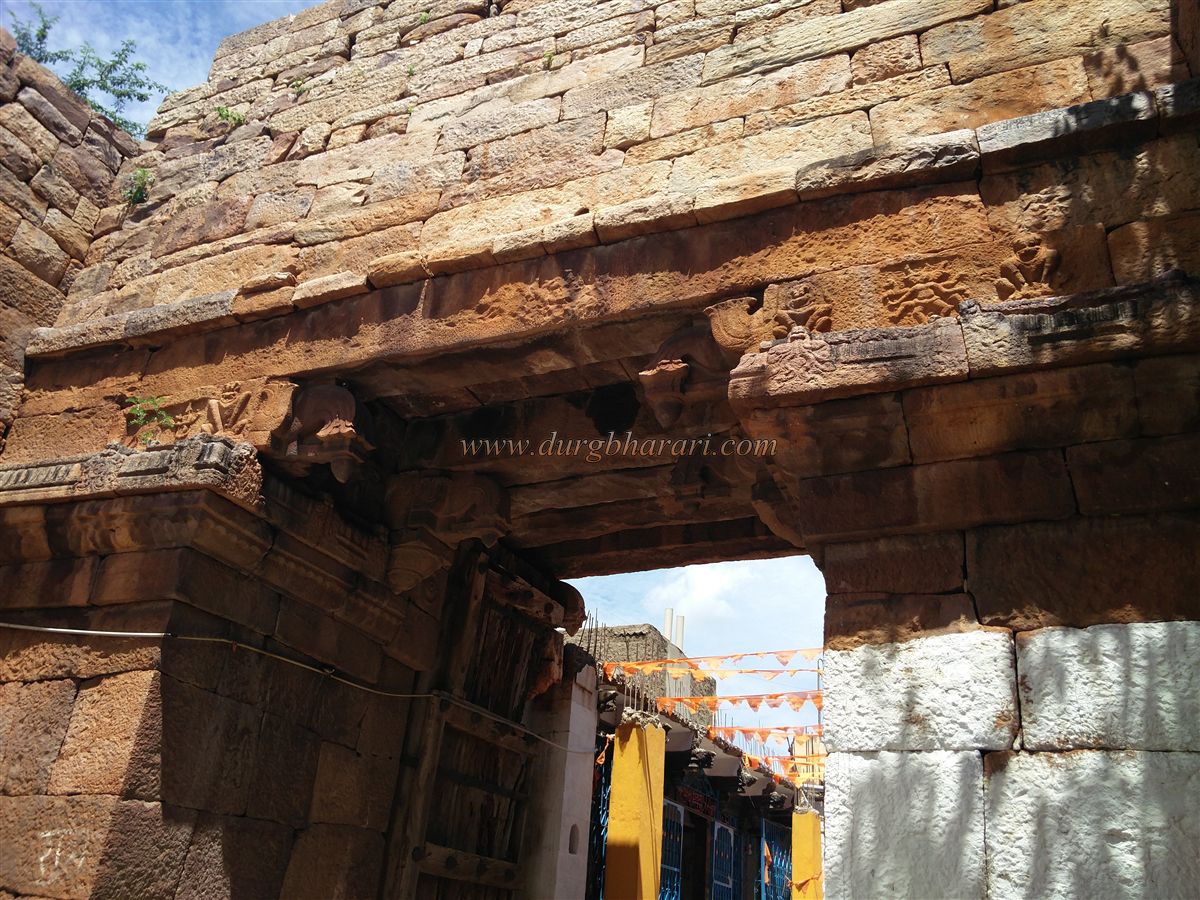
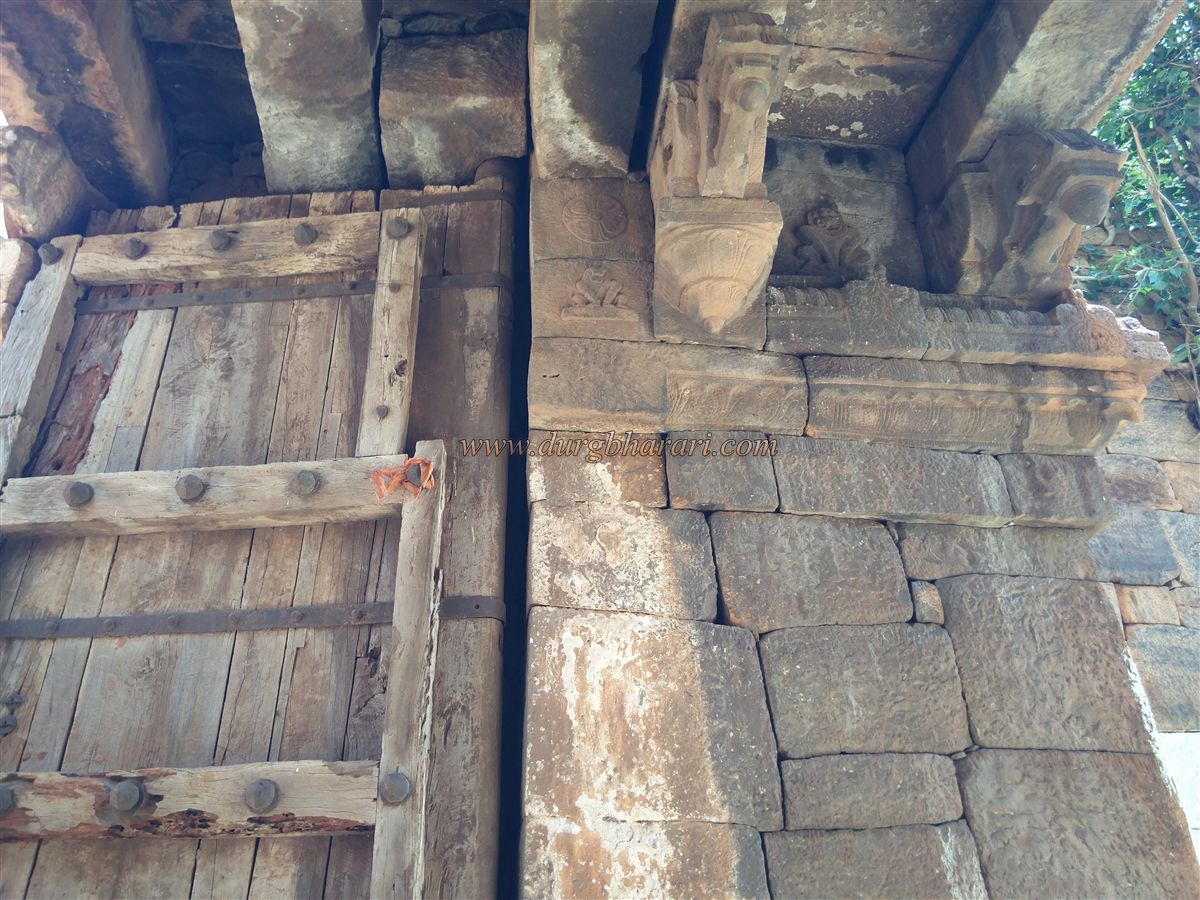
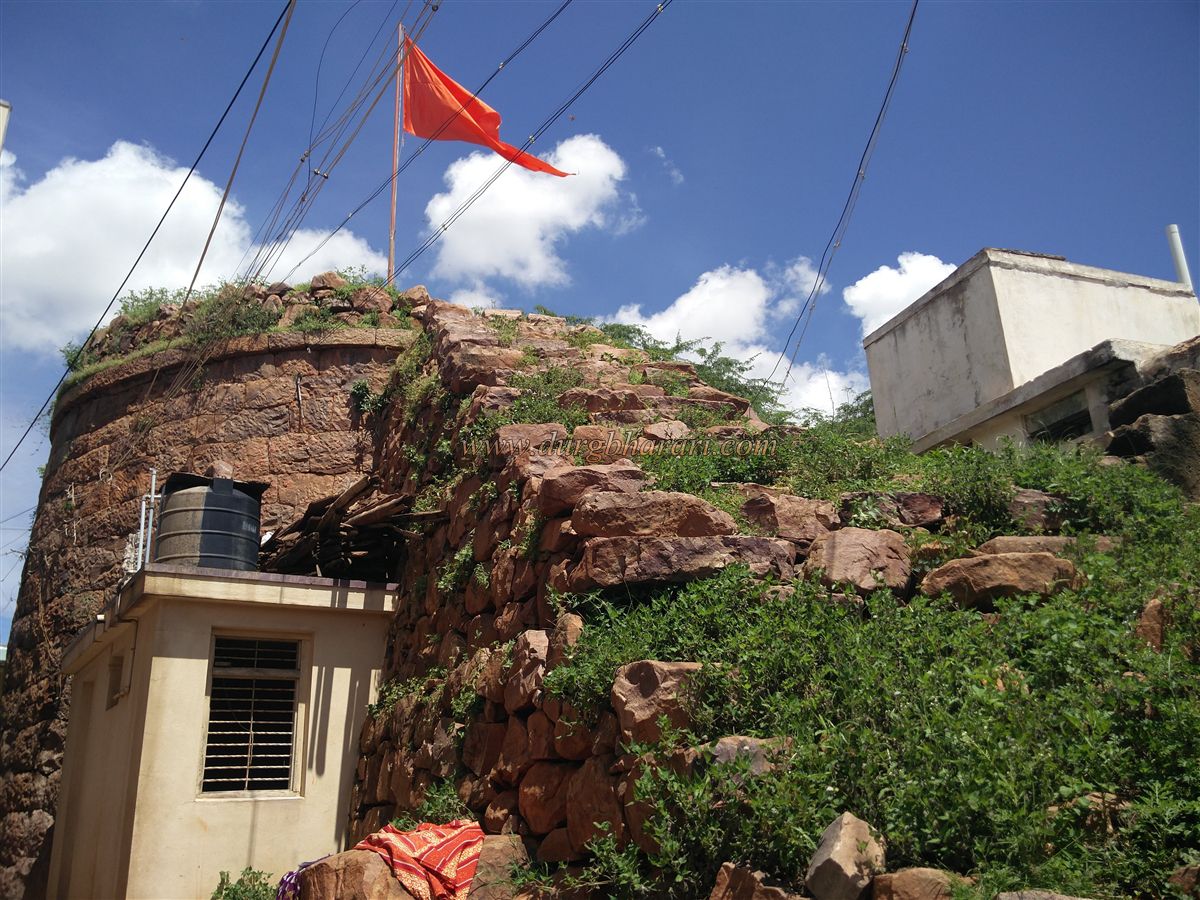
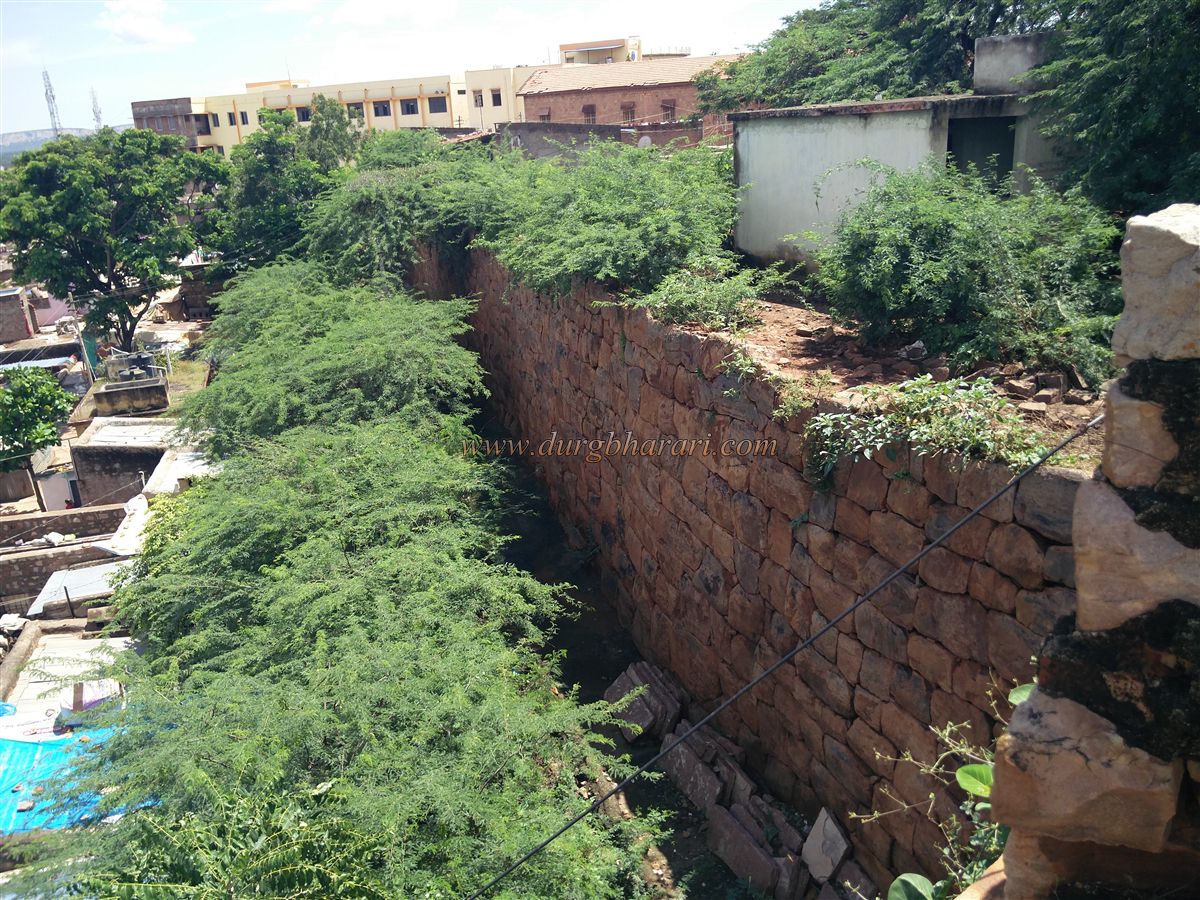
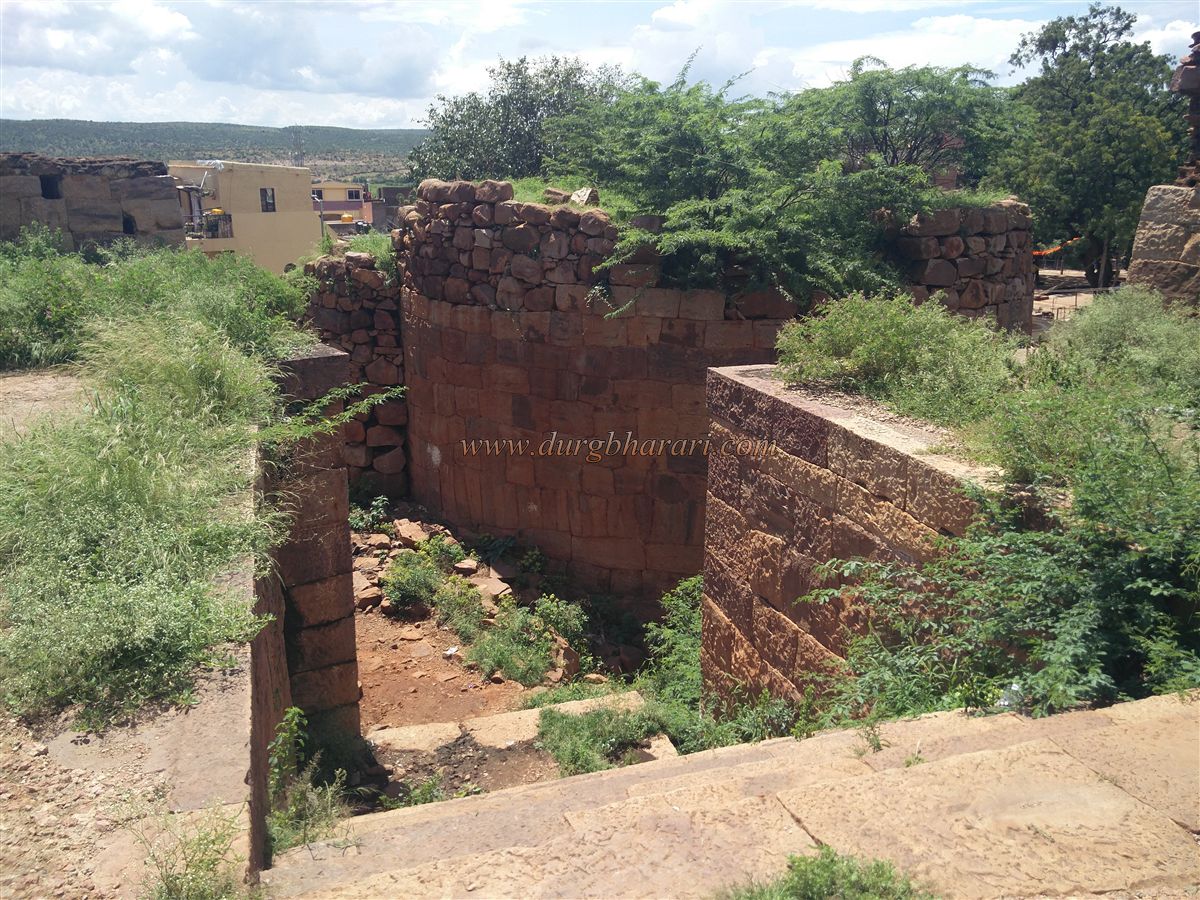
Moving past the bastion, to the right is the Ghatge palace, and to the left is a court building. Following the descending path from here leads to the western fortification. Near the rampart is a large, deep well, now filled with overgrowth and wastewater from the settlement’s drains. Beside the well is a ruined temple on a platform, with the deity now housed in a small shrine. Climbing the rampart from here offers a view of the remaining northern fortification. Close to this section is a gate with its original wooden doors still intact. Stepping outside and walking downhill offers a panoramic view of the continuous wall of the fort. From here, one should return and ask for directions to the Amba Bhavani temple, located just inside the southern gate of the fort. This gateway, built in the Gomukhi style, is the most beautiful one on the fort. It features extensive stone carvings, an ornate stone canopy, and intricately sculpted door frames. In front of the gate is a transverse wall with a semi-circular bastion built atop it. Outside this gate is a Hanuman temple, and the gate’s wooden doors are still in place. Inside, to the right, is a large bastion with a saffron flag planted atop it, accessible by steps. On this bastion is a circular platform for a cannon.
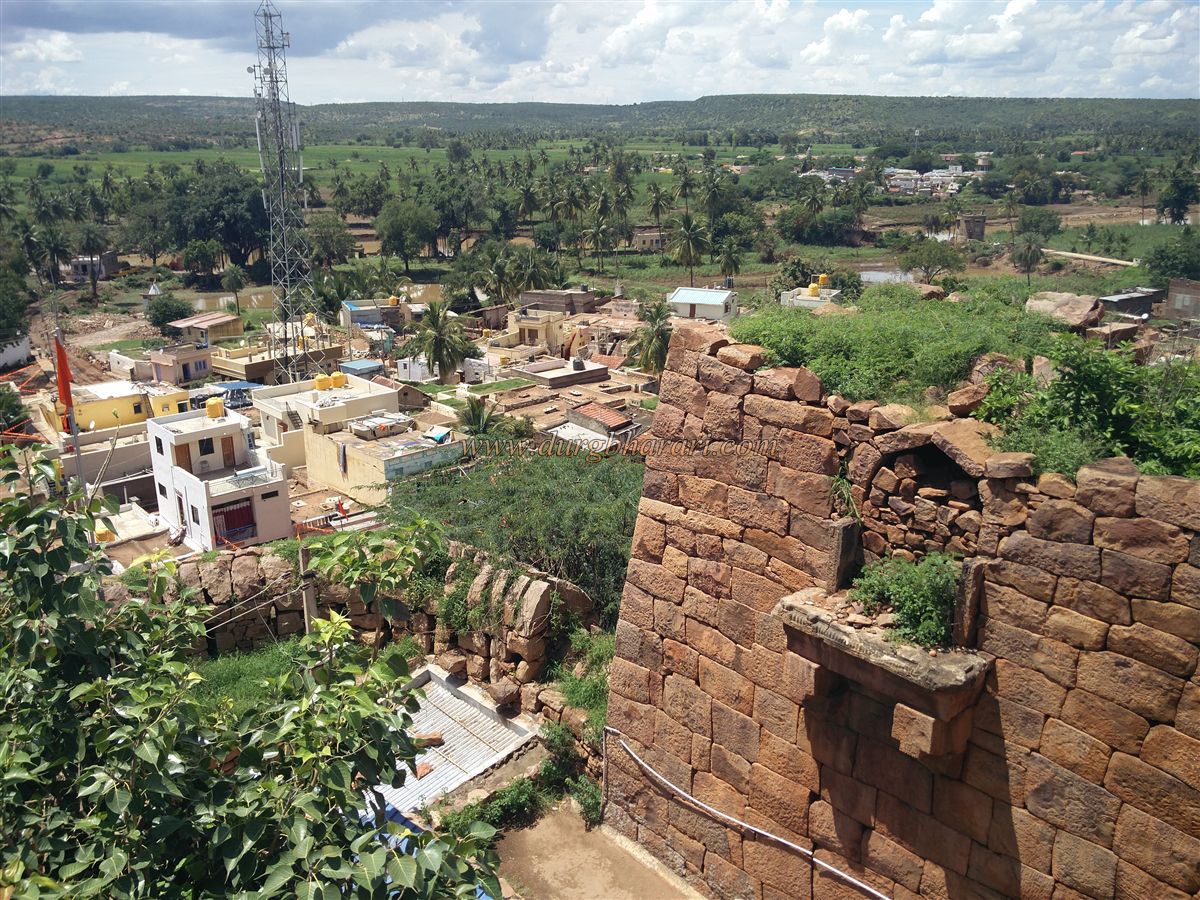
After viewing this gate, one should return to the back of the palace. Proceeding along this path leads to the northern rampart of the fort. A short distance before this rampart is a separate bastion, likely constructed to monitor the fort’s interior. From this bastion, one can view the entire Ramdurg town situated north of the fort. At the northern tip of the fort is a large bastion with two smaller adjacent bastions. To reach this area, retrace your steps slightly to find a descending path leading to the fort walls and bastions. This section contains a large granary, now occupied by settlers. Next to it is a small gateway built into the fort wall, used for wastewater drainage. Carefully navigating this path leads to the northern tip of the fort, where a beautifully built gateway stands, flanked by large and small bastions. As this area is used for defecation, one may need to flee quickly to avoid the stench.
It takes about an hour to explore the entire fort. It’s advisable to bring a young local boy along while exploring. Ramdurg, now a taluka in Belgaum district, was a small princely state from 1742 to 1948. The state included the towns of Ramdurg and Nargund and 37 villages. As there are no records of the fort before Shivaji Maharaj's era, it is believed that Shivaji built it. In 1674, Shivaji Maharaj appointed Appaji Suri Hublikar as the fort commander. After Shivaji's death in 1692, the forts of Nargund and Ramdurg fell into Mughal hands, but in 1707, Ramrao Dadaji Bhave, the Sabnis (clerk) under Appaji, reclaimed them. On his deathbed, Appaji handed the fort over to Ramrao Dadaji Bhave. After Appaji death, the Bhave family established authority over the surrounding area. Later, Chhatrapati Sambhaji of Kolhapur appointed Ramrao as fort commander and made him Pant Sachiv.
Ramrao's nephew Dadaji was also valiant and was granted some villages as inam by the Nawab of Savanur. In 1734, Chhatrapati Sambhaji of Kolhapur appointed Dadaji as Desai of the region between Ghataprabha and Tungabhadra. Around 1740, Ramrao died during a pilgrimage to Kashi. Suspecting that Ramrao had been murdered by his son Yogirao, a dispute broke out between Yogi Rao and Dadaji's son Bhaskar Rao. During the ongoing conflict between the Satara and Kolhapur courts, Ramdurg and Nargund came under the Satara durbar. In 1753, Balvantrao, a descendant of Appaji Suri Hublikar, the fort commander during Shivaji’s time, obtained a sanad from the Peshwa recognizing his rights and appointed Yogi Rao and Bhaskar Rao as Jagirdar under him. However, in 1758, during the tenure of Madhavrao I, the two cousins made an agreement and jointly took over the state, while Balvantrao was given a position with a salary of 12,000 rupees. Under the condition of providing 350 cavalrymen during wartime, the Peshwa approved this arrangement.
In 1778, during the tenure of Bhaskar Rao’s adopted son Venkatarao, Hyder Ali captured the region but allowed the Bhave to retain their Desai post in exchange for tribute. During Tipu Sultan's rule, he demanded higher tribute, which the Bhave refused to pay. Consequently, Tipu imprisoned the Bhave family in Mysore. When Lord Cornwallis led a combined attack of the Peshwa, Nizam, and British against Tipu, Venkatarao was released. In 1791, the Peshwa granted a Sansthan (estate) to Venkatarao and his brother Ramrao. With Parshurambhau Patwardhan mediation, Ramrao received the Ramdurg fort and royal rights over the area. However, due to dissatisfaction with the division, Ramrao's son Narayan Rao requested a final settlement. In 1810, Bajirao II divided the territories between the two Bhave family branches of Nargund and Ramdurg. After the fall of the Peshwa, Nargund was merged into Ramdurg. Between 1800 and 1810, the British appointed Bapurao Ranade as their representative to Ramdurg.
In 1827, after Narayan Rao died without an heir, the British instructed his widow Radhabai to adopt Harihar from the Nargundkar branch, naming him Ramrao. But Radhabai did not accept this imposed heir, resulting in continued disputes. As Ramrao too died childless, he obtained official permission to adopt a son in 1862 and adopted a boy named Yogi Rao in 1866. Ramrao died in 1872, and six years later, in 1878, Yogi Rao also passed away. His son Venkatarao ascended the throne. After India gained independence, Venkatarao, also known as Ramrao III, merged the Ramdurg princely state into the Indian Union in 1948. From 1st November 1956, the state was included in Mysore (now Karnataka).
© Suresh Nimbalkar
GALLERY