RAJGAD
TYPE : HILL FORT
DISTRICT : GADCHIROLI
HEIGHT : 995 FEET
GRADE : HARD
When one hears the name Rajgad, the mind instantly recalls Shivaji Maharaj’s Rajgad. However, few are aware that far away from this well-known fort, there exists another Rajgad in Maharashtra. While reading about forts, I came across a reference stating that a Rajgad Pargana (administrative unit) once under the rule of the Gond dynasty had come under the control of the Bhonsle rulers of Nagpur. Later, through local contacts, I learned that there was indeed a fort named Rajgad in this region, though now it is completely destroyed. My friend Pravin Hazare, however, shared that remnants of the fort still exist on the hill, and he even sent the exact location.
This Rajgad Fort is located in the Charmoashi taluka of Gadchiroli district.
...
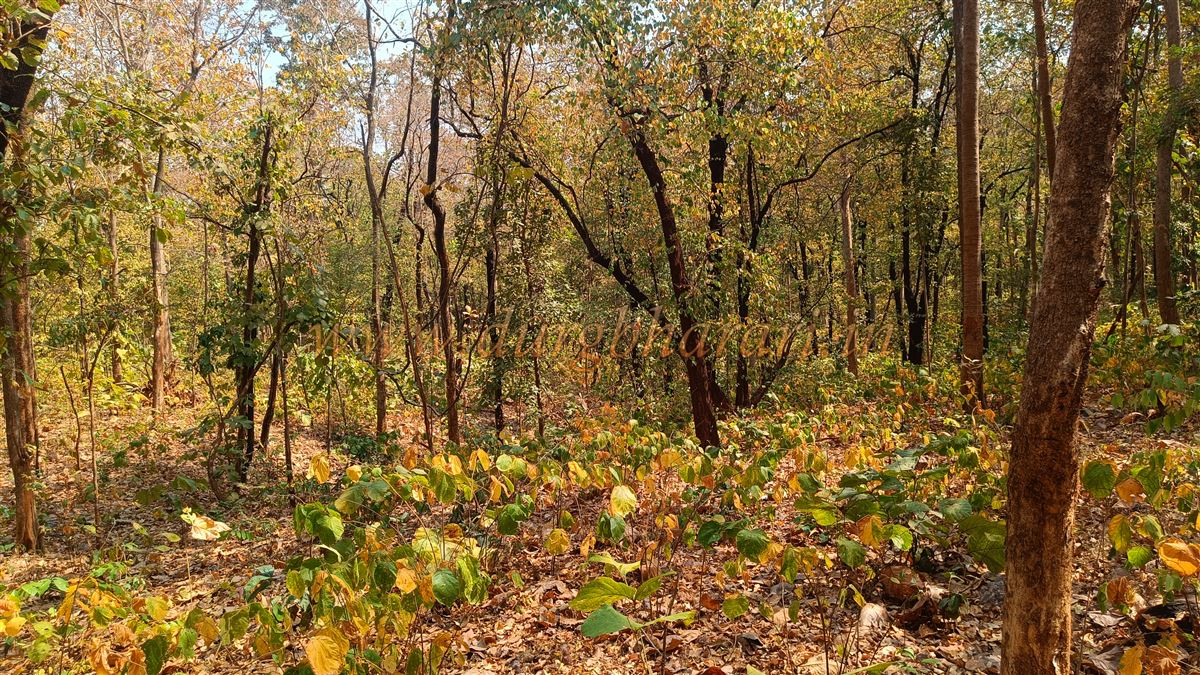
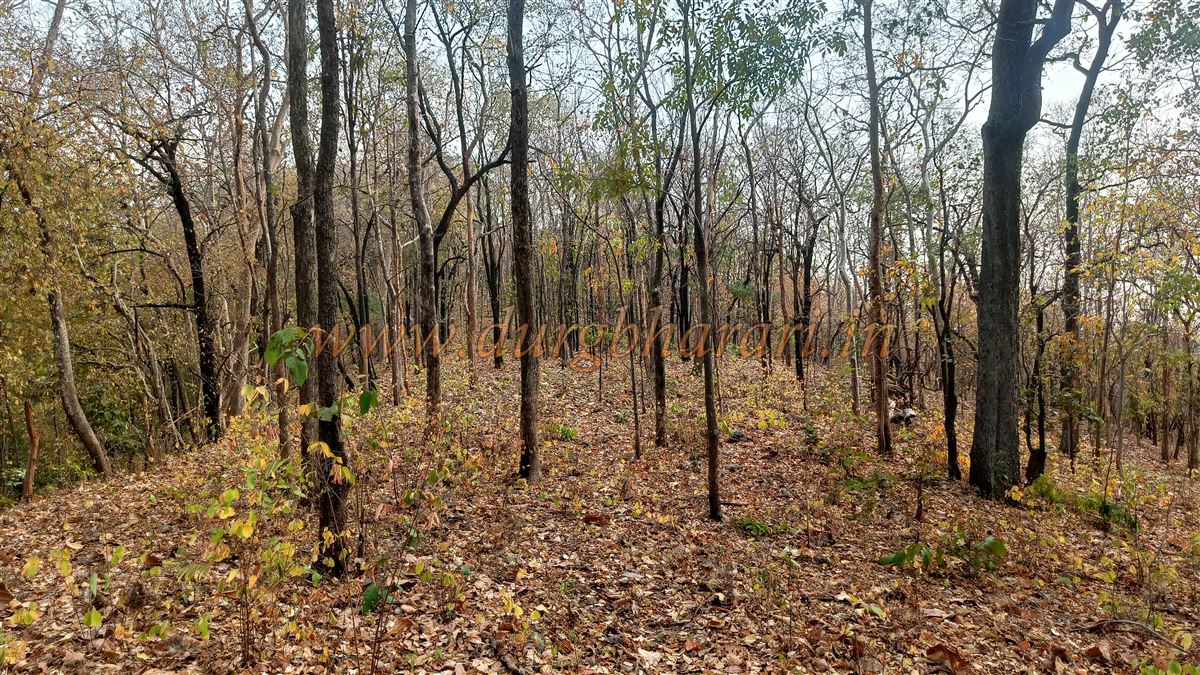
It is about 63 km from Gadchiroli and 28 km from the taluka center of Charmoashi. The village of Ambela, located on the Ghot–Mulchera road, serves as the base village for reaching this fort. Although Ambela is considered the base village, it is still around 6 km away from the fort itself. From the Ghot–Mulchera road, a rough path constructed by the forest department leads up to the base of Rajgad, but a private vehicle like a jeep is necessary to travel on this road. Since the remains of Rajgad Fort are hidden deep within a dense forest on a hill and are difficult to locate, it is extremely important to be accompanied by a knowledgeable local guide. One should not attempt to visit the fort without such guidance.
The journey begins at Ambela village, from where one must proceed with a guide. The rough road constructed by the forest department is about 6 km long. From here, the real challenge begins — navigating through the dense forest maze, as there is no marked trail to the fort. Local people, with their experience of moving through the forest, skilfully cross two hills and lead you to the hill where the remains of Rajgad Fort are found. Due to a high population of bears in the area, extra caution is necessary while trekking. The locals ensure safety by remaining vigilant and keeping visitors close.
The remnants of Rajgad Fort consist of a defensive wall made of flat and large bricks. However, most of this wall is buried under soil. The visible part of the wall is located near the edge of a valley, and it is difficult to determine whether it was part of a fortification or simply a boundary wall of some estate. This wall is about 300 feet long, and a foundation of a bastion can still be seen. It takes around one and a half hours to climb from the base to the fort, and 15 minutes are enough to explore its remnants. Because of the dense forest atop the fort, the surrounding area isn’t visible, and one can only see the jungle while walking along the cliff path.
According to locals, when revolutionary Baburao Shedmake revolted against the British in 1857, he first captured the Rajgad Pargana and resided at the fort for some time. No historical reference to the fort is available prior to this. In 1853, Lord Dalhousie rejected the doctrine of lapse and annexed the Nagpur state. As a result, Chand district, which had been under the control of the Nagpur state, passed into British hands. Many zamindari and sub-zamindari estates in the district were owned by Rajgond families and had existed since the Gond period, even before Bhonsle rule. Naturally, the confiscation of their lands generated great resentment toward the British.
Molampalli was one such zamindari estate, consisting of 24 villages in present-day Gadchiroli district. The estate’s zamindar, Baburao Shedmake, was a vibrant 25-year-old youth born on 12 March 1833 in the village of Kishtapur in Aheri taluka. In early March 1858, Baburao gathered tribal youth from the Gond, Madia, and Rohila communities — the latter formerly in service of the Nizam — and formed an armed camp. With this force, Baburao seized control of the entire Rajgad Pargana of Chand district.
Upon hearing this, the district collector of Chandrapur, Mr Christian, dispatched a British military unit to suppress the rebellion. On 13 March 1858, a skirmish occurred near Nandgaon-Ghosari between British forces and Baburao's troops, resulting in a victory for Baburao and losses for the British in men and supplies. Later, Venkatarao, the zamindar of Adpalli and Ghot, joined Baburao. Together, they declared open war against the British and raised a combined army of more than 1,200 Rohila and Gond soldiers.
Their joint forces launched a strong assault northward toward Gadhi Surla and brought that region under control. Upon learning this, Christian sent another detachment to encircle the hill. However, Baburao's army launched a barrage of stones and rocks from above, scattering the British troops. Christian then called for reinforcements from Nagpur under Lieutenant John Nuttall. With these reinforcements, the British forces clashed with Baburao’s troops at Saganpur on 19 April 1858 and at Bamanpet on 27 April 1858. Despite fierce fighting, Baburao’s forces once again triumphed over the British.
Elated by this success, Baburao attacked a British telegraph camp at Chinchgudi in Aheri zamindari on 29 April 1858, located on the banks of the Pranhita River. The British pursued Baburao, but on 10 May 1858, they were defeated for the third time in succession. Eventually, Christian devised a cunning plan to trap Baburao. He sent a threatening letter to Lakshmibai, the zamindar of Aheri, warning her of prosecution and confiscation of her estate if she harboured or helped the rebels. He also ordered her to assist the British in capturing Baburao. The threat had its intended effect, and Lakshmibai promised full cooperation.
In July 1858, Laxmibai’s forces successfully captured Baburao at Bhopalpatnam. However, while being taken to Aheri, Baburao managed to escape with the help of his Rohila bodyguards. He then resumed looting British-held areas and continued to openly challenge British authority. Eventually, on 18 September 1858, Laxmibai’s army recaptured Baburao and handed him over to Christian. Baburao was taken to Chandrapur and charged with serious offenses.
On the evening of 21 October 1858 at 4:30 PM, Baburao was hanged in the Chandrapur prison. His associates were also tried — some were sentenced to death, while others received life imprisonment. Thus ended the rebellion in this region. For her help, Lakshmibai was honoured by the British government with the title "Companion of the Order of the Bath," and Venkatarao was rewarded with the zamindari of 67 villages in Adpalli and Ghot. After India gained independence, a memorial was erected in Chandrapur jail premises in honour of Baburao Shedmake.
© Suresh Nimbalkar
GALLERY