PALSHI
TYPE : NAGARKOT
DISTRICT : AHMADNAGAR
HEIGHT : 0
GRADE : EASY
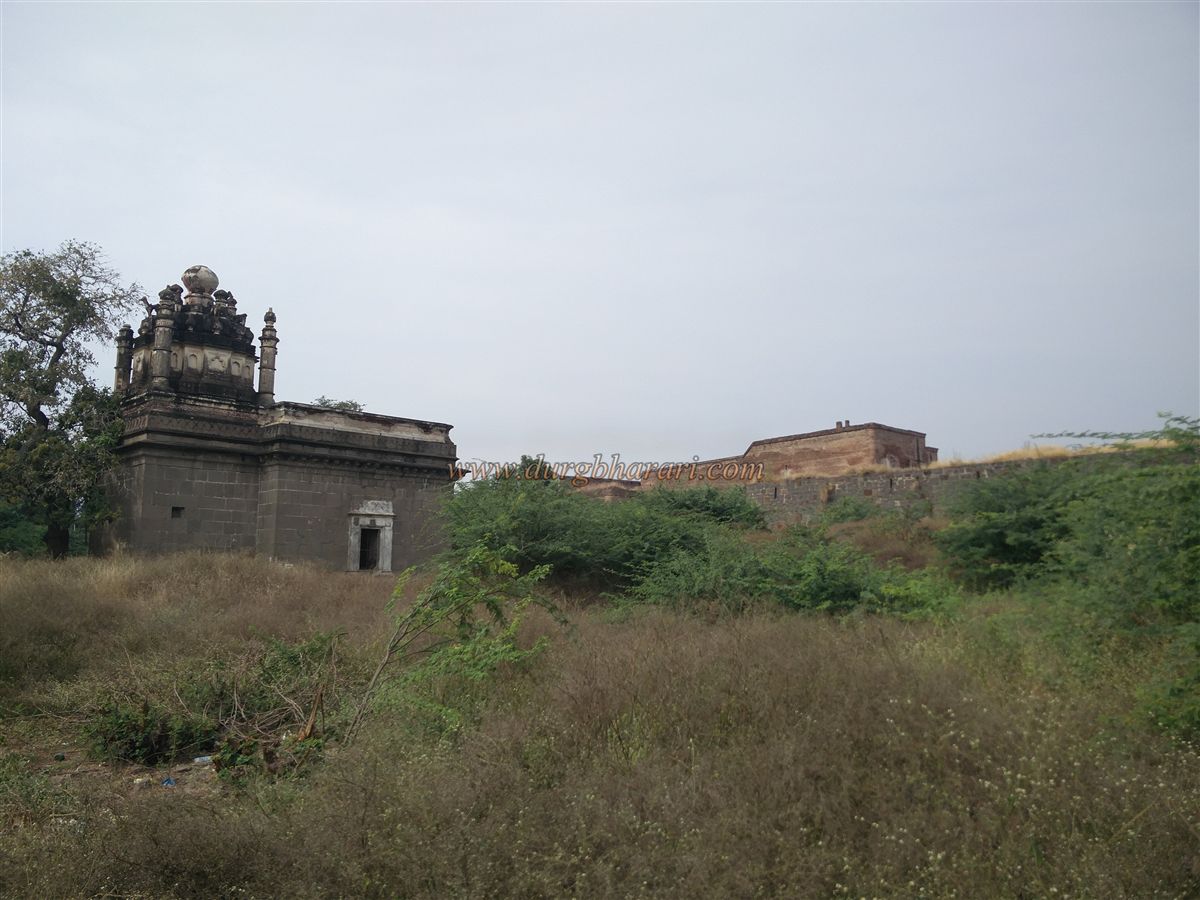
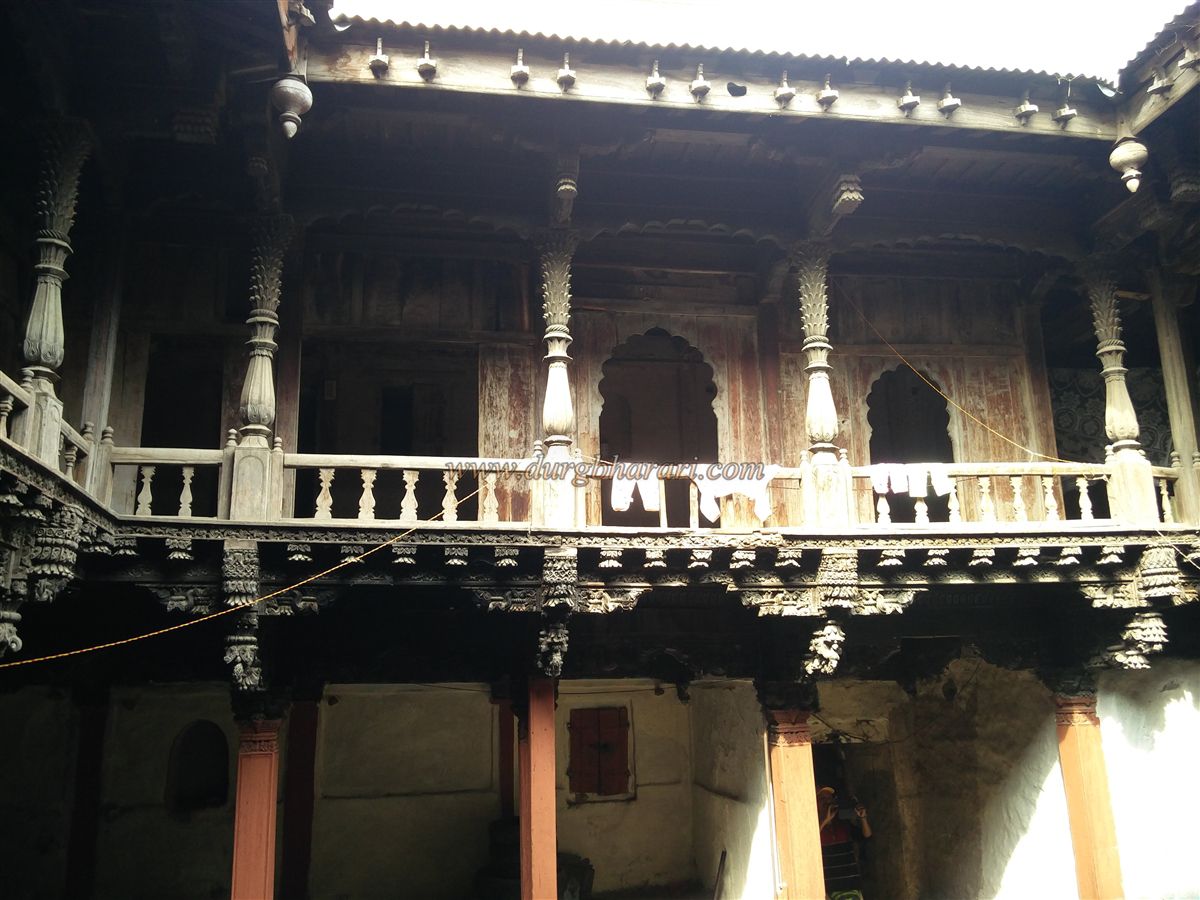
Ahmednagar district is known for its formidable forts, beautiful historic mansions, and numerous fortified settlements. In Parner taluka of this district, in the village of Palshi, stands a ground fort built by Ramaji Kamble-Palshikar, the Diwan of the Holkar. Rather than calling it a ground fort, it would be more appropriate to call it a “Nagarkot,” as the entire village of Palshi is settled within the fort itself. There are three main structures worth visiting in Palshi: the fort, the Vitthal temple, and the intricately carved wooden mansion of the Palshikar family. The woodwork in the Palshikar’ wada is exquisite and worth seeing.
On the Pune–Ahmednagar road, after crossing Shirur, one must reach Parner, the taluka town. From Parner, after 20 km, at Takli Dhokeshwar, the road joins the Ahmednagar–Kalyan highway.
...
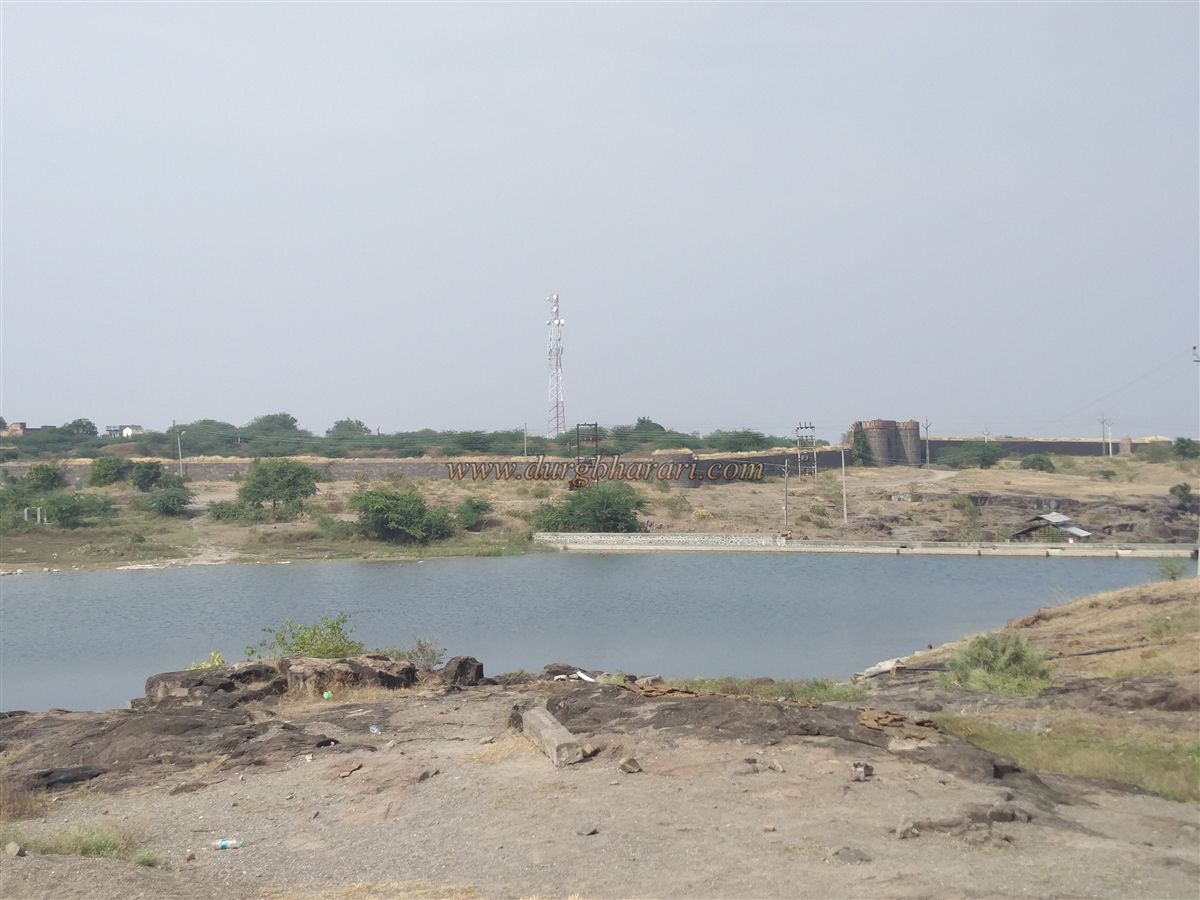
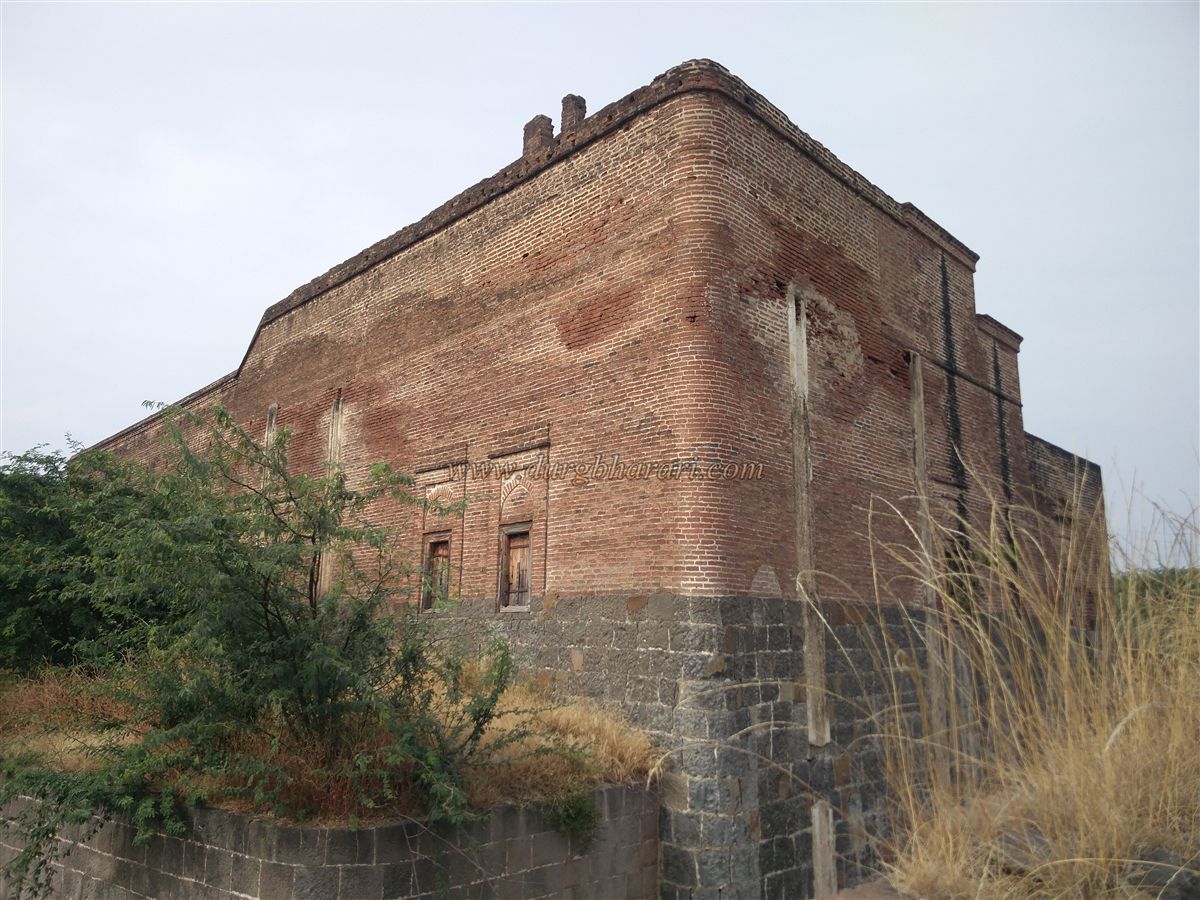
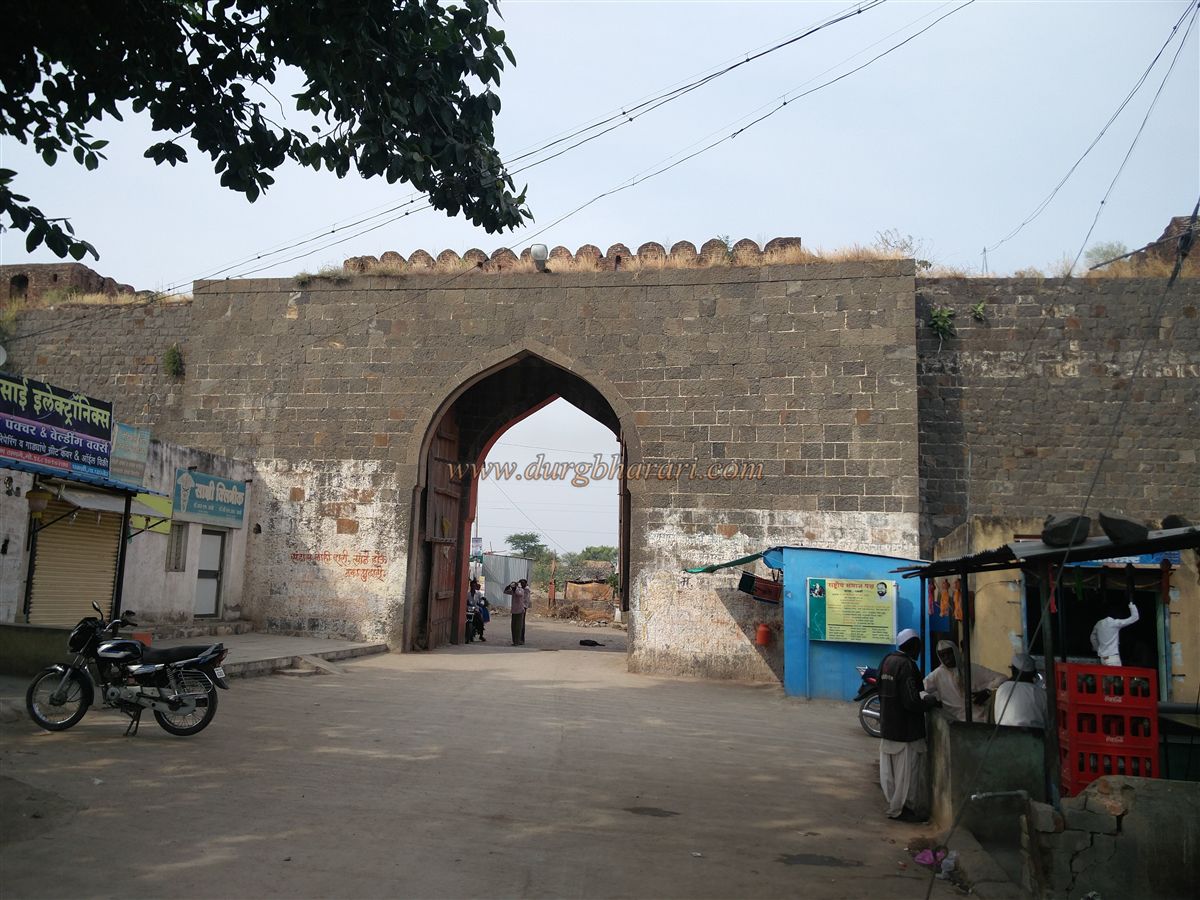
Proceeding further through Vasunde and Khadakwadi villages, one reaches Palshi, which is located about 20 km ahead. The distance from Pune to Palshi Fort is approximately 130 km. Located on the banks of the Palshi River, the fort still has visible and well-preserved fortifications. The village of Palshi occupies the eastern half of the fort, while the western half remains vacant. As the village is within the fort, the internal roads are paved, and entry and exit generally happen through the large gates on the north and east sides.
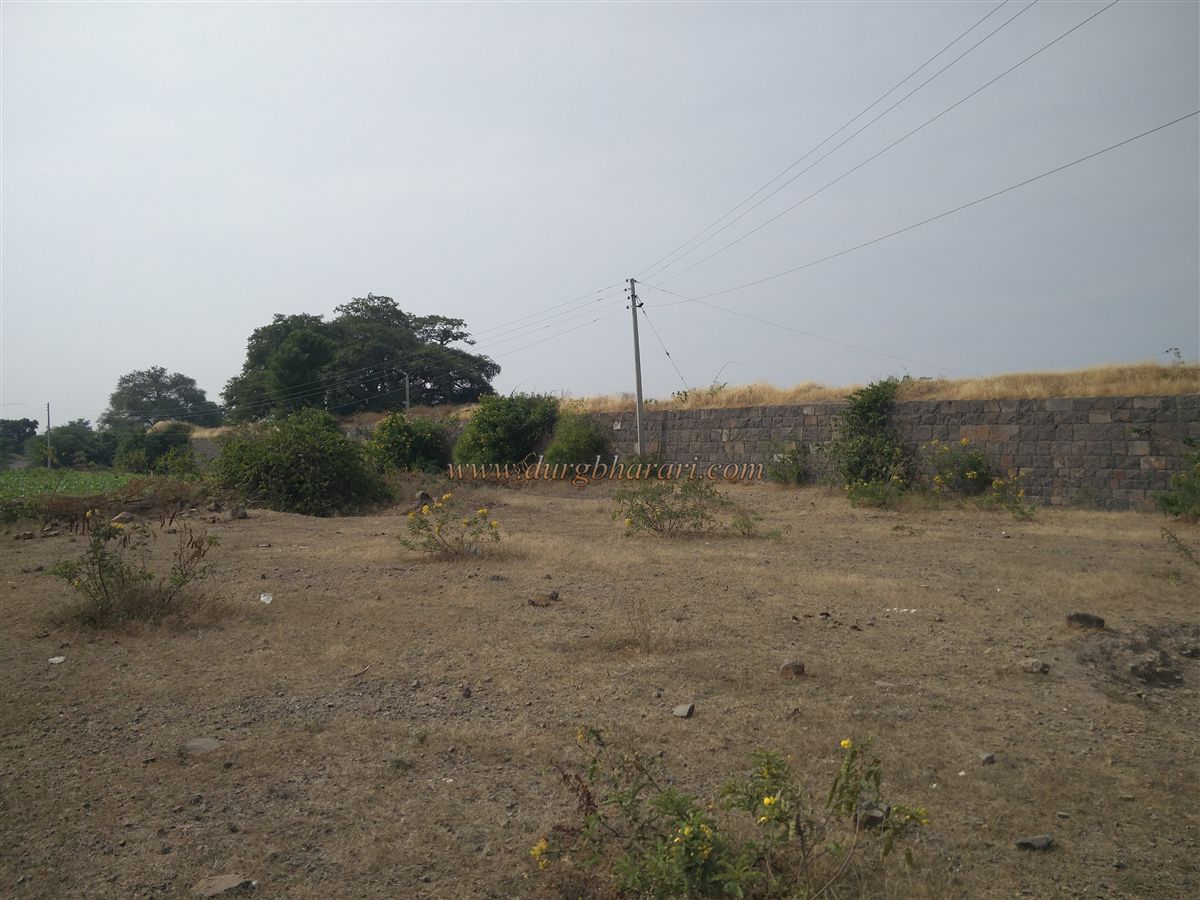
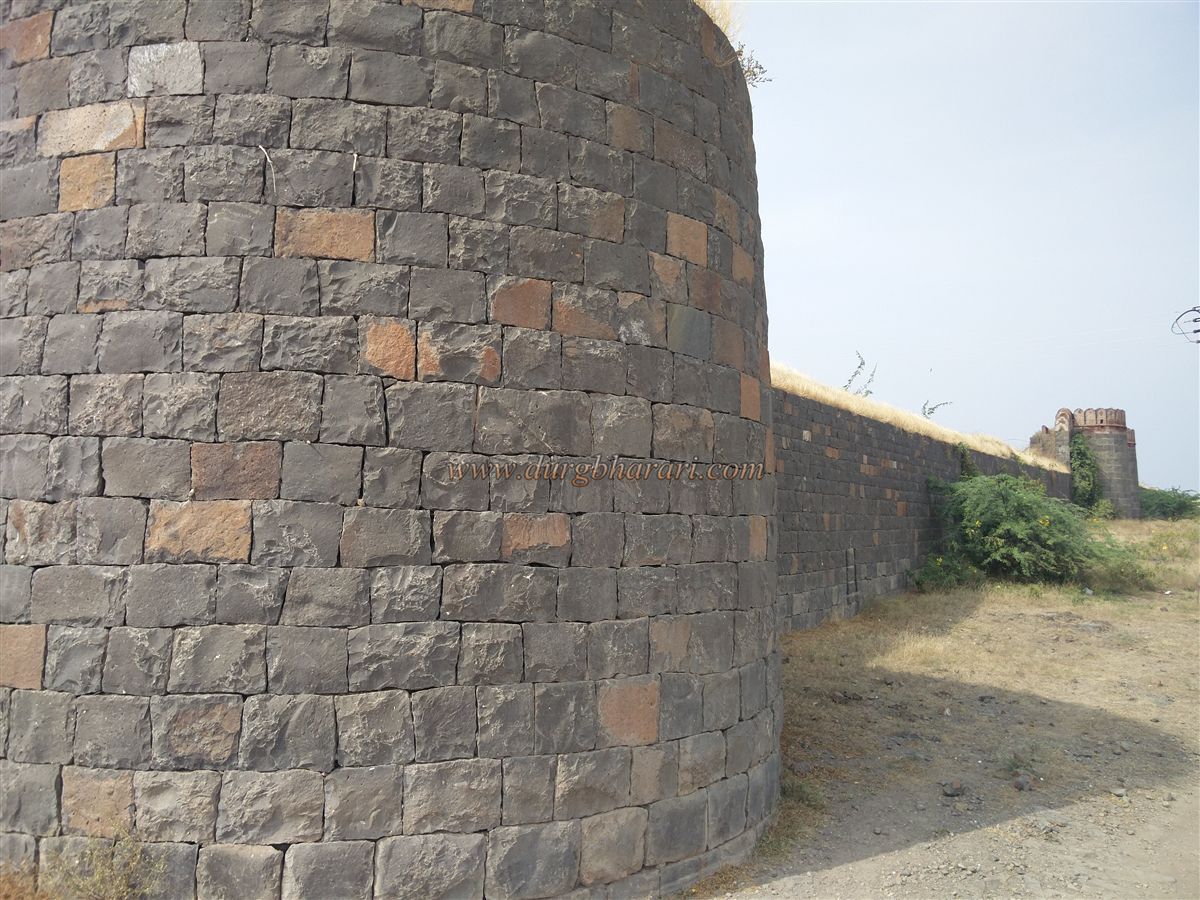
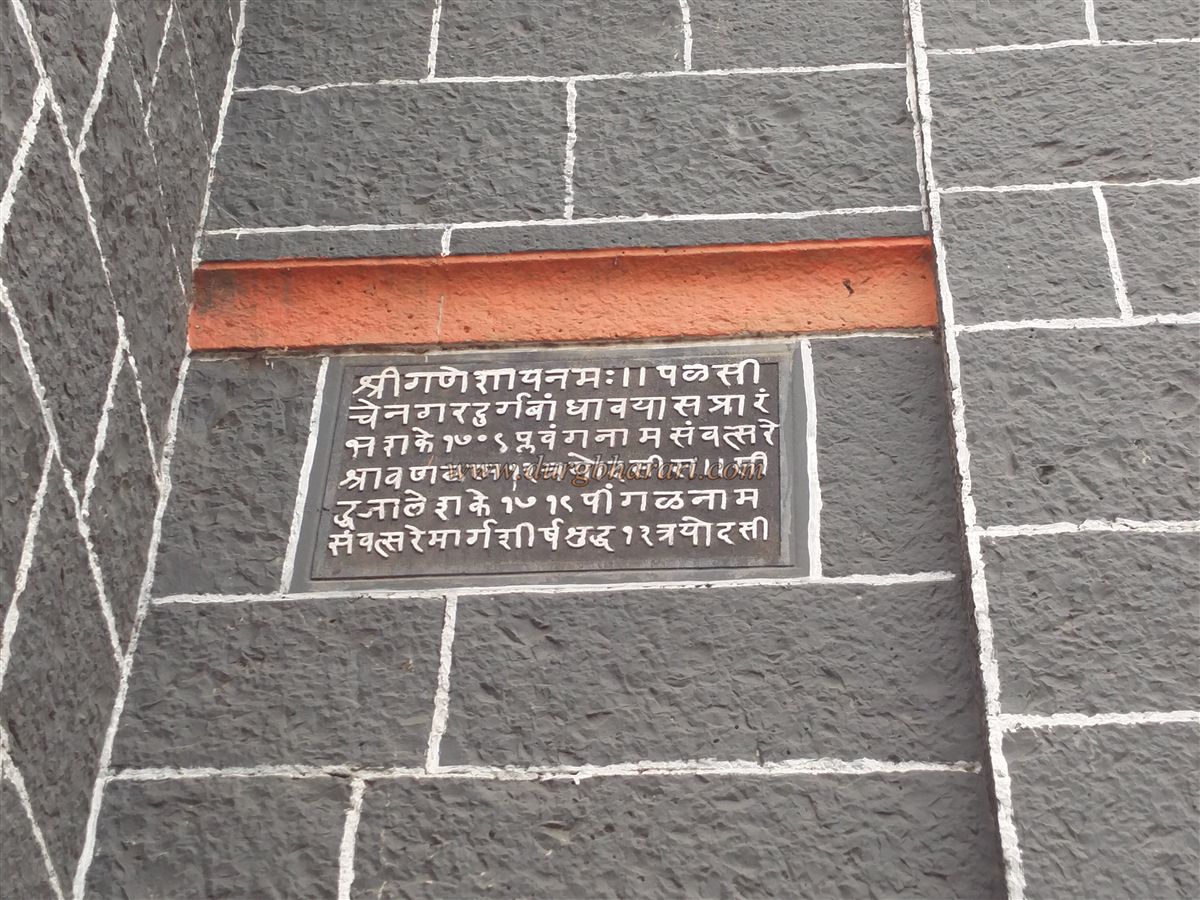
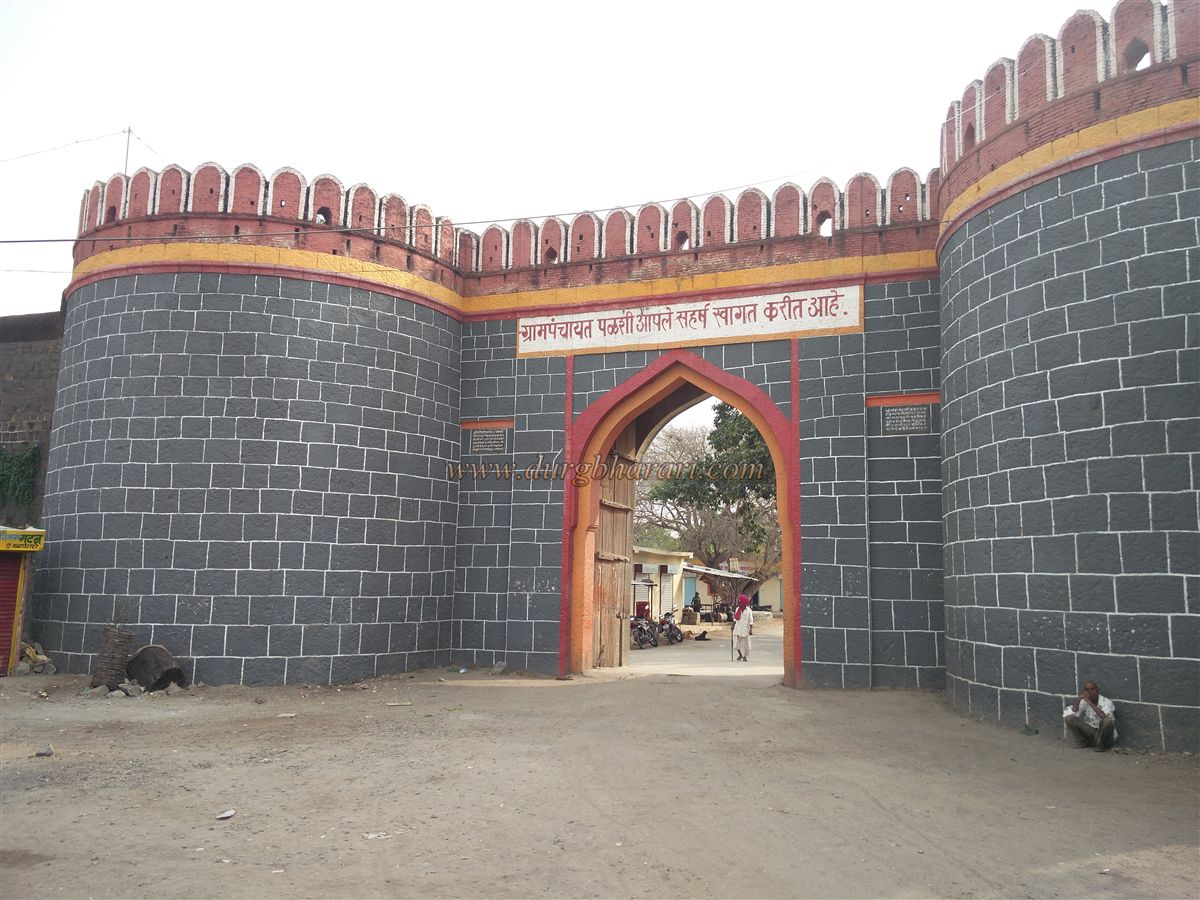
Rectangular in shape and spread from east to west, the fort covers an area of 33 acres. It is surrounded on all sides by continuous stone walls. The fort includes two main gates (on the south and west), one smaller gate (on the north), fourteen bastions (four near the gates and ten built into the wall), and three gates in total. The height of the walls is around 15 feet, while the bastions are over 20 feet tall. The main entrance on the southern wall still retains its wooden doors. Inside the southern and western gates are watchmen’s quarters. The southern gate has been freshly painted, and inscriptions in Devanagari are carved on both sides.
The left inscription reads“Shri Ambacharani Tatpar Ramrao Appaji Nirantar Shakha Ashruchalayana Gotra Vashishtha Upanav Kamble || Vritri Kulkarni Jagirdar Sa Ambal Yani Kam Kele || San 1207.”
The mention of the year 1207 suggests that this inscription is relatively recent.
The right inscription reads“Shri Ganeshayanamah || Construction of Palshi Nagardurg commenced in Shaka 1709, in the year of Plavanga, on Shravan Shukla 13 (Trayodashi), and completed in Shaka 1719, year Pingala, on Margashirsha Shuddha 13 (Trayodashi).”This tells us that Ramrao Appa began building the fort toward the end of the 17th century, and the construction took 10 years to complete.
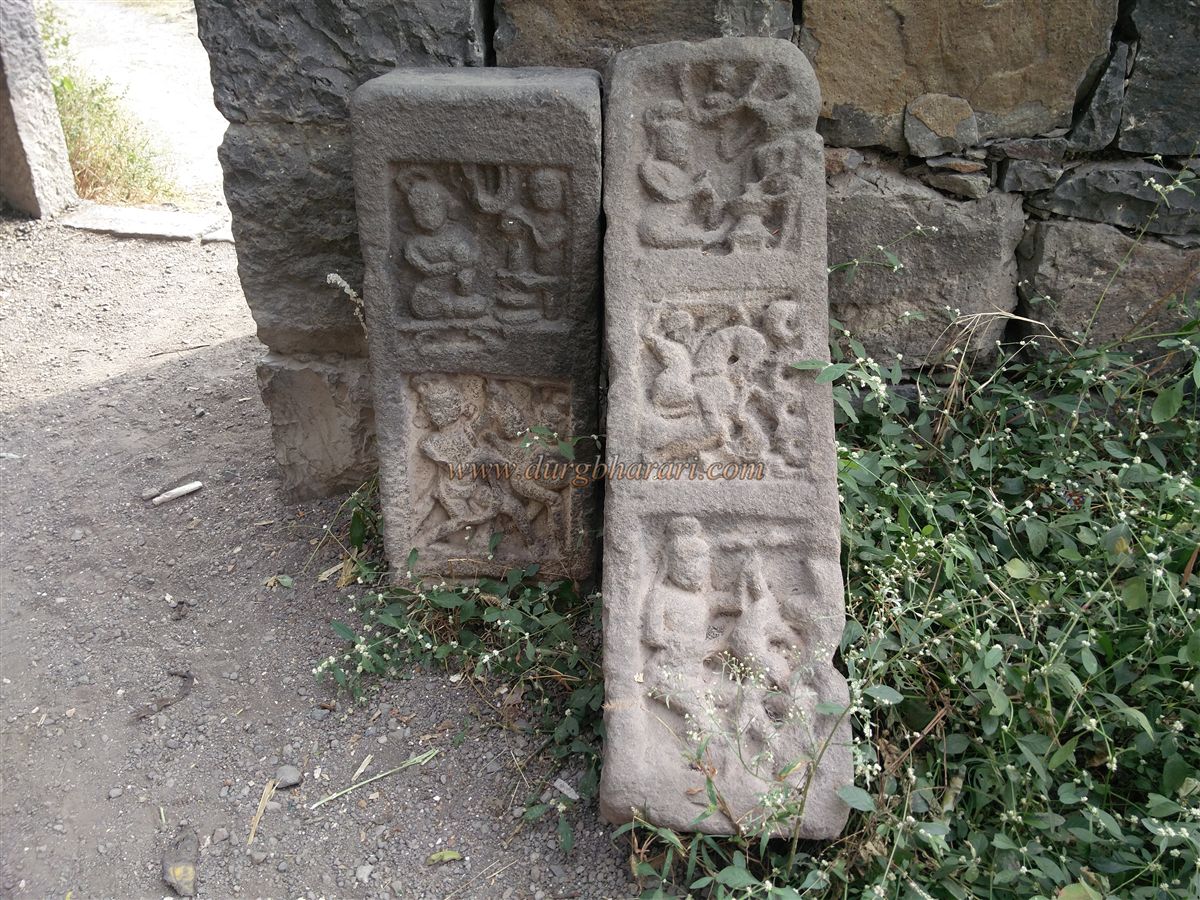
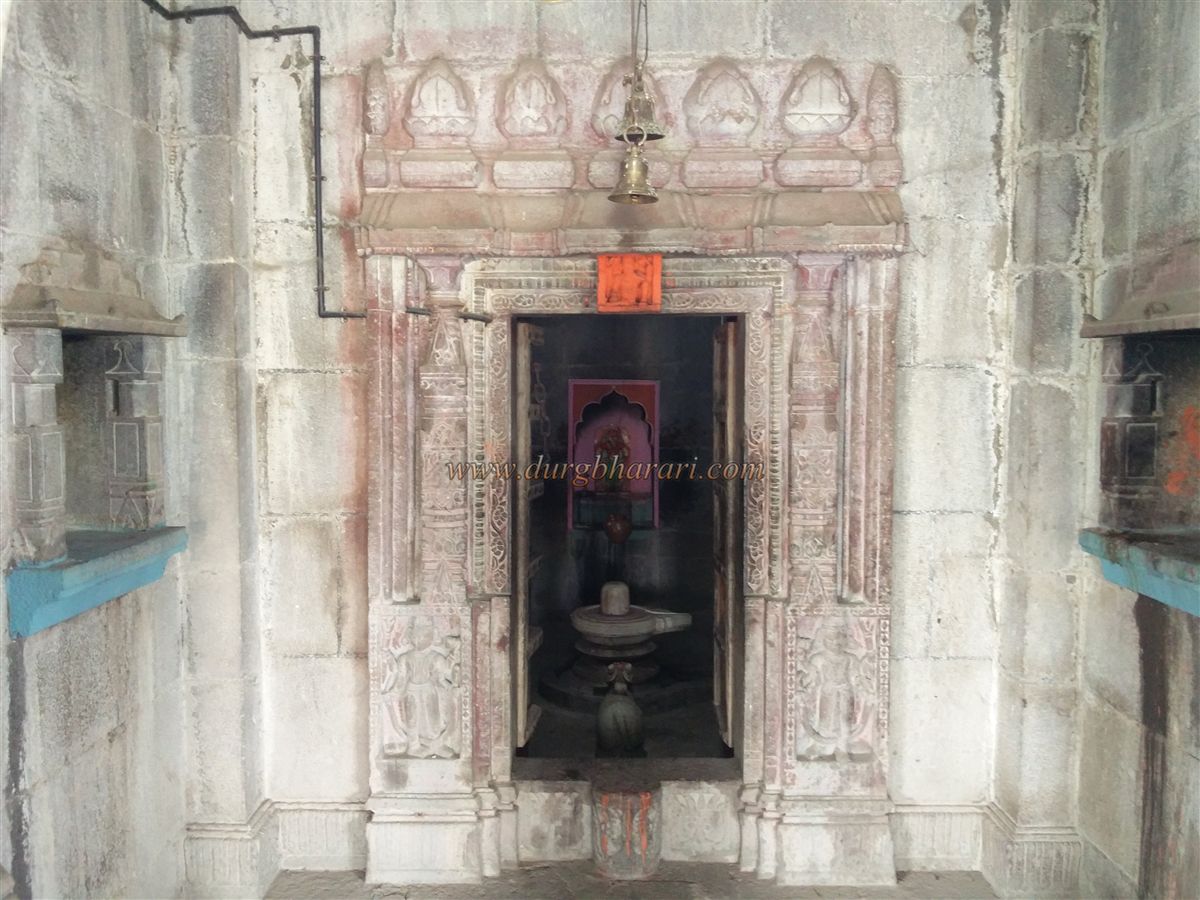
Upon entering through the main gate, one sees houses on either side. Proceeding ahead, on the left, there is a uniquely styled medieval stone temple of Mahadev. Inside the temple is a marble Shiva Linga, and the sanctum door has carved designs. The original Shiva Linga and Nandi are broken and kept outside, along with a beautifully carved idol or nag sculpture. In front of the temple is a hero stone (virgal), and on the rear wall, an image of Hanuman is carved.
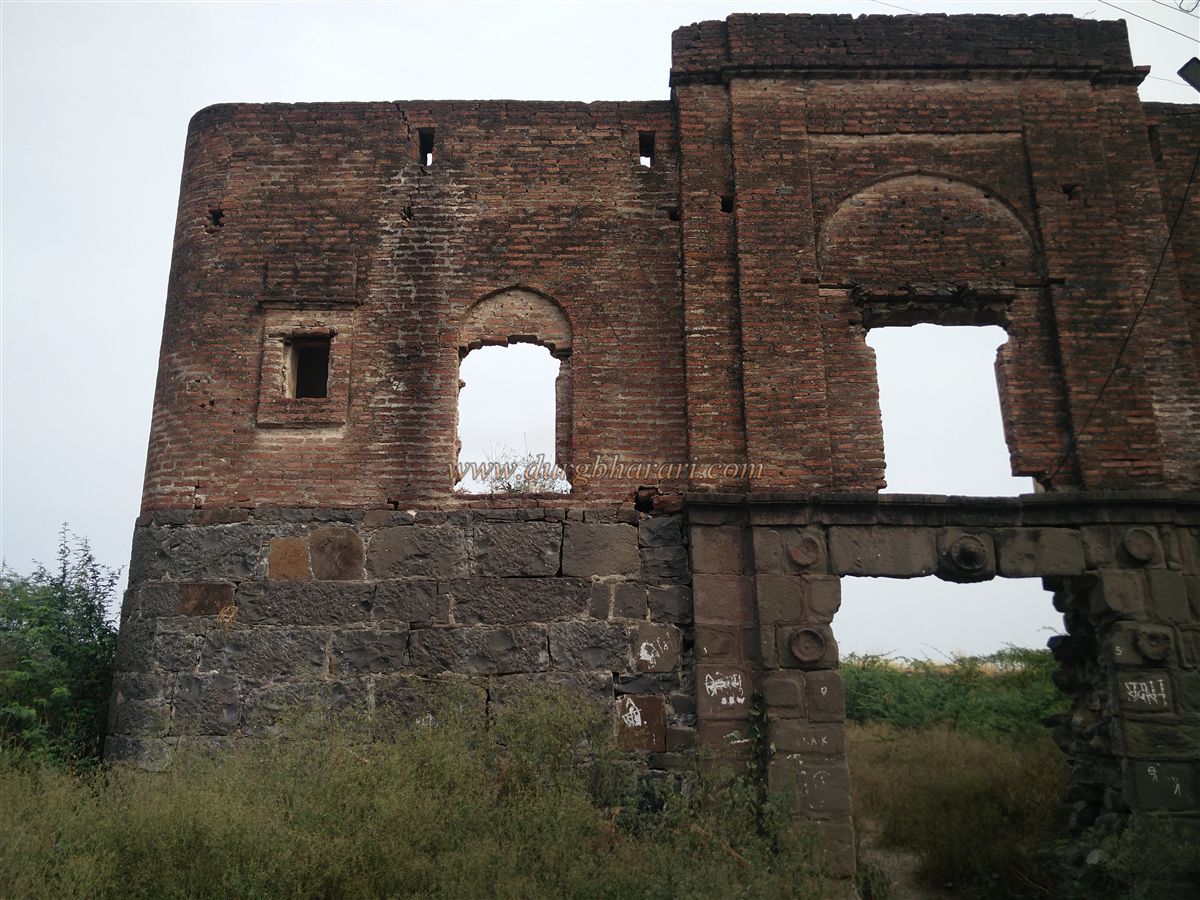
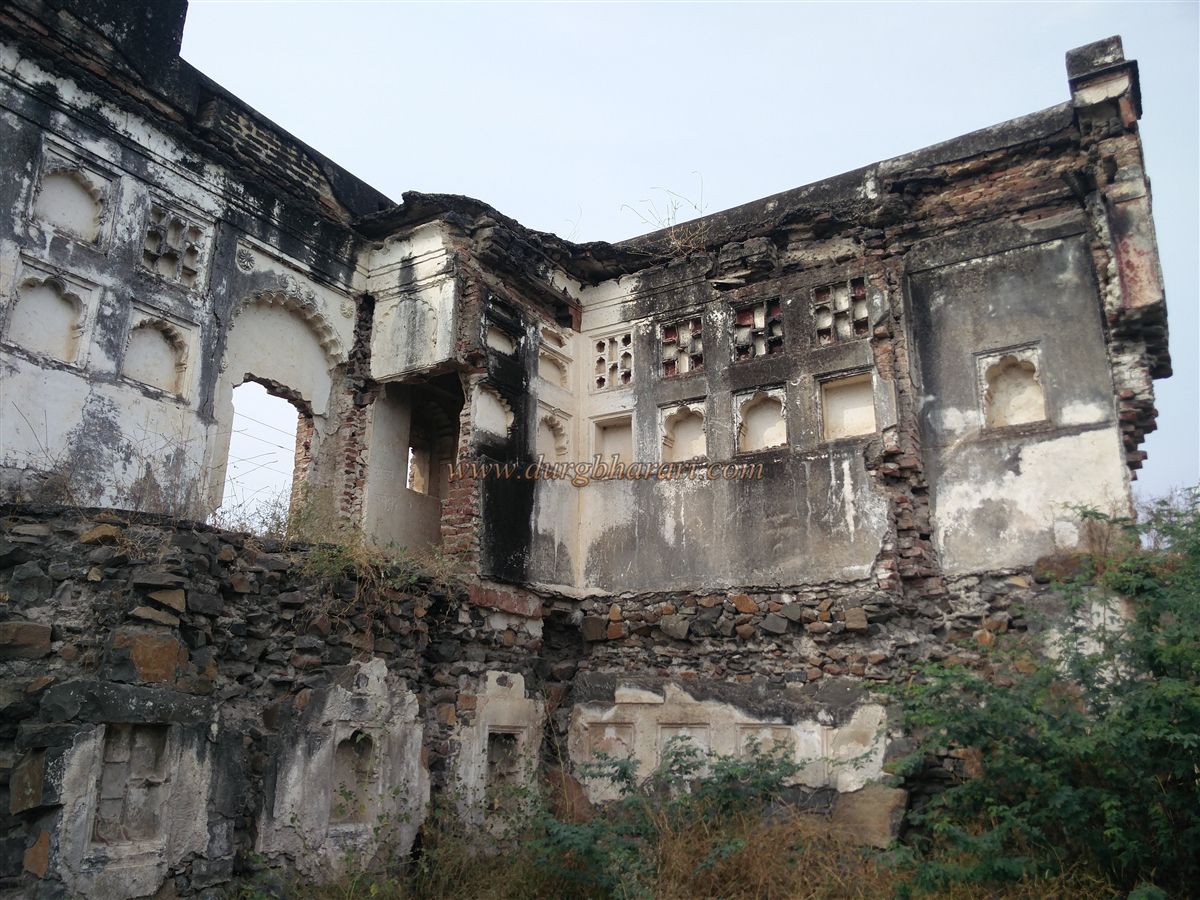
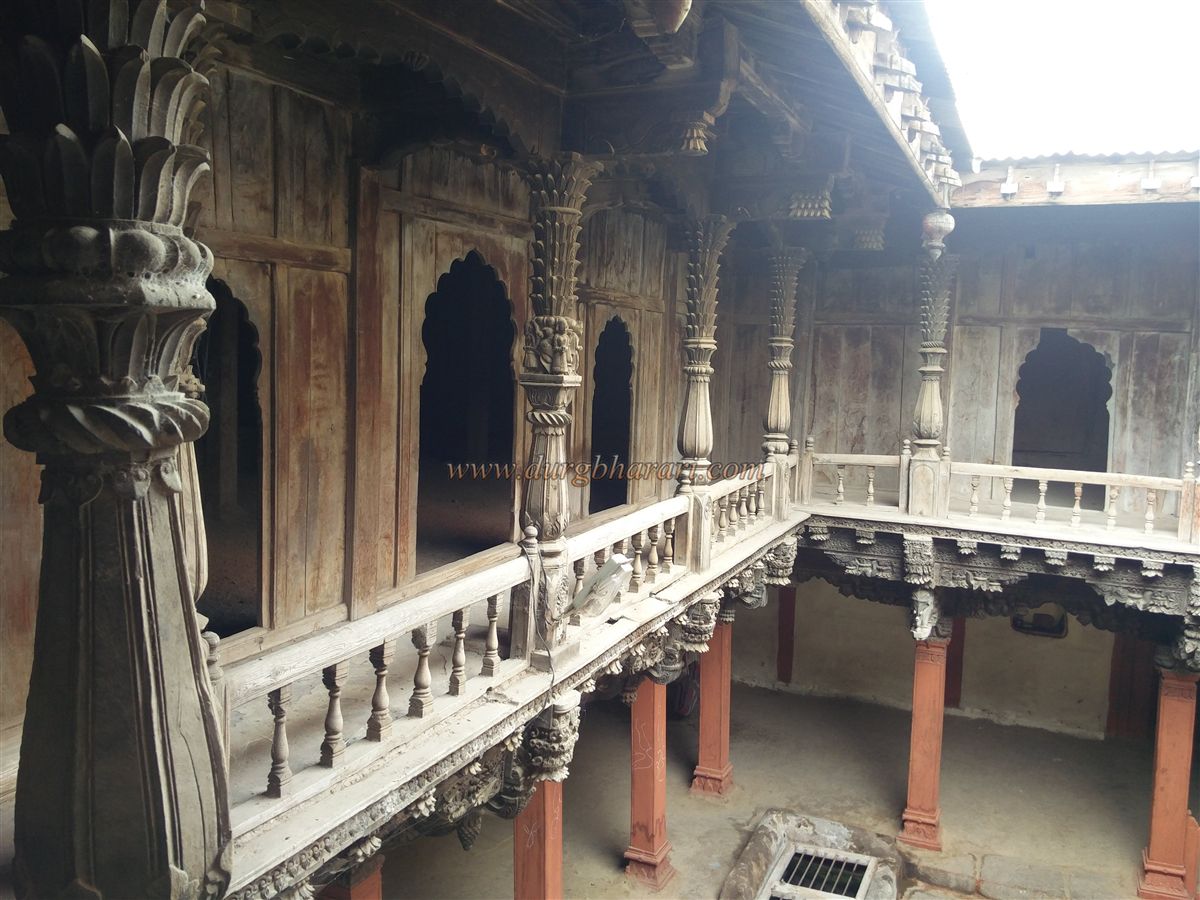
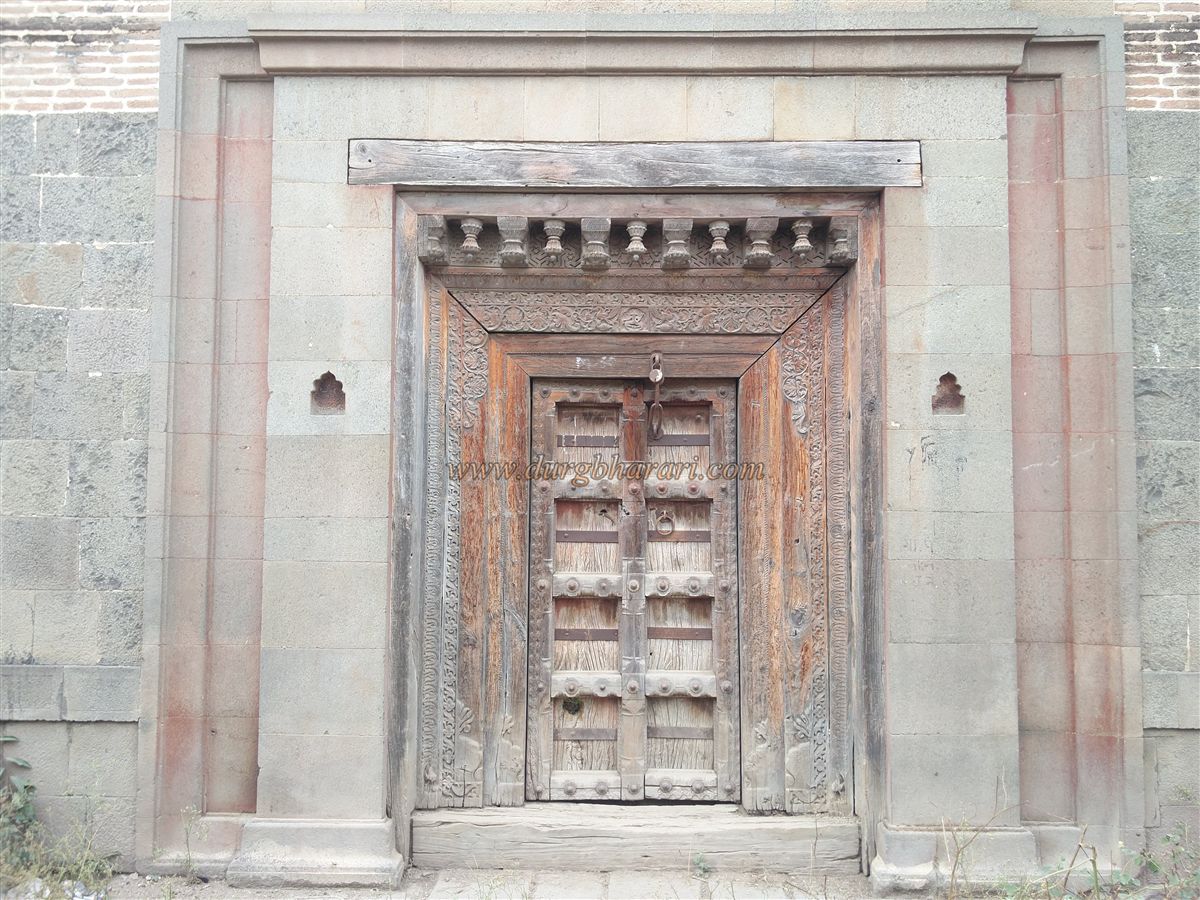
Further ahead, a narrow lane on the right leads to four traditional mansions. These are built with stone on the lower level and square bricks above. Two of the wada have completely collapsed, while one has two standing walls with lime-plaster niches. The third wada is sealed, and only its ornately carved doorway is visible from outside. The fourth is the Palshikar Wada, currently owned by Ramrao Krishna Rao Palshikar. Its main entrance and frame feature intricate woodwork. Upon entering, one encounters a small courtyard and a wooden mezzanine floor, although it is difficult to view properly due to darkness.
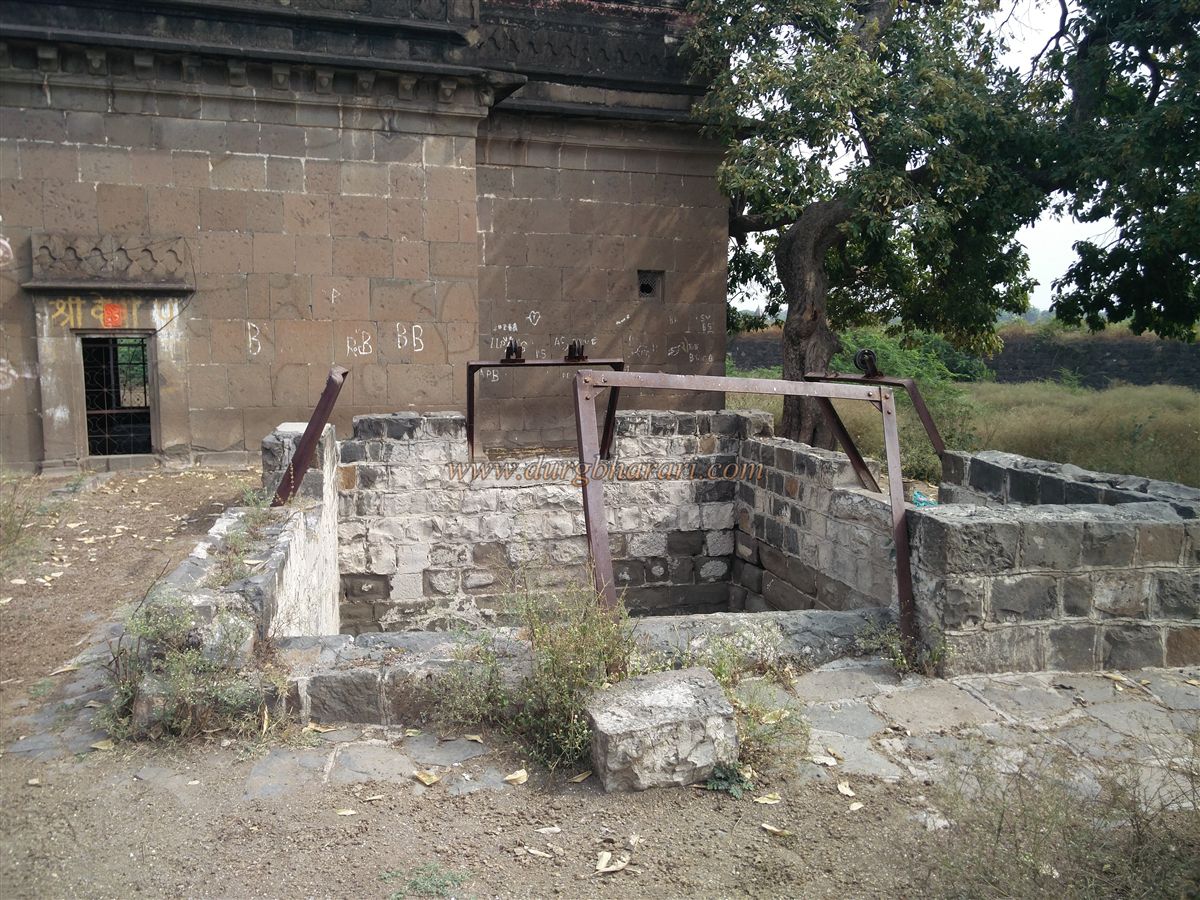
On the left side is another door that leads to the central courtyard. This is a quadrangular wada, and it is presently occupied by a tenant. Due to the lack of maintenance, the mansion is in a deteriorated condition. Originally built with three floors, only the ground and first floors now remain. In the courtyard, the wooden beams and pillars feature beautiful carvings. A small stone well with an iron mesh cover is located here, alongside a drainage outlet and a carved stone platform. On the right side of the wada is a shrine room (Devghar), next to which is a room with ornate woodwork on the door, frame, and walls. Inside this room is a second well. A narrow staircase in the left wall leads to the first floor, where the pillars are petal-shaped. The second floor has collapsed and is now covered with tin sheets.
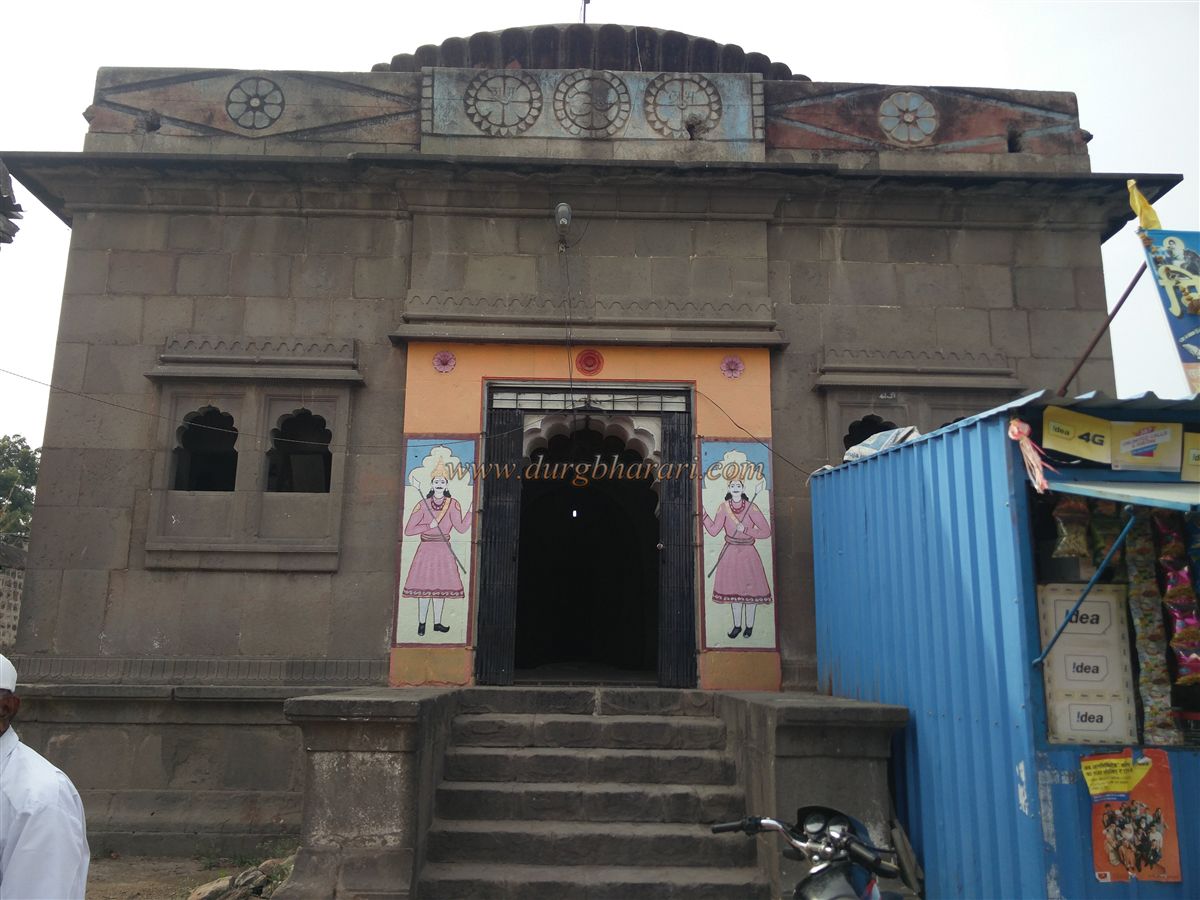
Stepping outside, a path in front of the door leads to a temple dedicated to a goddess. The temple’s assembly hall has three entrances. Inside the sanctum, the idol features a serpent hood over the head, a chakra and mace in the hands, and an elephant at the feet. Outside the temple is a square stepwell, and beside it, a tank for collecting water.
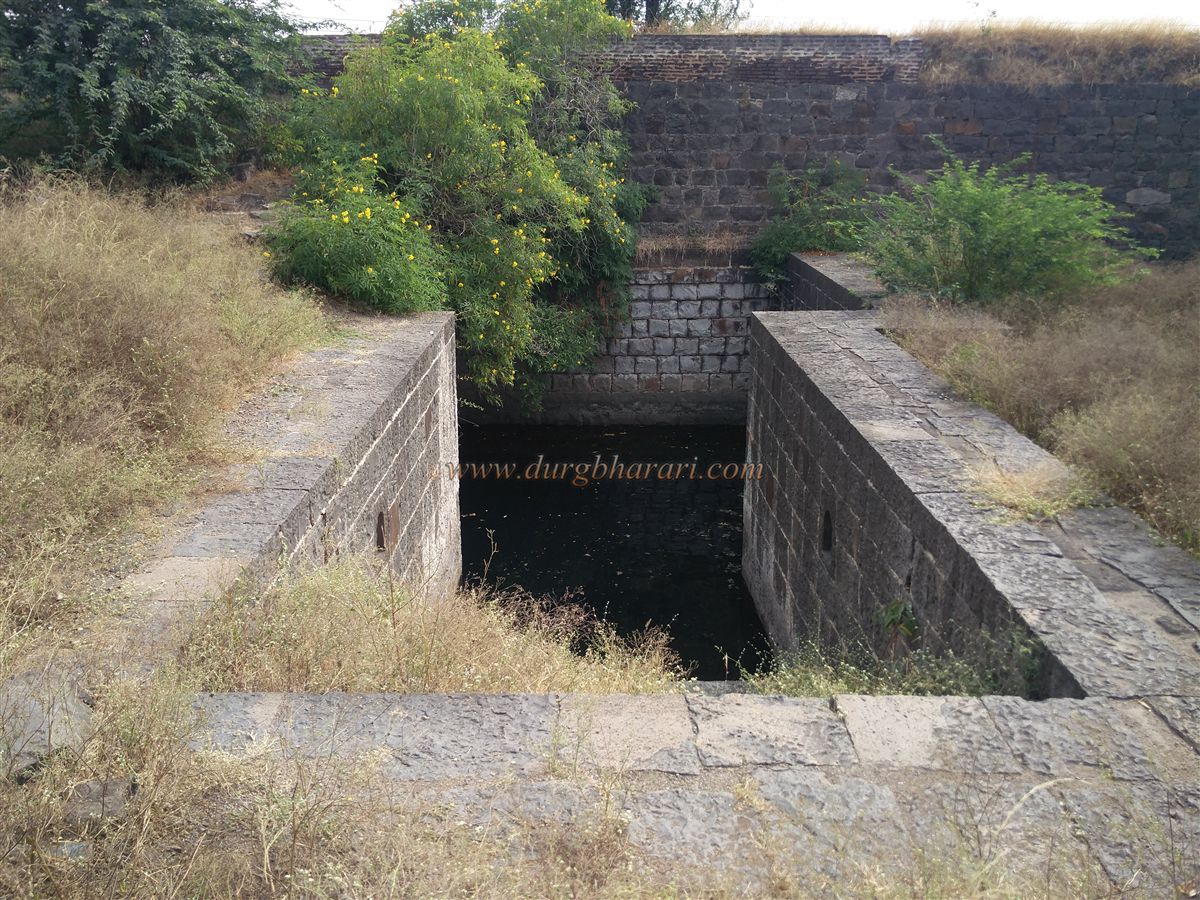
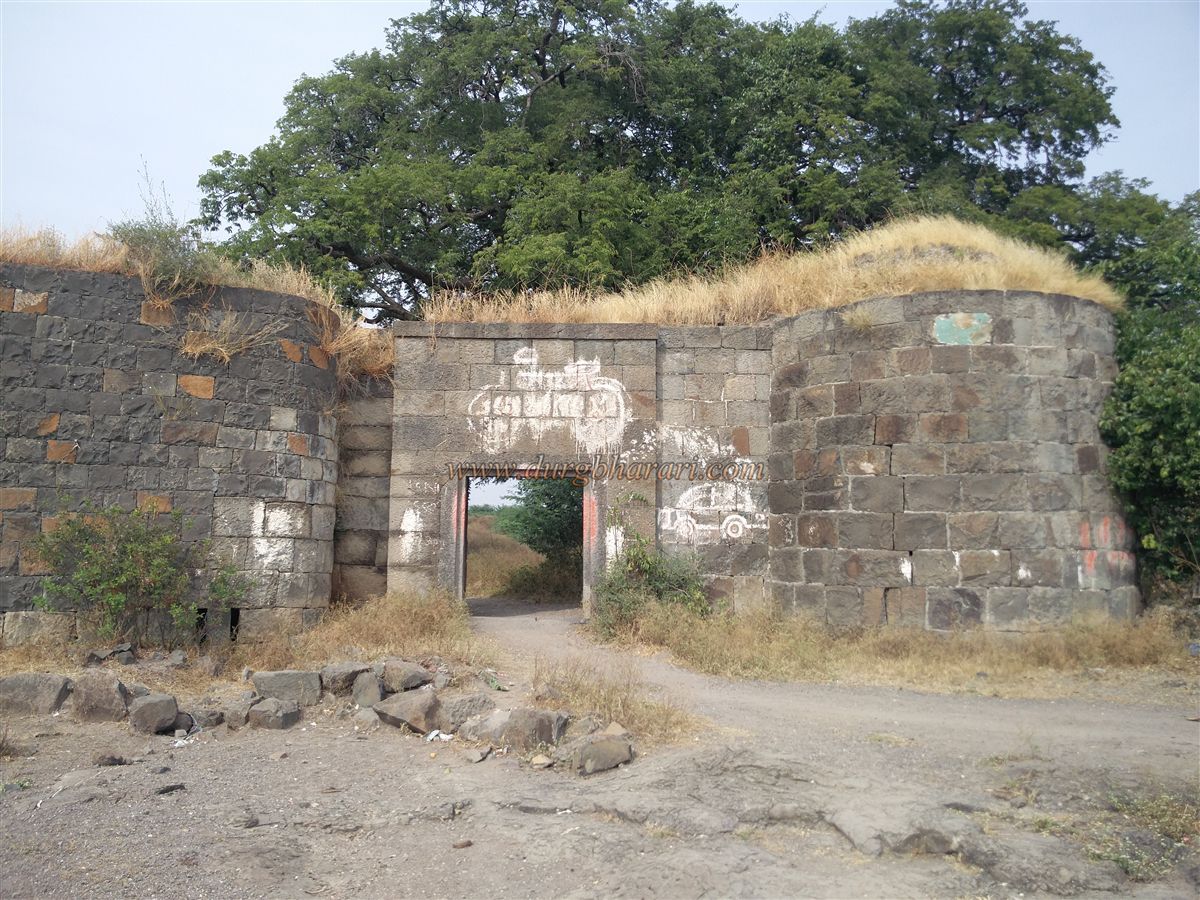
Walking behind the temple along the fort wall, one encounters the third, smaller gate. Compared to the other two, this gate is small, constructed with a rectangular stone frame supported by a bastion. Just inside are three hero stones (virgal), one of which is square. Opposite the gate, beneath a tamarind tree, are the ruins of a structure, which includes a grave. Further along the wall lies a large rectangular stepwell. A dirt path from here leads in about five minutes to the eastern gate of the fort. This gate has sturdy bastions on both sides, and stairs that allow access to the top of the gate. From here, one can see the entire fort wall and the surrounding region.
Just beyond the gate lies the riverbed of the Palshi River. After crossing it, one reaches the Vitthal Temple. It takes approximately an hour and a half to explore the fort. Since the village is located inside the fort, arrangements for food and lodging are available at the temples.
© Suresh Nimbalkar
GALLERY