NIMGAON KHANDOBA
TYPE : SHIVMANDIR (KHANDOBA)
DISTRICT : PUNE
HEIGHT : 0
Khandoba of Jejuri is the revered deity of all of Maharashtra. There are eight significant places in Maharashtra associated with Khandoba: Jejuri, Nimgav Davadi, Pali, Malegaon, Satara, Shegud, Andur (Naldurg), and Vatambre. Among these, the second most important site after Jejuri is in Nimgav, located in Pune district. Since there are many villages named Nimgav in Maharashtra, this village is specifically identified with its neighbouring village and is known as Nimgav Davadi. However, due to the popularity of the Khandoba temple here, the name Nimgav Khandoba is becoming more widely accepted.
For wanderers like us, both Nimgav and Davadi hold importance because in Nimgav you can see the Gadhi (fortified mansion) of the Chandrachud family, and in Davadi, the Gadhi of the Gaikwad family. Today’s journey, however, is to the Khandoba temple located in Nimgav Davadi.
...
In the Peshwa era, Nimgav was known as Nagna, but over time, after the displacement of the original village, it began to be known as Nimgav Davadi. This village is 9 km from Rajgurunagar, the taluka headquarters of Khed in Pune district. Since Rajgurunagar is a town, there are good transport facilities from Mumbai and Pune, but further travel requires a private vehicle.
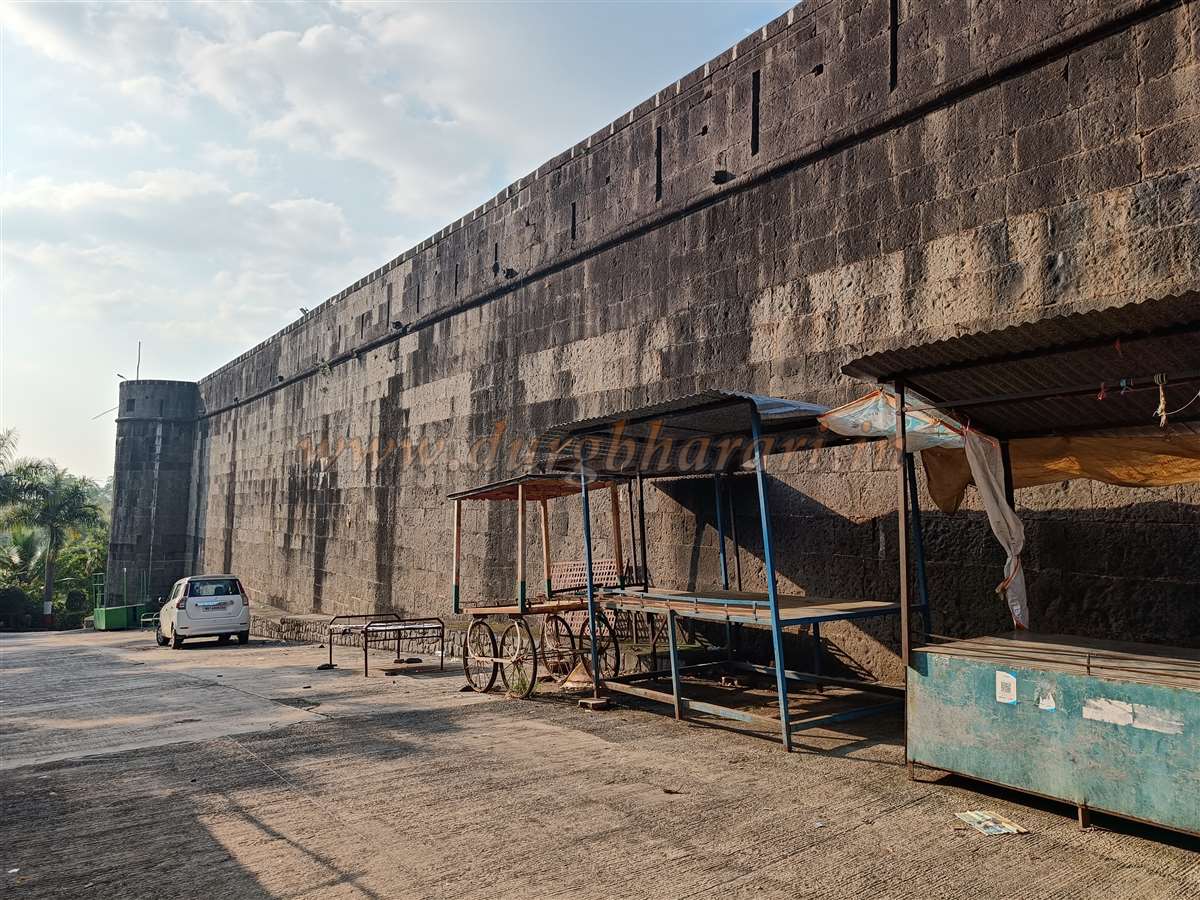
The main settlement of Nimgav is located along the banks of the Bhima River. Around 1.5 km from this settlement, on a moderately sized hill, stands the Khandoba temple, which resembles a fort with its stone fortifications. There is a newly constructed road as well as stairways on the east and north sides that lead to the temple.
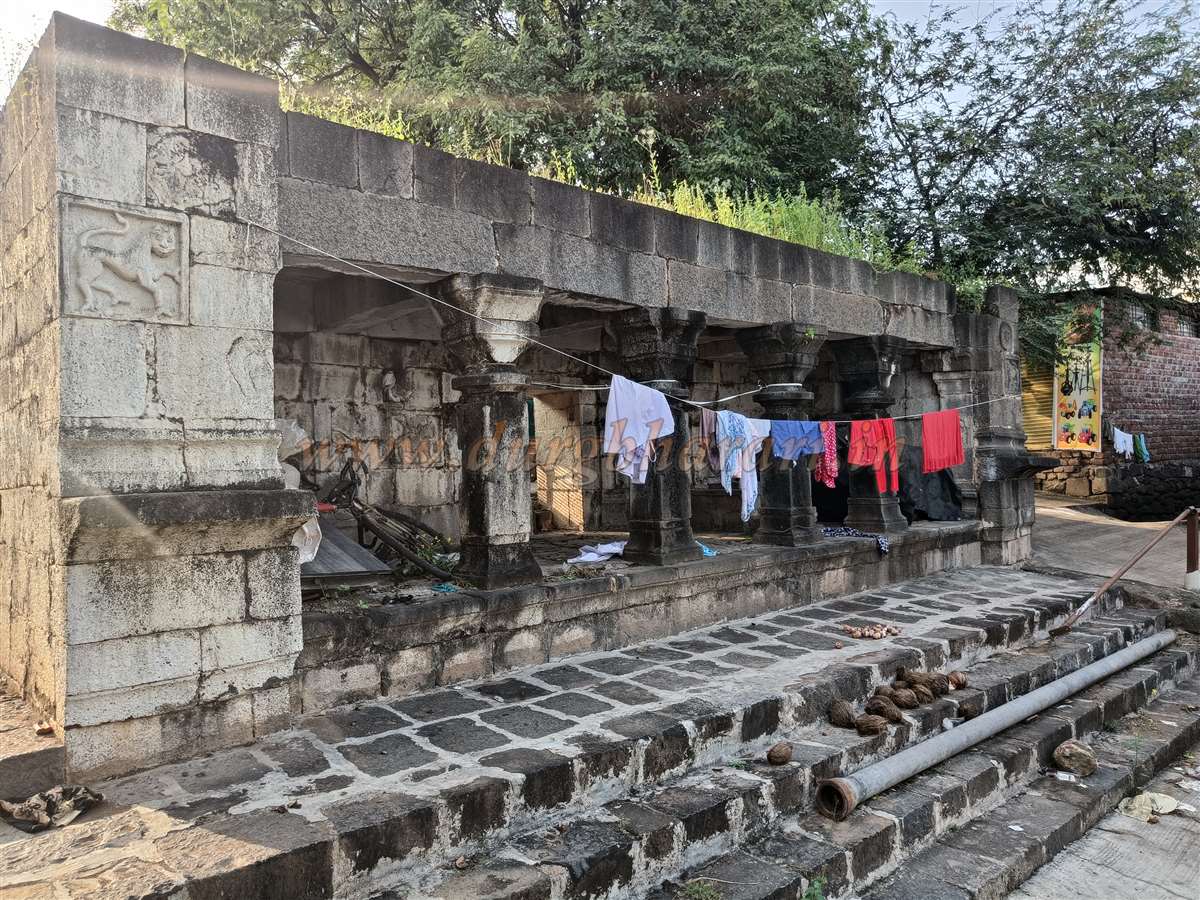
On the eastern stairway, there is a temple of Bhairavanath at the base, and after climbing around 100 steps, you reach the eastern fort wall of the temple. There’s a small door here that is opened only during festivals. The northern stairway has a temple of Hegadi Pradhan (a local deity), and at the end of the stairway, there is an arcade supported by four stone pillars, though now neglected and misused.
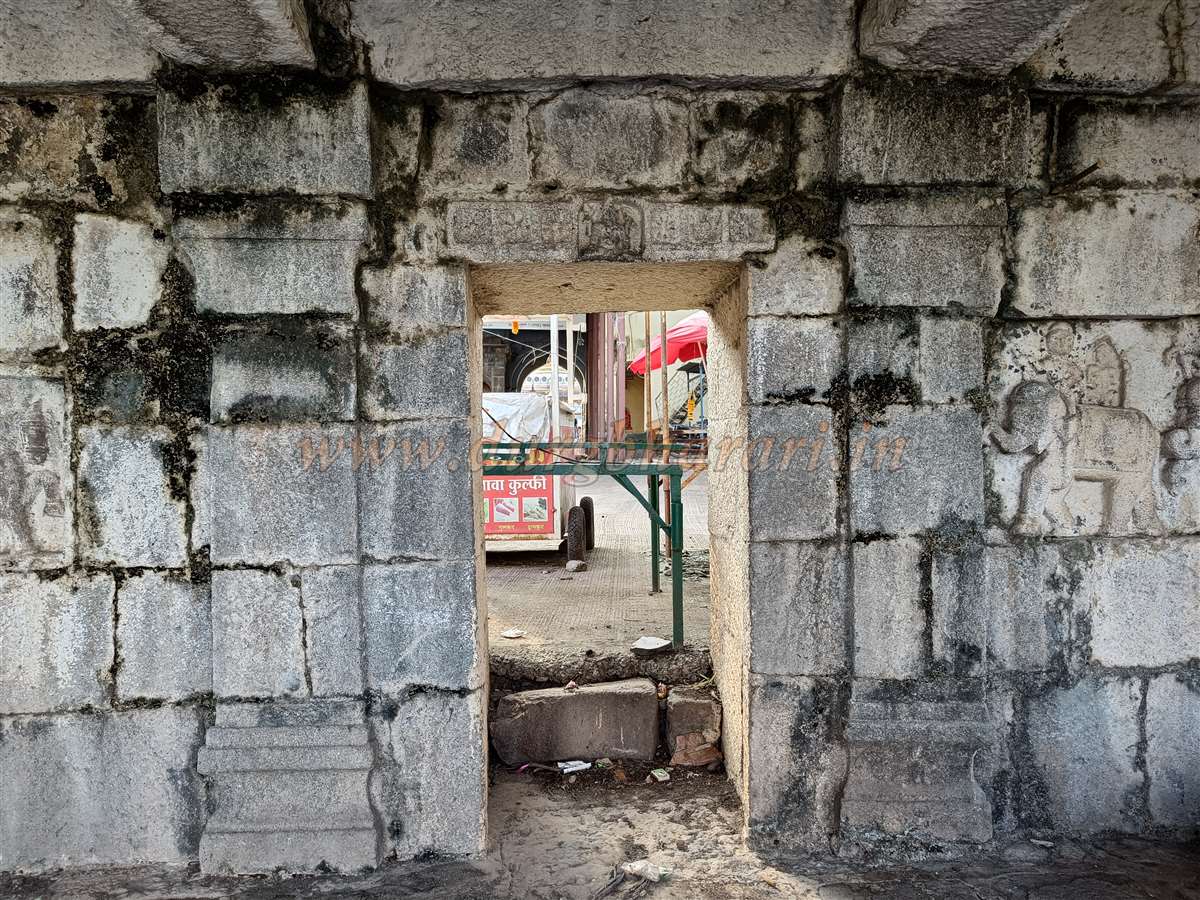
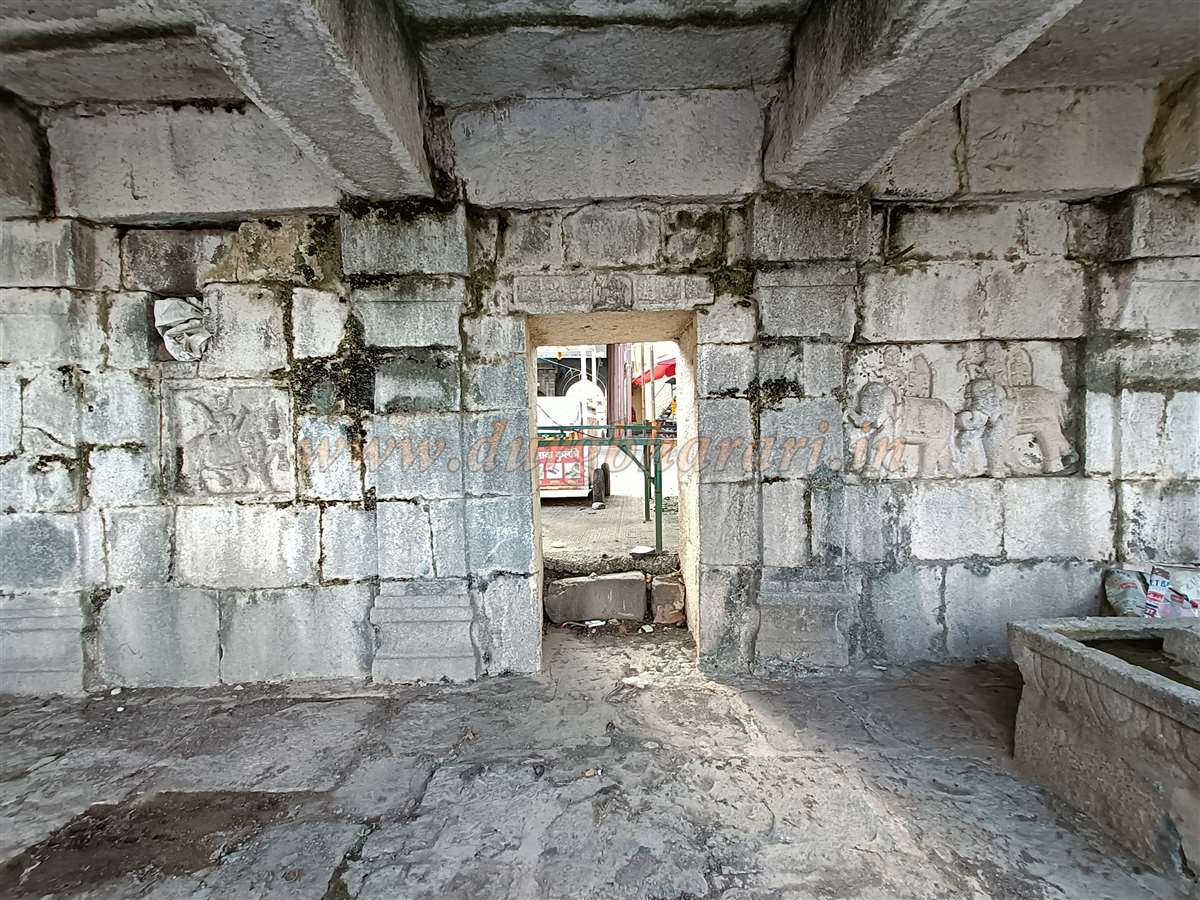
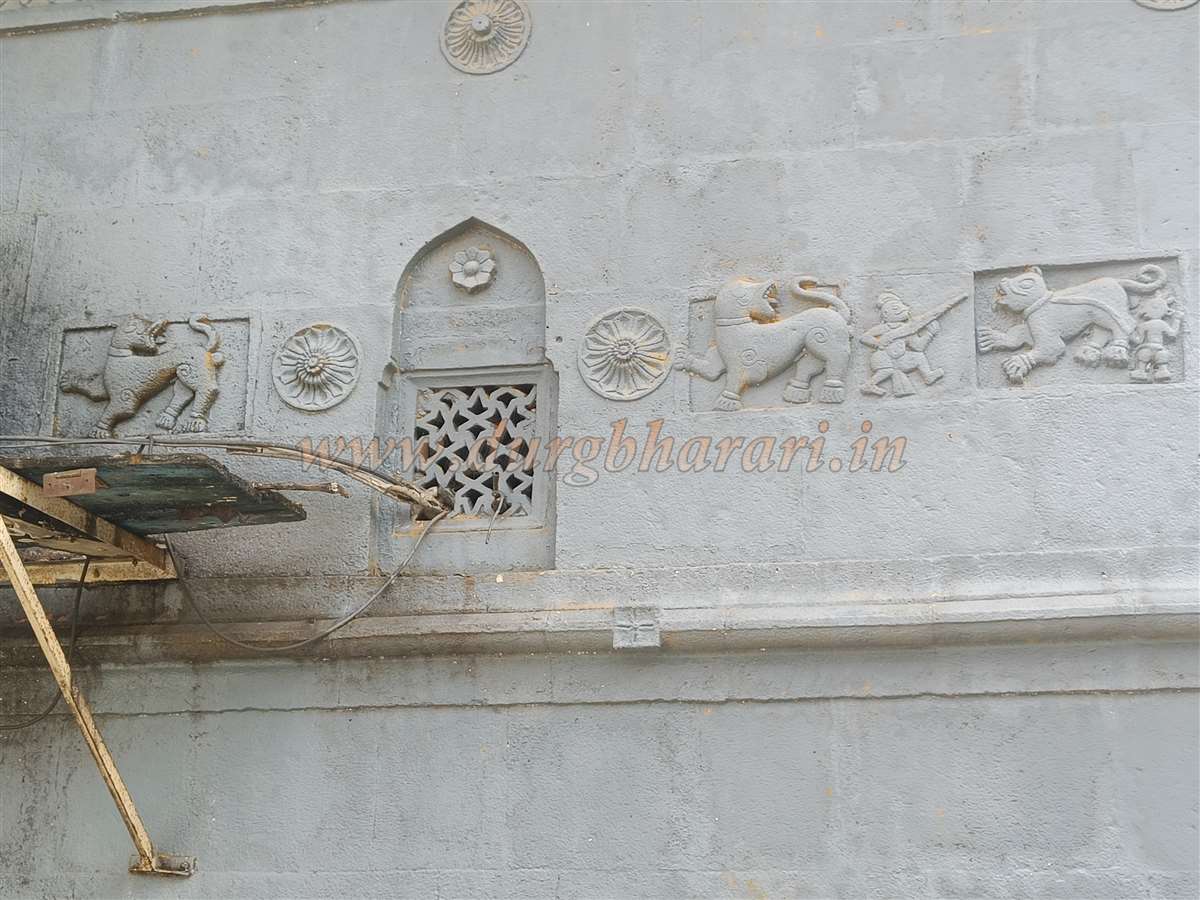
Both sides of the arcade have carvings of Sharabh (a mythological creature). On the inner side, there are Ganesh motifs and stone sculptures of warriors riding horses and elephants. The current state of the entrance structure and its neglect is disheartening. Ahead, on the left, there's another five-arched structure in stone, which is also in poor condition.
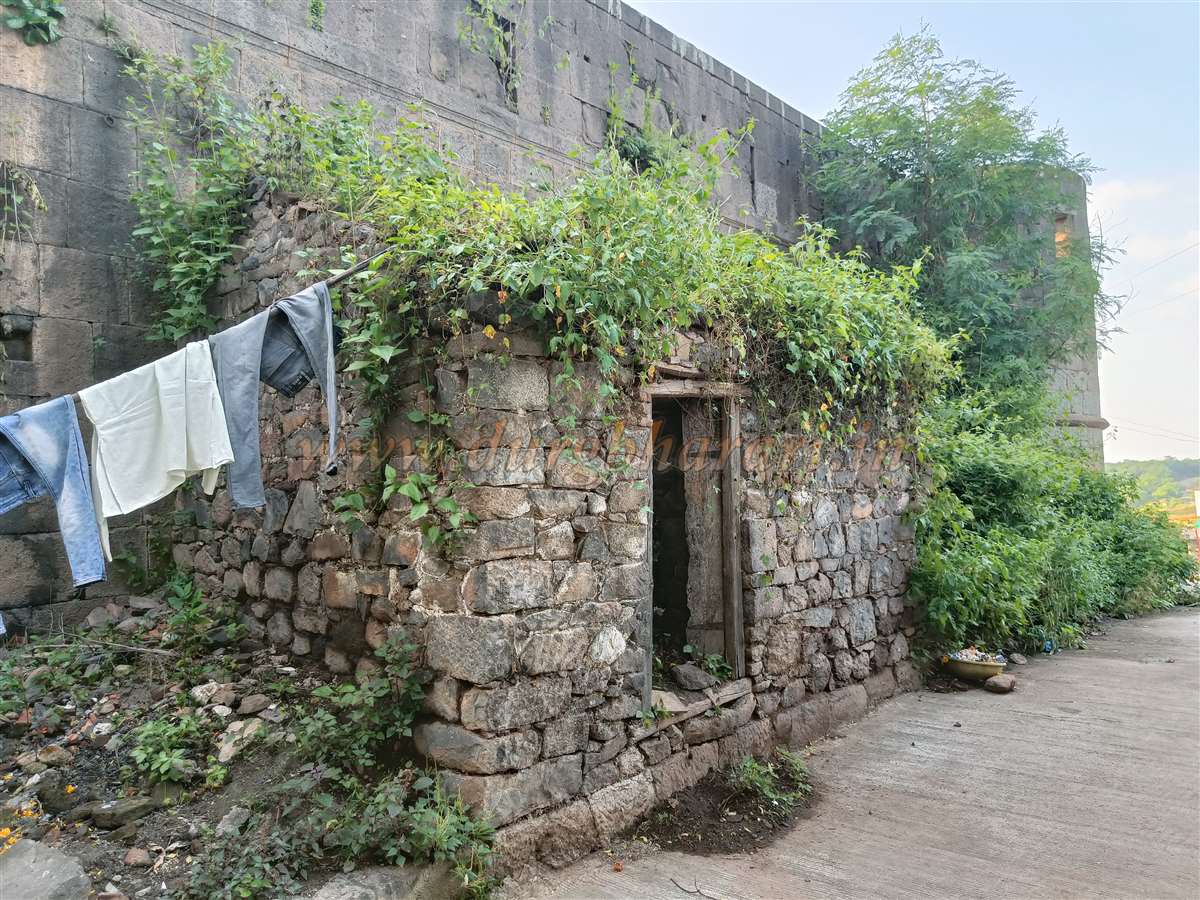
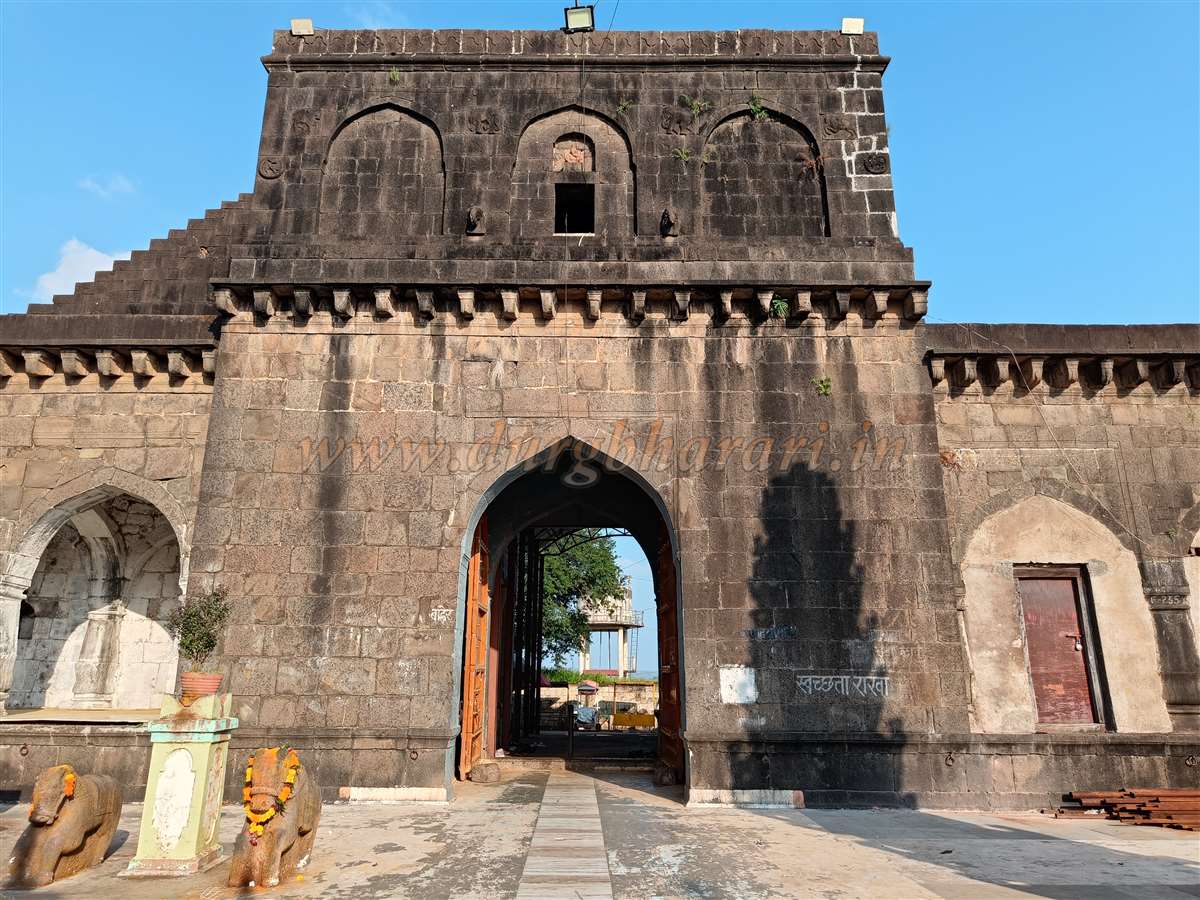
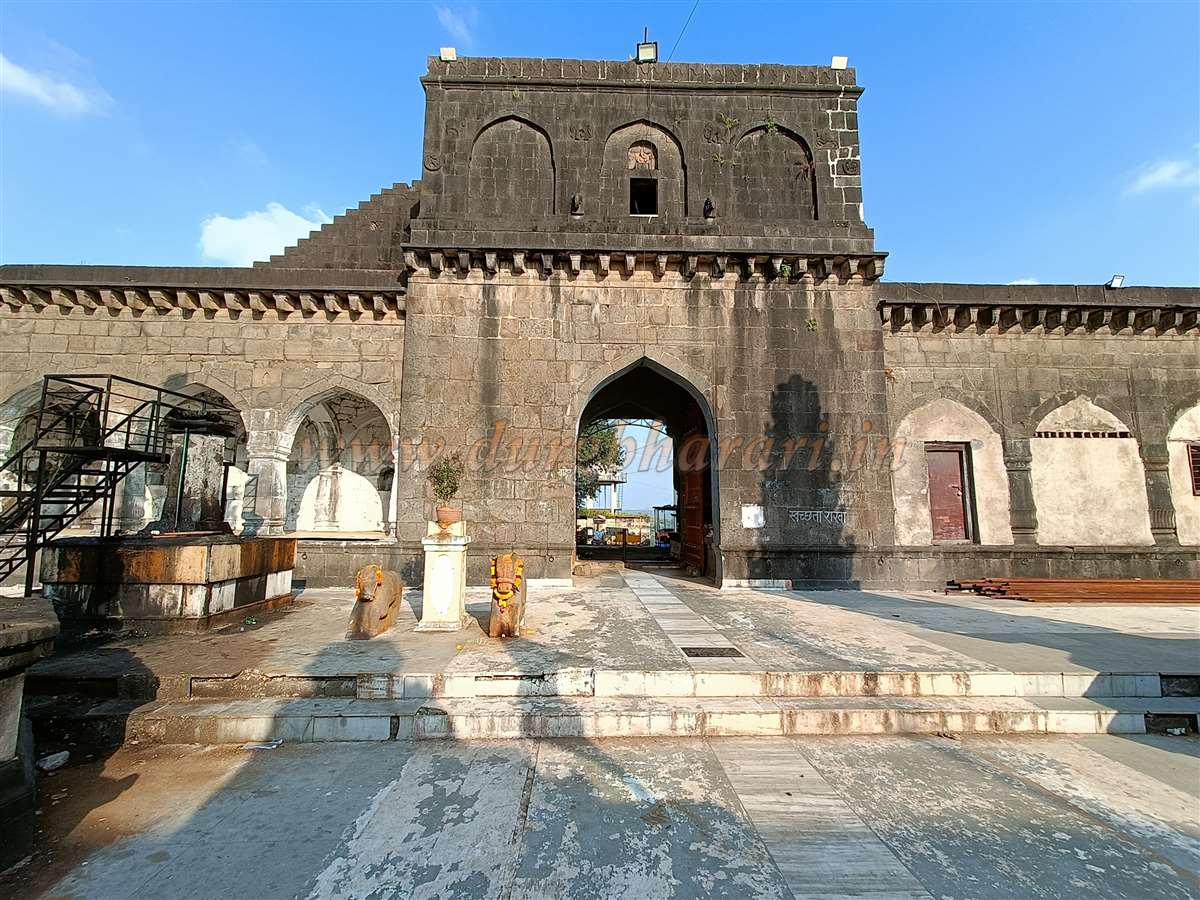
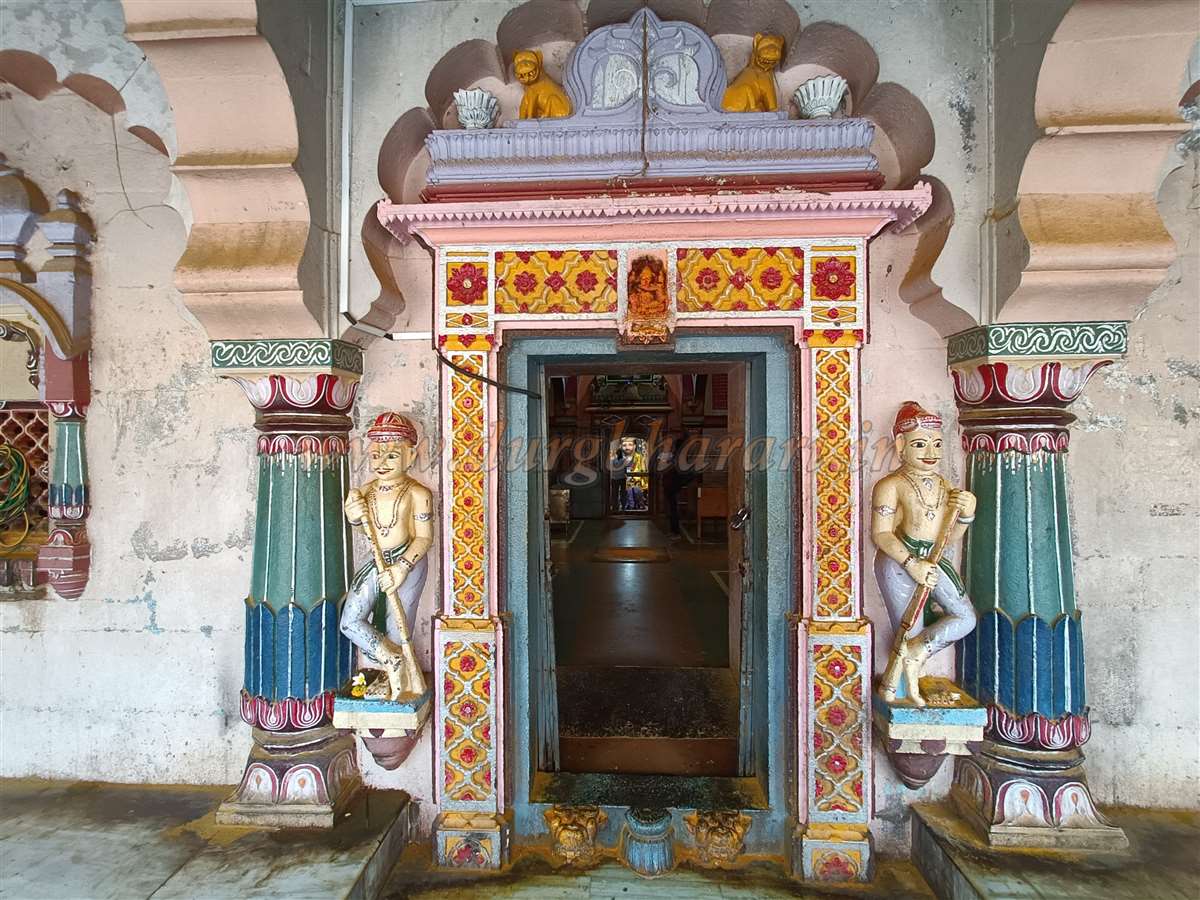
Encroachments have started around the fort wall of the temple, which needs immediate attention. The main gate of the fortification has a Nagarkhana (drum house) above it. On either side of the gate, there are two halls—one with a Hanuman idol on the right and the other with a Ganesha idol on the left. Inside the gate, there are guardrooms on either side, and the wooden door has a smaller access door.
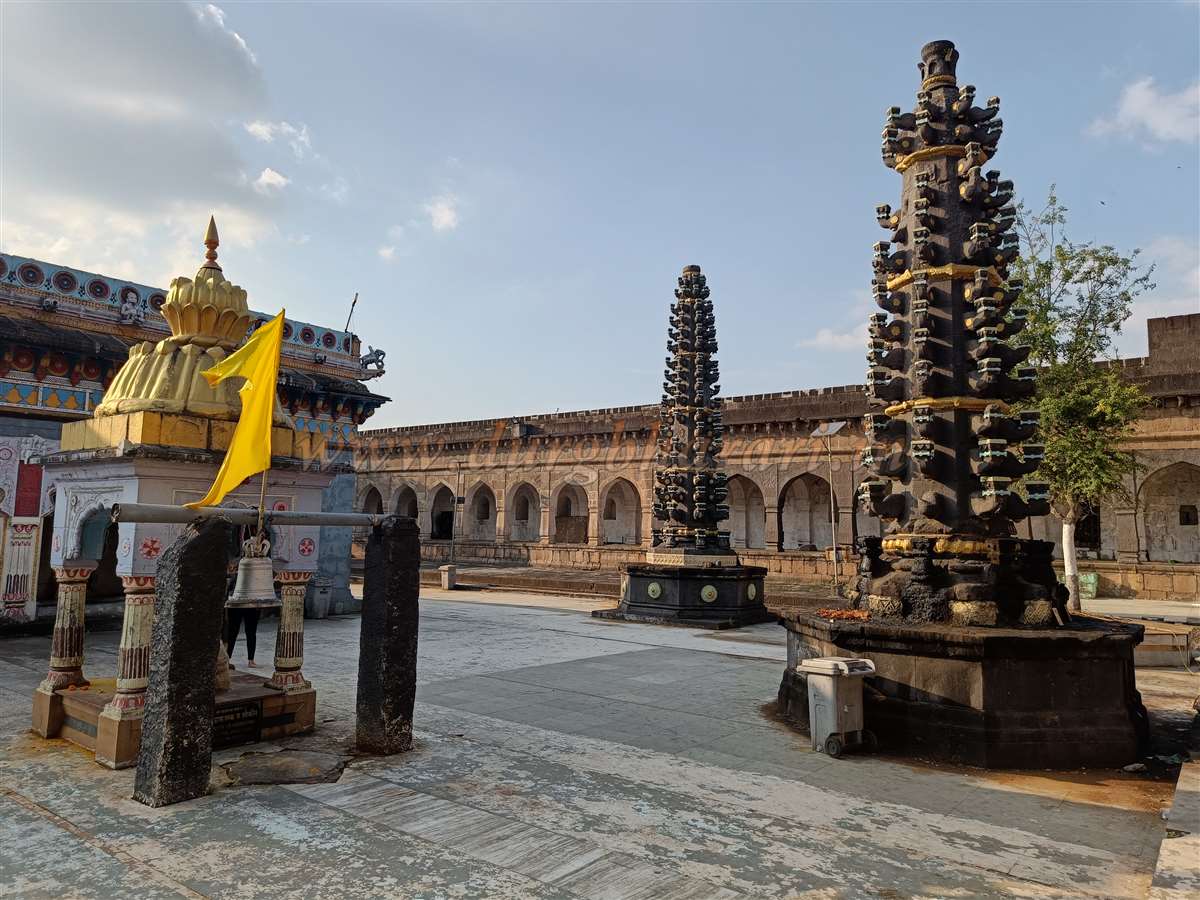
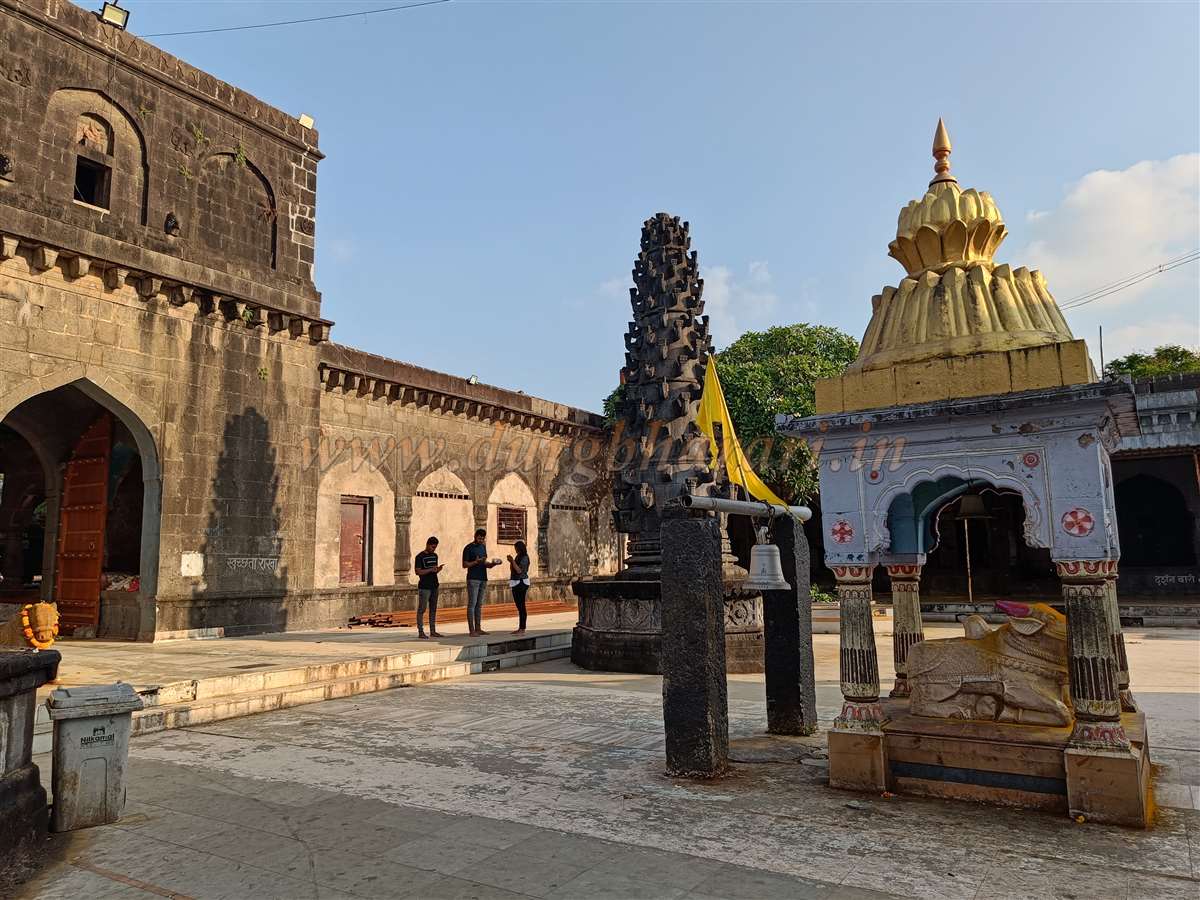
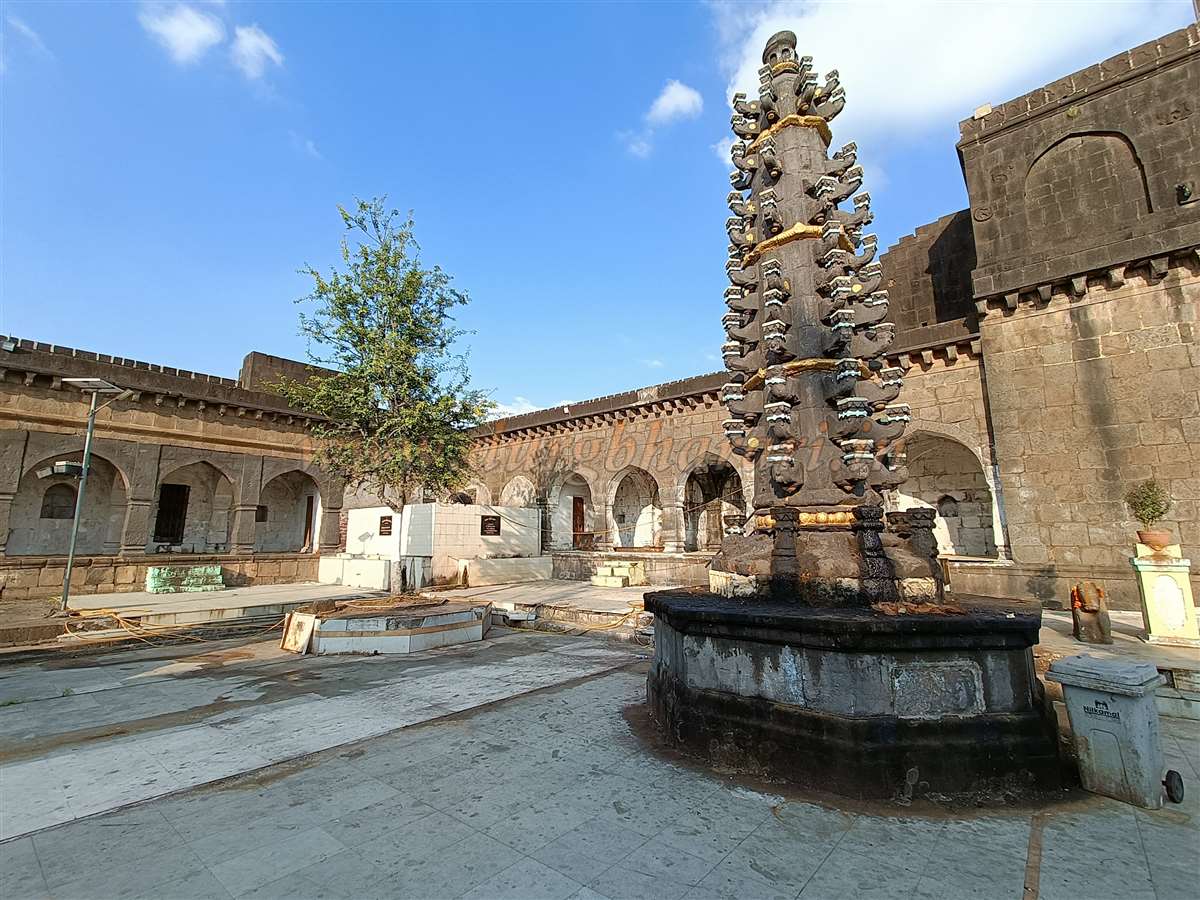
On entering, to the right are two stone horses and a Vrindavan (memorial shrine). Nearby are three grand Deepmal (lamp towers) and two platforms meant for such tower one of the inscriptions on a Deepmal reads:
Shri Martande | Tatpara | Gaikwad | Sarkar | Sayajirao Maharaj | Shaka 1801(5) | Subhanu Nama | Sa. Magh Shukla 11
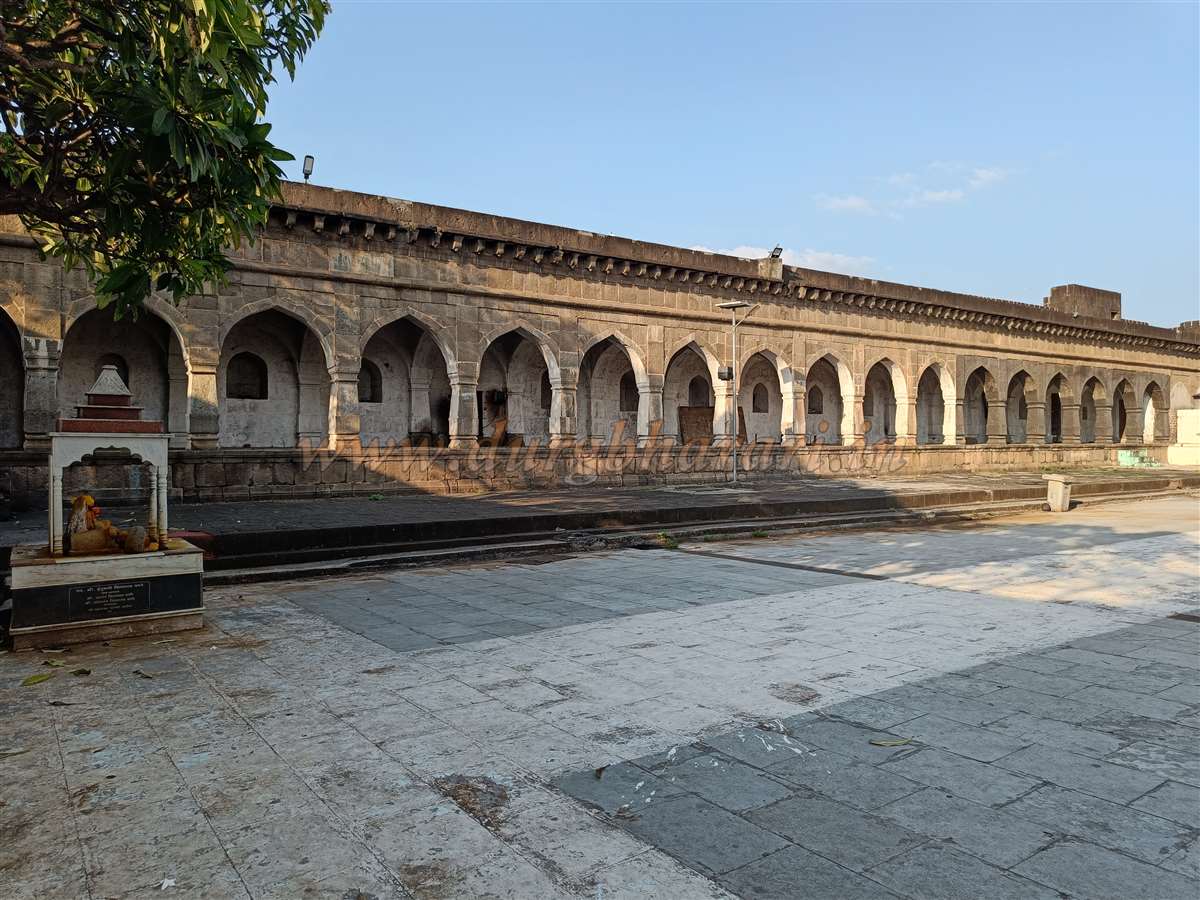
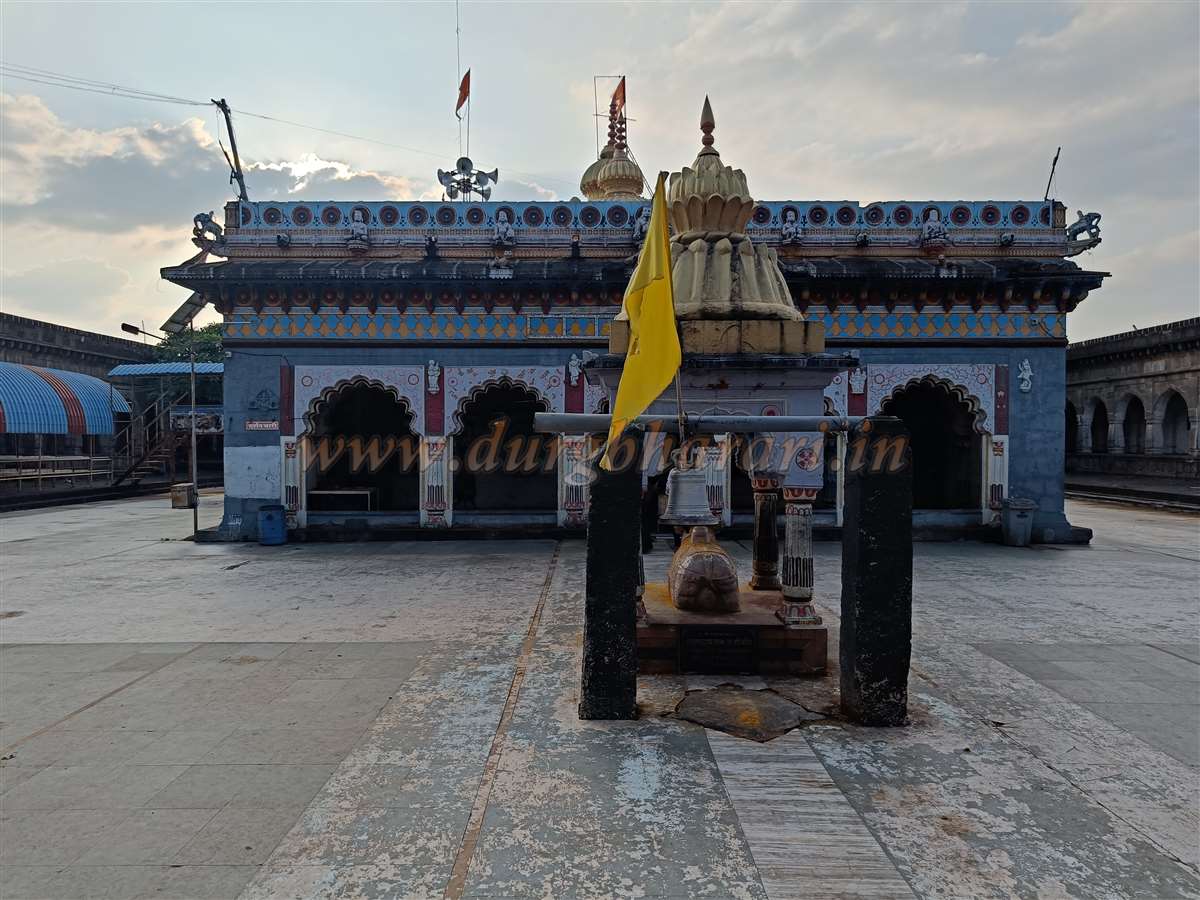
In front of the temple is a small stone pavilion housing a Nandi idol. The temple complex covers about one acre and is enclosed by a stone fortification. At each of its four corners is a bastion, and there are two internal staircases on the north and south sides to access the top. The fort wall is about 20 feet tall, and the third entrance at the back has been permanently closed.
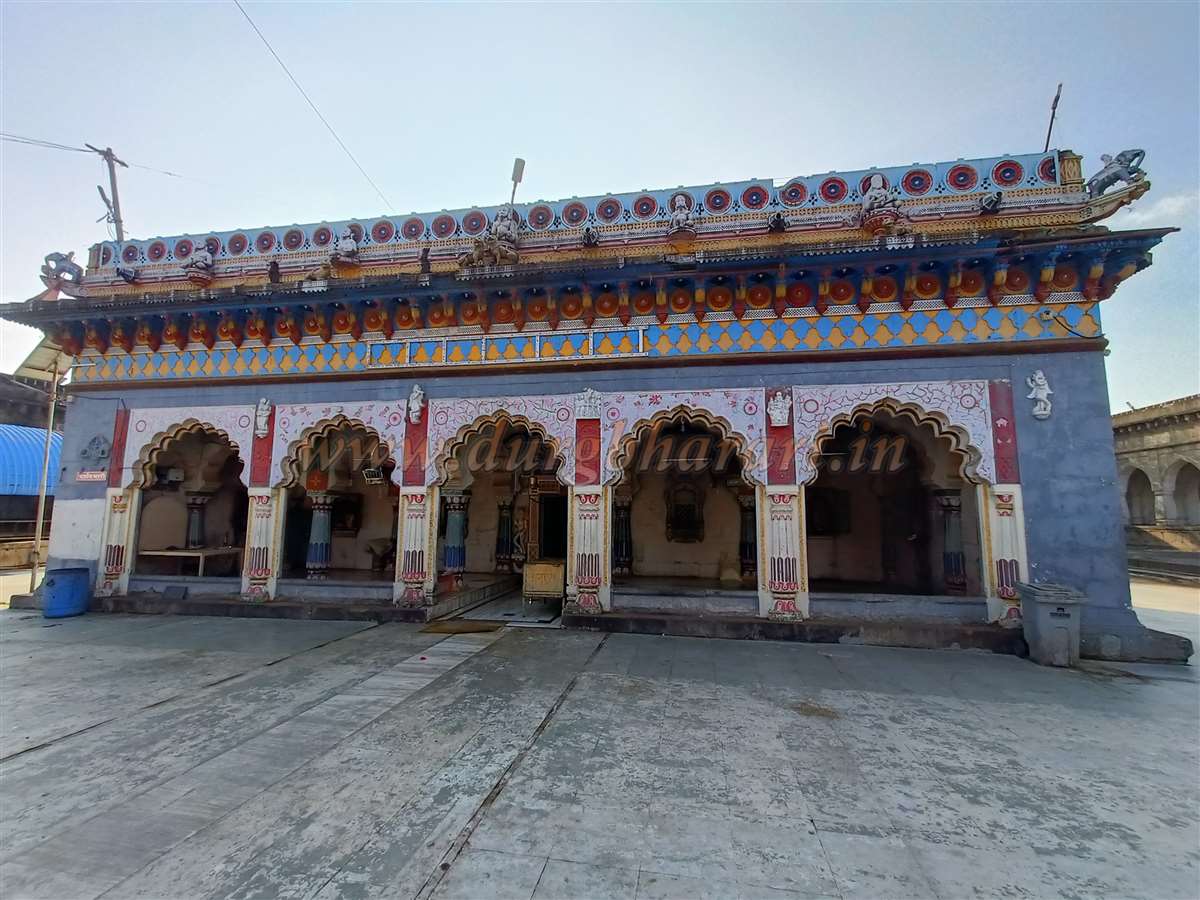
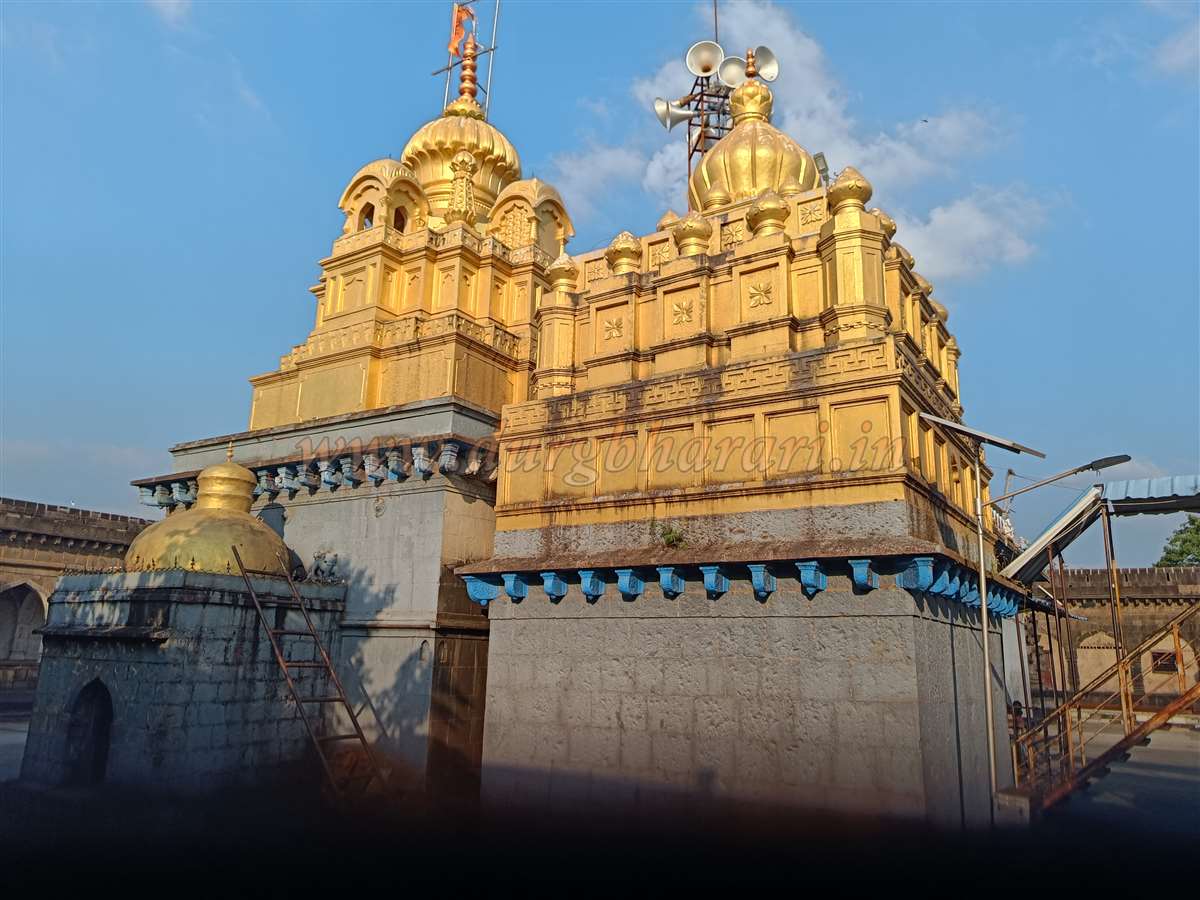
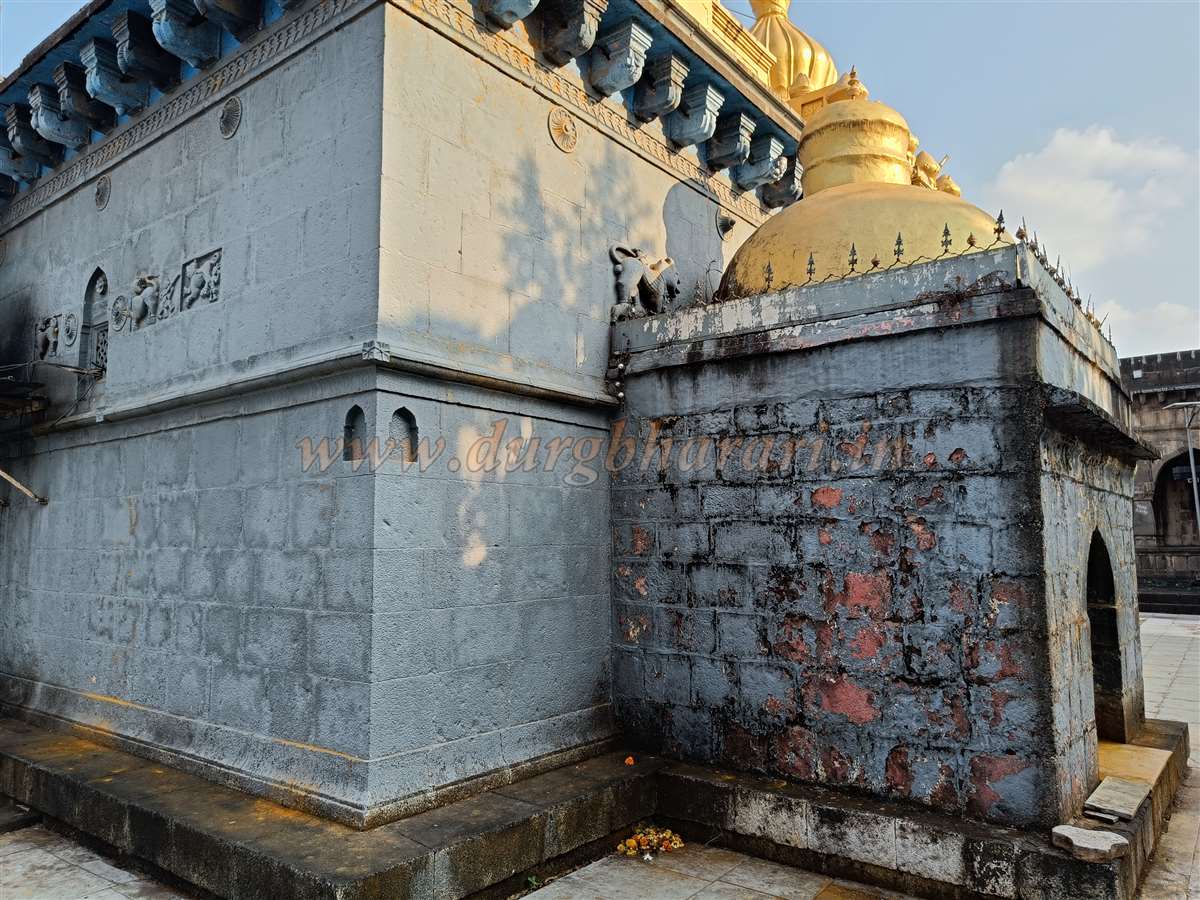
Along the walls, approximately 70 arcades (originally used as rest houses for devotees) have been constructed. At the centre of the enclosure is the main temple of Khandoba, designed with a porch, assembly hall, antechamber, and sanctum. The sanctum and porch both have spires. The circular dome of the assembly hall is supported by eight arches without any central pillar and has two side exits.
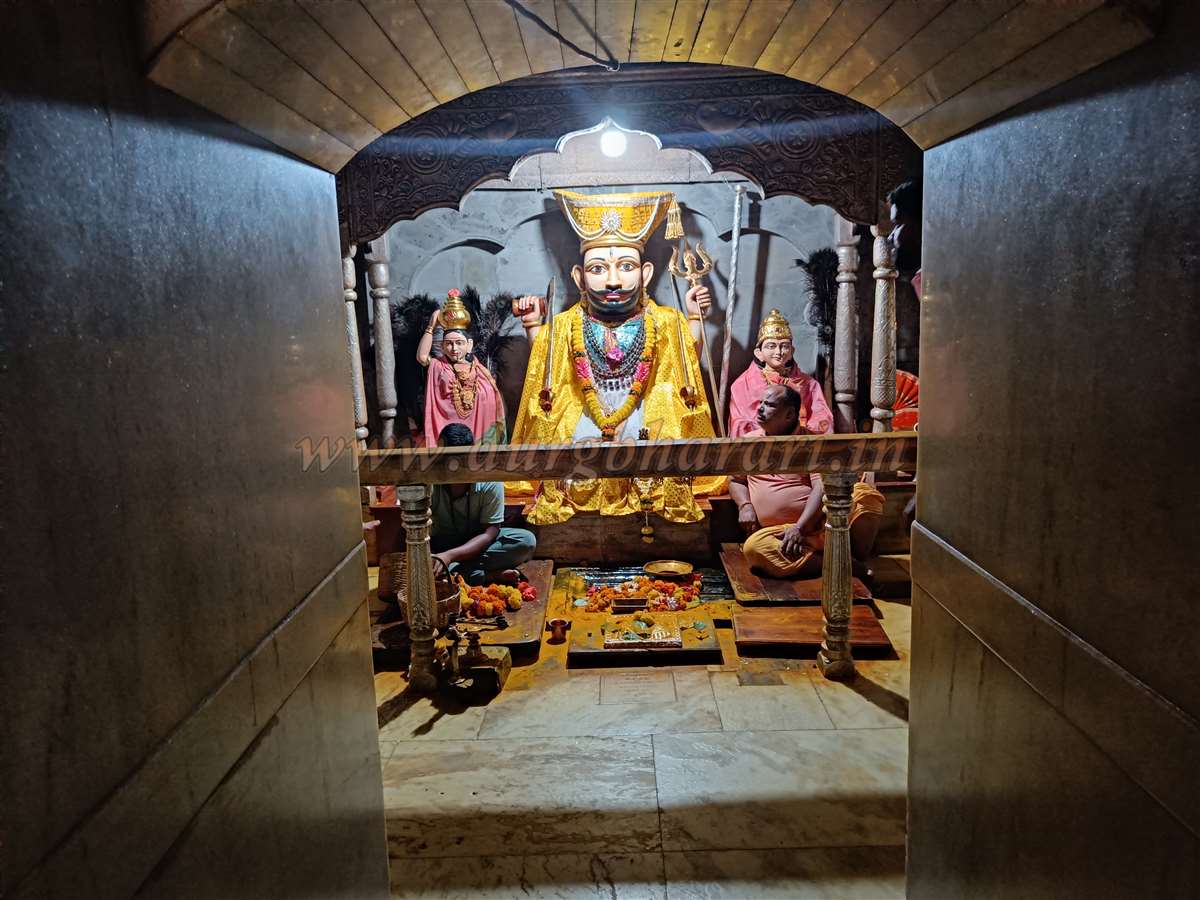
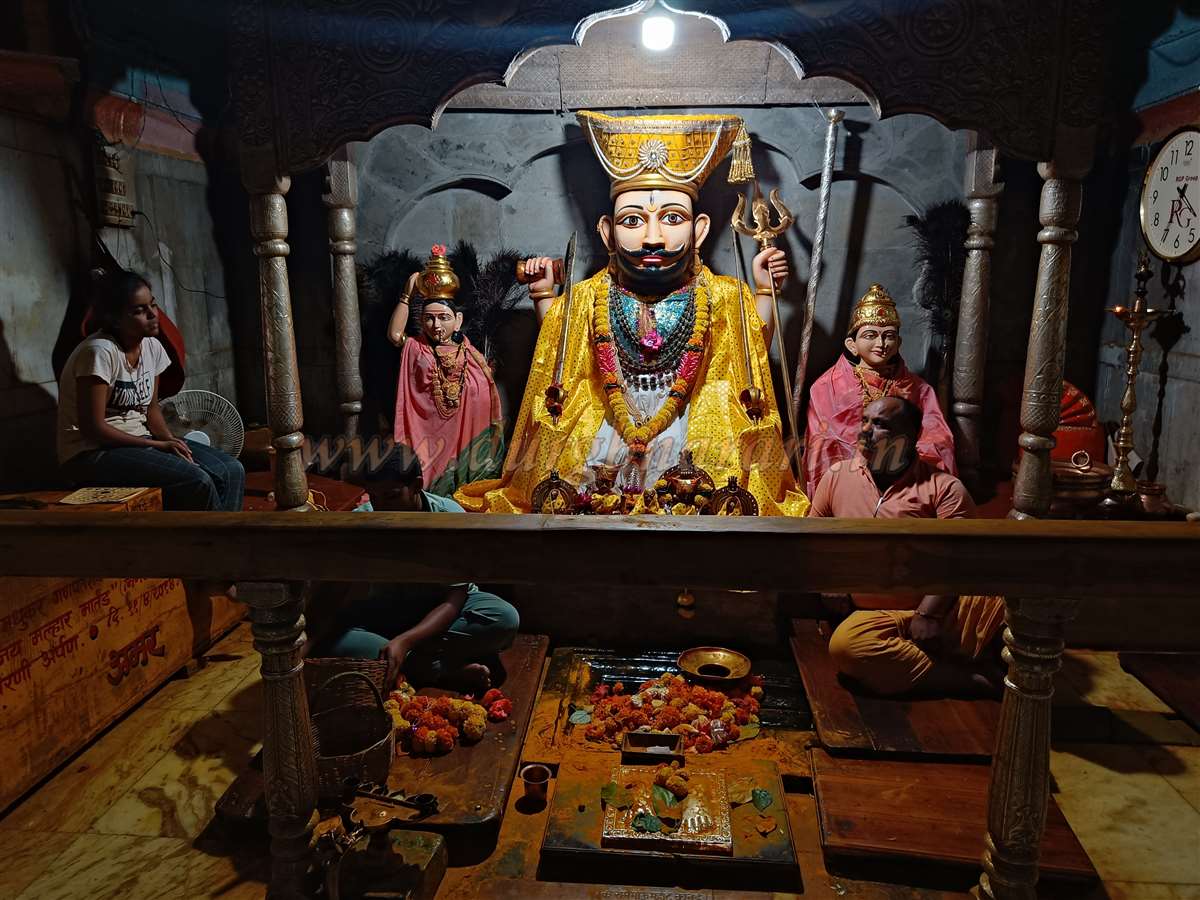
Next to the sanctum are two rooms, one of which serves as the resting place for the deity. Inside the sanctum are five lingams representing Khandoba, covered with a brass mask. Behind them are brass idols of Banai, Mhalsa, and Khandoba placed on a pedestal. On the wall behind are large sculptures of the same deities.
Attached to the temple’s rear side is a smaller shrine built later, housing a Tandala form of Mhalsa and a stone idol of Mahishasura Mardini Bhavani. An inscription on this temple mentions that the spire work was done by Chandrachud, the Diwan of Gaikwad.
To the south of the temple is a tomb, said to be that of Khandoba Muruli. The temple was restored in 1738 by Gangadhar Yashwant and Baji Yashwant Chandrachud. The fortification was constructed in 1769 by Malharrao Gaikwad, a noble from Baroda. During the Peshwa era, the Diwan Chandrachud resided in Nimgav, giving historical significance to the village.
Situated on the banks of the Bhima River, the ruined Ghats and mansions in the area are silent witnesses to its former glory. Water for temple rituals is still brought from the river. Malhari Martand, also known as Khandoba, is the family deity (kuldaivat) of many families across Maharashtra. He is considered an incarnation of Lord Shiva. Khandoba is worshipped in various symbolic forms like a lingam, Tandala, idol, and tank (stone representation).
Being a family deity, Khandoba plays a key role in ancestral customs. Many Marathi families perform a ritual called Jagran Gondhal (all-night devotional singing) after marriage. Another traditional ritual is Talibharan, where five men offer bel leaves, turmeric, and betel nuts to the deity. The ritual ends with lifting a plate three times while chanting:
“Yelkot Sadanandacha, Changbhala Bhairavnathacha!”
Devotees of Khandoba come from a wide range of castes, including Brahmins, Lingayats, Dhangars, Matangs, and Marathas. A male devotee is called Waghya and a female is called Muruli. In Khandoba worship, turmeric powder and dry coconut are of prime importance.
On the festival of Champashashti, the ritual naivedya (food offering) typically includes Thombra (boiled sorghum with curd and salt), wheat flatbread, brinjal curry, spring onions, and garlic. Sunday is considered Khandoba day, and the temple sees a special crowd. Other important days for Khandoba worship include Somvati Amavasya, the full moons of Chaitra, Shravan, and Magh, as well as Champashashti and Maha Shivratri.
© Suresh Nimbalkar
GALLERY