NIMGAON
TYPE : FORTRESS
DISTRICT : PUNE
HEIGHT : 0
Exploring the Fortified Mansions (Gadhi) of Pune District: The Tale of Nimgaon Dawdi and the Chandrachud Legacy
While exploring forts in Pune district, one comes across many large and small gadhi (fortified mansions) in the Bara Maval (twelve traditional regions around Pune). Most of these gadhi emerged during the Peshwa era, and some were even built to rival the grand Shaniwar Wada in design and stature. One such gadhi, built by Sardar Chandrachud, is located in the village of Nimgaon Khandoba, known for its temple of Lord Khandoba.
This village, once prosperous during the Peshwa period, is today entirely neglected. Since there are several villages in Maharashtra named Nimgaon, this particular one is recognized by a combined name due to its proximity to the adjacent village Dawdi, and hence it is known as Nimgaon Dawdi.
...
Both Nimgaon and Dawdi are significant for history enthusiasts. While Nimgaon houses the Chandrachud gadhi, Dawdi features a Gadhi belonging to the Gaikwad family. Once part of Khed taluka (now Rajgurunagar), this region carries the legacy of the Chandrachud family.
Let us begin our journey to Nimgaon Dawdi, located 10 km from Rajgurunagar, the main town of Khed Taluka in Pune district. Rajgurunagar is well-connected by transport from Mumbai and Pune, but one must rely on private vehicles to reach Nimgaon.
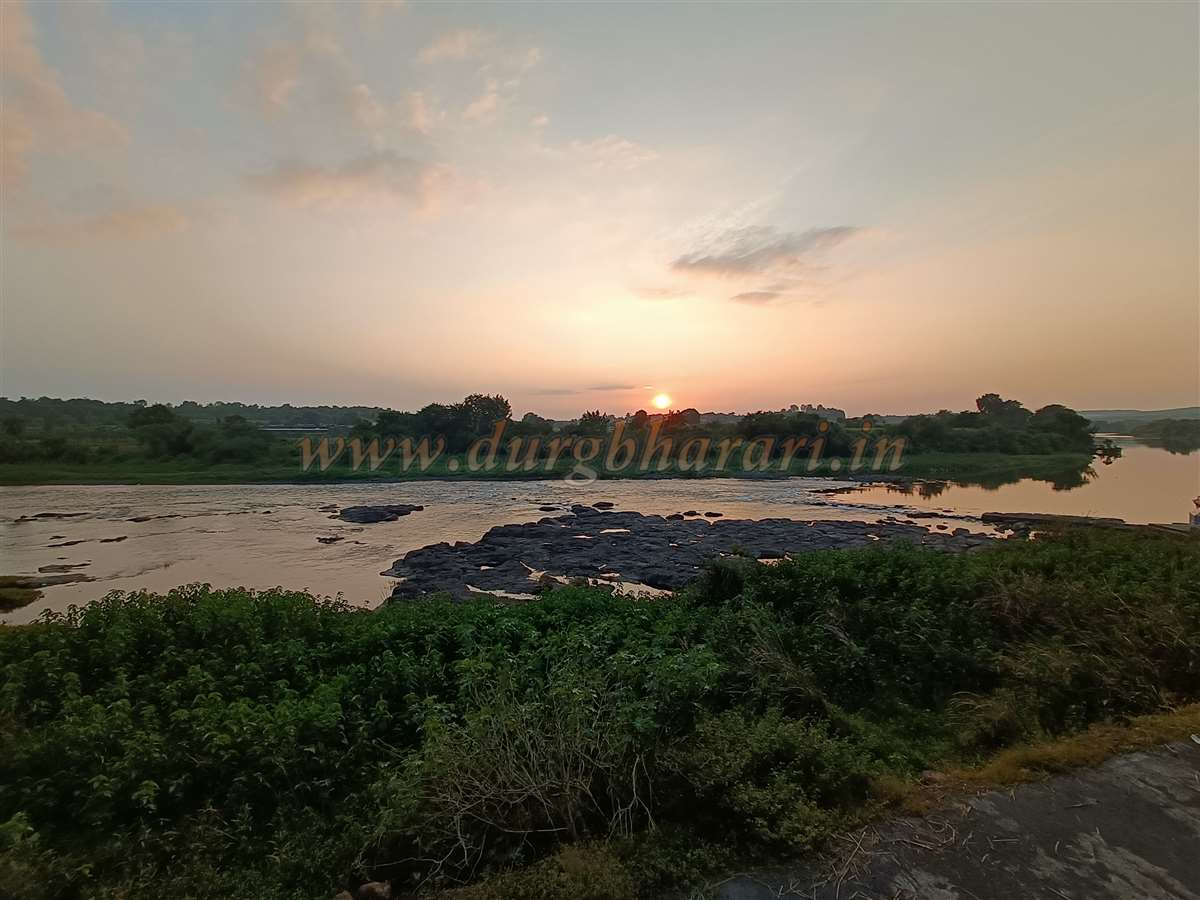
The village is situated on the banks of the Bhima River, and just outside the village, along the river, stands the Chandrachud gadhi. The modern gateway through which one enters the village gives the impression that the village was once enclosed by fort walls.
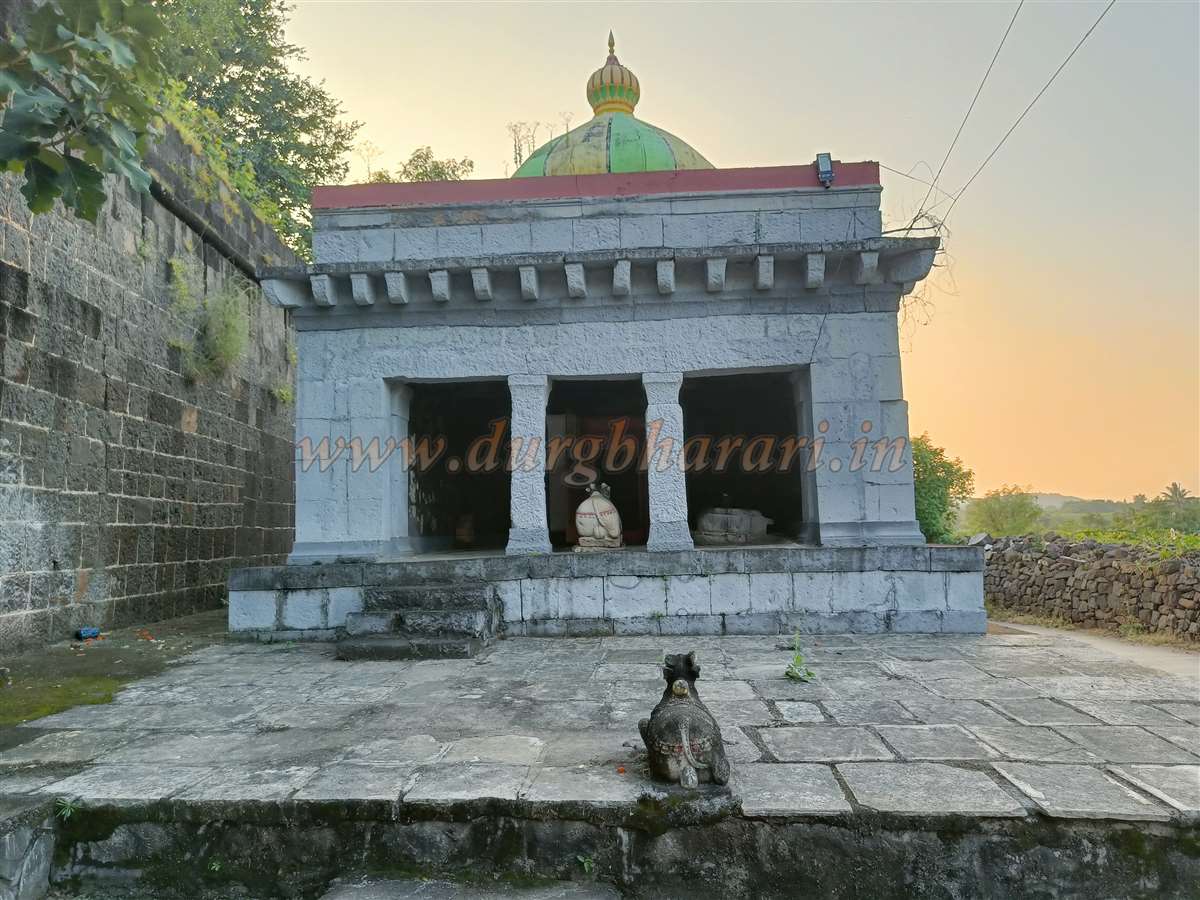
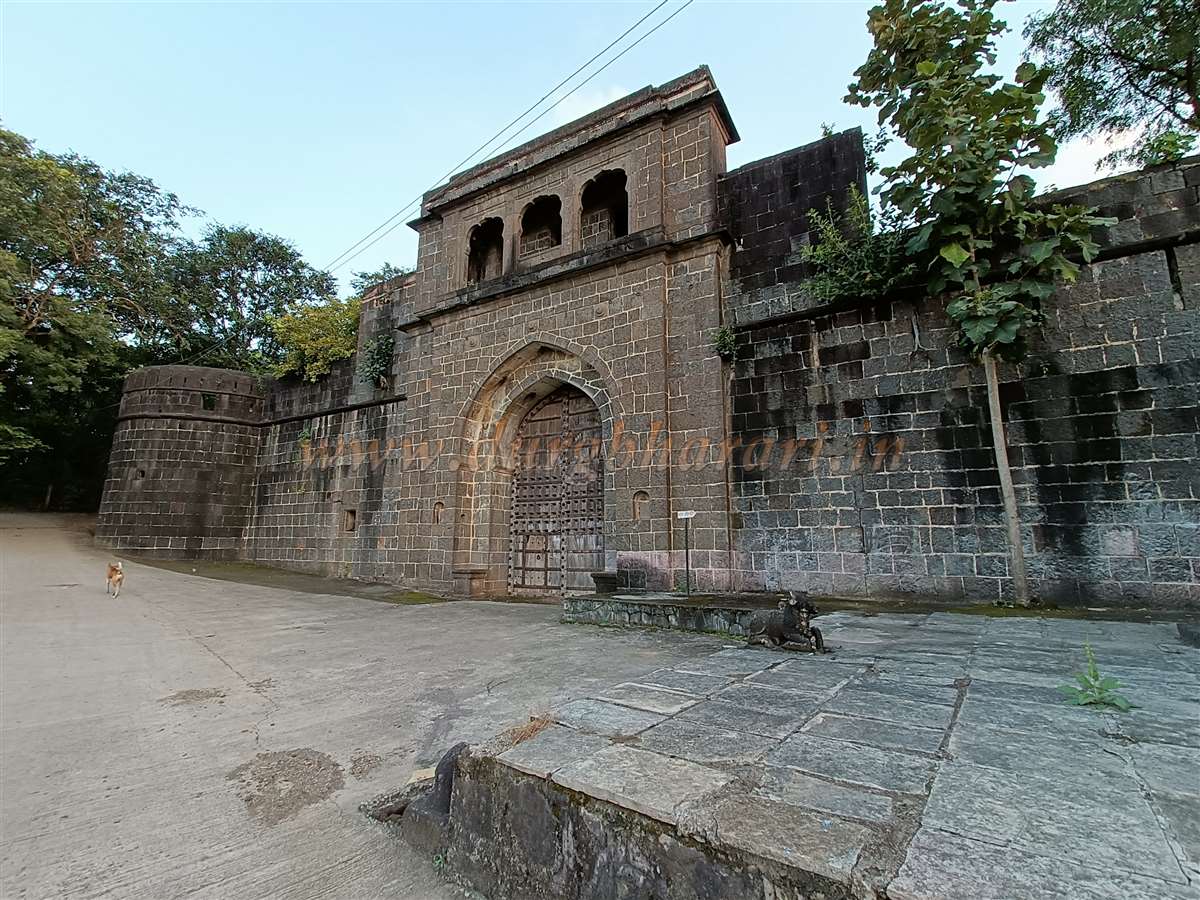
As you stand in front of the gadhi main entrance, its structure reminds you somewhat of the Shaniwar Wada gates. On the right side of this gate, near the wall, lies a Mahadev (Shiva) temple built during the Peshwa era using finely carved stone, housing two Shivling.
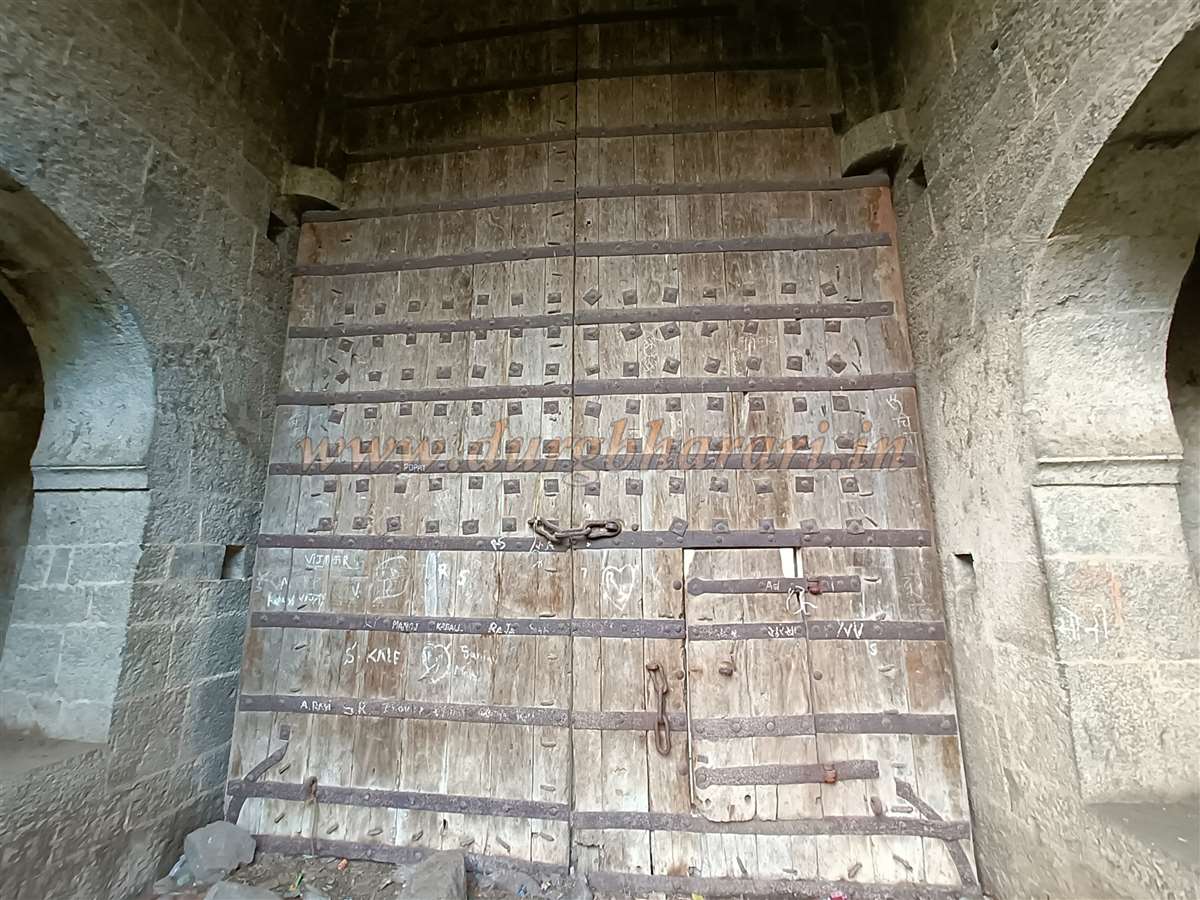
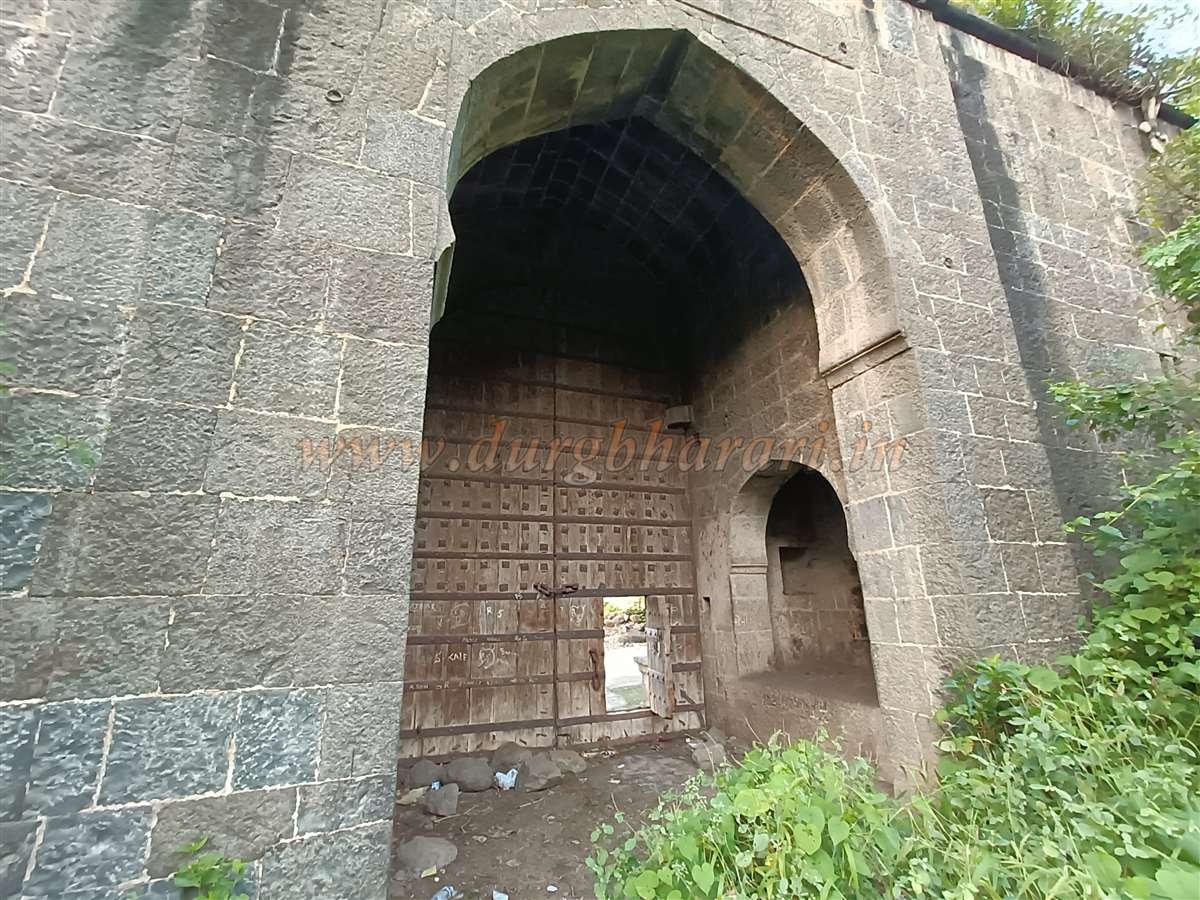
The west-facing entrance of the gadhi is quite grand. Its façade features carved lotus motifs and niches (konāḍe). Above the gate is a finely designed Nagarkhana (drum gallery) and a stone balcony. The approximately 20-foot-high gate still retains its arched wooden doors reinforced with iron spikes, and within it is a smaller wicket door (dindi Darwaja).
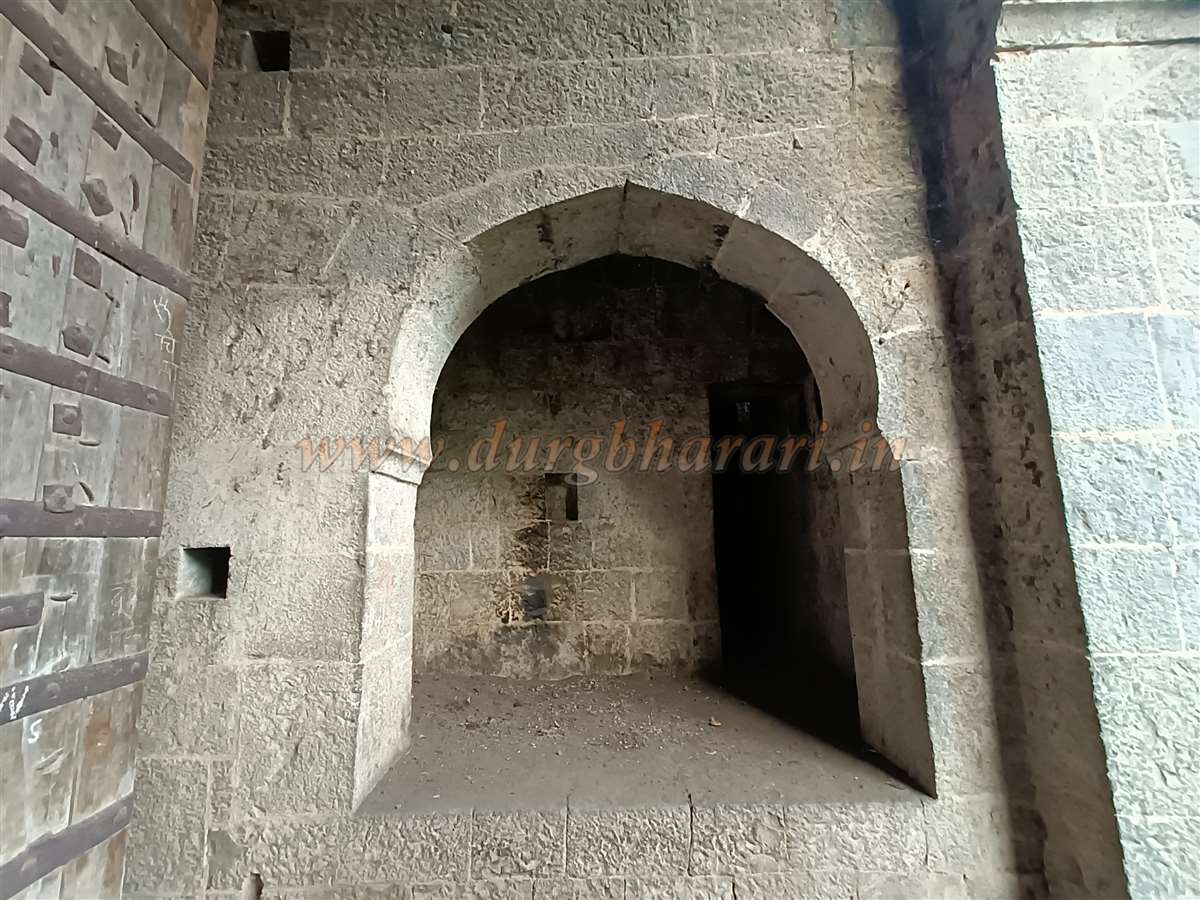
Upon entering, one finds guard rooms (devdis) on both sides, complete with chambers for their residence. From inside, steps adjacent to the wall lead to the upper part of the entrance gate, where there is a place for flag hoisting. From the top, one can view a vast surrounding area.
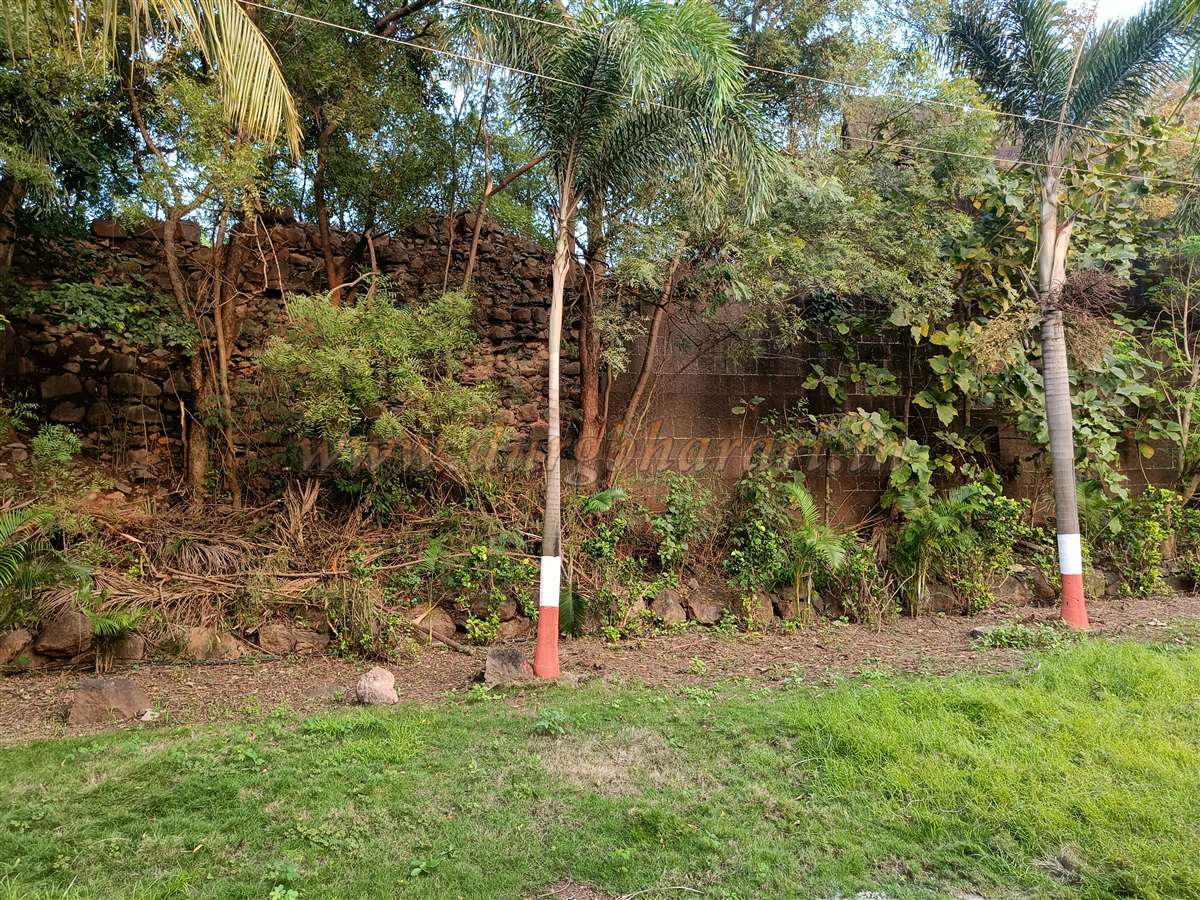
The rectangular gadhi is spread over approximately 1.25 acres, constructed entirely with finely cut stone. While some parts of the wall have collapsed, making it impossible to walk along the top, one can still circumambulate the gadhi from the outside.
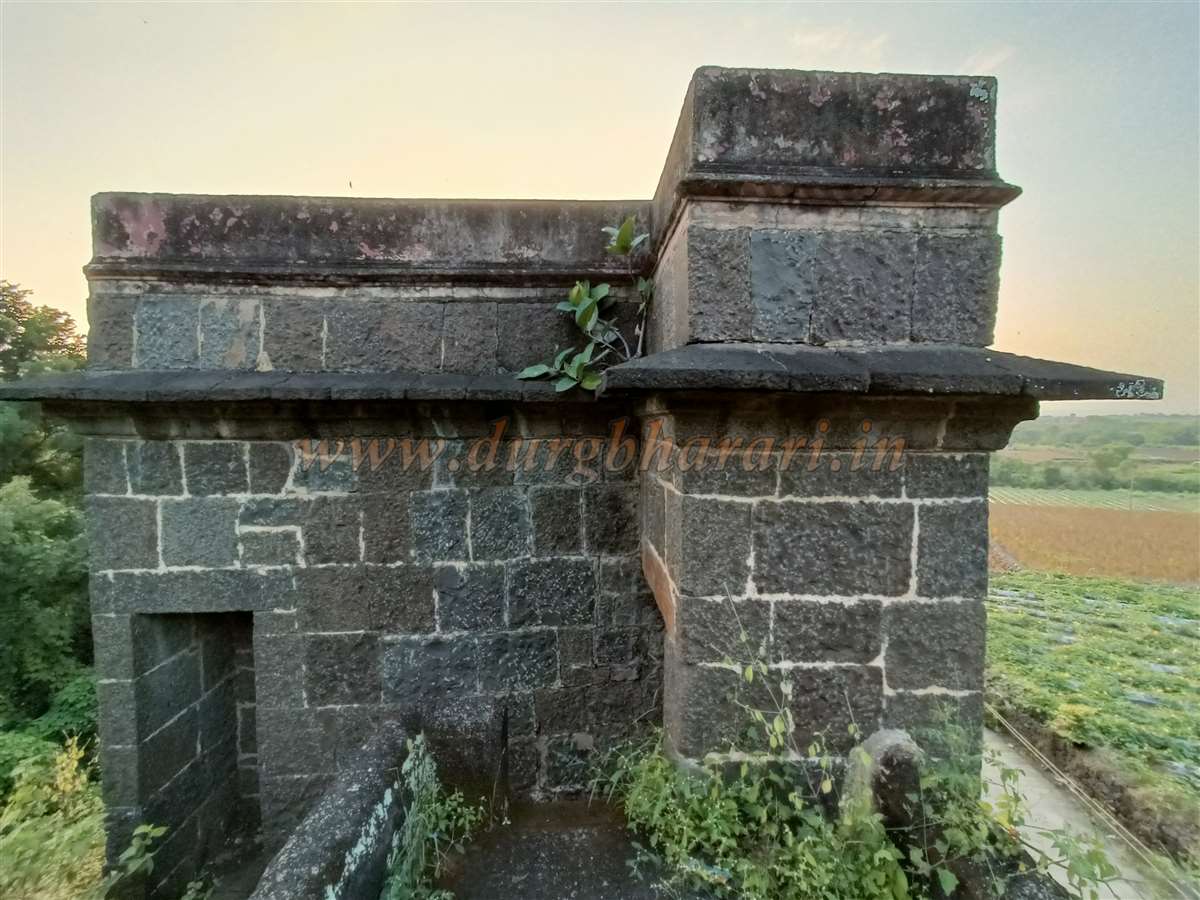
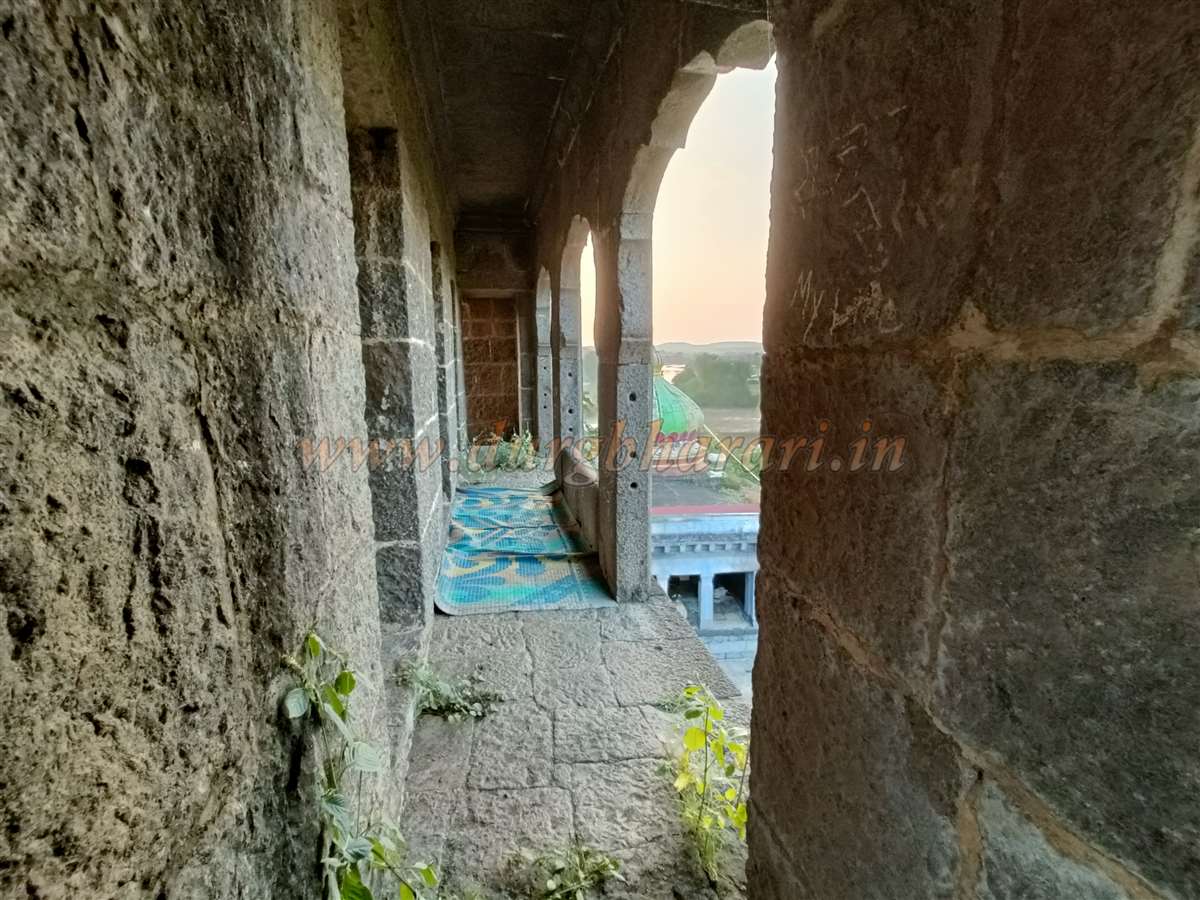
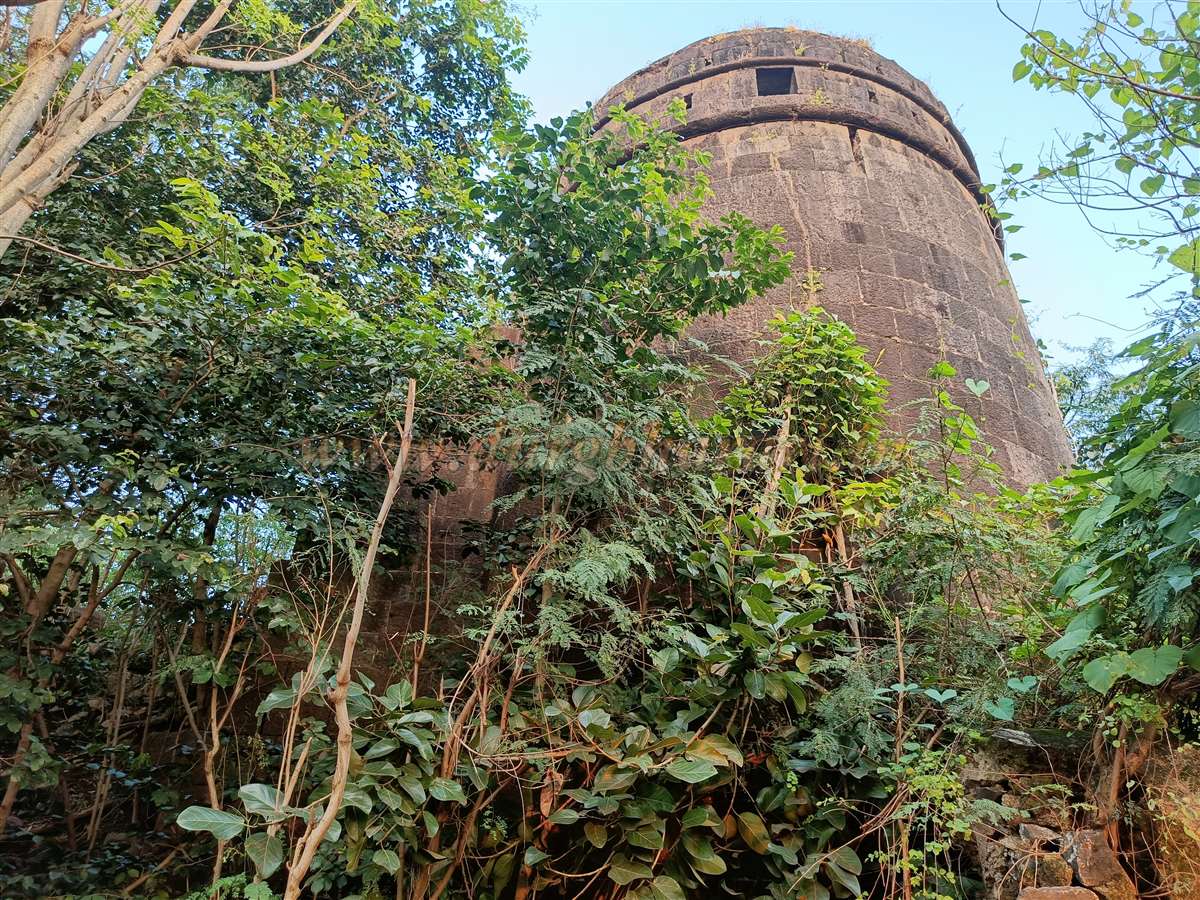
Within the walls, there are a total of six bastions of varying sizes. As you walk along the inside, you can spot latrines, sealed chambers, and even a secret passage (tunnel). Each bastion also contains storage rooms or halls.
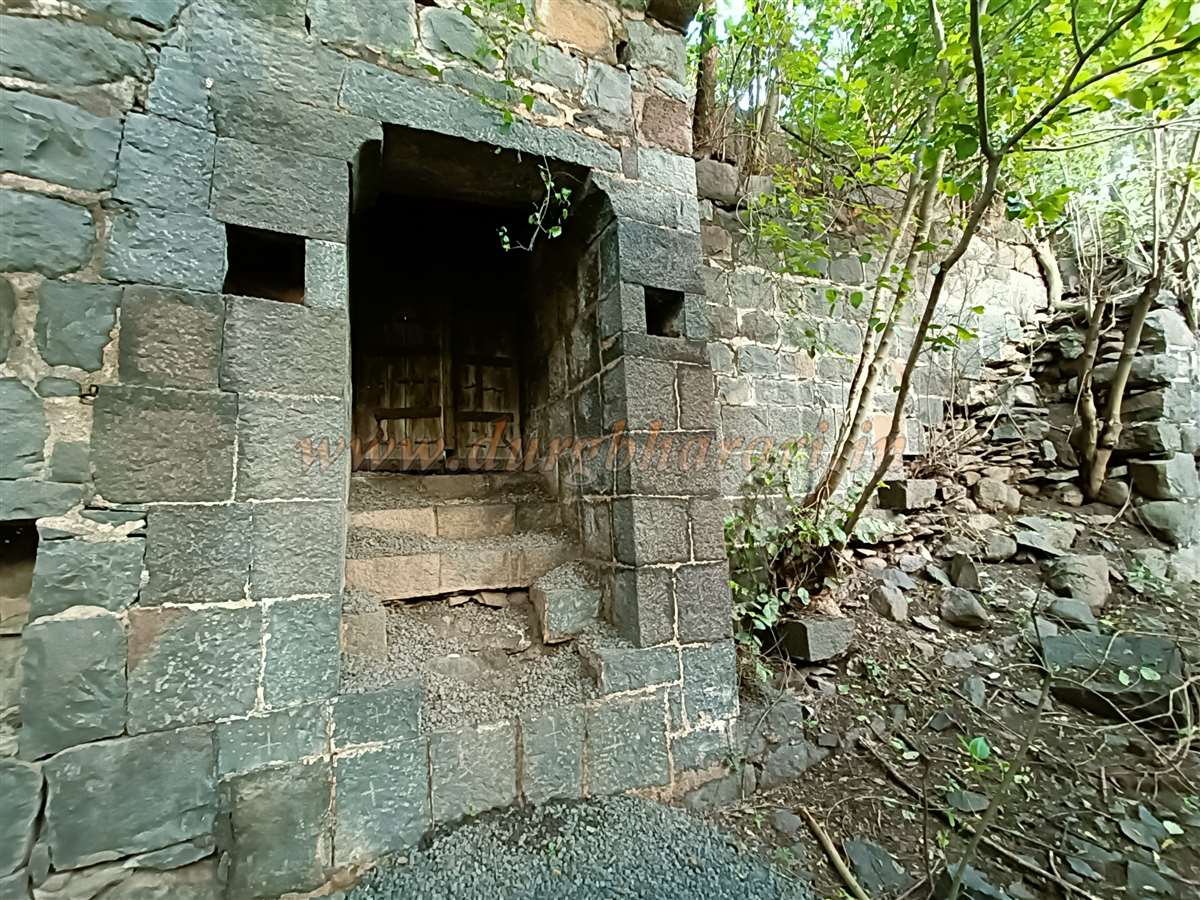
Besides the main gate, the gadhi also has two smaller gates on the north and east sides. Above both of these are small rooms with original wooden doors still intact.
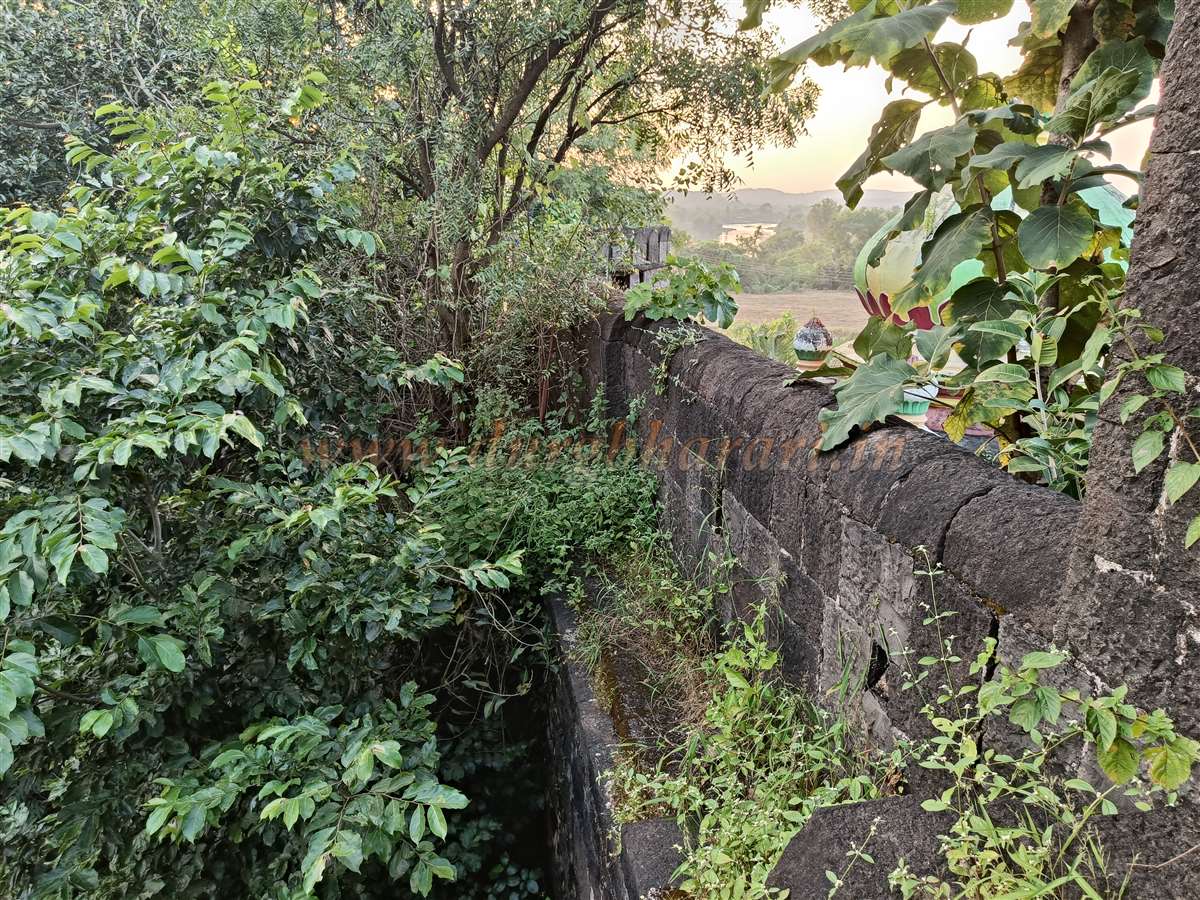
The inner courtyard is now overgrown with vegetation, limiting movement. However, within the foliage, one can still see the stone foundations of two mansions, believed by locals to be the remains of Chandramahal and Suryamahal. It takes about half an hour to fully explore the gadhi.
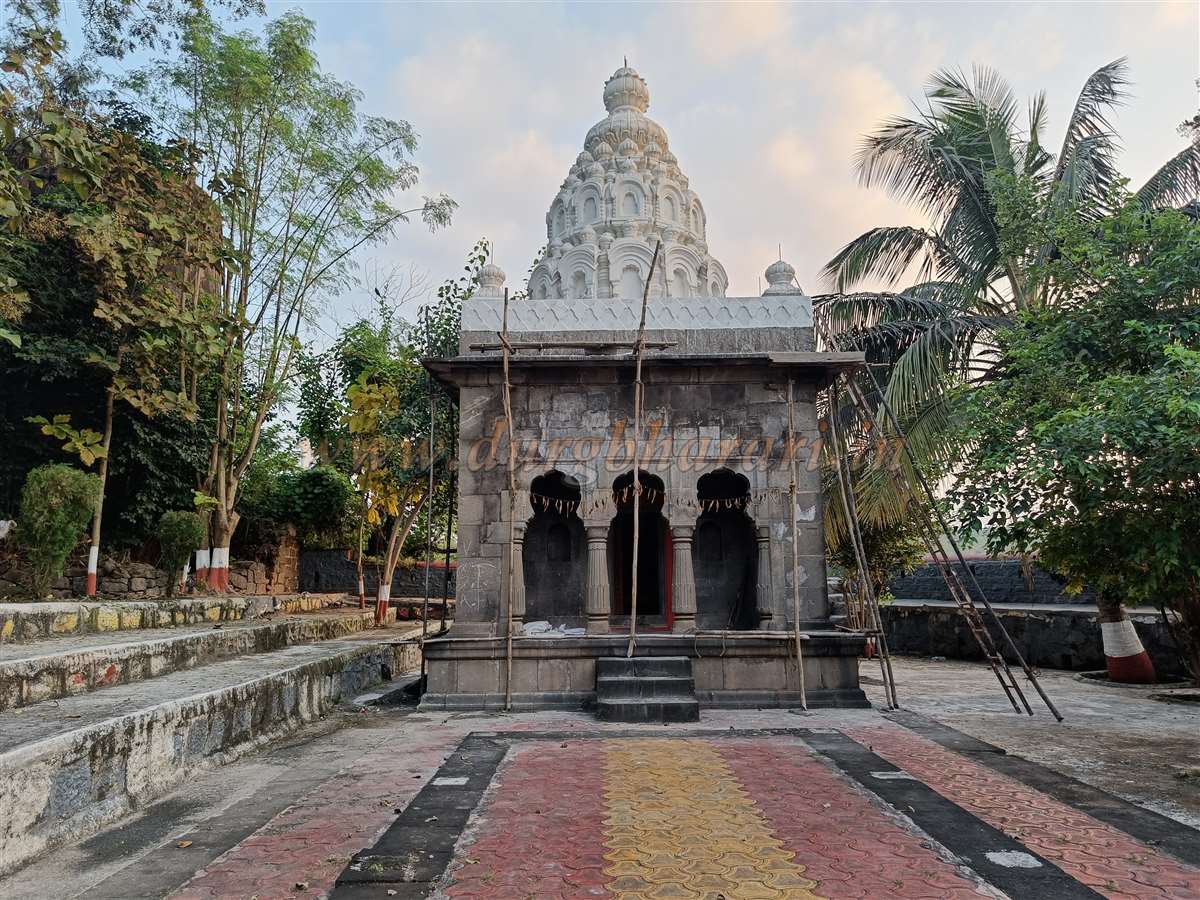
Currently, the ownership of this property lies with the Shingvi family of Dawdi. After seeing the gadhi, a visit to the nearby Bhima River reveals a Peshwa-era Vishnu temple built with finely dressed stone. The temple houses a beautiful idol of Vishnu-Lakshmi, and opposite it is a dome shrine of Garuda.
In Peshwa records, Nimgaon is sometimes referred to as Nimgaon–Nagna. During Peshwa Baji Rao I’s reign, the Chandrachud family of Kanhersar and Nimgaon had gained great reputation. They had even purchased the Patilki (village headship) of Pur and Khed villages in the Nimgaon–Nagna region.
During Malharrao Holkar’s time, Yashwantrao Chandrachud sons Baji and Gangadhar rose to prominence through their merit. However, the most distinguished figure of the family was Sardar Gangadhar Yashwant Chandrachud, also known as Gangoba Tatya.
Gangoba began his service with Malharrao Holkar, either by acquiring the position of fadanvishi (minister) or being placed strategically by the Peshwa to keep Holkar in check. He is one of the rare historical personalities who won favour from both the Peshwa and the Holkar simultaneously.
After joining Holkar’s service, Gangadhar made significant progress. Along with administration and clerical expertise, he also engaged in politics and military operations. His loyalty eventually shifted more towards the Holkar, and he became indifferent to the Peshwa. He worked for the prosperity of the Malwa region, where Holkar had his base.
Post-1750, Gangadhar took part in many Holkar military campaigns. In 1751, when the Mughals’ Wazir Safdarjung had a conflict with the Rohillas, the Scandia’s and Holkar sided with Safdarjung. In this battle, Gangadhar and the people of Nimgaon demonstrated great valour.
When the Marathas hoisted flags beyond Atak, it was Gangadhar Chandrachud and Tukoji Holkar who led the Holkar forces. A devout Vishnu devotee, Gangadhar also established the famous Sundarnarayan Temple in Nashik in 1756.
On 27 February 1760, during the campaign against Najib Khan near Delhi at Sikandra, Gangoba led a raid and secured loot. Later, he also participated in the Panipat campaign against Abdali. A year before the Panipat war, in March, a battle took place between Malharrao Holkar’s forces and Abdali. Among the key warriors were Shetyaji Kharade, Shivaji Kharade, Anandrao Ramji Yadav, and Gangadhar Yashwant Chandrachud. Except for Gangadhar, all were killed. The Afghan army attacked Gangoba, forcing him to flee.
After Malharrao Holkar’s death, Ahilyabai Holkar was proposed as his successor, a decision Gangadhar strongly opposed. He allied with Raghobadada against her and invited him north to seize Indore — a plan that ultimately failed.
Having fallen out of favour in Holkar’s court and later even with the Peshwa, Gangadhar was imprisoned for 20 years. In 1772, he was released after paying a fine of 30 lakh rupees and returned to Nimgaon. He passed away on 20 February 1774.
An inscription from 1738 in the Khandoba temple in Nimgaon indicates that Gangadhar Yashwant Chandrachud renovated the temple. It is believed he also built the Chandrachud Gadhi, though the exact date of its construction is unknown.
© Suresh Nimbalkar
GALLERY