NANDGAVLI
TYPE : GADHI
DISTRICT : NANDURBAR
HEIGHT : 0
GRADE : EASY
When one speaks of Nandurbar and tourism, eyebrows are often raised in surprise. In this tribal-dominated district of Nandurbar, there once existed not just one or two, but as many as fifteen forts in the forms of hill forts, land forts, and fortified mansions (gadhi). Apart from the seven forts mentioned in fort historian Pramod Mande’s book Maharashtratil Gadkille, references to these forts are rarely found anywhere else. Even in today’s computer age, information about these forts is not available on the internet. Our Durgbharari group undertook a thorough study tour of all these forts, and I have attempted to present the information gathered on this website.
Among them, the Hatmoida and Ashte forts have been completely destroyed, while the remaining thirteen forts still stand—holding on to their remnants and fighting against time.
...
Of these thirteen, there is one hill fort, three land forts, two city forts, and seven gadhi-type forts. Since most of these forts now have villages settled within them, the growing population has eaten away at their remains, and the indifference of locals has also contributed to their deterioration.
Today, we will visit the gadhi in Nandurbar city, popularly known as the fort of King Nand Gavali, which is now counting its final days. Nestled in the lap of the hills, the city of Nandurbar—also called Nand Nagari—is said to have been founded by a king named Nand Gavali. Once a part of Khandesh, Nandurbar came under Dhule district after the division of Khandesh, and later, on 1 July 1998, it was separated from Dhule to form Nandurbar district with six talukas. The district shares its boundaries directly with the states of Madhya Pradesh and Gujarat.
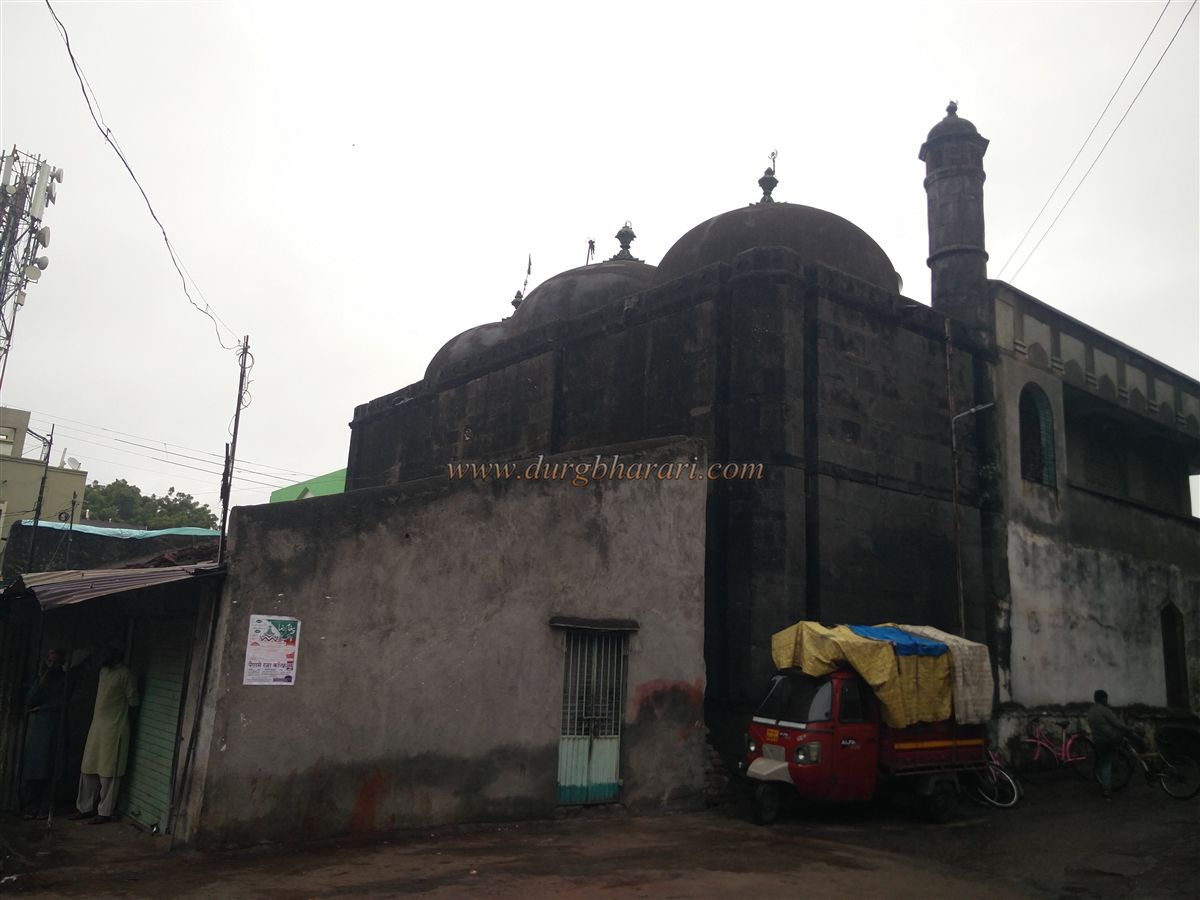
Nandurbar city, the main hub of the district, is located 360 km from Mumbai and is connected to the country’s major cities by both road and rail. To visit the fort of King Nand Gavali, one must first reach Nandurbar city. Since the locals know this gadhi by that very name, finding it is not difficult. This gadhi is located at the foot of Nandurbar Fort, which lies to the west of the city. To get there, take the Dhanora Road, pass through the fish market, and head towards the Kali Masjid. This mosque has a Persian inscription stating that it was built during the Bahmani period in 1583 CE (991 Hijri).
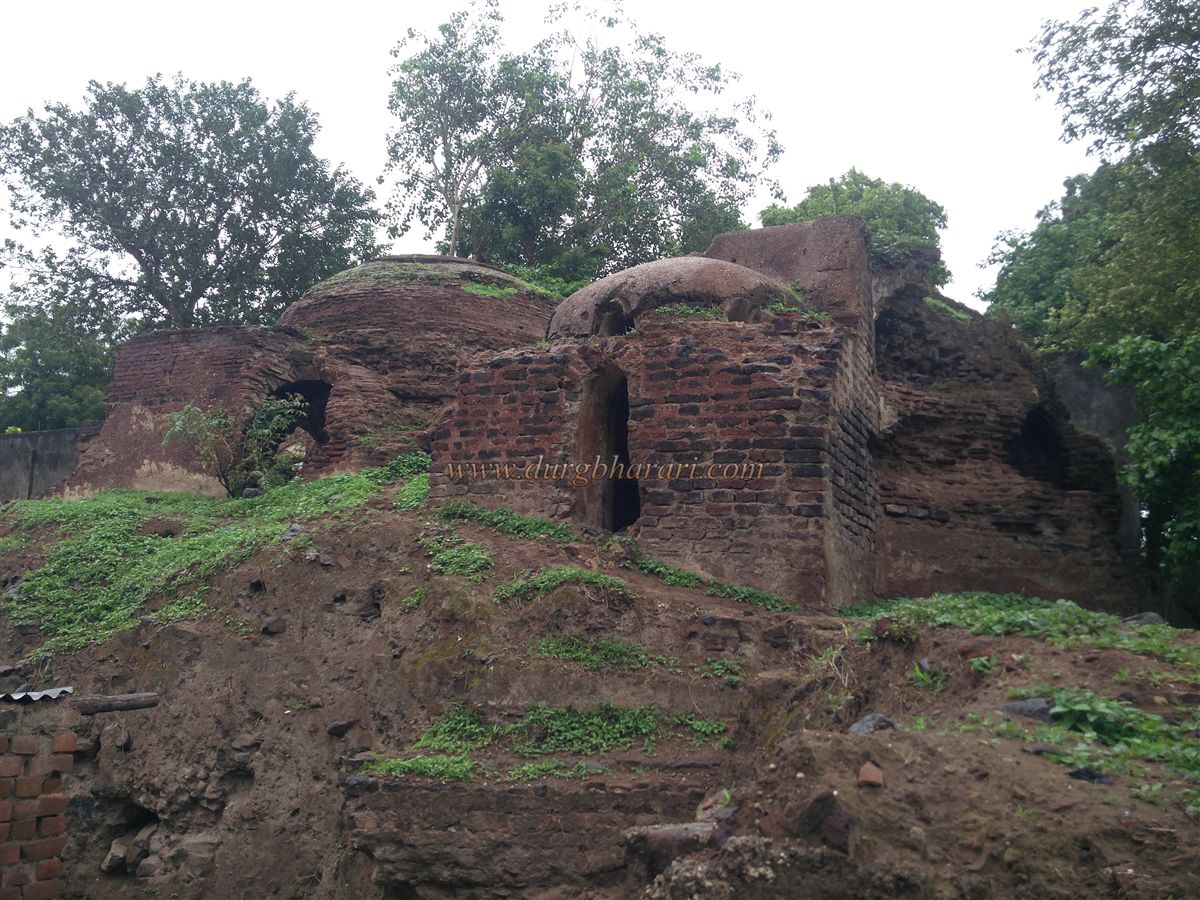
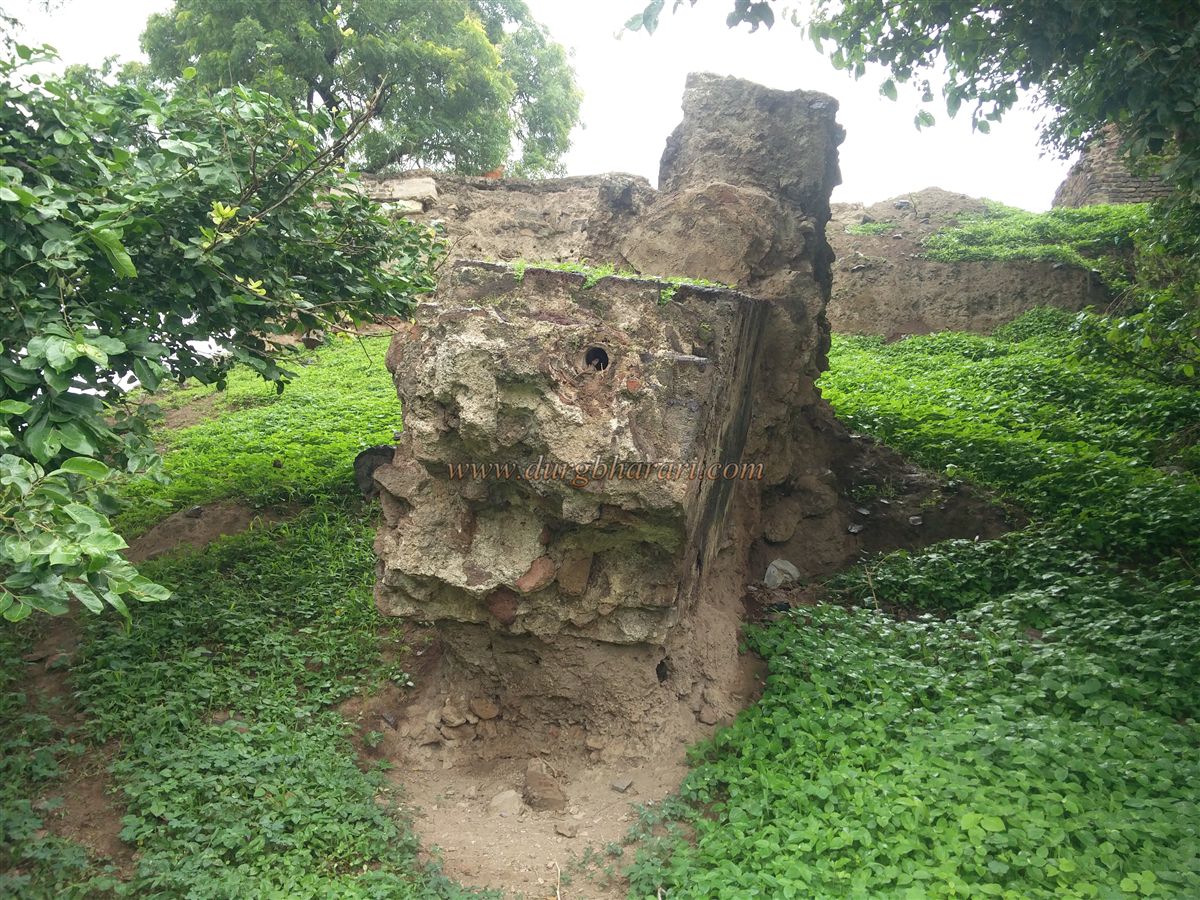
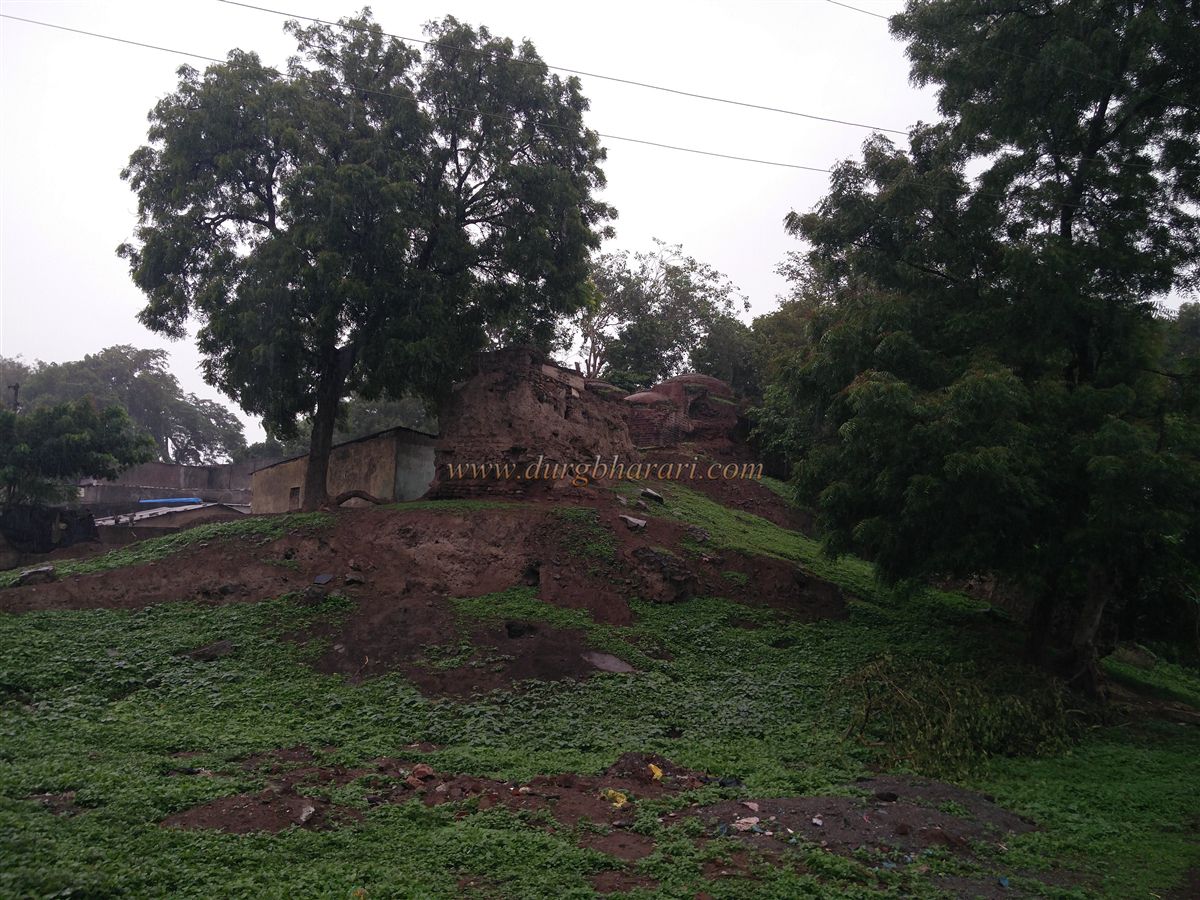
From there, proceed through the lane on the left, and at the end of this lane, atop a small hillock, lie the dying remains of this gadhi. The fortifications have completely collapsed, with only a section of the walls visible on one side. The most identifiable structure in the gadhi is the Hamamkhana (bathhouse). Its arch, walls, and upper dome are relatively intact, and one can see the terracotta-pipe water channel built into its walls. The bastions of the fort now survive only as mounds of earth, under which further remains might still be found.
There may still be other remnants within the gadhi, but since two or three dogs had made their dens inside the Hamamkhana, they strongly resisted our entry and movement within. The growing settlement has now reached the collapsed portions of the fort, and in a few years, this area will likely be completely occupied. Excavation has already begun in some parts. With much of the fortifications destroyed, it is impossible to estimate the original size of the gadhi. A complete tour of it takes barely ten minutes.
Nandurbar is one of the oldest towns in Khandesh. An inscription in the caves at Kanheri refers to it as Nandigad. This village was founded by King Nand Gavali, a ruler of the Yadav dynasty, and remained under their control until the Yavani invasions. The traveller Ibn Battuta mentioned Nandurbar in his travelogue. In 1530 CE, the first Sultan of Khandesh, Faruqi Malik Raja, captured the towns of Sultanpur and Nandurbar, but after an attack by the Gujarat Sultan Muzaffar, Malik Raja was forced to retreat towards Thalner.
In 1536 CE, when Mahmud Shah Begada III became the Sultan of Gujarat, he granted the posts of Sultanpur and Nandurbar to Mubarak Khan Faruqi, as per the promise made during his imprisonment at Asirgarh. Later, Chingiz Khan of Gujarat captured them again but was soon forced to relinquish them. During Akbar’s reign, the Ain-i-Akbari (1590 CE) mentions Nandurbar as a district post with a fort, yielding revenue of five crore dams. The famous traveller Tavernier described Nandurbar in 1660 as a wealthy and prosperous city.
In 1666 CE, the British established a warehouse here, but it was destroyed in the early 19th century. By 1818, when Nandurbar came under British control, half of it lay deserted.
© Suresh Nimbalkar
GALLERY