NAKHVINDA
TYPE : HILL FORT
DISTRICT : AHMEDNAGAR
HEIGHT : 3020 FEET
GRADE : HARD
Nestled in the Sahyadri ranges, many forts have lost their identity in history and remain hidden behind the curtain of time. However, thanks to the efforts of fort enthusiasts, some of them are once again coming into the light. One such fort, once hidden in obscurity and now rediscovered, is Nakhwinda. Located in the village of Pimpalgaon in Akole taluka of Ahmednagar district, this fort is also known as Pimpalgaon Nakhwinda.
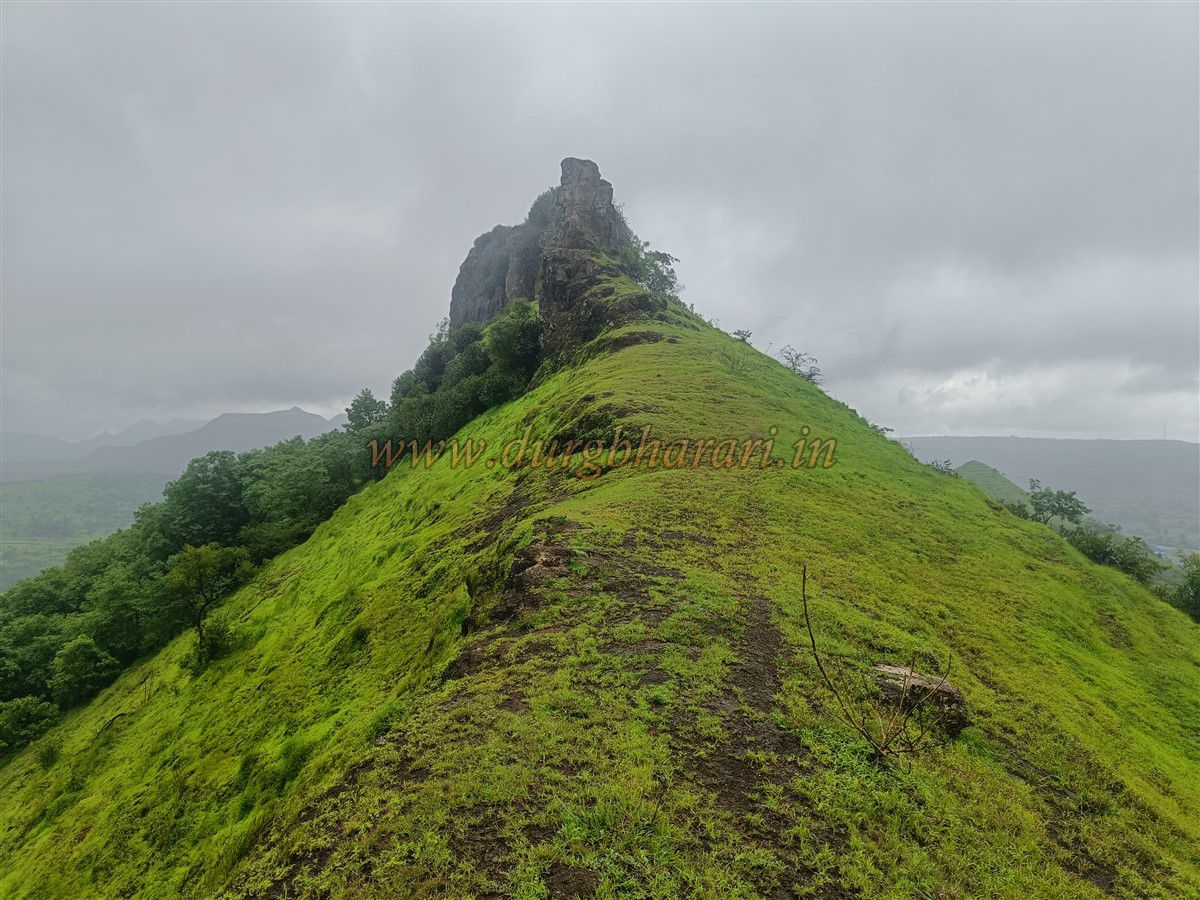
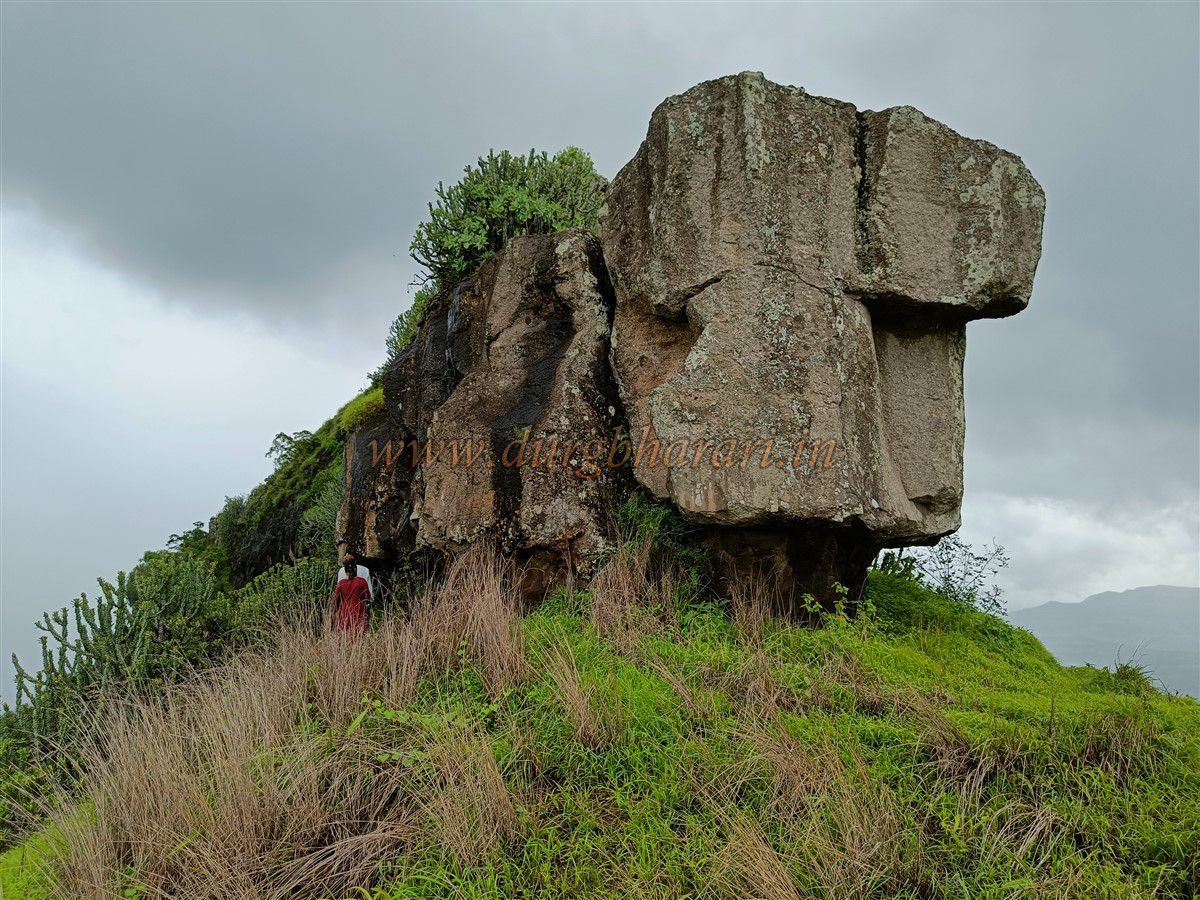
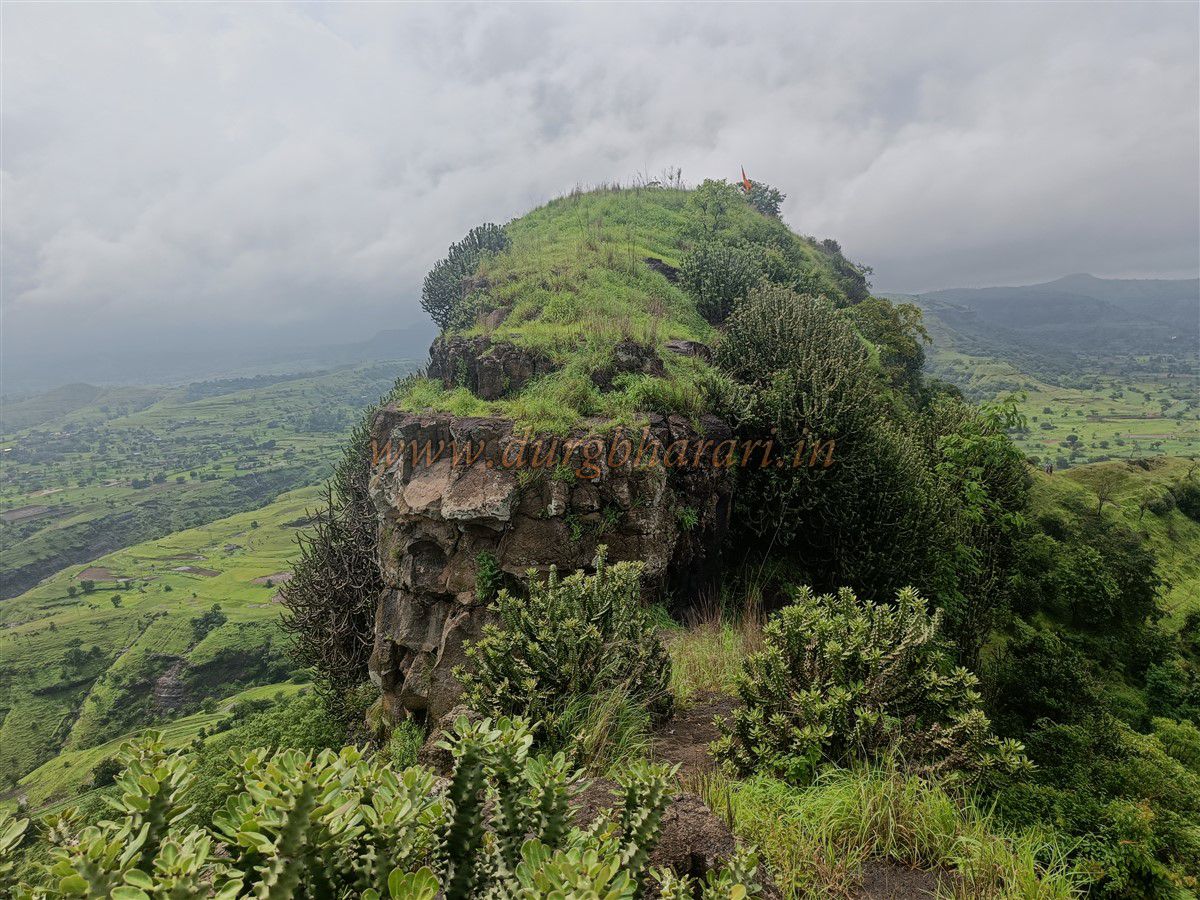
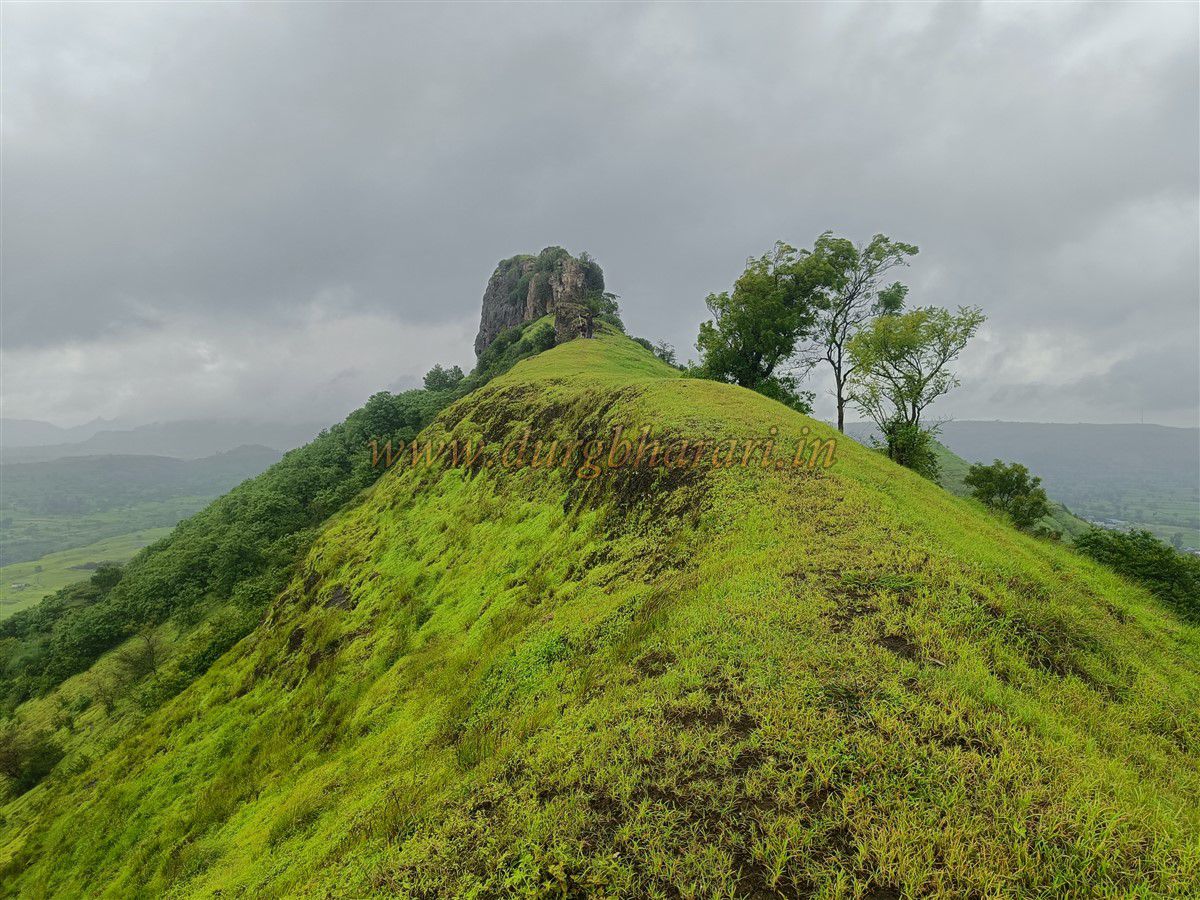
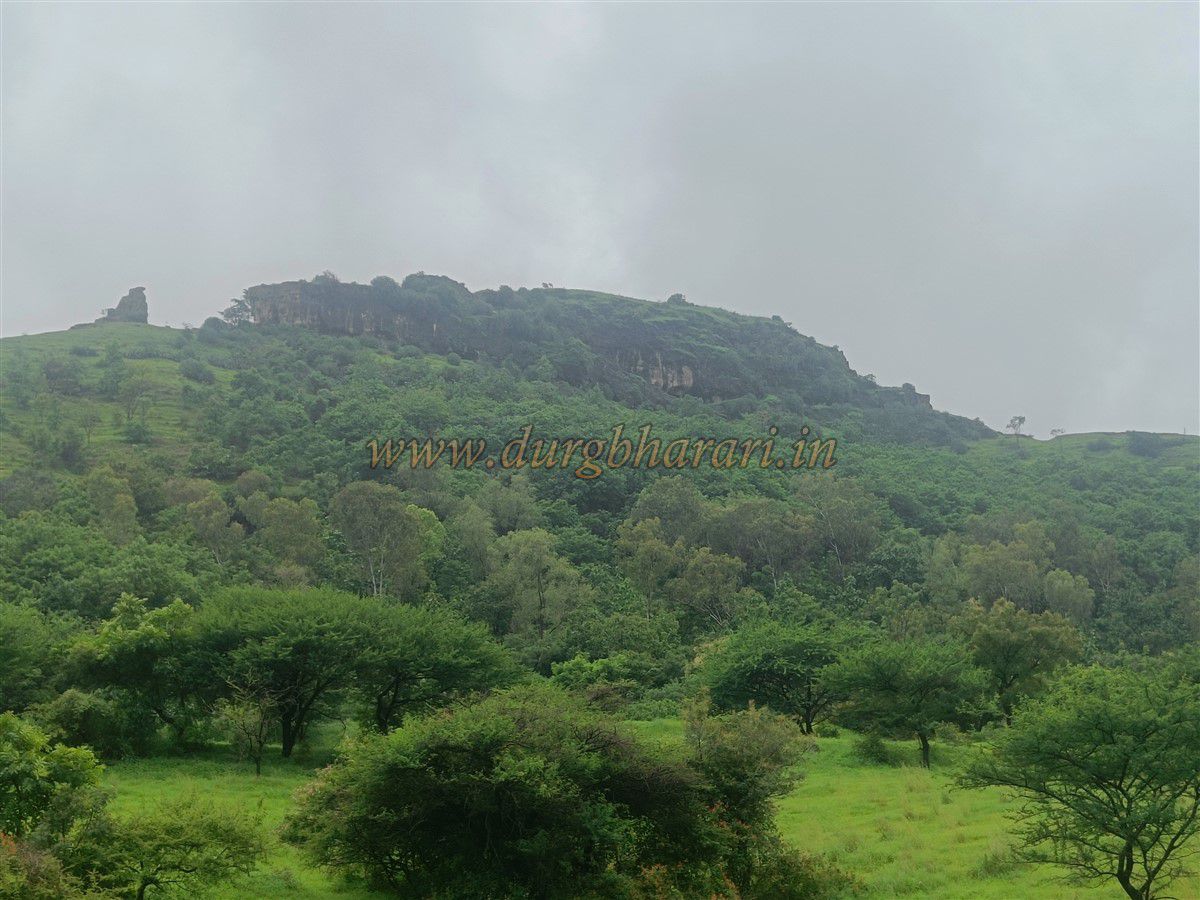
The region boasts many famous forts such as Kunjargad, Kaladgad, Bhairavgad,Vishramgad,Bitangad,Aundha,Ratangad and Harishchandragad, yet Nakhwinda remains virtually unknown. Pimpalgaon, at the base of Nakhwinda Fort, lies about 60 km from Ghoti via Kalsubai and Rajur. Upon entering Pimpalgaon, one can see the east–west spreading hill behind the village, topped with the pinnacle-like rock mass of Nakhwinda Fort.
...
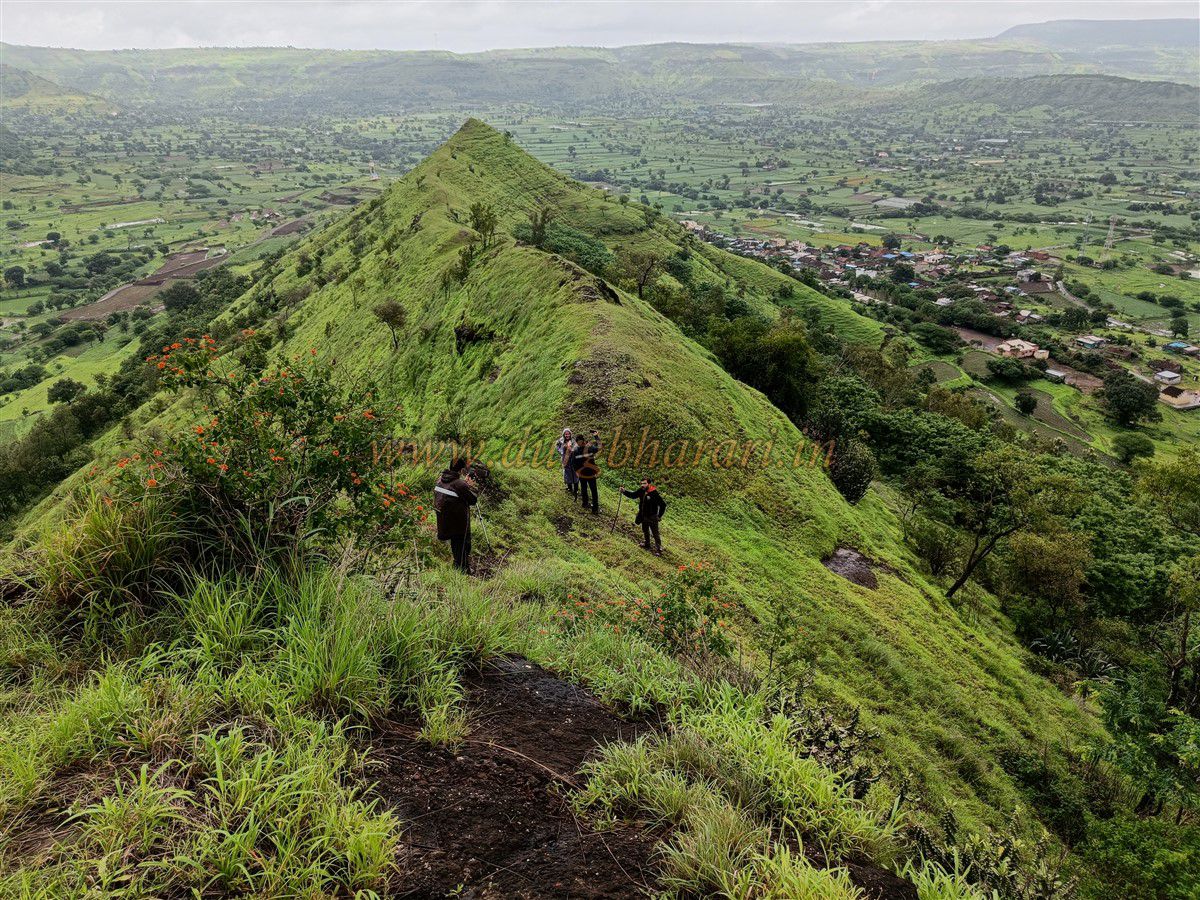
The fort is narrow in shape, with two ridges (spurs) descending towards the village. Both of these ridges have routes leading to the fort.
If one climbs via the western ridge, the path leads directly to the fort trail. On the other hand, climbing via the eastern ridge requires skirting the pinnacle and reaching the western end. Since both routes are of similar difficulty, one may choose whichever is more convenient. Although the main route to the fort begins at the western end of the pinnacle, the trail to the top actually climbs up from the eastern side. Keeping this in mind, and after confirming directions from locals, one should begin the ascent.
The western trail starts near a temple in the village, whereas the eastern trail starts near a house at the edge of the village along the main road. The occupant of this house often acts as a guide, though they do not go all the way to the fort top (contact: 8432120319). From the base, it takes about half an hour to reach the western end of the pinnacle, where the actual fort climb begins.
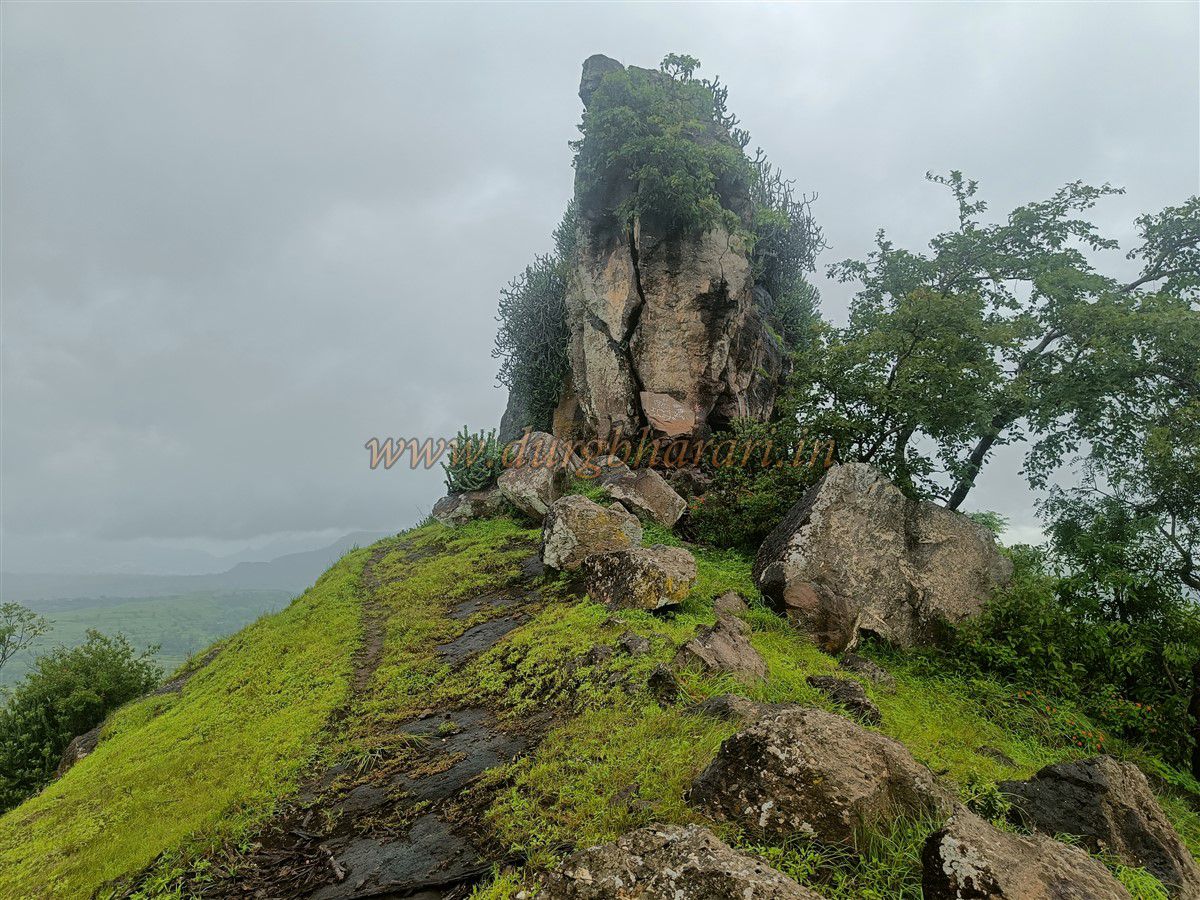
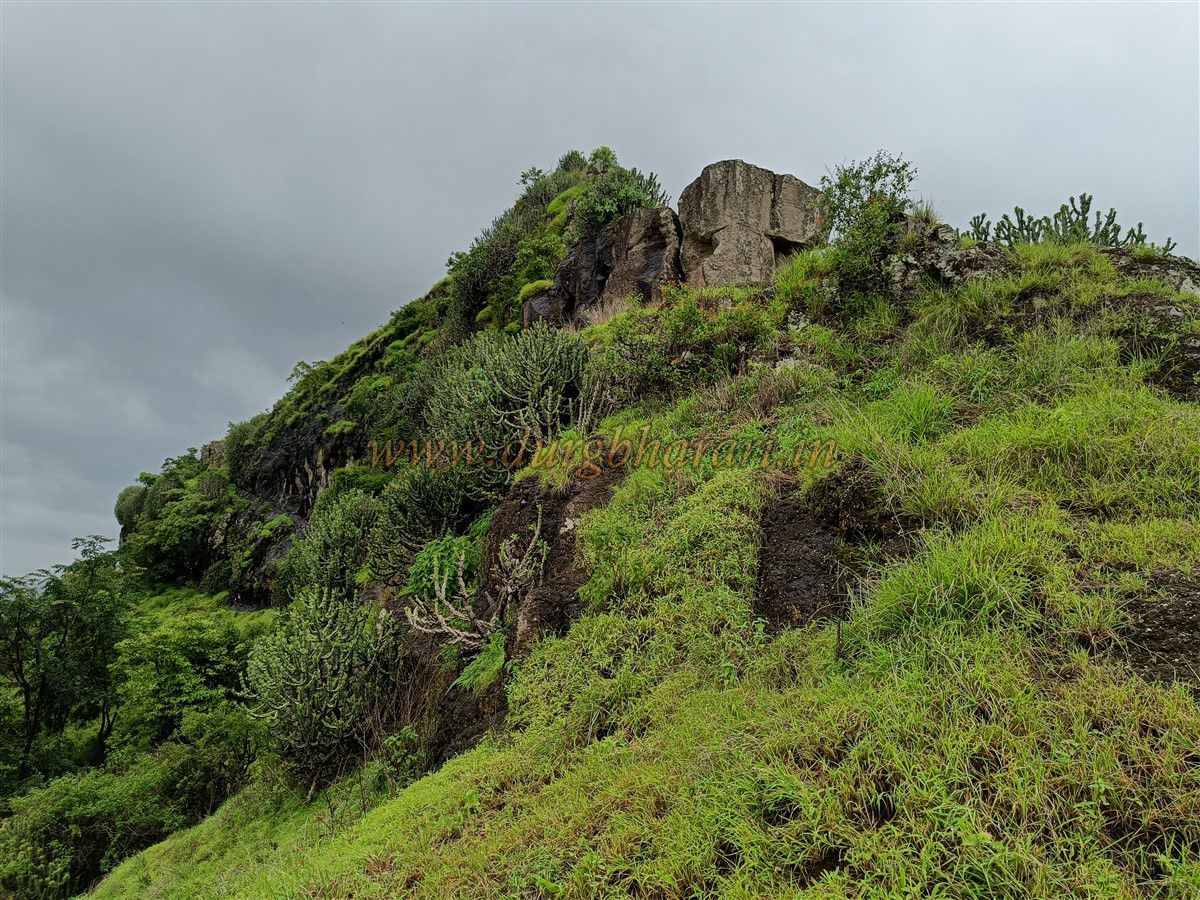
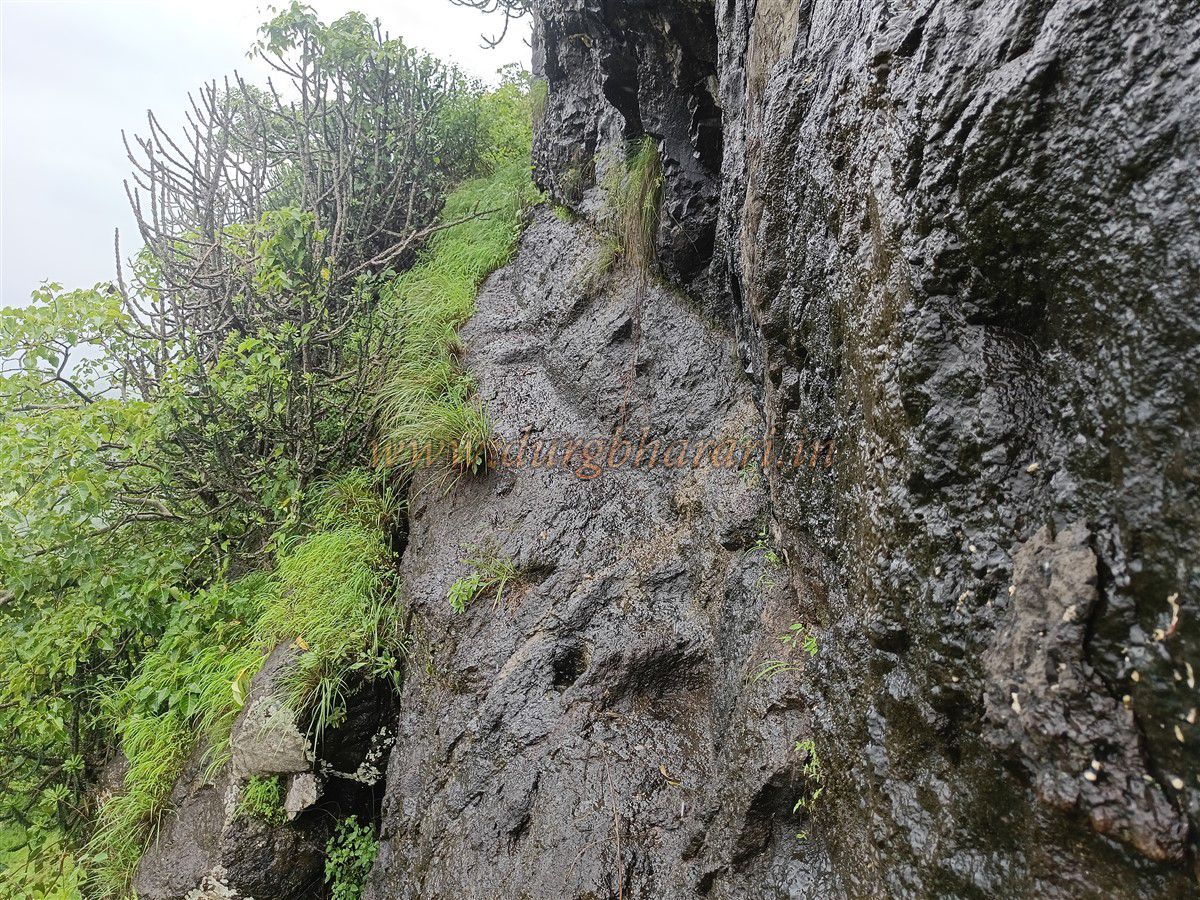
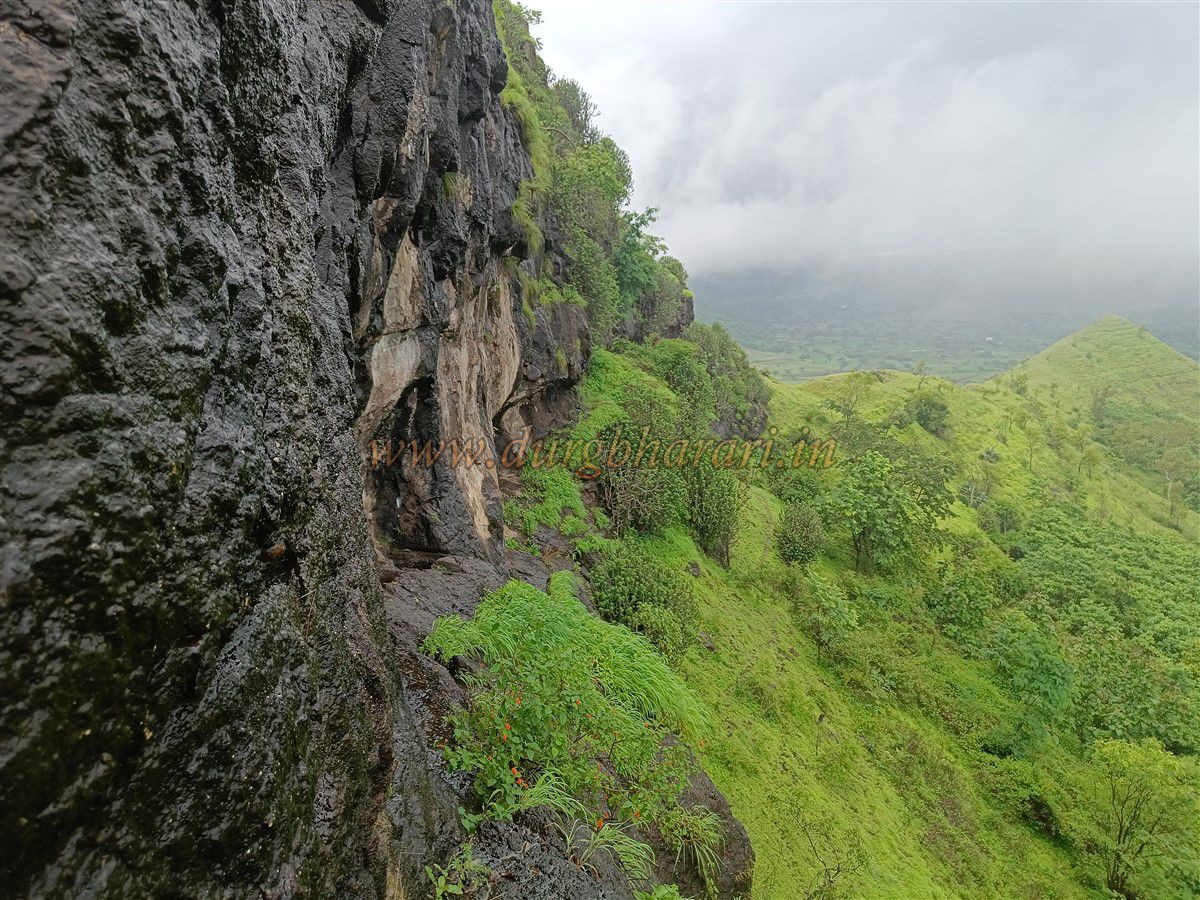
The trail, though not extremely difficult, is not entirely easy either. This route passes through the middle of the pinnacle and is mostly carved into rock. In earlier times, poles were embedded along the trail for safety, and the sockets for these poles can still be seen in several places.
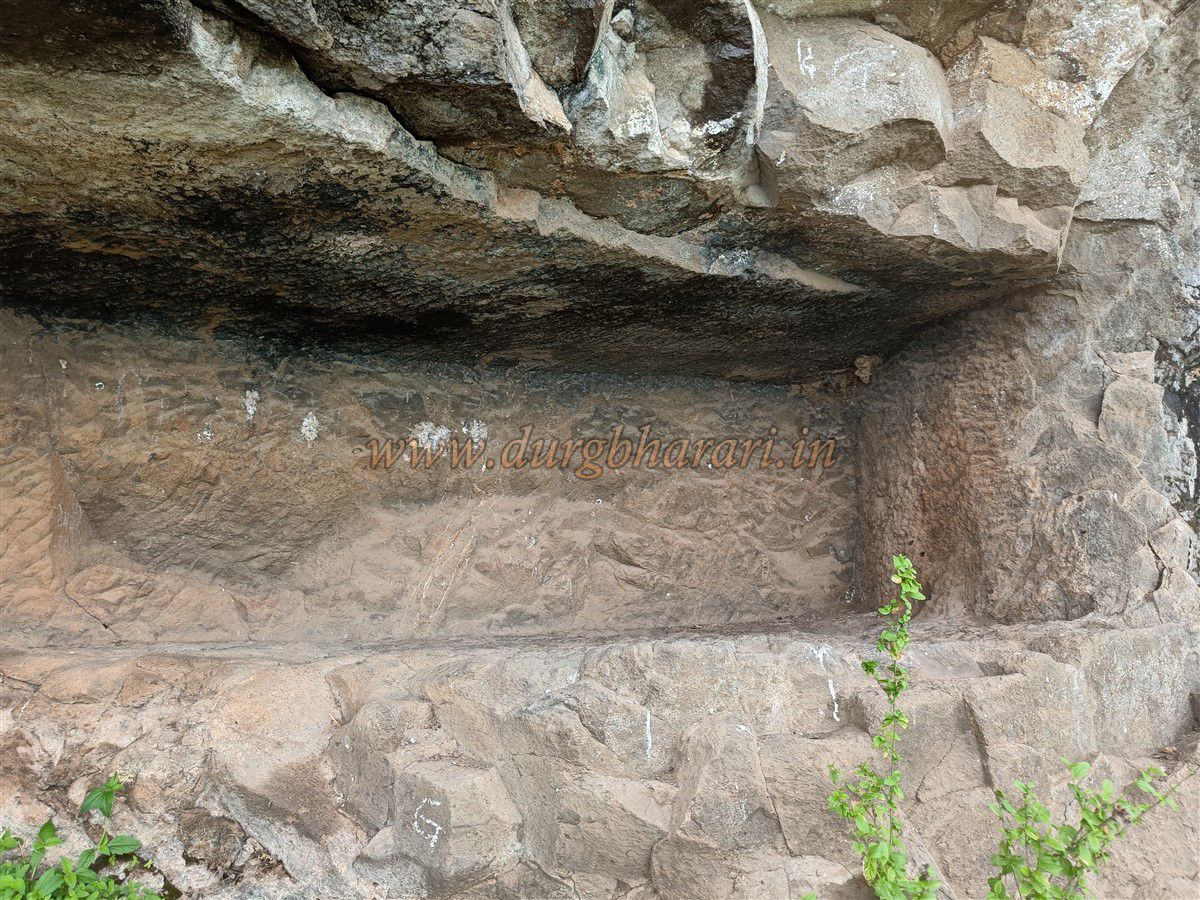
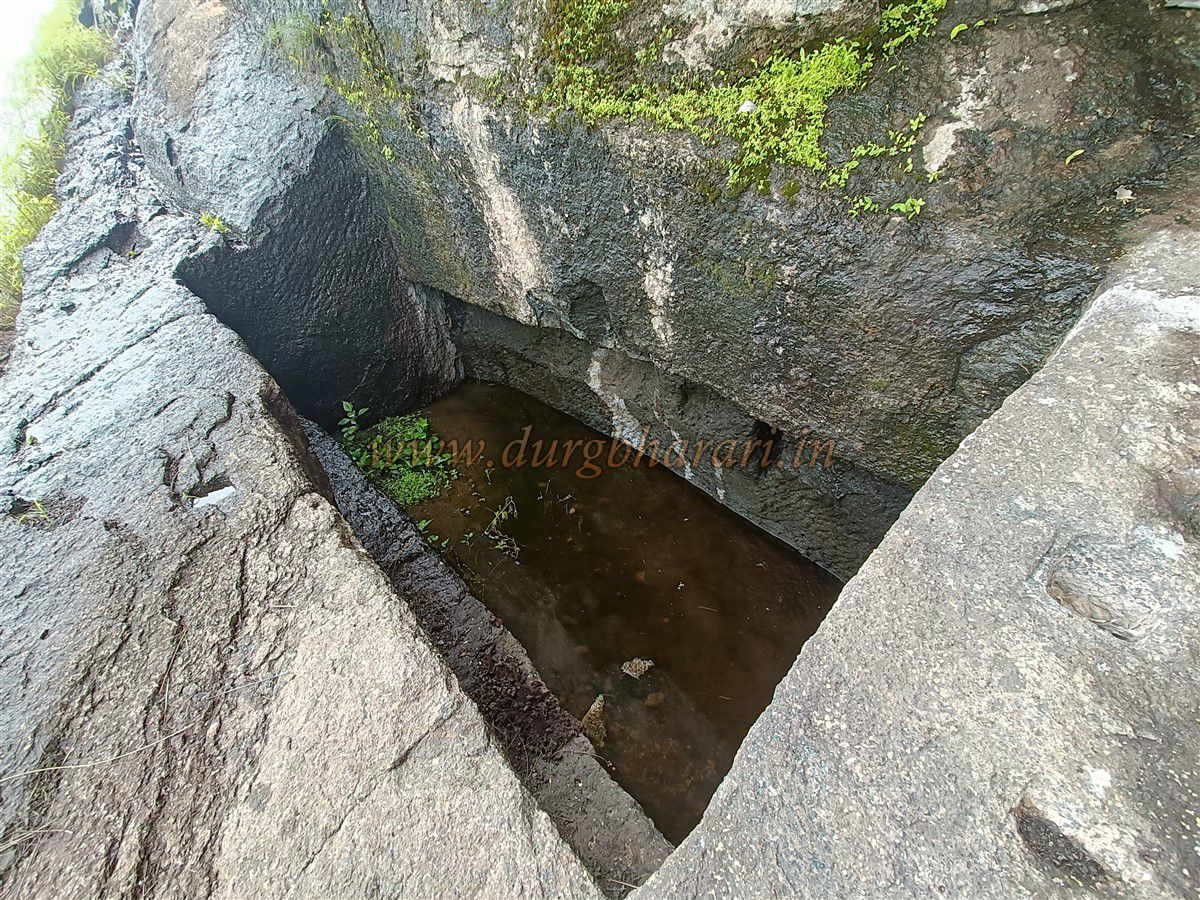
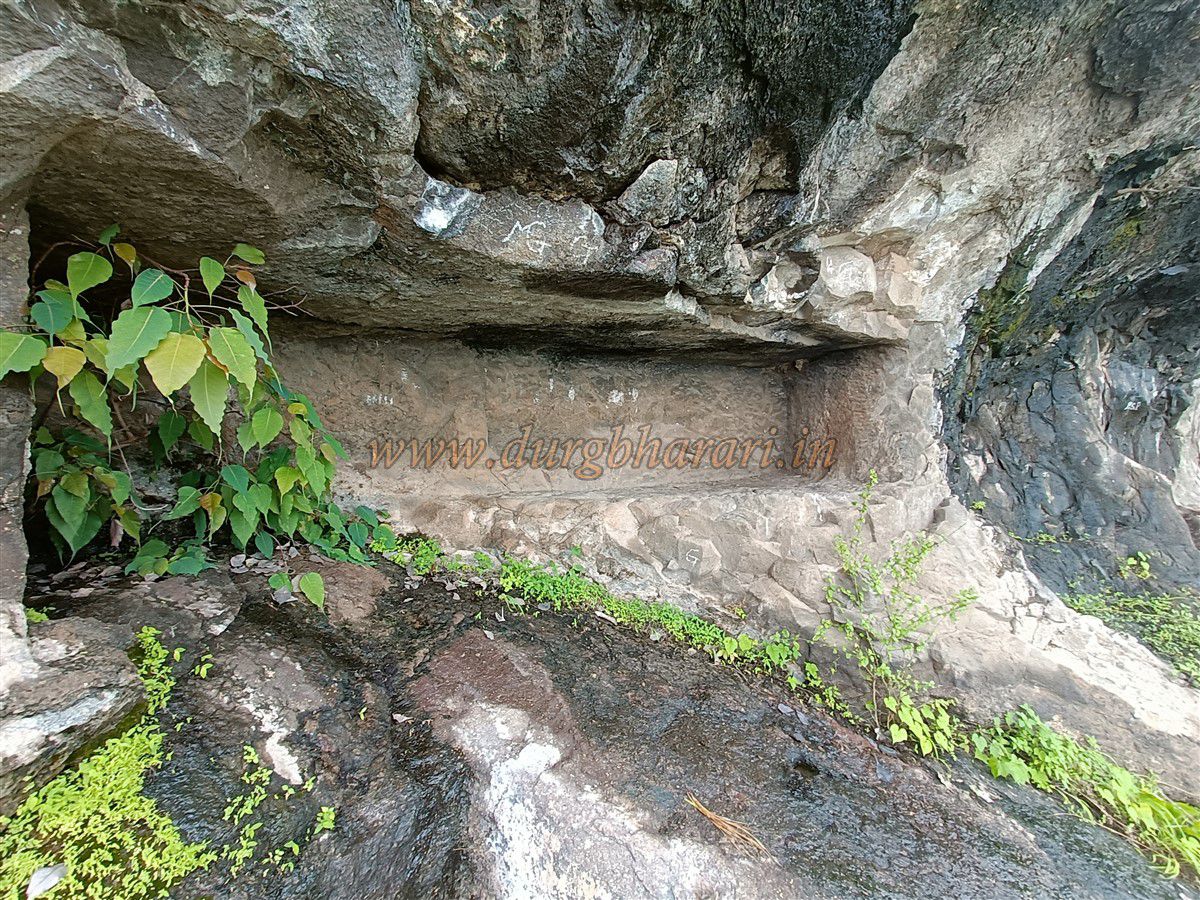
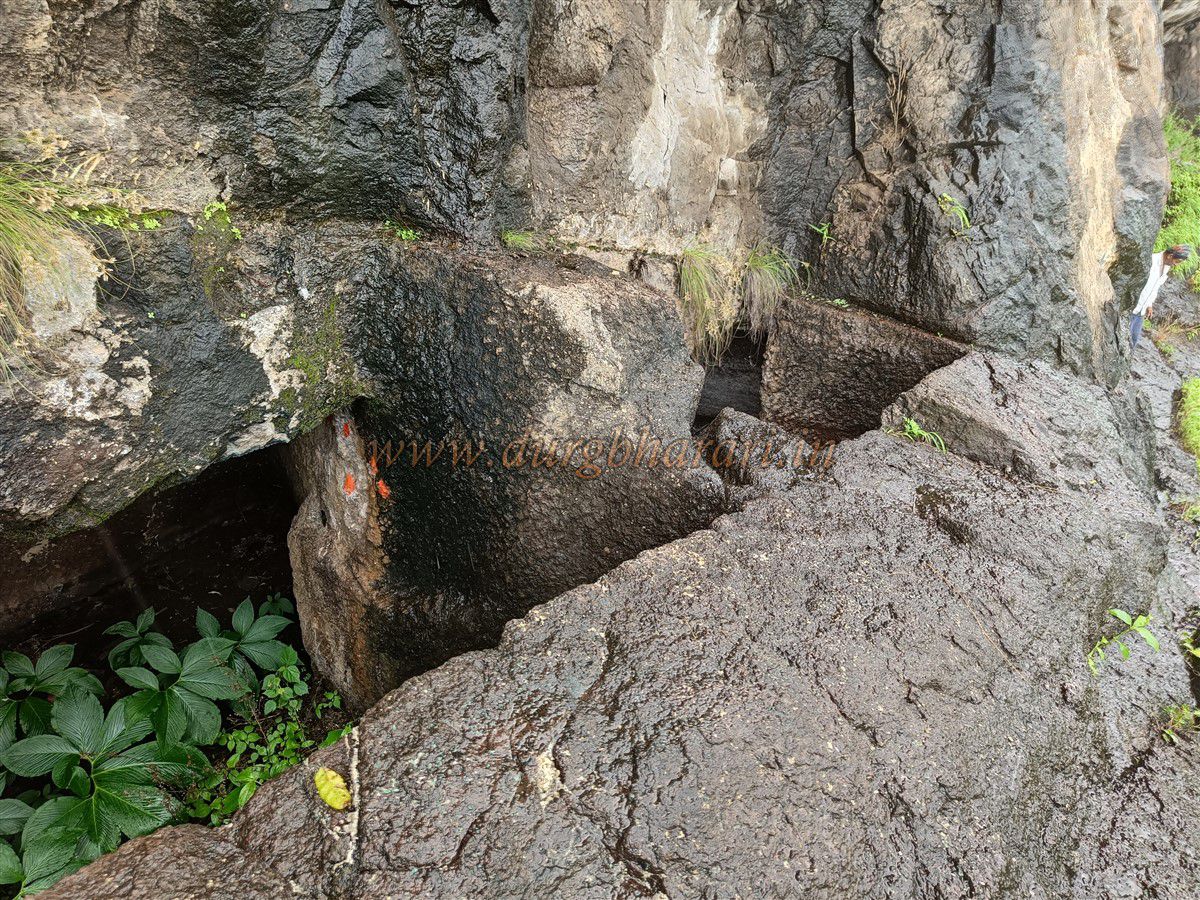
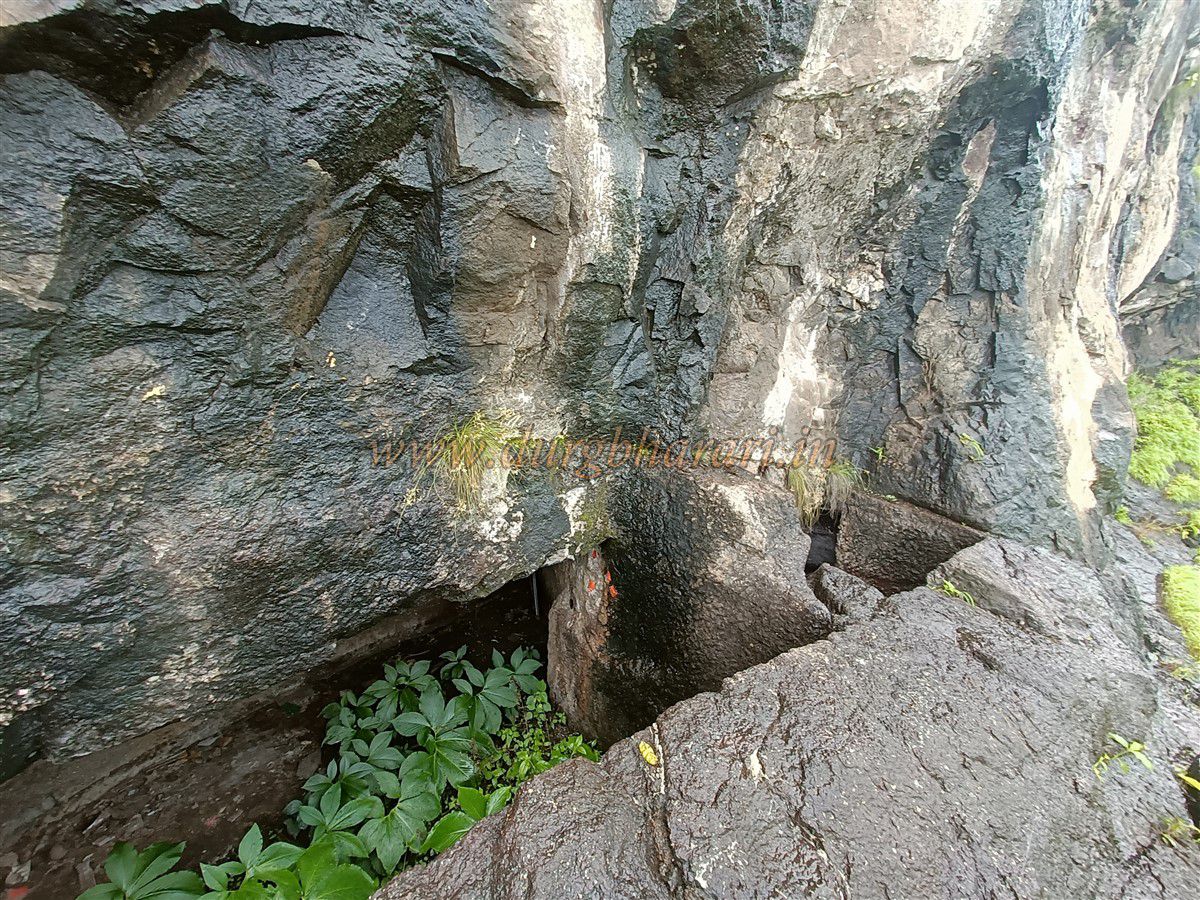
About five minutes into this narrow Cliffside trail, one comes across the first water tank carved into the rock. Just above this tank is a half-finished cave that can seat only about 7–8 people, with footholds carved into the rock for entry. Moving ahead, two more rock-cut water tanks are found. The path then narrows to barely foot-width, again showing provisions for safety poles. A short distance ahead is a fourth small tank, now silted up.
The trail then becomes slightly wider, leading across a rock patch to the path near the fort summit. From here, one must overcome a dangerous rock patch about 8–10 feet high, with a sheer drop below. New trekkers should avoid attempting this without assistance; otherwise, it is best to turn back here.
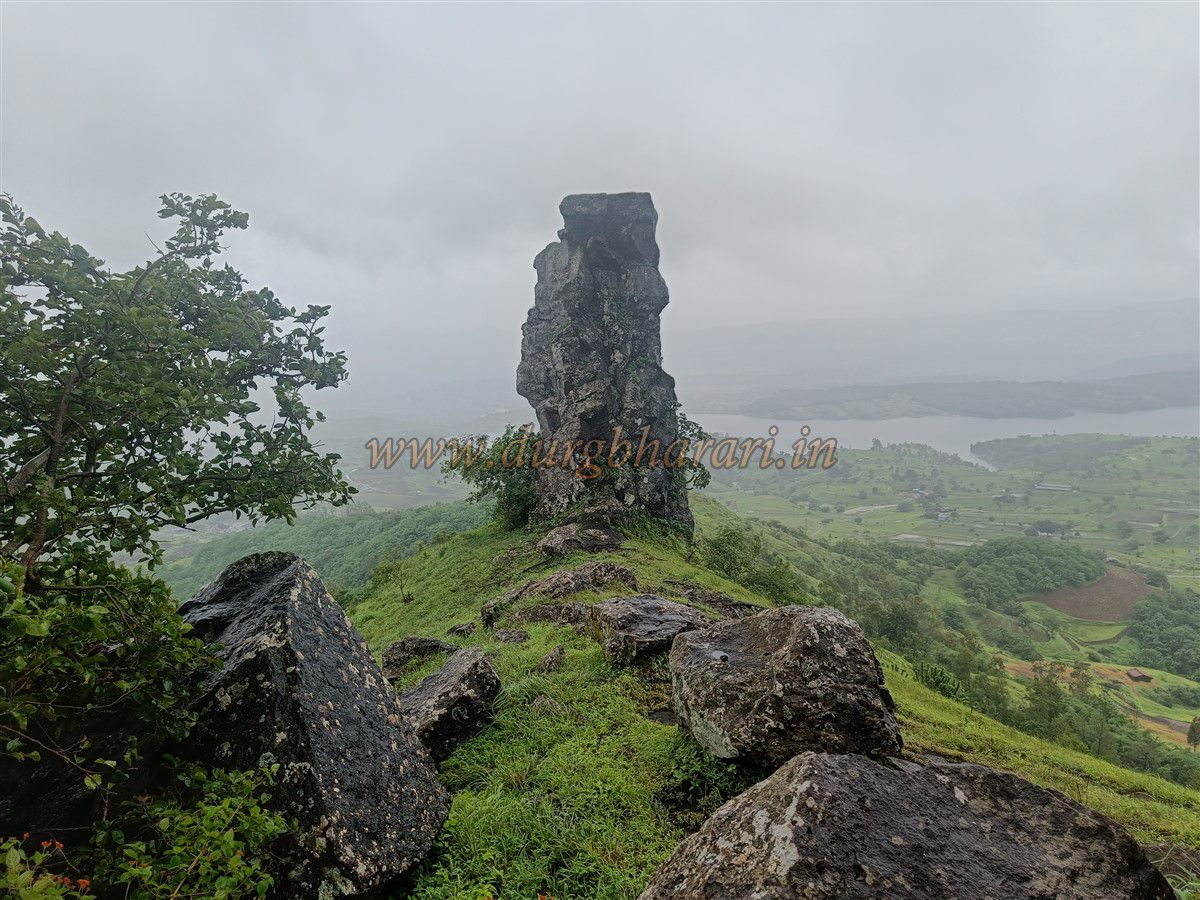
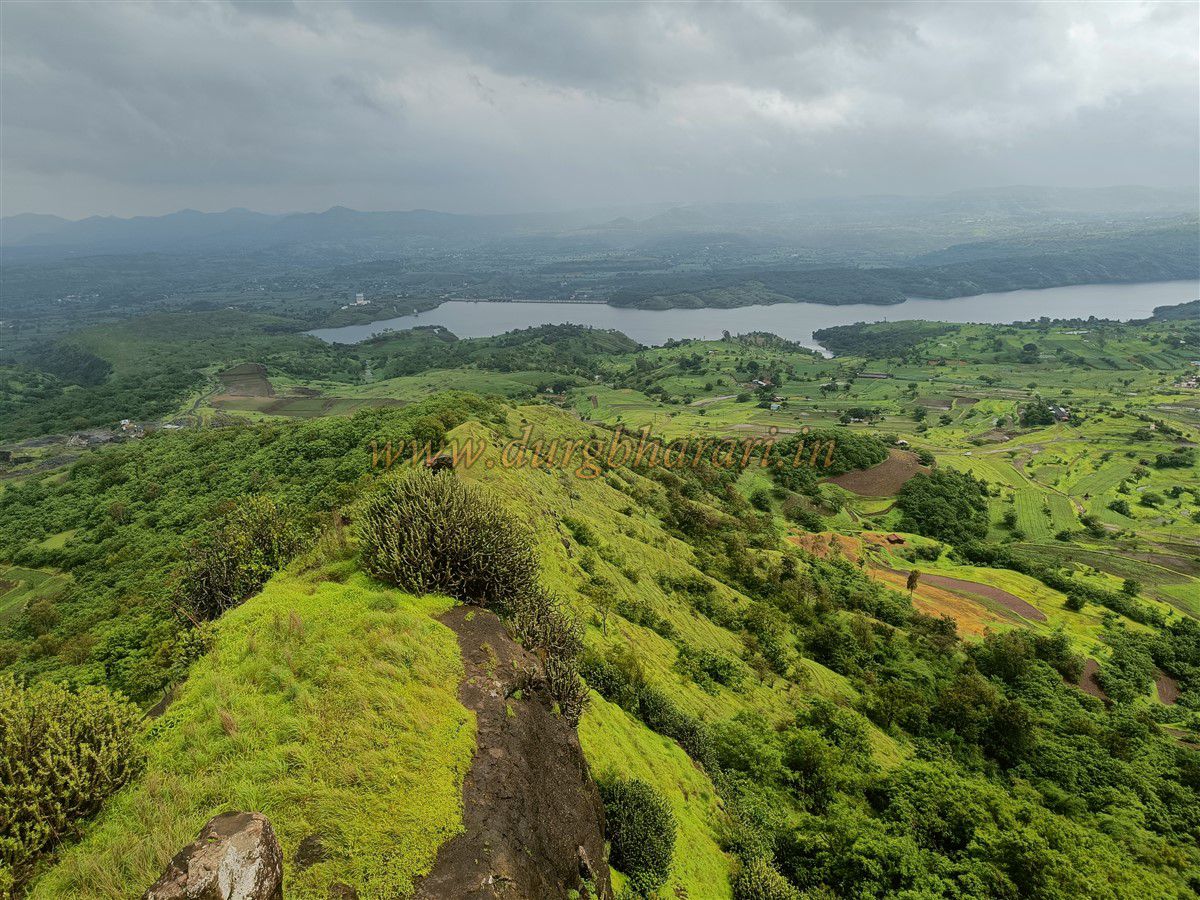
The fort top is extremely narrow, with only two dry water tanks—one square and one rectangular—in sight. Apart from two or three dressed stones from the old fortification wall along the cliff edge, no other remains are visible. The fort stands 3,020 feet above sea level, offering clear views of Kalsubai Peak, Ratangad Fort, and the Alang–Madan mountain range.
On the opposite end from the ascent point is another route used by local tribal people, but it is more dangerous than the one climbed earlier, so it should be avoided in favour of returning the same way. Exploring the fort and returning to the village takes around two hours. Accommodation is available in the village school or temple, but food is not. If you arrive early and request it at the local eatery, meals can be arranged.
No historical references to the name "Nakhwinda" have been found, and thus the fort's history remains unknown.
(Due to the presence of honeybees on the fort, villagers are often reluctant to go there and may even in still fear by recounting a honeybee attack that occurred a few years ago. When I visited the fort in August 2022, apart from one dried hive, there were no active bee colonies visible on the summit.)
© Suresh Nimbalkar
GALLERY