MANOHARGAD
TYPE : HILL FORT
DISTRICT : SINDGUDURG
HEIGHT : 2070 FEET
GRADE : MEDIUM
Many forts in Maharashtra were graced by the footsteps of Chhatrapati Shivaji Maharaj, but a few among them were fortunate enough to witness his prolonged presence. One such blessed fort is Manohargad, where Shivaji Maharaj stayed for over a month.
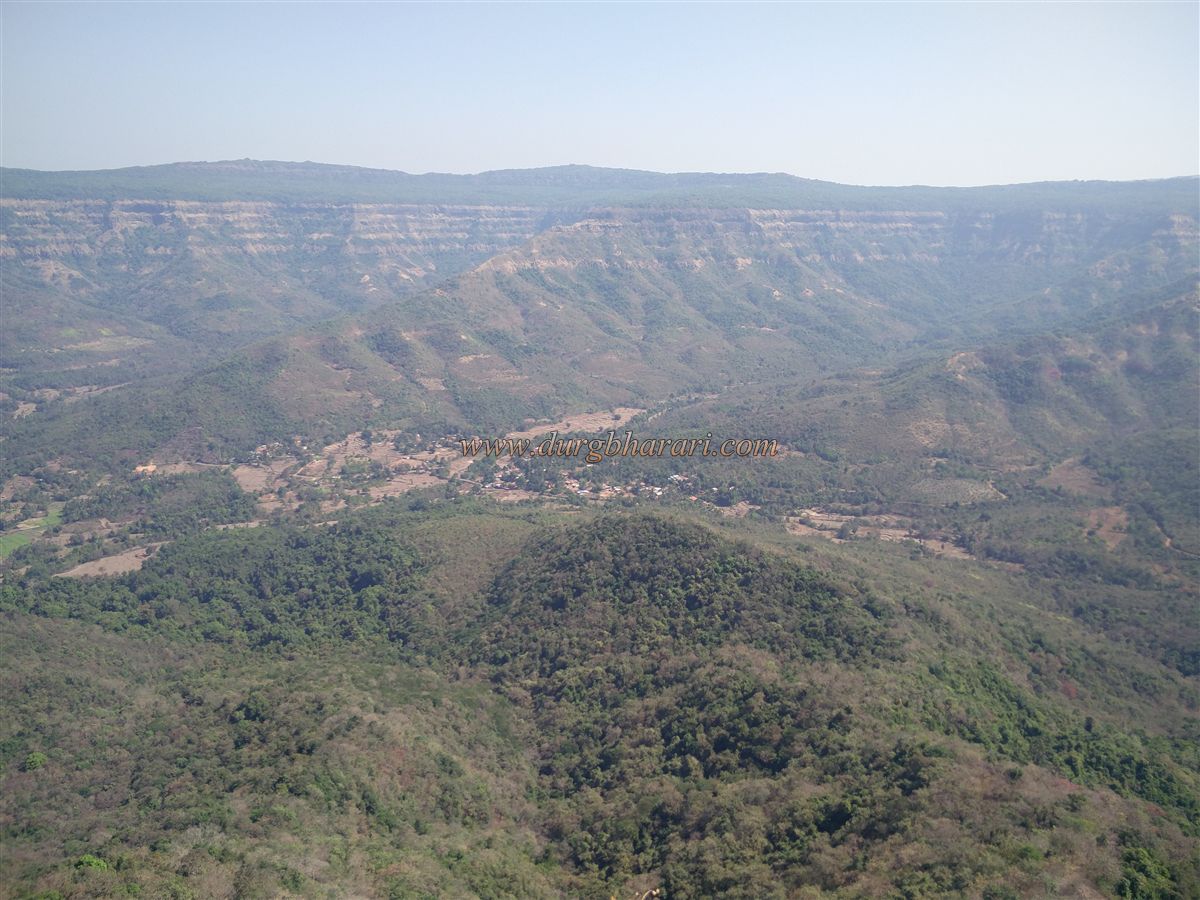
Although there are many mountain passes in the Sahyadri range leading down into the Konkan region, certain routes were primarily used for trade. Goods arriving at Konkan ports were transported via these passes to market towns on the Deccan plateau. Among these, the Hanumantghat was a major trade route. To protect this pass, the Rangana Fort was built on the plateau above, and the Manohar–Mansantosh twin forts were constructed at the base during pre-Shivaji times. Today, although these forts still display many ancient remains, their deep forest location and poor connectivity keep them away from the mainstream trekking circuit.
...
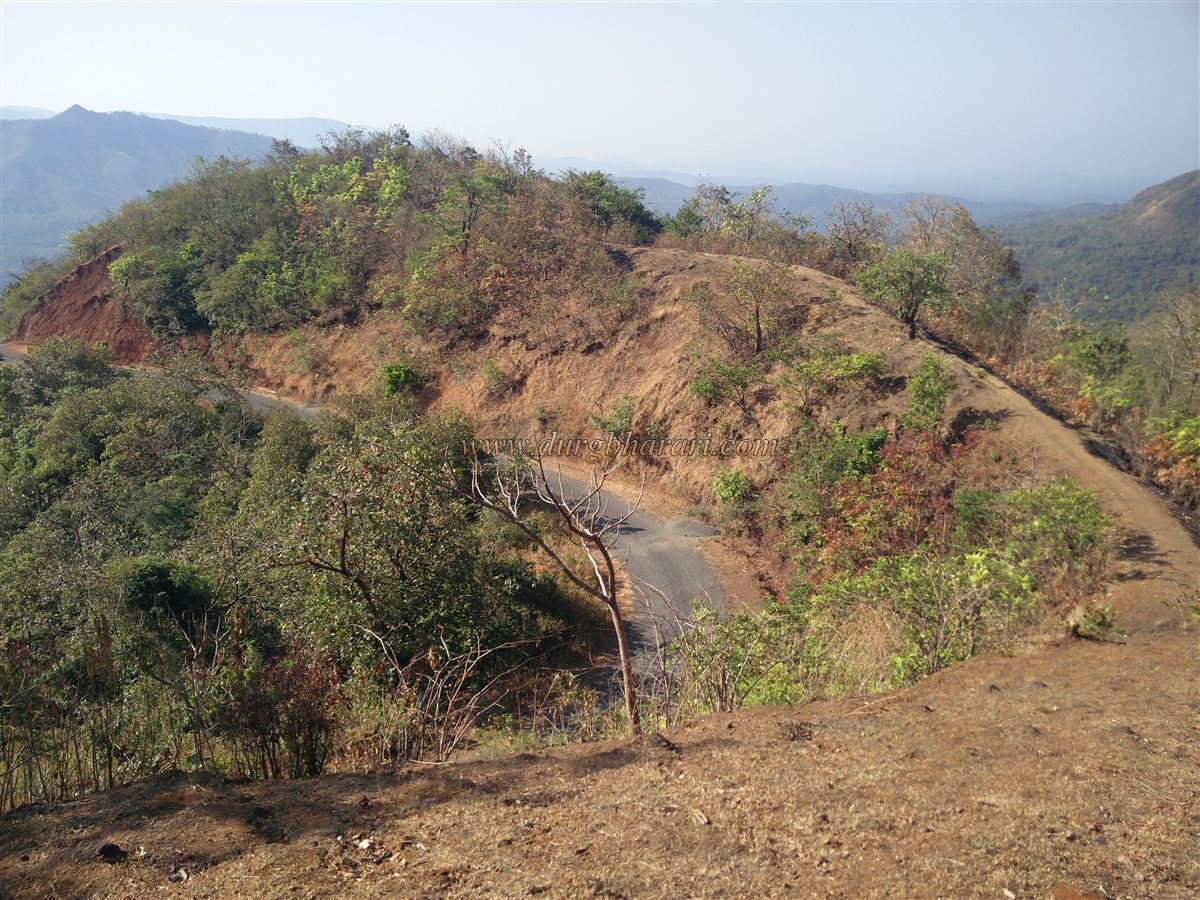
The Manohar–Mansantosh twin forts are separated only by a narrow saddle. Manohargad is relatively accessible, but Mansantoshgad requires technical climbing gear. Access to the fort is possible from either Pethshivapur, where the fort’s base settlement lies, or from Gothavewadi near Shirsinge. These two villages are located on opposite sides of the fort and are connected by a road. However, the road from Shivapur to the pass is rough, while the route from Gothavewadi is paved.
Due to the limited availability of state transport (ST) buses to these villages, reaching Gothavewadi by private vehicle is more convenient. One can drive right up to the base path leading to the fort, saving nearly two hours of walking and the associated strain. To visit Manohargad, one must first reach Sawantwadi, which is 506 km from Mumbai via the Mumbai–Goa highway. From Sawantwadi, it’s 30 km to Gothavewadi (via Kalambaste–Shirsinge) and 40 km to Pethshivapur. While the trek to the fort takes about 2.5 hours from either village, private vehicles can cover the 4 km uphill stretch beyond Gothavewadi, saving around 45 minutes of effort.
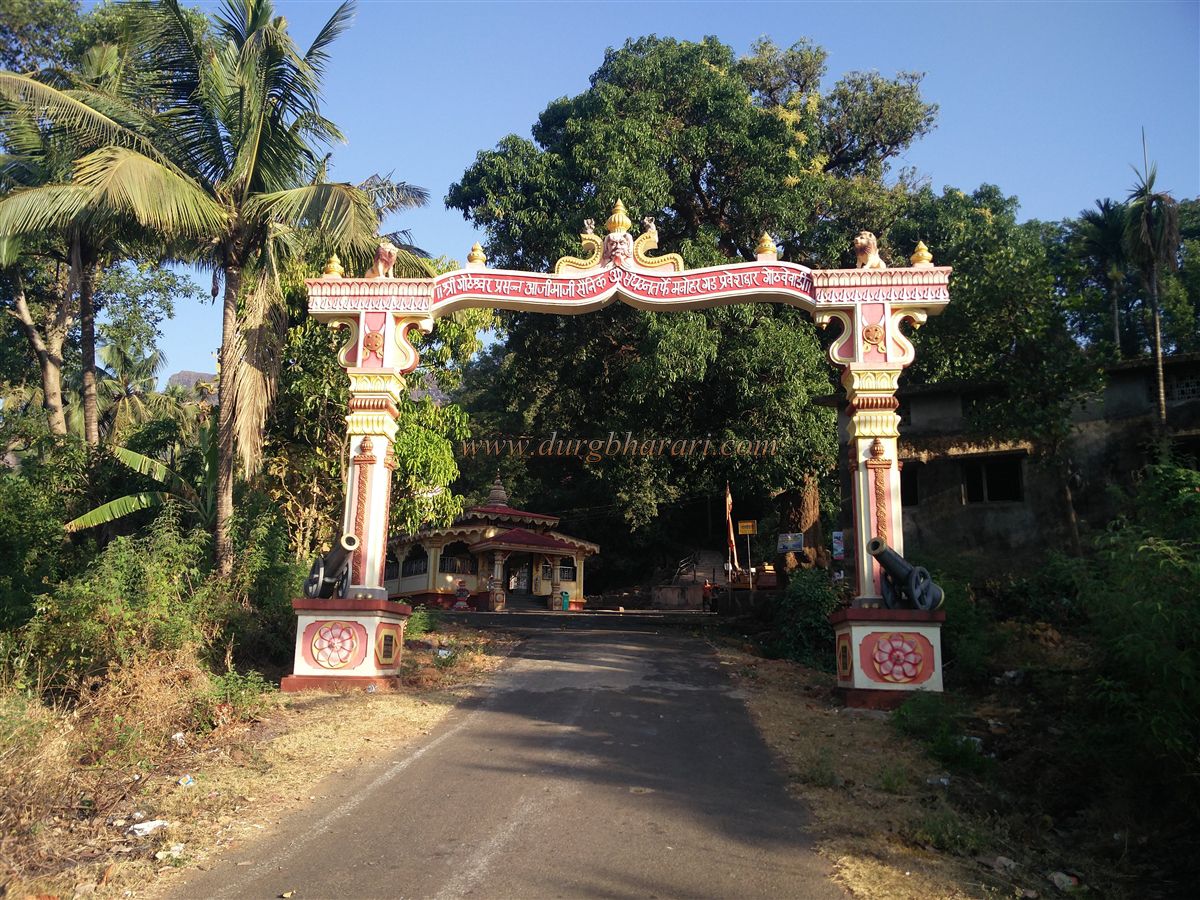
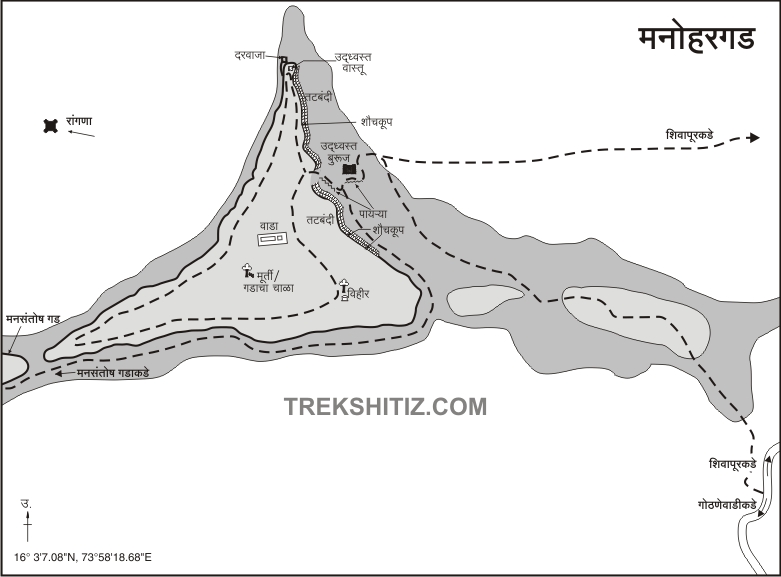
At the point where the trekking path begins, a long spur of the hill descends to the road, locally called "Garudzhaap." The locals have erected a welcoming arch here. The path ascends steeply along this spur, keeping the main hill to the left and eventually reaching the route under the fort's eastern gate. The path from Shivapur also joins here. Apart from a short exposed section, the trail lies mostly under forest cover, which shields trekkers from the sun. Signboards put up by the villagers make the path easy to follow.
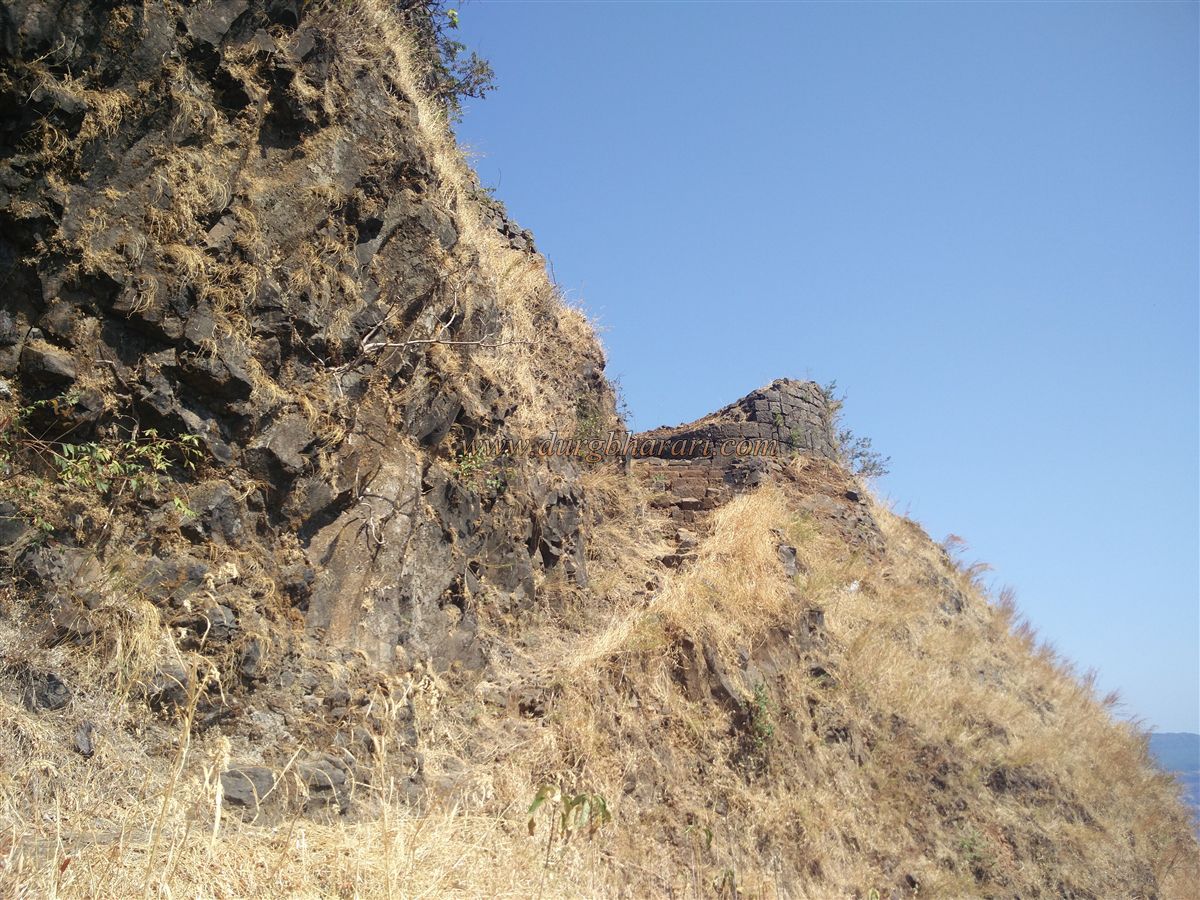
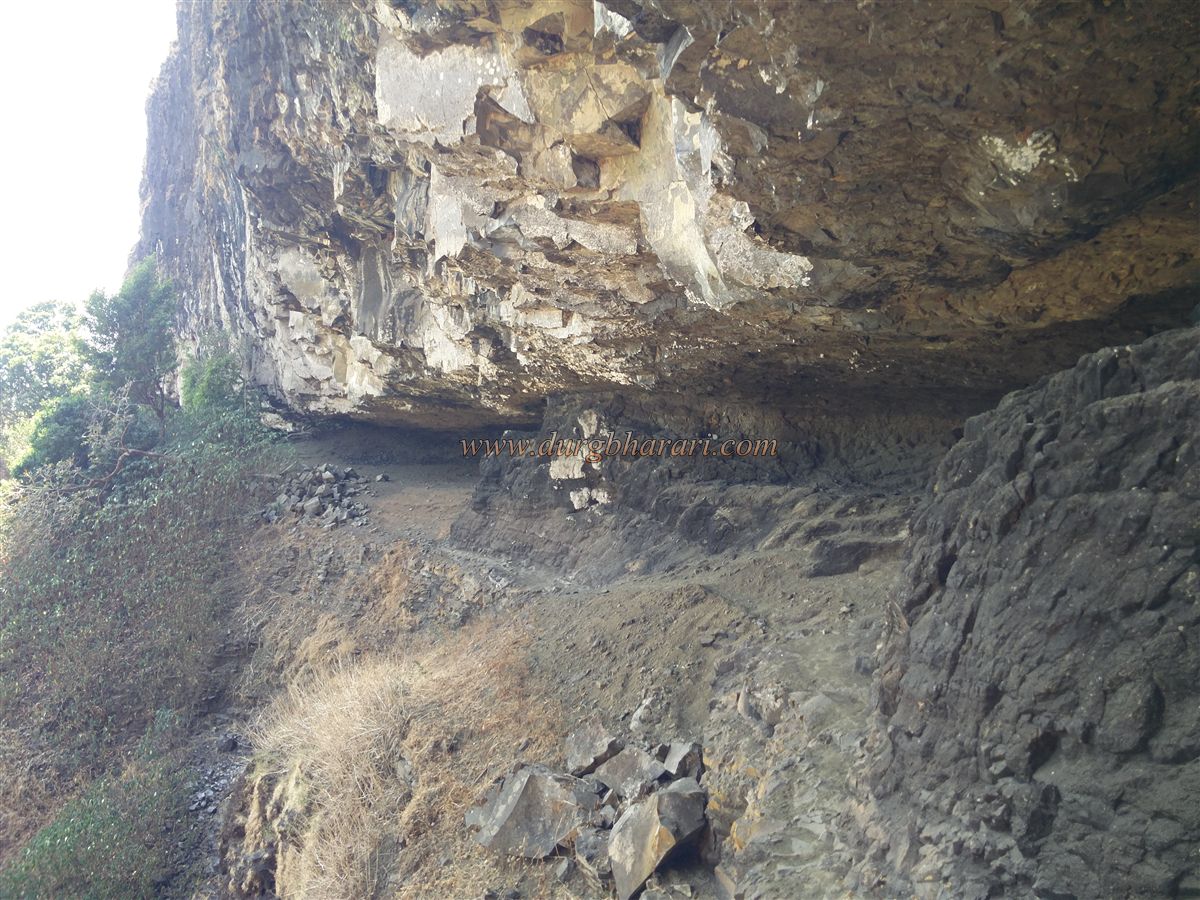
Along this trail, one comes across a ruined guard post (met). After navigating some broken steps and scree, one reaches the base of the fortification in about 15 minutes. The first northern-facing entrance is now completely destroyed, with only a single bastion remaining. From here, a straight path leads around Manohargad towards Mansantoshgad, while the right-hand path leads up to Manohargad.
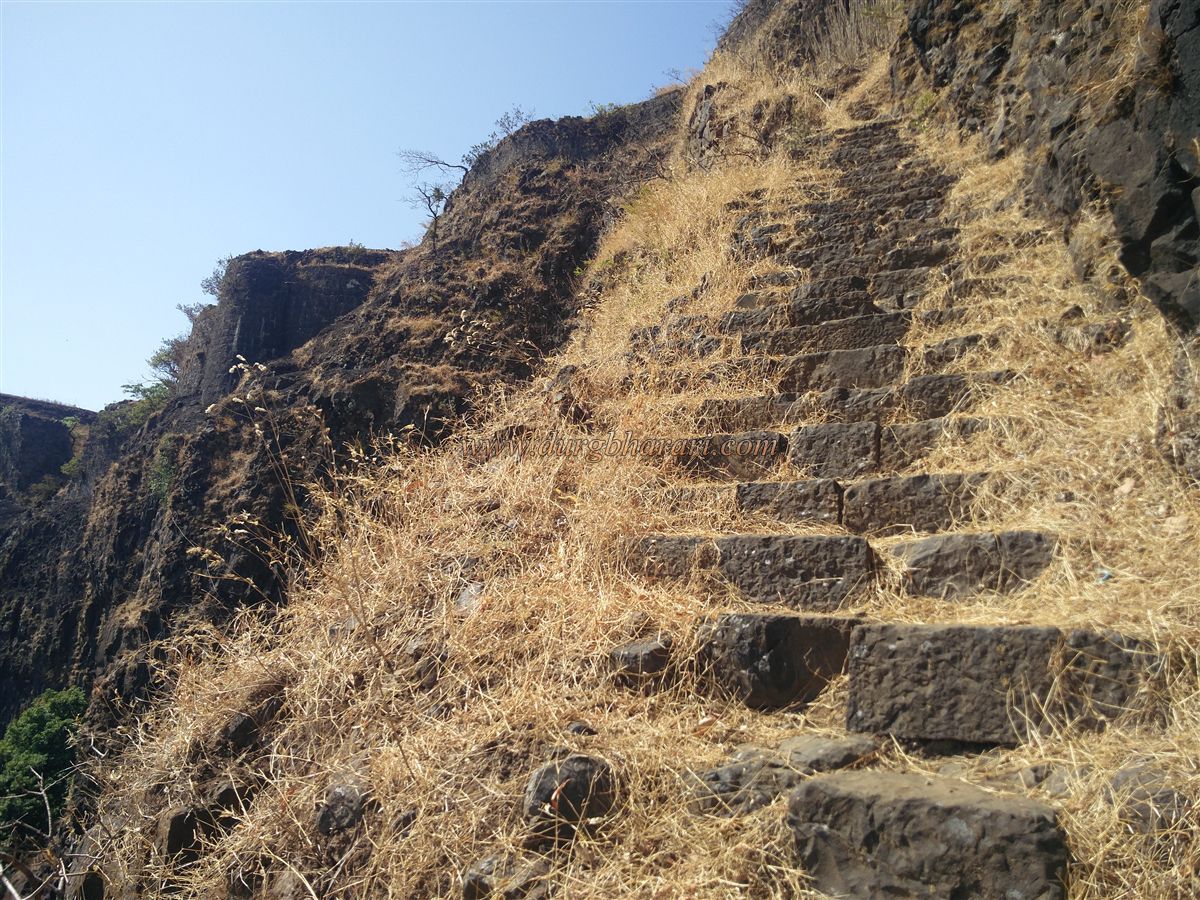
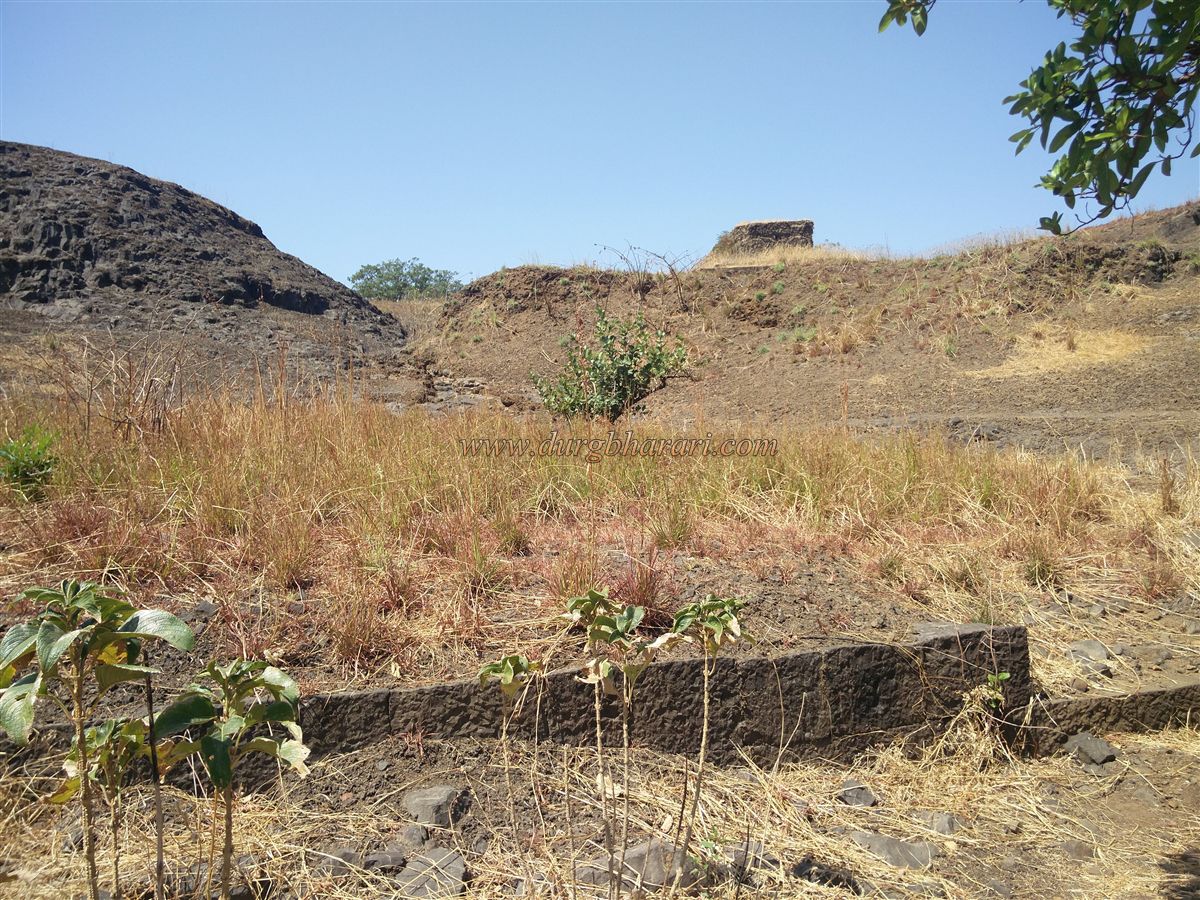
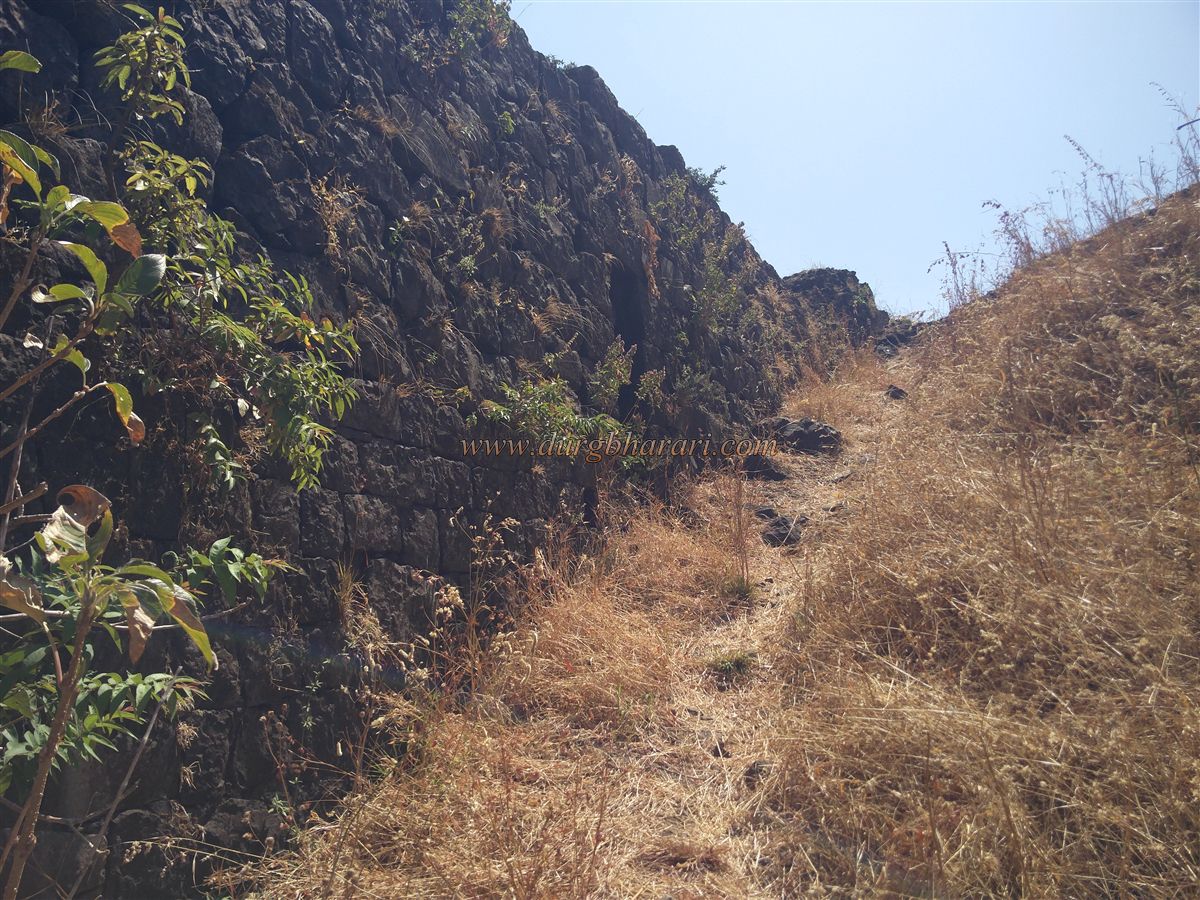
Climbing about thirty well-built steps leads to the eastern gate of the fort, which is in ruins. The subsequent steps are partially collapsed and covered in soil, requiring cautious climbing. The second gate is built into a vertical cliff, and the entire path from the first gate is designed to remain within the range of defending fire from above. Upon entering the fort, one sees strong bastions and ruined arched gateways on either side. From these bastions, one can see the vast fort walls, stairs, and a granary built on a high platform.
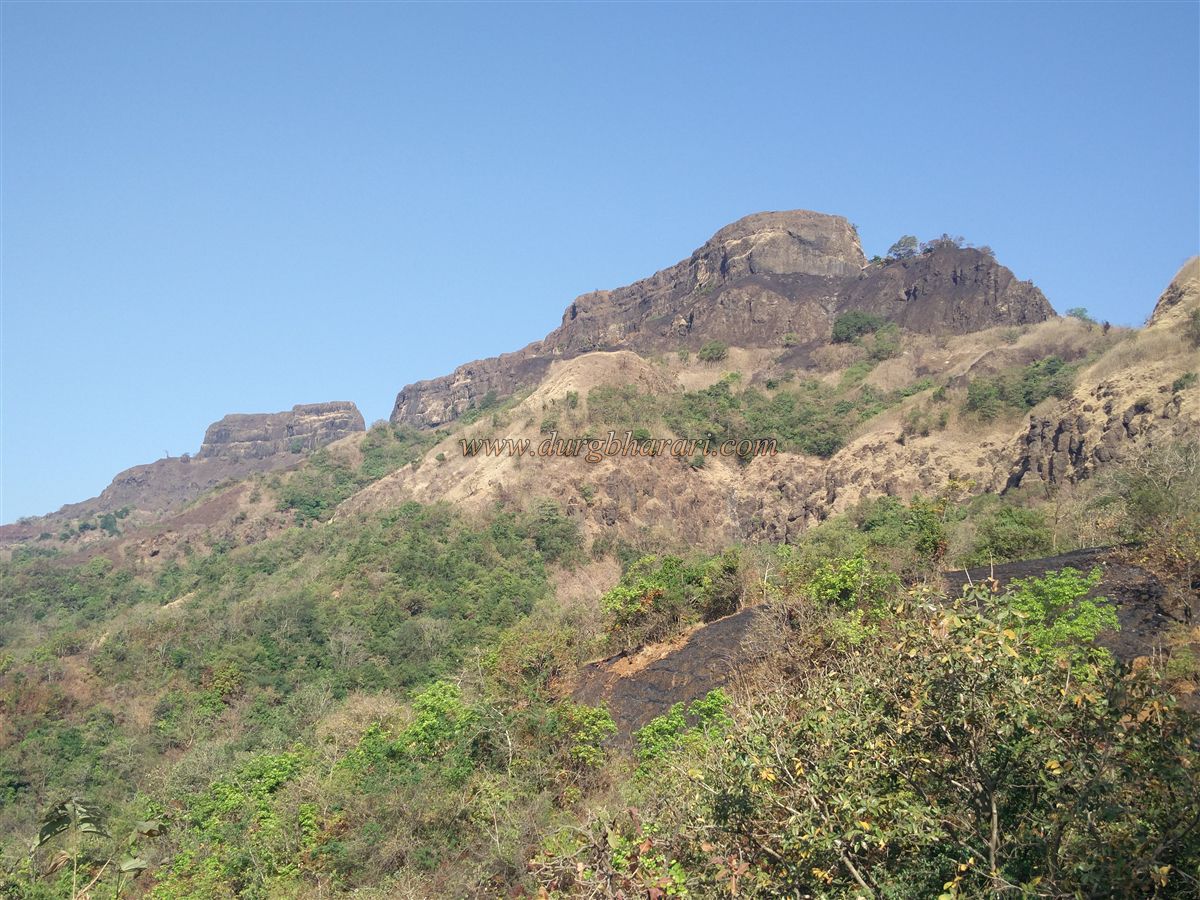
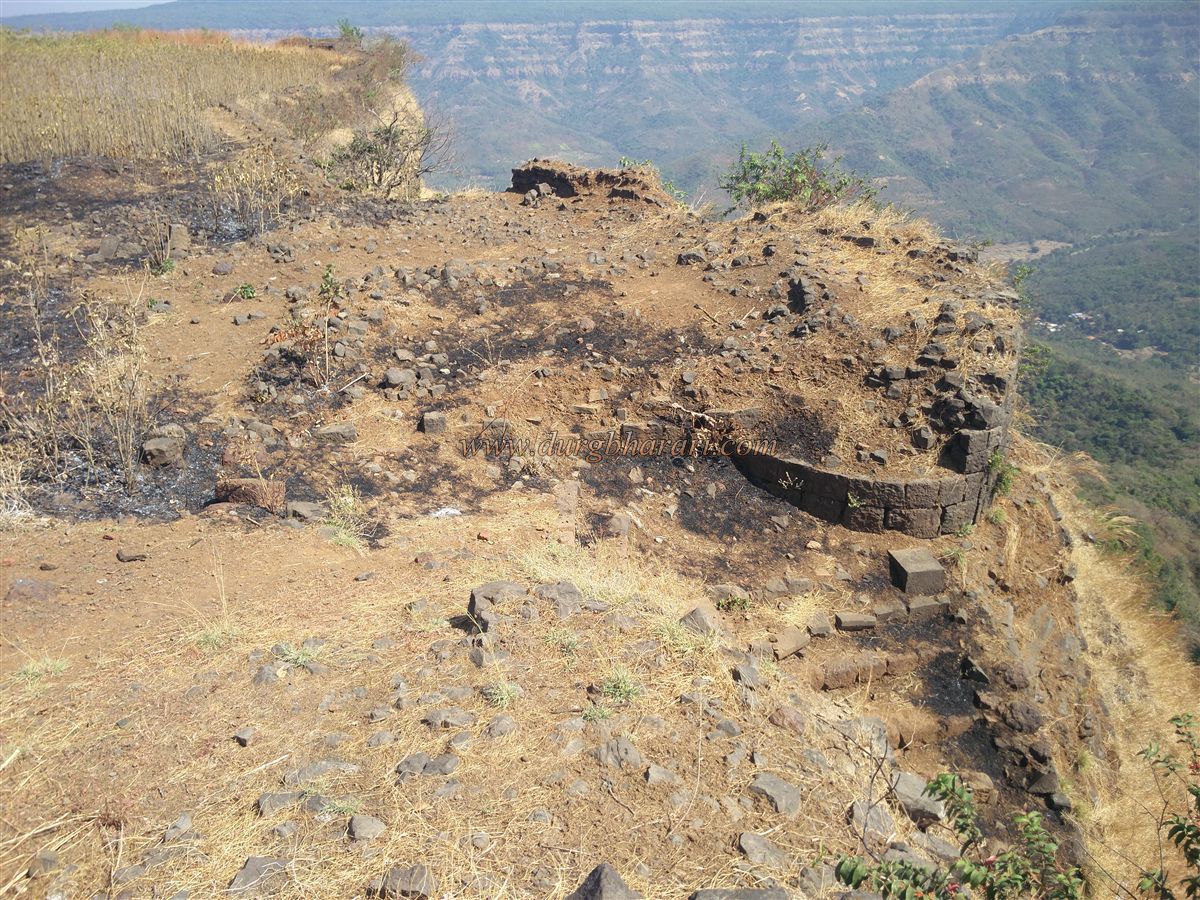
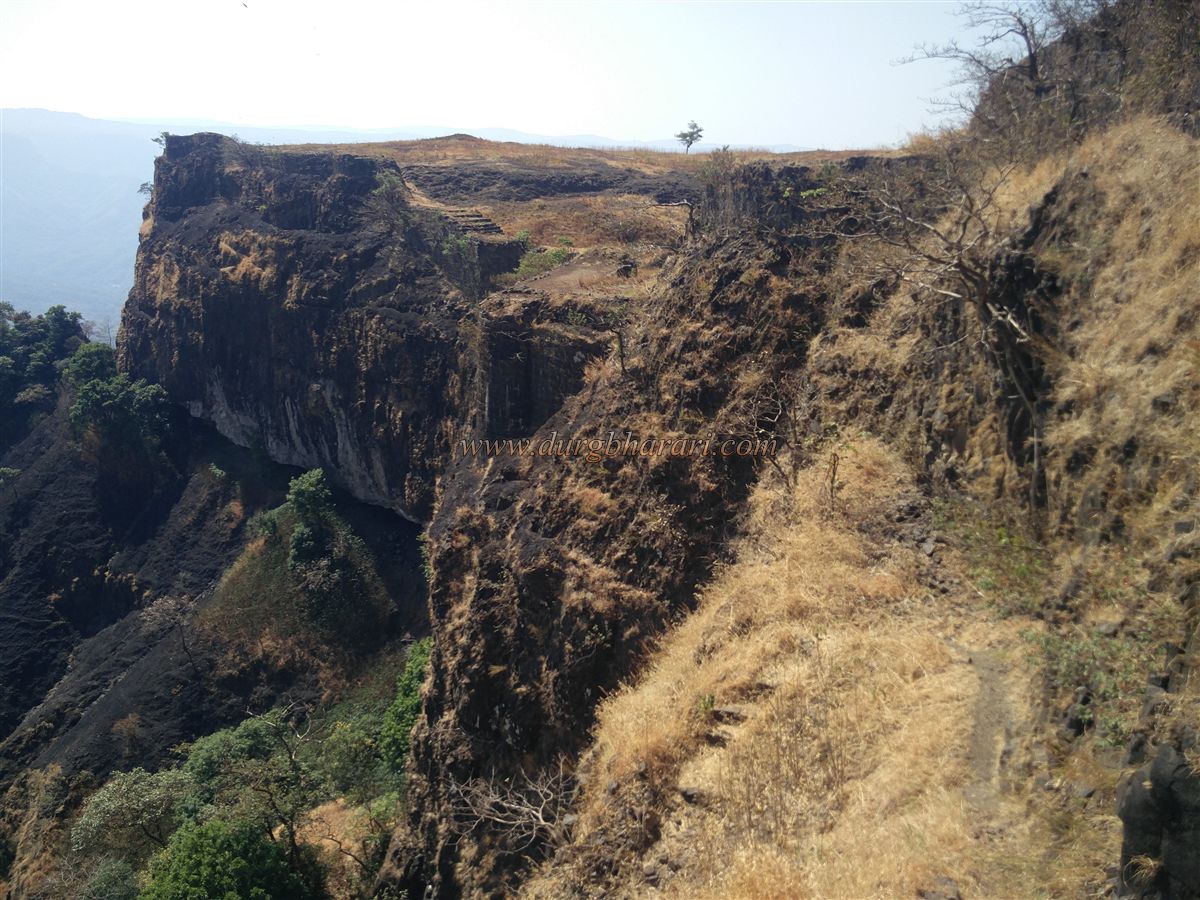
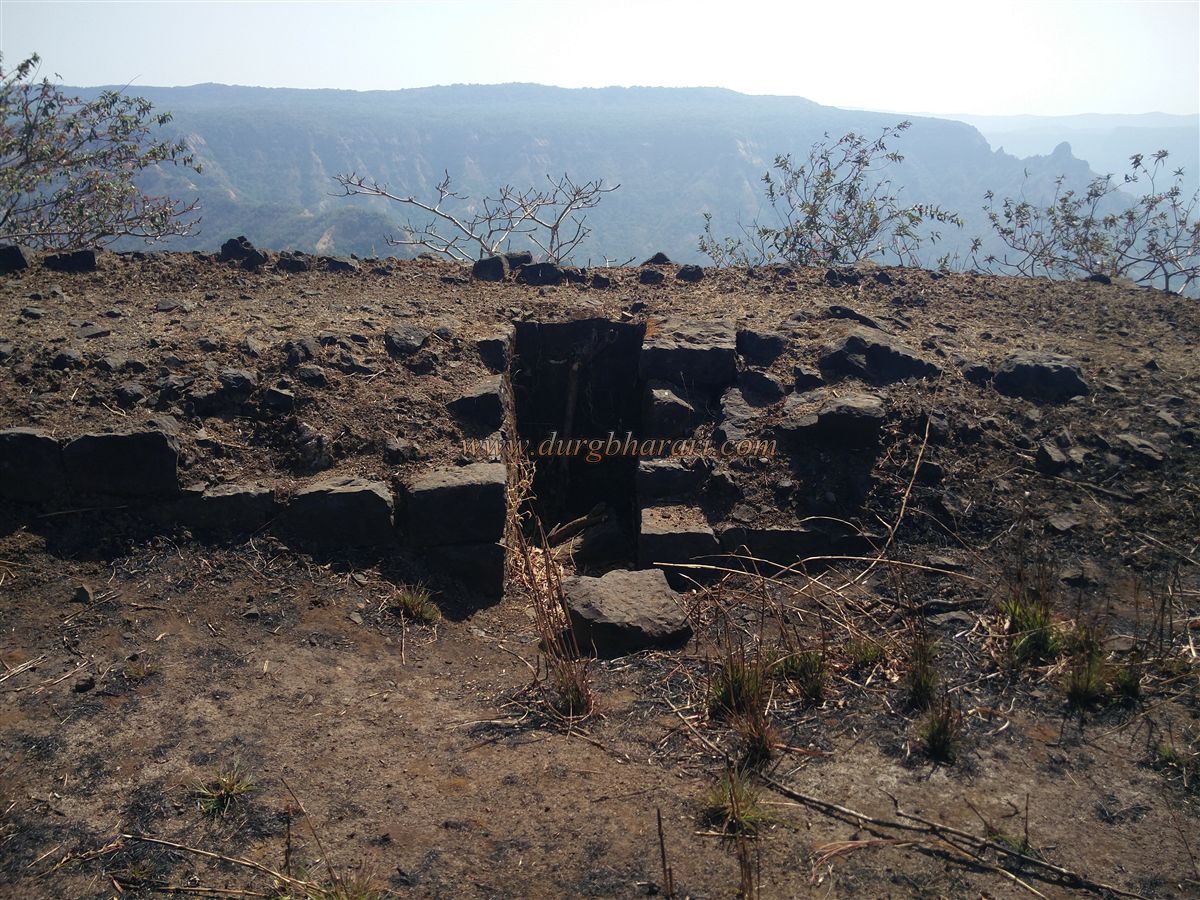
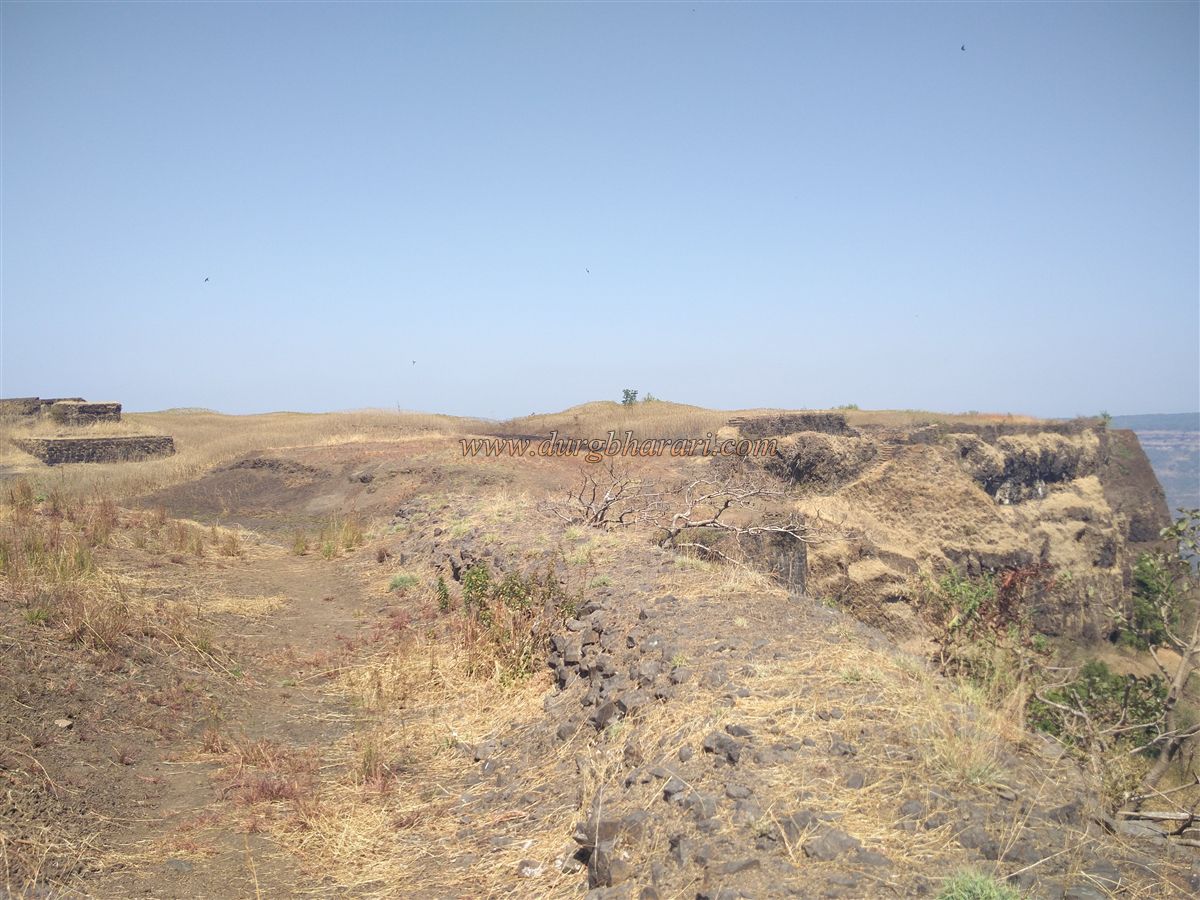
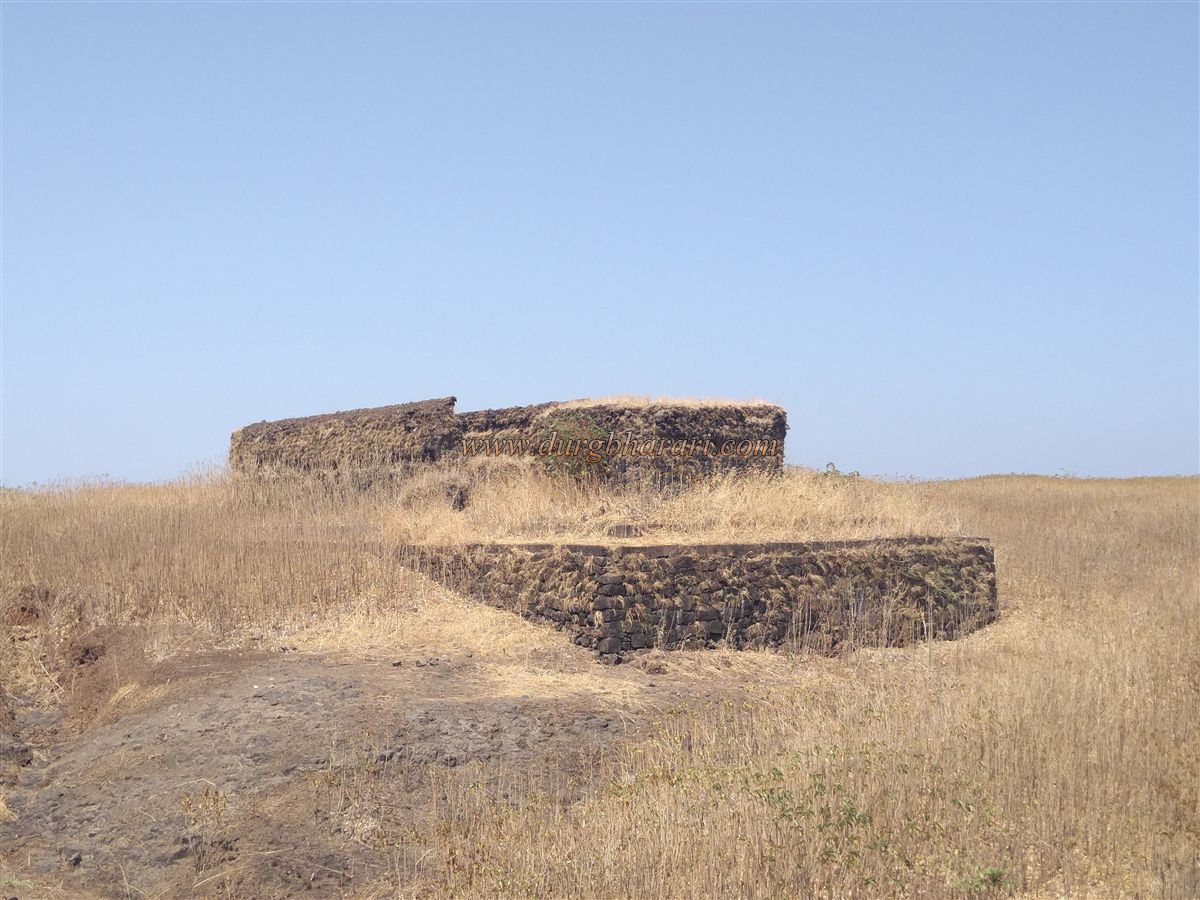
The fort has a triangular plateau, covering approximately 14 acres, and stands at an elevation of 2160 feet above sea level. A walk around the perimeter of the fort gives access to its interior structures. Starting from the wall to the right of the gate, one can visit the northern tip where a saffron flag flutters. Here, a latrine built into the wall is visible. Walking along the edge towards the western tip and Mansantoshgad, a few small platforms are seen, but no major remnants. The valley between the two forts and a panoramic view of Mansantoshgad are seen from here.
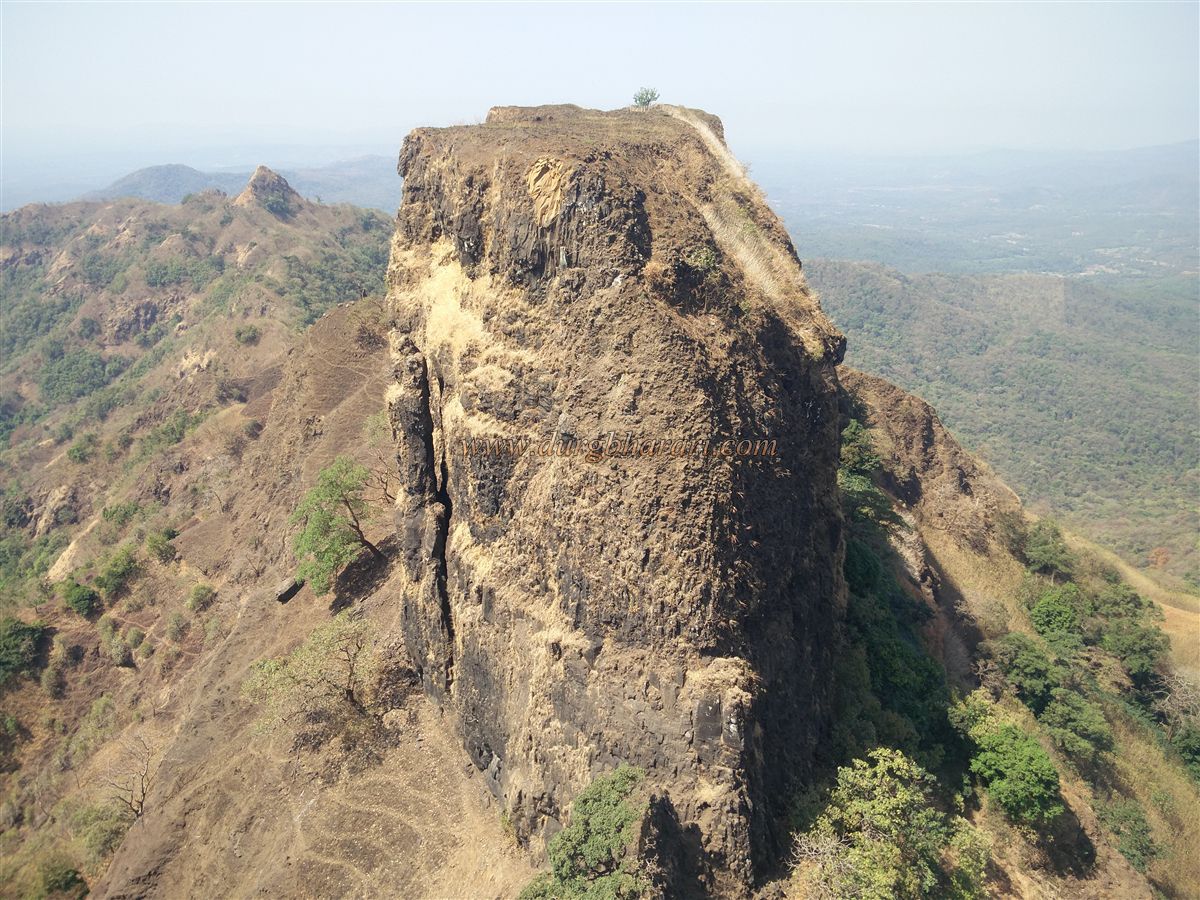
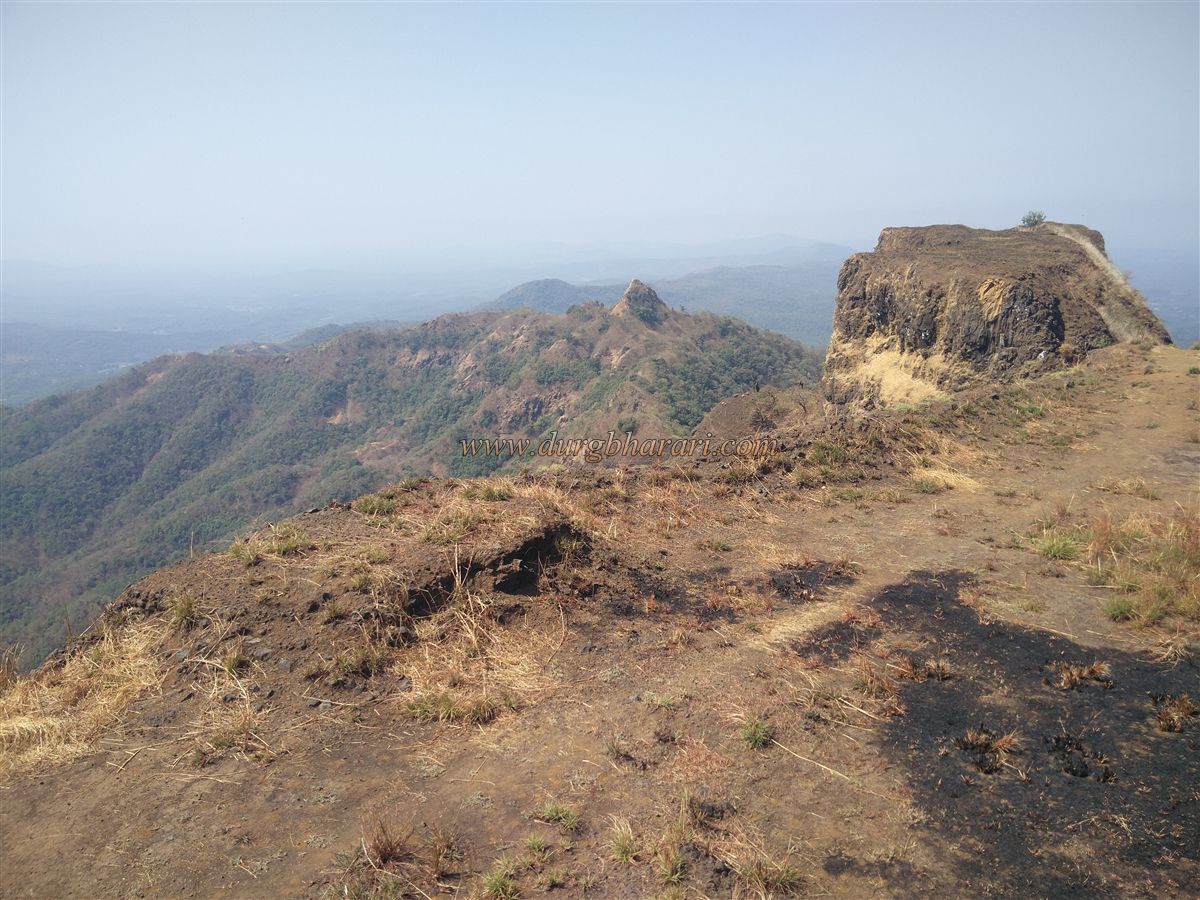
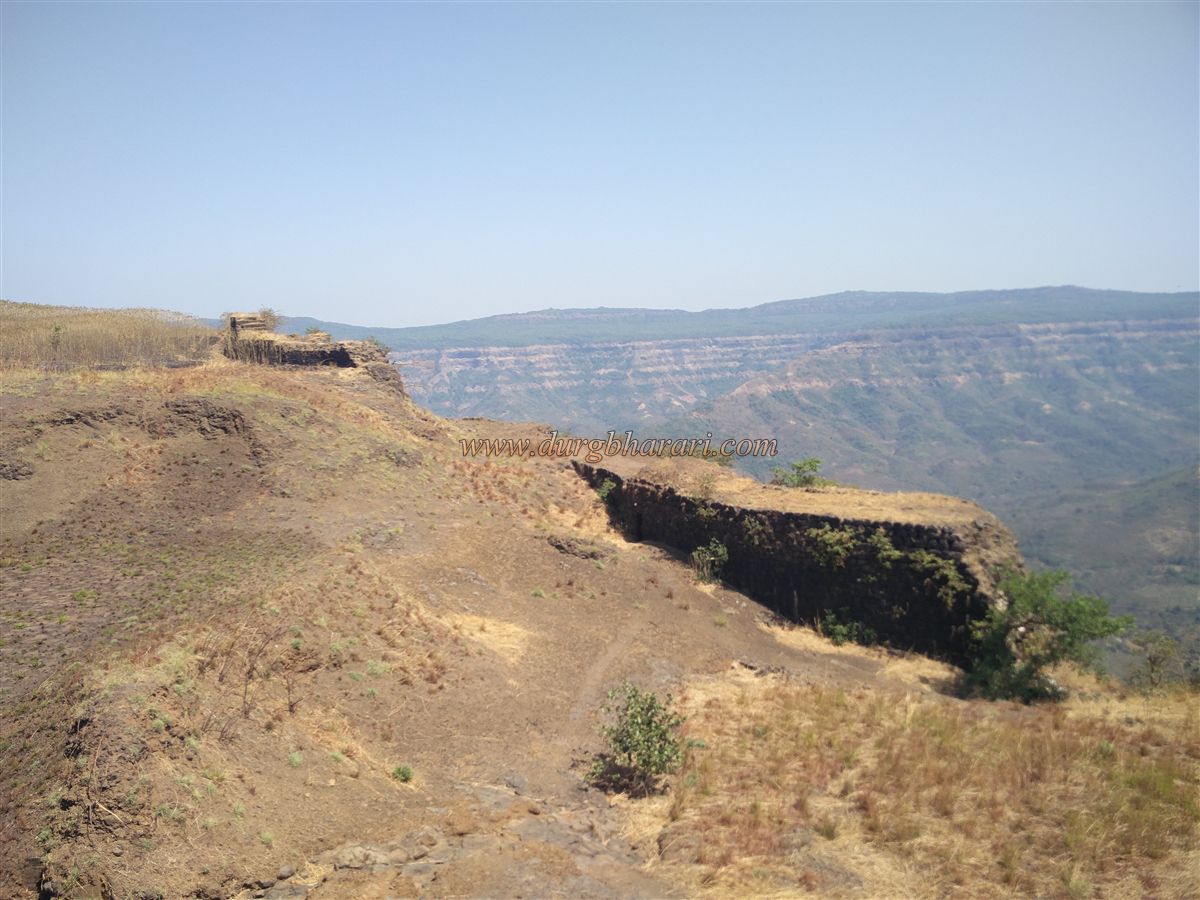
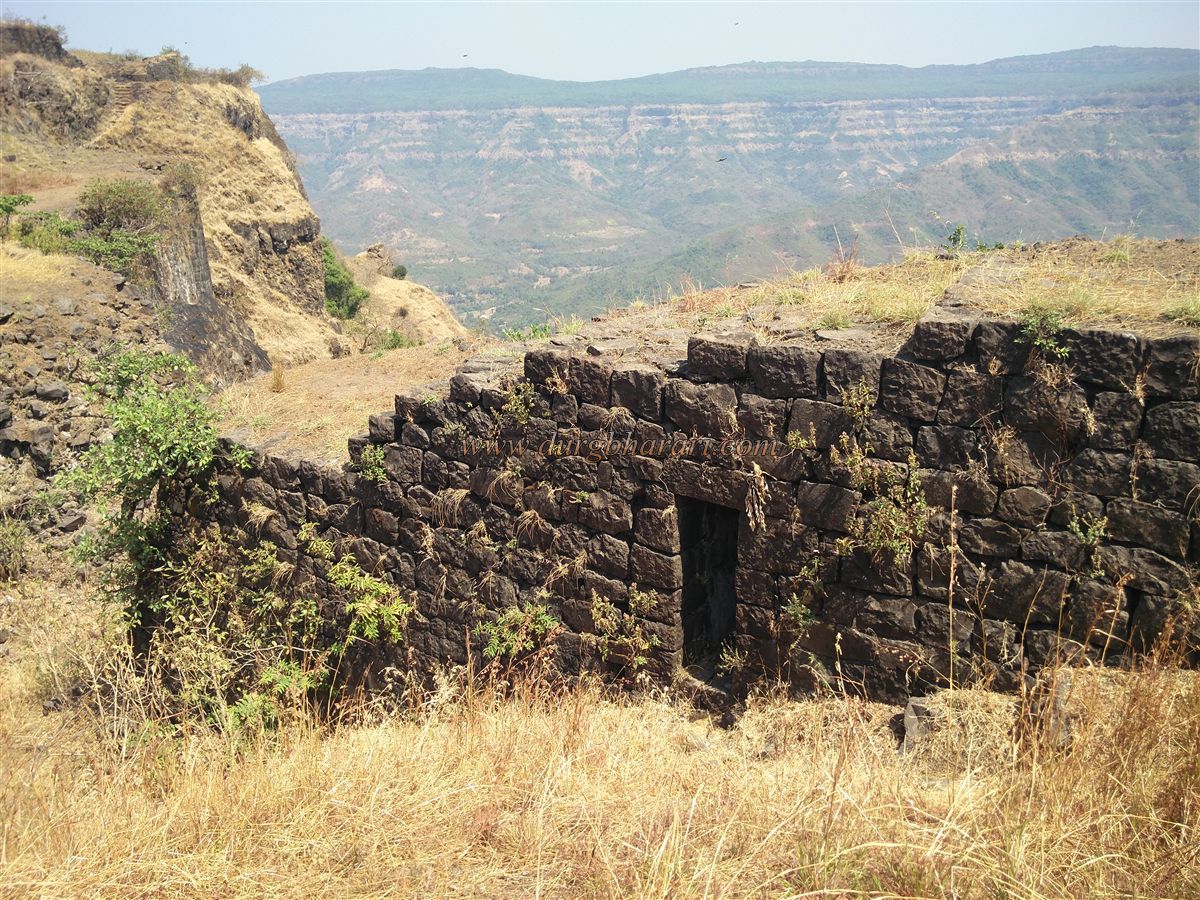
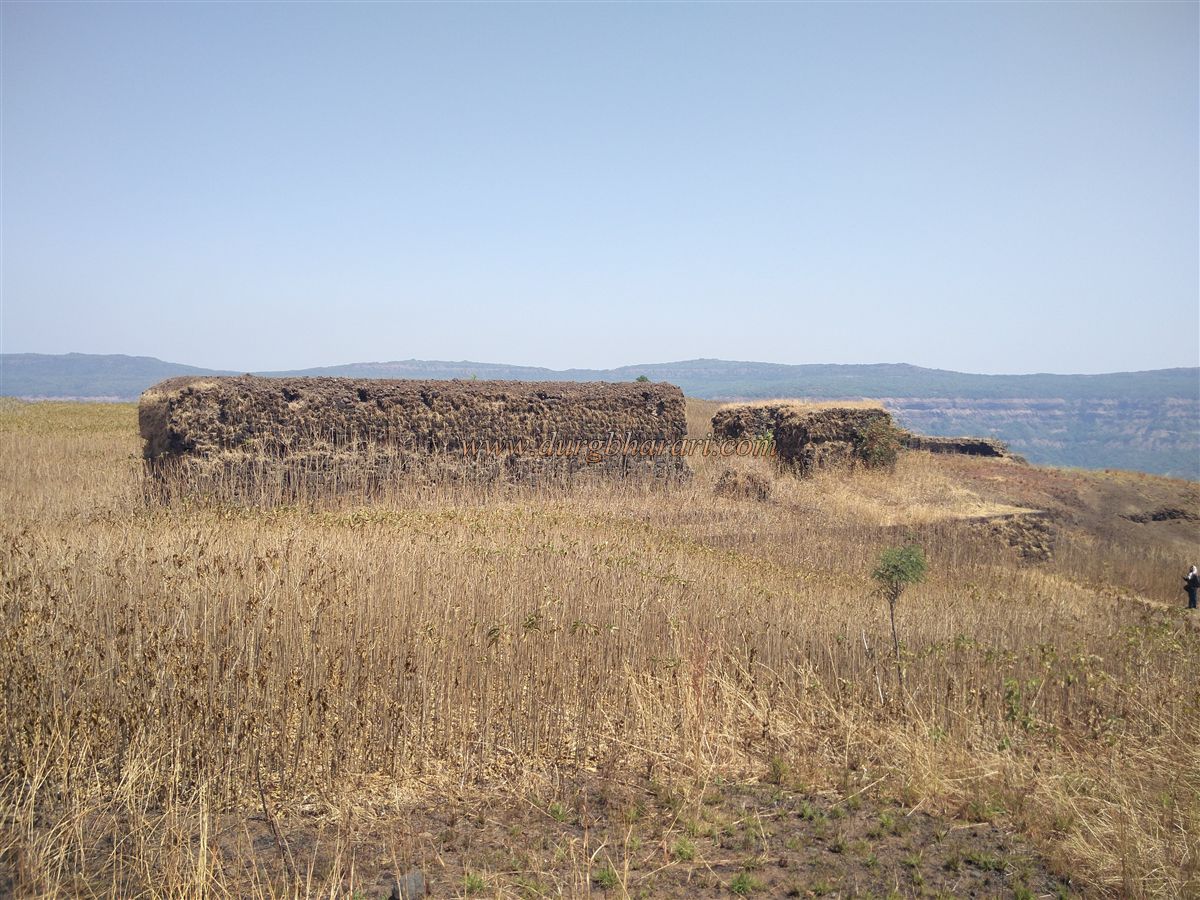
Currently, Mansantoshgad is inaccessible, so it must be admired from afar. Near the western end, there is a roughly 18-foot-high earthen mound—likely the remains of an isolated watch bastion used to monitor movements towards Mansantoshgad. Heading to the southern edge, there are a few remnants of watch posts along the fort walls. The entire southern wall back to the gate remains intact, with three latrines built into it.
The wall is about 10–12 feet wide and features drainage channels to remove rainwater. At one point, a tank was built using the wall as a boundary, causing part of it to collapse. In response, another inner wall was partially built to provide support. To explore all these structures, one should walk along the edge rather than on the rampart.
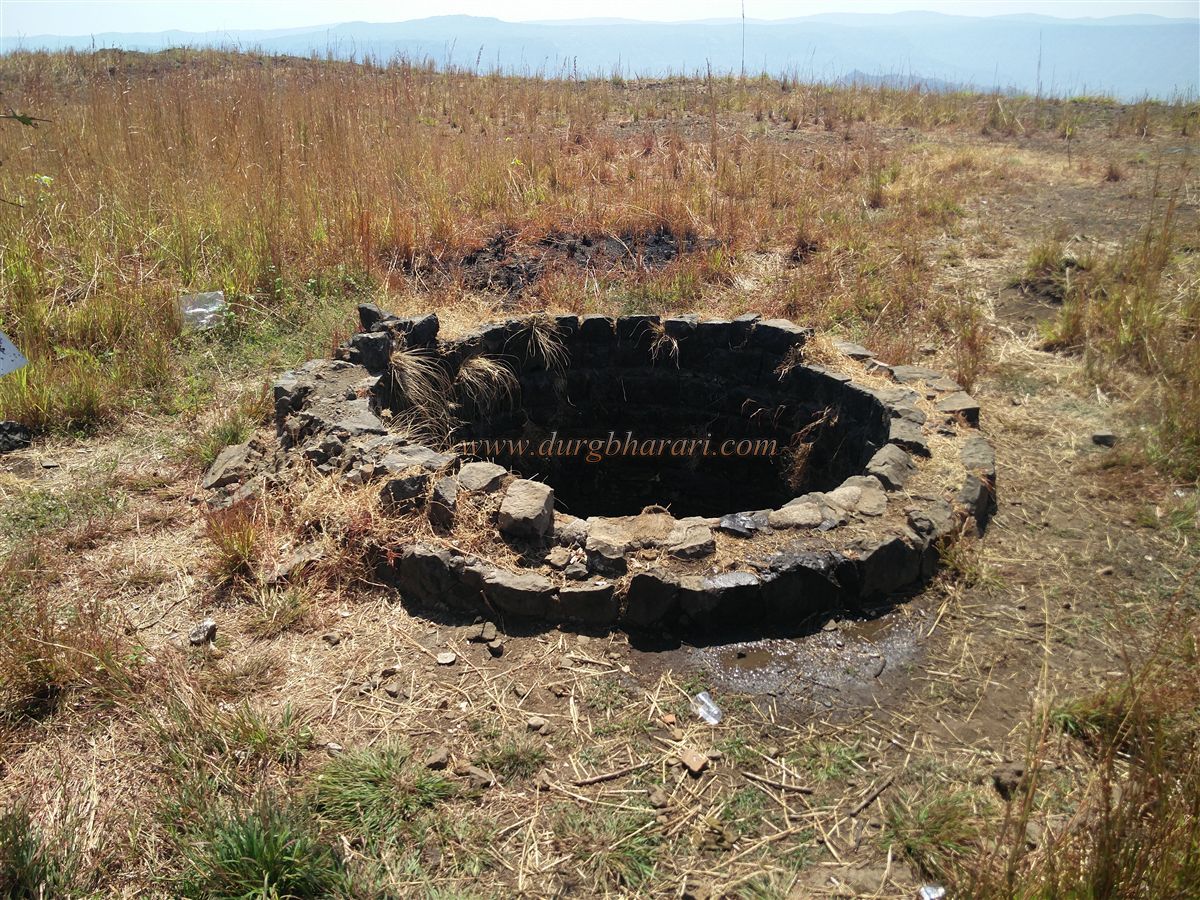
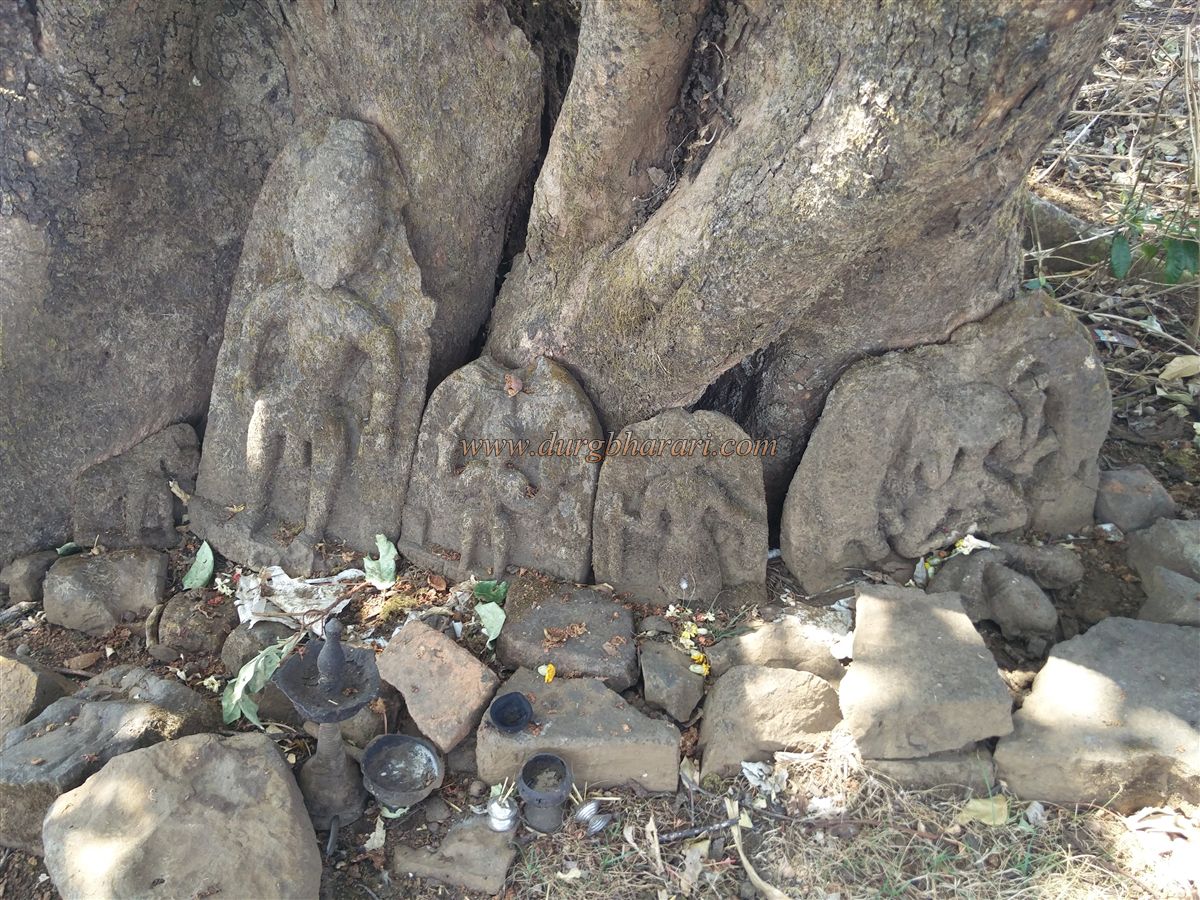
After completing the circuit, one can examine the internal remains. Above the collapsed wall, to the left under a small tree, lies a stone well with perennial potable water—the fort’s only reliable water source. Since the temple is no longer standing, a few idol fragments are placed under an Audumbar (fig) tree nearby, including two Bhairav figures, a Gajlakshmi, and a goddess idol.
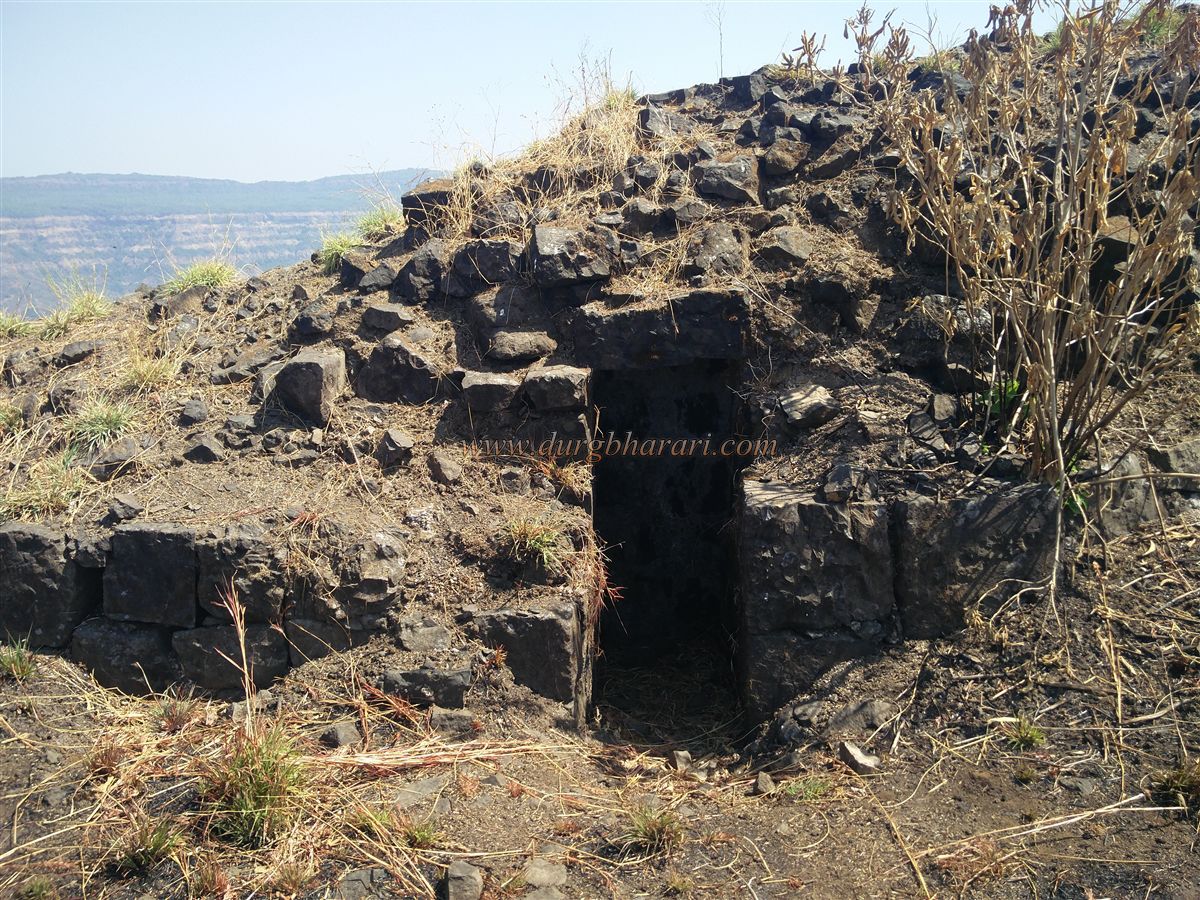
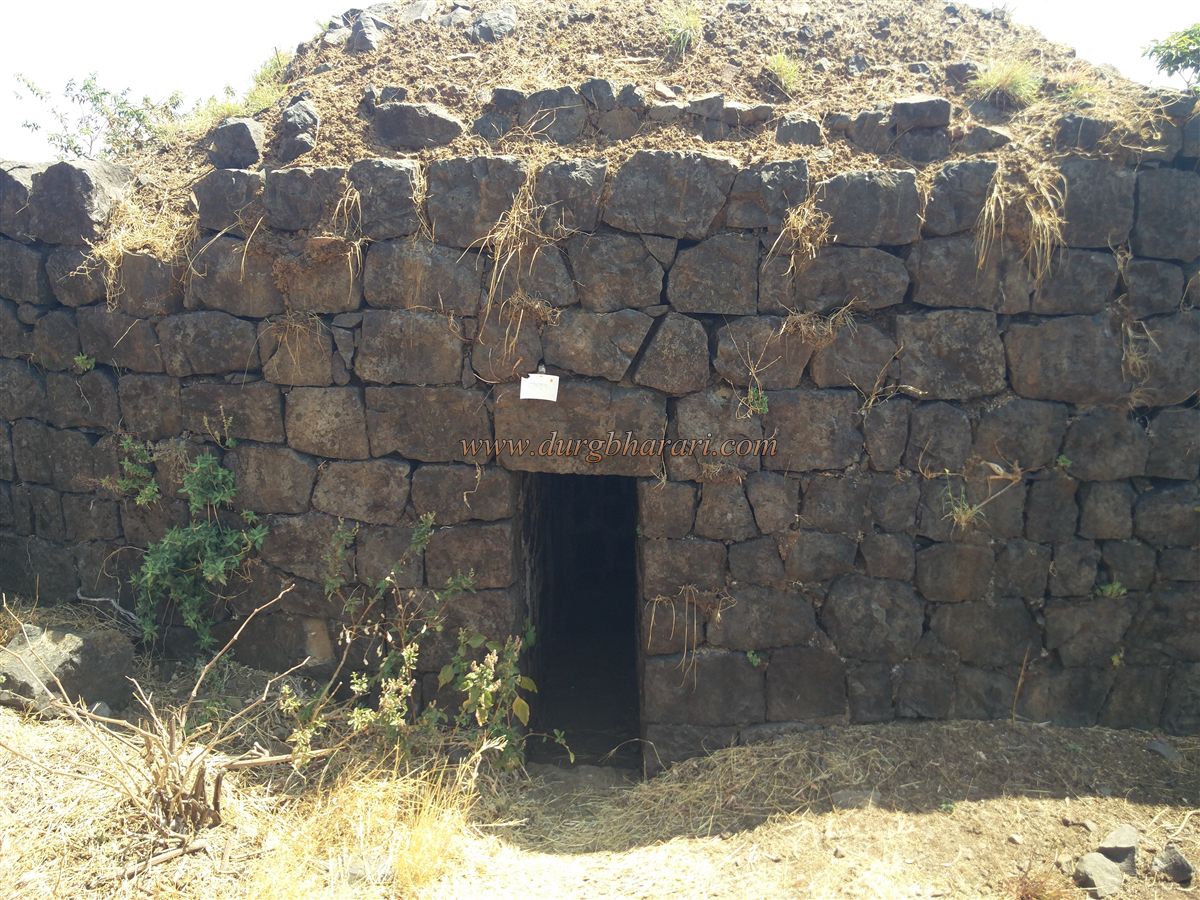
In front of the tree stands the ruined base of a large building, believed to be the royal court. The area around this base contains scattered remnants, suggesting a large population once lived here. Ahead of the platform is a stone granary with two chambers, featuring one large and one small doorway. Except for its missing roof, the structure is well-preserved.
Aside from two fig trees and the small tree by the well, there is little shade atop the fort. From the summit, one can view Narayanagad, Mahadevgad, Rangana Fort, and vast stretches of Konkan.
A complete exploration takes about 1.5 hours. Though the original builders of the fort are unknown, it came under Adilshahi rule after the Bahamani era. It was captured by the Marathas in June–July 1664. Lakham Sawant of Sawantwadi, an Adilshahi commander, showed strong resistance but was ultimately defeated.
The fort saw renovation during Shivaji’s reign. Various official records mention the fort, including letters around 1666 referencing Bajirao Gholap as the fort commander, Rudroji Tukdev and Bomaji Kaloji as military chiefs, and Ramji Vishwanath as the record keeper.
After returning from the Agra visit, Shivaji Maharaj stayed on Manohargad for 34 days—from May 13 to June 15, 1667—possibly to respond to his stepbrother Vyankoji’s siege on Rangana. A Portuguese document dated July 5, 1667 confirms this stay. The reason may have been illness or political matters.
During Aurangzeb’s Deccan campaign (1681–1707), he failed to capture this fort, even as many others fell. Later, the fort came under the Kolhapur Chhatrapati. On January 13, 1751, after Sadashivrao Bhau was made Peshwa of Karveer, he was granted five forts including Manohargad by Chhatrapati Sambhaji.
By 1827, the fort's armoury still contained large stockpiles of weapons. In 1834, a rebellion by the fort's garrison was suppressed by Appajirao Jadhav. But recurring rebellions prompted Chhatrapati Shahu Maharaj himself to march on the fort in 1836, arrest the rebels, and seize two cannons.
In 1842, Ganpatrao Vichare was the fort commandant, with Yesaji Ghatge as the military chief. In 1844, when the British stripped the Karveerkar rulers of autonomy, the garrisons rebelled on July 22. Manohar–Mansantosh Forts gave the British a tough time during this uprising.
A British force under Major Benbow camped at Nerur village below Hanumantghat to counter the rebellion. On October 10, 1844, rebels captured the Sabnis and Kulkarni of Gothos village and burned government and private documents. The next night, they attacked the British camp at Nerur.
The rebellion’s leader, Fond Sawant Tambulkar, brought Anasaheb of Sawantwadi onto Manohargad and collected revenue in his name. The rebels even started manufacturing gunpowder and arms on the fort, distributing them to other forts like Samangad and Rangana.
In response, the British dispatched Colonel Wallace and General Delmont. On January 16, 1845, Wallace heavily bombarded Shivapur. On January 26, Delmont launched a devastating shell attack that forced the rebels, including Anasaheb and his children, to flee to Goa. The fort then fell into British hands.
© Suresh Nimbalkar
GALLERY