MANJRE
DISTRICT : NANDURBAR
TYPE : GADHI
HEIGHT : 0
GRADE : EASY
In the tribal-dominated Nandurbar district, there once existed not one or two but as many as 17 forts in the forms of hill forts (Giridurg), land forts (Bhuikot), and fortified mansions (gadhi). In today's digital era, even on the internet, hardly any information is available about these forts. Our group Durgbharari conducted a thorough exploration of all these forts, and the information we gathered is being presented on this website. Among them, the Hatmoida and Ashte gadhi forts have been completely destroyed, while the remaining 15 forts, though in ruins, still stand bravely against time.
Of these 15 forts, 1 is a hill fort, 3 are land forts, 2 are Nagarkot (forts with townships), and the remaining 9 are fortified mansions (gadhis). A general lack of awareness among locals has led to the deterioration of these structures.
...
Ranale Gadhi is one such example. The Khandesh region is historically associated with the “Sade Bara Rawal” system. The title “Rawal” was granted to various lineages in this region, including Sisodia, Solanki, Parmar, and Pratihar clans.
This Sade Bara Vatan (12-and-a-half feudatory estates) comprised:
1. Dondaicha
2. Malpur
3. Sindkheda
4. Ashte
5. Sarangkheda
6. Ranjane
7. Lambola
8. Lamkani
9. Chaugaon
10. Hatmoida
11. Ranale
12. Manjare
13. Karvand
As half of these were within Khandesh and the rest were outside, they came to be known as the “Half Vatan.” Among these, the gadhis of Ashte, Lambola, Chaugaon, and Hatmoida have been completely destroyed. Four gadhis remain in their original form, and five others cling to their remains, still fighting time and neglect. In most of these gadhis, villages have developed within their premises. The increasing population in these villages has consumed the remaining structures, and local indifference has also contributed significantly to their decay. Manjare Gadhi is one such example.
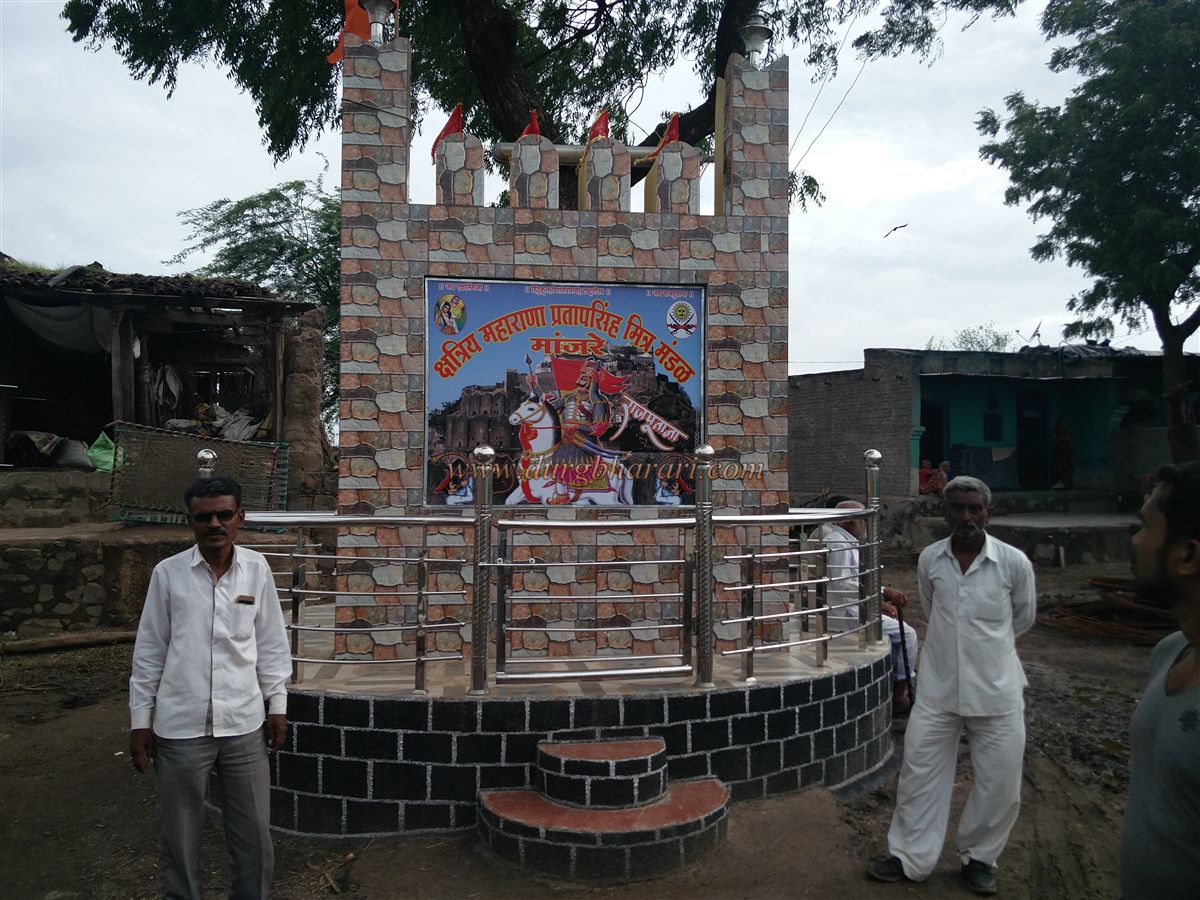
Located 27 km from Nandurbar city, Manjare Gadhi can be reached via the Ranale route. After entering through the archway of Manjare village, a road immediately turns left. At the end of this road stands a memorial dedicated to Maharana Pratap. To the right of this memorial lie the last surviving remnants of Manjare Gadhi. Pointed out by local villagers, these remains include a well, a lime-plastered water tank, and the collapsed mound of an old bastion. Due to the dense village settlement within the fort, the original ramparts and other structures have been erased, making it difficult to ascertain the original size or layout of the fort. It takes only about ten minutes to view the scant remnants of this gadhi.
Apart from these sparse ruins, there are no significant structures left to see at Manjare Gadhi, so this should be kept in mind before visiting the site. Historical records indicate the following: In 1332 CE, the Chavandia Rajput ruler Amarsingh gained control over the Toranmal region. In the same lineage, Rawal Fatehsingh is noted to have established the village of Manjare and settled 13 nearby villages. Despite periodic changes in political power, the ruling authorities of those times did not alter the rights of the Rawal family.
© Suresh Nimbalkar
GALLERY