MANGI
TYPE : HILL FORT
DISTRICT : NASHIK
HEIGHT : 3895 FEET
GRADE : MEDIUM
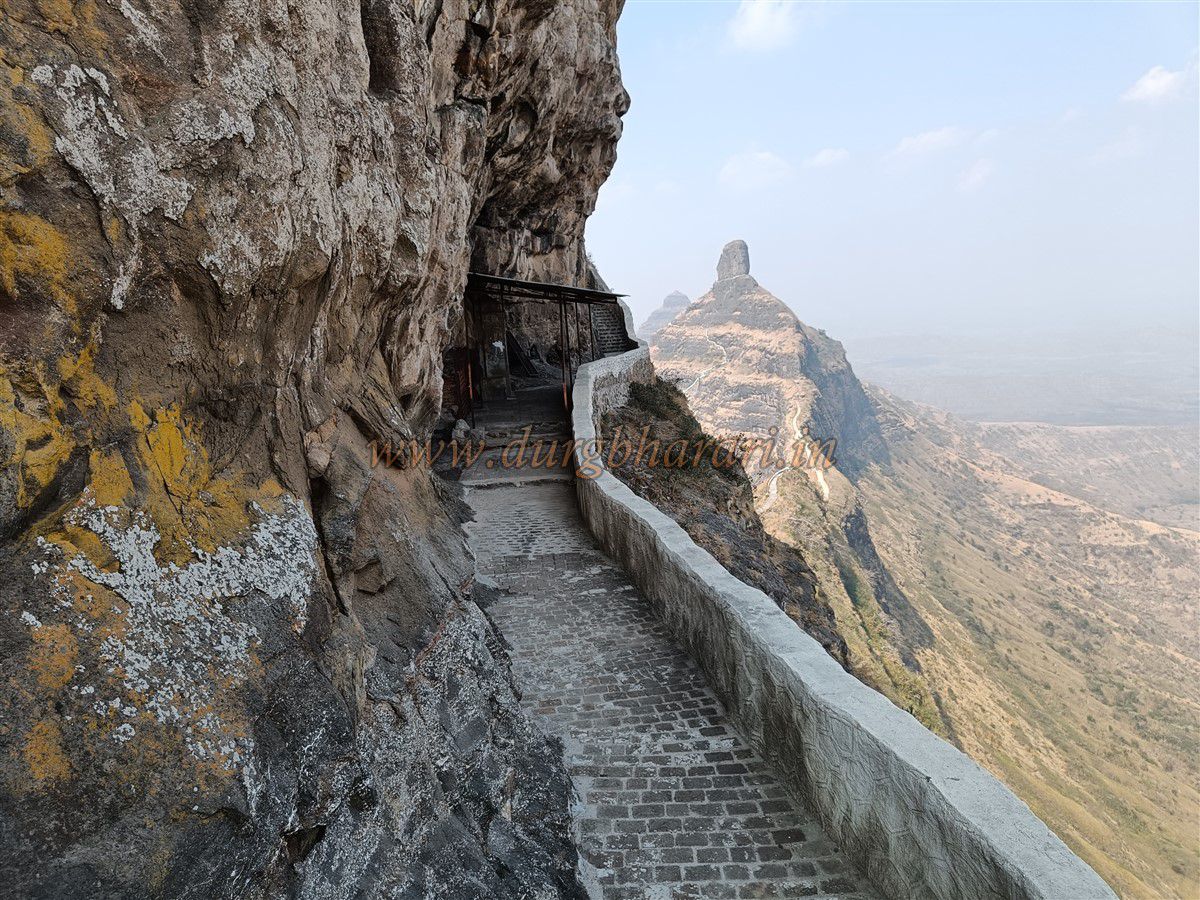
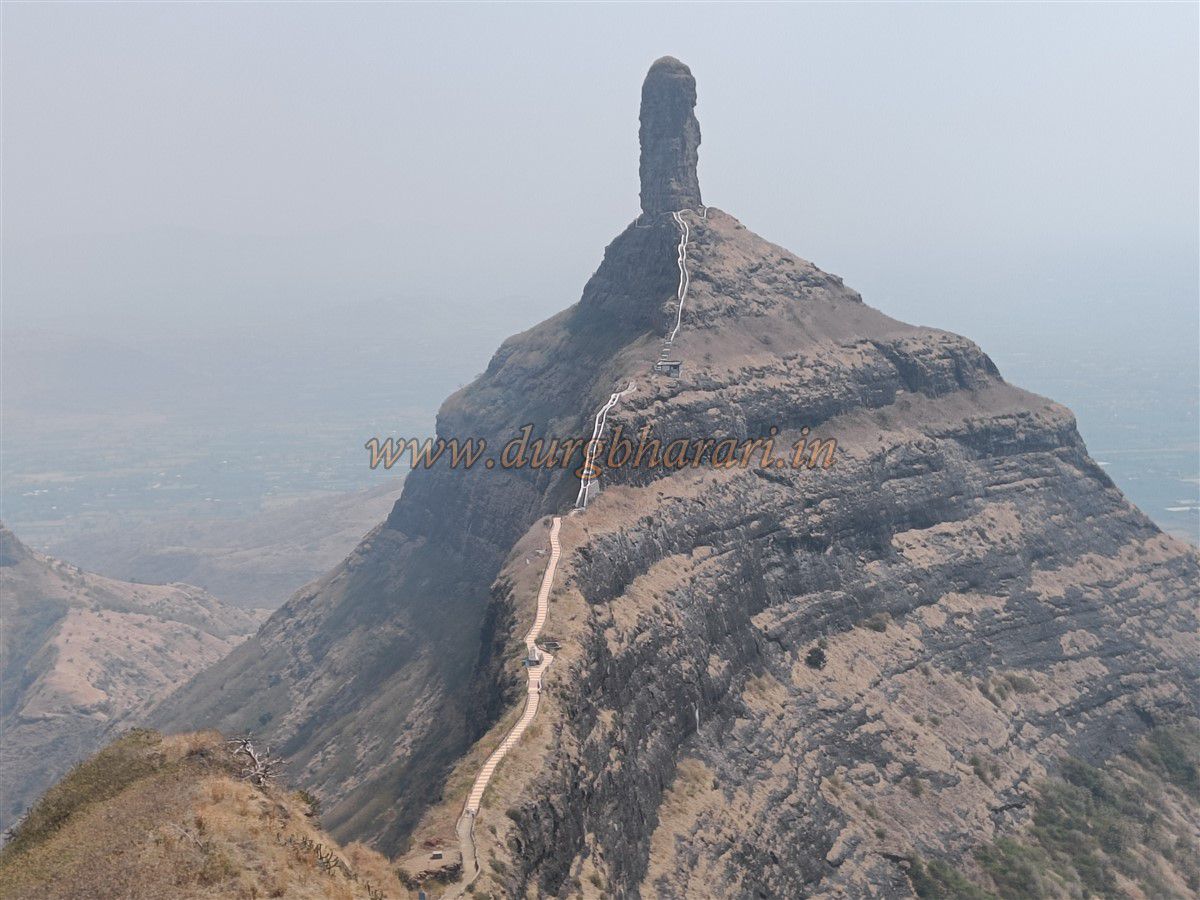
While exploring the Baglan region, two towering pinnacles on the Selbari-Dolbari mountain ranges continuously attract attention, creating a sense of curiosity and devotion. These pinnacles are home to ancient Jain caves and constitute Maharashtra's foremost and India’s second most important Jain pilgrimage site. A journey through the forts of Baglan remains incomplete without a visit to these pinnacles. The Mangi-Tungi peaks are located in Satana Taluka and can be accessed via the base village of Bhilwad. Situated approximately 150 kilometres from Nashik, Bhilwad can be reached via the Nashik–Satana–Taharabad route. Within Bhilwad, there are several Jain temples, and the entire area is collectively known as Mangi-Tungi.
...
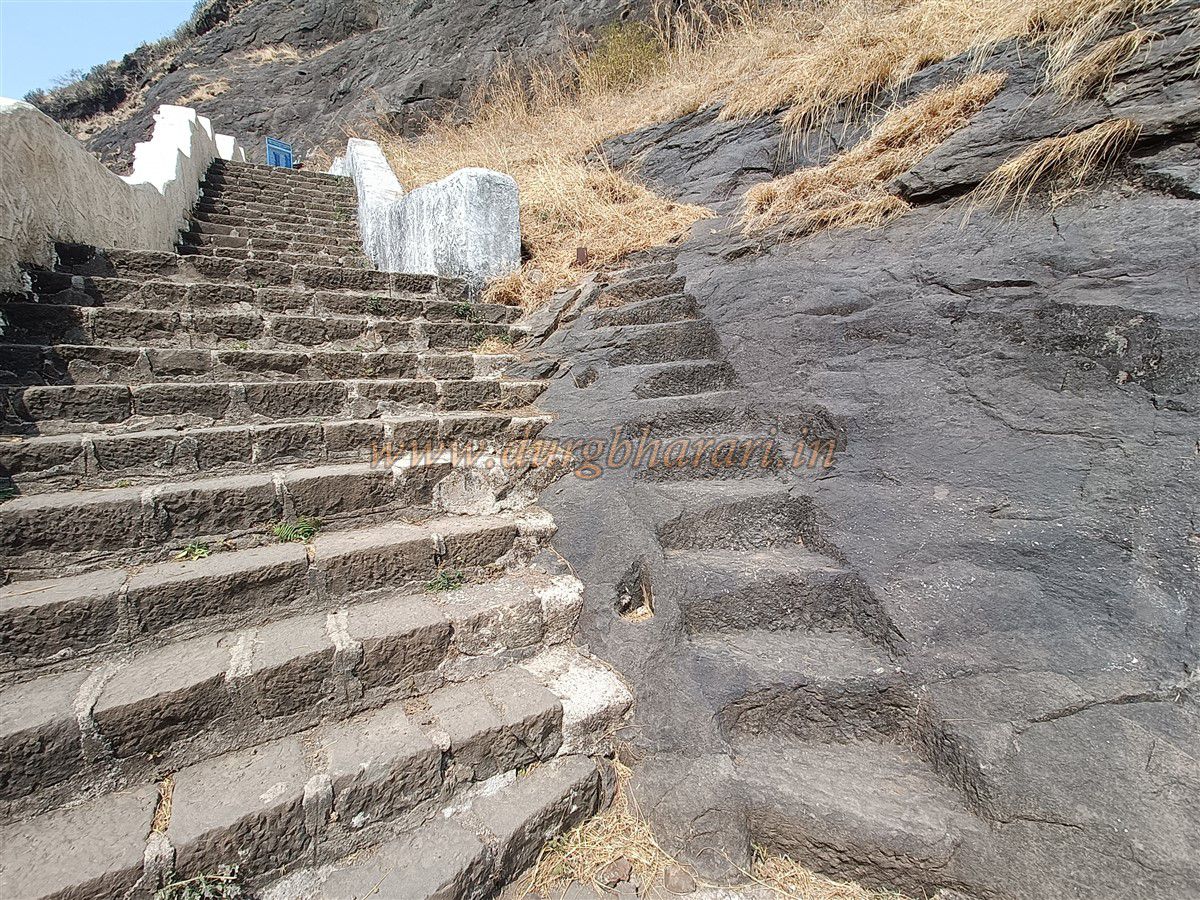
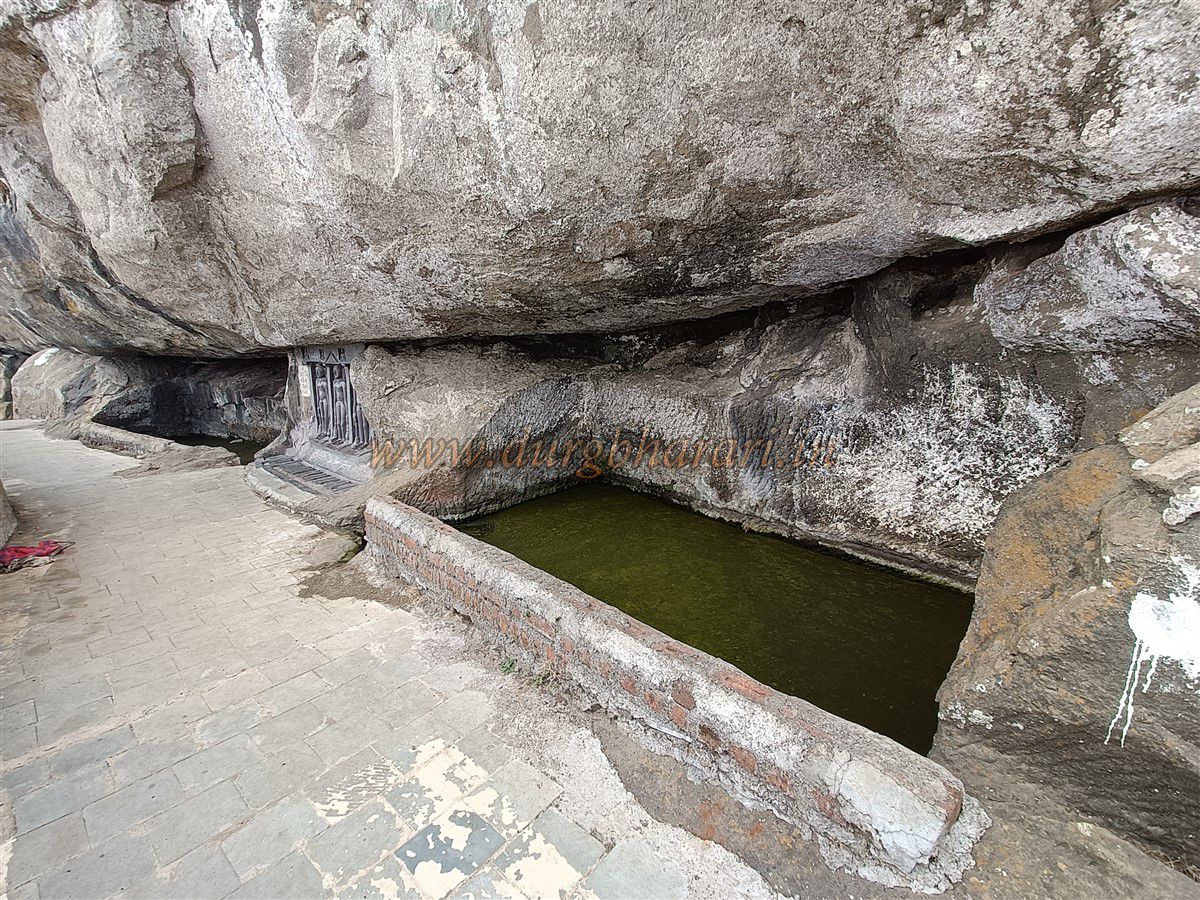
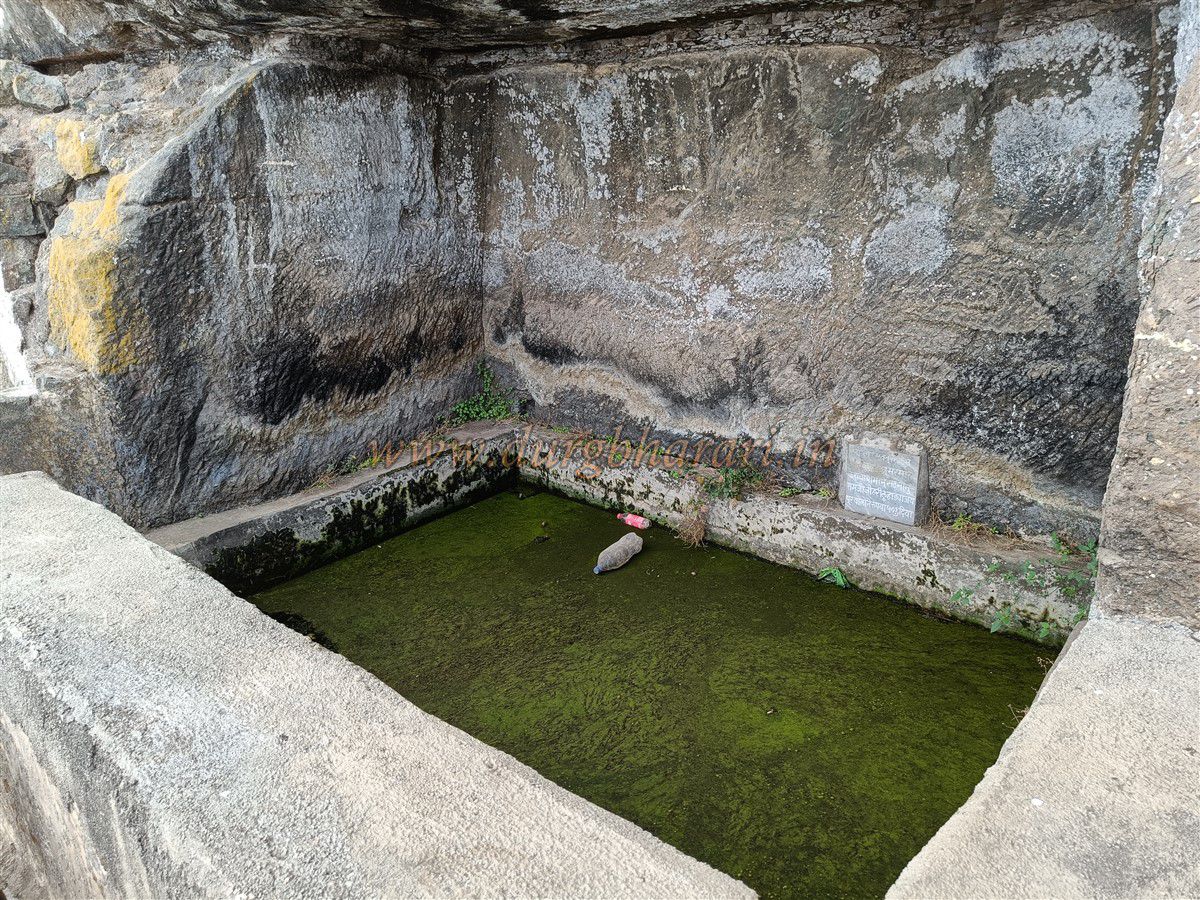
There are two routes from the village to ascend the pinnacles. As one proceeds towards the peaks along the main road in Bhilwad, the road bifurcates—one branch (to the right) leads to the base of the Mangi-Tungi Mountain, while the left fork goes towards Nhavigad. Taking the right path brings one to the foothills, from where about 2,500 steps must be climbed to reach the pinnacles. Starting from the base and ascending via the steps, one comes across two rock-cut caves on the left after crossing half the distance. One cave houses the idol of Lord Neminath, while the other contains the idol of Lord Suvratnath. Both caves have carved chambers, and nearby are water cisterns, though the water is not potable.
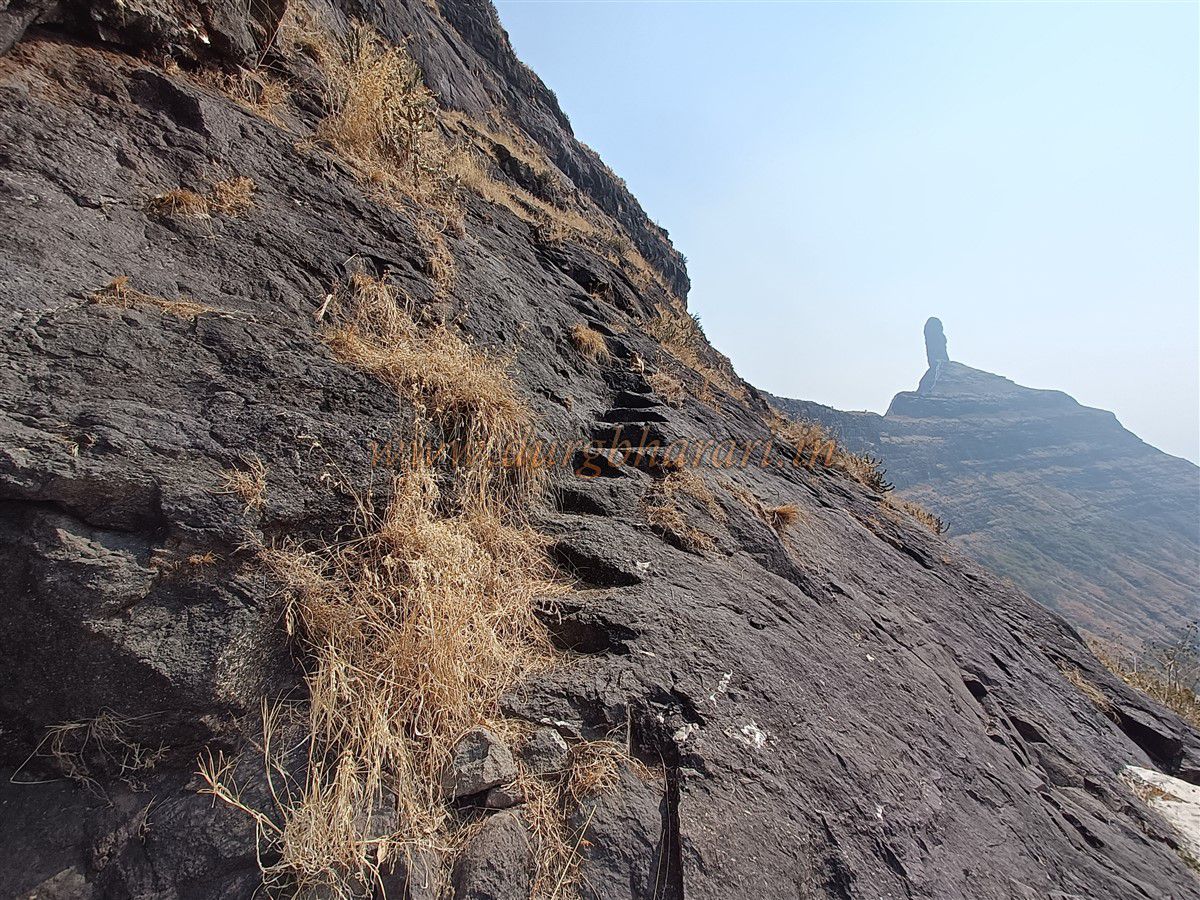
After ascending nearly 2,000 steps, one reaches a stone arch. It takes about two hours to reach this arch from the base. The second route to the peaks starts around half a kilometre ahead on the road leading to Nhavigad. This path is less strenuous and quicker but slightly more expensive. At an elevation of 4,000 feet below the Mangi pinnacle, there is a 108-foot-high monolithic idol of the first Jain Tirthankaras, Lord Rishabhdev, carved into the rock. The idol’s consecration and grand abhishekam ceremony took place in February 2016. A rough road leads to this idol, and private transportation has been arranged by the local Jain trust for devotees. A donation fee of ₹100 per person is charged for this ride. The road is steep and rugged, so only 4x4 vehicles are used. Private vehicles are not permitted due to safety concerns. This road brings visitors to the idol of Lord Mahavir in about 15 minutes. After offering prayers, one can reach the stairway from the base in another 10 minutes. Since there is no potable water further ahead, it's advisable to refill from the Mahavir idol site. Using this route saves about 1,800 steps compared to the full climb from the base.
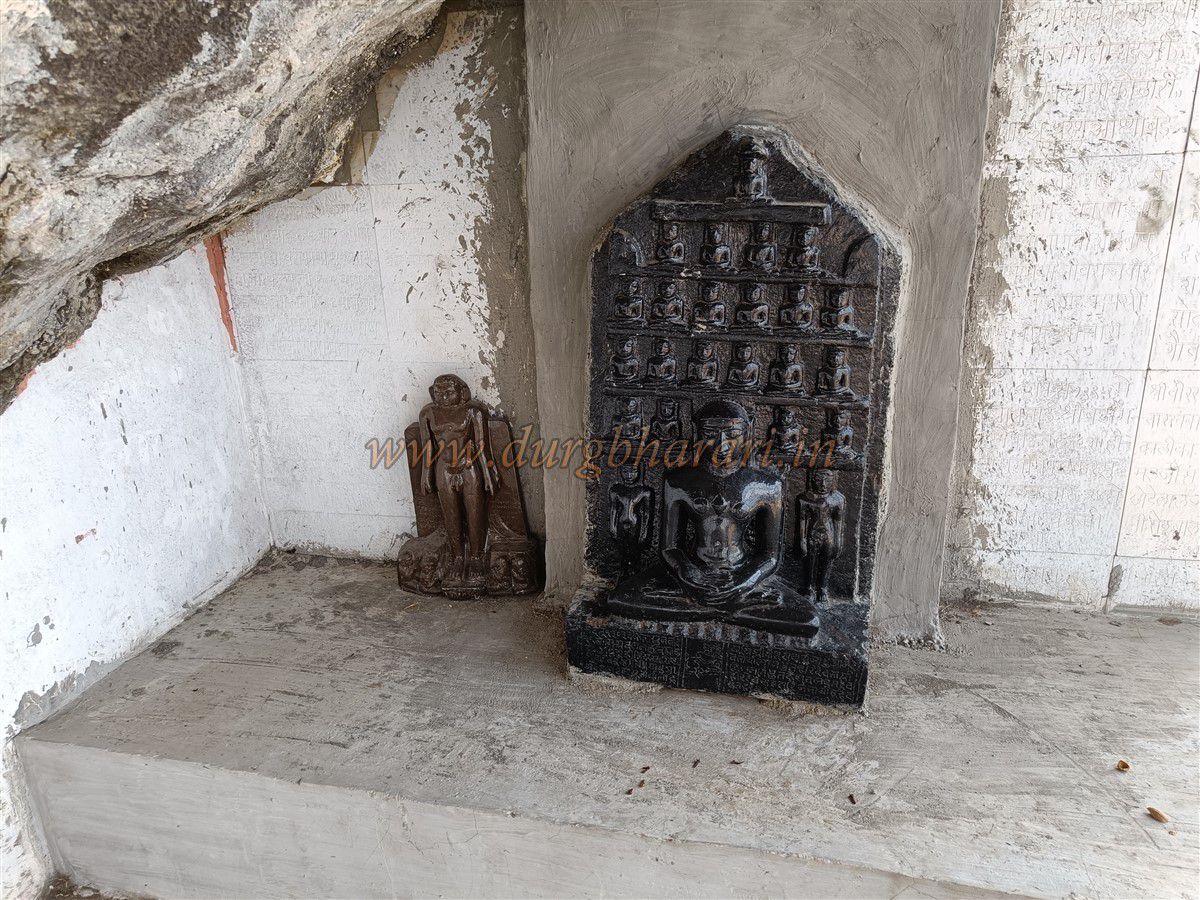
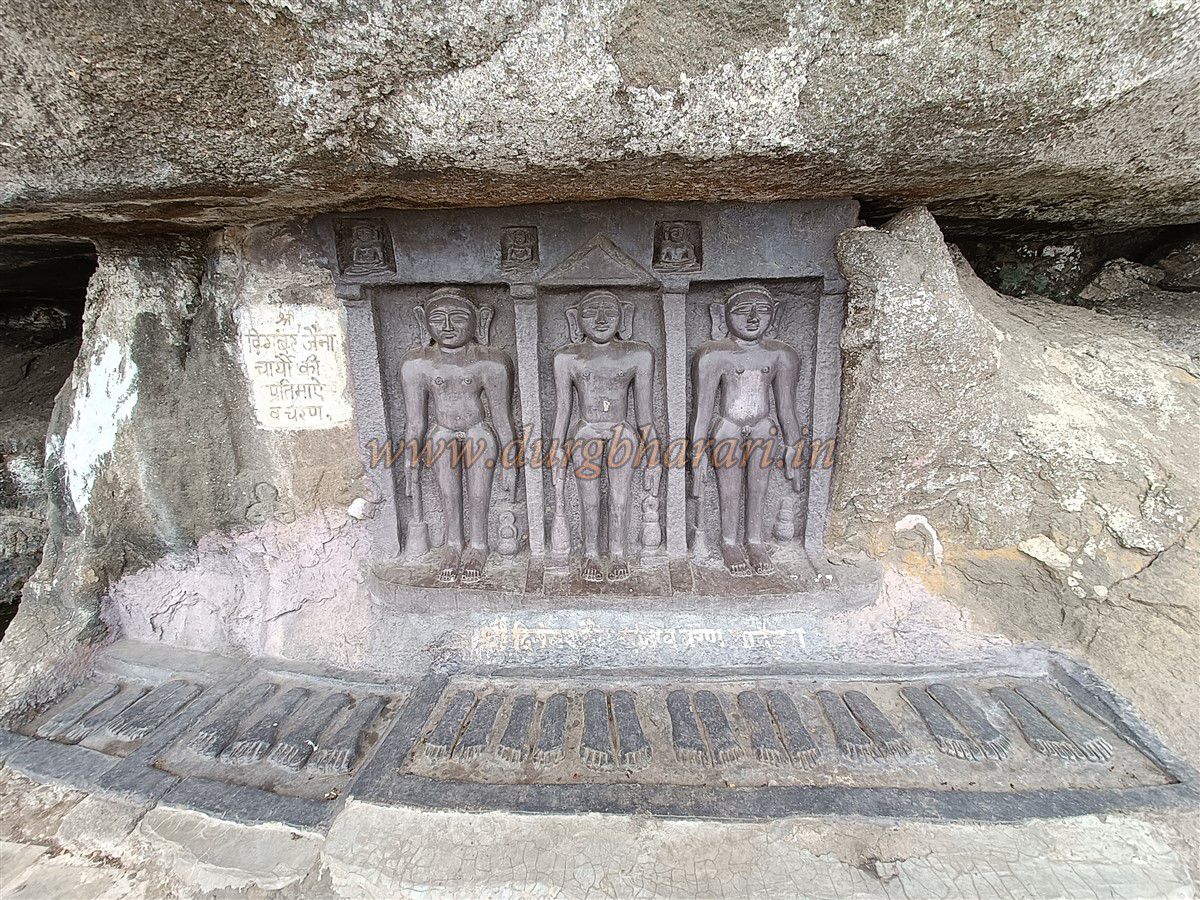
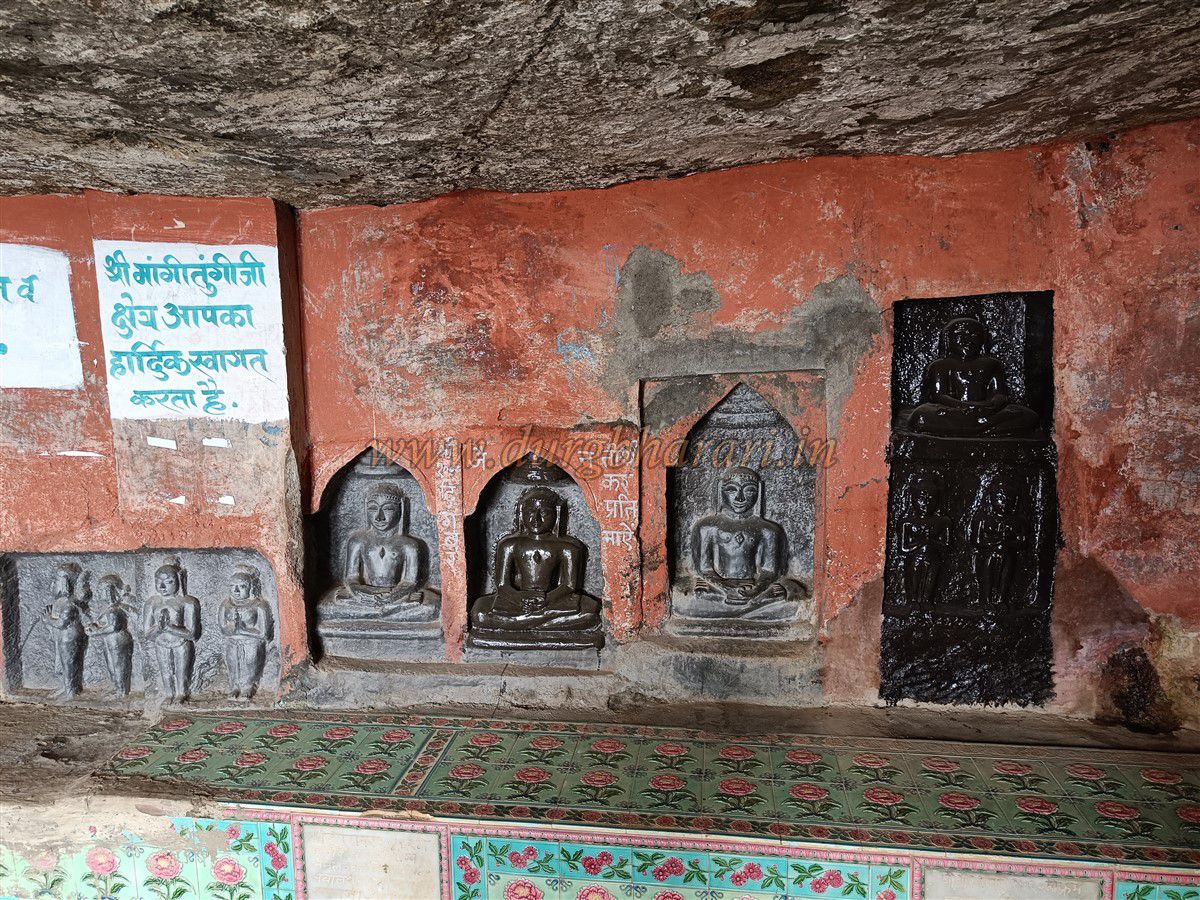
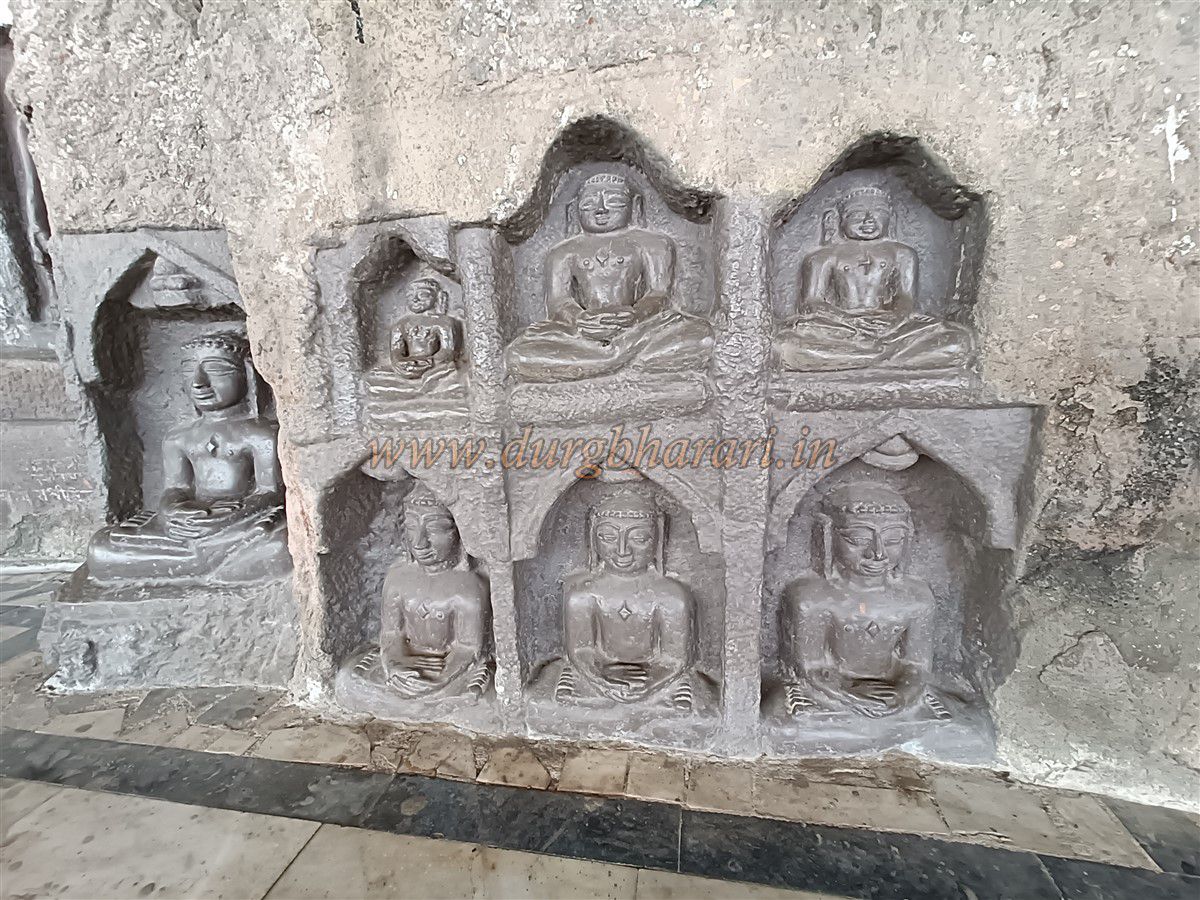
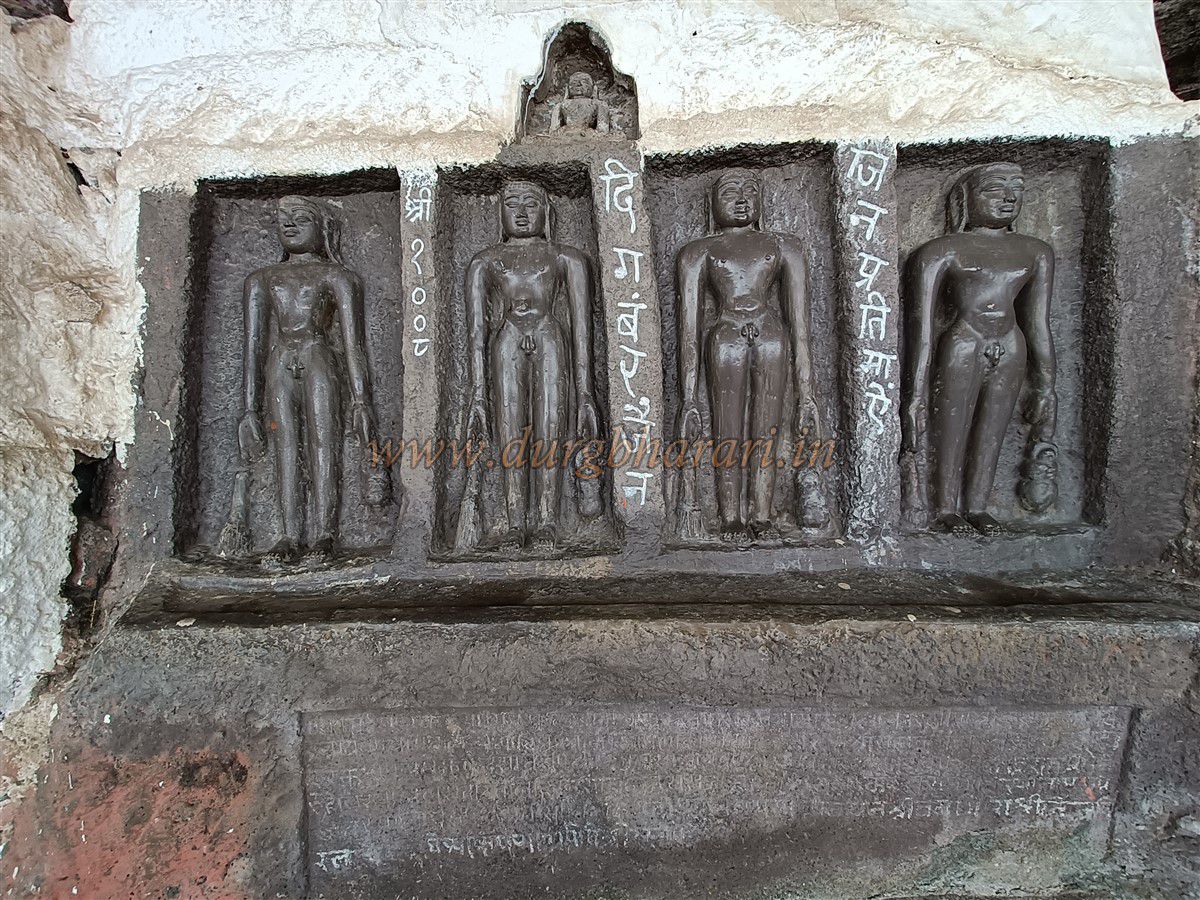
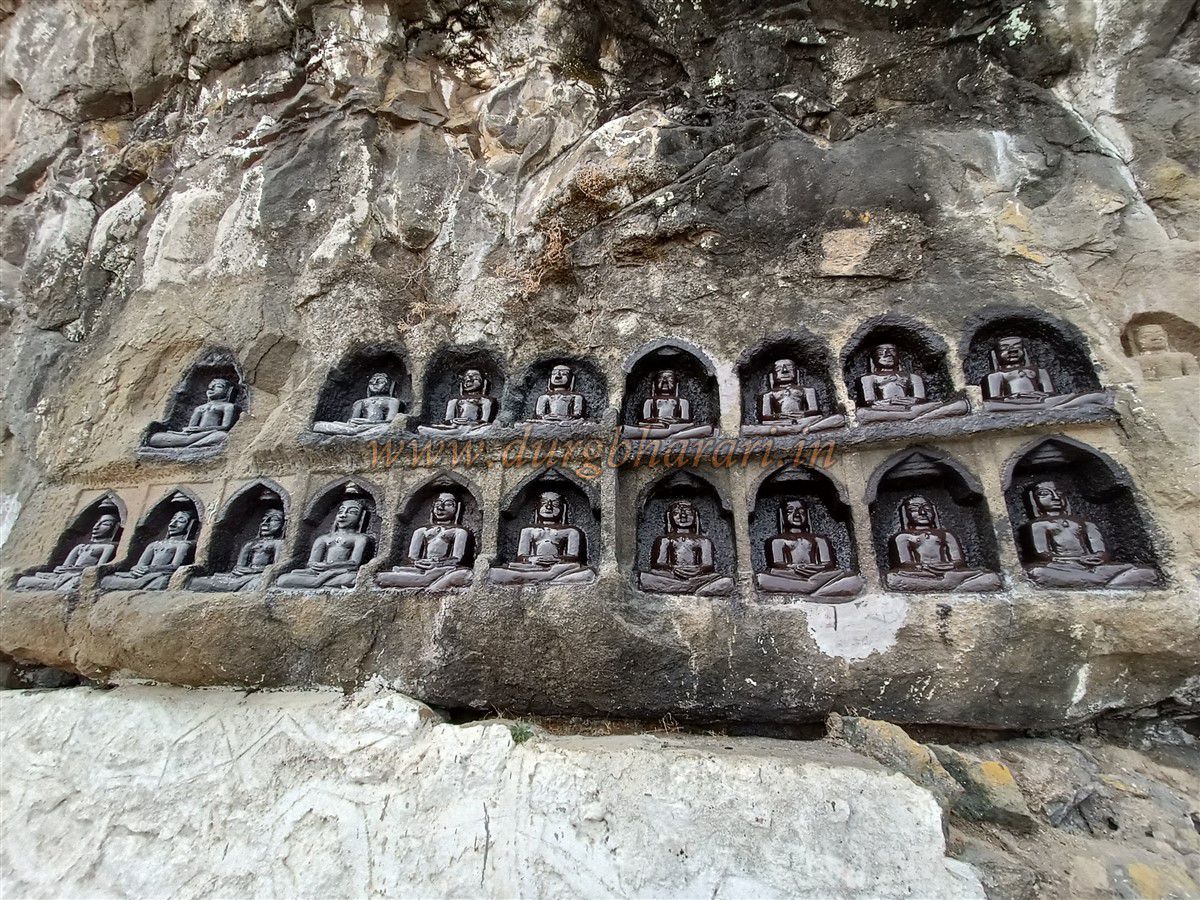
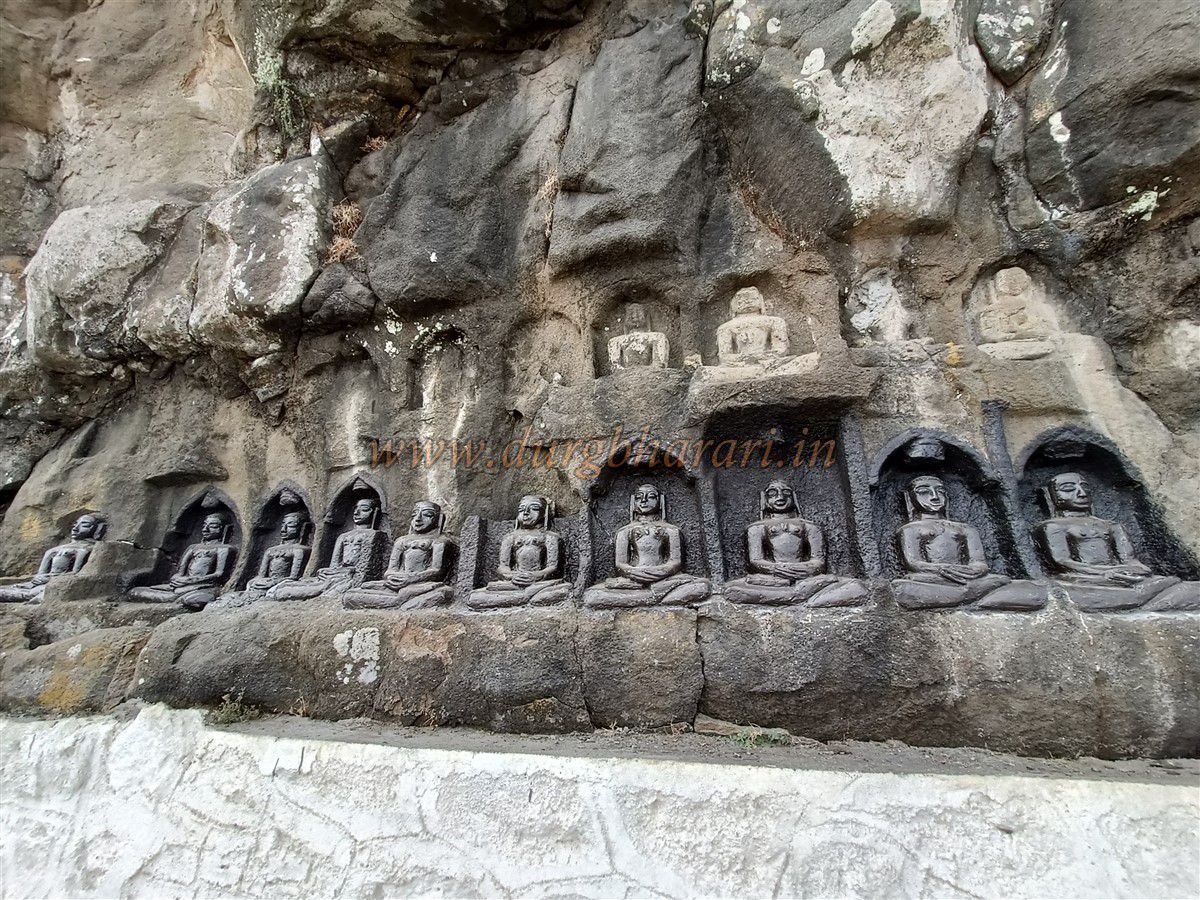
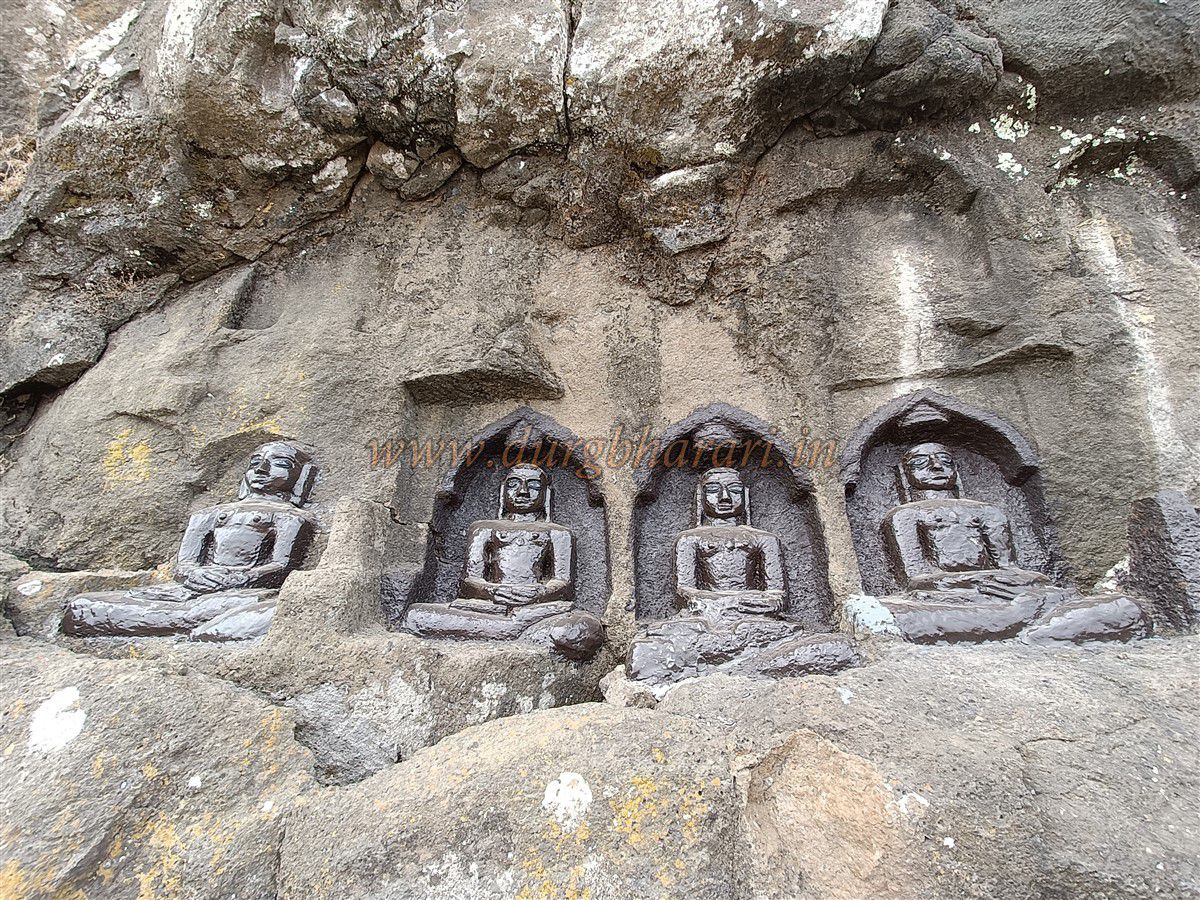
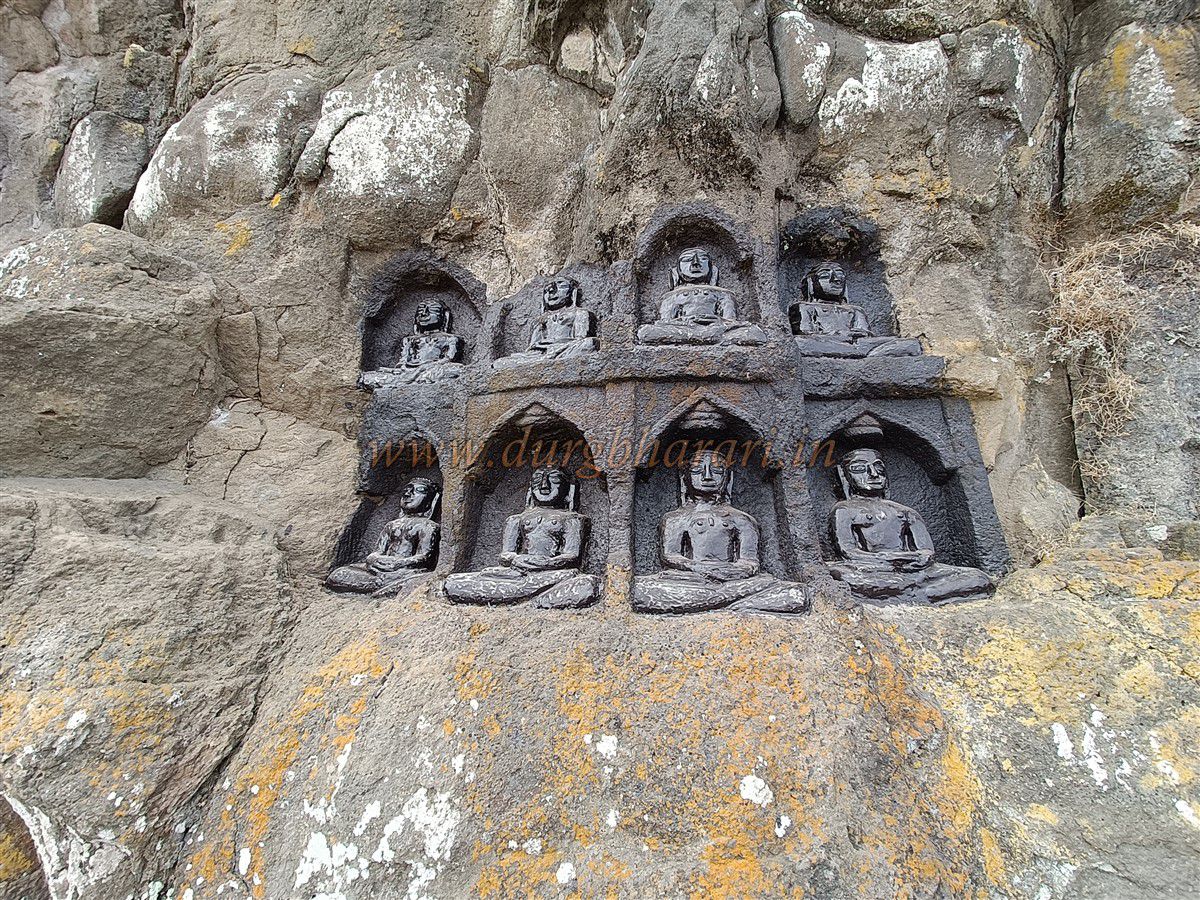
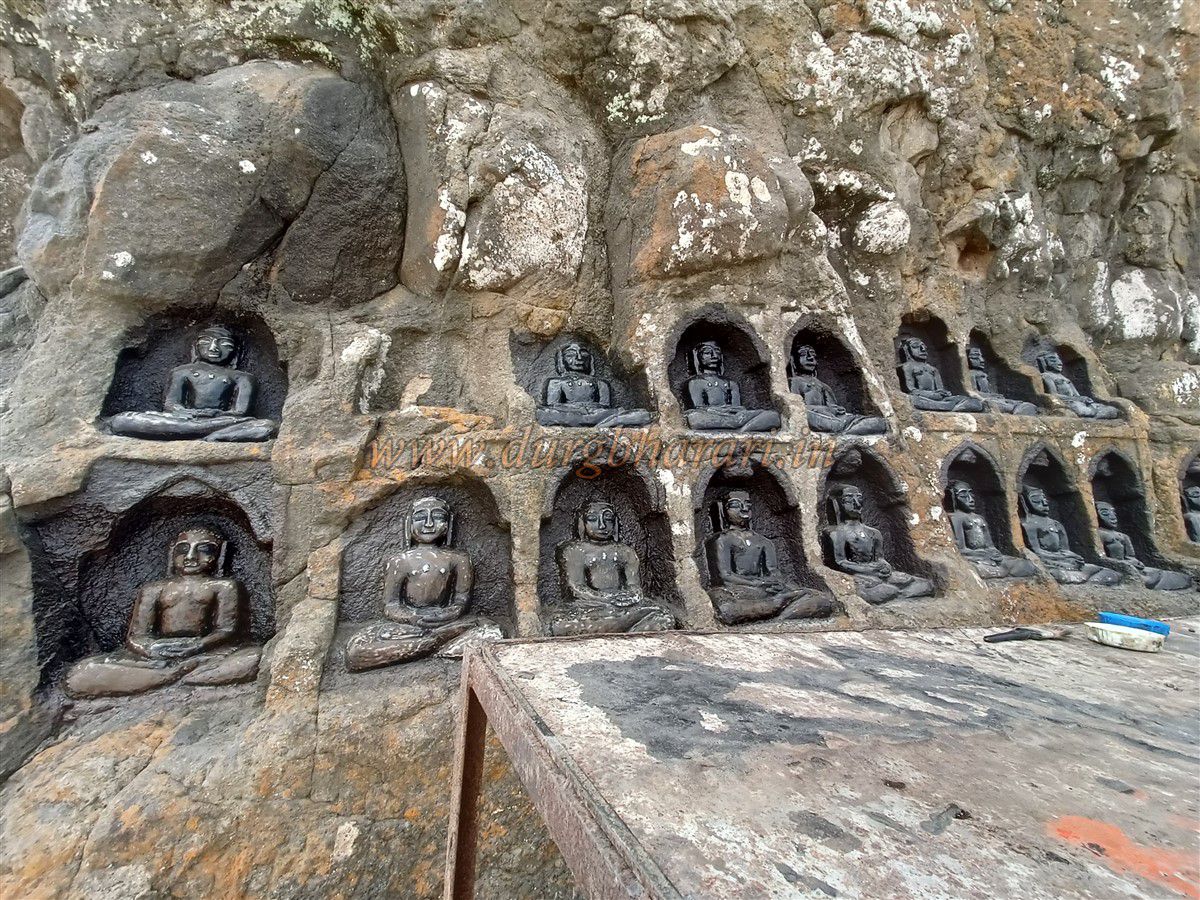
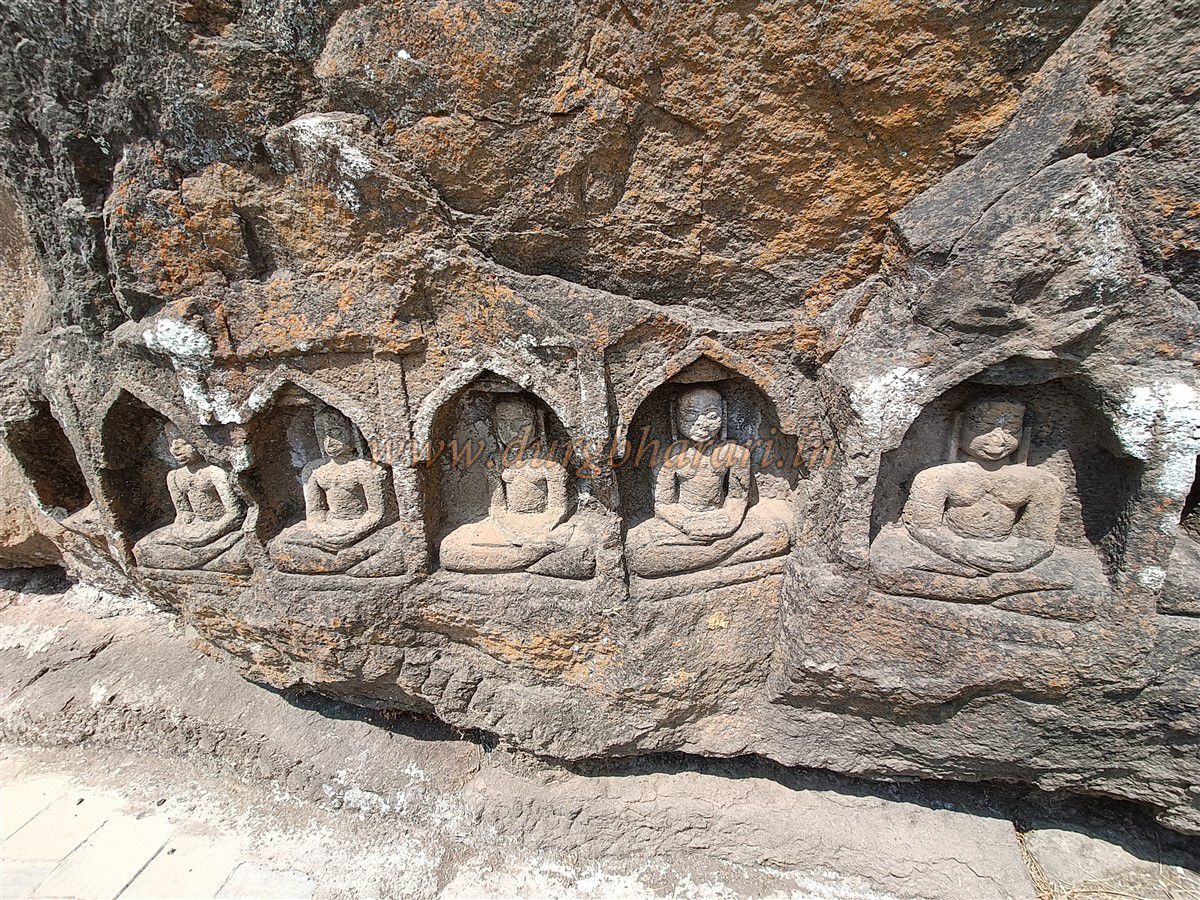
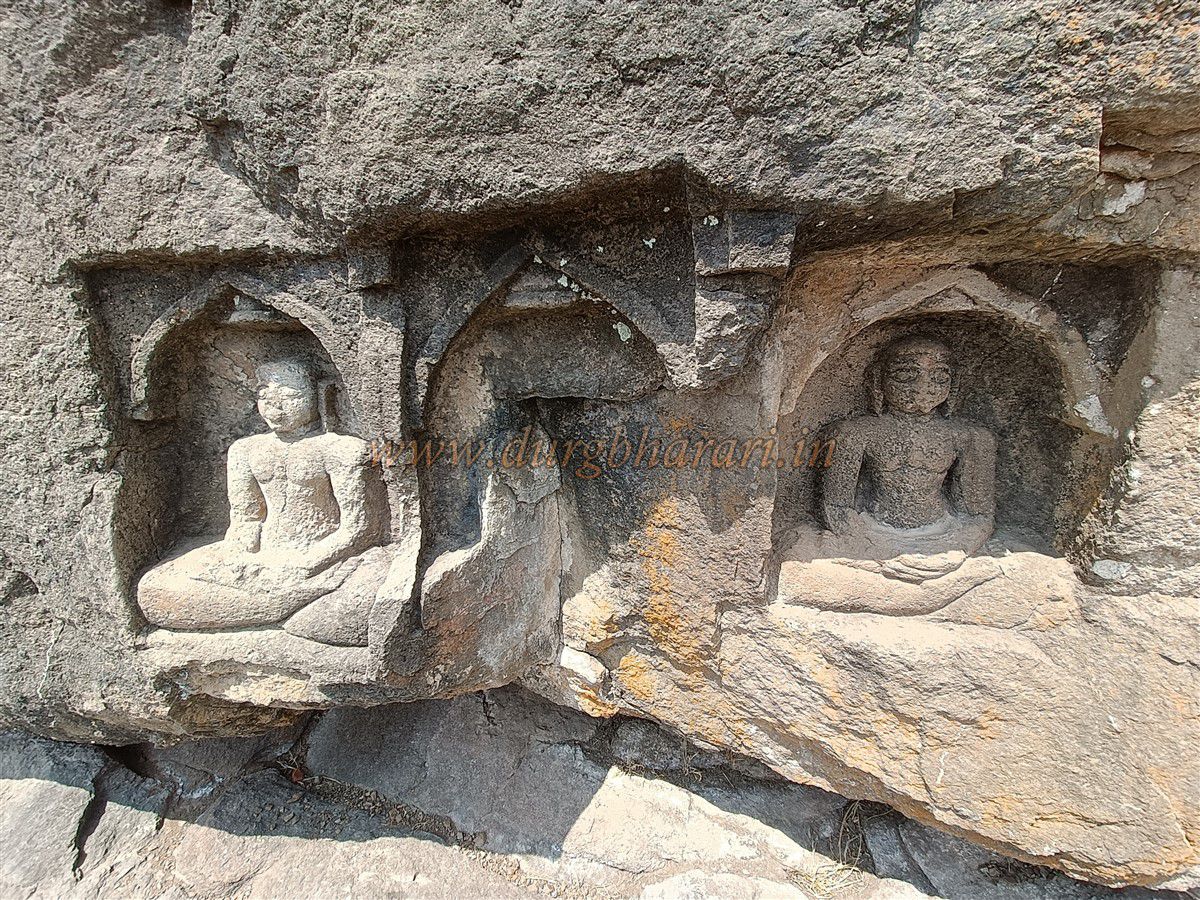
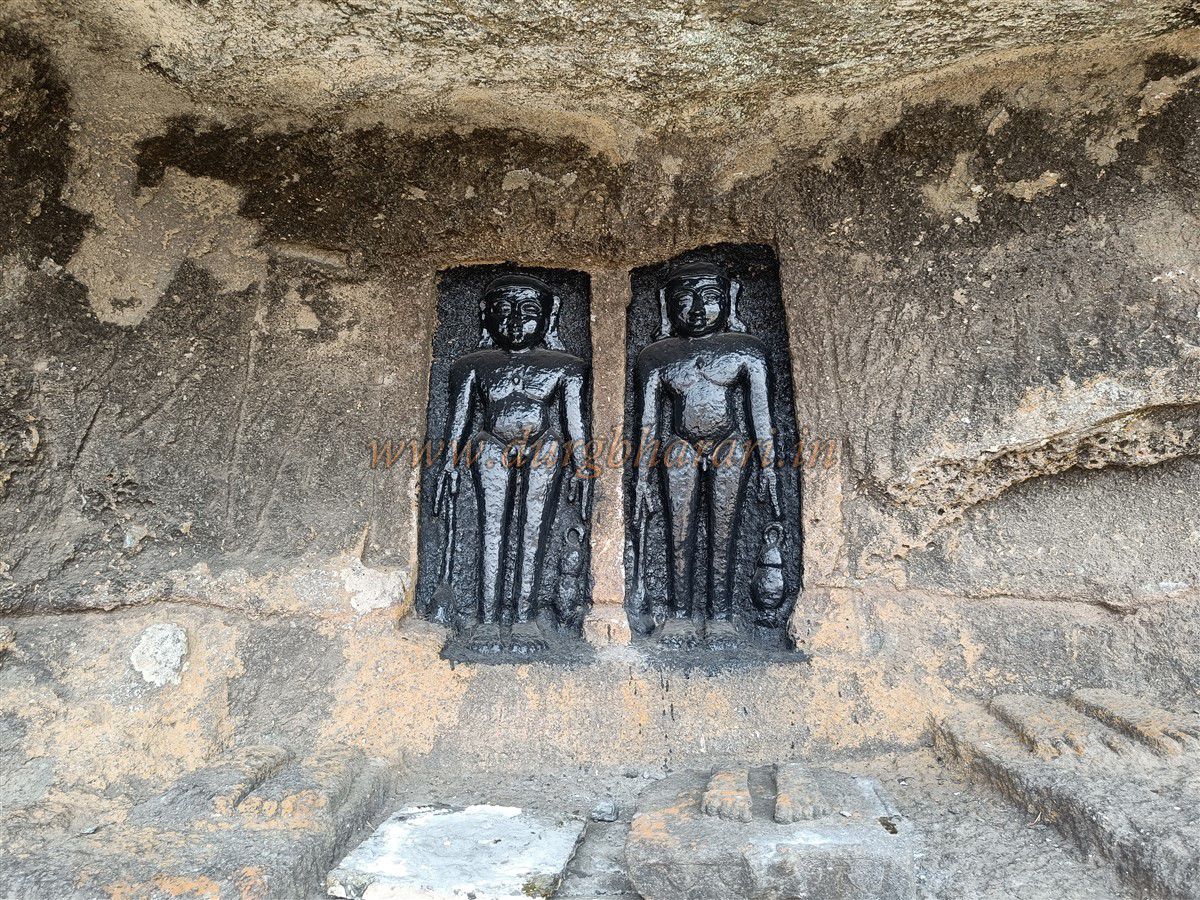
From this point, around 200 more steps lead to the aforementioned stone arch. While ascending this path, several segments of the old rock-cut stairway are visible. Beyond the arch, the right path leads to Tungi pinnacle, and the left one to Mangi. It is recommended to visit Tungi first and then proceed to Mangi. It takes around 30 minutes to reach Mangi from the arch. At the start of the pinnacle, a rock shelter contains carvings of the 24 Tirthankaras, with inscriptions beneath. Adjacent to this is another Tirthankaras idol, also accompanied by an inscription. The Mangi pinnacle stands at an elevation of 3,895 feet above sea level.
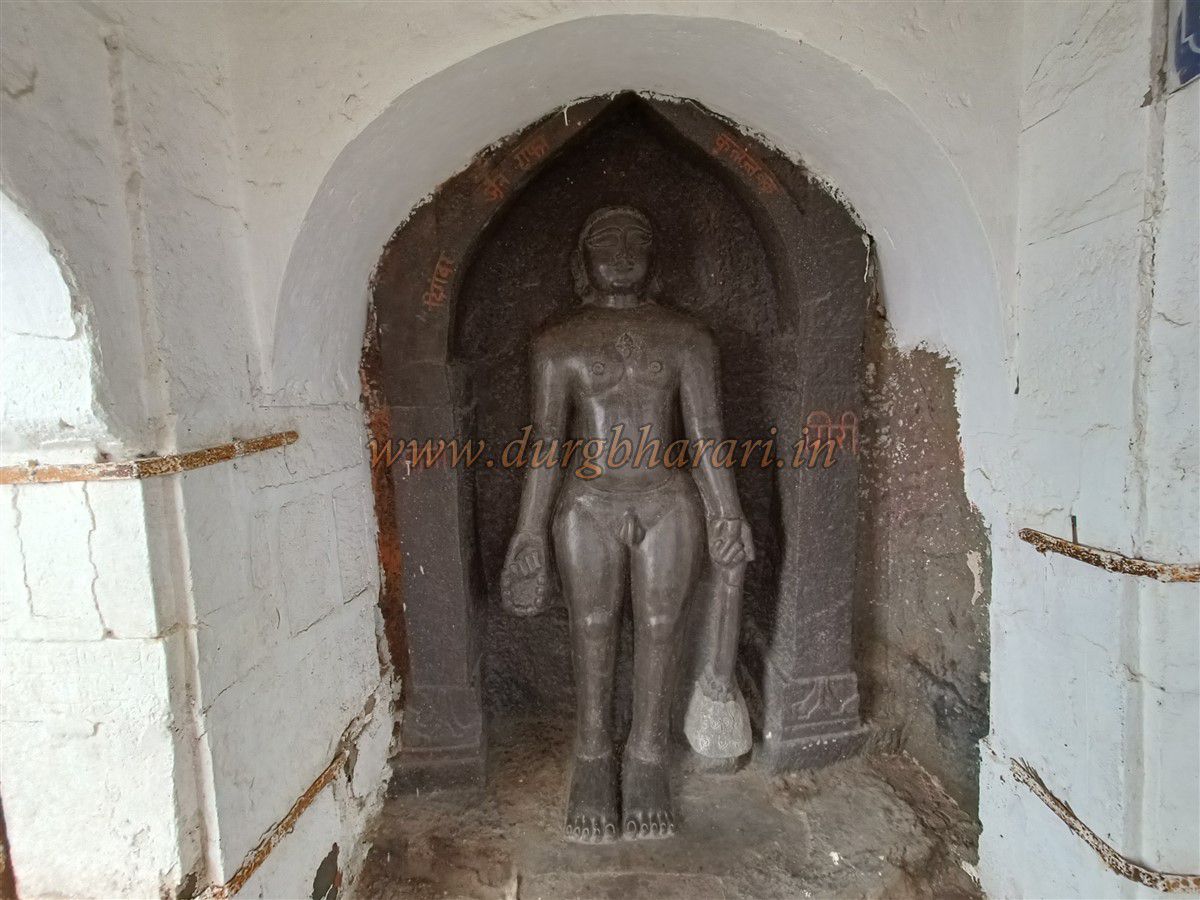
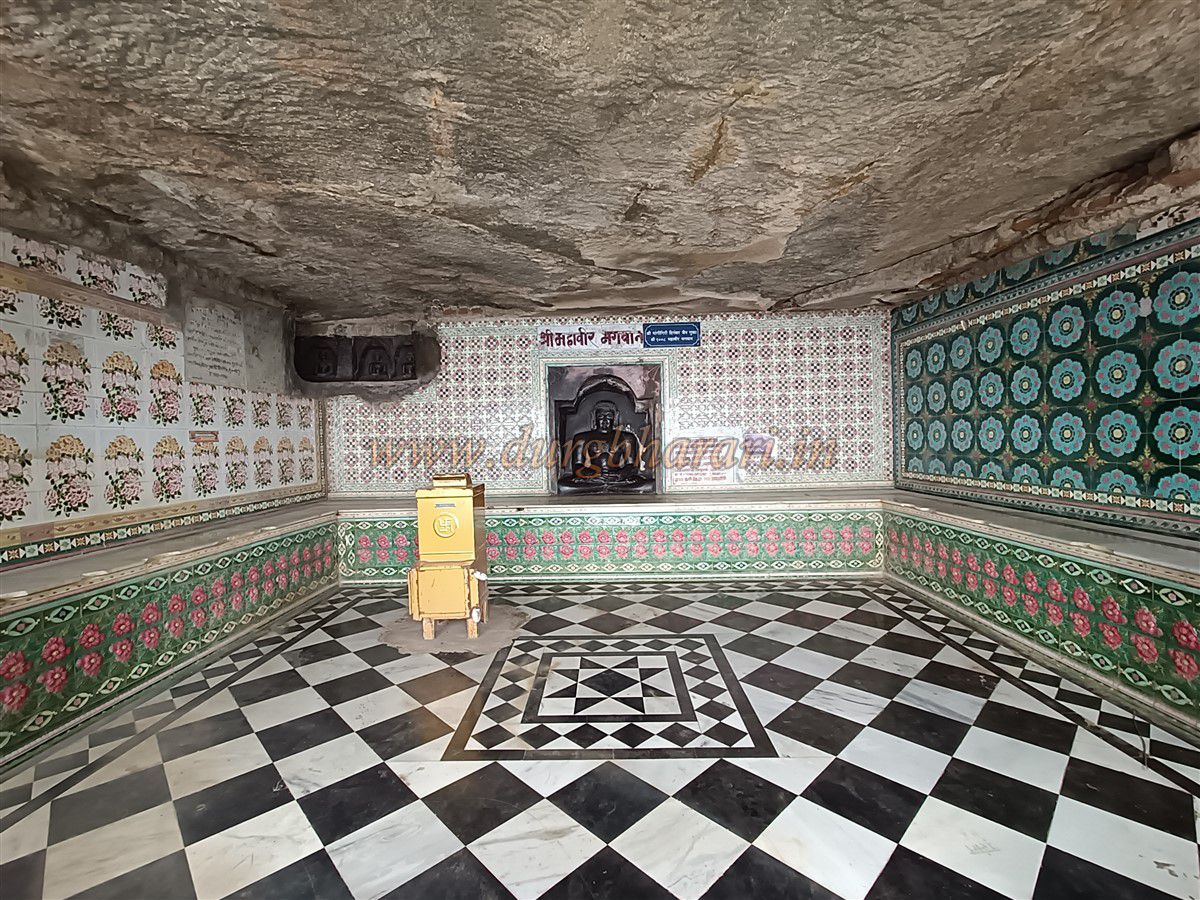
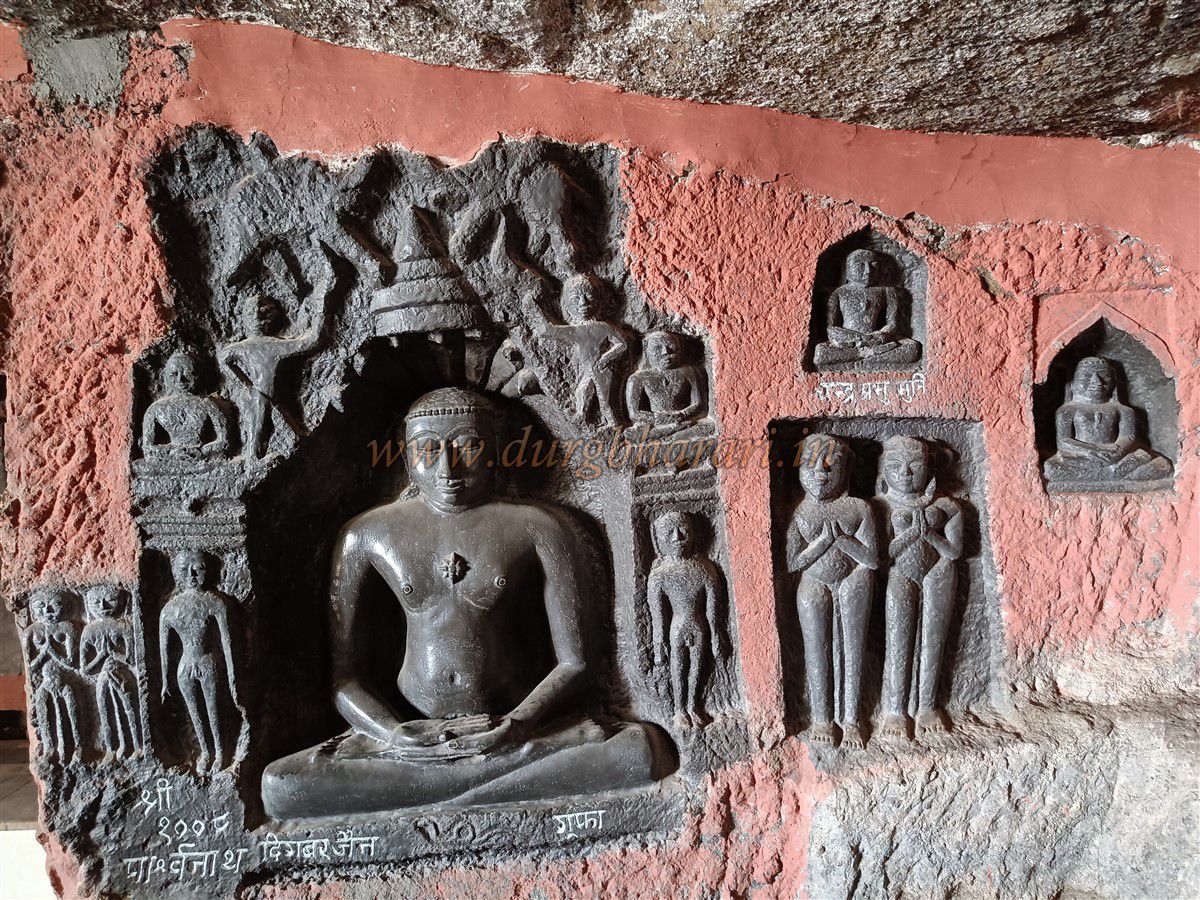
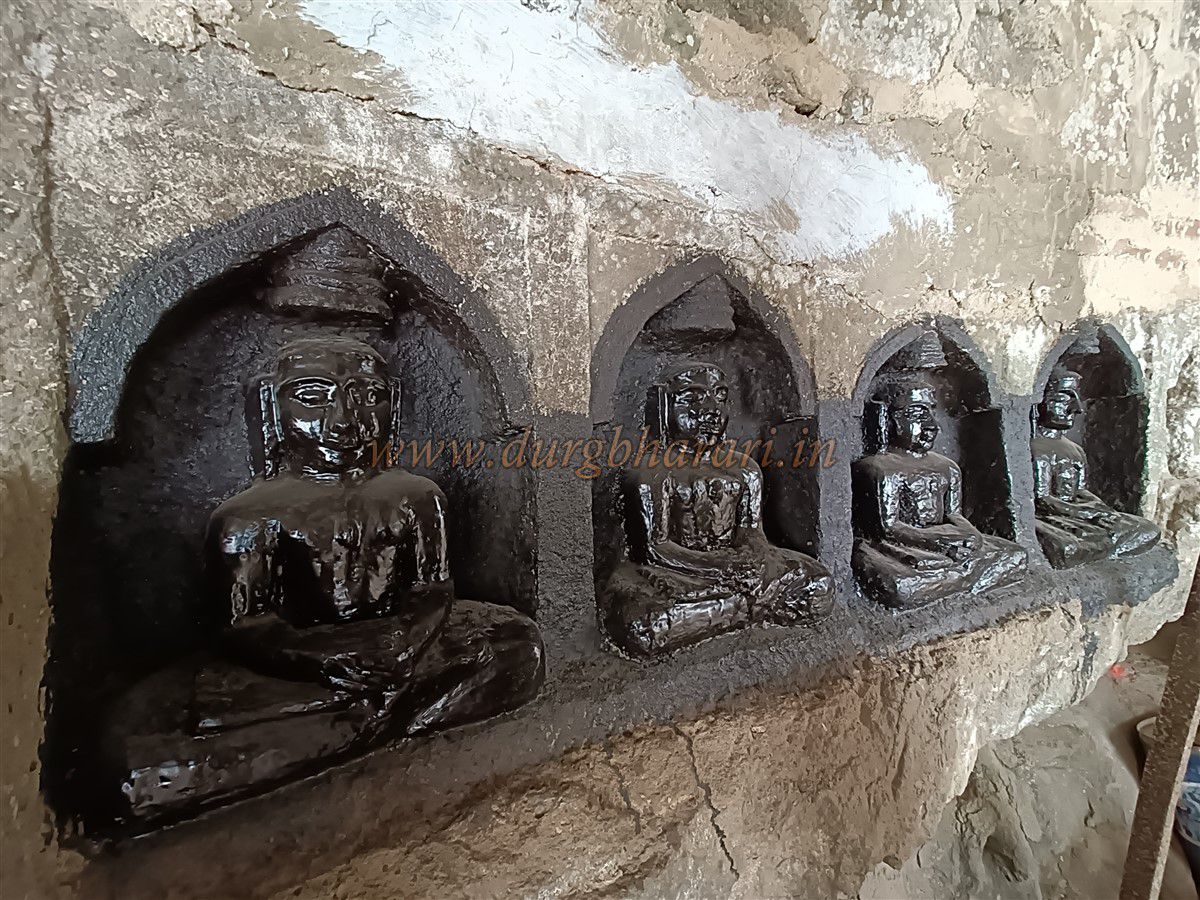
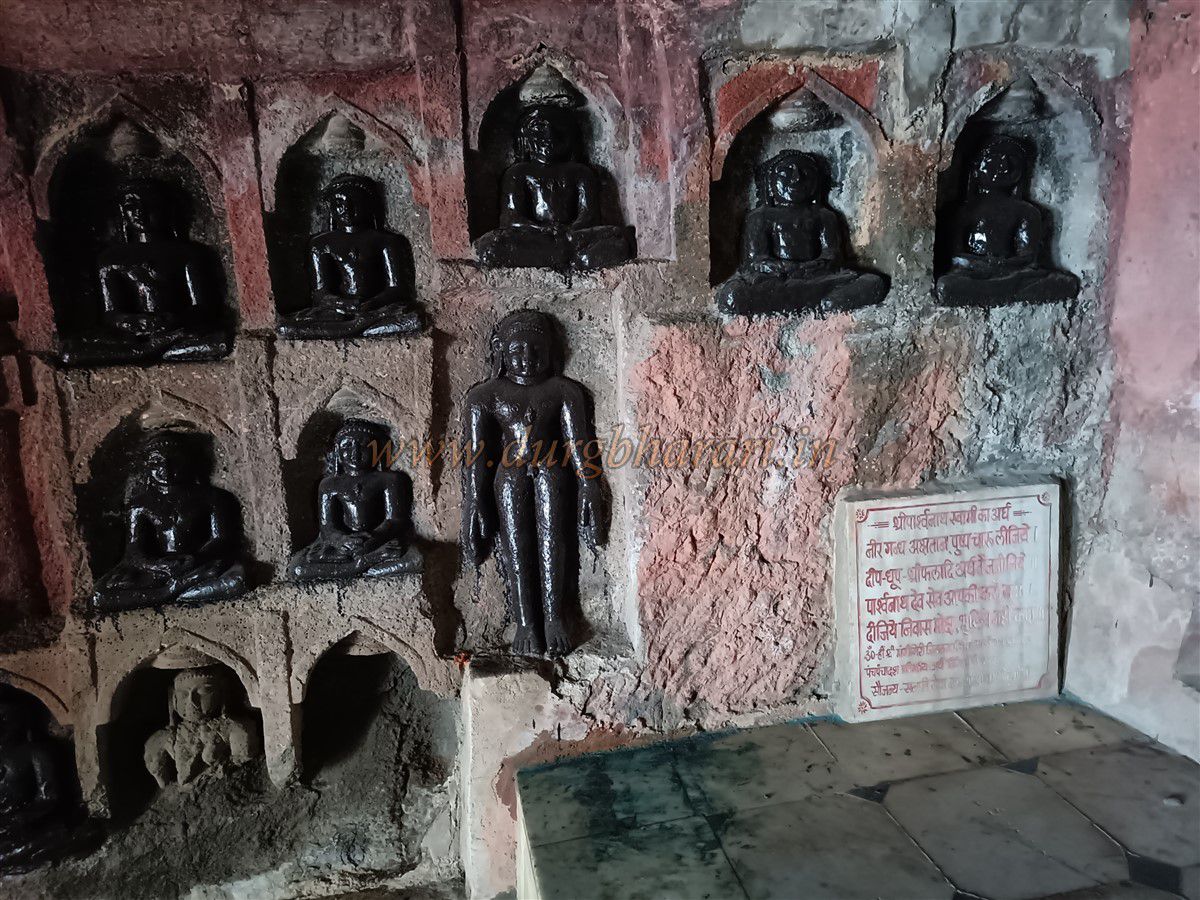
Like the Tungi pinnacle, Mangi also has a circumambulatory path, with footprints of Tirthankaras engraved at several points along the way. Four water cisterns are located within the pinnacle, one of which is a cave cistern. However, none of the water sources are potable. Within the belly of Mangi pinnacle, there are five caves of various sizes, some of which display minimal carvings. The first cave contains a human-like idol of Lord Ram in the form of Kritantvakra Senapati, holding a mace in one hand and a rosary in the other. The second spacious cave houses a large idol of Lord Mahavir, and above it to the left are carvings of three Tirthankaras in the corner. The next cave is dedicated to Lord Adinath, with idols of Jain Tirthankaras and other monks carved on all three sides. Two of the cave temples feature inscriptions in the Devanagari script. Along the circumambulatory route, there are numerous exposed carvings of the 24 Tirthankaras. Due to their exposure to sun, wind, and rain, these carvings have eroded over time, and restoration work involving protective coating is currently underway.
Among the many idols, the most unique is that of Balbhadra, who is identified in Jain texts as Balram, the brother of Lord Krishna. His idol is carved with his back facing the viewer, meditating towards the mountain, making only his back visible. From the arch, it takes about an hour to circle around the Mangi pinnacle and return. In Bhilwad village, there is a Jain Dharamshala offering affordable accommodation and meals.
Mangi-Tungi is a revered Jain Siddha-Kshetra, where, according to Jain belief, Hanuman, Sugriva, Nal, Neel, Mahaneel, Gav, Gavaksha, and 99 other vanara warriors from the Ramayana attained liberation. The 11th king of the Bagul Rathod dynasty of Baglan, Viramshah Rathod, is credited with commissioning the carving of the Mangi-Tungi caves.
Note: For those ascending the Mangi-Tungi peaks on foot, it is best to start early in the morning to avoid the midday heat. Visiting both pinnacles and returning to the base takes about six hours. Since there is no potable water along the routes or atop the peaks, it is essential to carry sufficient water from the base or from the site of Lord Mahavir idol.
© Suresh Nimbalkar
GALLERY