MANDANE
TYPE : GADHI
DISTRICT : NANDURBAR
HEIGHT : 0
GRADE : EASY
Once a part of Khandesh, Nandurbar became an independent district after the division of Khandesh. The Tapi River flowing through the Nandurbar district has naturally divided it into northern and southern parts, with its boundaries touching the states of Madhya Pradesh and Gujarat. This tribal-dominated district once had not just one or two, but as many as fifteen forts existing in the forms of hill forts, ground forts, and fortified mansions (gadhis). Apart from seven forts mentioned in fort expert Pramod Mande’s book Maharashtratil Gadkille, there are no references to the others found elsewhere. Even in today’s digital age, very little information about these forts is available online.
Our group Durgbharari undertook a detailed exploratory tour of all these forts and I’ve tried to present the gathered information on this website.
...
Of these, there are thirteen fortified structures — one hill fort, three ground forts, two city forts, and the remaining seven are gadhis. Most of these gadhis have villages settled within them, and the growing population has led to the destruction of many fort remnants. In addition, local indifference has contributed to the neglect of these sites. Mandane Gadhi is one such example.
Once part of Khandesh, the village of Mandane became a part of Shahada Taluka in Nandurbar district after the division of Khandesh. Mandane Gadhi is located in the southern part of Nandurbar along State Highway No. 1, within the village of Mandane, about 16 km from Shahada. To visit Mandane Gadhi, one must first reach either Nandurbar or Shahada. The distance from Nandurbar to Mandane is 53 km, which can be accessed via the Prakasha–Shahada route.
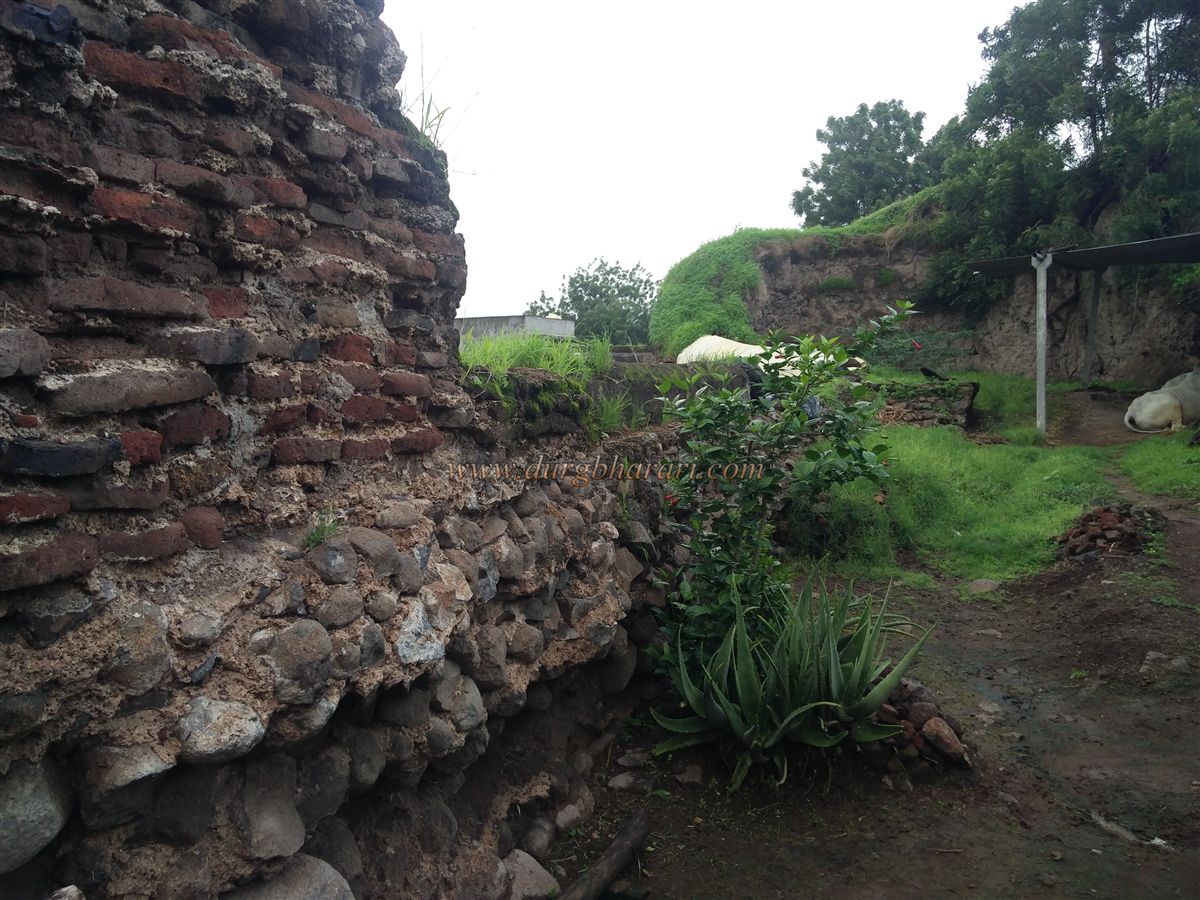
The remnants of Mandane Gadhi consist of a single bastion and a partially standing wall of the fortification on one side. From the bastion, there used to be a small passage leading outside the walls, which is now closed off. The residential settlements inside the gadhi have led to the complete disappearance of its internal structures, walls, and bastions. When asked about the fort, the More family currently residing within the premises shared that the gadhi originally did not belong to their family. Their grandfather purchased the property three generations ago, and thus they have no knowledge of its historical origins. However, since they have lived there for about sixty years, they were able to provide information regarding its layout and remaining features.
The gadhi, covering approximately one acre, was originally square in shape and had a bastion at each corner, with the main entrance facing east. Of these, one bastion had already collapsed long ago, and two more were destroyed in recent years. This is the extent of the information available about Mandane Gadhi. As very few remnants remain, the entire site can be explored in just fifteen minutes.
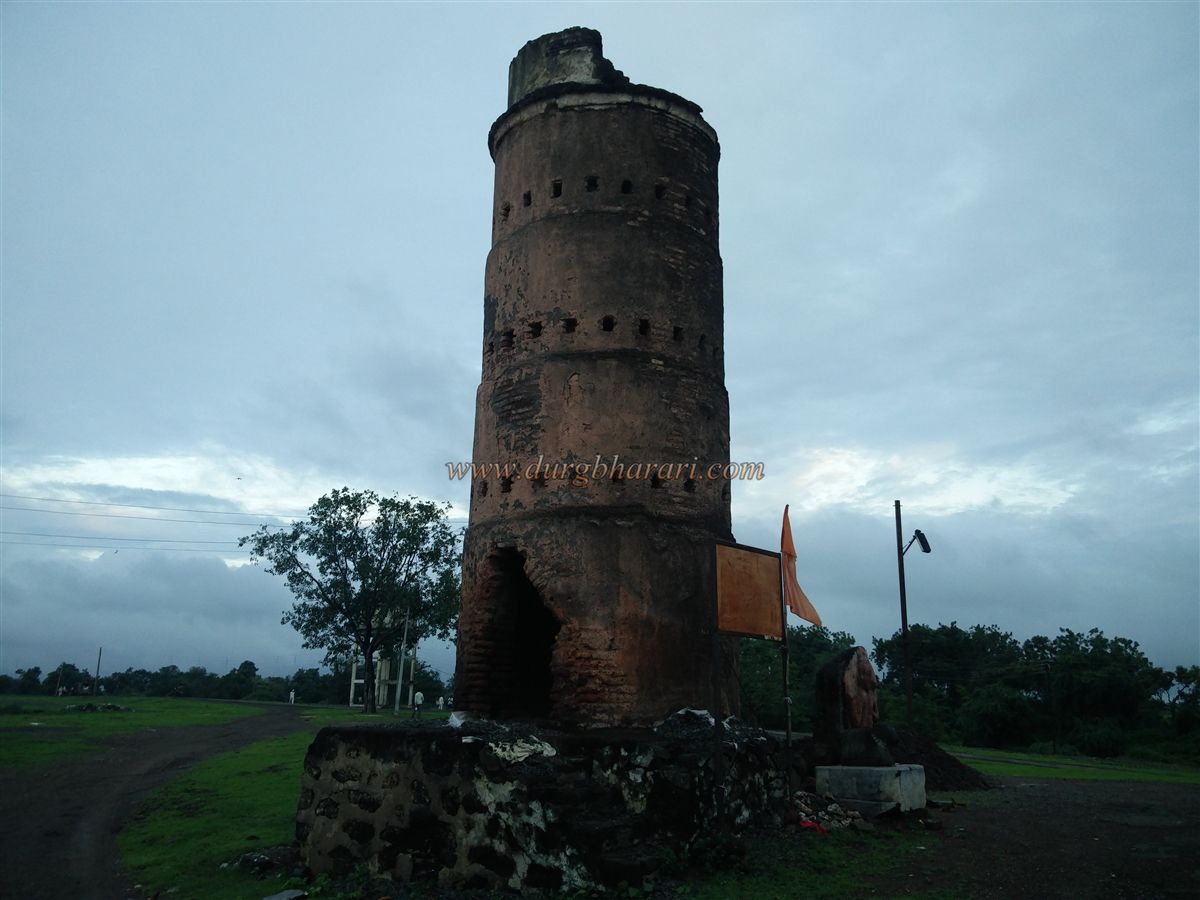
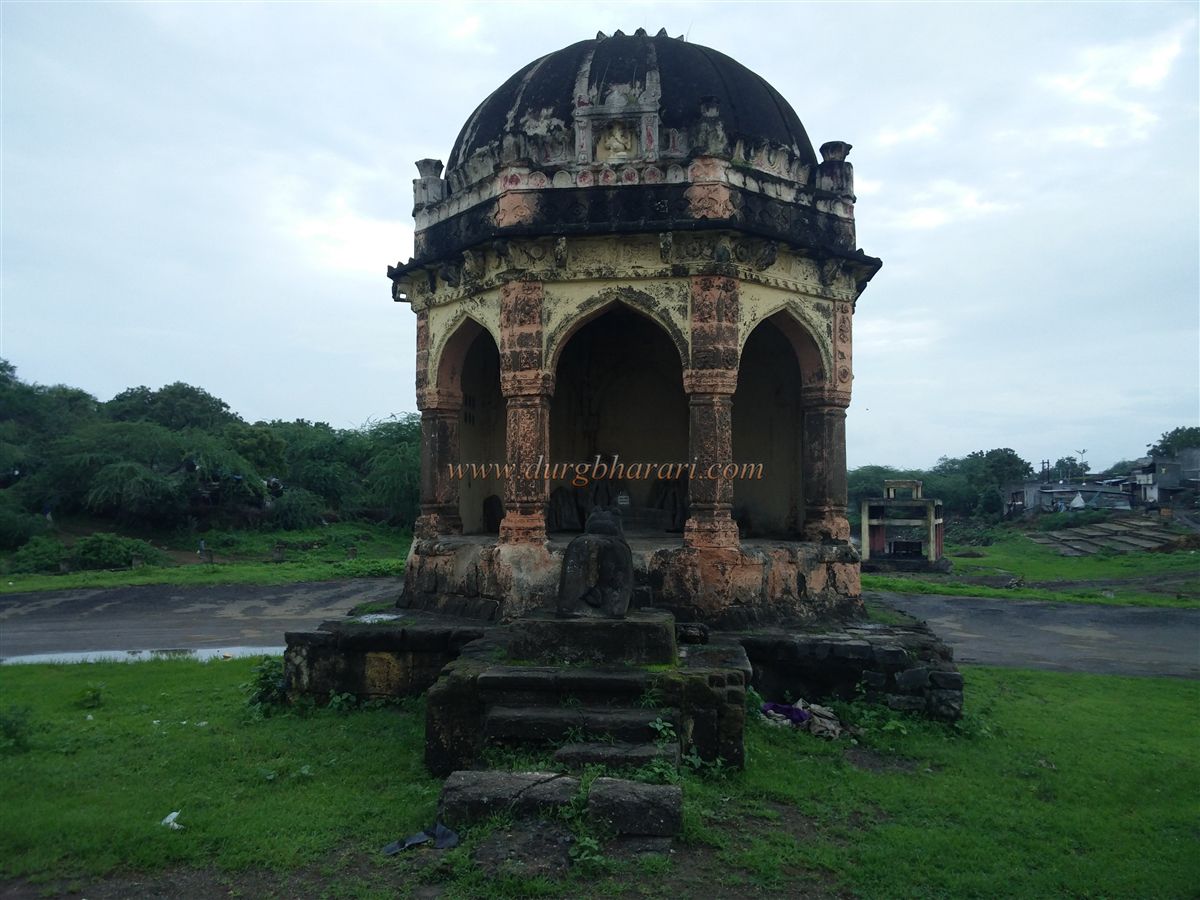
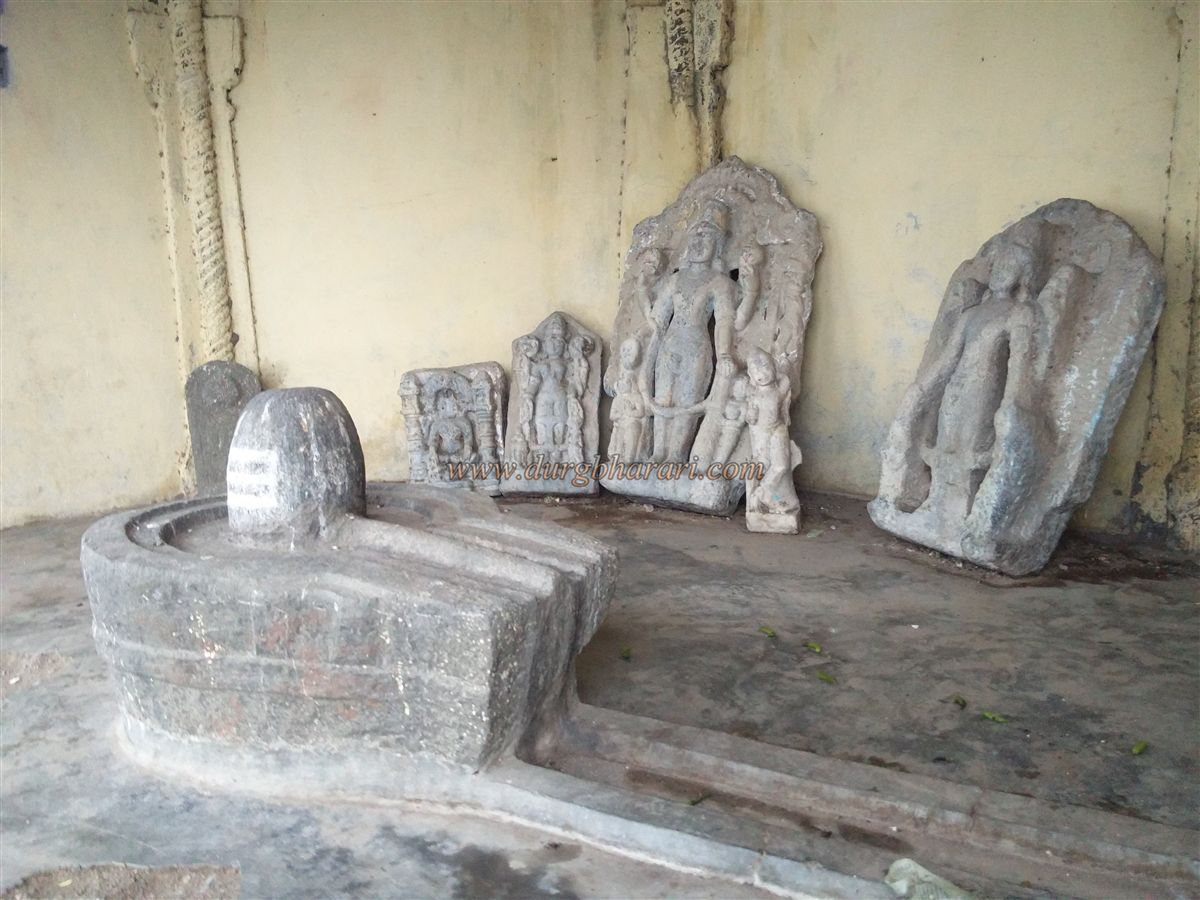
Outside the village, there is a renovated temple dedicated to Goddess Bhavani. In front of this temple stands an ancient deepmala (lamp tower), which has a small inner staircase to climb up. Behind the temple is a circular-domed Shiva temple, which houses some ancient idols.
© Suresh Nimbalkar
GALLERY