MAGATHANE
TYPE : BUDDHIST LENI
DISTRICT : MUMBAI
The Magathane Caves are Mahayana Buddhist rock-cut caves carved in the 6th century CE. After exiting Borivali railway station on the eastern side in Mumbai and proceeding along Dattapada Road towards Magathane, these caves can be found tucked within a low-lying settlement on the right side before reaching Tata Steel. This locality is known as Balu Nivas Chawl. Even many long-time local residents are either unaware of the caves or unwilling to speak about them. There is a clear difference between the old and present-day Magathane. Currently, the area near the Magathane bus depot on one side of the Western Express Highway is referred to as Magathane, but earlier, the area closer towards Borivali also used to be known by this name.
...
These caves have a strong connection with the Kanheri caves. In fact, Cave No. 21 at Kanheri mentions this region. An inscription there records that land in Magathane was donated by a Kalyan-based merchant named Aparanuka to the Buddhist monastic community of Kanheri, specifying that income from that land should be used for the sustenance of the monks. The caves in Magathane were carved adjacent to this land between the 5th and 6th centuries. The area where the caves are located was historically referred to as Magathane, and it is believed the name originates from the caves themselves. It is thought that the original name was Maggasthanaka, which later became Magathane through linguistic distortion. Some scholars believe that Magg refers to "path" and Sthanaka means "place of rest"—thus, the name implies "a resting place along the way." Whatever the origin, it is clear that Magathane is an ancient settlement.
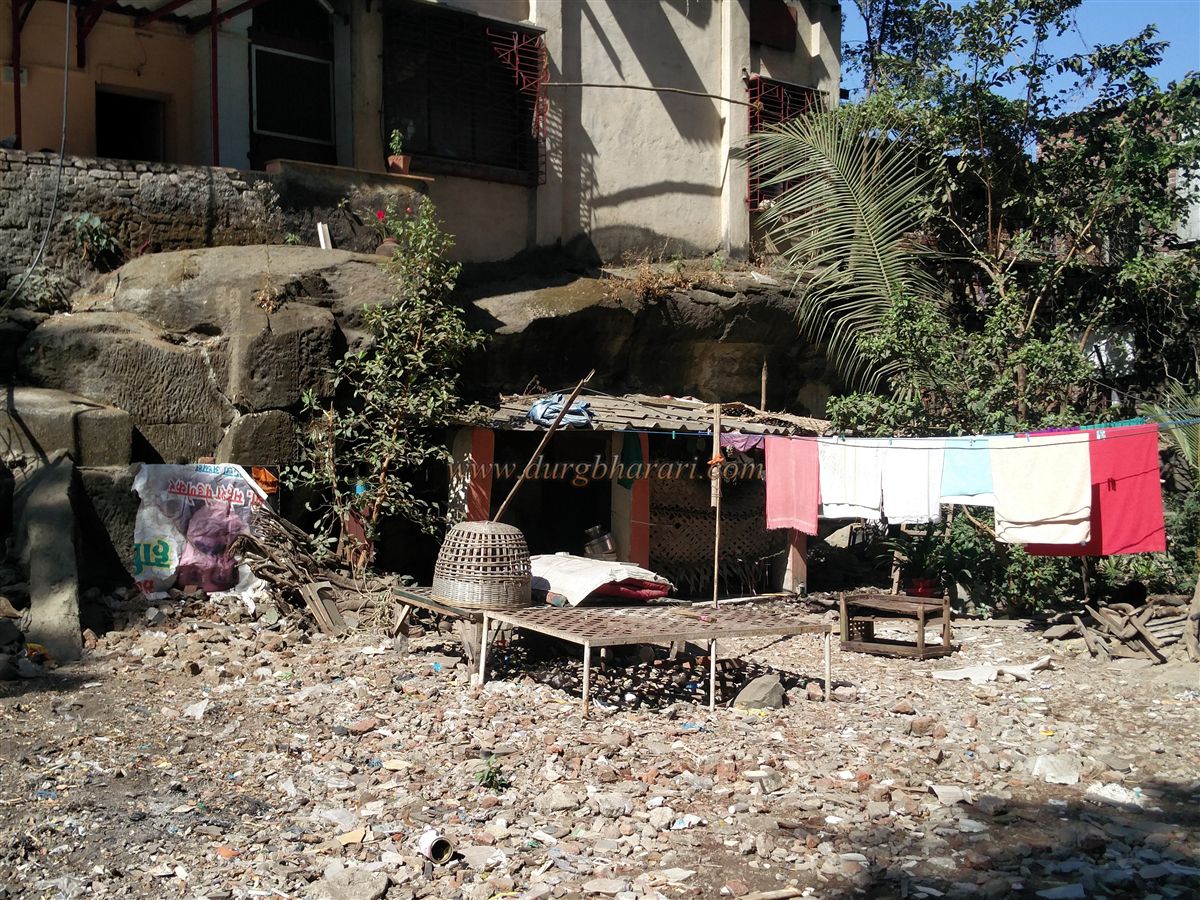
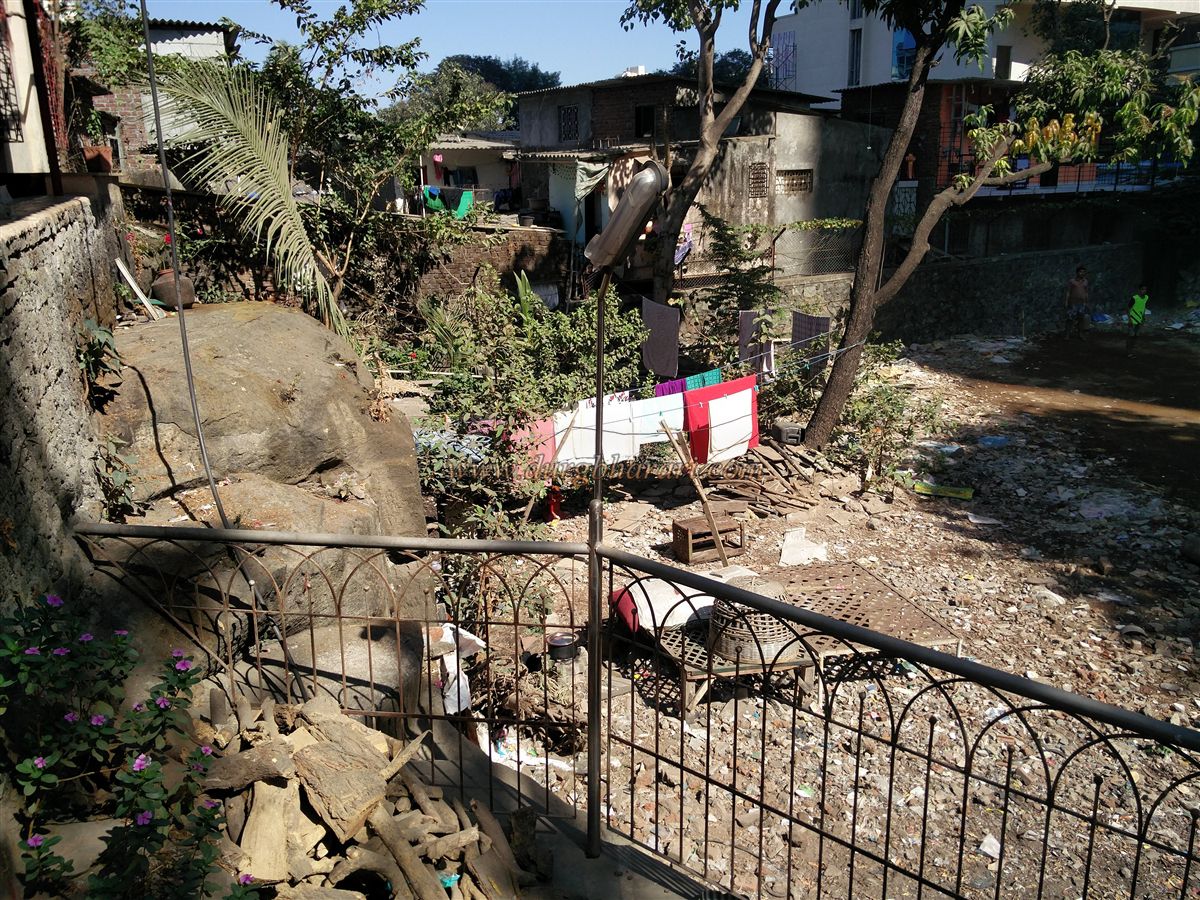
Magathane Caves are also referred to as Poinsar Caves, due to their proximity to the village of Poinsar on the border of Magathane. References to these caves are also found in the Bombay Gazetteer, which notes that due to the dense greenery in the area, the caves are not visible from the outside. Even today, the caves are not visible from outside, except that now, dense vegetation has been replaced by tightly packed slums. The condition of the caves is more alarming than one might imagine. The local residents have taken control of the caves, going as far as constructing cement walls and blocking off entry. Two families currently live inside the caves. They have installed wooden doors, and the front of the caves has been sealed with cement, along with iron-grilled windows. In short, the identity of the caves has been deliberately erased.
As access to the interiors is blocked, reference for this account comes from the doctoral research dissertation written by M.G. Dixit in the 1950s. No other source of interior documentation is currently available. According to Dixit's thesis, Magathane was primarily a village of farmers and herders, and many residents appear to have converted to Christianity during the Portuguese period in the 17th century. Like the Jogeshwari caves, where the caves lie below and the land is significantly higher, Magathane Caves exhibit similar topography. Dixit notes that part of the roof of the vihar has collapsed. Surveying the surroundings suggests that the central hall-like space measured approximately 25 by 6 feet.
On the eastern side of the caves is a veranda, with columns featuring double crescent designs. This type of motif is also seen in early cave architecture at Kuda and Kanheri. The main entrance to the caves is on the left, where two large water tanks were once located, previously covered with stone lids that are now missing. Both tanks are currently filled with filth. Archaeologists believe that if the area is cleaned, ancient artifacts may be discovered within the accumulated debris in these tanks.
Inside, the chaitya (prayer hall) contains six to seven columns with conch-shell-shaped structures, though these are mostly plain and undecorated—typical of 6th-century cave architecture. Among all the features, the most important is the main chaitya hall, which is considered the largest and most significant cave structure here, located toward the northwest. The Bombay Gazetteer also mentions this. When Dixit recorded his observations, there was heavy water seepage from the exterior into this chaitya.
He writes that the chaitya is a large square-shaped hall with stone benches constructed along both sides for seating. On one wall is a sculpture of Gautama Buddha seated in the lotus posture. The central portion of the sculpture has been damaged. On either side of this Buddha figure were carvings of Avalokiteshvara holding large lotus flowers, though these are now faint. On the opposite side are five small images of Buddha in dharma chakra mudra (gesture of teaching), deeply absorbed in meditation.
The most remarkable artistic feature of this chaitya is the intricately carved stone arch (Torna), which Dixit praised highly. He compared the torana's carvings—featuring elephants, makaras (mythical sea creatures), and flying Apsara—to those found in the Vishwakarma Cave at Ellora. Based on these sculptures, Dixit concluded that the caves date back to the 6th century CE.
There are few cave complexes in Western Maharashtra that exhibit such stylistic connections to Ajanta and Ellora. Therefore, regardless of their current state, the conservation of the Magathane Caves is of immense historical importance.
© Suresh Nimbalkar
GALLERY