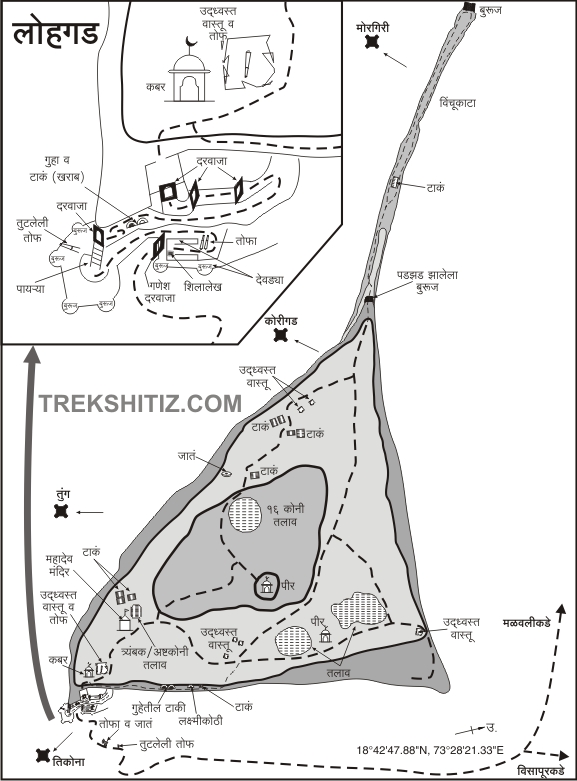
LOHGAD
TYPE : HILL FORT
DISTRICT : PUNE
HEIGHT : 3402 FEET
GRADE : EASY
Among the many twin forts in Maharashtra, the most renowned is the Lohagad–Visapur pair. This duo is easily visible while traveling between Mumbai and Pune, whether by road or rail. These forts were constructed to keep watch over the Pawna valley in the Pawna Maval region and the Andar Maval–Nane Maval area in the Indrayani river valley.
Lohagad, among the two, is an ancient, strong, and towering fort. The presence of the Bhaje and Bedse caves carved into the hill below the fort suggests its history goes back to the 1st or 2nd century BCE. A well-paved road leads to Lohagad wadi at the base of the fort, accessible via Lonavala or Malavli. As the area is popular with tourists for its cool climate, private vehicles are available (albeit a bit expensive) from both places. Alternatively, one can alight at Malavli station and walk to Lohagad. On the way, you’ll first encounter the Satavahana-era Bhaje caves (2nd century BCE), located beneath Visapur Fort.
...
The pass between Lohagad and Visapur is known as Gaimukh Khind. Within this pass lies a site called Kapla, where stone platforms display carvings of horses, camels, elephants, and other animals. Nearby stands an idol of Balbhim Hanuman and a vermillion-smeared stone shrine called Tahaldev.
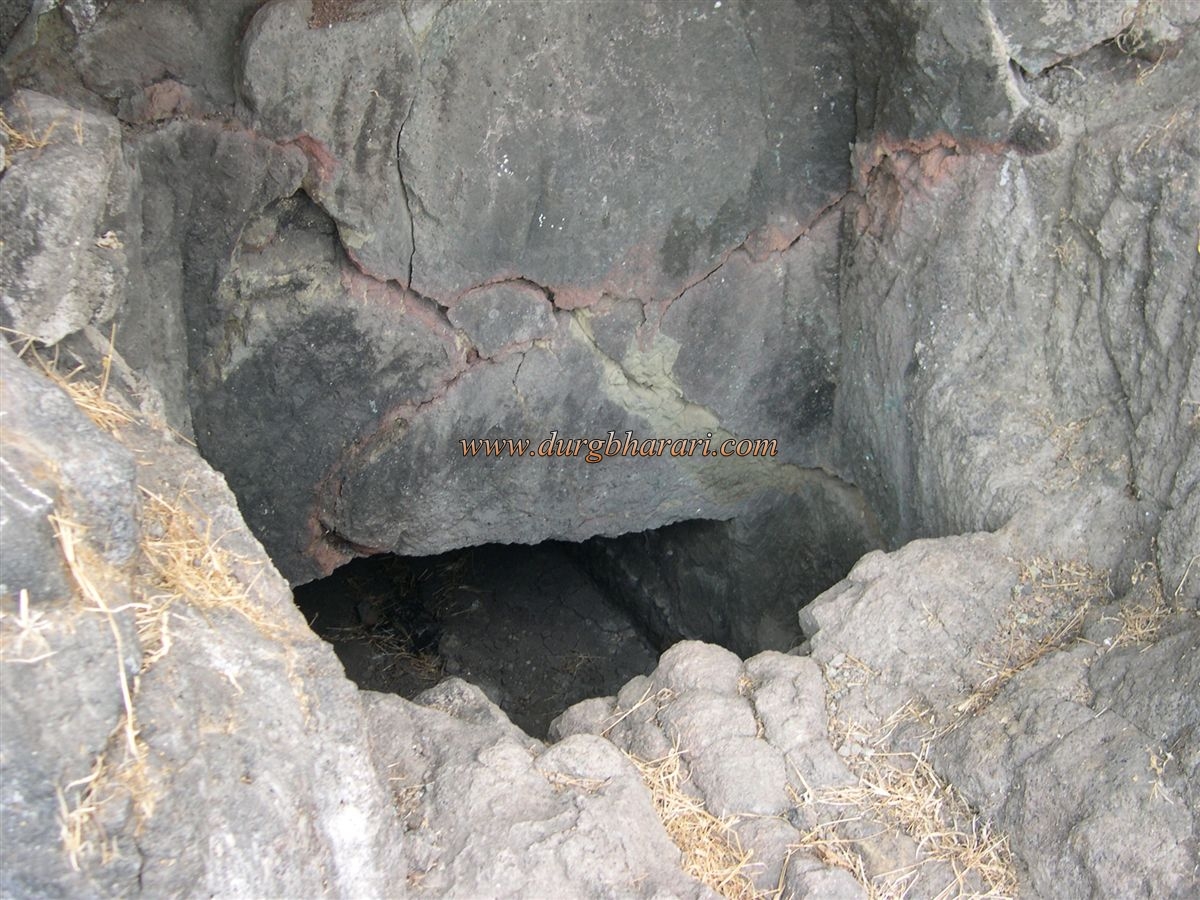
Lohagad wadi, once a bustling market town, still holds remnants of old mansions, wells, and temples. A newly constructed stairway path from here leads up the fort. To the left of the starting point lies an old dry well filled with leaves. Locals say that the second mouth of a cave tunnel located outside the fort’s second gate connects to this well. To the right of the path, a trail through the forest reveals two rock-cut caves. A stone wheel and two cannons found during excavation are displayed on this path.
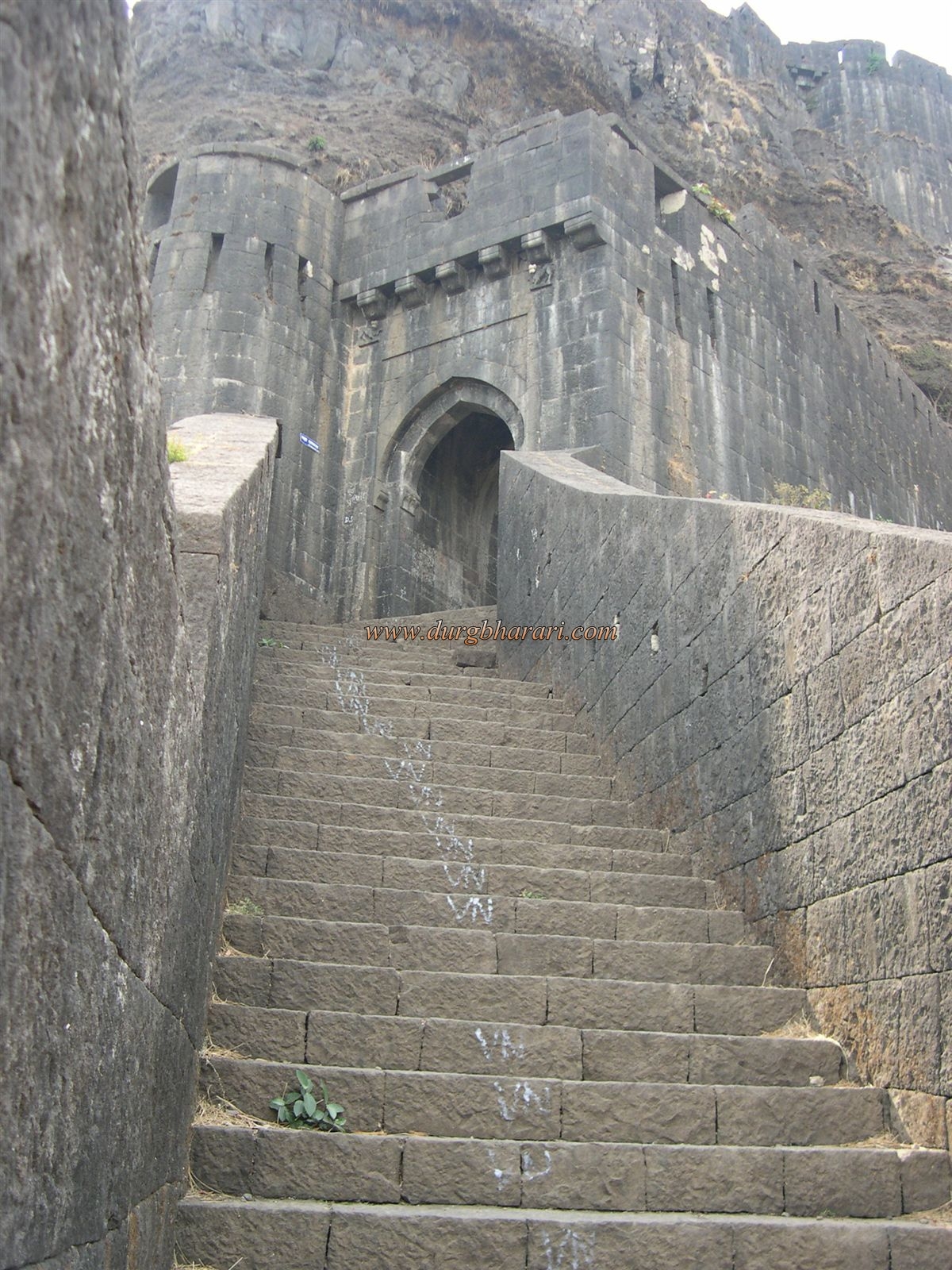
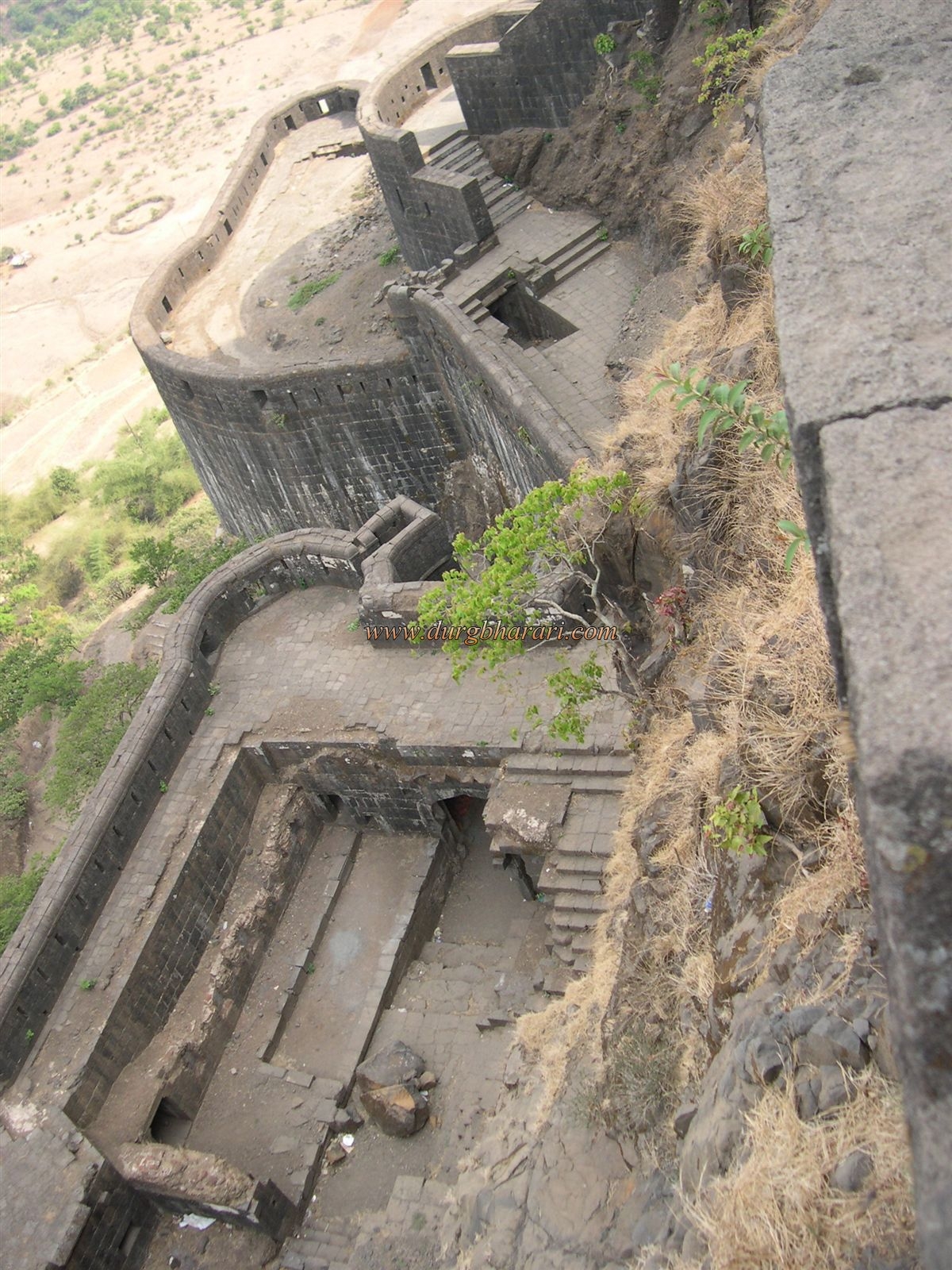
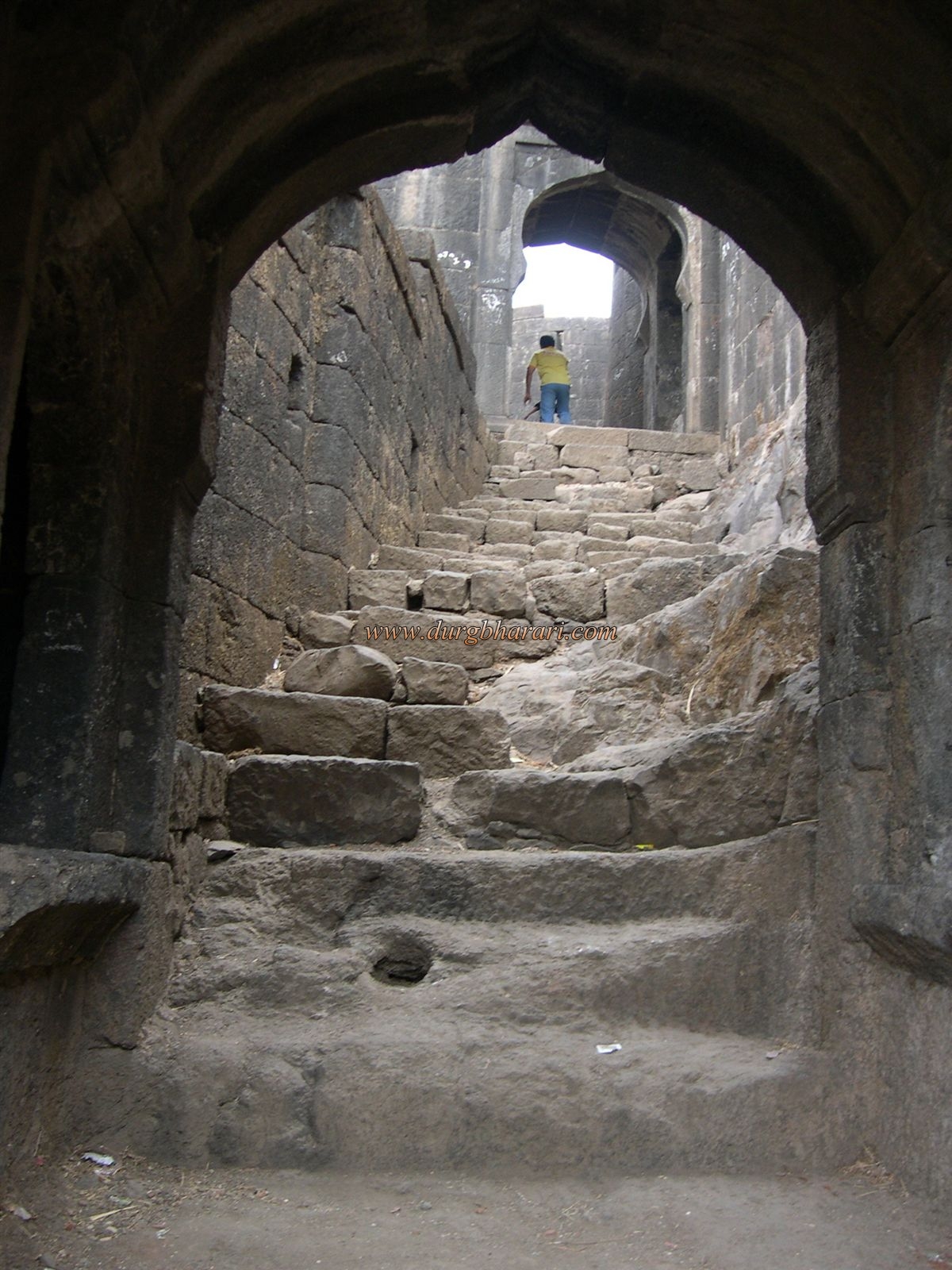
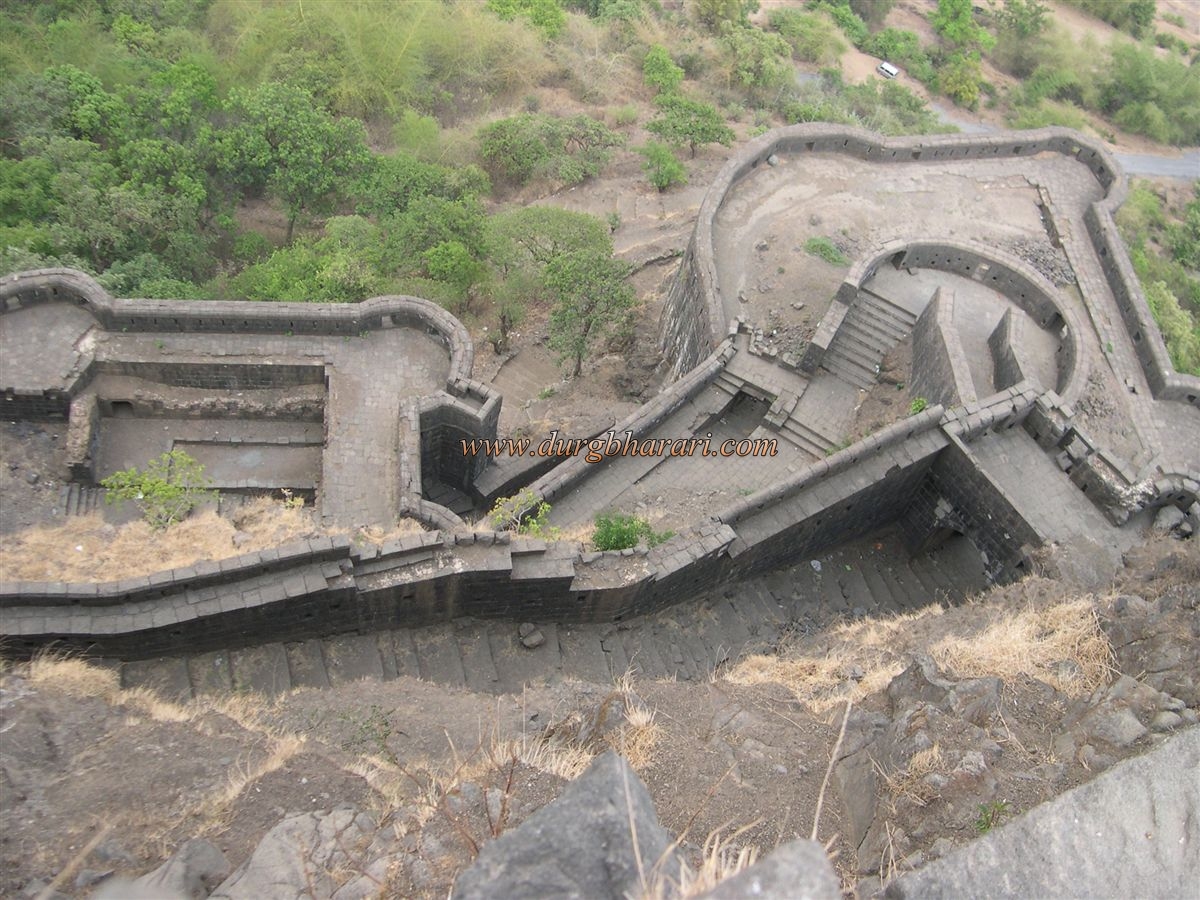
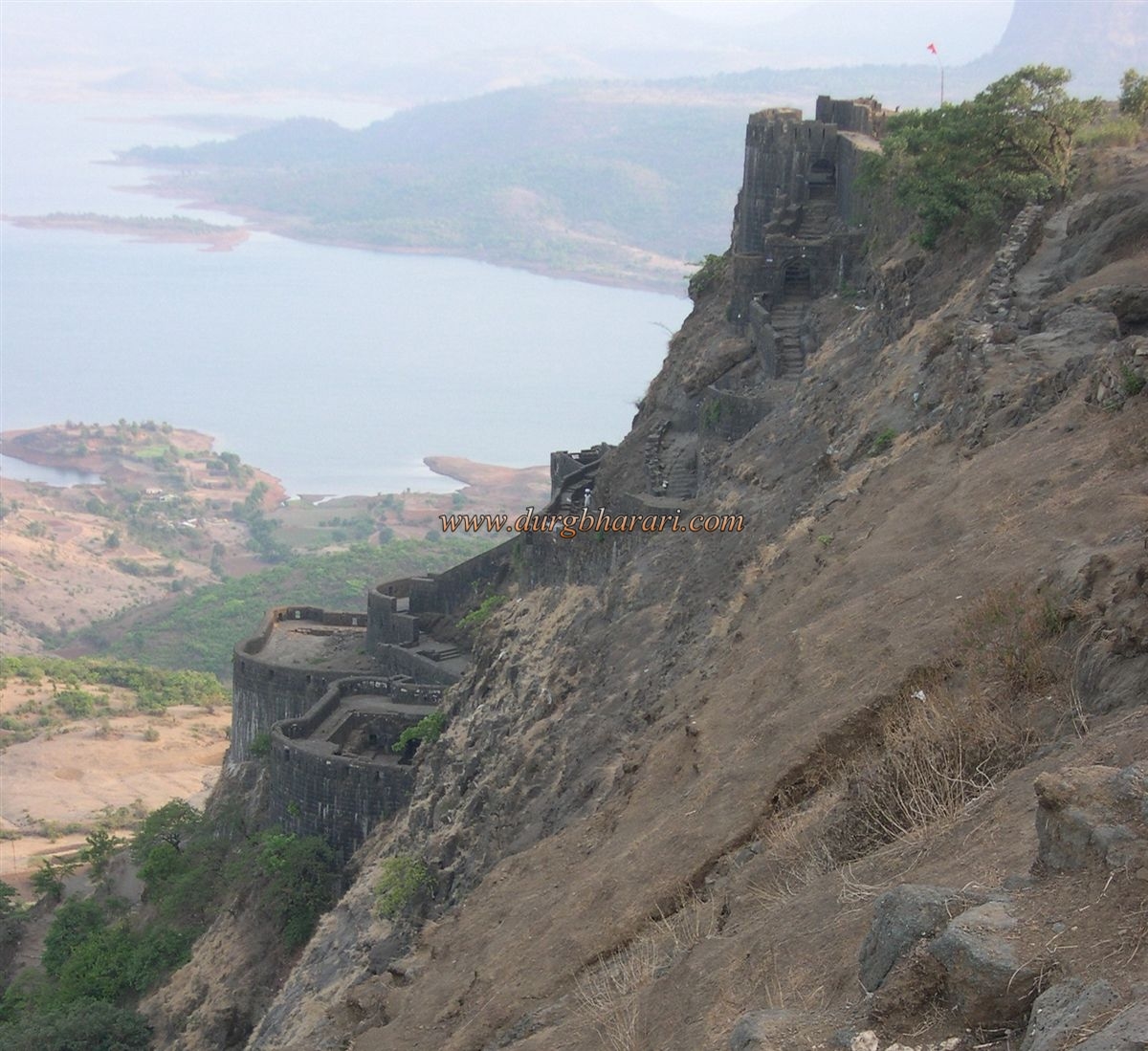
The first entrance gate, Ganesh Darwaja, marks entry into the fort. During British rule, the Iron Gate was removed, and the Archaeological Department recently installed a wooden door modelled after the original. The path to the top consists of four gates: Ganesh Darwaja, Narayan Darwaja, Hanuman Darwaja, and Mahadarwaja. Of these, the Hanuman Gate is the original ancient gate, while the other three were constructed during the Peshwa era by Nana Phadnavis between November 1, 1790, and June 11, 1794.
The layout of these gates is aesthetically pleasing and worth close observation. From the ramparts, the entire entry path can be seen. The Ganesh Gate is built snugly against the cliff and named after the Ganapati idols carved on either side. While building the bastion beside the gate, the Sable couple was sacrificed, and in return, the headman ship of Lohagad wadi was granted to their descendants, who still reside there. A stone inscription on the gate details the construction, now placed inside the gatehouse. Below the inscription is a niche meant for an oil lamp.
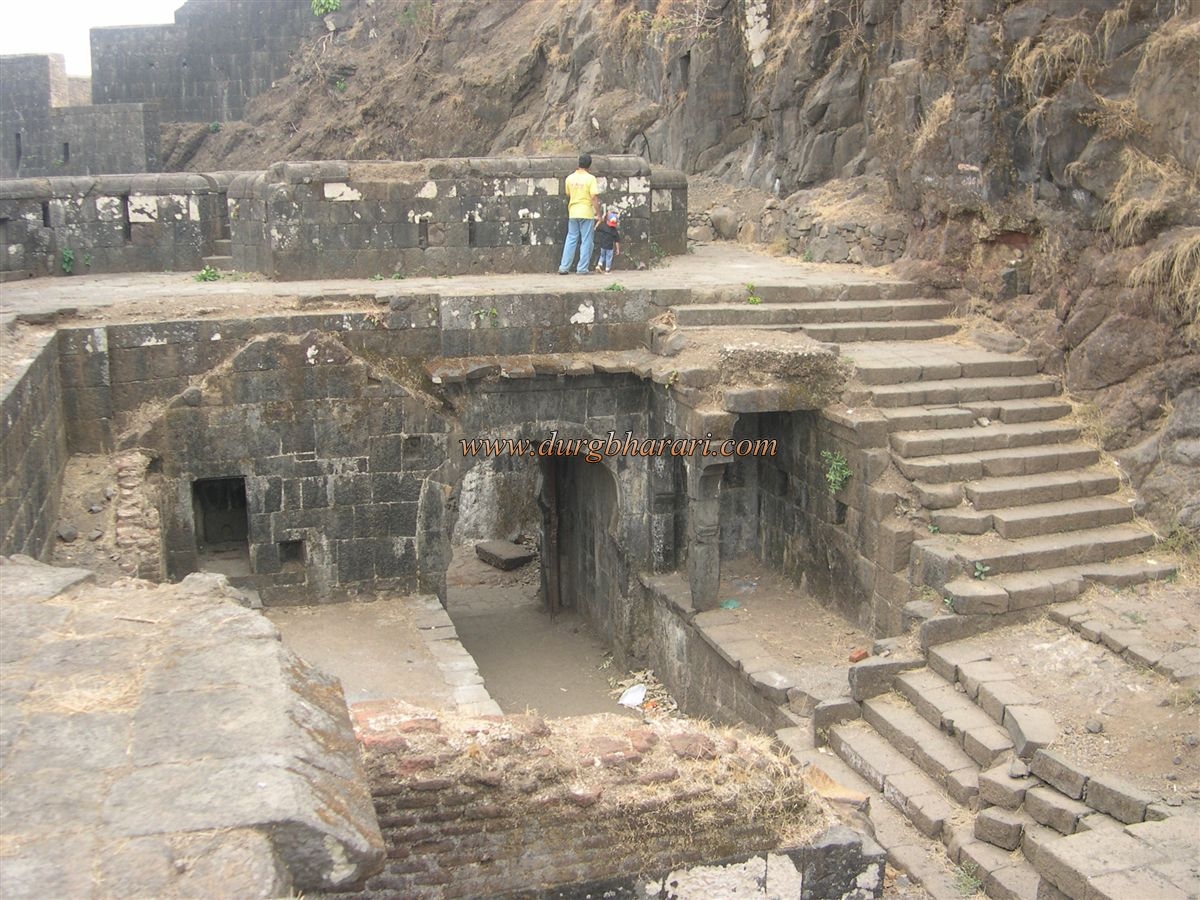
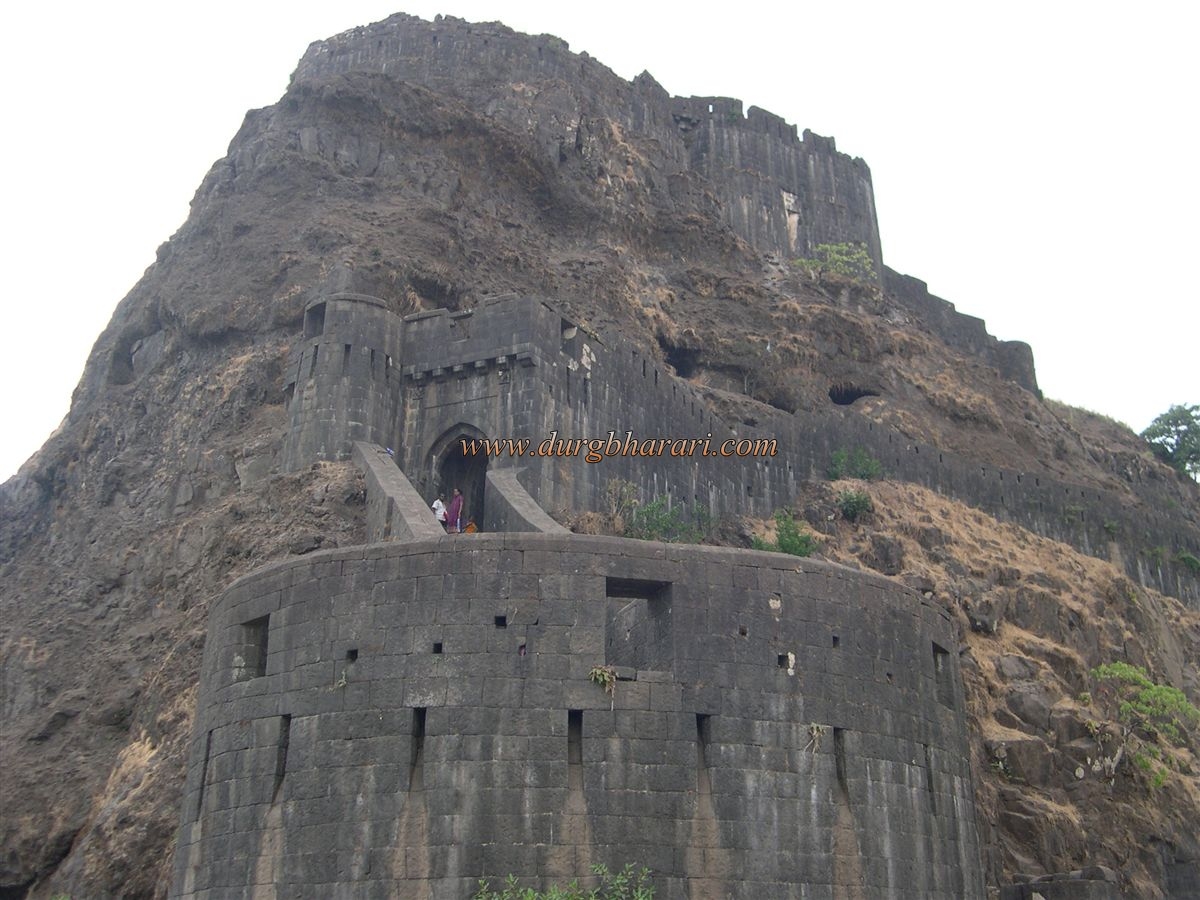
Inside the gate lies a platform displaying four medium-sized cannons found during excavations, one of which is broken. On the way to the second gate, Narayan Darwaja, two rock-cut granaries can be seen on the right. During the Peshwa period, these were used to store rice and millet. One granary has a stone-built entrance. Further ahead is a large round bastion with a small gate and a prison or basement below it, accessible by steps. A small door in the fortification leads outside the fort to a cave and an underground tunnel that connects to a well.
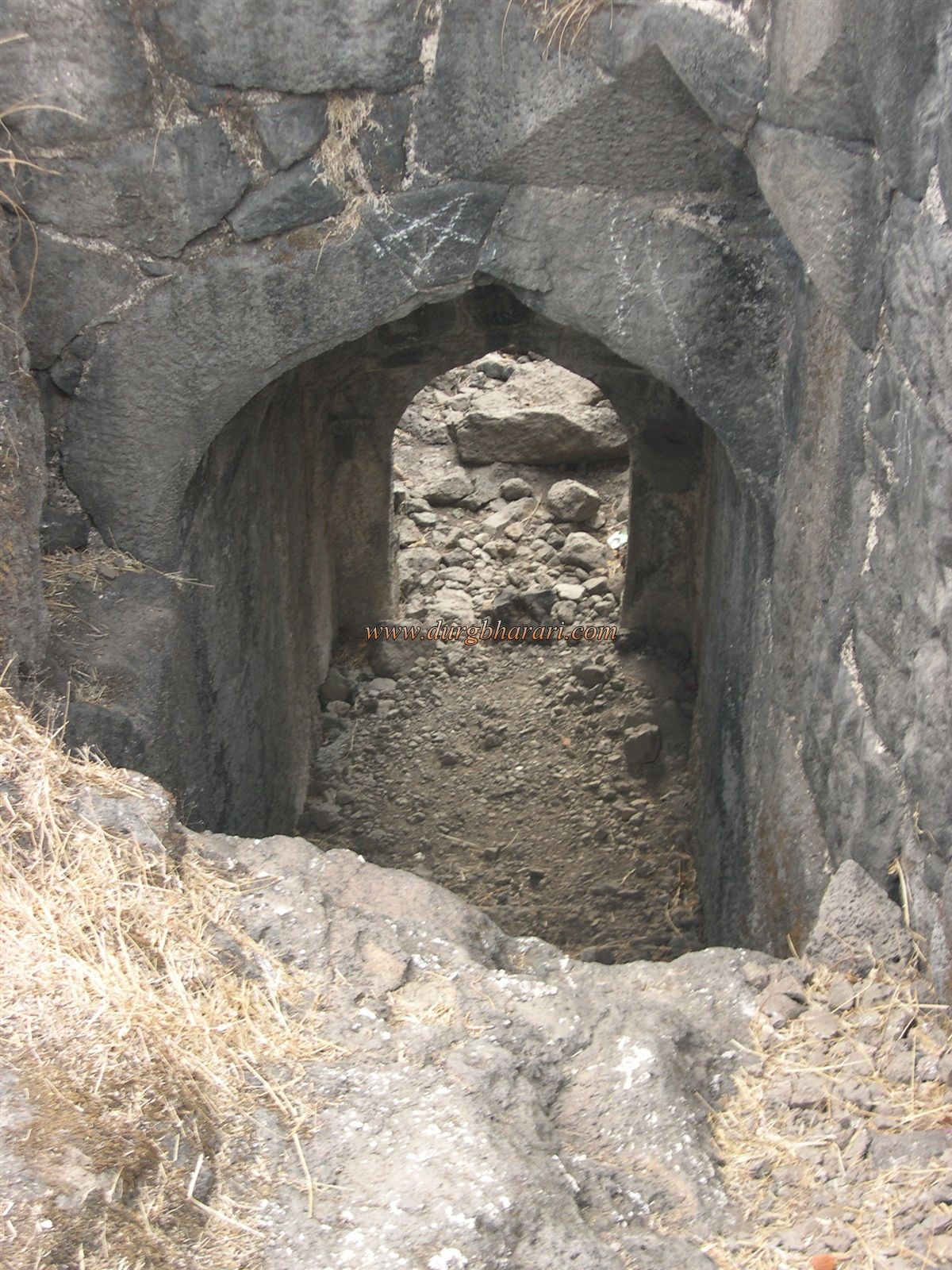
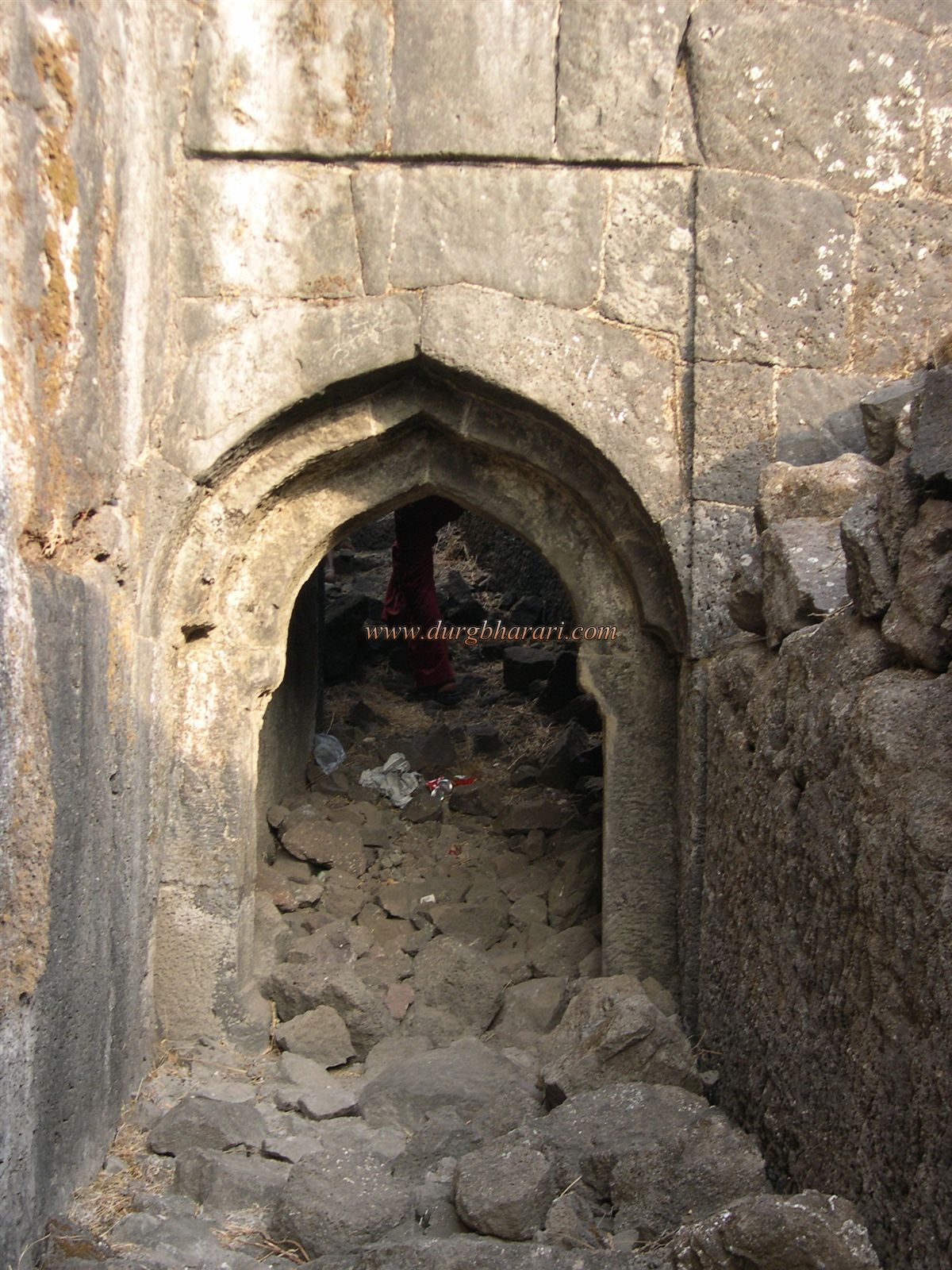
Beyond the bastion, the trail leads to Narayan Gate, with tiger carvings on both sides, built by Nana Phadnavis. After this gate, a steep climb takes you to the ancient Hanuman Gate, which has carvings of mythical creatures called Sharabh on both sides. Shortly after this lies the main Mahadarwaja, adorned with a Hanuman carving. Inside are guardrooms, and further ahead, a stone arch leads to the fort’s summit.
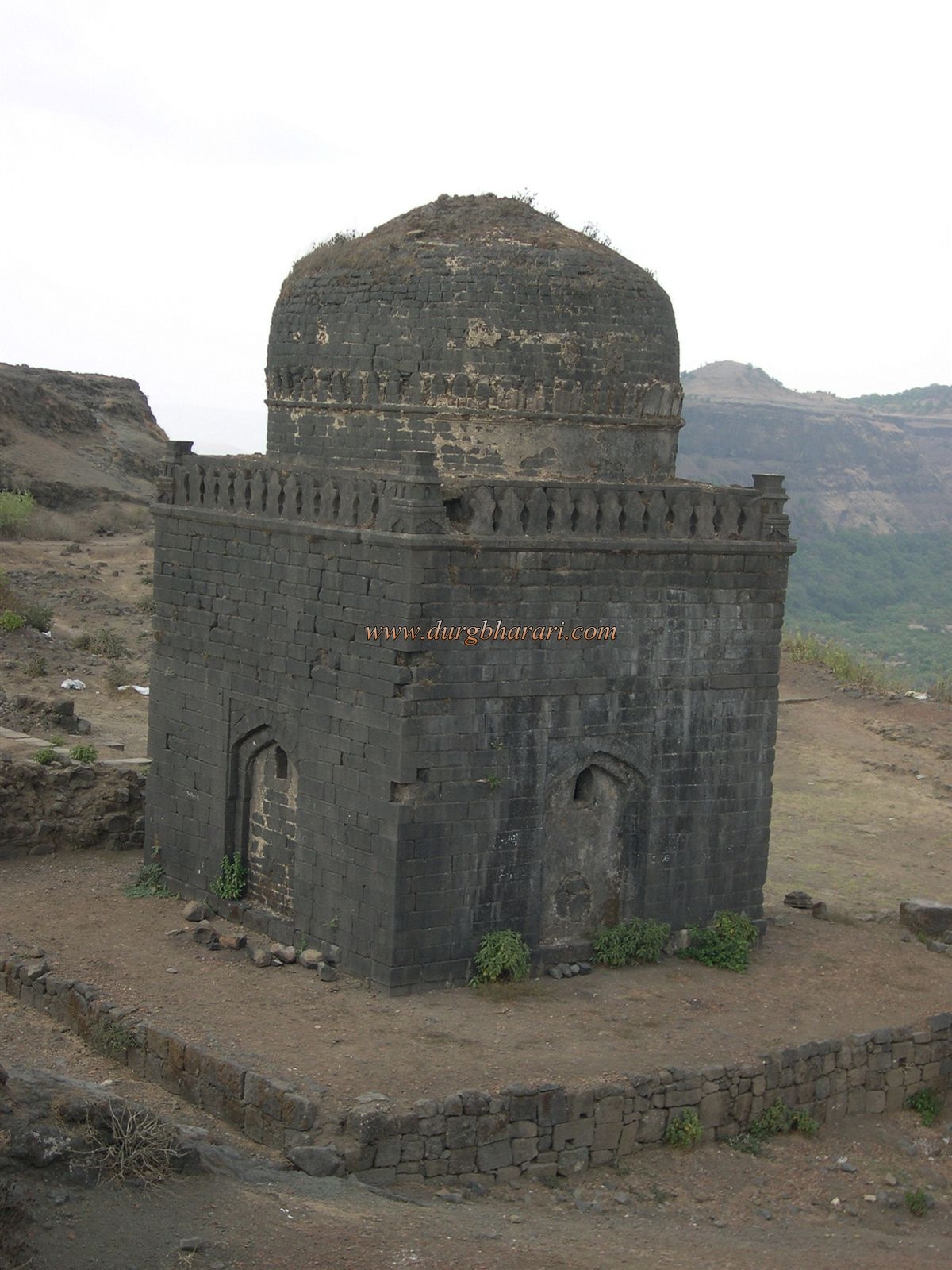
Near the Mahadarwaja is a domed dargah (shrine) with a tomb inside. Behind it are three small caves and water tanks. Close to the dargah is the ruined royal court building (Rajsadar), with two cannons on its platform. A lime pit and a flag post are also nearby, along with a broken cannon. Another broken cannon lies near the Laxmi Kothi. The Treasurer’s Kothi and Laxmi Kothi lie further along. The Treasurer’s Kothi is 70 feet long and 50 feet wide. It’s believed that sage Lomesh once resided in Laxmi Kothi. It is divided into three sections and can house up to 50 people, although overnight stays are now prohibited by the Archaeological Department. This structure appears to be an incomplete rock-cut cave.
Next to the dargah is a small plateau with a recently restored Shiva temple. Behind the temple are seven rock-cut water tanks, though none have potable water. Moving straight ahead leads to an octagonal pond, with an underground tank beside it containing colour guppy fish. This is the only source of drinking water on the fort. Nearby is the tomb of a Muslim saint, currently under renovation. Two water-collection ponds are also in the vicinity.
To the north, toward Visapur, another rock-cut tank can be seen. Further west lies a large, well-constructed sixteen-sided reservoir built with dressed stone. Nana Phadnavis built it during fort renovations in 1790. A now-faint inscription on the reservoir steps confirms this. According to it, Balaji Janardan Bhanu (Nana Phadnavis) had it constructed under the supervision of Dhondo Ballal Nitsure by a contractor named Bajichat. The British, suspecting Nana had hidden wealth in the tank, broke its western embankment. Though they later repaired it, leakage persisted, and the tank permanently dried up.
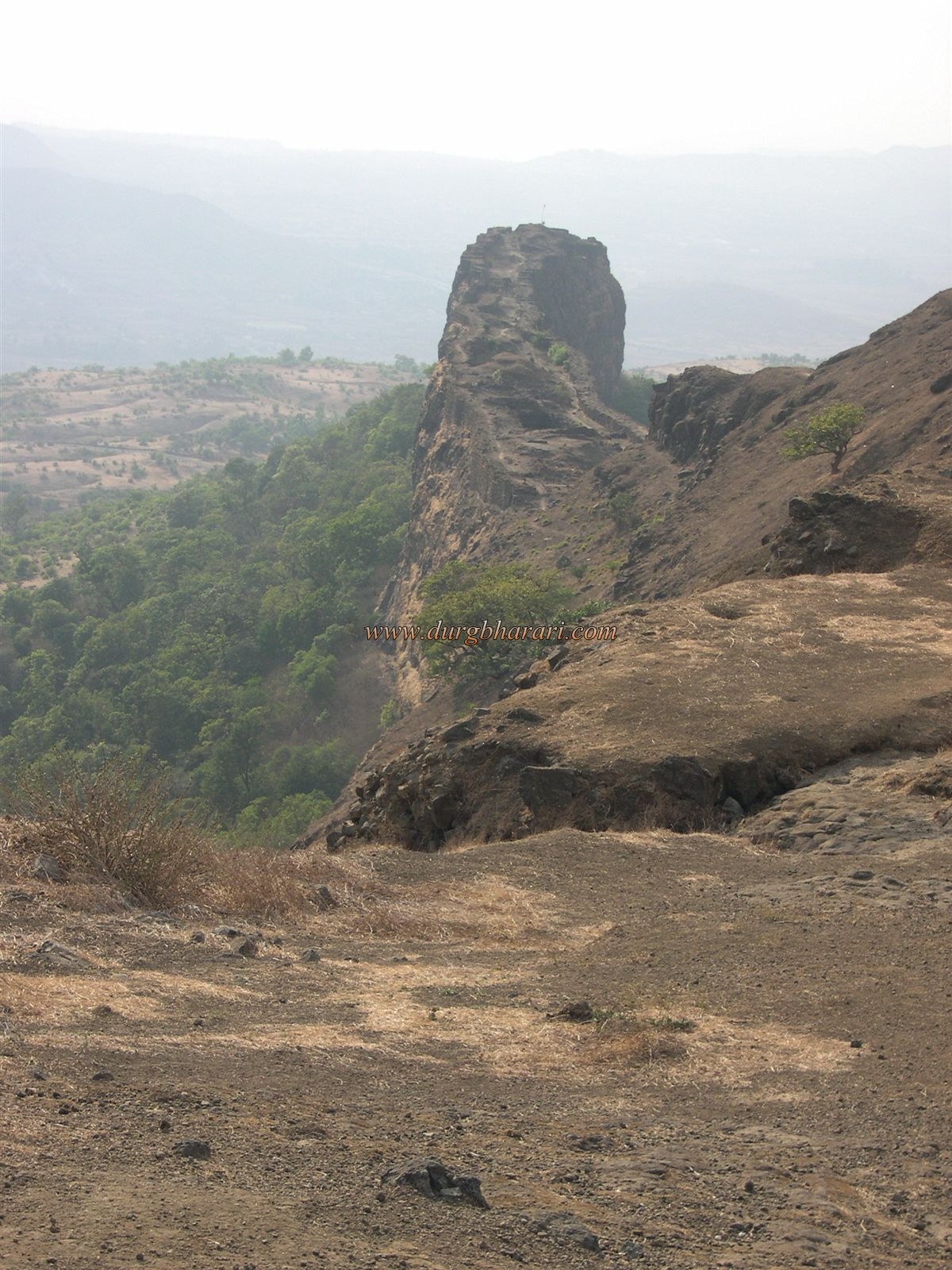
Further along the path toward the western edge, known as Vinchukata (Scorpion’s Tail), one finds five water tanks and the remains of a large mansion. The path leads to a bastion resembling the Sanjeevani Machi of Rajgad and Zunjar Machi of Torna. Lohagad Vinchukata is a 1,500-foot-long and 50-foot-wide ridge. Previously, steps and an archway led to it, but these have since vanished. Now one must navigate a dangerous descent. From above, the ridge resembles a scorpion’s sting, hence the name. Water tanks and latrines on the ridge suggest the area was well-prepared for soldiers. A large rectangular water tank, now green with algae, is found here. At the ridge’s end is a strong double-walled bastion with doors on either side leading down to the ramparts. Dense forest surrounds the base of this ridge, likely built to survey the Indrayani valley.
From this point, the fort tour concludes. From the summit, one can see Visapur, Tung, Tikona, MorDhan, and Korigad forts, along with the Bhatarashi and Morgiri ranges and the Pawna–Indrayani valleys.
Meals are available at Lohagad wadi village at the base. Chintamanrao G. Gogate’s 1896 book "Forts in Maharashtra" mentions the gates and cannons of Lohagad, but today none remain intact.
Lohagad is one of the rare forts in Maharashtra where the word "gad" (fort) has always been part of its name. With the nearby Bhaje and Bedse Buddhist-era caves, the fort is believed to date back to the 2nd century BCE—around 2,200 years ago. The fort has seen the rule of the Satavahana, Chalukya, Rashtrakut, and Yadav’s. Later, it was under Bahamani control. In 1489, after the Bahamani kingdom split, Malik Ahmad established the Nizamshahi, and by 1491 Lohagad was under their control. In 1564, Nizam II Burhan Shah was imprisoned here—he later ruled Ahmednagar from 1590 to 1594.
After the fall of the Nizamshahi, the fort went to the Adilshahi in 1630. Shivaji Maharaj captured Lohagad along with Kalyan and Bhiwandi in 1657. However, in the 1665 Treaty of Purandar, the fort was handed over to the Mughals. The Marathas recaptured it on 13 May 1670. After the first Surat loot, Netaji Palkar brought the treasure here before it was shifted to Rajgad.
After Shivaji’s death, the Mughals again gained control. In 1704, Kanhoji Angre took it over. In 1713, Chhatrapati Shahu Maharaj granted the fort to Angre, but in 1720 it passed to the Peshwa. In 1770, Nana Phadnavis commander Javji Bamble took possession. Nana later entrusted the fort to Dhondo Pant Nitsure and moved all his wealth to Lohagad under his supervision. Nana also built a large mansion at Ambegaon near the fort’s southern base and constructed a Ghat and a Kalash-adorned Shiva temple by the Pawna River—now submerged under the Pawna Dam.
After Nana’s death in 1800, his widow Jiubai stayed at the fort in 1802. The British captured Lohagad in 1803, but it was returned to the Peshwa through Wellesley’s mediation. On 4 March 1818, General Prorther arrived to capture Lohagad. He first took Visapur and then bombarded Lohagad from there. The day after Visapur fell, the Marathas abandoned Lohagad. A British detachment remained on the fort until 1845.
© Suresh Nimbalkar
GALLERY