LAKHOJIRAJE SAMADHI
TYPE : SAMADHI
DISTRICT : BULDHANA
In Maharashtra, grand memorial structures (Samadhi) of Maratha Sardar from the pre-Shivaji or Shivaji era are seen only in rare instances. What is generally referred to as a “Samadhi” is often just a hero stone (virgal), a simple platform (chauthara), or at some places, a Vrindavan installed on such a platform. Richly sculpted and beautifully constructed Samadhi are seldom found. However, a notable exception is the majestic Samadhi of Raja Lakhuji Jadhavrao at Sindkhed Raja in the Buldhana district of Vidarbha.
During the Nizamshahi and Adilshahi periods, a few Maratha families rose to prominence through their valour and merit, and among them, the Jadhavrao of Sindkhed were a leading house. In the 16th century, Lakhuji Jadhav was granted the Deshmukhi rights of Sindkhed, which marked the beginning of the town's prosperity. Jijabai, the mother of Shivaji Maharaj, was the daughter of Lakhuji Jadhavrao. This place, being Shivaji Maharaj’s maternal home, was a prominent center under the Watan (hereditary estate) of Raja Lakhuji Jadhav.
...
On July 25, 1629, Lakhuji Jadhavrao, his two sons Achaloji and Raghoji, and his grandson Yashwantrao (son of Dattajirao), were treacherously murdered by the Nizamshahi court at Devgiri. Following this tragic event, Lakhuji’s brother, Raja Bhutji (also known as Jagdevrao), constructed a memorial between 1630 and 1640. It took ten years to complete the monument. A statue of Raja Lakhuji was also sculpted at the time, but unfortunately, it is now lost.
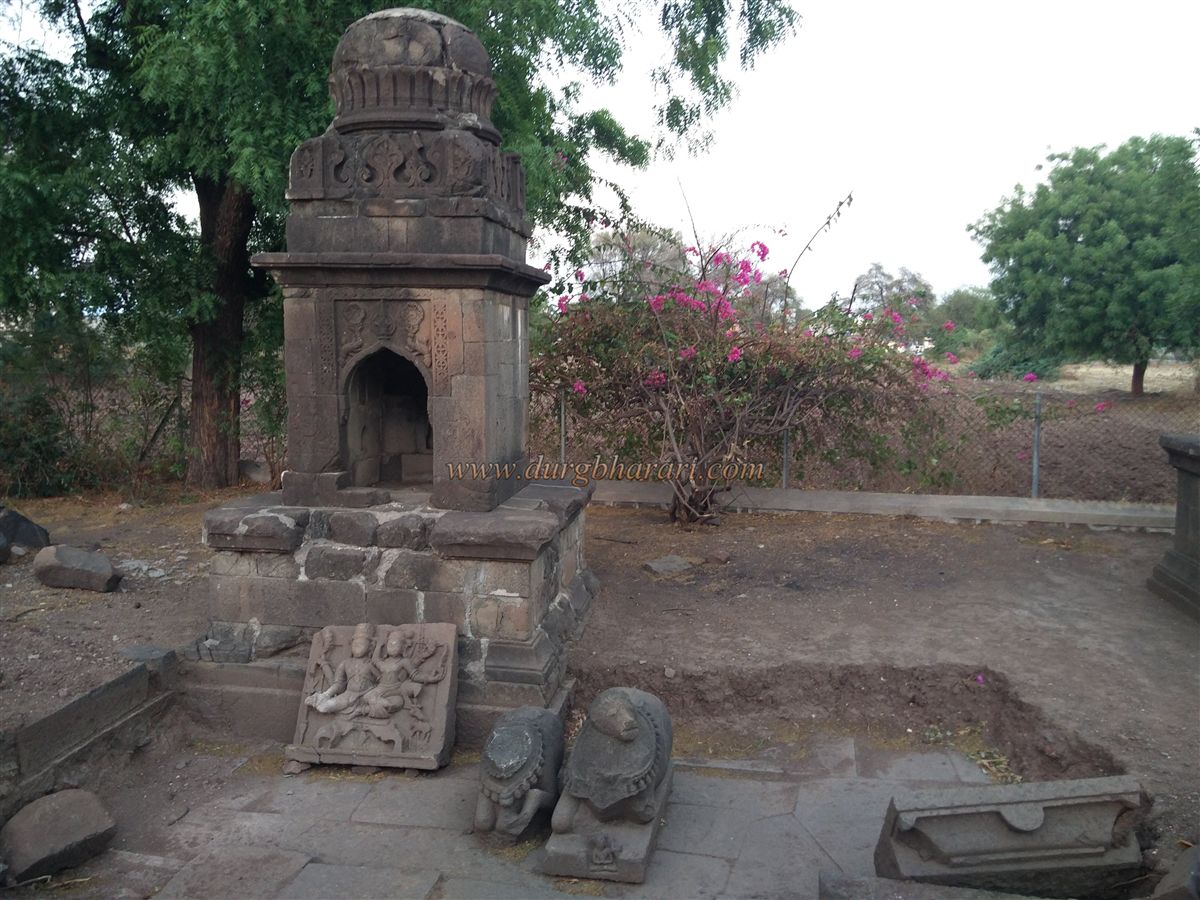
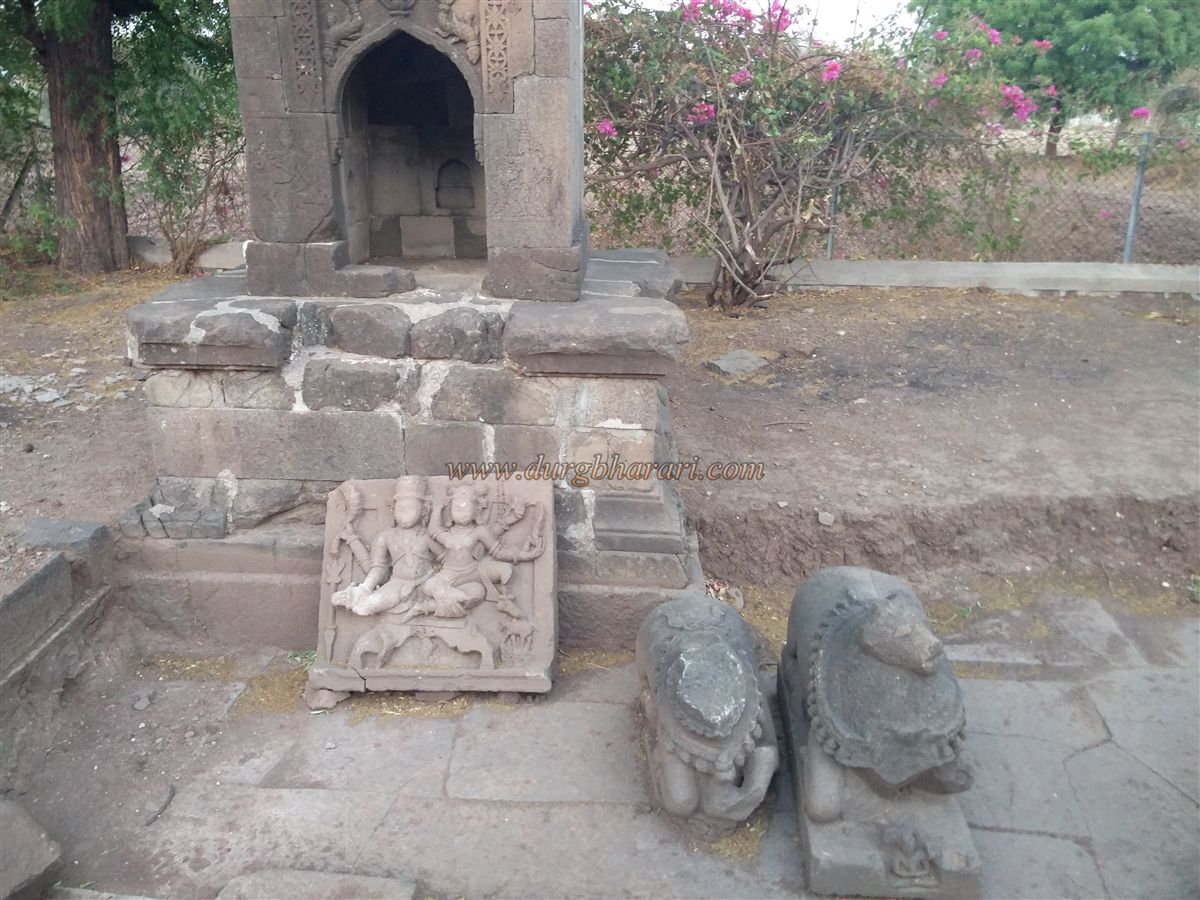
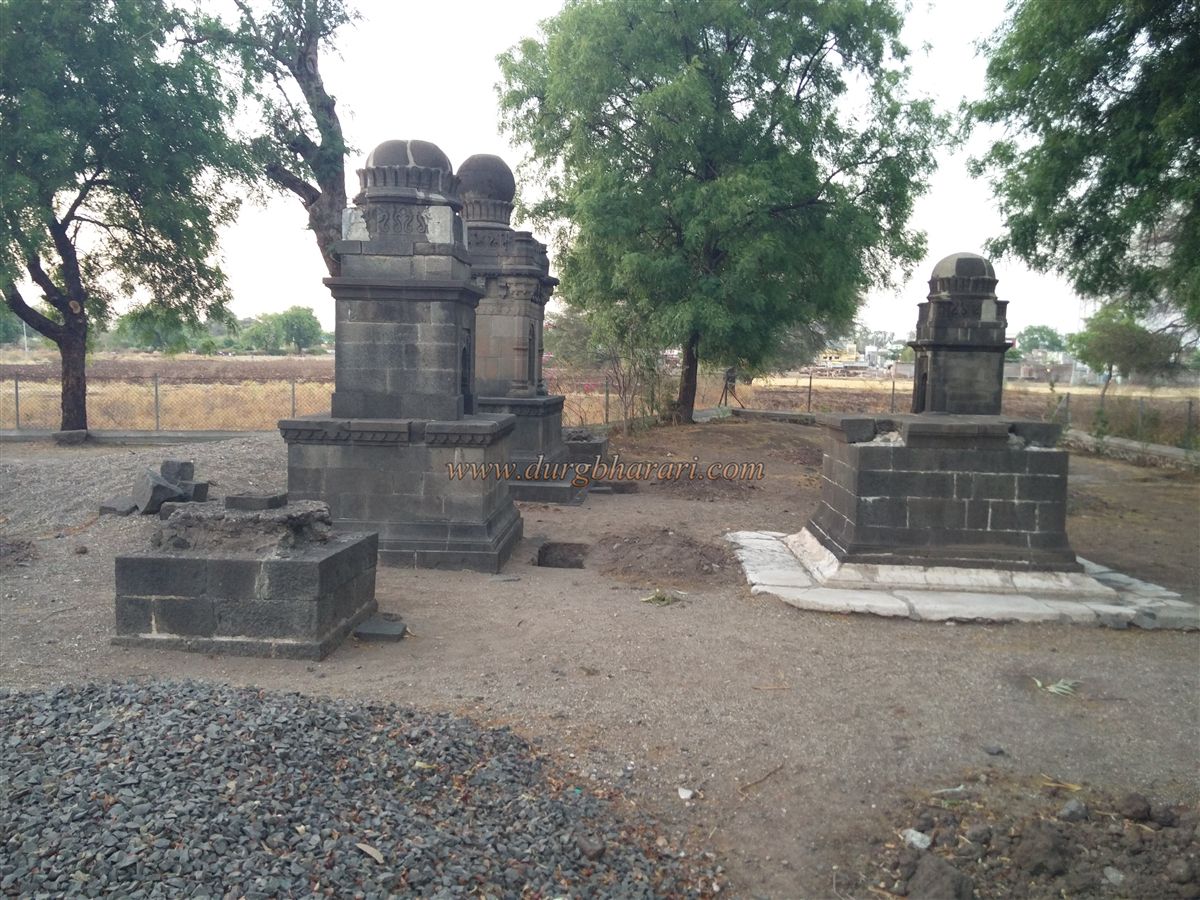
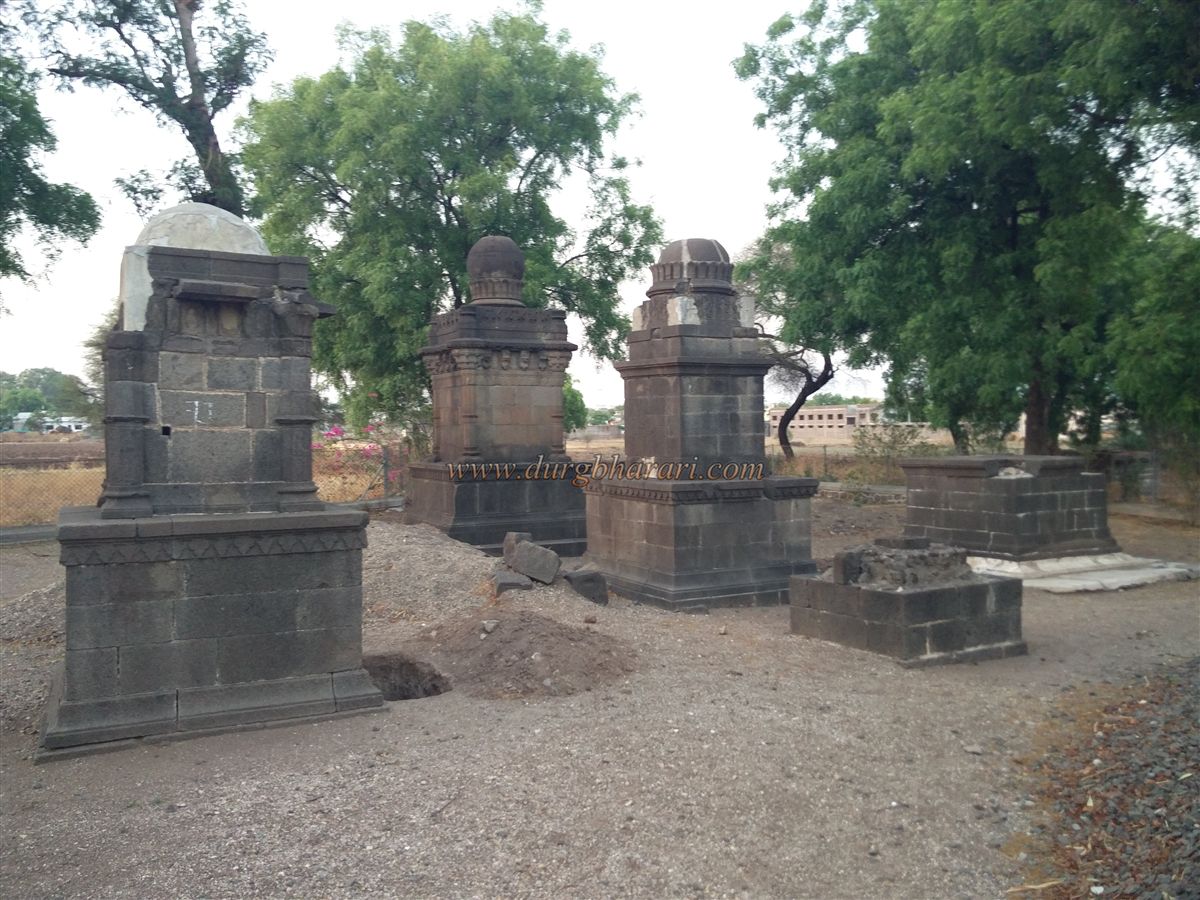
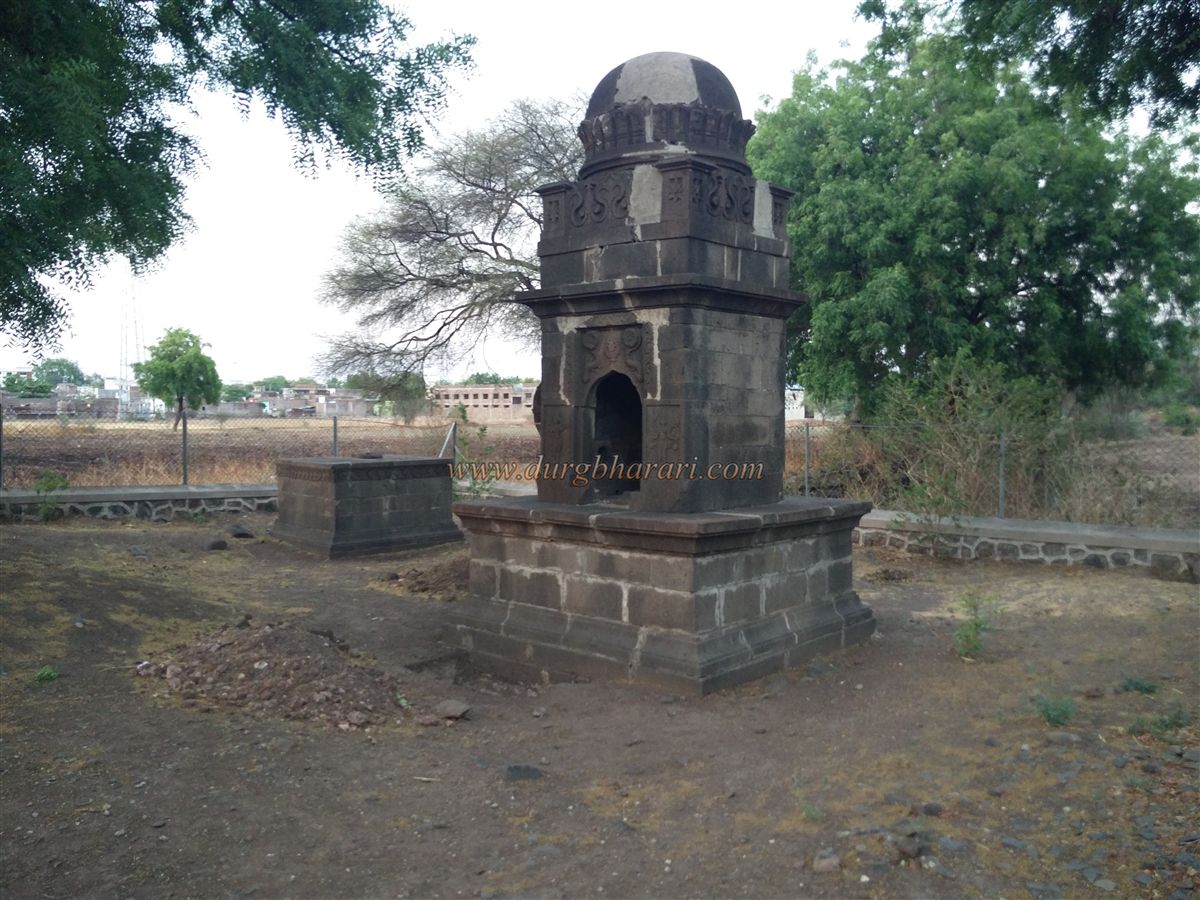
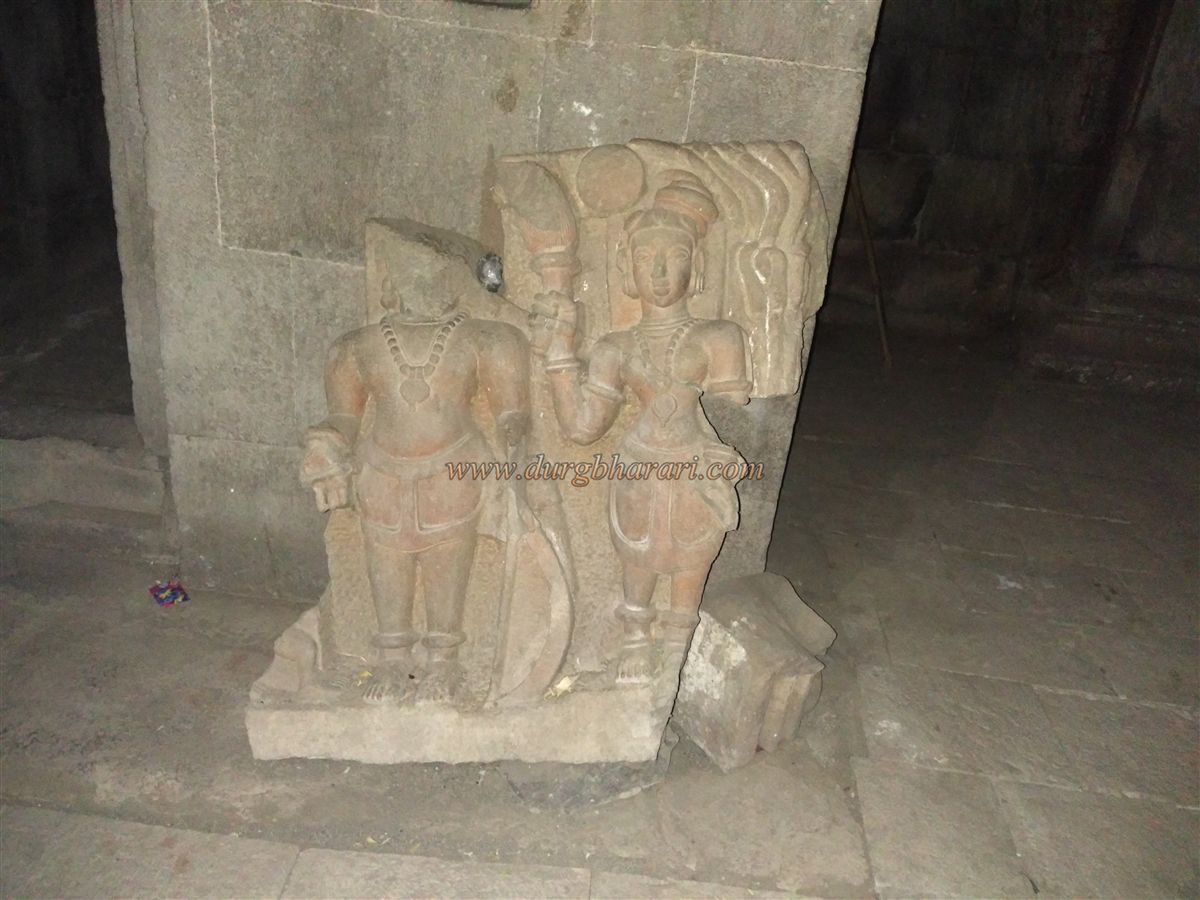
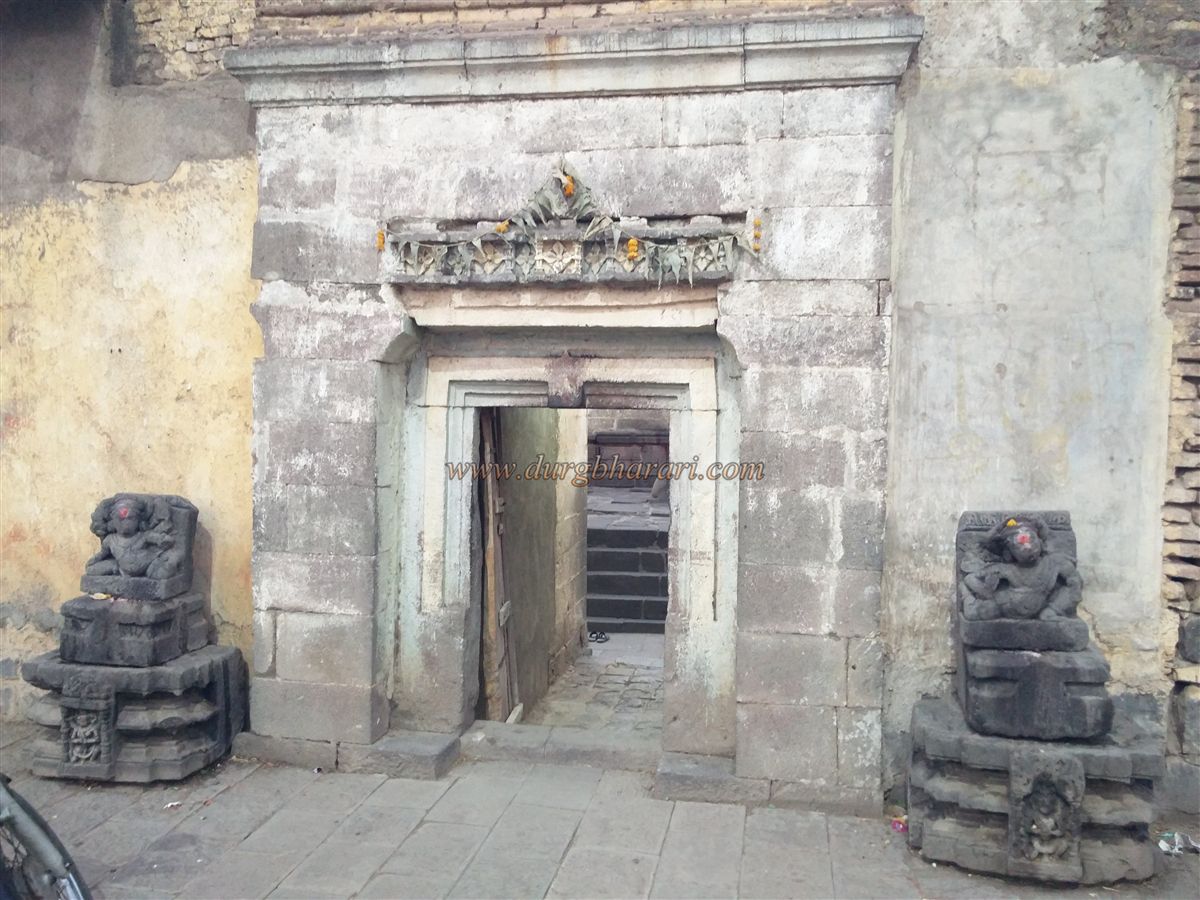
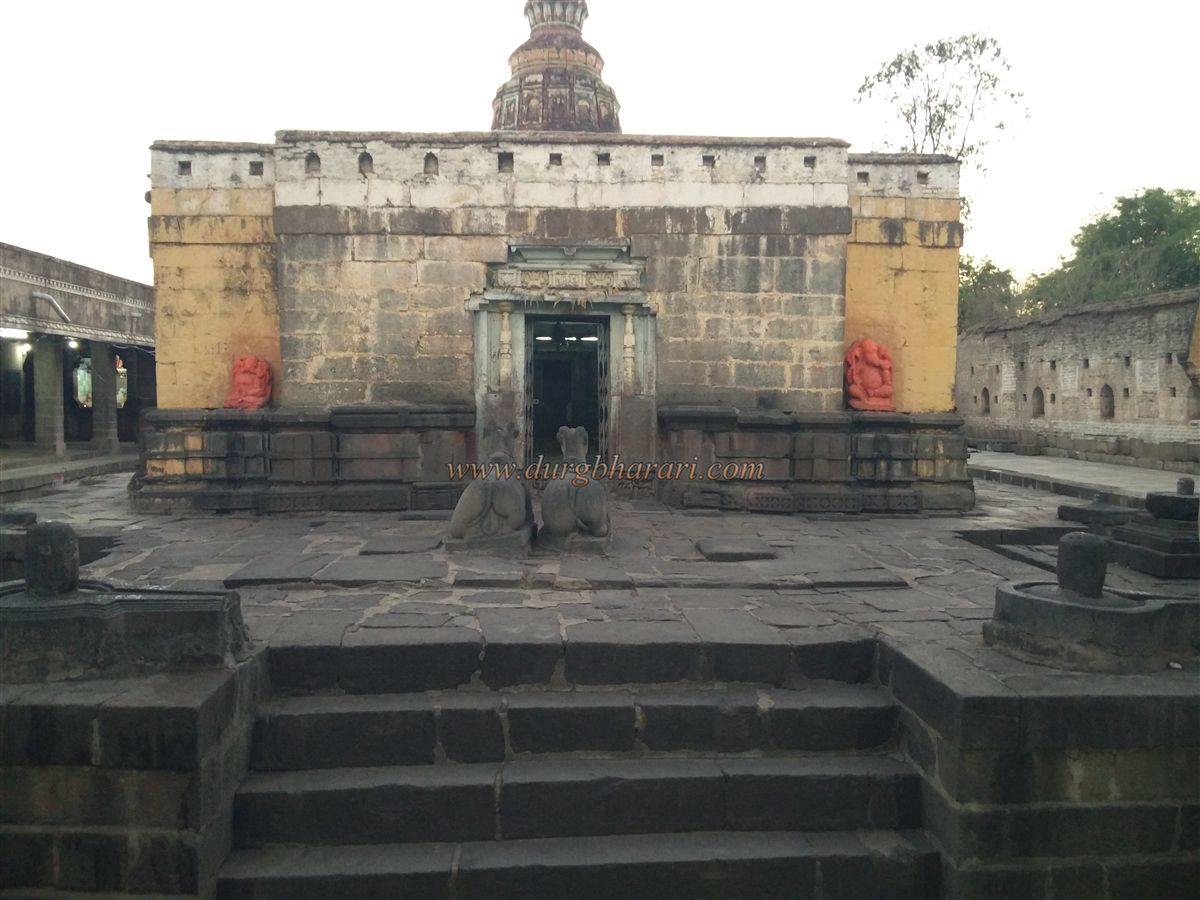
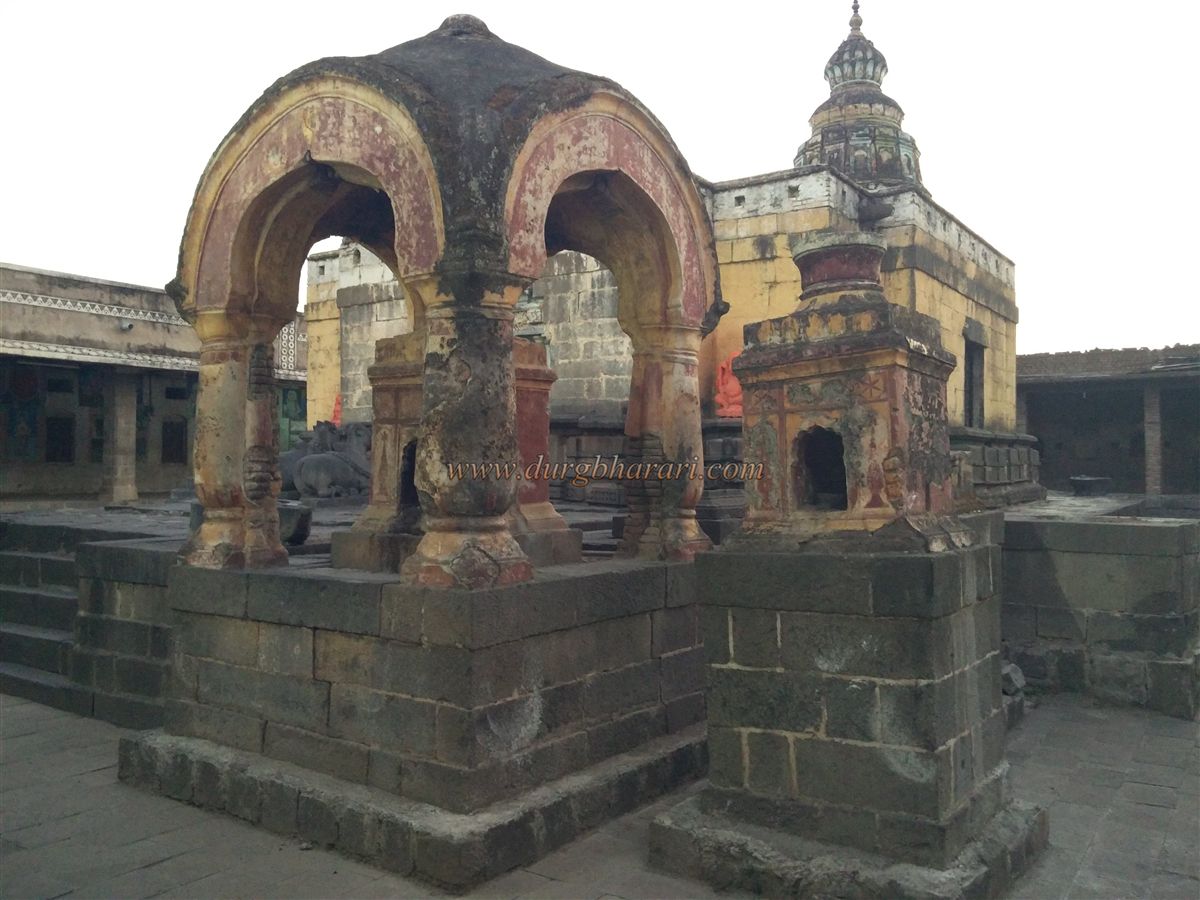
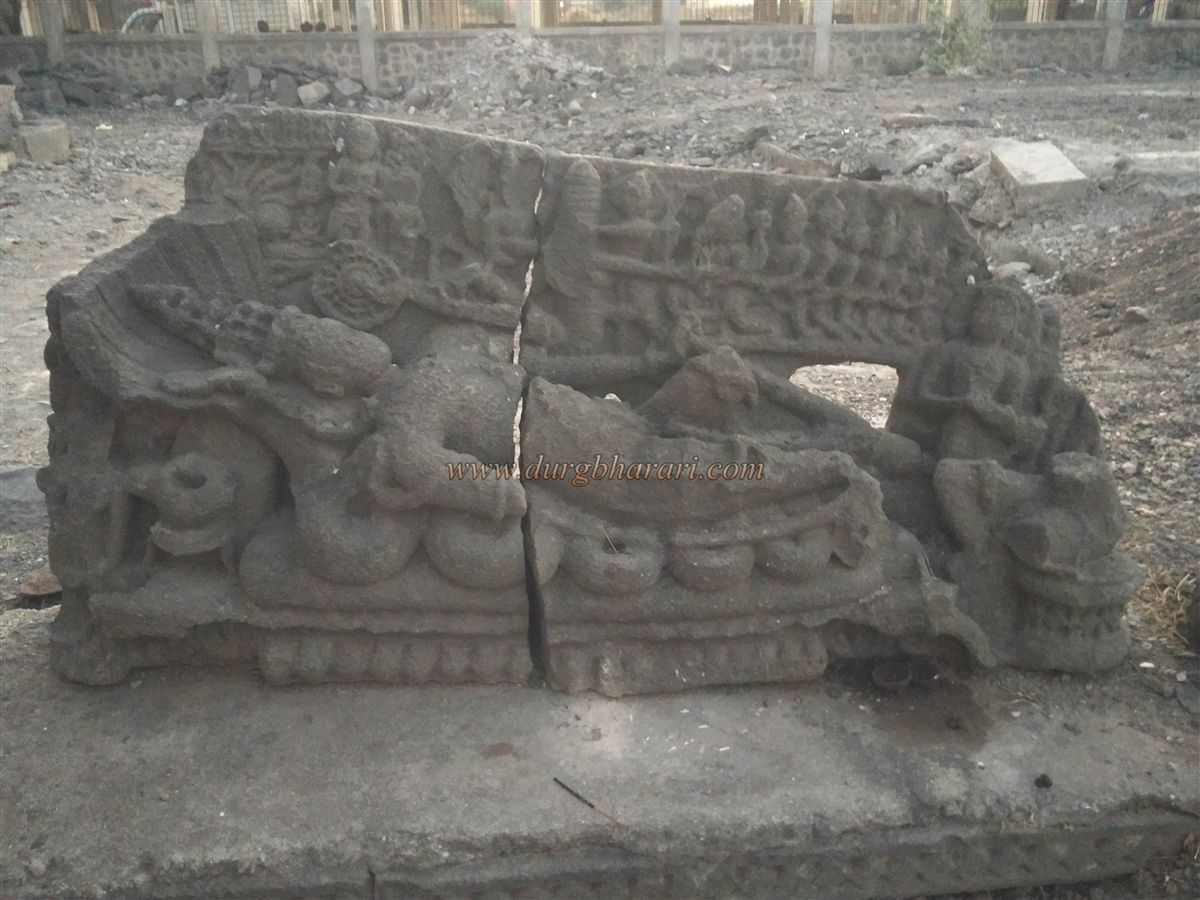
To the west of the village of Sindkhed, beyond the limits of the settlement, lies the Jadhavrao family’s cremation ground. Here, not only the Samadhi of Raja Lakhuji exists, but also the memorials of several other members of the Jadhavrao royal family. The primary Samadhi structure here follows architectural styles seen in northern India and houses five Samadhi inside—those of Lakhuji, Dattajirao, Achaloji, Raghoji, and Yashwantrao. Additionally, within the premises of the structure, there are nine more Samadhi of various sizes. Of these, six are well-preserved while the remaining three are now just platforms. Beside these Samadhi lie a few intricately carved sculptures.
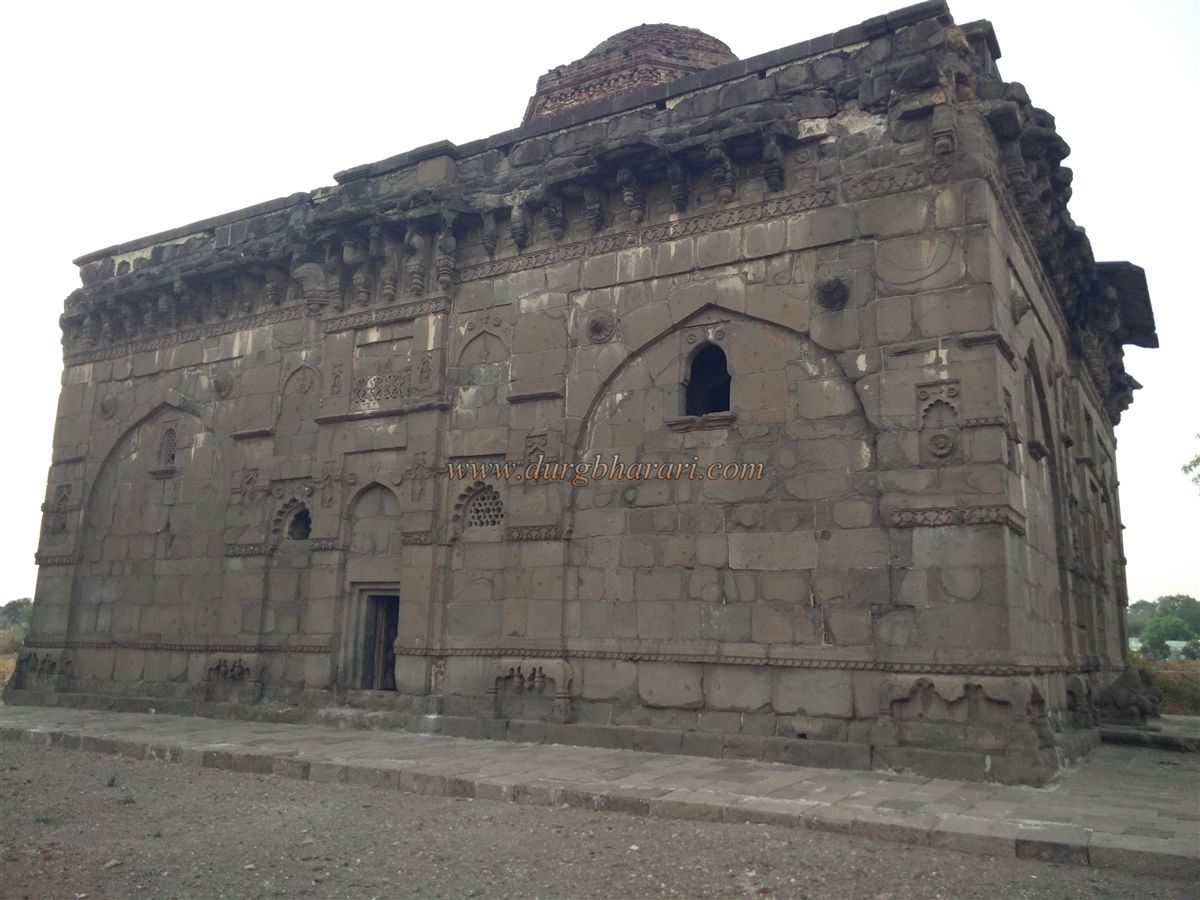
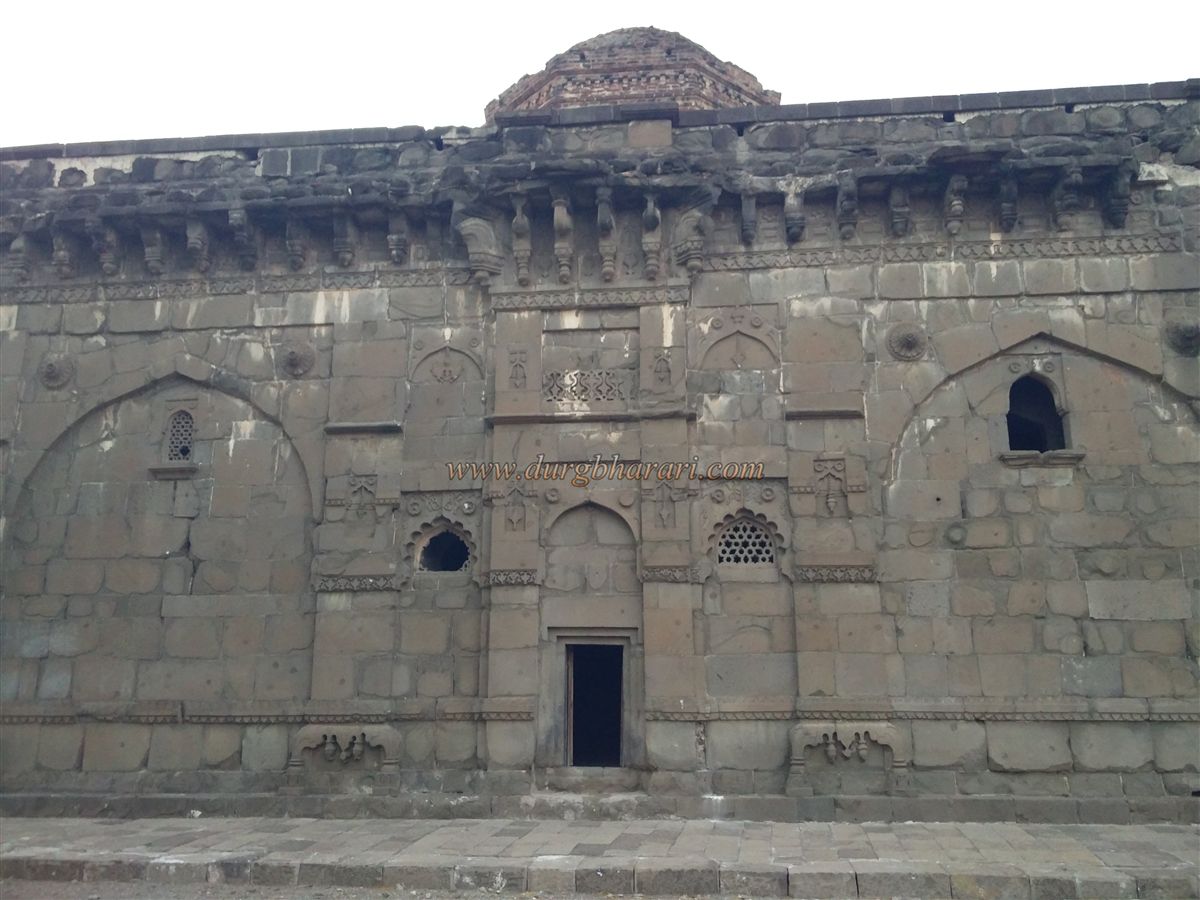
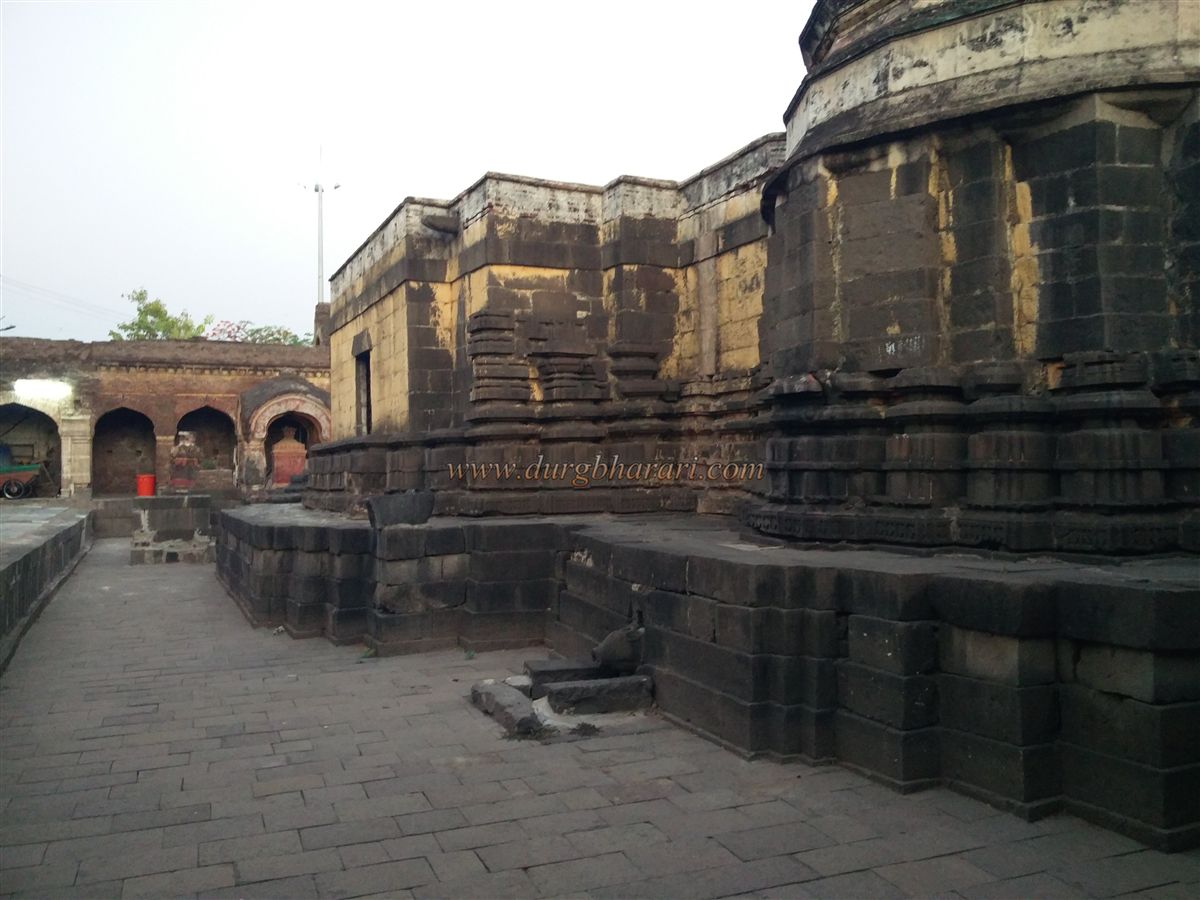
The entire square structure is constructed in finely dressed stone, while the dome is built using bricks coated with lime plaster. The structure stands on a carved stone platform and is still in good condition, with only minor damages. The main building measures 50 feet by 50 feet and has a height of approximately 45 feet. Its roof is supported by 24 arches. The outer surface of the building is adorned with carvings of lotus flowers, vines with leaves and blossoms, ornamental niches and jalis (latticed screens), tiger sculptures, and a variety of geometric patterns.
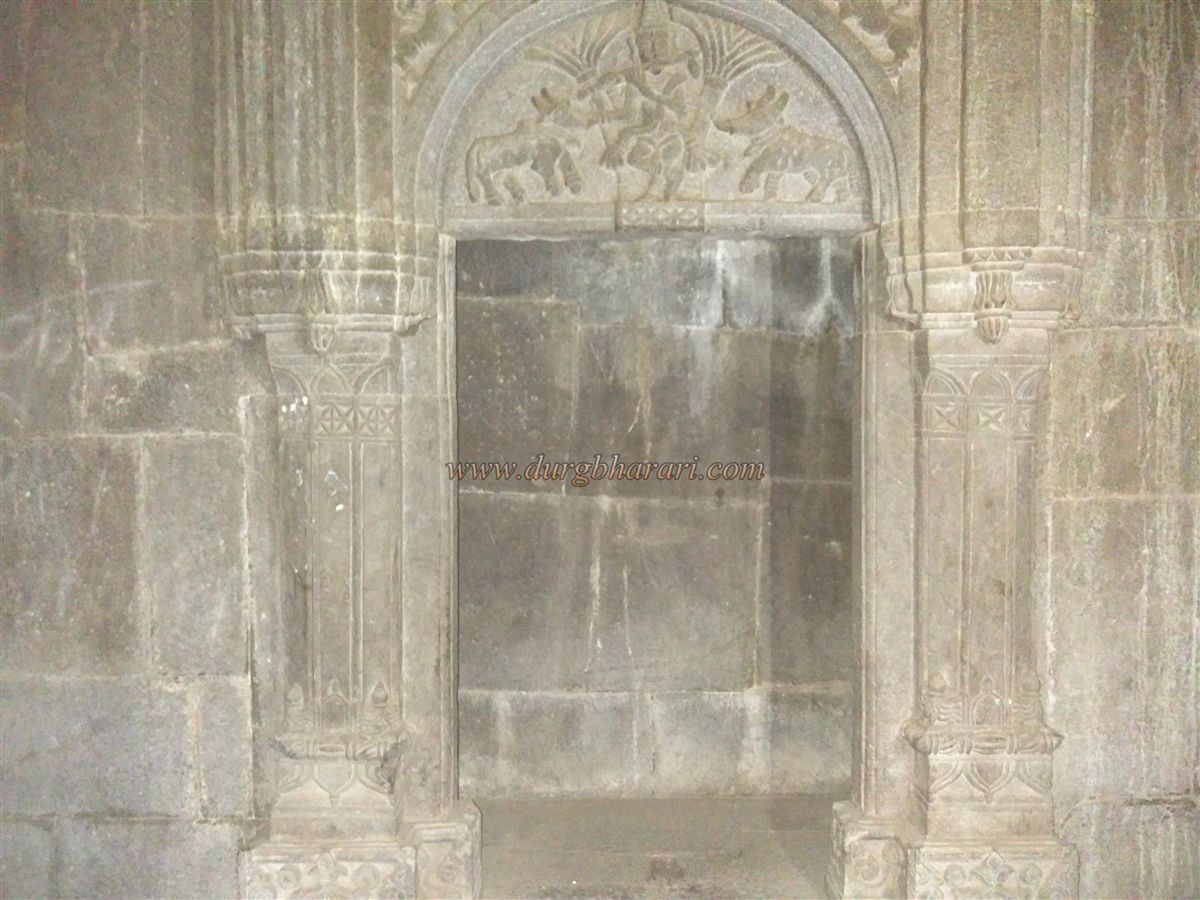
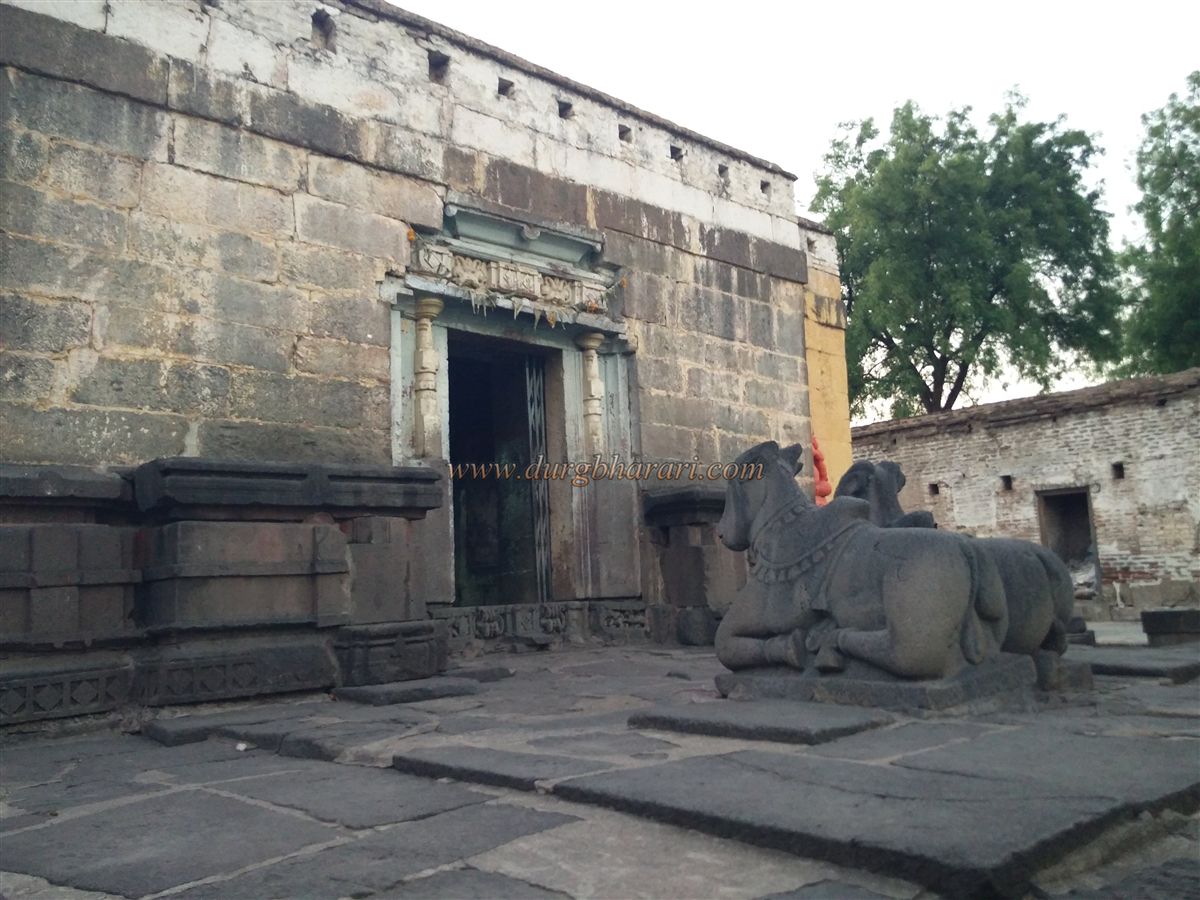
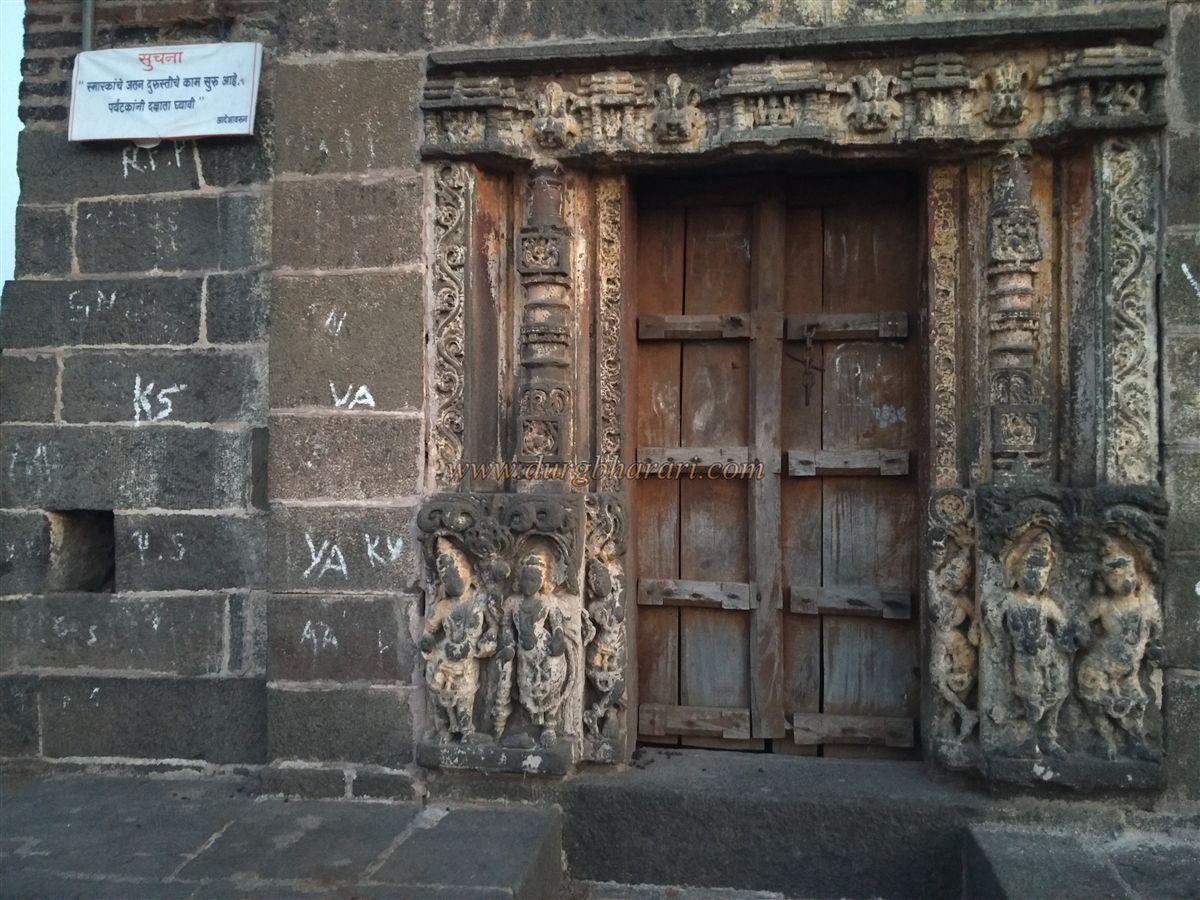
The main entrance faces east and its lintel is decorated with carvings of various musicians and figures. Above the doorway are two kirtimukhas (mythical masks), and on either side of them are sculpted vyal (mythical beasts). Besides the main entrance, there are two smaller doorways on the northern and southern sides. Near the doorways, two lions mounted on elephants are carved, and two more lions are sculpted near the ceiling area. On the lintel above the main entrance is a sculpture of Ganesha, and carvings are also present on either side of the threshold. On both sides of the entrance are stone inscriptions in Marathi. Though these inscriptions have been worn down over time and are no longer legible, they were read in earlier times.
The left inscription reads: “Deshmukh Bhanvase Vithoji of Sindkhed, wife Thakarairani, their son was Jadhavrao Lukji Maharaj; wife Girijairani, their sons were Dattaji, Achaloji, and Raghuji Raje; Jadhavrao Lakhuji’s son Dattaji’s sons were Yeswantraj and Limbaji.”
The right inscription reads: “Deshmukh Bhanvase Vithoji of Sindkhed, wife Thakarairani, their noble son was Lakhuji Maha “Both inscriptions appear to be incomplete.
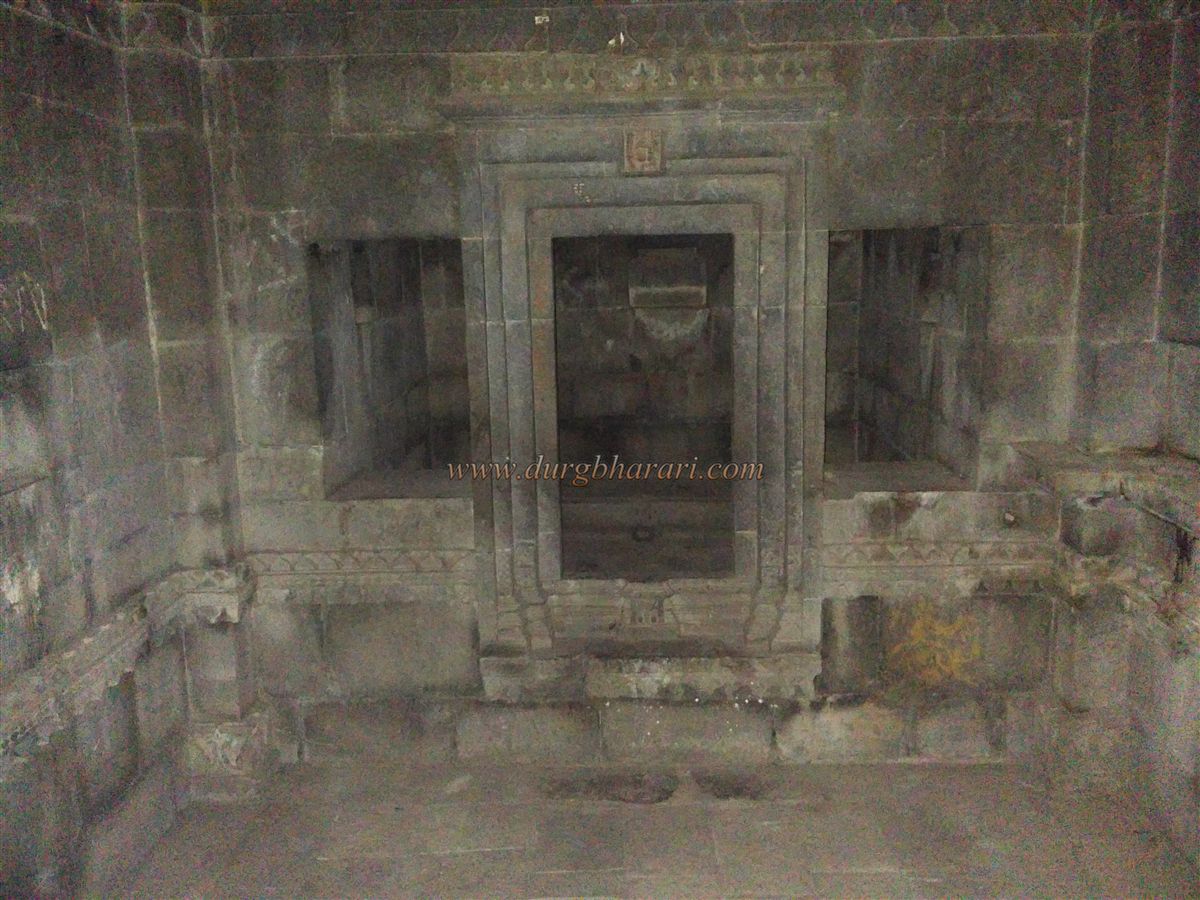
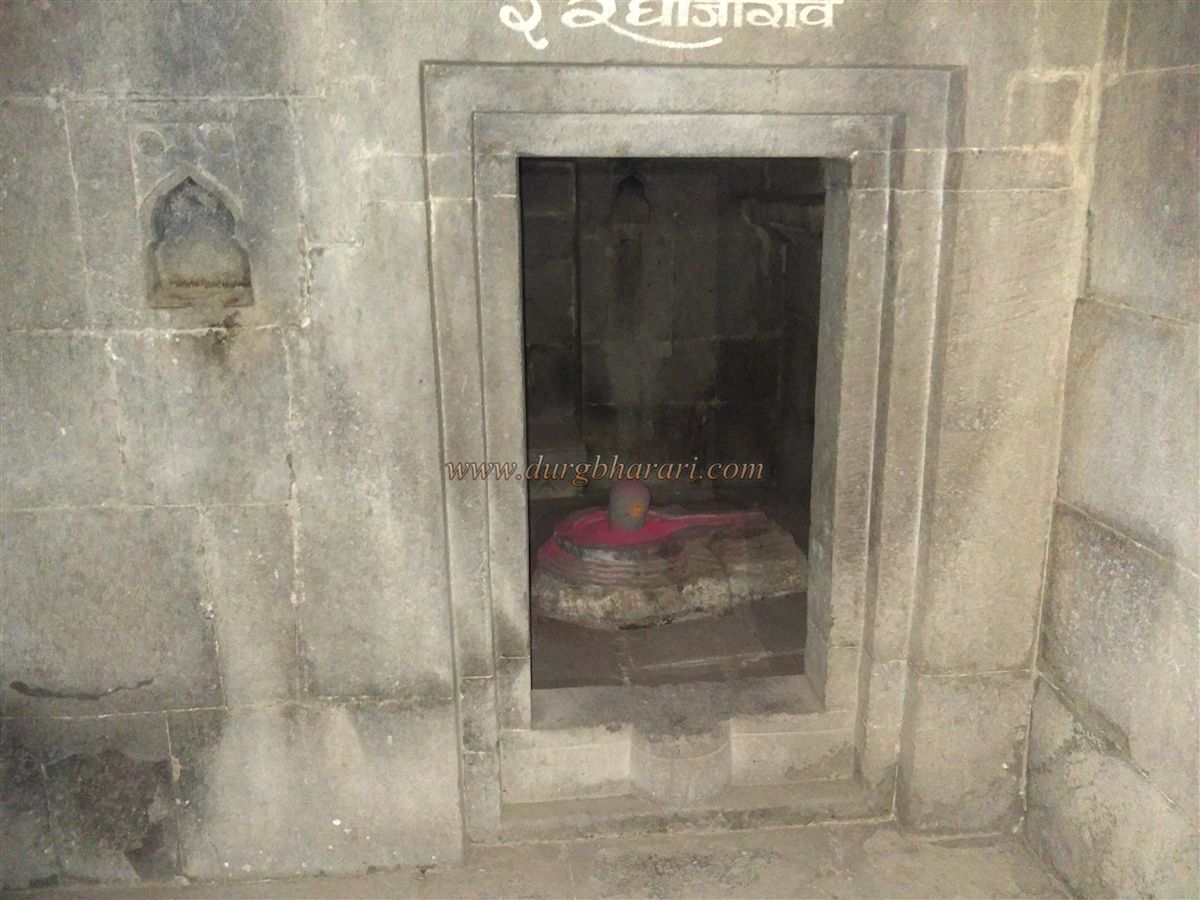
Upon entering through the main door, one sees the Samadhi of Raja Lakhuji Jadhavrao at the center, measuring 12 feet by 12 feet. This Samadhi is richly carved both on the exterior and interior. Its layout resembles that of a small temple with two main parts—a Sabhamandap (hall) and a Garbhagriha (sanctum). The hall has a small window, and a Shiva Linga is installed inside. The inner sanctum once housed the statue of Lakhuji seated on a throne, which is now missing.
To the left of the entrance is the Samadhi of Dattaji Raje, and to the right is the Samadhi of Yashwantrao. Toward the back of the structure are the Samadhi of Achaloji Raje and Raghuji Raje. All of these Samadhi’s have Shiva lings placed inside and domes overhead. This arrangement of a central Samadhi surrounded by four others at the corners resembles the Panchayat and style of temple architecture. A few broken sculptural pieces are still visible within the building.
To the right of the main entrance is a narrow staircase that leads to the roof. From there, one can see the spacious terrace and the dome in the center. This completes the darshan of the Samadhi.
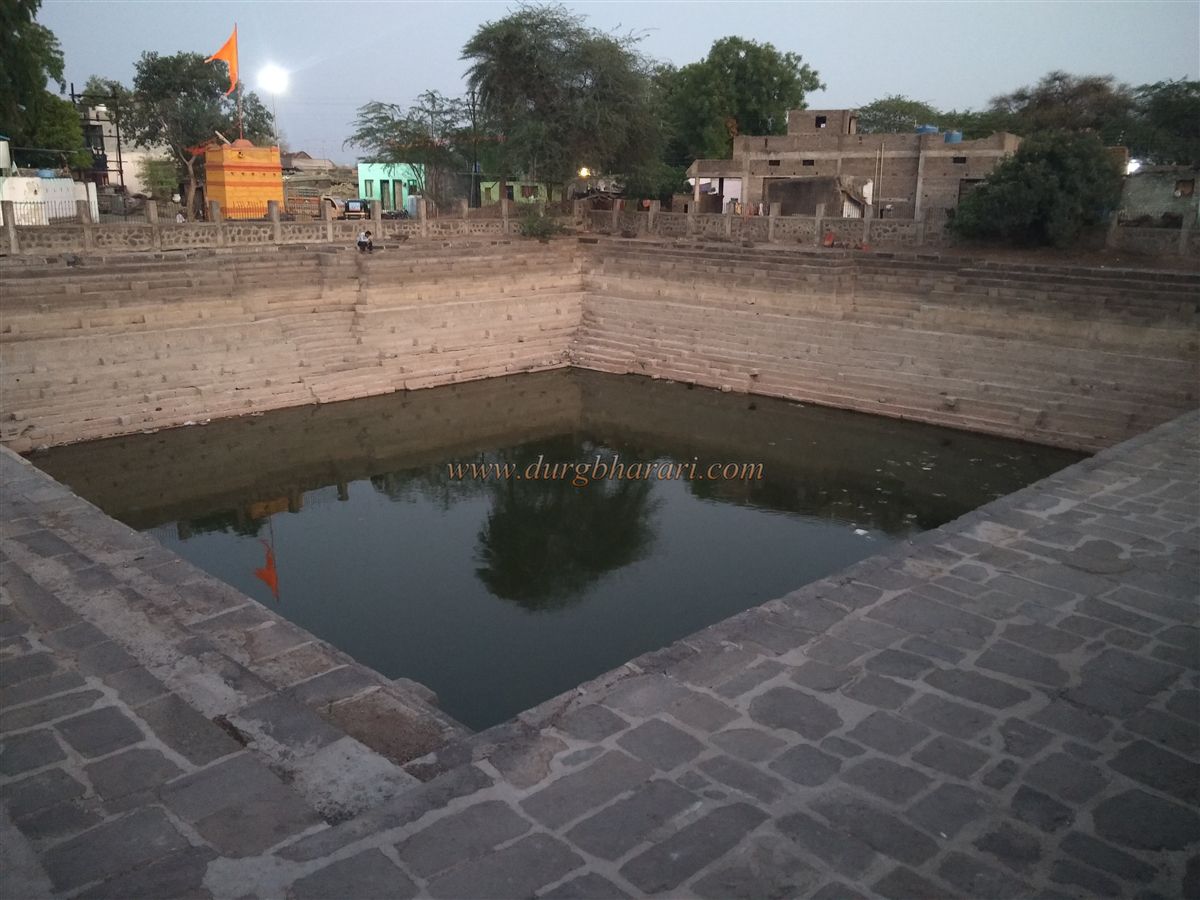
In the town of Sindkhed Raja, alongside the Samadhi of Raja Lakhuji Jadhav, several other historic sites can be seen including the Sindkhed Fort, Kala Kot, Rangmahal, Nilkantheshwar Temple, Sajan Barav, Rameshwar Temple, Putala Barav, Chandni Talav, and Moti Talav. Sindkhed Raja is located about 80 km from Buldhana and only 30 km from Jalna.
© Suresh Nimbalkar
GALLERY