KATHINGAD-TUNG
TYPE : HILL FORT
DISTRICT : PUNE
HEIGHT : 3430 FEET
GRADE : MEDIUM
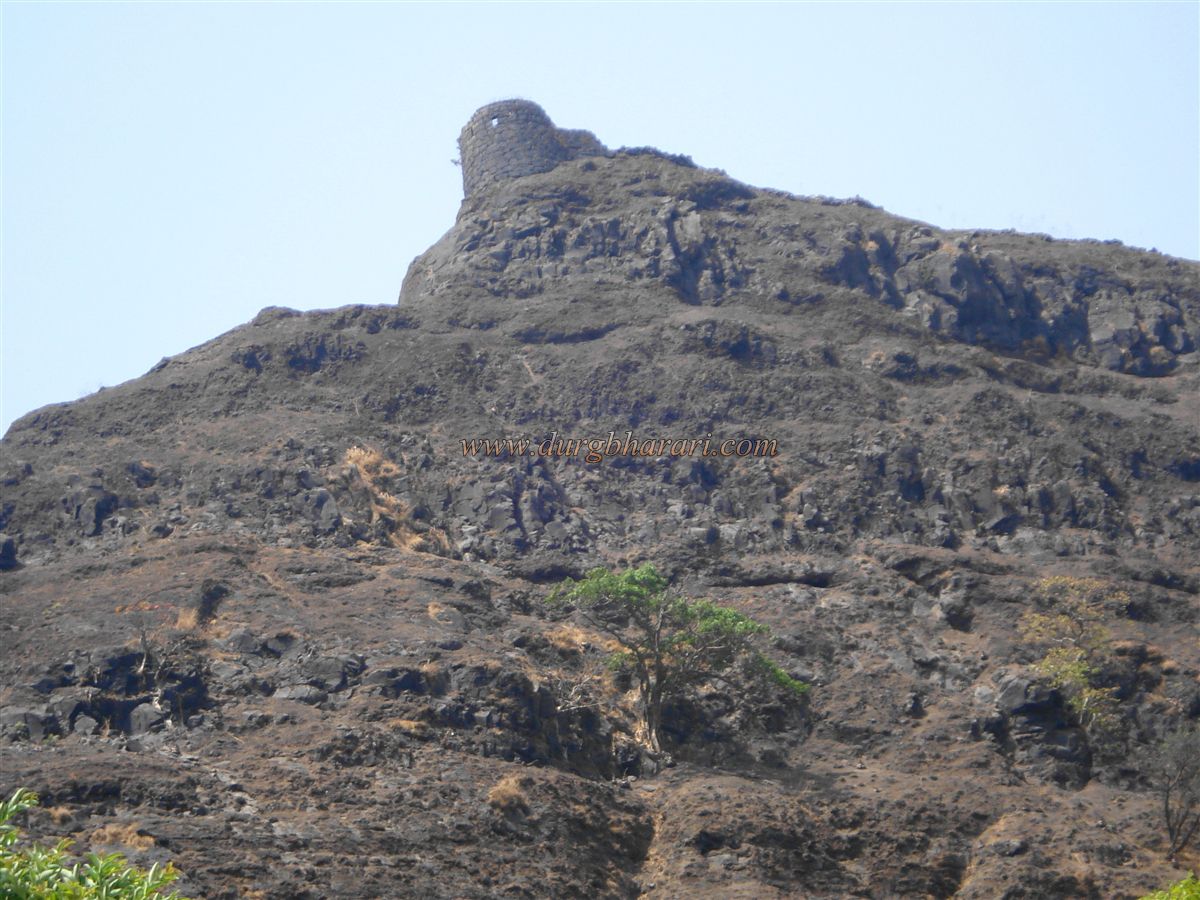
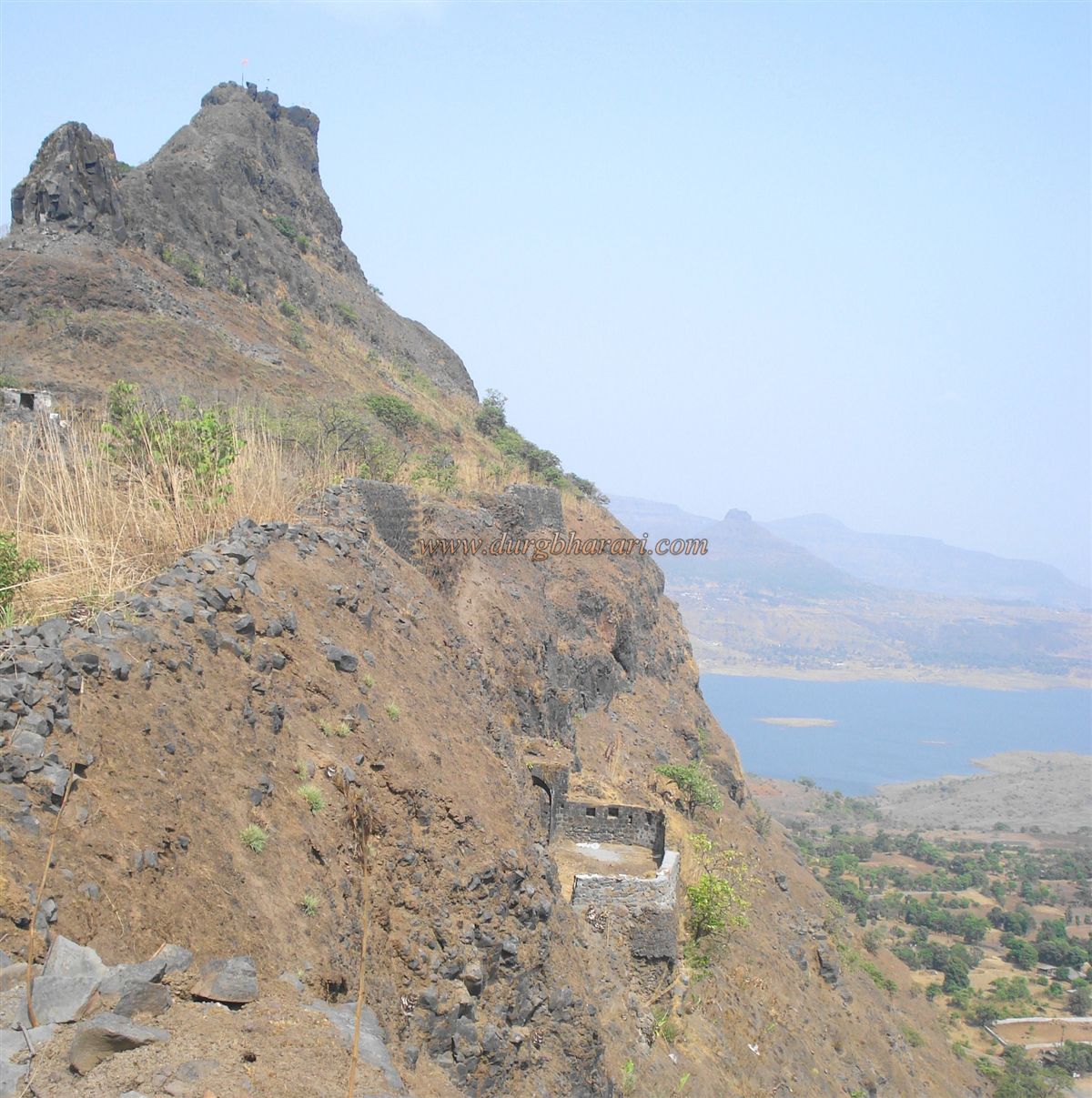
This fort, located in the Pavana Maval region, stands out due to its distinctive tall pinnacle. A route runs from south of Lonavala to Mulshi–Bhamburde, along which rest lesser-known and unpolished hill forts such as Tung, Korigad, and Ghangad. Tung is a 3,000-foot hill fort situated about 60 km from Pune and about 130 km from Mumbai. The word Tung means “lofty” or “high.” Due to its naturally elevated and steep shape, the fort did not require fortifications on all sides; instead, its western slope was fortified with walls and bastions for protection. Recognizing its steepness and difficulty, Chhatrapati Shivaji Maharaj aptly named it Kathingad (“the difficult fort”).
From the name, one might assume that climbing the fort is truly hard, but in reality, it is quite easy to ascend. In the Pavana Maval region, Tung was known as a ghat-guarding fort. In earlier times, it was used to monitor the traffic passing through the Borghat route.
...
From here, one can see Lohagad, Visapur, and the entire Pavana Maval region.
From Kamshet, one can take the Kamshet–Morve ST bus and get down at Tungwadi Phata near Chawasar village. From there, it is about a 45-minute walk to reach Tungwadi. Alternatively, from Lonavala, one can take an ST bus toward Bhamburde or Ambavane, get down at Ghusalkhamb Phata (26 km away), and then walk 1.5 hours (8 km) to Tungwadi. Tungwadi or Tung is the base village of the fort — a small village of about 100 households. Once the market area of the fort, it still has ancient temples and shrines. In this very area, veteran Marathi author G. N. Dandekar’s famous novel Pavanakathacha Dhondi was conceived — the story of the fort’s Havaldar (caretaker). Reading it before visiting makes the whole Pavana Maval come alive.
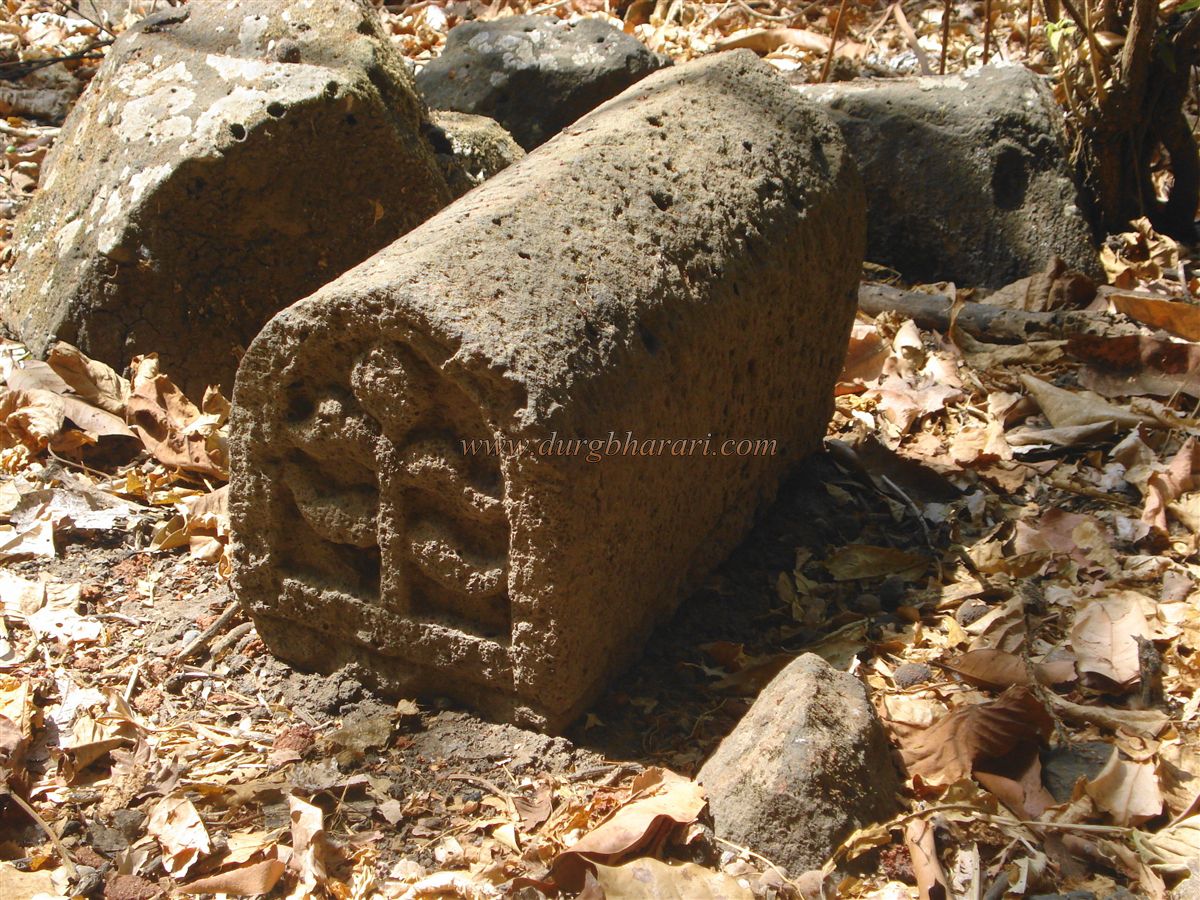
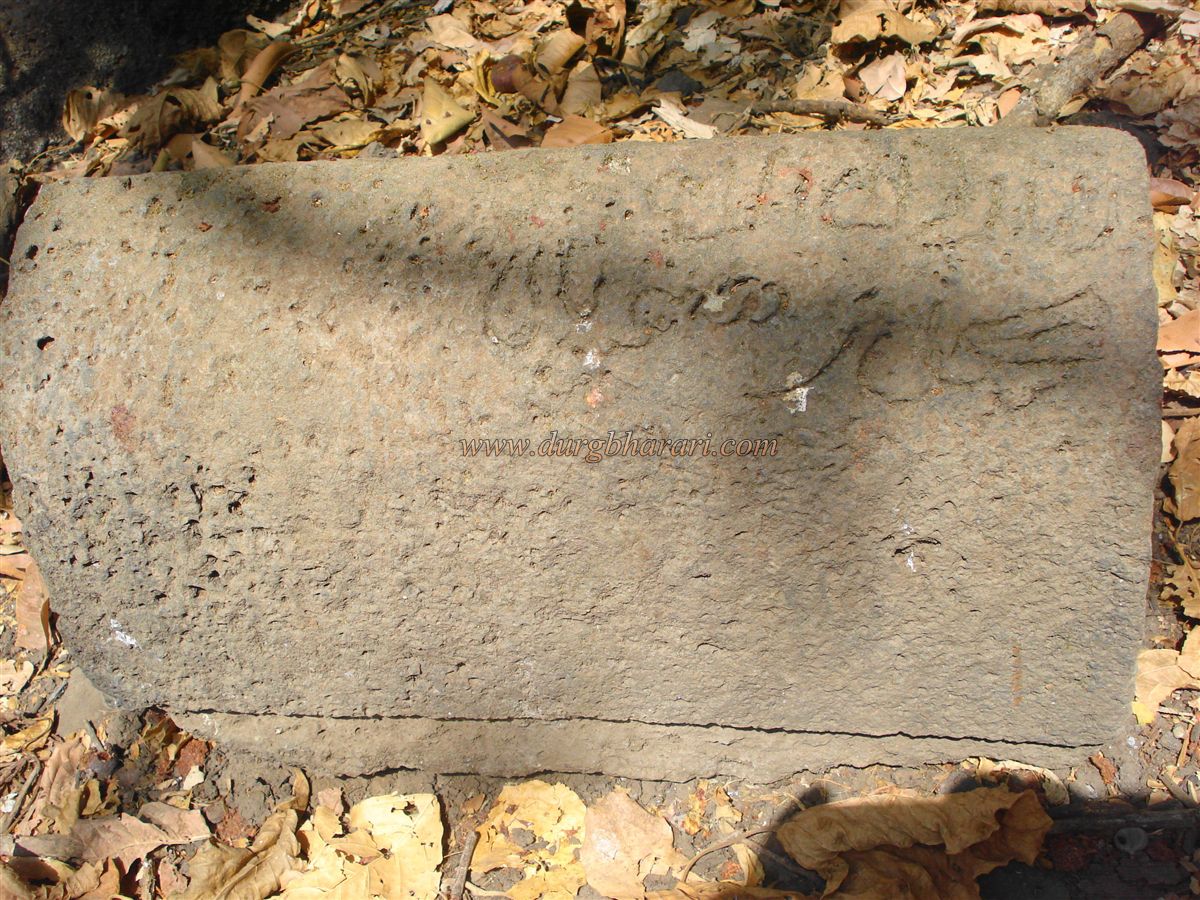
Close to the fort is the Bhairavanath temple, a good place for an overnight halt. It has a large hall, and in its courtyard are several Veergals — stone memorials dedicated to warriors who died defending the village or in battle. There are also a few Sati stones commemorating wives who committed sati after their husband’s death.
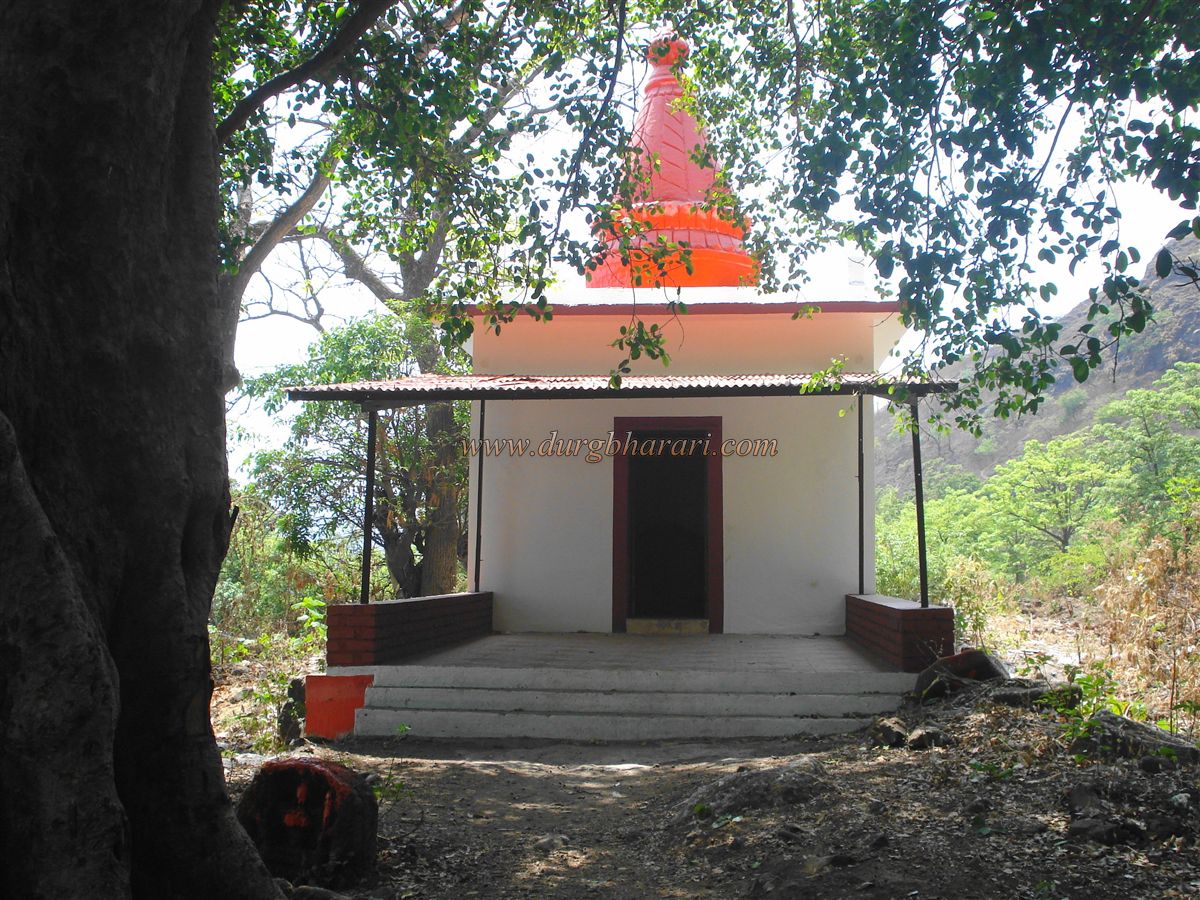
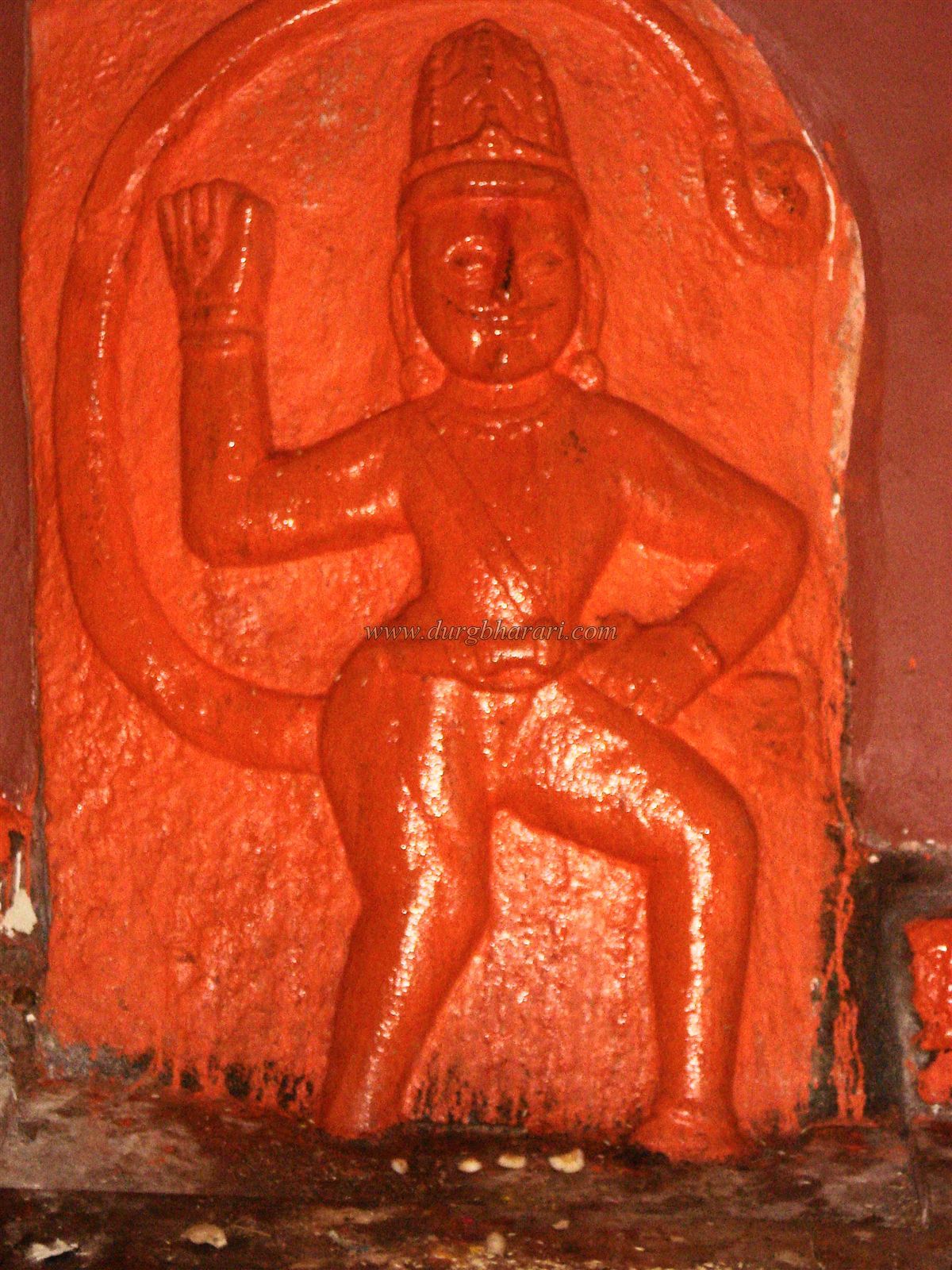
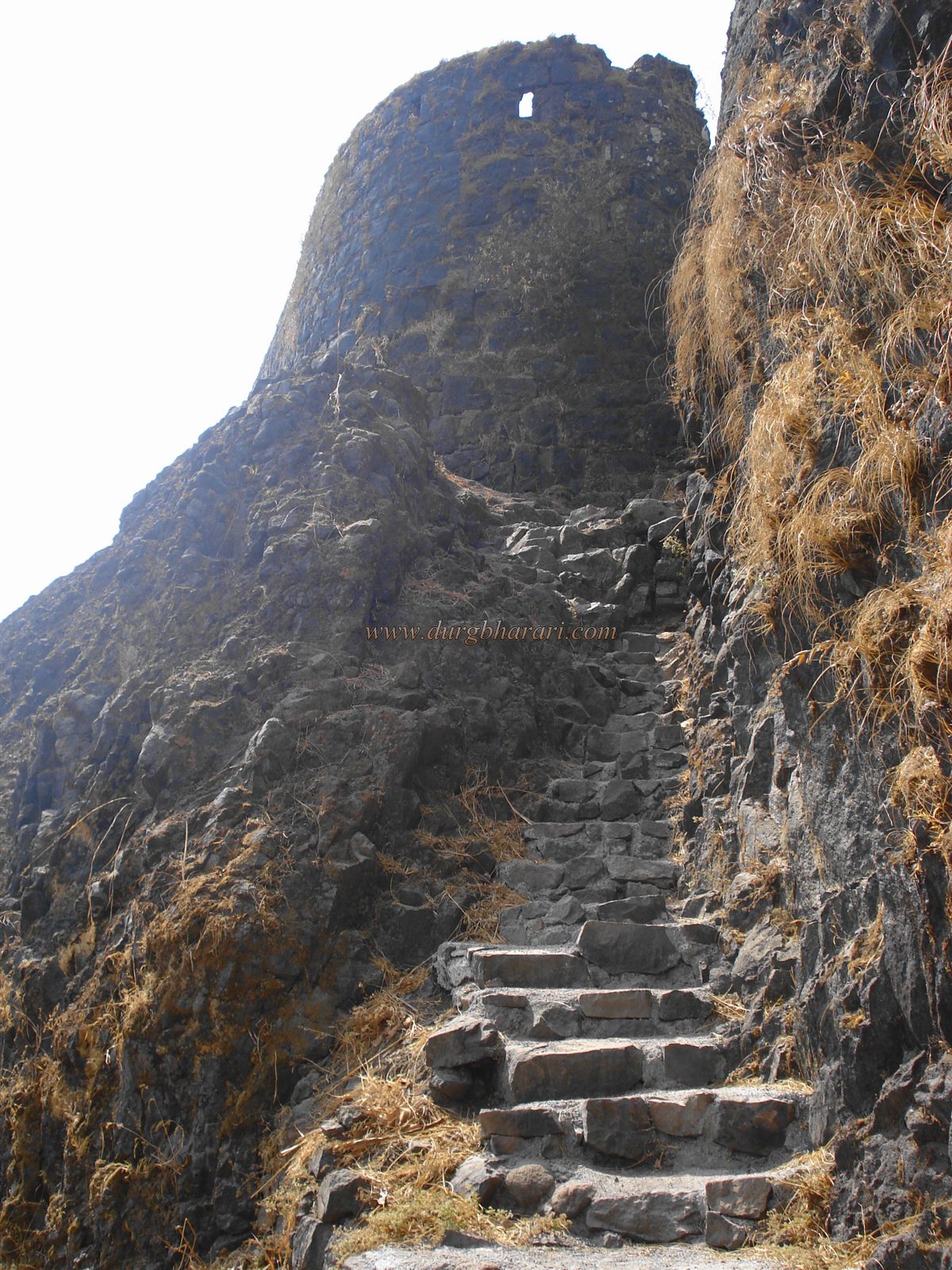
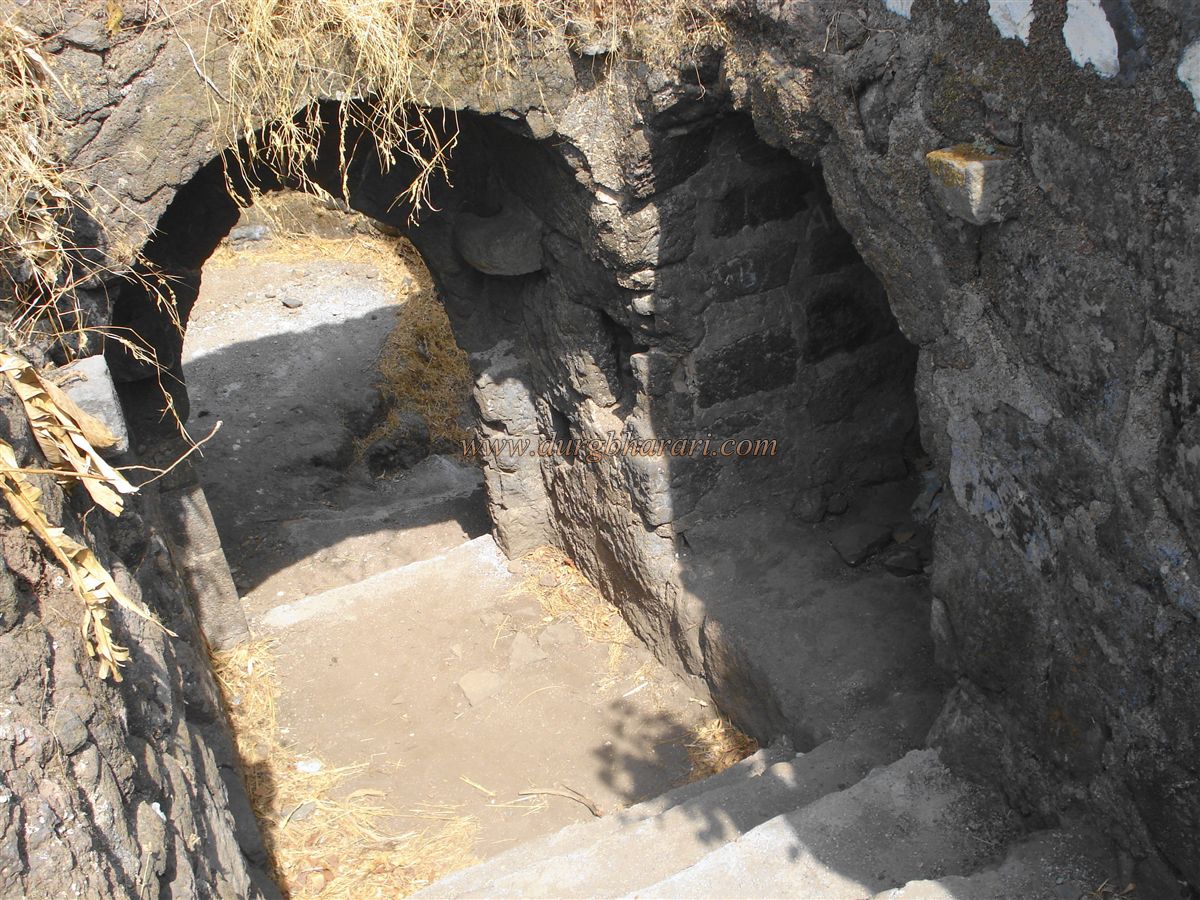
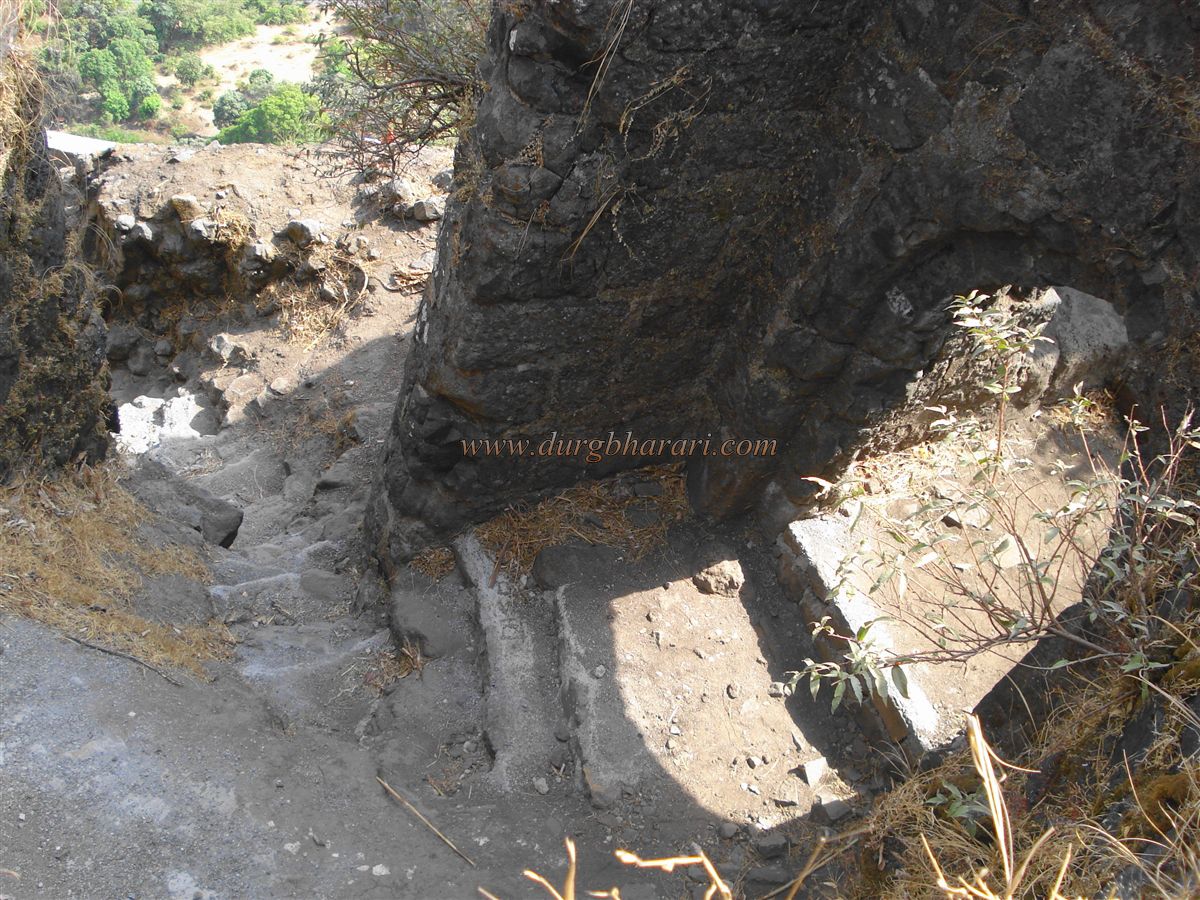
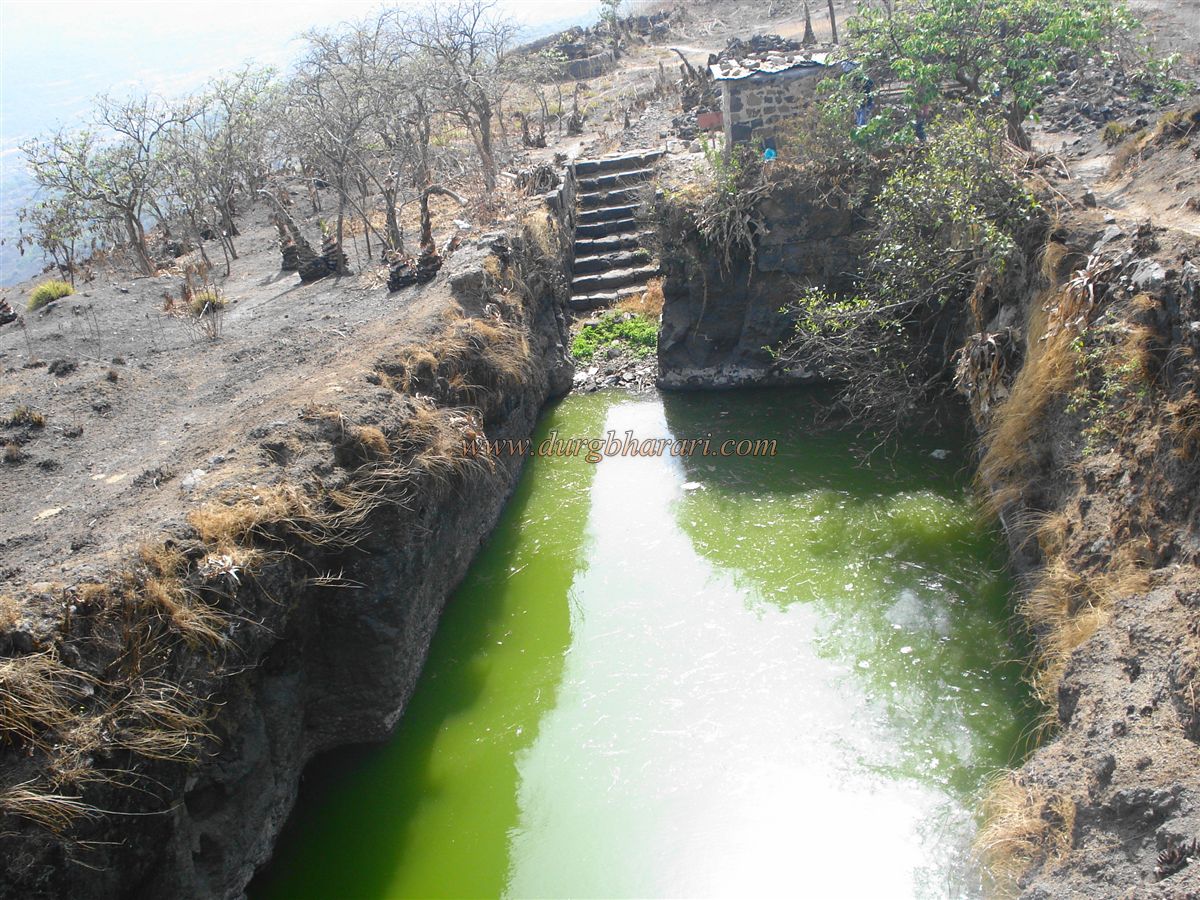
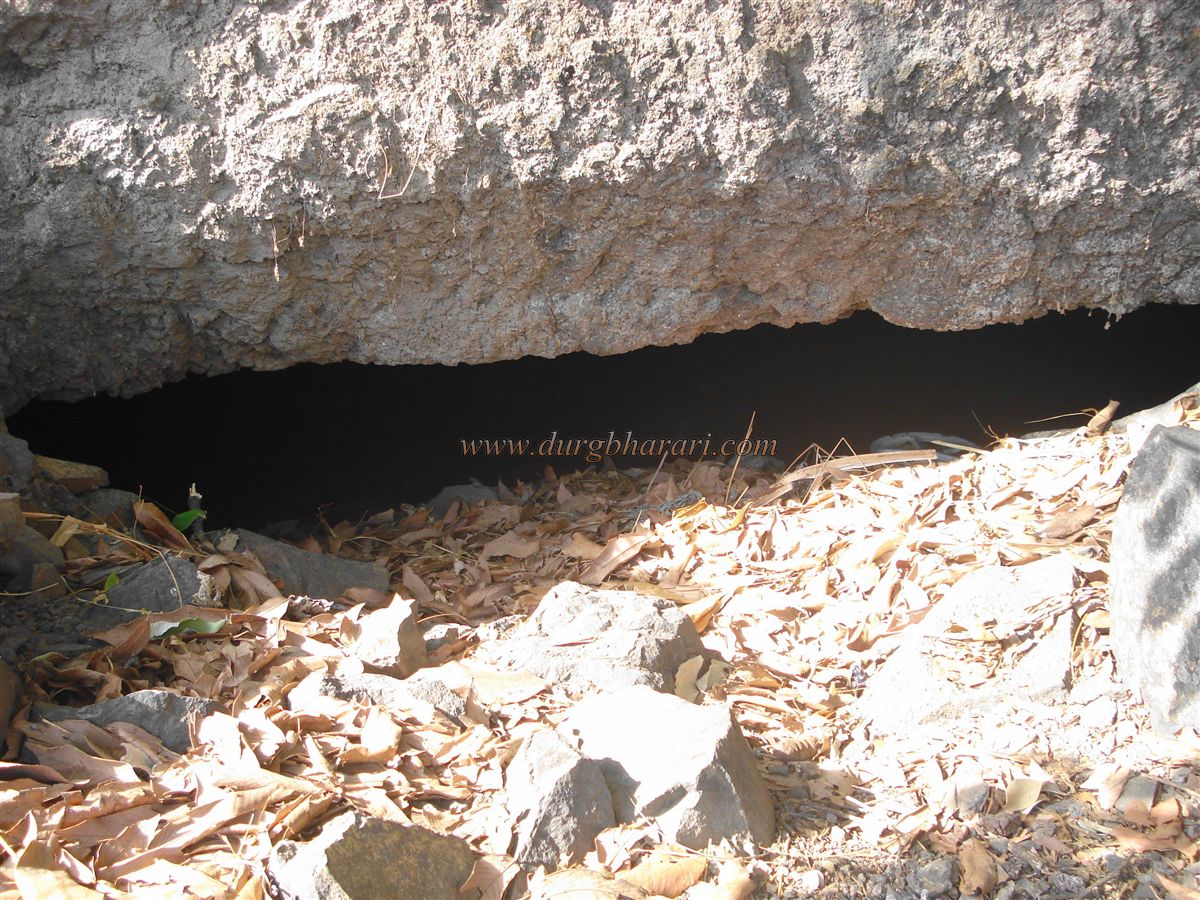
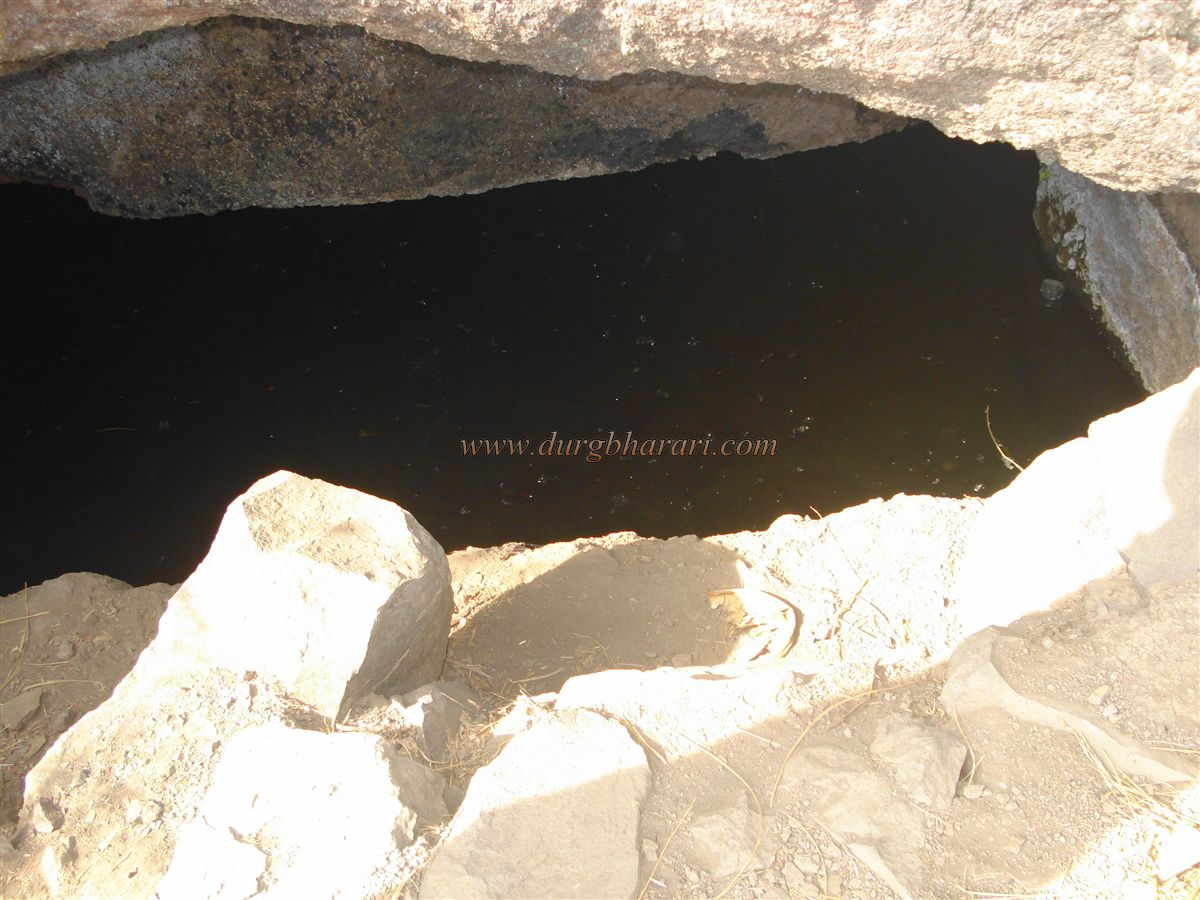
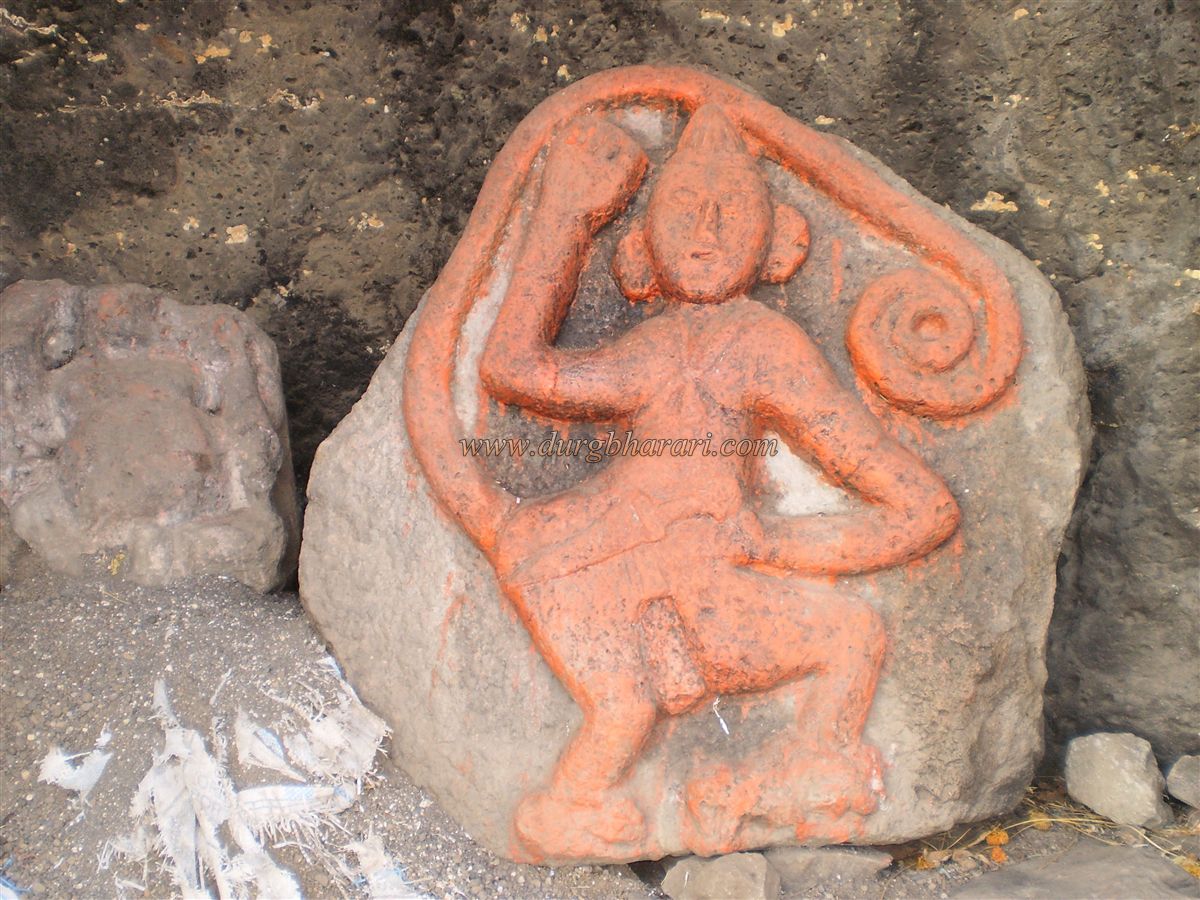
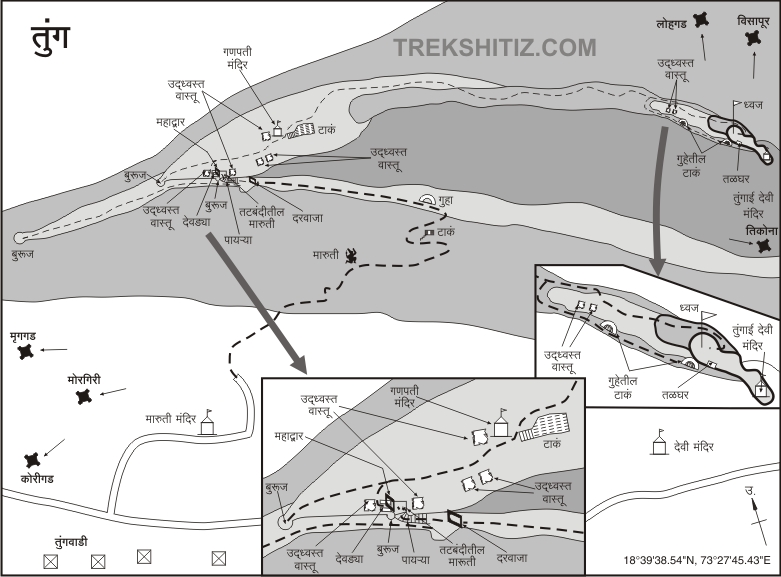
From the village, the trail passes by a Maruti temple, then heads toward the sheer cliff visible at the top. The climb from here to the fort takes about 45 minutes. Tung is surrounded on three sides by the waters of Pavana Dam, while to the south is a steep rock face. The ascent begins from this vertical cliff. Along the way, there are rock-cut steps, ancient cisterns, and a small guard room carved into the rock.
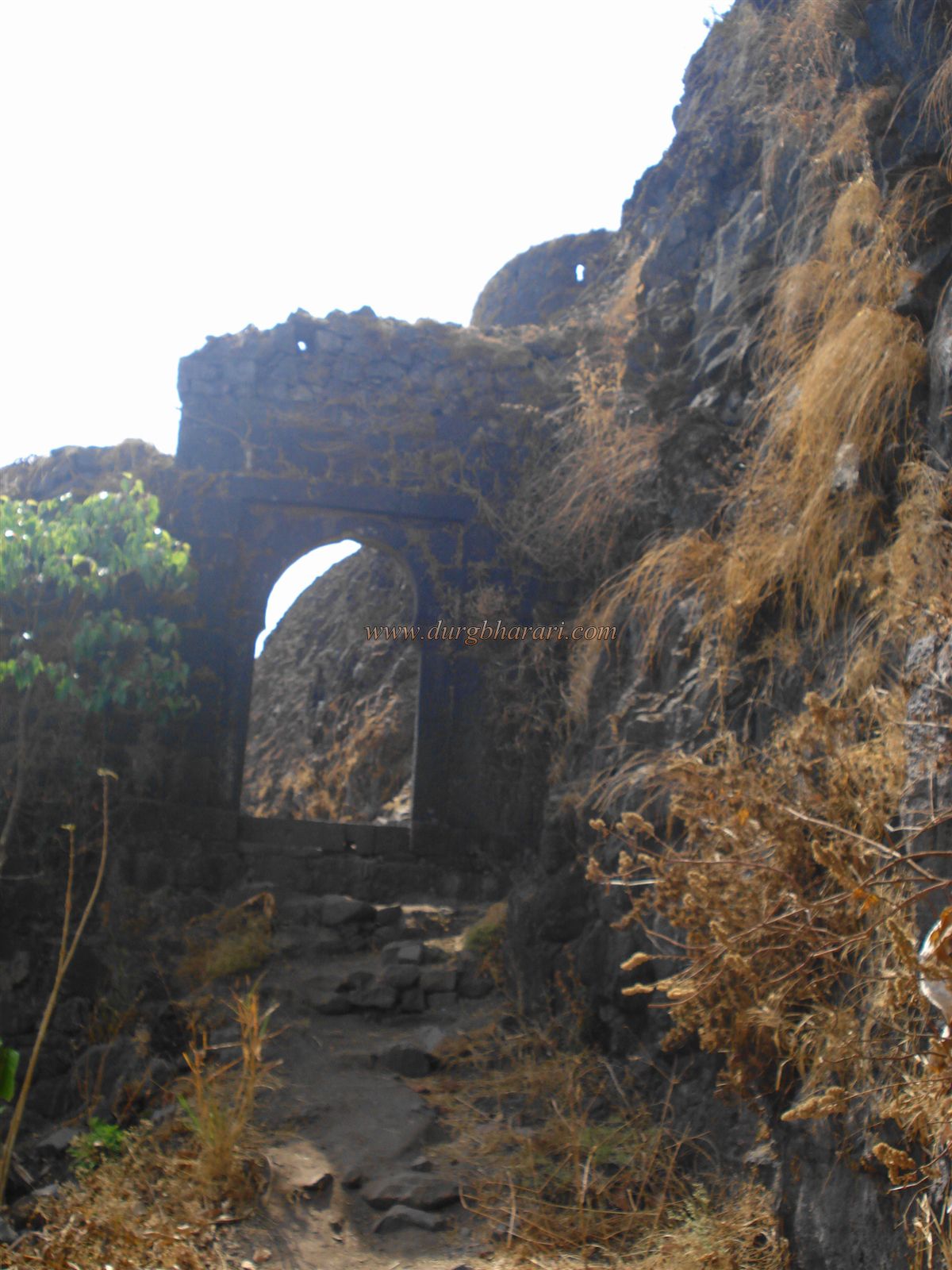
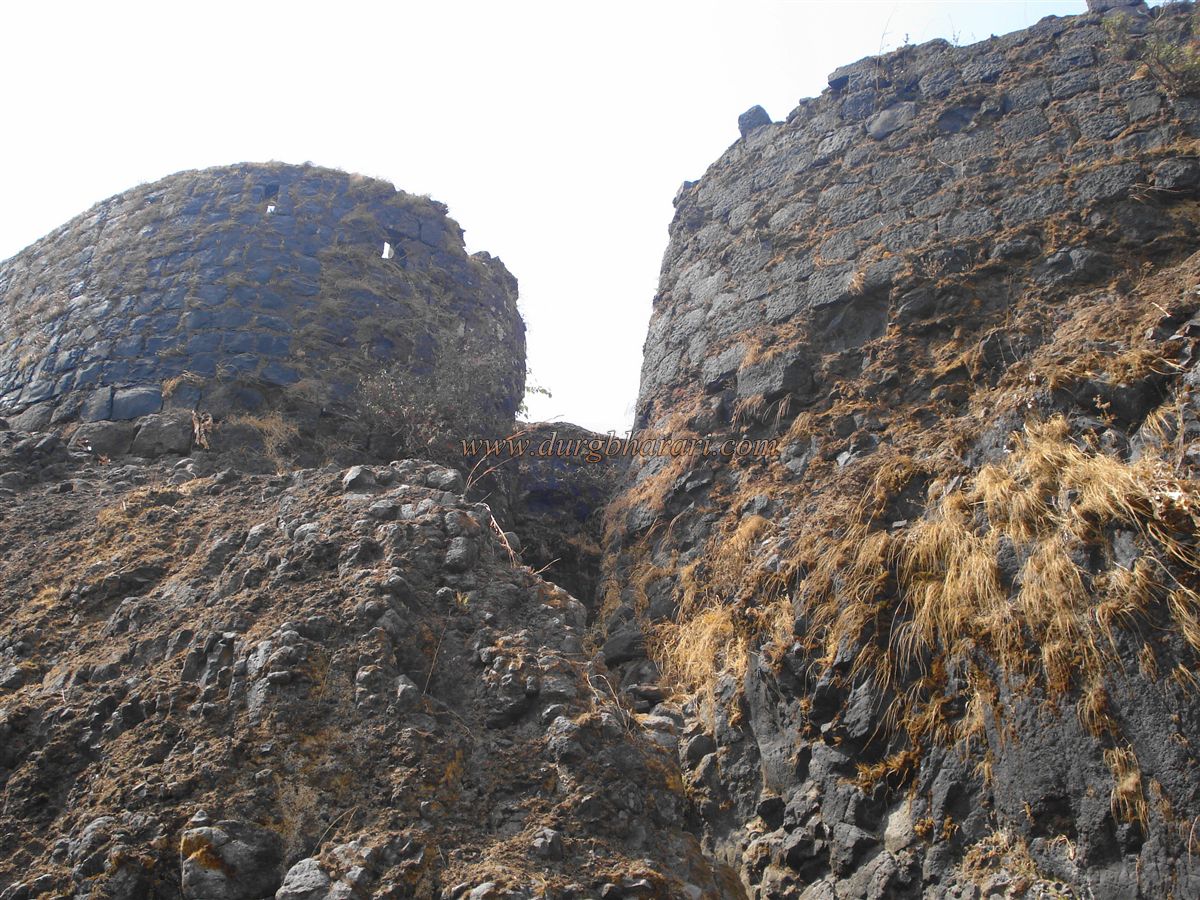
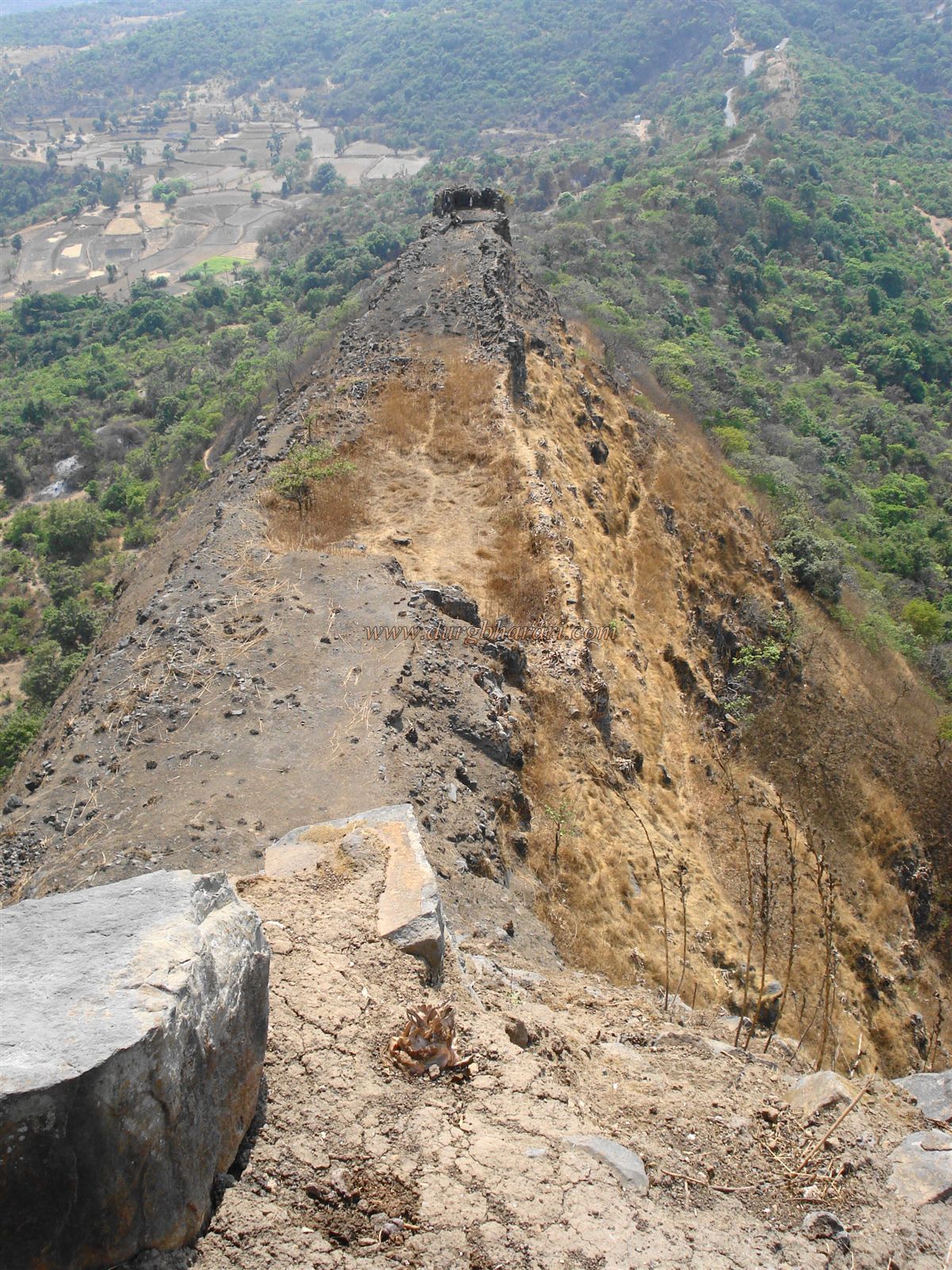
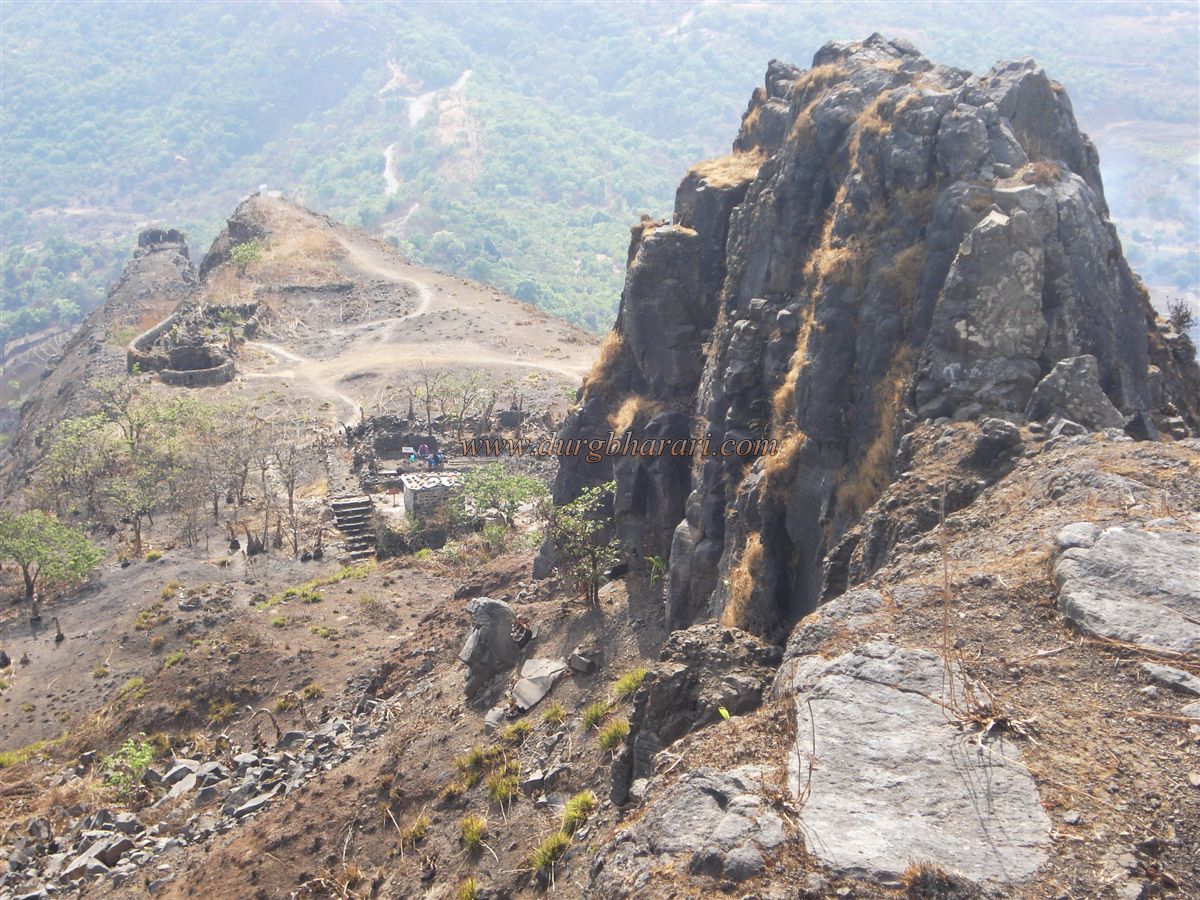
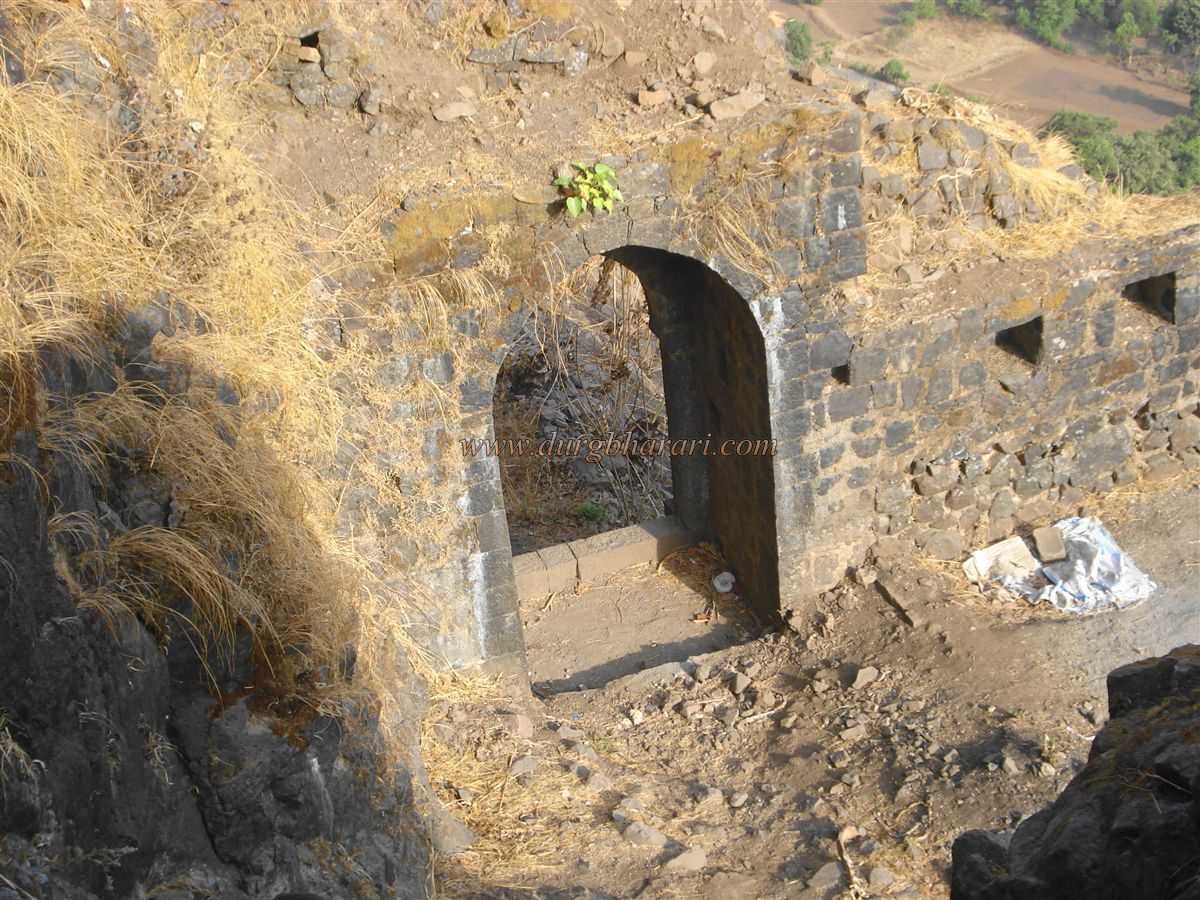
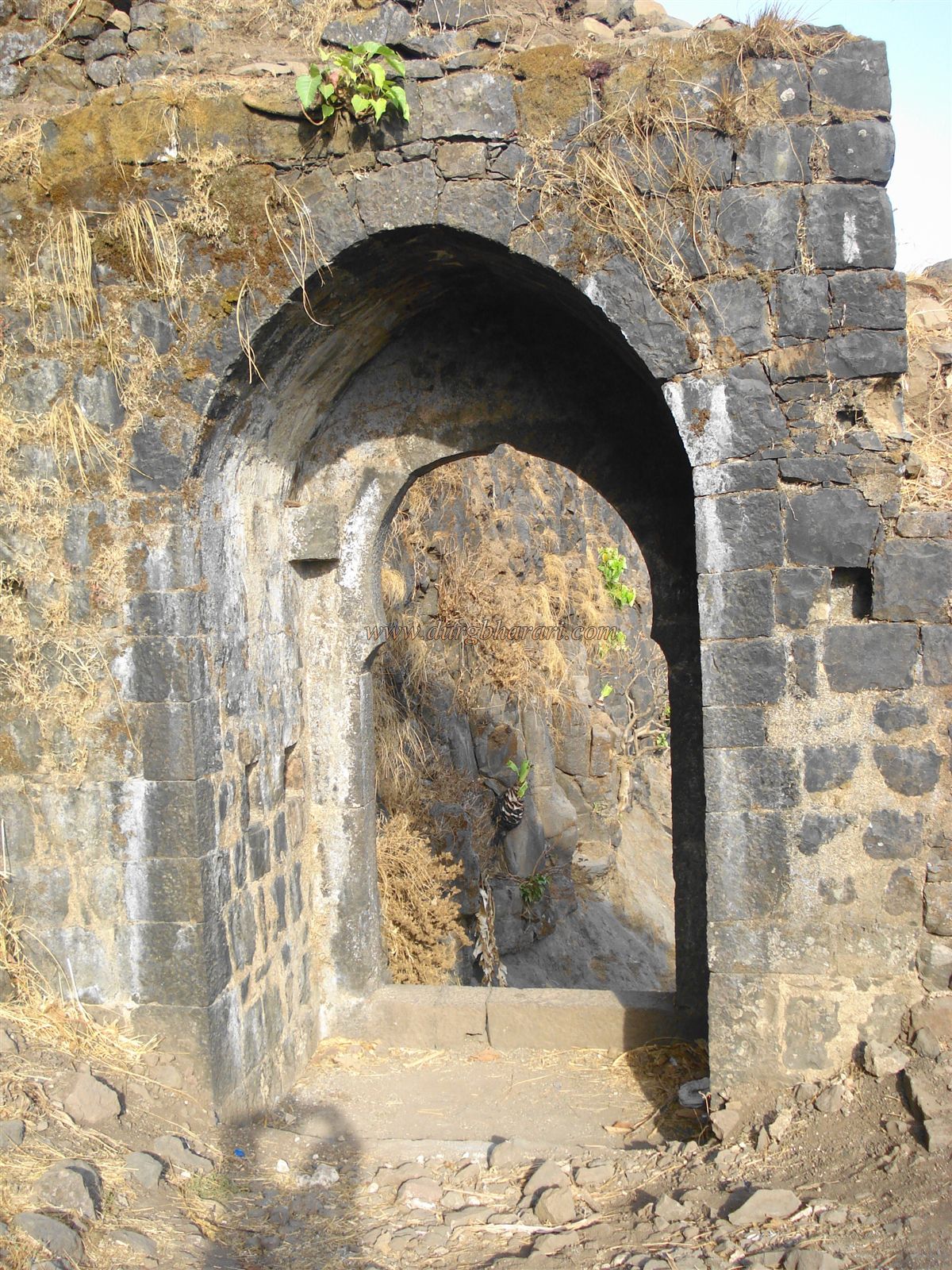
The entrance to the fort is designed in the classic Shiv-era Gomukh style, with two hidden gates in succession. These gates have no decorative carvings but do have guard chambers inside. The fort’s layout naturally forms four levels — the first below the gate and the other three above it. At the end of the lower level is a large bastion; in total, five bastions remain.
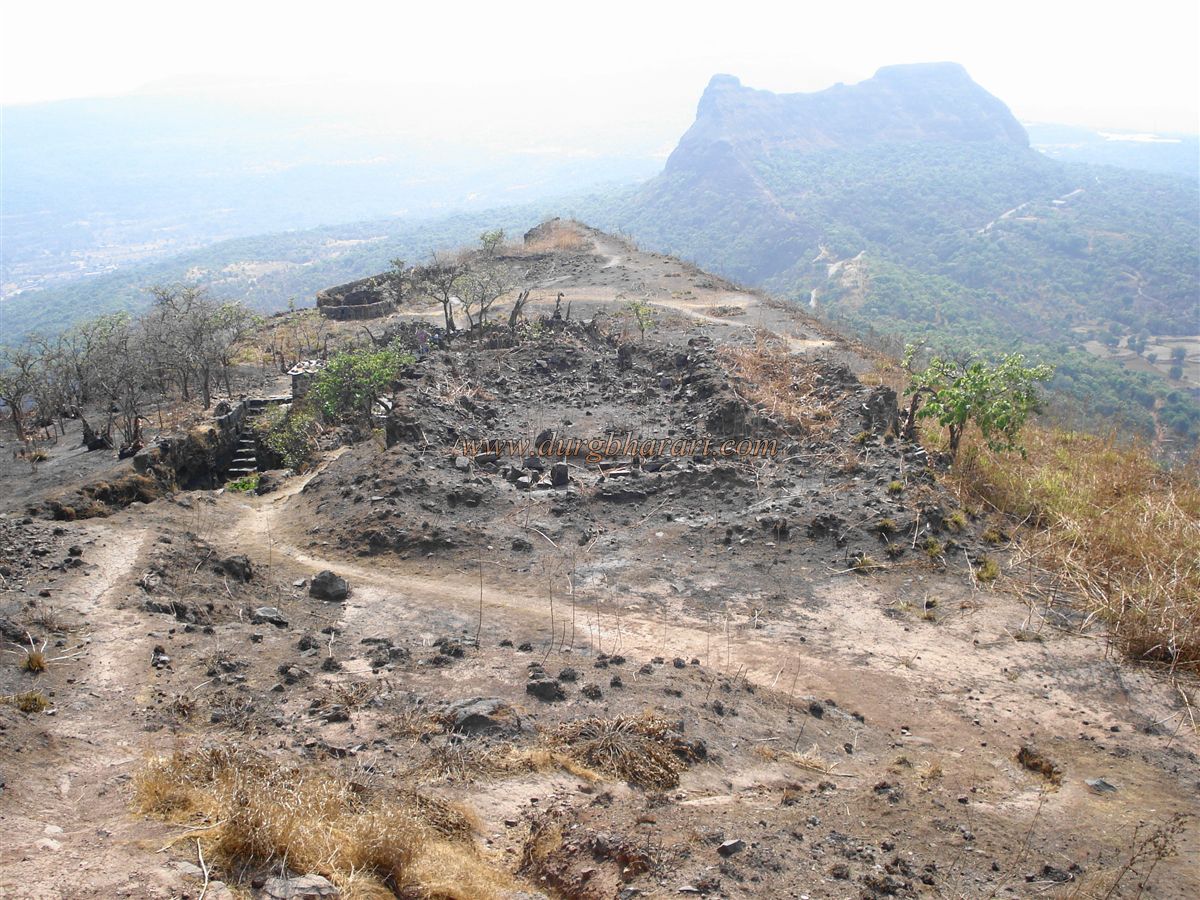
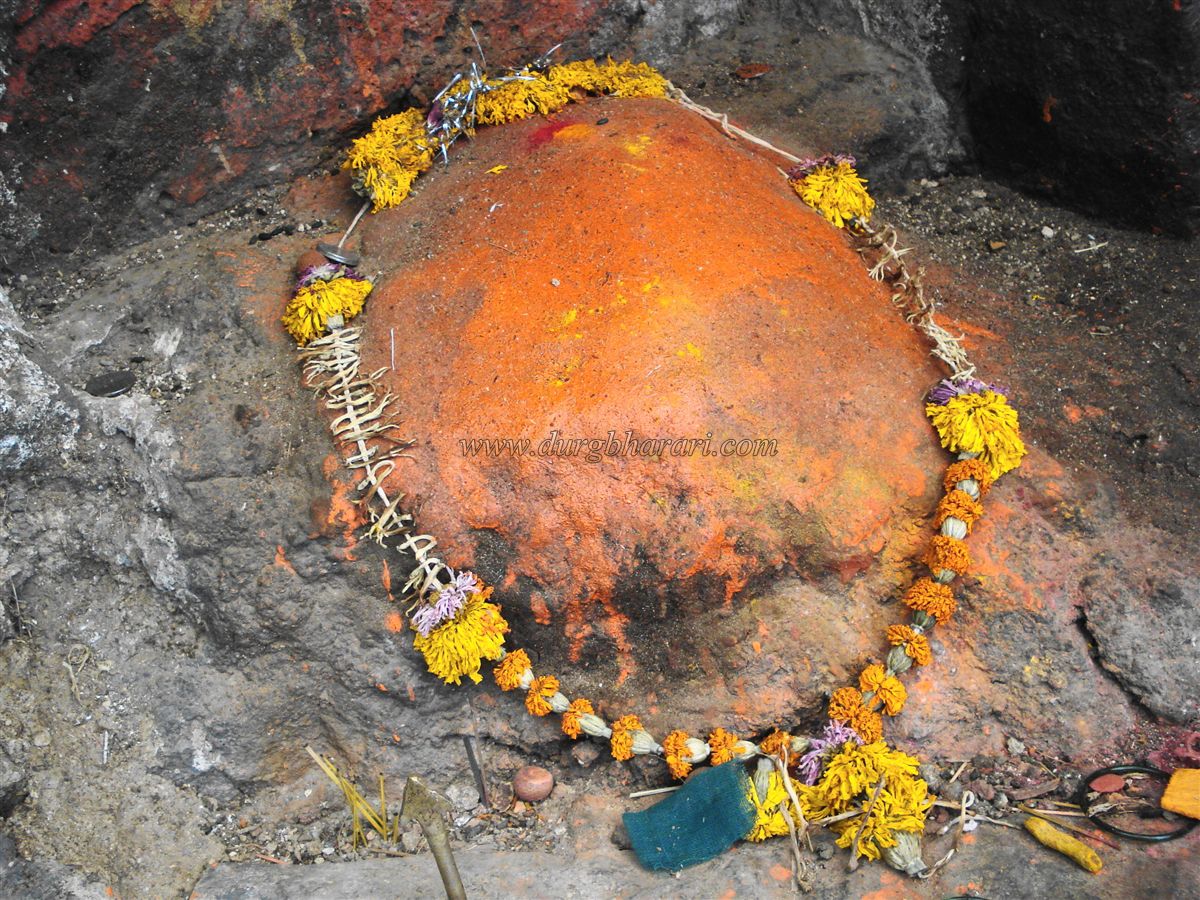
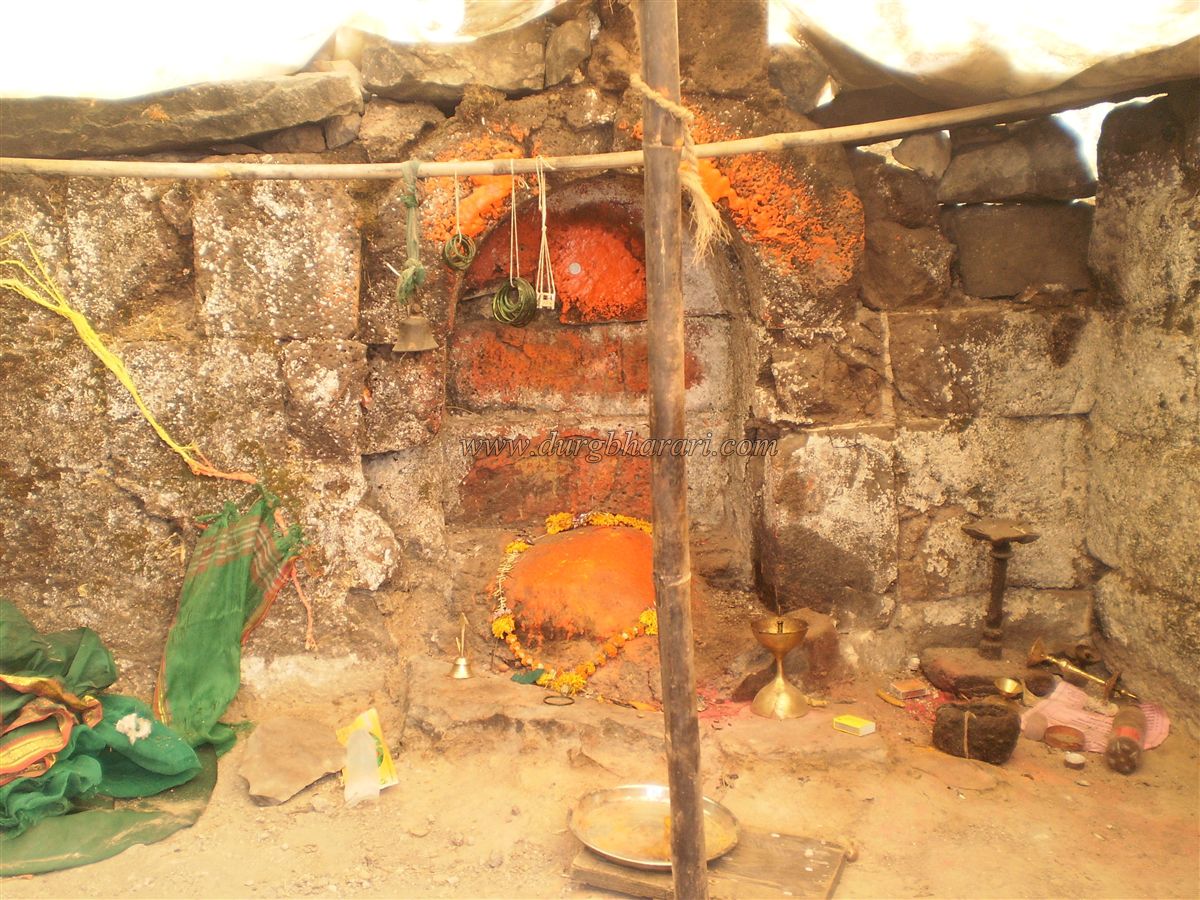
The fort’s size is small, with the main citadel (balekilla) rising like a Shiva lingam’s shalunka at the eastern tip. Here, you can find the ruins of administrative offices, the commander’s residence, a Ganesh temple, a masonry tank, and rock-cut cisterns. On the balekilla it stands the Tungai temple, the fort’s presiding deity. The summit offers very little space — just enough to circle the temple — and any misstep could mean a sheer drop.
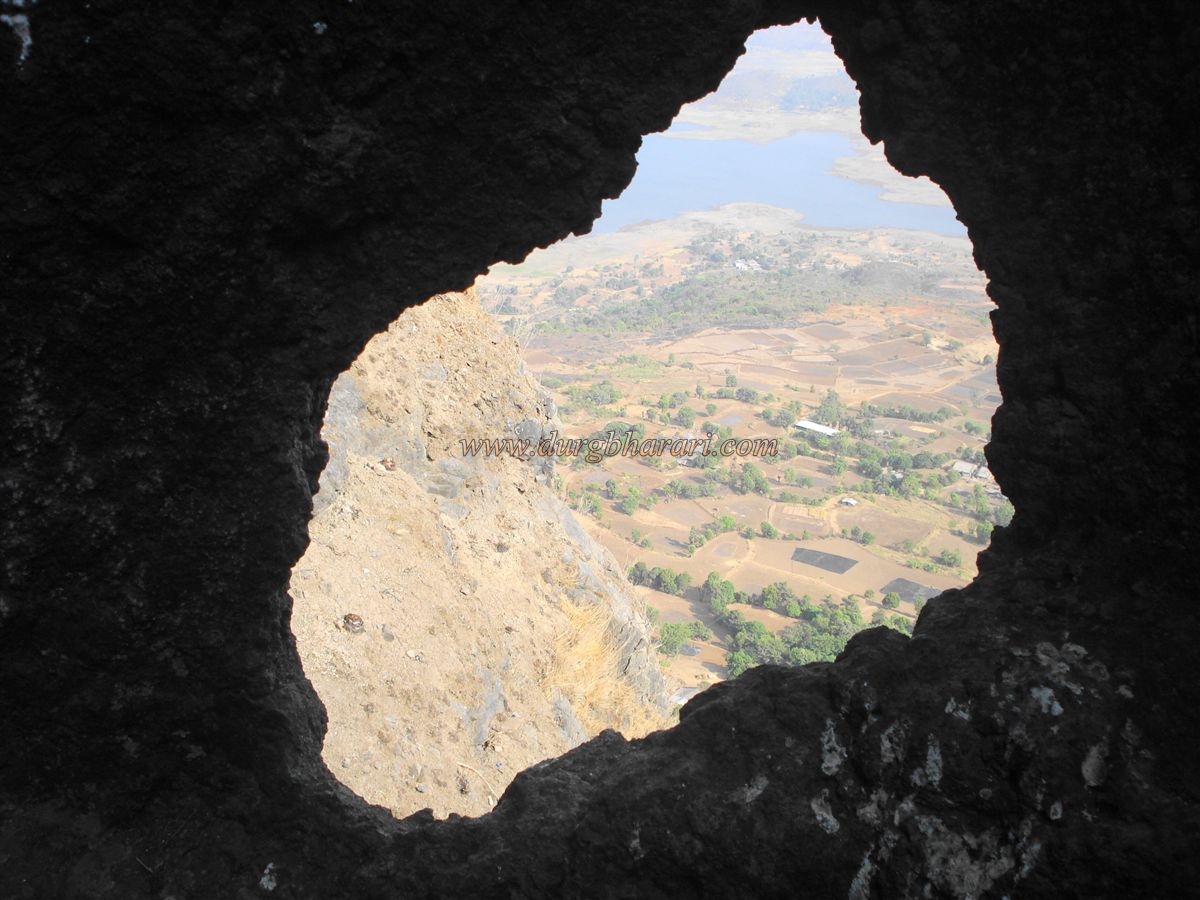
From the top, the views are breath taking: Pavana Dam’s vast waters, the Lohagad–Visapur twin forts, and Tikona fort dominate the horizon.
Tung has no grand historical events tied to it. Due to its small size, it was likely used mainly as a watch post. The earliest known mention is during the Nizam Shahi era. In 1657, Shivaji Maharaj captured Tung along with Lohagad, Visapur, Songad, Tala, Mahuli, and Karnala forts. It served as a lookout over the Pavana Maval. In 1660, Netaji Palkar was appointed to secure the area. On 6 May 1665, during their campaign, Jai Singh and Diler Khan burned several villages in the Tung–Tikona region but could not capture the forts.
Under the Treaty of Purandar (11 June 1665), Tung was among the 23 forts handed to Jai Singh. On 18 June, Kubad Khan, Halalkhan, and others took charge, but the Marathas later recaptured it. During Aurangzeb’s southern campaign, the Mughals captured Tung and renamed it Bankigad, but the name was short-lived. The Marathas soon reclaimed it, and after British rule, it remained under the princely state of Bhor until independence.
Visiting Tung is best done at least once to appreciate why Shivaji Maharaj named it Kathingad. It takes about 1.5 to 2 hours to explore the whole fort.
© Suresh Nimbalkar
GALLERY