KANHERGAD
TYPE : HILL FORT
DISTRICT : NASHIK
HEIGHT : 3500 FEET
GRADE : HARD
There are two forts in Maharashtra known by the name “Kanhergad.” Of these, the Kanhergad in the Ajanta hill range near Chalisgaon is silent about its history, whereas the Kanhergad in Baglan silently holds close to its heart the saga of bravery of Ramji Pangera and his companions. Located slightly away from the main Satmala range, this historically famous fort remains quite neglected by fort enthusiasts because of its remote approach.
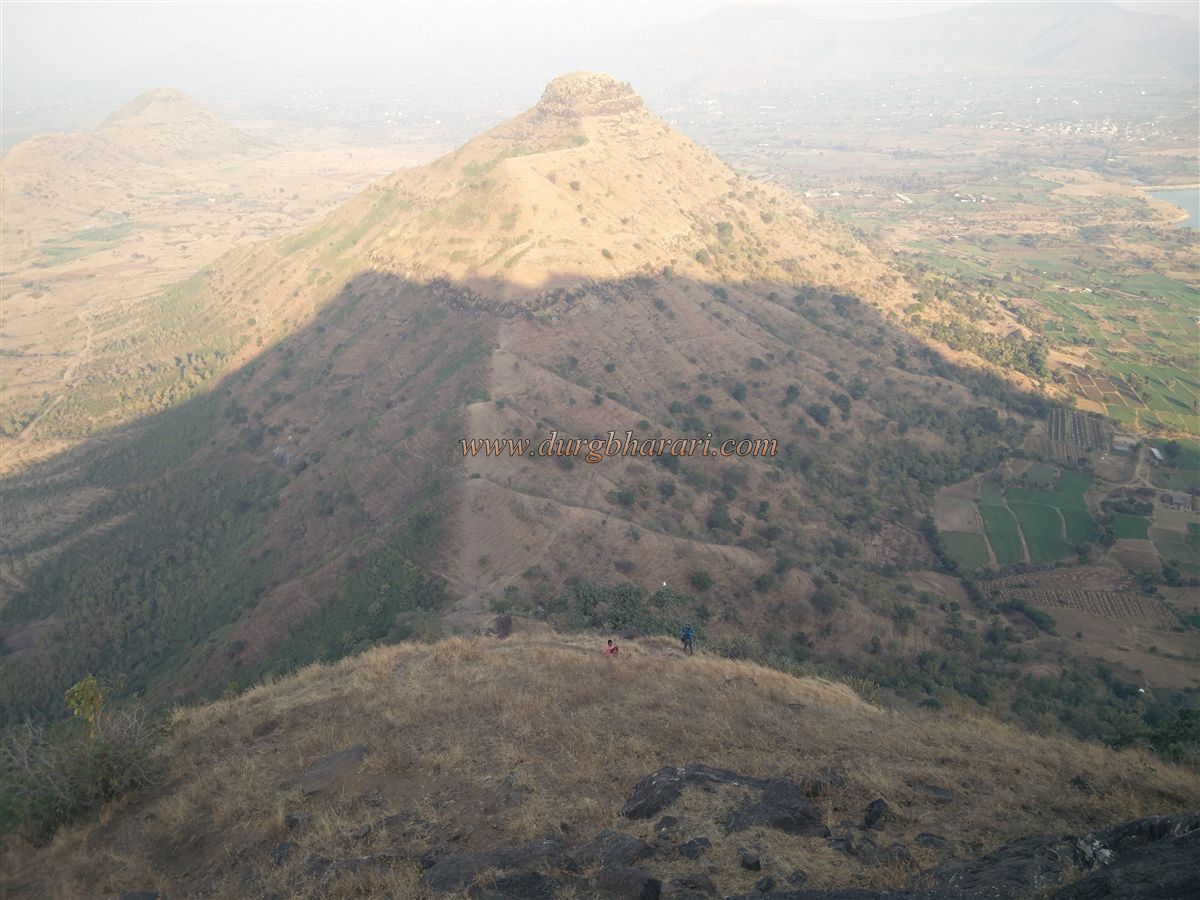
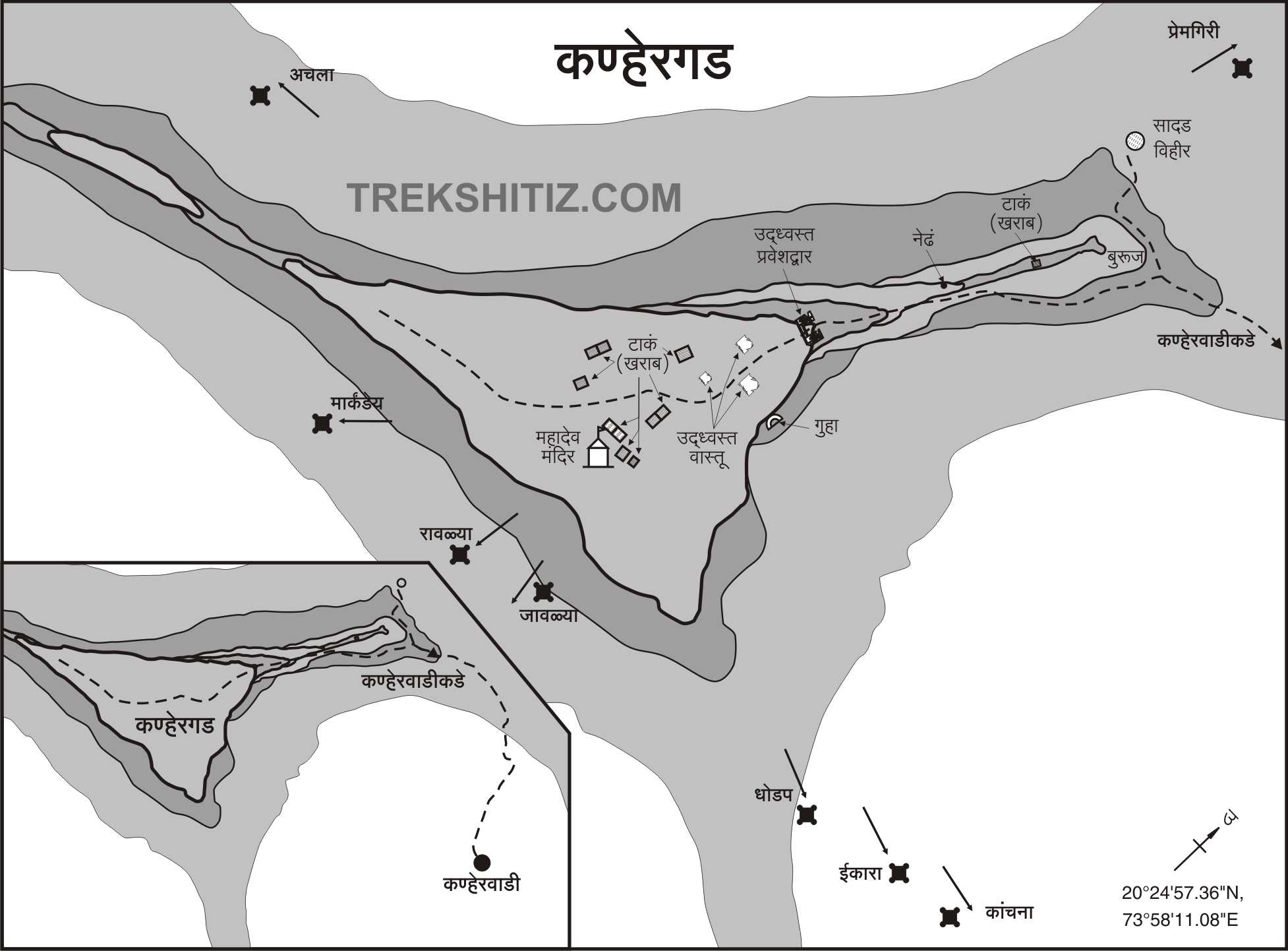
The two base villages at the foot of this fort are Kanherwadi and Sadadwihir, with clear routes leading up from both. The trails from these villages meet in the pass between the fort’s spur and the opposite hill, and from there, a single path ascends to the summit of Kanhergad. It takes about two hours to reach the top from either village.
...
To reach Sadadwihir, the route is Nashik–Nanduri–Athamba–Sadadwihir (65 km), and to reach Kanherwadi, it is Nashik–Vani–Mulane–Kanherwadi (60 km). From Sadadwihir, the fort’s base is 2 km away. If you have a private vehicle, you can drive directly to the foot of the fort. On this road, while heading towards the pass, you will see a faint footpath to the left leading upward. The key landmark is a small bridge on the Sadadwihir–Pimpripada road before the pass; just before this bridge, on the left, a trail climbs toward the pass through the forest.
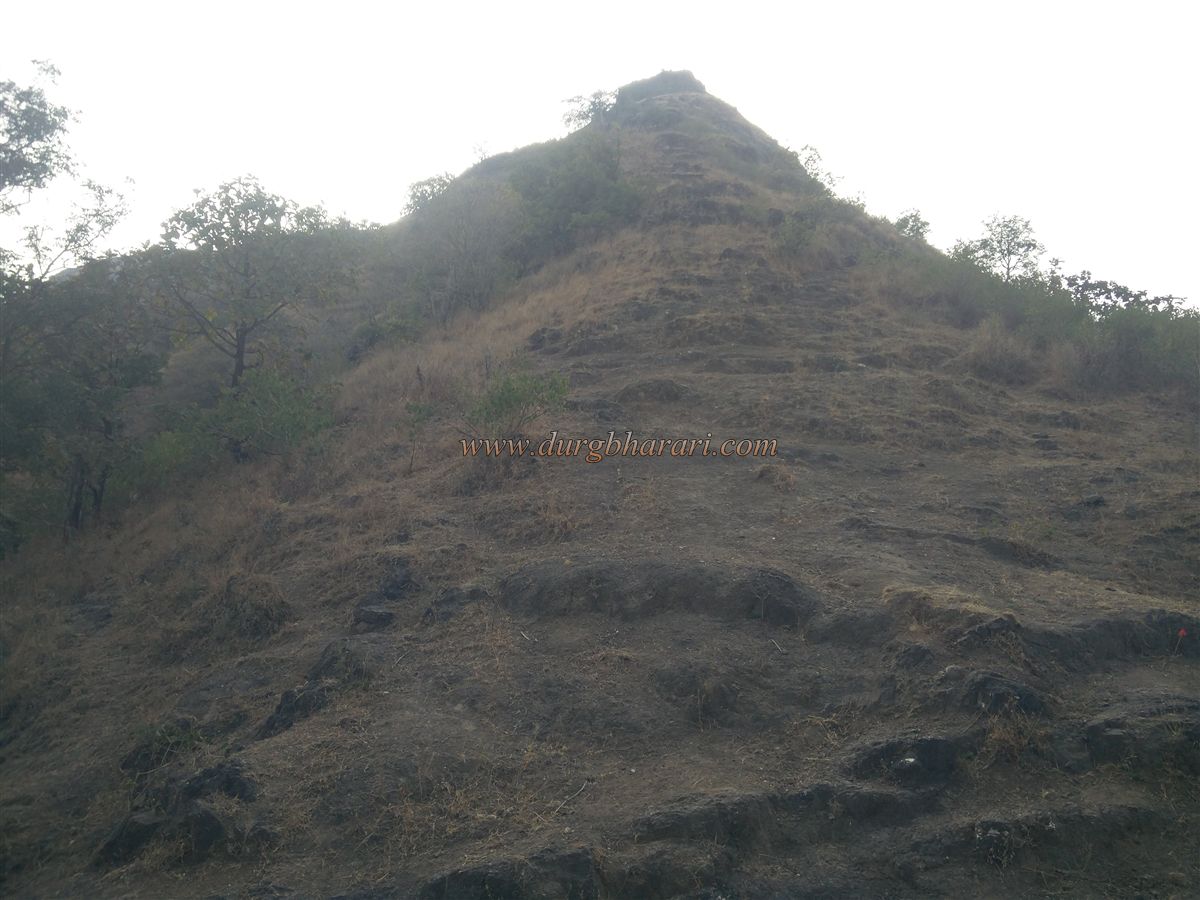
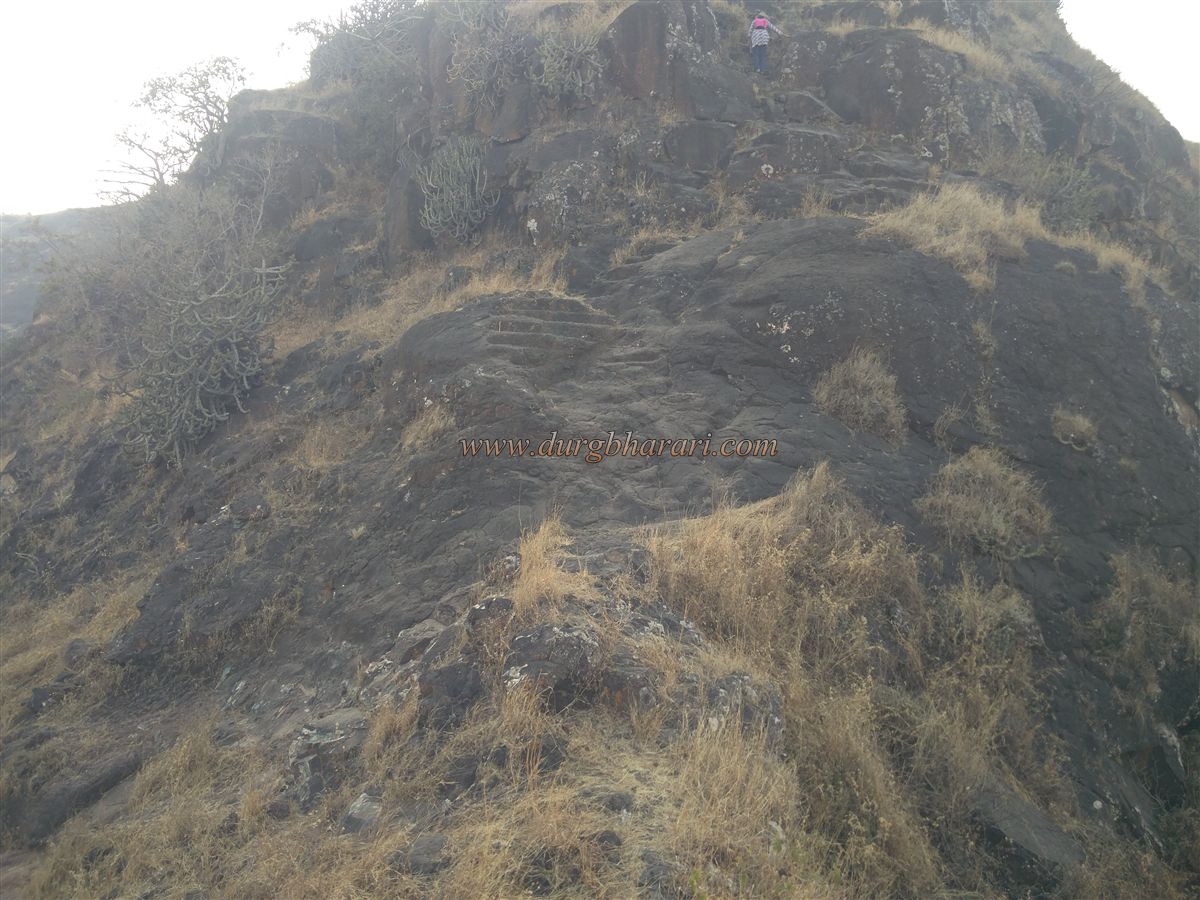
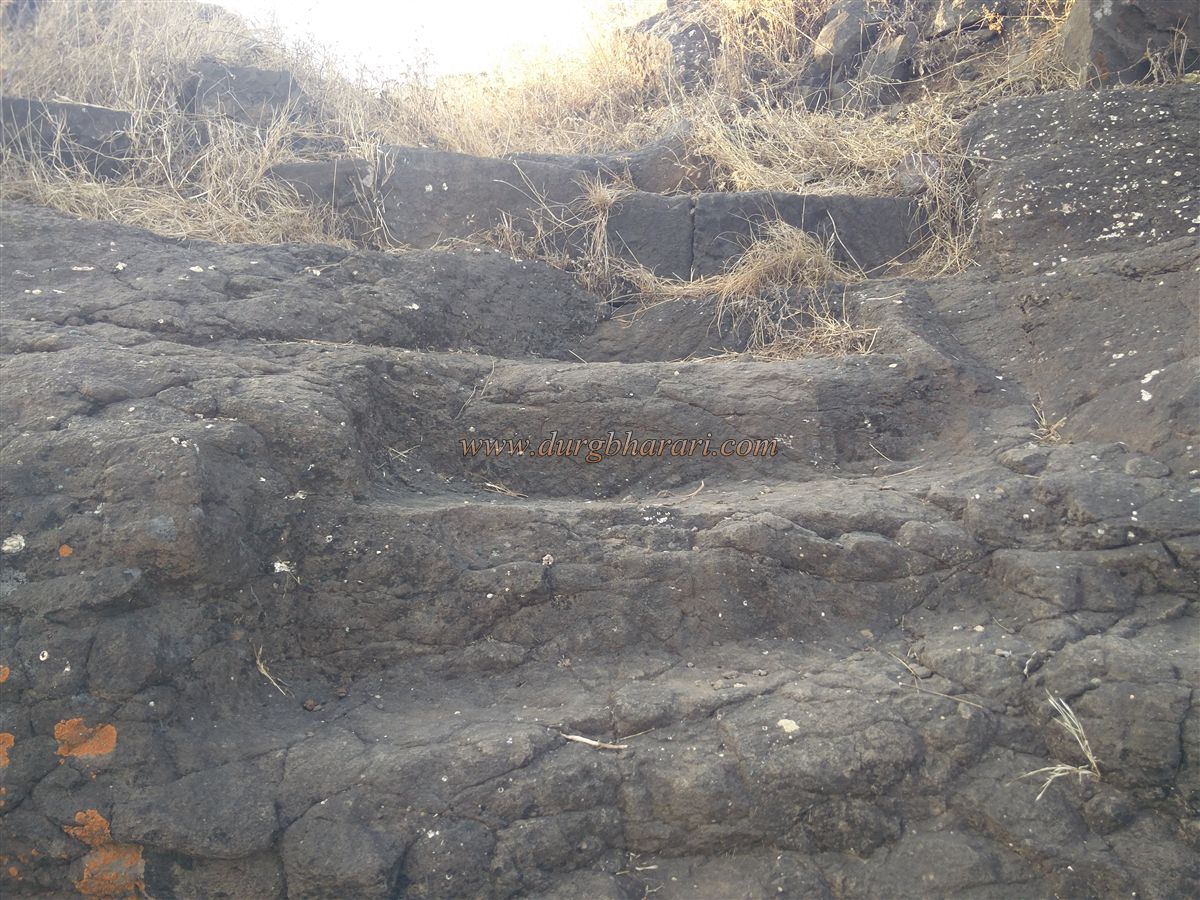
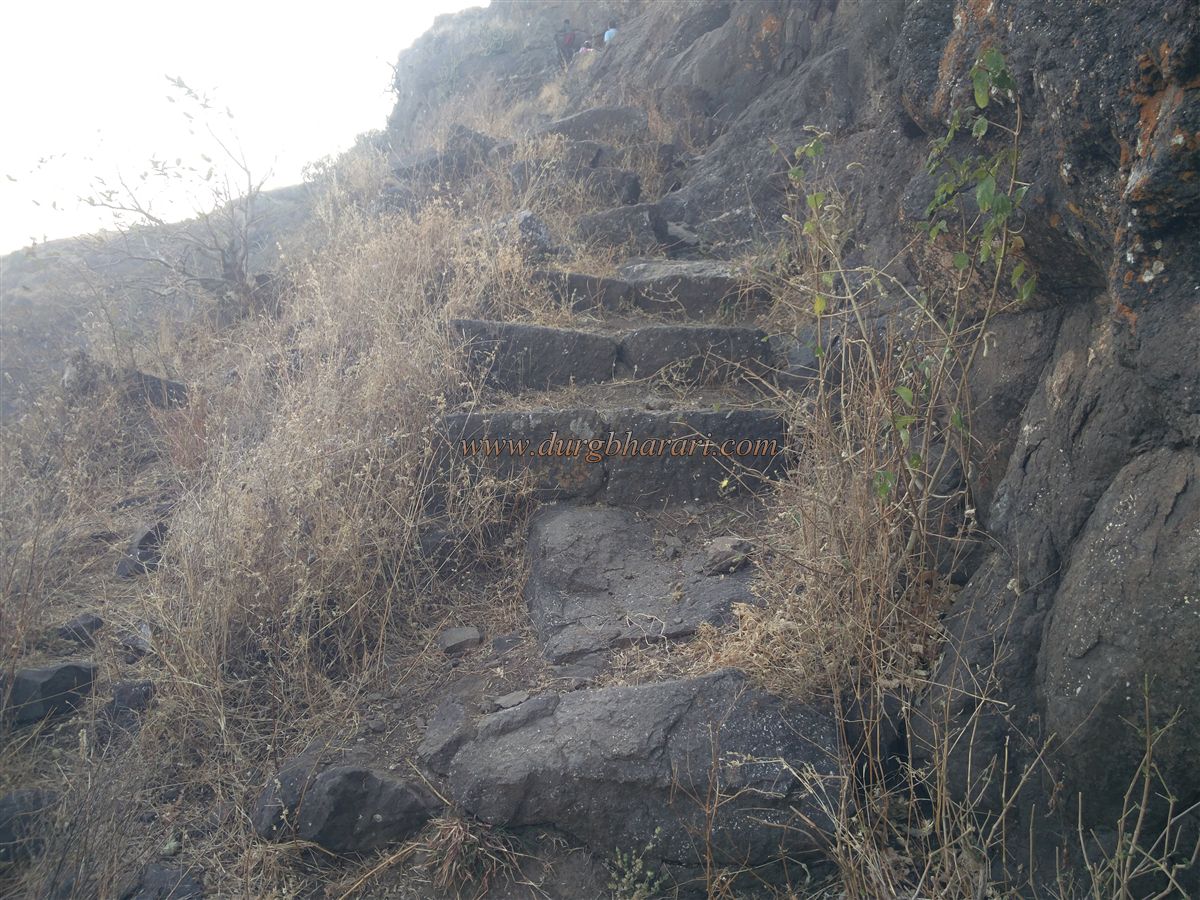
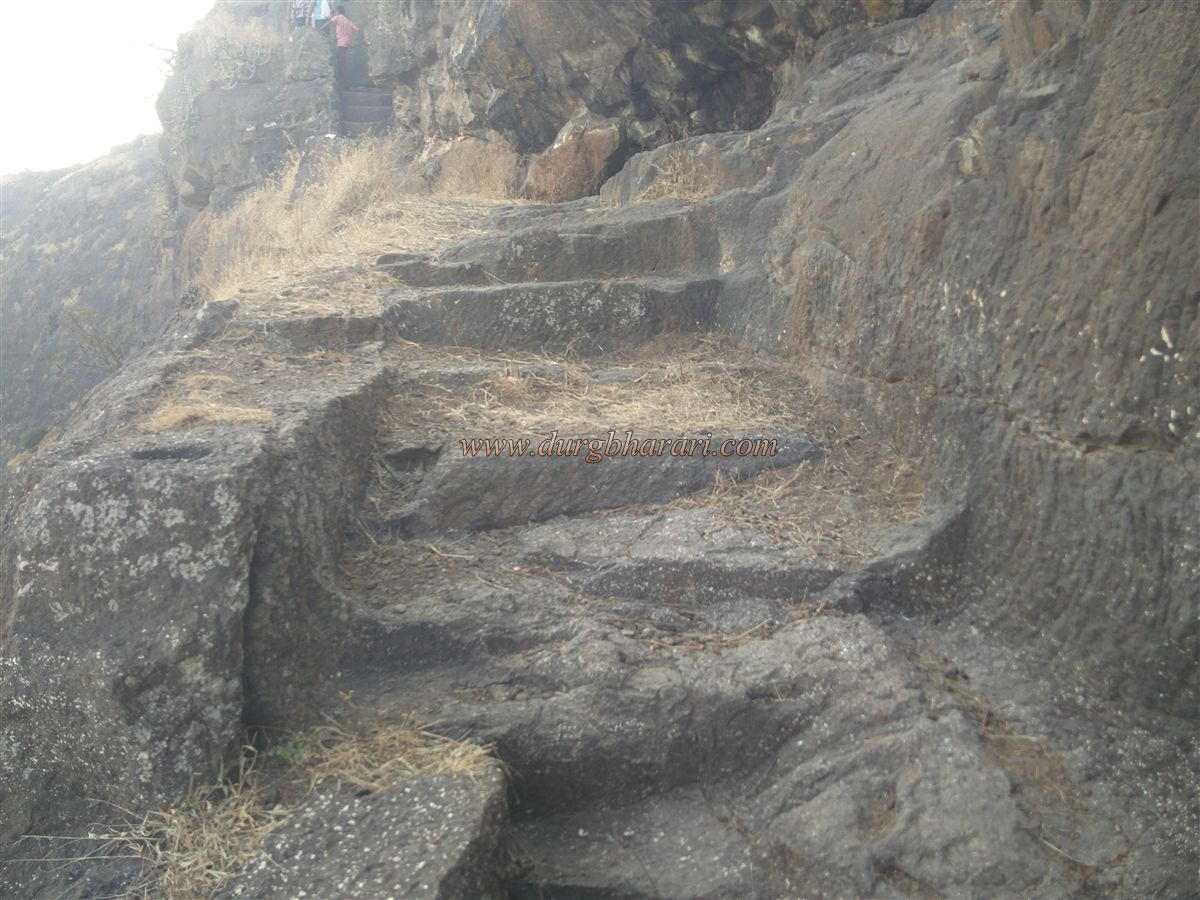
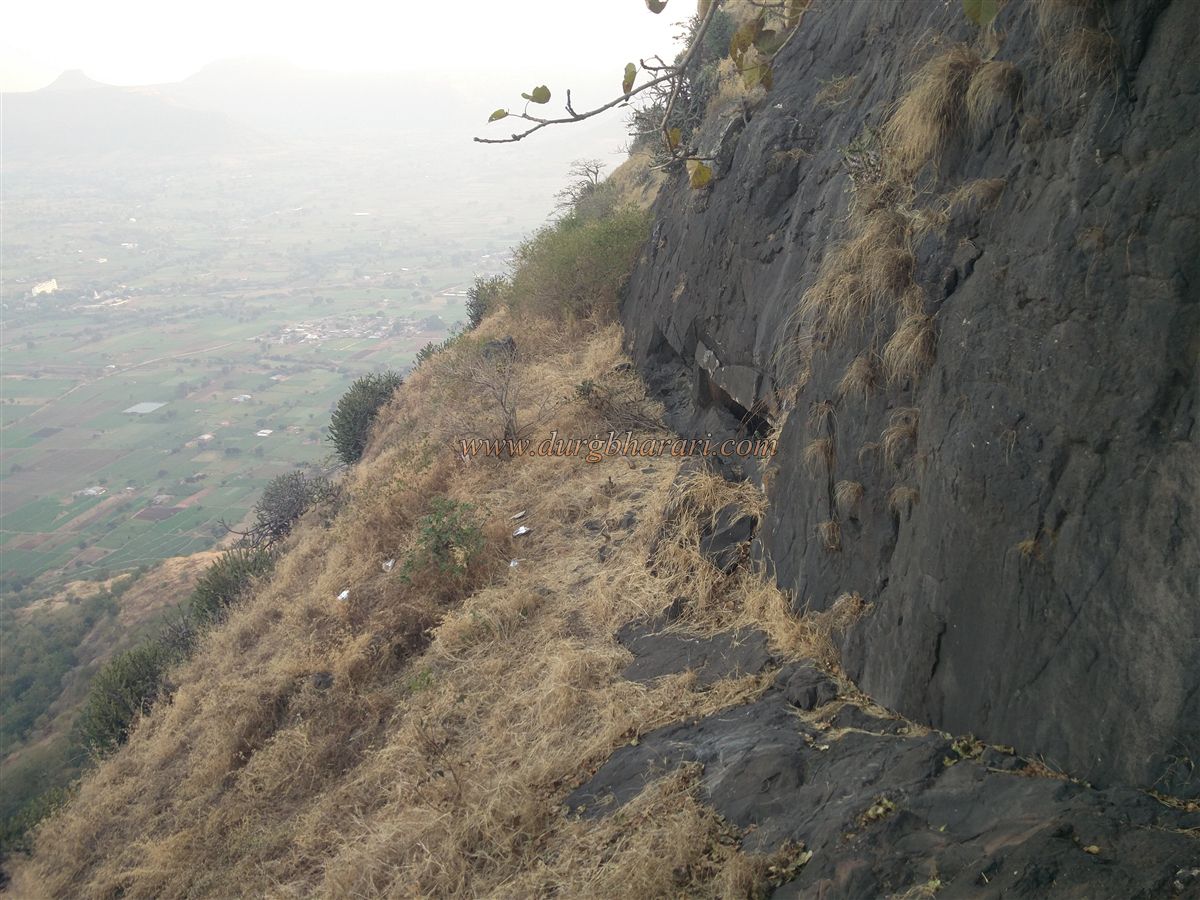
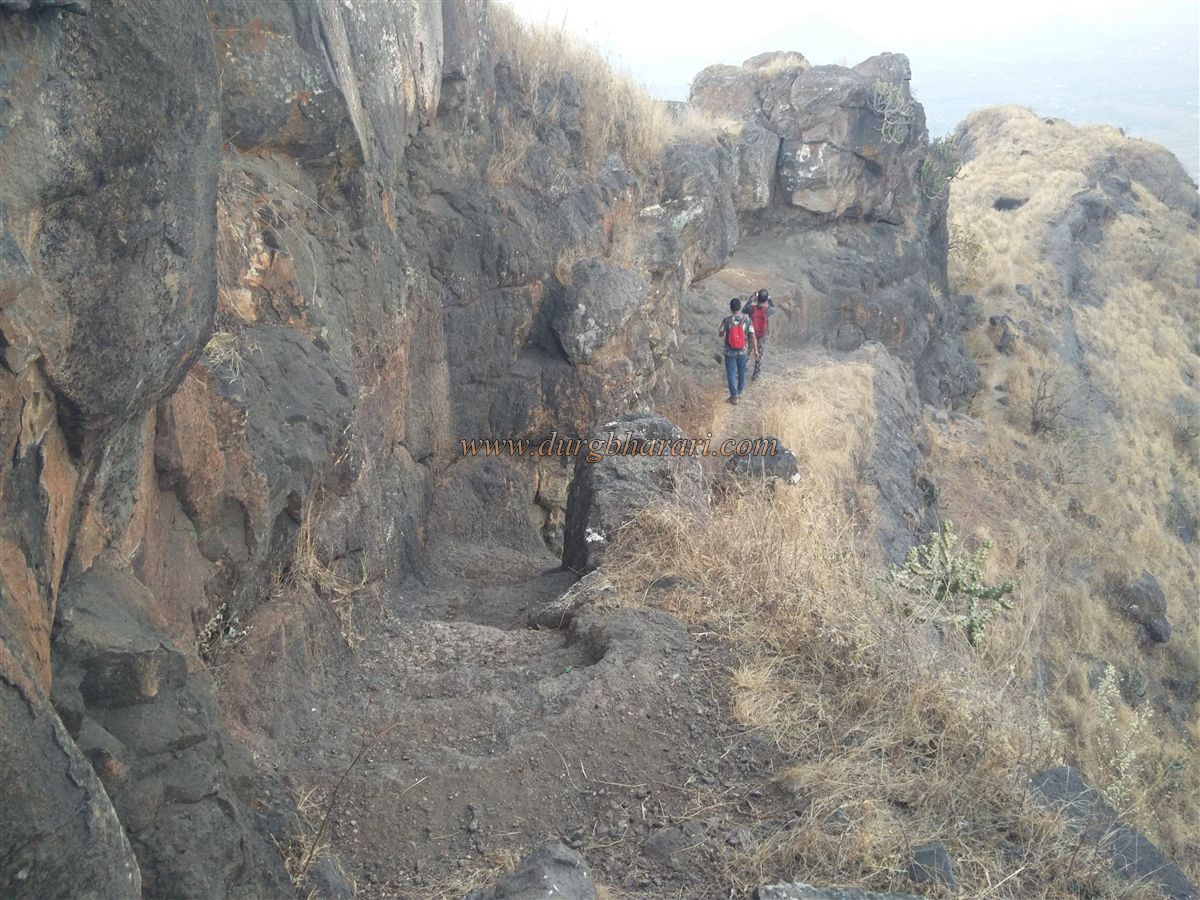
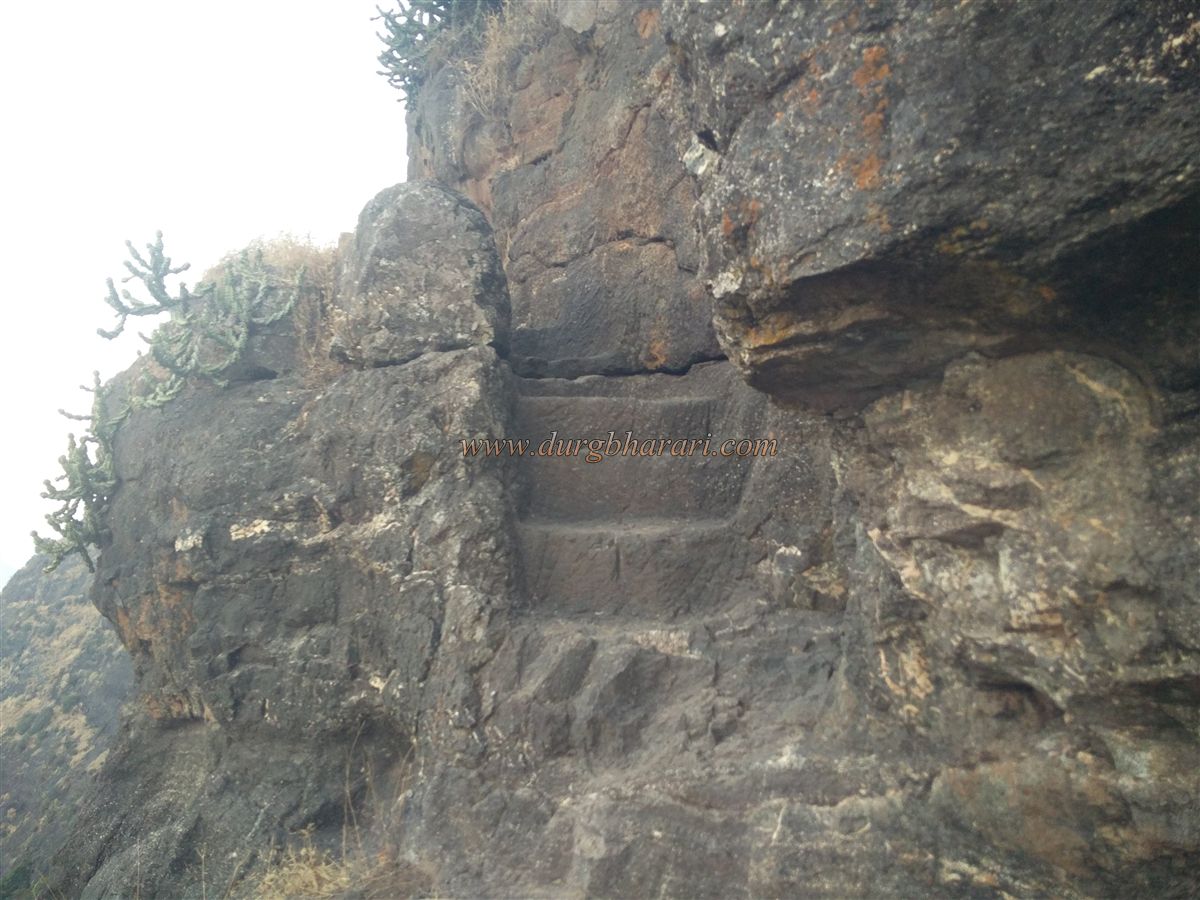
Following this not-so-prominent path uphill for half an hour brings you to the pass between Kanhergad and the adjacent hill. From here, the bastion on the fort’s edge is visible. The climb from the pass to this bastion is steep—about 60–70 degrees—and covered in loose gravel, making it tricky. After this slippery section, the rocky slope begins, with some steps carved into the stone. A 45-minute climb from the pass brings you below the ruined bastion.
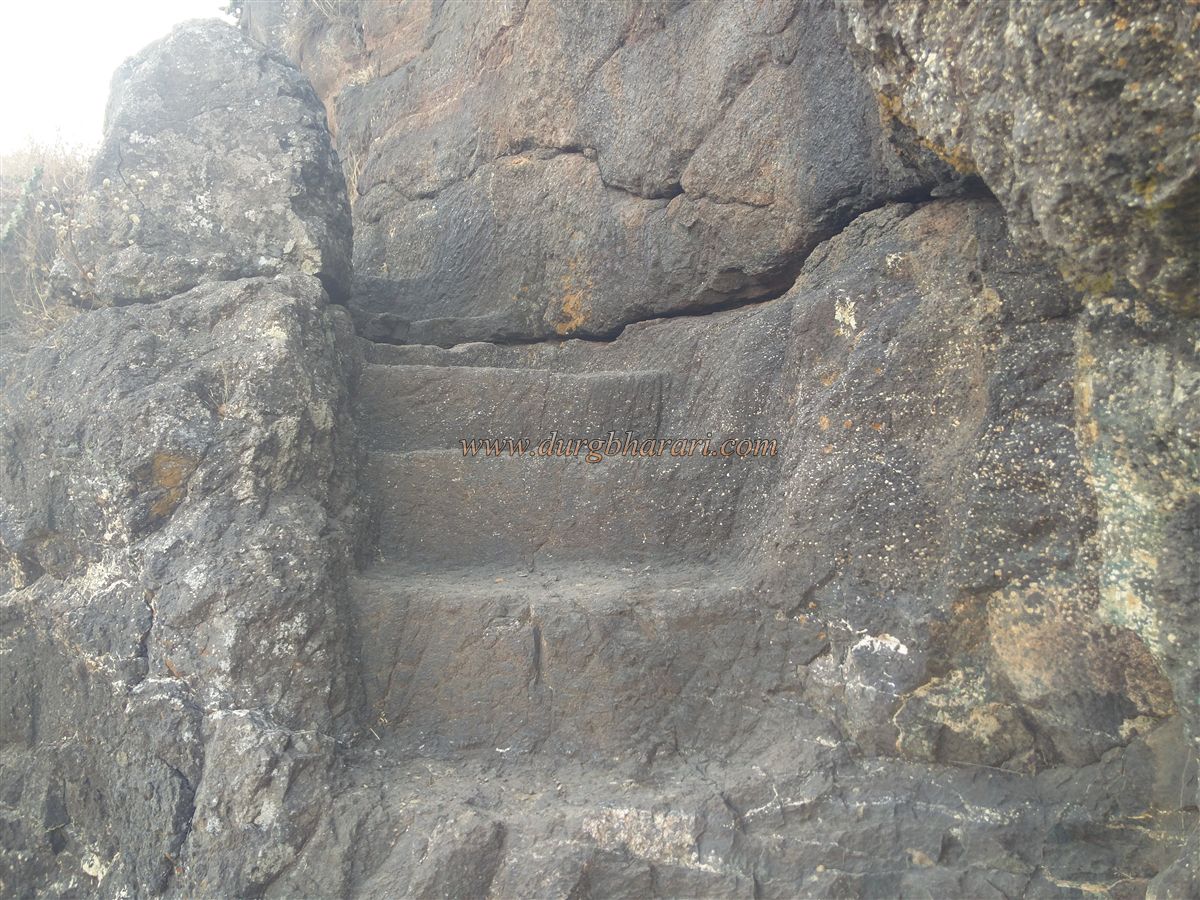
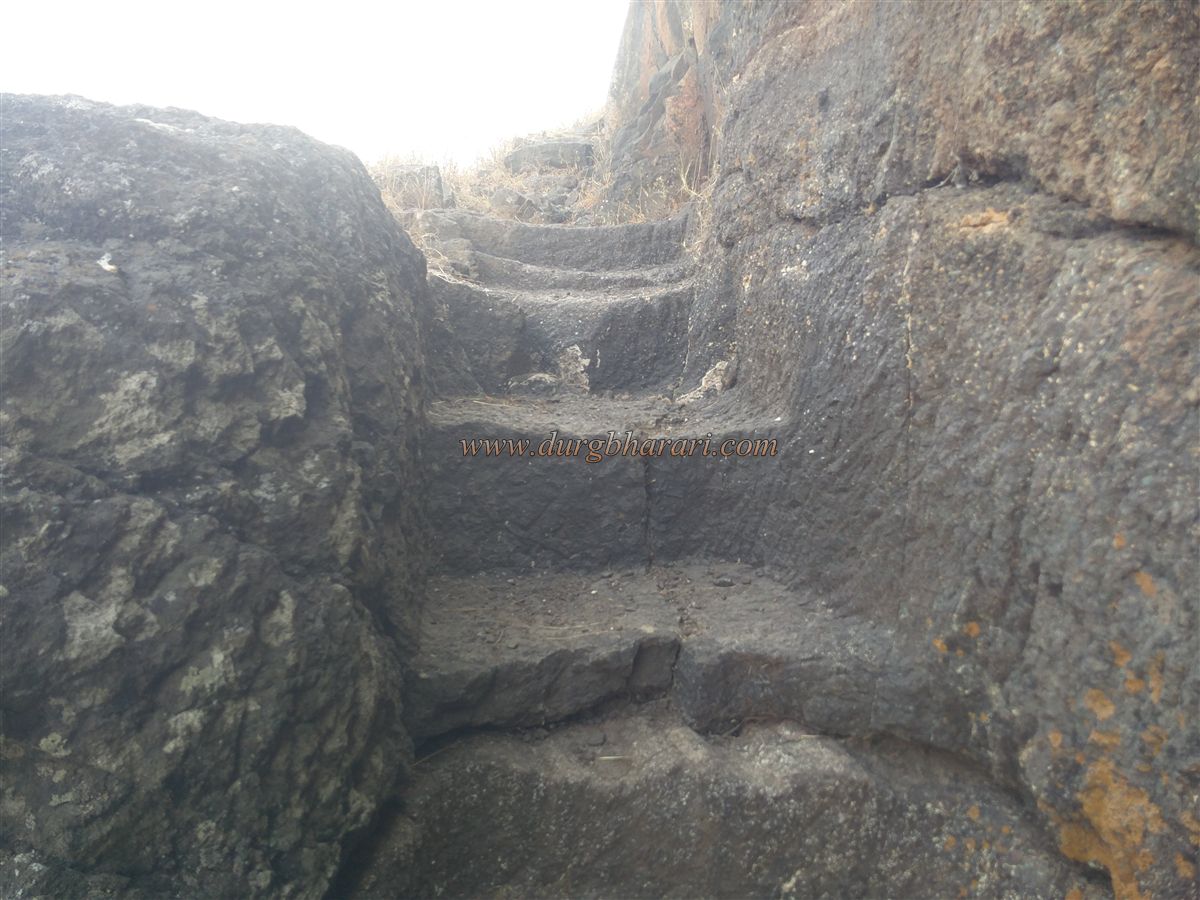
To the left of the bastion are a few carved steps. The lower part of the bastion is rock-cut, while the upper portion is masonry. Entry to the fort is from the left of this bastion. The fort’s gateway here is completely destroyed, though parts of the fortification remain. Above the bastion is a broken, silted water cistern.
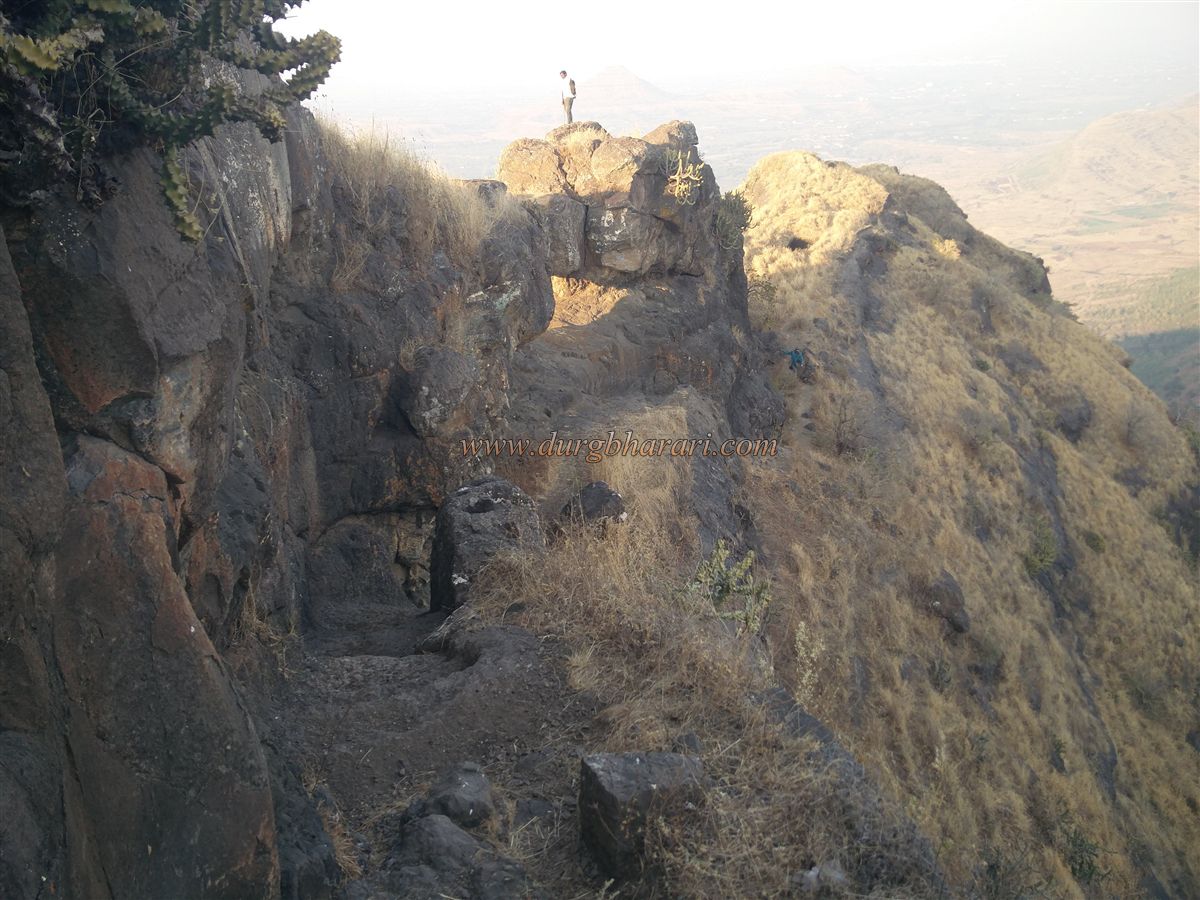
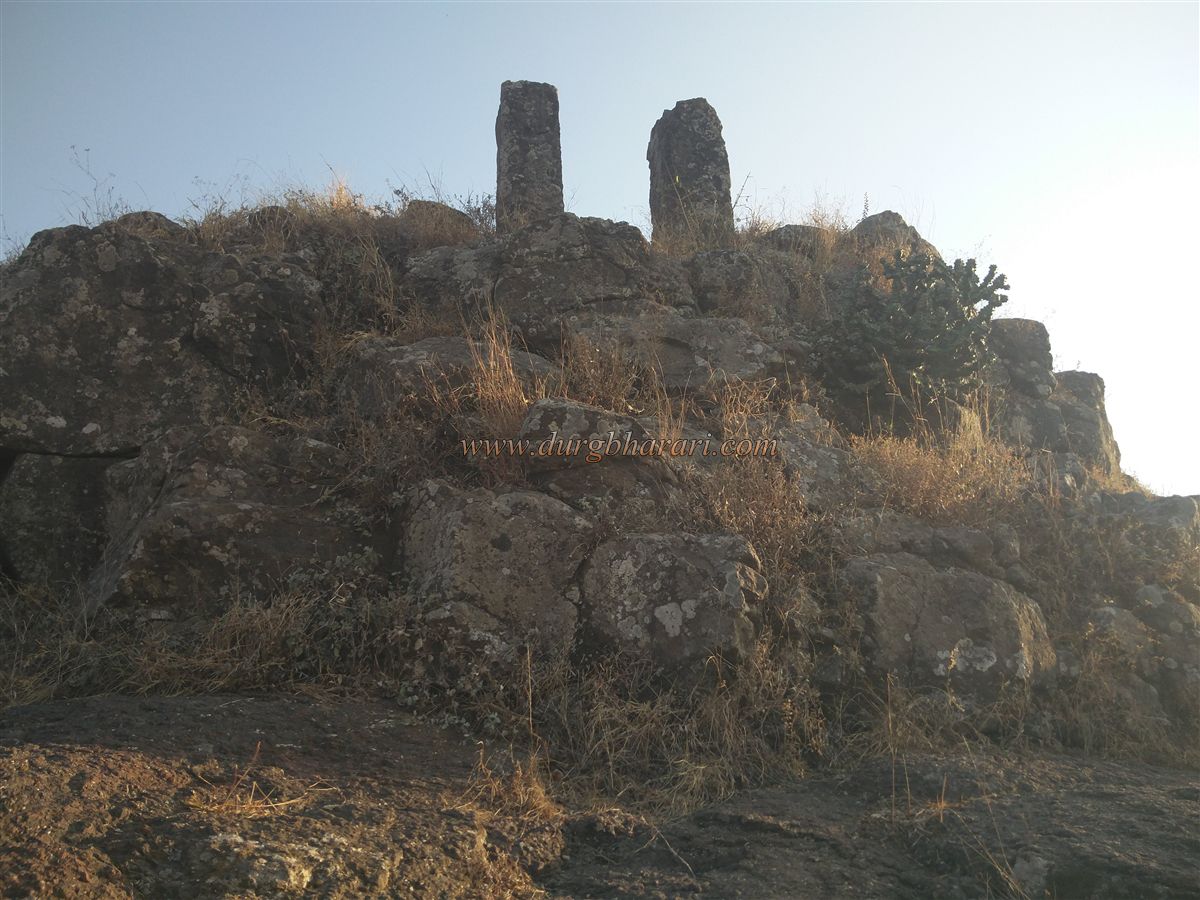
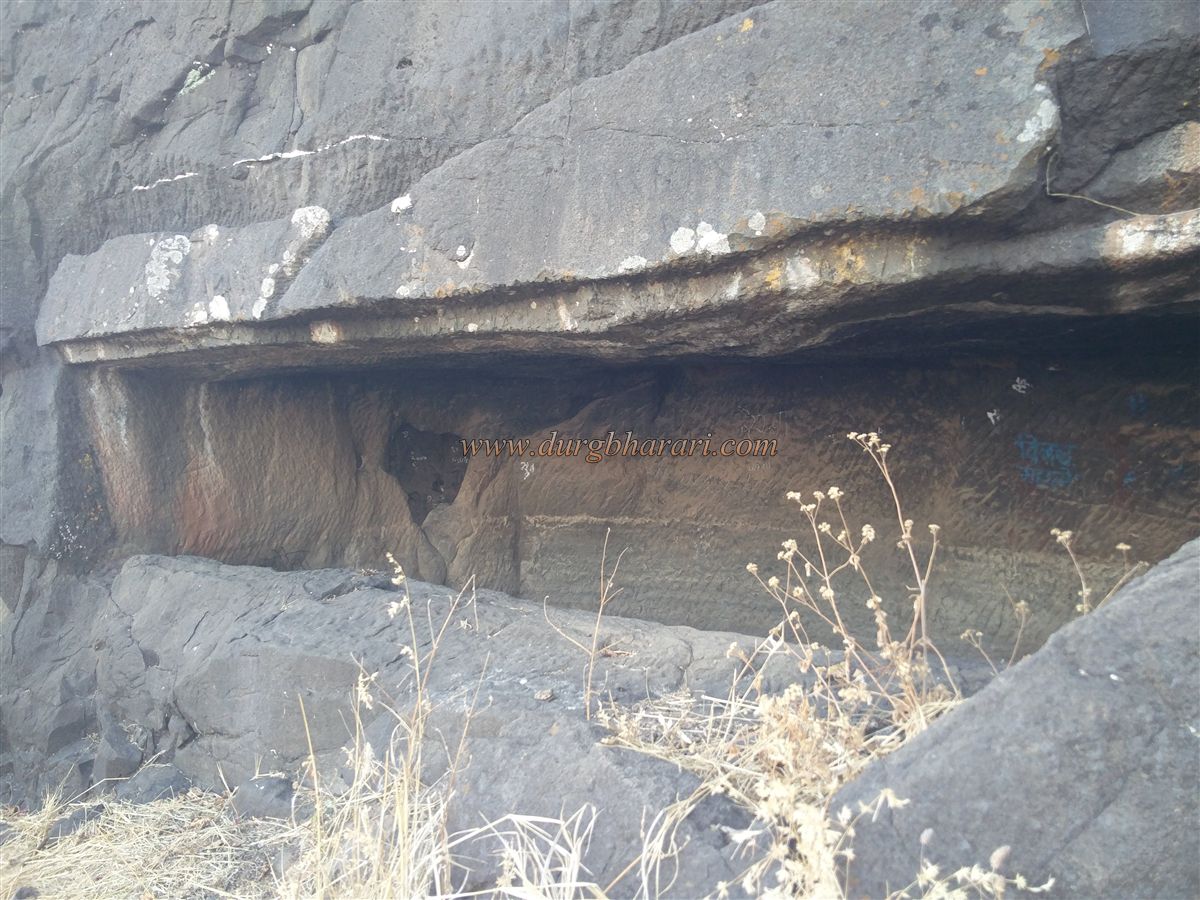
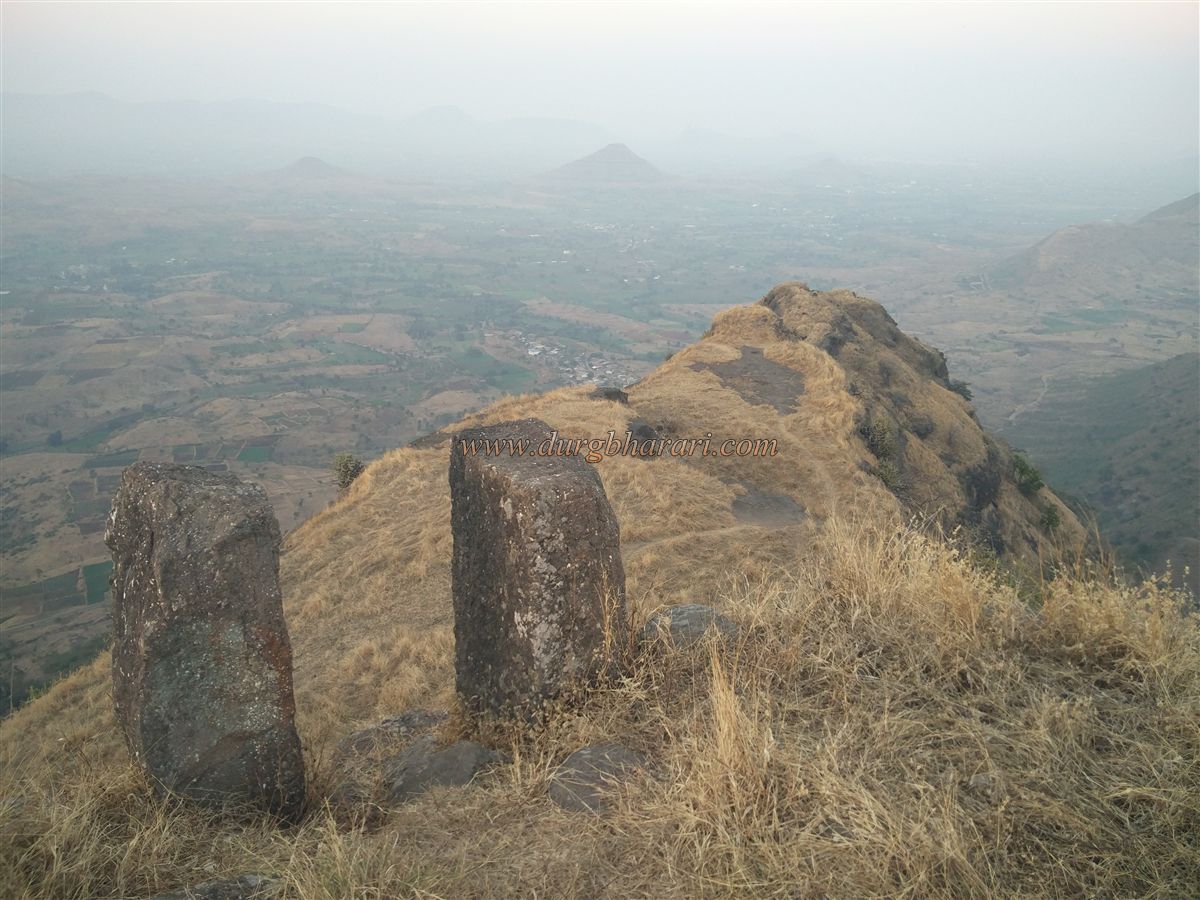
The path to the top alternates between built steps and rock-cut steps, passing a dry cistern along the way. A little ahead, on the right, is a natural rock window (nedhe), through which the breeze refreshes weary climbers. In front of the nedhe, steps cling to the rock face—judging by their design and other signs, there may once have been a small doorway here. Climbing these steps brings you to the top of the nedhe. On the way, two small stone pillars are seen—likely a viewing window (jharokha) in the fort wall for monitoring the lower area.
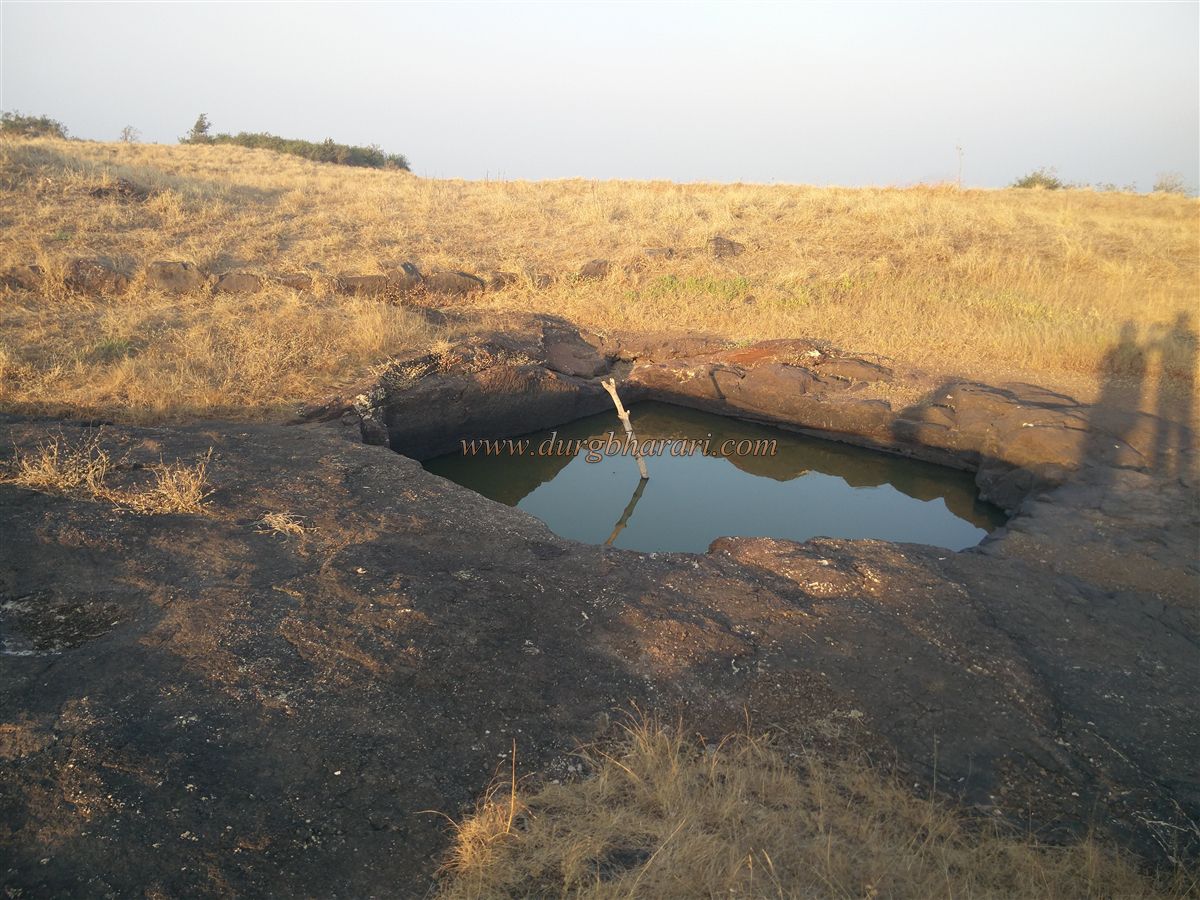
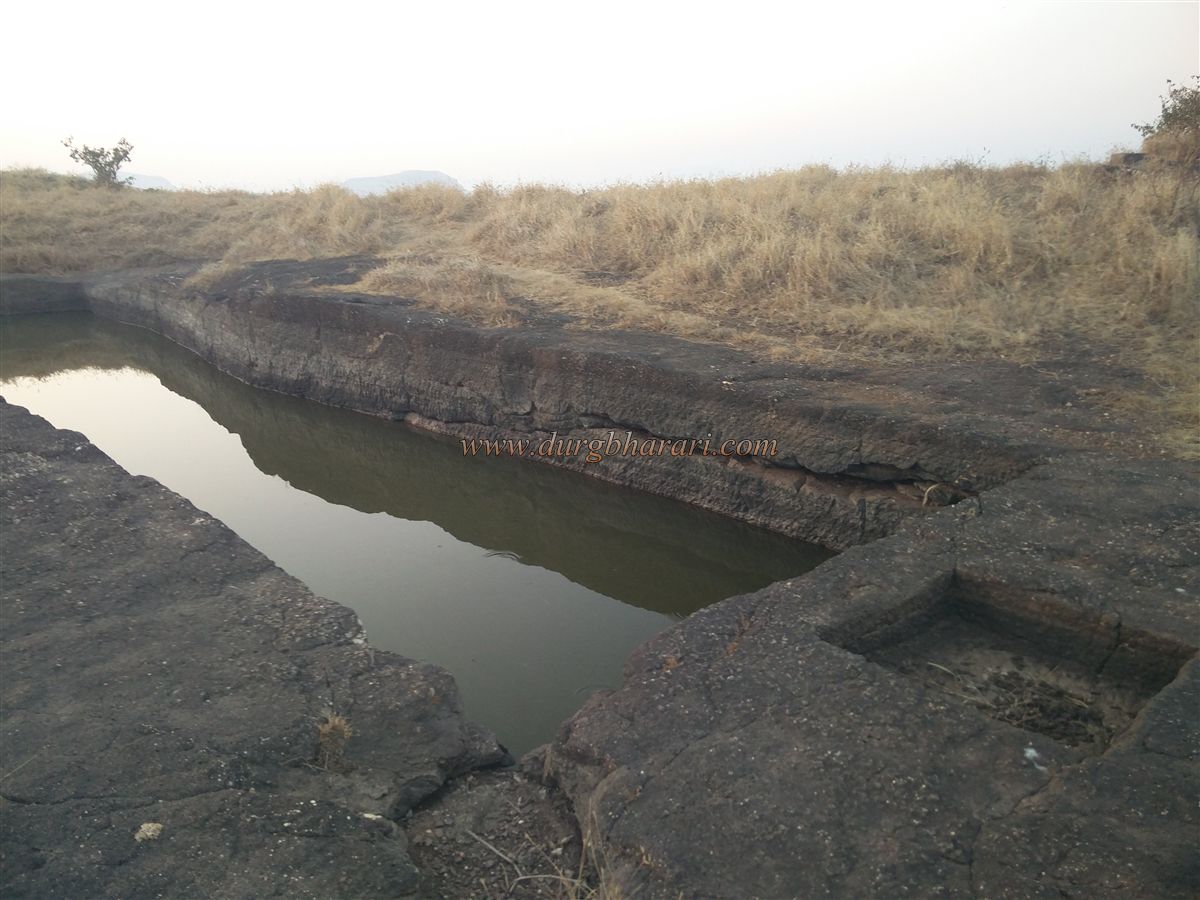
From here, the trail leads to the fort’s third tier, where large circular depressions are carved into the rock, probably for breaking stone, and there is a silted water tank. After this tier, you reach the summit.
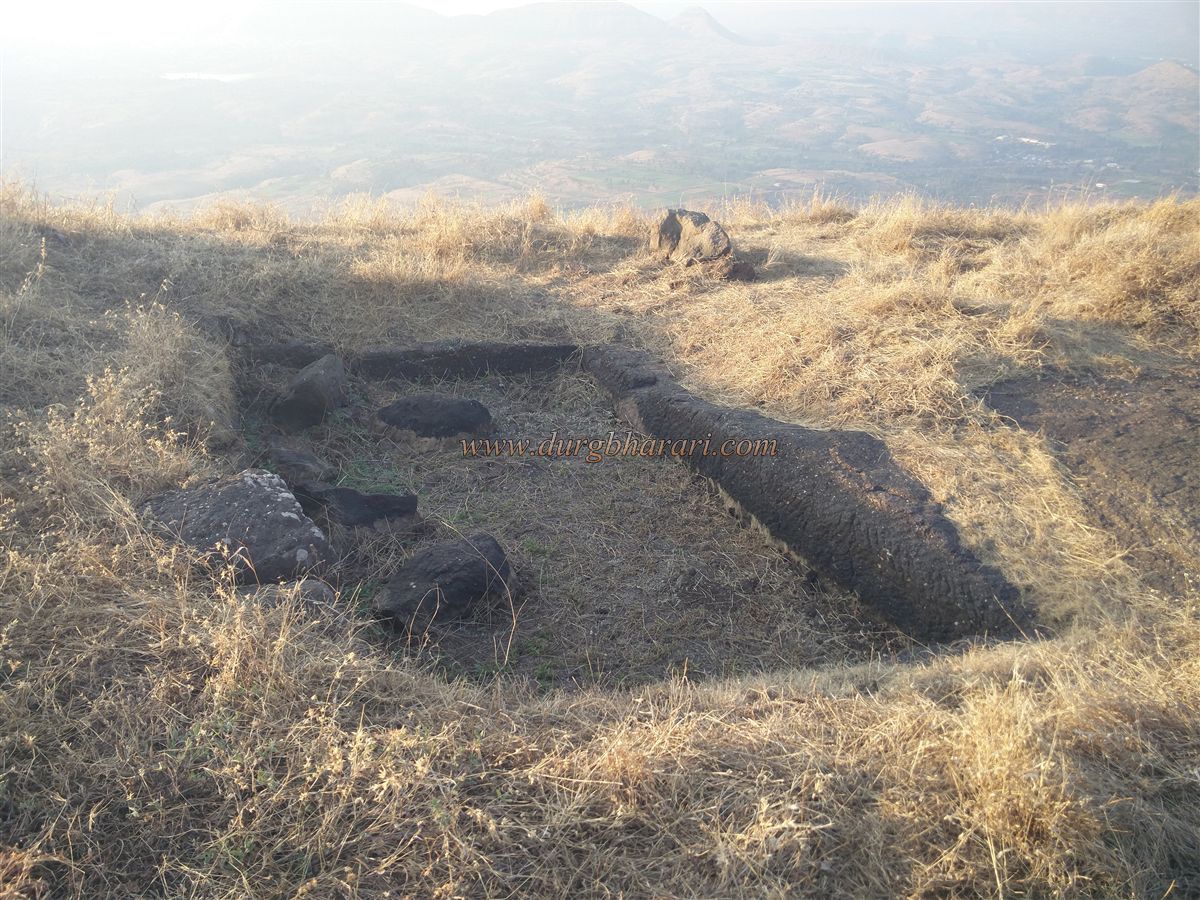
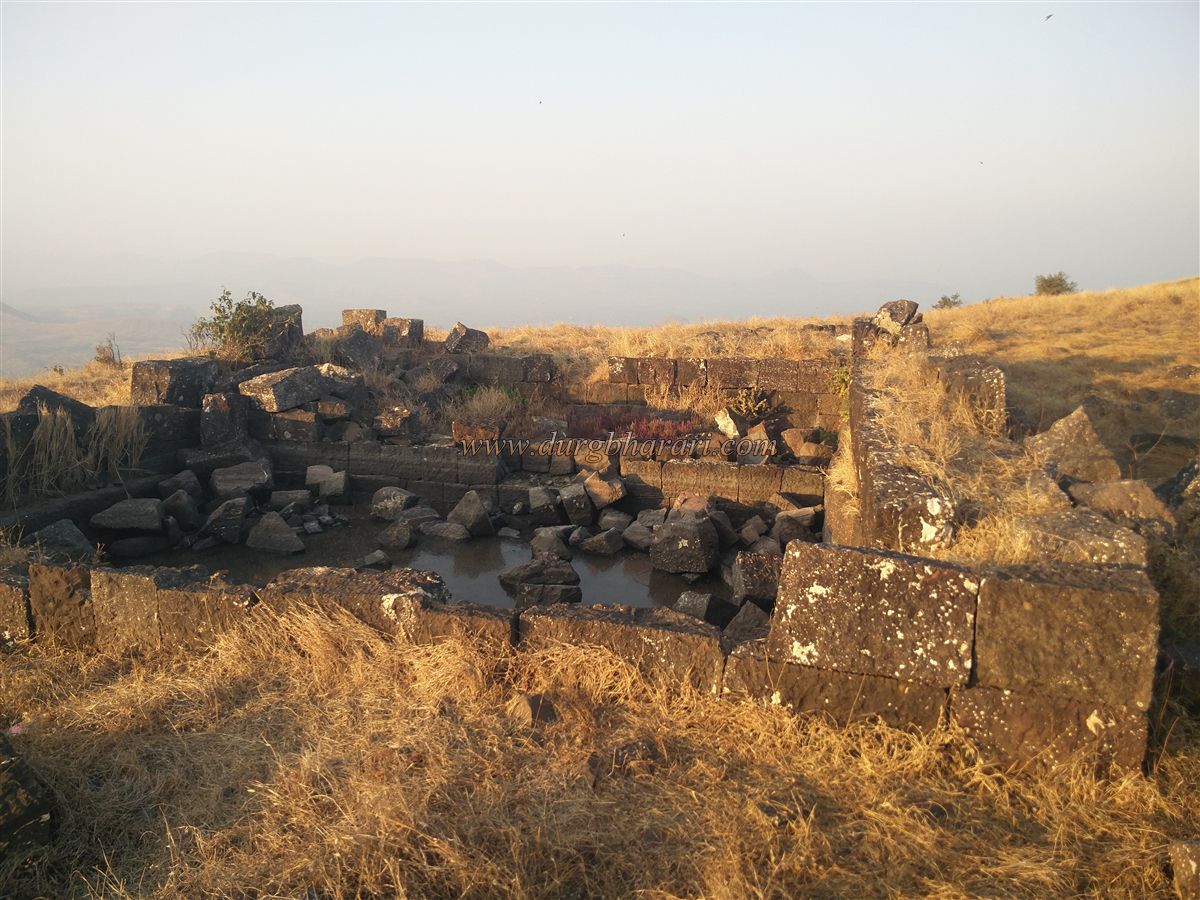
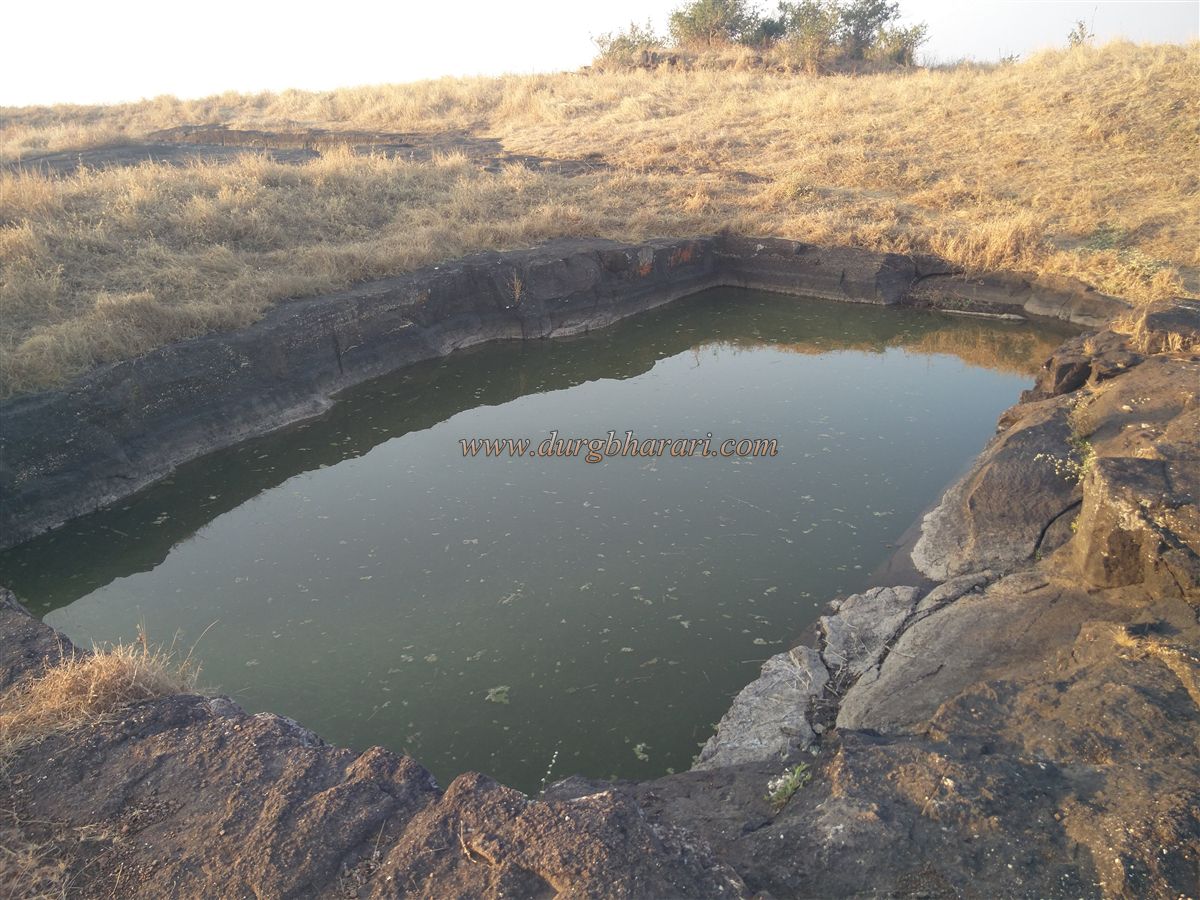
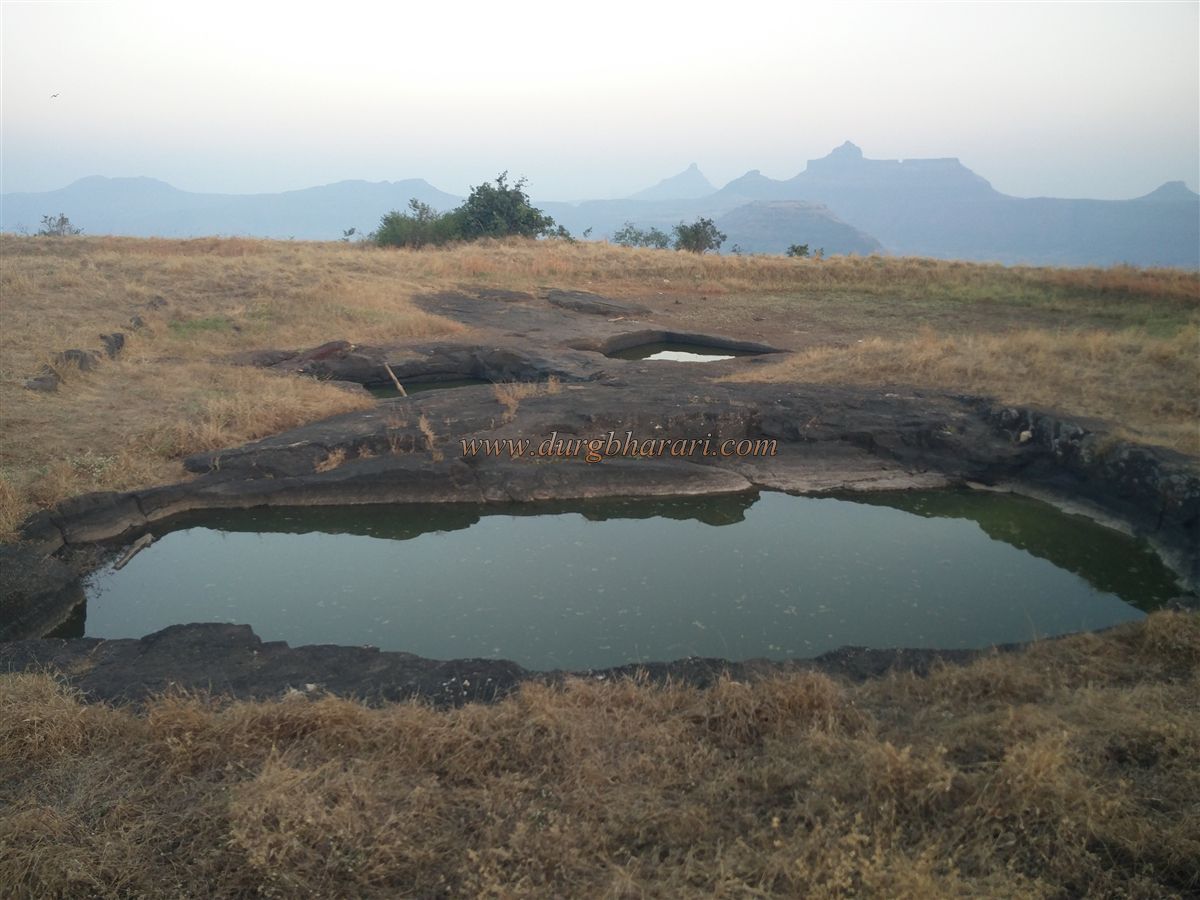
At 3,510 feet above sea level, Kanhergad stretches south to north in four levels, with the triangular-shaped citadel (balekilla) on the fourth tier occupying 12 acres. The summit is fairly level, with most ruins scattered here. At the entrance to the top are bases of several houses and two large building platforms. In front of these is a dry pond on the left and a rock-cut water tank filled with water on the right.
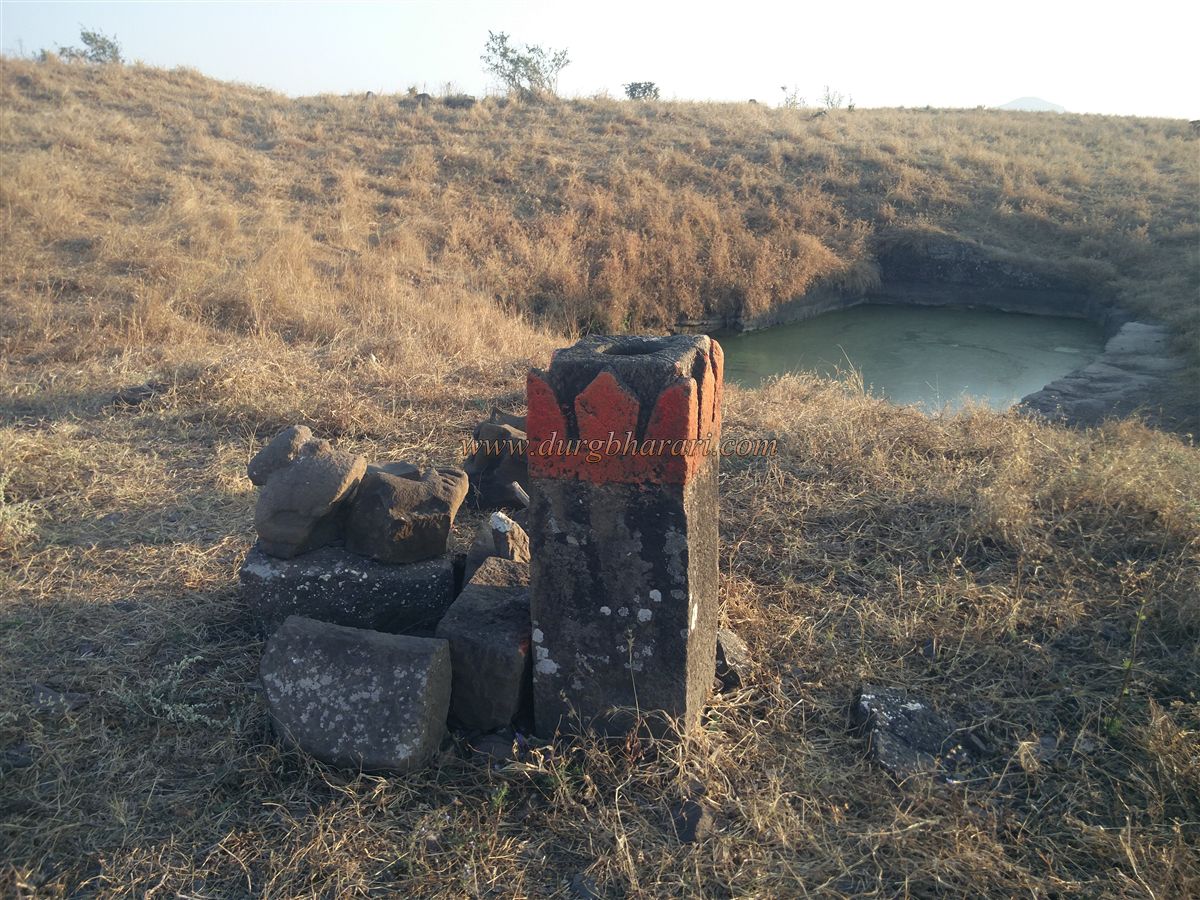
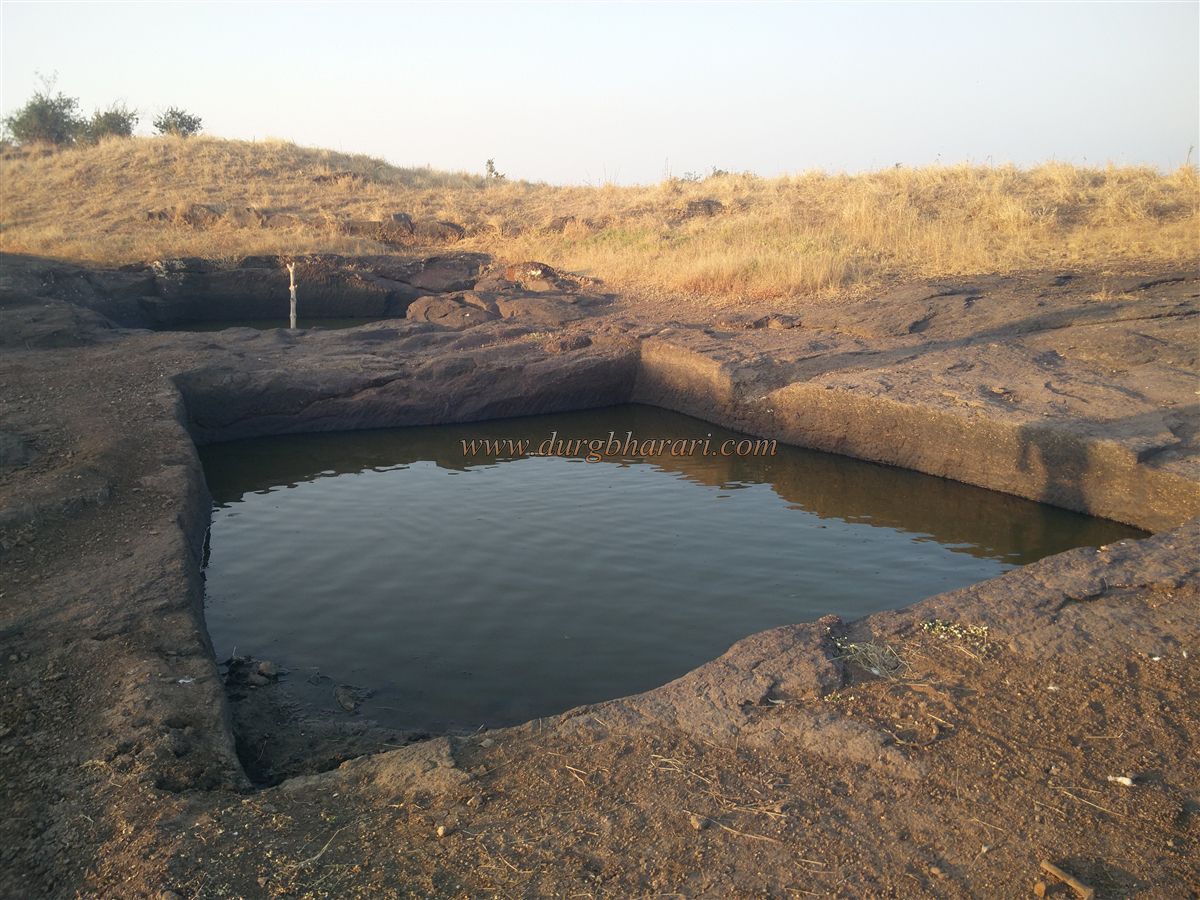
Next to this tank is another filled tank with a tulsi vrindavan, a Nandi idol, and a Shivling placed on its edge. To the right are two large and one small masonry-built tanks, the water in the small one being drinkable. Ahead of the tulsi vrindavan, the fort’s long plateau (machi) can be seen stretching out. On the left side of this machi are five rock-cut cisterns; apart from one or two platforms, there are no other remains on this plateau. At its far end, a cut in the rock separates the fort from the adjacent hill, a trip there and back taking about 45 minutes.
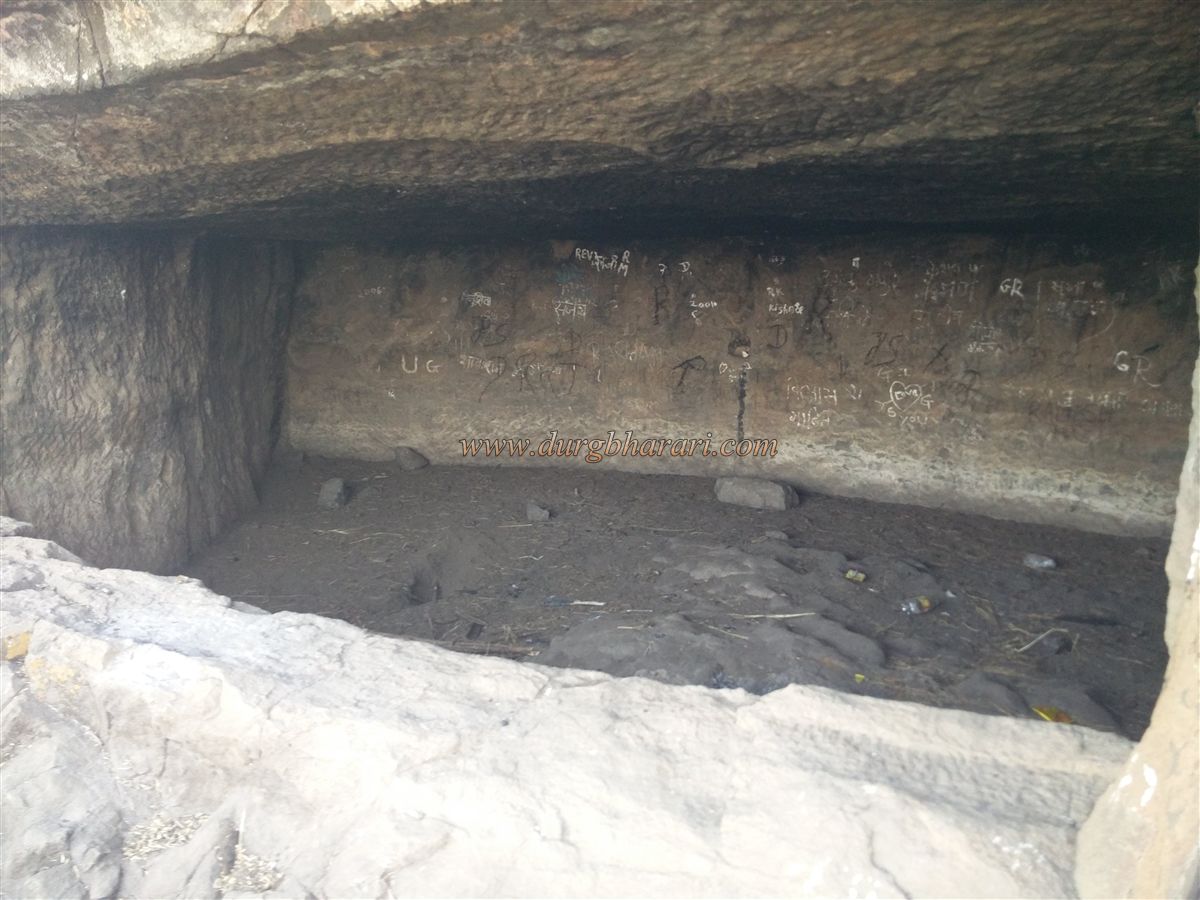
Returning from the machi, head along the cliff edge to the right, toward Dhodap. Passing the five cisterns again, you will see on the left the large mansion base noticed earlier. A path descends along the gorge on the right, leading in two minutes to two rock-cut caves facing Dhodap. These caves can easily accommodate 7–8 people for an overnight stay. Here the fort exploration ends.
It takes about an hour to see the entire fort. From the summit, one can spot many forts in the Satmala range: Achala, Ahivant, Saptashrungi, Markandya, Mohandar, Dhodap, Ravlya–Jawlya, Kanchan–Manchan, Indrai, Koldher, Rajdher, Chaulher, Premgiri, and Bhilai. Descending the fort requires more caution than climbing. From Sadadwihir, the full trip to the fort and back takes about four hours.
In October 1671, Mughal forces under Diler Khan and Bahadur Khan invaded Baglan and laid siege to Salher. Hoping to capture another fort along with Salher, Diler Khan led part of his army to besiege Ravlya Fort. But the Marathas continually raided the Mughals encamped there, forcing them to abandon the siege. Diler Khan then turned his attention to the lower-altitude Kanhergad in the region.
At that time, the fort commander was Ramaji Pangera, one of the five Maratha sardars—along with Kamloji Salunkhe, Tanaji Malusare, Yesaji Kank, and Kondaji Varadwale—who had attacked the Adilshahi army at Javli during the Afzal Khan episode. Poet Kavindra Paramananda in Shivbharat praises Ramaji as “brave like fire.” About a thousand Mavlas (Maratha soldiers) were stationed with him on Kanhergad.
When Diler Khan began his siege, Ramaji, seeing that battle was inevitable, kept 300 Mavlas to guard the fort while leading 700 in a surprise attack on the besieging army before the siege could fully form. At dawn, Ramaji and his men charged, throwing the Mughal camp into confusion. Though outnumbered, the 700 Mavlas killed about 1,200 Mughals. The fierce battle raged for three hours around Kanhergad, with Ramaji and his men showing exceptional valour.
With no reinforcements left, all the Mavlas gave their lives for Swarajya. The Sabhasad Bakhar describes the clash: “Like the sharp beats of the tipari drum on Shimga day, the Marathas struck again and again at the Mughals.” The fight instilled in the Marathas the confidence that they could defeat the Mughals in open battle, while it sapped Mughal morale. Diler Khan could not take the fort, and the unmatched heroism of Ramji Pangera and his 700 men made Kanhergad immortal in history.
Later, in December 1682, Ijazat Khan tried to capture the fort but failed. Around 1753–54, Peshwa Nanasaheb ordered the fort to be handed over to Nizam Salabat Jung in exchange for a receipt. Around 1789–90, the Kolis revolted and seized the fort. In 1818, after taking Trimbakgad, the British included Kanhergad among the important forts they captured.
© Suresh Nimbalkar
GALLERY