KAMALGAD
TYPE : HILL FORT
DISTRICT : SATARA
HEIGHT : 4430 FEET
GRADE : MEDIUM
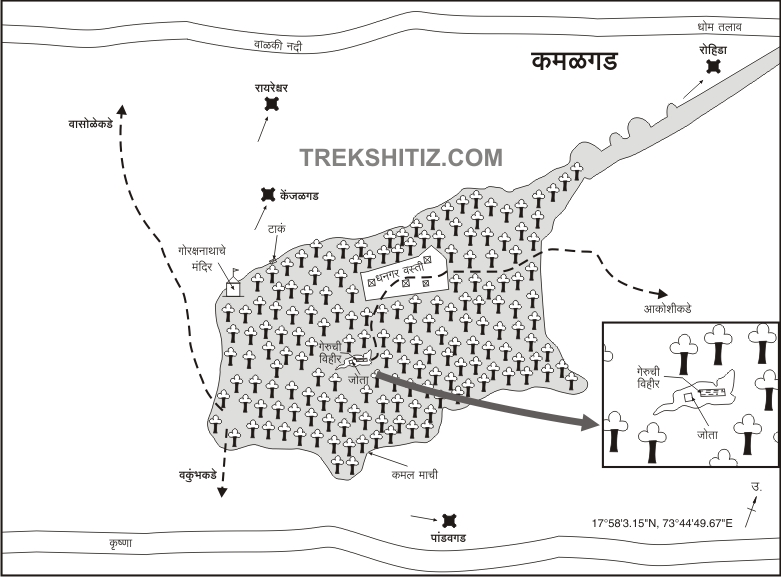
Although the history of many forts in Maharashtra is not known today, they are famous for the unique ruins they carry on their shoulders. One such fort in Wai province is Kamalgad-Kenjalgad. Among these, Kenjalgad Fort is famous for its rock-carved steps, while Kamalgad is famous for its cave well. The fort stands on a ridge between the Krishna River to the south and the Valki River to the north. Although there are many routes from the area to reach Kamalgad, there is a convenient way to reach the fort from Tupewadi in Vasole. The Pune-Wai-Vasole distance is 120 km and the 30 km road from Wai to Vasole is very bad. Instead if you use the Pune-Bhor-Korle-Raireshwar-Vasole route, the road is good and the distance is only 100 km. Although the top of the fort on the hill behind Vasole village is visible from a distance, it is not visible when you come to Vasole village.
...
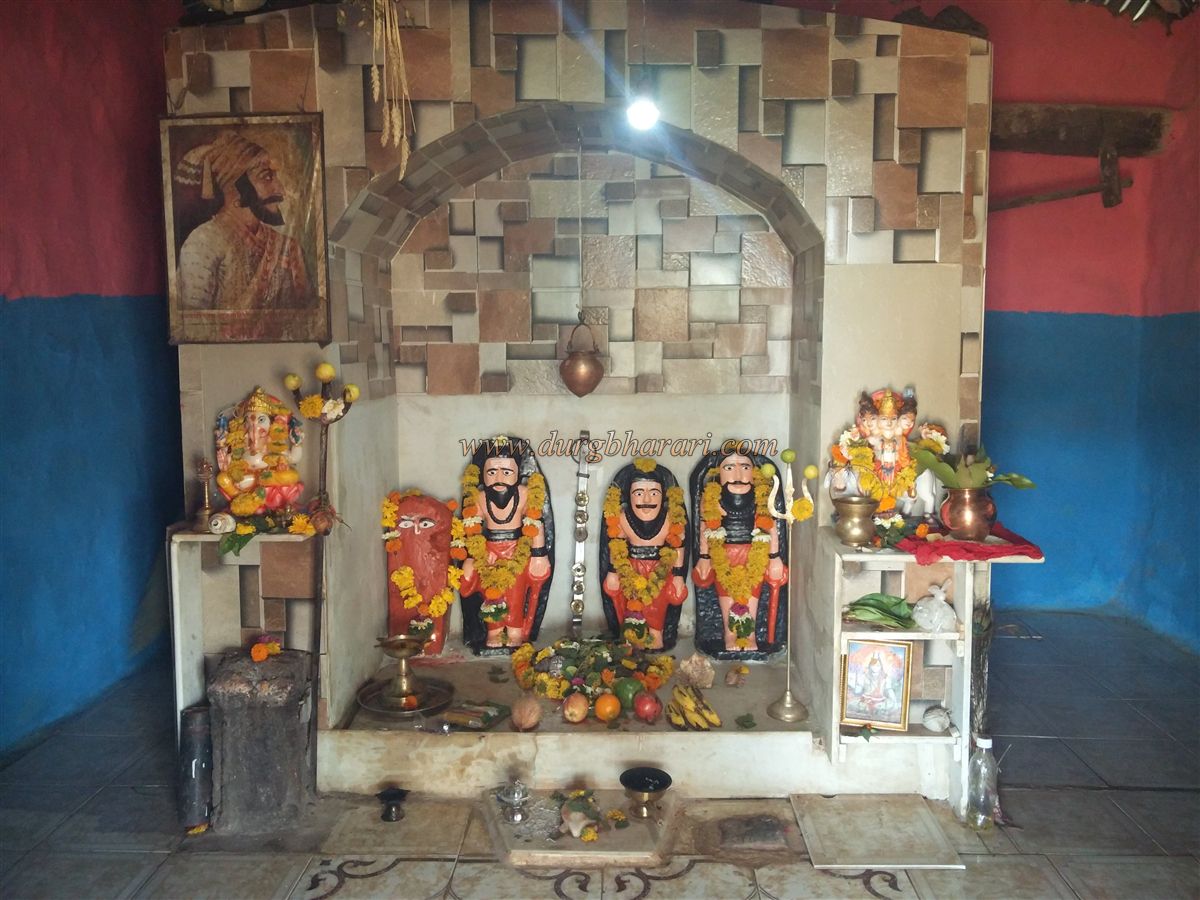
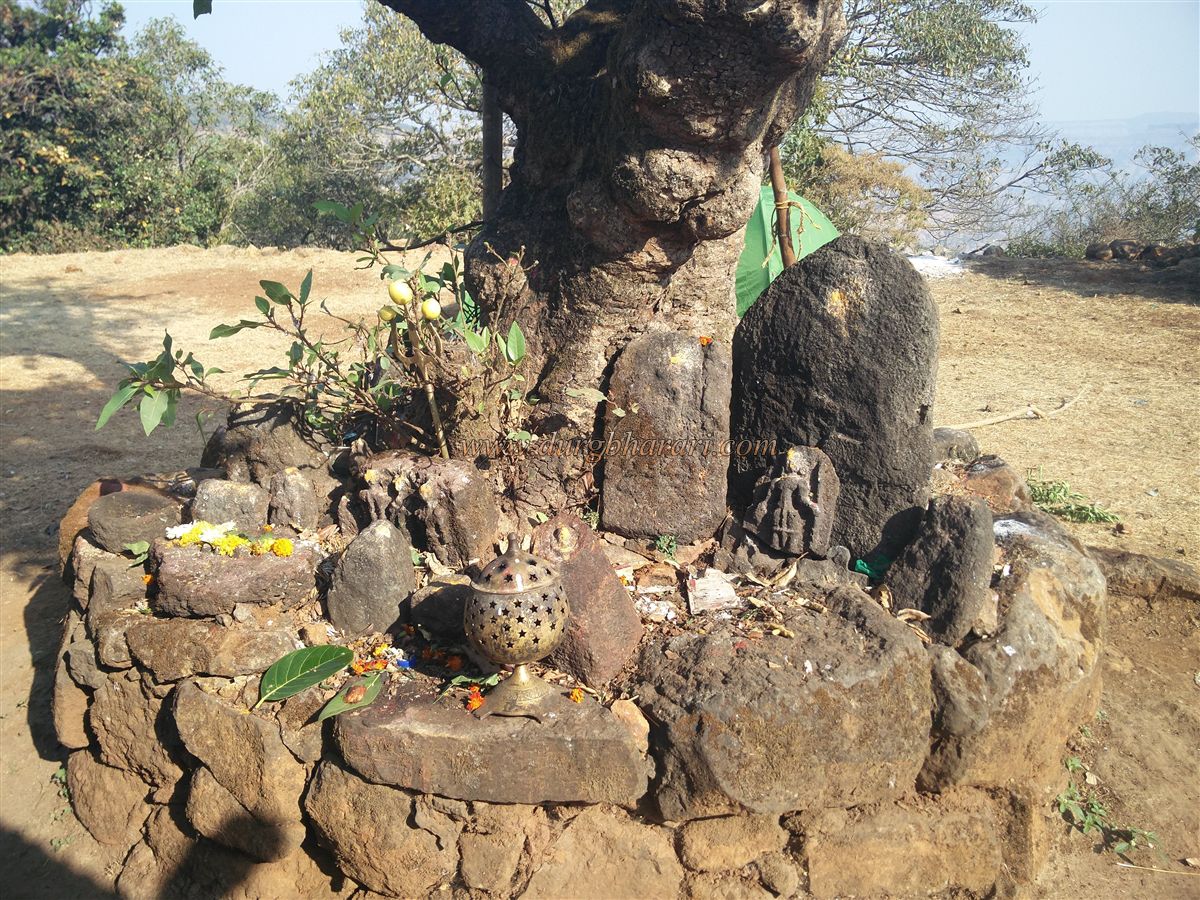
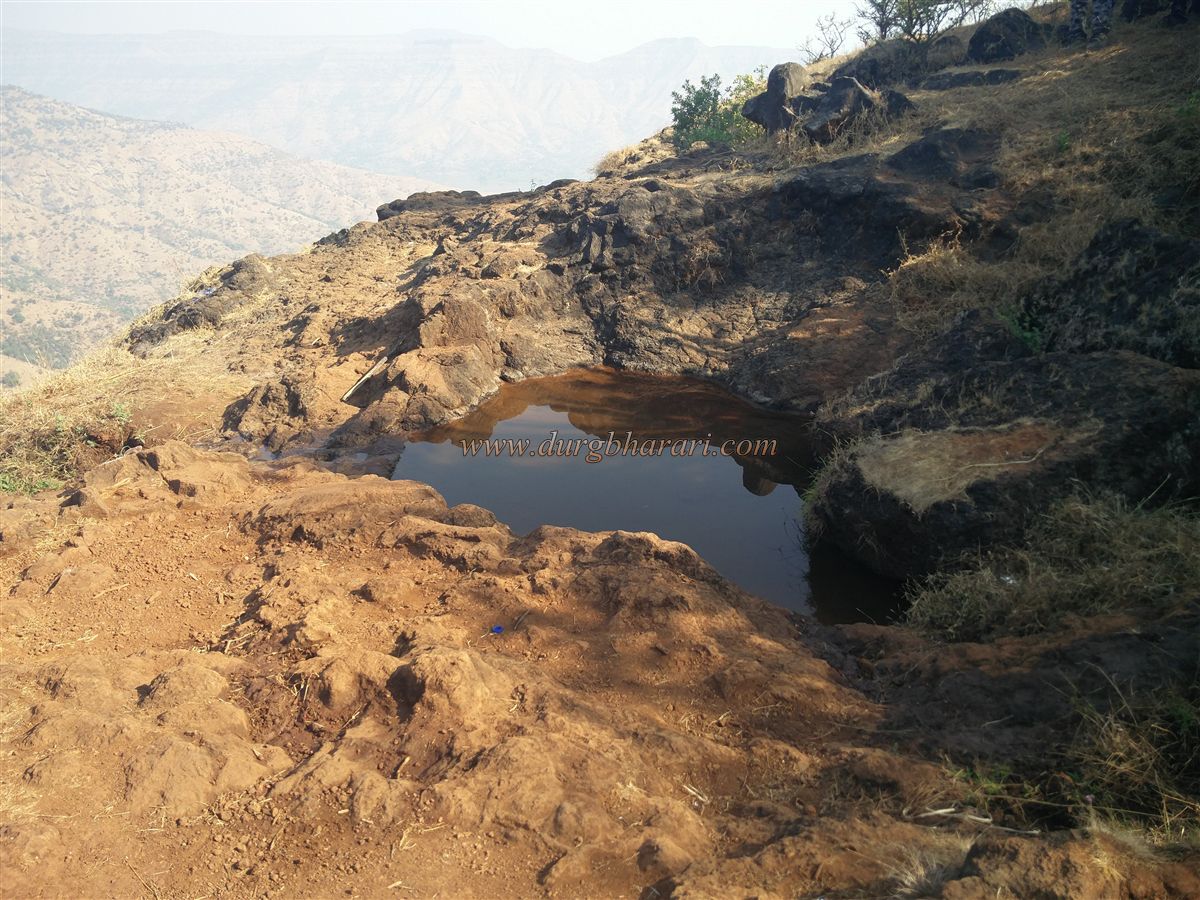
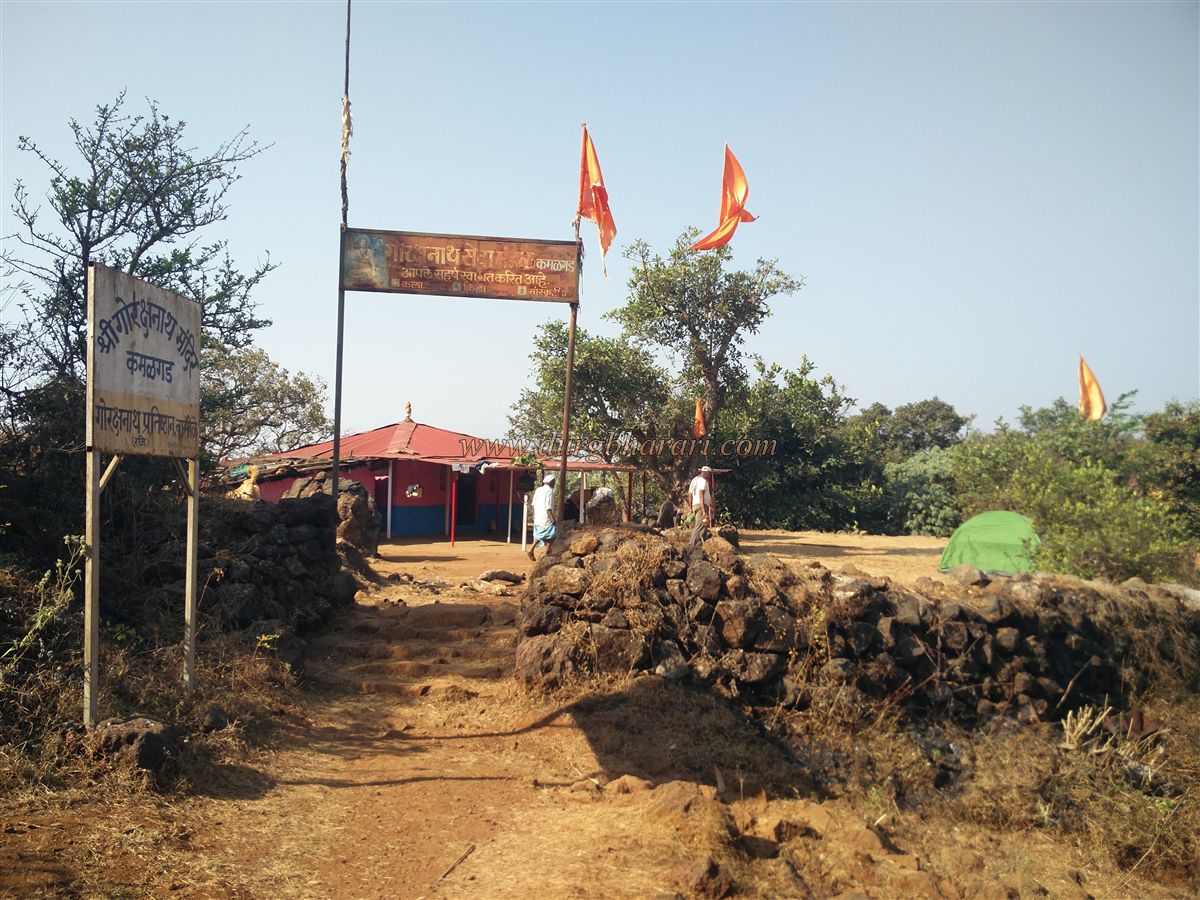
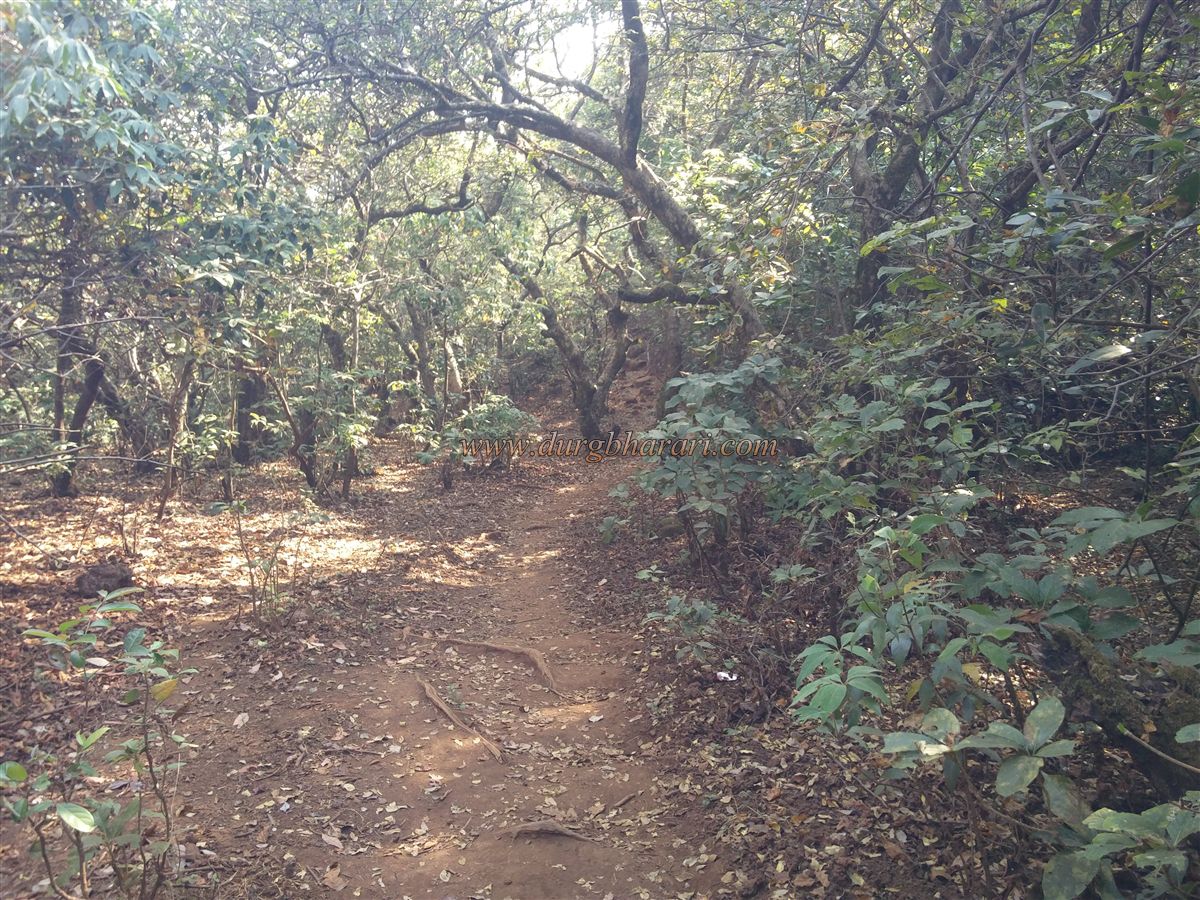
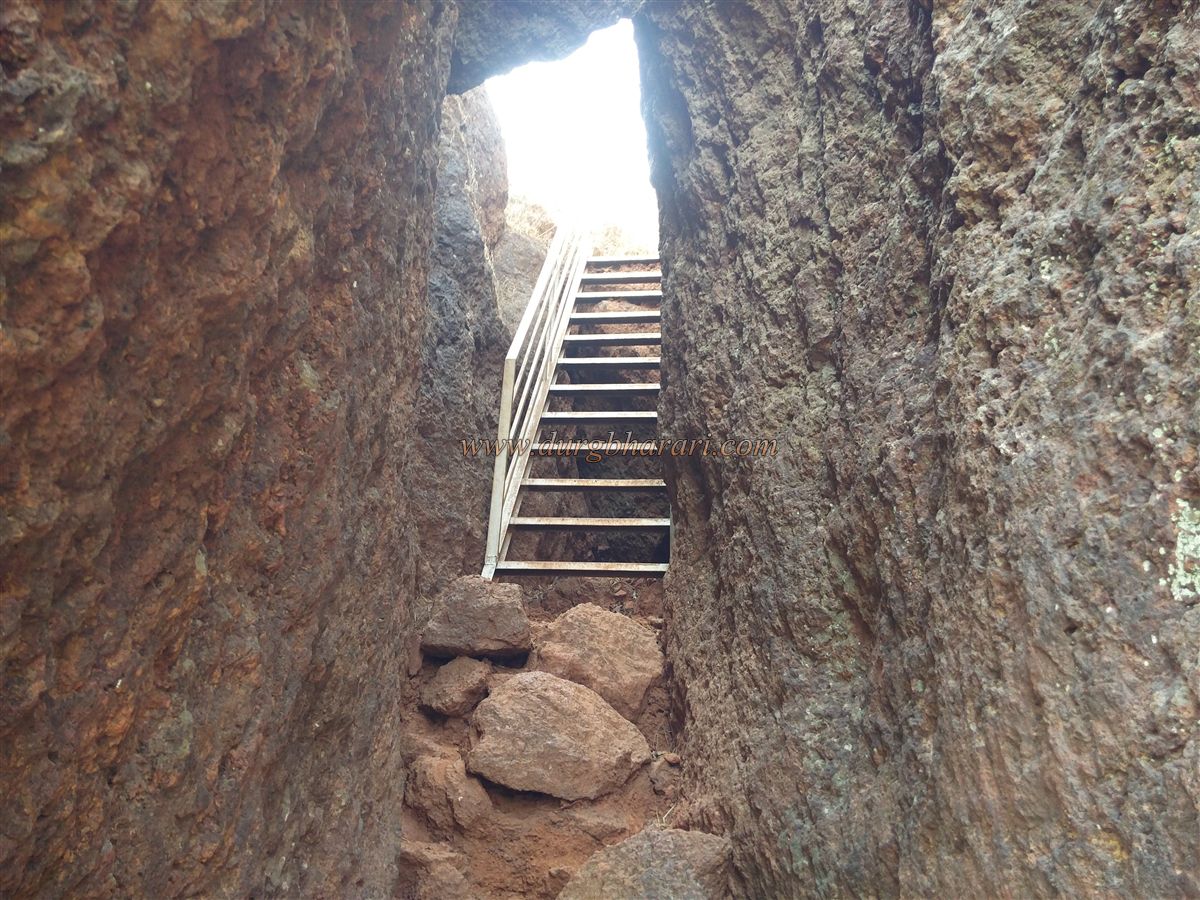
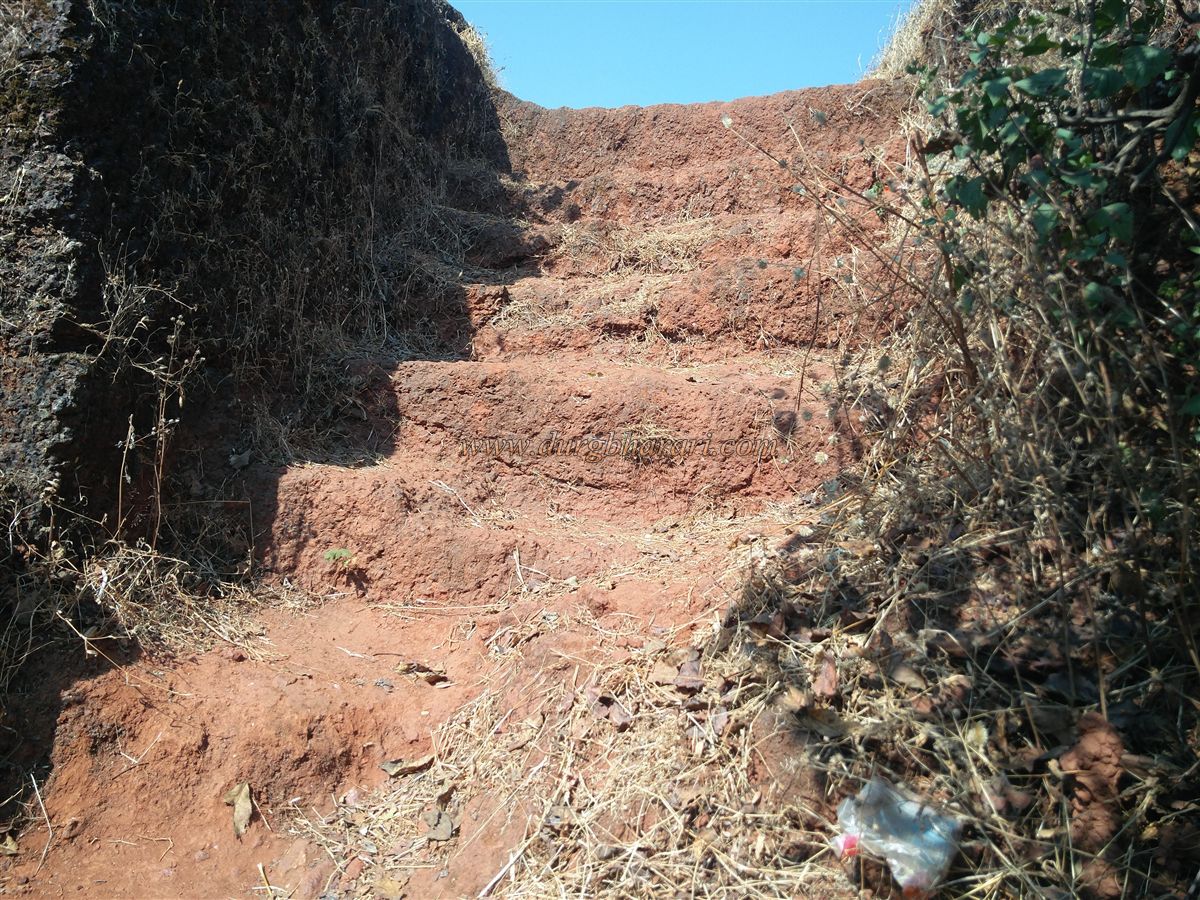
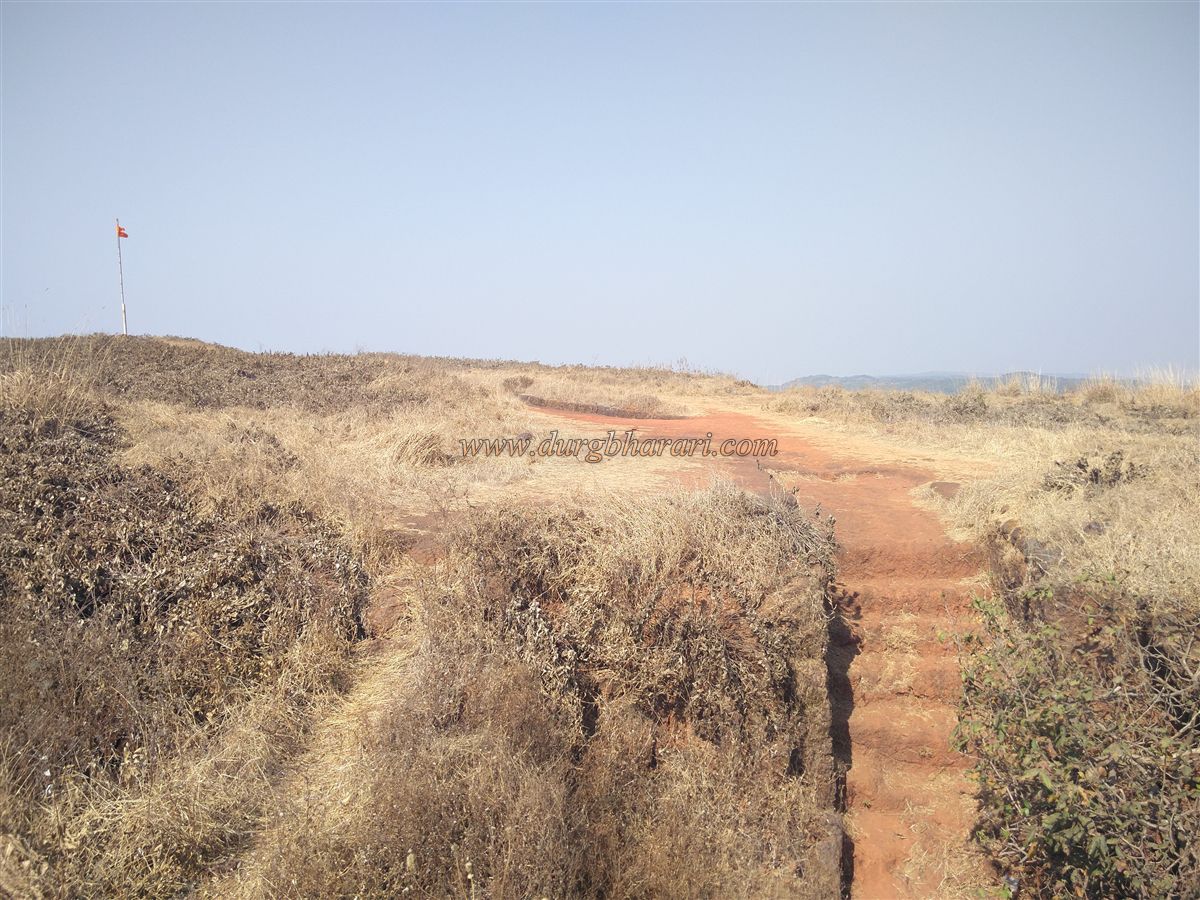
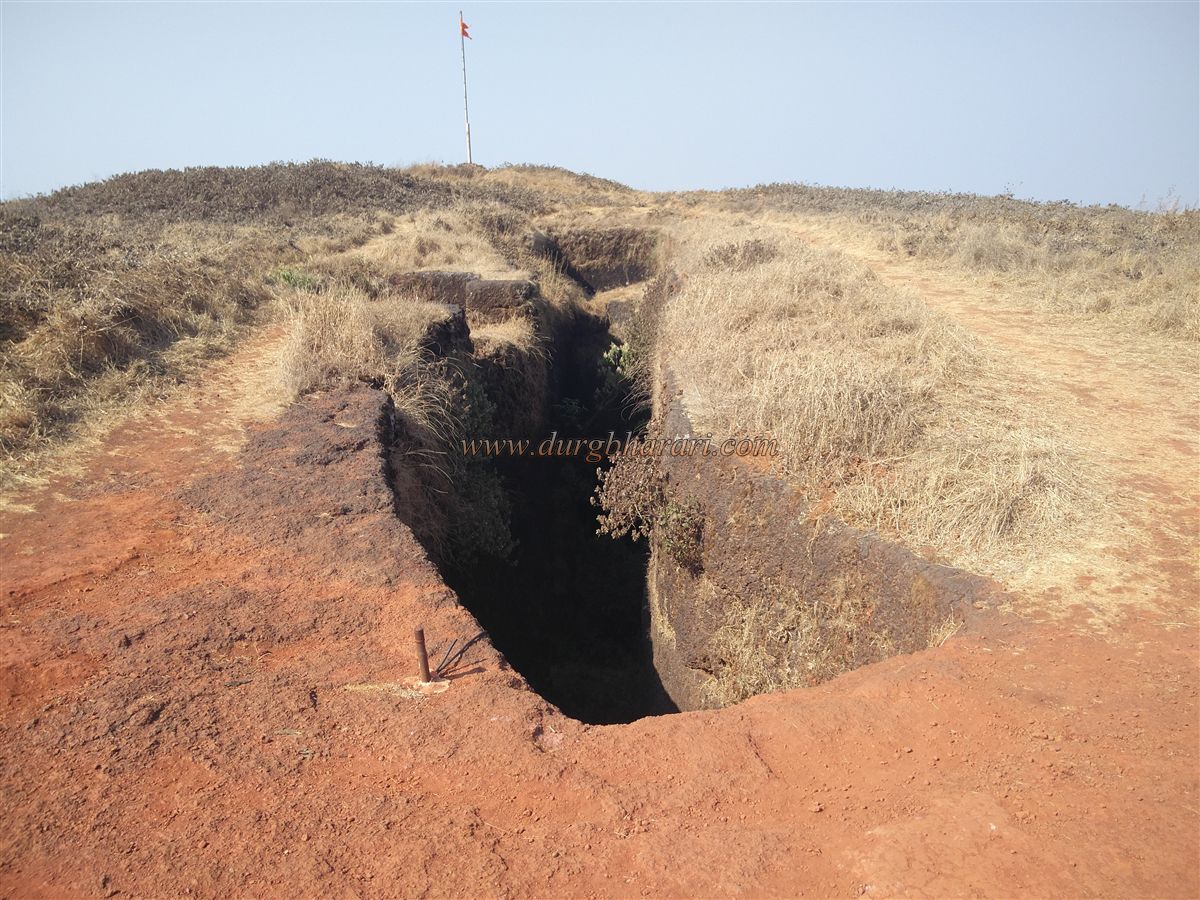
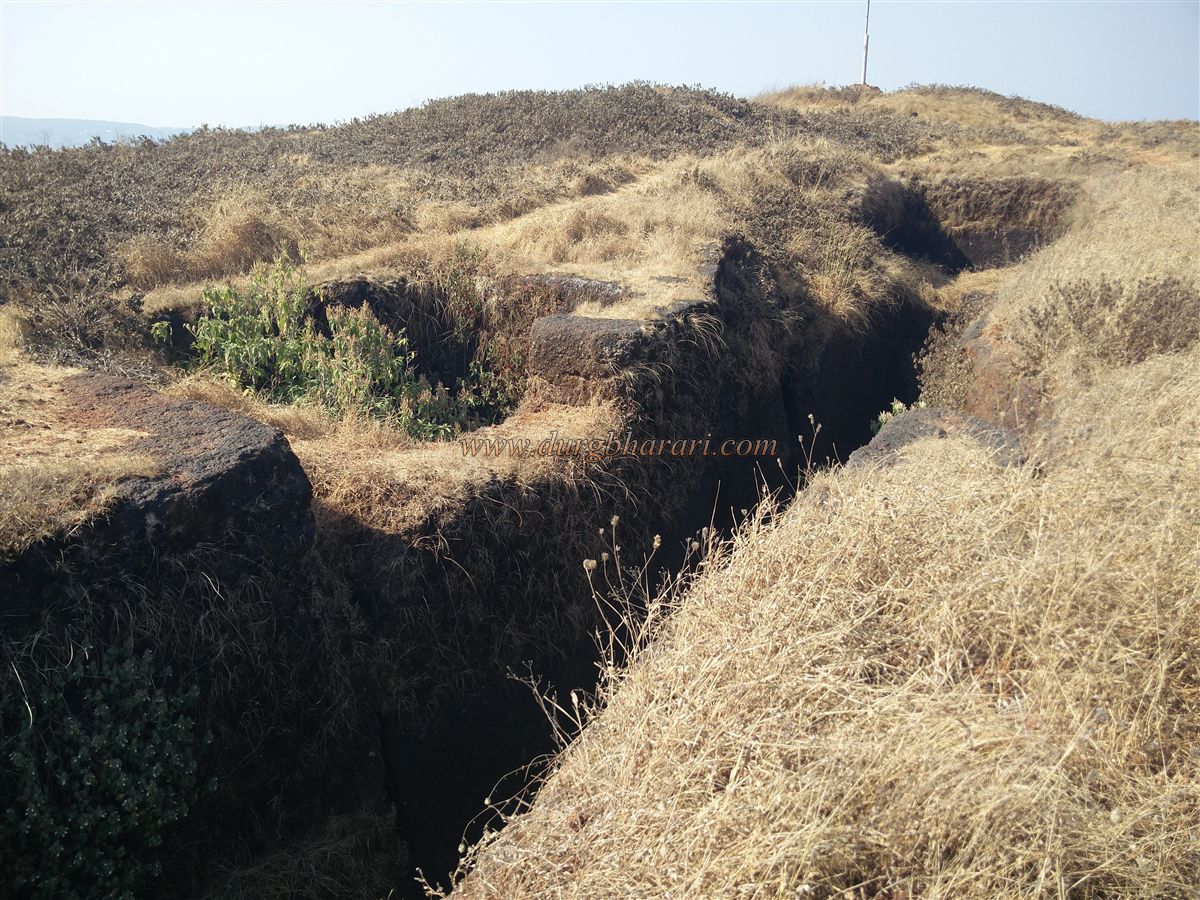
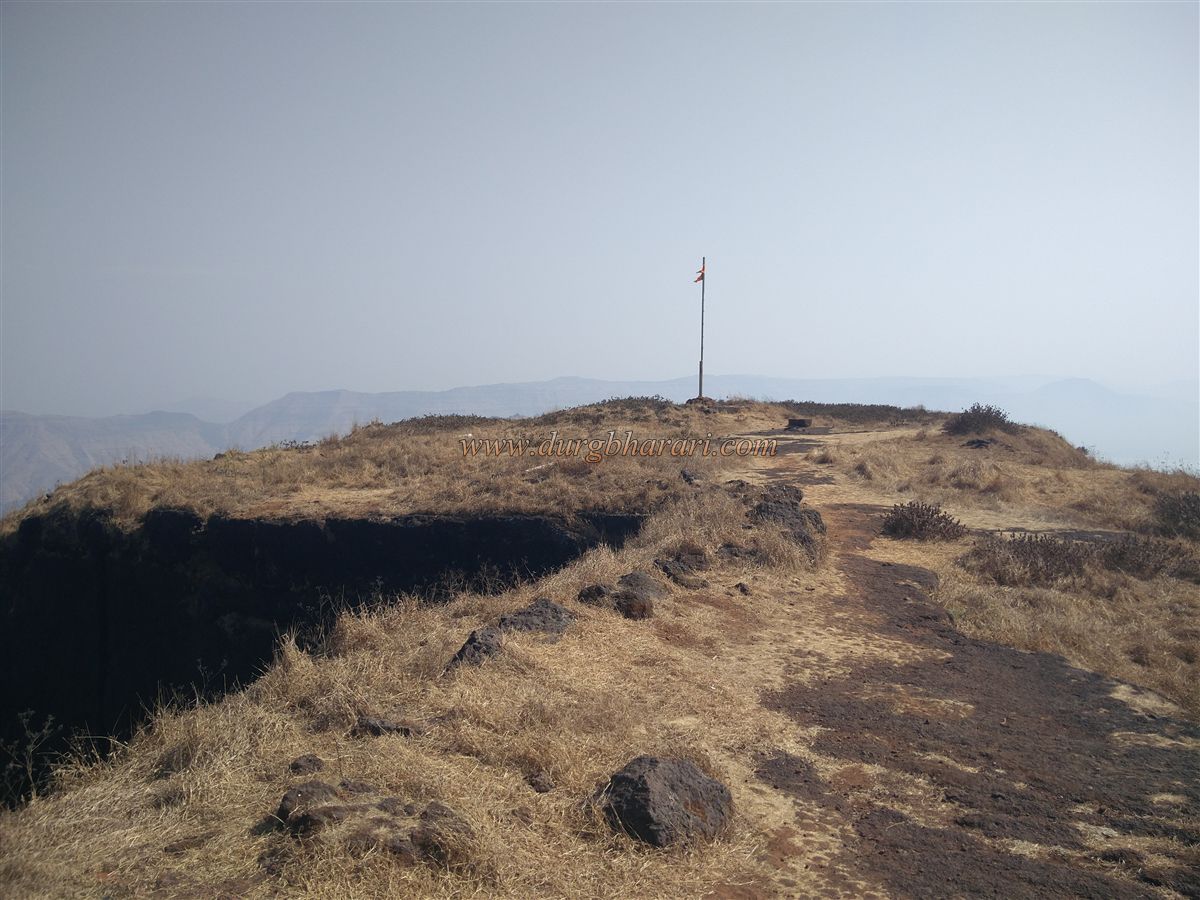
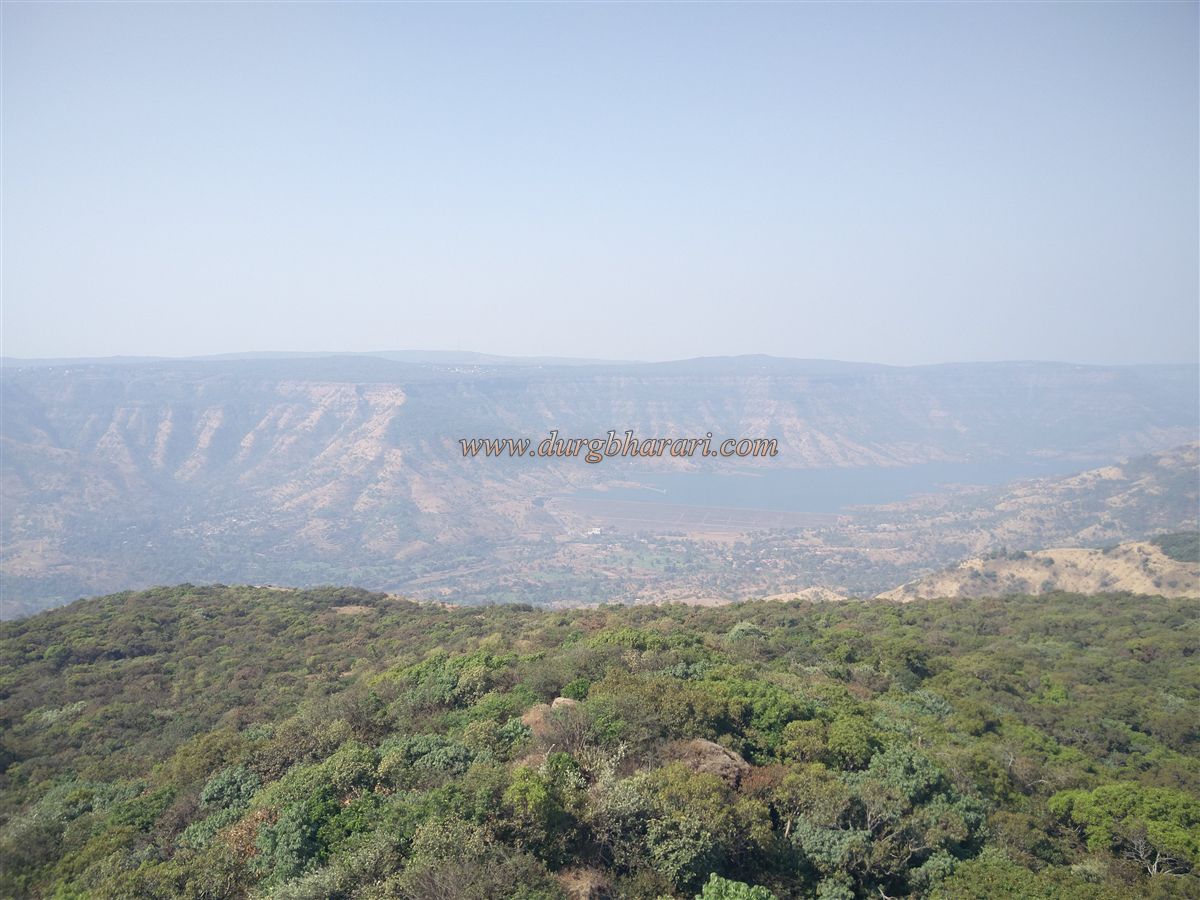
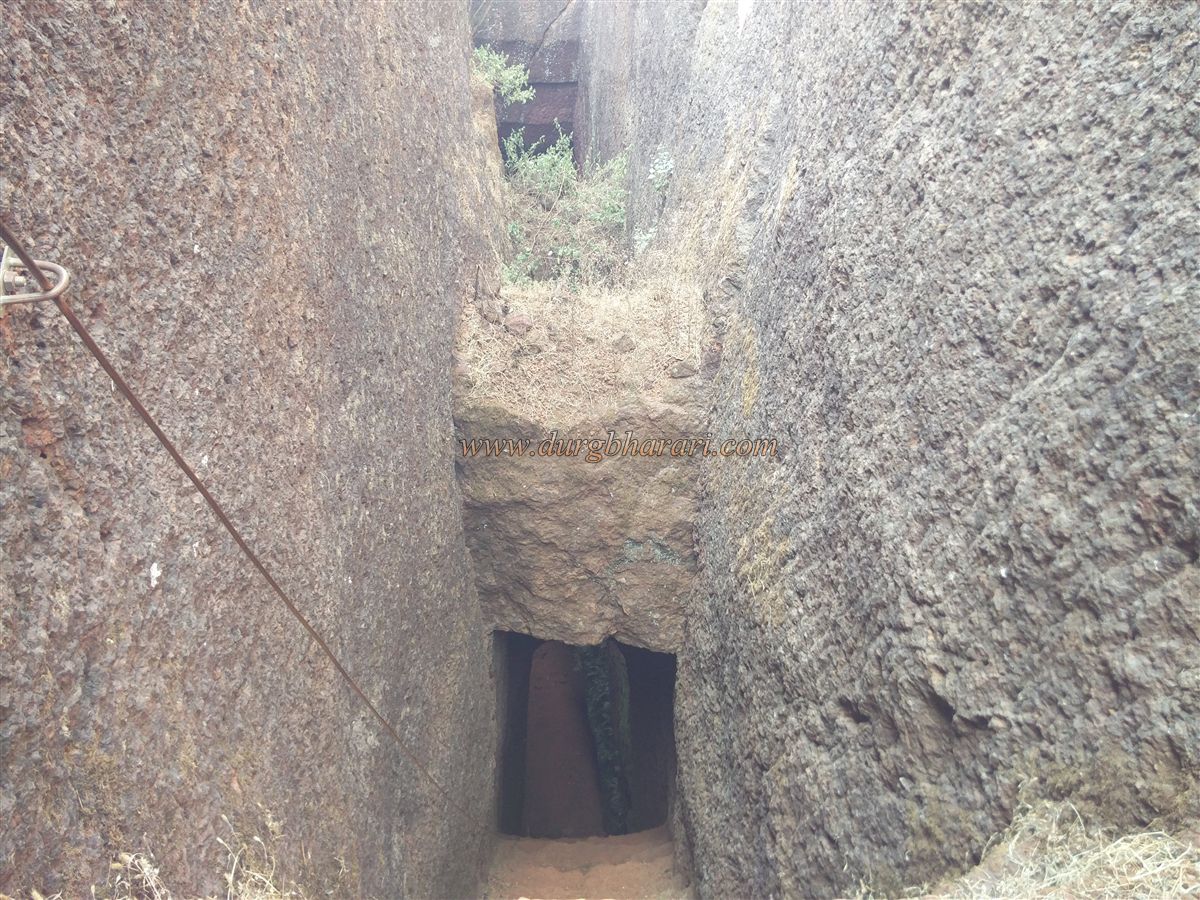
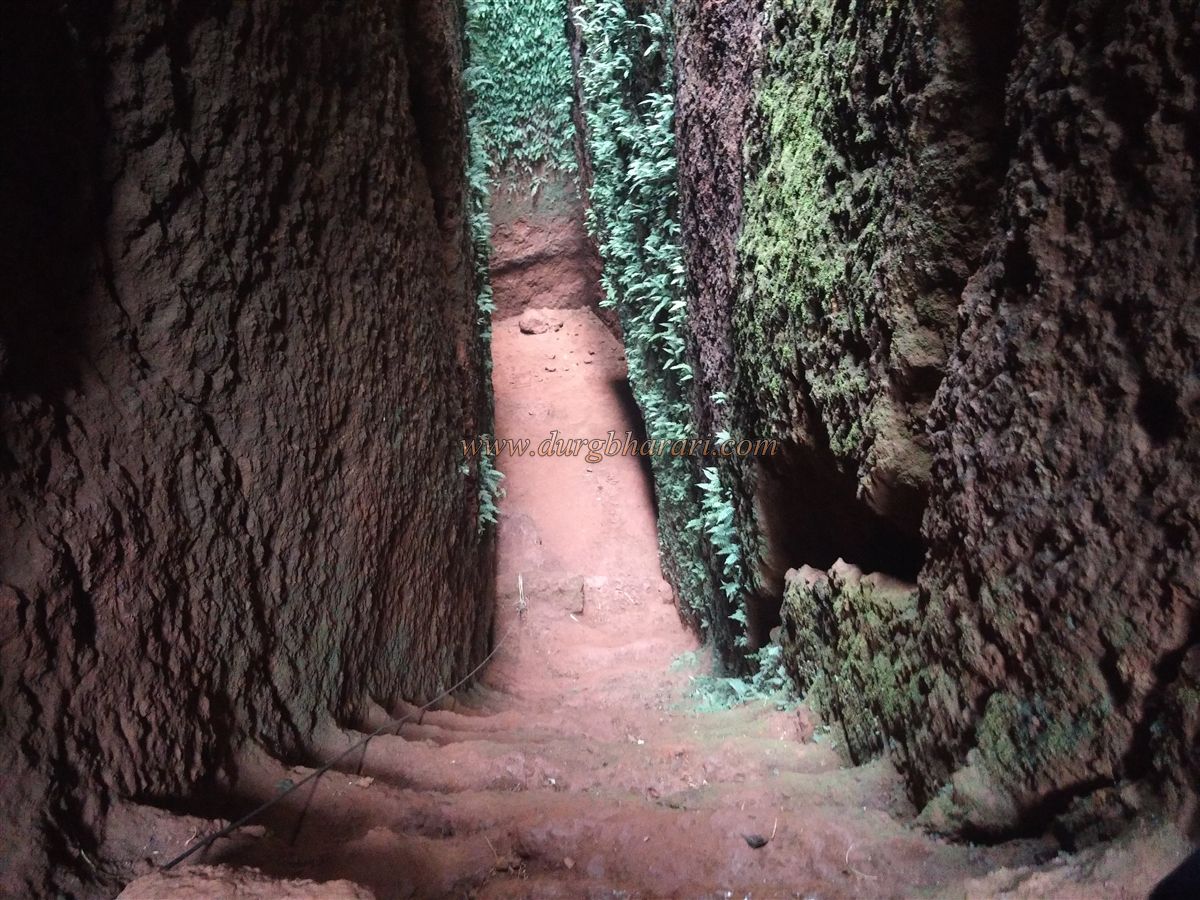
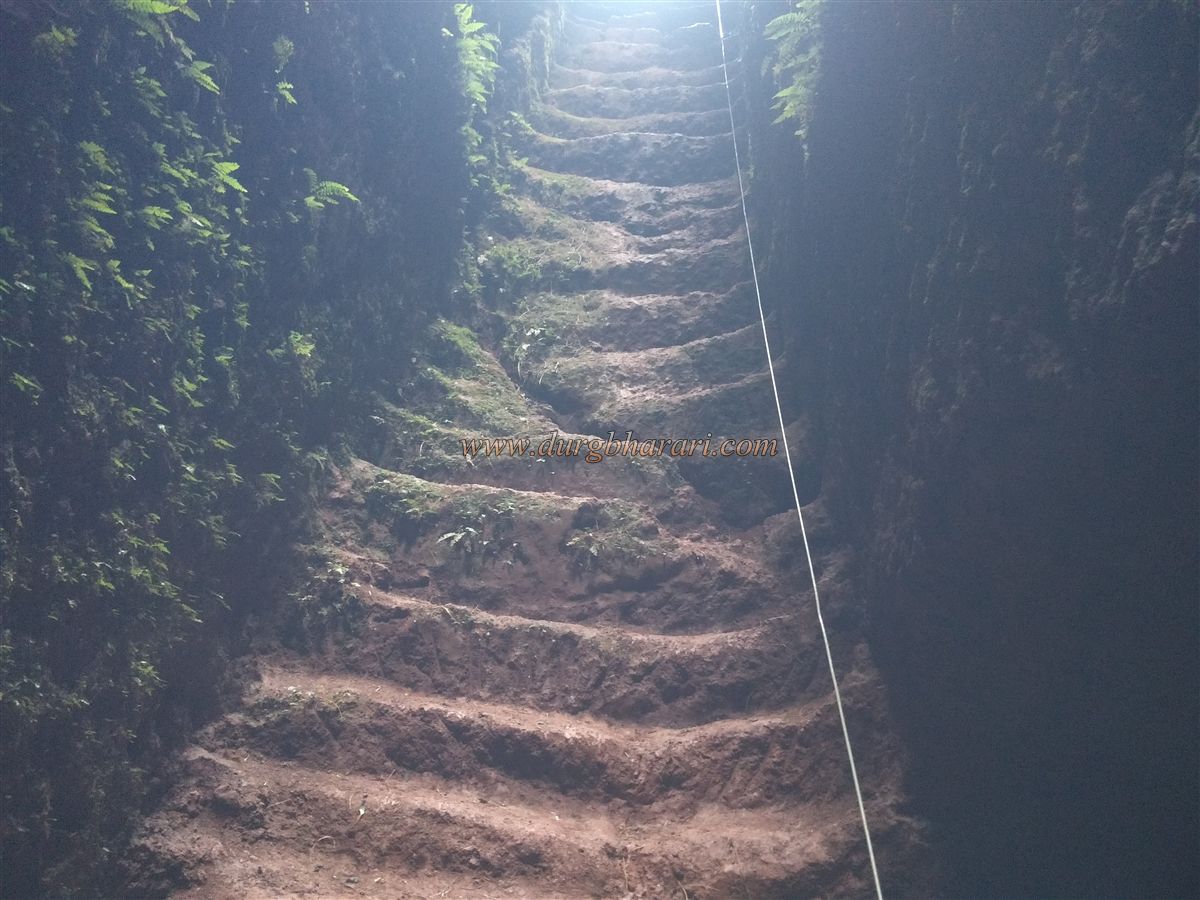
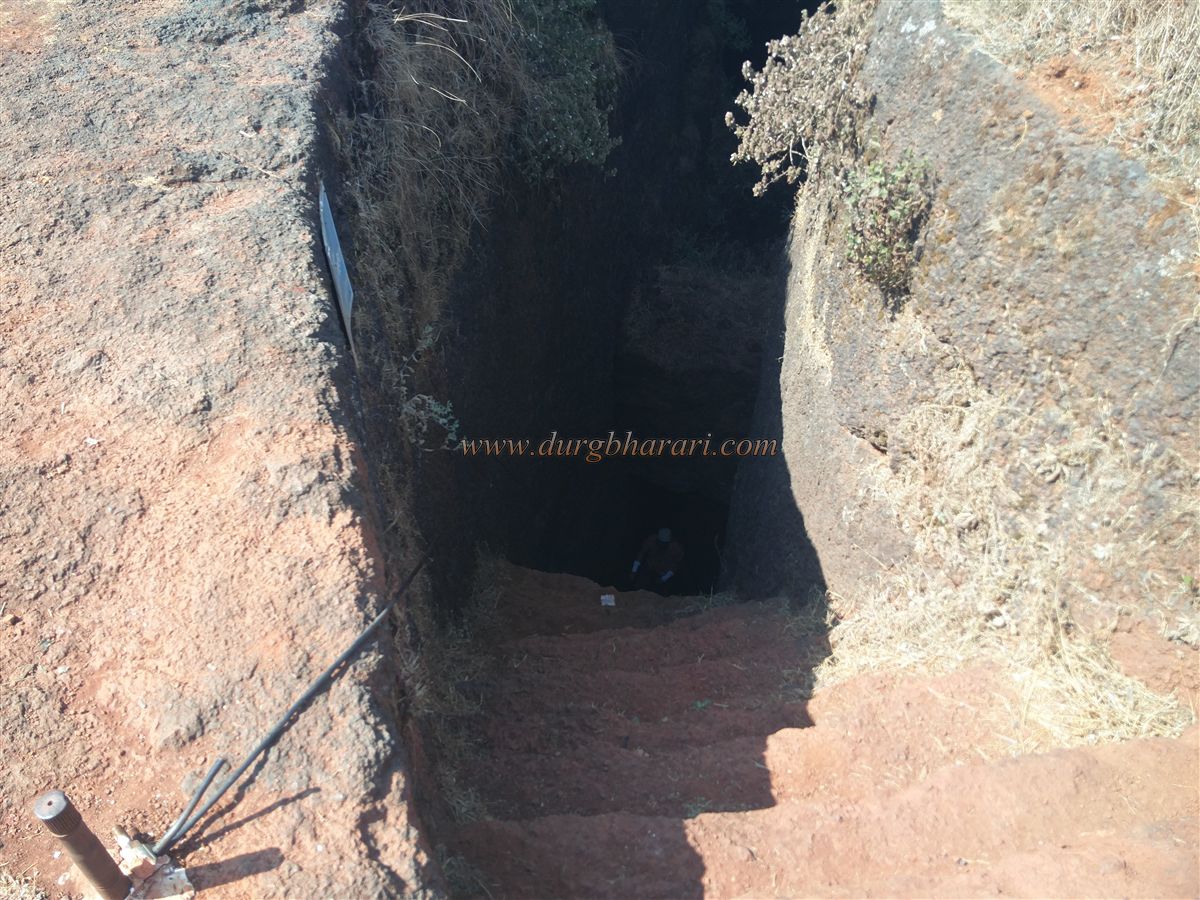
When you come to Vasole village, you should come to Tupewadi here. From Tupewadi, an unpaved road goes past the school for about half a kilometre to the house at the foot of the hill. You can directly reach this base by private vehicle. Here there is a board giving information about Kamalgad. The path leading to the fort is well paved as the villagers go to the Dhangarwada and Gorakshanath temple at the base of the fort and the guide arrows are painted at various places on the way. There are some detours to the main road as the villagers take their cattle to graze on this hill, but a sign to remember is that the electricity pole is gone from this road. If you pay attention to the electrical wires to reach the fort, there is no chance of mistakes. These pillars go halfway up the mountain and there is only one prominent path leading up. This path is completely uphill and is not exhausting. After coming to the top of the hill, turn towards hill trunk on the left. There is a waiting board at this place. It takes an hour to reach the top of the hill from the base and from there in 15 minutes we reach the temple of Gorakshanath under the shade of thick trees. Gorakshanath temple is divided into two parts, one part is the temple and the other part is the accommodation. The temple has three idols of Nath and one wooden idol. The courtyard of the temple is laid out and a sheet shelter is erected above. A few carved idols are placed under a tree in front of the temple. 10-12 people can stay in this temple and courtyard. There is a path leading to the fort on the left side of the temple and after walking for 5-10 minutes on this path, there is a water tank on the left side of the path. This tank has water from a perennial spring and this is the only facility of water while traveling to and from the fort. We reach the loft under Kamalgad in 15 to 20 minutes through the thick forest path next to the tanks. From here, for the first time, the top of Kamalgad surrounded by dense forest and the saffron flag flying on it can be seen. There are two houses on the terrace and the people living here have cleared the forest on the plain and cultivated it. There is a path to the fort to the right of the houses and there is a board that tells the information about the fort. This path through the dense forest takes us to the ramparts below. Here there is a rampart of piled stones and a bastion at the corner and one enters the fort by climbing the rampart. Standing on the rampart and looking up, the crumbling sides of the fort can be seen. As there is dense forest in this area, it is not possible to guess where the gate of the fort should be. Looking at the ramparts and ruins hidden in the bushes, we came to the valley below the fort. The hill of the fort is made of specific stone that gets eroded. If you look at the two or three carved steps at the beginning, there should be the door of the fort and steps ahead. This door and stairs have completely collapsed and a new iron ladder has been installed in place of the stairs. Earlier one had to climb up from here. After climbing up the ladder, you can enter the fort by climbing 7-8 steps. The top of the fort is 3000 feet above the sea level and spread over 1 acre in east and west. While walking from the edge of the fort, one can see the remains of a bastion on the eastern side and the foundations and ramparts at some places. There is a square foundation in the centre of the fort, on which a newly erected flagpole is hoisted with saffron. Another structure in the fort is the Fort Well. The main attraction of the fort is this rectangular shaped well which is 80-90 feet deep and 60-70 wide steps are dug to descend to the bottom of the well. As these stairs are slippery, a new iron rope has been installed next to the stairs for support. At the bottom there are cave-like rooms on both sides and windows are placed in the ceiling to bring light to the bottom. During the rainy season, water accumulates in this well and then seeps out, so this well has turned red and slippery inside. But the atmosphere in the well is very cold. Due to the red moist soil, this well is known as “Geru/Kave” well. Apart from the well and the square under the flag on the top of the fort, nothing remains. The fort almost ends at the same place where it start. In 10 minutes, you can walk around the entire fort, but seeing the scenic view from the fort, you can't leave the place. Dense forest is spread around the fort. From the fort, Kenjalgad, Raireshwar Plateau, Koleshwar Plateau and Pachgani, and Dhom Dam to the east and Chandan-Vandan, Pandavgad, Vairatgad in the distance can be seen. Looking at the size and location of the fort, it must have been used only for surveillance. Kamalgad is believed to be among the forts built by Bhoj Shilahar of Panhala in this area. This fort under the rule of Bijapur must have come under the control of the Marathas along with Kenjalgad, Pandavgad, and Vairatgad. Shivaray captured Kenjalgad between 1670 and April 1674. Kamalgad must have come under the control of the Marathas sometime between 1670 and 1674. In April 1818, Major Thatcher captured Kamalgad without posing a great fight.
© Suresh Nimbalkar
GALLERY