JAGANNATH PURI
TYPE : HERITAGE VISHNUMANDIR
DISTRICT : ODISHA (PURI)
In life, undertaking the Char Dham pilgrimage is considered a highly sacred act in Hinduism. It is believed that completing this pilgrimage helps attain salvation. These four holy shrines are located at the four corners of India—Badrinath in the north, Jagannath at Puri in the east, Dwarkanath at Dwarka in the west, and Ramanath at Rameshwaram in the south. Among these, today we will be visiting the Jagannath Temple at Puri. The Jagannath Puri Temple is situated in the city of Puri in the state of Odisha. It can be easily visited from Bhubaneswar, the capital of Odisha. Dedicated to Lord Vishnu, the temple is renowned for the Rath Yatra of Lord Jagannath, Balabhadra, and Subhadra, which is its main highlight.
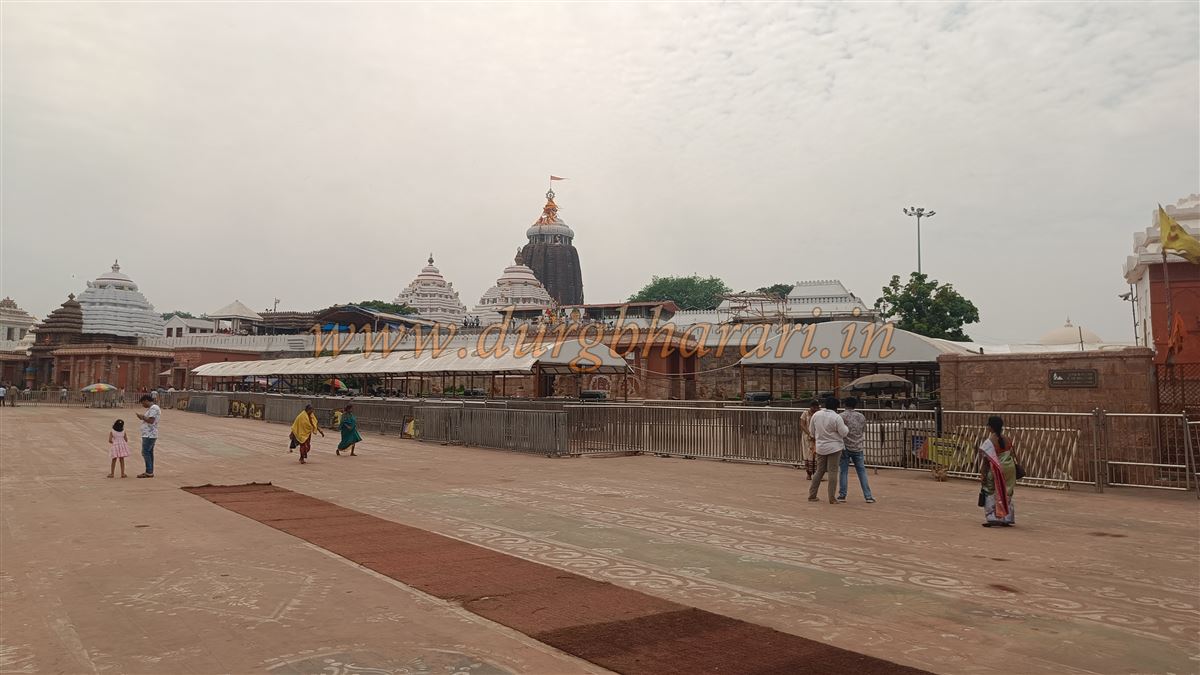
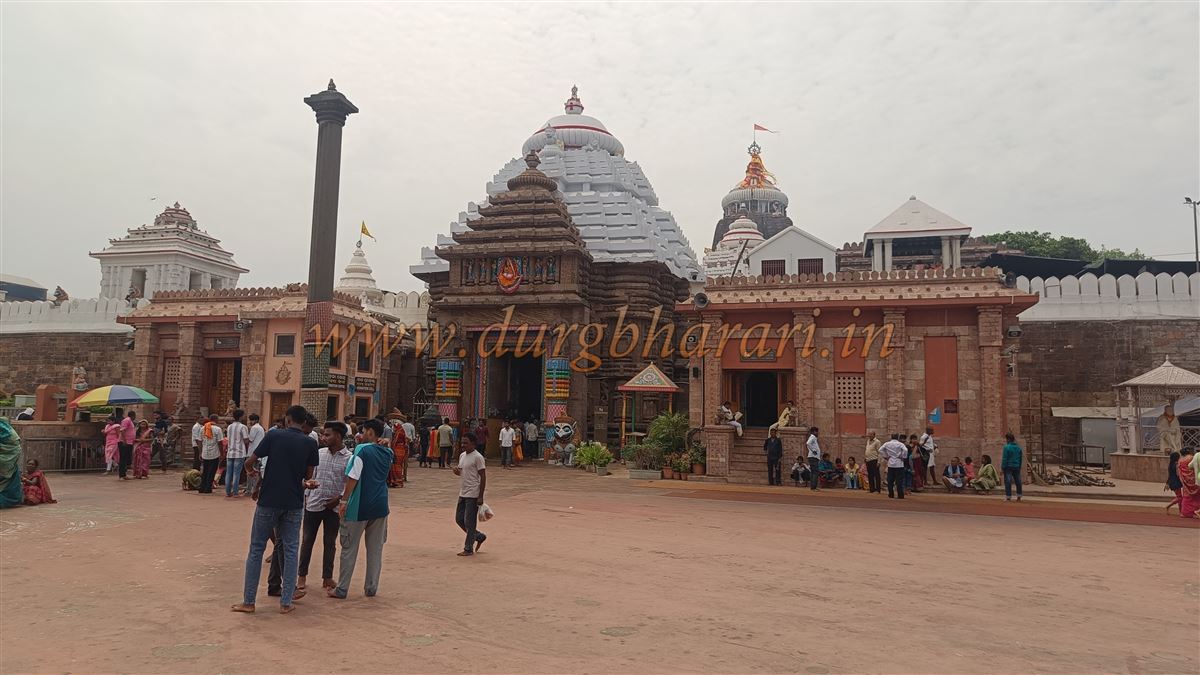
The temple complex spreads over about 10 acres and is enclosed by fortified walls. The 20-foot-high outer wall is called the Meghanada Pacheri.
...
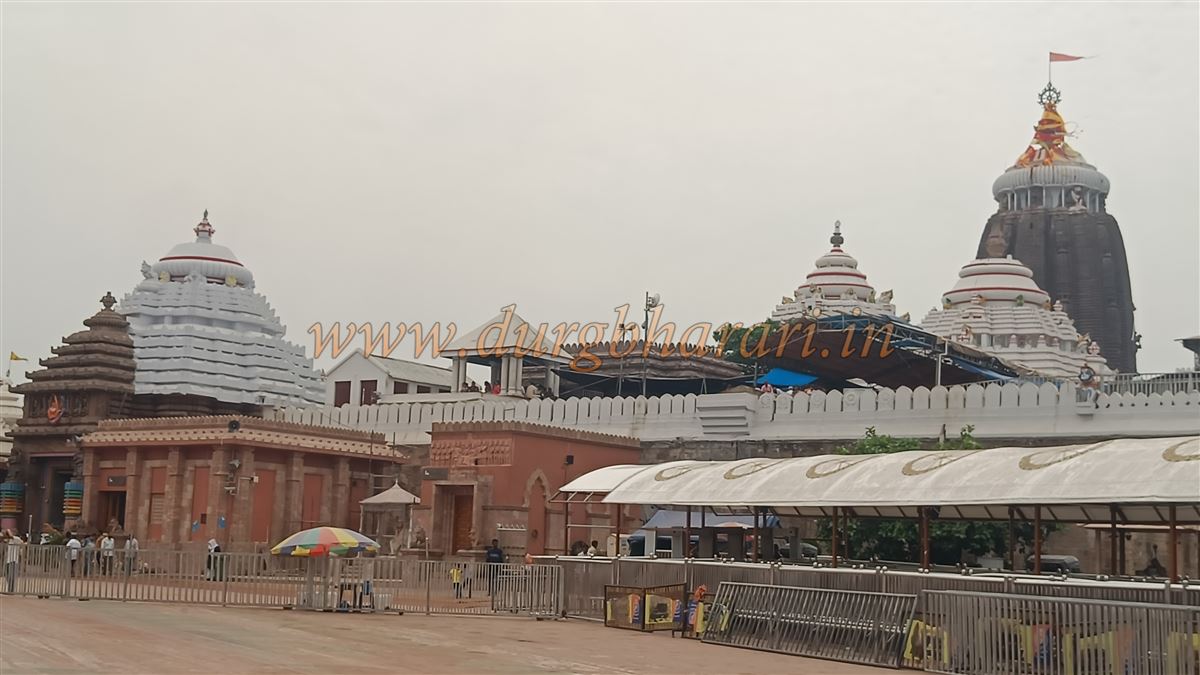
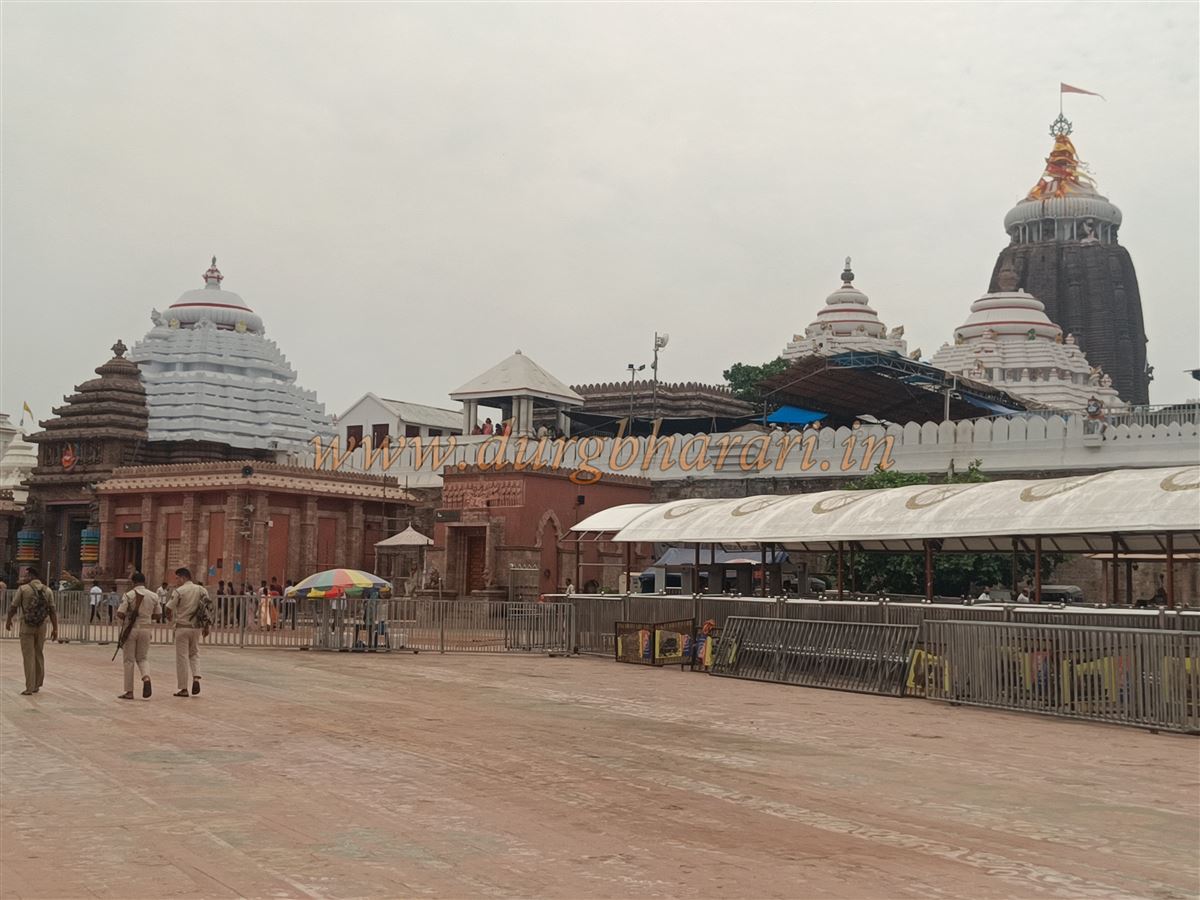
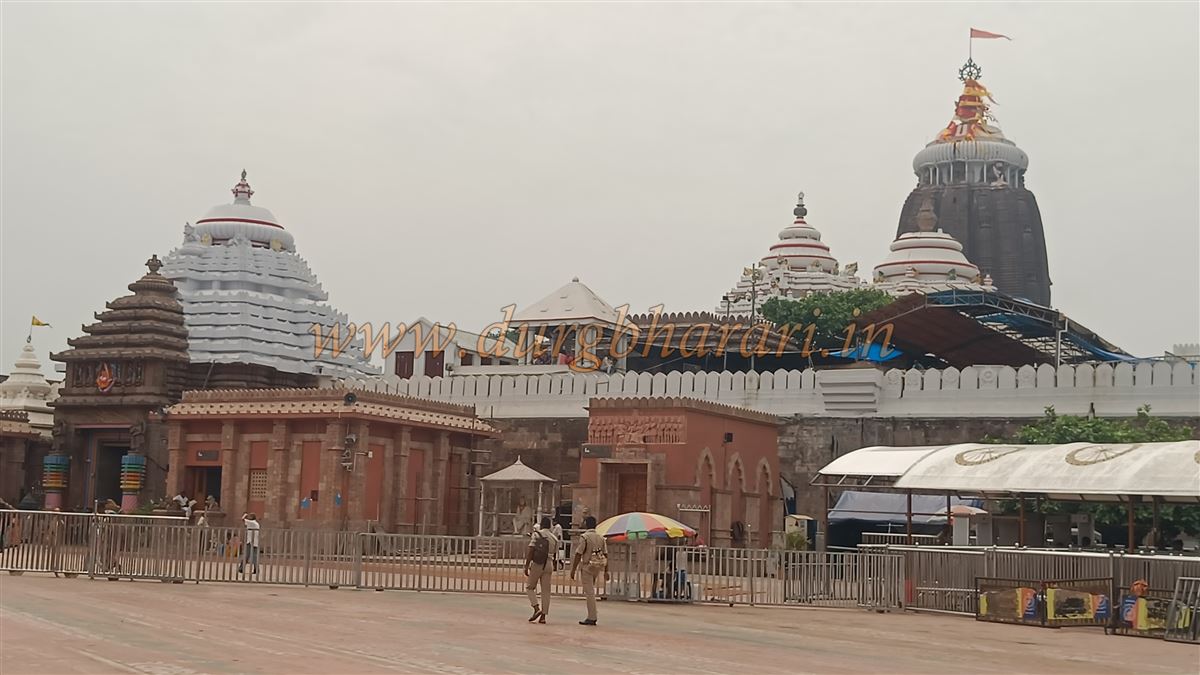
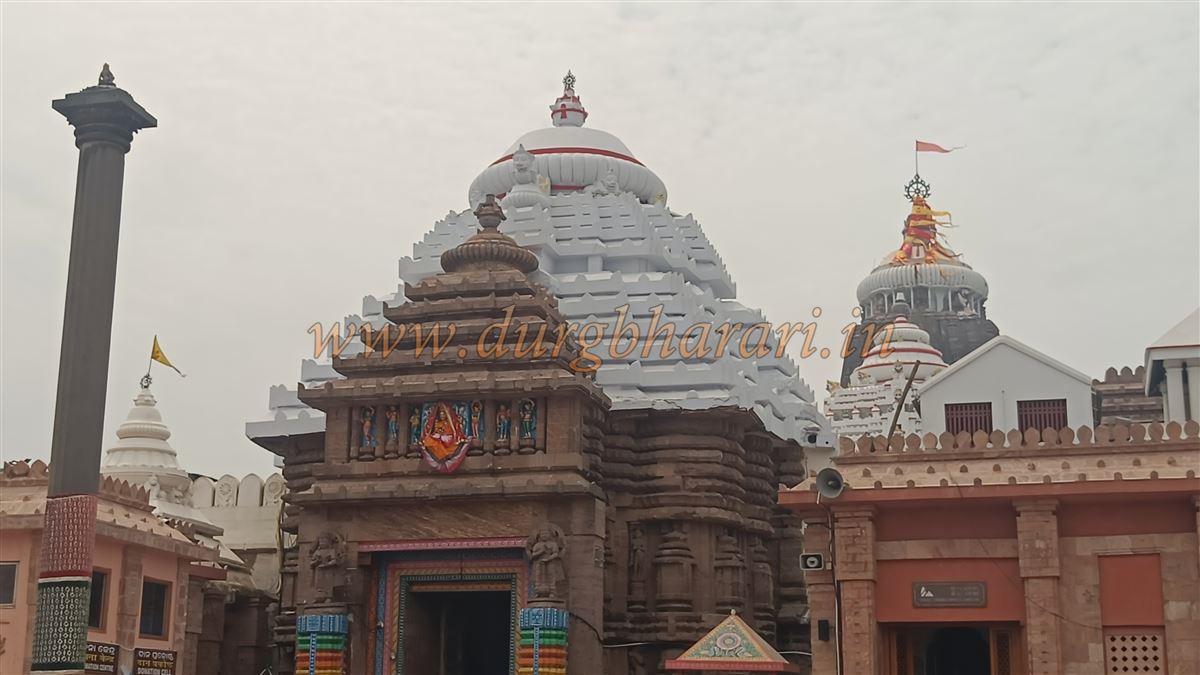
Another wall, known as the Kurma Bedha, surrounds the main temple. There are at least 120 temples and sacred spots within the premises. Due to the richness of its Kalinga-style architecture and sculpture, Jagannath Temple is among the most magnificent temples in India. The temple has four main structural divisions—the sanctum sanctorum (Garbhagriha), the porch (mukha-mandapa), the assembly hall (rangamandapa), and the hall of offerings (bhogamandapa).
The sanctum houses the principal deities—Lord Jagannath, Lord Balabhadra, and Goddess Subhadra—carved from neem wood and placed on a gem-studded altar called the Ratnavedi. Other idols in the temple include Vishwadhatri, Madan Mohan, and Shri Devi. These deities are adorned with different clothes and jewels according to the seasons. The worship of these deities predates the construction of the temple and may have originated from an ancient tribal shrine.
The main temple has a curvilinear spire topped with the Neel chakra, a discus made of eight metals. Among the temples in Odisha, it is the tallest, with its tower rising to about 214 feet from the sanctum atop a stone platform. The Neel chakra is mounted at the summit, and tradition dictates that a different flag is hoisted upon it daily. This flag, called the Patit Pavana, is considered equivalent to the sanctum’s presiding deities. Around the outer rim of the Neel chakra are eight navagunjar figures, all facing the flagstaff, each made of eight metals, standing 11 feet high with a circumference of about 36 feet.
At the temple gates stand the statues of two guardians, Jaya and Vijaya. There are four gates in total, symbolizing Dharma (righteousness), dnana (knowledge), Vairagya (renunciation), and Aishwarya (prosperity). The main entrance, the Singhadwara or Lion Gate, has two massive lion statues on either side and is the primary access for devotees. It is believed that entering through this gate grants liberation.
The western gate, Vyaghradwara, bears tiger sculptures and symbolizes the adherence to righteousness and the fulfilment of desires. It is generally used by special devotees and saints. The northern gate, Hastidwara, features elephants, the vehicle of Goddess Lakshmi. It is said that the Mughal invaders damaged these statues, which were later restored. This gate is reserved for sages. The southern gate, Ashwadwara, has horse sculptures with Lord Jagannath and Balabhadra depicted as ready for battle, symbolizing victory.
The temple has 22 steps, each symbolizing a deficiency in human life. These steps are considered mysterious, and devotees are advised not to step on the third step, known as the Yama Shila. According to belief, stepping on it washes away all merits and leads the soul to Yamaloka instead of Vaikuntha.
In front of the main entrance stands the Arun Stambh, a 16-sided monolithic pillar with a statue of Arun, the charioteer of the Sun God, atop it. Originally located at the Sun Temple of Konark, it was brought here during the Maratha era by Brahmachari Gosaviswami. Within the complex are about 30 smaller temples, including notable shrines like the Ganesha Temple near the Kalpavata Banyan Tree, the Vimala Temple, the Neelamadhava Temple, the Gopal Ballav Temple, and the Lakshmi Temple. The Vimala Temple, near the Rohini Kunda, is considered one of the Shakti Peethas, and offerings made to Lord Jagannath become Mahaprasad only after being presented to Goddess Vimala. The Lakshmi Temple plays a vital role in the main temple rituals. Other shrines are dedicated to Ganesha, Shiva, Surya, Saraswati, Bhuvaneshwari, Narasimha, Rama, and Hanuman.
The temple is open daily from 5 a.m. to 10:30 p.m. One unique ritual associated with the temple is Nabakalebara, held every 8, 12, or 19 years, meaning “new body,” in which the wooden idols are replaced with new ones made from special wood, and the old idols are buried at Koili Vaikuntha. The current titular king of Puri, Gajapati Dibyasingha Deb, serves as the chief servitor, a role he assumed in 1970 at the age of 17 after his father’s death.
The annual Rath Yatra begins on the second day of the bright fortnight of Ashadha. Before it starts, the deities are brought out of the temple and placed on their chariots. The journey starts from Jagannath Temple and ends at Gundicha Temple, believed to be the home of the deities’ aunt. After a few days, they return to the main temple, but not before a ritual to appease Goddess Lakshmi, who was upset for being left behind. The chariot of Lord Jagannath is 45 feet high, 35 feet long, and 35 feet wide, with 16 wheels, all newly built each year. Artists carve figures of charioteers and horses, and painters decorate the wheels with flowers and designs. Thousands of devotees from around the world pull the chariots with ropes.
The earliest reference to the temple appears in the Vanaparva of the Mahabharata. A legend speaks of King Indradyumna of Malwa, who dreamt of Lord Jagannath instructing him to find His idol at Neelachala hill and build a temple. The idol, known as Neelamadhava, was worshipped by the Sabara tribe. A Brahmin named Vidyapati, sent by the king, married the daughter of the tribal chief to gain access to the shrine and took the idol. Distressed, the tribe lost the idol when it disappeared, and Lord Jagannath instructed the king to create new idols from a floating log, which only the tribal chief could carry. Lord Vishwakarma appeared in disguise to carve the idols, asking not to be disturbed for 21 days. But the queen, anxious after two weeks, persuaded the king to open the door, leading to incomplete idols without hands. A divine voice instructed that they be installed as they were.
Historical records indicate that the original temple was built around 318 CE by King Indradyumna of Ujjain. The present temple was rebuilt in the 11th century by King Anantavarman Chodaganga of the Eastern Ganga dynasty, with later contributions by his son Anangabhima Deva II. Inscriptions date construction to sometime after 1112 CE. The current structure dates mainly to the 16th century, though the temple has faced 18 recorded invasions and plunders.
Other notable sites in Puri include Narendra Pokhari, a massive 15th-century tank built by King Narendra Dev Rai, and Lokanath Temple, one of Puri’s oldest, dedicated to Lord Shiva and believed to house a Shivalinga installed by Lord Rama himself. The Lokanath Temple is built from carved stone, 30 feet high, in four sections, with walls adorned with depictions of Hindu deities.
© Suresh Nimbalkar
GALLERY