HIRAKOT
TYPE : GROUND FORT
DISTRICT : RAIGAD
HEIGHT : 0
GRADE : HARD
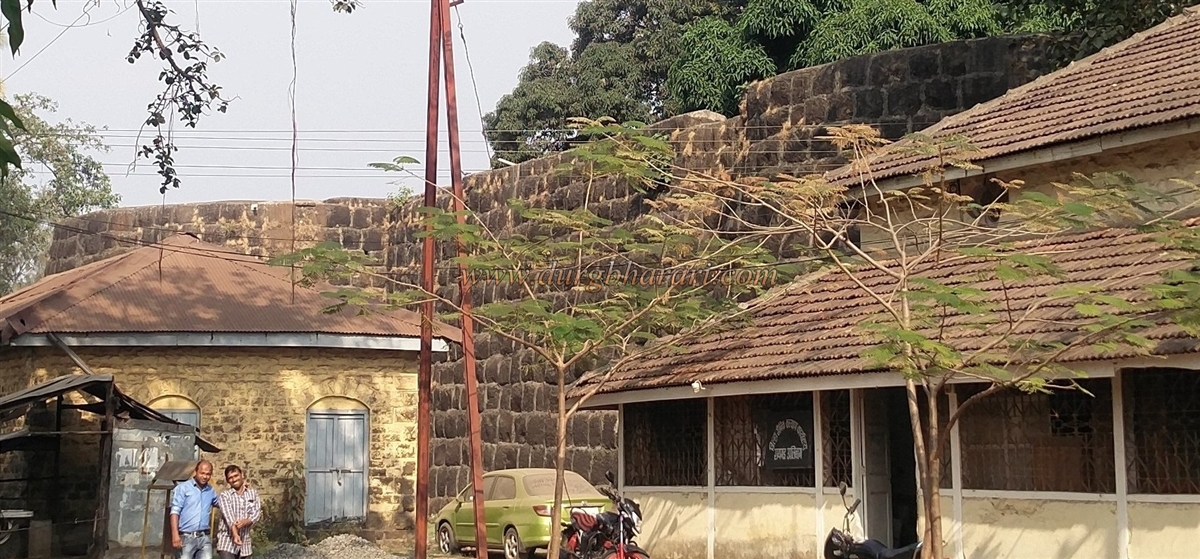
In Raigad district, about two kilometres northwest of the Alibag bus station, stands this ground fort (Bhuikot) in the Ramnath area, beside the Hirakot Lake. Located near Kulaba, this fort was part of Kulaba’s defensive network. Since the annexation of the Angre estate in 1843, Hirakot Fort has housed the district sub-jail. As the fort area is restricted, entry is not permitted; it can only be viewed from the outside with police permission.
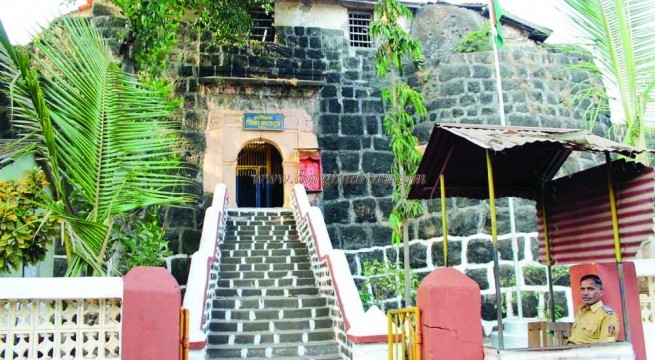
According to records in the Raigad Gazetteer, the west-facing main gate of the fort still survives, and a flight of steps leads up to it. Above the gate is a carving of Lord Hanuman trampling Shani (Saturn), and inside the gate are guard chambers. Behind the fort lies an open ground, from where the massive and impregnable fortification of Hirakot becomes visible.
...
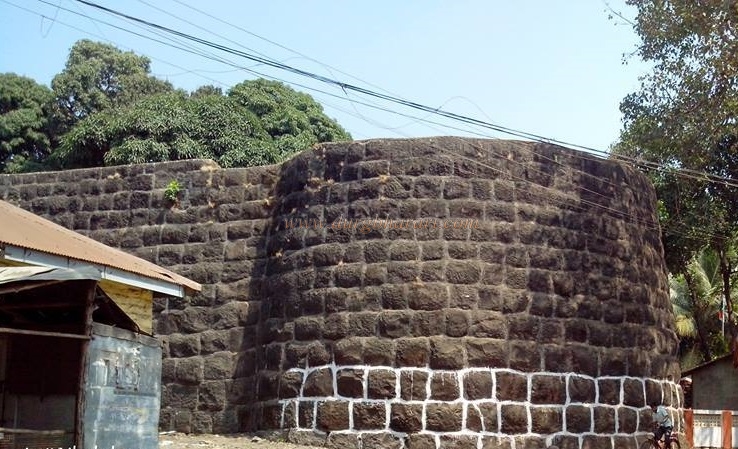
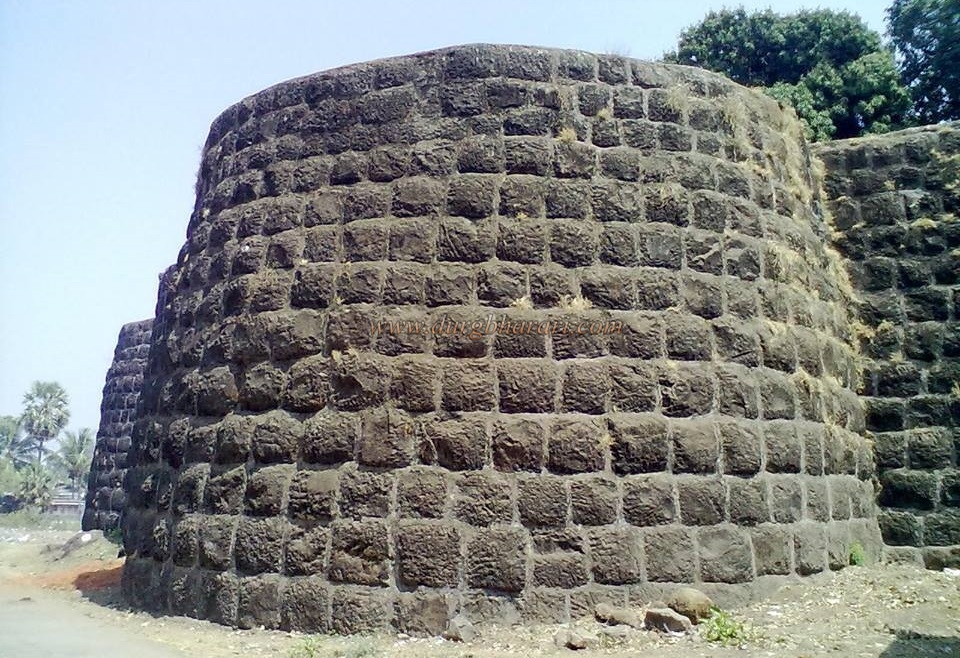
The fort has six bastions, and the walls are built with enormous dressed stone blocks. Interestingly, no lime mortar was used to hold these stones together — one can’t help but wonder how such massive stones were stacked so skilfully.
The inner fort area, including the open grounds, covers about 30 Guntha. While the outer portion of the fort retains its original structure, modifications have been made inside. The old well within the fort has been filled in. In front of the fort lies Hirakot Lake, formed when soil was excavated for the fort’s construction.
The Hirakot structure in Alibag has a unique historical significance. In the late 17th century, Kanhoji Angre established the village of Alibag and made Kulaba his main stronghold. During the Angre family’s prosperous era, Alibag held great importance. It was Kanhoji Angre who built this ground fort in 1720, using it as a treasury.
On 28 March 1740, Sambhaji Angre arrived at Sakhar village with his fleet and captured Hirakot Fort. Later that same year, Balaji Baji Rao (Nanasaheb), son of Peshwa Baji Rao I, marched into the Konkan, defeated Sambhaji Angre’s forces, and took possession of the fort, making Hirakot his camp. It was here at Hirakot that Nanasaheb received the news of Peshwa Baji Rao’s death at Raverkhedi on the banks of the Narmada. Leaving Hirakot, Nanasaheb set out — not as a Peshwa’s son but as the new Peshwa himself.
The idol of Kalambika Devi, the Gramadevata (village deity) of Alibag, was discovered by fishermen in the sea at Navgaon in Alibag taluka. After performing initial worship at the shore, Kanhoji Angre installed the idol in Hirakot Fort, making Kalambika Devi the family deity of the Angre household.
On 30 December 1761, a fire broke out in the fort, killing Laxman Angre and his nurse. On 9 August 1778, another fire erupted at midnight, destroying the fort’s wada (mansion) and two bastions. From 1782 onward, Hirakot faced a series of fires for three consecutive years. In 1797, Baburao Angre attacked Jaysinghrao Angre with artillery and besieged the fort. When Jaysinghrao fled to Kulaba with four or five companions, Baburao captured Hirakot within five to six days.
On 30 December 1843, the Angres’ rule here came to an end, and the British took possession of the fort, converting it into a prison. The family deity Kalambika Devi was relocated to Balaji Naka in Alibag, where a temple was constructed.
Built by Sarkhel Kanhoji Angre, Hirakot Fort has witnessed numerous historic events. Recently, the Archaeological Department has declared it a protected monument.
© Suresh Nimbalkar
GALLERY