GIRYE RAMESHWAR
TYPE : MEDIEVAL SHIVMANDIR
DISTRICT : SINDHUDURG
In the Konkan region, near Girye village in Devgad taluka, lies the sacred place of Lord Shivshankar known as Shri Dev Rameshwar. This temple, along with the self-manifested (Swayambhu) Rameshwar lingam, has a radiant historical background. The history of Rameshwar temple is nearly 300 years old. The temple’s construction is unique compared to all other temples in Konkan.
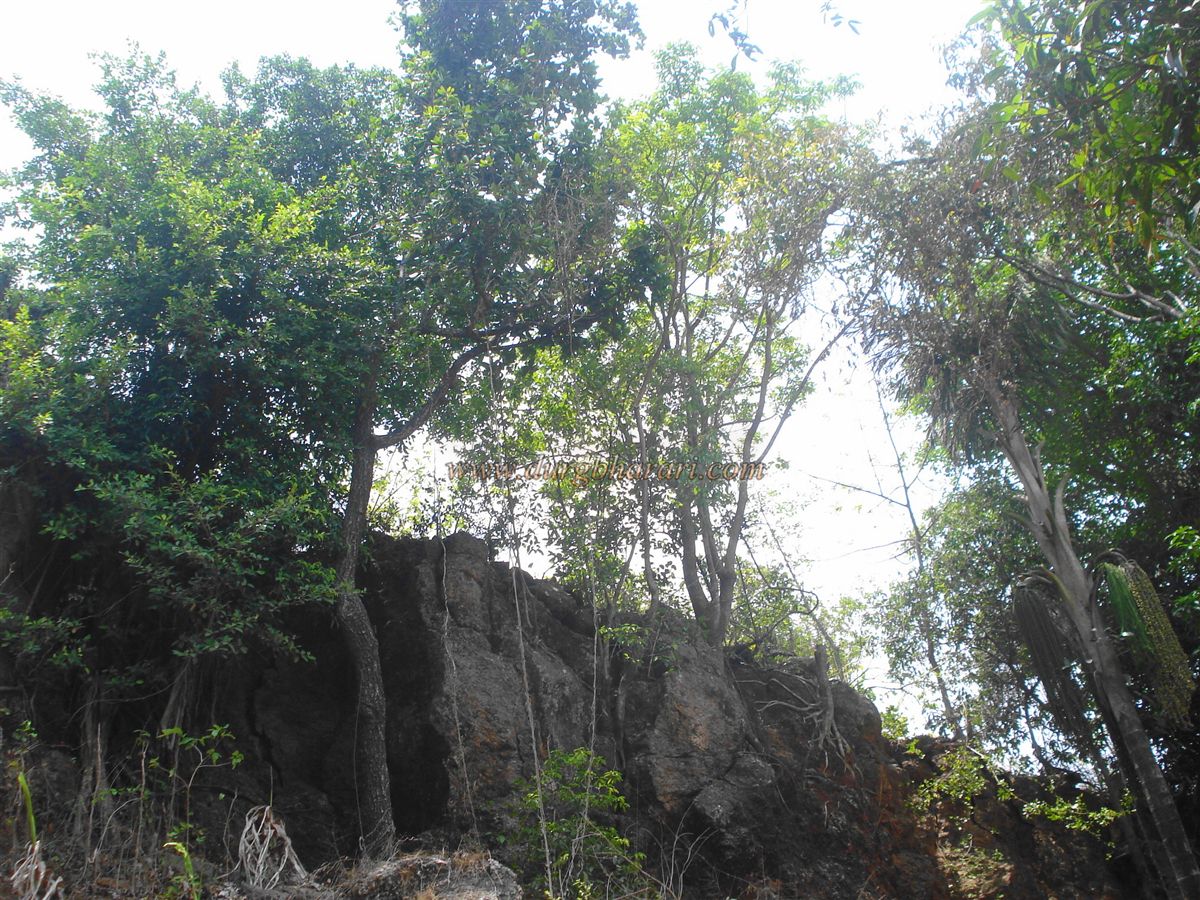
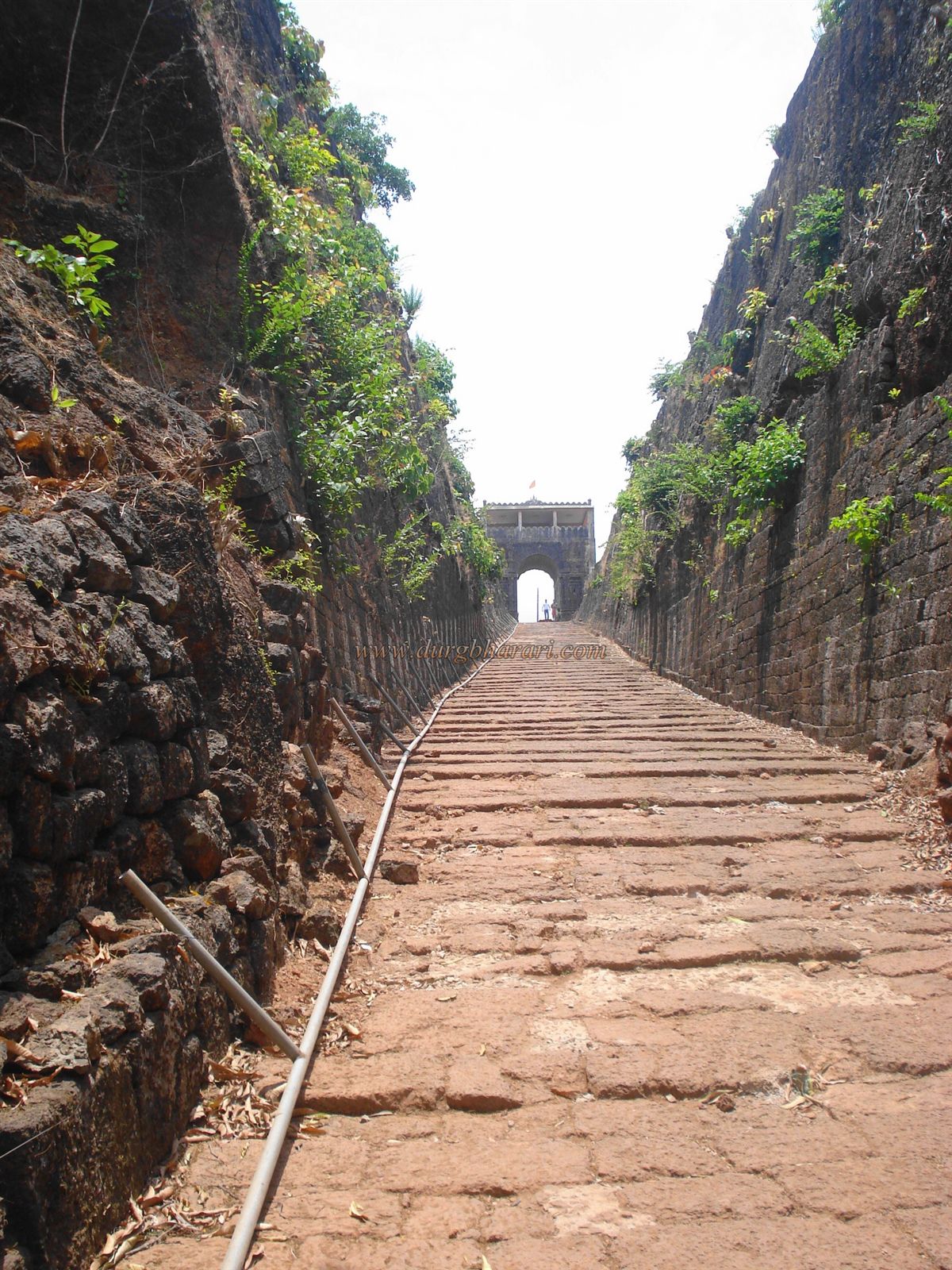
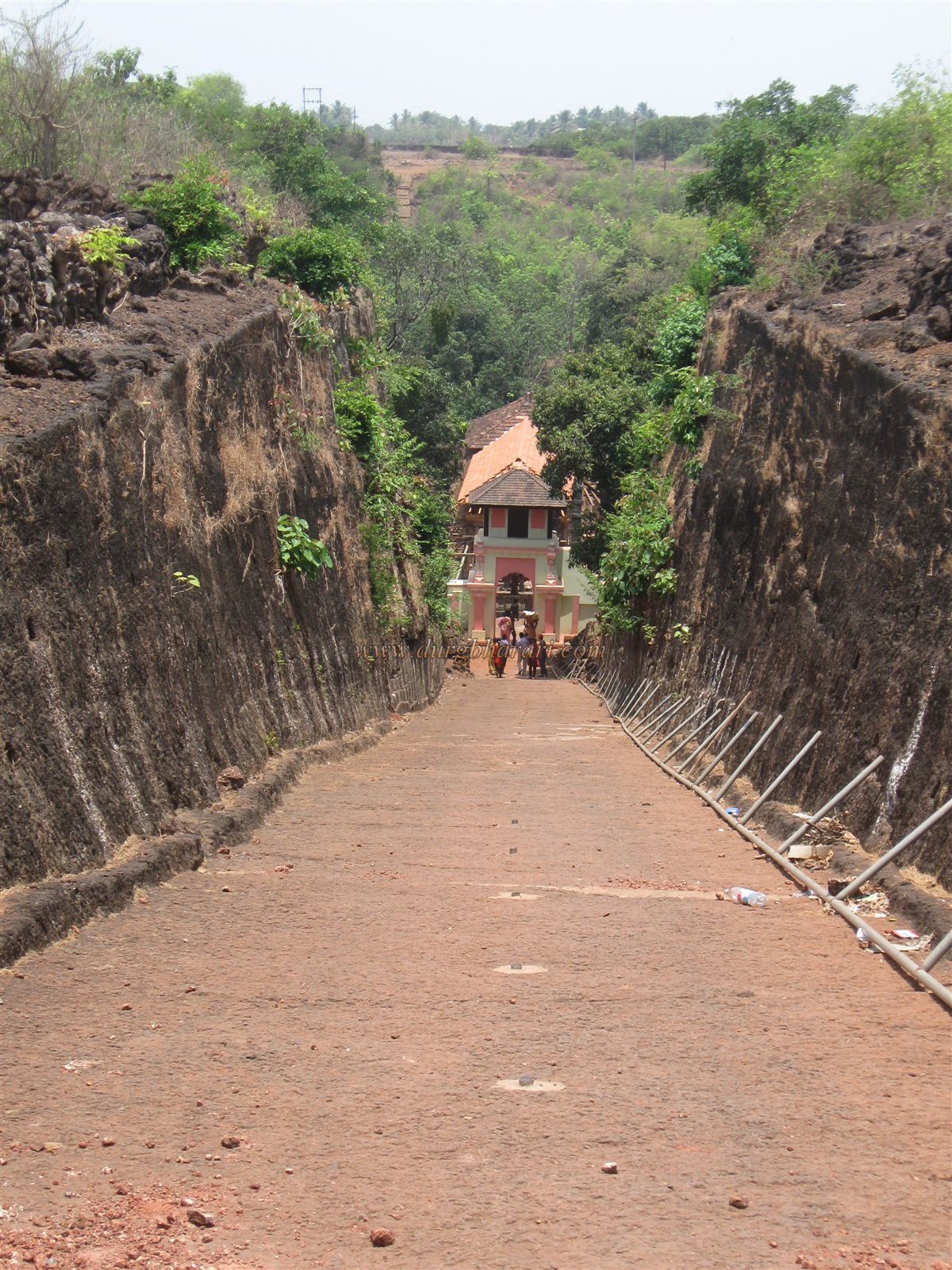
As it is located in a hollow/low-lying area, it is not visible from the front or from the main road. From the road, only the recently painted arch of the temple is visible. Standing under the arch and looking down, another small arch can be seen. Through that grand arch, to enter inside, there is a path carved entirely out of a single laterite rock — 150 meters long and 15 meters deep. The temple is simple, with a tiled roof, and in front stand five lamp-pillars (Deepmalas). Around the tiled temple, there is dense vegetation and forest.
...
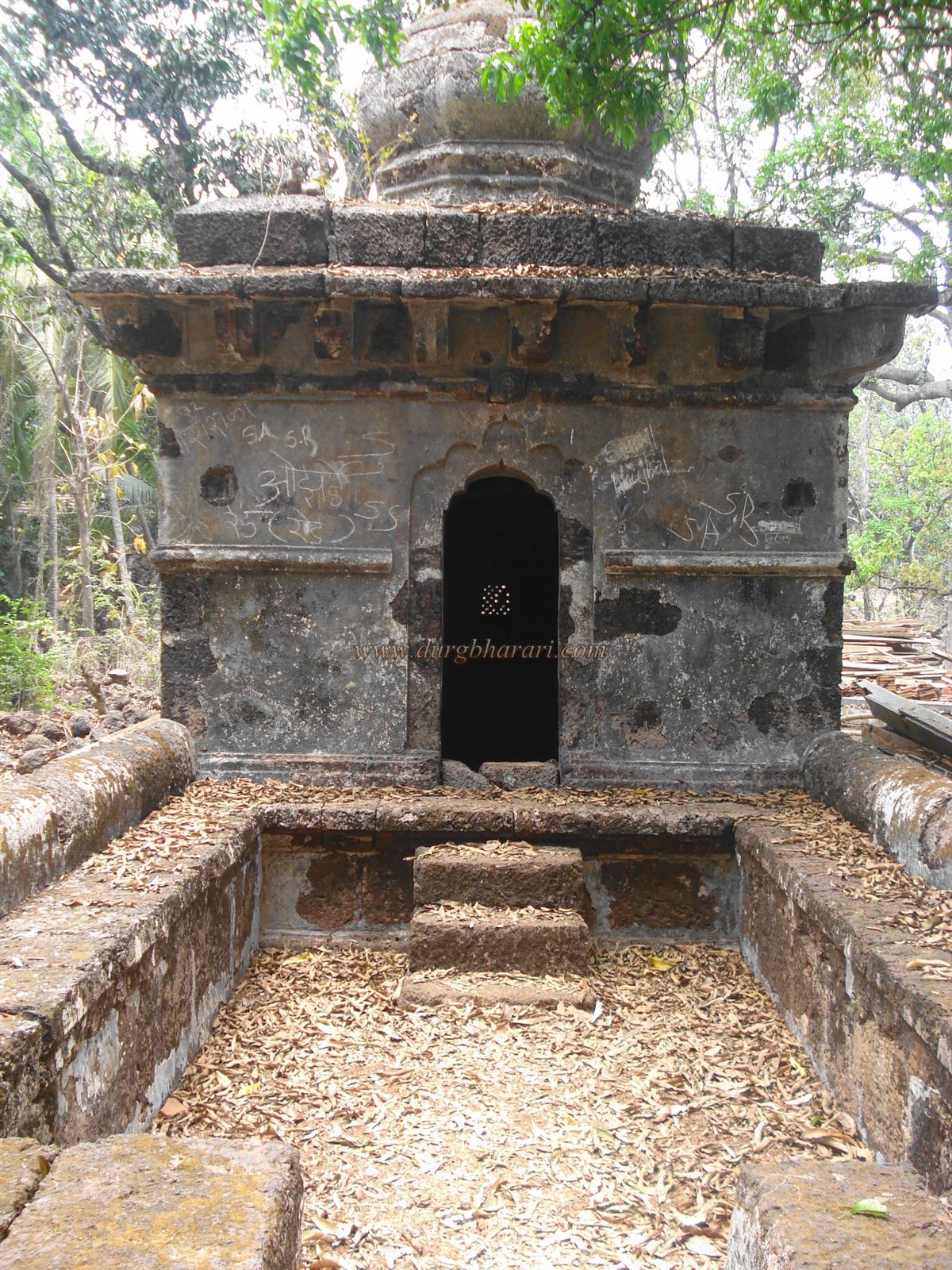
Upon entering, the wooden pillars of the temple, carved in the style of that era, attract attention. Inside the sanctum, there is another smaller sanctum that contains the ancient Shankar lingam. Outside stands a grand Nandi. On the right side, there is a small empty shrine. Previously, this housed a beautiful quadrilateral idol of Lord Shankar, about 3 feet tall, weighing 50 kg, made of pure silver, seated on Nandi — but it has now been moved from there.
From the structure of the temple, it appears that its development and expansion happened three times. Based on the design and carvings, it can be inferred that the original Shri Dev Rameshwar temple was established in the 16th century CE or earlier. In the early 18th century, Admiral (Sarkhel) Kanhoji Angre built a stone sanctum around the original site. A distinctive feature of this temple is that it has entrances on all four sides.
After Kanhoji Angre’s death, his son Sambhaji Angre became the chief of the navy here. He was a devotee of Lord Shiva. Together with his brother Sekhoji Angre, he built a beautiful pavilion with intricately carved wooden pillars in front of the original sanctum of Shri Dev Rameshwar temple. They enclosed the temple by constructing a circumambulatory path (Pradakshina Marg) and paved courtyard, adding entrances on the western and southern sides. Sambhaji Angre renovated the temple and undertook many public works. However, his life was short — he died in January 1742. His memorial (samadhi) and that of a companion who committed sati are still in good condition next to the temple’s southern gate.
In 1763 CE, Shrimant Madhavrao Peshwa appointed Sardar Anandrao Dhulap as ‘Subhedar of the Naval Fleet’ to maintain control over the Konkan coast. On 5 April 1783, in a battle with the British off the coast of Ratnagiri, the enemy was defeated, and all their troops and ships were captured and imprisoned at Vijaydurg port. In 1792–93, Anandrao Dhulap captured a huge bell from one of the seized ships. Later, Krishnarao Dhulap offered it to Rameshwar in 1827. The bell is still hanging at the temple entrance in good condition, with the year 1791 inscribed on it.
The tall mast from the captured ship Santan has been planted in front of the entrance gate on the temple plateau as a symbol of valour. The one-and-a-half-man-weight bell currently at the temple’s eastern entrance still bears witness to the Dhulap family’s bravery.
In 1775 CE, Shrimant Sawai Madhavrao Peshwa appointed Gangadhar Pant Bhanu as the hereditary Subhedar of the Vijaydurg province. In the late 18th century, both Anandrao Dhulap and Gangadhar Pant Bhanu carried out much work at Rameshwar temple. Around 1780, Subhedar Gangadhar Pant constructed an extremely beautiful assembly hall (Sabhamandap) in front of the temple, decorated with fine wooden pillars and elegant arches. Since the path to the temple was difficult, the eastern hill was cut to make a staircase approach, and an entrance gate was built.
This temple stands at the junction of the boundaries of Girye, Rameshwar, and Vijaydurg villages. From the Girye plateau, the temple is not visible — the mast is seen first. After passing the entrance gate and descending the carved stone steps, the temple comes into view. Inside, there are stone-carved idols of Ganesha, Nandi, and the deity’s seat. On the outer walls of the sanctum and on the walls on three sides of the temple, there are beautiful paintings depicting mythological scenes, with ornaments, costumes, and weapons matching 18th-century styles. The other pillars inside the sanctum also have carvings. The outer wall paintings are still in good condition today.
Another important feature of the temple is the Peshwa-era paintings inside. These paintings in Maratha style are extremely rare. The temple’s artistic work is a glimpse into ancient culture. Its spacious construction and ancient decorative paintings enhance its grandeur. The walls feature colourful paintings of various scenes from the Ramayana, many of which still retain their colours well. The temple’s carvings are worth seeing. Outside the south gate, there are memorials and other shrines, with the surrounding area lush with diverse trees, creating a serene atmosphere.
Festivals like Dussehra, Tripurari Purnima, Holi, etc., are celebrated here. Every year on Mahashivratri, a grand festival is held. Additionally, during the month of Shravan, devotees from the entire area visit Rameshwar every Monday. Shri Dev Rameshwar temple is a fine example of a blend of Konkani and Peshwa architectural styles — such temples are rare to find. The area is extremely scenic and well worth a visit for its spiritual and tourist appeal. Direct state transport buses are available from Malvan, Kankavli, or Ratnagiri to reach here.
© Suresh Nimbalkar
GALLERY