DHARMAPURI
TYPE : GROUND FORT
DISTRICT : BEED
HEIGHT : 0
GRADE : EASY
While touring the forts of Marathwada, except for six or seven strong land forts like Solapur, Ausa, Paranda, Udgir, Kandhar, Dharur, very few forts are seen. Since in the pre-independence period this region was under the rule of the Nizam, these forts have survived well till recent times and are still in good condition. This region of Marathwada is far from the main mountain range of the Sahyadri and is mostly flat plains with small and large hills. Since this area is completely different from the Sahyadri region, a large number of forts and some other forts were constructed on the small and large hills here. Because of this, the entire Beed district has two forts — Dharmapuri and Dharur — along with many forts (gadhis). Among these, Dharmapuri is in Parli taluka of Beed district. Dharmapuri fort is 45 km from Latur city and 115 km away from Beed city, which is quite far. Therefore, it is more convenient to come to Dharmapuri fort either by train to Latur or by bus to Ambajogai.
...
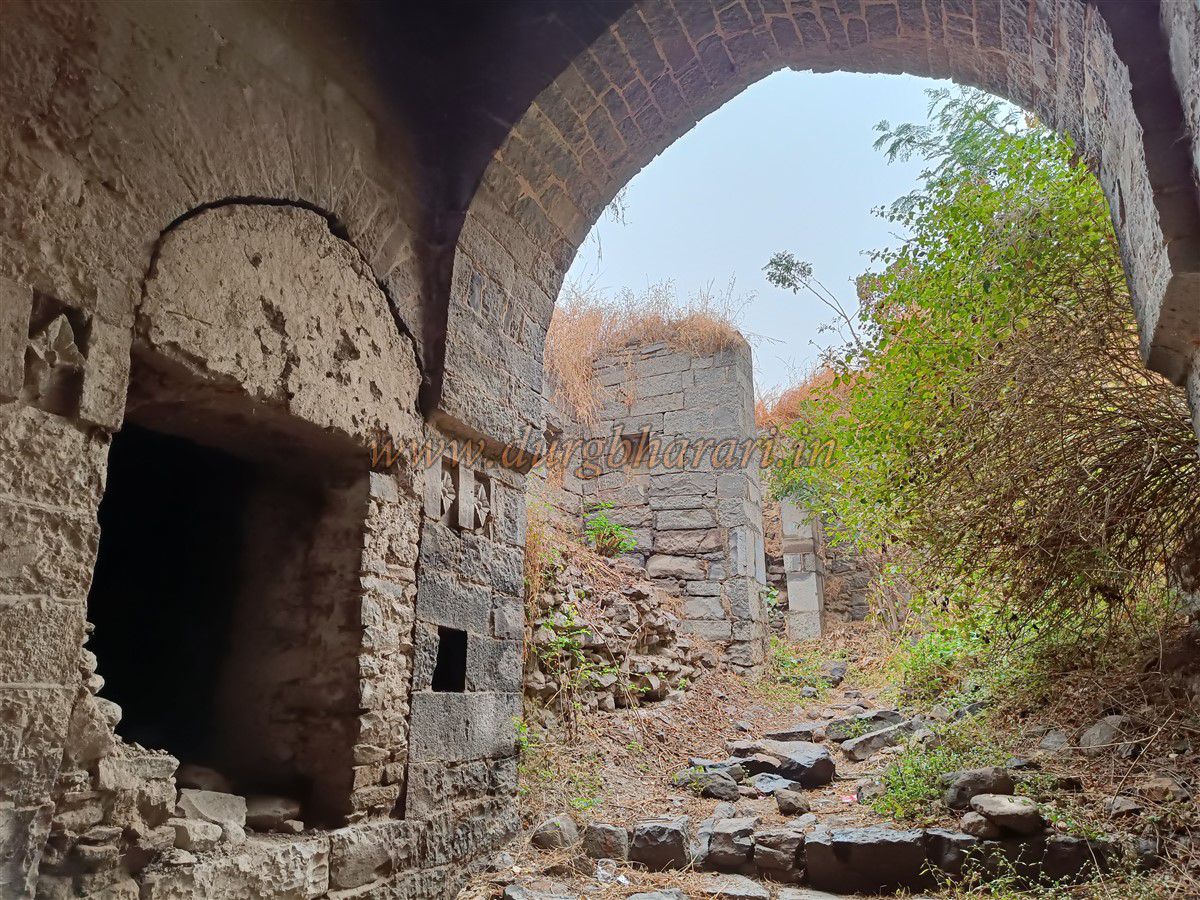
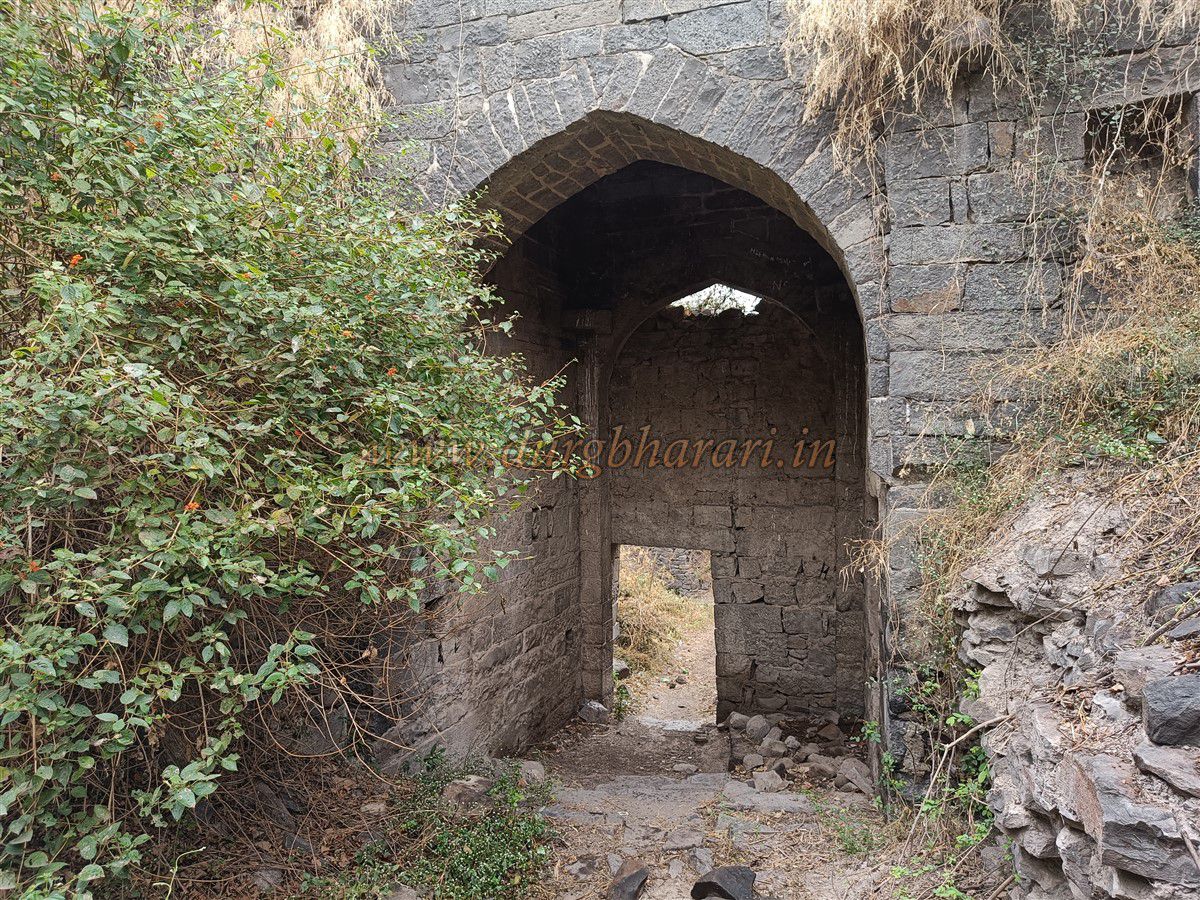
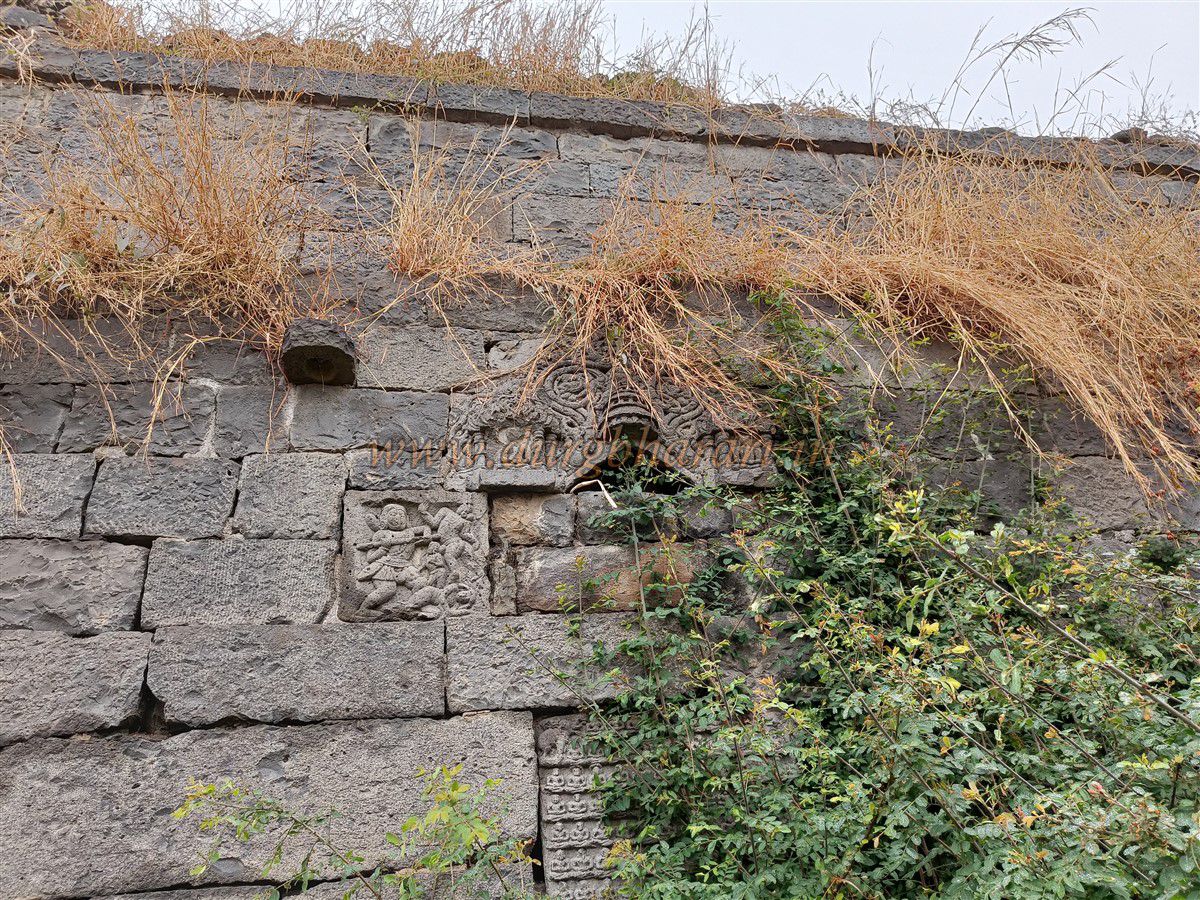
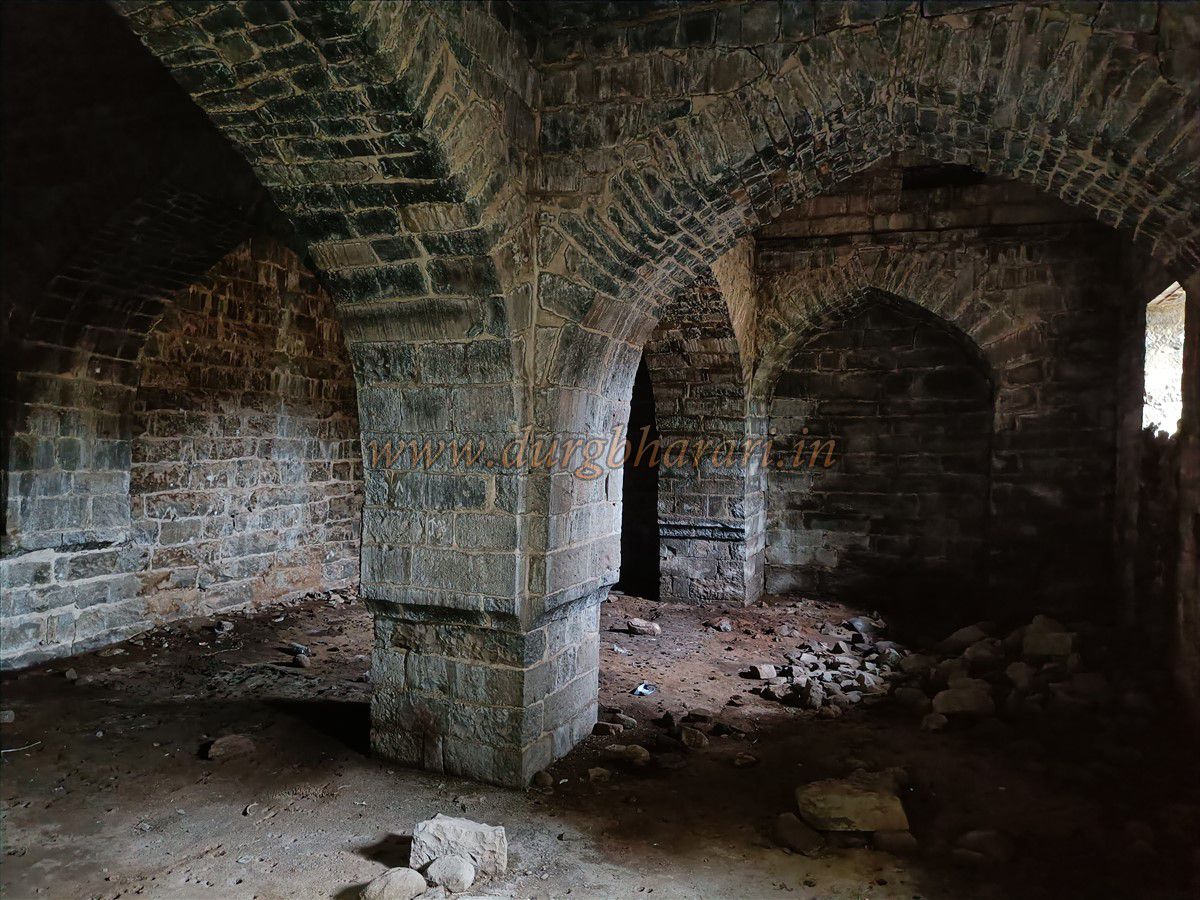
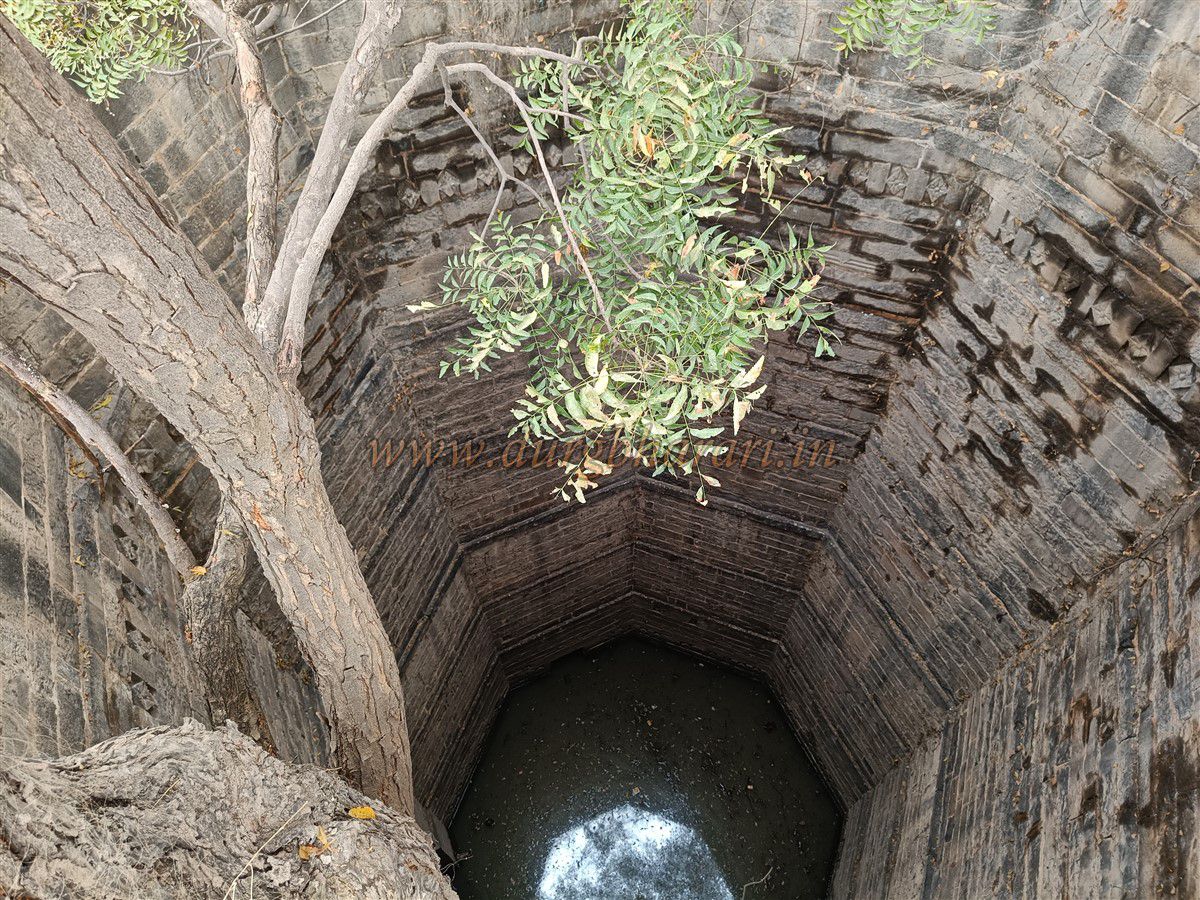
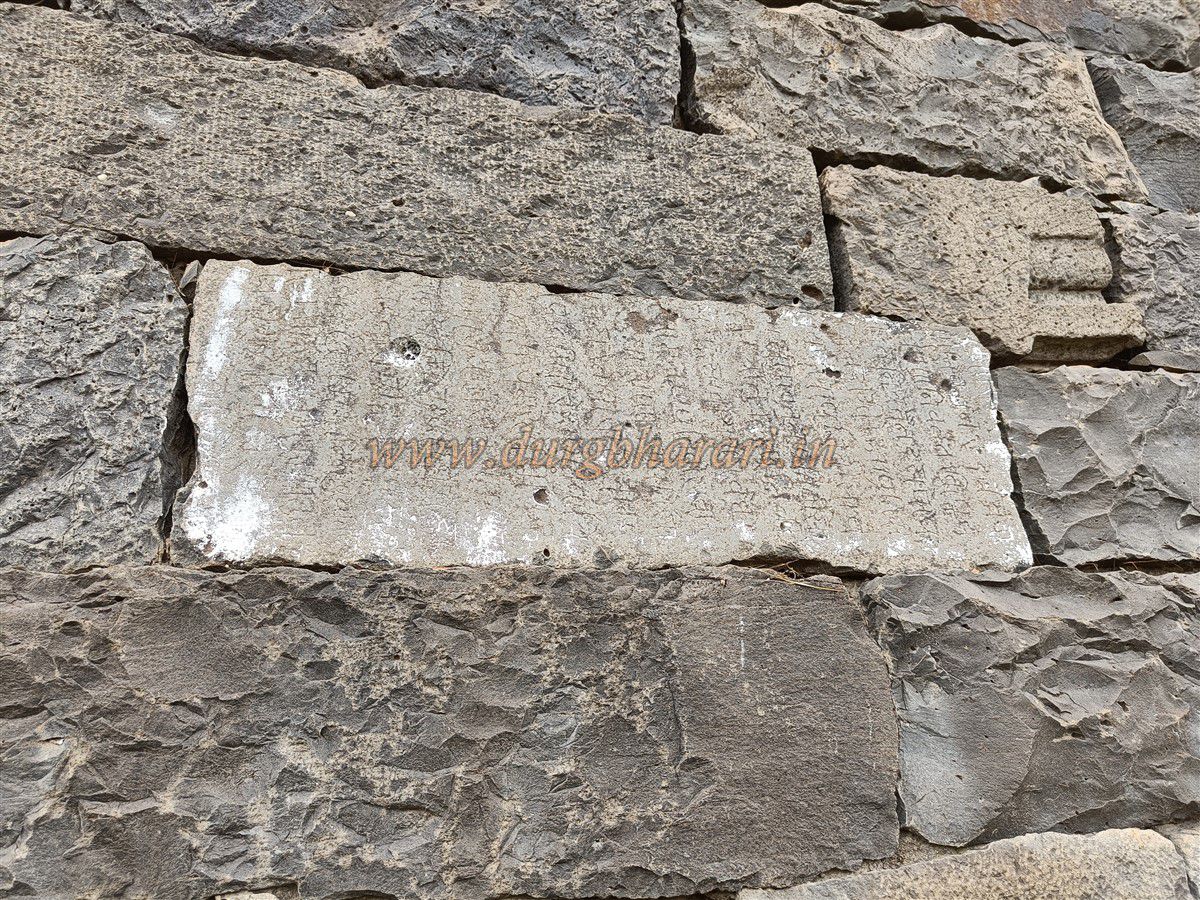
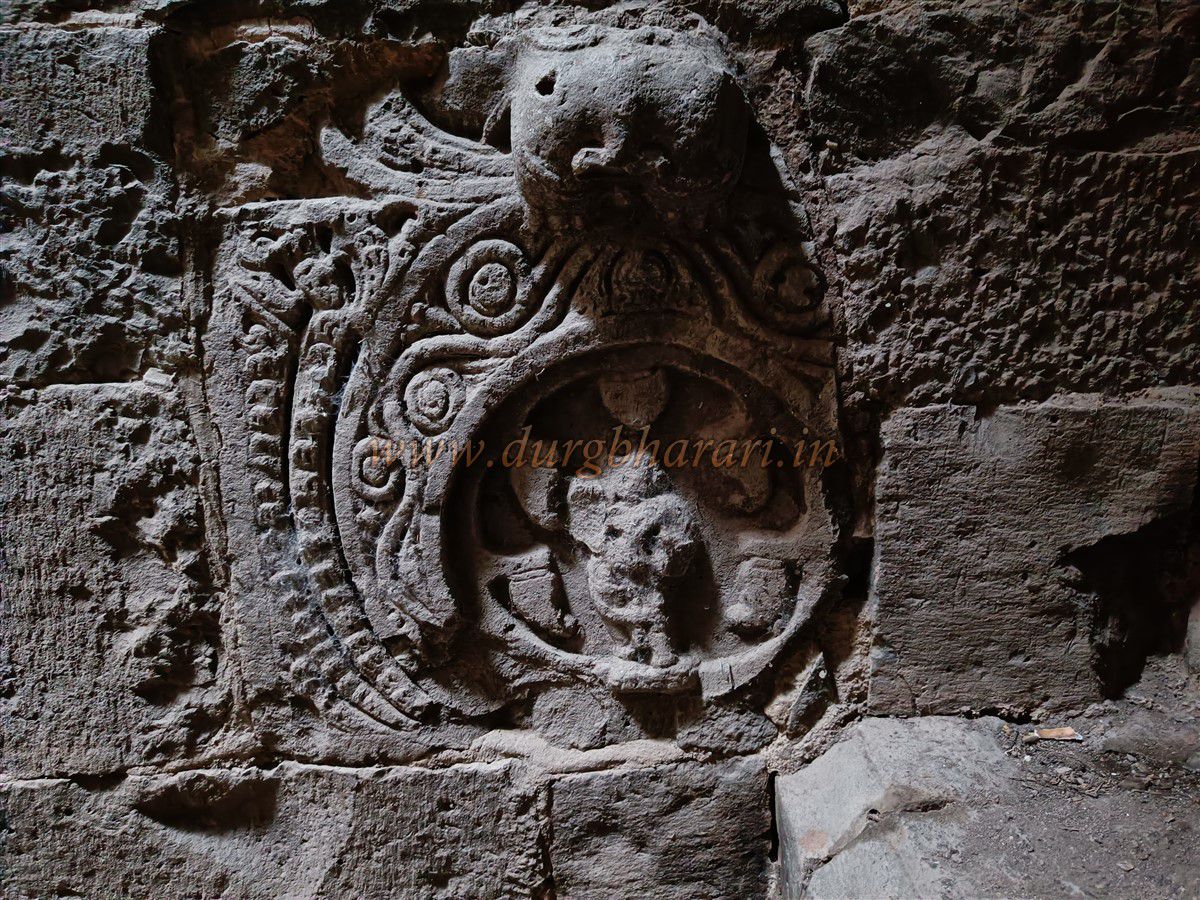
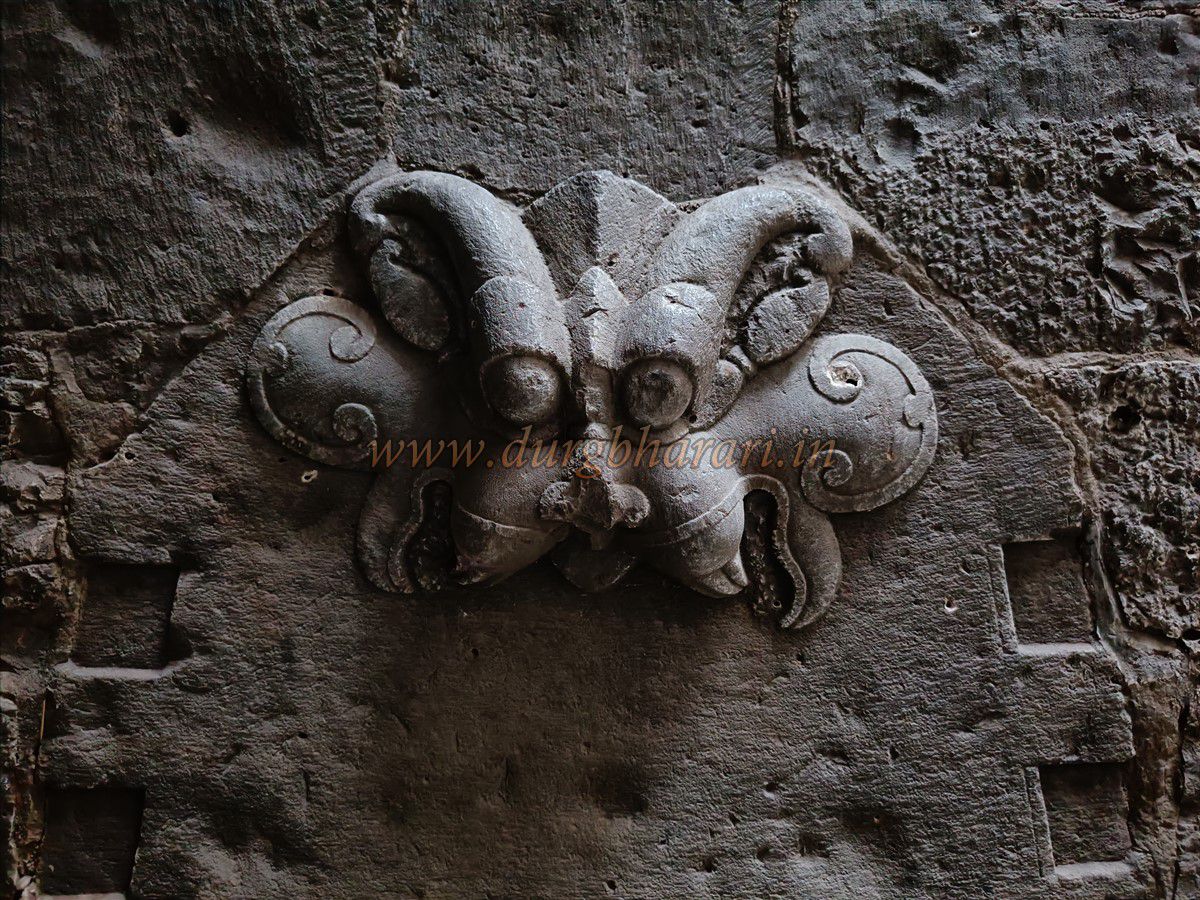
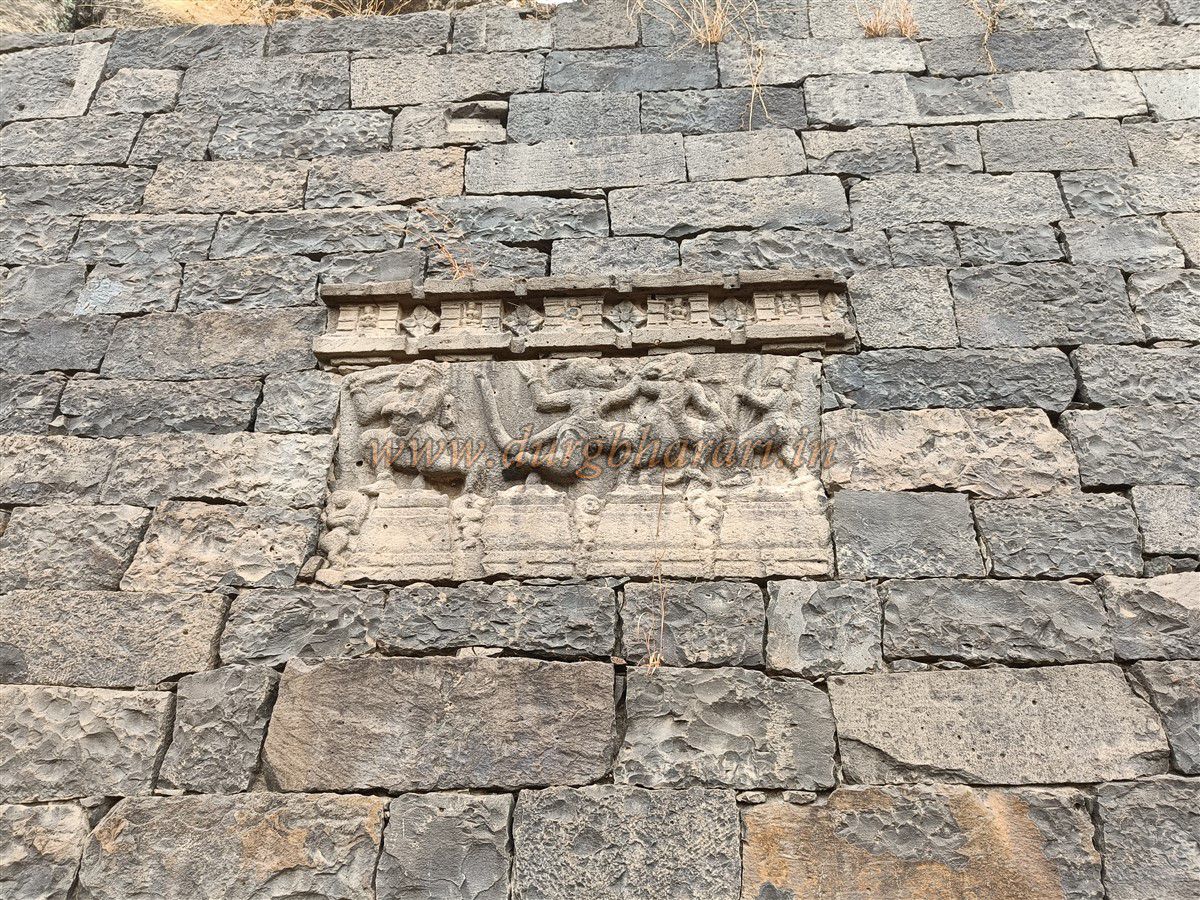
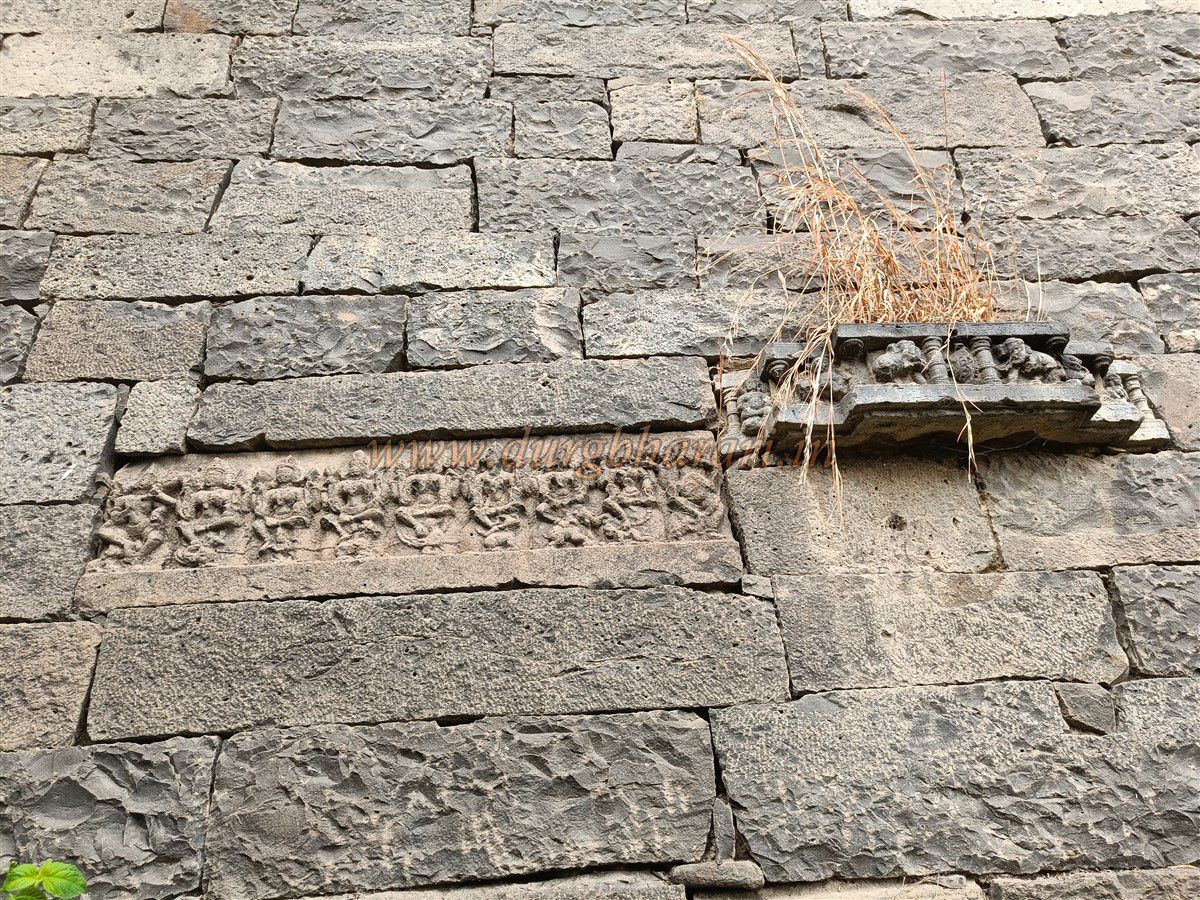
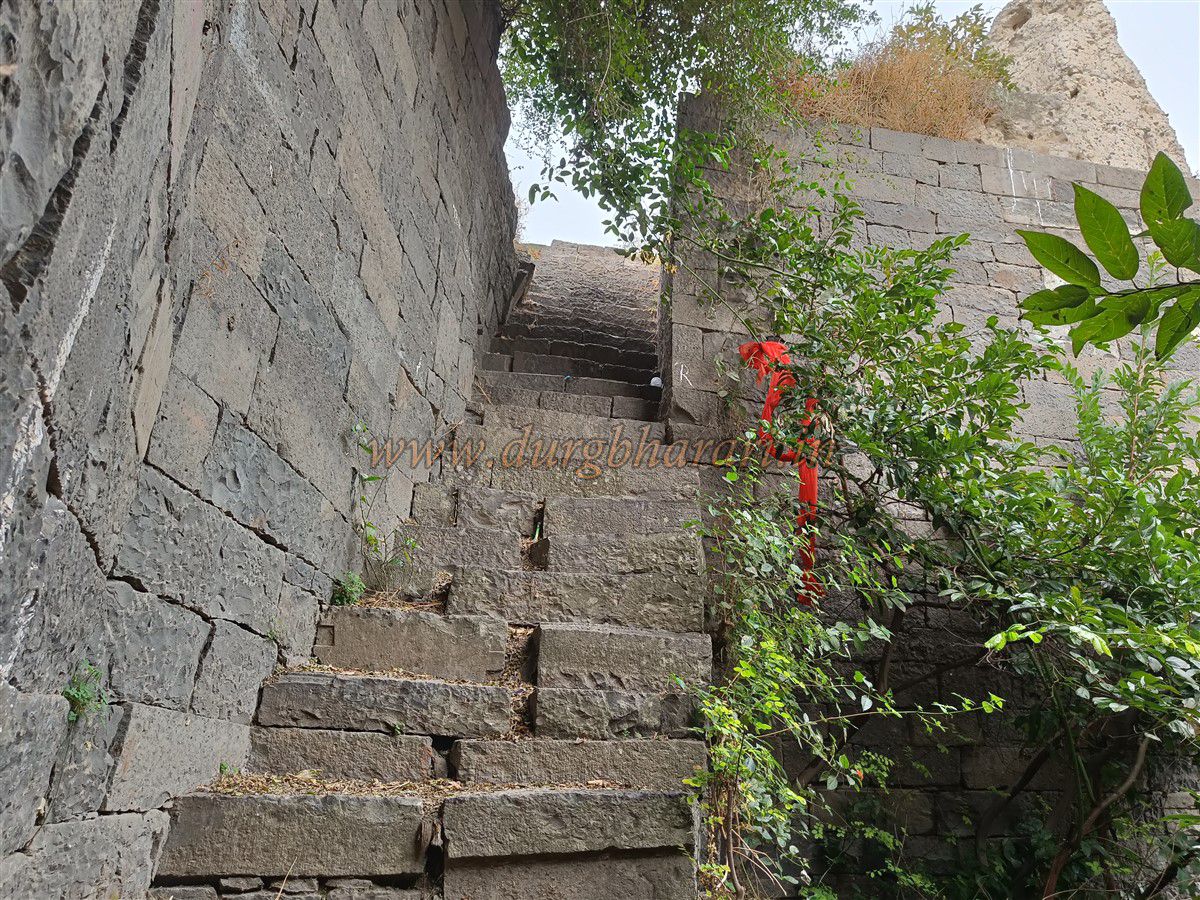
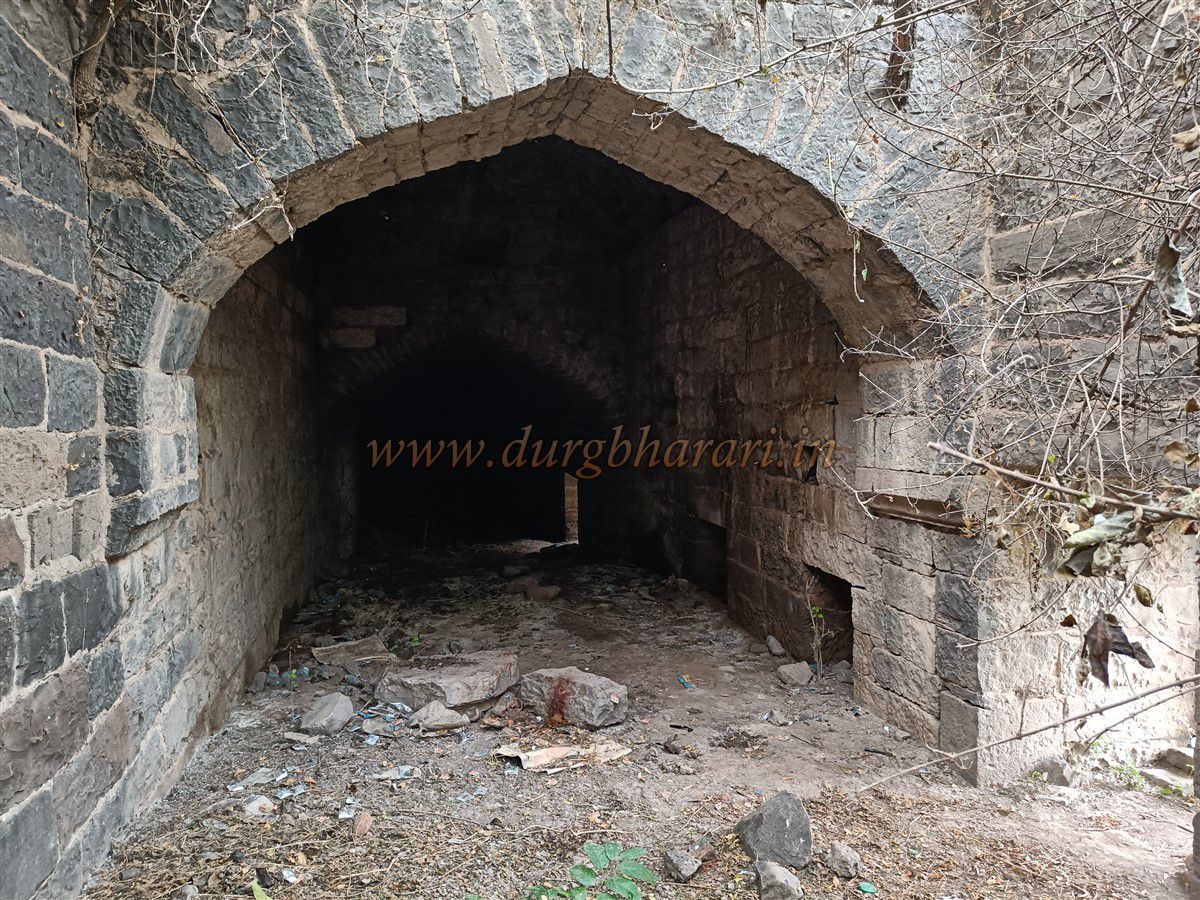
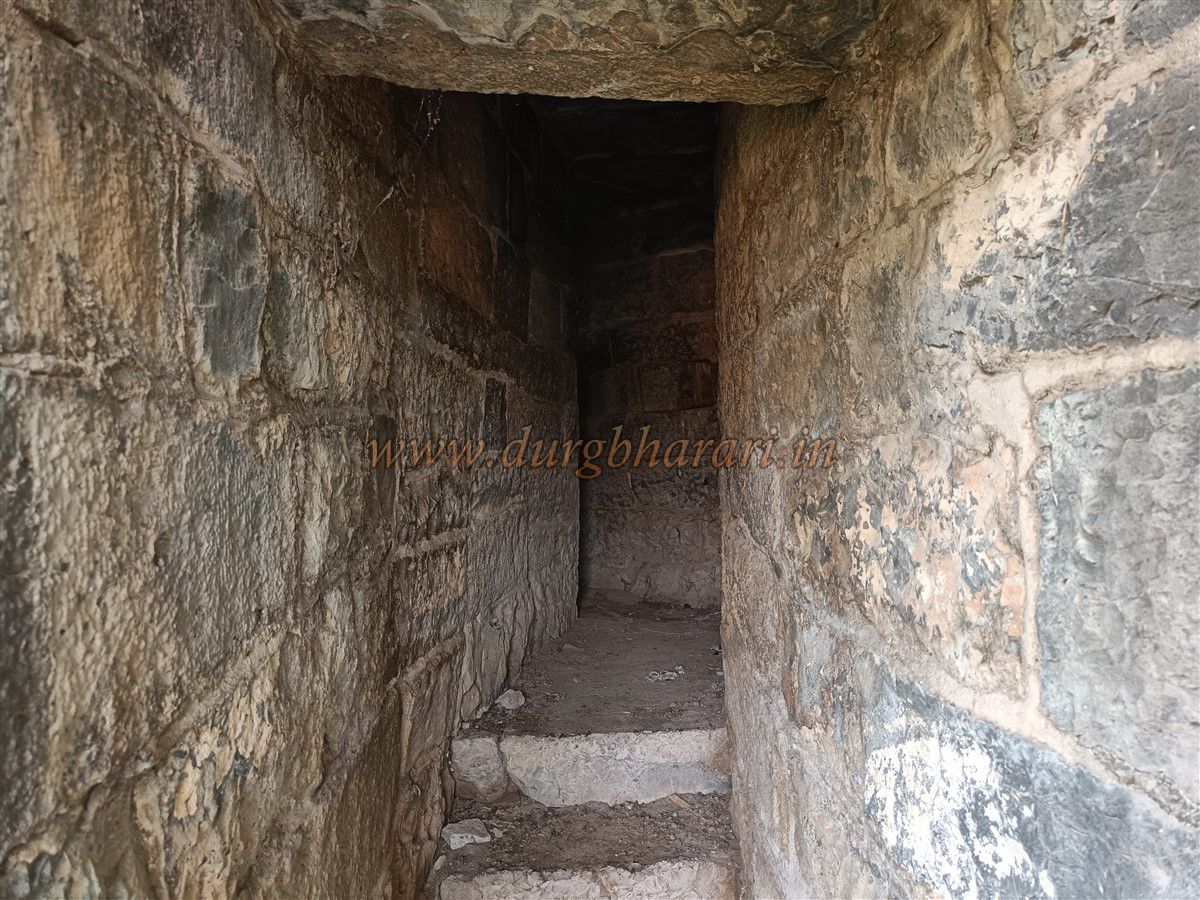
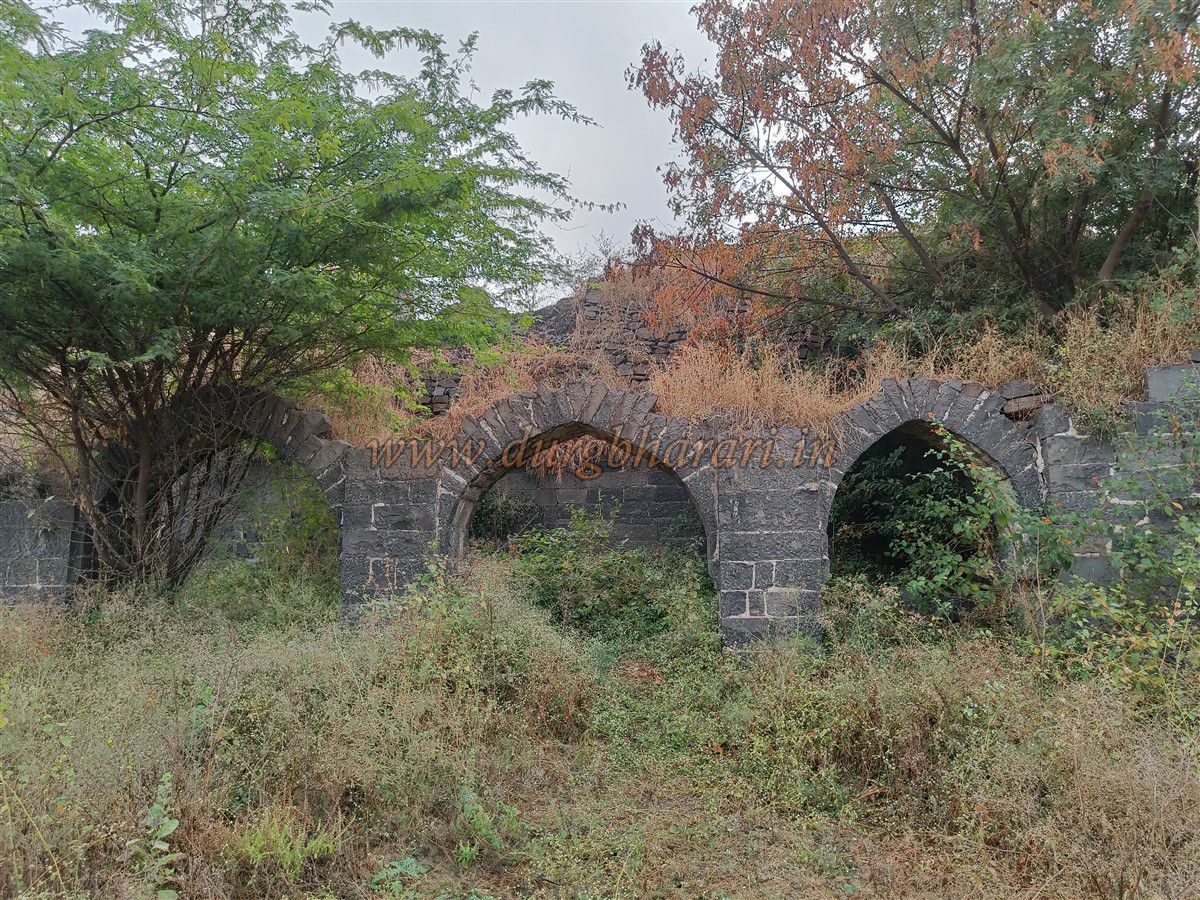
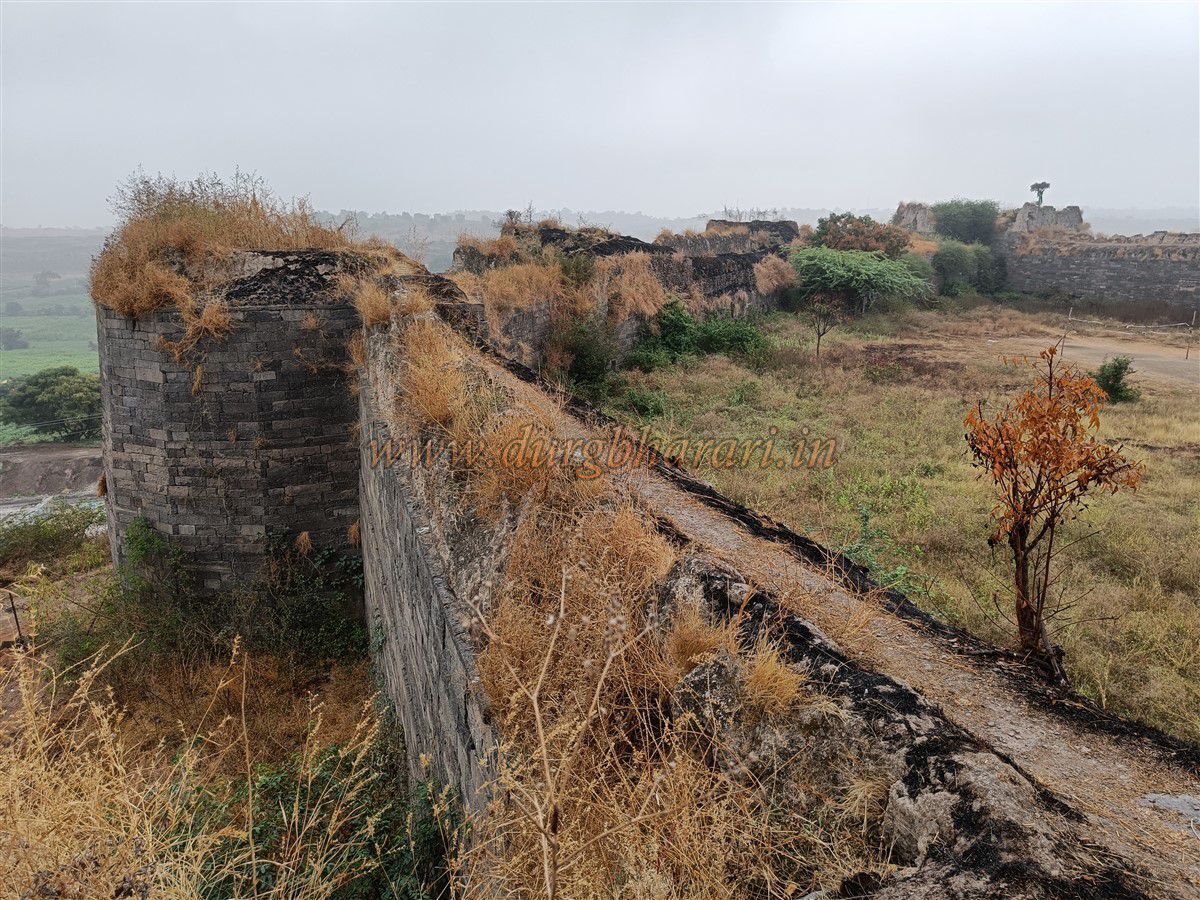
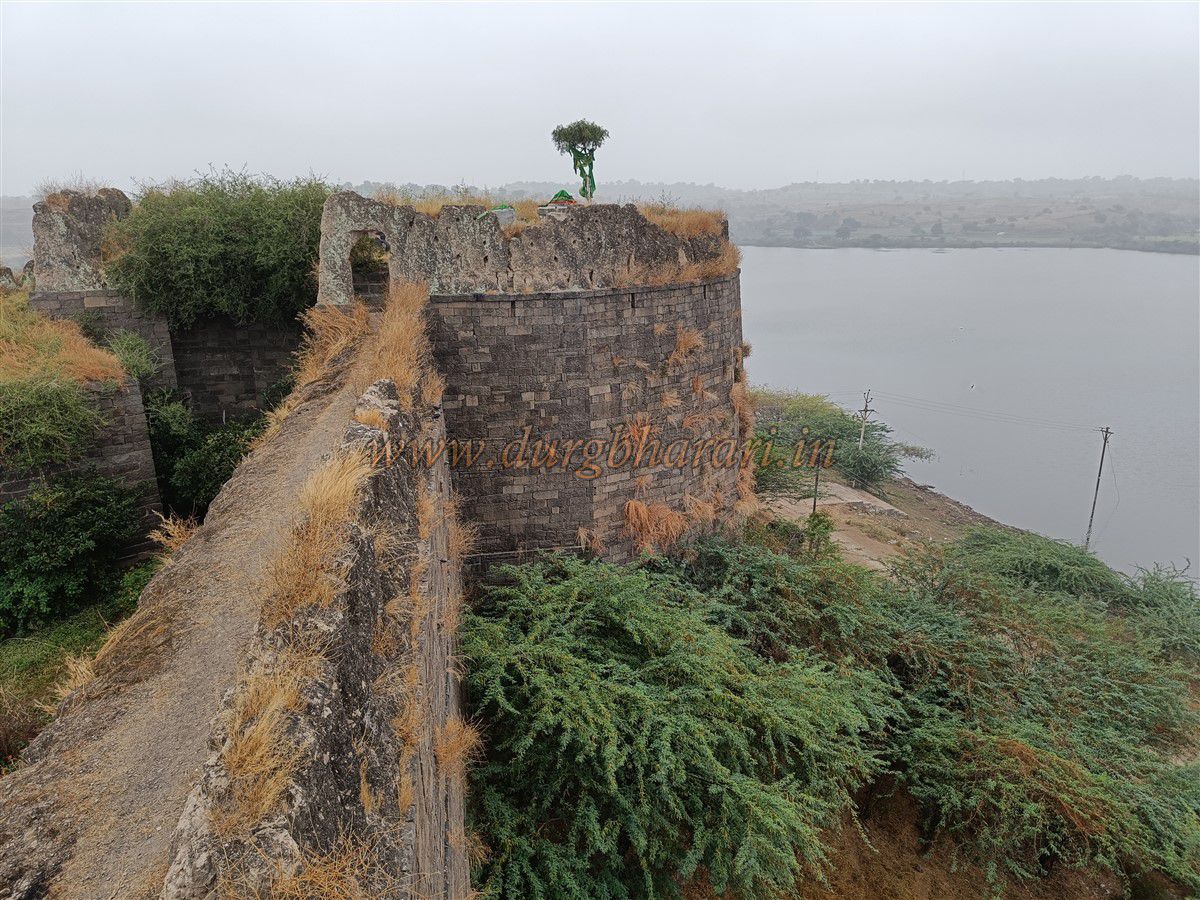
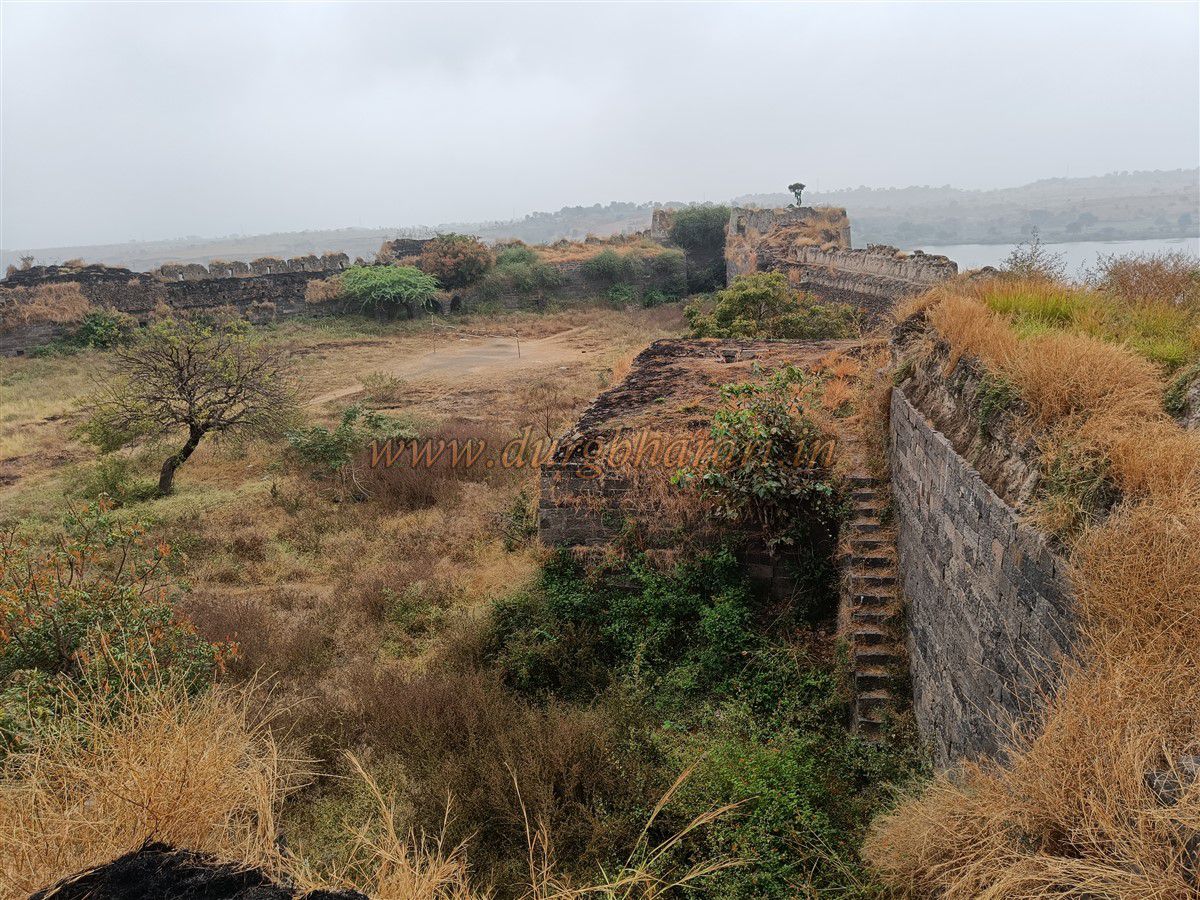
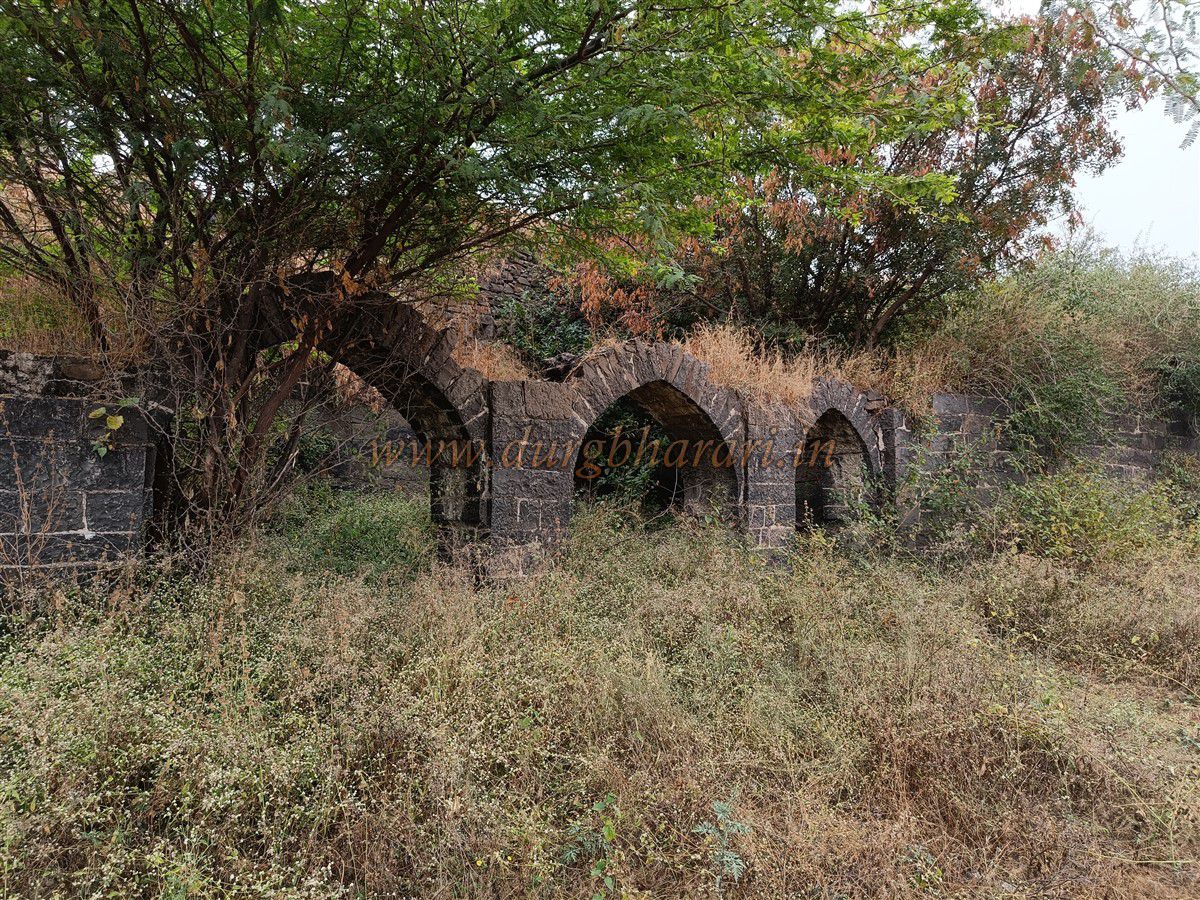
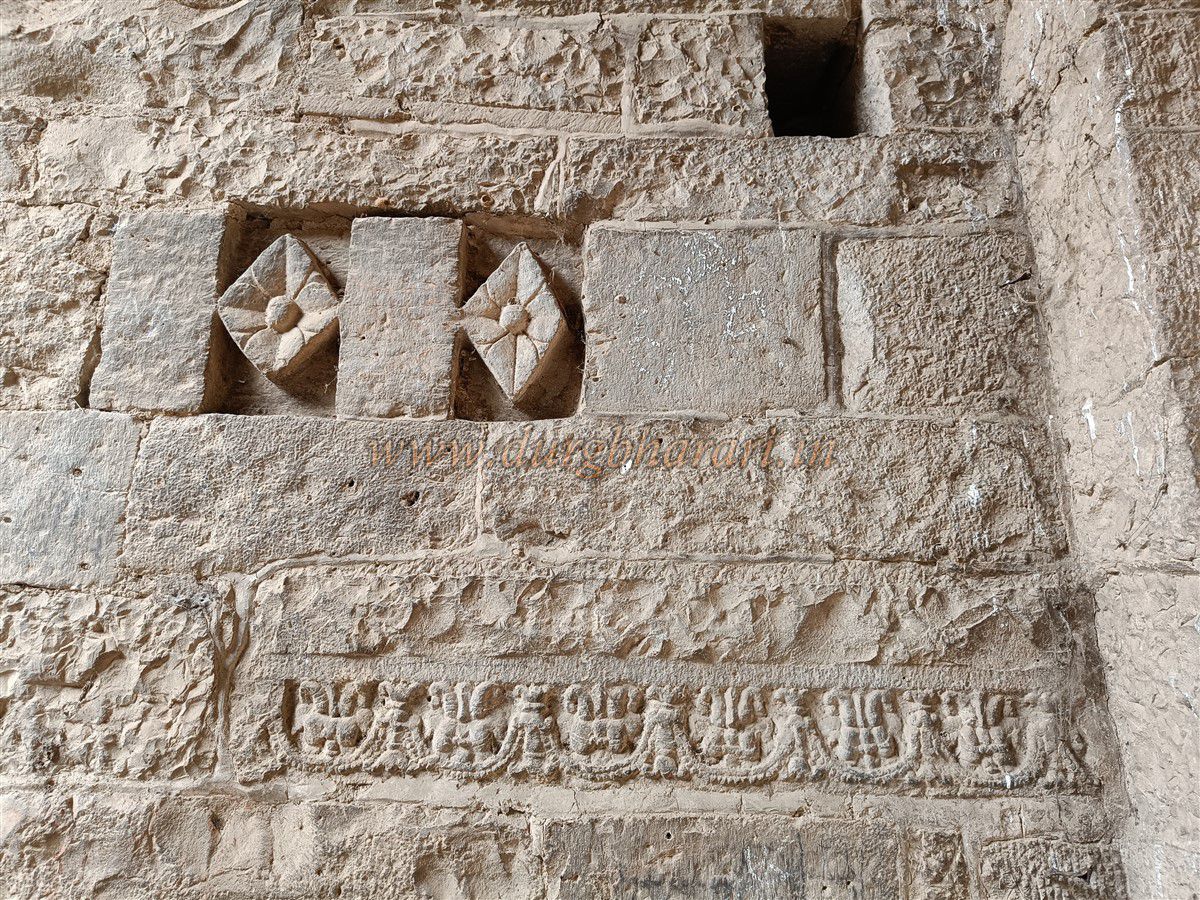
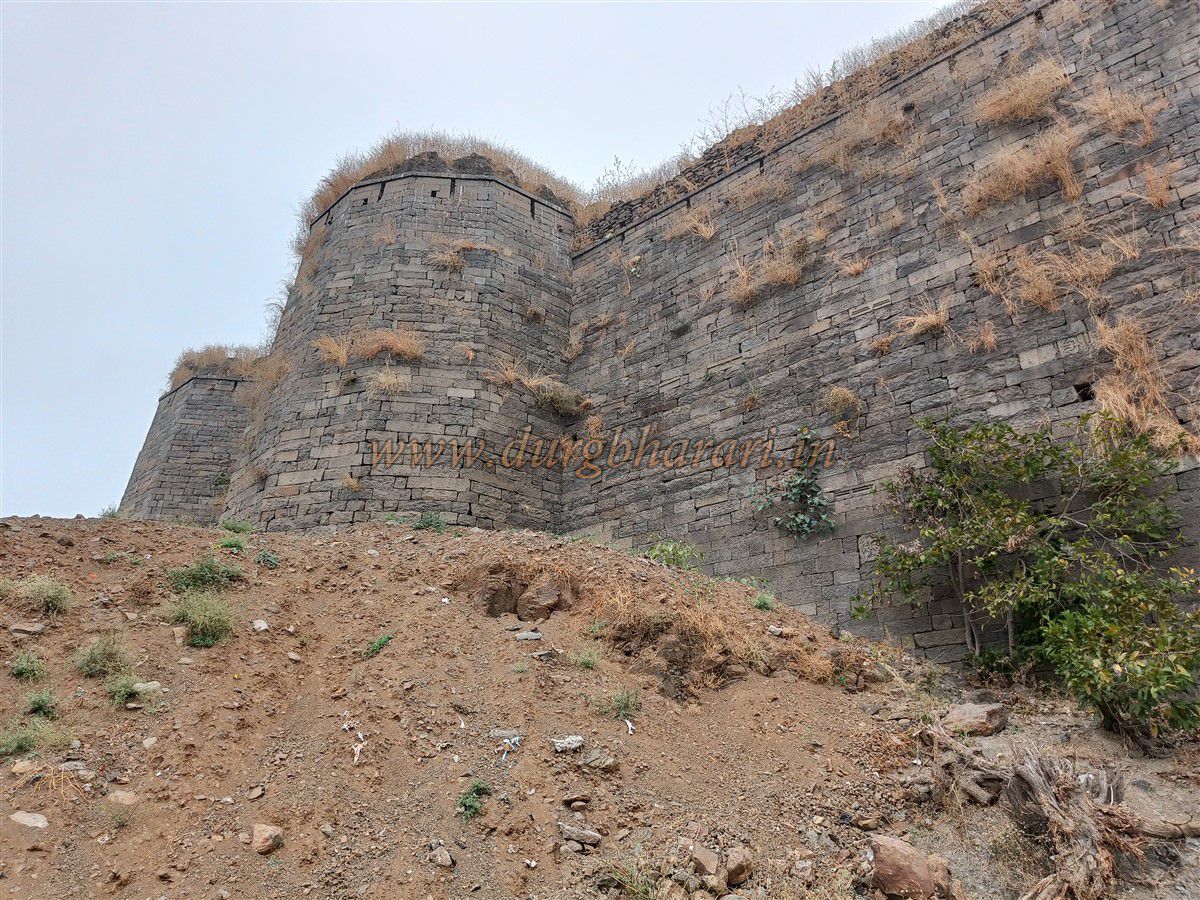
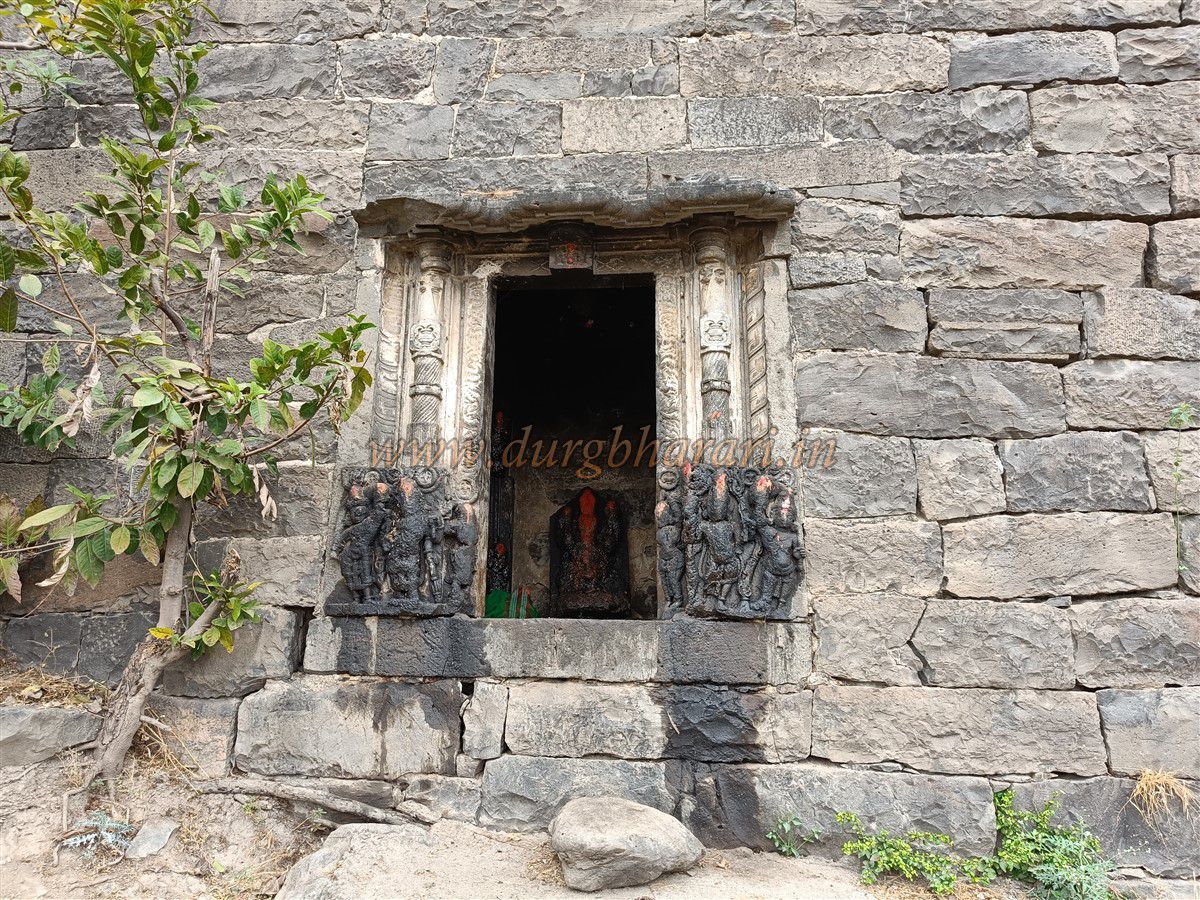
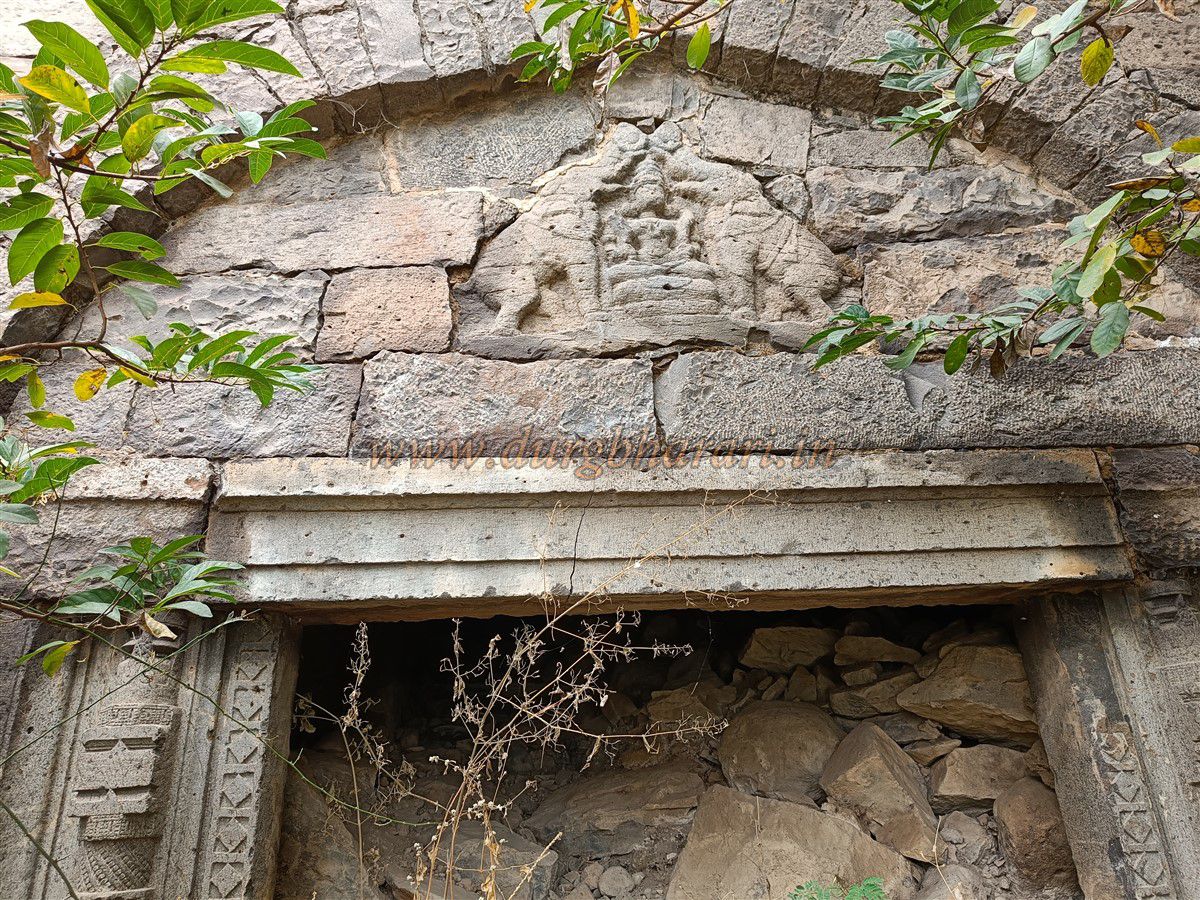
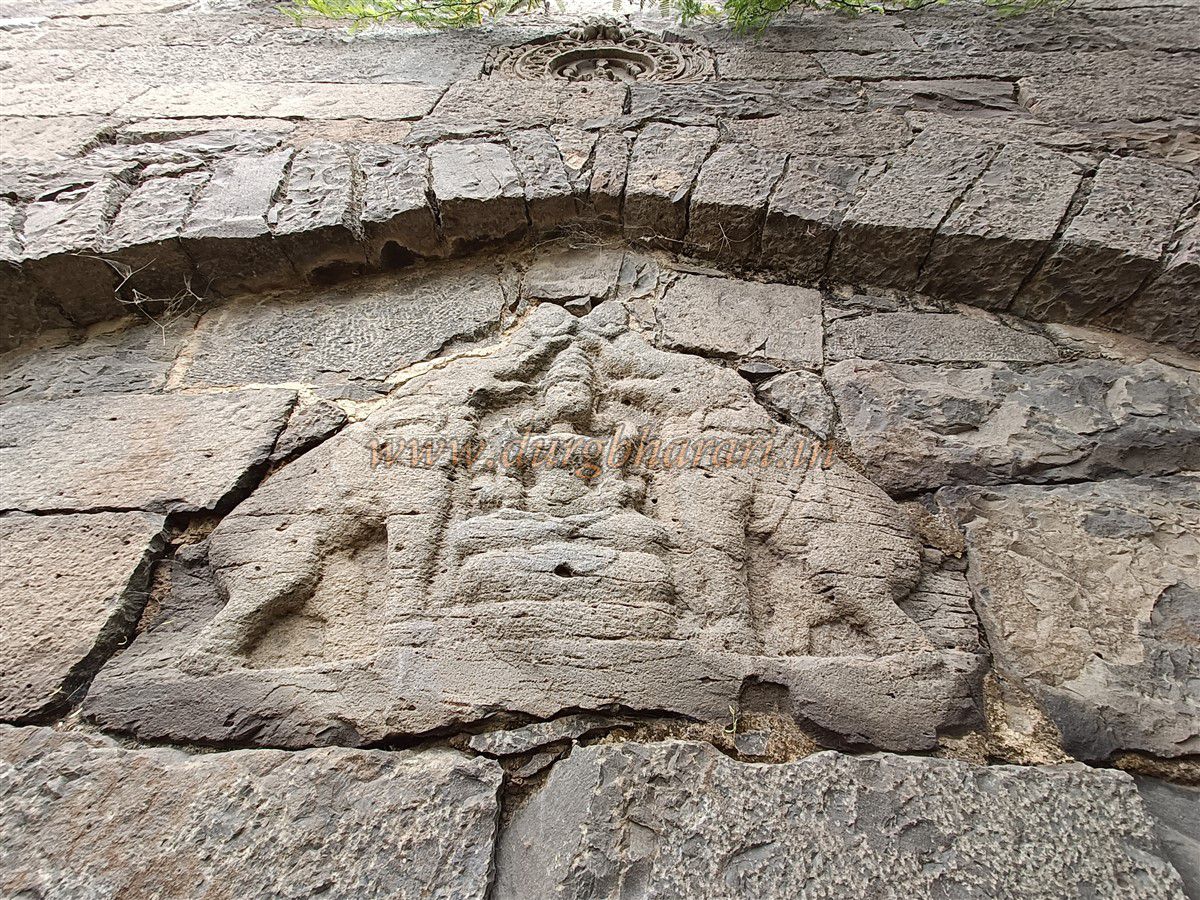
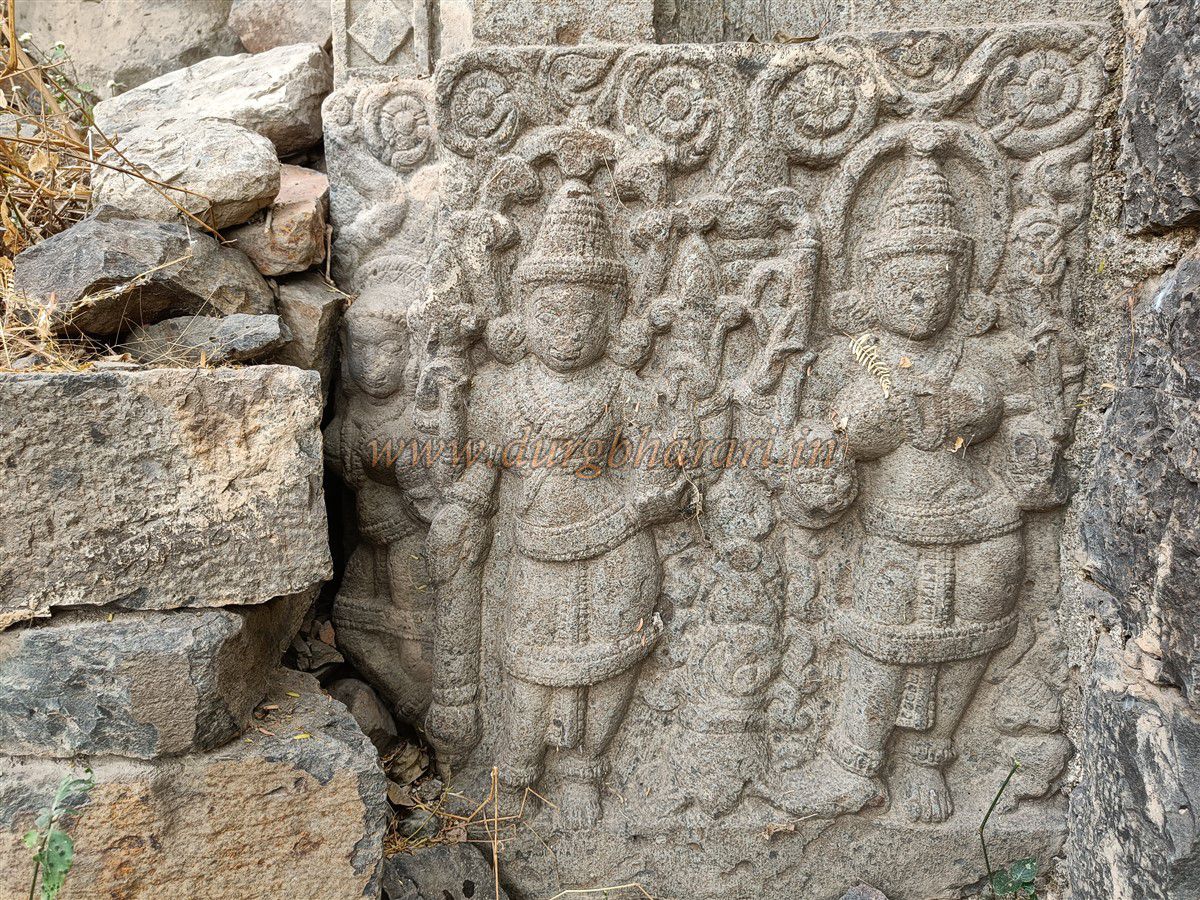
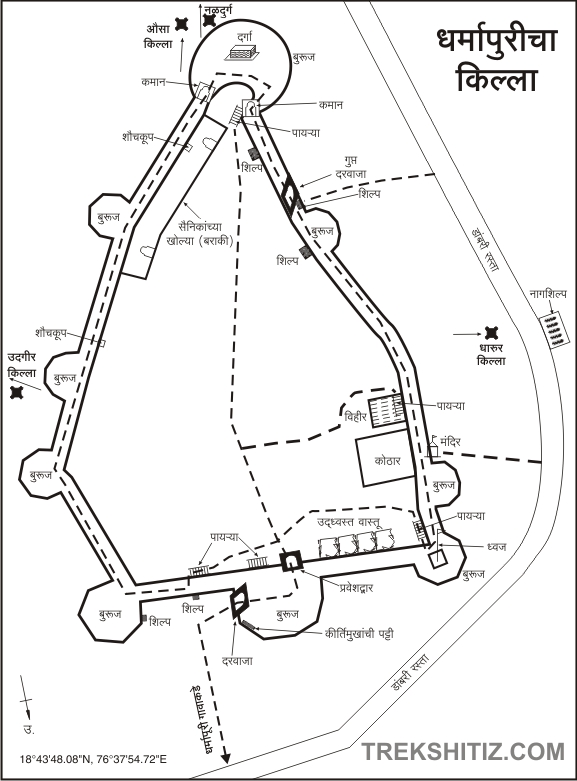
Dharmapuri village is situated on the Ambajogai – Ahmedpur highway. Although there are buses from Ambajogai to Dharmapuri village, considering the transportation system here, it is preferable to use a private vehicle for travel in this area. Dharmapuri fort is located on a small hill behind the village and its fortification is visible from afar when entering the village. After entering the village, while going towards the fort, the scattered sculptures here and there indicate that Dharmapuri village has been inhabited since ancient times. Near the fort gate is a newly built Ram temple where one can park the vehicle and start the fort tour. Although the fort is in good condition, thorny bushes have grown near the entrance and there is a lot of dirt. Some villagers use the fort as a toilet, so one has to cover the nose and walk carefully to enter the fort. To provide more protection to the main fort gate, later a parkot (outer fortification) wall was constructed in front of this gate. This wall is built from the fortification on the hill down to the ground level and has two small gates. Climbing approximately 30-32 steps and passing through these two small gates of the parkot, one reaches the main gate of the fort. The main gate faces north and is built in a large hexagonal bastion. This large gate, about 10 feet high, was later closed with a stone wall and only a small narrow door is left through which a person can enter by bending. Besides this, there are two more small gates to enter the fort. One of these gates has been closed with stones, and the other gate is blocked due to fallen stones. These remaining two gates can be seen while roaming inside and outside the fort. Since this fort was built during the Muslim rule, many carved temple stones, sculptures, and some idols can be seen in its construction. This starts from this gate itself. On the left side of the wall outside the gate, a large number of carved stones and a Ganesh idol are visible. After entering through the narrow door, inside the corner is the inner gate, with the guard’s shrine on the right and a sculpted plaque of Kirtimukh on the left. The arch of the inner gate is completely collapsed and this gate leads to the entrance inside the fort. This roughly triangular shaped fort spreads over 1.5 acres and the fortification has nine small and big octagonal bastions. The front side of the fortification is gradually collapsing and steps are built at various places on the fort wall to go on the ramparts, which are about 40 feet high. Inside the gate on the right side of the fortification is a small room and on the left side are steps to climb the ramparts. First, one should explore the inner precinct of the fort and then walk around the ramparts. This way, the entire fort can be seen in less time. Beyond the small room on the right side of the ramparts are some remains of houses, and moving a little ahead one finds an arched warehouse adjacent to the fortification. This warehouse has two 2x2 sized doors, of which the left door leads inside, while the steps to the right door are closed. The door frames also use carved stones. Above the door are three beautiful sculptures, one of which shows 40 meditative statues of Lord Gautam Buddha in different mudras. Further ahead of the warehouse is a 70 feet deep octagonal well, and to reach the bottom of this well, there is a winding closed staircase along the fortification. At the beginning of the steps, a stone carved with a lotus flower is used, and above on the fortification is a horizontal inscription in Devanagari script. Near the lower steps of the arched well is a beautiful Kirtimukh and a sculpture. Many carved temple plaques are used in constructing the well. Due to disuse, the water of the well has become contaminated. This is the most beautiful structure on the fort, and even if one visits the fort only for this well, the visit will be worthwhile. Above the well, stone troughs are kept for water storage. After seeing the well and moving a little ahead, on one stone of the fortification there is a sculpture resembling Hanuman and a little further ahead is a sculpted plaque of the Saptamatrikas. On one side of this plaque is Ganpati and on the other side is Bhairav. Below this plaque is the second small gate of the fort, which is closed due to fallen stones and soil. This gate is visible from outside. Nearby is the bastion at the edge of the fort, and to reach it there are steps. But instead of going there, one should first see the remains near the fortification. Further ahead on the fortification is a small gate, which when entered leads to a large hall. Beyond this hall are three arches one after another. Inside these arches, there is a toilet in the fortification. These arches were probably the residence of the fort commander. Further along the fortification edge, there is another toilet. Beyond this toilet is the fort’s medium-sized third gate in the fortification, which is closed with a stone wall and visible from outside. Seeing the sculptures on the edge of the fortification, one reaches the place where one started the entrance. From here, climbing the steps seen initially, continue the fort tour on the ramparts. From the ramparts, the beautiful main entrance gate of the fort can be seen. Since the interior of the fort has completely vanished, it has become a flat plain. The stones of the remains here were probably used for building houses outside the fort. The part of the fortification up to the fanji is built with dressed stones and for the protective wall above it, white plaster was used. The walls have loopholes for arrows and guns built at various places. Since the fort is on a small hill, except near the gate, the other sides have some natural elevated protection. Except for the earthen part on the ramparts, the entire fortification is in good condition. While walking on the ramparts, counting the bastions, one can enjoy the beautiful surroundings. The bastion at the tip in front of the fort is the largest bastion and has the tomb of Pir on it. On both sides of the bastion, there are arches, and near one arch is a sculpture of Lord Gautam Buddha. Outside the fort, there is a large pond, which was probably created by extracting stones for building temples and the fort. From this bastion and ramparts, when going towards the main gate, one reaches the bastion closest to the gate. On this bastion, a flagpole base is built. By descending the steps near this bastion and coming to the gate, the inner tour of the fort is complete. Now exiting the fort, start the circumambulation of the fort by the left side towards the Ram temple. Walking 2 minutes on the road, on the left side of the path is a row of five snake sculptures placed on a base. Opposite these sculptures on the fortification is the Bhavani Devi temple. The temple gate has a stone frame from an ancient temple door with carvings and statues of Jai-Vijay below it. On the left side of the temple fortification are many sculptures and near the bastion at the foot of the temple is a sculpture plaque of the elephant. From the temple, moving forward through thorny bushes and dirt on the fortification edge, one reaches outside the collapsed gate seen earlier. This entire gate is decorated with temple sculptures. The frame of this gate is also from the temple, with a sculpture of Goddess Lakshmi on the arch above and another beautiful sculpture above it. On both sides of the gate are tiger faces in two corners, and below are statues of Jai-Vijay. After seeing this, one can complete the fort tour or walk around the entire fort to see all the sculptures. Many carved stones are on the outer fortification and bastions. To see the entire fort inside and outside, one and a half hours is enough. Outside Dharmapuri village is the ancient Kedareshwar temple. This temple, adorned with exquisite carvings, is definitely worth visiting. Information about this temple is given in the section on temples. In ancient times, Dharmapuri was known as a religious center. Judging by many sculptures on the temple stones used in building Dharmapuri fort, there were many temples in this village and the stones from these were used to build the fort. Various dynasties like Satavahana, Chalukya, Kalchuri, Vakatakas, and Kadambas ruled this region. During the Chalukya rule, Vikramaditya VI’s son, Someshwar III, founded the city of Dharmapuri. He created the literary work Abhilasharth Chintamani (Rajmanasollas). The city of Dharmapuri was adorned with grand royal palaces, dance halls, tanks, beautiful gardens, lush forests, lofty temples, and bustling marketplaces. Later, this region was under the Yadav rule. It is mentioned that Allauddin Khilji conquered this region from the Yadavas (1296-1316). The region became known as ‘Bhir’ when Muhammad bin Tughlaq conquered it (1325-51). After the rise of the Bahmani Sultanate, Bahmani power was established here. Judging by the construction, the fort was probably built during the Bahmani period. After the fall of the Bahmani Sultanate, this area came under the Nizam's rule. During the Peshwa period, in the battles of Rakshasbhuvan and Kharda between the Nizam and the Marathas, this region came under Maratha rule but later again came under the Nizam’s control. On 18 September 1948, when the Nizam agreed to the integration of Hyderabad state into India, this region was part of Hyderabad till 1956. On 1 November 1956, during the States Reorganization Act, Beed district and all Marathwada districts were merged into the then Bombay state. Finally, on 1 May 1960, after the formation of the independent Maharashtra state, Beed district became a district of Maharashtra.
© Suresh Nimbalkar
GALLERY