AMBAWADE-PANTSACHIV SAMADHI
TYPE : SAMADHI
DISTRICT : PUNE
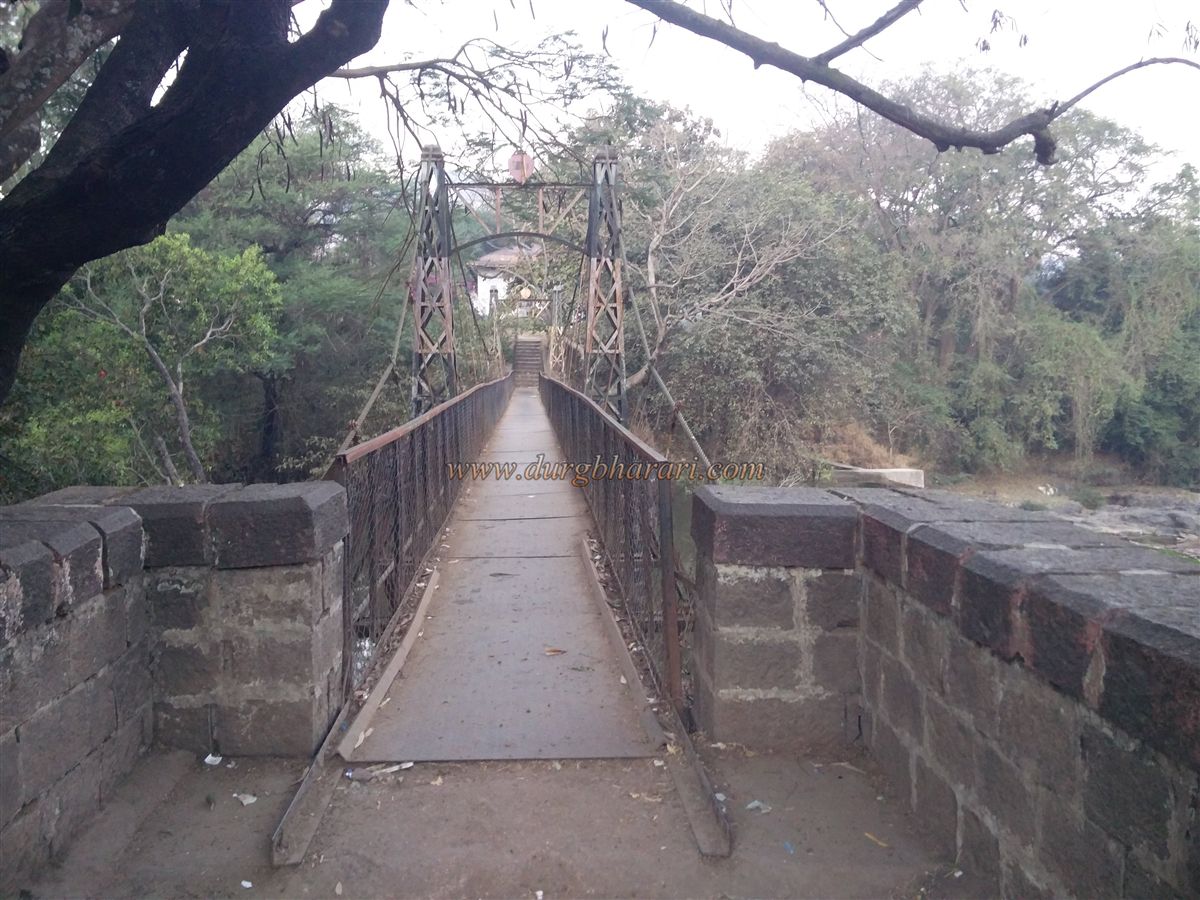
Ambavade is a picturesque village near Pune, ideal for a one-day excursion in the Bhor region. This village is blessed not only with natural beauty but also with historical heritage. The village houses the memorials of Kanhoji Jedhe, Jiva Mahala, and Shankaraji Narayan Sacheev, the founder of the Bhor princely state. Additionally, in the dense grove by the stream in the village lies the ancient Nageshwar temple, accessible via a suspension bridge built over the stream.
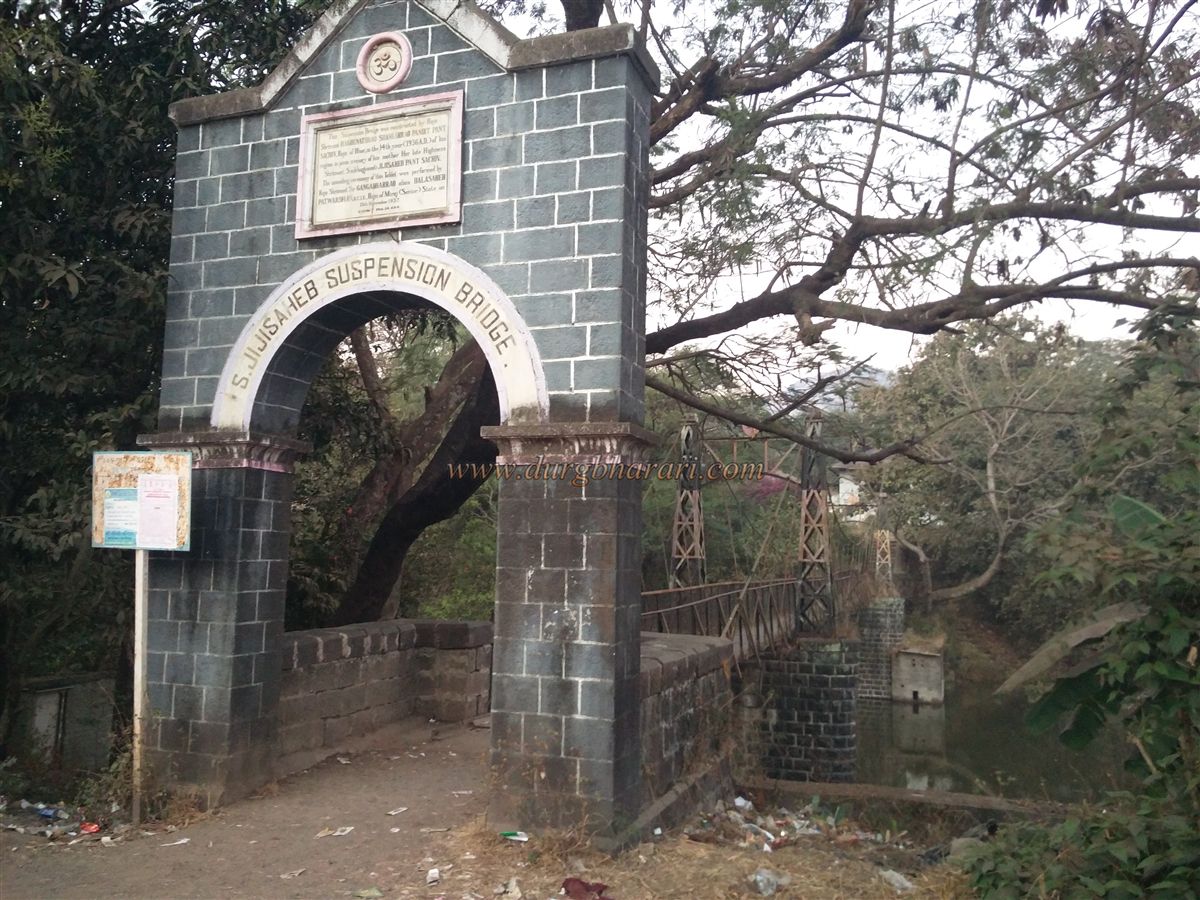
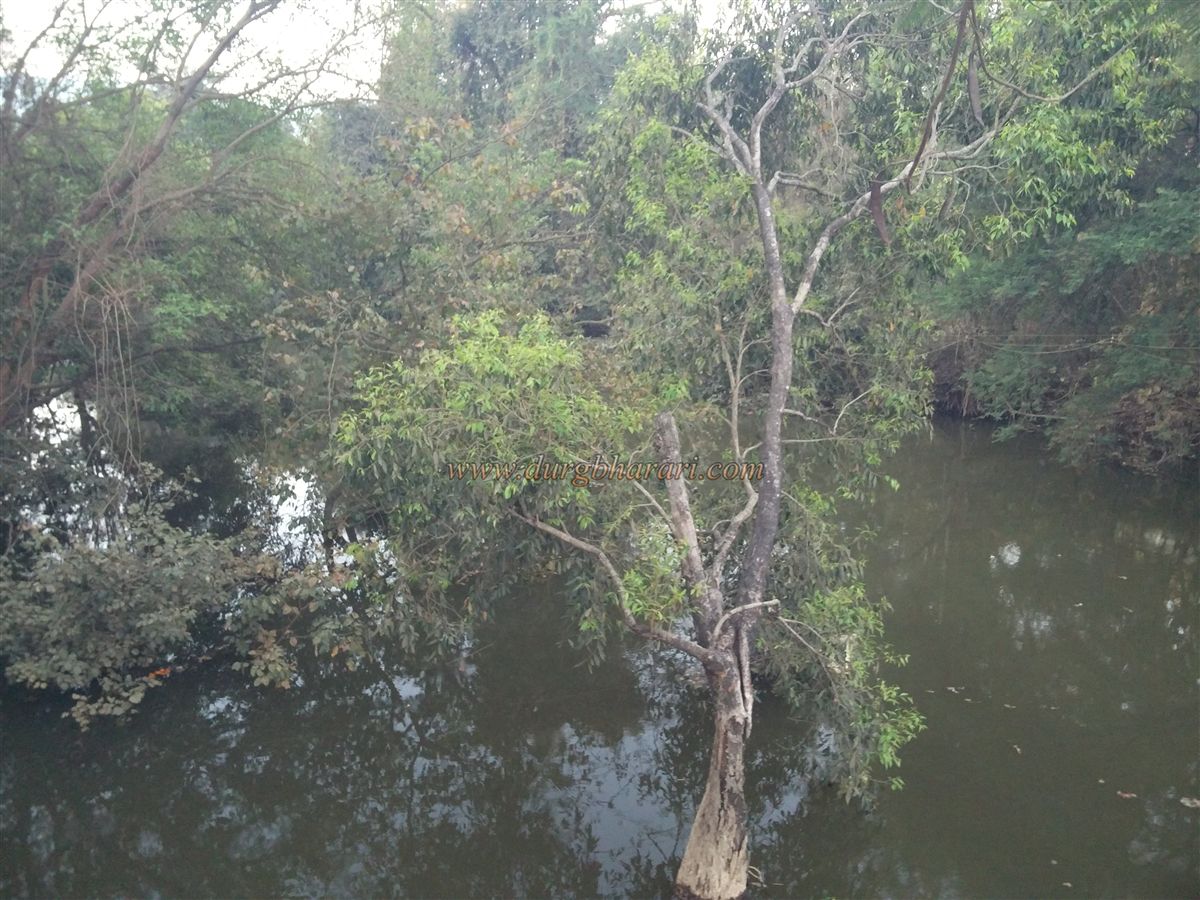
Ambavade is located 60 kilometers from Pune via Kapurhol and 12 kilometers from Bhor, the taluka headquarters. There is good ST bus connectivity from Bhor to Ambavade. This village, situated in Hiradas Maval, is the ancestral home of the Pant Sachiv family, the rulers of Bhor. The stream flowing through Ambavade is practically a small river. In 1936, a suspension bridge was built over it to facilitate crossing.
...
The bridge is 4 feet wide and about 150 feet long, with arches on both ends containing inscriptions detailing its construction. This bridge was built by Shrimant Raghunathrao Shankarrao Pandit Pant Sachiv of Bhor in memory of his mother, Shrimant Jijisaheb Pant Sachiv.
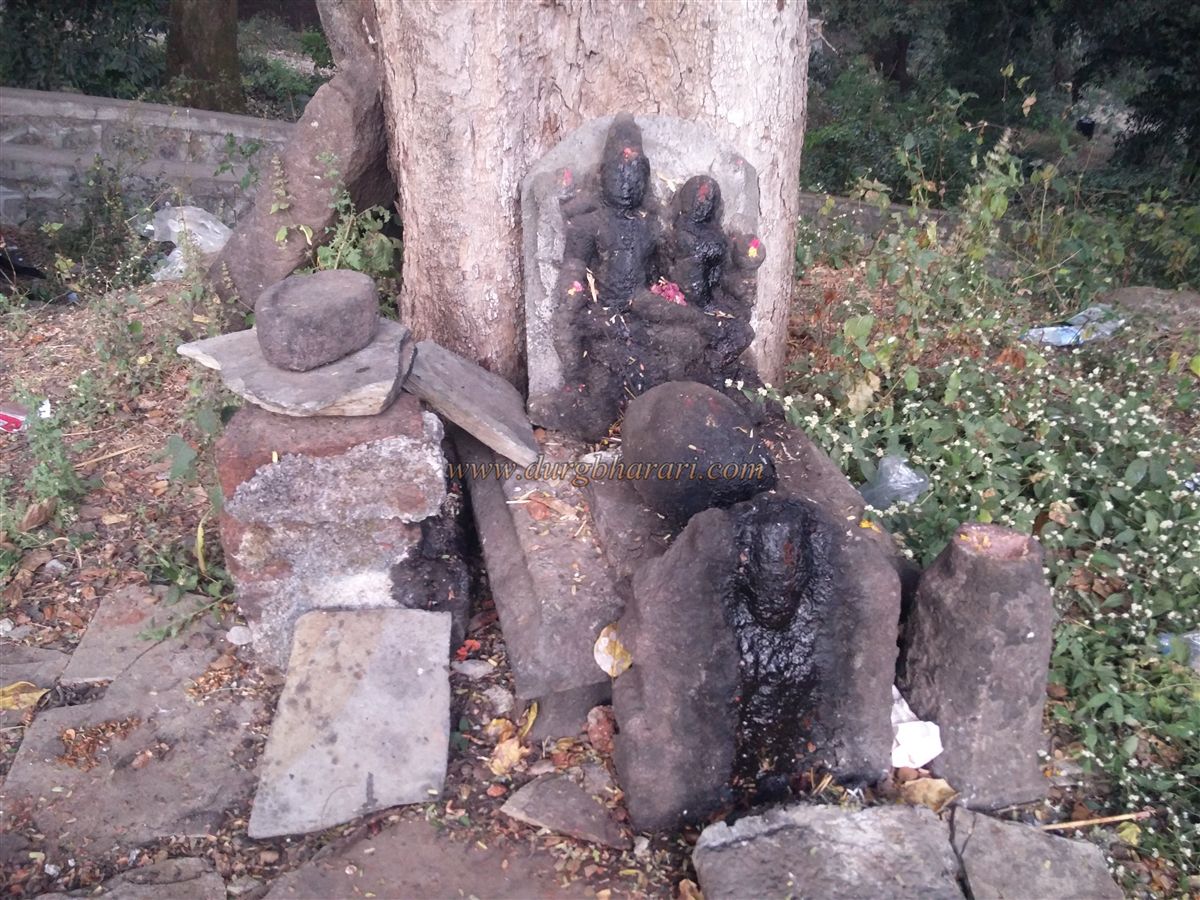
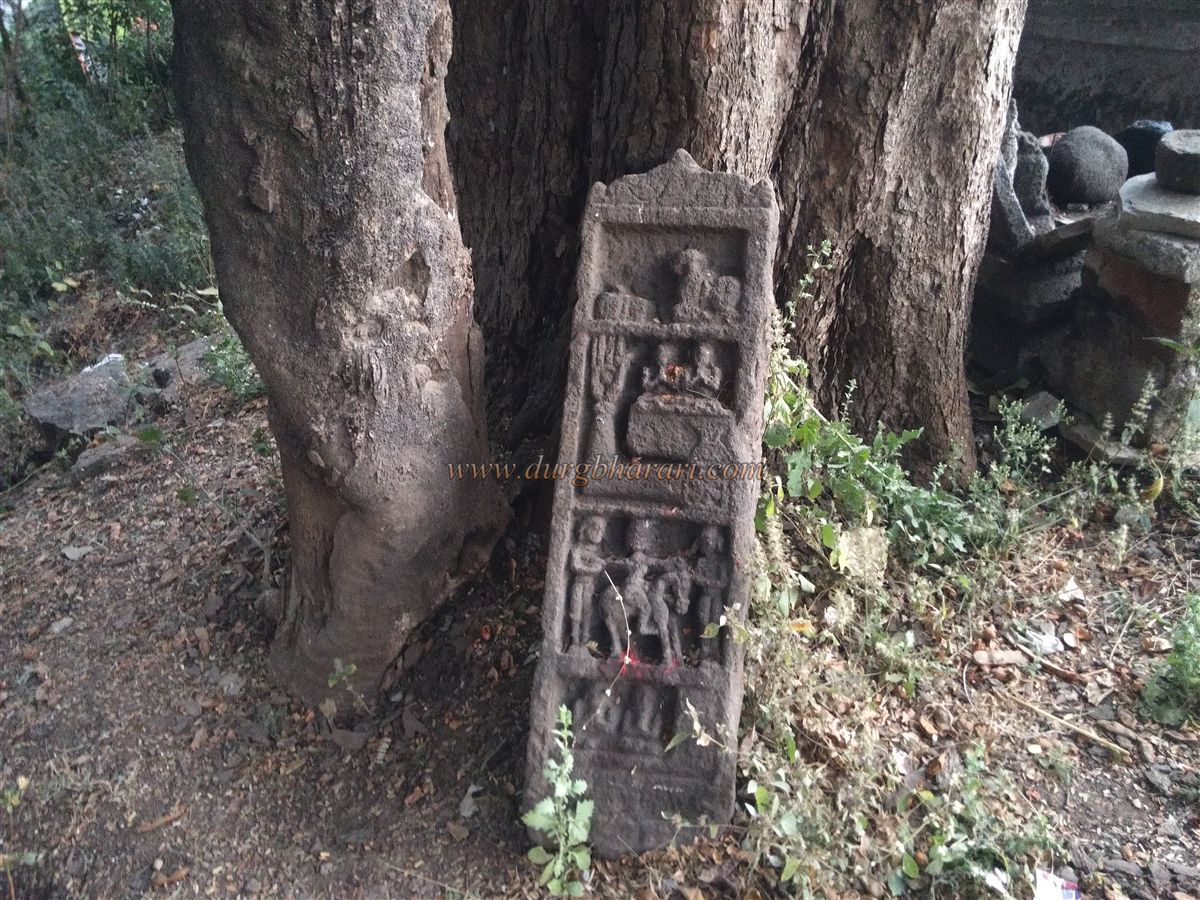
After crossing the bridge, there is a building on the other side housing the memorial of Shankaraji Narayan Sacheev, the founder of the Bhor state. Beside this is a bust of Jijisaheb, the queen of the princely state. As the building currently houses a school, it remains closed on holidays, but one can still view the memorial through the grilles. In the rear courtyard of the building, beneath a tree, are some carved sculptures, veerghals, and sati stones.
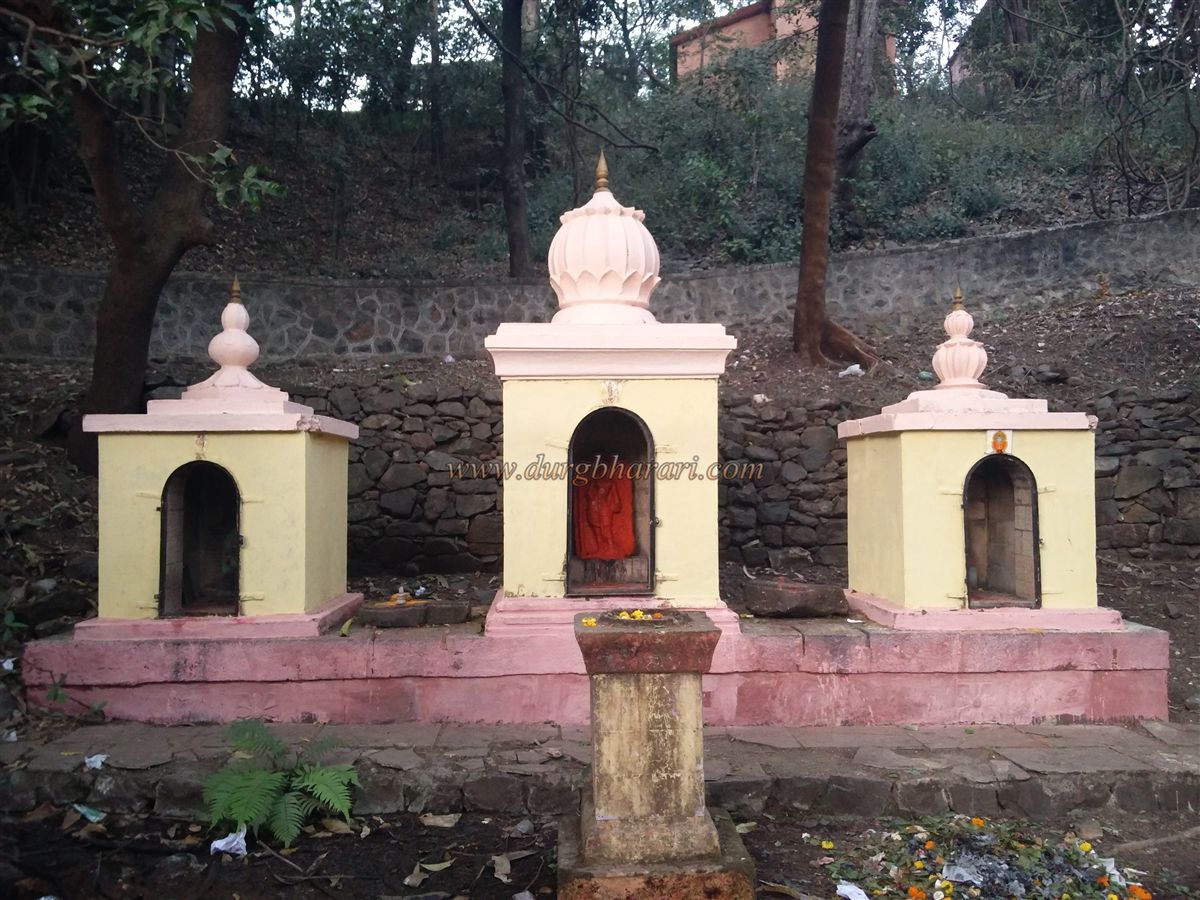
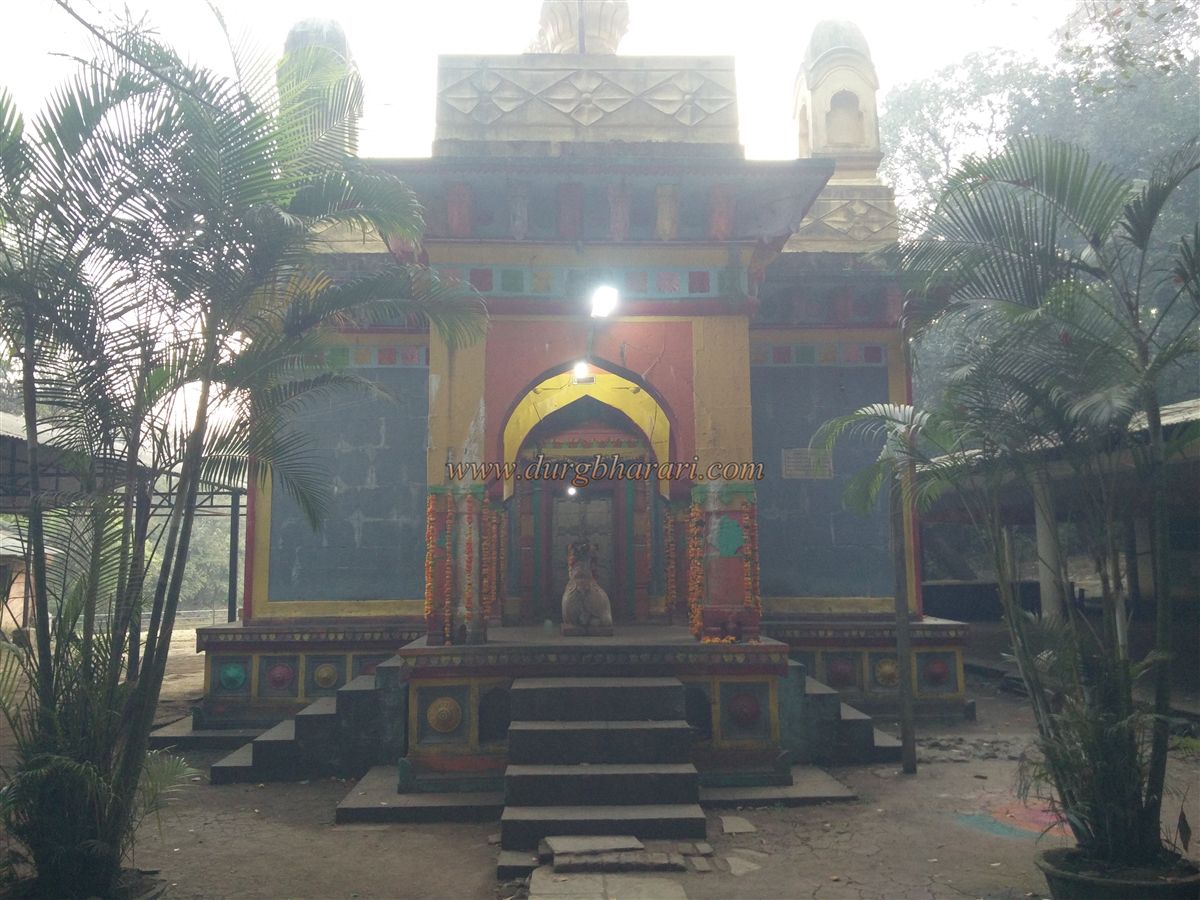
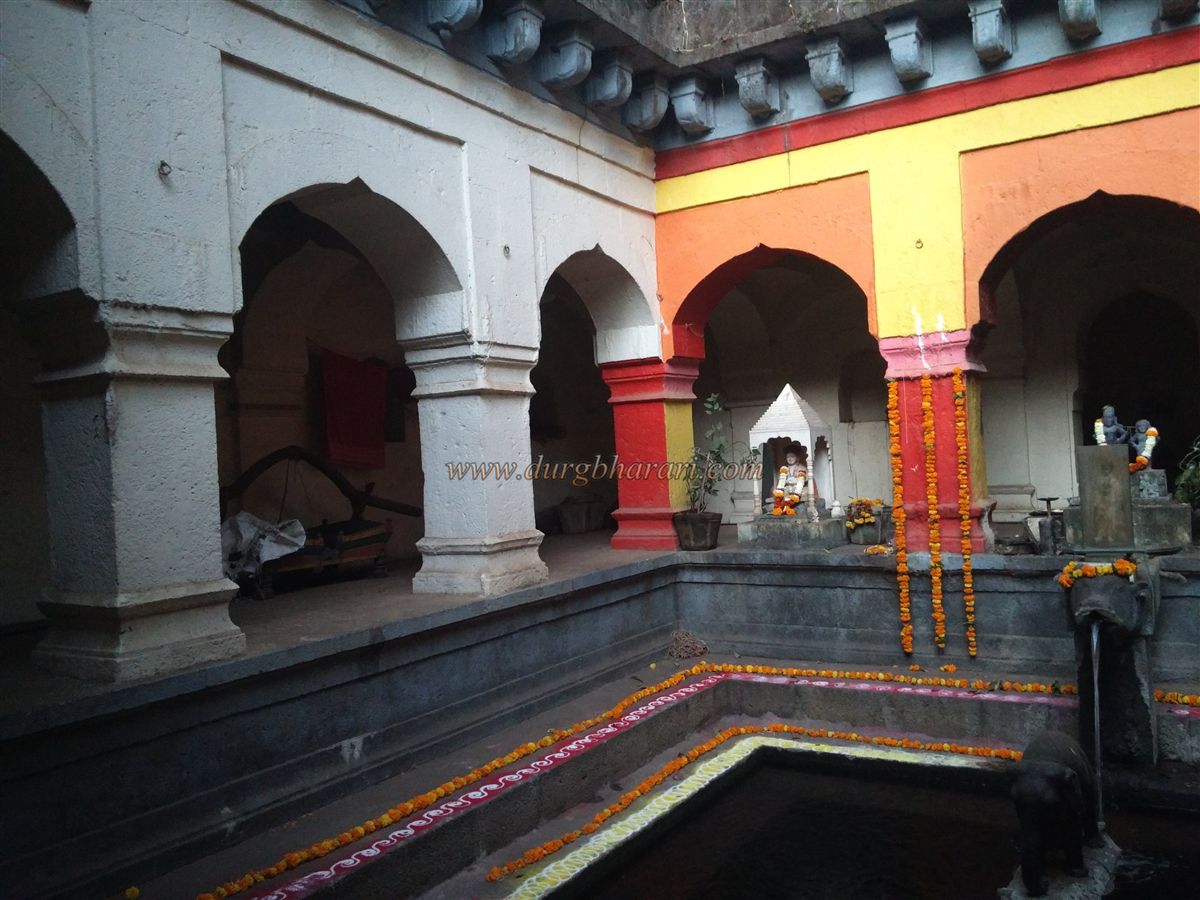
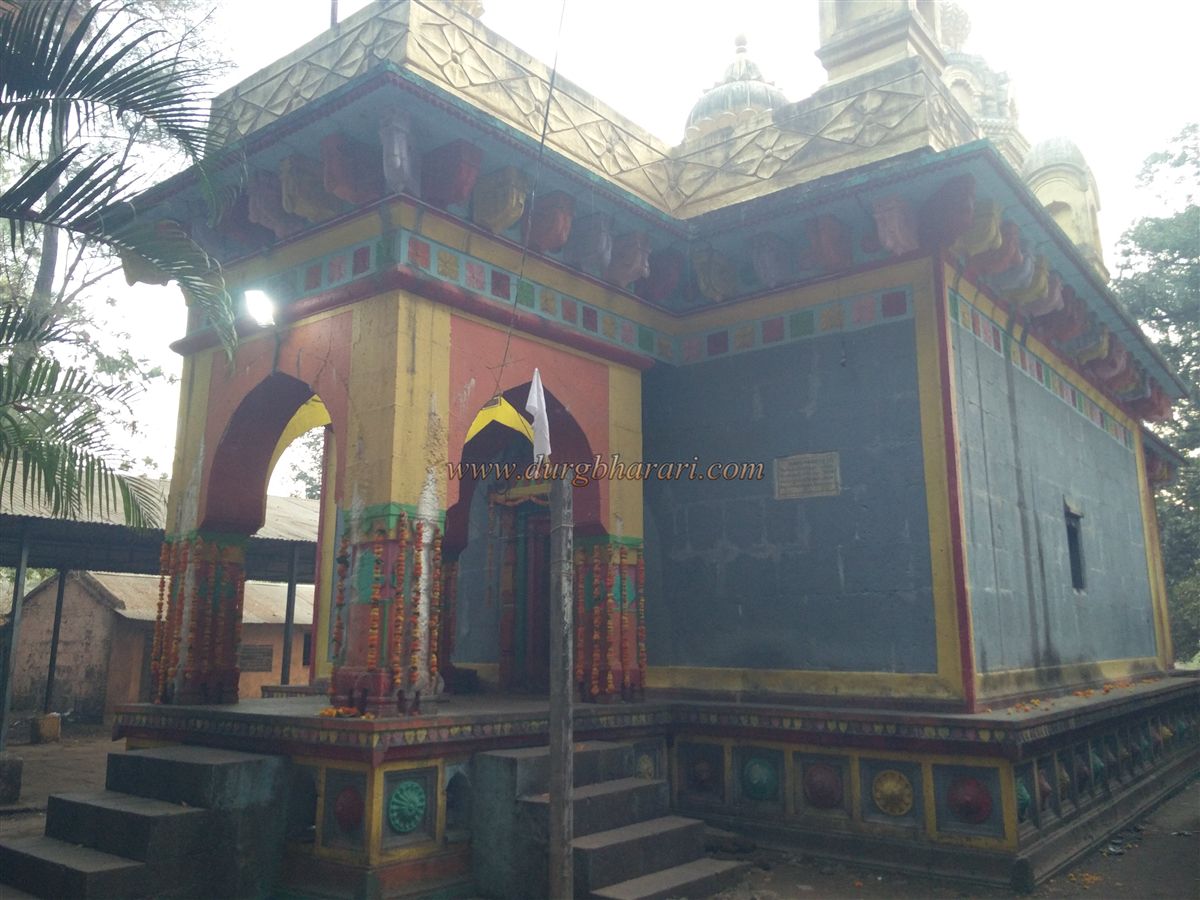
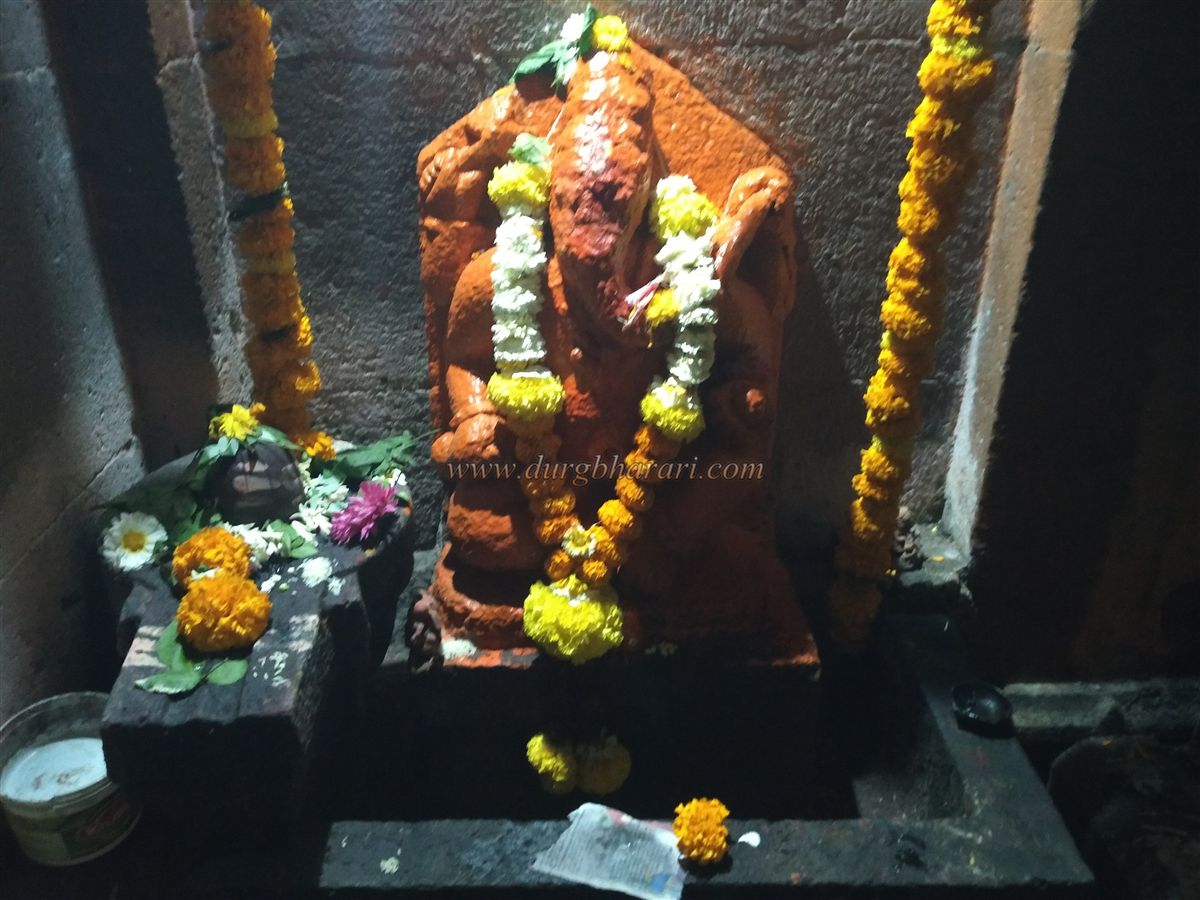
From the dense grove, a stepped path leads down to the Nageshwar temple, located in a sunken area. The stream flowing through Ambavade forms natural potholes in front of the temple that resemble waterfalls. This Shiva-era temple is surrounded by a stone-paved courtyard and is built on a raised platform, facing west. An inscription at the temple entrance mentions its restoration. The temple structure includes a porch, assembly hall, and sanctum, with elaborate carvings inside and outside. The entire temple is built with dressed stone, though the Shikhar (spire) is made of bricks and coated with lime. Within the temple premises are a deepmala (lamp tower) and a few small domes containing ancient idols. Many worn-out sculptures are also found scattered in the area. In front of the temple are stone porches, and just beyond them flows a perennial spring. The water from the spring pours from a cow-faced spout into a stone tank. The temple surroundings are exceptionally scenic.
Shankaraji Narayan Pant Sacheev began his career as a clerk under Moropant Pingale. After Moropant, he trained under Ramchandrapant Amatya and received several opportunities to prove his capability. During the turbulent reign of Chhatrapati Sambhaji Maharaj, Shankaraji served under Ramchandrapant as a Rajagna, an official in charge of the royal household troops and internal administration. As Rajagna, Shankaraji worked under the authority of Ramchandrapant. When Rajaram Maharaj set off for Jinji, he entrusted the administration of Maharashtra to Ramchandrapant Amatya, Shankaraji Narayan, Santaji Ghorpade, and Dhanaji Jadhav. Shankaraji was kept with Ramchandrapant for administrative matters, while Santaji and Dhanaji were given charge of the military.
Aurangzeb, who had come to destroy the Maratha state, faced a fierce challenge due to the diplomatic skills of Ramchandrapant and Shankaraji, and the guerrilla tactics of Santaji and Dhanaji. During this period, Shankaraji successfully carried out several important missions such as pacifying the Kolis of Purandar, organizing Junnar's administration, attacking Jinji's outposts and capturing Ismail Khan, lifting the siege of Panhala with Dhanaji, and reconciling with the estranged commander Santaji Ghorpade. After returning from Jinji, Rajaram Maharaj honoured Shankaraji with the title Madar-ul-Maham, meaning "pillar of the state."
In 1707, after Chhatrapati Shahu Maharaj was released from the Mughal camp, a civil war erupted between Shahu and Tarabai. Caught in the dilemma of whom to support, Shankaraji, unable to decide, ultimately took his own life near the Nagnath temple at Ambavade in November 1707.
While exploring Ambavade, one should visit the memorial of Shankaraji Narayan Pant Sacheev, who served the Swarajya with great dedication. After paying respects at his memorial, one can also visit the memorials of Kanhoji Jedhe and Jiva Mahala located outside the village. During a visit to Ambavade, one can also see the ancestral wada of Kanhoji Jedhe at Kari.
© Suresh Nimbalkar
GALLERY