AMBAWADE-JIVAMAHALA SAMADHI
TYPE : SAMADHI
DISTRICT : PUNE
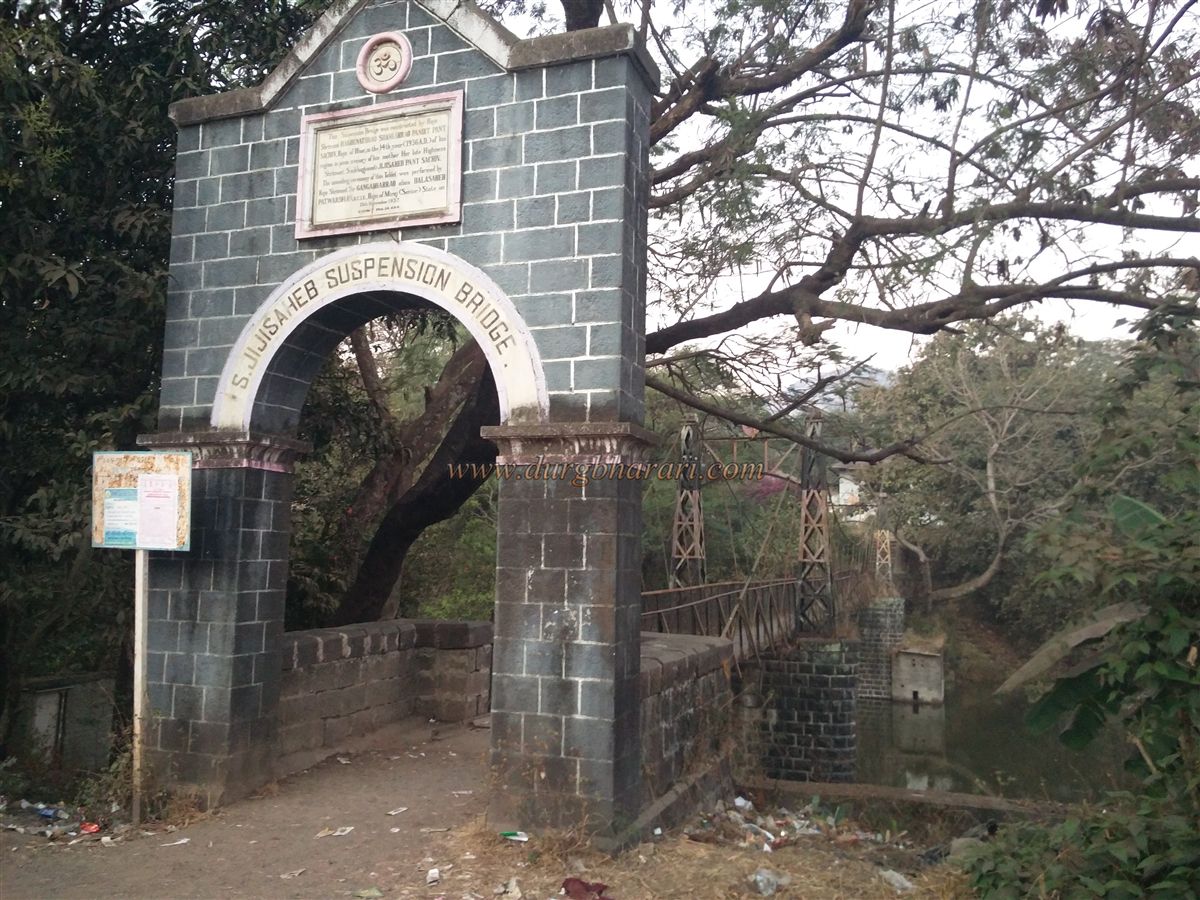
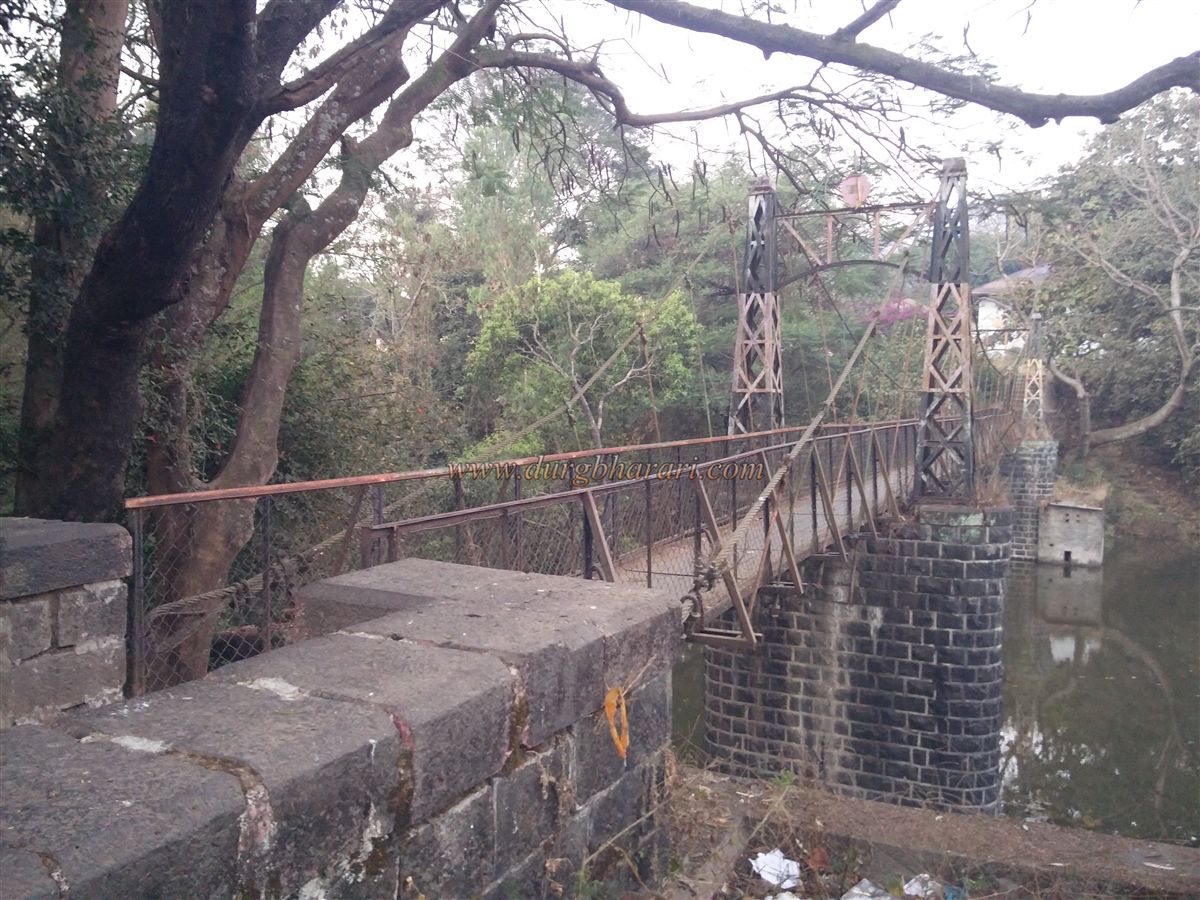
Ambavade is a scenic village near Bhor, close to Pune, ideal for a one-day excursion. This village is blessed not only with natural beauty but also with a rich historical heritage. It is home to the samadhi (memorials) of Kanhoji Jedhe, Jiva Mahala, and Shankaraji Narayan Sacheev, the founder of the Bhor princely state. Additionally, nestled in the dense grove by the stream in Ambavade is the ancient Nageshwar temple, and a suspension bridge has been built over the stream to access it.
Ambavade is located 60 kilometers from Pune via Kapurhol and 12 kilometers from Bhor, the taluka headquarters. State transport buses provide good connectivity from Bhor to Ambavade. The stream flowing through the village is nearly a small river. In 1936, a suspension bridge was built across it. The bridge is 4 feet wide and approximately 150 feet long.
...
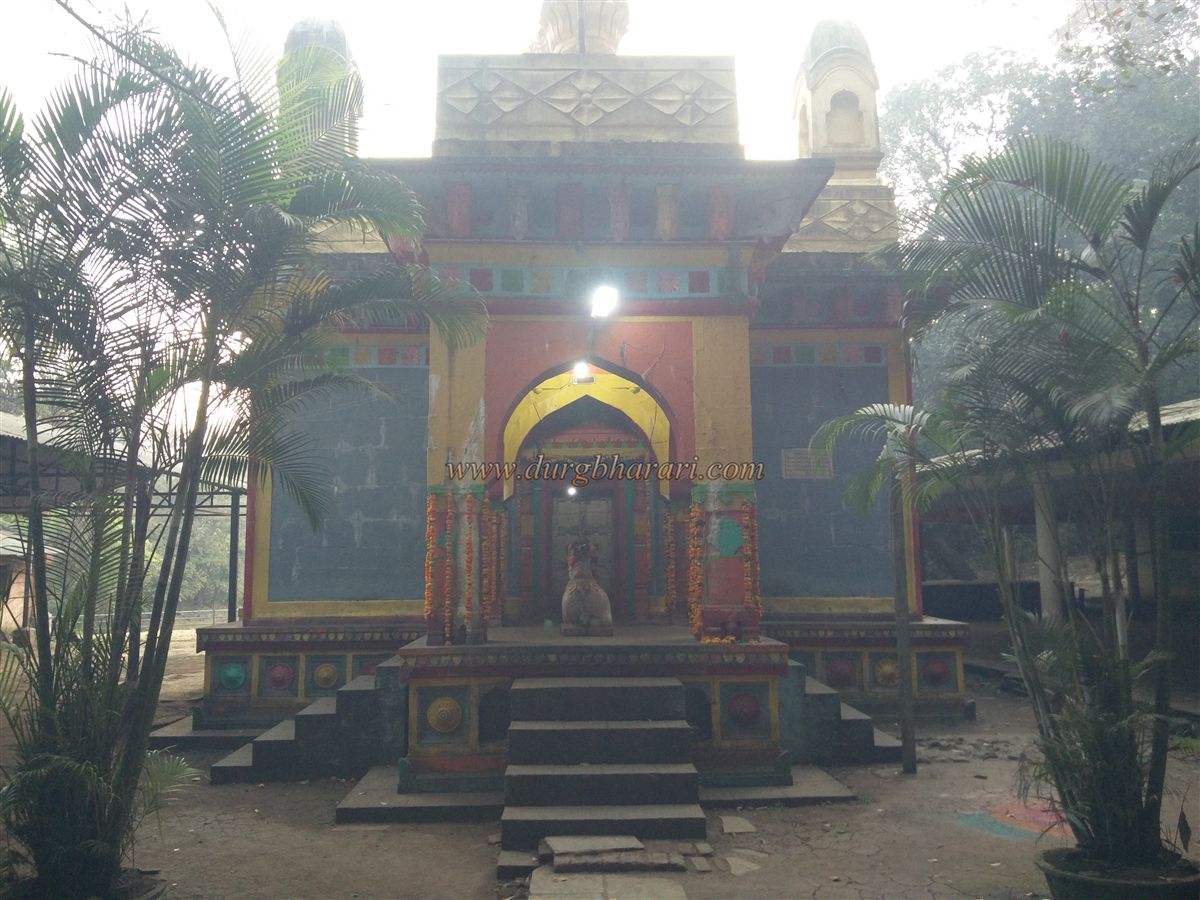
After crossing the bridge, on the opposite side stands a building that houses the memorial of Shankaraji Narayan Sacheev, founder of the Bhor princely state. In the courtyard behind this building, under a tree, are some carved sculptures, veerghals (hero stones), and sati stones. Descending through a stepped path in the dense grove leads to the sunken compound of the Nageshwar temple. This temple from the time of Shivaji Maharaj is surrounded by a stone-paved courtyard and is built on a raised platform, facing west. An inscription on the front of the temple indicates that it was restored.
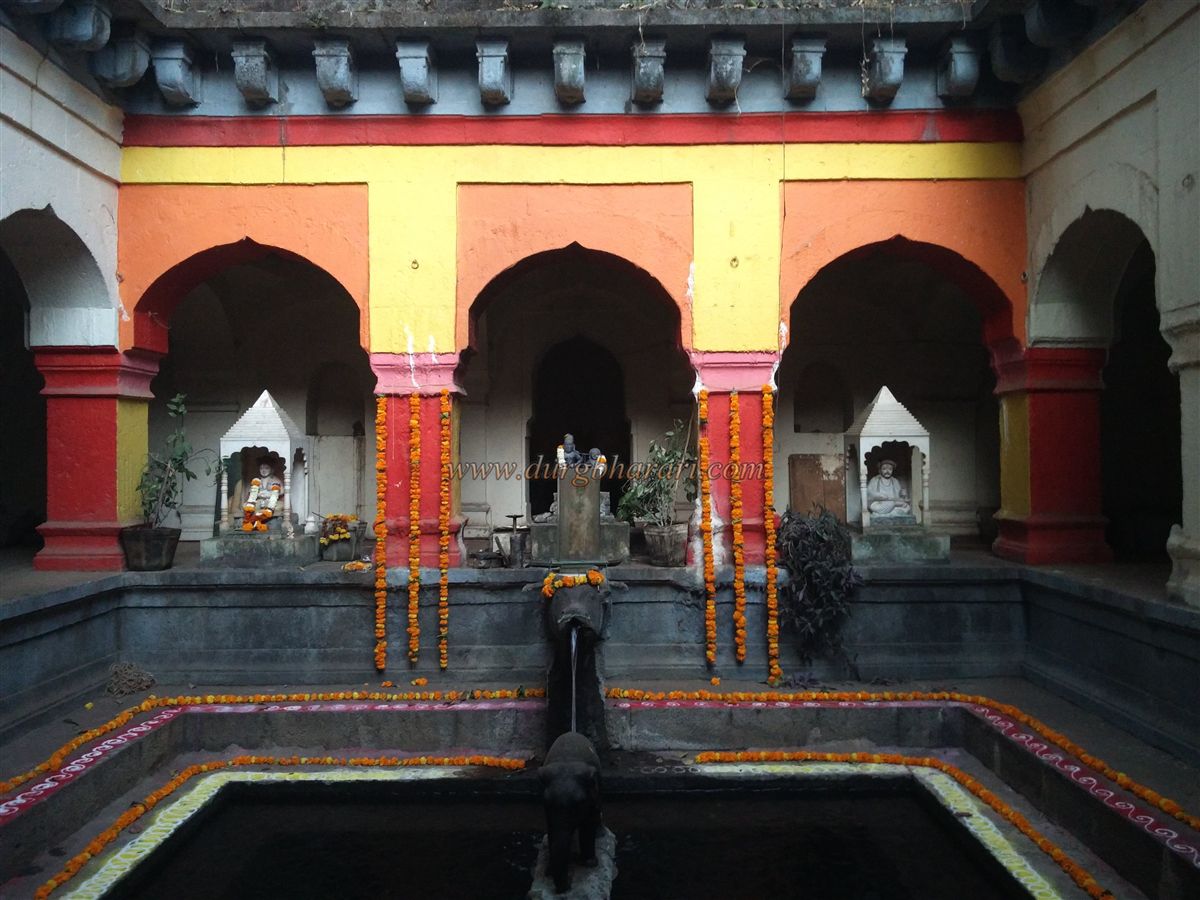
The temple is built in the traditional format of an entrance hall (Mukhmandap), a central hall (Sabhamandap), and a sanctum (Garbhagriha), with elaborate carvings both inside and outside. The entire temple is constructed from dressed stone, while the Shikhar (spire) is made of bricks coated with lime plaster. The temple courtyard contains a deepmala (lamp tower) and several small domed shrines, some of which house ancient idols. Many weathered sculptures are also found scattered in the compound. In front of the temple are pillared verandas (ovari), and in front of them flows a perennial spring. Water from the spring flows through a cow-faced spout (Gomukh) into a stone tank known as the Panchganga Kund. The temple's surroundings are exceptionally beautiful.
After visiting the Nageshwar temple, one can travel by vehicle or on foot to the samadhi sites of Kanhoji Jedhe and Jiva Mahala, located about one kilometer away. These are situated near a Zilla Parishad school on the outskirts of the village. Locals refer to the site as Kanhobachi Ghumat or Ghumat Mandir, so inquiries should be made using those names. Here, in a straight line, are three small domed shrines. The first shrine is the samadhi of Jiva Mahala, the second of Kanhoji Jedhe, and the third houses an idol of Goddess Bhavani.
The samadhi of Jiva Mahala does not appear to be very old. The stone platform beneath it may be ancient, but the structure above is of more recent construction. His full name was Jivba Mahala Sankpal. He hailed from the village of Kondwali at the base of Mahabaleshwar in Wai taluka. Due to the construction of the Dhom Dam, this village was later relocated. Historian Pandurang Narasinha Patwardhan traced the descendants of Jiva Mahala to Kondwali village.
During the encounter with Afzal Khan at Pratapgad, Jiva Mahala was Shivaji Maharaj’s bodyguard. After Shivaji killed Afzal Khan, Afzal’s bodyguard Sayyed Banda attacked Shivaji with a sword. Jiva Mahala intervened, blocked the blow, and severed Sayyed Banda’s hand, saving Shivaji’s life. Because of Jiva Mahala’s bravery, the phrase “Hota Jiva, mhanun vachla Shiva” (Shiva survived because of Jiva) became a well-known saying.
After the assassination of Afzal Khan, Jiva Mahala and Sambhaji Kavji carried Afzal Khan’s severed head to Rajgad. Later, due to disobeying an order, Maharaj distanced Jiva Mahala from the royal service. In 1707, Chhatrapati Shahu Maharaj granted the villages of Nigade and Sakhare as inam to Jiva’s descendants. The inam document praises Jiva Mahala as a brave, loyal, and ancient warrior. Jiva Mahala passed away in 1709.
If visiting Ambavade with a private vehicle, one can also explore the ancestral wada of Kanhoji Jedhe located at Kari.
© Suresh Nimbalkar
GALLERY