AHU KOT
TYPE : COASTAL FORT
DISTRICT : VALSAD
HEIGHT : 0
GRADE : EASY
Since the Portuguese held power in North Konkan for a long time, one can see many small and large fort-like structures they built along the coastal stretch from Vasai to Daman. Most of these forts are now heavily ruined, with only a few remnants remaining. The Ahu Fort near Sanjan is one such small structure built by the Portuguese. This region, once part of Swarajya, became part of Gujarat state during the linguistic reorganization of states. After the Portuguese were expelled following the Vasai campaign, this area came under Swarajya, which is why I have included this fort under the forts of Maharashtra.
While exploring the forts near the Daman border, we came across information about this fort. The nearest railway station to visit Ahu Fort is Sanjan, and the distance between Sanjan and Ahu Fort is 7 km. From Sanjan railway station, private rickshaws are available to reach Ahu.
...
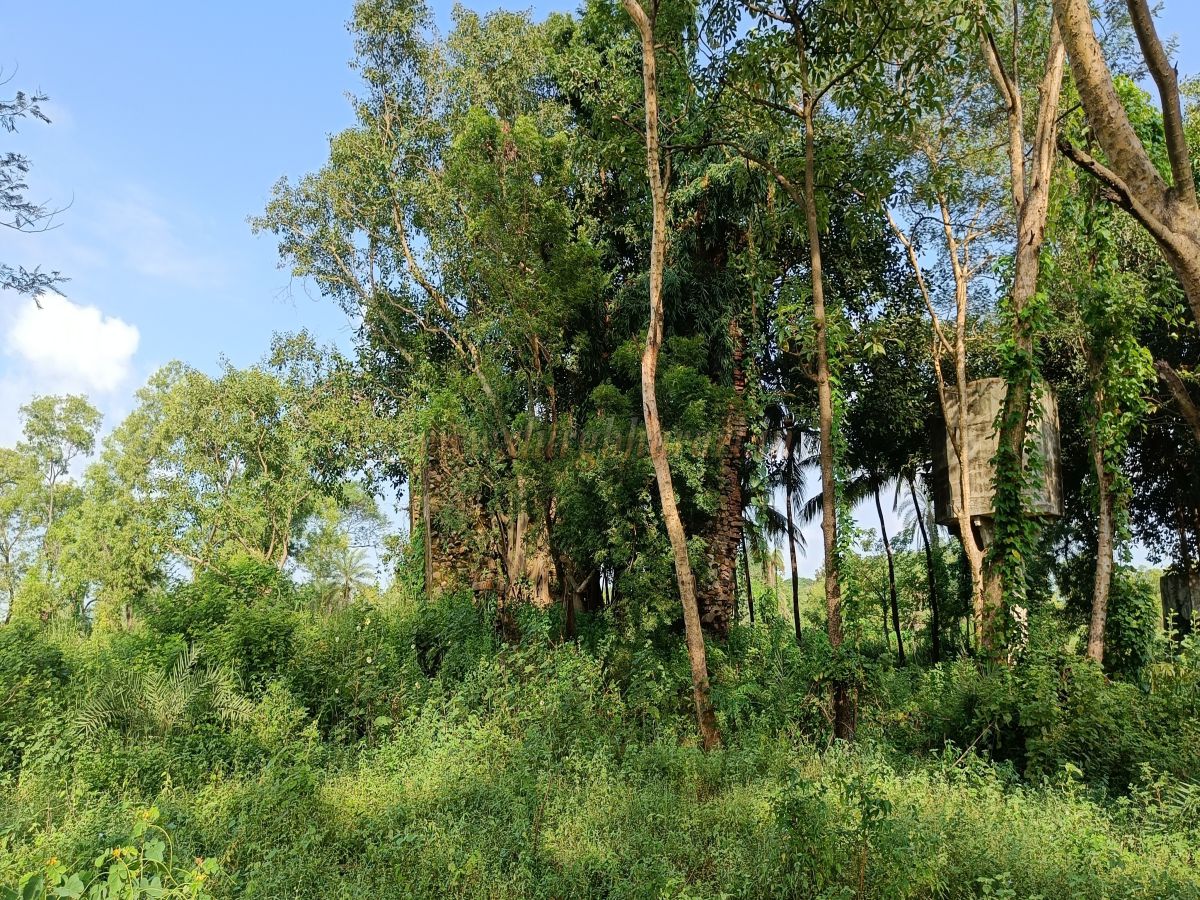
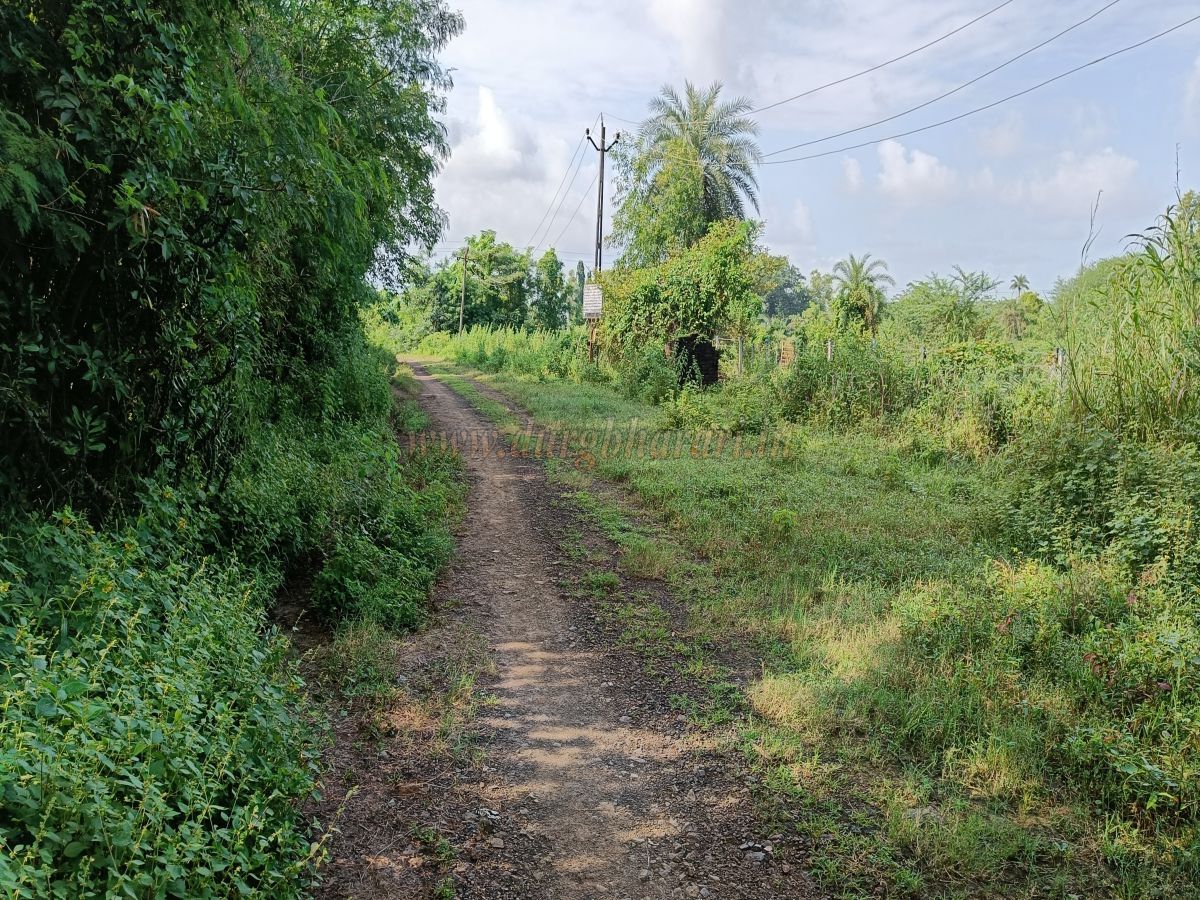
After crossing Kattalwad on the Sanjan–Nargol road, about 3 km ahead on the right side of the road is Ahu Primary School, and on the left side, one can see a wire fence. Through the gate in this fence, one can access Ahu Fort. Although this place is private property, the security guard usually grants permission to view the fort. Walking straight for 5 minutes along a dirt path from the gate, the structure of Ahu Fort can be seen on the right, surrounded by thick vegetation. The structure resembles that of the Maroli Fort.
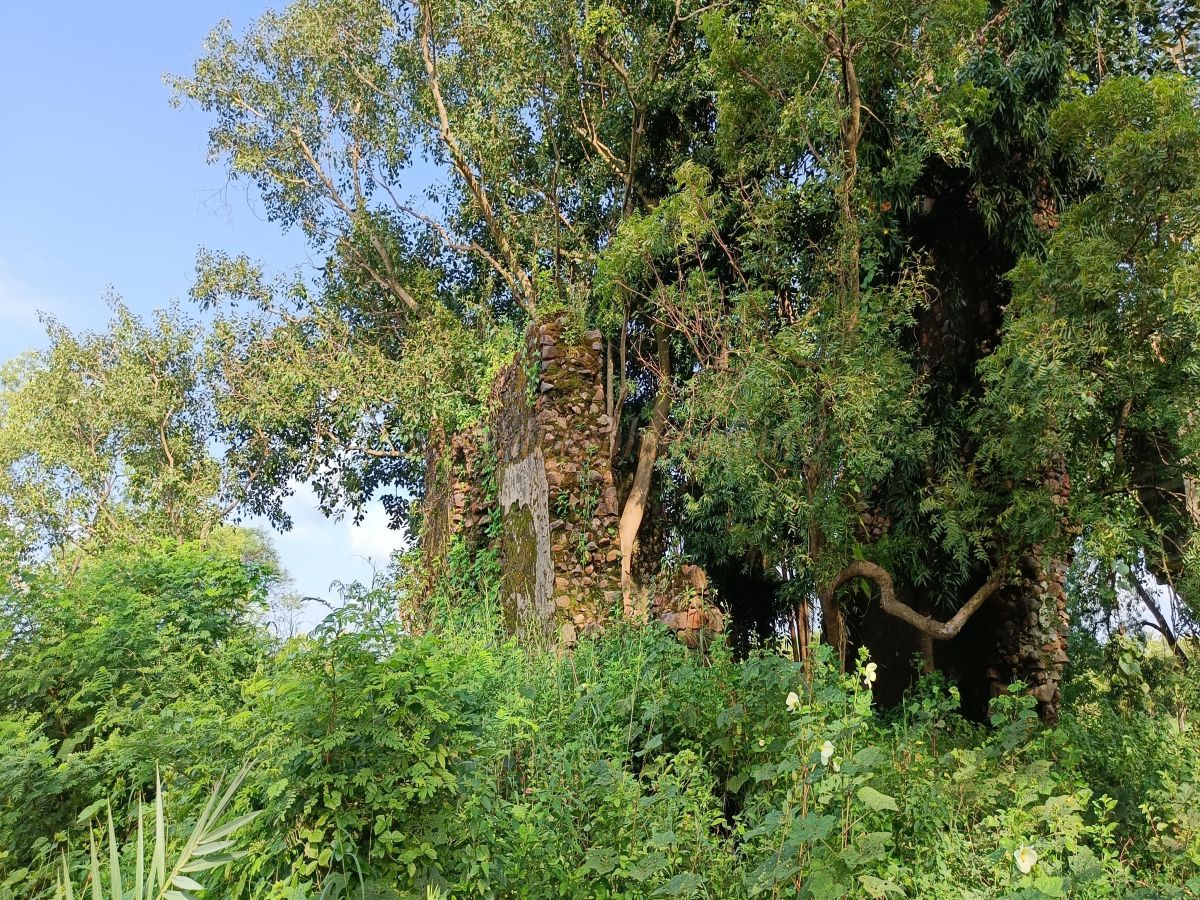
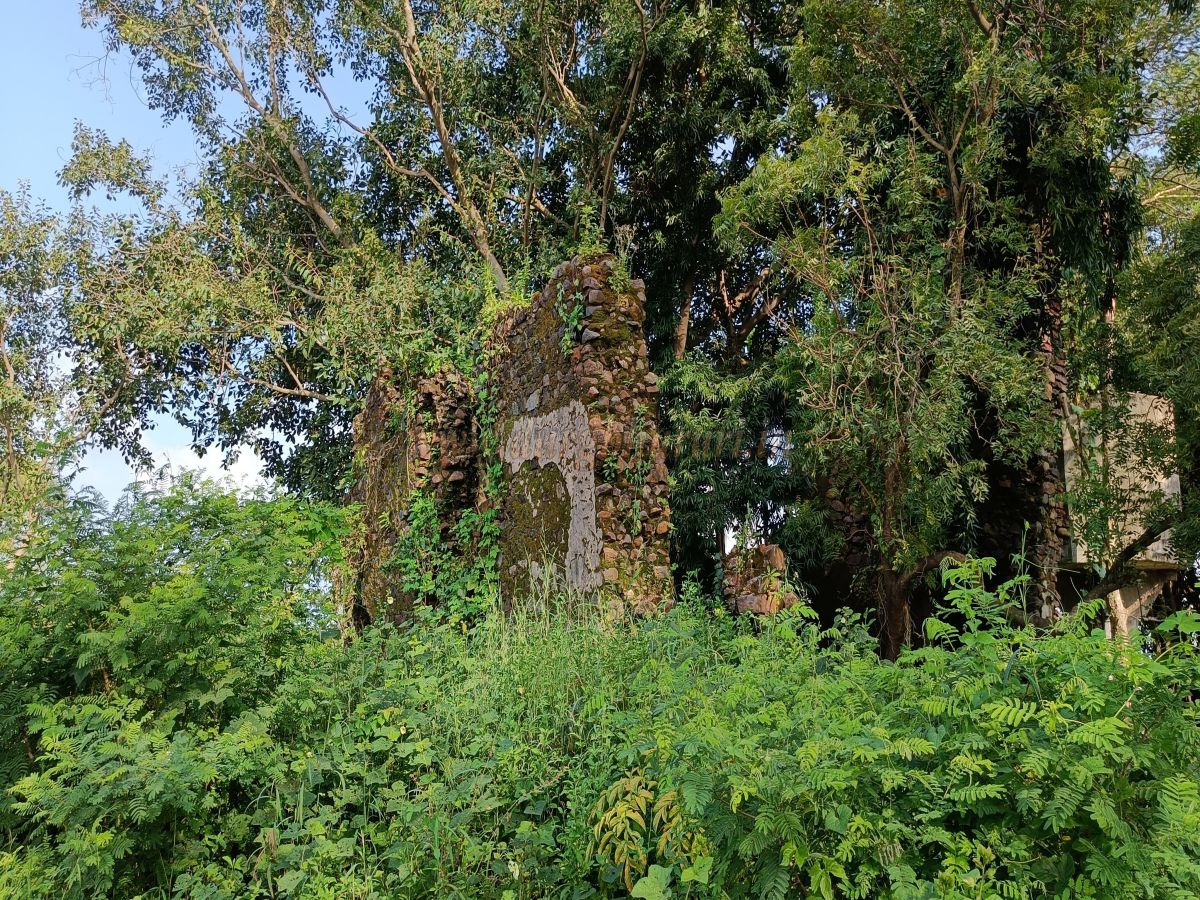
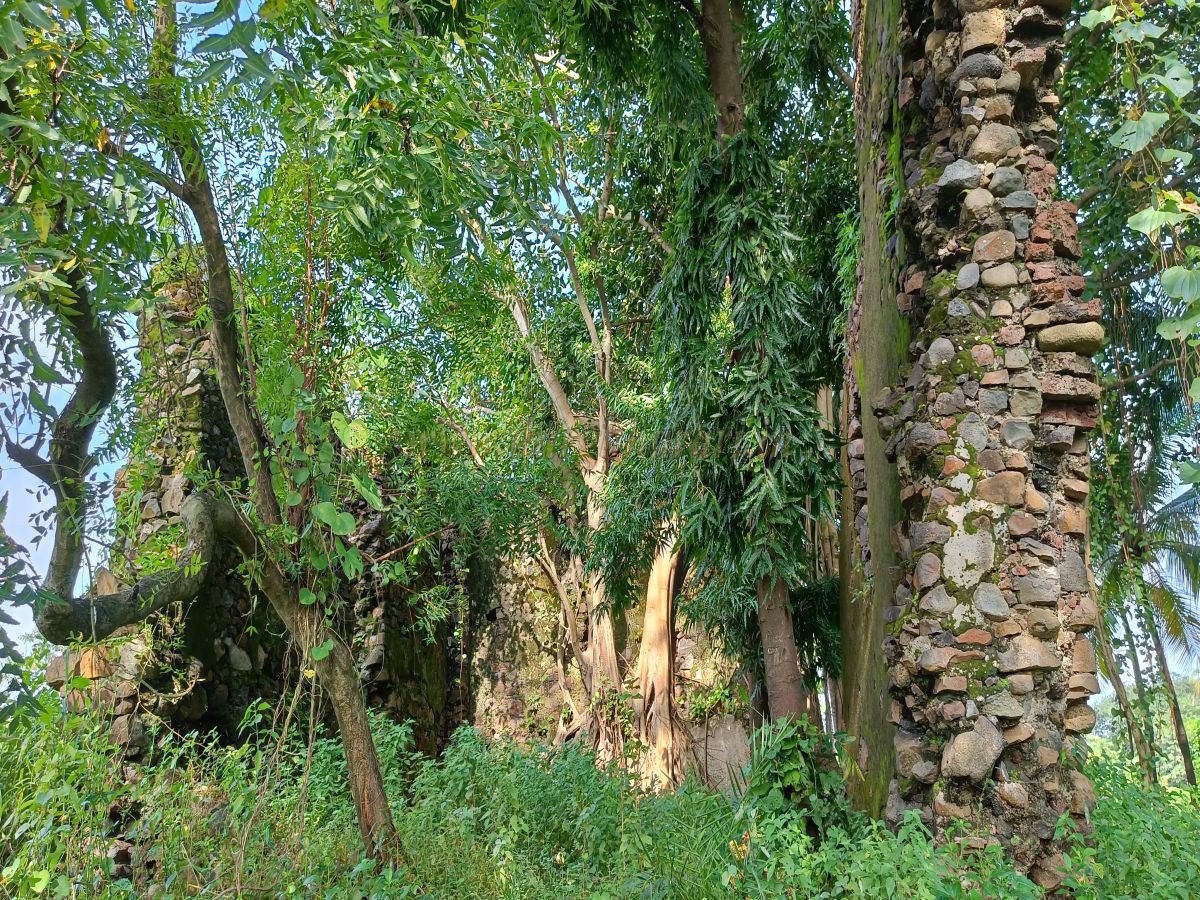
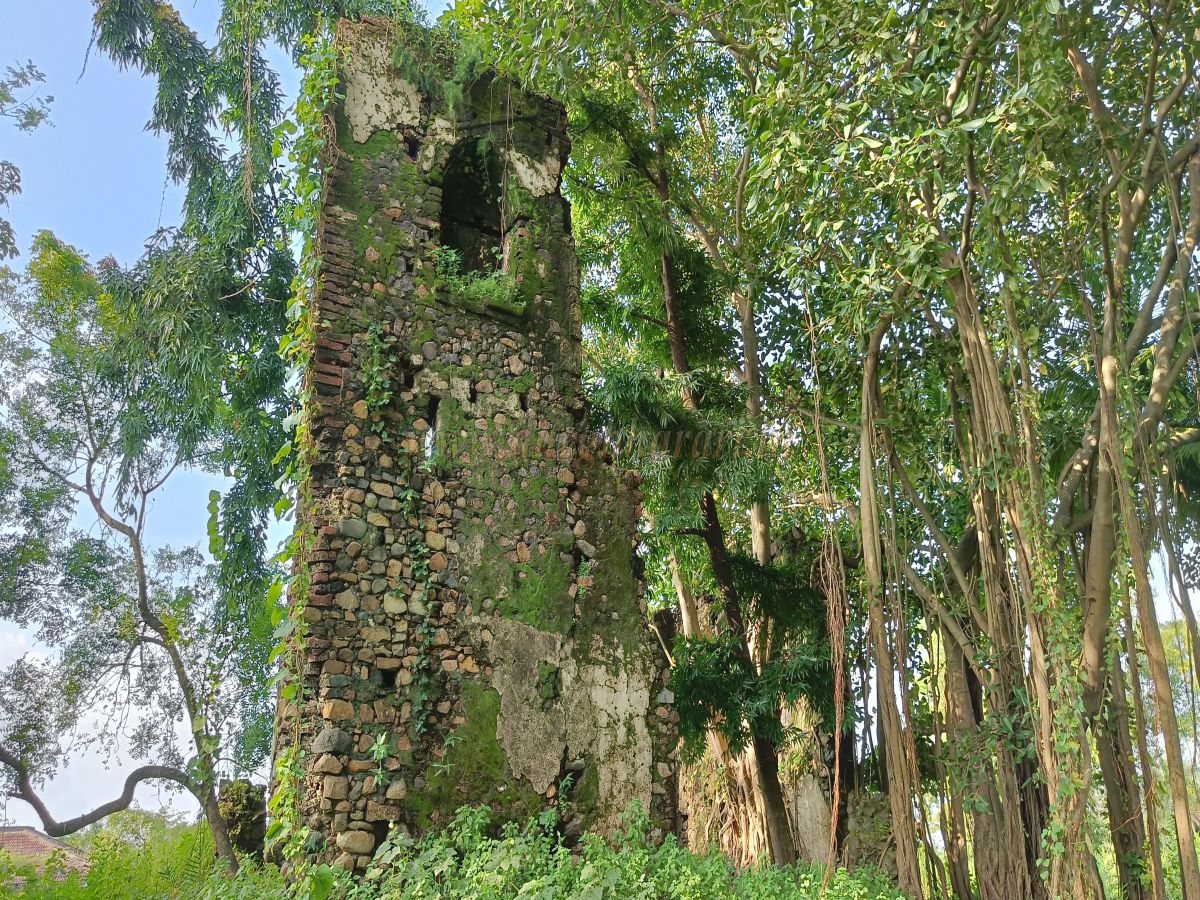
Except for a two-storied building measuring 30 by 30 feet, no other remains of the fort are visible. The structure is built using rough stones and bricks. The inner and outer walls are plastered with lime. On the walls, sockets can be seen where beams for the upper floor were placed. The arched entrance and one wall have completely collapsed, and a window can be seen on the upper level. Since there is no visible defensive construction in the structure, it cannot be definitively claimed to have been a fort. Considering the lime plaster inside, the structure might have served as a customs checkpoint or administrative office. The current condition of the fort is quite dilapidated, and ten minutes is enough to see it all. Locals have no knowledge of this structure and refer to it as "Medi."
Typically built in the 16th century by the Portuguese, such watchtower-like forts served the purpose of guarding sea routes and supplying provisions to smaller forts in the region. These were all small forts or watch towers equipped with long-range cannons that helped the Portuguese establish their dominance over the maritime routes of North Konkan. During the 1739 Vasai campaign, this region came under Maratha control. Visitors expecting to see a full-fledged fort may be disappointed.
© Suresh Nimbalkar
GALLERY